 CARE MANAGEMENT FOR PEOPLE LIVING WITH HIV/AIDS AND BEST PRACTICES IN HEALTH
ABSTRACT
Objective: to construct an interpretative theoretical model based on the meanings attributed by multiprofessional health teams regarding best health practices for care management of people living with HIV/AIDS.
Method: a qualitative and interpretative study developed through the methodological framework of the Constructivist Grounded Theory, carried out in a municipality in Western Santa Catarina/Brazil. Data were collected through in-depth interviews between 2020 and 2021 and analyzed according to the initial, focused, axial, and theoretical coding phases until saturation was reached. The study involved 45 participants, including 24 primary care professionals, 11 specialized care professionals, and 10 people living with HIV/AIDS.
Results: data analysis led to the development of the interpretative theoretical model of the phenomenon “Developing Best Practices in Care Management for People Living with HIV/AIDS in a Health Care Network.” The model is composed of three main categories and four structuring elements: Principles and technologies; Relationships between professionals, individuals, families, teams, partnerships and social support; Health Practices; and Improvements in Quality of Life.
Conclusion: it presents a validated interpretative theoretical model with potential for replication in other contexts within health services to achieve positive outcomes. It highlights the nurse as a key figure in the care management of people living with HIV/AIDS in Primary Health Care.
DESCRIPTORS:
Health management; HIV; Grounded theory; Primary health care; Nursing
RESUMO
Objetivo: construir um modelo teórico interpretativo a partir dos significados atribuídos pelas equipes multiprofissionais de saúde, sobre as melhores práticas de saúde para a gestão do cuidado às pessoas que vivem com HIV/aids.
Método: estudo qualitativo e interpretativo desenvolvido por meio do referencial metodológico da Teoria Fundamentada nos Dados Construtivista, em um município do Oeste Catarinense/Brasil. Os dados foram coletados por entrevista em profundidade entre 2020 e 2021, e analisados de acordo com as fases inicial, focalizada, axial e teórica até a saturação. Participaram do estudo 45 pessoas, sendo 24 profissionais da atenção primária, 11 da atenção especializada, e 10 pessoas que vivem com HIV/aids.
Resultados: a análise dos dados deu origem ao modelo teórico interpretativo do fenômeno “Desenvolvendo melhores práticas na gestão do cuidado às pessoas que vivem com HIV/aids em uma rede de atenção à saúde”. O modelo é composto por três categorias principais e quatro elementos estruturantes: princípios e tecnologias; relacionamento entre profissionais, pessoas, família, equipe, parcerias e suporte social; práticas de saúde; e a melhoria da qualidade de vida.
Conclusão: apresenta um modelo teórico interpretativo validado e com potencial de replicabilidade em outras realidades, nos serviços de saúde, para o alcance de bons resultados. Sinaliza o enfermeiro como protagonista da gestão do cuidado às pessoas que vivem com HIV/aids atendidas na Atenção Primária à Saúde.
DESCRITORES:
Gestão em saúde; HIV; Teoria fundamentada; Atenção primária à saúde; Enfermagem
RESUMEN
Objetivo: construir un modelo teórico interpretativo a partir de los significados que atribuyen los equipos multiprofesionales de salud a las mejores prácticas en materia de salud para gestionar la atención provista a personas que padecen VIH/SIDA.
Método: estudio cualitativo e interpretativo desarrollado por medio del marcometodológico de la Teoria Constructivista Fundamentada en los Datos, en un municipio del oeste de Santa Catarina, Brasil. Los datos se recolectaron por medio de entrevistas en profundidad entre 2020 y 2021, y se los analizó de acuerdo con las siguientes fases: inicial, focalizada, axial y teórica hasta alcanzar la saturación. Los participantes del estudio fueron 45 individuos: 24 profesionales de Atención primaria, 11 de Atención especializada y 10 personas que padecen VIH/SIDA.
Resultados: el análisis de los datos dio origen a un modelo teórico interpretativo del fenómeno llamado “Desarrollando mejores prácticas en la gestión de la atención provista a personas que padecen VIH/SIDA en una red de atención de la salud”. El modelo está compuesto por tres categorías principales y cuatro elementos estruturales: Principios y tecnologías; Relaciones entre profesionales, personas, familias, equipos, sociedades y apoyo social; Prácticas de salud; y Mejoras en la calidad de vida.
Conclusión: se presenta un modelo teórico interpretativo validado y con posibilidad de ser replicado en otras realidades en diversos servicios de salude, a fin de lograr buenos resultados. Se señala a los enfermeros como los protagonistas de la gestión de la atención provista a personas que padecen VIH/SIDA atendidas en Atención Primaria de la Salud.
DESCRIPTORES:
Gestión en salud; VIH; Teoría fundamentada; Atención Primaria de la Salud; Enfermería
INTRODUCTION
The human immunodeficiency virus (HIV) and its clinical manifestations, acquired immunodeficiency syndrome (AIDS), have been reaffirmed as a serious global concern and included in the Sustainable Development Goals (SDGs) due to their scope, magnitude, and severity1. Achieving the health-related SDGs requires effective interventions, alongside improvements in the conditions related to the social and structural determinants of health2.
Currently, individuals affected by HIV who adhere to therapeutic regimens can live with the virus as a chronic condition3, thanks to technological advancements that have increased life expectancy and quality of life, with the potential to contribute to ending the epidemic4.
In 2023, 39.9 million people worldwide were living with HIV, with 1.3 million newly infected and 630 thousand deaths related to HIV-associated diseases. Regarding the 95-95-95 target, 86 % were aware of their HIV status, 89 % had access to treatment, and 93 % achieved viral suppression-resulting in a global outcome of 86-89-93. In Brazil, the outcome achieved by 2023 was 91-81-955.
Between 2007 and 2023, 489,594 HIV cases were reported in Brazil, and 1,124,063 AIDS cases were recorded between 1980 and 2023. In 2022, the AIDS detection rate was 17.1 per 100,000 inhabitants in Brazil, and 25.3 per 100,000 inhabitants in the state of Santa Catarina, placing the state as the fifth most affected by the AIDS epidemic. In the same year, the standardized AIDS mortality rate in Brazil was 4.1 per 100,000 inhabitants, and 4.5 per 100,000 inhabitants in Santa Catarina6. These data highlight the need for a deeper understanding of this situation in order to identify pathways that ensure people living with HIV/AIDS can enjoy a life of quality, dignity, and access to the fundamental right to health.
In public health, effective interventions are those that have been implemented in real-life contexts and are likely to produce good results when replicated in other real-world settings. These interventions may be considered best practices and, to be recognized as such, must be evaluated in terms of their context, process, and outcomes. They must also meet assessment criteria so that practice-based evidence in public health interventions gains greater usefulness and credibility7.
Currently, there is a scarcity of publications on best practices in HIV management, and there is a lack of a structured concept of what constitutes a best practice. The term is often used without the intent to present a new practice or even a desirable model, revealing a gap in this area8.
People living with HIV/AIDS require a multidimensional perspective that considers various life aspects, relationships, interactions, the complexity of being human, and the understanding that we are both shaped by and shapers of society9. The interaction and relationships among individuals within their life contexts enable them to influence and be influenced. The relationships between person, process, context, and time are determining factors in individual development10.
This study is guided by the following research question: how do multiprofessional health teams perceive and define best practices in the care management of people living with HIV/AIDS? The objective is to construct an interpretative theoretical model based on the meanings attributed by multiprofessional health teams regarding best health practices for care management of people living with HIV/AIDS.
METHOD
This is a qualitative and interpretative study developed through the methodological framework of the Constructivist Grounded Theory (CGT), which enables both data and theory to be constructed through interaction and engagement with individuals, wherein participants’ expressions reflect constructions of reality11.
The study was conducted in a municipality in Western Santa Catarina, with an approximate population of 254,785 inhabitants. It serves as a reference for over 200 municipalities and is considered an agro-industrial hub in Southern Brazil. In Primary Health Care (PHC), the Family Health Strategy covers 89.24 % of the population. The municipality also offers Specialized Care Services (SCS) for people living with HIV/AIDS and their partners, serving as a reference center for 36 municipalities in the region.
Inclusion criteria for participation in the study were: having worked in the service for at least six months and performing some form of action or care related to people living with HIV/AIDS or coordinating/managing the respective services. Exclusion criteria included: being away from work for any reason during data collection or not performing regular duties for more than two months prior to the data collection period, regardless of the reason.
The research began with PHC, as it is the preferred point of entry into the Health Care Network (HCN). Following invitations, the initial sampling (first sample group) included 24 professionals from Family Health Teams (FHTs) across 19 Family Health Centers. As data collection and analysis progressed, the results from each group and emerging ideas guided the need to collect data from new sample groups. After the data analysis of the first sample group was completed, the second group was formed, and following its analysis, a third group was assembled, until data saturation was reached.
The second sample group consisted of 11 professionals from the multiprofessional team working at the SCS. Professionals were invited via phone contact at the health service or through direct approach during the researcher’s visits to the facility.
The third sample group included ten people living with HIV, who were invited to participate based on the following criteria: being over 18 years old; having full autonomy; residing in the study municipality; adhering to treatment; and maintaining regular follow-up at the service. Invitations for participation were extended in two ways: through health professionals who had participated in the first and second sample groups (with the researcher contacting participants only after prior consent); and through direct approach at the Specialized Care Service.
The participants were individually and thoroughly interviewed by a single researcher, using a semi-structured instrument composed of participant characterization questions and open-ended research questions. Subsequently, field notes were recorded in memos, and diagrams were developed. The initial research question for the first sample group was: “Tell me about your experiences involving actions, care practices, and/or care management for people living with HIV/AIDS.” For each subsequent sample group, the initial question had to be adapted to address new hypotheses, as shown in Chart 1, and a specific semi-structured instrument was developed.
Data collection was conducted between August 2020 and November 2021, either remotely or in person, depending on the stage of the COVID-19 pandemic and participants' access to different tools: video calls via Microsoft Teams®; voice recording during WhatsApp® video calls; phone call recordings via mobile phones; and voice recording during in-person interviews.
Interviews with participants from the first sample group were conducted between August 2020 and June 2021; with the second sample group, between July and September 2021, when it was already possible to conduct in-person interviews; and with the third sample group, in November 2021.
Upon participant consent, data were recorded, transcribed with the aid of Microsoft Word® 2013, and the document was sent to each participant for content review, adjustments, additional information, and clarification of any questions from the researcher. The documents were then imported into Atlas.ti® version 9 which enabled data storage, management and retrieval.
Atlas.ti has a project structure that allows the insertion of documents with the interview transcripts, enabling the creation of quotations from selected excerpts for data coding. The software also provides a keyword search function across documents, codes, and code groups, facilitating the rapid identification of recurring codings.
Data analysis was conducted concurrently with data collection, following the phases of initial, focused, axial, and theoretical coding, until the data were considered saturated and the core categories consolidated. Initial coding involves a meticulous examination of data fragments, requiring openness to all theoretical directions suggested by the data. In the focused coding phase, the most significant and/or frequent initial codes are selected to classify, integrate, synthesize, and organize the data into axes of analysis, or categories and subcategories. Axial coding questions how categories and subcategories are organized, allowing participant statements to be grouped into an organizational scheme. Theoretical coding specifies possible relationships between developed categories, intertwining and integrating codes-in other words, it analytically guides the narrative that had previously been broken into fragments11.
Data validation was carried out in two stages: (1) individual interviews with four evaluators-one person living with HIV/AIDS and three health professionals (from PHC, SCS, and one from management who did not participate in the data collection stage); and (2) individual interviews with two researchers who are experts in the CGT. A summary of the investigation and a specific instrument were developed to validate the interpretative theoretical model according to the criteria of fit, content, and theoretical generalization, using six open-ended questions. Validation led to adjustments in some categories and the refinement of the diagram representing the theoretical model.
This study complied with all ethical principles established by Resolutions No. 466/12 and 510/2016 of the Brazilian National Health Council, as well as Circular Letter No. 2/2021/CONEP/SECNS/MS, which addresses procedures in studies with any virtual component. The study was approved by the Research Ethics Committee of the Federal University of Santa Catarina. To ensure the confidentiality of participants’ identities, privacy, image protection, and non-stigmatization, codes consisting of letters and sequential numbers were assigned by sample group (SG1, SG2 and SG3) and the chronological order of content validation return by each participant.
RESULTS
The study included 45 participants: 24 professionals from PHC, 11 professionals from SCS and 10 people living with HIV/AIDS. In the first sample group, the mean age was 37.4 years old (±7.7); the majority were female (95.8 %); their professions included nurses (87.5 %), nursing assistants (4.2 %), physicians (4.2 %) and dentists (4.2 %); most held graduate degrees (91.6 %); 66.7 % held coordination roles; their mean time since graduation was 13.4 years (±6.6); and their mean time working in the service was 8.7 years (±6.4). In the second sample group, the mean age was 43.2 years old (±8.9); most were female (90.9 %); 27.3 % were nurses; their mean time since graduation was 17 years (±9); 54.6 % held graduate degrees; and their mean time working in the service was 5.2 years (±2.7).
In the third sample group, the mean age was 45.4 years old (±15.9); 50 % were female; 40 % were single; 60 % had up to four children; and the most frequently mentioned religion was Catholicism (30 %). Regarding occupation, there was diversity of activities, including one sex worker (10 %). Educational attainment was mostly Elementary School (40 %), followed by High School (30 %), with only two participants having Complete Higher Education (20 %). The mean time the participants had been living with HIV was 15.7 years (±11.7), with 21 to 25 years as the most prevalence group range (30 %), and a range from 1 to 40 years.
Data analysis resulted in three main categories: “Understanding longitudinality in management practices for the care provided to people living with HIV/AIDS in a health care network”, “Unveiling professional practices seeking to meet the commitments taken to control de AIDS epidemic” and “Unveiling best practices in management of the care provided to people living with HIV/AIDS in a health care network”. Among these categories, four structuring elements emerged from the study: Principles and Technologies; Relationships between professionals, individuals, families, teams, partnerships and social support; Health Practices; and Improvements in Quality of Life.
The first element, “Principles and Technologies”, encompasses the interactions inherent to care longitudinality through access, welcoming, comprehensiveness, articulations and flows between different points of the HCN, reasons that lead to interruption of the bond between individuals and PHC, the importance of specialized care in the care process, the value of the therapeutic regimen, the incorporation of technologies for care management, and the recognition of their limitations.
So, it's like: we don't have it, its free of prejudice, of discrimination. So, that makes them feel more welcomed, right? (GA2P5)
And how do I see myself? I see myself as a co-participant in this treatment. A person who's here to contribute through my technical knowledge, to offer support, answer questions, and further strengthen this treatment. (GA1P6)
And I believe it is a matter of structure itself. The network structure, the network-based work would be essential, a key word, because whether we like it or not, in order for it to work, this intersectoral approach is necessary. (GA1P14)
Here [PHC], we somewhat lose control over who our HIV-positive patients are, how they're doing, right? Uh… how treatment is progressing, what their actual health condition is, right? You end up losing the bond with these patients, because they end up forming a bond over there [SCS]. (GA1P7)
The second element, “Relationships between professionals, individuals, families, teams, partnerships and social support”, sustains the actions and interactions that take place within various types of relationships. These include relationships among professionals, interinstitutional partnerships and connections with people living with HIV/AIDS and their social networks-composed of partners, family members, friends, neighbors, coworkers and the health care team.
These relationships reflect the dynamic and complex reality of society and are permeated by contradictions, concealment of diagnosis, denial of HIV/AIDS, suffering, low adherence, and treatment abandonment. Professional involvement is valued, and the engagement of the team in supporting the complex challenges of the virus and the disease strengthens the relationship between the individual and the health care professionals.
So, we insist a lot, we do not… this is something we always point out: “As public servants, we cannot give up on the patient, right? They may give up on the treatment, they may give up on us-that's their choice. But we can't!” We give them the time they need, but then, eventually, we come back again, kind of “being annoying”, right? “Look, we're here, your medication is here, the doctor is here, there are appointments available, do you want to schedule one? Would you like to come and talk?” So we keep insisting with the patient. (GA2P1)
Because they [health care professionals] root for me, because they know! They know the history of my life, right? (GA3P10)
The third element, “Health Practices”, involves rapid testing, the use of strategies to expand early diagnosis, strengthen care, improve access and adherence to the therapeutic regimen, as well as educational and preventive actions and support groups. These practices take place amid contradictions, uncertainties, taboos, stigma, discrimination, prejudice, fear and overcoming, and the hope that stigma will change. They are also affected by insufficient reporting in information systems for adequate monitoring of individuals, and the challenges of evaluating the practices being implemented. Among professionals, nurses were considered the reference figures in PHC for counseling, testing, and referral of HIV-positive individuals to SCS, and they were seen as key actors in care management for people living with HIV/AIDS in PHC.
[…] As the team we are, we help with the family. So many of them don't even want to tell their family yet, and we respect that moment. (GA2P11)
Uh, a challenge we also face is the issue of religion, of people’s beliefs, right? Uh, I had a patient at [Unit name] and I also have one here at [Unit name] who says that thing about God having cured her, that she no longer has it, right? And then it ends up causing some confusion sometimes, because as they are following the treatment properly and their viral load becomes undetectable. They believe in the cure and end up abandoning the treatment. So it is a real challenge, you know? (GA1P23)
The fourth element, “Improvements in Quality of Life”, reveals that quality of life requires qualified multiprofessional care for people living with HIV/AIDS. This care must be comprehensive and continuous, with respect for human dignity, focused on the person and their social network and support system. The goal is to achieve adherence to the therapeutic regimen and foster awareness of the importance of ongoing self-care and care for others.
[…] So I'm only drawing this parallel to say how good it is when someone understands us, when someone truly cares-because we do notice! When it comes to the SCS and the care I receive there compared to elsewhere, the difference is that people really care! It truly does me good. I feel safe, at ease. (GA3P8)
Ah, it means that we have… that we are human beings first and foremost, right? […] Quality of life is practically 100 %, the same quality of life as if there were no illness at all! (GA3P9)
Based on these four elements, it is understood that the meanings attributed by the study participants to best practices in care management for people living with HIV/AIDS refer to the organization of principles and technologies that create the conditions necessary to support actions and interactions developed through relationships among professionals, individuals, and their social networks, as well as institutional partnerships. These conditions enable the implementation of health practices that promote the expansion of early diagnosis and treatment, ultimately leading to improved quality of life. This, in turn, reinforces the organization of principles and technologies, allowing for an understanding of best practices as a generative process-one that organizes, interacts, executes, and achieves results in a continuous cycle of improvement. These dimensions are inseparable and interdependent, forming a recursive circuit in which the products and outcomes become the very causes of what produced them. Thus, the phenomenon is defined as: “Developing Best Practices in Care Management for People Living with HIV/AIDS in a Health Care Network”, as represented in Figure 1.
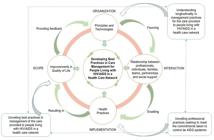
Interpretative Theoretical Model of Best Practices in Care Management for People Living with HIV/AIDS in a Health Care Network.
DISCUSSION
The organization of principles and technologies necessary for best practices in the care management of people living with HIV/AIDS involves aspects that must be considered and structured even before the individual enters the health care system. These include the need to enhance the HIV/AIDS care continuum and to establish opportunities and spaces for professional training. Structuring these aspects beforehand requires embracing uncertainty, ambiguity, and the coexistence of order and disorder. It also entails understanding the need to interconnect the different dimensions of reality9 in order to provide effective care.
Within the HCN, PHC may be considered the preferred point of entry into the care process. Among the attributes of PHC, longitudinality refers to the continued use of health services over time12, and is therefore an essential condition for ensuring care for individuals living with chronic conditions such as HIV infection. Chronic conditions require constant monitoring of individuals' health status, including not only clinical needs and demands but also personal, familial, and social issues.
Moreover, expanding access to diagnosis and therapeutic regimens demands the organization of care arrangements and service offerings for people living with HIV/AIDS13. It is also necessary to consider the principle of comprehensiveness, one of the foundational principles of Brazil’s Unified Health System (Sistema Único de Saúde, SUS) and a core attribute of PHC, as well as the principle of first-contact access, which involves seeking PHC services with each new health concern or episode12,14. Comprehensiveness goes beyond access to services-it is essential for delivering continuous care. It involves collective efforts to organize health care practices aimed at implementing public health policies, and it requires overcoming barriers that may weaken or hinder the development of bonds and welcoming interactions with service users14.
Among the barriers throughout the HCN, access and communication between health services remain obstacles to adequate care for people living with HIV/AIDS. One strategy to address epidemiological needs and coordinate resources and practices for effective health care is the implementation of a care continuum. As a technology, the care continuum provides an opportunity to rethink work organization and management in health services, enhancing the quality of care provided to people living with HIV-particularly when professionals from various points in the HCN and health system managers are actively engaged in its development15. The recognition of HIV/AIDS as a chronic condition is reaffirmed by the implementation of the care continuum in Brazil in 2021, with the objective of improving and expanding access to diagnosis, treatment and continuous care16.
Training and continuing education are instruments of change in social practices and enhance comprehensiveness and the implementation of policies13. In addition to investing in these soft technologies, it is also necessary to invest in diagnostic and therapeutic technologies, as well as in the coordination between services, enabling the navigation of individuals through the different points of the HCN15. Health technologies are used in patient care and may include procedures, medications, protocols, and products17. Clinical protocols are tools that guide patient management and establish criteria for referring people living with HIV/AIDS13. Thus, technologies also involve the establishment of a trusting relationship with the individual, beginning with pre-test counseling and HIV testing-that is, they permeate daily work practices18.
People who are at higher risk of contracting the virus are often those who do not perceive themselves as being at risk and therefore do not take preventive measures. Failures in HIV prevention measures, such as risky sexual behavior-including the non-use of condoms, relationships with multiple partners, and the abuse of psychoactive substances-contribute to the increased spread of HIV. When individuals contract the virus, fear of stigma and prejudice leads many to conceal their serological status and consequently forgo the social support they need. In this context, resilience may serve as a construct that supports both prevention-by reducing risky behaviors-and the ability to live well with HIV. Resilience refers to the capacity to adapt when facing problems, to overcome trauma, or to cope with stressful situations. It is characterized as a dynamic process aimed at achieving positive adaptation in the face of major adversity, and it involves interpersonal, social, historical, genetic and epigenetic interactions19.
A positive HIV diagnosis brings social and emotional impact, posing challenges in social relationships in the workplace, family and community, all of which affect treatment adherence. Therefore, mechanisms are needed to address not only individuals’ health conditions but also their social relationships20. Social networks influence individuals’ attitudes toward their health needs, as they function as sources of support or limitation in the face of social and personal demands.
Individuals with larger social networks may develop greater resilience and use more psychological and protective resources when dealing with the challenges associated with HIV20. Social support has a positive impact on treatment adherence, and the family represents the main source of support for people living with HIV/AIDS. Thus, health care strategies must include early monitoring of potential adherence failures and foster effective communication between the individual and health care professionals, while acknowledging the person’s social network in order to strengthen the conditions that promote adherence21. Individuals with high-quality social relationships have a lower risk of mortality and negative health outcomes. Feeling included and valued in relationships promotes better health outcomes and increases treatment self-efficacy22.
However, social support is not always positive. Some individuals-particularly women-may be involved in social relationships where the stigma related to seropositivity triggers conflict with people who would typically be sources of support. This constitutes a barrier to treatment22. To understand the human being as a complex and multidimensional entity, it is necessary to adopt a pluralistic perspective-one that sees the individual as immersed in an environment shaped by interactions, feedback, determinations, and randomness. This view recognizes the person’s ability to engage with, interpret, and even negotiate with the real world in an attempt to understand the reasons behind human behavior9.
Misinformation leads to exclusion and shame. Knowledge about issues involving HIV transmission and prevention has transformative potential, offering hope and strengthening bonds between individuals and professionals, as well as promoting a more positive perception of health professionals. Ethics and humanization in care go beyond technical-scientific rationality, serving as a foundation for improving the quality of life of people living with HIV23. In addition, clear communication between the patient and the professional enables people living with HIV/AIDS to make informed decisions regarding self-care and to manage their own health conditions effectively25.
Quality of life refers to people’s perceptions of their position in life, their goals, expectations, value systems, standards, and concerns within a cultural, social, and environmental context. It encompasses physical health, psychological state, level of independence, social relationships, beliefs, and one’s relationship with the environment26. Aspects related to quality of life include nutrition, physical activity, leisure, practiced religion, and sexual life-all of which contribute to well-being while living with HIV, in addition to access to antiretroviral therapy27.
The quality of life of people living with HIV is linked to health care and the pursuit of well-being. It includes self-care practices such as healthy eating, physical activity, and leisure, which contribute to both physical and mental well-being. These insights help health professionals improve their performance and raise awareness in delivering individual care28. In line with the emerging findings of this study, quality of life encompasses care for one’s own health and for others. It includes physical care and other health promotion practices, such as medical and psychosocial care.
Chronic conditions like HIV/AIDS affect the existential dynamics of an individual, impacting social, financial, physical and cultural dimensions, while also causing psychological effects. Among these changes, spiritual and religious concerns may arise. These can either support or interfere with adherence to the therapeutic regimen. Spirituality has been recognized as a therapeutic strategy, understood as each person’s search for ultimate meaning-whether through belief in God or gods, religions, philosophical schools, or the arts. Spirituality can have a positive influence when the individual finds support for overcoming the chronic condition and its challenges, or a negative influence when it reinforces guilt and suffering, leading to emotional and psychological destabilization. Spirituality directly affects individual behavior, and improvements in quality of life are associated with it, as it serves as a source of social support29.
There is a relationship between quality of life and treatment adherence. Among the factors that negatively affect the quality of life of people living with HIV/AIDS are concerns about confidentiality and financial hardship, as well as a viral load above 50 copies per cubic decimeter of blood. On the other hand, trust in the health care professional promotes adherence to treatment and improves the living conditions of people living with HIV/AIDS30. Quality of life can be understood in relation to factors that influence life positively-such as healthy lifestyle habits-or negatively-such as stigma, prejudice, and difficulty adhering to treatment-based on what is considered desirable24. Prejudice and discrimination are barriers to quality of life and demand the implementation of effective public policies27.
Best practices are developed amid multiple, complementary, and interdependent interactions and feedback loops that define the complexity of the phenomenological world. The coexistence of contradictions allows for critical reflection on a plural and multidimensional reality, while also opening space for the emergence of new perspectives. This continuous movement of order, disorder, interaction, and organization enables us to understand that uncertainty is inescapable, as the attainment of complete knowledge is impossible9.
Among the limitations of this study, it is worth noting that the research was conducted in only one municipality, where care is centered in Specialized Care, which may limit the generalizability of the results. The main contributions of the study include the development of a validated interpretative theoretical model with potential for replication in other contexts to achieve positive outcomes, and the recognition of the nurse as a key figure in the care management of people living with HIV/AIDS in Primary Health Care.
The main practical contribution of the study is that the interpretative theoretical model can serve as a reference for professionals, managers, students, and researchers to analyze their own contexts, helping them understand and evaluate whether the practices implemented in different settings can be considered best practices.
FINAL CONSIDERATIONS
This study revealed that best practices in the care management of people living with HIV/AIDS in an HCN unfold longitudinally in a temporal sequence, while also intersecting in a timeless manner at different moments-through conditions, actions, and interactions-with multiple and complementary outcomes.
The interpretative theoretical model of the phenomenon “Developing Best Practices in Care Management for People Living with HIV/AIDS in a Health Care Network” is presented as a recursive circuit. It encompasses the organization of principles and technologies that support actions and interactions among professionals, individuals, and their social networks, in collaboration with interinstitutional partnerships. This dynamic enables the implementation of best health practices, which result in improved quality of life-thereby feeding back into the very principles and technologies that sustain the model.
The principles and technologies that emerged in the study constitute the initial conditions necessary for the development of best practices-a starting point that does not diminish the value of other principles expressed in public policies or different frameworks. The actions and interactions reveal the dualities present in the daily lives of people living with HIV/AIDS, as well as in various health services. These dualities allow for the organization and reorganization of health actions and practices, as well as the recognition of elements that enhance care. The outcomes represent the expected results in the lives of individuals, derived from HIV/AIDS care management practices that promote self-care and the achievement of quality of life.
It is hoped that the development of an interpretative theoretical model, along with the understanding of best practices in the care management of people living with HIV/AIDS in a health care network, may contribute to the care provided to these individuals and enhance professional practice. This perspective goes beyond the clinical aspects of HIV/AIDS and acknowledges the complexity of health care, which is shaped by numerous actions and interactions with multiple and complementary consequences, and which requires the active participation of those receiving care.
REFERENCES
-
1. Brasil. Ministério das Relações Exteriores. Centro de Informação das Nações Unidas para o Brasil (UNIC Rio). Coordenadoria-Geral de Desenvolvimento Sustentável (CGDES) . Transformando Nosso Mundo: A Agenda 2030 para o Desenvolvimento Sustentável [Internet]. 2016 [cited 2024 Jun 09]. Available from: https://www.mds.gov.br/webarquivos/publicacao/Brasil_Amigo_Pesso_Idosa/Agenda2030.pdf
» https://www.mds.gov.br/webarquivos/publicacao/Brasil_Amigo_Pesso_Idosa/Agenda2030.pdf -
2. George A, Jacobs T, Ved R, Jacobs T, Rasanathan K, Zaidi SA. Adolescent health in the Sustainable Development Goal era: Are we aligned for multisectoral action? BMJ Glob Health [Internet]. 2021 [cited 2024 Jun 09];6(3):e004448. Available from: https://gh.bmj.com/content/6/3/e004448
» https://gh.bmj.com/content/6/3/e004448 -
3. Colaço AD, Meirelles BHS, Heidemann ITSB, Villarinho MV. Care for the person who lives with hiv/aids in primary health care. Texto Contexto Enferm [Internet]. 2019 [cited 2024 Jun 09];28:e201703392019. Available from: https://doi.org/10.1590/1980-265X-TCE-2017-0339
» https://doi.org/10.1590/1980-265X-TCE-2017-0339 -
4. Damião JJ, Agostini R, Maksud I, Filgueiras S, Rocha F, Maia AC, et al. Cuidando de Pessoas Vivendo com HIV/Aids na Atenção Primária à Saúde: nova agenda de enfrentamento de vulnerabilidades? Saúde debate [Internet]. 2022 [cited 2024 Jun 09];46(132):163-74. Available from: https://doi.org/10.1590/0103-1104202213211
» https://doi.org/10.1590/0103-1104202213211 -
5. UNAIDS Brasil. Programa Conjunto das Nações Unidas sobre HIV/AIDS. Estatísticas [Internet]. 2023 [cited 2024 Jun 09]. Available from: https://unaids.org.br/estatisticas/
» https://unaids.org.br/estatisticas/ -
6. Brasil. Ministério da Saúde. Departamento de HIV, Aids, Tuberculose, Hepatites Virais e Infecções Sexualmente Transmissíveis. Boletim Epidemiológico - HIV e Aids 2023 [Internet]. 2023 [cited 2024 Sep 14]. Available from: https://www.gov.br/aids/pt-br/central-de-conteudo/boletins-epidemiologicos/2023/hiv-aids/boletim-epidemiologico-hiv-e-aids-2023.pdf/view
» https://www.gov.br/aids/pt-br/central-de-conteudo/boletins-epidemiologicos/2023/hiv-aids/boletim-epidemiologico-hiv-e-aids-2023.pdf/view -
7. Ng E, Colombani P. Framework for selecting best practices in public health: A systematic literature review. J Public Health Res [Internet]. 2015 [cited 2024 Jun 09];4(3):157-70. Available from: https://www.ncbi.nlm.nih.gov/pmc/articles/PMC4693338/
» https://www.ncbi.nlm.nih.gov/pmc/articles/PMC4693338/ -
8. Celuppi IC, Metelski FK, Suplici SER, Costa VT, Meirelles BHS. Best management practices in HIV care: Scoping review. Saúde Debate [Internet]. 2022 [cited 2024 Jun 09];46(133):571-84. Available from: https://www.saudeemdebate.org.br/sed/article/view/6253
» https://www.saudeemdebate.org.br/sed/article/view/6253 - 9. Morin E. Introdução ao pensamento complexo. Lisboa E, translator. 5th ed. Porto Alegre, RS(BR): Sulina; 2015. 120p.
-
10. Bhering E, Sarkis A. Modelo bioecológico do desenvolvimento de Bronfenbrenner: implicações para as pesquisas na área da Educação Infantil. Horizontes [Internet]. 2009 [cited 2024 Jun 09];27(2):7-20. Available from: https://www.usf.edu.br/publicacoes/edicoes-exibir/75268479/horizontes+volume+27+numero+02+2009.htm
» https://www.usf.edu.br/publicacoes/edicoes-exibir/75268479/horizontes+volume+27+numero+02+2009.htm - 11. Charmaz K. A construção da teoria fundamentada: guia prático para análise qualitativa. Costa JE, translator. Porto Alegre, RS(BR): Artmed; 2009. 272p.
- 12. Starfield B. Atenção Primária: equilíbrio entre necessidades de saúde, serviços e tecnologia. Brasília, DF(BR): UNESCO/Ministério da Saúde; 2002.
-
13. Melo EA, Agostini R, Damião JJ, Figueiras SL, Maksud I. Cuidado de pessoas vivendo com HIV na atenção primária à saúde: reconfigurações na rede de atenção à saúde? Cad Saúde Pública [Internet]. 2021 [cited 2024 Jun 09];37(12):e00344120. Available from: https://doi.org/10.1590/0102-311X00344120
» https://doi.org/10.1590/0102-311X00344120 -
14. Guedes HCS, Silva Jr JNB, Silva GNS, Trigueiro DRSG, Nogueira JÁ, Barrêto AJ. The integrality in Primary Healthcare: Discourse analysis about the organization of the provision of the rapid anti-HIV test. Esc Anna Nery [Internet]. 2021 [cited 2024 Jun 09];25(1):e20190386. Available from: https://doi.org/10.1590/2177-9465-EAN-2019-0386
» https://doi.org/10.1590/2177-9465-EAN-2019-0386 -
15. Kleinubing RE, Langendorf TF, Padoin SMM, Paula CC. Construction of a line of care for the health care of women living with HIV. Esc Anna Nery [Internet]. 2021 [cited 2024 Jun 09];25(5):e20210033. Available from: https://doi.org/10.1590/2177-9465-EAN-2021-0033
» https://doi.org/10.1590/2177-9465-EAN-2021-0033 -
16. Brasil. Ministério da Saúde. Linhas de Cuidado. Portal. HIV/Aids no adulto [Internet]. 2021 [cited 2024 Jun 09]. Available from: https://linhasdecuidado.saude.gov.br/portal/hiv/
» https://linhasdecuidado.saude.gov.br/portal/hiv/ -
17. Rodrigues Filho FJ, Pereira MC. The profile of health technologies incorporated in SUS during 2012-2019: Who are the mainly demanders? Saúde debate [Internet]. 2021 [cited 2024 Jun 09];45(130):707-19. Avalilable from: Avalilable from: https://doi.org/10.1590/0103-1104202113011
» https://doi.org/10.1590/0103-1104202113011 -
18. Souza LRB, Silva MN, Tognoli SH, Mendes AA, Ogata MN, Binotto CCS. Percepções dos enfermeiros mediante a realização do teste rápido de hiv/aids na atenção primária à saúde. Rev Bras Multidiscip [Internet]. 2020 [cited 2024 Jun 10];23 (2 Suppl):56-64. Available from: https://doi.org/10.25061/2527-2675/ReBraM/2020.v23i2Supl.858
» https://doi.org/10.25061/2527-2675/ReBraM/2020.v23i2Supl.858 -
19. Araújo LF, Leal BS, Santos JVO, Sampaio AVC. Análise da resiliência entre pessoas que vivem com HIV/AIDS: um estudo psicossocial. Psic Teor Pesq [Internet]. 2019 [cited 2024 Jun 09];35:e35416. Available from: https://doi.org/10.1590/0102.3772e35416
» https://doi.org/10.1590/0102.3772e35416 -
20. Andrade SLE, Freire MEM, Collet N, Brandão GCG, Sousa MHN, Nogueira JA. Structure of social networks of people living with HIV and AIDS. Rev Esc Enferm USP [Internet]. 2022 [cited 2024 Jun 09];56:e20210525. Available from: https://doi.org/10.1590/1980-220X-REEUSP-2021-0525
» https://doi.org/10.1590/1980-220X-REEUSP-2021-0525 -
21. Oliveira RS, Primeira MR, Santos WM, Paula CC, Padoin SMM. Association between social support and adherence to anti-retroviral treatment in people living with HIV. Rev Gaúcha Enferm [Internet]. 2020 [cited 2024 Jun 09];41:e20190290. Available from: https://doi.org/10.1590/1983-1447.2020.20190290
» https://doi.org/10.1590/1983-1447.2020.20190290 -
22. Chandran A, Benning L, Musci R, Wilson TE, Milam J, Adedimeji A, et al. The Longitudinal Association between Social Support on HIV Medication Adherence and Healthcare Utilization in the Women’s Interagency HIV Study. AIDS Behav [Internet]. 2019 [cited 2024 Jun 09];23:2014-24. Available from: https://doi.org/10.1007/s10461-018-2308-x
» https://doi.org/10.1007/s10461-018-2308-x -
23. Melo DS, Mello R. Representações sociais de pessoas vivendo com HIV: autopercepção da identidade egoecológica. Saúde debate [Internet]. 2021 [cited 2024 Jun 09];45(131):1101-10. Available from: https://doi.org/10.1590/0103-1104202113112
» https://doi.org/10.1590/0103-1104202113112 -
24. Almeida-Cruz MCM, Castrighini CC, Sousa LRM, Pereira-Caldeira NMV, Reis RK, Gir E. Perceptions about the quality of life of people living with HIV. Esc Anna Nery [Internet]. 2021 [cited 2024 Jun 09];25(2):e20200129. Available from: https://doi.org/10.1590/2177-9465-EAN-2020-0129
» https://doi.org/10.1590/2177-9465-EAN-2020-0129 -
25. Reynolds R, Smoller S, Allen A, Nicholas PK. Health literacy and health outcomes in persons living with HIV disease: A systematic review. AIDS Behav [Internet]. 2019 [cited 2024 Jun 09];23:3024-43. Available from: https://doi.org/10.1007/s10461-019-02432-9
» https://doi.org/10.1007/s10461-019-02432-9 -
26. World Health Organization (WHO). Division of mental health and prevention of substance abuse. Programme on Mental Health. WHOQOL User Manual [Internet]. 2012 [cited 2024 Jun 09]. Available from: https://www.who.int/publications/i/item/WHO-HIS-HSI-Rev.2012.03
» https://www.who.int/publications/i/item/WHO-HIS-HSI-Rev.2012.03 -
27. Ferreira MI, Souza FBA. Condições de vida de pessoas vivendo com HIV em um município do estado do Rio de Janeiro, Brasil. Rev Pesq Cuid Fundam [Internet]. 2022 [cited 2024 Jun 10];14:e12688. Available from: https://doi.org/10.9789/2175-5361.rpcfo.v15.12688
» https://doi.org/10.9789/2175-5361.rpcfo.v15.12688 -
28. Oliveira Jr RJO, Marques SC, Oliveira DC, Cecílio HPM, Spindola T, Hipólito RL. Social representation: Quality of Life and HIV. Rev Enferm UERJ [Internet]. 2022 [cited 2024 Jun 10];30:e67208. Available from: https://doi.org/10.12957/reuerj.2022.67208
» https://doi.org/10.12957/reuerj.2022.67208 -
29. Santos LAO, Silva VA, Beltrão BCR, Silva ACB, Mouta AAN, Nogueira FJS, et al. A espiritualidade como ferramenta no enfrentamento do HIV/AIDS. Ver Eletrônica Acervo Saúde [Internet]. 2020 [cited 2024 Jun 09];12(10):e4513. Available from: https://doi.org/10.25248/reas.e4513.2020
» https://doi.org/10.25248/reas.e4513.2020 -
30. Primeira MR, Santos WM, Paula CC, Padoin SMM. Quality of life, adherence and clinical indicators among people living with HIV. Acta Paul Enferm [Internet]. 2020 [cited 2024 Jun 09];33:eAPE20190141. Available from: https://doi.org/10.37689/acta-ape/2020AO0141
» https://doi.org/10.37689/acta-ape/2020AO0141
NOTES
-
ORIGIN OF THE ARTICLE
Extracted from the dissertation - Best Practices in Care Management for People Living with HIV in the Health Care Network of a Municipality from Western Santa Catarina, presented to the postgraduate Program in Nursing at Universidade Federal de Santa Catarina, in 2022
-
FUNDING INFORMATION
Financial support from the Coordination for the Improvement of Higher Education Personnel - Brazil (CAPES), Academic Excellence Program (PROEX), process nº. 2939/2025. PhD Scholarship from the UNIEDU/FUMDES postgraduate Program.
-
APPROVAL OF ETHICS COMMITTEE IN RESEARCH
Approved by the Ethics Committee in Research of the Universidade Federal de Santa Catarina, opinion nº 3,956,203/2020, Certificate of Presentation for Ethical Appraisal 29839720.1.0000.0121.
-
TRANSLATED BY
Agência Latintrad - Leonardo Parachú.
-
DATA AVAILABILITY
The dataset supporting the results of this study is not publicly available.
Edited by
The dataset supporting the results of this study is not publicly available.