 CARE MANAGEMENT FOR PEOPLE LIVING WITH HIV/AIDS AND BEST PRACTICES IN HEALTH
Objective: to construct an interpretative theoretical model based on the meanings attributed by multiprofessional health teams regarding best health practices for care management of people living with HIV/AIDS.
Method: a qualitative and interpretative study developed through the methodological framework of the Constructivist Grounded Theory, carried out in a municipality in Western Santa Catarina/Brazil. Data were collected through in-depth interviews between 2020 and 2021 and analyzed according to the initial, focused, axial, and theoretical coding phases until saturation was reached. The study involved 45 participants, including 24 primary care professionals, 11 specialized care professionals, and 10 people living with HIV/AIDS.
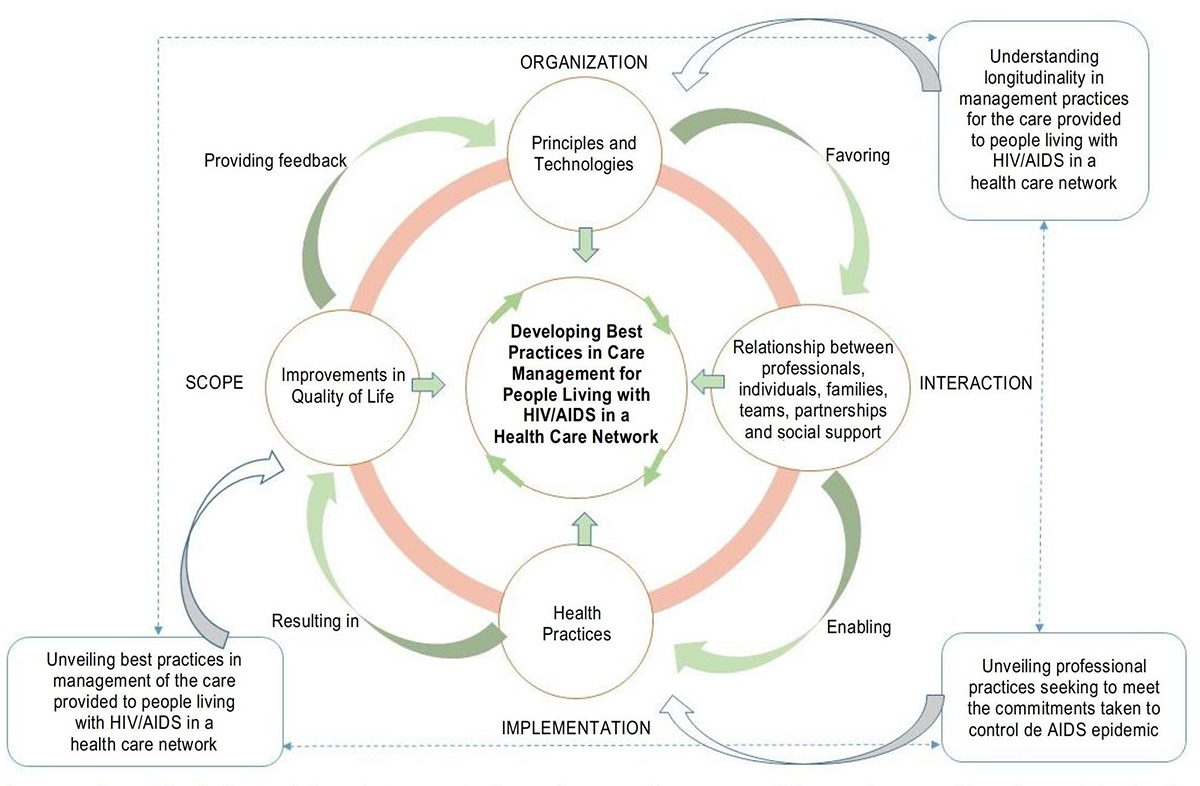
Results: data analysis led to the development of the interpretative theoretical model of the phenomenon “Developing Best Practices in Care Management for People Living with HIV/AIDS in a Health Care Network.” The model is composed of three main categories and four structuring elements: Principles and technologies; Relationships between professionals, individuals, families, teams, partnerships and social support; Health Practices; and Improvements in Quality of Life.
Conclusion: it presents a validated interpretative theoretical model with potential for replication in other contexts within health services to achieve positive outcomes. It highlights the nurse as a key figure in the care management of people living with HIV/AIDS in Primary Health Care.
DESCRIPTORS:
Health management; HIV; Grounded theory; Primary health care; Nursing
 Thumbnail