 Mapping English and Spanish teachers’ assessment practices and language assessment literacy needs in Brazil
Abstract
To substantiate pedagogically sound initiatives for teachers’ Language Assessment Literacy (LAL) within the Brazilian context, this study investigates the profile and assessment practices of English and Spanish teachers as additional language instructors, as well as their (self-)perceptions regarding their LAL needs. This quantitative exploratory study surveyed 132 teachers using an online questionnaire and analyzed the data with descriptive statistics. Findings indicate that topics related to the process of planning assessment, such as establishing clear purposes and designing assessment tools, were considered highly relevant by teachers, showing consensus. Conversely, skills associated with traditional, non-traditional, inclusive, and bilingual assessments revealed divergent perceptions, reflecting tensions between paradigms, inequalities in access to training, and the influence of institutional contexts. These results underscore the complex nature of LAL and reinforce the importance of teacher education policies that integrate technical competency, critical reflection, and contextual responsiveness.
Keywords
language assessment literacy; teacher education; assessment of additional language
Resumo
Visando subsidiar iniciativas pedagogicamente sólidas sobre o Letramento em Avaliação de Línguas (LAL) para docentes no contexto brasileiro, este estudo investiga o perfil e as práticas avaliativas de professores de inglês e espanhol como línguas adicionais, bem como suas (auto)percepções acerca de suas necessidades de LAL. Este estudo exploratório de caráter quantitativo contou com a participação de 132 professores, que responderam a um questionário on-line, e teve seus dados analisados por meio de estatística descritiva. Os resultados indicam que os temas relacionados ao planejamento do processo avaliativo, como estabelecer propósitos claros e elaborar instrumentos de avaliação, foram considerados altamente relevantes pelos docentes, revelando consenso. Por outro lado, as habilidades para desenvolver avaliações tradicionais, não tradicionais, inclusivas e bilíngues evidenciaram percepções divergentes, refletindo tensões entre paradigmas, desigualdades no acesso à formação e a influência dos contextos institucionais. Esses resultados ressaltam a natureza complexa do LAL e reforçam a importância de políticas de formação docente que integrem competência técnica, reflexão crítica e a perspectiva contextual.
Palavras-chave
letramento em avaliação em contexto de línguas; formação docente; avaliação de línguas adicionais
INTRODUCTION
The discussion on assessment practices has gained relevance in language education in Brazil due to an increasing demand for bilingual education and additional language proficiency. Since 1996 (Brasil, 1996; 2017), the teaching of modern additional languages (preferably English and, complementarily, Spanish) has been legally mandated for elementary and high school students in Brazilian public and private schools.
The Brazilian government’s efforts to foment a national linguistic policy, combined with the dynamic process of globalization and the democratization of access to the internet and technology, allowed the popularization of public and private specialized language courses. Consequently, there was a significant rise in demand for professionals who could teach these languages, as well as a growing need for teacher education courses for both pre-service and in-service teachers to deal with a variety of pedagogical methods, coursebooks, resources, and teaching contexts. However, language assessment has received little attention in formal teacher education programs, not only in Brazil but all over the world, as it has often been perceived as a burden on teachers and frequently delegated to institutional administrators or even textbook publishers.
Research conducted by Quevedo-Camargo (2020) showed that less than 35% of Brazilian federal higher education institutions, which have pre-service language teacher education programs, offered courses on language assessment. As this gap in teacher education remains largely unaddressed in pre-service teaching programs, a significant number of professionals independently seek complementary courses to expand their repertoire and improve their assessment practices. In Brazil, some pedagogical initiatives focused on Language Assessment Literacy (LAL) for pre-service additional language teachers have been observed (Andrade, 2025; Brum-Barreto; Borges-Almeida, 2025; Brum-Barreto, 2023; Damacena-Dutra, 2023; Fernandes, 2022; Fernandes, 2019; 2025; Moraes; Furtoso; Giraldo, 2024; Penna, 2024) as well as for in-service teachers (Carvalho Pinto, 2023; Moraes, 2023; Quevedo-Camargo; Tonelli, 2021; Ismail, 2019; Zocaratto; Oliveira, 2025).
One of the main challenges in promoting LAL is determining which knowledge areas are most relevant for its development across different contexts (Harding ; Kremmel, 2016; Levi ; Inbar-Lourie, 2020). Several seminal studies have addressed the essential knowledge, skills, and principles involved in developing teachers’ LAL (Brindley, 2001; Inbar-Lourie, 2008; Fulcher, 2012; Taylor, 2013; Vogt ; Tsagari, 2014; Giraldo, 2018, 2021; Harding ; Kremmel, 2016); however, in Brazil, this is one of the few studies on this topic.
Considering that the LAL concept is disciplinarily situated (Levi; Inbar-Lourie, 2020) and highly contextualized (Fulcher, 2012; Scarino, 2013), we argue — in agreement with several authors (Giraldo; Murcia, 2019; Quevedo-Camargo ; Souza, 2022; Xu ; Brown, 2016) — that studies focusing on the specificities and needs of each language teaching and learning context are relevant, as they can support more efficient LAL promotion initiatives. In this regard, to propose pedagogically sound initiatives for teachers’ LAL in the Brazilian context, this study investigates the profile and assessment practices of English and Spanish teachers as additional language instructors, as well as their (self-)perceptions regarding their LAL needs.
In the next section, we discuss the LAL framework that guides our inquiry, followed by a bibliographical contextualization of language teacher education in Brazil. Subsequently, we describe the research methodology and data collection procedures and, finally, present the research’s main findings. By reporting these results, we hope to contribute to the development of language assessment courses while critically examining Brazilian teaching and assessment context.
1.THEORETICAL FRAMEWORK
LAL is a multidimensional construct that encompasses theoretical knowledge, practical skills, and ethical principles related to the design, implementation, and interpretation of language assessments (Davies, 2008; Fulcher, 2012; Inbar -Lourie, 2008). It is context-dependent and shaped by roles of various stakeholders – teachers, students, test developers, among others (Taylor, 2013) – as well as by disciplinary traditions (Xu ; Brown, 2016) and sociocultural context (Fulcher, 2012; Scarino, 2013), among other variables. Hence, LAL aims to empower teachers to critically develop and analyze assessment tools, collect and interpret evidence of learning, provide meaningful feedback, and make informed pedagogical decisions to enhance teaching.
In alignment with Scaramucci (2016), we adopt the perspective that in language learning-assessment-teaching contexts, teachers’ LAL can be understood as a set of
competencies developed through reflection and theorization on situated practices, informed by theoretical knowledge and based on teachers’ beliefs and local culture […]. This approach, in the context of languages, would also involve understanding contemporary views of language(s), compatible with performance-based language assessment in use (Scaramucci, 2016, p. 155).
Scaramucci’s ideas resonate with the Teacher Assessment Literacy in Practice (TALiP) model, proposed by Xu and Brown (2016), which situates teachers’ LAL within their lived experiences, institutional demands, and pedagogical beliefs. From this perspective, LAL is not merely a technical skill but an integral part of teachers’ professional identity and pedagogical agency (Quevedo-Camargo; Scaramucci, 2018).
Therefore, LAL can be considered a fundamental component of both initial and ongoing teacher education. Its absence, on the other hand, may lead to the uncritical reproduction of assessment practices rooted in outdated theoretical frameworks, or inherited from prior school experiences (Brum-Barreto; Borges-Almeida, 2023). As Quevedo-Camargo and Sousa (2022, p. 240) aptly observe, “in the absence of preparation, one resorts to what is already known or submits to what is imposed”. For this reason, and in line with various scholars (Giraldo; Murcia, 2019; Taylor, 2013), we advocate that some level of LAL should be incorporated as a mandatory component from early stages of pre-service teacher education, considering that this is a crucial moment for their professional development.
Despite its relevance, research focusing on the development of LAL among pre-service teachers remains limited both globally (Giraldo; Murcia, 2019) and in Brazil (Quevedo-Camargo, 2020). A few empirical studies have investigated pedagogical strategies to foster LAL in this context. The initiatives listed in Table 1 illustrate efforts to incorporate LAL into pre-service teacher education in Brazilian institutions, especially through mandatory courses and internship-based pedagogical actions.
Accordingly, scholars have recommended further empirical work on formal strategies for promoting LAL in initial teacher education, in order to inform and deepen the debate in this field (Fulcher, 2020; Giraldo, 2021; Inbar-Lourie, 2008).
Likewise, Table 2 compiles some of the most recent Brazilian initiatives aimed at fostering LAL among in-service teachers.
Pre-service teacher education has gained relevance in discussions about LAL, given its potential to shape teachers’ beliefs and practices early in their professional trajectories (Penna, 2024; Taylor, 2013). In Brazil, although still limited, empirical studies have explored ways to integrate LAL into undergraduate teacher education. As shown in Table 1, these actions share a common goal: to offer meaningful and context-responsive opportunities for developing LAL during pre-service education. Additionally, in-service teacher development has also been addressed in recent research. These initiatives (summarized in Table 2) contribute to growing, though still fragmented, efforts to integrate LAL into teacher professional development in Brazil.
Although focused on different audiences, all these studies share a common objective: to provide context-sensitive and theoretically grounded opportunities for developing LAL. They contribute to the emerging body of literature that explores how LAL can be promoted among pre-service and in-service teachers in Brazil, considering that different professional roles demand different levels and types of assessment knowledge (Taylor, 2013), thus framing LAL as a dynamic and evolving construct.
They reinforce the idea that engagement with assessment theory and practice is key to shaping a more critical and autonomous teacher-assessor; and echo international calls for more responsive, locally informed, practice-oriented LAL teacher education programs (Giraldo; Yan, 2023; Vogt; Tsagari, 2020). However, despite their contributions, these experiences remain isolated and often lack institutional continuity, reinforcing the need for systemic policies that incorporate LAL into broader continuing education frameworks (Quevedo-Camargo, 2020; Fulcher, 2020), seeking to go beyond isolated workshops or technical training and consistently oriented by critical reflection and pedagogical autonomy.
2.METHOD
To outline the participants’ LAL profiles, practices, and needs, we adopted a quantitative exploratory approach (Creswell; Creswell, 2018). For data collection, we used an online questionnaire adapted from the instrument developed and validated by Giraldo and Yan (2023). The choice of this questionnaire is justified by its prior application in Latin American contexts, which makes it suitable for investigations in the Brazilian setting. Additionally, the questionnaire features accessible language (teacher-friendly description), a relevant aspect considering that knowledge of language assessment among teachers in Brazil tends to be limited (Quevedo-Camargo, 2020). The questionnaire was translated into Portuguese and reviewed by two experts in additional language assessment, who recommended adjustments to ensure its appropriateness for the Brazilian context.
The final instrument was structured into four Sections: (1) demographic information (e.g., additional language taught, teaching context, education, age group, region of the country – 5 items); (2) prior training in language assessment (6 items); (3) assessment activities performed by teachers (9 items); and (4) relevant topics for a LAL course (30 items). In Section 4 of the questionnaire, teachers were asked to indicate the extent to which they considered various language assessment topics relevant for pedagogical initiatives focused on LAL, using a Likert scale from 1 (not relevant at all) to 5 (extremely relevant).
A non-probabilistic, convenience sampling strategy was adopted, given the diagnostic focus of the study. The questionnaire was made available via Google Forms from August to November in 2024. It was disseminated through teacher groups, social media platforms, and public higher education institutions, and participation was voluntary1.
The data from Section 4 of the questionnaire were analyzed using descriptive statistics, focusing on measures of central tendency (mean, median), dispersion (standard deviation), and range. These procedures were used to identify central trends and levels of agreement among participants (Mackey ; Gass, 2015; Gerhardt ; Silveira, 2009) and to describe the assessment-related activities they perform. In line with Dörnyei (2007), the aim of the analysis was not only to organize the data but also to generate interpretive insights from the observed statistical patterns.
3.RESULTS
3.1Participants’ professional profile
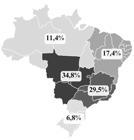
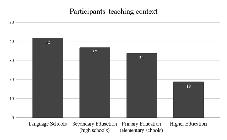
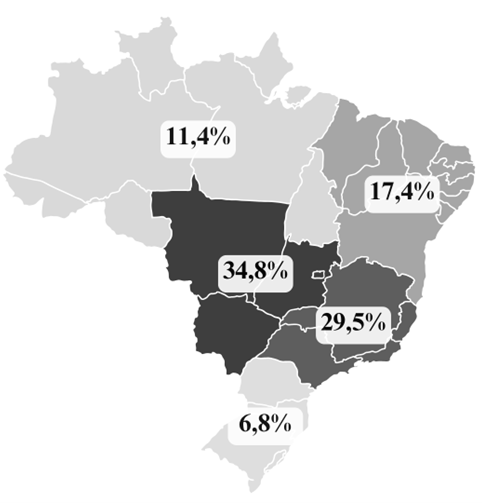
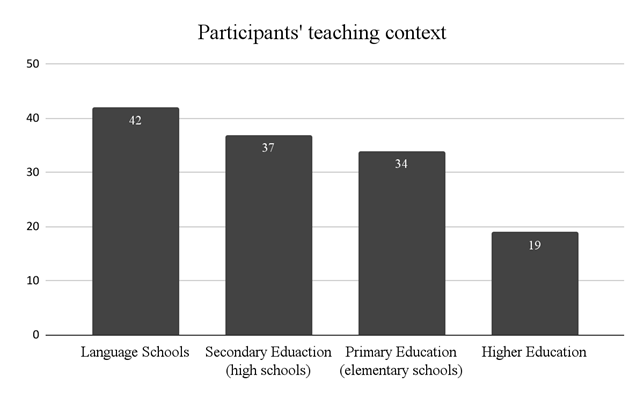
For this study, only professionals who had completed at least an undergraduate teaching degree in language teaching (English or Spanish) were included. A total of 132 in-service teachers of English and Spanish from across the country (Figure 1) completed the questionnaire. English teachers represented 65.9% of respondents, and 34.1% were Spanish teachers. The respondents work in a variety of educational contexts nationwide (Graph 1).
Fewer than 22% of the participants held only an undergraduate degree, whereas the remaining 78% reported having completed or being currently enrolled in postgraduate education, including lato sensu specialization programs (31.8%), non-degree professional development programs common in the Brazilian context, as well as master’s (27.2%) and doctoral (18.9%) degrees. Table 3 summarizes participants’ prior training in language assessment.
At the undergraduate level, approximately 45% of the participants reported having taken a full course on language assessment. In graduate programs, this percentage was slightly lower, with about 43% indicating similar experiences. These figures are not mutually exclusive, as some participants may have engaged in professional development at both educational levels. Notably, 74% of the respondents reported having attended workshops or independent courses on language assessment after entering the profession. This may indicate an acknowledgment of the topic’s relevance and a proactive search for continuing professional development. In terms of teaching contexts, only 14% of the respondents reported working in higher education institutions, while the majority indicated working in language or regular schools (Graph 1).
Understanding participants’ professional contexts is essential to interpreting the assessment-related demands they encounter, as these are closely tied to institutional and learning objectives. Among the 132 participants, the majority reported working in language schools (n = 42) and high schools (n = 37), followed by elementary schools (n = 34) and a smaller number in higher education institutions (n = 19). These distributions are significant because they reflect not only the primary sectors of language education in Brazil but also varying levels of pedagogical autonomy and institutional support for assessment practices.
Moreover, when cross-analyzed with participants’ academic profiles, which reveal a high percentage of teachers holding postgraduate degrees (lato sensu and stricto sensu), it becomes evident that qualifications alone do not determine assessment practices. Rather, these practices appear to be heavily shaped by the institutional logic and pedagogical routines of the contexts in which teachers operate. As suggested by Scarino (2013) and Fulcher (2012), LAL should be understood not only as a set of technical skills but as socially and contextually situated knowledge that must respond to real conditions of teaching. Therefore, recognizing the nuanced interplay between teachers’ educational trajectories, institutional contexts, and their assessment-related responsibilities is fundamental to designing more effective and glocalized2 LAL development initiatives.
These distinct teaching contexts help in understanding the variety of assessment-related responsibilities reported by participants. The types of institutions where teachers work often shape not only the scope of their assessment autonomy but also the expectations placed on them regarding test development, adaptation, or administration. As such, acknowledging their professional environments provides a meaningful backdrop for analyzing the assessment tasks they most frequently perform.
3.2Language Assessment Practices
In language schools, where teaching materials are often standardized and commercially produced, teachers may be more involved in adapting and administering pre-designed tests rather than developing their own assessment instruments. Conversely, public high schools and elementary schools typically follow state or national curricula, where teachers might have to design classroom tests aligned with broader educational policies and goals or standardized assessment requirements. This context may explain why a significant proportion of participants reported designing classroom-based tests (84.8%) and adapting textbook assessments (70.5%) as common tasks (Table 4, Items A and B, respectively).
These findings highlight the central role of test development and adaptation in everyday pedagogical practice, especially in basic education and language school contexts, where external instruments may not always align with local learning needs. It resonates with the literature that frames LAL as situated and practice-oriented (Scaramucci, 2016; Fulcher, 2012; Giraldo ; Yan, 2023) and reinforces the relevance of competencies related to assessment design, frequently prioritized by teachers in this study (see Sections 3.3 and 3.4).
The third most cited practice was designing, adapting, and/or administering assessments for students with special educational needs (Item C, 50.8%). In Brazil, the National Policy on Inclusive Education (Brasil, 2008) guarantees access to all levels and modalities of basic education. The third most cited practice was designing, adapting, and/or administering assessments for students with special educational needs (Item C, 50.8%). This policy requires language teachers to adapt both their instructional and assessment practices to meet diverse learners’ needs. The relatively high frequency of this Item and of Item B, may stem from the broad scope of activities it encompasses and the growing awareness among teachers of the importance of inclusive pedagogical practices. However, this finding also underscores the persistent gaps in initial teacher education regarding inclusive assessment, often leaving professionals to seek alternative training pathways (Brum-Barreto; Borges-Almeida, 2023).
Items D (28.8%) and F (23.5%) refer to collective engagement in assessment processes, such as participation in school committees or administration of tests created by coordinators. These practices reflect common organizational arrangements in Brazilian schools, where teachers often engage in collaborative decision-making or implement institutionally developed assessments. Such roles may contribute to professional development by fostering peer dialogue and collective responsibility, although they can also reinforce top-down dynamics that limit teacher agency (Quevedo-Camargo; Sousa, 2022).
By contrast, activities associated with standardized testing administering exams (Item E, 27.3%), evaluating their results (Item G, 6.8%), or participating in test development (Item I, 3.0%), were reported less frequently. This finding suggests that large-scale assessments are not a predominant part of most participants’ routines, especially outside high-stakes contexts. It also reflects the limited alignment between standardized assessments and classroom practices, a disconnection widely discussed in the literature (Taylor, 2013; Fulcher, 2012).
Although fewer participants work in higher education (N=19), it is possible to assume that this subgroup may engage in more policy-oriented or research-based assessment practices, potentially explaining the higher proportion of advanced academic degrees observed among them. However, the low frequency of responses for Items G and I suggests that direct involvement in the technical or analytical dimensions of standardized testing remains peripheral for most language teachers in Brazil.
Finally, Item H (“other”, 6.1%), captured a variety of additional practices reported by participants. These responses included practices related to digital assessments and context-specific applications, reflecting diverse teaching realities across the country, at the same time underscoring the need for LAL frameworks that accommodate emerging modalities and local pedagogical demands.
3.3Statistical Overview of Prioritized Competencies in LAL
Table 5 presents the descriptive statistics for the final section of the questionnaire, including mean and median values, and standard deviation ranked from highest to lowest.
The analysis revealed a high level of consensus among participants (N=132) on certain items (2, 6, 15, 16, 5, 3), all of which had high means (≥ 4.75) and low standard deviations (SD ≤ 0.58), indicating unanimous agreement on their importance for LAL. In contrast, greater divergence (SD > 1.00) was observed for items addressing standardized testing, assessment history, and bilingualism (Items 24, 23, 27, 14, 1), suggesting polarized views that warrant qualitative exploration. Despite a consistent response range (1-5 across all items), the concentration of responses varied, with the median (5 for most items) confirming a general tendency toward high ratings — even for items with higher dispersion (e.g., Item 22, SD = 0.86). These results reflect a general convergence around core LAL topics while also pointing to areas that may benefit from further discussion.
3.4Interpreting Teachers’ Perceptions: Key Findings on LAL Priorities and Divergences
The questionnaire results indicate that teachers (N=132) attributed high relevance (means ≥ 4.0) to most topics related to LAL. This high valuation specially for items with low variability (SD < 0.60) is consistent with prior studies (Fulcher, 2012; Giraldo ; Murcia, 2018; Giraldo ; Yan, 2023; Vogt ; Tsagari, 2014). Given the self-reported nature of the data, which captures participants’ perceptions of pertinence and/or relevance of each item for an LAL course, two complementary interpretations are possible.
On one hand, the high relevance assigned to many items may reflect LAL needs, considering that teachers identify as crucial precisely those topics they perceive as gaps in their training, a pattern consistent with research on initial training shortcomings in the Brazilian context (Quevedo-Camargo, 2020). On the other hand, the observed consensus around fundamental topics (e.g., establishing clear assessment purposes) may reflect shared professional understanding of their centrality, regardless of prior mastery, an interpretation supported by low standard deviations (SD ≤ 0.58). Rather than a limitation, this ambiguity underscores the complexity of the LAL construct and points to the need for future studies that cross-reference perceived needs and actual practices more deeply aiming to obtain a comprehensive diagnosis of their LAL level.
Regarding the highest-relevance items, participants emphasized key skills involved in assessment planning, such as: ‘establish clear purposes’ (Item 2; M=4.79, SD=0.50); ‘describe specific language skills’ (Item 6; M=4.79, SD=0.47); ‘plan and design assessment processes (objectives, instruments, and feedback)’ (Item 5; M=4.78, SD=0.52); ‘evaluate whether an instrument fulfills its purpose(s)’ (Item 3; M=4.75, SD=0.58). This prioritization may be linked to the frequency with which teachers engage in test development, assessment planning and design (Table 5), which likely informs their perception of these competencies as crucial for professional development as they are often required to engage in such tasks. These findings corroborate Fulcher (2012) and Giraldo and Yan (2023), who identify test design and basic principles such as validity as the core dimensions of LAL.
Fulcher (2012) had already observed that teachers tend to feel the need for training in the full assessment cycle, from creating assessment specifications, instrument design, administration, and scoring. In line with Giraldo and Yan (2023), LAL courses should prioritize: (1) the conscious design of assessment instruments and (2) the careful development of a guiding document outlining assessment specifications including objectives, technique, and criteria grounded in a clear construct. Such documentation serves as a bridge between theoretical knowledge and practical skills.
Another important result concerns the participating teachers’ interest in developing the ability to design integrated skills assessments (Item 20, M=4.72, SD=0.62), reflecting alignment with current trends in communicative and authentic assessment. This contrasts with the findings of Vogt and Tsagari (2014), in which participants valued more traditional formats with skills assessed separately. This finding is relevant because studies conducted in both Brazilian and global contexts (Brum-Barreto, 2023; Giraldo, Naranjo-Trujillo; Ariza-Villa, 2023) reveal low levels of authenticity in assessment practices, highlighting a gap in teachers’ LAL.
Significant polarization was identified (SD >1.00) in perceptions regarding ‘traditional assessment design (multiple-choice; true-false)’ (Item 23, M=4.10, SD=1.10) and ‘non-traditional assessment design (self-assessment, portfolios)’ (Item 24, M=4.18, SD=1.05), suggesting divergence in teacher perceptions. While some value these formats highly, others rank them as less essential. This division may reflect differences in prior training, teaching contexts, or pedagogical beliefs – dimensions that require complementary qualitative inquiry. Despite this variability, both items received means above 4.0, indicating moderate to high relevance overall. These results may reveal: (1) ongoing tensions between traditional and innovative assessment paradigms; (2) unequal access to professional development, causing formative asymmetries, that is, teachers with access to innovative training versus those restricted to conventional methods; and (3) institutionally imposed contextual constraints that limit assessment options.
The ‘traditional assessment design (multiple-choice; true-false)’ (Item 23, M=4.10, SD=1.10) showed lower consensus compared to topics such as ‘assessment process design planning’ (Item 5, M=4.78, SD=0.52), and, although its mean still indicates moderate relevance in the ranking, the item appears among the least relevant. This result corroborates Giraldo and Yan (2023), yet diverges from classroom practices observed in Brazil and internationally (Brum-Barreto; Borges-Almeida, 2023; Levi ; Inbar-Lourie, 2020), where such methods remain prevalent. This discrepancy may be explained by: the (1) the perception that traditional assessment formats require less additional training, given their ubiquity in teaching materials; or (2) a prioritization, in LAL courses, of topics less accessible to teachers. These hypotheses, however, require empirical confirmation. The division of opinions (SD=1.10) further suggests that perceptions may vary across institutional contexts.
Giraldo and Yan (2023) study shows the growing importance of topics such as inclusion and assessment for students with special educational needs (Item 22), however, despite the international recognition of inclusive assessment as an emerging priority in LAL development the results for Item 22 revealed a moderate mean rating (M = 4.44) and a relatively high standard deviation (SD = 0.86), indicating a lack of consensus among participants. Although the median score was 5, suggesting that many teachers recognize its importance, the dispersion of responses reflects divergent perspectives, possibly influenced by differences in training, teaching contexts, and institutional support.
Interestingly, this variability contrasts with the frequency of related professional practices reported in the study. As shown in Table 4, 50.8% of participants indicated that they engage in designing, adapting, and/or administering assessments for students’ special needs, making this the third most common assessment-related task. This discrepancy (between the frequency of the practice and the level of agreement on its relevance as a topic for LAL training) may suggest that while teachers frequently face the need to assess inclusively, they may not feel fully prepared to do so, or may not recognize this competence as a specialized area requiring further development.
This pattern supports Quevedo-Camargo and Sousa’s (2022) assertion that, in the absence of specific preparation, teachers often rely on intuitive strategies or replicate previously known models. It also resonates with findings from Giraldo and Murcia (2018), who argued that the complexity of LAL lies not only in mastering technical procedures but also in aligning them with ethical, inclusive, and context-sensitive pedagogical principles.
Moreover, the Brazilian National Policy on Inclusive Education (Brasil, 2008) emphasizes the teacher’s responsibility to ensure equitable learning and assessment opportunities for all students. However, the limited attention to inclusive assessment in formal education, reflected in the participants’ reported gaps in undergraduate and graduate education, may hinder the implementation of this policy in practice.
Therefore, the findings on Item 22 underscore a critical tension: while inclusive assessment is a frequent and necessary part of teachers’ work, it is not consistently perceived as a priority for professional development. This misalignment highlights one of the core arguments of this study—that LAL cannot be reduced to a set of decontextualized technical skills but must instead be understood as a situated construct shaped by the educational demands, values, and constraints of each teaching reality (Fulcher, 2012; Scarino, 2013; Scaramucci, 2016).
Assessment in bilingual contexts was considered a relevant topic for teachers investigated by Giraldo and Murcia (2018). Nevertheless, Item 27 (Assessment in a bilingual context) obtained a moderate mean (M = 4.10), a median of 4, and one of the highest standard deviations (SD = 1.10), indicating significant divergence among participants. This polarization likely reflects the uneven presence of bilingual programs across Brazil. Although such programs have expanded in some private and public institutions, they are not yet consolidated in most regions, which may lead many teachers to perceive bilingual assessment as less immediately relevant to their professional context. This aligns with Giraldo and Murcia’s (2018) findings, which emphasize that teachers working directly in bilingual settings tend to value this competence more strongly.
Despite the dispersion, the item’s mean score above 4.0 suggests an underlying recognition of its relevance, even among those not directly involved in bilingual education. This pattern supports arguments by Fulcher (2012), Scarino (2013), and Inbar-Lourie (2008) that LAL is inherently situated and must respond to the sociolinguistic realities of each educational context. Including bilingual assessment in LAL training may not only prepare teachers for plurilingual classrooms but also promote critical reflection on linguistic equity and policy, especially in contexts where bilingualism is emerging or institutionally uneven.
Ethics in assessment (Item 29, M=4.64, SD=0.67) was highly valued by the teachers, with a relatively dispersed pattern of responses, yet still indicating overall consensus on its importance. This result partially contrasts with earlier studies reporting lower levels of teacher interest in the topic (Giraldo ; Murcia, 2018) while aligning with the findings of Giraldo and Yan (2023). This shift may suggest a reconfiguration of teacher’s priorities, reflecting a growing awareness of the significance of ethics in assessment. The findings of Fulcher (2012) remain pertinent: the respondents emphasized the need to incorporate ethical principles in a procedural and practical manner, especially in the development of assessment instruments—a gap that reinforces the importance of formative approaches connecting ethical theory to everyday assessment practice.
Standardized test evaluation such as DELE, TOEFL, and ENEM (Item 14, M=3.92, SD=1.25) showed moderate relevance and strong variability, indicating polarized opinions. While Fulcher (2012) found great interest in this area, this research findings align more closely with Giraldo and Yan (2023). This divergence may reflect contextual differences. In Brazil, the relevance of standardized tests is concentrated at specific stages, particularly in the ENEM, which is crucial for admission to higher education, and in international certifications, which tend to be valued in specific academic and professional contexts.
In regular schools, however, the direct impact of standardized examinations on everyday assessment practices appears to be limited, as suggested by the lower frequency of assessment-related demands concerning such exams reported by the teachers. The observed polarization (SD=1.25) suggests that subgroups of teachers, particularly those working in preparatory courses or bilingual schools, may assign greater importance to these assessments, reinforcing the contextualized nature of LAL (Vogt ; Tsagari, 2014).
Finally, ‘knowing the history of language assessment’ (Item 1, M=3.86, SD=1.12) was one of the least valued topics, corroborating the findings of Giraldo and Yan (2023). However, as Fulcher (2012) points out, this topic may be relevant to support teachers’ assessment decision-making in an informed and ethical manner.
In summary, the data reveal a complex LAL landscape. While basic technical skills (establishing purposes, assessment planning) show unequivocal consensus (means ≥ 4.75; SD ≤ 0.58), topics such as assessment in bilingual contexts (Item 27), standardized tests (Item 14), and non-traditional methods (Item 24) demonstrate significant polarization (SD > 1.00), reflecting paradigmatic disputes and contextual influences. The high valuation of ethics (Item 29, M=4.64), in contrast with previous findings, suggests a possible shift in teacher priorities, though its practical application remains a challenge.
These findings emphasize: (1) the context-specific nature of LAL; (2) the persistence of gaps in areas aligned with emerging assessment demands – inclusion of students with special educational needs and bilingualism – which require continuing professional development that goes beyond technical foundations; and (3) the importance of bridging perceived priorities and actual classroom practices through context-responsive and critically oriented to the Brazilian teachers. The results not only corroborate international research on the complexity of LAL (Fulcher, 2012; Vogt ; Tsagari, 2014; Giraldo ; Yan, 2023) but also reflect specific contours of the Brazilian context, which merit further empirical exploration.
4.LIMITATIONS AND IMPLICATION FOR FURTHER RESEARCH
This study presents some limitations that should be considered when interpreting the results. First, although the sample includes teachers from all regions of Brazil and is fairly representative, it remains relatively small compared to the total population of language teachers in the country, which may limit the generalizability of the findings. Second, the absence of open-ended questions in the questionnaire restricted the possibility of exploring participants’ needs and perceptions about LAL in greater depth and qualitative detail.
Considering these limitations and the descriptive nature of the data discussed, future research could further investigate teachers’ perceptions through mixed-method approaches, contributing to a more detailed understanding of how assessment is conceptualized and practiced in specific educational contexts. Additionally, longitudinal studies may offer insights into how professional development initiatives influence LAL practices over time. Finally, since the data rely on self-reports, they reflect teachers’ (self-)perceptions rather than directly capturing how these translate into actual assessment practices. These limitations reinforce the need for future research that combines quantitative and qualitative methods, with broader and more diverse samples, as well as direct observation of pedagogical and assessment practices, to build a more comprehensive understanding of LAL in the Brazilian context.
FINAL CONSIDERATIONS
This exploratory study aimed to identify and discuss the additional language assessment topics perceived as most relevant by English and Spanish teachers in Brazil, to inform the development of pedagogical actions focused on LAL. The findings indicate that, although a significant portion of the participants hold advanced academic degrees, their formal education in language assessment remains limited. In response to this gap, many teachers have engaged in alternative forms of professional development, such as workshops and independent courses, suggesting increased awareness of the relevance of assessment-related knowledge for their teaching practices. These results underscore the need for teacher education programs that are not only technically grounded but also critically reflective and responsive to the diverse institutional and regional realities faced by educators.
Regarding LAL needs and the most relevant topics to guide pedagogical actions in this area, this study revealed that English and Spanish teachers in Brazil assign high relevance to most topics related to LAL. Topics related to the assessment planning process (such as establishing clear purposes, describing language skills, and evaluating the adequacy of assessment tools) stood out in particular. These items showed low response variability, indicating strong consensus among participants about their importance. This recognition may reflect both gaps in initial teacher education and the perception that these competencies are essential to teaching practice.
In contrast, topics such as the design of traditional assessments (e.g., multiple-choice), non-traditional assessments (e.g., self-assessment, portfolios), inclusive assessment, and assessment in bilingual contexts showed high response variability, revealing divergent perceptions among teachers. These findings suggest tensions between traditional and innovative assessment paradigms, inequalities in access to continuing education, and the influence of different institutional contexts on teachers’ conceptions.
Moreover, mapping teachers’ perceptions and practices through surveys (such as the present study and Giraldo and Yan’s, 2023) is essential not only for diagnosing local needs but also for fostering international dialogue on LAL. By identifying convergences and divergences across national contexts, such studies contribute to a broader understanding of LAL as a situated and dynamic construct.
ACKNOWLEDGMENT
We sincerely thank Dr. Vanessa Borges Almeida, Associate Professor at the University of Brasília, for her generous contribution to the validation process of the questionnaire used for data collection.
-
1
This investigation followed ethical procedures in accordance with guidelines for research involving human subjects. All participants signed an informed consent form authorizing the use of their data exclusively for scientific purposes. Moreover, the questionnaire was anonymous and did not collect any personal information, thus ensuring participants’ anonymity and confidentiality.
-
2
Glocalization, according to Quevedo-Camargo and Sousa (2022), refers to the process by which local practices, values, and identities interact with global influences, resulting in hybrid and contextually adapted cultural dynamics. This concept highlights the simultaneity of the global and the local, showing how global phenomena are reinterpreted and appropriated in specific local contexts, promoting cultural diversity that transcends geographical boundaries.
-
3
Diploma de Español como Lengua Extranjera (DELE); Test of English as a Foreign Language (TOEFL); Exame Nacional do Ensino Médio (ENEM) in English “National High School Exam”.
-
RESEARCH DATA AVAILABILITY STATEMENT
The raw data collected through the administered questionnaires are not publicly available, as they contain information that may compromise the privacy and safety of the research participants.
-
STATEMENT IF AI WAS USED
The authors used artificial intelligence (AI) tools to support the translation and revision of portions of the manuscript. All generated content was critically reviewed and revised by the authors, who assume full responsibility for the accuracy, integrity, and originality of the work.
REFERENCES
- ANDRADE, M. Avaliação para quem? Letramento em avaliação na formação de professoras de PBSL e o compromisso ético com a justiça social de surdos, indígenas e quilombolas 2025. Dissertação (Mestrado em Linguística Aplicada) – Universidade de Brasília, Brasília. Catálogo de Teses & Dissertações CAPES.
-
BRASIL. Lei nº 9.394, de 20 de dezembro de 1996: Estabelece as diretrizes e bases da educação nacional. 1996. Disponível em: http://www.planalto.gov.br/ccivil_03/leis/l9394.htm Acesso em: 2 out. 2025.
» http://www.planalto.gov.br/ccivil_03/leis/l9394.htm -
BRASIL. Lei nº 13.415, de 16 de fevereiro de 2017: Altera as diretrizes e bases da educação nacional. 2017. Disponível em: http://www.planalto.gov.br/ccivil_03/_ato2015-2018/2017/lei/l13415.htm
» http://www.planalto.gov.br/ccivil_03/_ato2015-2018/2017/lei/l13415.htm -
BRASIL. Ministério da Educação. Política Nacional de Educação Especial na perspectiva da Educação Inclusiva Brasília: MEC/SEESP, 2008. Disponível em: https://portal.mec.gov.br/arquivos/pdf/politicaeducespecial.pdf
» https://portal.mec.gov.br/arquivos/pdf/politicaeducespecial.pdf -
BRINDLEY, G. Outcomes-based assessment in practice: Some examples and emerging insights. Language Testing, v. 18, n. 4, p. 393-407, 2001. DOI: https://doi.org/10.1177/026553220101800405.
» https://doi.org/10.1177/026553220101800405 -
BRUM-BARRETO, A. N.; BORGES-ALMEIDA, V. Cultura de avaliar e letramento em avaliação de professores de espanhol no estágio obrigatório. Entretextos, v. 23, n. 4, p. 346-366, 2023. DOI: https://doi.org/10.5433/1519-5392.2023v23n4p346-366.
» https://doi.org/10.5433/1519-5392.2023v23n4p346-366 - BRUM-BARRETO, A. Letramento em avaliação na formação do professor de espanhol: visão de língua e cultura de avaliar no estágio obrigatório 2023. Dissertação (Mestrado em Linguística Aplicada) – Universidade de Brasília, Brasília. Catálogo de Teses & Dissertações CAPES.
-
BRUM-BARRETO, A. N.; BORGES-ALMEIDA, V. Explorando uma oficina de tarefas orais integradas: desafios e oportunidades de letramento em avaliação para professores de Espanhol em Formação Inicial . Ñemitỹrã, [S. l.], v. 7, n. 2, p. 217–236, 2025. DOI: 10.47133/NEMITYRA20250702b-A14.
» https://doi.org/10.47133/NEMITYRA20250702b-A14 - CARVALHO PINTO, C. Letramento em avaliação na formação continuada de professoras de espanhol do ensino público 2023. Tese (Doutorado em Linguística Aplicada) – Universidade Federal de São Carlos, São Carlos. Catálogo de Teses & Dissertações CAPES.
- CRESWELL, J. W.; CRESWELL, J. D. Research Design: Qualitative, Quantitative, and Mixed Methods Approaches 5. ed. Los Angeles: SAGE, 2018.
- DAMACENA-DUTRA, M. A construção do letramento em avaliação na formação inicial de professores de inglês: Avaliação de produção oral em foco 2023. Dissertação (Mestrado em Linguística Aplicada) – Universidade de Brasília, Brasília. Catálogo de Teses & Dissertações CAPES.
-
DAVIES, A. Textbook trends in teaching language testing. Language Testing, v. 25, n. 3, p. 327-347, 2008. DOI: https://doi.org/10.1177/0265532208090156.
» https://doi.org/10.1177/0265532208090156 - DÖRNYEI, Z. Research methods in Applied Linguistics: quantitative, qualitative and mixed methods Oxford: Oxford University Press, 2007.
- FERNANDES, M. N. Letramento em avaliação de professores em formação inicial em um curso de Letras Espanhol: uma pesquisa-ação 2019. Dissertação (Mestrado em Linguística Aplicada) – Universidade de Brasília, Brasília. Catálogo de Teses & Dissertações CAPES.
- FERNANDES, G. M. Letramento em avaliação orientada para a aprendizagem: Um estudo de caso na formação de professores de línguas estrangeiras 2022. Dissertação (Mestrado em Linguística Aplicada) – Universidade Estadual de Londrina, Londrina. Repositório Institucional - UEL.
- FERNANDES, G. M. Literacidad en evaluación del profesorado de español como lengua adicional en Brasil: un análisis y una propuesta pedagógica 2025. Tese (Doutorado em Linguística Aplicada) – Universidade Federal de Minas Gerais-Universidad de Salamanca, Salamanca, 2025.
-
FULCHER, G. Assessment literacy for the language classroom. Language Assessment Quarterly, v. 9, n. 2, p. 113-132, 2012. DOI: https://doi.org/10.1080/15434303.2011.642041.
» https://doi.org/10.1080/15434303.2011.642041 - FULCHER, G. Operationalizing assessment literacy. In: TSAGARI, D. (Ed.). Language assessment literacy: From theory to practice Cambridge: Cambridge Scholars, 2020. p. 8-28.
- GERHARDT, T. E.; SILVEIRA, D. T. (Org.). Métodos de pesquisa Porto Alegre: Editora da UFRGS, 2009.
-
GIRALDO, F.; MURCIA, D. Language Assessment Literacy for Pre-Service Teachers: Course Expectations from Different Stakeholders. GiST Education and Learning Research Journal, n. 16, p. 56-77, 2018. Disponível em: https://files.eric.ed.gov/fulltext/EJ1184916.pdf
» https://files.eric.ed.gov/fulltext/EJ1184916.pdf -
GIRALDO, F.; MURCIA, D. Language Assessment Literacy and the Professional Development of Pre-Service Language Teachers. Colombian Applied Linguistics Journal, v. 21, n. 2, p. 243-259, 2019. DOI: https://doi.org/10.14483/22487085.14514.
» https://doi.org/10.14483/22487085.14514 -
GIRALDO, F.; YAN, X. Planning an online assessment course for English language teachers in Latin America. Profile: Issues in Teachers’ Professional Development, v. 25, n. 2, p. 147-164, 2023. DOI: https://doi.org/10.15446/profile.v25n2.104703.
» https://doi.org/10.15446/profile.v25n2.104703 -
GIRALDO, A. F. A diagnostic study on teachers’ beliefs and practices in additional language assessment. Íkala, Revista de Lenguaje y Cultura, v. 23, n. 1, p. 25-44, 2018. DOI: https://doi.org/10.17533/udea.ikala.v23n01a04.
» https://doi.org/10.17533/udea.ikala.v23n01a04 -
GIRALDO, F. A reflection on initiatives for teachers’ professional development through language assessment literacy. Profile: Issues in Teachers’ Professional Development, v. 23, n. 1, p. 197-213, 2021. DOI: https://doi.org/10.15446/profile.v23n1.83094.
» https://doi.org/10.15446/profile.v23n1.83094 -
GIRALDO, F.; NARANJO-TRUJILLO, D. E.; ARIZA-VILLA, J. A. From the Design of Assessments to Language Assessment Literacy. Folios, n. 58, p. 126-139, 2023. DOI: https://doi.org/10.17227/folios.58-16385.
» https://doi.org/10.17227/folios.58-16385 - HARDING, L.; KREMMEL, B. Teacher assessment literacy and professional development. In: TSAGARI, D.; BANERJEE, J. (Eds.). Handbook of second language assessment Berlin: De Gruyter Mouton, 2016. p. 413-428.
-
INBAR-LOURIE, O. Constructing a language assessment knowledge base: A focus on language assessment courses. Language Testing, v. 25, n. 3, p. 385-402, 2008. DOI: https://doi.org/10.1177/0265532208090158.
» https://doi.org/10.1177/0265532208090158 - ISMAIL, D. S. D. Oficinas para o desenvolvimento do letramento em avaliação de línguas de professores de um centro de línguas público do Distrito Federal 2019. Dissertação (Mestrado em Linguística Aplicada) – Universidade de Brasília, Brasília. Catálogo de Teses & Dissertações CAPES.
-
LEVI, T.; INBAR-LOURIE, O. Assessment Literacy or Language Assessment Literacy: Learning from the Teachers. Language Assessment Quarterly, v. 17, n. 2, p. 168-182, 2020. DOI: https://doi.org/10.1080/15434303.2019.1692347.
» https://doi.org/10.1080/15434303.2019.1692347 - MACKEY, A.; GASS, S. M. Second language research: Methodology and design New York: Routledge, 2015.
- MORAES, I. T. A promoção do letramento em avaliação para a práxis de formadoras de professores/as de inglês: Implicações para a formação inicial e continuada 2023. Tese (Doutorado em Linguística Aplicada) – Universidade Estadual de Londrina, Londrina. Catálogo de Teses & Dissertações CAPES.
-
MORAES, I. T.; FURTOSO, V. B.; GIRALDO, F. Developing Pre-Service Teachers’ Language Assessment Literacy: An Analysis of Classroom Tasks. Ilha do Desterro, v. 77, e96898, 2024. DOI: https://doi.org/10.5007/2175-8026.2024.
» https://doi.org/10.5007/2175-8026.2024 - PENNA, J. A. Letramento em avaliação na prática de professores em formação inicial no estágio obrigatório: um estudo de caso num curso de Letras Inglês 2024. Dissertação (Mestrado em Linguística Aplicada) – Universidade de Brasília, Brasília. Catálogo de Teses & Dissertações CAPES.
-
QUEVEDO-CAMARGO, G. Formação de professores de línguas adicionais e letramento em avaliação: breve panorama e desafios para os cursos de licenciatura em LEM no Brasil. Calidoscópio, v. 18, n. 2, p. 435-459, 2020. DOI: https://doi.org/10.4013/cld.2020.182.10.
» https://doi.org/10.4013/cld.2020.182.10 -
QUEVEDO-CAMARGO, G.; SCARAMUCCI, M. V. R. O conceito de letramento em avaliação de línguas: origem de relevância para o contexto brasileiro. Linguagem: Estudos e Pesquisas, v. 22, n. 1, p. 225-245, 2018. DOI: https://doi.org/10.5216/lep.v22i1.54474.
» https://doi.org/10.5216/lep.v22i1.54474 -
QUEVEDO-CAMARGO, G.; DE PAIVA SOUSA, A. A. C. Letramento em avaliação para professores de inglês e a perspectiva glocal: um microestudo. Revista do GEL, v. 19, n. 1, p. 223-245, 2022. DOI: https://doi.org/10.21165/gel.v19i1.3371.
» https://doi.org/10.21165/gel.v19i1.3371 -
QUEVEDO-CAMARGO, G.; TONELLI, J. R. A. Contribuições de um curso EAD para o letramento em avaliação de professores de línguas adicionais para crianças. Revista do GEL, v. 18, n. 1, p. 230-248, 2021. DOI: https://doi.org/10.21165/gel.v18i1.3094.
» https://doi.org/10.21165/gel.v18i1.3094 - SCARAMUCCI, M. V. R. Letramento em avaliação (em contexto de línguas): Contribuições para a linguística aplicada, educação e sociedade. In: JORDÃO, C. M. (Org.). A Linguística Aplicada no Brasil: Rumos e passagens Campinas: Pontes Editores, 2016. p. 141-165.
-
SCARINO, A. Language assessment literacy as self-awareness: Understanding the role of interpretation in assessment and in teacher learning. Language Testing, v. 30, n. 3, p. 309-327, 2013. DOI: https://doi.org/10.1177/0265532213480128.
» https://doi.org/10.1177/0265532213480128 -
TAYLOR, L. Communicating the theory, practice and principles of language testing to test stakeholders: Some reflections. Language Testing, v. 30, n. 3, p. 403-412, 2013. DOI: https://doi.org/10.1177/0265532213480338.
» https://doi.org/10.1177/0265532213480338 -
VOGT, K.; TSAGARI, D. Assessment literacy of additional language teachers: Findings of a European study. Language Assessment Quarterly, v. 11, n. 4, p. 374-402, 2014. DOI: https://doi.org/10.1080/15434303.2014.960046.
» https://doi.org/10.1080/15434303.2014.960046 -
VOGT, K.; TSAGARI, D.; SPANOUDIS, G. What do teachers think they want? A comparative study of in-service language teachers’ beliefs on LAL training needs. Language Assessment Quarterly, v. 17, n. 4, p. 386-409, 2020. DOI: https://doi.org/10.1080/15434303.2020.1781128.
» https://doi.org/10.1080/15434303.2020.1781128 -
XU, Y.; BROWN, G. T. Teacher assessment literacy in practice: A reconceptualization. Teaching and Teacher Education, v. 58, p. 149-162, 2016. DOI: https://doi.org/10.1016/j.tate.2016.05.010.
» https://doi.org/10.1016/j.tate.2016.05.010 -
ZOCARATTO, B.; OLIVEIRA, D. B. Letramento em avaliação na formação de professores de inglês: percepções e impactos ao longo de um curso de licenciatura no contexto de um Instituto Federal. Revista Eixo, v. 14, n. 1, p. 88-100, 2025. DOI: https://doi.org/10.19123/REixo.v14n1.9
» https://doi.org/10.19123/REixo.v14n1.9
The raw data collected through the administered questionnaires are not publicly available, as they contain information that may compromise the privacy and safety of the research participants.

 Note: Prepared by the authors.
 Note: Prepared by the authors.