 U-SMILE: a brief version of the Short Multidimensional Inventory on Lifestyle Evaluation
Abstract
Objective Lifestyle Medicine comprises six domains: diet, substance use, physical activity, stress management, social connection, and sleep. The comprehensive assessment of lifestyle is challenging, but the Short Multidimensional Inventory on Lifestyle Evaluation (SMILE) was developed to fill out this gap. In this paper, we describe the development and the psychometric properties (internal consistency, concurrent and convergent validity) of a shorter version of the SMILE among university students.
Methods Data from a cross-sectional study including 369 students from 10 Brazilian universities were used. Considering a theoretical nomological net, we performed exploratory factor analysis (EFA) to obtain the most parsimonious, interpretable, and good-fitting model.
Results The final model was called U-SMILE, comprised 24 items, and presented acceptable internal consistency (Cronbach's α = 0.73, McDonald's ω = 0.79). To evaluate the concurrent validity of the U-SMILE, we compared it to the original SMILE and found a high correlation between the instruments (Spearman's r = 0.94). Furthermore, we evaluated convergent validity by examining the U-SMILE correlation with the Patient Health Questionnaire (PHQ-9) (Spearman's r = −0.517), and Generalized Anxiety Disorder Questionnaire (GAD-7) (Spearman's r = −0.356), two validated instruments to screen for depression and anxiety, respectively.
Conclusion Our findings suggest that the U-SMILE is a valid instrument for assessing lifestyle among university students. We recommend that the use of U-SMILE to evaluate overall lifestyle scores rather than individual domain scores. Finally, we discuss the importance of clarifying the definitions of lifestyle and related constructs in future research.
Keywords:
Lifestyle; health questionnaires; validation; university students
Introduction
Unhealthy lifestyle behaviors are major risk factors for morbidity and mortality worldwide.1,2 Those behaviors are unlikely to occur in isolation but instead tend to cluster together among individuals.3 Clusters with a higher number of unhealthier behaviors are associated with a reduced survival time without disability and higher mortality compared to these behaviors in isolation.4-7
In the last decades, Lifestyle Medicine (LM) emerged as a branch of evidence-based medicine to deliver strategies for changing unhealthy behaviors to prevent and treat chronic diseases, including mental health disorders.8 The European Lifestyle Medicine Organization (ELMO)9 defined LM as "an inter-disciplinary field of internal medicine, psychosocial and neurosciences, public and environmental health, and biology. Key LM principles include prevention strategies that address lifestyle habits, the underlying biological causes and the pathophysiology common to lifestyle-related diseases (e.g. low-grade systemic inflammation, dysregulated stress axis, metabolic dysfunctions, etc."
The American College of Lifestyle Medicine (ACLM)10 proposes that the six main pillars of LM are diet, substance use, physical activity, stress management, social connection, and sleep. Although the LM definition and the target areas for interventions have been discussed in the last years, the concept of "lifestyle" is still under debate and may be hard to operationalize.11 As such, questionnaires assessing multiple lifestyle behaviors may consider different domains/dimensions. For instance, two widely used questionnaires for evaluating multiple lifestyle behaviors are the Fantastic Lifestyle Checklist12 and the General Lifestyle Questionnaire (GLQ).13 The Fantastic Lifestyle Checklist assesses nine domains, namely family and friends, physical activity, nutrition, tobacco and toxics, alcohol intake, sleep, seat belt use, stress, safe sex behavior patterns, insight, and career. On the other hand, the GLQ evaluates five domains: physical, cognitive, social, and other leisure activities, sleep, food, tobacco, and alcohol consumption. It is worth noting that the two questionnaires do not evaluate the same lifestyle domains, and none of them follows exactly the same domains proposed by the ACLM and ELMO.
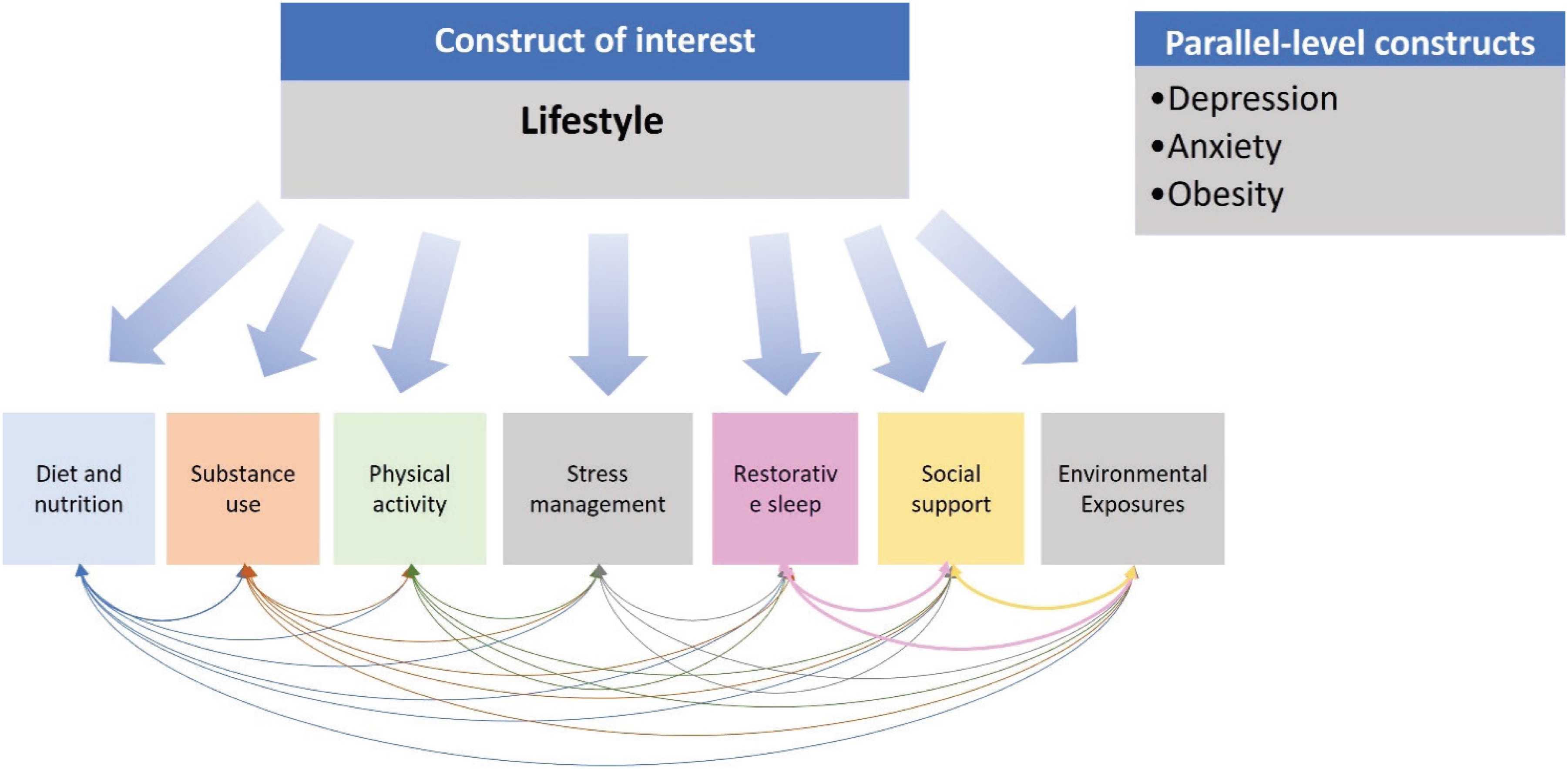
At the same time, there are numerous questionnaires available to measure a lifestyle domain isolated (i.e., questionnaires to evaluate alcohol use, or physical activity, or diet and others). However, to perform a comprehensive assessment of lifestyle by adopting multiple questionnaires may increase the burden for research participants and research costs. Furthermore, lifestyle behaviors are evaluated as independent risk factors and disregard the clustering and interconnection of behaviors.14,15 To overcome these barriers, the Short Multidimensional Inventory on Lifestyle Evaluation (SMILE), a 43-item questionnaire, was developed to evaluate the six lifestyle domains proposed by the ACLM and, additionally, environmental exposures.16 The development of the SMILE followed a multiple step process that included reviewing lifestyle questionnaires, expert's feedback and revisions, and face validity as described elsewhere.16 The hypothetical nomological network of the lifestyle construct, as well as the hypotheses surrounding convergent validity and factor structure of the SMILE are presented in Figure 1. It was expected that lifestyle domains presented correlations among each other due to the clustering of healthy/unhealthy behaviors. Furthermore, worse lifestyle scores should be associated with depression, anxiety, and obesity (among other health outcomes).
In 2020, during the beginning of the coronavirus disease 2109 (COVID-19) pandemic, a shorter version of the SMILE was developed and had its initial psychometric characteristics evaluated.16,17 Such development was necessary due to the changes imposed by social distance and confinement essential to control virus’ dissemination. In this process, some questions were dropped because they were not appropriate for the lockdown/confinement, resulting in the SMILE-C (SMILE for confinement) questionnaire. This shorter version comprised 27 items and presented good initial psychometric properties. However, almost 3 years later, individuals are reassuming their previous behaviors insofar in-person activities were restored in most of the countries.
This interplay between social isolation and lifestyle prompts us to pay attention to contexts in which lifestyle can be dynamic and influenced.18 For example, university years impose shifts in social, academic, and financial demands to students,19,20 and adjustments to these new demands may impact their lifestyle.21 It is well documented, for instance, that university students often present poor and unbalanced diet, high levels of physical inactivity, and sedentary behavior, high rates of alcohol and other substance use, poor sleep quality, and high screen time.22-25 Although these pieces of evidence demonstrate that university students present poor lifestyle behavior, the extant evidence relies on questionnaires that evaluate a single domain in isolation.
Therefore, considering that certain questions in the SMILE, which were deemed irrelevant in the context of the pandemic, may now hold relevance in the post-COVID society, and recognizing the necessity for a concise multidimensional lifestyle scale that specifically addresses the pertinent domains for university students, this paper endeavors to outline the development process of a short version of the SMILE for university students. Furthermore, it aims to present the initial psychometric properties of this scale (internal consistency, convergent, and concurrent validity)
Methods
Data from a cross-sectional study conducted in 10 Brazilian universities (covering nine states and the five Brazilian macro-regions) were used. Data collection was conducted online using a questionnaire developed in Research Electronic Data Capture (REDCap®). The assessments took place between May-December 2022.
Study population
A convenience sample of students was recruited using online resources such as advertising on social media, the official university website, and direct emails. Newsletters and posters were fixed on the university walls with the link/QR code to the study survey. Further face-to-face invitations through flyers distribution to students gathering places such as university restaurants, parks, and lectures.
Inclusion criteria were 1) being 18-35 years old and 2) having read and agreed to the consent form. Participants with missing data on the SMILE were excluded from the analysis, but not other exclusion criteria was adopted.
Sample size
A sample size above 300 individuals is considered large enough to conduct an exploratory factor analysis (EFA), as revised by Boateng et al.26 In the present study 369 questionnaires were responded, thus reaching a suitable sample size for the aimed purpose.
Measures and assessments
The survey included questions on lifestyle, mental health symptoms, and demographics. Lifestyle was assessed using the SMILE. The questionnaire included the 43-item SMILE questionnaire, which is self-reported and has been previously validated for online use. Responses are provided through a four-item Likert scale (Always, Often, Seldom, Never) and scores are calculated by adding up all the answers. The higher the score, the better the lifestyle.16
Mental health problems were assessed at two levels. At the first level, the Diagnostic and Statistical Manual of Mental Disorders, 5th edition (DSM-5) Level 1 Cross-Cutting Symptom Measure for Adults27 will be answered by all participants. The DSM-5 Level 1 Cross-Cutting Symptom Measure is a self-reported questionnaire that assesses important domains across most psychiatric diagnoses. The adult version is composed of 23 questions that assess 13 psychiatric domains: depression, anger, mania, anxiety, somatic symptoms, suicidal ideation, psychosis, sleep problems, memory problems, repetitive thoughts and behaviors, dissociation, personality functioning, and substance use. This is a 5-point Likert scale in which participants will respond "how much (or how often) you have been bothered by" a given problem during the past 2 weeks. Responses range from 0 = None (not at all) to 4 = Severe (nearly every day). Individuals presenting scores equal or greater than 2 for depression and anxiety symptoms, subsequently answered the Patient Health Questionnaire28 (PHQ-9) and the Generalized Anxiety Disorder Questionnaire (GAD-7). The PHQ-9 is a 9-item questionnaire for screening major depression. The scores range from 0 to 27, and scores ≥ 9 indicate a positive screening for depression. The PHQ-9 is widely used and was previously validated in Brazil.29 The GAD-7 is a 7-item questionnaire used for the screening of generalized anxiety disorder,30 validated in Brazil with cut-off ≥ 10.31
Sociodemographics included sex, age and body mass index (BMI). BMI was measured through self-reported anthropometric measurements "What's your height (cm)?" and "What is your weight (kg)?" Subsequently, the BMI variable was calculated as body weight in kg divided by height in squared meters and categorized according to the World Health Organization (WHO) criteria as low weight/normal (≤ 24.9 kg/m²), overweight (25.0-29.9 kg/m²), and obesity (over 30 kg/m²).
Statistical analysis
Initially, the specificity and redundancy of the 43 SMILE's items were evaluated among the authors because nonspecific items may affect the factor structure, and redundancy may affect convergent validity (25). Two Social Support's items were deemed to be non-specific (i.e., "Do you enjoy your leisure time?" and "Are you satisfied with your sexual life?"), and one item was considered redundant ("Do you take part in celebrations/reunions with family/friends/colleagues?"). Those items were excluded from subsequent analysis.
All the remaining 40 items were checked for normality using the Kolmogorov-Smirnov test (Supplementary Material S1). Due to non-normality, the correlation of items was evaluated through a polychoric matrix. Three items that did not present a ≥ 0.300 correlation with any other items were excluded (D-I1, E_I22, S_I27) (see Supplementary Material S2, available as CSV file for download).
Afterwards, an EFA was performed including the 37 items. This first model was estimated without a priori specifications about the number of factors. Principal axis factoring (PAF) was used for factor extraction, using the eigenvalues to determine the number of factors and Oblimin with Kaiser normalization for matrix rotation. Items were then eliminated if 1) presented loading < 0.30 in all factors, 2) presented cross-loading with similar magnitude in two or more factors, and 3) presented higher load in factors different than defined in the hypothesized nomological net (Figure 1). Model fit was evaluated through the root mean square error of approximation (RMSEA), and Tucker-Lewis index (TLI). RMSEA values lower than 0.08, and TLI values above 0.90 were considered acceptable. The solution was critically evaluated within the context of the questionnaire hypothesized structured (Figure 1). This process was repeated until the most parsimonious, interpretable, and good-fitting solution was obtained (called U-SMILE).
Internal consistency was evaluated using Cronbach's α (which was considered acceptable if ≥ 0.70) and McDonald's ω (acceptable if > 0.60). The criterion validity and construct validity were evaluated through concurrent validity and convergent validity, respectively (26). Concurrent validity (i.e., comparison with the reference standard) was evaluated by analyzing the correlation of the U-SMILE with the SMILE. The Spearman's rank correlation coefficient was used because data did not show normal distribution in the Kolmogorov-Smirnov (KS) tests. Convergent validity (comparison with other measure that is a related, but a different construct) was evaluated by analyzing the correlation of the U-SMILE with PHQ-9, GAD-7, and BMI (Spearman's rank correlation coefficient).
Finally, the mean U-SMILE scores were compared between individuals with/without positive screenings for depression and anxiety, and with low/normal BMI vs. obesity. The comparisons were tested using the Mann Whitney's test at significance level of 5% because data did not show normal distribution in the KS tests. All the analyses were conducted in SPPS 20.0 and open-source software R 4.3.2.
Ethical considerations
The study was approved by all participating ethics committee study sites under register # 55481422.5.1001.5346. All participants read and consent to participate in the study.
Results
A total of 369 students filled in the SMILE (58.5% women) and were included in the present analysis. Of those, 34.7% presented a positive screening for depression (PHQ-9 ≥ 9), 42.8% presented a positive screening for anxiety (GAD-7 ≥ 10), and 9% presented BMI higher than 30.
In the first EFA model, we found an 11-factor solution (Table 1). This model was interpreted following the nomological net. Factor 1 was considered to be measuring a different construct, i.e., well-being, and the items E_I20, E_I23, E_I24 and SS_I36 were dropped. Item E_I19 (Practice a faith or religion) was kept because it may be considered a strategy to deal with stress. Additionally, item AF_I14 was dropped because did not present a load higher than 0.3 in any factor.
Results from the exploratory factorial analysis EFA for reaching the first solution for reducing the SMILE (n = 369), Brazil, 2022
Subsequent models were performed including the remaining 32 items until reaching the most parsimonious model that presented acceptable goodness-of-fit and internal consistency (Table 2). The final model (Supplementary Material S3) comprised an eight-factor scale with 24 items. The U-SMILE versions in English, Portuguese, and Spanish are presented in Supplementary Material S4.
The U-SMILE presented acceptable internal consistency (Cronbach's α = 0.73; McDonald's ω = 0.79), as well as evidence of concurrent validity (high correlation with the original SMILE), and convergent validity (moderate correlation with PHQ-9 and GAD-7) (Table 3).
Internal consistency, concurrent validity, and convergent validity of the SMILE* – Solution 1 and the U-SMILE
Descriptive statistics of the U-SMILE by sex, age, depression, anxiety, and BMI are presented in Table 4. Individuals without depression or anxiety presented a better lifestyle (i.e., higher U-SMILE scores) as compared with individuals presenting depression and anxiety, respectively. Lifestyle score was better among individuals with low/normal weight as compared with those with obesity; but the difference was not statistically significant.
Discussion
In this paper, we presented the shorter version of the SMILE, aimed to evaluate lifestyle among university students, the U-SMILE. The U-SMILE comprised 24 items and had acceptable internal consistency, as well as evidence of convergent and concurrent validity. Improving lifestyle has been shown effective for primary, secondary, and tertiary prevention of mental health disorders.14,32-34 Therefore, the correlation between the U-SMILE and the mental health scores was expected and provides evidence of convergent validity. Additionally, our study showed a moderate correlation between lifestyle and mental health measures, and the lack of a strong correlation between these measures indicates that it is unlikely the U-SMILE to be a surrogate measure of depression and/or anxiety (i.e., the U-SMILE is measuring a different construct).
It was expected that U-SMILE score to be correlated with BMI because unhealthy diet and physical inactivity are the major drivers of overweight/obesity.35 Herein, we did find that individuals with normal BMI presented better lifestyle scores than those with obesity, but the difference was not statistically significant at 5%. It is possible that the small sample size (regarding the number of obese individuals) has limited the statistical power to detect an association between obesity and the U-SMILE among university students. It is also possible that individuals with higher BMI are trying to change their lifestyle (i.e., adopting a healthier diet and/or exercising, decreasing sedentary behavior) to lose weight, and longitudinal studies will be necessary to disentangle reverse causality.36
To reach the U-SMILE, we used a theory-driven approach where the statistical solutions were interpreted following a hypothetical nomological network. In our hypothesis, the lifestyle construct presented seven domains that were correlated with each other. However, our best solution was an eight-factor scale where some items loaded on different factors than expected, e.g., eating processed food loading in the same factor of screen time. There is evidence that high screen time increases the odds of eating processed/unhealthy food in youth,37,38 and these behaviors may be correlated (at least moderately).39 On the contrary, we expected that screen time and contact with nature were in the same factor, given that the increase in screen time parallels a reduction in time spent in natural environments in recent times.40 However, such hypothesis was not confirmed. For these reasons, we recommend the U-SMILE is not used for evaluating domains isolatedly, instead, researchers should consider the overall scores as the main index following the assumption that lifestyle is a single, multidimensional construct.
During the analytical process, we also found that some of the original items were reflecting a different construct. The items in the first model's Factor 1 (i.e., "you feel… good work-life balance," "… feel life has a meaning?," "… feel grateful," and "… feel loved") are likely to be related with well-being instead of lifestyle. It is important to note that the definitions of both, lifestyle and well-being, are matters of controversy and not at all research instruments make it clear the rational/theoretical definitions that underlie item creation/selection. For instance, Linton et al.41 found 99 questionnaires for measuring well-being, and many of them included items on alcohol use, social support and physical activity (understood here as lifestyle behaviors). Despite the lack of consensus on the definition of well-being, it can be described as "a state of positive feelings and meeting full potential in the world."42 For instance. "Feeling loved" is one item of the Warwick-Edinburgh Mental Well-being Scale (WEMWBS), one of the most used questionnaires for measuring well-being.43,44 There is evidence that well-being is associated with healthy behaviors, mental and physical health.45,46 We found that the exclusion of the "well-being" items resulted in the subsequent exclusion of another item that could be reflecting mental well-being or emotional eating behavior ("… eat fast-food when you are stressed or sad?").
This study is not free of limitations. First, as any other self-responded survey, social desirability bias may not be excluded, but it has been suggested that anonymous online questionnaires may an efficient strategy to reduce it.47 Second, web surveys are prone to selection bias, and it is possible that individuals interested in lifestyle and mental health are more prone to participate – and the error introduced by this bias remains to be addressed in studies profiting from probability samples.48 Third, the U-SMILE was developed and validated considering the present definition of lifestyle, and future developments in the field may yield the need for revisions.
Despite these limitations, this paper is based in findings from 10 Brazilian universities from different states/regions and shows the major decisions taken to reach this reduced version of the SMILE. EFA is a complex, interactive, process that has not always been reported in a reproductible manner.49 Although there are efforts to improve transparency,50-52 researchers still need to take many decisions that are impossible to publish in scientific papers. Beavers et al.52 emphasize the importance of theoretical knowledge and common sense to reach the most "parsimonious, mathematically sound, and theoretically grounded" solution. We add that, among the multiple mathematically sound possible solution, authors should make clear in which way the theory drove the process to reach the final solution.
Finally, we believe that the U-SMILE helps to fill out a gap in improving the measurement of lifestyle, in general, and among university students, which must be an overarching goal for clinical and epidemiological research.
Acknowledgments
The work was partially funded by grants from Conselho Nacional de Desenvolvimento Científico e Tecnológico (CNPq; grants 31253/2020-4 and 400197/2022-7, awarded to Raquel Brandini De Boni).
References
- 1 Murray CJL, Aravkin AY, Zheng P, Abbafati C, Abbas KM, Abbasi-Kangevari M, et al. Global burden of 87 risk factors in 204 countries and territories, 1990–2019: a systematic analysis for the Global Burden of Disease Study 2019. Lancet. 2020;396:122349.
- 2 Kris-Etherton PM, Sapp PA, Riley TM, Davis KM, Hart T, Lawler O. The dynamic interplay of healthy lifestyle behaviors for cardiovascular health. Curr Atheroscler Rep. 2022;24:969-80.
- 3 Meader N, King K, Moe-Byrne T, Wright K, Graham H, Petticrew, et al. A systematic review on the clustering and co-occurrence of multiple risk behaviours. BMC Public Health. 2016;16:657.
- 4 Nyberg ST, Singh-Manoux A, Pentti J, Madsen IEH, Sabia S, Alfredsson L, et al. Association of healthy lifestyle with years lived without major chronic diseases. JAMA Intern Med. 2020;180:760-8.
- 5 Lee DH, Nam JY, Kwon S, Keum N, Lee T, Shin M, et al. Lifestyle risk score and mortality in Korean adults: a population-based cohort study. Sci Rep. 2020;10:1-8.
- 6 Wu M, Wang J, Zhu Y, Lu J, Li D, Yu Z, et al. Impact of Individual and combined lifestyle factors on mortality in China: a cohort study. Am J Prev Med. 2020;59:461-8.
- 7 Ruiz-Estigarribia L, Martínez-González MÁ, Díaz-Gutiérrez J, Gea A, Rico-Campà A, Bes-Rastrollo M. Lifestyle-related factors and total mortality in a mediterranean prospective cohort. Am J Prev Med. 2020;59:e59–67.
- 8 Rippe J. Lifestyle medicine, 3rd edn. Boca Raton: CRC Press; 2019.
-
9 European Lifestyle Medicine Organization (ELMO). What is lifestyle medicine? 2023 [cited 2023 Jun 02]. eulm.org/what-is-lifestyle-medicine
» eulm.org/what-is-lifestyle-medicine -
10 American College of Lifestyle Medicine (ACLM). What is lifestyle medicine? 2021 [cited 2023 Jun 02]. lifestylemedicine.org/ACLM/About/What_is_Lifestyle_Medicine/ACLM/About/What_is_Lifestyle_Medicine_/Lifestyle_Medicine.aspx?hkey=26f3eb6b-8294-4a63-83de-35d429c3bb88
» lifestylemedicine.org/ACLM/About/What_is_Lifestyle_Medicine/ACLM/About/What_is_Lifestyle_Medicine_/Lifestyle_Medicine.aspx?hkey=26f3eb6b-8294-4a63-83de-35d429c3bb88 - 11 Castro R, Ribeiro-Alves M, Oliveira C, Romero C, Perasso H, Simjanosk M, et al. What are we measuring when we evaluate digital interventions for improving lifestyle? A scoping meta-review. Front Public Health. 2022;9:1-15.
- 12 Wilson D, Ciliska D. Lifestyle assessment: testing the FANTASTIC instrument. Can Fam Physician. 1984;30:1863-6.
- 13 Lopez-Fontana I, Perrot A, Krueger KR, Le Scanff C, Bherer L, Castanier C. A global lifestyle assessment: psychometric properties of the General Lifestyle Questionnaire. Psychol Française. 2020;65:311-23.
- 14 Firth J, Solmi M, Wootton RE, Vancampfort D, Schuch FB, Hoare E, et al. A meta-review of "lifestyle psychiatry": the role of exercise, smoking, diet and sleep in the prevention and treatment of mental disorders. World Psychiatry. 2020;19:360-80.
- 15 Malta DC, Gomes CS, Barros MB de A, Lima MG, Almeida WS, Sá ACMGN, et al. Noncommunicable diseases and changes in lifestyles during the covid-19 pandemic in Brazil. Rev Bras Epidemiol. 2021;24:e210009.
- 16 Balanzá-Martínez V, Kapczinski F, de Azevedo Cardoso T, Atienza-Carbonell B, Rosa AR, Mota JC, et al. The assessment of lifestyle changes during the COVID-19 pandemic using a multidimensional scale. Rev Psiquiatr Salud Ment. 2021;14:16-26.
- 17 Kadir NBA, Ismail WNK, Abdullah NA, Helma R, Jamiaah S, Kasim AC, et al. Criterion validity and psychometric properties of a malay version of the short multidimensional inventory lifestyle evaluation-confinement (Smile-c) in a sample of university staff with weight problems. Int J Environ Res Public Health. 2021;18:10410.
- 18 Matias T, Dominski FH, Marks DF. Human needs in COVID-19 isolation. J Health Psychol. 2020;25:871-82.
- 19 Richardson T, Elliott P, Roberts R, Jansen M. A Longitudinal study of financial difficulties and mental health in a national sample of british undergraduate students. Community Ment Health J. 2017;53:344-52.
- 20 Tett L, Cree VE, Christie H. From further to higher education: transition as an on-going process. High Educ. 2017;73:389-406.
- 21 Aceijas C, Waldhäusl S, Lambert N, Cassar S, Bello-Corassa R. Determinants of health-related lifestyles among university students. Perspect Public Health. 2017;137:227-36.
- 22 Castro O, Bennie J, Vergeer I, Bosselut G, Biddle SJH. How sedentary are university students? A systematic review and meta-analysis. Prev Sci. 2020;21:332-43.
- 23 Winpenny EM, Smith M, Penney T, Foubister C, Gualiano JM, Love R, et al. Changes in physical activity, diet, and body weight across the education and employment transitions of early adulthood: a systematic review and meta-analysis. Obes Rev. 2020;21:e12962.
- 24 Owens H, Christian B, Polivka B. Sleep behaviors in traditional-age college students. J Am Assoc Nurse Pract. 2017;29:695-703.
- 25 Jia Z, Jin Y, Zhang L, Wang Z, Lu Z. Prevalence of drug use among students in mainland China: a systematic review and meta-analysis for 2003–2013. Drug Alcohol Depend. 2018;186:201-6.
- 26 Boateng GO, Neilands TB, Frongillo EA, Melgar-Quiñonez HR, Young SL. Best practices for developing and validating scales for health, social, and behavioral research: a primer. Front Public Health. 2018;6:149.
- 27 Narrow W, Clarke D, Kuramoto J, Kraemer HC, Kupfer DJ, Greiner L,et al. DSM-5 field trials in the United States and Canada, Part III: development and reliability testing of a cross-cutting symptom assessment for DSM-5. Am J Psychiatry. 2013;170:71-82.
- 28 Kroenke K, Spitzer RL, Williams JBW. The PHQ-9. J Gen Intern Med. 2001;16:606-13.
- 29 Santos IS, Tavares BF, Munhoz TN, Almeida LSP, Silva NTB, Tams BD, et al. Sensibilidade e especificidade do Patient Health Questionnaire-9 (PHQ-9) entre adultos da população geral. Cad Saude Publica. 2013;29:1533-43.
- 30 Spitzer RL, Kroenke K, Williams JBW, Löwe B. A brief measure for assessing generalized anxiety disorder. Arch Intern Med. 2006;166:1092-7.
- 31 Sousa T V, Viveiros V, Chai M V, Vicente FL, Jesus G, Carnot MJ, et al. Reliability and validity of the Portuguese version of the Generalized Anxiety Disorder (GAD-7) scale. Health Qual Life Outcomes. 2015;13:50.
- 32 Pearce M, Garcia L, Abbas A, strain T, Schuch FB, Golubic R, et al. Association between physical activity and risk of depression. JAMA Psychiatry. 2022;79:550-9.
- 33 Recchia F, Leung CK, Chin EC, Fong DY, Montero D, Cheng CP, et al. Comparative effectiveness of exercise, antidepressants and their combination in treating non-severe depression: a systematic review and network meta-analysis of randomised controlled trials. Br J Sports Med. 2022;56:1375-80.
- 34 McCartney M, Nevitt S, Lloyd A, Hill R, White R, Duarte R. Mindfulness-based cognitive therapy for prevention and time to depressive relapse: systematic review and network meta-analysis. Acta Psychiatr Scand. 2021;143:6-21.
-
35 World Health Organization (WHO). Overweight and obesity. 2021 [cited 2023 Oct 02]. www.who.int/news-room/fact-sheets/detail/obesity-and-overweight
» www.who.int/news-room/fact-sheets/detail/obesity-and-overweight - 36 Abadie A. Causal inference. In: Kempf-Leonard K, ed. Encyclopedia of social measurement. Richardson: Elsevier; 2005. p. 259-66.
- 37 Rocha LL, Gratão LHA, Carmo AS, Costa ABP, Cunha CF, Oliveira TRPR, et al. School type, eating habits, and screen time are associated with ultra-processed food consumption among brazilian adolescents. J Acad Nutr Diet. 2021;121:1136-42.
- 38 Moradell A, Santaliestra-Pasías AM, Aparicio-Ugarriza R,Huybrechts I, Szommer AB, Forsner M, et al. Are physical activity and sedentary screen time levels associated with food consumption in european adolescents? The HELENA Study. J Am Nutr Assoc. 2023;42:55-66.
- 39 Stiglic N, Viner R. Effects of screentime on the health and well-being of children and adolescents: a systematic review of reviews. BMJ Open. 2019;9:e023191.
- 40 Balanzá-Martínez V, Cervera-Martínez J. Lifestyle prescription for depression with a focus on nature exposure and screen time: a narrative review. Int J Environ Res Public Health. 2022;19:5094.
- 41 Linton M-J, Dieppe P, Medina-Lara A. Review of 99 self-report measures for assessing well-being in adults: exploring dimensions of well-being and developments over time. BMJ Open. 2016;6:e010641.
- 42 Simons G, Baldwin DS. A critical review of the definition of ‘wellbeing’ for doctors and their patients in a post Covid-19 era. Int J Soc Psychiatry. 2021;67:984-91.
- 43 Tennant R, Hiller L, Fishwick R, Platt S, Joseph S, Weich S, et al. The Warwick-Edinburgh Mental Well-being Scale (WEMWBS): development and UK validation. Health Qual Life Outcomes. 2007;5:63.
- 44 Stewart-Brown S, Tennant A, Tennant R, Platt S, Parkinson J, Weich S. Internal construct validity of the Warwick-Edinburgh Mental Well-being Scale (WEMWBS): a Rasch analysis using data from the Scottish Health Education Population Survey. Health Qual Life Outcomes. 2009;7:15.
- 45 Veenhoven R. Sociological theories of subjective well-being. In: Eid M, Larsen R, eds. The science of subjective well-being. New York: Guilford Press; 2008. p. 44-61.
- 46 Diener E, Lucas R, Schimmack U, Helliwell J. Well-Being for public policy. New York: Oxford University Press; 2009.
- 47 Biffignandi S, Bethlehem J. Handbook of Web Surveys, 2 nd. Hoboken: Wiley& Sons; 2021.
- 48 De Boni RB. Web surveys in the time of COVID-19. Cad Saude Publica. 2020;36:e00155820.
- 49 Goretzko D, Pham TTH, Bühner M. Exploratory factor analysis: Current use, methodological developments and recommendations for good practice. Curr Psychol. 2021;40:3510-21.
- 50 Fabrigar LR, Wegener DT, MacCallum RC, Strahan EJ. Evaluating the use of exploratory factor analysis in psychological research. Psychol Methods. 1999;4:272-99.
- 51 Rosellini AJ, Brown TA. Developing and Validating Clinical Questionnaires. Annu Rev Clin Psychol. 2021;17:55-81.
- 52 Beavers AS, Lounsbury JW, Richards JK, Huck SW, Skolits GJ. Practical considerations for using exploratory factor analysis in educational research. Pract Assessment Res Eval. 2019;18:6.