
 Hybrid assessment of embodied carbon in urban building stock for effective climate policy
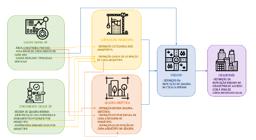
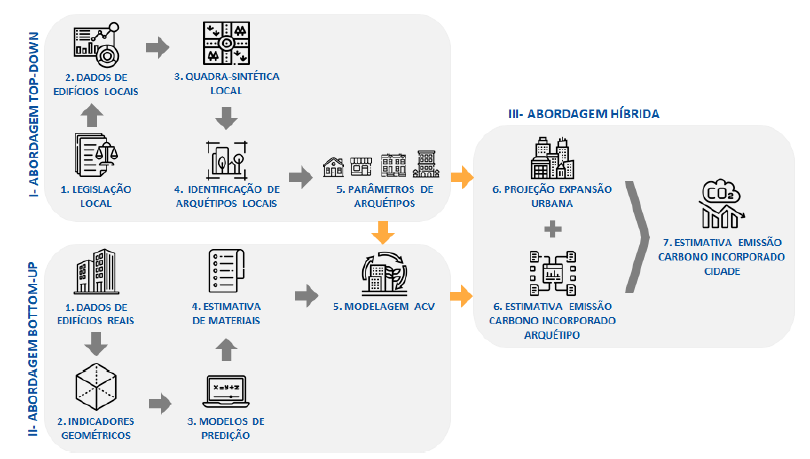
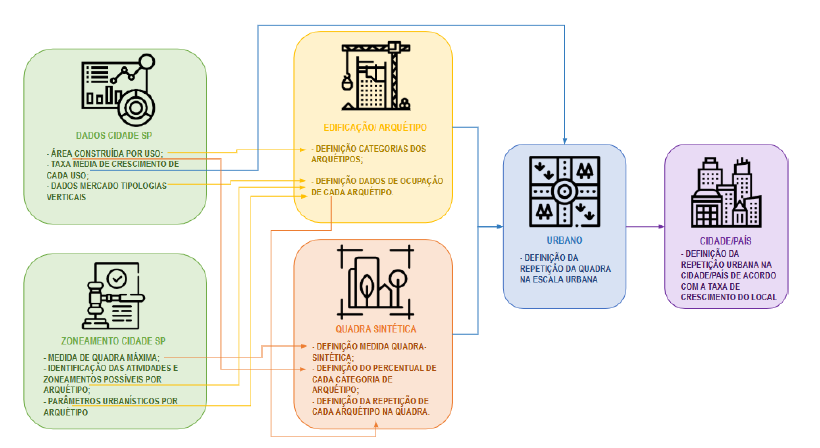
The construction sector accounts for approximately 38% of global greenhouse gas (GHG) emissions, with embodied carbon often overlooked despite its potential to reach 50% of the sector’s total emissions by 2050. Its quantification faces methodological barriers, primarily due to scarce data and the difficulty of scaling detailed estimates to large scales. Archetype-based models offer an important avenue to overcome this information gap. This study introduces a hybrid methodology to estimate embodied GHG emissions in urban building stocks, particularly in settings lacking comprehensive characterization. The approach integrates volumetric archetypes derived from urban legislation (top-down) with materiality archetypes informed by geometric and construction data from real buildings (bottom-up). Operational GHG emissions were incorporated into the archetypes, which were then extrapolated to the urban scale, enabling whole-life carbon assessments of the built stock. Applied to São Paulo, the methodology achieved satisfactory accuracy and alignment with international benchmarks, despite relying on a limited set of input variables. Replicable and scalable, the proposed model offers robust support for designing and monitoring public policies aimed at decarbonizing the built environment, while advancing knowledge and action in urban sustainability.
Keywords:
Building stock; Archetypes; Hybrid modelling; Life cycle assessment; Whole-life carbon
 Thumbnail
 Thumbnail
 Thumbnail
 Thumbnail
 Thumbnail
 Thumbnail
 Thumbnail
 Thumbnail
 Thumbnail
 Thumbnail
 Thumbnail
 Fonte: Autores (2025).
 Fonte: Autores (2025).
 Fonte: Autores (2025).
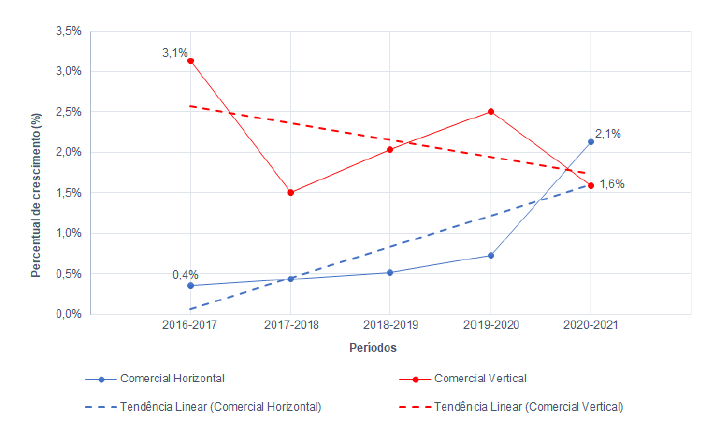 Fonte: Autores (2025).
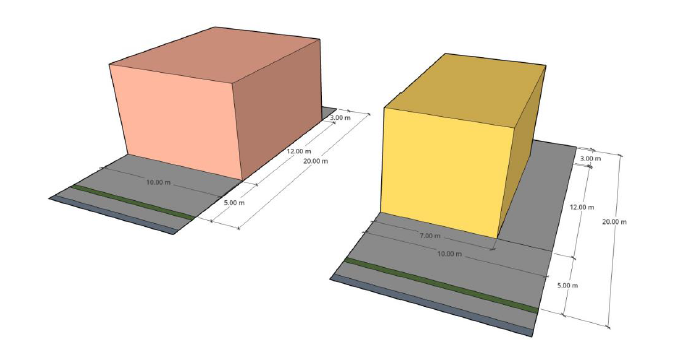 Fonte: Autores (2025).
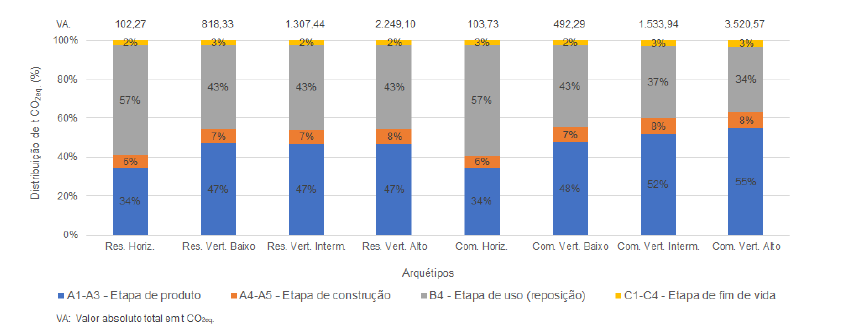 Fonte: Autores (2025).
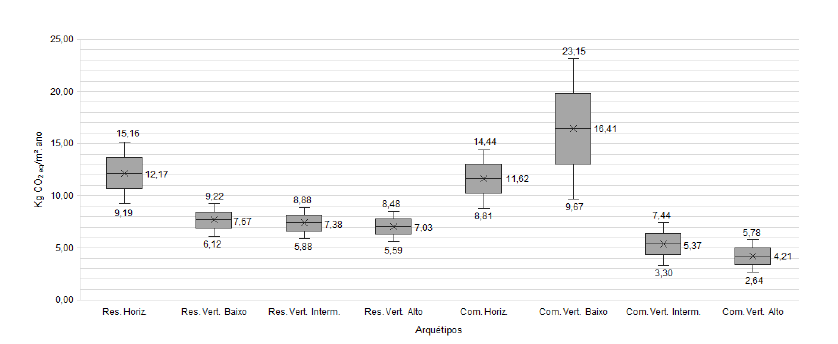 Fonte: Autores (2025).
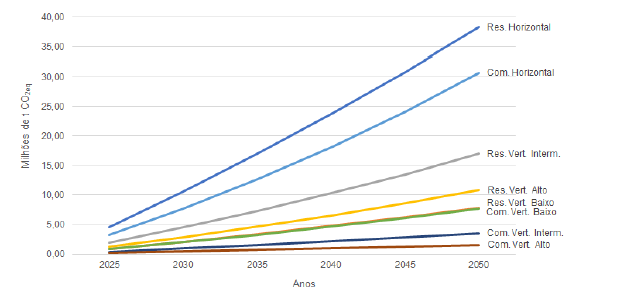 Fonte: Autores (2025).
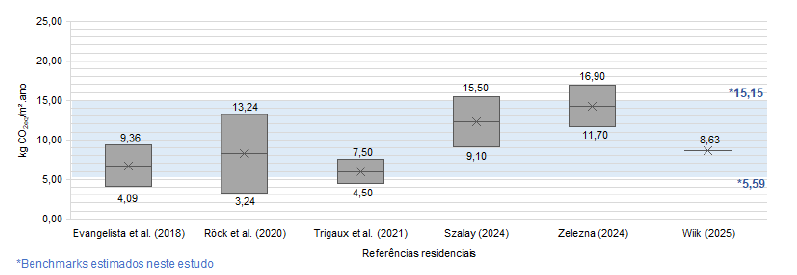 Fonte: Autores (2025).
 Fonte: Autores (2025).
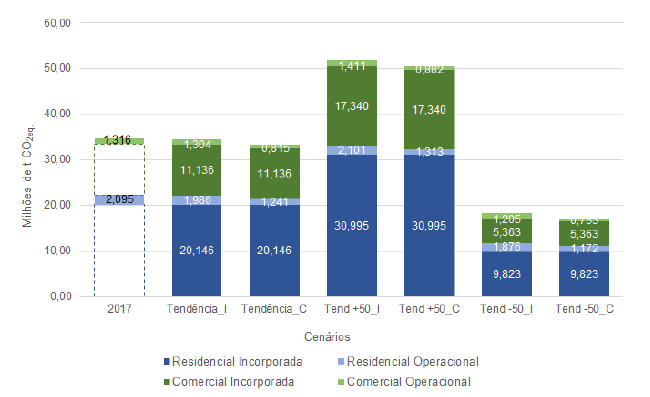 Fonte: Autores (2025).