Molecular detection of Toxoplasma gondii (Chromista: Apicomplexa) in the blood of passerines (Aves: Passeriformes) in south-eastern Armenia
ABSTRACT
Toxoplasma gondii (Nicolle & Manceaux, 1908) is a highly prevalent zoonotic protozoan parasite found globally in various bird and mammal species, including humans. Migratory birds play an important epidemiological role by facilitating the spread of pathogens, including T. gondii, to new regions. Armenia is particularly significant in this context being located at the crossroads of three global migration flyways; however, research on T. gondii infection in wild birds in this region has not been previously conducted. This study marks the first molecular detection of active T. gondii infection in the blood of wild birds, assessing the prevalence associated with the risk factors such as age, sex, migratory status, and feeding habits of birds. Research was carried out in the Megri Region of Syunik Province in 2013, 2014, and 2018 in the breeding season. The presence of parasite in 116 Passerines was determined using PCR with specific primers derived from the RE gene with mean prevalence of T. gondii in 12%. The highest infection rates were observed in Upcher’s Warbler, Hippolais languida (Hemprich & Ehrenberg, 1833), at 36% (4 out of 11), Eastern Black-eared Wheatear, Oenanthe melanoleuca (Guldenstadt, 1775), at 33% (2 out of 6), and Eastern Orphean Warbler, Curruca crassirostris (Bates, 1936), at 19% (5 out of 27). Long-distance migrants exhibited a higher frequency of T. gondii occurrence compared to resident birds (χ2 = 7.11, DF = 2, p = 0.029). The infection rates did not show a dependence on the sex or age of the birds. The relationship between infection and feeding behavior in local toxoplasmosis distribution remains unclear, necessitating further research with new methodologies, additional animal species, broader geographic coverage, and larger sample sizes.
KEY WORDS:
Infection transmission; migratory patterns; RE gene; toxoplasmosis; wild birds
INTRODUCTION
Toxoplasma gondii (Nicolle & Manceaux, 1908), a zoonotic protozoan parasite, has a global presence. It infects various bird and mammal species, including humans, acting as intermediate hosts. Domestic cats and other Felids serve as definitive hosts, shedding millions of oocysts into the environment (Lindsay and Dubey 2007, Ferguson 2009, Montazeri et al. 2020).
The free-ranging cats in the USA hunt billions of birds and small mammals each year, building capacity for the spreading of T. gondii oocysts in the environment (Loss et al. 2013). Humans contract T. gondii infection through the consumption of undercooked meat and meat products containing T. gondii tissue cysts (Almeria and Dubey 2021). Additionally, water and soil contaminated with sporulated parasitic oocysts serve as sources of infection for various intermediate hosts (Dabritz et al. 2007, Shapiro et al. 2019, Tenter et al. 2000). There is evidence of congenital transmission in several intermediate hosts, including mice, sheep, goats, and, most importantly, humans. In this instance, tachyzoites may be transferred transplacental, which could be harmful to the developing fetus (Pappas et al. 2009, Paquet et al. 2013).
Previous estimations suggest that about one-third of the world’s human population is a latent carrier of T. gondii (Dubey 2004, Montoya and Liesenfeld 2004). Despite the medical and veterinary importance of this zoonotic disease, all previous research efforts on toxoplasmosis in Armenia have been fragmented and concentrating on determining seroprevalence in target groups of women and some species of livestock (Hovsepyan et. al. 1990, Janibekyan et al. 2002, Gevorgyan 2023).
Two distinct life cycles contribute significantly to the spread of the T. gondii: domestic and sylvatic. In the domestic cycle, only domestic cats serve as the definitive host. In contrast, the sylvatic cycle involves various feline species responsible for disseminating oocysts in wildlife. This enables a broader range of feral mammals to become infected with T. gondii (Emmanuelle et al. 2012, Attias et al. 2020). Among other hosts, wild birds frequently register infections with T. gondii, making them important subjects for investigation, as many avian species can serve as sources of infection for both humans and felids (Dubey 2002, Aubert et al. 2008).
The prevalence of T. gondii is correlated with the geographic location, host range, migratory patterns, and feeding habits of birds. For example, research on ground-feeding pigeons from Europe, South America, and the USA has shown that disease prevalence can range from 1.6% to 35.7%; in the case of carnivorous birds this overlaps with the presence of parasites in their prey (Dubey et al. 2021). Meanwhile, toxoplasmosis of migratory birds plays an important epidemiological role on local and global scales creating additional opportunities for pathogens to be spread to new territories. Armenia presents a significant interest in this context because it is geographically situated at the crossroad of three global migration flyways that link Eastern Europe and Northern Asia with Africa, Southern and South-Eastern Asia (BirdLife International 2010). Among 376 bird species recorded in Armenia, 241 species are breeding, while the other 135 migrate through the country, stopping in the wetlands, grasslands, thickets, and woodlands for food and rest (Aghababyan et al. 2020, Clements et al. 2023). Therefore, potentially the migratory species can introduce new genotypes of T. gondii from southern countries to Armenia and vice versa. Thus, the goal of this study is to determine the prevalence of active T. gondii infection by directly detecting the parasite DNA in blood, with particular attention to the possible risk factors such age, sex, migratory status, and feeding habits of the birds.
MATERIAL AND METHODS
Study area
When selecting a study area, several aspects were considered, including (1) the high diversity of landscape zones and, therefore, the range of avian and felid species and (2) close proximity to the southern border, to serve as a first entry point those bird species, which breed in Armenia and migrate to the south for the winter.
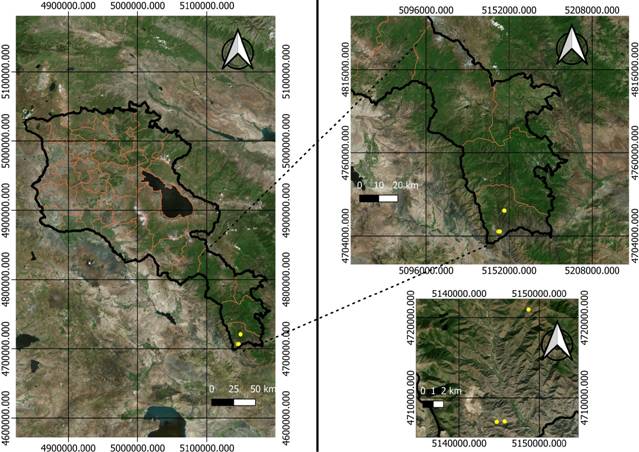
The study was conducted in the Meghri Region of Syunik Province of Armenia, which is located on the eastern slopes of the southern part of Zangezur mountain ridge and southern slopes of Meghri mountain ridge, within the altitude range from 390 m (Araks river valley) to 3858 m above the sea level (Mount Gazanasar). A wide span of elevations creates a variety of landscapes, which begin with the dry subtropics, passing through semi-desert, juniper woodland, deciduous forest, mountain steppes, and reach subalpine meadows and carpets. The terrain is rough, and the region is cut by numerous canyons, gorges, and cliffs. The fauna of breeding birds here is rich and diverse, while the fauna of migrants that pass through the area is rather scarce (Aghababian 2001). At the lower elevations, the climate is dry and warm, while in higher regions, the humidity grows, and the temperate declines.
To capture the birds, we have selected three localities. Two of these stations were located in the vicinity of Meghri town (within 750 m), in the same semi-desert habitat at the altitudes of 814 m and 930 m (Fig. 1). The habitat of these two sites is mainly characterized by ephemeral plants, such as artemisia Artemisia fragrans Eichw., caper Capparis spinosa Linnaeus, forage kochia Kochia prostrata Linnaeus, and bulbous bluegrass Poa bulbosa Linnaeus. The third bird-capturing station was located in the vicinity of Vardanidzor village (about 10 km north of Meghri town), at 2050 m above the sea level (Fig. 1), in dry mixed woodland, dominated by juniper Juniperus spp. and broad-leaved oak Quercus macranthera Fisch. & C.A.Mey. ex Hohen. In the stations of Meghri town, the birds were captured in 2013 (three days), 2014 (three days), and 2018 (three days), while in the station of Vardanidzor village, the capture was carried out in 2018 only (three days).
Birds’ capturing and blood sampling
The birds were captured during the breeding season, using mist nets (3 x 8 m, mech of 25 x 25 30 mm) without a lure (At each site, 3-5 mist nets have been placed in the shallow gorges. The mist nets were open from about 7:00 am to 8:00 pm and were checked once per hour. The captured birds were identified using the Field Guide to Birds of Armenia (Adamian and Klem 1997). The age and sex of each captured individual were determined by a trained ornithologist based on a life examination of the external features. Blood samples were collected by punctuating the brachial vein with a sterile insulin needle and using a heparin-free glass capillary. The few drops of blood from the capillary tube were preserved in 2 ml tubes filled with 96% ethanol for further processing. For each specimen, the information about sampling area, bird species, sex, age, and collection date were registered, which was later supplemented by the data on the feeding habits and migratory patterns that are typical for each species (Table 1 and Supplementary Table S1). The birds were marked with a permanent marker on the underside of the secondaries to avoid resampling.
The bird capture and blood sampling of birds were permitted by the Ministry of Environment of the Republic of Armenia (permission number 5/22.1/51371).
Molecular assay: DNA extraction and PCR for T. gondii detection
The DNA was extracted from blood samples using a commercial kit (Qiagen® DNeasy Blood & Tissue, Germany) according to the manufacturer’s protocol.
Toxoplasma gondii was identified using specific primers derived from the RE gene, which targeted a non-coding fragment of 529 bp, including Tox4 (forward: 5’-CGCTGCAGGGAGGAAGACGAAAGTTG-3’) and Tox5 (reverse 5’-CGCTGCAGACACAGTGCATCTGGATT-3’) (Homan et al. 2000). The PCR reaction with a final volume of 25 μl, containing 12.5 μl 2x master mix (Ampliqon, Odense, Denmark), 0.5 μl of each primer (0.2 µm), 5 μl of DNA template and 6.5 μl deionized water was performed. Conditions for PCR reaction were the following: initial hot start at 95 °C for 5 min, 35 cycles of each consisting of denaturation for 30 sec at 93 °C, annealing for 30 sec at 55 °C, elongation for 40 sec at 72 °C and a final extension step at 72 °C for 5 min. For visual detection by ultraviolet transillumination, we used 1.5% agarose gel electrophoresis with SYBR® Green stain. In our study, we utilized T. gondii obtained from Toxoplasmose/Toxoplasma Biological Resource Center (BRC) at Limoges University, France, as the positive control. Sterile distilled water served as the negative control for all experimental procedures.
Data analysis
The collected data is stored in the database of the Laboratory of Molecular Parasitology, Scientific Center of Zoology and Hydroecology of NAS RA, and is available upon request.
All the captured birds are breeding in Armenia and Meghri region and those have been classified into residents, short-distance migrants, partial migrants, and long-distance migrants using the literature (Adamian and Klem 1997).
Statistics were performed using SPSS statistical package (IBM SPSS statistics 21). The chi-squared test was performed to detect if there was a difference in exposure to the parasite between different age and sex groups, and migration status categories were evident (Sokal and Rohlf 1995), considering a significant difference at the p < 0.05 level.
RESULTS
A total of 116 birds from 23 species (Supplementary Table S1), belonging to the order Passerines and 12 families, were trapped. Out of 116 examined birds only 14 (12%) were positive for T. gondii on PCR analysis targeting the RE gene (Table 1).
For the computation of T. gondii prevalence per bird species, we considered only species, with more than five individuals sampled. As shown in Table 2, among these birds the greatest contribution to infection prevalence was made by the Eastern Orphean Warbler (five infected individuals) and Upcher’s Warbler (four) followed by the Eastern Black-eared Wheatear (two).
Results of molecular screening prevalence of blood samples from wild birds in Meghri region, Armenia.
It is important to note that 12 of the infected birds (out of 92 sampled) presented in Table 2 are insectivorous. For further analyses, we divided the species by their migration pattern into long-distance migrants and residents/short-distance migrants. Distribution of the prevalence according to the migration pattern (Table 3) shows a significantly high prevalence in long-distance migrants (χ2 = 7.11, DF = 2, p = 0.029).
Molecular prevalence of Toxoplasma gondii in wild birds from Meghri region according to their migratory status.
There were no significant differences found in the prevalence distribution between sexes (χ2 = 0.14, DF = 2, p = 0.93). Thus, among the 94 individuals with identified sex, 5 out of 39 females (13%) and 6 out of 55 males (11%) were infected.
The analysis of the prevalence distribution by age also indicates no significant difference (χ2 = 0.16, DF = 1, p = 0.69). Thus, among the 116 individuals with identified age, 11 out of 86 adults (13%) and 3 out of 30 juveniles (10%) were found to be infected.
DISCUSSION
Toxoplasmosis persists relatively unnoticed within the scientific research scope in Armenia. Our understanding about the prevalence of T. gondii among both humans and livestock remains limited, with available data largely reliant on serological screening methods. Moreover, a significant gap exists in our knowledge regarding T. gondii distribution and specific genotypes circulating among free-living wild animals in the country. Among these animals, birds stand out as underestimated reservoirs and distributors of pathogens due to their remarkable capacity to fly and cover great distances (Malik et al. 2021, Zaki et al. 2024).
Numerous studies worldwide have employed a diverse array of parasitological, serological, and molecular techniques to delve into the seroprevalence, detection, isolation, and genotyping of T. gondii in various wild bird species (Alvarado-Esquivel et al. 2011, Rigolet et al. 2014, Villares et al. 2014, Gennari et al. 2016, Liu et al. 2019).
Given their pivotal role as intermediate hosts for T. gondii, wild birds hold immense significance from an epidemiological standpoint (Jourdain et al. 2007, Fair et al. 2024).
Our current study marks the first attempt to detect the parasite across different species of wild Passerines in Armenia. The primary focus was to assess the prevalence of active T. gondii infection through direct detection of the parasite DNA in the blood of wild birds. According to the results, the frequency of T. gondii in blood samples of wild birds was 12.0%. It is challenging to determine whether the obtained data is high or low, as similar research on wild birds in other countries yields a wide range of figures regarding toxoplasmosis prevalence. Thus, based on serological assays it can vary from 2.6% up to 70% (Alvarado-Esquivel et al. 2011, Cabezón et al. 2011, Zaki et al. 2024) and according to data from molecular surveys on tissue samples of some bird species, the prevalence also can vary depending on bird species and geographic area and can reach up to 89,6% (Khademvatan et al. 2013, Karakavuk et al. 2018).
However, these studies and our current findings are not directly comparable as they employ different approaches. In our study, the limitations were related to the obligatory life capture, so the birds were released after sampling, and so the blood was the only possible sample. Although PCR results for genotyping are consistent between tissue and blood samples, the PCR on tissue and blood can yield different results while determining the infection rate. Given the objectives of our study and considering the subsequent research stage, which may involve parasite genotyping, we determined that the PCR-based approach is more suitable and informative for our analysis. Numerous diagnostic PCR assays have been developed for the detection of T. gondii in clinical samples, employing various genomic targets (Burg et al. 1989, Homan et al. 2000, Fallahi et al. 2014, Amouei et al. 2022).
Previous studies have shown that PCR assays targeting multi-copy genes exhibit higher sensitivity for T. gondii detection compared to those targeting single-copy genes (Burg et al. 1989, Fallahi et al. 2014). Two popular targets include the 35-copy B1 gene and the 529 bp repeated element (RE) region, which is present in 200-300 copies in the T. gondii genome (Homan et al. 2000).
According to Fallahi et al. (2014), the RE-based PCR assay demonstrates superior sensitivity compared to the B1 genomic target. The sensitivity of T. gondii RE PCR is directly affected by the copy number of the amplified gene, making highly repeated sequences in the parasite genome valuable targets. In our study, we employed highly sensitive, specific and universal RE gene as molecular target for the detection of T. gondii in blood samples collected from birds.
In our study, the individuals that were major contribu tors to the detection of T. gondii included four adult and one juvenile Eastern Orphean Warblers, four adult Upcher’s Warblers, and two adult Eastern Black-eared Wheatears. All three species are insectivorous with rather specialized forag ing behavior. The Upcher’s Warbler forages mostly in the canopy of trees and tall bushes, but is also observed foraging in lower scrub, and just occasionally picks insects from the ground (Svensson 2020). Eastern Orphean Warbler mostly extracts the invertebrates from crevices and behind bark, also picks food items from branches and leaves while moving slowly from low scrubby growth up through the vegetation to tops of bushes and trees, and just occasionally takes items from the ground (Dubey 2002, del Hoyo et al. 2021). The last species, the Eastern Black-eared Wheatear is often sallying after flying insects, and commonly hovers to forage, but also forages from perches, flying to ground to take prey (Collar 2021) and has more interactions with ground than the previous two species.
Therefore, it is less possible that these birds could get infected by the oocysts located on the ground, as they rarely pick food items from the ground. It is still possible though that they can obtain the oocysts directly from insects and other arthropods (Lopes et al. 2021). And it is highly possible that T. gondii transmission could be done through the water, contaminated with sporulated oocysts. All three species overwinter in the western part of Sub-Saharan Africa.
Countries, where their wintering areas and grounds overlap, are Eritrea, Ethiopia, and Djibouti (Dubey 2002, Svensson 2020, Collar 2021), the areas with extended deserts and semi-deserts, where a significant part of the wildlife is concentrated around the oasis and along the riparian zones (Buechley 2018). It is therefore more possible for these birds to become infected from the scarce sources of water in their wintering ground, concentrating around the oasis areas (Billi and Sebhat 2022). Given this possibility, it might be crucial to pinpoint the genetic variations of T. gondii in these bird species. It should be noted that some species of birds were trapped in a quantity of less than five specimens and were not included into the computation of T. gondii exposure on the species level. Among them is the Tree Sparrow, Passer montanus (Linnaeus, 1758), for which two of three captured birds were positive for toxoplasmosis. According to previous studies, toxoplasmosis in sparrows was documented in Brazil (17.5%), China (12.46%) and Iran (8,5% to 15%) (Gondim et al. 2010, Vilela et al. 2011, Cong et al. 2013, Abdoli et al. 2016, Shokri et al. 2017). In some European countries, like Poland and the Czech Republic, 12.3% of House Sparrows and 4.9% of Tree Sparrows were found to be infected with T. gondii (Literák et al. 1997). The relatively high frequency of infection among the Tree Sparrows in our study cannot be considered conclusive, given the small sample size of captured birds (only three). However, our findings underscore the importance of further exploring the prevalence of T. gondii in this bird species for two main reasons: Tree Sparrows are resident birds (Barlow et al. 2020), and T. gondii was detected in a juvenile individual. This finding reveals another dimension regarding the age-related occurrence of T. gondii infection in captured birds.
The observed lack of a significant difference between adults (13%) and juveniles (10%) is unusual, considering global reports indicating a cumulative increase in infection rates with age (Chen et al. 2015, Naveed et al. 2019, Iemmi et al. 2020). Unexpectedly similar parasite frequency in our study in adult and juvenile birds can possibly be explained by the relatively small sample size. Alternatively, the detection of T. gondii in juvenile birds aged around twenty days poses an intriguing observation, suggesting two potential, not mutually exclusive scenarios: transmission through feeding and water, and locally acquired infection.
Another aspect to consider is the correlation between the prevalence and migration pattern. Our study indicates a significant difference in T. gondii frequency between long-distance migratory birds and resident or short-distance migratory species. We isolated parasite DNA from the blood of 16% of long-distance investigated migrants, while no infections were detected among resident birds. It is known that migratory birds undergo substantial energy expenditure during migration, which can weaken their natural resistance and increase susceptibility to various infections, including T. gondii (Eikenaar et al. 2018). Thus, the detection of parasite DNA in the blood of long-distance migrants in the current study may be caused by a weakened post-migration immunity, which could trigger the transition of chronic toxoplasmosis to its acute form, or it could represent an infection occurrence associated with birds’ feeding behavior (Bairlein 1990). Regardless, the methodology employed in our research may not entirely address this question, indicating a requirement for further investigations utilizing serological methods. Such data could offer additional insights, including seroprevalence in the population and the possibility of past exposure. Since migratory behavior in many cases correlates with feeding habits (Bairlein 1990), our study, considering its relatively small sample size, did not conduct further analysis of prevalence based on feeding behavior.
The observed absence of the difference in prevalence between the sexes (13% of females vs 11% of males) was also reported by Scimeca et al. (2022).
The potential definitive hosts in the study area are represented by the following Felids: in the lower locations (near Meghri), there are feral cats and Jungle Cat Felis chaus Schreber, 1777, while in the upper location (near Vardanidzor) there are feral cats, European Wildcat Felis sylvestris Schreber, 1777, and Eurasian Lynx Lynx lynx (Linnaeus, 1758). Considering the active infection in the birds, they probably acquired in a sylvatic cycle.
It is also important to note that the Lesser Whitethroat, Eastern Orphean Warbler, Eastern Black-eared Wheatear, and Upcher’s Warbler have not been yet identified as intermediate hosts of T. gondii; therefore, this finding could contribute to expanding the global list of intermediate hosts for the parasite.
Final remarks
The frequency of T. gondii among captured Passerines in Meghri region of Armenia was found to be 12%. According to the obtained results, infection with T. gondii did not depend on the sex or age of the birds.
However, the role of feeding behavior in the local distribution of toxoplasmosis remains unclear and warrants further research incorporating new methodologies, additional animal species, broader geographic areas, and larger sample sizes. Bird migration patterns likely play a role in the continuous transmission of this disease in the Meghri region, although the presence of local cycles is highly probable too. Therefore, future studies should aim to elucidate the genetic diversity of T. gondii isolates in Armenia. This exploration can provide valuable insights into identifying sources of infection and understanding how the parasite spreads within the local environment.
ACKNOWLEDGEMENTS
We would like to thank Viktorya Gevorgyan for consulting on the statistical analysis. This study was supported by grant 21T-1F219 financed by the Higher Education and Science Committee of RA and partially by the Ministry of Science, Technological Development and Innovation of the Republic of Serbia (Grant number: 451-03-47/2023-01/200053). The work was partially funded by the APPEAR project Armenia278.
LITERATURE CITED
-
Abdoli A, Dalimi A, Soltanghoraee H, Ghaffarifar F (2016) Molecular detection of Toxoplasma gondii in house sparrow (Passer domesticus) by LAMP and PCR methods in Tehran, Iran. Journal of Parasitic Diseases 40: 1317-1321. https://doi.org/10.1007/s12639-015-0680-2
» https://doi.org/10.1007/s12639-015-0680-2 - Adamian MS, Klem DJ (1997) A field guide to birds of Armenia. American University of Armenia, California, 649 pp.
- Aghababian K (2001) Avian diversity of Meghry region of Armenia. Collection of Articles of the Young Researchers 1: 39-43.
-
Aghababyan K, Khanamirian G, Ter-Voskanyan H, Khachatryan A, Wikström M, Adriaens P (2020) Annotated Checklist to Birds of Armenia. BirdLinks Armenia NGO. https://doi.org/10.13140/RG.2.2.31616.17920/2
» https://doi.org/10.13140/RG.2.2.31616.17920/2 -
Almeria S, Dubey JP (2021) Foodborne Transmission of Toxoplasma gondii Infection in the Last Decade. An Overview. Research in Veterinary Science 135: 371-385. https://doi.org/10.1016/j.rvsc.2020.10.019
» https://doi.org/10.1016/j.rvsc.2020.10.019 -
Alvarado-Esquivel C, Rajendran C, Ferreira LR, Kwok OCH, Choudhary S, Alvarado-Esquivel D, Rodríguez-Peña S, Villena IÀ, Dubey JP (2011) Prevalence of Toxoplasma gondii infection in wild birds in Durango, Mexico. Journal of Parasitology 97: 809-812. https://doi.org/10.1645/GE-2844.1
» https://doi.org/10.1645/GE-2844.1 -
Amouei A, Sarvi S, Mizani A, Hashemi-Soteh MB, Salehi S, Javidnia J, et al. (2022) Genetic characterization of Toxoplasma gondii in meat-producing animals in Iran. Parasite & Vectors 15: 255. https://doi.org/10.1186/s13071-022-05360-1
» https://doi.org/10.1186/s13071-022-05360-1 -
Attias M, Teixeira DE, Benchimol M, Vommaro RC, Crepaldi PH, De Souza W (2020) The life-cycle of Toxoplasma gondii reviewed using animations. Parasites Vectors 13: 588. https://doi.org/10.1186/s13071-020-04445-z
» https://doi.org/10.1186/s13071-020-04445-z -
Aubert D, Terrier ME, Dumètre A, Barrat J, Villena I (2008) Prevalence of Toxoplasma gondii in raptors from France. Journal of Wildlife Diseases 44: 172-173. https://doi.org/10.7589/0090-3558-44.1.172
» https://doi.org/10.7589/0090-3558-44.1.172 -
Barlow JC, Leckie SN, Pyle P, Patten MA (2020) Eurasian Tree Sparrow (Passer montanus), version 1.0. In: Billerman SM (Eds) Birds of the World. Cornell Lab of Ornithology, Ithaca. https://doi.org/10.2173/bow.eutspa.01
» https://doi.org/10.2173/bow.eutspa.01 -
Bairlein F (1990) Nutrition and Food Selection in Migratory Birds. In: Gwinner E (Eds) Bird migration. Springer, Berlin, Heidelberg, 198-213. https://doi.org/10.1007/978-3-642-74542-3_14
» https://doi.org/10.1007/978-3-642-74542-3_14 -
Billi P, Sebhat MY (2022) River Hydromorphology and Flood Hazard in Somalia. Landscapes and landforms of the Horn of Africa: Eritrea, Djibouti, Somalia. Springer, Cham. https://doi.org/10.1007/978-3-031-05487-7_13
» https://doi.org/10.1007/978-3-031-05487-7_13 -
BirdLife International (2010) Spotlight on flyways. https://datazone.birdlife.org/sowb/spotflyway
» https://datazone.birdlife.org/sowb/spotflyway -
Buechley ER (2018) Birds of the Horn of Africa: Ethiopia, Eritrea, Djibouti, Somalia and Socotra. The Condor 120(2): 467-468. https://doi.org/10.1650/CONDOR-18-19.1
» https://doi.org/10.1650/CONDOR-18-19.1 -
Burg JL, Grover CM, Pouletty P, Boothroyd JC (1989) Direct and sensitive detection of a pathogenic protozoan, Toxoplasma gondii, by polymerase chain reaction. Journal of Clinical Microbiology 27: 1787-1792. https://doi.org/10.1128/jcm.27.8.1787-1792.1989
» https://doi.org/10.1128/jcm.27.8.1787-1792.1989 -
Cabezón O, García-Bocanegra I, Molina-López R, Marco I, Blanco JM, Höfle U, et al. (2011) Seropositivity and risk factors associated with Toxoplasma gondii infection in wild birds from Spain. Plos One 6(12): e29549. https://doi.org/10.1371/journal.pone.0029549
» https://doi.org/10.1371/journal.pone.0029549 -
Chen J-C, Tsai Y-J, Wu Y-L (2015) Seroprevalence of Toxoplasma gondii antibodies in wild birds in Taiwan. Research in Veterinary Science 102: 184-188. https://doi.org/10.1016/j.rvsc.2015.08.010
» https://doi.org/10.1016/j.rvsc.2015.08.010 -
Clements JF, Rasmussen PC, Schulenberg TS, Iliff MJ, Fredericks TA, Gerbracht JA, et al. (2023) The eBird/Clements checklist of Birds of the World. https://www.birds.cornell.edu/clementschecklist/download/
» https://www.birds.cornell.edu/clementschecklist/download/ -
Collar N (2021) Eastern Black-eared Wheatear (Oenanthe melanoleuca), version 1.0. In: del Hoyo J, Elliott A, Sargatal J, Christie DA, de Juana E (Eds) Birds of the World. Cornell Lab of Ornithology, Ithaca . https://doi.org/10.2173/bow.bkewhe2.01
» https://doi.org/10.2173/bow.bkewhe2.01 -
Cong W, Huang SY, Zhou DH, Zhang XX, Zhang NZ, Zhao Q, Zhu XQ (2013) Prevalence and genetic characterization of Toxoplasma gondii in house sparrows (Passer domesticus) in Lanzhou. China. Korean Journal of Parasitology 51: 363-367. https://doi.org/10.3347/kjp.2013.51.3.363
» https://doi.org/10.3347/kjp.2013.51.3.363 -
Dabritz HA, Miller MA, Atwill ER, Gardner IA, Leutenegger CM, Melli AC, Conrad PA (2007) Detection of Toxoplasma gondii-like oocysts in cat feces and estimates of the environmental oocyst burden. Journal of the American Veterinary Medical Association 231: 1676-1684. https://doi.org/10.2460/javma.231.11.1676
» https://doi.org/10.2460/javma.231.11.1676 -
del Hoyo J, Collar N, Kirwan GM, Christie DA (2021) Eastern Orphean Warbler (Curruca crassirostris), version 1.1. In: del Hoyo J, Elliott A, Sargatal J, Christie DA, de Juana E (Eds) Birds of the World. Cornell Lab of Ornithology, Ithaca. https://doi.org/10.2173/bow.eaowar2.01.1
» https://doi.org/10.2173/bow.eaowar2.01.1 -
Dubey JP (2002) A review of toxoplasmosis in wild birds. Veteri nary Parasitology 106: 121-153. https://doi.org/10.1016/s0304-4017(02)00034-1
» https://doi.org/10.1016/s0304-4017(02)00034-1 -
Dubey JP (2004) Toxoplasmosis - a waterborne zoonosis. Veteri nary Parasitology 126: 57-72. https://doi.org/10.1016/j.vetpar.2004.09.005
» https://doi.org/10.1016/j.vetpar.2004.09.005 -
Dubey JP, Murata FHA, Cerqueira-Cézar CK, Kwok OCH, Su C (2021) Epidemiologic significance of Toxoplasma gondii infections in turkeys, ducks, ratites and other wild birds: 2009-2020. Parasitology 148: 1-30. https://doi.org/10.1017/S0031182020001961
» https://doi.org/10.1017/S0031182020001961 -
Eikenaar C, Isaksson C, Hegemann A (2018) A hidden cost of migration? Innate immune function versus antioxidant defense. Ecology and Evolution 8: 2721-2728. https://doi.org/10.1002/ece3.3756
» https://doi.org/10.1002/ece3.3756 -
Emmanuelle GF, Llu M, Dard ML, Richomme C, Aubert D, Afonso E, et al. (2012) The life cycle of Toxoplasma gondii in the natural environment. In: Djaković OD (Ed.) Toxoplasmosis - Recent Advances. InTech, Belgrado, 3-36. https://doi.org/10.5772/48233
» https://doi.org/10.5772/48233 -
Fair JM, Al-Hmoud N, Alrwashdeh M, Bartlow AW, Balkhamishvili S, Daraselia I, et al. (2024) Transboundary determinants of avian zoonotic infectious diseases: challenges for strengthening research capacity and connecting surveillance networks. Frontiers in Microbiology 15: 1341842. https://doi.org/10.3389/fmicb.2024.1341842
» https://doi.org/10.3389/fmicb.2024.1341842 -
Fallahi Sh, Kazemi B, Seyyed tabaei SJ, Bandehpour M, Lasjerdi Z, Taghipour N, Zebardast N, Nikmanesh B, Fallah Omrani V, Ebrahimzadeh F (2014) Comparison of the RE and B1 gene for detection of Toxoplasma gondii infection in children with cancer. Parasitology International 63(1):37-41. https://doi.org/10.1016/j.parint.2013.08.005
» https://doi.org/10.1016/j.parint.2013.08.005 -
Ferguson DJ (2009) Toxoplasma gondii: 1908-2008, homage to Nicolle, Manceaux and Splendore. Memórias do Instituto Oswaldo Cruz 104(2): 133-148. https://doi.org/10.1590/s0074-02762009000200003
» https://doi.org/10.1590/s0074-02762009000200003 -
Gennari SM, Niemeyer C, Soares HS, Musso CM, Siqueira GC, Catão-Dias JL, et al. (2016) Seroprevalence of Toxoplasma gondii in seabirds from Abrolhos Archipelago, Brazil. Veterinary Parasitology 226: 50-52. https://doi.org/10.1016/j.vetpar.2016.06.016
» https://doi.org/10.1016/j.vetpar.2016.06.016 -
Gevorgyan RG (2023) Epizootological situation on toxoplasmosis among livestock animals in the Tavush region of Armenia. In: Collection of Scientific Articles adapted from the International Scientific Conference: Theory and Practice of Parasitic Disease Control. 24th Edition. Moscow (Russia), May 2023. Nauka (Science), 142-145. https://doi.org/10.31016/978-5-6048555-6-0.2023.24.142-145
» https://doi.org/10.31016/978-5-6048555-6-0.2023.24.142-145 -
Gondim LS, Abe-Sandes K, Uzêda RS, Silva MS, Santos SL, Mota RA, et al. (2010) Toxoplasma gondii and Neospora caninum in sparrows (Passer domesticus) in the Northeast of Brazil. Veterinary Parasitology 168: 121-124. https://doi.org/10.1016/j.vetpar.2009.09.055
» https://doi.org/10.1016/j.vetpar.2009.09.055 -
Homan W, Vercammen M, De Braekeleer J, Verschueren H (2000) Identification of a 200-to 300-fold repetitive 529 bp DNA fragment in Toxoplasma gondii, and its use for diagnostic and quantitative PCR. International Journal for Parasitology 30: 69-75. https://doi.org/10.1016/S0020-7519(99)00170-8
» https://doi.org/10.1016/S0020-7519(99)00170-8 -
Hovsepyan A, Voskanyan K, Semerjian S, Alexanian Yu (1990) Some results of epidemiological and epizootological investigations of toxoplasmosis in Armenian SSR. Medical Science of Armenia 30(4): 350-353. ISSN: 0514-7484, https://arar.sci.am/dlibra/publication/100535/edition/91408/content?ref=struct
» https://arar.sci.am/dlibra/publication/100535/edition/91408/content?ref=struct -
Iemmi T, Vismarra A, Mangia C, Zanin R, Genchi M, Lanfranchi P, Kramer LH, Formenti N, Ferrari N (2020) Toxoplasma gondii in the Eurasian kestrel (Falco tinnunculus) in northern Italy. Parasites and Vectors 13: 262. https://doi.org/10.1186/s13071-020-04134-x
» https://doi.org/10.1186/s13071-020-04134-x -
Janibekyan Z, Amiryan S, Antonyan R (2002) Prevalence of toxoplasmposis in women of childbearing age in Armenia. Medical Science of Armenia 42(4): 97-99. ISSN: 0514-7484 https://arar.sci.am/dlibra/publication/101631/edition/92440/content
» https://arar.sci.am/dlibra/publication/101631/edition/92440/content -
Jourdain E, Gauthier-Clerc M, Bicout DJ, Sabatier P (2007) Bird migration routes and risk for pathogen dispersion into western Mediterranean wetlands. Emerging Infectious Diseases 13(3): 365-372. https://doi.org/10.3201/eid1303.060301
» https://doi.org/10.3201/eid1303.060301 -
Karakavuk M, Aldemir D, Mercier A, Atalay Şahar E, Can H, Murat J-B, et al. (2018) Prevalence of toxoplasmosis and genetic characterization of Toxoplasma gondii strains isolated in wild birds of prey and their relation with previously isolated strains from Turkey. Plos One 13: e0196159. https://doi.org/10.1371/journal.pone.0196159
» https://doi.org/10.1371/journal.pone.0196159 -
Khademvatan S, Saki J, Yousefi E, Abdizadeh R (2013) Detection and genotyping of Toxoplasma gondii strains isolated from birds in the southwest of Iran. British Poultry Science 54: 76-80. https://doi.org/10.1080/00071668.2013.763899
» https://doi.org/10.1080/00071668.2013.763899 - Lindsay DS, Dubey JP (2007) Toxoplasmosis in wild and domestic animals. In: Weiss LM, Kim K (Eds) Toxoplasma gondii: the model apicomplexan. Perspectives and methods. Academic Press, London, 133-152.
-
Literák I, Pinowski J, Anger M, Juřicová Z, Kyu-Hwang H, Romanowski J (1997) Toxoplasma gondii antibodies in house sparrows (Passer domesticus) and tree sparrows (P. montanus). Avian Pathology 26: 823-827. https://doi.org/10.1080/03079459708419255
» https://doi.org/10.1080/03079459708419255 -
Liu MT, Jiang WX, Gui BZ, Jin YC, Yi JN, Li F, et al. (2019) Molecular prevalence and genetic characterization of Toxoplasma gondii in wild birds in Hunan Province, China. Vector-Borne and Zoonotic Diseases. https://doi.org/10.1089/vbz.2018.2371
» https://doi.org/10.1089/vbz.2018.2371 -
Lopes C, Brandão R, Lopes AF, Sargo R, Casero M, Nunes C, et al. (2021) Prevalence of antibodies to Toxoplasma gondii in different wild bird species admitted to rehabilitation centres in Portugal. Pathogens 10: 1144. https://doi.org/10.3390/pathogens10091144
» https://doi.org/10.3390/pathogens10091144 -
Loss S, Will T, Marra P (2013) The impact of free-ranging domestic cats on wildlife of the United States. Nature Communications 4: 1396. https://doi.org/10.1038/ncomms2380
» https://doi.org/10.1038/ncomms2380 -
Malik YS, Milton AA, Ghatak S, Ghosh S (2021) Migratory birds and public health risks. In: Role of birds in transmitting zoonotic pathogens. Springer, Singapore. https://doi.org/10.1007/978-981-16-4554-9_2
» https://doi.org/10.1007/978-981-16-4554-9_2 -
Montazeri M, Mikaeili Galeh T, Moosazadeh M, Sarvi S, Dodangeh S, Javidnia J, et al. (2020) The global serological prevalence of Toxoplasma gondii in felids during the last five decades (1967-2017): a systematic review and meta-analysis. Parasites and Vectors 13: 82. https://doi.org/10.1186/s13071-020-3954-1
» https://doi.org/10.1186/s13071-020-3954-1 -
Montoya JG, Liesenfeld O (2004) Toxoplasmosis. Lancet 363: 1965-1976. https://doi.org/10.1016/S0140-6736(04)16412-X
» https://doi.org/10.1016/S0140-6736(04)16412-X -
Naveed A, Ali S, Ahmed H, Simsek S, Rizwan M, Kaleem I, et al. (2019) Seroprevalence and risk factors of Toxoplasma gondii in wild birds of Punjab Province, Pakistan. Journal of Wildlife Diseases 55: 129-135. https://doi.org/10.7589/2017-09-228
» https://doi.org/10.7589/2017-09-228 -
Pappas G, Roussos N, Falagas ME (2009) Toxoplasmosis snapshots : Global status of Toxoplasma gondii seroprevalence and implications for pregnancy and congenital toxoplasmosis. International Journal of Parasitology 39: 1385-1394. https://doi.org/10.1016/j.ijpara.2009.04.003
» https://doi.org/10.1016/j.ijpara.2009.04.003 - Paquet C, Yudin MH, Allen VM, Bouchard C, Boucher M, Caddy S, et al. (2013) Toxoplasmosis in pregnancy: prevention, screening, and treatment. Journal of Obstetrics and Gynaecology Canada 35: 78-79.
-
Rigoulet J, Hennache A, Lagourette P, George C, Longeart L, Le Net JL, et al. (2014) Toxoplasmosis in a bar-shouldered dove (Geopelia humeralis) from the Zoo of Clères, France. Parasite 21: 62. https://doi.org/10.1051/parasite/2014062
» https://doi.org/10.1051/parasite/2014062 -
Scimeca RC, Carpenter A, Caron M, Matt CL, Brandão J, O’Connell TJ, Reichard MV (2022) Prevalence and genetic characterization of Toxoplasma gondii strains isolated from 31 wild Passeriformes collected in North-Central Oklahoma. Journal of Parasitic Diseases 47: 140-145. https://doi.org/10.1007/s12639-022-01548-5
» https://doi.org/10.1007/s12639-022-01548-5 -
Shapiro K, Bahia-Oliveira L, Dixon B, Dumètre A, de Wit LA, vanWormer E, Villena I (2019) Environmental transmission of Toxoplasma gondii: Oocysts in water, soil and food. Food and Waterborne Parasitology 15: e00049. https://doi.org/10.1016/j.fawpar.2019.e00049
» https://doi.org/10.1016/j.fawpar.2019.e00049 -
Shokri A, Sharif1 M, Hosseini Teshnizi S, Sarvi1 S, Taghi Rahimi M, Mizani A, et al. (2017) Birds and poultries toxoplasmosis in Iran: A systematic review and meta-analysis. Asian Pacific Journal of Tropical Medicine 10: 635-642. https://doi.org/10.1016/j.apjtm.2017.07.013
» https://doi.org/10.1016/j.apjtm.2017.07.013 - Sokal RR, Rohlf FJ (1995) Biometry. W.H. Freeman and Company, New York, 3rd ed., 899 pp.
-
Svensson L (2020) Upcher’s Warbler (Hippolais languida), version 1.0. In: del Hoyo J, Elliott A, Sargatal J, Christie DA, de Juana E (Eds) Birds of the World. Cornell Lab of Ornithology, Ithaca . https://doi.org/10.2173/bow.upcwar1.01
» https://doi.org/10.2173/bow.upcwar1.01 -
Tenter AM, Heckeroth AR, Weiss LM (2000) Toxoplasma gondii: from animals to humans. International Journal for Parasitology 30: 1217-1258. https://doi.org/10.1016/s0020-7519(00)00124-7
» https://doi.org/10.1016/s0020-7519(00)00124-7 -
Vilares A, Gargaté MJ, Ferreira I, Martins S, Júlio C, Waap H, et al. (2014) Isolation and molecular characterization of Toxoplasma gondii isolated from pigeons and stray cats in Lisbon, Portugal. Veterinary Parasitology 205(3-4): 506-511. https://doi.org/10.1016/j.vetpar.2014.08.006
» https://doi.org/10.1016/j.vetpar.2014.08.006 -
Vilela SM, Silva JS, Pinheiro Junior JW, Moraes ÉPBX, Saukas TN, Gondim L, Mota R (2011) Sparrows (Passer domesticus L.) as intermediary hosts of Toxoplasma gondii in poultry farms from the “agreste” region of Pernambuco, Brazil. Pesquisa Veterinaria Brasileira 31: 169-172. https://doi.org/10.1590/S0100-736X2011000200013
» https://doi.org/10.1590/S0100-736X2011000200013 -
Zaki L, Olfatifar M, Ghaffarifar F, Eslahi AV, KarimiPourSaryazdi A, Taghipour A, et al. (2024) Global prevalence of Toxoplasma gondii in birds: A systematic review and meta-analysis. Parasite Epidemiology and Control 25: e00350. https://doi.org/10.1016/j.parepi.2024.e00350
» https://doi.org/10.1016/j.parepi.2024.e00350
ADDITIONAL NOTES
- ZooBank register
-
How to cite this article
Aghayan SA, Asikyan M, Raković M, Stanković D, Fadeev IV, Gevorgyan H, Shcherbakov O, Arakelyan M, Aghababyan K, Pagheh AS, Sharif M, Daryani A (2024) Molecular detection of Toxoplasma gondii (Chromista: Apicomplexa) in the blood of passerines (Aves: Passeriformes) in south-eastern Armenia. Zoologia 41: e24016. https://doi.org/10.1590/S1984-4689.v41.e24016
-
Published by
Sociedade Brasileira de Zoologia at Scientific Electronic Library Online - https://www.scielo.br/zool
-
This study was supported by grant 21T-1F219 financed by the Higher Education and Science Committee of RA and partially by the Ministry of Science, Technological Development and Innovation of the Republic of Serbia (Grant number: 451-03-47/2023-01/200053). The work was partially funded by the APPEAR project Armenia278. This study was supported by grant 21T-1F219 financed by the Higher Education and Science Committee of RA and partially by the Ministry of Science, Technological Development and Innovation of the Republic of Serbia (Grant number: 451-03-47/2023-01/200053). The work was partially funded by the APPEAR project Armenia278
Supplementary material 1
Authors: SA Aghayan, M Asikyan, M Raković, D Stanković, IV Fadeev, H Gevorgyan, et al.
Data type: Species data.
Copyright notice: This dataset is made available under the Open Database License (http://opendatacommons.org/licenses/odbl/1.0/). The Open Database License (ODbL) is a license agreement intended to allow users to freely share, modify, and use this Dataset while maintaining this same freedom for others, provided that the original source and author(s) are credited.
Data citations
Aghababyan K, Khanamirian G, Ter-Voskanyan H, Khachatryan A, Wikström M, Adriaens P (2020) Annotated Checklist to Birds of Armenia. BirdLinks Armenia NGO. https://doi.org/10.13140/RG.2.2.31616.17920/2
BirdLife International (2010) Spotlight on flyways. https://datazone.birdlife.org/sowb/spotflyway
Clements JF, Rasmussen PC, Schulenberg TS, Iliff MJ, Fredericks TA, Gerbracht JA, et al. (2023) The eBird/Clements checklist of Birds of the World. https://www.birds.cornell.edu/clementschecklist/download/