Current methods to control scorpions, with emphasis on Brazil: why a shift in culture is needed
ABSTRACT
Scorpionism is a major global public health concern, with an estimated one million cases occurring annually worldwide. However, current control strategies implemented in the field often lack robust scientific validation and standardization. Here, we review the global burden of scorpionism, with a detailed focus on the public health context in Brazil. We systematically surveyed and evaluated all reported methods currently used for scorpion control, categorizing them into manual collection, chemical control (pesticides), natural repellents, mechanical barriers, and biological control. Although manual collection remains the primary control procedure in Brazil, its widespread use has not resulted in a demonstrable reduction in accident rates. Evidence gaps persist regarding the efficacy of pesticides and biological control for widespread use, while certain natural repellents show promise for repelling scorpions. This review underscores the critical need for a cultural and operational reassessment of current practices, advocating for robust collaboration between government bodies and the scientific community to effectively mitigate the global burden of scorpionism.
KEYWORDS:
Biological control; chemical control; management; pesticide; Tityus
Scorpion envenomation is a significant global public health concern; each year, approximately 1,200,000 scorpion sting incidents are reported, resulting in thousands of deaths (Chippaux and Goyffon 2008). This condition is considered neglected due to its epidemiology, prevalence, and impact on vulnerable populations (Reckziegel and Pinto 2014, Almeida et al. 2020, Hernández-Muñoz et al. 2024). Although scorpion stings occur worldwide, the incidence is highest in tropical and subtropical regions, such as the Middle East (Amr et al. 2017, Alhamoud et al. 2021, Amr et al. 2021, Hussen and Ahmed 2020), Africa (Touloun et al. 2001, Abourazzak et al. 2009, Marks et al. 2019), and Latin America (Dehesa-Dávila and Possani 1994, Chowell et al. 2006).
In Brazil, scorpionism dates back to the early 20th century (Brazil 1909, Magalhães 1946). However, its prevalence is not homogeneous across the country. Most accidents occur in the Southeast and Northeast regions (Eickstedt 1983, Lira-da-Silva et al. 2000, Carmo et al. 2019). Reported accidents rose from 12,000 in 2000 to nearly 125,000 in 2017 (Pucca et al. 2014, Reckziegel and Pinto 2014, Torrez et al. 2019) and reached 196,000 in 2024 (Ministry of Health 2025). This increase also affects historically neglected regions, such as the Midwest (Guerra-Duarte et al. 2023) and Northern Brazil (Monteiro et al. 2019). A noteworthy projection by Pucca et al. (2025) estimates that scorpion accidents in Brazil could exceed 2 million cases between 2025 and 2033. These trends cannot be fully explained by human population growth (see Guerra-Duarte et al. 2023) and may reflect three main factors.
First, mandatory case reporting of scorpion stings was implemented in 2010 (Guerra-Duarte et al. 2023). Second, the most venomous Brazilian scorpion species-such as Tityus serrulatus Lutz & Mello, 1922 and Tityus stigmurus (Thorell, 1876)-appear to be expanding their distribution into new regions (Lourenço 2015, Costa et al. 2020, Guerra-Duarte et al. 2023, Seemann et al. 2023). Third, their control is challenging due to specific biological characteristics related to behavior, metabolism, and reproduction.
Like other arachnids, scorpions typically remain hidden in burrows or sheltered under rocks, logs, or debris (Polis 1990, Brazil and Porto 2010). They have an extremely low metabolic rate, which allows them to remain sheltered for very long periods without foraging (Pimenta et al. 2019). Even when foraging, most species adopt a sit-and-wait strategy (Mc Cormick and Polis 1990). Combined, these traits make them highly secretive animals that are difficult to reach by predators, tweezers, or pesticides. Moreover, species such as T. serrulatus and T. stigmurus, which are responsible for most accidents in Brazil, reproduce by facultative parthenogenesis and do not require mates to generate offspring (Matthiesen 1962, Ross 2010, Braga-Pereira and Santos 2021, Foerster et al. 2021). In contrast, Tityus bahiensis (Perty, 1833) is responsible for substantially fewer accidents than T. serrulatus (e.g., among 4,122 recorded cases, 53 were attributed to T. bahiensis and 4,069 to T. serrulatus; Brites-Neto et al. 2023). Additionally, the venom of T. serrulatus is more potent than that of T. bahiensis (see Miyamoto et al. 2018), and envenomation by T. bahiensis is generally less severe (Guerra-Duarte et al. 2023). Another species that deserves attention is Tityus melici Lourenço, 2003; it occurs in regions of the states of Bahia and Minas Gerais, its reproduction has not been described (Souza et al. 2009), and while it is similar in appearance to T. serrulatus, its venom appears to be more toxic (Kalapothakis et al. 2024). Other Tityus species of medical importance have been well reviewed by Guerra-Duarte et al. (2023). In general, the ability to thrive in synanthropic environments further benefits these medically important species (Brazil and Porto 2010, Lourenço 2015), where few natural predators control their populations and abundant prey (e.g., crickets, cockroaches) are available (Brazil and Porto 2010, Lourenço 2015). Together, these aspects render scorpion control difficult.
Considering this scenario, it is surprising that research on control methods remains limited. Early studies often reported anecdotal observations on the effectiveness of hens or pesticides (Dias et al. 1922, Magalhães 1946, Bücherl 1955, 1969). However, subsequent studies often contradicted these findings (Ramsey et al. 2002, Albuquerque et al. 2009, Santos and de Albuquerque 2020, Murayama et al. 2023). Anti-scorpion policies include urban measures, personal protection, and educational initiatives aimed at empowering citizens to prevent accidents (Stockmann 2015, Guerra-Duarte et al. 2023). Hernández-Muñoz et al. (2024) provided a comprehensive framework of strategies divided into health promotion and recognition of risk factors, environmental modification to prevent scorpion proliferation, scorpion control and surveillance, interagency and community coordination, and epidemiological surveillance, scientific research, and innovation. Guerra-Duarte et al. (2023) also summarized the effort necessary for scorpion control and suggested new alternatives, such as genetically modified individuals, individuals infected with pathogens, and gene silencing. These two papers are highly valuable for compiling and organizing current knowledge on scorpion control, as well as suggesting new strategies. Nevertheless, fundamental ecological and behavioral data remain scarce (e.g., Chippaux 2015), as do rigorous experimental studies on control methods (e.g., Murayama et al. 2022) and assessments of epidemiological traits of historically neglected species that can cause severe envenoming but are rare in synanthropic environments (e.g., Monteiro et al. 2019, Kalapothakis et al. 2024). These shortfalls contribute to a significant inefficiency in scorpion sting treatment and prevention (Vilarinho et al. 2023). Finally, information on species other than T. serrulatus and T. stigmurus is critically lacking.
Herein, we compile and discuss existing scorpion control methods to motivate researchers to adequately address this problem and potentially reduce the number of accidents. This review is organized into six sections, each dedicated to a specific control approach: manual collection, pesticides, natural repellents, mechanical barriers, biological control, and light to attract or repel (Table 1). In the mechanical barriers section, we present an experiment testing the potential of smooth surfaces to hamper scorpion climbing. We discuss each approach separately, summarize their pros and cons, and argue for necessary changes in how scorpionism is managed.
Manual collection
In Brazil, the procedures carried out for manually controlling scorpions are heterogeneous. While most of the country lacks a general action policy in this regard, areas with a high number of scorpions in southeastern Brazil often become targets of government campaigns through intense manual collection by public health agents (Ministry of Health 2009, Lisboa and Brites-Neto 2022). These campaigns usually occur in the warm months, when scorpion occurrence is assumed to be higher. However, Szilagyi-Zecchin et al. (2012) showed that the abundance of T. serrulatus was higher during the cold and dry months. Additionally, the analysis of 25,502 scorpions collected during the dry and wet seasons over a six-year period in a municipality in the state of São Paulo revealed that approximately 56% of the specimens were found in the dry season (Brites-Neto et al. 2025). This finding highlights a key contradiction with the findings of Chiaravalloti-Neto et al. (2023). Although they reported a higher risk of scorpion accidents under drier conditions, they also found that accident risk increased with higher temperatures. Following the recommendations of the Brazilian manual of the Ministry of Health (2009), a single scorpion found in a residence should trigger a search for scorpions in each house around that residence. The removal of hundreds of scorpions from a site probabilistically decreases the chances of an accident. However, its effects on population size are limited. A retrospective analysis of intensive, long-term manual collections (2006-2021) in a Brazilian municipality revealed no significant decrease in scorpion abundance (Lisboa and Brites-Neto 2022). Therefore, this retrospective analysis demonstrates that manual collection, while vital for immediate risk reduction, is unsustainable as a standalone, long-term population control strategy. Conversely, manual collection also provides speci mens for research and antivenom production, which is a highly valuable byproduct (Lisboa and Brites-Neto 2022). Consequently, assembling a specialized team equipped with adequate gear, expertise, and regular field expeditions should be maintained with the dual purpose of immediate risk mitigation and providing essential biological material for scientific research. Only a few studies have evaluated the impact of scorpion collection, and further research should be conducted in different locations to better understand the effectiveness of this practice.
Pesticides
While several insecticides are officially registered in Brazil, our discussion addresses not only their effectiveness in field applications but also highlights that regulatory approval does not necessarily guarantee real-world efficacy under urban conditions. The use of pesticides to control pests is widespread in both agriculture (Tudi et al. 2021) and urban environments (Md Meftaul et al. 2020). However, several Brazilian studies evaluating pesticide efficacy against scorpions suffer from significant uncontrolled confounders and insufficient methodological details, precluding robust conclusions. Consequently, we exclude these studies from our discussion. More rigorous investigations are presented below. For a historical overview of chemicals applied against scorpions, refer to Ramires et al. (2011).
In Mexico, Ramsey et al. (2002) published the first research that soundly tested pesticides for scorpion control, using the scorpions Centruroides limpidus limpidus (Karsch, 1879) and Vaejovis mexicanus smithi Pocock, 1902. While Centruroides belongs to the family Buthidae-the same family as the medically important scorpions of Brazil-Vaejovis belongs to Vaejovidae. Insecticides can have different effects on different scorpion species, which may help explain why results observed in Mexico cannot be directly extrapolated to Brazilian species. They tested four formulations: bifenthrin 10%, cyfluthrin 10%, deltamethrin 2.5%, and deltamethrin 5%. The authors assessed scorpion presence before and after pesticide application, measuring the effectiveness of the pesticides by the sighting frequency of scorpions by both householders and a professional worker. They found a reduction in scorpion sightings and sting rates with the three formulations a month after application. As the authors did not mention whether they found dead scorpions during the experimental period, it is not possible to conclude whether the scorpions were only repelled or actually killed by the pesticide. The authors reported that scorpion activity was halted when the pesticide was sprayed directly onto its body (Ramsey et al. 2002).
In Brazil, Albuquerque et al. (2009) tested the effectiveness of the pesticide Demand 2.5, a microcapsule suspension with lambdacyhalothrin as the active ingredient, in killing Tityus stigmurus. They applied the pesticide outside houses and found that it was not effective, as only a few specimens were found; they suggested that it may have dispersive effects. Another study in Brazil was conducted by Santos and Albuquerque (2020). They compared locomotion and motor activity behaviors between juveniles and adults of T. stigmurus in areas with or without the pesticide Bifentol 20% w/v, a Type-1 synthetic pyrethroid with bifenthrin as the active ingredient. The insecticide was not applied directly onto the animals; instead, exposure occurred indirectly through voluntary contact with tiles and surfaces previously treated with the product. Scorpions were free to choose between treated and untreated areas. None of the individuals died, but both juveniles and adults exhibited changes in locomotion and motor activity. These behavioral alterations were reversible after a few days. Finally, only juveniles showed avoidance of areas exposed to the pesticide. At least under the experimental conditions of these studies, neither Demand nor Bifentol was effective for controlling T. stigmurus (Albuquerque et al. 2009, Santos and Albuquerque 2020).
Brito-Almeida et al. (2022) tested the pesticide Fipronil 2.5% w/w, a phenylpyrazole insecticide with fipronil as the active ingredient, against T. stigmurus. They evaluated the mortality rate by exposing two groups of scorpions to areas treated with the pesticide for 30 and 60 minutes. They also divided each of the two groups into three, introducing scorpions immediately after pesticide application, after three hours, and after eight hours. They found a higher mortality rate for scorpions introduced into areas where the pesticide had been applied immediately before the test and three hours after application. These results were expected due to the volatility of the chemicals. This study was important to elucidate that the effects of pesticides reduce over time.
Recently, Murayama et al. (2023) showed that the pesticide Bifentol SC 200 g/L, a Type-1 synthetic pyrethroid with bifenthrin as the active ingredient (suspension concentrate), may kill the scorpion T. serrulatus only under specific conditions. They applied the pesticide or water (according to the treatment) onto the body or substrate and evaluated the mortality rate over five days. Scorpions in the pesticide treatments, which were necessarily in contact with the pesticide and in a closed arena, died within the first two days. In contrast, in other experiments cited previously, the authors showed that scorpions did not avoid areas previously contaminated with the pesticide and did not leave their shelters if the pesticide was applied. In these two latter experiments, in which scorpions could avoid contact with the pesticide, none died.
Although we are still far from understanding the exact dynamics between scorpions and pesticides, the papers mentioned above suggest that pesticides can actually kill scorpions when direct contact is established or, perhaps, at high concentrations. However, volatiles per se in ventilated areas often will not kill them, and the effect on locomotion varies according to context: there is evidence both that it changes and that it does not change their activity and locomotion patterns (Albuquerque et al. 2009, Brito-Almeida et al. 2022, Murayama et al. 2023), depending on the pesticide, concentrations, how sheltered the area is, and whether or not the pesticide contacts the scorpion’s body. The current lack of a standardized protocol to test pesticides hinders comparisons between different chemicals and between different species. Further studies are needed to draw conclusions about the dislodging effect of pesticides.
In control programs, insecticides are generally applied by public health workers as residual sprays on external walls, baseboards, and drains. Applications are typically performed using vaporizers, aiming to create chemical barriers. Direct application inside scorpion refuges such as cracks, piles of debris, sewer systems, or underground shelters is rarely feasible. Consequently, most scorpions remain physically protected from treated surfaces, greatly reducing the likelihood of effective contact with the product. This operational approach contrasts with laboratory studies in which scorpions are placed in contact with freshly treated substrates, which may help explain the limited success of pesticides under real urban conditions. Moreover, as the product loses effectiveness over time, it would have to be reapplied frequently (Brito-Almeida et al. 2022). Other drawbacks include the elimination of non-target organisms, environmental contamination, and, over time, the selection of pesticide-resistant scorpions when susceptible individuals are removed by exposure (Iyaniwura 1991, Brites-Neto et al. 2021, Schmidt-Jeffris et al. 2021). To date, considering only studies with rigorous methodology, there is insufficient evidence to endorse pesticide use. This does not imply that such agents should not be further investigated or optimized. Experience with agricultural pests has demonstrated both the catastrophic impacts of pesticide misuse (Rani et al. 2021) and how ongoing research can refine chemicals and application methods to enhance specificity and efficacy (Li et al. 2021).
Natural repellents
The use of natural repellents is common against arthropod pests (Maia and Moore 2011, Mann and Kaufman 2012). Kelley et al. (2019) tested rosemary oil and found that the scorpion Centruroides vittatus (Say, 1821) preferred the side of the arena treated with mineral oil (control). However, when only the primary component (1,8-cineole) was tested against mineral oil, no preference was found. This suggests that the repellent effect is likely mediated by the synergistic effect of multiple components of rosemary oil, underscoring the necessity for detailed chemical ecology studies to isolate and optimize active compounds.
Coconut fatty acids and some of their components have been shown to exhibit repelling activity, for at least seven days, against the Arizona bark scorpion Centruroides sculpturatus Ewing, 1928, among other arthropods (Agnew et al. 2023). It is important to evaluate the potential of repellents to dislodge or displace scorpions to other areas, as this effect should be considered when designing control strategies. Dislodging and displacing scorpions may lead to human encounters and could contribute to an increased risk of envenomation. Therefore, natural repellents represent a viable environmentally responsible option for scorpion control. They have demonstrated initial effectiveness and, unlike broad-spectrum pesticides, provide a path toward highly specific and sustainable control methods that require further scientific validation.
Mechanical barriers
Mechanical barriers are any mechanisms that hamper scorpion entrance into an area through the physical presence of the barrier rather than by the chemicals it bears. No studies have assessed the impact of mechanical barriers on reducing scorpion envenomation incidents. However, the scorpion control manual in Brazil (Ministry of Health 2009) recommends the use of mosquito netting to seal drains, baseboards, and windows. Using smooth surfaces to prevent scorpions from climbing walls would be another type of barrier (Ramires et al. 2011). Adult scorpions lack adhesive structures and rely mostly on their claws to climb, as these interlock with surface irregularities (Dunlop 2000).
To test the hypothesis that smooth surfaces can hamper scorpion climbing, we tested 20 adult individuals of T. serrulatus on five surfaces: mud brick, concrete brick, glass, smooth tile, and smooth plastic. Every individual was tested on every surface. We assessed whether the scorpion slipped or fell by turning the surface 90° relative to the floor. Once the surface reached 90°, we gently touched the scorpion’s metasoma with a stick until it started to walk. We recorded whether the scorpion fell before the surface reached 90°. All scorpions were able to walk on mud and concrete bricks, but none could do so on smooth surfaces such as glass, tile, and plastic.
The use of barriers made from the materials tested here is low-cost, readily available, and may serve as an effective preventive measure. Such smooth surfaces can be applied to the bottom of walls, preventing scorpions from climbing and accessing crevices. However, care must be taken to keep the surfaces clean, as accumulated soil (after rains, for example) can provide sufficient grip for the claws, allowing scorpions to climb. The low cost and accessibility of these materials make them a viable community-level solution. Nevertheless, this promising, low-tech approach demands further rigorous experimental research to establish standards for material specifications, height, and maintenance, thereby highlighting the need for collaboration with researchers in physics and materials science.
Biological control
Scorpions have a number of natural predators, such as arachnids, insects, lizards, frogs, and birds, among others (Polis et al. 1981, Williams 1987). All synanthropic, arthropod-eating birds and lizards can potentially prey on scorpions in urban environments. Diurnal species must be able to overturn daytime shelters or access narrow crevices, whereas nocturnal predators exploit scorpion activity under low-light conditions. The use of any predator to help control scorpion populations must take into account: (1) the capability of the predator to feed on many individuals of the pest species; (2) its survival against venomous prey stings or bites, or behavioral mechanisms to avoid them; (3) the predator’s capability to find, capture, and handle prey; (4) the synchronization of activity (diurnal vs. nocturnal); and (5) the potential risk of the predator feeding on nontarget species or itself becoming a pest.
Some predators have the potential to be used to control scorpions (see Polis et al. 1981, Williams 1987). The first study to experimentally test the potential of a predator as a biological control agent for scorpions was conducted by Jared et al. (2020). They showed that the frog Rhinella icterica (Spix, 1824) feeds on T. serrulatus and is resistant to high doses of its venom. Thus, as both predator and prey are active at night, this frog could potentially help control scorpion populations (Jared et al. 2020). However, the number of scorpions these frogs would eat per period remains unknown. Additionally, public fear of frogs must be taken into consideration, as well as restrictions on frog breeding (Jared et al. 2020).
The domestic hen Gallus gallus (Linnaeus, 1758) is commonly raised in captivity and is not as unpopular as frogs. Interestingly, Cruz et al. (1995) reported that, in 1991, the city hall of Aparecida (state of São Paulo) distributed approximately 800 hens to the population, but the effectiveness of the procedure was not investigated. In other cities, authorities recommended two hens to control scorpions, with no data whatsoever to support the suggestion (Alexander et al. 2002). Recently, G. gallus had its effectiveness against T. serrulatus tested by Murayama et al. (2022). The authors showed that hens fed on scorpions despite being repeatedly stung. Although the hens reacted behaviorally to the stings, they behaved normally afterward, and none died within 30 days after the experiments. The main issue with using hens for biological control is that they are diurnal, while scorpions are nocturnal. However, hens can also exhibit some nocturnal activity and will eat scorpions offered at night (Murayama et al. 2022, Murayama et al. unpublished data).
It is often argued that hens should not be kept because of leishmaniasis, but this issue is highly complex. Chicken houses do attract Phlebotominae sand flies; although earlier studies suggested they do not act as breeding sites and that chicken blood is not found in sand flies (Alexander et al. 2002), recent evidence contradicts this view. For example, studies conducted in Iran and Brazil have identified chicken blood in field-collected Phlebotominae, suggesting that chickens represent an important blood meal source in peridomestic settings (Yousefi et al. 2023, Leonel et al. 2024). Casanova et al. (2013) demonstrated that chicken sheds can indeed function as breeding or resting sites for Lutzomyia longipalpis, contradicting earlier research. However, Tatto et al. (2023) detected anti-Leishmania antibodies in domestic birds (chickens, turkeys, guinea fowl, and geese); this likely reflects exposure to infected vectors rather than true infection, meaning these birds may serve as sentinels of vector presence rather than reservoirs. Epidemiological studies on hens as a risk factor for urban zoonotic visceral leishmaniasis remain conflicting. Mammals such as dogs, in turn, are potential reservoirs of Leishmania (Alexander et al. 2002). Although 7.5% of interviewed people in a Brazilian city keep hens for protection against scorpions, 85% rely on them for eggs and meat (Alexander et al. 2002). Therefore, removing hens would greatly affect them. As such, more information, including socioeconomic data, is needed before concluding that hens should not be used due to Leishmania.
There is a long way to go before a proper method of biological control can be recommended. Besides frogs and hens, other animals may be effective (Williams 1987), and some of them naturally co-occur with scorpions. For exam ple, some beetles in the family Carabidae are voracious predators that feed on many insects (Lang et al. 1999), and Dehghani et al. (2016) observed Scarites subterraneus Fabricius, 1775 feeding on the buthid scorpions Mesobuthus eupeus (Koch, 1839) and Odontobuthus doriae (Thorell, 1876), both of which are medically significant (Ward et al. 2018). Some spiders have been shown to reduce populations of several pest species (Mansour and Heimbach 1993, Nyffeler and Sunderland 2003), and some naturally feed on co-occurring scorpions (Polis et al. 1981). However, several studies would be required on both prey-predator interactions and how public opinion would react to non-dangerous but potentially scary spiders or beetles. Furthermore, beyond laboratory evidence of predation, it is essential to determine whether a released predator would be capable of surviving, reproducing, and persisting in the target environment where scorpions naturally occur. As in all biological control programs, care must be taken when managing the released animal and its interaction with other species.
Parasitoids are often used in biological control in agriculture (Bueno et al. 2024, Saabna and Keasar 2024) but may require many thousands of adults to effectively control pest populations (e.g., Corrêa-Ferreira and Moscardi 1996). Arachnids are hosts to several parasitoids (Gillung and Borkent 2017), and scorpions are included in this host list (Shi et al. 2015, Zhang et al. 2017). Often, strict host-parasitoid specificity, in addition to the difficulty of rearing parasitoids in captivity, presents additional obstacles. However, the phorid fly Megaselia scalaris (Loew, 1866), for example, is of particu lar interest because it is cosmopolitan, synanthropic, and polyphagous (Zhang et al. 2017). More studies are needed on the possibility of using these flies to control scorpions.
The use of entomopathogenic fungi as biological control is well known against certain pests (Zimmermann 1993), but it has not been extensively tested on scorpions. Recently, Brites-Neto et al. (2021) tested, under laboratory conditions, the repellent and mortality effects of secondary metabolites from 13 fungal species that co-occur with T. serrulatus. Taken together, the diversity of organisms cited-such as beetles, spiders, parasitoids, and entomopathogenic fungi-highlights biological control as a largely unexplored but promising research frontier for scorpion management. The potential use of Paecilomyces sp. illustrates highly specific, low-impact strategies that contrast with traditional control practices. Advancing these approaches will require the immediate engagement of entomologists, microbio logists, chemical ecologists, and ecologists, reinforcing our central argument that effective scorpion control depends on a necessary cultural shift toward targeted, biologically informed research.
Light to attract or repel
Here, we highlight the use of light as a feasible option for scorpion management. Scorpions exhibit negative phototaxis (Abushama 1964) and appear to prefer certain wavelengths over others (Blass and Gaffin 2008). Therefore, light could be used to either attract (e.g., in traps; Roldan and Gaffin 2018) or repel scorpions. This would represent a clean and inexpensive method. However, because colors are usually a mixture of wavelengths, heat and light intensity often act as confounding variables.
Recently, Rodrigues et al. (2025) tested the attraction and repellency of T. serrulatus to wavelengths corresponding to green, violet, and red. They demonstrated that T. serrulatus appears to avoid green and violet wavelengths. However, as the authors note, further studies are required to investigate the effects of irradiance on these results. This research represents an initial step toward a potentially promising area of scorpion control.
In addition to behavioral manipulation, light can also be exploited to improve detectability. Scorpions emit a characteristic greenish fluorescence under ultraviolet (UV) light. This feature has been extensively used to enhance manual collection and represents a well-established, practical application of light in scorpion control. This research area represents a highly promising avenue that, due to its clean, potentially inexpensive, and scalable nature, warrants urgent and dedicated scientific effort to replace outdated mechanical and chemical controls.
A shift in culture for everybody’s benefit
Although scorpion envenomation is a significant public health issue, Brazil lacks a unified policy for its management. In southeastern Brazil, for over a century, the standard approach has consisted of removing scorpions from their habitats and transferring them to antivenom-producing institutions, such as the Instituto Butantan in São Paulo and the Instituto Vital Brazil in Rio de Janeiro (see Chippaux 2012, Lisboa and Brites-Neto 2022). Occasionally, public health agents spray pesticides, implement proper waste disposal and other interventions to reduce encounters between humans and scorpions, monitor accidents spatially and temporally, and educate the public on preventive measures (Cruz et al. 1995, Fernandes 2012). It is widely recognized that science is the most reliable way to build knowledge. Yet, for scorpion control, the scientific community is not sufficiently engaged; we have been deploying the same traditional actions for decades (Ministry of Health 2009, Brazil and Porto 2010, Lisboa and Brites-Neto 2022), and the number of accidents continues to increase (Pucca et al. 2014, Reckziegel and Pinto 2014, Torrez et al. 2019, Ministry of Health 2025). In this context, integrated pest management (IPM) is a critical approach to address the scorpion problem. However, as emphasized throughout this work, a long way remains before determining which measures are truly effective, under which conditions, and through which mechanisms they operate.
The evidence presented throughout this review (e.g., Ramsey et al. 2002, Albuquerque et al. 2009, Kelley et al. 2019, Santos and Albuquerque 2020, Jared et al. 2020, Brites-Neto et al. 2021, Brito-Almeida et al. 2022, Murayama et al. 2022, 2023, Rodrigues et al. 2025) demonstrates that continuous and specialized scientific investigation is the only viable path to reverse the current scenario of high envenomation incidence. Scientists must be more deeply involved in scorpion control. The entire enterprise of formulating hypotheses, developing adequate methods, collecting, analyzing, and interpreting data, and writing manuscripts is precisely what researchers are trained for. Behavioral biologists, physiologists, ecologists, microbiologists, and scientists from distinct areas could greatly contribute to optimized scorpion control strategies.
One way to foster mutual learning and contribution between scientists and government staff is by promoting symposia. Two recent examples in Brazil are the “Workshop de Manejo e Controle de Escorpiões”, promoted by the Superintendência de Controle de Endemias (SUCEN) in São Paulo in 2019, and the “1º Simpósio de Controle de Escorpiões do Vale do Paraíba”, promoted in 2023 by the local government through the Controle de Animais Sinantrópicos de Taubaté and the Universidade de Taubaté. At these events, scientists provided laboratory data, government staff shared field experiences and practical challenges, and all stakeholders benefited. To enhance scorpion control efforts, robust collaboration must occur among scientists, public health officials, biotechnological companies, and society (Chiaravalloti-Neto et al. 2023).
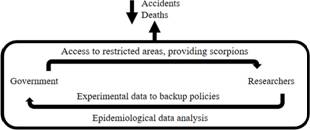
Large numbers of specimens are necessary to conduct rigorous experiments, and these are usually collected by health departments and zoonosis control teams (e.g., Brites-Neto et al. 2025). A key mechanism to foster this shift is establishing formal, reciprocal collaboration between research institutions and local government agencies. This creates a clear win-win scenario (Fig. 1): health departments receive scientific support, and researchers gain access to the large volumes of specimens necessary for experimental studies, which are currently sent almost exclusively for antivenom production. Successful examples of such initiatives include the collaborations between the Universidade de São Paulo (USP) and the Universidade Estadual Paulista (UNESP) with the municipal health surveillance and zoonosis departments of Tupã (https://www.tupa.sp.gov.br/noticia/8188/ccz-fornecera-amostras-de-escorpioes-para-pesquisadores-da-usp/), Botucatu, and Santa Gertrudes between 2020 and 2021. These partnerships enabled the publication of two key experimental papers regarding the use of hens and pesticides for scorpion control (Murayama et al. 2022, 2023). Had every collected animal been routed solely to antivenom production, these studies would never have been conducted.
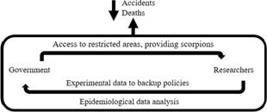
Flowchart of the win-win situation from the collaboration between the government and researchers to reduce accidents and deaths caused by scorpions.
To sum up, the current, decades-old culture in Brazil prioritizes the single-purpose use of collected scorpions for antivenom production over the generation of novel scientific knowledge. We advocate for an immediate and fundamental cultural shift where local governments and scientists nationwide formally collaborate to generate the empirical data needed to justify effective control actions (Fig. 1). Only through a large-scale, evidence-based initiative can we move beyond repeating ineffective procedures and begin to genuinely reduce the thousands of annual envenomation cases. Without regular engagement of researchers, governments risk relying on trial-and-error approaches, failing to mitigate the problem. As emphasized by Hernández-Muñoz et al. (2024), coordinated and systematic scientific efforts with local authorities are critical to achieve meaningful reductions in scorpion incidents and associated fatalities.
ACKNOWLEDGEMENTS
We are extremely grateful to Ricardo Pinto-da-Rocha for his outstanding and steadfast support throughout this study. We thank Claudia Barleta and Rubens Antônio da Silva for inviting us to the “Workshop de Manejo e Controle de Escorpiões”, where direct engagement with zoonosis control personnel provided critical insights into the operational challenges of scorpionism. We thank Cecilia Nahomi K. for coordinating the “1º Simpósio de Controle de Escorpiões do Vale do Paraíba” and facilitating our participation, which offered valuable perspectives on both the theoretical and practical dimensions of scorpion management. We are also indebted to the public health agents from the municipalities of Botucatu, Tupã, and Santa Gertrudes for consistently providing specimens, and to Eduardo de Masi and Gladyston C. Costa (Prefeitura de São Paulo) for productive discussions. Finally, we thank Silvio Nihei, Lucas M. de Castro, and Victoria M.B. de Souza for their assistance with the literature on dipteran parasitoids.
LITERATURE CITED
-
Abourazzak S, Achour S, El Arqam L, Atmani S, Chaouki S, et al. (2009) Epidemiological and clinical characteristics of scorpion stings in children in fez, Morocco. Journal of Venomous Animals and Toxins including Tropical Diseases 15: 255-267. https://doi.org/10.1590/S1678-91992009000200008
» https://doi.org/10.1590/S1678-91992009000200008 -
Abushama FT (1964) On the behaviour and sensory physiology of the scorpion Leiurus quinquestriatus (H. & E.). Animal Behaviour 12(1): 140-153. https://doi.org/10.1016/0003-3472(64)90115-0
» https://doi.org/10.1016/0003-3472(64)90115-0 -
Agnew J, Gorzelski A, Zhu J, Romero A (2023) Coconut fatty acids exhibit strong repellency and week-long efficacy against several urban pest arthropods of the southwestern United States. Pest Management Science 79(10): 3511-3519. https://doi.org/10.1002/ps.7531
» https://doi.org/10.1002/ps.7531 -
Albuquerque CMR, Barbosa MO, Iannuzzi L (2009) Tityus stigmurus (Thorell, 1876) (Scorpiones; Buthidae): response to chemical control and understanding of scorpionism among the population. Revista da Sociedade Brasileira de Medicina Tropical 42: 255-259. https://doi.org/10.1590/S0037-86822009000300004
» https://doi.org/10.1590/S0037-86822009000300004 - Alexander B, Carvalho RL, McCallum H, Pereira MH (2002) Role of the domestic chicken (Gallus gallus) in the epidemiology of urban visceral leishmaniasis in Brazil. Emerging Infectious Diseases 8(12): 1480-1485. https://10.3201/eid0812.010485
-
Alhamoud MA, Fehaid MSA, Alhamoud MA, Alkhalifah AA, Alzoayed MH, Menezes RG (2021) Scorpion stings in Saudi Arabia: an overview. Acta Biomedica 92(4): e2021273-e2021273. https://doi.org/10.23750/abm.v92i4.11550
» https://doi.org/10.23750/abm.v92i4.11550 -
Almeida TSO, Castro MCAB, Fook SML, Camêlo ELS, Gomes LCF, et al. (2020) The relationship between geographic space and the incidence of scorpion accidents in the context of social vulnerability. Revista Eletrônica Acervo Saúde 12(12): e3950. https://doi.org/10.25248/reas.e3950.2020
» https://doi.org/10.25248/reas.e3950.2020 -
Amr ZS, Abu Baker MA, Al-Saraireh M, Warrell DA (2021) Scorpions and scorpion sting envenoming (scorpionism) in the Arab countries of the Middle East. Toxicon 191: 83-103. https://doi.org/10.1016/j.toxicon.2020.12.017
» https://doi.org/10.1016/j.toxicon.2020.12.017 -
Amr ZS, Al Zou’bi R, Abdo N, Bani Hani R (2017) Scorpion stings in Jordan: an update. Wilderness and Environmental Medicine 28(3): 207-212. https://doi.org/10.1016/j.wem.2017.05.003
» https://doi.org/10.1016/j.wem.2017.05.003 -
Blass GRC, Gaffin DD (2008) Light wavelength biases of scorpions. Animal Behaviour 76(2): 365-373. https://doi.org/10.1016/j.anbehav.2007.12.022
» https://doi.org/10.1016/j.anbehav.2007.12.022 -
Braga-Pereira GF, Santos AJ (2021) Asexual reproduction in a sexual population of the Brazilian yellow scorpion (Tityus serrulatus, Buthidae) as evidence of facultative parthenogenesis. Journal of Arachnology 49(2): 185-190. https://doi.org/10.1636/JoA-S-20-001
» https://doi.org/10.1636/JoA-S-20-001 -
Brazil TK, Porto TJ (2010) Os escorpiões. Editora da Universidade Federal da Bahia, Salvador, 84 pp. http://www.repositorio.ufba.br/ri/handle/ri/5109
» http://www.repositorio.ufba.br/ri/handle/ri/5109 -
Brazil V (1909) Contribuição ao estudo do envenenamento pela picada do escorpião e seu tratamento.. Biblioteca digital Instituto Butantan. https://bibliotecadigital.butantan.gov.br/edicao/contribuicao-ao-estudo-do-envenenamento-pela-picada-do-escorpiao/2 [Accessed: 20/06/2025]
» https://bibliotecadigital.butantan.gov.br/edicao/contribuicao-ao-estudo-do-envenenamento-pela-picada-do-escorpiao/2 -
Brites-Neto J, Ducas VD, Figueiredo FS (2023) Spatial analysis in areas with high occurrence of accidents caused by Tityus serrulatus and Tityus bahiensis (Scorpiones: Buthidae) in Brazil. Wilderness and Environmental Medicine 34(1): 63-71. https://doi.org/10.1016/j.wem.2022.11.00
» https://doi.org/10.1016/j.wem.2022.11.00 -
Brites-Neto J, Maimone NM, Piedade SMDS, Andrino FG, Andrade PAM, et al. (2021) Scorpionicidal activity of secondary metabolites from Paecilomyces sp. CMAA1686 against Tityus serrulatus Journal of Invertebrate Pathology 179: 107541. https://doi.org/10.1016/j.jip.2021.107541
» https://doi.org/10.1016/j.jip.2021.107541 -
Brites-Neto J, Willmer JNG, Delciellos AC (2025) Activity pattern of Tityus serrulatus (Scorpiones: Buthidae) in an urban area in the state of São Paulo, Brazil. Medical and Veterinary Entomology 39(1): 115-121. https://doi.org/10.1111/mve.12762
» https://doi.org/10.1111/mve.12762 -
Brito-Almeida TR, de Andrade RM, dos Santos AB, Albuquerque CMR, Lira AFA (2022) Effect of insecticide treatment time on mortality of the buthid scorpion Tityus stigmurus International Journal of Tropical Insect Science 42(3): 2645-2649. https://doi.org/10.1007/s42690-022-00792-9
» https://doi.org/10.1007/s42690-022-00792-9 - Bücherl Wolfgang (1955) Escorpiões e escorpionismo no Brasil. Memórias do Instituto Butantan 27: 107-120.
- Bücherl W (1969) Escorpionismo no Brasil. Memórias do Instituto Butantan 34: 9-24.
-
Bueno AF, Sutil WP, Cingolani MF, Colmenarez YC (2024) Using egg parasitoids to manage caterpillars in soybean and maize: benefits, challenges, and major recommendations. Insects 15(11): 869. https://doi.org/10.3390/insects15110869
» https://doi.org/10.3390/insects15110869 -
Carmo ÉA, Nery AA, Nascimento CL, Casotti CA (2019) Clinical and epidemiological aspects of scorpionism in the interior of the state of Bahia, Brazil: retrospective epidemiological study. Sao Paulo Medical Journal 137: 162-168. https://doi.org/10.1590/1516-3180.2018.0388070219
» https://doi.org/10.1590/1516-3180.2018.0388070219 -
Casanova C, Andrighetti MTM, Sampaio SMP, Marcoris MLG, Colla-Jacques FE, Prado AP (2013) Larval Breeding Sites of Lutzomyia longipalpis (Diptera: Psychodidae) in Visceral Leishmaniasis Endemic Urban Areas in Southeastern Brazil. PLOS Neglected Tropical Diseases 7: e2443. https://doi.org/10.1371/journal.pntd.0002443
» https://doi.org/10.1371/journal.pntd.0002443 -
Chiaravalloti-Neto F, Lorenz C, Lacerda AB, Azevedo TS, Cândido DM, et al. (2023) Spatiotemporal bayesian modelling of scorpionism and its risk factors in the state of São Paulo, Brazil. PLOS Neglected Tropical Diseases 17(6): e0011435. https://doi.org/10.1371/journal.pntd.0011435
» https://doi.org/10.1371/journal.pntd.0011435 -
Chippaux JP (2012) Emerging options for the management of scorpion stings. Drug Design, Development and Therapy 6: 165-173. https://doi.org/10.2147/DDDT.S24754
» https://doi.org/10.2147/DDDT.S24754 -
Chippaux JP (2015) Epidemiology of envenomations by terrestrial venomous animals in Brazil based on case reporting: from obvious facts to contingencies. Journal of Venomous Animals and Toxins including Tropical Diseases 21: 1-17. https://doi.org/10.1186/s40409-015-0011-1
» https://doi.org/10.1186/s40409-015-0011-1 -
Chippaux J-P, Goyffon M (2008) Epidemiology of scorpionism: a global appraisal. Acta Tropica 107(2): 71-79. https://doi.org/10.1016/j.actatropica.2008.05.021
» https://doi.org/10.1016/j.actatropica.2008.05.021 -
Chowell G, Díaz-Dueñas P, Bustos-Saldaña R, Mireles AA, Fet V (2006) Epidemiological and clinical characteristics of scorpionism in Colima, Mexico (2000-2001). Toxicon 47(7): 753-758. https://doi.org/10.1016/j.toxicon.2006.02.004
» https://doi.org/10.1016/j.toxicon.2006.02.004 -
Corrêa-Ferreira BS, Moscardi F (1996) Biological control of soybean stink bugs by inoculative releases of Trissolcus basalis Entomologia Experimentalis et Applicata 79(1): 1-7. https://doi.org/10.1111/j.1570-7458.1996.tb00802.x
» https://doi.org/10.1111/j.1570-7458.1996.tb00802.x -
Costa GG, Serejo LFM, Coelho JS, Cândido DM, Gadelha MAC, Pardal PPO (2020) First report of scorpionism caused by Tityus serrulatus, described by Lutz and Mello, 1922 (Scorpiones, Buthidae), a species non-native to the state of Pará, Brazilian Amazon. Revista da Sociedade Brasileira de Medicina Tropical 53: e20190285. https://doi.org/10.1590/0037-8682-0285-2019
» https://doi.org/10.1590/0037-8682-0285-2019 -
Cruz EFS, Yassuda CRW, Jim J, Barraviera B (1995) Programa de controle de surto de escorpião Tityus serrulatus, Lutz e Mello 1922, no município de Aparecida, SP (Scorpiones, Buthidae). Revista da Sociedade Brasileira de Medicina Tropical 28: 123-128. https://doi.org/10.1590/S0037-86821995000200007
» https://doi.org/10.1590/S0037-86821995000200007 -
Dehesa-Dávila M, Possani LD (1994) Scorpionism and serotherapy in Mexico. Toxicon 32(9): 1015-1018. https://doi.org/10.1016/0041-0101(94)90383-2
» https://doi.org/10.1016/0041-0101(94)90383-2 -
Dehghani R, Valizade R, Mahmoodi S (2016) A review of the scorpion predators and the introduction of Scarites subterraneus, as a new predatory of them in Iran. Journal of Entomological Research 40: 291-296. https://doi.org/10.5958/0974-4576.2016.00052.9
» https://doi.org/10.5958/0974-4576.2016.00052.9 - Dias E, Libiano S, Lisboa A (1922) Lucta contra os escorpiões. Instituto Oswaldo Cruz, Belo Horizonte, 25 pp.
-
Dunlop J (2000) Character states and evolution of the chelicerate claws. In: Toft S, Scharff N (Eds) European Arachnology 2000. Aarhus University Press, Aarhus, ISBN 8779340016, 345-354. https://www.european-arachnology.org/esa/wp-content/uploads/2015/08/345-354_Dunlop.pdf [Accessed: 18/02/2024]
» https://www.european-arachnology.org/esa/wp-content/uploads/2015/08/345-354_Dunlop.pdf - Eickstedt VRD (1983) Escorpionismo por Tityus stigmurus no nordeste do Brasil (Scorpiones: Buthidae). Memórias do Instituto Butantan 48: 133-137.
- Fernandes AL (2012) O controle de escorpiões em áreas antropizadas. Vetores & Pragas 30: 24-28.
-
Foerster SIA, Dionisio-da-Silva W, Santos AB, Albuquerque CMR, Lira AFA (2021) Notes on the courtship behavior of the parthenogenetic scorpion Tityus stigmurus Acta Arachnologica 70(2): 83-86. https://doi.org/10.2476/asjaa.70.83
» https://doi.org/10.2476/asjaa.70.83 -
Gillung JP, Borkent CJ (2017) Death comes on two wings: a review of dipteran natural enemies of arachnids. Journal of Arachnology 45(1): 1-19. https://doi.org/10.1636/JoA-S-16-085.1
» https://doi.org/10.1636/JoA-S-16-085.1 -
Guerra-Duarte C, Saavedra-Langer R, Matavel A, Oliveira-Mendes BBR, Chavez-Olortegui C, Paiva ALB (2023) Scorpion envenomation in Brazil: current scenario and perspectives for containing an increasing health problem. PLOS Neglected Tropical Diseases 17(2): e0011069. https://doi.org/10.1371/journal.pntd.0011069
» https://doi.org/10.1371/journal.pntd.0011069 -
Hernández-Muñoz EA, Zavala-Sánchez EV, Rubio-Atondo A, López-Chávez JA, Arredondo-Rojas V, Reyes-Reyes JS (2024) Scorpion sting envenomation outbreak in Mexico. Strategies for prevention and control. Toxicon 237: 107549. https://doi.org/10.1016/j.toxicon.2023.107549
» https://doi.org/10.1016/j.toxicon.2023.107549 -
Hussen FS, Ahmed ST (2020) Epidemiological and clinical aspects of scorpion stings in Kurdistan region of Iraq. Polish Journal of Environmental Studies 30(1): 629-634. https://doi.org/10.15244/pjoes/122840
» https://doi.org/10.15244/pjoes/122840 -
Iyaniwura TT (1991) Non-target and environmental hazards of pesticides. Reviews on Environmental Health 9(3): 161-176. https://doi.org/10.1515/REVEH.1991.9.3.161
» https://doi.org/10.1515/REVEH.1991.9.3.161 -
Jared C, Alexandre C, Mailho-Fontana PL, Pimenta DC, Brodie ED, Antoniazzi MM (2020) Toads prey upon scorpions and are resistant to their venom: a biological and ecological approach to scorpionism. Toxicon 178: 4-7. https://doi.org/10.1016/j.toxicon.2020.02.013
» https://doi.org/10.1016/j.toxicon.2020.02.013 -
Kalapothakis Y, Miranda K, Aragão M, Larangote D, Braga-Pereira G, et al. (2024) Divergence in toxin antigenicity and venom enzymes in Tityus melici, a medically important scorpion, despite transcriptomic and phylogenetic affinities with problematic Brazilian species. International Journal of Biological Macromolecules 263: 130311. https://doi.org/10.1016/j.ijbiomac.2024.130311
» https://doi.org/10.1016/j.ijbiomac.2024.130311 -
Kelley S, Yut K, Kulkarni R, Gaffin DD (2019) Avoidance of rosemary oil by scorpions. Journal of Arachnology 47(1): 159-161. https://doi.org/10.1636/0161-8202-47.1.159
» https://doi.org/10.1636/0161-8202-47.1.159 -
Lang A, Filser J, Henschel JR (1999) Predation by ground beetles and wolf spiders on herbivorous insects in a maize crop. Agriculture, Ecosystems & Environment 72(2): 189-199. https://doi.org/10.1016/S0167-8809(98)00186-8
» https://doi.org/10.1016/S0167-8809(98)00186-8 -
Leonel JAF, Vioti G, Alves ML, Spada JCP, Yamaguchi AK, et al. (2024) Species, Natural Leishmania spp. Detection and blood meal sources of phlebotomine sandflies (Diptera: Psychodidae: Phlebotominae) in peridomiciles from a leishmaniases endemic area of Brazil. Transboundary and Emerging Diseases 2024: 9932530. https://doi.org/10.1155/2024/9932530
» https://doi.org/10.1155/2024/9932530 -
Li N, Sun C, Jiang J, Wang A, Wang C, et al. (2021) Advances in controlled-release pesticide formulations with improved efficacy and targetability. Journal of Agricultural and Food Chemistry 69(43): 12579-12597. https://doi.org/10.1021/acs.jafc.0c05431
» https://doi.org/10.1021/acs.jafc.0c05431 -
Lira-da-Silva RM, Amorim AM, Brazil TK (2000) Envenenamento por Tityus stigmurus (Scorpiones; Buthidae) no estado da Bahia, Brasil. Revista da Sociedade Brasileira de Medicina Tropical 33: 239-245. https://doi.org/10.1590/S0037-86822000000300001
» https://doi.org/10.1590/S0037-86822000000300001 -
Lisboa LB, Brites-Neto J (2022) Análise retrospectiva das atividades de controle mecânico de Tityus serrulatus no município de Americana, São Paulo. Archives of Veterinary Science 27: 76-84. https://doi.org/10.5380/avs.v27i2.84544
» https://doi.org/10.5380/avs.v27i2.84544 -
Lourenço WR (2015) What do we know about some of the most conspicuous scorpion species of the genus Tityus? A historical approach. Journal of Venomous Animals and Toxins including Tropical Diseases 21: 1-12. https://doi.org/10.1186/s40409-015-0016-9
» https://doi.org/10.1186/s40409-015-0016-9 -
Magalhães O (1946) O combate ao escorpionismo. Memórias do Instituto Oswaldo Cruz 44: 425-439. https://doi.org/10.1590/S0074-02761946000300003
» https://doi.org/10.1590/S0074-02761946000300003 -
Maia MF, Moore SJ (2011) Plant-based insect repellents: a review of their efficacy, development and testing. Malaria Journal 10(1): S11. https://doi.org/10.1186/1475-2875-10-S1-S11
» https://doi.org/10.1186/1475-2875-10-S1-S11 -
Mann RS, Kaufman PE (2012) Natural product pesticides: their development, delivery and use against insect vectors. Mini-Reviews in Organic Chemistry 9(2): 185-202. https://doi.org/10.2174/157019312800604733
» https://doi.org/10.2174/157019312800604733 -
Mansour F, Heimbach U (1993) Evaluation of lycosid, micryphantid and linyphiid spiders as predators of Rhopalosiphum padi (Hom.: Aphididae) and their functional response to prey density-laboratory experiments. Entomophaga 38(1): 79-87. https://doi.org/10.1007/BF02373142
» https://doi.org/10.1007/BF02373142 -
Marks CJ, Muller GJ, Sachno D, Reuter H, Wium CA, et al. (2019) The epidemiology and severity of scorpion envenoming in South Africa as managed by the Tygerberg poisons information centre over a 10 year period. African Journal of Emergency Medicine 9(1): 21-24. https://doi.org/10.1016/j.afjem.2018.12.003
» https://doi.org/10.1016/j.afjem.2018.12.003 -
Matthiesen FA (1962) Parthenogenesis in scorpions. Evolution 16: 255-256. https://doi.org/10.1111/j.1558-5646.1962.tb03217.x
» https://doi.org/10.1111/j.1558-5646.1962.tb03217.x - Mc Cormick SJ, Polis G (1990) Prey, predators and parasites. In: Polis GA (Ed.) The Biology of Scorpions. Standford University Press, Standford, 294-320.
-
Md Meftaul I, Venkateswarlu K, Dharmarajan R, Annamalai P, Megharaj M (2020) Pesticides in the urban environment: a potential threat that knocks at the door. Science of the Total Environment 711: 134612. https://doi.org/10.1016/j.scitotenv.2019.134612
» https://doi.org/10.1016/j.scitotenv.2019.134612 -
Ministry of Health (2009) Manual de Controle de Escorpiões. Série B: Textos Básicos de Saúde. Ministério da Saúde, Brasília, 72 pp. https://bvsms.saude.gov.br/bvs/publicacoes/manual_controle_escorpioes.pdf [Accessed: 10/09/2024]
» https://bvsms.saude.gov.br/bvs/publicacoes/manual_controle_escorpioes.pdf -
Ministry of Health (2025) Acidente por animais peçonhentos. Sistema de Informação de Agravos de Notificação, Brasília. http://tabnet.datasus.gov.br/cgi/deftohtm.exe?sinannet/cnv/animaispe.def [Accessed: 26/04/2025]
» http://tabnet.datasus.gov.br/cgi/deftohtm.exe?sinannet/cnv/animaispe.def -
Miyamoto JG, Andrade FB, Ferraz CR, Cândido DM, Knysak I, et al. (2018) A comparative study of pathophysiological alterations in scorpionism induced by Tityus serrulatus and Tityus bahiensis venoms. Toxicon 141: 25-33. https://doi.org/10.1016/j.toxicon.2017.11.005
» https://doi.org/10.1016/j.toxicon.2017.11.005 -
Monteiro WM, Gomes J, Fé N, Mendonça da Silva I, Lacerda M, et al. (2019) Perspectives and recommendations towards evidence-based health care for scorpion sting envenoming in the Brazilian Amazon: a comprehensive review. Toxicon 169: 68-80. https://doi.org/10.1016/j.toxicon.2019.09.003
» https://doi.org/10.1016/j.toxicon.2019.09.003 -
Murayama GP, Barbosa B, Willemart RH (2023) Experimental approach to the dislodging effect and the mortality of a pesticide in the yellow scorpion Tityus serrulatus PLOS One 18(7): e0289104. https://doi.org/10.1371/journal.pone.0289104
» https://doi.org/10.1371/journal.pone.0289104 -
Murayama GP, Pagoti GF, Guadanucci JPL, Willemart RH (2022) Voracity, reaction to stings, and survival of domestic hens when feeding on the yellow scorpion (Tityus serrulatus). Journal of Venomous Animals and Toxins including Tropical Diseases 28: e20210050. https://doi.org/10.1590/1678-9199-JVATITD-2021-0050
» https://doi.org/10.1590/1678-9199-JVATITD-2021-0050 -
Nyffeler M, Sunderland KD (2003) Composition, abundance and pest control potential of spider communities in agroecosystems: a comparison of European and US studies. Agriculture, Ecosystems & Environment 95(2): 579-612. https://doi.org/10.1016/S0167-8809(02)00181-0
» https://doi.org/10.1016/S0167-8809(02)00181-0 -
Pimenta RJG, Brandão-Dias PFP, Leal HG, Carmo AO, Oliveira-Mendes BBR, et al. (2019) Selected to survive and kill: Tityus serrulatus, the Brazilian yellow scorpion. PLOS One 14(4): e0214075. https://doi.org/10.1371/journal.pone.0214075
» https://doi.org/10.1371/journal.pone.0214075 - Polis GA (1990) Ecology. In: Polis G (Ed.) The Biology of Scorpions. Stanford University Press, Stanford, 123-144.
-
Polis GA, Sissom WD, Mc Cormick SJ (1981) Predators of scorpions: field data and a review. Journal of Arid Environments 4(4): 309-326. https://doi.org/10.1016/S0140-1963(18)31477-0c
» https://doi.org/10.1016/S0140-1963(18)31477-0c -
Pucca MB, Cavalcante JS, Jati SR, Cerni FA, Ferreira RS, Arantes EC (2025) Scorpions are taking over: the silent and escalating public health crisis in Brazil. Front Public Health 13: 1573767. https://doi.org/10.3389/fpubh.2025.1573767
» https://doi.org/10.3389/fpubh.2025.1573767 - Pucca MB, Oliveira FN, Schwartz EF, Arantes EC, Lira-Da-Silva RM (2014) Scorpionism and dangerous species of Brazil. In: Gopalakrishnakone P, Possani LD, Schwartz EF, Vega RCR (Eds) Scorpion venoms. Springer Nature, Dordrecht, 299-324.
- Ramires EN, Navarro-Silva MA, Marques FA (2011) Chemical control of spiders and scorpions in urban areas. In: Stoytcheva M (Ed.) Pesticides in the modern world - pests control and pesticides exposure and toxicity assessment. InTech, Rijeka, 553-600.
-
Ramsey JM, Salgado L, Cruz-Celis A, Lopez R, Alvear AL, Espinosa L (2002) Domestic scorpion control with pyrethroid insecticides in Mexico. Medical and Veterinary Entomology 16(4): 356-363. https://doi.org/10.1046/j.1365-2915.2002.00383.x
» https://doi.org/10.1046/j.1365-2915.2002.00383.x -
Rani L, Thapa K, Kanojia N, Sharma N, Singh S, et al. (2021) An extensive review on the consequences of chemical pesticides on human health and environment. Journal of Cleaner Production 283: 124657. https://doi.org/10.1016/j.jclepro.2020.124657
» https://doi.org/10.1016/j.jclepro.2020.124657 -
Reckziegel GC, Pinto VL (2014) Scorpionism in Brazil in the years 2000 to 2012. Journal of Venomous Animals and Toxins including Tropical Diseases 20(1): 46. https://doi.org/10.1186/1678-9199-20-46
» https://doi.org/10.1186/1678-9199-20-46 -
Rodrigues MC, Murayama GP, Moriyama LT, Ximenes N, Souza L, Willemart RH (2025) Light, camera, action: Behavioral responses of the yellow scorpion Tityus serrulatus to different lights. Behavioural Processes 228: 105207. https://doi.org/10.1016/j.beproc.2025.105207
» https://doi.org/10.1016/j.beproc.2025.105207 -
Roldan NMR, Gaffin DD (2018) New, sensitive behavioral assay shows scorpions are attracted to multiple wavelengths of light. Journal of Arachnology 46(3): 432-437. https://doi.org/10.1636/JoA-S-17-068.1
» https://doi.org/10.1636/JoA-S-17-068.1 -
Ross LK (2010) Confirmation of parthenogenesis in the medically significant, synanthropic scorpion Tityus stigmurus (Thorell, 1876) (Scorpiones: Buthidae). Revista Ibérica de Aracnología 18: 115-121. http://sea-entomologia.org/gia/ria_18_115_121.html
» http://sea-entomologia.org/gia/ria_18_115_121.html -
Saabna N, Keasar T (2024) Parasitoids for biological control in dryland agroecosystems. Current Opinion in Insect Science 64: 101226. https://doi.org/10.1016/j.cois.2024.101226
» https://doi.org/10.1016/j.cois.2024.101226 -
Santos AB, Albuquerque CMR (2020) Behavioural changes in Tityus stigmurus (Thorell, 1876) (Scorpiones: Buthidae) exposed to a pyrethroid insecticide. Journal of Ethology 38(3): 301-310. https://doi.org/10.1007/s10164-020-00651-5
» https://doi.org/10.1007/s10164-020-00651-5 -
Schmidt-Jeffris RA, Beers EH, Sater C (2021) Meta-analysis and review of pesticide non-target effects on phytoseiids, key biological control agents. Pest Management Science 77(11): 4848-4862. https://doi.org/10.1002/ps.6531
» https://doi.org/10.1002/ps.6531 -
Seemann TMS, Rocha AP, Cremonese F, Resener MC, Petry A, Costa ACC (2023) Evolution of the occurrence of Tityus serrulatus (Lutz & Mello, 1992) in the state of Santa Catarina. Revista da Sociedade Brasileira de Medicina Tropical 56: e0434. https://doi.org/10.1590/0037-8682-0434-2022
» https://doi.org/10.1590/0037-8682-0434-2022 -
Shi CM, Zhang XS, Zhang DX (2015) Parasitoidism of the Sarcophaga dux (Diptera: Sarcophagidae) on the Mesobuthus martensii (Scorpiones: Buthidae) and Its Implications. Annals of the Entomological Society of America 108(6): 978-985. https://doi.org/10.1093/aesa/sav090
» https://doi.org/10.1093/aesa/sav090 -
Souza CA, Candido DM, Lucas SM, Brescovit AD (2009) On the Tityus stigmurus complex (Scorpiones, Buthidae). Zootaxa 1987(1): 1-38. https://doi.org/10.11646/zootaxa.1987.1.1
» https://doi.org/10.11646/zootaxa.1987.1.1 - Stockmann R (2015) Introduction to Scorpion Biology and Ecology. In: Gopalakrishnakone P, Possani LD, Schwartz EF, Vega RCR (Eds) Scorpion venoms. Springer, Dordrecht, 25-60.
- Szilagyi-Zecchin VJ, Fernandes AL, Castagna CL, Voltolini JC (2012) Abundance of scorpions Tityus serrulatus and Tityus bahiensis associated with climate in urban area (Scorpiones, Buthidae). Indian Society of Arachnology 1: 15-23.
-
Tatto M, Fernandes FD, Costa EP, Shibuya FY, Freitas LI, et al. (2023) Detection of anti-Leishmania spp. antibodies in poultry from central region of Rio Grande do Sul, Brazil. Revista Brasileira de Parasitologia Veterinária 32: 1-8. https://doi.org/10.1590/S1984-29612023077
» https://doi.org/10.1590/S1984-29612023077 -
Torrez PPQ, Dourado FS, Bertani R, Cupo P, França FOS (2019) Scorpionism in Brazil: exponential growth of accidents and deaths from scorpion stings. Revista da Sociedade Brasileira de Medicina Tropical 52: e20180350. https://doi.org/10.1590/0037-8682-0350-2018
» https://doi.org/10.1590/0037-8682-0350-2018 -
Touloun O, Slimani T, Boumezzough A (2001) Epidemiological survey of scorpion envenomation in southwestern Morocco. Journal of Venomous Animals and Toxins including Tropical Diseases 7: 199-218. https://doi.org/10.1590/S0104-79302001000200006
» https://doi.org/10.1590/S0104-79302001000200006 -
Tudi M, Daniel Ruan H, Wang L, Lyu J, Sadler R, et al. (2021) Agriculture development, pesticide application and its impact on the environment. International Journal of Environmental Research and Public Health 18(3): 1112. https://doi.org/10.3390/ijerph18031112
» https://doi.org/10.3390/ijerph18031112 -
Vilarinho AC, Lopez VM, Tizo-Pedroso E, Freire Oliveira CJ, Guillermo Ferreira R (2023) Scorpion envenomation in the neotropical savannah: Environmental predictors and years of lost life. Toxicon 234: 107277. https://doi.org/10.1016/j.toxicon.2023.107277
» https://doi.org/10.1016/j.toxicon.2023.107277 -
Ward MJ, Ellsworth SA, Nystrom GS (2018) A global accounting of medically significant scorpions: epidemiology, major toxins, and comparative resources in harmless counterparts. Toxicon 151: 137-155. https://doi.org/10.1016/j.toxicon.2018.07.007
» https://doi.org/10.1016/j.toxicon.2018.07.007 -
Williams SC (1987) Scorpion bionomics. Annual Review of Entomology 32: 275-295. https://doi.org/10.1146/annurev.en.32.010187.001423
» https://doi.org/10.1146/annurev.en.32.010187.001423 -
Yousefi S, Paksa A, Gorouhi MA, Alizadeh I, Amin M, et al. (2023) Determination of the feeding behavior of Phlebotomus sergenti using multiplex PCR and tent-baited traps in a new focus of Anthroponotic Cutaneous Leishmaniasis in the southeast of Iran. Experimental Parasitology 244: 1-5. https://doi.org/10.1016/j.exppara.2022.108426
» https://doi.org/10.1016/j.exppara.2022.108426 -
Zhang XS, Liu GC, Zhang DeX, Shi CM (2017) Novel trophic interaction: the scuttle fly Megaselia scalaris (Diptera: Phoridae) is a facultative parasitoid of the desert scorpion Mesobuthus eupeus mongolicus (Scorpiones: Buthidae). Journal of Natural History 51(1-2): 1-15. https://doi.org/10.1080/00222933.2016.1236222
» https://doi.org/10.1080/00222933.2016.1236222 -
Zimmermann G (1993) The entomopathogenic fungus Metarhizium anisopliae and its potential as a biocontrol agent. Pesticide Science 37(4): 375-379. https://doi.org/10.1002/ps.2780370410
» https://doi.org/10.1002/ps.2780370410
- ZooBank register
-
Data Availability Statement
Datasets generated or analyzed in this study are available from the corresponding author on reasonable request.
-
Funding
This work was supported by the Coordenação de Aperfeiçoamento de Pessoal de Nível Superior (CAPES/PROEX, grant 343-2022), and by Santander (grant 01/2020-2021).
-
Ethical Statement
Not applicable.
-
AI Statement
Artificial intelligence tools were used solely to assist with language editing and grammar.
-
How to cite this article
Murayama GP, Carvalho LS, Willemart RH (2026) Current methods to control scorpions, with emphasis on Brazil: why a shift in culture is needed. Zoologia 43: e25050. https://doi.org/10.1590/S1984-4689.v43.e25050
-
Published by
Sociedade Brasileira de Zoologia at Scientific Electronic Library Online - https://www.scielo.br/zool
Datasets generated or analyzed in this study are available from the corresponding author on reasonable request.