Diversity and activity patterns of medium and large-sized terrestrial mammals from the Área Natural Única Los Estoraques, Colombia
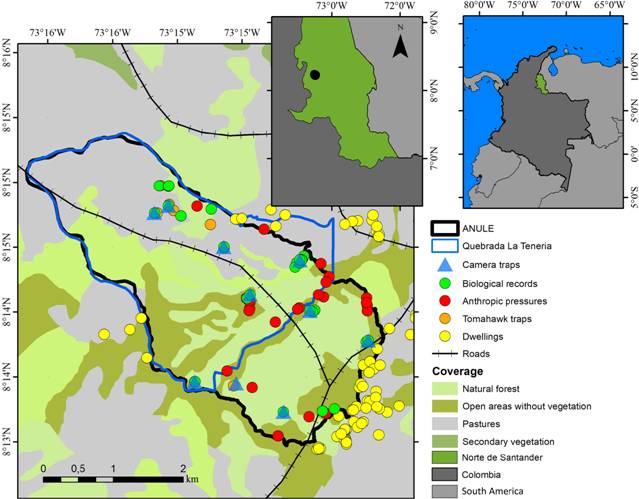
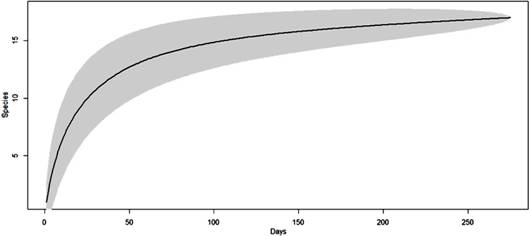
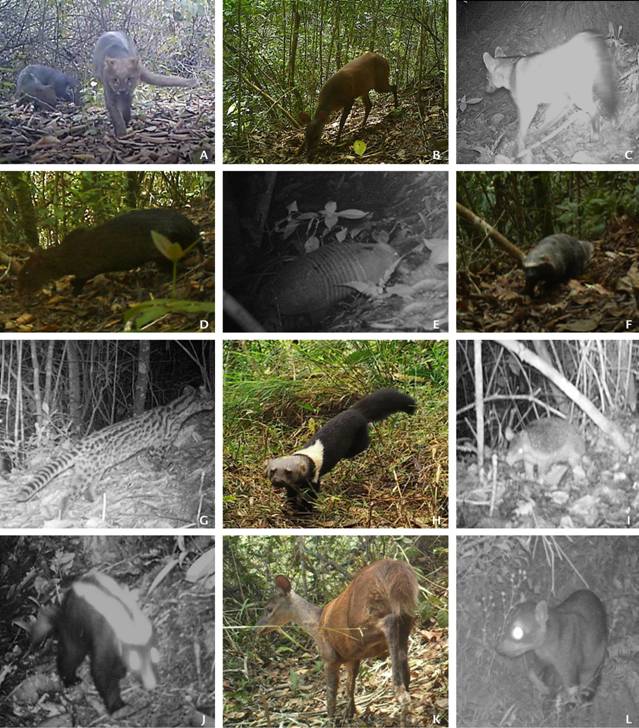
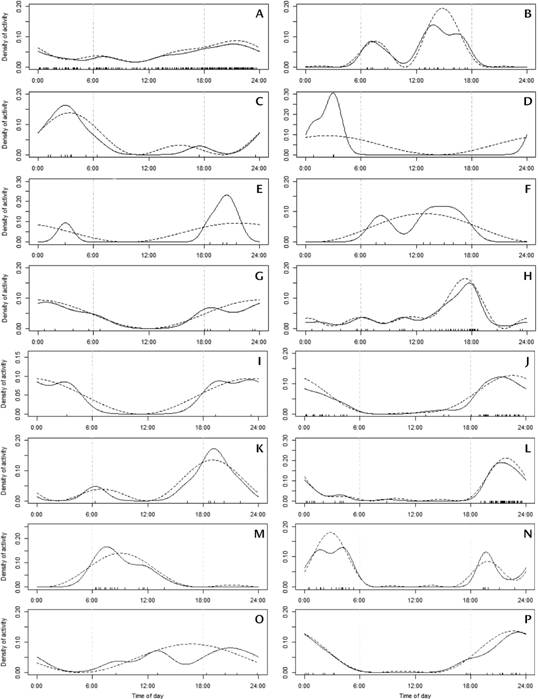
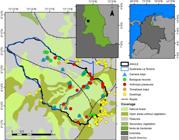
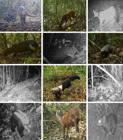
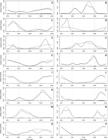
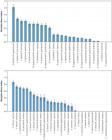
The Área Natural Única Los Estoraques (ANULE) is part of the 65 national natural parks of Colombia. Although this protected area is included in the Sistema Nacional de Áreas Protegidas (SINAP-Colombia), contains unique geomorphological formations, and includes an endangered ecosystem such as tropical dry forest, it is subjected to constant anthropogenic pressures. To support biodiversity management and conservation processes, we obtained baseline data on the presence and activity patterns of medium and large-sized mammals through 10 camera-trap stations placed in 1.0 km2 from October 2017 to June 2018, supplemented by complementary monitoring methods. With a sampling effort of 2,770 camera-trap nights, we recorded 18 species. The species with the highest capture rates (CR) were Didelphis marsupialis Linnaeus, 1758, Dasypus fenestratus Peters, 1864, and Dasyprocta punctata Gray, 1842 (20.27, 18.21, and 14.43, respectively). Galictis vittata (Schreber, 1776) and Coendou longicaudatus Daudin, 1802 had the lowest capture rates (0.34 each) and exhibited a predominantly diurnal activity pattern. We found a nocturnal trend for the assemblage and low activity overlap among most species. This is the first assessment of the diversity of medium and large-sized mammals for ANULE and the second for the north-eastern Andes in the country. The predominantly nocturnal pattern observed could be due to the presence of cattle, dogs, and hunters during the diurnal period. Although a considerable number of species were recorded, several had low capture rates, suggesting that current management plans are not sufficient to safeguard the biodiversity they contain.
KEYWORDS:
Camera trap; coexistence; conservation; Eastern Cordillera; National Protected Areas
 Thumbnail
 Thumbnail
 Thumbnail
 Thumbnail
 Thumbnail