Sexual dimorphism and morphological characterization of antennal sensilla in the pine processionary moth Thaumetopoea pityocampa (Lepidoptera: Notodontidae)
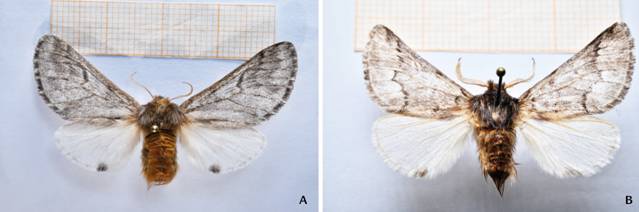
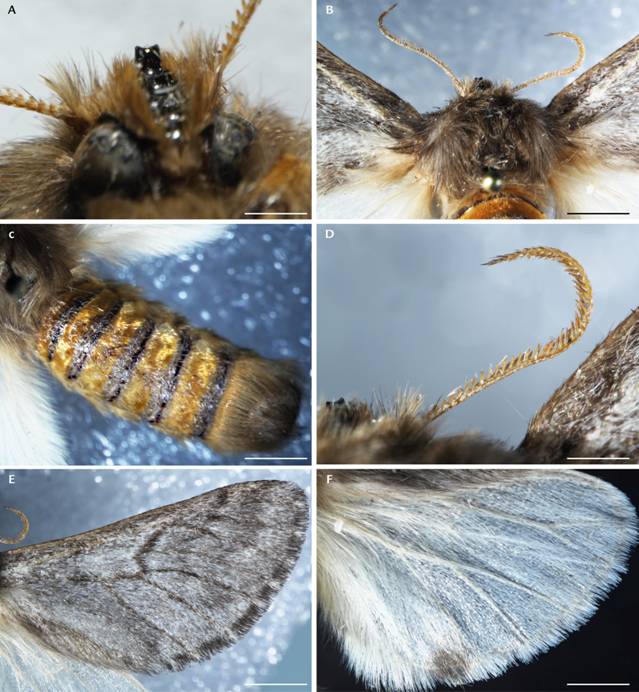
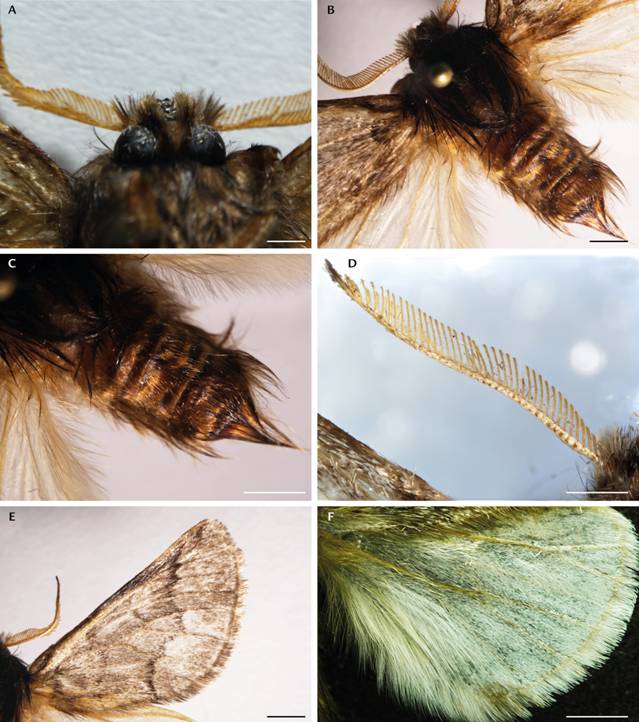
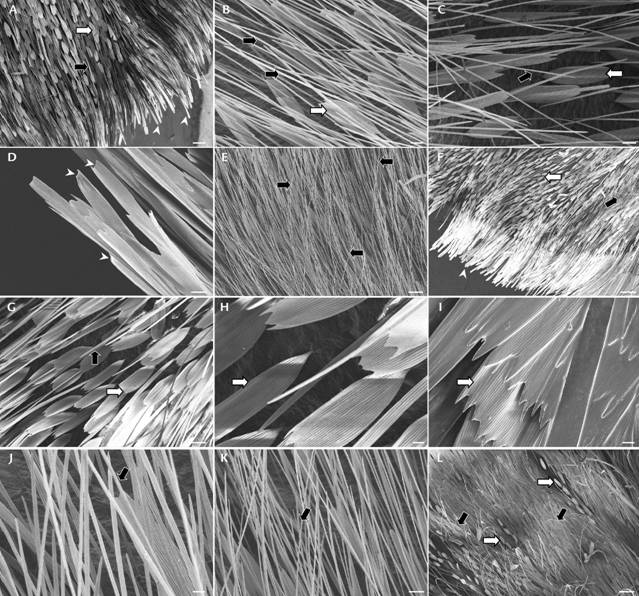
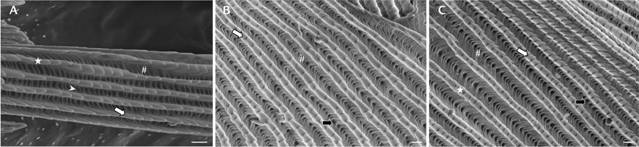
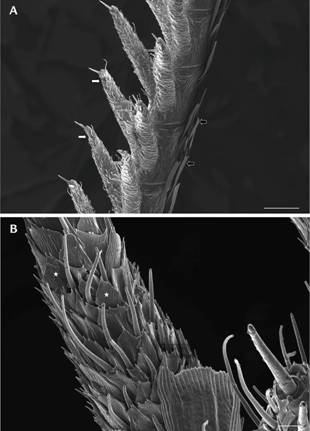
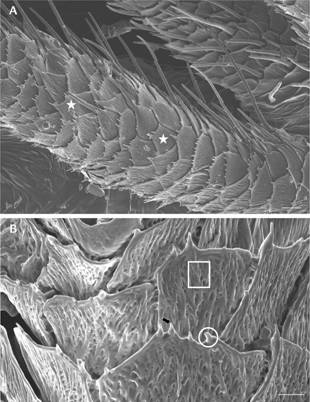
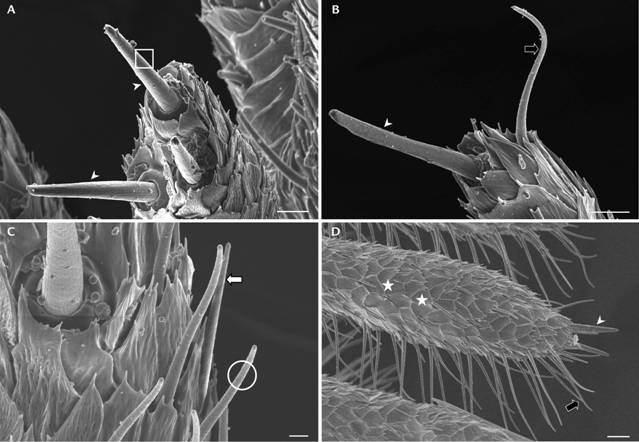
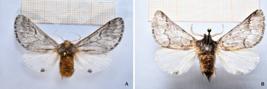
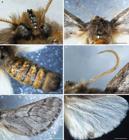
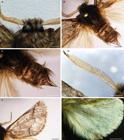
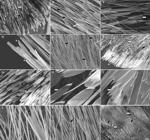
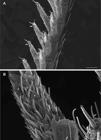
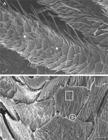
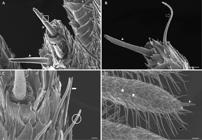
The pine processionary moth Thaumetopoea pityocampa (Denis & Schiffermüller, 1755) is widely distributed in Mediterranean areas where its larval phases colonize different Pinus species, often inducing a complete defoliation. According to the most common pattern in Insects, T. pityocampa shows a size dimorphism, with males being smaller than females. Despite its great socioeconomic relevance, the morphological characteristics of this species are still not well-documented. Available studies mainly focus on general morphology, biological cycle and ecological traits, thus leaving a knowledge gap on this topic. Here, we provide for the first time a detailed morphological description of T. pityocampa adults with particular emphasis on sexual dimorphism through an in-depth analysis under both stereomicroscope and scanning electron microscope. The shape and distribution of scales in the wings of males and females have been evaluated to reveal putative differences in their morphology and/or location and the hindwings of males have a much greater number of hairy scales. Since insects rely on their antennal sensilla to accomplish vital cues, including mate selection and host plant recognition, we investigated the antennal arrangement and the distribution of sensilla in both sexes. A notable dimorphism in the length of the lateral branches of the antennae was highlighted but no differences were observed in the general distribution of the sensilla. Males possess exclusively one type of trichoid sensilla (type 1), which are longer than those observed in females.
KEYWORDS:
Morphology; scanning electron microscopy; sexual dimorphism; sensorial pattern; wing scales
 Thumbnail
 Thumbnail
 Thumbnail
 Thumbnail
 Thumbnail
 Thumbnail
 Thumbnail
 Thumbnail