 Determinants of Garbage Codes as the cause of death in a nationally representative cohort of older adults: ELSI-Brasil
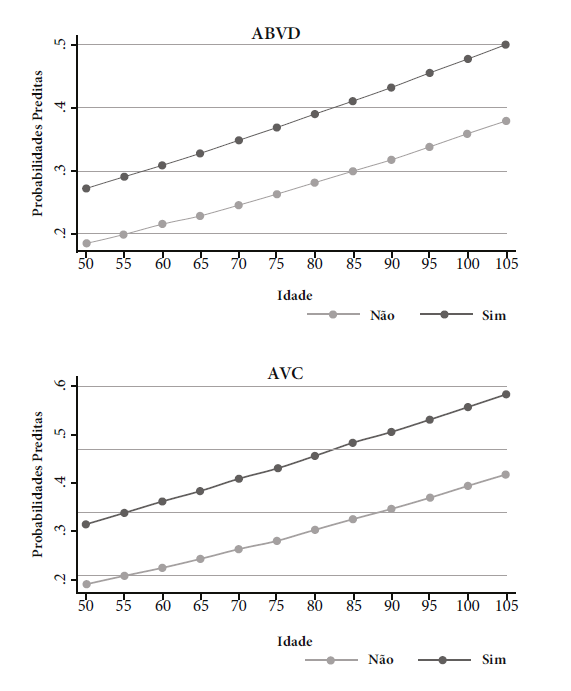
Data from the Brazilian Longitudinal Study of Aging (ELSI-Brazil), conducted on a national sample of the population aged 50 or over, were used with the objective of examining the presence of garbage codes (GC) as a cause of death in the Mortality Information System (SIM) and their association with pre-existing sociodemographic and health characteristics. A total of 872 deaths were identified among the 9,412 participants in the baseline cohort, of which 29.1% were classified as GC. Using Poisson regression adjusted for age and/or sex, it was observed that age (PR [Prevalence Ratio] 1.45; 95% CI 1.04-2.01 and PR=1.46; 95% CI 1.05- 2.03, for 70-79 and 80+ years, respectively), brown race/color (PR = 1.27; 95% CI 1.01-1.61), previous medical diagnosis of stroke (PR = 1.53; 95% CI 1.21-1.94) and functional limitation (PR = 1.41; CI 95 % 1.34-1.73) were associated with GC registration. These results suggest that actions aimed at identifying the chain of events that result in stroke and/or functional limitation may have an impact on improving the recording of the underlying cause of death among elderly Brazilian adults.
Keywords:
Cohort study; Aging; Mortality records; Causes of death
 Thumbnail