
 Cytomolecular investigations using repetitive DNA probes contribute to the identification and characterization of Characidium sp. aff. C. vidali (Teleostei: Characiformes)
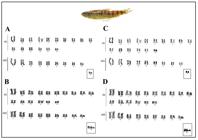
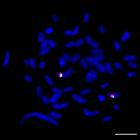
Characidium sp. aff. C. vidali is a species found in coastal streams in southeastern Brazil, which has karyotypic explanatory elements as the occurrence of microstructural variations, keeping the chromosomal macrostructure of the genus. The objective of this study was to apply cytomolecular tools in the chromosomes of Characidium sp. aff. C. vidali to identify characteristics in their karyotype contributing to cytogenetic definition of this species, adding information about the evolution of the chromosomal structure of the group. The species showed 2n = 50 chromosomes and from 1 to 4 additional B microchromosomes. FISH technique showed histone H3 and H4 genes in the short arm of pair 10, and microsatellites (CA)15, (CG)15, (GA)15 and (TTA)10 clustered in the subtelomeric portions of all A chromosomes, with total accumulation by supernumerary. The telomeric probe marked terminal regions of all chromosomes, in addition to the interstitial portion of four pairs, called ITS sites, with these markings being duplicated in two pairs, hence the double-ITS classification. C-banding revealed that supernumerary chromosomes are completely heterochromatic, that ITS sites are C-banding positive, but double-ITS sites are C-banding negative. So, throughout the evolution to Characidium, genomic events are occurring and restructuring chromosomes in populations.
Keywords:
Fish cytogenetics; Crenuchidae; Repetitive DNA; Molecular markers
 Thumbnail
 Thumbnail
 Thumbnail
 Thumbnail


