 Single-shade resin composites for the restoration of non-carious cervical lesions: a simplified clinical approach
ABSTRACT
Monochromatic resins stand out due to their chameleon effect, which allows the material to blend with the surrounding tooth structure, providing an aesthetic restoration with a simplified restorative technique. This type of resin eliminates the need for shade selection and the use of multiple materials, thereby reducing chair time during dental appointments. Thus, this study aims to present a simplified strategy for restoring Non-Carious Cervical Lesions greater than 1 mm in depth using monochromatic resins. For this purpose, the use of gingival retraction cord for isolation and proper moisture control is recommended to ensure success in the adhesive procedure. Selective enamel etching, combined with self-etch adhesive systems, is considered a successful option for the restoration of Non-Carious Cervical Lesions. The restoration should be performed using the oblique incremental technique, followed by light curing for the time recommended by the manufacturer. Finishing and polishing should be carried out using flexible discs to achieve optimal results. The use of monochromatic resins may be indicated for the restoration of Non-Carious Cervical Lesions, since their chameleon-like properties provide effective mimicry of the natural tooth color. The final outcome depends on the cavity size and the favorable color of the substrate. Therefore, the indication for monochromatic resins must take into account the specific details and etiological factors of each individual case.
Indexing terms
Composite resins; Dental restoration; Tooth wear
RESUMO
As resinas monocromáticas se destacam pelo seu efeito camaleão, que permite ao material se integrar à estrutura dentária adjacente, proporcionando uma restauração estética com uma técnica restauradora simplificada. Esse tipo de resina elimina a necessidade de seleção de cor e do uso de múltiplos materiais, reduzindo, assim, o tempo clínico durante as consultas odontológicas. O objetivo deste estudo é apresentar uma estratégia simplificada para a restauração de lesões cervicais não cariosas com profundidade superior a 1 mm, utilizando resinas monocromáticas. Para tal, recomenda-se o uso de fio de retração gengival para isolamento e controle adequado da umidade, a fim de garantir o sucesso do procedimento adesivo. A técnica de condicionamento seletivo do esmalte combinada com sistemas adesivos autocondicionantes é considerada uma opção eficaz para a restauração das lesões cervicais não cariosas. A restauração deve ser realizada utilizando a técnica incremental oblíqua, seguida de fotopolimerização pelo tempo recomendado pelo fabricante. O acabamento e o polimento devem ser feitos com discos flexíveis para alcançar resultados ideais. O uso de resinas monocromáticas pode ser indicado para a restauração de lesões cervicais não cariosas, já que suas propriedades camaleônicas proporcionam uma mimetização eficaz da cor natural do dente. O resultado final depende do tamanho da cavidade e da cor favorável do substrato. Portanto, a indicação das resinas monocromáticas deve levar em consideração os detalhes específicos e os fatores etiológicos de cada caso individual.
Termos de indexação
Resinas compostas; Restauração dental; Desgaste dental
INTRODUCTION
The development of Non-Carious Cervical Lesions (NCCL) is related to a combination of behavioral, environmental, and biological factors, including diet, lifestyle, saliva characteristics, oral hygiene habits, and chronic use of medications, among others [1], with no bacterial involvement in the genesis of these lesions [2]. These factors directly result in accelerated loss of hard dental tissue by etiological mechanisms: chemical degradation, resulting from processes such as dental erosion or corrosion; friction, associated with abrasion and attrition; and the accumulation of tension, characteristic of the abfraction process [3,4]. Usually, treatment of clinical signs (lesions) and symptoms often requires a multidisciplinary approach to control the modulating factors [5]. The treatment of NCCL traditionally involves the use of composite resins and glass ionomer cements, but the control of the etiological factors is often a clinical challenge to increase restorative longevity and halt the progression of the lesions.
Recently, the introduction of monochromatic resins has emerged as a promising and simplified innovation that may be an option for these cases. Most of the available literature focuses on their optical properties, laboratory performance, or general esthetic outcomes, with limited emphasis on structured clinical protocols for specific and challenging clinical scenarios such as NCCL. Furthermore, contemporary dental practice increasingly values efficiency, predictability, and simplification of clinical workflows, particularly in high-demand private practices and public health services. By eliminating the shade selection step and reducing material selection complexity, monochromatic composites have the potential to significantly optimize chair time and improve accessibility to esthetic restorative care. Thus, this short communication aims to present information related to the clinical management of NCCL, mainly using single-shade composite systems.
Single-shade or monocromatic composite systems
Shade selection can be challenging and depends on environmental factors and operator skill. In response, a trend toward simplifying this process has led to the development of single-shade or monocromatic composite systems [6,7]. These new materials rely on a property known as Color Adjustment Potential (CAP), which is defined by the physical and perceptual interaction between the composite and the surrounding dental tissues [8]. Rather than incorporating a broad spectrum of pigments, these resins exhibit structural color behavior, in which light scattering within uniformly sized spherical filler particles – such as those made of silica and zirconia – generates optical adaptation to the shade of adjacent tooth structure [9]. Thus, these resins have universal opacity, few available shades, and are recommended for use in a single shade increment that could match different tooth colors.
Although simplified restorative systems, such as the so-called universal systems, have long been used to reduce clinical complexity, it is important to distinguish them from true monochromatic systems based on structural color. Traditional simplified composites still rely on a limited set of pigments and shade groupings, requiring some degree of shade selection and stratification to achieve acceptable esthetic outcomes. In contrast, monochromatic composites are designed to generate color through an optical phenomenon (such as light scattering) rather than through intrinsic pigmentation [8,9]. This fundamental difference allows single-shade materials to adapt chromatically to a wide range of tooth colors using a single increment.
The pioneer in this class of materials is Palfique Omnichroma (Tokuyama), which utilizes the so-called Sub-Micro-Pearl-Technology to achieve color adaptation through purely physical means, without the use of conventional pigments [10,11]. Its supra-nanometric fillers, approximately 260 nm in diameter, contribute to the material’s chameleon-like ability to mimic the surrounding dentition by altering the way incident light is transmitted and reflected within the restoration [12,13]. In clinical applications, particularly for non-carious cervical lesions, Omnichroma has demonstrated favorable optical outcomes due to its capacity to reflect dentin chroma and transmit light effectively in areas where enamel is thin, and dentin predominates [14,15]. This makes it especially suitable for cervical restorations, where a more saturated chroma and lower value are prevalent.
Simplified strategies to restore NCCL
In shallow NCCL (up to 1 mm) and favorable substrate color, simplified restorative systems may be an excellent option to enhance aesthetics without the need for stratification [16]. The decision to restore NCCLs should consider factors such as lesion morphology (e.g., wedge-shaped), depth greater than 1 mm; control of the etiological factors of the lesions; lack of success in previous desensitizing treatment; the possibility of pulp exposure; unacceptable aesthetic involvement for the patient; as well as the feasibility of a satisfactory adhesive protocol [17], since the highest failure rate of cervical restorations comes from inadequate moisture control as well as the complexity of promoting adhesion to dentin [18]. Figure 1 shows examples of wedge-shaped lesions with different depths for which the decision was for direct restoration in simplified resin.
Humidity control is essential for adhesive procedures. The use of absolute dam isolation may increase the survival of cervical restorations, but the use of clamps in the cervical region may increase the risk of gingival recession [19]. Thus, if it is well performed, relative isolation with gingival retraction using retraction cords can also enable excellent procedures.
NCCL generally do not require any type of cavity preparation. The creation of a bevel is indicated to reduce the concentration of stresses at the cavo-surface angle of the enamel and therefore increases the retention rate and longevity of NCCL restorations, as well to create a smooth transition between the tooth and the restoration, and a good seal reducing marginal leakage [20]. This should have a thickness of approximately 1 to 2 mm and is performed with truncated conical diamond burs, such as the 1190F (KG – Sorensen). The preparation can be cleaned with an oil-free prophylactic paste to remove debris, possible biofilm and polishing.

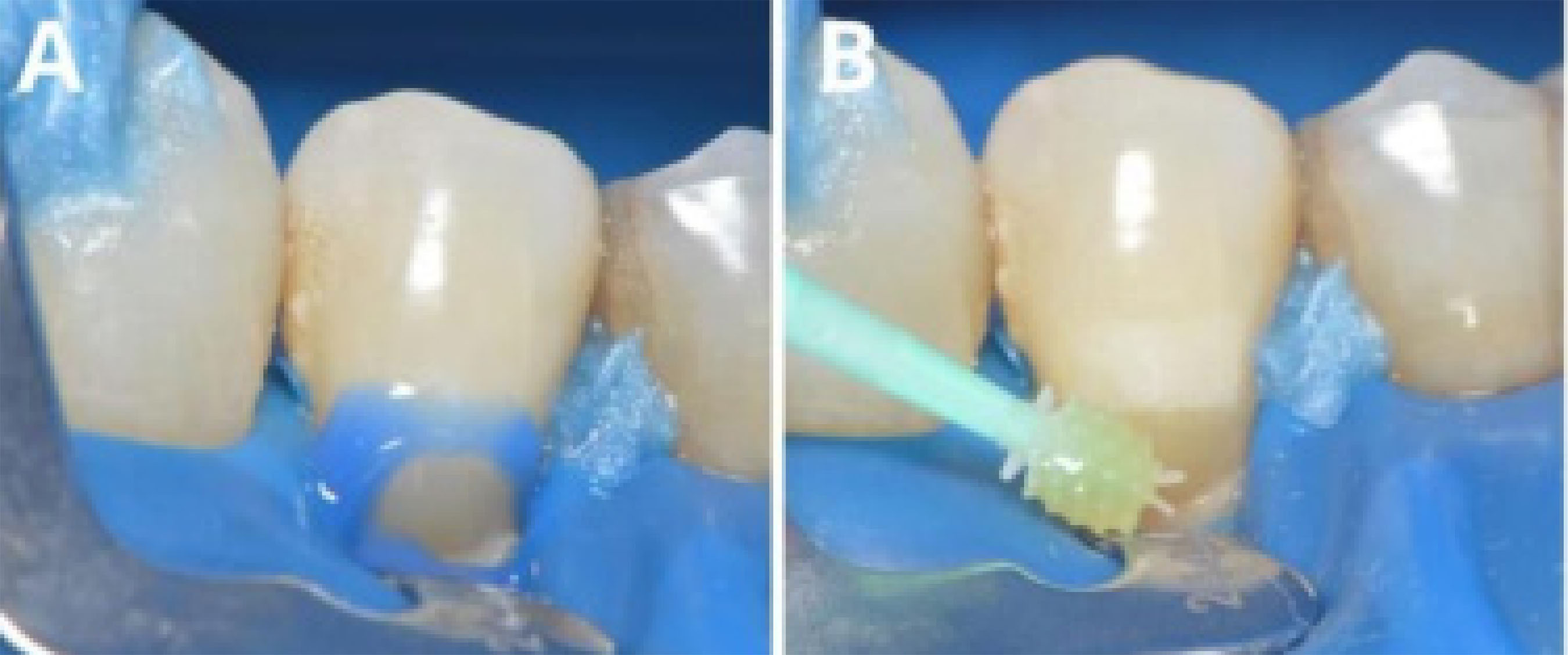
A) Application of selective acid etching on enamel (Ultraetch, Ultradent) for 30 seconds. B) Application of a universal adhesive system (BeautiBond Xtreme, Shofu) in an active manner, with emphasis on the use of a silicone microapplicator (ZerofloX, Mixpac) to avoid incorporation of nylon fibers into the hybrid layer.
Regarding adhesive procedures, three-step etch-and-rinse systems have demonstrated superior outcomes when compared to the 1-step system [21]. In a simplified strategy, the use of selective enamel conditioning in conjunction with mild pH self-etching adhesives, such as universal ones, associated with stable functional monomers (10-MDP) has been an option for NCCL restorations, and when analyzing the discoloration and marginal integrity, they present better results than the direct use of the 1-step adhesive [21]. Figure 2 illustrates the adhesive protocol in the self-etching strategy with selective enamel conditioning.
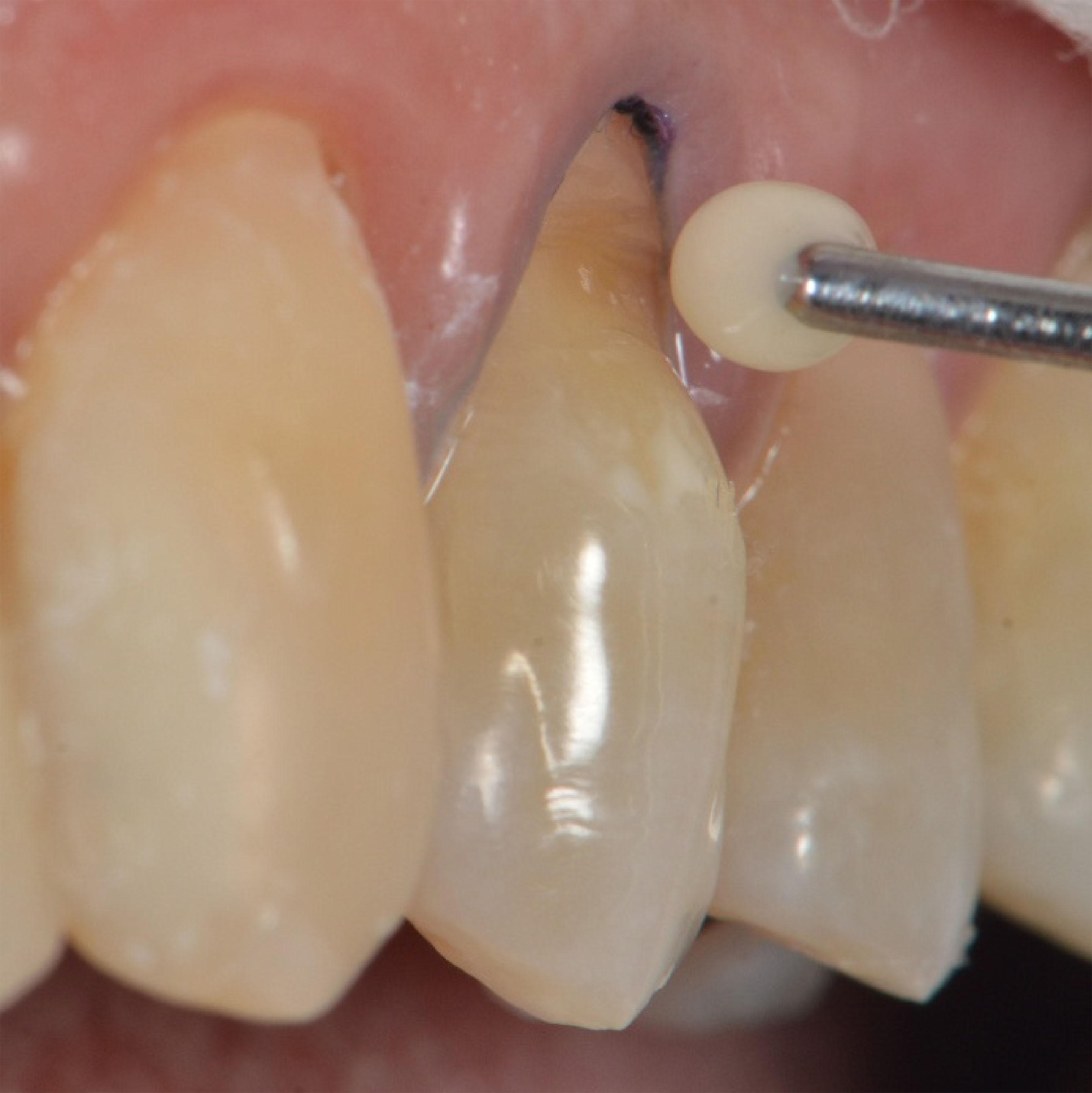
The insertion of simplified composite resins must comply with the indicated increment thickness, always using the smallest possible number of increments to control contraction stresses. The use of appropriate brushes and spatulas helps to achieve the correct contour and minimizes the formation of bubbles and defects between increments that may result in future problems. Figure 3 shows the insertion of simplified resin in a NCCL.
Insertion of Palfique Omnichroma resin (Tokuyama) into the cavity, in two increments, followed by photoactivation for 40s each.
The incremental technique can often result in an unsatisfactory aesthetic result, especially if performed by professionals with less experience or training and may require rework for correction. In this context, monochromatic resins aim to facilitate and simplify the restorative technique and may be a good suggestion for NCCL cases (figure 4), as demonstrated throughout this text. In addition to Omnichroma, other options are available on the market, with similar technology and yet differing so much in chromatic properties, translucency, and mimicry with the color of the natural tooth element that it is challenging [11] (figure 4).
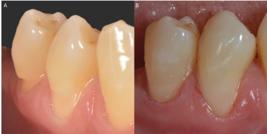
A) Cervical lesions on teeth 44 and 45. B) Same lesions presented restored with monochromatic resin (Palfique Omnichroma, Tokuyama), showing a satisfactory chromatic result.
DISCUSSION
Monochromatic resins can be an excellent option to simplify the restorative technique and make it faster. In vitro studies suggest that these resins have lower flexural strength than nanoparticle composites, such as Filtek Z350 resin (3M - ESPE) [22], however, in clinical evaluations, it was possible to verify not only color stability, but also the integral maintenance of the restoration, which contains complete information, without signs of wear, fractures or discoloration, demonstrating the effectiveness and durability acquired with the chosen restored material, results that can be corroborated with the study by Zulekha et al. [13]. Also, a recent clinical trial showed a comparable color match after 18 months between a single-shaded and a multi-shade composite [23]. However, it is important to include that NCCL with extensive sclerotic dentin, dark cervical staining, or marked chromatic heterogeneity may exceed the masking capacity of single-shade materials and require conventional stratified techniques. Establishing these criteria allows clinicians to select cases more accurately and avoid aesthetic compromises.
Despite its advantages, some limitations, such as radiopacity and excessive translucency, might influence clinical outcomes. For example, Omnichroma presents a low radiopacity compared to other composites, which can hinder radiographic visualization of restoration margins, especially when minimal thickness is used [24]. Additionally, its performance in bleaching scenarios appears limited, with short-term color changes not sustained after two weeks [25]. Aging studies have shown reduced mechanical resilience compared to other single-shade composites [26]. In posterior restorations, particularly in Class I and II cavities with residual thickness between 1 and 3 mm, the ability to blend seamlessly with surrounding tooth structure may be compromised [27,28]. Furthermore, in anterior restorations, the excessive translucency usually found for some single-shade composites, such as Omnichroma, may accentuate underlying discoloration rather than neutralize it, which results in grayish restorations, a drawback that requires the use of an additional blocker to mask background color: an extra step that partially offsets the intended simplification [29]. Recognizing these limitations is essential to prevent inappropriate indications, manage patient expectations, and ensure that monochromatic resins are used as a complementary option rather than a universal solution for all cervical restorations.
CONCLUSION
Despite their clinical advantages, monochromatic composites present inherent limitations that must be acknowledged. Because their color adaptation depends largely on the optical interaction with surrounding tissues, their masking ability is reduced in situations where the substrate is severely discolored, metallic, or highly opaque. In deep NCCL (> 2mm), where dentin predominates, and light transmission is limited, the final color may appear darker or less harmonized with adjacent tooth structure. But for less deep cavities, the use of these composites is viable since their “chameleon” properties provide a good color match with the natural color of the teeth, eliminating the shade selection step and layering techniques. This helps to reduce clinical time and minimize color errors.
-
Article aligned with the Good Health and well-being goal of the Sustainable Development Goals (SDGs).
-
How to cite this article
de Sousa LG, Almeida LM, Filgueiras AT, Pereira FA, Zanatta RF. Single-shade resin composites for the restoration of non-carious cervical lesions: a simplified clinical approach. RGO, Rev Gaúch Odontol. 2026;74:e20260029. http://dx.doi.org/10.1590/1981-86372026002920250077
Data Availability
The research data are available from the corresponding author upon reasonable request.
REFERENCES
- 1 Zanatta RF, Avila DDMS, Torres CRGC, Borges ABAB, Ávila D, Torres CRGC, et al. Fatores moduladores do desgaste dental erosivo. Rev Assoc Paul Cir Dent. 2017;71(2):190-6.
-
2 Zeola LF, Pereira FA, Galvão AM, Montes TC, de Sousa SC, Ribeiro Teixeira DN, et al. Influence of non carious cervical lesions depth, loading point application and restoration on stress distribution pattern in lower premolars: a 2D finite element analysis. Biosci J. 2015;31(2):648-56. doi: https://doi.org/10.14393/BJ-v31n2a2015-27837
» https://doi.org/10.14393/BJ-v31n2a2015-27837 - 3 Grippo JO, Simring M, Coleman TA. Abfraction, abrasion, biocorrosion, and the enigma of noncarious cervical lesions: a 20-year perspective. J Esthet Restor Dent. 2012;24(1):10-23.
- 4 Lussi A, Carvalho TS. Erosive tooth wear: a multifactorial condition of growing concern and increasing knowledge. Monogr Oral Sci. 2014;25:1-15.
- 5 Soares PV, Grippo JO. Lesões cervicais não cariosas e hipersensibilidade dentinária cervical. Nova Odessa: Napoleão Quintessence; 2018.
-
6 Suh YR, Ahn JS, Ju SW, Kim KM. Influences of filler content and size on the color adjustment potential of nonlayered resin composites. Dent Mater J. 2017;36(1):35-40. doi: https://doi.org/10.4012/dmj.2016-083
» https://doi.org/10.4012/dmj.2016-083 - 7 Lowe RA. OMNICHROMA: one composite that covers all shades for an anterior tooth. Compend Contin Educ Dent. 2019;40(suppl 1):8-10.
-
8 Trifkovic B, Powers JM, Paravina RD. Color adjustment potential of resin composites. Clin Oral Invest. 2018;22(3):1601-7. doi: https://doi.org/10.1007/s00784-017-2260-6
» https://doi.org/10.1007/s00784-017-2260-6 -
9 Ahmed MA, Jouhar R, Khurshid Z. Smart monochromatic composite: a literature review. Int J Dent. 2022; 2022:1-6. doi: https://doi.org/10.1155/2022/2445394
» https://doi.org/10.1155/2022/2445394 -
10 Ebaya MM, Ali AI, El-Haliem HA, Mahmoud SH. Color stability and surface roughness of ormocer- versus methacrylate-based single shade composite in anterior restoration. BMC Oral Health. 2022;22(1):1-12. doi: https://doi.org/10.1186/s12903-022-02423-8
» https://doi.org/10.1186/s12903-022-02423-8 - 11 Nagi SM, Moharam LM. Color Match Clinical Evaluation and Patients’ Acceptability for a Single Shade Universal Resin Composite in Class III and V Anterior Restorations. Vol. 15, J Int Dental Med Res. 2022;15(1):230-6.
-
12 Yamaguchi S, Karaer O, Lee C, Sakai T, Imazato S. Color matching ability of resin composites incorporating supra-nano spherical filler producing structural color. Dent Mater. 2021;37(5):e269-e75. doi: https://doi.org/10.1016/j.dental.2021.01.023
» https://doi.org/10.1016/j.dental.2021.01.023 -
13 Zulekha, Vinay C, Uloopi K, RojaRamya K, Penmatsa C, Ramesh M. Clinical performance of one shade universal composite resin and nanohybrid composite resin as full coronal esthetic restorations in primary maxillary incisors: a randomized controlled trial. J Indian Soc Pedod Prev Dent. 2022;40(2):159. doi: https://doi.org/10.4103/jisppd.jisppd_151_22
» https://doi.org/10.4103/jisppd.jisppd_151_22 -
14 Yamashita A, Kobayashi S, Furusawa K, Tichy A, Oguro R, Hosaka K, et al. Does the thickness of universal-shade composites affect the ability to reflect the color of background dentin? Dent Mat J. 2023;42(2):255-65. doi: https://doi.org/10.4012/dmj.2022-197
» https://doi.org/10.4012/dmj.2022-197 -
15 Durand LB, Ruiz‐López J, Perez BG, Ionescu AM, Carrillo‐Pérez F, Ghinea R, et al. Color, lightness, chroma, hue, and translucency adjustment potential of resin composites using CIEDE2000 color difference formula. J Est Rest Dent. 2021;33(6):836-43. doi: https://doi.org/10.1111/jerd.12679
» https://doi.org/10.1111/jerd.12679 -
16 Miranda A, Favoreto M, Matos T, Castro A, Kunz P, Souza J, et al. Color match of a universal-shade composite resin for restoration of non-carious cervical lesions: an equivalence randomized clinical trial. Oper Dent. 2024;49(1):20-33. doi: https://doi.org/10.2341/22-156-C
» https://doi.org/10.2341/22-156-C - 17 Peumans M, Politano G, Van Meerbeek B. Treatment of noncarious cervical lesions: when, why, and how. Int J Est Dent. 2020;15(1):16-42.
- 18 Perez CR, Gonzalez MR, Prado NAS, de Miranda MSF, Macêdo MA, Fernandes BMP. Restoration of noncarious cervical lesions: when, why, and how. Int J Dent. 2012;2012:1-8.
-
19 Favetti M, Montagner AF, Fontes ST, Martins TM, Masotti AS, Jardim PS, et al. Effects of cervical restorations on the periodontal tissues: 5-year follow-up results of a randomized clinical trial. J Dent. 2021;106:103571. doi: https://doi.org/10.1016/j.jdent.2021.103571
» https://doi.org/10.1016/j.jdent.2021.103571 - 20 Baratieri L, Monteiro Jr S. Odontologia restauradora: fundamentos e técnicas. São Paulo: Guanabara Koogan; 2010.
-
21 Dreweck FDS, Zarpellon D, Wambier LM, Loguercio AD, Reis A, Gomes OMM. Is there evidence that three-step etch-and-rinse adhesives have better retention rates than one-step self-etch adhesives in noncarious cervical lesions? A systematic review and meta-analysis. The J Adh Dent. 2021;23(3):187-200. doi: https://doi.org/10.3290/j.jad.a44889
» https://doi.org/10.3290/j.jad.a44889 - 22 Hasanain FA. Flexural strength and depth of cure of single shade dental composites. J Pharm Res Int. 2021;110:1-8.
-
23 Favoreto MW, de Oliveira de Miranda A, Matos TP, de Castro ADS, de Abreu Cardoso M, Beatriz J, et al. Color evaluation of a one-shade used for restoration of non-carious cervical lesions: an equivalence randomized clinical trial. BMC Oral Health. 2024;24(1):1464. doi: https://doi.org/10.1186/s12903-024-05108-6
» https://doi.org/10.1186/s12903-024-05108-6 -
24 Kopuz D, Erçin Ö. The radiographic evaluation of 11 different resin composites. Odontology. 2024;112(2):428-34. doi: https://doi.org/10.1007/s10266-024-00579-6
» https://doi.org/10.1007/s10266-024-00579-6 -
25 AlHabdan A, AlShamrani A, AlHumaidan R, AlFehaid A, Eisa S. Color Matching of universal shade resin-based composite with natural teeth and its stability before and after in-office bleaching. Int J Biomat. 2022;2022:8420890.37. doi: https://doi.org/10.1155/2022/8420890
» https://doi.org/10.1155/2022/8420890 -
26 Graf N, Ilie N. Long-term mechanical stability and light transmission characteristics of one shade resin-based composites. J Dent. 2022;116:103915. doi: https://doi.org/10.1016/j.jdent.2021.103915
» https://doi.org/10.1016/j.jdent.2021.103915 -
27 Castro FLA, Durand LB. Influence of cavity wall thickness on the color adjustment potential of single-shade resin composites. J Am Dent Ass. 2024;155(7):605-13. doi: https://doi.org/10.1016/j.adaj.2024.03.006
» https://doi.org/10.1016/j.adaj.2024.03.006 -
28 Prodan CM, Gasparik C, Ruiz‐López J, Dudea D. Influence of preheating and water storage on the color, whiteness, and translucency of modern resin‐based composites. J Est Rest Dent. 2025; 7(2):533-45. doi: https://doi.org/10.1111/jerd.13305
» https://doi.org/10.1111/jerd.13305 -
29 de Abreu JLB, Sampaio CS, Benalcázar Jalkh EB, Hirata R. Analysis of the color matching of universal resin composites in anterior restorations. J Est Rest Dent. 2021;33(2):269-76. doi: https://doi.org/10.1111/jerd.12659
» https://doi.org/10.1111/jerd.12659
Edited by
-
Assistant editor
Luciana Butini Oliveira