 Cost-Effectiveness Analysis of Coronary Computed Tomography Angiography as the Preferred Exam in the Investigation of Stable Chest Pain in the Brazilian Private Healthcare System
Abstract
Background Cardiovascular disease is the leading cause of mortality worldwide. Strategies that prioritize early diagnosis can reduce the incidence of related complications and cost.
Objective To assess the cost-effectiveness of coronary computed tomography angiography (CCTA) as the initial diagnostic strategy for stable chest pain in patients with intermediate pre-test probability of stable coronary artery disease (CAD), in comparison with invasive coronary angiography (ICA).
Methods A cost-effectiveness analysis was conducted comparing CCTA and ICA, considering data from the Brazilian private healthcare system. The model considered the direct costs of diagnostic exams, medical supplies, hospitalization for myocardial infarction, and myocardial revascularization in the 5 regions of Brazil. A budget impact analysis was performed regarding the gradual incorporation of CCTA over 5 years, considering 100,000 lives as the eligible population.
Results The cost-effectiveness analysis comparing CCTA to ICA, estimated for a population of 100,000 lives, demonstrated cost savings of BRL 1,021.00 per life or a total of BRL 102,069,703.00 by the end of the fifth year. When considering the regional average cost of CCTA, for a population of 100,000 over 5 years, we observed the following cost savings per life and in 5 years, respectively: BRL 1,226.00 and BRL 122,577,793.00 in the North Region; BRL 1,460.00 and BRL 145,988,367.00 in the Northeast Region; BRL 1,625.00 and BRL 162,502,626.00 in the Central-West Region; BRL 1,313.00 and BRL 131,270,230.00 in the Southeast Region; and BRL 1,043.00 and BRL 104,268,937.00 in the South Region.
Conclusion As an initial strategy for investigating stable chest pain, CCTA is cost-effective compared to ICA and is associated with significant cost reductions in the Brazilian private healthcare system.
Keywords:
X-Ray Computed Tomography; Coronary Artery Disease; Cost-Effectiveness Analysis; Myocardial Infarction
Resumo
Fundamento A doença cardiovascular é a principal causa de mortalidade mundial. Estratégias que priorizem o diagnóstico precoce podem reduzir a incidência de complicações e custo relacionados.
Objetivo Avaliar a custo-efetividade da angiotomografia coronariana (AngioTC) como estratégia de investigação inicial de dor torácica estável em pacientes com probabilidade pré-teste intermediária de doença arterial coronariana (DAC) estável, em comparação com a angiografia coronariana invasiva (ACI).
Métodos Foi realizada uma análise de custo-efetividade comparando AngioTC e ACI considerando dados da saúde suplementar brasileira. O modelo considerou os custos diretos dos exames diagnósticos, insumos, custo de internação por infarto e custo de revascularização miocárdica nas 5 regiões do Brasil. Foi realizada uma análise de impacto orçamentário referente à incorporação gradual da AngioTC ao longo de 5 anos, utilizando como população elegível um universo de 100.000 vidas.
Resultados A análise de custo-efetividade com AngioTC comparada à ACI, estimada para uma população de 100.000 vidas, mostrou uma economia de R$ 1.021,00 por vida ou de R$ 102.069.703,00 ao final do quinto ano. Quando considerado o valor médio da AngioTC por região, observamos, na população de 100.000, por vida e em 5 anos, respectivamente, uma economia média de: R$ 1.226,00 e R$ 122.577.793,00 na Região Norte; R$ 1.460,00 e R$ 145.988.367,00 na Região Nordeste; R$ 1.625,00 e R$ 162.502.626,00 na Região Centro-Oeste; R$ 1.313,00 e R$ 131.270.230,00 na Região Sudeste; e R$ 1.043,00 e R$ 104.268.937,00 na Região Sul.
Conclusão A AngioTC como estratégia inicial na investigação da dor torácica estável é custo-efetiva quando comparada à ACI e está associada à redução de custos significativos na saúde suplementar brasileira.
Palavras-chave:
Tomografia Computadorizada por Raios X; Doença da Artéria Coronariana; Análise de Custo-Efetividade; Infarto do Miocárdio
Introduction
Cardiovascular disease is the leading cause of death worldwide, surpassing all causes of cancer combined, killing 3 times more women than breast cancer and 7 times more than colon cancer.1-3 In Brazil, they are responsible for more than 350,000 deaths per year, more than 1,100 deaths per day, approximately 46 deaths per hour, or 1 death every 90 seconds.4 Given this high burden of mortality, it is essential to provide early diagnosis of coronary artery disease (CAD) in order to reduce complications related to major cardiovascular events.
CAD represents a significant impact on both public health systems and national economies. It is estimated that, in Brazil, cardiovascular diseases generate direct and indirect costs exceeding R$50 billion per year.5 These costs range from consultations, diagnostic tests, and pharmacological therapies to highly complex procedures such as angioplasty and myocardial revascularization, which have increased in recent years in Brazil.3 Furthermore, indirect costs related to loss of productivity, early retirement, and recurrent hospitalizations further increase the financial burden. Accordingly, investments in diagnostic strategies that can provide early and accurate diagnosis of CAD have the potential not only to improve patients’ clinical prognosis but also to mitigate potential long-term costs by enabling timely interventions that prevent adverse outcomes and avoidable hospitalizations.
The diagnostic strategy for CAD is often complex and is discussed in various clinical situations according to the presence of symptoms and cardiovascular risk factors. Invasive coronary angiography (ICA) is the gold standard method for anatomical diagnosis of CAD.6 However, it is an invasive method, which is not free from related complications.7 Coronary computed tomography angiography (CCTA) is the only non-invasive test capable of visualizing coronary atherosclerotic plaque in various phases of development, including non-obstructive ones, allowing for earlier detection and treatment of CAD and reducing the absolute number of infarctions.8,9 A series of results from the Ischemia Trial Group seems to have consolidated the concept that the detection and characterization of atherosclerotic burden has a prognostic value superior to the detection of myocardial ischemia.10,11 Current Brazilian guidelines recommend this exam as an initial diagnostic strategy in patients with chest pain and unknown anatomy.12 Nevertheless, there are no Brazilian data demonstrating the cost-effectiveness of this approach in the private healthcare system.
Given the above, this study conducted a cost-effectiveness analysis comparing available strategies for anatomical diagnosis of CAD (CCTA versus ICA) as the initial procedure for evaluating patients with stable angina in the Brazilian private healthcare system. The objective was to estimate the potential cost reduction and clinical impact of systematically adopting CCTA, with specific modeling for different geographic regions of Brazil in order to reflect variations in costs and available infrastructure.
Methods
A cost-effectiveness and budget impact assessment was conducted, considering CCTA as the initial strategy for investigating CAD compared to ICA. ICA was chosen as the comparator due to the fact that it is considered the gold standard diagnostic method for CAD stratification and is widely available in the Brazilian private healthcare system. This comparison is justified by the fact that CCTA is the only non-invasive method available for anatomical diagnosis of CAD as well as its high diagnostic accuracy.13
With the aim of increasing the transparency of the proposed study, the main aspects of the analyses were summarized according to the Consolidated Health Economic Evaluation Reporting Standards (CHEERS) checklist, over a 5-year horizon, as recommended by the Brazilian Ministry of Health.14
The analysis focused on the use of CCTA as the initial diagnostic tool for patients with suspected stable CAD, in comparison with ICA. The population assessed in the model corresponds to the simulated demand of a mid-sized healthcare provider, estimated at an annual cohort of 100,000 patients. Additionally, the annual demographic growth rate defined by the Brazilian Institute of Geography and Statistics (IBGE) was applied to the population projection.
The economic assessment was conducted based on prices charged within the Brazilian private healthcare system, applying the Brazilian Hierarchical Classification of Medical Procedures (CBHPM), put forth by the Brazilian Medical Association (AMB) in conjunction with medical specialty societies, with technical support from the Economic Research Institute Foundation (FIPE), as a reference. Additionally, we used the official drug price list published by the Drug Market Regulation Chamber (CMED), an interministerial body composed of representatives from the Brazilian Ministries of Health, Economy, Justice, and the Chief of Staff, with the National Health Surveillance Agency (ANVISA) responsible for its Executive Secretariat.15,16
The model considered direct costs related to diagnostic tests (including the test itself, operating fees, and medical supplies), as well as the costs of clinical management of events, such as acute myocardial infarction and hospitalization. The values assigned to each diagnostic procedure were obtained using official codes from the CBHPM and CMED.15,16
For ICA, the total estimated cost was BRL 1,900.79, which includes the test, the hospital fee for use of the catheterization room, and the costs of patient monitoring during the procedure. For CCTA, the cost of BRL 1,311.95 was considered, according to the reference provided by the National Supplementary Health Agency (ANS), which is the regulatory body responsible for private healthcare in Brazil.
The costs related to hospitalization and subsequent clinical treatment (including additional tests and medications) for patients with acute myocardial infarction were estimated based on official tables made available and summarized in Supplementary Table S1. The costs related to surgical myocardial revascularization procedures and stent angioplasty were obtained as detailed in Supplemental Tables S2 and S3, respectively. For components such as hospital fees and daily rates, average values charged by hospitals in different regions of the country were used, given the lack of a standardized national price list. It is important to note that these values are often negotiated directly between health insurance companies and service providers. For analysis by regional subgroups, average costs were calculated by region to reflect the economic and structural variations observed in different Brazilian regions.
To estimate the incidence of the percentage probability of infarction in the groups referred for CCTA or ICA, the probability of myocardial revascularization in both groups, and the probability of hospitalization in both groups, we used the event incidences based on the DISCHARGE TRIAL study,17 a recent multicenter randomized trial that compared CCTA and ICA strategies over a mean follow-up of 3.5 years. Supplementary Table S4 summarizes the probabilities of acute myocardial infarction, revascularization, and hospitalization events identified in the original study and applied in the present analysis.
To guarantee the robustness of the results, a multivariate probabilistic sensitivity analysis was also conducted, by means of second-order Monte Carlo simulations, using 1,000 interactions based on the parameters defined in the model. The results of this analysis are shown in Central Illustration. For parameters with continuous and upper incomplete distribution, such as costs, gamma distributions were applied. For parameters restricted to the range between 0 and 1, such as the probabilities of adverse events, beta distributions were adopted. The beta and gamma distributions were parameterized with variation intervals between 80% and 120% of the deterministic values, allowing assessment of the influence of variations of up to 20% on the model results.
In addition to the cost-effectiveness analysis, a budget impact analysis was conducted regarding the incorporation of CCTA in patients with suspected stable CAD, using an estimated eligible population of 100,000 patients in the first year and an annual increase proportional to the demographic growth rate of the Brazilian population over a 5-year horizon. This number of lives sought to reflect the expectations of a mid-sized health insurance provider and, consequently, the reality of the current private healthcare system in Brazil.
The implementation of the CCTA strategy was modeled conservatively, in accordance with Ministry of Health guidelines, considering progressive implementation over 5 years. In the first year, it was estimated that 5% of the eligible population (5,000 individuals) would undergo CCTA. Thereafter, an annual increase of 5% was adopted, reaching 25% of the eligible population by the end of the fifth year. This proportion corresponds to 25,608 individuals, considering the population growth projection derived from IBGE demographic estimates (Table S5).
Results
Cost-effectiveness assessment demonstrated that the CCTA strategy in stable patients was superior to the standard strategy with ICA for diagnostic confirmation in three significant outcomes: acute myocardial infarction, hospitalizations, and myocardial revascularization, as a consequence of diagnosis of CAD with significant stenosis. The CCTA strategy demonstrated savings of BRL 686.86 per life for the outcome of acute myocardial infarction. For the outcome of hospitalization, the savings with the CCTA strategy reached a decreasing value of BRL 684.41 per life, and for the outcome of myocardial revascularization, the CCTA strategy achieved a reduction of BRL 811.09 per life (Table 1).
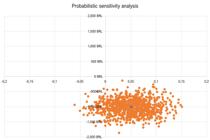
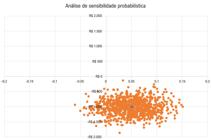
The cost-effectiveness analysis results are corroborated by the sensitivity analysis, as the scatterplot from the simulations reveals that CCTA remained dominant in this analysis, considering all outcomes. Central Illustration shows that the vast majority of points (91.2%) fell in the lower right quadrant, indicating dominance over the comparator.
For cost-effectiveness analysis in the 5 Brazilian regions, average values applied in each region of the country were considered, as recommended by the CBHPM. The results obtained from the comparisons demonstrated that CCTA remained a cost-effective strategy, even when assessed within the specificities of each region of Brazil. The cost-effectiveness assessment results for each Brazilian region are individually displayed in Table 2. The probabilistic sensitivity analysis by region is shown in the Supplementary Figures.
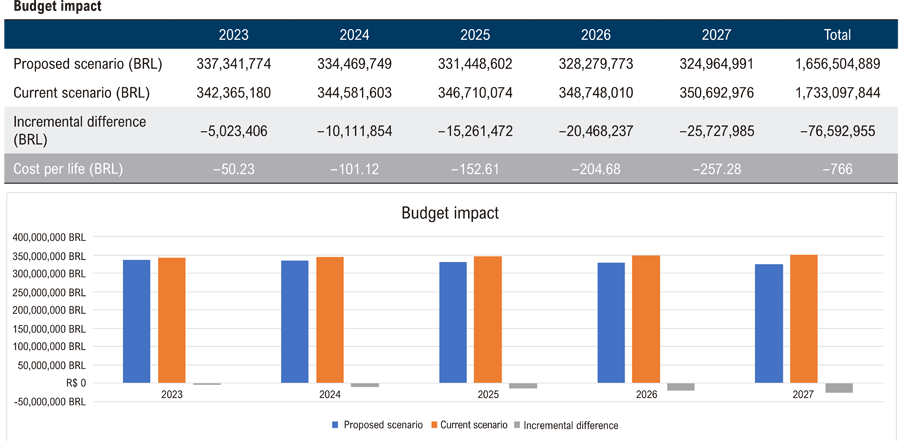
According to budget impact analysis, implementing the CCTA strategy instead of ICA, with a 5% annual increase in availability, considering the population growth predicted by IBGE data, would result in an optimization of the use of resources projected for the initial population of 100,000 patients from the first year of analysis. The significant reduction would be BRL 5,023,406.00 in the first year, BRL 10,111,854.00 in the second year, BRL 15,261,472.00 in the third, BRL 20,468,237.00 in the fourth, and BRL 25,727,985.00 at the end of the fifth year, when employing the strategy for 25% of the population, based on the cost of CCTA considering 100% of the CBHPM value (Figure 1).
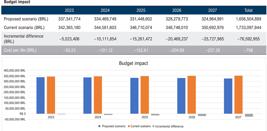
– Projected budget impact analysis for the progressive implementation of coronary computed tomography angiography as a diagnostic strategy in Brazil over 5 years. The simulation assumes an initial adoption rate of 5% in the first year, with an annual increase of 5%, reaching 25% in the fifth year. Estimated values are displayed for the current scenario, the proposed scenario, and the incremental difference between the two.
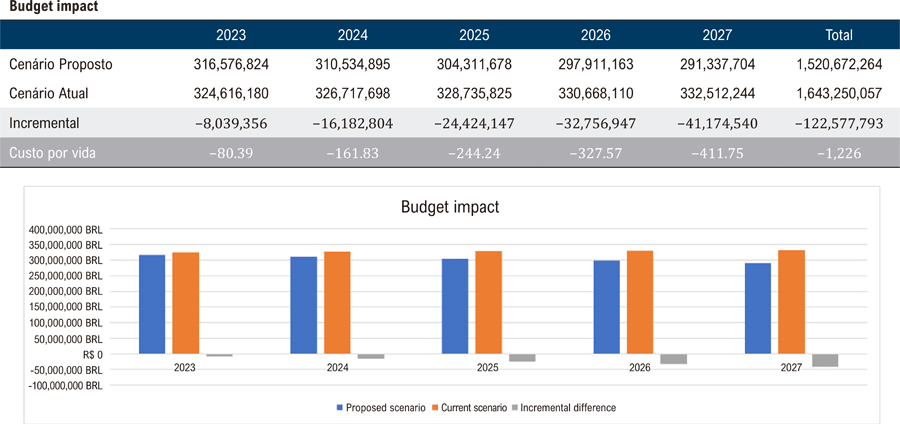
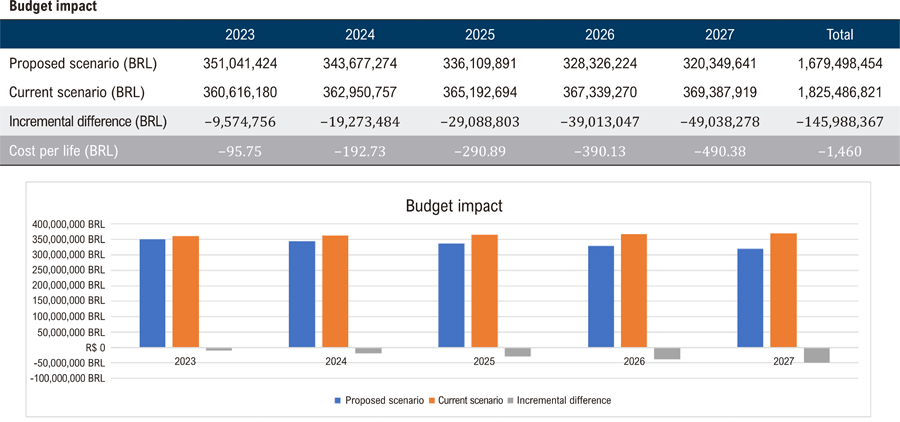
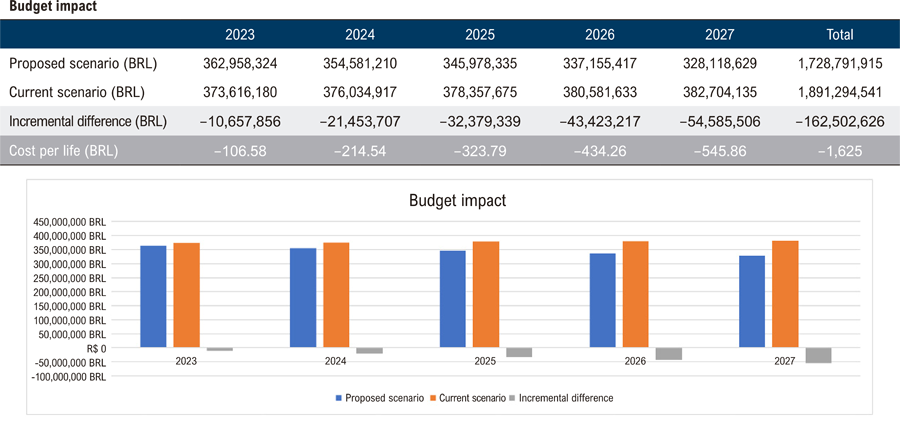
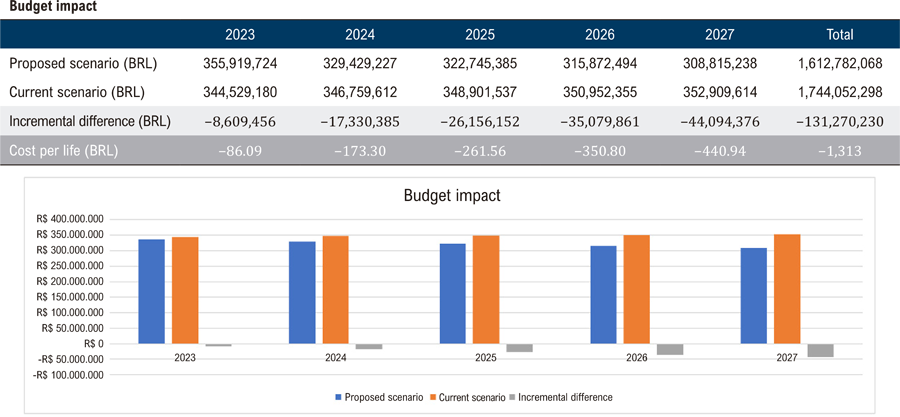
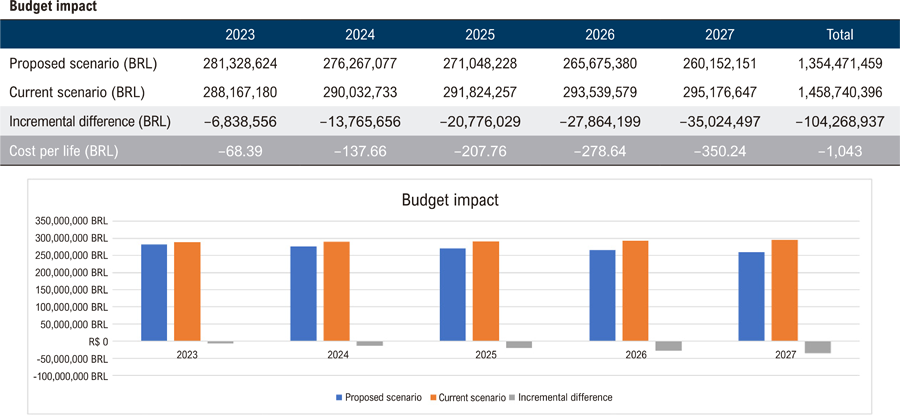
When assessing regions on an individual basis, the results for the North Region projected an average savings of BRL 1,226.00 per patient, totaling BRL 122,577,793.00 at the end of the fifth year for a population of 100,000 lives, considering the implementation of CCTA in 25% of the eligible population in the final year of the time horizon (Figure 2). Similarly, the model estimated savings of BRL 1,460.00 per life or BRL 145,988,367.00 at the end of 5 years for the Northeast Region (Figure 3); BRL 1,625.00 per life or BRL 162,502,626.00 for the Central-West Region (Figure 4); BRL 1,313.00 per life or BRL 131,270,230.00 for the Southeast Region (Figure 5); and BRL 1,043.00 per life or BRL 104,268,937.00 in total for the South Region (Figure 6). All regional analyses considered a cohort of 100,000 individuals and the same rate of progressive adoption of CCTA over 5 years.
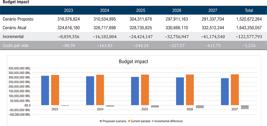
– Projected budget impact analysis for the progressive implementation of coronary computed tomography angiography as a diagnostic strategy in the North Region of Brazil over 5 years. The simulation assumes an initial adoption rate of 5% in the first year, with an annual increase of 5%, reaching 25% in the fifth year. Estimated values are displayed for the current scenario, the proposed scenario, and the incremental difference between the two.
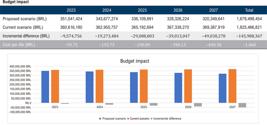
– Projected budget impact analysis for the progressive implementation of coronary computed tomography angiography as a diagnostic strategy in the Northeast Region of Brazil over 5 years. The simulation assumes an initial adoption rate of 5% in the first year, with an annual increase of 5%, reaching 25% in the fifth year. Estimated values are displayed for the current scenario, the proposed scenario, and the incremental difference between the two.
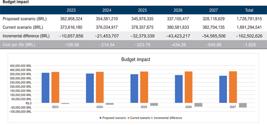
– Projected budget impact analysis for the progressive implementation of coronary computed tomography angiography as a diagnostic strategy in the Central-West Region of Brazil over 5 years. The simulation assumes an initial adoption rate of 5% in the first year, with an annual increase of 5%, reaching 25% in the fifth year. Estimated values are displayed for the current scenario, the proposed scenario, and the incremental difference between the two.
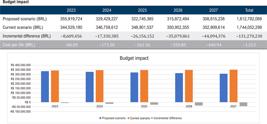
– Projected budget impact analysis for the progressive implementation of coronary computed tomography angiography as a diagnostic strategy in the Southeast Region of Brazil over 5 years. The simulation assumes an initial adoption rate of 5% in the first year, with an annual increase of 5%, reaching 25% in the fifth year. Estimated values are displayed for the current scenario, the proposed scenario, and the incremental difference between the two.

– Projected budget impact analysis for the progressive implementation of coronary computed tomography angiography as a diagnostic strategy in the South Region of Brazil over 5 years. The simulation assumes an initial adoption rate of 5% in the first year, with an annual increase of 5%, reaching 25% in the fifth year. Estimated values are displayed for the current scenario, the proposed scenario, and the incremental difference between the two.
Discussion
In our study, the strategy of using CCTA as the initial diagnostic method in stable patients with suspected CAD and intermediate pre-test probability demonstrated economic superiority over ICA, traditionally used as the gold standard for anatomical diagnosis in this population. Cost-effectiveness analysis revealed CCTA as a dominant strategy, i.e., more effective and less costly, for the following clinical outcomes assessed: acute myocardial infarction, hospitalizations, and the need for myocardial revascularization. This dominance was consistent in the sensitivity analyses, with 91.2% of simulations reinforcing the economic superiority of CCTA. Furthermore, data by Brazilian region demonstrated the robustness of the CCTA strategy, even considering regional cost variations, maintaining its cost-effectiveness in the scenarios assessed. The budget impact analysis projects significant cumulative savings for a mid-sized operator in Brazil. The use of CCTA would generate savings of 776.00 BRL per life or a reduction of 25,727,985.00 BRL at the end of the fifth year when implementing the strategy for 25% of the population.
The use of CCTA has grown in recent decades, due to the large volume of scientific evidence that has reinforced its use in the stratification of CAD. Studies assessing CCTA in the initial diagnostic investigation of chest pain in stable patients compared with the standard strategy, which uses risk factors and symptoms and/or functional tests (exercise stress testing/myocardial scintigraphy), demonstrated non-inferiority of CCTA in relation to functional tests for the outcome of cardiovascular death18 and a reduction in the incidence of non-fatal infarctions by up to 40%, with results that persisted for 10 years of follow-up.19 These data led recent European, United States, and Brazilian guidelines to raise the recommendation level of CCTA to class I, level of evidence A, in the initial investigation of stable chest pain.12,20
A recently published meta-analysis, which compared the diagnostic strategy for stable CAD using CCTA and ICA, demonstrated non-inferiority of the CCTA strategy for the outcomes of cardiovascular mortality and non-fatal myocardial infarction, but with fewer myocardial revascularization procedures and a lower incidence of stroke. Furthermore, the meta-analysis demonstrated that preferentially using CCTA could avoid the need for ICA in 77% of patients.21
Despite the growing evidence of the advantages of investigating stable chest pain by means of CCTA, with the incorporation of this strategy into major global guidelines, there were no cost-effectiveness studies in the context of Brazilian private healthcare that included CCTA as an initial strategy compared to ICA. Despite the heterogeneity in costs of diagnostic tests, hospitalization, and treatment charged by different health insurance providers in Brazil, we based the values used to calculate cost-effectiveness on 100% of those recommended by the most recent updates of the CBHPM and CMED tables. Considering the calculation of implementing this “new” technology, following the conservative progressive recommendation of the Ministry of Health, which recommends starting use in only 5% of the population, progressively increasing 5% per year over a 5-year horizon, our study showed that the CCTA strategy is dominant and cost-effective, considering the values practiced in the Brazilian private healthcare system.
According to the ANS, 24.5% of the Brazilian population had access to private healthcare in January 2025, corresponding to approximately 52 million Brazilians.22 According to the same source, approximately 26% of private healthcare users are over 40 years old, meaning they would, due to their age, be more likely to have coronary atherosclerotic disease, also taking into account the fact that women have a higher prevalence of coronary atherosclerosis 10 years after menopause.23 Thus, if in 5 years, in a population of 100,000 lives, cost-effectiveness was demonstrated using CCTA in a fraction of this population, it is likely that, were the strategy made available to the millions of people at potential risk of coronary atherosclerosis who use private healthcare, the economic impact would be even more significant.
Ten years ago, in the United Kingdom, the National Institute for Health and Care Excellence (NICE) recommended the adoption of CCTA as the preferred diagnostic test for investigating chest pain throughout the territory.24 After more than half a decade of experience, the results of this decision were presented, and they proved extremely positive in the regions of the United Kingdom that were able to effectively adopt the recommendations, resulting in a significant reduction in cardiovascular mortality and a downward trend in all-cause mortality.25 It seems reasonable to cite an important premise in medicine, namely, that early diagnosis as the primary strategy allows for better outcomes, with significant savings in budget impact analysis. Patients with early diagnosis of CAD can receive appropriate drug treatment and reduce future events by effectively treating atherosclerotic disease.9,26
Limitations
There are some important study limitations that should be considered when interpreting these findings. First, the cost-effectiveness model was based exclusively on data from the DISCHARGE study, which may limit the generalizability of the findings, seeing that the results of a single randomized clinical trial, while robust, do not encompass all clinical and population variability in daily practice. Second, the analysis was restricted to patients with intermediate pre-test probability of CAD, making it impossible to extrapolate to patients with low or high pre-test probability, thus limiting universal applicability. Finally, the adopted model compares CCTA directly with ICA, without considering comparisons with functional tests that are widely used in clinical practice, for example, myocardial scintigraphy or stress echocardiography, which are still recommended in current guidelines for functional assessment of myocardial ischemia. The absence of this comparison prevents a more comprehensive analysis of the positioning of CCTA compared to all available diagnostic options.
Conclusion
The choice of CCTA as the standard strategy for diagnosing stable CAD appears to be cost-effective when compared to ICA in the context of the Brazilian private healthcare system. The budget impact of implementing this intervention in Brazil would result in significant cost savings for private healthcare.
*Supplemental Materials
Supplementary material
References
-
1 Martin SS, Aday AW, Almarzooq ZI, Anderson CAM, Arora P, Avery CL, et al. 2024 Heart Disease and Stroke Statistics: A Report of US and Global Data from the American Heart Association. Circulation. 2024;149(8):e347-e913. doi: 10.1161/CIR.0000000000001209.
» https://doi.org/10.1161/CIR.0000000000001209 -
2 World Health Organization. Division of Data, Analytics and Delivery for Impact. WHO Methods and Data Sources for Country-Level Causes of Death, 2000-2021 [Internet]. Geneva: WHO; 2024 [cited 2025 Oct 30]. Available from: https://www.who.int/data/gho/data/themes/mortality-and-global-health-estimates/ghe-leading-causes-of-death
» https://www.who.int/data/gho/data/themes/mortality-and-global-health-estimates/ghe-leading-causes-of-death -
3 Oliveira GMM, Brant LCC, Polanczyk CA, Malta DC, Biolo A, Nascimento BR, et al. Cardiovascular Statistics - Brazil 2023. Arq Bras Cardiol. 2024;121(2):e20240079. doi: 10.36660/abc.20240079.
» https://doi.org/10.36660/abc.20240079 -
4 Sociedade Brasileira de Cardiologia. Cardiômetro [Internet]. São Paulo: SBC; 2024 [cited 2025 Oct 30]. Available from: http://www.cardiometro.com.br
» http://www.cardiometro.com.br -
5 Interfarma - Associação da Indústria Farmacêutica de Pesquisa. Doenças Crônicas e Impacto Econômico: Relatório 2022 [Internet]. São Paulo: Interfarma; 2022 [cited 2025 Oct 30]. Available from: https://www.interfarma.org.br/
» https://www.interfarma.org.br/ -
6 Cesar LA, Ferreira JF, Armaganijan D, Gowdak LH, Mansur AP, Bodanese LC, et al. Guideline for Stable Coronary Artery Disease. Arq Bras Cardiol. 2014;103(2 Suppl 2):1-59. doi: 10.5935/abc.2014S004.
» https://doi.org/10.5935/abc.2014S004 -
7 Rossato G, Quadros AS, Sarmento-Leite R, Gottschall CAM. Analysis of in-Hospital Complications Related to Cardiac Catheterization. Rev Bras Cardiol Invasiva. 2007;15(1):44-51. doi: 10.1590/S2179-83972007000100010.
» https://doi.org/10.1590/S2179-83972007000100010 -
8 SCOT-HEART investigators. CT Coronary Angiography in Patients with Suspected Angina Due to Coronary Heart Disease (SCOT-HEART): An Open-Label, Parallel-Group, Multicentre Trial. Lancet. 2015;385(9985):2383-91. doi: 10.1016/S0140-6736(15)60291-4.
» https://doi.org/10.1016/S0140-6736(15)60291-4 -
9 Newby DE, Adamson PD, Berry C, Boon NA, Dweck MR, Flather M, et al. Coronary CT Angiography and 5-Year Risk of Myocardial Infarction. N Engl J Med. 2018;379(10):924-33. doi: 10.1056/NEJMoa1805971.
» https://doi.org/10.1056/NEJMoa1805971 -
10 Reynolds HR, Shaw LJ, Min JK, Page CB, Berman DS, Chaitman BR, et al. Outcomes in the ISCHEMIA Trial Based on Coronary Artery Disease and Ischemia Severity. Circulation. 2021;144(13):1024-38. doi: 10.1161/CIRCULATIONAHA.120.049755.
» https://doi.org/10.1161/CIRCULATIONAHA.120.049755 -
11 Maron DJ, Hochman JS, Reynolds HR, Bangalore S, O'Brien SM, Boden WE, et al. Initial Invasive or Conservative Strategy for Stable Coronary Disease. N Engl J Med. 2020;382(15):1395-407. doi: 10.1056/NEJMoa1915922.
» https://doi.org/10.1056/NEJMoa1915922 -
12 Magalhães TA, Carneiro ACC, Moreira VM, Trad HS, Lopes MMU, Cerci RJ, et al. Cardiovascular Computed Tomography and Magnetic Resonance Imaging Guideline of the Brazilian Society of Cardiology and the Brazilian College of Radiology - 2024. Arq Bras Cardiol. 2024;121(9):e20240608. doi: 10.36660/abc.20240608.
» https://doi.org/10.36660/abc.20240608 -
13 Paech DC, Weston AR. A Systematic Review of the Clinical Effectiveness of 64-Slice or Higher Computed Tomography Angiography as an Alternative to Invasive Coronary Angiography in the Investigation of Suspected Coronary Artery Disease. BMC Cardiovasc Disord. 2011;11:32. doi: 10.1186/1471-2261-11-32.
» https://doi.org/10.1186/1471-2261-11-32 -
14 Husereau D, Drummond M, Augustovski F, Bekker-Grob E, Briggs AH, Carswell C, et al. Consolidated Health Economic Evaluation Reporting Standards 2022 (CHEERS 2022) Statement: Updated Reporting Guidance for Health Economic Evaluations. BMC Med. 2022;20(1):23. doi: 10.1186/s12916-021-02204-0.
» https://doi.org/10.1186/s12916-021-02204-0 -
15 Associação Médica Brasileira. CBHPM - Classificação Brasileira Hierarquizada de Procedimentos Médicos [Internet]. São Paulo: Associação Médica Brasileira; 2022 [cited 2025 Oct 30]. Available from: https://amb.org.br/cbhpm/
» https://amb.org.br/cbhpm/ -
16 Agência Nacional de Vigilância Sanitária. Câmara de Regulação do Mercado de Medicamentos (CMED) [Internet]. Brasília: ANVISA; 2024 [cited 2025 Oct 30]. Available from: https://www.gov.br/anvisa/pt-br/assuntos/medicamentos/cmed
» https://www.gov.br/anvisa/pt-br/assuntos/medicamentos/cmed -
17 Maurovich-Horvat P, Bosserdt M, Kofoed KF, Rieckmann N, Benedek T, Donnelly P, et al. CT or Invasive Coronary Angiography in Stable Chest Pain. N Engl J Med. 2022;386(17):1591-602. doi: 10.1056/NEJMoa2200963.
» https://doi.org/10.1056/NEJMoa2200963 -
18 Douglas PS, Hoffmann U, Patel MR, Mark DB, Al-Khalidi HR, Cavanaugh B, et al. Outcomes of Anatomical versus Functional Testing for Coronary Artery Disease. N Engl J Med. 2015;372(14):1291-300. doi: 10.1056/NEJMoa1415516.
» https://doi.org/10.1056/NEJMoa1415516 -
19 Williams MC, Wereski R, Tuck C, Adamson PD, Shah ASV, van Beek EJR, et al. Coronary CT Angiography-Guided Management of Patients with Stable Chest Pain: 10-Year Outcomes from the SCOT-HEART Randomised Controlled Trial in Scotland. Lancet. 2025;405(10475):329-37. doi: 10.1016/S0140-6736(24)02679-5.
» https://doi.org/10.1016/S0140-6736(24)02679-5 -
20 Vrints C, Andreotti F, Koskinas KC, Rossello X, Adamo M, Ainslie J, et al. 2024 ESC Guidelines for the Management of Chronic Coronary Syndromes. Eur Heart J. 2024;45(36):3415-537. doi: 10.1093/eurheartj/ehae177.
» https://doi.org/10.1093/eurheartj/ehae177 -
21 Machado MF, Felix N, Melo PHC, Gauza MM, Calomeni P, Generoso G, et al. Coronary Computed Tomography Angiography versus Invasive Coronary Angiography in Stable Chest Pain: A Meta-Analysis of Randomized Controlled Trials. Circ Cardiovasc Imaging. 2023;16(11):e015800. doi: 10.1161/CIRCIMAGING.123.015800.
» https://doi.org/10.1161/CIRCIMAGING.123.015800 -
22 Agência Nacional de Saúde Suplementar. Beneficiários de Planos Privados de Saúde, por Cobertura Assistencial (Brasil - 2014-2024) [Internet]. Brasília: Agência Nacional de Saúde Suplementar; 2024 [cited 2025 Oct 30]. Available from: https://www.gov.br/ans/pt-br/acesso-a-informacao/perfil-do-setor/dados-gerais
» https://www.gov.br/ans/pt-br/acesso-a-informacao/perfil-do-setor/dados-gerais -
23 Instituto Brasileiro de Geografia e Estatística. População Estimada do País Chega a 212,6 Milhões de Habitantes em 2024 [Internet]. Rio de Janeiro: IBGE; 2024 [cited 2025 Oct 30]. Available from: https://agenciadenoticias.ibge.gov.br/agencia-noticias/2012-agencia-de-noticias/noticias/41111-populacao-estimada-do-pais-chega-a-212-6-milhoes-de-habitantes-em-2024
» https://agenciadenoticias.ibge.gov.br/agencia-noticias/2012-agencia-de-noticias/noticias/41111-populacao-estimada-do-pais-chega-a-212-6-milhoes-de-habitantes-em-2024 -
24 Moss AJ, Williams MC, Newby DE, Nicol ED. The Updated NICE Guidelines: Cardiac CT as the First-Line Test for Coronary Artery Disease. Curr Cardiovasc Imaging Rep. 2017;10(5):15. doi: 10.1007/s12410-017-9412-6.
» https://doi.org/10.1007/s12410-017-9412-6 -
25 Weir-McCall JR, Williams MC, Shah ASV, Roditi G, Rudd JHF, Newby DE, et al. National Trends in Coronary Artery Disease Imaging: Associations with Health Care Outcomes and Costs. JACC Cardiovasc Imaging. 2023;16(5):659-71. doi: 10.1016/j.jcmg.2022.10.022.
» https://doi.org/10.1016/j.jcmg.2022.10.022 -
26 Yourman LC, Cenzer IS, Boscardin WJ, Nguyen BT, Smith AK, Schonberg MA, et al. Evaluation of Time to Benefit of Statins for the Primary Prevention of Cardiovascular Events in Adults Aged 50 to 75 Years: A Meta-Analysis. JAMA Intern Med. 2021;181(2):179-85. doi: 10.1001/jamainternmed.2020.6084.
» https://doi.org/10.1001/jamainternmed.2020.6084
-
Ethics approval and consent to participate:
This article does not contain any studies with human participants or animals performed by any of the authors.
-
Study association:
This study is not associated with any thesis or dissertation work.
-
Use of Artificial Intelligence:
The authors did not use any artificial intelligence tools in the development of this work.
-
Data Availability Statement:
The underlying content of the research text is contained within the manuscript.
-
Sources of funding:
This study was partially funded by Siemens.
-
*Supplemental Materials
For additional information, please click here.
Edited by
-
Editor responsible for the review:
Nuno Bettencourt
The underlying content of the research text is contained within the manuscript.

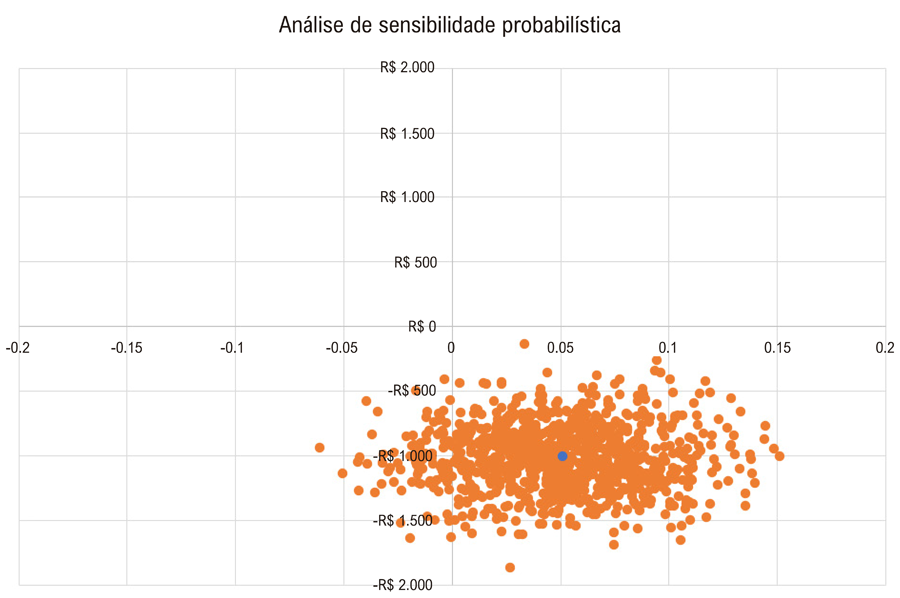 Análise de sensibilidade probabilística de custo-efetividade no cenário nacional. Nota-se que a grande maioria dos pontos (91,2%) caem sobre o quadrante inferior direito, que indica dominância em relação ao comparador. Apenas 8,8% dos pontos caem no quadrante inferior esquerdo de custo efetividade. Os pontos laranjas representam as 1.000 iterações probabilísticas feitas, já o ponto azul representa o ponto determinístico encontrado.
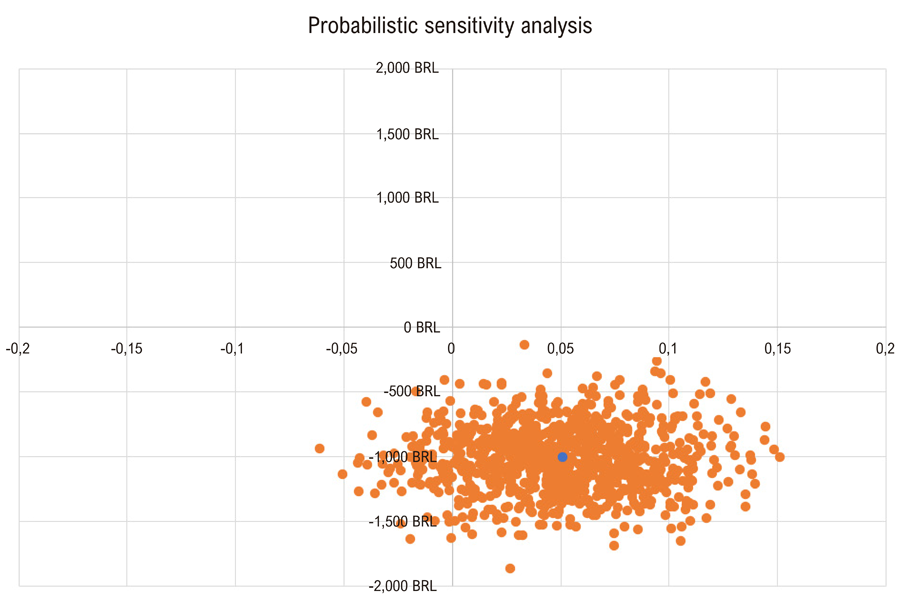 Probabilistic sensitivity analysis of cost-effectiveness in Brazil. The vast majority of points (91.2%) fall in the lower right quadrant, indicating dominance relative to the comparator. Only 8.8% of the points fall in the lower left quadrant of cost-effectiveness. The orange points represent 1,000 probabilistic iterations, whereas the blue point represents the deterministic point identified.