 Endoscopic ultrasound-guided radiofrequency ablation of pancreatic insulinoma
Background: Insulinoma is a rare pancreatic neuroendocrine tumor (pNET) arising from beta cells, leading to excessive insulin secretion and life-threatening hypoglycemia. While surgical resection remains the gold standard, endoscopic ultrasound-guided radiofrequency ablation (EUS-RFA) has emerged as a minimally invasive alternative, particularly for patients unfit for surgery.
Aims: A meta-analysis was performed according to PRISMA (Preferred Reporting Items for Systematic Reviews and Meta-Analysis) guidelines to compare the efficacy and safety of EUS-RFA and surgery for pancreatic insulinomas.
Methods: Systematic searches were conducted in PubMed, Cochrane Library, Embase, and Scopus, using MeSH terms related to insulinoma, RFA, and surgery. Eligible studies included cohort studies and case series reporting clinical outcomes, adverse events, recurrence rates, and hospitalization. Statistical analyses were performed with Comprehensive Meta-analysis Software and RevMan 5.
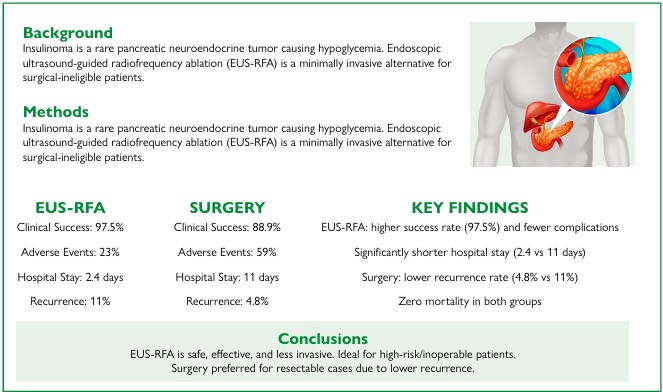
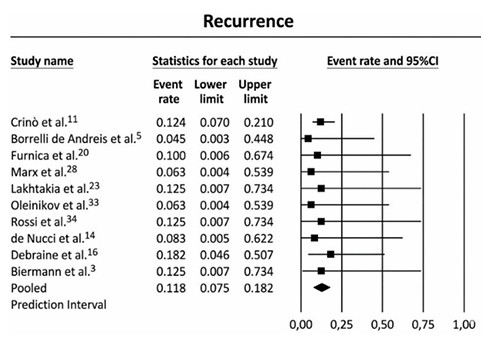
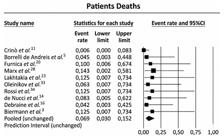
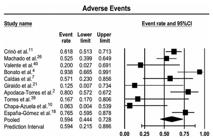
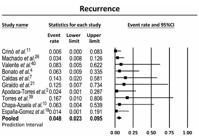
Results: A total of 20 studies were included, comprising 142 patients treated with EUS-RFA and 249 with surgery. Clinical success was higher in the EUS-RFA group (97.5%) compared with surgery (88.9%). Patients undergoing EUS-RFA experienced fewer complications (23 vs. 59%), shorter hospital stays (mean 2.4 vs. 11 days), and zero procedure-related mortality. However, recurrence rates were greater with EUS-RFA (11%) than with surgery (4.8%). No significant differences were found in overall survival during follow-up.
Conclusions: EUS-RFA is a safe, effective, and less invasive option for managing pancreatic insulinomas, ensuring rapid recovery and fewer complications. Nevertheless, its higher recurrence rate highlights the importance of patient selection and strict follow-up. Surgery remains the treatment of choice in resectable cases, while EUS-RFA represents a valuable alternative in high-risk or inoperable patients.
Keywords:
Insulinoma; Pancreatic Neoplasms; Radiofrequency Ablation
Endoscopic ultrasound-guided radiofrequency ablation (EUS-RFA) is a safe and minimally invasive treatment for pancreatic insulinomas.
EUS-RFA achieved higher clinical success (97.5%) and fewer complications compared with surgery.
Surgery remains the treatment of choice for resectable tumors due to its lower recurrence rate.
EUS-RFA represents a valuable alternative for high-risk or inoperable patients.

CENTRAL MESSAGE Insulinoma is a rare neuroendocrine tumor of the pancreas, which originates in the beta cells of the pancreatic islets and produces excessive and unregulated insulin. The primary treatment for insulinoma is surgical, with the goal of tumor resection and preservation of pancreatic function. Precise preoperative localization is crucial for effective surgical management, especially with advanced imaging techniques that allow for precise intraoperative localization. Radiofrequency ablation (RFA) by endoscopic ultrasound (EUS) is an emerging technique for the treatment of pancreatic insulinomas, especially those that are not candidates for surgery or for whom a less invasive option is sought. This procedure combines the precision of EUS with the ability of radiofrequency to destroy tumor tissue through controlled heat.
PERSPECTIVES This study confirms that both surgery and EUS-RFA are effective treatment options for pancreatic insulinomas. EUS-RFA is a safe, minimally invasive alternative with high clinical success and lower complication rates, making it suitable for high-risk surgical candidates. However, due to its lower recurrence rate, surgery remains the preferred option for resectable cases. Careful patient selection is essential to optimize outcomes with either approach.
 Thumbnail
 Thumbnail
 Thumbnail
 Thumbnail
 Thumbnail
 Thumbnail
 Thumbnail
 Thumbnail
 Thumbnail
 Thumbnail
 Thumbnail
 Thumbnail