
 Cepstral measurements: analysis of results after the comprehensive vocal rehabilitation program associated with electrotherapy
ABSTRACT
Purpose To evaluate the effect of speech-language-hearing therapy using the Comprehensive Vocal Rehabilitation Program (CVRP) combined with transcutaneous electrical nerve stimulation (TENS) in female pop singers with vocal complaints, using cepstral measures (CPP and CPPs) and auditory-perceptual evaluation of voice.
Methods This experimental study included 30 pop singers, both amateur and professional, with vocal complaints. Acoustic and perceptual-auditory assessments were conducted before and after six weeks of intervention, which involved CVRP exercises combined with TENS. Voice samples were analyzed using Praat software to measure CPP and CPPs.
Results CPP and CPPs measures increased significantly after therapy, indicating improved periodicity and reduced vocal noise. The auditory-perceptual evaluation also indicated significantly improved vocal quality, with reduced hoarseness.
Conclusion The combined therapy with CVRP and TENS significantly improved the vocal quality of singers with vocal complaints, confirmed by increases in cepstral measures and auditory-perceptual evaluation.
Keywords:
Voice; Voice quality; Singing; Speech therapy; Voice disorders; Transcutaneous electrical nerve stimulation; Speech acoustics
RESUMO
Objetivo avaliar o efeito da terapia fonoaudiológica com o Programa Integral de Reabilitação Vocal (PIRV) associado à estimulação elétrica nervosa transcutânea (TENS) em cantoras populares com queixas vocais, utilizando as medidas cepstrais Cepstral Peak Prominence (CPP), Cepstral Peak Prominence-Smoothed (CPPS) e avaliação perceptivo-auditiva da voz.
Métodos estudo experimental com 30 cantoras populares, amadoras e profissionais, com queixas vocais. Foram realizadas avaliações acústicas e perceptivo-auditivas antes e depois de seis semanas de intervenção, que incluíram exercícios do PIRV combinados com TENS. As amostras vocais foram submetidas à extração das medidas CPP e CPPS por meio do software Praat.
Resultados houve aumento significativo das medidas de CPP e CPPS após a fonoterapia, indicando melhora na periodicidade e redução dos ruídos vocais. A análise perceptivo-auditiva também revelou melhora significativa na qualidade vocal, com redução no grau de desvio vocal.
Conclusão a terapia combinada de PIRV e TENS proporcionou melhora significativa na qualidade vocal de cantoras com queixas vocais, evidenciada pelo aumento das medidas cepstrais e pela avaliação perceptivo-auditiva.
Palavras-chave:
Voz; Qualidade da voz; Canto; Fonoterapia; Distúrbios da voz; Estimulação elétrica nervosa transcutânea; Acústica da fala
INTRODUCTION
Singing requires intense articulation of speech and the activation and coordination of several systems, such as the respiratory, phonatory, articulatory, resonant, and auditory systems. Hence, precise control of airflow, adequate laryngeal adjustments, efficient use of resonance cavities, and proper functioning of speech articulation organs are essential to achieve satisfactory vocal performance(1).
Impairment in one or more of these factors can interfere with natural voice production, characterized as dysphonia, which is a relevant indicator of oral communication disorders(1,2).
Dysphonia can manifest through various signs and symptoms, such as vocal fatigue, burning or pain when speaking or singing, frequent throat clearing, hoarseness, changes in vocal pitch, voice emission failures, loss of voice, and so forth. These manifestations may occur alone or in combination, varying according to the severity of the clinical picture(2).
Due to the high vocal demands, occupational voice users are more susceptible to dysphonia(2). Singers, specifically, frequently use inadequate muscle adjustments and vocal models incompatible with their laryngeal anatomical and physiological characteristics(1,2).
Popular singing is often practiced without formal training, which can result in inadequate vocal technique. When associated with a lack of care for the voice and incorrect or excessive use, this condition may trigger dysphonia(3).
In female singers, the presence of dysphonia may be associated with excessive use of the voice and overload of extrinsic cervical muscles, altering the source-filter adjustment and compromising phonatory efficiency(3,4).
Incorrect voice use and abuse stand out among the possible causes and main predisposing factors of dysphonia in singers, characterizing it as behavioral dysphonia(1).
The prevalence of dysphonia among singers is significantly high, ranging from 40.53% to 55.15% in singing teachers, popular music singers, and classical singers(3).
Therefore, vocal rehabilitation, established as an effective dysphonia treatment, is important for maintaining the work activity of occupational voice users(4).
Voice therapy uses different techniques and methods. Among these possibilities, this study focused on the comprehensive vocal rehabilitation program (CVRP)(5) and transcutaneous electrical nerve stimulation (TENS)(6).
CVRP, developed in Brazil, is a method with a holistic approach, encompassing five aspects: body-voice, glottal source, resonance, breathing-speech coordination, and communicative attitude(5,7).
The program includes a series of exercises widely used in voice therapy, applied in at least six weekly sessions, with gradually increasing difficulty. It also recommends home exercises complementary to clinical sessions(5,7).
The literature reports positive evidence that CVRP improves vocal quality, laryngeal function, and quality of life in patients with dysphonia(7,8).
TENS is a therapeutic method that has been increasingly used in speech-language-hearing (SLH) clinical practice. This simple, non-invasive technique aims to promote laryngeal relaxation(9).
Studies indicate that combining TENS with other voice therapy techniques enhances the effects of therapy, since the application of TENS promotes relaxation of the cervical muscles(6,9).
Recent systematic reviews(10,11) indicate that TENS has been applied in the vocal rehabilitation of dysphonic individuals with promising clinical results. Most of the reviewed studies reported positive effects of TENS, including reduced musculoskeletal pain, decreased symptoms such as pain on phonation, improved vocal tract perception, reduced laryngeal changes associated with dysphonia, and improved auditory-perceptual parameters of the voice, such as strain, breathiness, roughness, instability, and asthenia(10,11).
From a physiological standpoint, reducing tension in the cervical muscles tends to decrease compensatory hyperactivity during emission and improve vocal function(8-10). Thus, this research hypothesized that TENS, by promoting a muscle relaxation effect, enhances CVRP gains, allowing for better motor transfer and functional balance sought in SLH therapy(5,6,9,10).
SLH evaluation of the voice aims to identify the presence of dysphonia and provide measurable parameters to monitor the effectiveness of speech therapy. This requires a multidimensional assessment, including acoustic and auditory-perceptual evaluation of voice, aerodynamic evaluation, visual examination of the larynx, and analysis of the patient's vocal self-perception(12,13).
Auditory-perceptual evaluation is a subjective tool, considered the gold standard and one of the most widely used for voice evaluation. This analysis is based on the evaluator's auditory judgment regarding the patient's vocal quality(13).
Acoustic analysis is a complementary tool to auditory-perceptual evaluation and allows for objective measurements of the voice signal through quantitative and qualitative data of vocal function, making it possible to compare these results with normative parameters(12-14).
Traditional acoustic measures of disturbance and noise, such as jitter, shimmer, and harmonic-to-noise ratio, are widely used in SLH assessment. However, they may have limitations in the analysis of voices with larger deviations(15,16) and thus compromise their reliability.
The American Speech-Language-Hearing Association (ASHA) has recently recommended cepstral peak prominence (CPP)(17) because it proved to be more reliable for assessing voices with a wide range of deviation(16) and does not require the direct calculation of the fundamental frequency, unlike the process of obtaining traditional acoustic measures(17).
CPP represents the amplitude difference between the highest peak of the cepstral spectrum and a reference baseline drawn below that peak. It reflects the prominence of the periodic component of the voice in relation to noise and the aperiodicity of the vocal signal(18-20). Cepstral peak prominence-smoothed (CPPS) is a modification of CPP with enhanced accuracy, making it easier to obtain measures through the speech signal. Lower values obtained by these measures are typically related to higher degrees of dysphonia(18-20).
Recent research demonstrates and suggests the use of these measures for detecting vocal deviation and robustly evaluating therapy outcomes, making it possible to monitor changes in vocal function through speech therapy(12,20,21).
This research is justified by the need to deepen knowledge about recent evaluative parameters, such as cepstral measures, in the therapeutic approach of female popular singers with vocal complaints. The recommendation for using CPP and CPPS as robust acoustic parameters for evaluating vocal quality is relatively recent in the literature(18-21), as are experimental studies investigating the effect of SLH therapy associated with the application of TENS in dysphonic conditions(6,9-11). Thus, this study contributes by integrating two innovative resources in assessment and treatment aimed at a vocally demanding public that is still little explored in clinical research.
This research aimed to evaluate the effect of SLH therapy with CVRP associated with TENS in female popular singers with vocal complaints, through CPP and CPPS analysis and auditory-perceptual evaluation of the voice.
METHODS
Study design
This is a comparative, intrasubject, experimental study, approved by the Research Ethics Committee of the Federal University of Minas Gerais (CEP/UFMG), Brazil, under number 59014916.6.0000.5149.
Sample
The sample consisted of 30 female singers with vocal complaints, recruited from a SLH clinic in Belo Horizonte, MG, Brazil, and from choirs at the Federal University of Minas Gerais (UFMG). All participants signed an informed consent form, agreeing to their participation in the research.
Data were collected at the SLH Functional Health Observatory at UFMG’s Medical School (OSF/UFMG).
The subjects eligible for this study were female singers, aged 18 to 55 years, with amateur or professional experience, and with vocal complaints, as defined by an SLH assessment. Three questions were applied to analyze the presence of vocal complaints self-reported by the female singers:
-
“Do you experience any difficulty or discomfort with your singing voice?”
-
“Do you experience any difficulty or discomfort with your speaking voice?”
-
“Do you think your voice is impaired?”
The presence of vocal complaints was defined by affirmative answers to all three questions.
The study excluded female singers whose otolaryngological evaluation verified laryngeal lesions, such as cysts, polyps, nodules, granulomas, or other structural alterations, to ensure greater homogeneity in the evaluated group. It also excluded female singers with heart problems or pacemakers, pregnant women, those with undiagnosed laryngeal pain, those with hypertension, those diagnosed with hyperthyroidism or hypothyroidism, epileptics, and smokers.
An otolaryngologist with more than 20 years of experience performed the otolaryngological evaluation with high-speed video laryngoscopy.
Data collection procedures
Each participant underwent two assessments. The acoustic and auditory-perceptual evaluations of the voice were performed before and after speech therapy to measure the outcome of the intervention.
The first assessment (A1) was performed immediately before the start of the intervention. The second assessment (A2) took place immediately after the last session (i.e., the 6th week of treatment with CVRP associated with TENS), maintaining the same interval for all participants to ensure a standardized procedure.
The participants were instructed to remain seated for the collection of vocal samples, keeping 10 centimeters between their mouths and the microphone. Next, they were instructed on the procedure and had their voices recorded.
During the recording, each female singer was asked to emit a sustained vowel [a] at a comfortable and habitual frequency and intensity.
The sustained vowel [a] was recorded in an acoustically treated room and processed directly on a computer using the Multi-Dimensional Voice Program – MDVP – software from Kay Pentax® (Kay Elemetrics Corporation, Lincoln Park, NJ, USA), using a Shure® brand unidirectional condenser microphone, fixed on a table stand (Shure Inc., Niles, IL, USA), positioned 10 centimeters from the corner of the mouth, with a directional pickup angle of 45 degrees. The gain was kept constant throughout the recording to control the signal amplitude, ensuring uniformity between recordings. The adequacy of the acoustic signal input level was also previously checked to avoid distortion and ensure the quality of the vocal samples.
Each sample was 4 seconds long, thus comprising a bank of 60 vocal samples, 30 from A1 and 30 from A2. The samples were used for both acoustic analysis and auditory-perceptual evaluation of the voice.
The samples were digitized at a 44.1-kHz sampling rate and a 16-bit amplitude resolution, in .wav format.
Acoustic analysis
The vocal samples were edited to extract the 3 central seconds of the sustained vowel [a] to ensure signal stability. They were edited and analyzed using Praat® software (version 6.1.16). A previously validated script was used for automatic extraction of CPP and CPPS measures(22). An independent, blinded evaluator, different from the SLH pathologist who applied the therapy, analyzed the samples to reduce bias.
Auditory-perceptual evaluation
The auditory-perceptual evaluation was based on the grade of hoarseness of the voice (G), as it is a widely used and validated measure in the literature as a global indicator of vocal quality(23).
Of the total 60 samples (30 participants at two time points), 20% were randomly duplicated, totaling 72 samples, organized in random sequence. This replication allowed for the verification of intrarater agreement.
The samples were presented in an online questionnaire, developed on the QuestionPro platform (https://www.questionpro.com/pt-br/), with an audio file and a visual analogue scale (VAS) from 0 to 100 mm for each item.
The judges were informed that values closer to 0 indicated voices with less vocal deviation (closer to neutrality), while values closer to 100 indicated voices with a higher degree of deviation.
The assessment was conducted individually, without discussion among the judges, to ensure independent analyses. Five SLH pathologists with at least 5 years of experience in the field of voice participated in the assessment. Before the start of the analysis, the judges received standardized instructions on the procedure and underwent brief training with samples different from those included in the study to ensure familiarity with the task and calibrate the use of the scale.
All assessments were performed using Multilaser Vibe Headphone stereo supra-aural headphones in a quiet environment. The data were organized in an electronic spreadsheet for statistical analysis and verification of intrarater agreement among the five judges.
Intervention
The therapy lasted 6 weeks with 30-minute weekly sessions and included the CVRP exercises(5) along with TENS. The exercises determined by the CVRP were initiated after 10 minutes of TENS, so that, at this point, the muscles were already relaxed, enhancing the therapeutic effect(9-11).
The equipment used for applying electrotherapy with TENS was the Neurodyn II, manufactured by Ibramed (TENS, model N53). The research used the low-frequency TENS parameters: symmetrical biphasic square pulse, 200-μs phase, 10-Hz frequency, and intensity at the motor threshold.
TENS was applied for 30 minutes per session. However, the CVRP exercises were only initiated after the first 10 minutes of electrotherapy. Thus, the initial 10 minutes of TENS application were performed alone, while the subsequent 20 minutes were carried out along with the CVRP exercises.
The electrodes were positioned over the central portion of the middle trapezius muscle, with one electrode unit on each cervical side. This positioning formed an electric field that bilaterally traversed the cervical region, stimulating the entire area between the placement points.
The participants were instructed to remove jewelry and metallic objects, such as chains and earrings, that could interfere with the conduction of the electric current. The area where the electrodes were applied was previously cleaned by gently rubbing with gauze moistened with 70% alcohol to eliminate impurities that could hinder the conduction of the electrical stimulus.
The TENS was applied with the participants comfortably seated. The intensity of the stimulus varied according to each female singer’s sensitivity and was increased when the participant reported a decrease in the sensation of the stimulus(9-11).
This study used an electrotherapy protocol based on descriptions available in scientific literature that investigate the effects of TENS on voice(9-11). TENS was applied to the upper trapezius muscles, considering their clinical relevance, accessibility, and safety(8-11). The TENS application times described in the literature(9-11) vary between 20 and 30 minutes, with no consensus on a single protocol, which supports the method used in this study of applying TENS for 30 minutes.
In addition to performing the exercises during the sessions, participants were required to perform the vocal exercises recommended by the CVRP(5) twice a day at home.
Only one SLH pathologist, a voice specialist, conducted all the consultations for the 30 research participants. She did not participate in the vocal data assessment.
Statistical analysis
The statistical analysis of the data was performed using the MINITAB statistical program, version 17. First, a descriptive analysis of the data was performed with measures of central tendency and dispersion. Subsequently, the Anderson-Darling test was used to verify the normality of the sample. For comparison between the moments before and after speech therapy for the acoustic measures of CPP and CPPS, the paired T-test was used.
Moreover, 20% of the samples were replicated to evaluate intrarater agreement in the auditory-perceptual evaluation, using Gwet’s AC2 concordance test. The five evaluators obtained 89.3%, 84%, 74.6%, 71%, and 49.3% agreement. These values are considered almost perfect (81% to 100%), substantial (61% to 80%), and moderate agreement (41% to 60%)(24).
The comparison of auditory-perceptual evaluation results before and after speech therapy considered the four most concordant evaluators (89.3% to 71%), applying the paired t-test. The confidence level was set at 95%.
The statistical power of the analysis was calculated using the G*Power software (version 3.1.9.4), considering the sample size (30 participants), the study design with repeated measures (pre- and post-intervention), a 5% significance level (α = 0.05), and the observed effect size.
RESULTS
The recruited group initially had 40 participants. However, three (7.5%) had minimal structural changes, two had a cyst, one had sulcus vocalis, one (2.7%) discontinued treatment due to an orthopedic accident, and six (16.2%) abandoned the study without justification before completion. Hence, they were excluded from the research (Figure 1).
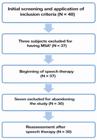
A sample of 30 participants completed all stages. The calculated statistical power indicated values of 99% for CPP, 86% for CPPS, and 99% for the grade of hoarseness in the auditory-perceptual evaluation, demonstrating that the study had an adequate sample size to detect significant effects within the proposed design, for all variables analyzed, since all values were greater than 80%(24).
The group consisted of female popular singers, of whom 18 (60.0%) were amateurs. Among these, four (22.2%) worked in professions that require the use of the spoken voice: two were actresses, and two were teachers. The other 12 (40.0%) were professional female singers, receiving pay for this work, according to self-report. Their mean age was 29 years (standard deviation = 7.53), with an age range from 19 to 54 years.
The otolaryngological evaluation with high-speed video laryngoscopy found 15 (50%) participants with a mid-posterior triangular glottal gap, eight (27%) participants with no laryngeal changes, six (20%) with a double cleft, and one (3%) participant with an anterior fusiform cleft. All had behavioral dysphonia, according to SLH and otolaryngological evaluation.
CPP and CPPS results before and after the speech therapy demonstrated a significant increase in cepstral values after speech therapy (Tables 1 and 2).
Comparison of cepstral peak prominence measures of the sustained vowel [a] before and after speech therapy with the Comprehensive Vocal Rehabilitation Program associated with transcutaneous electrical nerve stimulation
Comparison of cepstral peak prominence-smoothed measures of the sustained vowel [a] before and after speech therapy with the Comprehensive Vocal Rehabilitation Program associated with transcutaneous electrical nerve stimulation
The results of the auditory-perceptual evaluation of vocal quality before and after the SLH intervention demonstrated a significant improvement in vocal quality when comparing the two time points (Table 3).
DISCUSSION
SLH therapy with CVRP associated with TENS improved the vocal quality of female popular singers with vocal complaints, evidenced by the increase in cepstral (CPP and CPPS) values and by the reduction in the overall grade of hoarseness in the auditory-perceptual evaluation.
The literature(7) portrays that adherence to SLH voice treatment is essential for the success of vocal rehabilitation. However, low adherence affects 50% of patients, especially when it comes to long treatments. A study that analyzed the adherence and satisfaction of municipal teachers participating in CVRP found that the number of sessions is the strongest predictor for the completion of voice therapy(7).
In the present research, six (16.2%) of the 37 participants who started speech therapy dropped out of treatment, and one had a health incident, resulting in a dropout rate of 18.9%. These results are lower than those found in the literature and may be justified by the fact that CVRP treatment defines the number of sessions(7).
The findings of systematic reviews(10,11) indicate that applying TENS to dysphonic patients has positive effects on vocal and musculoskeletal aspects, with significant improvement in vocal quality and reduction of symptoms such as pain, burning, globus sensation, and effort to speak. They also found a relevant decrease in cervical and laryngeal muscle pain, which reinforces the potential of TENS as an auxiliary resource in the treatment of dysphonia. The combination of TENS with conventional speech therapy proved superior to isolated application, which suggests additional therapeutic benefits(10,11).
However, the studies approached by these systematic reviews(10,11) do not include specific populations of singers, nor do they present results based on cepstral measures such as CPP and CPPS. This gap highlights the need for investigations that explore the effects of TENS on cepstral acoustic parameters and in populations with high vocal demands, such as female popular singers.
Research has investigated cepstral measures as predictors of dysphonia, comparing groups of dysphonic and non-dysphonic individuals(12,14). Studies(12,14,20), including some with children(25,26), indicate that individuals without dysphonia have significantly higher cepstral values than dysphonic individuals, suggesting that these measures may be effective in distinguishing the two groups(26).
Several studies(12,20,22) have demonstrated that cepstral measures, especially CPP and CPPS, have high accuracy in distinguishing healthy voices from dysphonic voices and in reflecting the degree of deviation in vocal quality analyzed through auditory-perceptual evaluation. Research(22) that compared CPP values obtained by different software, such as Analysis of Dysphonia in Speech and Voice (ADSV) and Praat, found accuracy rates between 75% and 94.5% and strong correlations between the programs (r > 0.85). CPP and CPPS values were significantly lower in individuals with vocal deviation, varying according to the intensity and type of deviation, and were strongly correlated with the grade of hoarseness and with auditory-perceptual parameters of roughness and breathiness(12,20,22). These findings reinforce that cepstral measures are objective and robust indicators of the presence and degree of deviation in vocal quality and can be safely used as a complementary tool in vocal assessment.
To date, no studies have been found that analyzed cepstral measures before and after speech therapy with CVRP associated with electrotherapy with TENS in female popular singers with vocal complaints.
Voice therapy with CVRP combined with TENS increases CPP and CPPS acoustic measures in female singers with vocal complaints, probably because it provides greater laryngeal comfort and more regular vocal fold vibration(27). TENS application associated with speech therapy with CVRP can favor vocal function by reducing tension in the cervical muscles, complementing the functional and behavioral adjustments promoted by speech therapy. This interaction configures a multidimensional treatment model, enhancing vocal performance more efficiently(10,11,27).
A study with 64 individuals, divided by sex and by the presence of dysphonia, found similar results in CPP and CPPS acoustic measures(28), which increased in all groups after nebulization, with statistical significance only in the male dysphonic group(28). The authors suggest that this increase in harmonic structure may be associated with improvement in the mucosal wave, due to hydration.
A study(25) with 80 children divided between a control group (healthy) and a clinical group (with velopharyngeal dysfunction) found significantly lower CPPS values in the clinical group before cleft palate surgery. Cepstral measures increased significantly after speech therapy, with no differences between the control and clinical groups post-treatment(25).
A study(29) evaluated the effect of laryngeal surface hydration associated with the voiced tongue vibration technique in amateur singers, observing improvement in CPPS measures, although without statistically significant differences.
Analyses of CPPS and auditory-perceptual measures in individuals treated with radiotherapy for laryngeal cancer(30) showed that 52.6% of patients undergoing vocal rehabilitation produced CPPS values above the threshold for normal voice 24 months after treatment, with no significant differences compared to the vocally healthy group.
Although the cited studies(25,27-30) had methodological differences to the present research, they all indicate that speech therapy improves CPP and CPPS measures. The findings of this study, which analyzed the combination of CVRP with TENS in female popular singers, are in line with this trend and showed an increase in cepstral measures after treatment. These results suggest that the functional gains obtained with the combined intervention of CVRP with TENS are reflected in the increased prominence of the harmonic structure, which may indicate more regular vocal fold vibration.
Regarding voice therapy with CVRP, a study carried out in a voice clinic of a university hospital(31) analyzed the effects of the aforementioned program on teachers with behavioral dysphonia. It evaluated auditory-perceptual, acoustic, vocal self-perception, and Vocal Handicap Index (VHI-10) aspects, as well as the motivational stages of the participants. After speech therapy, 64.7% of the teachers improved their vocal quality, and 82.4% reported improvement, according to self-perception. Acoustic analysis indicated improvement in parameters such as maximum phonation time and shimmer. The authors(5) concluded that CVRP is effective in treating behavioral dysphonia.
A randomized clinical trial(32), which compared the effectiveness of CVRP with vocal function exercises (VFE) in the treatment of functional dysphonia, observed that both programs effectively improved vocal quality, vocal self-perception, and laryngeal findings, assessed using standardized protocols and blinded analyses. Although both treatments brought significant benefits, CVRP had higher effect sizes in all measures assessed than VFE, which showed lower values. These findings indicate that, although both programs are effective, CVRP has a more significant clinical impact on vocal rehabilitation, reinforcing its potential as a comprehensive and efficient approach in the management of functional dysphonia(32).
The results of this research indicated that voice therapy with CVRP associated with TENS improved the grade of hoarseness significantly, confirmed by auditory-perceptual evaluation findings. The increase in CPP and CPPS measures reflected greater regularity in vocal fold movements and greater phonatory efficiency. This suggests that the functional gains obtained with the combined intervention(27) translate into greater harmonic structure of the acoustic signal of the voice, evidenced by the increase in CPP and CPPS measures. Thus, the acoustic improvement seems to be related to the reduction in grade of hoarseness, and the effect of the treatment seems to manifest in both the auditory perception and the cepstral parameters of the voice, specifically in female popular singers with behavioral dysphonia.
Cepstral measures appear to be an effective instrument for evaluating the evolution of the patient's voice in the therapeutic process, complementary to the auditory-perceptual evaluation, composing a multidimensional protocol.
This study had some limitations that should be considered in the interpretation of the results. The heterogeneous sample, with amateur and professional female popular singers, may have influenced the outcomes, since these categories have different needs and levels of vocal demand. The methodological design, with intrasubject comparison and without a control group, also restricted the generalization of the findings, preventing more robust conclusions about the isolated effectiveness of each intervention component. Future research with more homogeneous samples and comparative groups may strengthen the evidence on the combined use of CVRP and TENS in the vocal rehabilitation of singers.
Another limitation of this study was the exclusive use of the sustained vowel [a] for the auditory-perceptual evaluation and for the extraction of cepstral measures. It is recognized that this task does not fully represent vocal use in everyday communicative situations, such as linked speech. Therefore, future studies should include different vocal emission modalities, especially linked speech tasks, to broaden the understanding of the effects of combined CVRP intervention with electrotherapy on functional vocal performance.
Furthermore, although all participants followed the same intervention, it was not possible to control for factors such as variability in vocal training, musical practice time, and daily vocal use during the 6 weeks of intervention. These aspects may have influenced the outcomes, similarly to what occurs in clinical speech therapy treatments.
CONCLUSION
Combining CVRP with electrotherapy, through the application of TENS, was associated with improved vocal quality in female popular singers with vocal complaints, evidenced by a reduction in the grade of hoarseness in the auditory-perceptual evaluation and by an increase in CPP and CPPS measures extracted from the sustained vowel [a] after SLH treatment.
These results indicate that the combined intervention can be used clinically in female singers, contributing to the rehabilitation of behavioral dysphonia.
-
Study carried out at Faculdade de Medicina, Universidade Federal de Minas Gerais – UFMG – Belo Horizonte (MG), Brasil.
-
Data Availability Statement:
Research data is only available upon request.
-
Funding:
Conselho Nacional de Desenvolvimento Científico e Tecnológico – CNPq. Processo nº 304475/2023-8.
References
- 1 Andrade SR, da Fontoura DR, Cielo CA. Inter-relações entre fonoaudiologia e canto. Rev Música Hodie. 2007;7(1):83-98. https://doi.org/10.5216/mh.v7i1.1758.
-
2 Przysiezny PE, Przysiezny LTS. Work-related voice disorder. Braz J Otorhinolaryngol. 2015;81(2):202-11. https://doi.org/10.1016/j.bjorl.2014.03.003 PMid:25458260.
» https://doi.org/10.1016/j.bjorl.2014.03.003 -
3 Pestana PM, Vaz-Freitas S, Manso MC. Prevalence of voice disorders in singers: systematic review and meta-analysis. J Voice. 2017;31(6):722-7. https://doi.org/10.1016/j.jvoice.2017.02.010 PMid:28342677.
» https://doi.org/10.1016/j.jvoice.2017.02.010 -
4 Adessa M, Stadelman-Cohen T, Zipse L, Guarino AJ, Heaton JT. Factors affecting voice therapy completion in singers. J Voice. 2018;32(5):564-71. https://doi.org/10.1016/j.jvoice.2017.06.021 PMid:28797530.
» https://doi.org/10.1016/j.jvoice.2017.06.021 -
5 Behlau M, Pontes P, Vieira VP, Yamasaki R, Madazio G. Presentation of the Comprehensive Vocal Rehabilitation Program for the treatment of behavioral dysphonia. CoDAS. 2013;25(5):492-6. https://doi.org/10.1590/S2317-17822013000500015 PMid:24408556.
» https://doi.org/10.1590/S2317-17822013000500015 -
6 Almeida ANS, Cunha DA, Duarte BF, Guimarães BT, Lucena JA, Pernambuco LA, et al. Effect of vocal therapy associated with TENS in women with behavioral dysphonia. J Voice. 2022;36(4):585.e27-37. https://doi.org/10.1016/j.jvoice.2020.07.035 PMid:32863100.
» https://doi.org/10.1016/j.jvoice.2020.07.035 -
7 Souza BO, Tonon IG, Souza EVS, Nogueira BFM, Silva SP, Ribeiro K, et al. Adesão e satisfação de professores participantes do Programa Integral de Reabilitação Vocal. Distúrb Comun. 2017;29(2):284-91. https://doi.org/10.23925/2176-2724.2017v29i2p284-291
» https://doi.org/10.23925/2176-2724.2017v29i2p284-291 -
8 Behlau M, Almeida AA, Amorim G, Balata P, Bastos S, Cassol M, et al. Reduzindo o gap entre a ciência e a clínica: lições da academia e da prática profissional – parte B. CoDAS. 2022;34(5):e20212021241. https://doi.org/10.1590/2317-1782/20212021241pt PMid:36000681.
» https://doi.org/10.1590/2317-1782/20212021241pt -
9 Santos JKO, Gama ACC, Silvério KCA, Oliveira NFC. Uso da eletroestimulação na clínica fonoaudiológica: revisão integrativa da literatura. Rev CEFAC. 2015;17(5):1620-32. https://doi.org/10.1590/1982-0216201517518114
» https://doi.org/10.1590/1982-0216201517518114 -
10 Stangherlin DA, Lemos IO, Bello JZ, Cassol MC. Transcutaneous electrical nerve stimulation in dysphonic patients: a systematic review. J Voice. 2021;35(6):876-85. https://doi.org/10.1016/j.jvoice.2020.03.003 PMid:32273210.
» https://doi.org/10.1016/j.jvoice.2020.03.003 -
11 Plotas P, Papadopoulos A, Tsiamaki E, Apostolou MD, Chaniotaki MA, Ganiatsou E, et al. Effects of transcutaneous electrical nervous stimulation (TENS) on dysphonic patients: a systematic review study. Medicina (Kaunas). 2023;59(10):1737. https://doi.org/10.3390/medicina59101737 PMid:37893455.
» https://doi.org/10.3390/medicina59101737 -
12 Lopes LW, Sousa ESS, Silva ACF, Silva IM, Paiva MAA, Vieira VJD, et al. Medidas cepstrais na avaliação da intensidade do desvio vocal. CoDAS. 2019;31(4):e20180175. https://doi.org/10.1590/2317-1782/20182018175 PMid:31433040.
» https://doi.org/10.1590/2317-1782/20182018175 -
13 Paz KES, Paiva MAA, Lima DO, Ribeiro VV, Moraes RM, Lopes LW. Treinamento para análise perceptivo-auditiva da voz: revisão de escopo. Audiol Commun Res. 2023;28(9):e2768. https://doi.org/10.1590/2317-6431-2022-2768en
» https://doi.org/10.1590/2317-6431-2022-2768en -
14 Esen Aydinli F, Ozcebe E, İncebay O. Effects of vocal intensity and fundamental frequency on Cepstral Peak Prominence in patients with voice disorders and vocally healthy controls. J Voice. 2021;35(3):411-7. https://doi.org/10.1016/j.jvoice.2019.11.015 PMid:31859213.
» https://doi.org/10.1016/j.jvoice.2019.11.015 -
15 Prakup B. Acoustic measures of the voices of older singers and nonsingers. J Voice. 2012;26(3):341-50. https://doi.org/10.1016/j.jvoice.2011.05.007 PMid:21889299.
» https://doi.org/10.1016/j.jvoice.2011.05.007 -
16 Lopes LW, Silva IM, Sousa ESS, Silva ACF, Paiva MAA, Diniz EGR, et al. Classificação espectrográfica do sinal vocal: relação com o diagnóstico laríngeo e a análise perceptivo-auditiva. Audiol Commun Res. 2020;25:e2194. https://doi.org/10.1590/2317-6431-2019-2194
» https://doi.org/10.1590/2317-6431-2019-2194 -
17 Patel RR, Awan SN, Barkmeier-Kraemer J, Courey M, Deliyski D, Eadie T, et al. Recommended protocols for instrumental assessment of voice: American Speech-Language-Hearing Association Expert Panel to Develop a Protocol for Instrumental Assessment of Vocal Function. Am J Speech Lang Pathol. 2018;27(3):887-905. https://doi.org/10.1044/2018_AJSLP-17-0009 PMid:29955816.
» https://doi.org/10.1044/2018_AJSLP-17-0009 -
18 Diniz ML, Penido FA, Gama ACC. Cepstral measurements: a comparison of results between singing and non-singing individuals. J Voice. 2021;21(2):197.e1. https://doi.org/10.1016/j.jvoice.2021.06.010 PMid:34281752.
» https://doi.org/10.1016/j.jvoice.2021.06.010 -
19 Awan SN, Giovinco A, Owens J. Effects of vocal intensity and vowel type on cepstral analysis of voice. J Voice. 2012;26(5):670-0. https://doi.org/10.1016/j.jvoice.2011.12.001 PMid:22480754.
» https://doi.org/10.1016/j.jvoice.2011.12.001 -
20 Murton O, Hillman R, Mehta D. Cepstral peak prominence values for clinical voice evaluation. Am J Speech Lang Pathol. 2020;29(3):1596-607. https://doi.org/10.1044/2020_AJSLP-20-00001 PMid:32658592.
» https://doi.org/10.1044/2020_AJSLP-20-00001 -
21 Phadke KV, Laukkanen AM, Ilomäki I, Kankare E, Geneid A, Svec JG. Cepstral and perceptual investigations in female teachers with functionally healthy voice. J Voice. 2020;34(3):485.e33-43. https://doi.org/10.1016/j.jvoice.2018.09.010 PMid:30342798.
» https://doi.org/10.1016/j.jvoice.2018.09.010 -
22 Sauder C, Bretl M, Eadie T. Predicting voice disorder status from smoothed measures of Cepstral Peak Prominence using Praat and ADSV. J Voice. 2017;31(5):557-66. https://doi.org/10.1016/j.jvoice.2017.01.006 PMid:28169094.
» https://doi.org/10.1016/j.jvoice.2017.01.006 -
23 De Bodt MS, Wuyts FL, Van de Heyning PH, Croux C. Test-retest study of the GRBAS scale: influence of experience and professional background on perceptual rating of voice quality. J Voice. 1997;11(1):74-80. https://doi.org/10.1016/S0892-1997(97)80026-4 PMid:9075179.
» https://doi.org/10.1016/S0892-1997(97)80026-4 -
24 Landis JR, Koch GG. The measurement of observer agreement for categorical data. Biometrics. 1977;33(1):159-74. https://doi.org/10.2307/2529310 PMid:843571.
» https://doi.org/10.2307/2529310 -
25 Yang Z, Fan J, Tian J, Liu L, Gan C, Chen W, et al. Cepstral analysis of voice in children with velopharyngeal insufficiency after cleft palate surgery. J Voice. 2014;28(6):789-92. https://doi.org/10.1016/j.jvoice.2014.03.015 PMid:24954038.
» https://doi.org/10.1016/j.jvoice.2014.03.015 -
26 Spazzapan EA, Marino VCC, Fabbron EMG. Smoothed Cepstral Peak Analysis of Brazilian children and adolescents speakers. J Voice. 2022;22(2):30-3. https://doi.org/10.1016/j.jvoice.2022.02.002 PMid:35260286.
» https://doi.org/10.1016/j.jvoice.2022.02.002 -
27 Nascimento UN, Santos MAR, Gama ACC. Reabilitação vocal em cantoras com queixa vocal: análise da videoquimografia digital. Rev CEFAC. 2023;25(4):e6623. https://doi.org/10.1590/1982-0216/20232546623s
» https://doi.org/10.1590/1982-0216/20232546623s -
28 Souza BO, Santos MA, Plec EM, Diniz ML, Gama AC. Nebulized saline solution: a multidimensional voice analysis. J Voice. 2023;37(4):634.e1-18. https://doi.org/10.1016/j.jvoice.2021.02.024 PMid:33849762.
» https://doi.org/10.1016/j.jvoice.2021.02.024 -
29 Pereira MCB, Onofri SMM, Spazzapan EA, Carrer JS, Silva LA, Fabron EMG. Efeito imediato da hidratação laríngea de superfície associada à técnica de vibração sonorizada de língua em cantores amadores. CoDAS. 2021;33(3):e20200009. https://doi.org/10.1590/2317-1782/20202020009 PMid:34037159.
» https://doi.org/10.1590/2317-1782/20202020009 -
30 Millgård M, Tuomi L. Voice quality in laryngeal cancer patients: a randomized controlled study of the effect of voice rehabilitation. J Voice. 2020;34(3):486.e13-22. https://doi.org/10.1016/j.jvoice.2018.09.011 PMid:32389236.
» https://doi.org/10.1016/j.jvoice.2018.09.011 -
31 Cavalcanti NR, Souza BO, Gama ACC, Medeiros AM. Effect of the comprehensive voice rehabilitation program in teachers with behavioral dysphonia. CoDAS. 2018;30(4):e20170182. https://doi.org/10.1590/2317-1782/20182017182 PMid:30088521.
» https://doi.org/10.1590/2317-1782/20182017182 -
32 Pedrosa V, Pontes A, Pontes P, Behlau M, Peccin SM. The effectiveness of the comprehensive voice rehabilitation program compared with the vocal function exercises method in behavioral dysphonia: a randomized clinical trial. J Voice. 2016;30(3):377.e11-9. https://doi.org/10.1016/j.jvoice.2015.03.013 PMid:25959424.
» https://doi.org/10.1016/j.jvoice.2015.03.013
Edited by
-
Editor-in-Chief:
Maria Cecilia Martinelli Iorio.
-
Associate Editor:
Leonardo Wanderley Lopes.
Research data is only available upon request.

 Subtitle: *MSA = Minor structural alterations of the vocal fold cover