 Acceptance of A2 milk and its implications for the dairy sector and trends in consumption of milk and plant-based beverages
ABSTRACT.
Conventional bovine milk contains both A1 and A2 β-caseins, with A1 being associated with dietary dysfunctions. Consequently, A2 milk and plant-based beverages have gained prominence. This study aimed to analyse consumption trends of bovine milk and plant-based beverages, as well as the acceptance of A2 milk and its implications for the dairy sector. An online questionnaire was disseminated via digital platforms over a 15-day period, resulting in 145 valid responses. Hierarchical Cluster Analysis (HCA), using Ward’s method, identified three clusters, which were characterised using descriptive statistics. Most participants were female, aged between 20 and 29 years, and held higher education qualifications. Bovine milk consumption predominated in clusters 1 and 2, whereas cluster 3 exhibited the lowest consumption, correlating with a higher incidence of dietary dysfunctions following consumption. Awareness of A2 milk remains limited, and 22% of participants indicated a tendency to substitute conventional milk with plant-based beverages in cases of dietary dysfunctions. It is concluded that knowledge about A2 milk and its availability in the market are limited, which encourages its replacement by plant-based beverages. However, when price is not a factor, consumers show a preference for A2 milk.
Keywords:
beta-casein; dairy cattle farming; dairy products; dietary dysfunction; vegetable milk
Introduction
Bovine milk is considered a complete food due to its rich composition of macronutrients, particularly proteins. Among these, caseins account for 80% of the protein fraction, with β-casein comprising approximately 30% of this total (Brooke-Taylor et al., 2017; Alfonso et al., 2019; Kaskous et al., 2020), while whey proteins represent 20% (Fernández-Rico et al., 2022). Additionally, milk contains lipids, carbohydrates, and essential micronutrients, such as vitamins and minerals (Bogahawaththa et al., 2018). However, it is estimated that about 70% of the global population is affected by lactose malabsorption, significantly impairing the nutritional utilisation of dairy due to the decline in lactase activity with age (He et al., 2017).
Individuals with lactose intolerance may exhibit symptoms such as abdominal distension, flatulence, diarrhoea, or dyspepsia after lactose ingestion, accompanied by inflammatory cellular changes in the colonic mucosa (Facioni et al., 2020; Singh et al., 2020). Recent findings suggest that conventional milk (containing A1 β-casein), commercially available, is associated with several adverse gastrointestinal symptoms perceived by consumers as lactose intolerance and is correlated with certain pathological conditions due to the excessive release of β-casomorphin-7 (BCM-7), a bioactive peptide with pronounced opioid activity (Semwal et al., 2022).
A significant number of individuals often self-diagnose as lactose intolerant, indicating that a considerable portion of the population may be unnecessarily avoiding dairy products and opting for plant-based beverages as a supposedly healthier alternative to milk (Li et al., 2023). It is important to note that many plant-based products contain high amounts of salt, fat, and sugar, often added to enhance the less appealing sensory characteristics of plant proteins or to replicate the sensory properties of animal-derived products (Short et al., 2021).
In this context, milk containing A2 β-casein has garnered attention from the scientific community, as studies have shown that consuming milk or dairy products containing this variant results in significantly lower BCM-7 release in the gut, approximately four times lower compared to milk containing A1 β-casein, or even no release at all (Lambers et al., 2021).
Therefore, the aim of this study was to analyse the perception and purchasing behaviour of Brazilian consumers regarding the different genetic variants A1 and A2 of β-casein in bovine milk, as well as plant-based beverage.
Materials and methods
Data collection was obtained through an online questionnaire, chosen to allow simultaneous application to multiple respondents. This method also ensures confidentiality and provides privacy to participants during completion, reducing the risk of discomfort. The questionnaire was created using Google Forms and shared on digital platforms Instagram and Facebook via an accessible link, enabling interested participants to respond. The questionnaire remained open for 15 days.
The questionnaire was designed with an objective structure, prioritising closed-ended questions to facilitate both responses and data tabulation. Additionally, it followed a logical progression, beginning with simpler and more general questions, and advancing to more specific and complex ones. The questions were organised into three sections: the first focused on the sociodemographic profile of the respondents; the second on milk consumption; and the third on knowledge about A2 milk and the consumption of plant-based milk and beverages. It is noteworthy that information about A2 milk was included only in the statement at the end of the third section, which addresses the likelihood of consumers purchasing A2 milk at a higher price, with the aim of preventing this knowledge from influencing the initial responses of the participants.
At the end of the period allotted for participants to complete the questionnaire, 287 responses were received. These responses underwent an individual validation process, where only those with complete answers to all questions were considered valid. In the end, 145 valid forms were coded, and the data were tabulated using Microsoft Excel® spreadsheets.
Participants were grouped using hierarchical cluster analysis (HCA), employing the Ward method, which considered similarities and differences in responses regarding consumption habits and frequency, as well as the possibility of replacing cow's milk in cases of dietary dysfunction. This statistical method allowed the identification of three clusters, where individuals within each group showed high internal similarity and significant differences when compared to other clusters. Statistical analyses were conducted using SPSS software, version 23. After defining the clusters, they were characterised through descriptive statistics.
Results and discussion
The sociodemographic data presented in Table 1 indicate that the majority of participants were female (59.31%), which aligns with other studies, such as those by Regis et al. (2019), Ferreira et al. (2017), and Longhi et al. (2010), which also observed a predominance of females in the populations investigated. The largest group of participants (56.55%) was aged between 20 and 29 years, and 47.59% had a higher education level.
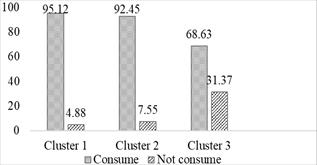
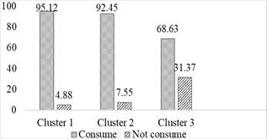
Regarding the prevalence of cow's milk consumption, high consumption was observed among participants in clusters 1 and 2, with 95.12 and 92.45%, respectively. In contrast, in cluster 3, a significant proportion of 31.4% of participants reported not consuming cow's milk, showing a substantial difference in dietary patterns compared to the other clusters (Figure 1).
The higher number of people who do not consume cow's milk in cluster 3 can be attributed to the high number of reports of dietary dysfunction after consuming this product and/or its derivatives (Table 2).
Symptoms of any dietary dysfunction (e.g., gastrointestinal discomfort, bloating, gas, and others) immediately after the consumption of cow's milk and/or its derivatives.
Lactose intolerance or malabsorption of the lactase enzyme are frequently cited as the main reasons consumers opt for plant-based milks (Haas et al., 2019). However, it is important to note that symptoms of dietary dysfunction shortly after consuming cow's milk and/or its derivatives are often mistakenly attributed to lactose intolerance, when in fact they may be reactions induced by the presence of the bioactive peptide β-casomorphin 7 (BCM-7) (Pal et al., 2015; Jianqin et al., 2016), which has the potential to exert biological actions by binding to opioid receptors in neuronal and non-neuronal tissues (Sobczak et al., 2014; Auestad & Layman, 2021).
According to Forsgård (2019), lactose is a disaccharide composed of glucose and galactose, linked by a β-1-4 glycosidic bond. Lactose intolerance is a non-immunological response to lactose, characterised by the inability to digest this disaccharide due to low levels of intestinal lactase, also known as lactase-phlorizin hydrolase (LPH), a β-D-galactosidase found on the apical surface of intestinal microvilli (Karunakaran, 2024). Lactase activity peaks shortly after birth but gradually decreases after weaning, although it may persist into adulthood (Toca et al., 2020). It is estimated that approximately 70% of the global population over the age of 10 is affected by lactose intolerance (He et al., 2017; Storhaug et al., 2017). Individuals with lactose intolerance may experience symptoms such as abdominal bloating, flatulence, diarrhoea, or dyspepsia after consuming conventional milk, accompanied by cellular inflammatory changes in the intestinal mucosa (Facioni et al., 2020; Singh et al., 2020).
Milk containing β-casein A1 undergoes enzymatic digestion processes that occur more intensively with this β-casein variant, involving the action of pepsin, pancreatic elastase, and leucine aminopeptidase (Summer et al., 2020; Thiruvengadam et al., 2021; Li et al., 2022). These processes result in the release of approximately 4 milligrams of BCM-7 in the jejunum from 30 grams of β-casein A1 (Jianqin et al., 2016), potentially favouring the onset of dietary dysfunctions, the symptoms of which resemble those of lactose intolerance (Deth et al., 2016; De Gaudry et al., 2019).
Currently, most commercially available milk contains a combination of β-casein A1 and A2, derived from both heterozygous cows (A1/A2) and industrial blends of milk from homozygous cows (A1/A1 and A2/A2) (McLean et al., 1984; Kay et al., 2021). Growing scientific evidence suggests that A2 milk may not induce adverse effects and may even offer additional health benefits. After consuming milk or derivatives containing β-casein A2, the release of BCM-7 in the intestine is reduced by approximately four times compared to milk with β-casein A1, or may not even occur (Lambers et al., 2021). Furthermore, A2 milk has been associated with additional benefits, including increased endogenous glutathione production, antioxidant activities, anti-inflammatory properties, and a positive modulation of the gut microbiota (Thiruvengadam et al., 2021; Guantario et al., 2020; Liu et al., 2022).
Table 3 shows that clusters 1 and 2 were more likely to substitute conventional cow's milk with functional milks, followed by plant-based beverages, particularly in cases of diseases or dietary dysfunctions. In contrast, cluster 3, characterised by the lowest consumption of cow's milk (Figure 1) and the highest rates of problems related to dietary dysfunctions (Table 2), showed a lower propensity to adopt plant-based beverages. However, 60% of individuals in this cluster responded that conventional milk could be replaced with functional milk, while 27.45% stated that cow's milk could not be replaced with plant-based beverages or functional milks (Table 3).
Currently, global milk production is predominantly derived from cows, accounting for 83% of the total (Foroutan et al., 2019 ). However, the bovine milk market is facing a decline in consumption and sales, with part of this decline attributed to the increasing substitution by alternative beverages (Popova et al., 2023). Alternative drinks, often referred to as ‘plant-based milks’, although this nomenclature is incorrect since the term ‘milk’ refers to the lacteal secretion from the mammary glands of mammals (Park, 2009; Park and Haenlein, 2017), have shown increasing acceptance in the market compared to conventional milk (Bimbo et al., 2017).
Therefore, the trend observed in clusters 1 and 2 of replacing cow's milk with functional products (Table 3) reflects expected consumer behaviour, especially among those motivated by health improvement, as reported by Lopes et al. (2020). Bentivoglio et al. (2020) highlight that 32% of functional food consumers aim to combat a specific dysfunction or disease, 30% seek to prevent a dysfunction or disease, and 28% do so out of curiosity. This trend among consumers regarding ‘clean label’ products, characterised by an interest in consuming more natural foods with fewer additives, is based on the underlying perception that products labelled as such are healthier (Gehring et al., 2021). However, there is some confusion among consumers regarding the nutrient density and health benefits associated with plant-based and animal-based food versions, often attributed to a lack of understanding of these disparities (Tso & Forde, 2021; Giacalone et al., 2022).
The nutritional density of plant-based drinks, commonly adopted as substitutes for milk, shows wide variation between different types. This variability is determined by the raw materials used, the manufacturing processes employed, and the incorporation of additional ingredients. A key focus in the development of these products is the attempt to replicate the sensory experience of animal-based products, a substantial challenge due to discrepancies in the sensory profiles and physico-chemical properties of plant-based ingredients (Ma et al., 2022).
The attempt to replicate the sensory experience of animal-based products can be attributed to the predominant dissatisfaction observed in sensory studies conducted with this category of products (Fiorentini et al., 2020). In response to this, industries often incorporate ingredients that may negatively impact health, such as high levels of salt, fat, and sugar, during the production process (Short et al., 2021). A recent analysis of vegetarian and vegan diets revealed that this population often increases consumption of ultra-processed plant-based foods (Sanchez-Siles et al., 2022), due to a preference for taste, even if it compromises nutritional quality (Adamczyk et al., 2022).
The low substitution behaviour of cow's milk with plant-based drinks, identified in cluster 3 (Table 3), is possibly related to consumers’ prior knowledge of the production processes of these foods. This factor was corroborated in a study by Varela et al. (2022), in which consumers considered plant-based foods undesirable, attributing this perception to their high degree of processing and the impression of artificiality.
These discrepancies in consumer perceptions of plant-based foods highlight uncertainty regarding their nutritional quality, as well as reflecting a lack of understanding of the nutritional implications associated with replacing animal-based products with plant alternatives. The current diversity within the emerging category of plant-based beverages, coupled with a lack of long-term evidence on the effectiveness of these products in promoting adequate nutrient intake, underscores the need for caution in adopting these products, as many are not comparable to cow’s milk in terms of nutritional composition, even when fortified (Walther et al., 2022).
Regarding functional foods, these can be classified as such when it is satisfactorily demonstrated that they exert beneficial effects on one or more specific functions of the organism, in addition to their usual nutritional effects, in a way that is relevant to improving health and well-being and/or reducing the risk of diseases (Diplock et al., 1999). These characteristics may encourage consumers, based on this concept, to replace conventional cow's milk with functional options, such as A2 milk (Topolska et al., 2021; Baker et al., 2022).
However, although the concept of functional food has spread rapidly in recent years, the time for consumer familiarization is short. Bentivoglio et al. (2020), when analyzing the responses to questions about functional foods, observed that only 34% of respondents were familiar with this type of product, highlighting a knowledge gap among consumers. Possibly, the lack of knowledge is due to the absence of universally accepted definitions for these products (Frewer et al., 2003; Barrios et al., 2008). Complementarily, a study conducted by Bisutti et al. (2022) revealed that a significant proportion of consumers were unaware of A2 milk, corroborating the results obtained in the present study and demonstrating the relatively limited knowledge about this type of milk (Table 4).
Consumer behaviour regarding milk purchases is influenced by a variety of factors (McCarthy et al., 2017). As shown in Table 5, the main attributes guiding choices at the time of purchase include price, brand, processing type, and functional attributes.
In a study conducted by Bentivoglio et al. (2020), milk consumers were asked about the determining factors for their choices; the three most cited were expiration date (18%), origin (17%) and price (14%). However, in the present study, price was prioritized, followed by brand, in both clusters analyzed. According to Eldesouky et al. (2020), behavior suggests that, although there is trust and perceived quality attributed to certain brands by consumers, price stands out as the most influential factor, often surpassing other personal considerations and guiding choices towards more affordable products, indicating that consumers who prioritize price tend to be less inclined to pay higher prices for A2 milk.
In the present study, only 41% of participants stated that they were willing to pay an additional amount for a liter of A2 milk (Table 6).
The results observed corroborate the findings of Mendes et al. (2019), in which 38% of consumers would be willing to pay a higher price for A2 milk compared to conventional milk. However, they contrast with the findings of Carfora et al. (2019), who identified a greater predisposition among consumers of functional foods, such as A2 milk, to accept higher prices for these products. Similarly, Oliveira et al. (2022) reported that 75.06% of respondents would be willing to pay more for a differentiated product such as A2 milk, while only 24.94% did not demonstrate this intention.
When analysing the clusters individually, it is observed that cluster 1 shows the least willingness to pay more for this product (Table 6), which can be attributed to the fact that this group consumes more milk, and 58.54% of individuals do not exhibit symptoms associated with food-related disorders (Figure 1 and Tables 2, respectively).
Cluster 2, on the other hand, shows the greatest willingness to pay a higher price per litre of A2 milk (Table 6), although price is the most influential factor at the time of purchase (33.96%), and 67.92% of respondents in this group do not experience adverse effects after consuming cow's milk (Tables 2 and 3, respectively). According to Siró et al. (2008) and Boccia and Sarnacchiaro (2018), this behaviour may be related to the recognition of the added value of A2 milk over the health benefits of the product. However, this perception does not always translate into purchasing behaviour, as economic circumstances emerge as an important variable in purchasing decisions (Afzal et al., 2019).
Cluster 3 presents a reasonable probability of paying more for A2 milk (Table 6). This behaviour is understandable, given that this group includes the largest percentage of people who do not consume cow's milk and experience food disorders after its consumption and/or its derivatives (Figure 1 and Table 2, respectively). It is also worth noting that 13.79% of participants did not express a clear opinion on paying a higher price for A2 milk (Table 6).
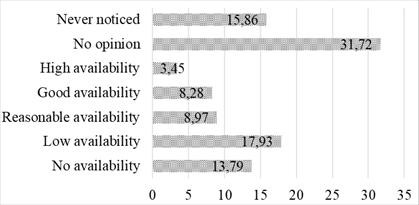
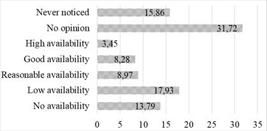
In addition to the limited knowledge of consumers about A2 milk, the availability of this product in supermarkets is also restricted. In this study, when asked about the presence of A2 milk in the supermarkets of their cities, the majority of participants (32%) reported having no formed opinion, either due to lack of interest in searching, lack of knowledge, or difficulty in finding the product. In contrast, 18% indicated low availability of A2 milk, while only 8% reported good availability in their municipalities (Figure 2).
As already mentioned, raising awareness about A2 milk is essential to improving public health indicators and presents itself as a priority area for the food industry (Zingone et al., 2017). Moreover, awareness can attract a significant market willing to pay a premium price for the product, contributing to the economic viability of its production. This change in demand has the potential to increase the product's availability in commerce and boost the dairy sector (Baudry et al., 2017; Alfonso et al., 2019).
The expansion of A2 cow milk production could represent a diversification opportunity for family farms and small dairy producers, allowing these producers to compete with large suppliers and achieve increased income. However, the production of A2 milk has some limitations. Genotyping is necessary to identify the animals, and it is worth mentioning that the breeds of cows that produce this type of milk have slightly lower yields, which limits production.
Additionally, adaptations are required in animal management and dairy facilities, as the production process must be separated from milk derived from cows with the A1 variant of β-casein. This involves separate milking, the use of specific tanks, independent transport, and strict segregation throughout the entire manufacturing chain (Fernández-Rico et al., 2022). These requirements make A2 milk production less common on large properties, which often opt for higher-yielding breeds, thus creating opportunities for the growth of small properties in the market (Dantas et al., 2023).
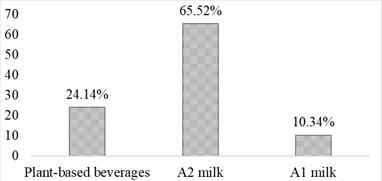
As evidenced in Table 4, initial knowledge about A2 milk among respondents was substantially limited, which did not encourage its purchase. However, after being informed about A2 milk and its benefits, 65.52% of respondents chose A2 milk, 24.14% preferred plant-based beverages, and 10.34% chose A1 milk (Figure 3).

These results reflect a negative perception of milk among consumers, associated with both potential adverse health effects and issues related to the production process. This is evidenced by the 24.14% of participants who, even after being informed about A2 milk, still opted for plant-based beverages. This result is corroborated by Bentivoglio et al. (2020) who reported that milk remains an undervalued product in terms of communication and marketing. Therefore, the results of the present study reinforce the need for targeted marketing strategies that aim to increase awareness of A2 milk among less informed consumers.
A good alternative would be to focus on packaging and its elements, as they play a crucial role at the point of purchase, strongly influencing consumer preferences. The formation of a first impression occurs quickly, within 3 to 5 seconds, as the consumer reacts to visual stimuli and prior information obtained either in person or online. In this way, well-designed packaging can provide a marketing advantage, helping consumers gain a more complete understanding of the product and boosting the purchase decision (Žurbi & Gregor-Svetec, 2023).
Although knowledge about the benefits of A2 milk is still limited, the results obtained point to an opportunity to expand this market niche, with a direct impact on consumer health, especially for those with digestive difficulties associated with conventional milk consumption. Additionally, by promoting awareness of the differences between β-casein variants, it is possible to stimulate both increased A2 milk production and the growth of the dairy sector as a whole.
Limitations of the study
Although the results obtained in this study offer relevant contributions to the understanding of consumer behavior in relation to A2 milk and plant-based beverages, it is important to recognize some limitations inherent to the research. Although the application of the questionnaire through digital platforms facilitated the reach and collection of data in a short period of time, it may have restricted the participation of a larger number of consumers, especially from population groups with less access to the internet or little familiarity with technological tools.
In addition, the data collection carried out exclusively online made it impossible to carry out a sensory evaluation of A1, A2 milk and plant-based beverages. The lack of this sensory experience, especially in relation to A2 milk, is aggravated by the low availability of this product in cities, which also limited the feasibility of a more exploratory approach. If A2 milk were more accessible, it is possible that some consumers' perceptions would be different, considering that flavor, as previously discussed, can have a great influence on consumers perception and purchase decision.
Nevertheless, these limitations do not compromise the validity of the findings, which are consistent with the literature and offer important support for future research and for the production sector. Further studies that can increase the number of respondents and incorporate sensory evaluations may deepen the results presented here and contribute to the advancement of knowledge about A2 milk.
Conclusion
It is concluded that there is a significant lack of knowledge about A2 milk and its true functional properties, along with its limited availability, leading to the substitution of milk with plant-based beverages, particularly in cases of dietary disorders. However, when consumers are informed about the benefits of A2 milk and it is offered at a price equivalent to conventional milk, there is a tendency to prefer its substitution.
Data availability
The data used in this research are presented in Tables 1 to 5 and Figures 1 to 3 of this article.
References
-
Adamczyk, D., Jaworska, D., Affeltowicz, D. & Maison, D.. (2022). Plant-based dairy alternatives: consumers’ perceptions, motivations, and barriers — results from a qualitative study in Poland, Germany, and France. Nutrients, 14(10), 2171-2185. https://doi.org/10.3390/nu14102171
» https://doi.org/https://doi.org/10.3390/nu14102171 -
Afzal, F., Yunfei, S., Sajid, M. & Afzal, F.. (2019). Market sustainability: a perspective of globalization and consumer culture in the Chinese retail market. Sustainability, 1(3), 575-599. https://doi.org/10.3390/su11030575
» https://doi.org/https://doi.org/10.3390/su11030575 -
Alfonso, L., Urrutia, O. & Mendizabal, J. A.. (2019). Conversión de las explotaciones de vacuno de leche a la producción de leche A2 ante una posible demanda del mercado: posibilidades e implicaciones. ITEA — Información Técnica Económica Agraria, 115(3), 231-251. https://doi.org/10.12706/itea.2019.001
» https://doi.org/https://doi.org/10.12706/itea.2019.001 -
Auestad, N. & Layman, D. K.. (2021). Dairy bioactive proteins and peptides: a narrative review. Nutrition Reviews, 79(suppl 2), 36-47. https://doi.org/10.1093/nutrit/nuab097
» https://doi.org/https://doi.org/10.1093/nutrit/nuab097 -
Baker, M. T., Lu, P., Parrella, J. A. & Leggette, H. R.. (2022). Consumer acceptance toward functional foods: a scoping review. International Journal of Environmental Research and Public Health, 19(3), 1217-1257. https://doi.org/10.3390/ijerph19031217
» https://doi.org/https://doi.org/10.3390/ijerph19031217 -
Barrios, E. X., Bayarri, S., Carbonell, I., Izquierdo, L. & Costell, E.. (2008). Consumer attitudes and opinions toward functional foods: a focus group study. Journal of Sensory Studies, 23(4), 514-525. https://doi.org/10.1111/j.1745-459X.2008.00169.x
» https://doi.org/https://doi.org/10.1111/j.1745-459X.2008.00169.x -
Baudry, J., Allès, B., Touvier, M., Hercberg, S., Galan, P., Amiot, M, Lairon, D., Méjean, C. & Kesse-Guyot, E.. (2017). Food choice motives when purchasing in organic and conventional consumers: focus on concerns (the NutriNet-Santé cohort study). Nutrients, 9(2), 88-105. https://doi.org/10.3390/nu9020088
» https://doi.org/https://doi.org/10.3390/nu9020088 -
Bentivoglio, D., Finco, A., Bucci, G. & Staffolani, G.. (2020). Is there a promising market for A2 milk? Analysis of Italian consumer preferences. Sustainability, 12(17), 6763-6779. https://doi.org/10.3390/su12176763
» https://doi.org/https://doi.org/10.3390/su12176763 -
Bimbo, F., Bonanno, A., Nocella, G., Viscecchia, R., Nardone, G., De Devitiis, B. & Carlucci, D.. (2017). Consumer acceptance and preferences for modified and functional dairy products in nutrition: a systematic review. Appetite, 113(1), 141-154. https://doi.org/10.1016/j.appet.2017.02.031
» https://doi.org/https://doi.org/10.1016/j.appet.2017.02.031 -
Bisutti, V., Pegolo, S., Giannuzzi, D., Mota, L. F. M., Vanzin, A., Toscano, A., Trevisi, E., Marsan, P. A. & Brasca, M.. (2022). The allelic variant of β-casein (CSN2) A2 alters the milk protein profile and slightly worsens coagulation properties in Holstein cows. Journal of Dairy Science, 105(5), 3794-3809. https://doi.org/10.3168/jds.2021-21537
» https://doi.org/https://doi.org/10.3168/jds.2021-21537 -
Boccia, F. & Sarnacchiaro, P.. (2018). The impact of corporate social responsibility on consumer preference: a structural equation analysis. Corporate Social Responsibility and Environmental Management, 25(2), 151-163. https://doi.org/10.1002/csr.1446
» https://doi.org/https://doi.org/10.1002/csr.1446 -
Bogahawaththa, D., Ashraf, R., Chandrapala, J., Donkor, O. & Vasiljevic, T.. (2018). In vitro immunogenicity of various native and thermally processed bovine milk proteins and their mixtures. Journal of Dairy Science, 101(10), 8726-8736. https://doi.org/10.3168/jds.2018-14488
» https://doi.org/https://doi.org/10.3168/jds.2018-14488 -
Brooke-Taylor, S., Dwyer, K., Woodford, K. & Kost, N.. (2017). Systematic review of the gastrointestinal effects of A1 compared with A2 β-casein. Advances in Nutrition, 8(5), 739-748. https://doi.org/10.3945/an.116.013953
» https://doi.org/https://doi.org/10.3945/an.116.013953 -
Carfora, V., Cavallo, C., Caso, D., Del Giudice, T., De Devitiis, B., Viscecchia, R., Nardone, G. & Cicia, G.. (2019). Explaining consumer buying behavior for organic milk: including confidence and green self-identity within planned behavior theory. Food Quality and Preference, 76, 1-9. https://doi.org/10.1016/j.foodqual.2019.03.006
» https://doi.org/https://doi.org/10.1016/j.foodqual.2019.03.006 -
Dantas, A., Kumar, H., Prudencio, E. S., De Avila, L. B. J, Orellana-Palma, P., Dosoky, N. S., Nepovimova, E., Kuča, K., Cruz-Martins, N., Verma, R., Manickam, S. & Kumar, D.. (2023). An approach on detection, quantification, technological properties, and trends market of A2 cow milk. Food Research International, 167(1), 112690. https://doi.org/10.1016/j.foodres.2023.112690
» https://doi.org/https://doi.org/10.1016/j.foodres.2023.112690 -
De Gaudry, D. K., Lohner, S., Schmucker, C., Kapp, P., Motschall, E., Horrlein, S., Röger, C. & Meerpohl, J. J.. (2019). Milk A1 P-casein and health-related outcomes in humans: a systematic review. Nutrition Reviews, 77(5), 278-306. https://doi.org/10.1093/nutrit/nuy063
» https://doi.org/https://doi.org/10.1093/nutrit/nuy063 -
Deth, R., Clarke, A., Ni, J. & Trivedi, M.. (2016). Clinical evaluation of glutathione concentrations after consumption of milk containing different subtypes of β-casein: results from a randomized, cross-over clinical trial. Nutrition Journal, 15(82), 1-6. https://doi.org/10.1186/s12937-016-0201-x.
» https://doi.org/https://doi.org/10.1186/s12937-016-0201-x. - Diplock, A. T., Aggett, P. J., Ashwell, M., Bornet, F., Fern, E. B. & Roberfroid, M. B.. (1999). Scientific concepts in functional foods in Europe: consensus document. British Journal of Nutrition, 81(Suppl 1), 1-27.
-
Eldesouky, A., Mesias, F. J. & Escribano, M.. (2020). Consumer assessment of sustainability traits in meat production. A choice experiment study in Spain. Sustainability, 12(10), 4093-4109. https://doi.org/10.3390/su12104093
» https://doi.org/https://doi.org/10.3390/su12104093 -
Facioni, M. S., Raspini, B., Pivari, F., Dogliotti, E. & Cena, H.. (2020). Nutritional management of lactose intolerance: the importance of diet and food labelling. Journal of Translational Medicine, 18(260), 1-9. https://doi.org/10.1186/s12967-020-02429-2
» https://doi.org/https://doi.org/10.1186/s12967-020-02429-2 -
Fernández-Rico, S., Mondragón, A. C., López-Santamarina, A., Cardelle-Cobas, A., Regal, P., Lamas, A., Ibarra, I. R., Cepeda, A. & Manuel Miranda, J.. (2022). A2 milk: new perspectives for food technology and human health. Foods, 11(16), 2387-2407. https://doi.org/10.3390/foods11162387
» https://doi.org/https://doi.org/10.3390/foods11162387 - Ferreira, A. G. G., Lyra, D. G., Silva, J. C. S., Soares, F. M. F. & Araújo, C. A.. (2017). Perfil dos consumidores de leite bovino in natura no município de Santana do Ipanema - Alagoas. Nutritime, 14(4), 6056-6062.
-
Fiorentini, M., Kinchla, A.J. & Nolden, A. A.. (2020). Role of sensory evaluation in consumer acceptance of plant-based meat analogs and meat extenders: a scoping review. Foods, 9(9), 1334-1349. https://doi.org/10.3390/foods9091334
» https://doi.org/https://doi.org/10.3390/foods9091334 -
Foroutan, A., Guo, A. C., Vazquez-Fresno, R., Lipfert, M., Zhang, L., Zheng, J., Badran, H., Budinski, Z., Mandal, R., Ametaj, B. N. & Wishart, D. S.. (2019). Chemical composition of commercial cow’s milk. Journal of Agricultural and Food Chemistry, 67(17), 4897-4914. https://doi.org/10.1021/acs.jafc.9b00204
» https://doi.org/https://doi.org/10.1021/acs.jafc.9b00204 -
Budinski, Z., Mandal, R. & Wishart, D. S.. (2019). Chemical composition of commercial cow's milk. Journal of Agricultural and Food Chemistry, 67(17), 4897-4914. https://doi.org/10.1021/acs.jafc.9b00204
» https://doi.org/https://doi.org/10.1021/acs.jafc.9b00204 -
Forsgård, R. A.. (2019). Lactose digestion in humans: Intestinal lactase appears to be constitutive whereas the colonic microbiome is adaptable. The American Journal of Clinical Nutrition, 110(2), 273-279. https://doi.org/10.1093/ajcn/nqz104
» https://doi.org/https://doi.org/10.1093/ajcn/nqz104 -
Frewer, L., Scholderer, J. & Lambert, N.. (2003). Consumer acceptance of functional foods: Issues for the future. Brazilian Journal of Food Technology, 105(10), 714-731. https://doi.org/10.1108/00070700310506263
» https://doi.org/https://doi.org/10.1108/00070700310506263 -
Gehring, J., Touvier, M., Baudry, J., Julia, C., Buscail, C., Srour, B., Hercberg, S., Péneau, S., Kesse-Guyot, E. & Allès, B.. (2021). Consumption of ultra-processed foods by pesco-vegetarians, vegetarians, and vegans: Associations with duration and age at diet initiation. The Journal of Nutrition, 151(1), 120-131. https://doi.org/10.1093/jn/nxaa196
» https://doi.org/https://doi.org/10.1093/jn/nxaa196 -
Giacalone, D., Clausen, M. P. & Jaeger, S. R. (2022). Understanding barriers to consumption of plant-based foods and beverages: Insights from sensory and consumer science. Current Opinion in Food Science, 48(1) 1-9. https://doi.org/10.1016/j.cofs.2022.100919
» https://doi.org/https://doi.org/10.1016/j.cofs.2022.100919 -
Guantario, B., Giribaldi, M., Devirgiliis, C., Finamore, A., Colombino, E., Capucchio, M. T., Evangelista, R., Motta, V., Zinno, P., Cirrincione, S., Antoniazzi, S., Cavallarin, L. & Roselli, M.. (2020). A Comprehensive Evaluation of the Impact of Bovine Milk Containing Different Beta-Casein Profiles on Gut Health of Ageing Mice. Nutrients, 12(7). https://doi.org/10.3390/nu12072147
» https://doi.org/https://doi.org/10.3390/nu12072147 -
Haas, R., Schnepps, A., Pichler, A. & Meixner, O.. (2019). Cow milk versus plant-based milk substitutes: a comparison of product image and motivational structure of consumption. Sustainability, 11(18), 5046-5071. https://doi.org/10.3390/su11185046
» https://doi.org/https://doi.org/10.3390/su11185046 -
He, M., Jianqin, S., Qin, J. Z. & Xin, Y. Y. (2017). Effects of cow's milk beta-casein variants on milk intolerance symptoms in Chinese adults: a multicenter, randomized, controlled study. Journal of Nutrition, 16(72) 1-12. https://doi.org/10.1186/s12937-017-0275-0
» https://doi.org/https://doi.org/10.1186/s12937-017-0275-0 -
Jianqin, S., Leiming, X., Lu, X., Yelland, G.W., Ni, J. & Clarke, A. J.. (2016). Effects of milk containing only A2 beta casein versus milk containing A1 and A2 beta casein proteins on gastrointestinal physiology, discomfort symptoms, and cognitive behavior of people with self-reported intolerance to traditional cow's milk. Nutrition Journal, 15(35), 1-16. https://doi.org/10.1186%2Fs12937-016-0147-z
» https://doi.org/https://doi.org/10.1186%2Fs12937-016-0147-z - Karunakaran, A. C. (2024). Lactose intolerance and milk allergy, in developments in microbiology. In T. Rana (Ed.), The microbiology, pathogenesis and zoonosis of milk borne diseases. (pp. 115-134). Academic Press.
-
Kaskous, S.. (2020). A1- and A2-milk and their effect on human health. Journal Food Engineering and Technology, 9(1), 15-21. https://doi.org/10.32732/jfet.2020.9.1.15
» https://doi.org/https://doi.org/10.32732/jfet.2020.9.1.15 -
Kay, S., Delgado, S., Mittal, J., Eshraghi, R. S., Mittal, R. & Eshraghi, A. A. (2021). Beneficial effects of milk with A2 β-casein protein: myth or reality? Journal of Nutrition, 151(5), 1061-1072. https://doi.org/10.1093/jn/nxaa454
» https://doi.org/https://doi.org/10.1093/jn/nxaa454 -
Lambers, T. T., Broeren, S., Heck, J., Bragt, M. & Huppertz, T.. (2021). Processing affects the formation of beta-casomorphine peptide during simulated gastrointestinal digestion in A1 and A2 milk. International Dairy Journal, 121(1), 105099. https://doi.org/10.1016/j.idairyj.2021.105099
» https://doi.org/https://doi.org/10.1016/j.idairyj.2021.105099 -
Li, R., Ma, Y. & Jiang, L.. (2022). Review: research progress of dairy sheep milk genes. Agriculture, 12(2), 169-182. https://doi.org/10.3390/agriculture12020169
» https://doi.org/https://doi.org/10.3390/agriculture12020169 -
Li, A., Zheng, J., Han, X., Jiang, Z., Yang, B., Yang, S., Zhou, W., Li, C. & Sun, M.. (2023). Health implication of lactose intolerance and updates on its dietary management. International Dairy Journal, 140(1), 105608. https://doi.org/10.1016/j.idairyj.2023.105608
» https://doi.org/https://doi.org/10.1016/j.idairyj.2023.105608 -
Liu, B., Qiao, W., Zhang, M., Liu, Y., Zhao, J. & Chen, L.. (2022). Bovine milk with variant β-casein types on immunological mediated intestinal changes and gut health of mice. Frontiers in Nutrition, 9(1), 1-11. https://doi.org/10.3389/fnut.2022.970685
» https://doi.org/https://doi.org/10.3389/fnut.2022.970685 - Longhi, R., Moreno, A. C. P., Reis, A. B., Okano, W., Aragon-Alegro, L. C. & Santana, E. H. W.. (2010). Perfil dos consumidores de leite cru da cidade de Arapongas - PR. Revista do Instituto de Laticínios Cândido Tostes, 373(65), 14-19.
-
Lopes, M., Pierrepont, C., Duarte, C. M., Filipe, A., Medronho, B. & Sousa, I.. (2020). Legume beverages from chickpea and lupin, as new milk alternatives. Foods, 9(10), 1458-1474. https://doi.org/10.3390/foods9101458
» https://doi.org/https://doi.org/10.3390/foods9101458 -
Ma, K. K., Greis, M., Lu, J., Nolden, A. A., Mcclements, D. J. & Kinchla, A. J.. (2022). Functional performance of plant proteins. Foods, 11(4), 594-617. https://doi.org/10.3390/foods11040594
» https://doi.org/https://doi.org/10.3390/foods11040594 -
Mccarthy, K. S., Parker, M., Ameerally, A., Drake, S. L. & Drake, M. A. (2017). Drivers of choice for fluid milk versus plant-based alternatives: What are consumer perceptions of fluid milk? Journal of Dairy Science, 100(8), 6125-6138. https://doi.org/10.3168/jds.2016-12519
» https://doi.org/https://doi.org/10.3168/jds.2016-12519 -
McLean, D. M., Graham, E. R. B., Ponzoni, R. W. & Mckenzie, H. A.. (1984). Effects of milk protein genetic-variants on milk-yield and composition. Journal of Dairy Research, 51(4), 531-546. https://doi.org/10.1017/s0022029900032854
» https://doi.org/https://doi.org/10.1017/s0022029900032854 -
Mendes, M. O., Morais, M. F. & Rodriguez, J. F.. (2019). A2A2 milk: brazilian consumers’ opinions and effect on sensory characteristics of Petit Suisse and Minas cheeses. Food Science and Technology, 108(1), 207-213. https://doi.org/10.1016/j.lwt.2019.03.064
» https://doi.org/https://doi.org/10.1016/j.lwt.2019.03.064 -
Oliveira, R. O. R. G., Souza, A. B. B., Folhas, R. D., Silva, M. C., Sobreira, I. R. M., Pereira, M. S., Ferraz, J. B. S., Carvalho, M. E., Nepomuceno, L. L., Santos, H. D., Garcia, J. A. S. & Ferreira, J. L.. (2022). Profile of milk consumers and determinants of A2A2 milk consumption in the Tocantins State. Brazilian Journal of Veterinary Research and Animal Science, 59(1), 1-6. https://doi.org/10.11606/issn.1678-4456.bjvras.2022.193432
» https://doi.org/https://doi.org/10.11606/issn.1678-4456.bjvras.2022.193432 -
Pal, S., Woodford, K., Kukuljan, S. & Ho, S.. (2015). Milk intolerance, beta-casein and lactose. Nutrients, 7(9), 7285-7297. https://doi.org/10.3390/nu7095339
» https://doi.org/https://doi.org/10.3390/nu7095339 - Park, Y. W. (2009). Bioactive components of goat milk. In Y. M. Park, Bioactive components in milk and dairy products. (pp. 43-82). Wiley‐Blackwell.
- Park, Y. W. & Haenlein, G. F. W.. (2017). Therapeutic, hypo-allergenic and bioactive potentials of goat milk, and manifestations of food allergy. In Y. W. Park, G. F. W. Haenlein, & W. L. Wendorff, Handbook of milk of non-bovine mammals (pp. 151-180). John Wiley & Sons, Inc.
-
Popova, A., Mihaylova, D. & Lante, A.. (2023). Insights and perspectives on plant-based beverages. Plants, 12(19), 3345-3357. https://doi.org/10.3390/plants12193345
» https://doi.org/https://doi.org/10.3390/plants12193345 -
Regis, N. S., Barreto, D. V. S., Jesus, S. S., Santos, C. O., Garcia, R. V. & Santos, V. S.. (2019). Perfil do consumidor de leite e preferência de consumo no município de Santa Inês, Bahia. Brazilian Journal of Food Research, 10(2), 66-79. https://doi.org/10.3895/rebrapa.v10n2.9209
» https://doi.org/https://doi.org/10.3895/rebrapa.v10n2.9209 -
Sanchez-Siles, L., Roman, S., Fogliano, V. & Siegrist, M.. (2022). Naturalness and healthiness in ‘ultra-processed foods’: a multidisciplinary perspective and case study. Trends in Food Science & Technology, 129(1), 667-673. https://doi.org/10.1016/j.tifs.2022.11.009
» https://doi.org/https://doi.org/10.1016/j.tifs.2022.11.009 -
Semwal, R., Kumar Joshi, S., Badoni Semwal, R., Sodhi, M., Upadhyaya, K. & Semwal, D. K. (2022). Effects of A1 and A2 variants of β-casein on human health — Is β-casomorphin-7 really a harmful peptide in cow's milk? Nutrire, 47(8). 1-12. https://doi.org/10.1186/s41110-022-00159-7
» https://doi.org/https://doi.org/10.1186/s41110-022-00159-7 -
Short, E. C., Kinchla, A. J. & Nolden, A. A.. (2021). Plant-based cheeses: a systematic review of sensory evaluation studies and strategies to increase consumer acceptance. Foods, 10(4), 725-737. https://doi.org/10.3390/foods10040725
» https://doi.org/https://doi.org/10.3390/foods10040725 -
Singh, M., Singh, V. & Friesen, C. A.. (2020). Colonic mucosal inflammatory cells in children and adolescents with lactase deficiency. Pathology, Research and Practice, 216(6), 152971. https://doi.org/10.1016/j.prp.2020.152971
» https://doi.org/https://doi.org/10.1016/j.prp.2020.152971 -
Siró, I., Kápolna, E., Kápolna, B. & Lugasi, A.. (2008). Functional food. Product development, marketing and consumer acceptance—a review. Appetite, 51(3), 456-467. https://doi.org/10.1016/j.appet.2008.05.060
» https://doi.org/https://doi.org/10.1016/j.appet.2008.05.060 -
Sobczak, M., Sałaga, M., Storr, M.A. & Fichna, J.. (2014). Physiology, signaling, and pharmacology of opioid receptors and their ligands in the gastrointestinal tract: current concepts and future perspectives. Journal of Gastroenterology, 49(1), 24-45. https://doi.org/10.1007/s00535-013-0753-x
» https://doi.org/https://doi.org/10.1007/s00535-013-0753-x -
Storhaug, C. L., Fosse, S. K. & Fadnes, L. T.. (2017). Country, regional, and global estimates for lactose malabsorption in adults: a systematic review and meta-analysis. Lancet Gastroenterology & Hepatology, 2(10), 738-746. https://doi.org/10.1016/S2468-1253(17)30154-1
» https://doi.org/https://doi.org/10.1016/S2468-1253(17)30154-1 -
Summer, A., Frangia, F., Marsan, P. A., Noni, I. & Malacarne, M.. (2020). Occurrence, biological properties, and potential effects on human health of β-casomorphine 7: current knowledge and concerns. Critical Reviews in Food Science and Nutrition, 60(21), 3705-3723. https://doi.org/10.1080/10408398.2019.1707157
» https://doi.org/https://doi.org/10.1080/10408398.2019.1707157 -
Thiruvengadam, M., Venkidasamy, B., Thirupathi, P., Chung, I. M. & Subramanian, U.. (2021). β-Casomorphine: a complete health perspective. Food Chemistry, 337(1), 127765. https://doi.org/10.1016/j.foodchem.2020.127765
» https://doi.org/https://doi.org/10.1016/j.foodchem.2020.127765 -
Toca, M. C, Fernández, A., Orsi, M., Tabacco, O. & Vinderola, G.. (2020). Intolerancia a la lactosa: mitos y verdades. Actualización. Archivos Argentinos de Pediatría, 120(1), 59-66. https://doi.org/10.5546/aap.2022.59
» https://doi.org/https://doi.org/10.5546/aap.2022.59 -
Topolska, K., Florkiewicz, A. & Filipiak-Florkiewicz, A.. (2021). Functional food—consumer motivations and expectations. International Journal of Environmental Research and Public Health, 18(10), 5327-5341. https://doi.org/10.3390/ijerph18105327
» https://doi.org/https://doi.org/10.3390/ijerph18105327 -
Tso, R. & Forde, C. G.. (2021). Unintended consequences: nutritional impact and potential pitfalls of switching from animal- to plant-based foods. Nutrients, 13(8), 2527-2543. https://doi.org/10.3390%2Fnu13082527
» https://doi.org/https://doi.org/10.3390%2Fnu13082527 -
Varela, P., Arvisenet, G., Gonera, A., Myhrer, K. S., Fifi, V. & Valentin, D.. (2022). Meat replacer? No thanks! The clash between naturalness and processing: an explorative study of the perception of plant-based foods. Appetite, 169(1), 1-10. https://doi.org/10.1016/j.appet.2021.105793
» https://doi.org/https://doi.org/10.1016/j.appet.2021.105793 -
Walther, B., Guggisberg, D., Badertscher, R., Egger, L., Portmann, R., Dubois, S., Haldimann, M., Kopf-Bolanz, K., Rhyn, P., Zoller, O., Veraguth, R. & Rezzi, S.. (2022). Comparison of nutritional composition between plant-based drinks and cow’s milk. Frontiers in Nutrition, 9(1), 1-17. https://doi.org/10.3389/fnut.2022.988707
» https://doi.org/https://doi.org/10.3389/fnut.2022.988707 -
Zingone, F., Bucci, C., Lovino, P. & Ciacci, C.. (2017). Consumption of milk and dairy products: facts and figures. Nutrition, 33(1), 322-325. https://doi.org/10.1016/j.nut.2016.07.019
» https://doi.org/https://doi.org/10.1016/j.nut.2016.07.019 -
Žurbi, T., & Gregor-Svetec, D.. (2023). Use of QR code in dairy sector in Slovenia. SAGE Open, 13(1), 1-15. https://doi.org/10.1177/21582440231177028
» https://doi.org/https://doi.org/10.1177/21582440231177028
Edited by
-
Associate Editor in charge:
Leandro Dalcin Castilha