
 USER SATISFACTION WITH ACADEMIC INFORMATION SYSTEMS: A STUDY WITH UNIVERSITY STUDENTS THROUGH USE OF STRUCTURAL EQUATION MODELING
Abstract
The effective management of Higher Education Institutions increasingly relies on technological integration to optimize academic and administrative processes. In this context, the general objective of this study was to analyze the determinants of student satisfaction at the Federal University of Ceará (UFC) regarding the Integrated Academic Activities Management System (SIGAA). Regarding methodology, a quantitative approach with a survey design was adopted. Data collection utilized a structured questionnaire on a Likert scale, based on the theoretical models proposed in the research, administered to a sample of 157 students (undergraduate and graduate). For data analysis, Partial Least Squares Structural Equation Modeling (PLS-SEM) was employed, assuming a margin of error of 7.8% and a confidence level of 95%. The results corroborated the theoretical model, evidencing that Information Quality, System Quality, and Perceived Usefulness exert a positive and significant impact on user satisfaction. Furthermore, the study confirmed the mediating role of Perceived Usefulness between Qualities (Information/System) and Satisfaction, as well as the rejection of the moderating variables Experience and Gender. The study contributes to higher education by providing insights for university managers to enhance the usability and precision of academic systems, which are critical factors for the educational experience.
Keywords:
higher education; academic information systems; educational assessment
Resumo
A gestão eficaz das Instituições de Ensino Superior depende cada vez mais da integração tecnológica para otimizar processos acadêmicos e administrativos. Nesse contexto, o objetivo geral do estudo foi analisar os determinantes da satisfação dos discentes da Universidade Federal do Ceará (UFC) em relação ao Sistema Integrado de Gestão de Atividades Acadêmicas (SIGAA). Quanto à metodologia, adotou-se uma abordagem quantitativa com delineamento do tipo survey. A coleta de dados utilizou um questionário estruturado em escala Likert, com base nos modelos teóricos propostos na pesquisa, aplicado a uma amostra de 157 estudantes (graduação e pós-graduação). Para a análise dos dados, empregou-se a Modelagem de Equações Estruturais baseada em Mínimos Quadrados Parciais (PLS-SEM), assumindo-se um erro de estimativa de 7,8% e nível de confiança de 95%. Os resultados corroboraram o modelo teórico, evidenciando que a Qualidade da Informação, a Qualidade do Sistema e a Utilidade Percebida exercem impacto positivo e significativo na satisfação do usuário. Ademais, constatou-se o papel mediador da Utilidade Percebida entre as Qualidades (Informação/Sistema) e a Satisfação e a rejeição das variáveis moderadoras Experiência e Gênero. O estudo contribui para a educação superior ao oferecer subsídios para que gestores universitários aprimorem a usabilidade e a precisão dos sistemas acadêmicos, fatores críticos para a experiência educacional.
Palavras-chave:
ensino superior; sistemas de informação acadêmica; avaliação educacional
Resumen
La gestión eficaz de las Instituciones de Educación Superior depende cada vez más de la integración tecnológica para optimizar los procesos académicos y administrativos. En este contexto, el objetivo general del estudio fue analizar los determinantes de la satisfacción de los discentes de la Universidad Federal de Ceará (UFC) con relación al Sistema Integrado de Gestión de Actividades Académicas (SIGAA). En cuanto a la metodología, se adoptó un enfoque cuantitativo con diseño de tipo survey. La recolección de datos utilizó un cuestionario estructurado en escala Likert, basado en los modelos teóricos propuestos en la investigación, aplicado a una muestra de 157 estudiantes (de pregrado y posgrado). Para el análisis de los datos, se empleó el Modelado de Ecuaciones Estructurales con Mínimos Cuadrados Parciales (PLS-SEM), asumiendo un error de estimación del 7,8% y un nivel de confianza del 95%. Los resultados corroboraron el modelo teórico, evidenciando que la Calidad de la Información, la Calidad del Sistema y la Utilidad Percibida ejercen un impacto positivo y significativo en la satisfacción del usuario. Además, se constató el rol mediador de la Utilidad Percibida entre las Calidades (Información/Sistema) y la Satisfacción, así como el rechazo de las variables moderadoras Experiencia y Género. El estudio contribuye a la educación superior al ofrecer insumos para que los gestores universitarios perfeccionen la usabilidad y la precisión de los sistemas académicos, factores críticos para la experiencia educativa.
Palavras clave:
educación superior; sistemas de información académica; evaluación educativa
1 INTRODUCTION
According to the 2024 Higher Education Census3, the Brazilian university system comprises 2,561 Higher Education Institutions (Instituições de Ensino Superior – IES), of which 2,244 are private (87.6%) and 317 are public (12.4%), providing education to nearly 10 million students. Considering the magnitude of these figures, the strategic importance of IES to society becomes evident, since through the implementation of educational processes and academic and scientific activities, new professionals are introduced into the labor market with the expectation of producing relevant outcomes, as well as social and cultural benefits (Dias Sobrinho, 1995). In this context, these higher education institutions must be aware of both their potential and their limitations through the use of mechanisms capable of clarifying the extent to which their strategic objectives, goals, and institutional missions are achieved. Among these mechanisms is institutional self-evaluation (Andriola, 1999; Andriola; Araújo, 2018).
Accordingly, IES should adopt evaluation models that best align with their institutional characteristics and expectations, while also complying with the guidelines established by Law No. 10.861/2004, which created the National System for the Evaluation of Higher Education (Sistema Nacional de Avaliação da Educação Superior – SINAES). From the perspective of this legislation, institutional evaluation contributes to the improvement of administrative and pedagogical practices by encouraging institutions to critically reflect on their role in society as organizations dedicated to the production and dissemination of knowledge (Andriola, 2004; Leite, 2002).
Within the SINAES framework, students and alumni constitute one of the ten dimensions of institutional evaluation (Brazil, 2004), enabling the assessment of the quality of academic training and, consequently, of the education provided by IES (Andriola, 2008). More specifically, the ninth dimension of SINAES addresses policies aimed at student and alumni support, emphasizing the strategic relevance of evaluating and monitoring the quality of students’ academic experiences and outcomes (Brazil, 2004).
In this scenario, the adoption of Academic Information Systems (Sistemas de Informação Acadêmica – SIA) plays a fundamental role in supporting the management of educational and administrative processes associated with students’ academic trajectories (Andriola, 2014). These integrated technological platforms function as digital infrastructures that automate tasks previously performed manually, while simultaneously providing an organized and accessible environment for students, faculty members, and administrative staff.
The importance of SIA has been widely recognized in the literature. Such systems optimize workflows, reduce operational errors, and generate valuable analytical insights that support institutional decision-making processes. By enabling the centralized management of student records, enrollment procedures, institutional communication, and other critical activities, these systems contribute to improving the overall quality of academic management (Widodo; Sutrisno; Baridwan, 2023).
However, for SIA to fully achieve their transformative potential, it is essential that end users perceive them as effective and satisfactory. In this regard, the study of user satisfaction with information systems becomes a critical factor for organizational success. The acceptance and effective use of these platforms depend directly on factors such as system quality, the accuracy and usefulness of the information provided, and the quality of technical support and user assistance services (Sethi; Malhotra, 2023).
Against this background, an important research question emerges: What are the main determinants of students’ satisfaction with a Sistema de Informação Acadêmica (SIA)? Understanding the factors that directly influence this satisfaction is crucial for IES seeking to continuously improve their technological platforms and maximize the benefits they provide to educational processes.
Therefore, the main objective of this study was to analyze the determinants of student satisfaction at the Universidade Federal do Ceará (UFC) regarding the Sistema Integrado de Gestão de Atividades Acadêmicas (SIGAA). Specifically, the study examines the relationships between information quality, system quality, service quality, support quality, and perceived usefulness, as well as how these latent constructs influence overall user satisfaction with this SIA.
2 ACADEMIC INFORMATION SYSTEMS (SIA)
An Academic Information System (Sistema de Informação Acadêmica - SIA) is a technological platform designed to integrate and manage a wide range of academic and administrative functions within an Instituição de Ensino Superior (IES). According to Mattos (1999), such systems may conceptually be integrated into what is referred to as a Sistema Integrado de Gestão (SIG), encompassing processes that range from student enrollment and academic record management to communication between students, faculty members, and administrative staff (Nuriddinovna, 2023).
By automating tasks that were previously carried out manually, SIA significantly increase operational efficiency and reduce the likelihood of errors, thereby contributing to a more organized and accessible institutional environment. Furthermore, these platforms often incorporate analytical tools that support evidence-based decision-making, ultimately contributing to the continuous improvement of both educational and administrative processes (Karuppusamy et al., 2023; Nkata, 2020).
In this context, user satisfaction with information systems plays a crucial role in determining organizational success. Previous studies indicate that factors such as system quality, information quality, and service quality have a positive influence on user satisfaction, which in turn contributes to improved organizational performance (Widodo; Sutrisno; Baridwan, 2023). Similarly, aspects such as time savings, cost efficiency, and overall system performance have also been shown to significantly affect user satisfaction, reinforcing its importance for institutional effectiveness (Wu et al., 2023).
Consequently, evaluating student satisfaction with SIA becomes essential for improving both teaching quality and institutional management within IES. This approach places emphasis on the perceptions of end users, recognizing their feedback as a crucial element in assessing the effectiveness and value of the system. Such evaluations enable institutions to identify both strengths and weaknesses within the SIA, facilitating adjustments and improvements that better align the system with the needs and expectations of its users.
The object of analysis in this study is SIGAA, a technological solution originally developed by the Universidade Federal do Rio Grande do Norte (UFRN) and later adopted by the Universidade Federal do Ceará (UFC) through a federal cooperation network. The use of a consolidated platform shared by multiple IES provides additional methodological relevance to this research, as it enables the potential generalization of findings and facilitates comparisons across similar institutional contexts (Souza; Monteiro, 2015). From a functional perspective, SIGAA centralizes the academic management of both undergraduate and graduate programs, serving as a core administrative infrastructure that integrates essential services such as academic performance monitoring (grades and attendance), faculty–student interaction, and the issuance of digital academic documents (Barroca Filho; Aquino Júnior, 2016; Lima; Andriola, 2013).
2.1 User Satisfaction Models in SIA
The model proposed by Ainin, Bahri, and Ahmad (2012) originates from an approach designed to evaluate user satisfaction with Sistemas de Informação Acadêmica (SIA). This model is adapted from classical studies on Information Systems success models, particularly those proposed by Davis (1989) and by DeLone and McLean (1992, 2003). The authors identified that service quality, system quality, and information quality jointly constitute key determinants of user satisfaction and of the successful use of information systems.
In 2012, the authors conducted a study in Malaysia examining the performance of the National Higher Education Fund Corporation (PTPTN) portal in terms of user satisfaction, specifically from the perspective of students. System performance was evaluated through three main constructs: system quality, information quality, and service quality. Subsequent studies have incorporated additional constructs, particularly perceived usefulness, as proposed in the Technology Acceptance Model (TAM) developed by Davis (1989), as well as the model addressing the relationships between technology perceptions and user satisfaction proposed by Wixom and Todd (2005).
According to these theoretical models, user satisfaction is influenced by four main factors: perceived usefulness, system quality, information quality, and service quality. Perceived usefulness refers to the benefits and effectiveness derived from using the system. System quality relates to its technical characteristics and operational performance. Information quality encompasses the accuracy, relevance, and clarity of the information provided. Finally, service quality refers to the availability and effectiveness of technical support, documentation, and assistance offered to users. Taken together, this framework enables Higher Education Institutions to identify areas for improvement in their academic information systems, thereby contributing to higher levels of student satisfaction and more effective institutional management of digital academic platforms.
3 METHOD
3.1 Research Setting
The study was conducted at the Universidade Federal do Ceará (UFC) using a quantitative approach with a survey research design.
3.1.1 Ethical Considerations
The study was previously authorized by the Pró-Reitoria de Pesquisa e Pós-Graduação (PRPPG), the Pró-Reitoria de Graduação (PROGRAD), and the Secretaria de Tecnologia da Informação (STI), as it constituted a strategic initiative aimed at supporting the academic management processes of the Universidade Federal do Ceará (UFC). Furthermore, the study was conducted in accordance with the provisions of current Brazilian legislation, specifically Law No. 14.874 of May 28, 2024, which established the National System of Ethics in Research with Human Beings. Regarding the participants, they were invited to provide their individual consent through an Informed Consent Form (Termo de Consentimento Livre e Esclarecido – TCLE), which presented the objectives and purposes of the study prior to the beginning of the data collection process.
3.2 Population and Sample
The study population comprised the entire universe of undergraduate students enrolled in face-to-face and blended learning programs (N2 = 27,860), as well as graduate students (N1 = 5,497), totaling 33,357 regularly enrolled students at UFC (UFC, 2024). The sample was obtained from valid responses to the data collection instrument, through the data collection instrument, totaling 157 respondents, which implied an estimated sampling error of 7.8%.3 According to Andriola and Pasquali (1995), Trompieri Filho, Nóbrega, and Andriola (1995), Andriola (2002), and Andriola (2009), an error magnitude of this nature requires additional procedures to ensure the representativeness of the sample. In this study, such procedures were addressed through the application of Structural Equation Modeling, as detailed in the following section.
3.2.1 Structural Equation Modeling
Partial Least Squares Structural Equation Modeling (PLS-SEM) is a statistical technique used to analyze relationships between latent and observed variables in exploratory studies. It is particularly suitable when (i) the data do not follow a normal distribution and (ii) the sample size is relatively small (Hair et al., 2024). The choice of PLS-SEM in this study is specifically justified by its algorithmic orientation toward prediction and the maximization of explained variance (R2), which distinguishes it from the covariance-based approach (CB-SEM), typically requiring substantially larger samples. Moreover, PLS-SEM presents greater statistical power to detect significant relationships and ensures the stability of parameter estimates even under conditions of sample size constraints.
To illustrate the assumptions required by PLS-SEM for determining the minimum sample size (Nmin) according to the theoretical model to be tested — composed in the present study of one endogenous construct and four predictor variables — Table 1 presents the criteria applied, the respective minimum sample sizes (Nmin), and the authors who proposed these criteria, based on the most frequently cited methodological references in the literature.
Therefore, considering the criteria presented and in accordance with the consulted literature, the sample used in this study (n = 157) can be considered adequate for the application of PLS-SEM to test the proposed theoretical model and to examine the main determinants of student user satisfaction with a Sistema de Informação Acadêmica (SIA).
3.3 Data Collection Procedures
Data were collected through a structured questionnaire using a five-point Likert scale to capture students’ responses. The questionnaire was made available through the Sistema Integrado de Gestão de Atividades Acadêmicas (SIGAA) and distributed to students via emails sent by the coordinators of undergraduate and graduate programs. Participants were able to submit their responses over a two-month period, between May and June 2024.
3.4 Instrument Used for Data Collection
The instrument was developed based on the theoretical model proposed by Ainin, Bahri, and Ahmad (2012), incorporating adaptations derived from the literature on user satisfaction with academic information systems (Duarte; Vieira; Silva, 2016, 2020). Five latent variables were investigated: System Quality (QualSist), Information Quality (QualInfo), Service Quality (QualServ), and Perceived Usefulness (UtilPerc). In addition, demographic information was collected, including gender and educational level, as well as other variables such as: length of time as a student at the institution, internet usage experience, and the duration and type of device used to access SIGAA.
3.5 Data Analysis Procedures
The study employed Structural Equation Modeling (SEM) using the Partial Least Squares (PLS) estimation method. This technique is considered an advanced statistical approach that combines elements of factor analysis and multiple regression, enabling researchers to simultaneously examine multiple complex relationships between observed and latent variables (Hair; Ringle; Sarstedt, 2011; Silva; Andriola, 2012).
This approach is particularly useful in studies involving theoretical constructs, as it provides a robust analytical framework for testing hypotheses regarding causal relationships within conceptual models. PLS-SEM stands out for its ability to evaluate both measurement models and structural models, thereby offering a holistic view of the relationships among variables within a single analytical procedure. Furthermore, it integrates both explanatory and predictive perspectives within the analytical models (Hair et al., 2017).
3.6 Theoretical Models Proposed in the Study
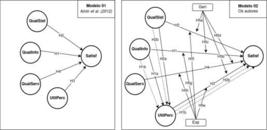
With the aim of expanding theoretical explanations regarding user satisfaction and subjecting them to empirical falsification, in accordance with the epistemological perspective proposed by Karl Raimund Popper (Andriola; Araújo, 2023), this study adapts the structural model validated by Ainin, Bahri, and Ahmad (2012). While those authors analyzed the success of the National Higher Education Fund Corporation (PTPTN) portal in Malaysia, the present study examines the applicability of the same constructs—System Quality, Information Quality, and Service Quality—within the context of the Sistema Integrado de Gestão de Atividades Acadêmicas (SIGAA) at the Universidade Federal do Ceará (UFC).
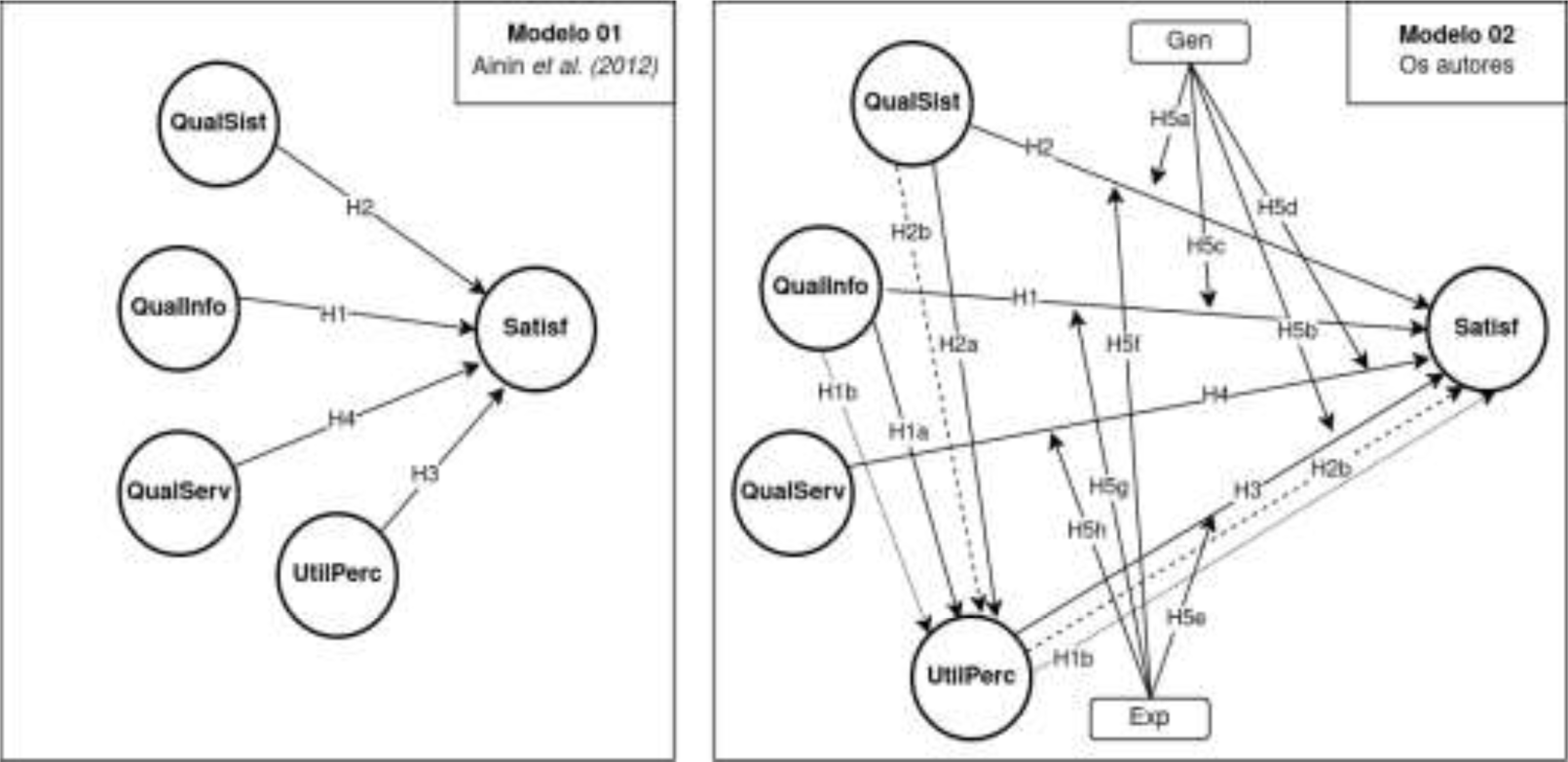
In addition, the theoretical model incorporates the variable Perceived Usefulness, thereby integrating the framework proposed by Ainin, Bahri, and Ahmad (2012) with the classical models of technology acceptance developed by Davis (1989) and Wixom and Todd (2005). Accordingly, it is assumed that the determinants of system success identified in these international contexts may also be applicable to the local institutional environment. Thus, the hypotheses presented below are not formulated arbitrarily; rather, they reflect the expectation that the positive findings reported in the reference studies may also be observed within the SIGAA environment. H1: Information Quality positively influences the level of user satisfaction. This hypothesis examines whether the attributes of accuracy and clarity emphasized in the study by Ainin, Bahri, and Ahmad (2012), and further supported by Abu-Shanab (2021) and Ghazal, Aldowah, and Umar (2018), are also applicable to the information provided by SIGAA.
H2: System Quality positively influences the level of user satisfaction. This hypothesis seeks to verify whether the technical performance and system stability identified as crucial factors in Nuswantoro and Syahroni (2018) are also determinants of satisfaction among students at UFC.
H3: Perceived Usefulness positively influences the level of user satisfaction. This hypothesis is grounded in the premise of system effectiveness proposed by Davis (1989) and subsequently validated in similar contexts by Ghazal, Aldowah, and Umar (2018).
H4: Service Quality positively influences the level of user satisfaction. This hypothesis extends the relationship identified by Ainin, Bahri, and Ahmad (2012), also supported by the findings of Abu-Shanab (2021), regarding the importance of technical support for system users, applying it to the student support context at UFC.
H5: User satisfaction with information systems is influenced by users’ demographic characteristics (e.g., gender, duration of system use, among others). This hypothesis seeks to verify whether the profile-related variations identified by Kalankesh et al. (2020), Abu-Shanab (2021), Naveh and Shelef (2018), and Nuswantoro and Syahroni (2018) are also observed in the context of SIGAA.
Figure 1 illustrates the theoretical models tested and compared in this study.
4 RESULTS AND DISCUSSION
4.1 Respondents’ Profile
Regarding the sample of participants, it presents a heterogeneous profile in terms of gender, program level, internet usage experience, the primary device used to access SIGAA, length of time at Universidade Federal do Ceará (UFC), and duration of computer or smartphone use.
The gender distribution was balanced, with 50.6% female and 48.1% male participants. Additionally, 1.3% identified as another gender, while one respondent chose not to disclose this information. Regarding program level, the majority of participants were enrolled in undergraduate programs (77.1%), followed by master’s (12.1%), doctoral (7.6%), specialization (1.9%), and Foreign Language Centers (1.3%). In terms of internet usage, 98.7% of respondents reported using the internet for more than three years, whereas 1.3% reported at least two years of use. Concerning access to SIGAA, 54.1% primarily used a computer, 43.9% a mobile phone, and 1.9% a tablet. The length of affiliation with Universidade Federal do Ceará (UFC) was distributed as follows: 36.9% for one year, 19.1% for two years, 19.1% for three to four years, and 24.8% for more than four years. Regarding experience with computers or smartphones, 96.8% reported more than three years of use, 2.5% at least two years, and 0.6% up to one year. Overall, this diversity reflects a sample with substantial experience in both technology use and educational environments.
To mitigate concerns regarding potential biases arising from sample heterogeneity—particularly whether length of affiliation (e.g., newcomers versus experienced students) or gender could influence system evaluation—a preliminary comparative analysis was conducted. The Kruskal–Wallis test was employed to assess statistically significant differences in the medians of the constructs across gender groups and categories of institutional experience. The results revealed no statistically significant differences (p > 0.05) among the groups analyzed, indicating that system perceptions are statistically homogeneous regardless of users’ gender or length of affiliation. Given this evidence of invariance, a Multi-Group Analysis (MGA) was deemed unnecessary, and the PLS-SEM analysis proceeded using the full consolidated sample.
4.2 Measurement Model Assessment
The evaluation of the reflective measurement model followed the four-step procedure recommended in the literature: indicator reliability, internal consistency reliability, convergent validity, and discriminant validity (Hair et al., 2021b). Regarding indicator reliability, a threshold of factor loadings equal to or greater than 0.708 was adopted (Andriola; Pasquali, 1995; Hair et al., 2021a), ensuring that each construct explains at least 50% of the variance of its indicators.
The analysis of individual factor loadings yielded the following results: for System Quality, qs1 (0.727), qs2 (0.807), qs3 (0.758), and qs4 (0.721); for Information Quality, qi1 (0.792), qi2 (0.822), qi3 (0.766), and qi4 (0.662); for Service Quality, qsc1 (0.720), qsc2 (0.713), qsc3 (0.683), and qsc4 (0.740). The construct Perceived Usefulness presented up1 (0.737), up2 (0.824), up3 (0.850), and up4 (0.835), while Satisfaction (single-item) exhibited a loading of 1.000.
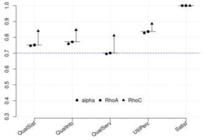
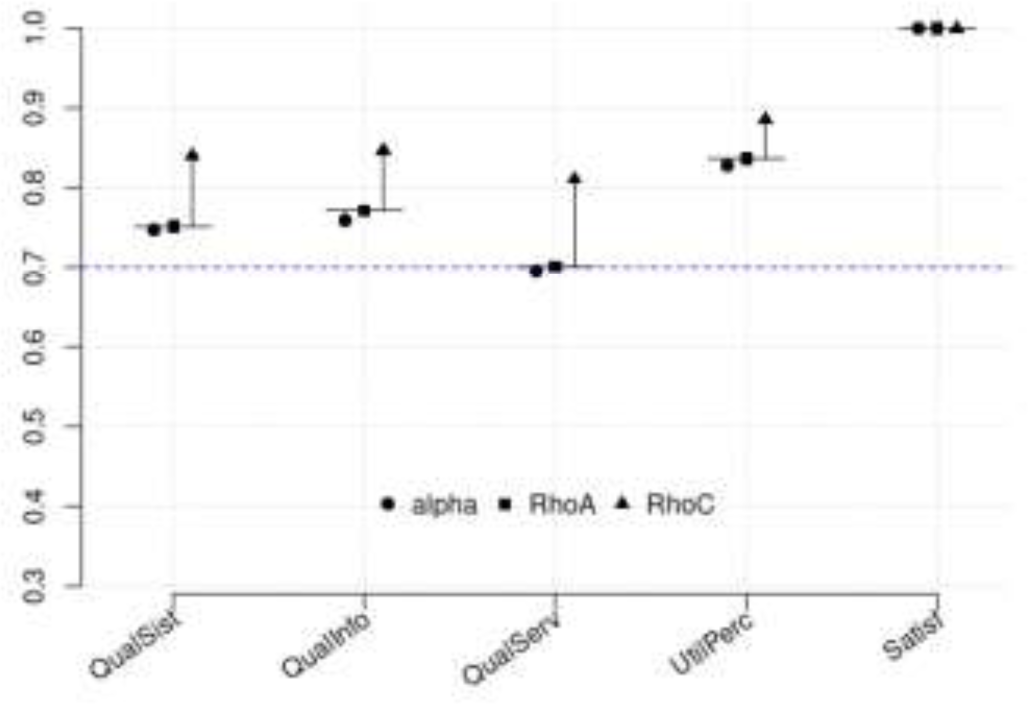
It is observed that the vast majority of indicators met the recommended threshold, with the exception of qi4 (0.662) and qsc3 (0.683), which fell slightly below 0.708. Subsequently, internal consistency reliability was assessed using Cronbach’s alpha, composite reliability (rhoC), and rhoA. As illustrated in Graphic 1, all constructs achieved satisfactory levels, with Service Quality presenting the lowest Cronbach’s alpha (0.695), a value still considered acceptable for exploratory research (Pasquali, 1997).
Convergent validity was confirmed through the Average Variance Extracted (AVE), with values ranging from 0.721 to 0.807, exceeding the minimum threshold of 0.50. Simultaneously, discriminant validity was established using the HTMT criterion, with values ranging from 0.559 to 0.889, remaining below the conservative threshold of 0.90 and ensuring empirical distinctiveness among constructs (Hair et al., 2021a; Martínez Arías, 1995). Overall, the measurement model demonstrated structural robustness. Despite minor issues observed in indicators qi4 and qsc3, as well as the marginal internal consistency of Service Quality, the overall set of results fully satisfies the reliability and validity criteria required for subsequent analysis.
4.3 Structural Model Assessment
The estimation of the structural model represents a critical stage in PLS-SEM analysis, as it allows for the evaluation of the validity and quality of the proposed theoretical relationships among constructs. Its importance lies in providing empirical evidence regarding the model’s ability to explain and predict the phenomena under investigation. Furthermore, it enables the identification of potential limitations, which may inform theoretical and methodological refinements. To assess the quality of the structural model, the systematic five-step approach proposed by Hair et al. (2021a) was adopted.
Step 1 – Collinearity Assessment: Since high levels of collinearity may lead to biased path coefficient estimates, the Variance Inflation Factor (VIF) was calculated for both proposed models. The results ranged from 1.46 to 2.73, remaining well below the recommended threshold of 5.0 (Becker et al., 2015). These values indicate the absence of significant collinearity issues among exogenous and endogenous variables, thereby supporting the adequacy of the model structure for further analysis.
Step 2 – Significance and Relevance of Structural Relationships: At this stage, the path coefficients were analyzed in terms of their statistical significance and practical relevance, allowing for the assessment of both the strength and direction of relationships among constructs. Bootstrapping was employed as the inferential procedure. This method involves generating multiple subsamples from the original dataset, with replacement, to estimate the precision of sample statistics (Hair et al., 2021a). The bootstrap results for the structural paths of both models are presented in Table 3, including original estimates, t-values, and 95% confidence intervals for each relationship between constructs.
In Model 1, the relationship between System Quality and User Satisfaction presented an original estimate of 0.164 and a t-statistic of 2.217, indicating statistical significance within the 95% confidence interval (0.025 to 0.315). Information Quality showed an original estimate of 0.168 and a t-statistic of 2.496, also statistically significant (95% CI: 0.036 to 0.300). Perceived Usefulness demonstrated a strong influence on User Satisfaction, with an original estimate of 0.556 and a t-statistic of 8.580, remaining well within the 95% confidence interval (0.419 to 0.674). Conversely, Service Quality presented an original estimate of 0.045 and a t-statistic of 0.780, indicating a non-significant relationship, as its 95% confidence interval (-0.061 to 0.168) includes zero.
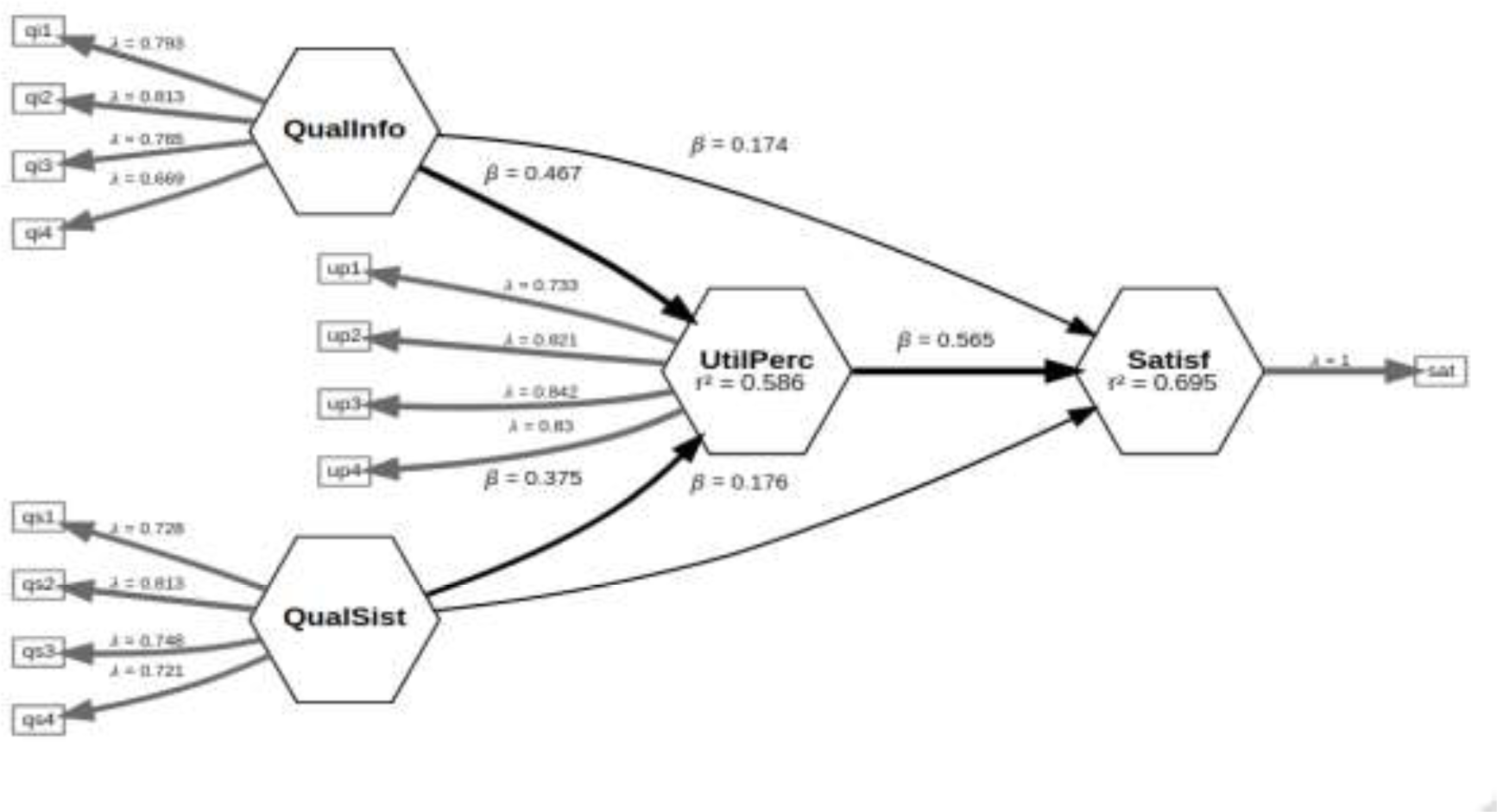
In Model 2, the relationship between System Quality and Perceived Usefulness yielded an original estimate of 0.375 and a t-statistic of 6.055, confirming statistical significance (95% CI: 0.258 to 0.512). Similarly, Information Quality showed a significant effect on Perceived Usefulness, with an original estimate of 0.467 and a t-statistic of 7.168 (95% CI: 0.333 to 0.587).
For the moderation analysis, variables were coded as binary: Gender (0 = Male; 1 = Female) and Experience (0 = 1–2 years; 1 = 3+ years). The bootstrapping procedure did not reveal evidence of significant moderation effects for any of the tested interactions between constructs (Perceived Usefulness, Information Quality, and System Quality) and Satisfaction. The t-statistics ranged from 0.129 to 1.651, consistently below the critical value of 1.96 (α = 0.05). Corroborating the absence of statistical significance, all 95% confidence intervals included zero, leading to the rejection of all moderation hypotheses involving Gender and Experience.
Step 3 – Assessment of the Model’s Explanatory Power: The analysis of the coefficient of determination (R2) demonstrated the model’s explanatory capacity. For the endogenous variable Satisfaction (Model 1), an R2 of 0.697 (Adjusted R2 = 0.689) was obtained, while for Perceived Usefulness (Model 2), the value reached 0.586 (Adjusted R2 = 0.580). According to the benchmarks proposed by Hair et al. (2021b), both results indicate moderate explanatory power. These findings support the validated causal chain, highlighting Information Quality as a precursor to Perceived Usefulness, which, in turn, emerges as the primary determinant of User Satisfaction within the system.
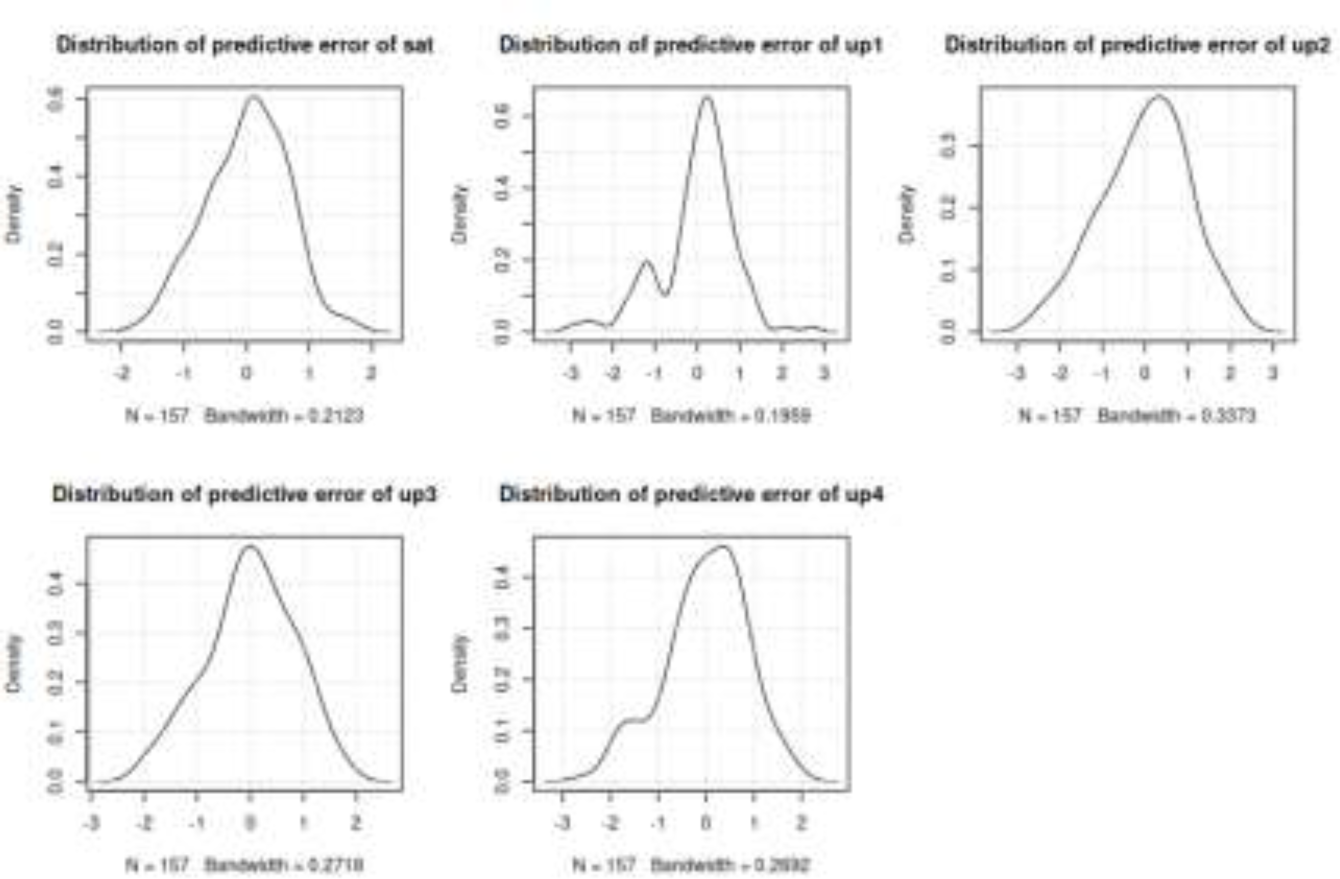
Step 4 – Assessment of the Model’s Predictive Power: At this stage, the model’s ability to predict new observations was evaluated, going beyond the mere explanation of endogenous variance. The PLSpredict algorithm (Shmueli et al., 2019) was applied to assess out-of-sample predictive performance. The choice of error metric was based on the distribution of predictive errors of the measurement variables, as illustrated in Figure 2.
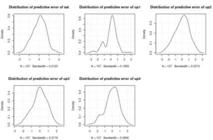
Visual inspection of Figure 2 indicates no substantial asymmetry in the error distributions (sat, up1–up4), justifying the adoption of the Root Mean Square Error (RMSE) as the primary metric, instead of the Mean Absolute Error (MAE) (Hair et al., 2021b). The procedure was conducted using the predict_DA approach with k-fold cross-validation (k = 10) and ten repetitions.
The results did not require full tabular presentation. In summary, Model 1 demonstrated high predictive power, as the Satisfaction indicator (‘sat’) showed lower prediction error in PLS-SEM (RMSE = 0.650) compared to the naïve linear model (LM_RMSE = 0.670). Model 2, in turn, exhibited moderate predictive power (Shmueli et al., 2019). The PLS-SEM model outperformed the linear benchmark for ‘sat’ (0.646 vs. 0.659) and for indicators ‘up2’ and ‘up4’, although it showed slightly inferior performance for ‘up1’ and ‘up3’.
Importantly, Q2predict values were positive for all variables, indicating that both models possess adequate predictive relevance, which is essential for the generalizability of the findings (Hair et al., 2021a). Overall, both models demonstrated strong predictive performance for Satisfaction, while Model 2 provided additional insights into Perceived Usefulness.
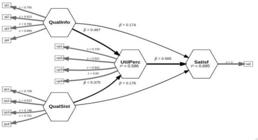
Step 5 – Comparison of Alternative Models: Following established guidelines for model comparison (Hair et al., 2021b), Model 2a was derived as a more parsimonious refinement of the initial structures, achieved by removing Service Quality and the moderating variables. The final comparative analysis (Sharma et al., 2019) confirmed the statistical superiority of Model 2a over Model 1, as evidenced by a lower Bayesian Information Criterion (BIC: -167.21 vs. -163.29) and a substantially higher Akaike weight (0.877 vs. 0.123). These indicators suggest a probability of adequacy of 87.6% for Model 2a. The final validated model, which best balances goodness-of-fit and parsimony, is presented with its respective coefficients in Figure 3.
5 CONCLUSIONS
The main objective of this study was to analyze which latent factors influence overall satisfaction with Academic Information Systems (AIS), particularly from the perspective of users of the Sistema Integrado de Gestão de Atividades Acadêmicas (SIGAA) at the Universidade Federal do Ceará (UFC). This objective was achieved through the validation of a theoretical model explaining user satisfaction using Structural Equation Modeling (SEM).
The results were consistent with several studies reported in the literature (Abu-Shanab, 2021; Ainin; Bahri; Ahmad, 2012; Budiardjo et al., 2017; Delone; McLean, 2003; Ong; Day; Hsu, 2009; Wixom; Todd, 2005; Xu; Du, 2018), supporting the hypotheses that the exogenous variables—Information Quality, System Quality, and Perceived Usefulness—significantly influence the endogenous variable Satisfaction, as well as confirming the influence of System Quality and Information Quality on Perceived Usefulness (Wu; Wang, 2006).
A summary of the hypothesis testing results is presented in Table 4.
These findings have important implications for both theory and practice. From a theoretical perspective, this study contributes to advancing knowledge on user satisfaction in academic information systems, reinforcing the importance of Information Quality, System Quality, and Perceived Usefulness, while also highlighting significant mediating relationships among constructs. The lack of support for the influence of Service Quality and demographic factors challenges some prior assumptions and opens new avenues for future research.
From a practical standpoint, the findings suggest that managers of Higher Education Institutions (HEIs) should prioritize efforts to improve information quality, system quality, and users’ perceived usefulness, in order to enhance overall satisfaction with academic information systems—particularly with SIGAA in this context.
For future research, it is recommended to explore organizational factors such as managerial support and alignment with institutional objectives, as proposed by Quintero, Pedroche, and Ramos (2009), as well as facilitating conditions and performance expectations, as discussed by Lustosa et al. (2022). The visual aesthetics of the system and its relationship with user satisfaction—especially across different gender groups—also represent a promising research avenue (Alhajri et al., 2021). Furthermore, longitudinal studies could be conducted to examine how user satisfaction evolves over time as systems are updated or modified. Adopting a user-centered approach may help identify specific needs and guide improvements that better align with users’ expectations, thereby promoting a more efficient and satisfying system experience. Future studies may also replicate this research in different contexts to validate the proposed model and explore variations across different types of HEIs or information systems.
Finally, it is important to acknowledge that, although this study provides relevant Conceptualizations, its limitations must be considered. The research was conducted within a specific context, and therefore, the findings may not be generalizable to all academic information systems or higher education institutions. In this regard, as once noted by one of the greatest figures in science, Albert Einstein (1879–1955): “Once we accept our limits, we go beyond them.”
DATA AVAILABILITY STATEMENT
The data that support the findings of this study are available from the corresponding author upon reasonable request, due to ethical, security, and/or financial restrictions.
References
-
ABU-SHANAB, E. A. Age and education as major determinants of HIS’s adoption. International Journal of Reliable and Quality E-Healthcare (IJRQEH), Hershey, v. 10, n. 4, p. 76–95, 2021. Disponível em: https://ideas.repec.org/a/igg/jrqeh0/v10y2021i4p76-95.html Acesso em: 05 out. 2024.
» https://ideas.repec.org/a/igg/jrqeh0/v10y2021i4p76-95.html -
AININ, S.; BAHRI, S.; AHMAD, A. Evaluating portal performance: a study of the National Higher Education Fund Corporation (PTPTN) portal. Telematics and Informatics, Amsterdam, v. 29, n. 3, p. 314–323, 2012. Disponível em: https://www.semanticscholar.org/paper/Evaluating-portal-performance%3A-A-study-of-the-Fund-Sulaiman-Zakaria/f95844f162a08d0e8c722dfba6d0a6c1fe66b3c9 Acesso em: 07 fev. 2025.
» https://www.semanticscholar.org/paper/Evaluating-portal-performance%3A-A-study-of-the-Fund-Sulaiman-Zakaria/f95844f162a08d0e8c722dfba6d0a6c1fe66b3c9 -
ALHAJRI, R. et al. Gender differences in the perception of a student information system. International Journal of Advanced Computer Science and Applications (IJACSA), London, v. 12, n. 2, 2021. Disponível em: https://thesai.org/Publications/ViewPaper?Volume=12&Issue=2&Code=IJACSA&SerialNo=9 Acesso em: 13 jun. 2024.
» https://thesai.org/Publications/ViewPaper?Volume=12&Issue=2&Code=IJACSA&SerialNo=9 -
ANDRIOLA, W. B. Avaliação Institucional na Universidade Federal do Ceará (UFC): Organização de Sistema de Dados e Indicadores da Qualidade Institucional. Revista da Avaliação da Educação Superior, Campinas, v. 9, n. 4, p. 33-54, 2004. Disponível em: https://periodicos.uniso.br/avaliacao/article/view/1286 Acesso em: 25 fev. 2025.
» https://periodicos.uniso.br/avaliacao/article/view/1286 -
ANDRIOLA, W. B. Detección del Funcionamiento Diferencial del Ítem (DIF) en tests de rendimiento: aportaciones teóricas y metodológicas. 2002. (639 f.). Tese (Doutorado em Métodos de Investigación y Medidas en Educación) - Universidad Complutense de Madrid, Madrid, 2002. Disponível em: https://docta.ucm.es/entities/publication/c8bfdafb-f1aa-4ceb-b8bb-3385a168470f Acesso em: 24 out. 2024.
» https://docta.ucm.es/entities/publication/c8bfdafb-f1aa-4ceb-b8bb-3385a168470f -
ANDRIOLA, W. B. Estudo de egressos de cursos de graduação: subsídios para a autoavaliação e o planejamento institucionais. Educação em Revista, Curitiba, v. 54, p. 203-220, 2014. Disponível em: https://www.scielo.br/j/er/a/mKkxrvs4q36g4PvkgxWbyfr/abstract/?lang=pt Acesso em: 01 jul. 2024.
» https://www.scielo.br/j/er/a/mKkxrvs4q36g4PvkgxWbyfr/abstract/?lang=pt -
ANDRIOLA, W. B. Evaluación: la vía para la calidad educativa. Ensaio: Avaliação e Políticas Públicas em Educação, Rio de Janeiro, v. 7, n. 25, p. 355-368, 1999. Disponível em: http://educa.fcc.org.br/scielo.php?script=sci_abstract&pid=S0104-40361999000400003&lng=pt&nrm=iso&tlng=es Acesso em: 09 jul. 2024.
» http://educa.fcc.org.br/scielo.php?script=sci_abstract&pid=S0104-40361999000400003&lng=pt&nrm=iso&tlng=es -
ANDRIOLA, W. B. Propostas estatais voltadas à avaliação do ensino superior brasileiro: breve retrospectiva histórica do período 1983-2008. Revista Iberoamericana sobre Calidad, Eficacia y Cambio en Educación, Santiago de Chile, v. 6, n. 4, p. 127–148, 2008. Disponível em: https://revistas.uam.es/reice/article/view/5434 Acesso em: 28 dez. 2024.
» https://revistas.uam.es/reice/article/view/5434 -
ANDRIOLA, W. B. Psicometria moderna: características e tendências. Estudos em Avaliação Educacional, São Paulo, v. 20, p. 319-340, 2009. Disponível em: https://publicacoes.fcc.org.br/eae/article/view/2052 Acesso em: 12 nov. 2024.
» https://publicacoes.fcc.org.br/eae/article/view/2052 -
ANDRIOLA, W. B.; ARAÚJO, A. C. Uso de indicadores para diagnóstico situacional de Instituições de ensino superior. Ensaio: Avaliação e Políticas Públicas em Educação, Rio de Janeiro, v. 26, n. 100, p. 645-663, 2018. Disponível em: https://www.scielo.br/j/ensaio/a/vGbnnBdjVLkq3J4nhXdKpbw/?lang=pt Acesso em: 08 abr. 2024.
» https://www.scielo.br/j/ensaio/a/vGbnnBdjVLkq3J4nhXdKpbw/?lang=pt -
ANDRIOLA, W. B.; ARAÚJO, A. C. Perfil de ingressantes no Ensino Superior após a Lei de Cotas. Revista Docentes, Fortaleza, v. 8, p. 19-30, 2023. Disponível em: https://revistadocentes.seduc.ce.gov.br/revistadocentes/article/view/242 Acesso em: 04 jul. 2024.
» https://revistadocentes.seduc.ce.gov.br/revistadocentes/article/view/242 - ANDRIOLA, W. B.; PASQUALI, L. A construção de um teste de raciocínio verbal (RV). Psicologia: Reflexão e Crítica, Porto Alegre, v. 8, n. 1, p. 51–72, 1995.
- BARCLAY, D.; HIGGINS, C.; THOMPSON, R. The partial least squares (PLS) approach to causal modeling: personal computer adoption and use as an illustration. In: INTERNATIONAL CONFERENCE ON INFORMATION SYSTEMS (ICIS), 1995, Amsterdam. Anais [...]. Amsterdam, 1995.
-
BARROCA FILHO, I. de M.; AQUINO JÚNIOR, G. S. A case study of development of a mobile application from an existing web information system. International Journal of Web Information Systems, Bingley, v. 12, n. 1, p. 18–38, 2016. Disponível em: https://www.emerald.com/ijwis/article/12/1/18/160826/A-case-study-of-development-of-a-mobile Acesso em: 27 jun. 2024.
» https://www.emerald.com/ijwis/article/12/1/18/160826/A-case-study-of-development-of-a-mobile -
BECKER, J. M. et al. How collinearity affects mixture regression results. Marketing Letters, Dordrecht, v. 26, n. 4, p. 643–659, 2015. Disponível em: https://ideas.repec.org/a/kap/mktlet/v26y2015i4p643-659.html Acesso em: 29 out. 2024.
» https://ideas.repec.org/a/kap/mktlet/v26y2015i4p643-659.html - BRASIL. Lei n° 10.861, de 14 de abril de 2004 Institui o Sistema Nacional de Avaliação da Educação Superior – SINAES e dá outras providências. Brasília: MEC, 2004.
-
BUDIARDJO et al, 2017. The impact of knowledge management system quality on the usage continuity and recommendation intention. Knowledge Management & E-Learning, Indonesia, v. 9, n. 2, p. 200-224, 2017. Disponível em: https://pdfs.semanticscholar.org/3860/af7e1d5709e62bc93b59217664298f629f98.pdf
» https://pdfs.semanticscholar.org/3860/af7e1d5709e62bc93b59217664298f629f98.pdf - COHEN, J. Statistical power analysis for the behavioral sciences Hillsdale, NJ: Lawrence Erlbaum, 1988.
-
COHEN, J. A power primer. Psychological Bulletin, British Columbia, v. 112, n. 1, p. 155-159, 1992. Disponível em: https://www2.psych.ubc.ca/~schaller/528Readings/Cohen1992.pdf Acesso em: 02 mai. 2024.
» https://www2.psych.ubc.ca/~schaller/528Readings/Cohen1992.pdf -
DAVIS, F. D. Perceived usefulness, perceived ease of use, and user acceptance of information technology. MIS Quarterly, Minneapolis, v. 13, n. 3, p. 319–340, 1989. Disponível em: https://www.scirp.org/reference/referencespapers?referenceid=2053427 Acesso em: 02 mai. 2024.
» https://www.scirp.org/reference/referencespapers?referenceid=2053427 -
DELONE, W. H.; MCLEAN, E. R. Information systems success: the quest for the dependent variable. Information Systems Research, Linthicum, v. 3, n. 1, p. 60–95, 1992. Disponível em: https://sci-hub.mk/10.1287/isre.3.1.60 Acesso em: 28 dez. 2024.
» https://sci-hub.mk/10.1287/isre.3.1.60 -
DELONE, W.; MCLEAN, E. The DeLone and McLean model of information systems success: a ten-year update. Journal of Management Information Systems, Armonk, v. 19, n. 4, p. 9–30, 2003. Disponível em: http://uicphdmis.pbworks.com/w/file/fetch/53087340/The%20DeLone%20and%20McLean%20Model%20of%20Information%20Systems%20Success_%20A%20Ten-Year%20Update.pdf Acesso em 08 ago. 2024.
» http://uicphdmis.pbworks.com/w/file/fetch/53087340/The%20DeLone%20and%20McLean%20Model%20of%20Information%20Systems%20Success_%20A%20Ten-Year%20Update.pdf - DIAS SOBRINHO, José. Avaliação institucional, instrumento da qualidade educativa: a experiência da UNICAMP. In: BALZAN, Newton C.; DIAS SOBRINHO, José (org.). Avaliação institucional: teoria e experiências. São Paulo: Cortez, 1995. p. 53-86.
-
DUARTE, A. L. F.; VIEIRA, P. R. da C.; SILVA, A. C. M. da. Dimensões que impactam a satisfação do usuário de sistema de informação acadêmica: estudo com emprego de modelagem de equações estruturais com base em mínimos quadrados parciais. Exacta, São Paulo, v. 14, n. 1, p. 139–148, 2016. Disponível em: https://periodicos.uninove.br/exacta/article/view/5963 Acesso em 08 dez. 2024.
» https://periodicos.uninove.br/exacta/article/view/5963 -
DUARTE, A. L. F.; VIEIRA, P. R. da C.; SILVA, A. C. M. da. Portal universitário: validação de modelo de satisfação de usuário com utilização de modelagem de equações estruturais. Revista Capital Científico, Guarapuava, v. 18, n. 1, p. 117–137, 2020. Disponível em: https://revistas.unicentro.br/index.php/capitalcientifico/article/view/5603/0 Acesso em: 02 nov. 2024.
» https://revistas.unicentro.br/index.php/capitalcientifico/article/view/5603/0 - GHAZAL, S.; ALDOWAH, H.; UMAR, I. Critical factors to learning management system acceptance and satisfaction in a blended learning environment. In: SAEED, F. et al. (org.). Recent trends in information and communication technology Cham: Springer International Publishing, 2018. p. 688–698.
- HAIR, J. F. et al. A primer on partial least squares structural equation modeling Los Angeles; London; New Delhi; Singapore; Washington, DC; Melbourne: SAGE Publications, 2021a.
-
HAIR, J. F. et al. Partial Least Squares Structural Equation Modeling (PLS-SEM) Using R: A Workbook Cham: Springer International Publishing, 2021b. Disponível em: https://link.springer.com/10.1007/978-3-030-80519-7 Acesso em: 27 jun. 2024.
» https://link.springer.com/10.1007/978-3-030-80519-7 -
HAIR, J. F. et al. PLS-SEM or CB-SEM: updated guidelines on which method to use. International Journal of Multivariate Data Analysis, Inderscience, v. 1, n. 2, p. 107– 123, 2017. Disponível em: https://discovery.researcher.life/article/pls-sem-or-cb-sem-updated-guidelines-on-which-method-to-use/97365ecfda7038f1abe04895c527bfc2?page=1 Acesso em: 25 fev. 2024.
» https://discovery.researcher.life/article/pls-sem-or-cb-sem-updated-guidelines-on-which-method-to-use/97365ecfda7038f1abe04895c527bfc2?page=1 - HAIR, J. F. et al. Advanced Issues in Partial Least Squares Structural Equation Modeling Sage, Thousand Oaks, 2024.
-
HAIR, J. F.; RINGLE, C. M.; SARSTEDT, M. PLS-SEM: indeed a silver bullet. Journal of Marketing Theory and Practice, Abingdon, v. 19, n. 2, p. 139–152, 2011. Disponível em: https://doi.org/10.2753/MTP1069-6679190202 Acesso em: 24 out. 2024.
» https://doi.org/10.2753/MTP1069-6679190202 -
KALANKESH, L. R. et al. Factors influencing user satisfaction with information systems: a systematic review. Galen Medical Journal, Tehran, v. 9, p. e1686, 2020. Disponível em: https://pubmed.ncbi.nlm.nih.gov/34466567/ Acesso em: 09 jul. 2024.
» https://pubmed.ncbi.nlm.nih.gov/34466567/ -
KARUPPUSAMY, S. et al. Academic management system. International Scientific Journal of Engineering and Management, Chennai, v. 2, n. 4, 2023. Disponível em: https://isjem.com/download/academic-management-system/ Acesso em: 11 mai. 2024.
» https://isjem.com/download/academic-management-system/ -
KOCK, N.; HADAYA, P. Minimum sample size estimation in PLS-SEM: the inverse square root and gamma-exponential methods. Information Systems Journal, Hoboken, v. 28, n. 1, p. 227–261, 2018. Disponível em: https://cits.tamiu.edu/kock/pubs/journals/2018/Kock_Hadaya_2018_ISJ_SampleSizePLS.pdf Acesso em: 12 nov. 2024.
» https://cits.tamiu.edu/kock/pubs/journals/2018/Kock_Hadaya_2018_ISJ_SampleSizePLS.pdf - LEITE, D. Sistemas de avaliação das Instituições de Ensino Superior no Brasil In: SOARES, Maria Susana Arrosa (org.). A educação superior no Brasil. Brasília: Coordenação de Aperfeiçoamento de Pessoal de Nível Superior (CAPES), 2002.
-
LIMA, A. S.; ANDRIOLA, W. B. Avaliação de práticas pedagógicas inovadoras em curso de graduação em sistemas de informação. Revista Iberoamericana sobre Calidad, Eficacia y Cambio en Educación (REICE), Madrid, v. 11, n. 1, p. 104-121, 2013. Disponível em: https://revistas.uam.es/reice/article/view/2917/3133 Acesso em 30 jun. 2024.
» https://revistas.uam.es/reice/article/view/2917/3133 -
LUSTOSA, M. de M. et al Uso e aceitação de software livre e de código aberto na Universidade Federal do Ceará à luz do modelo UTAUT. Research, Society and Development, Vargem Grande Paulista, v. 11, n. 7, p. e29811729702, 2022. Disponível em: https://rsdjournal.org/rsd/article/view/29702 Acesso em: 13 jun. 2024.
» https://rsdjournal.org/rsd/article/view/29702 - MARTÍNEZ ARIAS, R. Psicometria: teoria de los test psicológicos y educativos. Madrid: Editorial Síntesis, 1995.
- MATTOS, J. ERP: a hora do retorno. Information Week, São Paulo, p. 26–27, 1999.
- NAVEH, G.; SHELEF, A. Let the learning management system grow on you – the effect of experience on satisfaction. In: ROCHA, Á. et al. (org.). Trends and advances in information systems and technologies Cham: Springer International Publishing, 2018. p. 1337–1344.
- NKATA, A. S. Education management information system for tracking students’ academic progress in secondary schools: a case of Arusha region. 2020. Thesis – Nelson Mandela African Institution of Science and Technology (NM-AIST), Arusha, 2020.
-
NURIDDINOVNA, A. A. Assessment of the implementation of the educational quality system. Frontline Social Sciences and History Journal, Tashkent, v. 3, n. 1, p. 88–96, 2023. Disponível em: https://frontlinejournals.org/journals/index.php/fsshj/article/view/306 Acesso em 08 dez. 2024.
» https://frontlinejournals.org/journals/index.php/fsshj/article/view/306 - NUSWANTORO, D.; SYAHRONI, D. A. W. The influence of competence user information system on user satisfaction of new student admission information system in University of Swadaya Gunung Jati. In: INTERNATIONAL CONFERENCE ON BUSINESS, ECONOMIC, SOCIAL SCIENCE AND HUMANITIES (ICOBEST 2018), 2018, Bandung. Anais [...]. Paris: Atlantis Press, 2018. p. 244–247.
-
ONG, C.-S.; DAY, M.-Y.; HSU, W.-L. The measurement of user satisfaction with question answering systems. Information & Management, Amsterdam, v. 46, n. 7, p. 397–403, 2009. Disponível em: http://mail.tku.edu.tw/myday/publications/2009_IAM_The_measurement_of_user_satisfaction_with_question_answering_systems.pdf Acesso em: 13 jun. 2024.
» http://mail.tku.edu.tw/myday/publications/2009_IAM_The_measurement_of_user_satisfaction_with_question_answering_systems.pdf - PASQUALI, L. Psicometria: teoria e aplicações: a teoria clássica dos testes psicológicos. Brasília: Editora da UnB, 1997.
-
QUINTERO, J. M. M.; PEDROCHE, E. G.; RAMOS, M. I. de la G. Influence of the implementation factors in the information systems quality for the user satisfaction. Journal of Information Systems and Technology Management, São Paulo, v. 6, n. 1, p. 25–44, 2009. Disponível em: https://revistas.usp.br/jistem/en/article/view/12843 Acesso em: 13 jun. 2024.
» https://revistas.usp.br/jistem/en/article/view/12843 -
SETHI, N.; MALHOTRA, A. Efficiency engine: designing and implementing an academic management system. International Journal of Innovative Research in Engineering and Management, Bhopal, v. 10, n. 3, p. 115–120, 2023. Disponível em: https://ijirem.org/view_pdffile.php?title=Efficiency-Engine:-Designing-and-Implementing-an-Academic-Management-System&primary=QVJULTE2MTI Acesso em: 01 jul. 2024.
» https://ijirem.org/view_pdffile.php?title=Efficiency-Engine:-Designing-and-Implementing-an-Academic-Management-System&primary=QVJULTE2MTI -
SHARMA, P. et al. PLS-based model selection: the role of alternative explanations in information systems research. Journal of the Association for Information Systems, Atlanta, v. 20, n. 4, p. 346–397, 2019. Disponível em: https://aisel.aisnet.org/jais/vol20/iss4/4 Acesso em: 13 jun. 2024.
» https://aisel.aisnet.org/jais/vol20/iss4/4 -
SHMUELI, G. et al. Predictive model assessment in PLS-SEM: guidelines for using PLSpredict. European Journal of Marketing, Bingley, v. 53, n. 11, p. 2322–2347, 2019. Disponível em: https://www.emerald.com/insight/content/doi/10.1108/EJM-02-2019-0189/full/html Acesso em: 13 jun. 2024.
» https://www.emerald.com/insight/content/doi/10.1108/EJM-02-2019-0189/full/html -
SILVA, A. S. R.; ANDRIOLA, W. B. Uso de equações estruturais para validar um modelo explicativo da relação entre domínio tecnológico, interação e aprendizagem colaborativa na educação a distância (EaD). Ensaio: Avaliação e Políticas Públicas em Educação, Rio de Janeiro, v. 20, n. 75, p. 373–396, 2012. Disponível em: http://dx.doi.org/10.1590/S0104-40362012000200008 Acesso em: 01 jul. 2024.
» http://dx.doi.org/10.1590/S0104-40362012000200008 -
SOUZA, M. N. A. de; MONTEIRO, A. J. Os docentes da Universidade Federal do Ceará e a utilização de alguns dos recursos do sistema integrado de gestão de atividades acadêmica (SIGAA). Ensaio: Avaliação e Políticas Públicas em Educação, Rio de Janeiro, v. 23, p. 611–630, 2015. Disponível em: https://www.scielo.br/j/ensaio/a/jQCjnf5wPHmywfyKvSSDWcN/?lang=pt Acesso em: 24 out. 2024.
» https://www.scielo.br/j/ensaio/a/jQCjnf5wPHmywfyKvSSDWcN/?lang=pt -
TROMPIERI FILHO, N.; NÓBREGA, A. M. V.; ANDRIOLA, W. B. Análise métrica da ficha de avaliação docente utilizada pela Universidade Federal do Ceará. Educação em Debate, Fortaleza, v. 17-18, p. 29-32, 1995. Disponível em: https://repositorio.ufc.br/bitstream/riufc/14212/3/1995_art_ntfilhoamvnobrega.pdf Acesso em: 10 set. 2024.
» https://repositorio.ufc.br/bitstream/riufc/14212/3/1995_art_ntfilhoamvnobrega.pdf -
UNIVERSIDADE FEDERAL DO CEARÁ (UFC). Anuário Estatístico da UFC 2024 – Base 2023 Fortaleza: Imprensa Universitária, 2024. Disponível em: https://www.ufc.br/images/_files/a_universidade/anuario_estatistico/Anurio_Estatstico_UFC_2025_-_Base_2024.pdf Acesso em: 01 jul. 2024.
» https://www.ufc.br/images/_files/a_universidade/anuario_estatistico/Anurio_Estatstico_UFC_2025_-_Base_2024.pdf -
WIDODO, D. M.; SUTRISNO, T.; BARIDWAN, Z. Financial information system user satisfaction and its impact on organizational performance: modified information system success model. International Journal of Business, Economics & Management, Dhaka, v. 6, n. 2, p. 134–147, 2023. Disponível em: https://sloap.org/journal/index.php/ijbem/article/view/2137 Acesso em 12 out. 2024.
» https://sloap.org/journal/index.php/ijbem/article/view/2137 -
WIXOM, B. H.; TODD, P. A. A theoretical integration of user satisfaction and technology acceptance. Information Systems Research, Linthicum, v. 16, n. 1, p. 85– 102, 2005. Disponível em: https://sistemas-humano-computacionais.wdfiles.com/local--files/capitulo:sistemas-de-ict/Artigo-WixomTodd05.pdf Acesso em 11 mai. 2024.
» https://sistemas-humano-computacionais.wdfiles.com/local--files/capitulo:sistemas-de-ict/Artigo-WixomTodd05.pdf -
WU, Y. et al. The analysis of key success factors affecting the satisfaction of agricultural organizational information systems: the mediation role of information quality. Journal of Organizational and End User Computing, Hershey, v. 35, n. 1, p. 1–14, 2023. Disponível em: https://www.irma-international.org/viewtitle/325506/?isxn=9781668478912 Acesso em 09 jul. 2024.
» https://www.irma-international.org/viewtitle/325506/?isxn=9781668478912 -
WU, J.-H.; WANG, Y.-M. Measuring KMS success: a respecification of the DeLone and McLean’s model. Information & Management, Amsterdam, v. 43, n. 6, p. 728–739, 2006. Disponível em: https://www.sciencedirect.com/science/article/abs/pii/S0378720606000498 Acesso em: 13 jun. 2024.
» https://www.sciencedirect.com/science/article/abs/pii/S0378720606000498 -
XU, F.; DU, J. T. Factors influencing users’ satisfaction and loyalty to digital libraries in Chinese universities. Computers in Human Behavior, Amsterdam, v. 83, p. 64–72, 2018. Disponível em: https://researchoutput.csu.edu.au/en/publications/factors-influencing-users-satisfaction-and-loyalty-to-digital-lib/ Acesso em 30 jun. 2024.
» https://researchoutput.csu.edu.au/en/publications/factors-influencing-users-satisfaction-and-loyalty-to-digital-lib/
-
Section Editor: Rafael Ângelo Bunhi Pinto | Layout Editor: Silmara Pereira da Silva Martins
-
Translated by:
Vívian Cristine Nóbrega Andriola E-mail: vnandriola@gmail.com

 Source: authors’ own elaboration.
 Source: author’s own elaboration.
 Source: Author’s own elaboration.
 Source: Author’s own elaboration.