 Assessment of antimicrobial resistance profiles in fish farms using shared groundwater sources
ABSTRACT
The indiscriminate use of antimicrobials in aquaculture is a concerning practice due to the risk of spreading drug-resistant bacterial strains. This study aimed to assess the bacterial resistance profile in water sourced from a fish farming supply located in Buriti dos Lopes, Piauí, Brazil. Bacterial counts for the P1 supply point reached 6.5 log CFU/mL, while counts ranged from 3.31 to 3.66 log CFU/mL at Farm A (FA) and 2.56 to 2.79 log CFU/mL at Farm B (FB). Among the 40 strains (67.8%) tested for antimicrobial resistance, resistance was observed to quinolone (15.25%), first-generation cephalosporins (16.95%), third-generation cephalosporins (35.6%), aminopenicillin (30.51%), sulfonamide (8.47%), and carbapenem (1.7%). Similarity analysis revealed a resistance profile similarity of over 85% between isolates from P1-FA and P1-FB, suggesting the water source significantly influences the spread of resistance. Alarmingly, bacterial strains exhibiting multiple antimicrobial resistances were found in the groundwater supplying fish farms. Therefore, investigating the dissemination of phenotypic and genotypic resistance profiles is crucial to informing public policies that address the impacts of indiscriminate drug use and its environmental dissemination.
Keywords
Bacterial resistance; Fish farming; Antibiogram; Groundwater
RESUMO
O uso indiscriminado de antimicrobianos na aquicultura é uma prática preocupante por causa do risco de disseminação de cepas bacterianas resistentes a medicamentos. Este estudo teve como objetivo avaliar o perfil de resistência bacteriana na água que abastece pisciculturas localizadas em Buriti dos Lopes, Piauí, Brasil. A contagem bacteriana para a água que abastece as fazendas, ponto P1, foi de 6,5 log UFC/mL, enquanto a contagem na Fazenda A (FA) variou de 3,31 a 3,66 log UFC/mL e na Fazenda B (FB) de 2,56 a 2,79 log UFC/mL. Entre as 40 cepas (67,8%) testadas para resistência antimicrobiana, foi observada resistência a quinolona (15,25%), cefalosporinas de primeira geração (16,95%), cefalosporinas de terceira geração (35,6%), aminopenicilina (30,51%), sulfonamida (8,47%) e carbapenêmico (1,7%). A análise de similaridade revelou semelhança de perfil de resistência superior a 85% entre isolados de P1-FA e P1-FB, sugerindo que a fonte de água influencia significativamente a disseminação da resistência. De forma alarmante, cepas bacterianas exibindo múltiplas resistências antimicrobianas foram encontradas nas águas subterrâneas que abastecem as fazendas de peixes. Portanto, investigar a disseminação de perfis de resistência fenotípica e genotípica é crucial para fundamentar as políticas públicas que abordam os impactos do uso indiscriminado de medicamentos e sua disseminação ambiental.
Palavras-chave
Resistência bacteriana; Piscicultura; Antibiograma; Água subterrânea
INTRODUCTION
The emergence of diseases triggered by stress during the cultivation of juvenile fish has been a recurring problem in many aquaculture systems due to inadequate management in intensive production systems, causing high mortality and economic losses (Brito et al., 2019; Kovalenko, 2019).
The use of antimicrobials in aquaculture became a common practice several years ago to treat infectious diseases of aquatic organisms, combat mortality rates, and kill or inhibit microbial growth (Read & Fernandes, 2003). However, this practice has raised concerns due to the spread of drug-resistant bacterial strains (Amenyogbe et al., 2020). Antibiotics can persist in sediments or organisms and may disseminate antimicrobial resistance genes, posing risks to food safety due to residual antibiotics in treated organisms (Burridge et al., 2010). In addition to the impact of antibiotic residues, human activities also contribute to the spread of emerging contaminants that promote bacterial resistance, including residues from pharmaceuticals and personal care products that persist in environmental matrices such as water (Bilal et al., 2020; Eckert et al., 2019; Gomes et al., 2020). The selective pressure driving the proliferation of antimicrobial-resistant bacteria can originate from various sources, including the direct application of antibiotics in aquaculture and the water supply to the cultures. This antimicrobial resistance reduces the efficacy of treatments against infections, making it essential to frequently assess resistance profiles in aquaculture environments to develop strategies that minimize the spread of clinically significant resistance genes (Gastalho et al., 2014; Liu et al., 2021; Preena et al., 2020).
The One Health concept establishes an interconnection between animal and human health and the environmental ecosystem, acknowledging the spread of bacteria and antimicrobial resistance genes as a global emergency that demands collaborative and integrative actions to mitigate the impact of antimicrobial resistance (Gibbs, 2014; Milijasevic et al., 2024).
Continuous monitoring, timely detection of resistant bacteria, and the establishment of appropriate regulations are necessary to contain the spread of antimicrobial resistance in aquaculture (Eckert et al., 2018; Preena et al., 2020). Due to the limited availability of information regarding the antibiotic-resistant bacterial profiles in Northeastern Brazil and the significance of this issue for the sustainability of aquaculture and environmental safety–potentially compromised by harmful chemical substances–, this study aimed to investigate the presence of antibiotic-resistant bacteria in water samples from two fish fingerling farms that share the same groundwater source.
MATERIAL AND METHODS
Sampling location
Buriti dos Lopes (03°10’30” S and 41°52’01” W) is located in the microregion of the Piauí coast, 300 km from Teresina, Brazil. It has an area of 690,540 km2 and an estimated population of 20,000 people (IBGE, 2023). The city’s urban growth has occurred in a disorderly manner, without urban planning and supervision. Due to the lack of a water treatment plant and sewage collection, household waste and waste from economic activities are often improperly disposed on both the surface and subsurface, putting the soil, surface, and groundwater at risk of contamination (Carvalho et al., 2023; Silva et al., 2014).
For the experiment, two farms, FA and FB, were selected as they share the same water source in Buriti dos Lopes. At the FA, Nile tilapia (Oreochromis niloticus) fingerlings were raised in a recirculating aquaculture system built with castle stone. The FB cultivates tambatinga (a hybrid of tambaqui and pirapitinga – Colossoma macropomum × Piaractus brachypomus) in a pond covered with plastic. The experiment was conducted in September 2021 and involved sampling water from the catchment point common to both farms (P1), three cultivation ponds in the FA, and three ponds in the FB. The water samples were collected in sterile amber glass bottles, and the temperature was measured using a thermometer (INCOTERM) at the time of collection.
The study was registered on the National Genetic Heritage Management System platform, with the registration number A7B414C.
Sample processing and identification of isolates
For the quantification of heterotrophic cultivable bacteria (HCB), water samples were serially diluted from 10-1 to 10-4. Afterward, an aliquot of 1 mL was inoculated into Petri plates containing standard counting agar (PCA-Merck) by the spread plate technique using a Drigalski loop and incubated at 35°C for 24 h. The HCB count was performed using a colony counter (Phoenix), and the results were expressed as log of colony forming units per milliliter (Log CFU/mL).
From the growth on PCA plates of each collection point, two to five colonies were selected. These colonies were inoculated in tubes containing tryptone soy agar (TSA-Difco) and incubated at 35°C for 24 h. The morphological characteristics of the strains were analyzed using the gram staining technique (Soares et al., 1991). Then, the isolations were submitted for genotypic identification.
Bacteria isolated on PCA agar and characterized by gram staining that did not grow in subsequent tests were classified as viable but non-cultivable bacteria (VNCB).
Genotypic identification
The Wizard® Genomic DNA Purification Kit (Promega) was used for bacterial DNA extraction. The entire extraction process followed the manufacturer’s recommendations. DNA was eluted in ultrapure water, quantified using a molecular spectrophotometer (NanoDrop™ 2000), and adjusted to a concentration of 10 ng.µL⁻¹.
The 16S ribosomal RNA (rRNA) region was considered for molecular identification of the isolates. For this, PCR was performed using primers U968 (5’-AACGCGAAGAACCTTAC-3’) and L1401 (5’-CGGTGTGTACAAGACCC-3’) under the following thermocycling conditions: initial denaturation at 94 ºC for 1 min, followed by 35 cycles (94 ºC for 1 min, 52 ºC for 1 min, 72 ºC for 2 min), and final extension at 72 ºC for 10 min (Felske et al., 1998). PCR reactions contained 1× buffer, 1.5 mM MgCl₂, 0.2 μM of each primer, 0.2 μM dNTPs, 1 U/μL Taq polymerase, and 1 ng of DNA. DNA integrity was verified via electrophoresis on a 1% (w/v) agarose gel at 120 V for 50 min. Amplified DNA was purified using the PureLink™ Quick PCR Purification Kit (Invitrogen) according to the manufacturer’s recommendations. The amplified product was sequenced using a Sanger 3500 Series Genetic Analyzer (Applied Biosystems®). The electropherograms were processed and submitted to the BLAST algorithm for local alignment with the NCBI public database (GenBank).
Antibiogram by the disk diffusion method
The disk diffusion antibiogram was performed according to the CLSI (2020) guidelines. The antimicrobials tested were ciprofloxacin, ceftriaxone, cephalothin, gentamicin, ampicillin, tetracycline, sulfazotrim, imipenem, and amikacin. From the strains grown in TSA, the inoculum was standardized to 0.5 McFarland scale (1.2 × 10⁸ CFU/mL). Petri plates containing Mueller-Hinton Agar (MH-Difco) were inoculated with a sterile swab to ensure confluent growth. Antibiotic discs were placed on the inoculated plates. The plates were incubated for 18-24 h at 30 ºC, after which the formation and measurement of halos were recorded. The results were measured using an analog caliper, and halo diameters were interpreted as resistant (R), intermediate (I), or sensitive (S).
Similarity of isolates based on antibiotic resistance profile
Using a binomial classification approach, a table was constructed to categorize bacterial strains according to their response to the tested antimicrobials. Resistance was denoted as 1 (one), while sensitivity was assigned a value of 0 (zero). These values were analyzed using the Biodiversity Professional Statistics Analysis Software program (McAleese et al., 1997) to generate a dendrogram. The dendrogram was created using the Bray-Curtis similarity index to group and comparing antimicrobial resistance profiles.
RESULTS
The counts of HCB in the water samples showed values of 6.55 log CFU/mL for Point 1, 3.31 to 3.66 log CFU/mL for the FA ponds, and 2.56 to 2.79 log CFU/mL for the water collected in the FB ponds.
According to the morphological and tintorial analysis of the bacteria isolated in this study, we obtained more strains with Gram-positive cell wall characteristics (27.1% rods and 33.9% cocci) than Gram-negative bacteria (3.39% rods). All genomic sequences related to the 16S ribosomal RNA region were deposited in GenBank (submission SUB14878135, accession numbers PQ626817 to PQ626850).
For antimicrobial resistance tests, 59 bacterial isolates were obtained from points P1, FA, and FB. However, 23.7% of the isolates were classified as VNCB.
Among the 40 strains tested, antimicrobial resistance was observed for the eight classes of antibiotics tested. All strains were sensitive to tetracycline. Resistance rates were as follows: quinolone (15.25%), first-generation cephalosporins (16.95%), third-generation cephalosporins (35.6%), aminopenicillin (30.51%), sulfonamide (8.47%), and carbapenem (1.7%) (Table 1).
Percentage of resistance and sensitivity of strains isolated from water samples collected at P1, in Farm A (FA) and Farm B (FB), in Buriti dos Lopes, Piauí, Brazil.
The results for isolates from the groundwater supply point (P1) revealed bacterial resistance to cephalosporins (CRO), aminopenicillin (AMP), and sulfonamide (SUT), with intermediate sensitivity to quinolones (CIP), cephalosporins (CFL), and sulfonamide (SUT). All isolates were sensitive to aminoglycosides (GEN, AMI), tetracycline (TET), and carbapenem (IMP).
Water samples from FA ponds showed resistance to quinolone (CIP, 56%), cephalosporins (CRO, 63%; CFL, 25%), and aminopenicillin (AMP, 44%). For FB ponds, resistance was observed to cephalosporins (CRO, 31%; CFL, 38%), aminopenicillin (AMP, 38%), and carbapenem (IMP, 6%).
In this research, bacteria resistant to multiple antibiotics were found, according to Table 2.
A multiple resistance pattern was presented according to the location where the water samples were collected. Among the eight bacteria isolated from the P1 point, two profiles of multiple resistance were found: CRO-AMP-SUT (62.5%) and CRO-AMP (20%).
A total of 16 strains from FA showed multiple antibiotic resistance: CIP-CRO-AMP (18.75%), CIP-AMP-CFL (6.25%), CRO-AMP-CFL (12.5%), CIP-CRO (12.5%), and AMP-CFL (6.25%). For the 16 strains isolated from the cultivation water of FB, we could observe four multiple resistance profiles: AMP-CFL (12.5%), CRO-CFL (6.25%), CFL-AMP-IMP (6.25%), and CRO-AMP (6.25%).
The water samples collected from supply (P1) and from the pond on FB showed the lowest number of bacteria (six and five, respectively) with multiple resistance compared to FA (11).
The CRO-AMP profile was present in the different sampling sites (P1, FA, and FB), while the AMP-CFL profile was found in FA and FB.
A similarity analysis revealed over 85% similarity in resistance profiles between isolates from P1-FA and P1-FB, suggesting that the shared water source significantly contributes to resistance spread. Multiple resistance patterns were identified across all sampling sites, with CRO-AMP present at all points and AMP-CFL observed in both FA and FB.
Based on the resistance profile found in this research, the strains were analyzed using the Bray-Curtis similarity index.
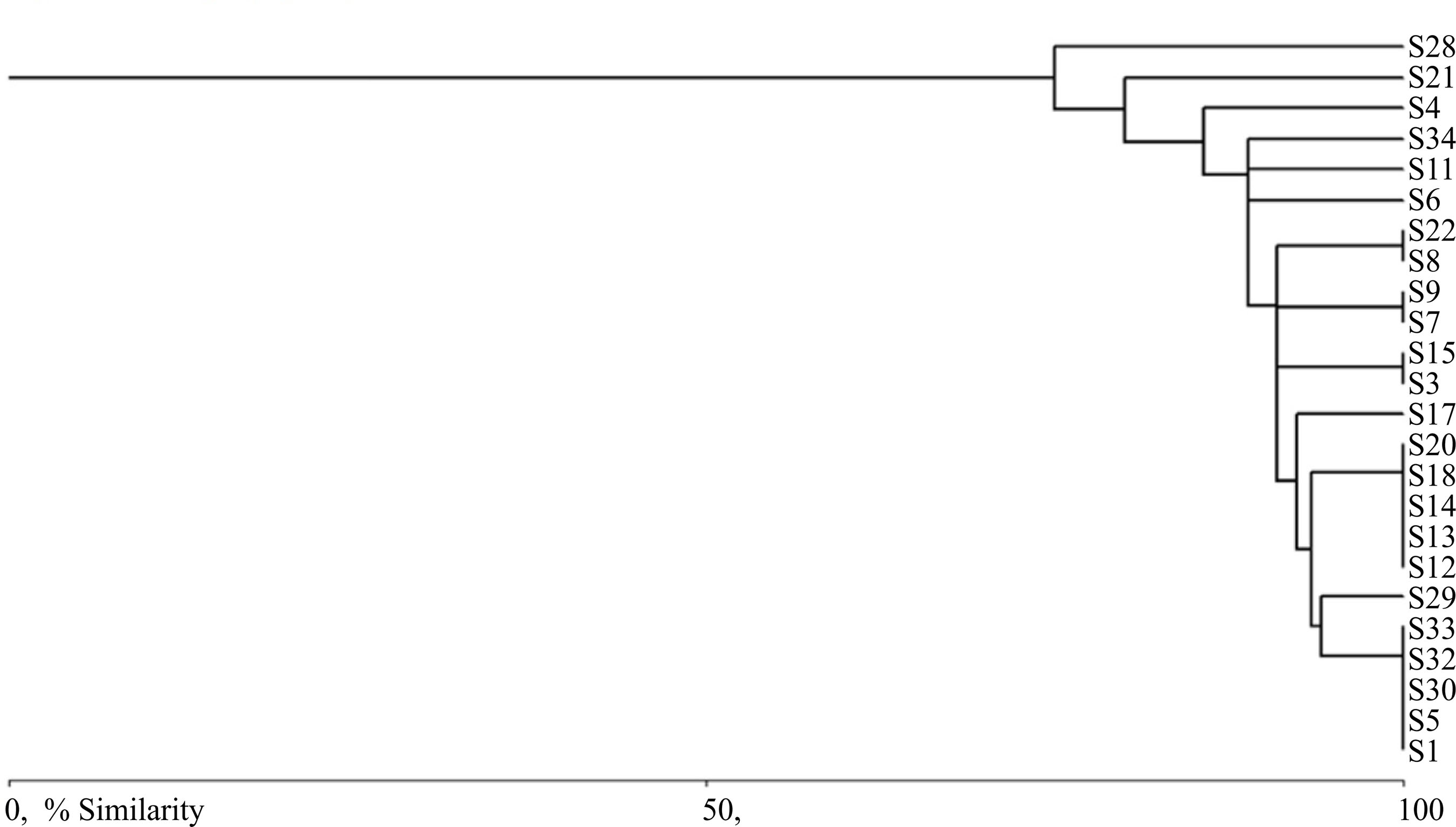
Figure 1 presents the dendrogram of similarity according to the resistance profile between the isolates from the supply water and FA.

Similarity dendrogram according to the resistance profile applied to the bacteria isolated from the catchment water (P1) and from the water collected from the cultivation ponds of Farm A.
The similarity dendrogram by the Bray-Curtis index indicates clusters with more than 90% similarity. Among these groups, we could observe similarities in the resistance profile between the strains isolated from the catchment water (P1) and the water in the ponds of FA. The similarity was 100% for the groups S15-S3, 99.96% for the groups S33-S32-S30-S5-S1, and 99.95% according to the antibiotic resistance profile for the S2 and S8 isolates. Figure 2 presents the dendrogram of similarity according to the resistance profile between the isolates from the supply water and FB.
Similarity dendrogram according to the resistance profile applied to the bacteria isolated from the supply water and from the water collected from the ponds of Farm B.
According to the dendrogram, the N23 strain and the isolates from the water supply are 85.5% similar. The bacteria isolated from collection water and pond water present distinct antibiotic resistance patterns and form separate groups based on their origin.
The Bray-Curtis matrix analysis revealed more remarkable similarities between the resistance profiles of the water samples (P1) and FA than between P1 and FB.
DISCUSSION
The aquatic environment has garnered increasing attention due to its role in the evolution of bacterial resistance, serving both as a source of resistance genes and a matrix for their propagation (Tolentino et al., 2021). This study analyzed the aquatic microbiota of an underground supplying two fish farms in Buriti dos Lopes. The producers at FA and FB reported not using antibiotics in their systems, suggesting that the observed resistance patterns may originate from external contamination sources.
In areas with rapid urban growth and poor sanitation infrastructure, the microbial load and presence of drug-resistant pathogens may negatively impact water quality (Odeyemi et al., 2023). This is evident from the high HCB count detected in the groundwater supplying the fish farms, which correlates with the lack of urban planning and proper waste disposal in the region.
The bacterial count was higher at FA than at FB, likely due to differences in farming systems. Bacterial populations in aquaculture systems are influenced by factors such as predation pressure, disease outbreaks, seasonal variations, and human interventions (Hucheng et al., 2020; Xiao et al., 2023). Changes in the aquatic bacterial community, including diversity and population density, have been previously reported based on the farming system utilized (Lu et al., 2024; Vestrum et al., 2018).
The microbial load in fish farming environments is a critical parameter influencing the microbiota of farmed animals and must be routinely monitored (Chidinma, 2024). Quantifying HCB in fish farming systems and adjacent rivers provides valuable insights into the bacterial community in cultivation environments (Gao et al., 2012; Harnisz et al., 2015; Lima et al., 2006). However, studies on bacterial communities in fish farming water remain scarce, particularly in Northeast Brazil.
The presence of VNCB observed in this study highlights an important concern. Under stressful environmental conditions, bacteria can enter a VNCB state, in which they remain alive but are incapable of growing on routine culture media (Dong et al., 2020). Despite their non-culturability, VNCB pose significant risks due to their ability to carry and disseminate antimicrobial resistance genes (Amarasiri et al., 2020).
Groundwater contamination by antibiotics and other pharmaceutical residues has been reported in regions with inadequate wastewater management. These residues act as selective pressures, fostering the survival of resistant bacteria and contributing to the spread of resistance genes (Machado & Bordalo, 2014; Szekeres et al., 2018; Wu et al., 2020; Zainab et al., 2020).
In the present study, resistance genes to several antibiotic classes were identified in the water supply and fish farm environments. The circulation of antibiotic-resistant genes poses significant risks to human and animal health, as resistant bacteria can spread through direct contact or the food chain. Undestanding their behavior and impacts is essential for implementing effective control measures (Gastalho et al., 2014). Adopting integrative measures aligned with the One Health concept is crucial to mitigating the impacts of antimicrobial resistance. Suggested measures include the use of antibiotic alternatives, development of disease-resistant fish strains, improved hygiene and water quality management, and routine monitoring of resistance profiles (Milijasevic et al., 2024).
The detection of antibiotic-resistant bacteria in groundwater underscores the need for further investigation to understand the global risks associated with using such waters (Andrade et al., 2020; Machado & Bordalo, 2014).
Groundwater has been also identified as a source of bacteria with resistance or multi-resistance profiles, including Staphylococcus, Klebsiella, Enterococcus, Pseudomonas, Shigella, and coliforms, which carry pathogenic potential and resistance genes (Adinortey et al., 2020; Odeyemi et al., 2023).
Antimicrobial resistance has been reported on fish farms where the owners claim they do not use antibiotics in their operations. This observation supports the hypothesis that antibiotic resistance may be driven by factors beyond the direct application of drugs in aquaculture (Adinortey et al., 2020; Lima et al., 2006).
Despite claims of no antibiotic usage by the producers, the findings suggested that external contamination sources, such as agricultural runoff or untreated urban waste, may contribute to resistance. For example, Enterococcus spp. resistant to antibiotics were detected in river water, fish feed, and fish samples sold at supermarkets, indicating multiple contamination pathways in the aquaculture food chain (Novais et al., 2018). Similarities between the resistance profiles at P1 and FA suggest that closed recirculation systems, like the one used at FA, may help maintain pre-existing resistance profiles introduced by the water supply (Watts et al., 2017).
Research has shown that aquaculture operations can amplify the diversity of resistance genes in the environment (Harnisz et al., 2015). However, data on antibiotic usage and resistance in aquaculture remain limited, particularly in major producing regions. This highlights the need for collective efforts to monitor antibiotic dosages, track resistant bacteria, and implement measures to mitigate risks (Hossain et al., 2022).
The results of this study emphasize the importance of systematic monitoring of phenotypic and genotypic resistance profiles in aquaculture environments. Such efforts are essential for informing public policies that aim to minimize the spread of resistance in aquatic ecosystems, thereby safeguarding both environmental health and the sustainability of aquaculture practices.
CONCLUSION
The data obtained confirmed the presence of bacterial strains resistant to antibiotics in both underground water and fishpond water samples.
A particularly concerning finding was the presence of bacterial strains that are potentially pathogenic to humans and displayed multiple antibiotic resistance profiles at all water sampling points. This highlights the need for heightened attention to the contamination of water resources by antibiotic residues or other substances that contribute to resistance.
The results suggested that the type of aquaculture system utilized influences resistance profiles. For example, the closed recirculation system at FA showed similar resistance patterns to those found in the water supply, indicating that such systems may retain resistance profiles introduced by the source water.
Research aiming at monitoring the phenotypic and genotypic resistance profiles of bacteria in aquaculture environments is critical. This knowledge will help clarify the routes of resistance dissemination and support public policies focused on environmental management. Additionally, such studies can guide the development and application of technologies and methods to minimize the spread of resistance in aquaculture systems.
ACKNOWLEDGMENTS
Not applicable.
-
FUNDING
Not applicable.
DATA AVAILABILITY STATEMENT
All data sets were generated or analyzed in the current study
REFERENCES
-
Adinortey, C. A., Aheto, D. W., Boateng, A. A., & Agbeko, R. (2020). Multiple antibiotic resistance-coliform bacteria in some selected fish farms of the Central Region of Ghana. Scientifica, 1-11. https://doi.org/10.1155/2020/6641461
» https://doi.org/10.1155/2020/6641461 -
Amarasiri, M., Sano, D., & Suzuki, S. (2020). Understanding human health risks caused by antibiotic-resistant bacteria (ARB) and antibiotic resistance genes (ARG) in water environments: Current knowledge and questions to be answered. Critical Reviews in Environmental Science and Technology, 50(19), 2016-2059. https://doi.org/10.1080/10643389.2019.1692611
» https://doi.org/10.1080/10643389.2019.1692611 -
Amenyogbe, E., Chen, G., Wang, Z., Huang, J., Huang, B., & Li, H. (2020). The exploitation of probiotics, prebiotics and synbiotics in aquaculture: Present study, limitations and future directions. Aquaculture International, 28, 1017-1041. https://doi.org/10.1007/s10499-020-00509-0
» https://doi.org/10.1007/s10499-020-00509-0 -
Andrade, L., Kelly, M., Hynds, P., Weatherill, J., Majury, A., & O’Dwyer, J. (2020). Groundwater resources as a global reservoir for antimicrobial-resistant bacteria. Water Research, 170, 115360. https://doi.org/10.1016/j.watres.2019.115360
» https://doi.org/10.1016/j.watres.2019.115360 -
Bilal, M., Mehmood, S., Rasheed, T., & Iqbal, H. M. N. (2020). Antibiotic traces in the aquatic environment: Persistence and adverse environmental impact. Current Opinion in Environmental Science and Health, 14, 68-74. https://doi.org/10.1016/j.coesh.2019.11.005
» https://doi.org/10.1016/j.coesh.2019.11.005 -
Brito, J. M. de, Ferreira, A. H. C., Santana Júnior, H. A., Oliveira, A. P. A., Santos, C. H. L., & Oliveira, L. T. S. (2019). Desempenho zootécnico de juvenis de tilápias do Nilo (Oreochromis niloticus) alimentados com cepas probióticas e submetidas a desafio sanitário. Ciência Animal Brasileira, 20, e4964. https://doi.org/10.1590/1809-6891v20e-37348
» https://doi.org/10.1590/1809-6891v20e-37348 -
Burridge, L., Weis, J. S., Cabello, F., Pizarro, J., & Bostick, K. (2010). Chemical use in salmon aquaculture: A review of current practices and possible environmental effects. Aquaculture, 306(1-4), 7-23. https://doi.org/10.1016/j.aquaculture.2010.05.020
» https://doi.org/10.1016/j.aquaculture.2010.05.020 -
Carvalho, M. F. M., Sousa, R. S., & Conceição, J. M. (2023). Expansão urbana e impactos socioambientais na paisagem em Buriti dos Lopes, Piauí, Brasil. Ciências Geográficas, 20(2), 578-588. https://agbbauru.org.br/publicacoes/revista/anoXXVII_2/agb_xxvii_2_web/agb_xxvii_2-12.pdf
» https://agbbauru.org.br/publicacoes/revista/anoXXVII_2/agb_xxvii_2_web/agb_xxvii_2-12.pdf - Chidinma, M. M. (2024). Bacteriological evaluation of fish pond wastewater from different fish ponds in Owerri, Imo State, Nigeria. World News of Natural Sciences, 53, 223-230.
-
Dong, K., Pan, H., Yang, D., Rao, L., Zhao, L., Wang, Y., & Liao, X. (2020). Induction, detection, formation, and resuscitation of viable but non-culturable state microorganisms. Comprehensive Reviews in Food Science and Food Safety, 19(1), 149-183. https://doi.org/10.1111/1541-4337.12513
» https://doi.org/10.1111/1541-4337.12513 -
Eckert, E. M., Di Cesare, A., Coci, M., & Corno, G. (2018). Persistence of antibiotic resistance genes in large subalpine lakes: The role of anthropogenic pollution and ecological interactions. Hydrobiologia, 824, 93-108. https://doi.org/10.1007/s10750-017-3480-0
» https://doi.org/10.1007/s10750-017-3480-0 -
Eckert, E. M., Di Cesare, A., Malki, L.-S., Villiger, J., Pernthaler, J., Callieri, C., Bertoni, R., & Corno, G. (2019). Seasonality of the antibiotic resistance gene blaCTX-M in temperate Lake Maggiore. Hydrobiologia, 843, 143-153. https://doi.org/10.1007/s10750-019-04043-w
» https://doi.org/10.1007/s10750-019-04043-w -
Felske, A., Akkermans, A. D. L., & De Vos, W. M. (1998). Quantification of 16S rRNAs in complex bacterial communities by multiple competitive reverse transcription-PCR in temperature gradient gel electrophoresis fingerprints. Applied and Environmental Microbiology, 64(11), 4581-4587. https://doi.org/10.1128/aem.64.11.4581-4587.1998
» https://doi.org/10.1128/aem.64.11.4581-4587.1998 -
Gao, P., Mao, D., Luo, Y., Wang, L., Xu, B., & Xu, L. (2012). Occurrence of sulfonamide and tetracycline-resistant bacteria and resistance genes in aquaculture environment. Water Research, 46(7), 2355-2364. https://doi.org/10.1016/j.watres.2012.02.004
» https://doi.org/10.1016/j.watres.2012.02.004 -
Gastalho, S., Da Silva, G. J., Ramos, F., & De Revisão, A. (2014). Uso de antibióticos em aquacultura e resistência bacteriana: Impacto em saúde pública. Acta Farmacêutica Portuguesa, 3(1), 29-45. Retrieved from https://actafarmaceuticaportuguesa.com/index.php/afp/article/view/40/52
» https://actafarmaceuticaportuguesa.com/index.php/afp/article/view/40/52 -
Gibbs, E. P. J. (2014). The evolution of One Health: A decade of progress and challenges for the future. Veterinary Record, 174(4), 85-91. https://doi.org/10.1136/vr.g143
» https://doi.org/10.1136/vr.g143 -
Gomes, I. B., Maillard, J. Y., Simões, L. C., & Simões, M. (2020). Emerging contaminants affect the microbiome of water systems—Strategies for their mitigation. npj Clean Water, 3, 39. https://doi.org/10.1038/s41545-020-00086-y
» https://doi.org/10.1038/s41545-020-00086-y -
Harnisz, M., Korzeniewska, E., & Gołaś, I. (2015). The impact of a freshwater fish farm on the community of tetracycline-resistant bacteria and the structure of tetracycline resistance genes in river water. Chemosphere, 128, 134-141. https://doi.org/10.1016/j.chemosphere.2015.01.035
» https://doi.org/10.1016/j.chemosphere.2015.01.035 -
Hossain, A., Habibullah-Al-Mamun, M., Nagano, I., Masunaga, S., Kitazawa, D., & Matsuda, H. (2022). Antibiotics, antibiotic-resistant bacteria, and resistance genes in aquaculture: Risks, current concern, and future thinking. Environmental Science and Pollution Research, 29(9), 11054-11075. https://doi.org/10.1007/s11356-021-17825-4
» https://doi.org/10.1007/s11356-021-17825-4 -
Hucheng, J., Xiaohui, C., Wenji, B., Longlong, F., Qin, Q., Liqiang, Z., & Minghua, W. (2020). Comparison of bacterial communities in channel catfish Ictalurus punctatus culture ponds of an industrial ecological purification recirculating aquaculture system. Aquaculture Research, 51(6), 2432-2442. https://doi.org/10.1111/are.14587
» https://doi.org/10.1111/are.14587 -
Instituto Brasileiro de Geografia e Estatística (IBGE) (2023). Cidades. Buriti dos Lopes IBGE. Retrieved from https://cidades.ibge.gov.br/brasil/pi/buriti-dos-lopes/panorama
» https://cidades.ibge.gov.br/brasil/pi/buriti-dos-lopes/panorama -
Kovalenko, K. E. (2019). Interactions among anthropogenic effects on aquatic food webs. Hydrobiologia, 841, 1-11. https://doi.org/10.1007/s10750-019-04018-x
» https://doi.org/10.1007/s10750-019-04018-x -
Lima, R. M. S., Figueiredo, H. C. P., Faria, F. C. D., Picolli, R. H., Bueno Filho, J. S. D. S., & Logato, P. V. R. (2006). Resistência a antimicrobianos de bactérias oriundas de ambiente de criação e filés de tilápias do Nilo (Oreochromis niloticus). Ciência e Agrotecnologia, 30(1), 126-132. https://doi.org/10.1590/S1413-70542006000100016
» https://doi.org/10.1590/S1413-70542006000100016 -
Liu, X., Wang, H., & Zhao, H. (2021). Prevalence of antibiotic resistance genes in wastewater collected from ornamental fish markets in northern China. Environmental Pollution, 271, 116316. https://doi.org/10.1016/j.envpol.2020.116316
» https://doi.org/10.1016/j.envpol.2020.116316 -
Lu, Z., Lin, W., Li, Q., Wu, Q., Ren, Z., Mu, C., Wang, C., Shi, C., & Ye, Y. (2024). Recirculating aquaculture system as microbial community and water quality management strategy in the larviculture of Scylla paramamosain Water Research, 252, 121218. https://doi.org/10.1016/j.watres.2024.121218
» https://doi.org/10.1016/j.watres.2024.121218 -
Machado, A., & Bordalo, A. A. (2014). Prevalence of antibiotic resistance in bacteria isolated from drinking well water available in Guinea-Bissau (West Africa). Ecotoxicology and Environmental Safety, 106, 188-194. https://doi.org/10.1016/j.ecoenv.2014.04.037
» https://doi.org/10.1016/j.ecoenv.2014.04.037 - McAleese, N., Gage, J. D. G., & Lambshead, P. J. D. (1997). BioDiversity Professional statistics analysis software Scottish Association for Marine Science and the Natural History Museum.
-
Milijasevic, M., Veskovic-Moracanin, S., Milijasevic, J. B., Petrovic, J., & Nastasijevic, I. (2024). Antimicrobial resistance in aquaculture: Risk mitigation within the One Health context. Foods, 13(15), 2448. https://doi.org/10.3390/foods13152448
» https://doi.org/10.3390/foods13152448 -
Novais, C., Campos, J., Freitas, A. R., Barros, M., Silveira, E., Coque, T. M., Antunes, P., & Peixe, L. (2018). Water supply and feed as sources of antimicrobial-resistant Enterococcus spp. in aquacultures of rainbow trout (Oncorhynchus mykiss), Portugal. Science of the Total Environment, 625, 1102-1112. https://doi.org/10.1016/j.scitotenv.2017.12.265
» https://doi.org/10.1016/j.scitotenv.2017.12.265 -
Odeyemi, A. T., Akinjogunla, O. J., Ajayi, A. O., Thomas, R. M., & Adeoye, O. O. (2023). Stream and well water samples from two rural communities in Ekiti State, Nigeria: Assessment of physicochemical parameters, bacteriological quality and public health significance. Acta Scientiarum. Biological Sciences, 45(1), e64296. https://doi.org/10.4025/actascibiolsci.v45i1.64296
» https://doi.org/10.4025/actascibiolsci.v45i1.64296 -
Preena, P. G., Swaminathan, T. R., Kumar, V. J. R., & Singh, I. S. B. (2020). Antimicrobial resistance in aquaculture: A crisis for concern. Biologia, 75(12), 1497-1517. https://doi.org/10.2478/s11756-020-00456-4
» https://doi.org/10.2478/s11756-020-00456-4 -
Read, P., & Fernandes, T. (2003). Management of environmental impacts of marine aquaculture in Europe. Aquaculture, 226(1-4), 139-163. https://doi.org/10.1016/S0044-8486(03)00474-5
» https://doi.org/10.1016/S0044-8486(03)00474-5 -
Silva, G. C., Rissi, L. B., & Menezes, D. B. (2014). Avaliação da qualidade dos recursos subterrâneos no município de Buriti dos Lopes-Pi. Águas Subterrâneas, 28(2), 63-74. https://aguassubterraneas.abas.org/asubterraneas/article/view/28306
» https://aguassubterraneas.abas.org/asubterraneas/article/view/28306 - Soares, J. B., Casimiro, A. R. S., & Aguiar, L. M. B. (1991). Método de coloração de Gram. In J. B. Soares, A. R. S. Casimiro & L. M. B. Albuquerque (Eds.), Microbiologia Básica Editora da UFC.
-
Szekeres, E., Chiriac, C. M., Baricz, A., Szőke-Nagy, T., Lung, I., Soran, M. L., Rudi, K., Dragos, N., & Coman, C. (2018). Investigating antibiotics, antibiotic resistance genes, and microbial contaminants in groundwater in relation to the proximity of urban areas. Environmental Pollution, 236, 734-744. https://doi.org/10.1016/j.envpol.2018.01.107
» https://doi.org/10.1016/j.envpol.2018.01.107 -
Tolentino, F. M., De Almeida, I. A. Z. C., Dos Santos, C. C. M., Teixeira, I. S. D. C., Silva, S. I. D. L. E., Nogueira, M. C. L., Arroyo, M. G., Faim, W. R., De Almeida, M. T. G., & Peresi, J. T. M. (2021). Phenotypic and genotypic profile of the antimicrobial resistance of bacterial isolates and evaluation of physical and chemical potability indicators in groundwater in Brazil. International Journal of Environmental Health Research, 31(2), 186-201. https://doi.org/10.1080/09603123.2019.1640354
» https://doi.org/10.1080/09603123.2019.1640354 -
Vestrum, R. I., Attramadal, K. J., Winge, P., Li, K., Olsen, Y., Bones, A. M., Vadstein, O., & Bakke, I. (2018). Rearing water treatment induces microbial selection influencing the microbiota and pathogen-associated transcripts of cod (Gadus morhua) larvae. Frontiers in Microbiology, 9, 851. https://doi.org/10.3389/fmicb.2018.00851
» https://doi.org/10.3389/fmicb.2018.00851 -
Watts, J., Schreier, H., Lanska, L., & Hale, M. (2017). The rising tide of antimicrobial resistance in aquaculture: Sources, sinks and solutions. Marine Drugs, 15(6), 158. https://doi.org/10.3390/md15060158
» https://doi.org/10.3390/md15060158 -
Wu, D. L., Zhang, M., He, L. X., Zou, H. Y., Liu, Y. S., Li, B. B., Yang, Y. Y., Liu, C., He, L. Y., & Ying, G. G. (2020). Contamination profile of antibiotic resistance genes in groundwater in comparison with surface water. Science of the Total Environment, 715, 136975. https://doi.org/10.1016/j.scitotenv.2020.136975
» https://doi.org/10.1016/j.scitotenv.2020.136975 -
Xiao, G., Cheng, X., Zhu, D., Li, Z., Feng, L., Peng, X., Lu, Z., & Xie, J. (2023). Exploring the mechanism of a novel recirculating aquaculture system based on water quality parameters and bacterial communities. Environmental Science and Pollution Research, 30(12), 34760-34774. https://doi.org/10.1007/s11356-022-24585-2
» https://doi.org/10.1007/s11356-022-24585-2 -
Zainab, S. M., Junaid, M., Xu, N., & Malik, R. N. (2020). Antibiotics and antibiotic resistant genes (ARGs) in groundwater: A global review on dissemination, sources, interactions, environmental and human health risks. Water Research, 187, 116455. https://doi.org/10.1016/j.watres.2020.116455
» https://doi.org/10.1016/j.watres.2020.116455
Edited by
-
Section editor:
Fabiana Garcia https://orcid.org/0000-0002-2475-745X