 Hematological parameters of freshwater stingrays from the lower river negro, Amazonas, Brazil
Abstract
Freshwater stingrays of the subfamily Potamotrygoninae represent a unique group of elasmobranchs exclusively adapted to freshwater environments in South America. Despite their ecological and socioeconomic importance, significant gaps remain in our understanding of their biology and distribution, information essential for effective conservation strategies. In this context, investigating blood physiology is a valuable tool for assessing the health status, well-being, and adaptive capacity of free-living individuals. This study aimed to determine blood parameters (erythrogram, leukogram, thrombogram, and plasma biochemistry) in freshwater stingrays from the lower Rio Negro, Amazonas. Three species were captured: Potamotrygon motoro, Potamotrygon wallacei, and Paratrygon spp., totaling 27 specimens. The animals were anesthetized with eugenol, and 1 to 2 mL of blood was collected by gill puncture. The morphological, hematological, and biochemical analysis of these three stingray species revealed significant differences among species and sexes. Paratrygon spp. stood out for its larger body size and higher thrombocyte counts, suggesting greater robustness and immune response. Females generally exhibited larger dimensions and higher physiological values, indicating sexual dimorphism and greater reproductive demand. P. wallacei showed a smaller size and a distinct hematological profile, possibly reflecting adaptations to more restricted environments. Variations in glucose, protein, and leukocyte levels underscore the influence of ecological and reproductive factors on species physiology, highlighting distinct adaptive strategies in response to the Amazonian environment. In this context, as the first information on freshwater stingrays from the lower Rio Negro region, the hematological parameters reveal specific aspects of the species, sex, and habitat.
Keywords:
blood; physiology; conservation; potamotrygonidae; stingrays; freshwater
Resumo
As arraias de água doce da subfamília Potamotrygoninae representam um grupo singular de elasmobrânquios, exclusivamente adaptados a ambientes dulcícolas da América do Sul. Apesar de sua importância ecológica e socioeconômica, ainda persistem lacunas significativas sobre sua biologia e distribuição, informações essenciais para estratégias eficazes de conservação. Nesse contexto, a investigação da fisiologia sanguínea constitui uma ferramenta valiosa para avaliar o estado de saúde, o bem-estar e a capacidade adaptativa de indivíduos em vida livre. Este estudo teve como objetivo determinar os parâmetros sanguíneos (eritrograma, leucograma, trombograma e bioquímica plasmática) em arraias de água doce do baixo Rio Negro, Amazonas. Foram capturados 27 espécimes de três espécies: Potamotrygon motoro, Potamotrygon wallacei e Paratrygon spp. Os animais foram anestesiados com eugenol, e 1 a 2 mL de sangue foram coletados por punção branquial. As análises morfológicas, hematológicas e bioquímicas dessas três espécies de arraias revelaram diferenças significativas entre espécies e sexos. Paratrygon spp. destacou-se pelo maior porte corporal e pelas maiores contagens de trombócitos, sugerindo maior robustez e resposta imune. De modo geral, as fêmeas apresentaram dimensões corporais superiores e valores fisiológicos mais elevados, indicando dimorfismo sexual e maior demanda reprodutiva. P. wallacei apresentou menor porte e um perfil hematológico distinto, possivelmente refletindo adaptações a ambientes mais restritos. As variações nos níveis de glicose, proteínas e leucócitos enfatizam a influência de fatores ecológicos e reprodutivos sobre a fisiologia das espécies, evidenciando distintas estratégias adaptativas ao ambiente amazônico. Nesse contexto, sendo este o primeiro registro sobre arraias de água doce da região do baixo Rio Negro, os parâmetros hematológicos refletem aspectos específicos de espécie, sexo e habitat.
Palavras-chave:
sangue; fisiologia; conservação; potamotrygoninaes; arraias de água doce
1. Introduction
Stingrays of the subfamily Potamotrigoninae are endemic to South America and currently consist of four genera: Potamotrygon (Garman, 1877), being the most diverse genus, Paratrygon (Duméril, 1865), currently considered a species complex, Plesiotrygon (Rosa, Castelo, Thorson, 1987) and Heliotrygon (De Carvalho & Lovejoy, 2011), which have two species each (Carvalho et al., 2016). These rays are essential components of the Neotropical ichthyofauna. They are threatened by anthropogenic actions, such as overfishing, habitat degradation, destructive fishing practices, dam construction (Lemos et al., 2015; Pantoja-Lima et al., 2015; Marquez-Velasquez et al., 2019), and climate change (Gomes et al., 2025). In this scenario, conservation strategies and management protocols are necessary in natural environments and captivity (Andrade et al., 2024; Oliveira et al., 2023, 2025a; Paixão et al., 2025).
Therefore, blood studies are essential for understanding the physiology, health, and adaptation mechanisms of these species in the aquatic environment (Liebl et al., 2022; Magro et al., 2015; Oliveira et al., 2011, 2015a, b; Seibel et al., 2021). Blood contains crucial information about nutritional status and the presence of diseases and parasites, and provides data on resistance to environmental variations, such as water quality. Furthermore, analyzing hematological parameters enables the detection of changes in the immune system and the assessment of the impact of habitat changes (Seibel et al., 2021; Carvalho et al., 2009).
The species present in this study were evaluated by Oliveira et al. (2016) in the middle Rio Negro, and it was shown that the developmental stage is a determining factor in the blood parameters of stingrays of the species Potamotrygon wallacei. However, the same was not observed for Potamotrygon motoro and Paratrygon aiereba. The study conducted by Santos et al. (2024) evaluated the hematological and plasma biochemical parameters of stingrays from the Solimões River. The study demonstrated good health conditions in the species P. motoro, concluding that the type of water in their study did not influence the blood physiology of these stingrays.
For this reason, it is essential to establish the physiological state of freshwater stingray populations to assess the animal's health and well-being, generate hematological and biochemical reference information, consider its biology, environmental conditions and species habits (Lizama et al., 2020), and thus provide references to improve care and management protocols for the species. Given this information, this study aims to determine the blood count and plasma biochemistry values of freshwater stingrays captured in the lower Rio Negro, Amazonas and evaluate the physical-chemical properties of the water.
2. Materials and Methods
2.1. Research ethics
This study was carried out with approval from the Biodiversity Authorization and Information System (SISBIO), by Normative Instruction No. ICMBio Ordinance No. 748/2022. Number: 91584-1 and by the Animal Use Ethics Committee of the Federal Institute of Education, Science and Technology of Amazonas (23443.006658/2024-05). Additionally, the National Council for the Control of Animal Experimentation (CONCEA) follows the regulations and ethical principles governing animal experimentation.
2.2. Research area
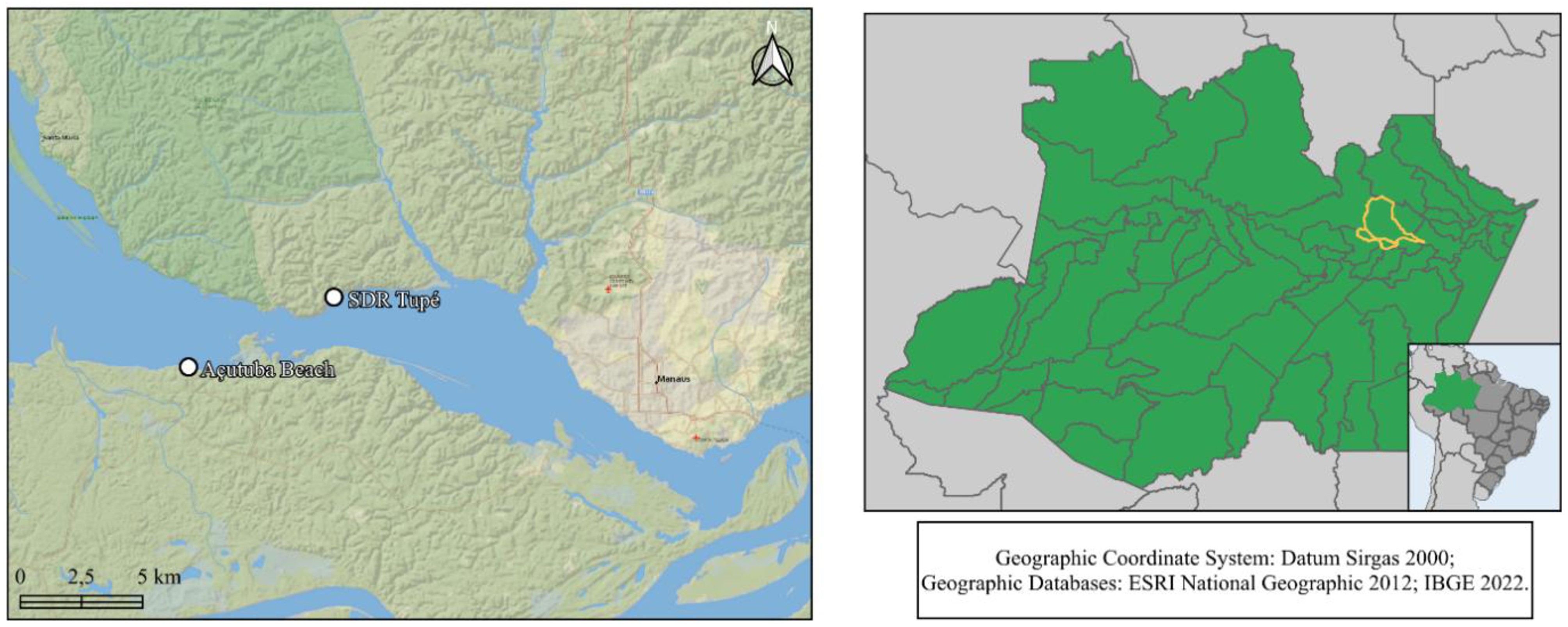
The study area was designated as the outskirts of the city of Manaus, in the state of Amazonas, named after the river's location as the lower Rio Negro during the recovery period following a severe drought. The sites were chosen due to their significant stingray habitat and proximity to the central city of the Amazon region (Manaus). All collections were carried out during the flood period (beginning of the rains after a severe drought in the region). The collection points were: Açutuba Beach, approximately 40 kilometers from Manaus, a location with significant human activity due to its touristic nature, collected between February 2 and 4, 2024; the other site was Tupé.
The Sustainable Development Reserve (RDS) is located 25 kilometers west of Manaus, collected between January 22 and 24, 2024, a lake with characteristics of flooded forest (igapó) (Figure 1).
2.3. Stingray capture
The capture was made through night fishing, using a hand net and a headlamp. After capture, the rays were anesthetized with eugenol (200 μL L-1) by immersion in plastic buckets. Then, the stinger was mechanically restrained with Foerster forceps following the recommendations of Oliveira et al. (2012).
2.4. Blood collection
Blood was collected using a 3 mL syringe and a 25 × 0.7 mm needle by puncturing the gill vessels, the least invasive method recommended for freshwater stingrays (Oliveira et al., 2012). 1.0 to 2.0 mL of blood was collected per captured stingray using syringes containing approximately 15 μL of 10% EDTA anticoagulant. The samples were kept at a low temperature (-4 °C) until inclusion in reagents for erythrocyte and hemoglobin analysis, preparation of slides for leukocyte and thrombocyte analysis, and centrifugation of plasma for plasma biochemistry analysis in the laboratory.
2.5. Identification
After blood collection, the following biometric parameters were measured: disc width (DL), total length (TL) and weight (W), using a tape measure and portable scale. Identification was made by observing the shape of the disc, the dorsal color pattern of the disc, the ventral color, the absence or presence of the labial groove and the number of rows of spines on the tail, using the identification key proposed by Rosa and Carvalho (2016). In addition, sexing was also performed by observing the presence or absence of claspers. The development stage followed the proposal of Araújo (1998) for P. wallacei, Araújo (1999) for P. motoro and Araújo (2011) for Paratrygon spp.
2.6. Analysis of blood: Erytrogram, leukogram and plasma biochemistry
In the erythrogram, hematocrit (Ht, %) was determined by the microhematocrit method, in which it was centrifuged for 5 minutes at 5000 rpm and the erythrocyte count (RBC, 106 μL-1) was determined by optical reading in a Neubauer chamber under an optical microscope (Leica®, DM 500, Wetzlar, Germany), after including the blood samples in a formalin-citrate solution (1:200) (Liebl et al., 2021).
The blood hemoglobin concentration (Hb, g dL-1) is being determined by the cyanmethemoglobin method after inclusion of homogenized blood (10 μL) in Drabkin's solution (2 mL), centrifugation of the material and reading at 540 nm in the Shimadzu spectrophotometer (UV-1280), according to Ranzani-Paiva et al. (2013) and Machado et al. (2021). The hematological indices mean corpuscular volume (MCV, fL), mean corpuscular hemoglobin (MCH, pg) and mean corpuscular hemoglobin concentration (MCHC, g dL-1) are calculated according to Wintrobe (1934). For plasma biochemistry, the blood sample was centrifuged to separate the plasma. Commercial LabTest colorimetric assay kits were used for the analysis of Total Protein (Ref.: 99), Albumin (Ref.: 19), Glucose (Ref.: 137), Cholesterol (Ref.: 76) and Triglycerides (Ref.: 87).
The smears were stained with May-Grünwald, Giemsa, Wright (MGGW) (Tavares-Dias and Moraes, 2004). To prepare the leukogram, the total leukocyte and thrombocyte count was performed on blood smears, the total erythrocyte (RBC) count was performed in a Neubauer chamber and the number of leukocytes and thrombocytes in relation to 2,000 erythrocytes was counted (Tavares-Dias and Mataqueiro, 2004). Then apply the following formula: Leukocytes Total = Leukocytes in the blood extension x Rbc / 2,000 erythrocyte in extension. In addition, blood smears were also used for differential leukocyte count (lymphocytes (%), monocytes (%), heterophils (%) and basophils (%)) in which the percentage in at least 100 leukocytes counted is obtained, according to Oliveira et al. (2021) e and instructions from Tavares-Dias and Mataqueiro (2004).
2.7. Physical-chemical analysis of water
Water samples were determined at each animal's capture site to evaluate physical-chemical properties, such as temperature (oC), pH, conductivity (µS cm-1) and dissolved oxygen (mg L-1), using a multi-parametric digital device (Hanna HI98194, Hanna Instruments Inc., Woonsocket, RI, USA).
2.8. Statistical analysis
The R® studio software was used for statistical analysis, and the Shapiro-Wilk test was performed to assess normality. When the data presented normality, the Analysis of Variance (ANOVA) test was performed, followed by the Tukey test, to compare the species. The Student's t-test was applied to compare males and females. The statistical results were expressed as mean and standard deviation (SD), and all statistical tests applied were considered significant when p<0.05.
3. Results
With the collections carried out in the SDR of Tupé and Açutuba beach, a total of 27 stingrays were captured, namely: P. motoro, P. wallacei and Paratrygon spp., with young, subadult and adult development stages (Table 1). The stingrays showed significant differences in biometric parameters between species and between sexes (Table 2).
Sex and developmental stage of stingray species captured in the lower Negro River, Amazonas, Brazil.
Mean values ± standard deviation of biometrics of three species of freshwater stingrays collected in the lower Negro River, Amazonas, Brazil.
The values of Ht, Hb, RBC and hematimetric indices (MCV, MCHC and MCH) showed significant differences between the species for the erythrogram parameters, except for RBC. Furthermore, there was no statistical difference in the comparison between males and females (Table 3).
Mean values ± standard deviation blood red series and plasma biochemistry of three species of freshwater stingrays collected in the Lower Negro River, Amazonas, Brazil.
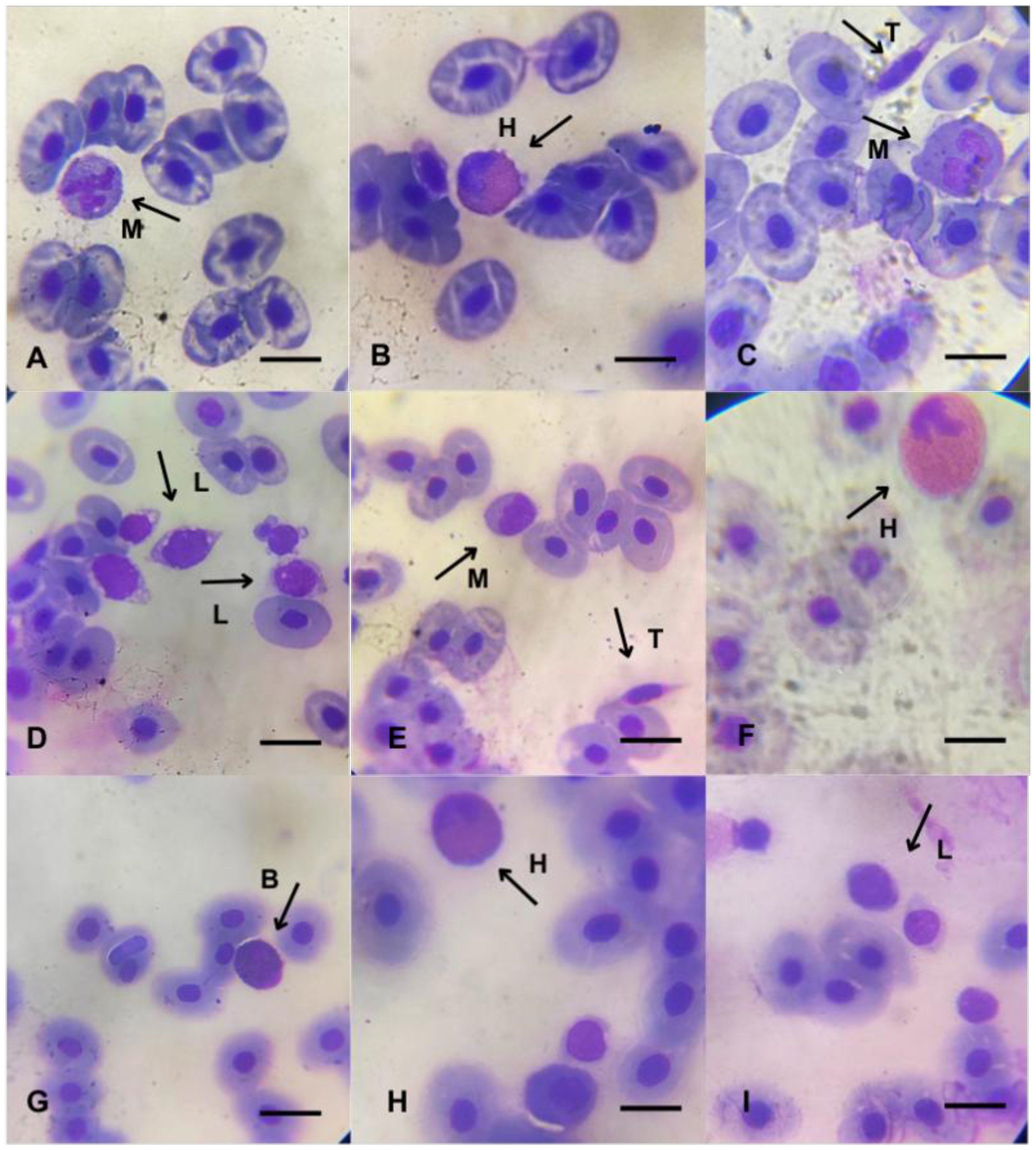
Four leukocyte types were found in the leukogram and thrombogram analysis: lymphocytes, monocytes, heterophils and basophils. P. motoro and P. wallacei presented the four types of leukocytes and thrombocytes. Paratrygon spp. showed the presence of thrombocytes and three types of leukocytes, but no basophils were observed (Table 4 and Figure 2).
Mean values ± standard deviation of the differential leukocyte count (white series) of three species of freshwater stingrays collected in the Lower Rio Negro, Amazonas, Brazil.
(A-I) Blood cells from three species of freshwater stingrays stained with May Grunwald-Giemsa-Wright. (A) M- Monocyte of Potamotrygon motoro; (B) H- Heterophile of Potamotrygon motoro; (C) M- bilobed monocyte of Potamotrygon. motoro; (D) L- Leukocytes of Paratrygon spp.; (E) M-Monocyte of Paratrygon spp.; (F) H- Heterophile of Paratrygon spp.; (G) B- Basophil of Potamotrygon wallacei; (H) H- Heterophile of Potamotrygon wallacei; (I) L- Leukocytes of Potamotrygon wallacei.
The physical-chemical analyses of the water from the Tupé SDR and Açutuba beach presented values for dissolved oxygen, temperature, pH, conductivity and total dissolved solids (Table 5).
Mean values ± standard deviation of the physical and chemical parameters of the water in which each species of ray was captured in the lower Negro River, Amazonas, Brazil.
4. Discussion
In the biometric parameters of the rays captured in the lower Negro River (Table 1, 2), it is observed that the three species are within the standard established according to the development stages of freshwater rays, and when compared to the rays captured in the middle Rio Negro (Oliveira et al., 2016; Ladislau et al., 2021). Paratrygon spp. generally presented the highest values of disc width, total length, disc length and weight, emphasizing females, which reached higher averages, reflecting a marked sexual dimorphism and a more robust body size than the other species. In contrast, P. wallacei was the smallest among the species in length and mass (Duncan, 2016). Meanwhile, P. motoro and Paratrygon spp. are larger species distributed throughout the Amazon basin (Oliveira et al., 2017). The results indicate a pattern of sexual dimorphism in all species, generally with females larger than males, which is common in elasmobranchs and may be related to the greater reproductive capacity of females (Paesch and Oddone, 2008).
The hematological and plasma biochemical (Table 3) analysis of the three species of rays collected in the lower Negro River revealed statistically significant differences between species for several variables, reflecting physiological aspects of each taxon. In hematocrit (Ht), Paratrygon spp. presented the highest mean values (30.00% in males and 30.80% in females), significantly higher than those recorded for P. wallacei and P. motoro, which may indicate a greater oxygen transport capacity and, possibly, greater metabolic activity or adaptation to habitats with lower oxygenation. In contrast, hemoglobin (Hb) values were higher in P. wallacei and P. motoro, with a significant decrease in Paratrygon spp., which suggests different hematological strategies among the species to meet the physiological demands of the environment (Oliveira, 2013; Santos et al., 2024). Erythrocyte variables, such as mean corpuscular volume (MCV) and mean corpuscular hemoglobin concentration (MCHC), also showed marked variations. Paratrygon spp. exhibited the highest MCV and lowest MCHC values, while P. wallacei had the opposite values, indicating larger red blood cells but less hemoglobin concentration in Paratrygon spp., a strategy that may be related to more efficient oxygen transport in environments with low gas availability (Oliveira et al., 2016). Mean corpuscular hemoglobin (MCH) values followed a similar trend, with P. wallacei presenting the highest mean values, suggesting more efficient red blood cells in oxygen release. Statistical differences between species in these variables point to specific physiological adaptations to the environment of each collection point (Martin et al., 1978; Oliveira et al., 2025b). However, the results of these indices are higher when compared to blood counts of P. magdalenae, P. motoro, P. wallacei, Paratrygon aiereba and P. orbignyi (Perez-Rojas et al., 2021; Brito et al., 2015; Oliveira et al., 2016; Santos et al., 2024). This result is possibly due to a physiological adaptation to the seasonal period, in which the river was still recovering from a severe drought.
No differences were observed in the RBC parameter between species, and the erythrogram did not show any difference between males and females. This result corroborates the studies by Oliveira et al. (2016, which emphasize that the species' sex is not an influential factor in the red blood series.
Plasma biochemistry parameters (Table 3) are sources of metabolic energy in elasmobranchs. They are strongly related to environmental conditions, such as prey abundance and quality, in addition to the biological cycles of reproduction and migration (Pethybridge et al., 2014). In this study, triglyceride and cholesterol values showed lower values in P. wallacei compared to P. motoro and Paratrygon spp.. The size of the species is considered to be an influential factor; however, these values presented in the three species were lower when compared to other potamotrigonines (Brinn et al., 2012; Brito et al., 2015; Oliveira et al., 2016; Perez-Rojas et al., 2021), which may indicate a strong influence of feeding habits according to the availability of prey in that region (Shibuya, 2022). This is confirmed in the results of total proteins in which Paratrygon spp. Due to its specific fish consumption demonstrated a higher level, unlike P. motoro and P. wallacei, species with more generalist eating habits (Shibuya et al., 2016; Shibuya, 2022). Compared to other studies, the glucose values of the three species demonstrated consistent values; in this sense, in addition to the diet, it is possible to consider the seasonal period. Santos et al. (2020), in their study of blood physiology in different seasonal periods, demonstrated an increase in glucose levels in freshwater stingrays during drought, reinforcing the idea of possible stress due to environmental stimuli.
There was no difference in albumin levels between species. However, this study showed that females of freshwater stingray species have higher cholesterol levels than males. This result may be mainly related to reproduction, in which after ovulation, females produce uterine fluids rich in lipids essential for their young's nutrition (Hamlett et al., 1993). Due to the variation in plasma biochemistry values in response to environmental changes, developmental stage and, mainly, diet, more in-depth studies are needed that directly correlate the diet type with freshwater stingrays' blood physiology.
A differential leukocyte (Table 4) count of the three species of freshwater stingrays collected in the lower Negro River showed significant variations between species in terms of immune response, with emphasis on thrombocytes, lymphocytes, monocytes and heterophils.
Lymphocytes, the primary cells of adaptive immunity, also vary between species. P. wallacei had the highest proportions (84.50% in males), while P. motoro had the lowest mean values, indicating possible differences in the activation of the specific immune response (Santos et al., 2024; Oliveira et al., 2017). In this sense, the natural environment (igapó) of P. wallacei should be considered as a determining factor for this result. In addition, the presence of hemoparasites in the cells of this species was observed during the leukocyte count. Oliveira et al. (2017) emphasize that hemoparasites can influence the number of leukocytes and attribute greater susceptibility to infection during periods of drought.
Luer et al. (2004) emphasize that basophils are rarer in freshwater stingrays and heterophils are more common, both of which play an essential role in the immunological defense of stingrays. The significant interaction between species and sex observed for heterophiles reinforces the idea that males and females may present relevant physiological differences in the immune response (Oliveira et al., 2016). For example, females of P. wallacei and Paratrygon spp. have higher percentages of heterophiles than males, possibly reflecting distinct immunological criteria during the reproductive cycle (Perez-Rojas et al., 2021). Overall, the results indicate a diversity of immune strategies among stingray species, possibly shaped by environmental, ecological and reproductive factors in the context of the lower Negro River, which highlights the importance of approaches to assess the health and ecology of these species (Brito et al., 2015).
The analysis of water quality parameters at the collection points of the three species of freshwater stingrays in the lower Negro River revealed significant differences in some physical-chemical variables. Regarding oxygen, temperature, electrical conductivity and total dissolved solids, it was observed that the points where P. wallacei was collected recorded environments with lower average values. In contrast, the points where P. motoro and Paratrygon spp. were collected are presented at higher levels. These findings suggest that P. wallacei may be associated with flooded forest environments with lower ionic charge and low mineralization. At the same time, the other species occur in places with higher concentrations of dissolved salts, reflecting distinct ecological preferences or specific physiological adaptations (Duncan, 2016).
The physical and chemical parameters of the water from the lower Negro River were lower when compared to results from the middle Negro River (Oliveira, 2013), which suggests that some hematological parameters of the rays may be altered according to the spatial gradient of the rivers, adapting along the river (Vannote et al., 1980). More studies should be done in the lower and upper Negro River to establish the physiological state of freshwater stingrays.
5. Conclusion
This study is the first to provide information on the physiological state of stingrays' blood following a severe drought in the lower Negro River region. In light of the intensifying climate change each year, this study provides a basis for better monitoring of the health conditions and conservation of freshwater stingray species in the wild and even for management protocols in captivity.
Acknowledgements
The Fundação de Amparo à Pesquisa do Estado do Amazonas (FAPEAM, Notice N. 007/2021 - Biodiversa 01.02.016301.03250/2021-78, N. 013/2021, N. 020/2024 01.02.016301.02506/2025-53, and PDPG). To the Coordenação de Aperfeiçoamento de Pessoal de Nível Superior (CAPES). To the Conselho Nacional de Desenvolvimento Científico e Tecnológico (CNPq, Process 310966/2025-6)
Data Availability Statement
Data will be made available to authors upon request.
References
-
ANDRADE, J.C., OLIVEIRA, C.A., OLIVEIRA, A.T., TESSARO, L., AMAZONAS, M.G.F.M., YAMAMOTO, K.C. and CONTE JUNIOR, C.A., 2024. A rapid and non-destructive approach using data fusion to track and monitor endangered amazon freshwater stingray meat. Journal of Food Composition and Analysis : An Official Publication of the United Nations University, International Network of Food Data Systems, vol. 1, pp. 107147. https://doi.org/10.1016/j.jfca.2024.107147
» https://doi.org/10.1016/j.jfca.2024.107147 - ARAÚJO, M.L.G., 1998. Biology and Fisheries of Potamotrygon sp. (Chondrichthyes: Potamotrygonidae) in the Middle Rio Negro, Amazonas Manaus: National Institute for Amazonian Research. Master’s Dissertation.
- ARAÚJO, M.L.G., 1999. Plano de monitoramento de arraias de água doce Manaus: IBAMA-AM/ACEPOAM, 31 p.
- ARAÚJO, M.L.G., 2011. Population dynamics and conservation of Paratrygon aiereba (Chondrichthyes-Potamotrygonidae) in the middle Rio Negro, Amazonas Manaus: Universidade Federal do Amazonas. Ph.D. Thesis.
-
BRINN, R.P., MARCON, J.L., GOMES, D.M., ABREU, L.C. and BALDISSEROTO, B., 2012. Stress responses of the endemic freshwater cururu stingray (Potamotrygon cf. histrix) during transportation in the Amazon region of the Rio Negro. Comparative Biochemistry and Physiology. Part A, Molecular & Integrative Physiology, vol. 162, no. 2, pp. 139-145. https://doi.org/10.1016/j.cbpa.2011.07.004 PMid:21777687.
» https://doi.org/10.1016/j.cbpa.2011.07.004 -
BRITO, F.M.M., CLAUDIANO, G.S., YUNIS, J., MUNDIM, A.V., TAVARES-DIAS, M., VIADANNA, P.H.O., MORAES, J.R.E. and MORAES, F.R., 2015. Hematology, biochemical profile and thyroid hormones of four species of freshwater stingrays of Potamotrygon. Brazilian Journal of Veterinary Research and Animal Science, vol. 52, no. 3, pp. 249-256. https://doi.org/10.11606/issn.1678-4456.v52i3p249-256
» https://doi.org/10.11606/issn.1678-4456.v52i3p249-256 -
CARVALHO, E.G., SEIBERT, C.S., COELHO, M.S. and MARQUES, E.E., 2009. Parâmetros hematológicos de espécies nativas do rio Tocantins, Auchenipterus nuchalis, Psectrogaster amazônica e Squaliforma emarginata (Teleostei, Ostariophysi). Acta Scientiarum. Biological Sciences, vol. 31, no. 2, pp. 173-177. https://doi.org/10.4025/actascibiolsci.v31i2.1024
» https://doi.org/10.4025/actascibiolsci.v31i2.1024 -
CARVALHO, M.R., ROSA, R.S. and ARAÚJO, M.L., 2016. A new species of Neotropical freshwater stingray (Chondrichthyes: Potamotrygonidade) from the Rio Negro, Amazonas, Brazil: The smallest species of Potamotrygon. Zootaxa, vol. 4107, no. 4, pp. 566-586. https://doi.org/10.11646/zootaxa.4107.4.5
» https://doi.org/10.11646/zootaxa.4107.4.5 - DUNCAN, W.P., 2016. Ecofisiologia das raias de água doce (Potamotrygonidae): Mecanismos de interação organismo-ambiente. In: C.A. LASSO, M.A. MORALES-BETANCOURT, D. GARROTE-NETO, M.R. CARVALHO, eds. Rayas de agua dulce (Potamotrygonidae) de Suramérica - Parte II: Colombia, Brasil, Perú, Bolivia, Paraguay, Uruguay y Argentina 1. ed. Bogotá: Instituto de Investigación de Recursos Biológicos Alexander von Humboldt, pp. 45–64.
-
GOMES, M.F.S., RIBEIRO, M.W.S., GUIMARÃES, C.C., NÓBREGA, T.C., PINTO, T.L., PAIXÃO, R.M., SANTOS, A.N.A., ARIDE, P.H.R. and OLIVEIRA, A.T., 2025. Physiological parameters of freshwater stingrays from the Uatumã River Basin, Amazon, Brazil. Anais da Academia Brasileira de Ciências, vol. 97, no. 2, pp. e20240902. https://doi.org/10.1590/0001-3765202520240902 PMid:40366927.
» https://doi.org/10.1590/0001-3765202520240902 -
HAMLETT, W.C., EULITT, A.M., JARRELL, R.L. and KELLY, M.A., 1993. Uterogestation and placentation in elasmobranchs. The Journal of Experimental Zoology, vol. 266, no. 5, pp. 347-367. https://doi.org/10.1002/jez.1402660504
» https://doi.org/10.1002/jez.1402660504 -
LADISLAU, D., RIBEIRO, M.W.S., CASTRO, P.D.S., PANTOJA-LIMA, J., ARIDE, P.H.R. and OLIVEIRA, A.T., 2021. Ichthyological ethnoknowledge of the ‘piabeiros’ from Amazon region, Brazil. Journal of Ethnobiology and Ethnomedicine, vol. 17, no. 1, pp. 42. https://doi.org/10.1186/s13002-021-00468-7 PMid:34187519.
» https://doi.org/10.1186/s13002-021-00468-7 -
LEMOS, J.R.G., OLIVEIRA, A.T., SANTOS, M.Q.C., PEREIRA, C.N., NASCIMENTO, R.B. and TAVARES-DIAS, M., 2015. Influência do transporte na relação peso-comprimento e fator de condição de Paracheirodon axelrodi (Characidae). Biota Amazônia, vol. 5, no. 4, pp. 22-26. https://doi.org/10.18561/2179-5746/biotaamazonia.v5n4p22-26
» https://doi.org/10.18561/2179-5746/biotaamazonia.v5n4p22-26 -
LIEBL, A.R.S., CÁO, M.A., NASCIMENTO, M.S., CASTRO, P.D.D.S., DUNCAN, W.L.P., PANTOJA-LIMA, J., ÁRIDE, P.H.R., BUSSONS, M.R.F.M., FURUYA, W.M., FAGGIO, C. and OLIVEIRA, A.T., 2022. Dietary lysine requirements of Colossoma macropomum (Cuvier, 1818) based on growth performance, hepatic and intestinal morphohistology and hematology. Veterinary Research Communications, vol. 46, no. 1, pp. 9-25. https://doi.org/10.1007/s11259-021-09872-6
» https://doi.org/10.1007/s11259-021-09872-6 -
LIEBL, A.R.S., NASCIMENTO, W.L.P., ARIDE, P.H.R., PANTOJA-LIMA, J., BUSSONS, M.R.F.M., FURUYA, W.M. and OLIVEIRA, A.T., 2021. Lysine effect on the characterization of fillet, by-products, residues, and morphometry of tambaqui Colossoma macropomum (Cuvier, 1818). Latin American Journal of Aquatic Research, vol. 49, no. 4, pp. 1-12. https://doi.org/10.3856/vol49-issue4-fulltext-2701
» https://doi.org/10.3856/vol49-issue4-fulltext-2701 -
LIZAMA, M.A.P., CAGNI, G.S. and ZAVASKI, F., 2020. Análise histórica sobre a hematologia em peixes no Brasil: estudo quali/quantitative. Enciclopédia Biosfera, vol. 17, no. 34, pp. 259. https://doi.org/10.18677/EnciBio_2020D20
» https://doi.org/10.18677/EnciBio_2020D20 - LUER, C.A., WALSH, C.J. and BODINE, A.B., 2004. The immune system of sharks, skates and rays. In: J.C. CARRIER, J.A. MUSICK and M.R. HETHAUS, eds. Biology of sharks and their relatives New York: CRC Marine Biology, pp. 369-389.
-
MACHADO, S.S., SILVA, T.L.B., NETO, C.C.B., WATANABE, A.L., NASCIMENTO, I.A. and GAGGINI, T.S., 2021. Hematologia e desempenho zootécnico do Pacu (Piaractus mesopotamicus) cultivado em bioflocos e aquaponia. Brazilian Journal of Development, vol. 7, no. 7, pp. 66555-66565. https://doi.org/10.34117/bjdv7n7-095
» https://doi.org/10.34117/bjdv7n7-095 -
MAGRO, N.M., OLIVEIRA, A.T., DAVIES, A. and ODWYER, L.H., 2015. First report and description of a Cyrilia sp. (Apicomplexa: Haemogregarinidae) from a freshwater Cururu Stingray Potamotrygon cf. histrix (Elasmobranchii: Potamotrygonidae), from the Amazon Region, Brazil. Journal of Fish Diseases, vol. 38, no. 8, pp. 907-911. https://doi.org/10.1111/jfd.12425 PMid:26642832.
» https://doi.org/10.1111/jfd.12425 -
MÁRQUEZ-VELÁSQUEZ, V., ROSA, R.S., GALINDO, E. and NAVIA, A.F., 2019. Feeding habits and ecological role of the freshwater stingray Potamotrygon magdalenae (Duméril 1865) (Myliobatiformes: Potamotrygonidae), combining gut-content and stable isotope analysis. Environmental Biology of Fishes, vol. 102, no. 8, pp. 1119-1136. https://doi.org/10.1007/s10641-019-00897-0
» https://doi.org/10.1007/s10641-019-00897-0 -
MARTIN, J.P., BONAVENTURA, J., FYHN, H., FYHN, U.R.H., GARLICK, R.L. and POWERS, D.A., 1978. Estudo da estrutura e função das hemoglobinas isoladas das arraias da Amazônia do gênero Potamotrygon. Acta Amazonica, vol. 8, no. 4, pp. 173-184. https://doi.org/10.1590/1809-43921978084s173
» https://doi.org/10.1590/1809-43921978084s173 - OLIVEIRA, A.T., CRUZ, W.R., PANTOJA-LIMA, J., ARAUJO, S.B., ARAUJO, M.L.G., MARCON, J.L. and TAVARES-DIAS, M., 2011. Morphological and cytochemical characterization of thrombocytes and leukocytes in hatchlings of three species of Amazonian freshwater turtle. Veterinarski Arhiv, vol. 81, pp. 657-670.
- OLIVEIRA, A.T., LEMOS, J.R.G., SANTOS, M.Q.C., ARAÚJO, M.L.G., TAVARES-DIAS, M. and MARCON, J.L., 2012. Procedimentos de manuseio e de colheita do sangue em arraias de água doce Macapá: Embrapa Amapá.
- OLIVEIRA, A.T., 2013. Parâmetros hematológicos, aspectos citoquímicos e ultraestruturais das células sanguíneas de três espécies de arraias (Chondrichthyes: Potamotrygonidae) do Médio Rio Negro, Amazonas, Brasil Manaus: Universidade Federal do Amazonas. Ph.D. Thesis.
-
OLIVEIRA, A.T., SANTOS, M.Q.C., LEMOS, J.R.G., TAVARES-DIAS, M. and MARCON, J.L., 2015a. Comparison of the Effects of Anticoagulants Used in Blood Collection to Determine Blood Parameters of Free-Living Stingrays from the Potamotrygon genus (Elasmobranchii: potamotrygonidae). Biota Amazônia, vol. 5, no. 3, pp. 55-58. https://doi.org/10.18561/2179-5746/biotaamazonia.v5n3p55-58
» https://doi.org/10.18561/2179-5746/biotaamazonia.v5n3p55-58 - OLIVEIRA, A.T., LIMA, J.P., ARIDE, P.H.R., TAVARES-DIAS, M. and MARCON, J.L., 2015b. Fisiologia de arraias de água doce: subsídios para aplicabilidade na aquicultura. In: M. TAVARES-DIAS and W. S. MARIANO, eds. Aquicultura no Brasil: novas perspectivas São Carlos: Pedro & João Editores, pp. 429.
-
OLIVEIRA, A.T., SANTOS, M.Q.C., ARAÚJO, M.L.G., LEMOS, J.R.G., SALES, R.S.A., ARIDE, P.H.R., PANTOJA-LIMA, J. and TAVARES-DIAS, M., 2016. Hematological parameters of three freshwater stingray species (Chondrichthyes: Potamotrygonidae) in the middle Rio Negro, Amazonas state. Biochemical Systematics and Ecology, vol. 69, pp. 33-40. https://doi.org/10.1016/j.bse.2016.07.002
» https://doi.org/10.1016/j.bse.2016.07.002 -
OLIVEIRA, A.T., ARAÚJO, M.L.G., LEMOS, J.R.G., SANTOS, M.Q.C., PANTOJA-LIMA, J., ARIDE, P.H.R., TAVARES-DIAS, M. and MARCON, J.L., 2017. Ecophysiological interactions and water-related physicochemical parameters among freshwater stingrays. Brazilian Journal of Biology = Revista Brasileira de Biologia, vol. 77, no. 3, pp. 616-621. https://doi.org/10.1590/1519-6984.01816 PMid:27783760.
» https://doi.org/10.1590/1519-6984.01816 -
OLIVEIRA, A.T., LEMOS, J.R.G.D., SANTOS, M.Q.D.C., PANTOJA-LIMA, J., ARIDE, P.H.R., ARAÚJO, M.L.G.D. and MARCON, J.L., 2021. Morphological, cytochemical and ultrastructural aspects of blood cells in freshwater stingray species in the middle Rio Negro basin of Amazonian Brazil. Scientific Reports, vol. 11, no. 1, pp. 15685. https://doi.org/10.1038/s41598-021-95183-4 PMid:34344958.
» https://doi.org/10.1038/s41598-021-95183-4 -
OLIVEIRA, A.T., RODRIGUES, P.A., RAMOS FILHO, A.M., GOMES, M.F.S., LIEBL, A.R.S., PINHO, J.V., ARIDE, P.H.R. and CONTE JUNIOR, C.A., 2023. Levels of total mercury and health risk assessment of consuming freshwater stingrays (Chondrichthyes: Potamotrygoninae) of the Brazilian Amazon. International Journal of Environmental Research and Public Health, vol. 20, no. 21, pp. 6990. https://doi.org/10.3390/ijerph20216990 PMid:37947548.
» https://doi.org/10.3390/ijerph20216990 - OLIVEIRA, A.T., LIEBL, A.R.S., SANTOS, S.M., CARVALHO, J.R., RUFINO, J.P.F., MENDES, J. and ARIDE, P.H.R., 2025a. Science and Technology in studies with animals in the Amazon 1st ed. Curitiba: CRV, vol. 1, 304 p.
-
OLIVEIRA, A.T., LIEBL, A.R.S., GOMES, M.F.S., RIBEIRO, M.W.S., PAIXÃO, R.M., PAIVA, A.J.V., SANTOS, S.M., RUFINO, J.P.F., CARVALHO, J.R. and ARIDE, P.H.R., 2025b. Influence of the level of the Middle River Negro in the Amazon, Brazil, on the properties of the blood of the cururu freshwater stingray Potamotrygon wallacei. Limnological Review, vol. 25, no. 2, pp. 17. https://doi.org/10.3390/limnolrev25020017
» https://doi.org/10.3390/limnolrev25020017 -
PAESCH, L. and ODDONE, M.C., 2008. Change in size-at-maturity of the yellownose skate Dipturus chilensis (Guichenot, 1848) (Elasmobranchii: Rajidae) in the SW Atlantic. Neotropical Ichthyology, vol. 6, no. 2, pp. 223-230. https://doi.org/10.1590/S1679-62252008000200009
» https://doi.org/10.1590/S1679-62252008000200009 - PAIXAO, R.M., LIEBL, A.R.S., GOMES, M.F.S., SANTOS, A.N.A. and OLIVEIRA, A.T., 2025. Freshwater stingrays, physiology and conservation. In: A.T. OLIVEIRA, A.R.S. LIEBL, S.M. SANTOS, J.R. CARVALHO, J.P.F. RUFINO, J.M. MENDES and P.H.R. ARIDE, eds. Science and technology in studies with animals in the Amazon 1st ed. Curitiba: CRV, vol. 1, pp. 27-38.
- PANTOJA-LIMA, J., SANTOS, S.M., OLIVEIRA, A.T., ARAUJO, R.L., SILVA JUNIOR, J.A.L. and ROCHA, P.H.A., 2015. Pró-rural aquicultura: relatos das principais ações de extensão tecnológica e um panorama do setor aquícola do estado do Amazonas, Brasil. Nexus, vol. 1, pp. 35-45.
-
PEREZ-ROJAS, J.G., MEJÍA-FALLA, P.A., NAVIA, A.F., TARAZONA, A.M. and PARDO-CARRASCO, S.C. 2021. Hematology and blood biochemistry profile of the freshwater stingray Potamotrygon magdalenae as a tool for population assessment in artificial environments. Brazilian Journal of Biology, 82. https://doi.org/10.1590/1519-6984.233780
» https://doi.org/10.1590/1519-6984.233780 -
PETHYBRIDGE, H.R., PARRISH, C.C., BRUCE, B.D., YOUNG, J.W. and NICHOLS, P.D., 2014. Lipid, fatty acid and energy density profiles of white sharks: insights into the feeding ecology and ecophysiology of a complex top predator. PLoS One, vol. 9, no. 5, pp. e97877. https://doi.org/10.1371/journal.pone.0097877 PMid:24871223.
» https://doi.org/10.1371/journal.pone.0097877 - ROSA, R.S. and CARVALHO, M.R., 2016. Claves para identificación de las rayas de agua Dulce (Potamotrygonidae). In: C.A. LASSO, M.A. MORALES-BETANCOURT, D. GARROTE-NETO and M.R. CARVALHO, eds. Rayas de agua dulce (Potamotrygonidae) de Suramérica. Parte II: Colombia, Brasil, Perú, Bolivia, Paraguay, Uruguay y Argentina Bogotá: Instituto de Investigación de Recursos Biológicos Alexander von Humboldt, pp. 105-126.
-
RANZANI-PAIVA, M.J.T., PÁDUA, S.D., TAVARES-DIAS, M. and EGAMI, M.I., 2013. Métodos para análise hematológica em peixes Maringá: Eduem, 140 p. https://doi.org/10.7476/9788576286530
» https://doi.org/10.7476/9788576286530 -
SANTOS, J.M., RIBEIRO NETO, D.G., MARQUES, E.E. and SEIBERT, C.E., 2020. Adaptações fisiológicas de arraias Potamotrygon rex (Potamotrygonidae) frente às variações sazonais no ambiente. Revista Ibero Americana de Ciências Ambientais, vol. 11, no. 7, pp. 409-423. https://doi.org/10.6008/CBPC2179-6858.2020.007.0033
» https://doi.org/10.6008/CBPC2179-6858.2020.007.0033 -
SANTOS, M.Q.C., ARIDE, P.H.R., FARIAS, F.D.F. and OLIVEIRA, A.T., 2024. Hematological and plasma biochemical profile of two species of freshwater stingrays from the Amazon. Veterinary Research Communications, vol. 48, no. 4, pp. 2595-2610. https://doi.org/10.1007/s11259-024-10427-8 PMid:38809505.
» https://doi.org/10.1007/s11259-024-10427-8 -
SEIBEL, H., BABMANN, B. and REBL, A., 2021. Blood will tell: what hematological analyses can reveal about fish welfare. Frontiers in Veterinary Science, vol. 8, pp. 616955. https://doi.org/10.3389/fvets.2021.616955 PMid:33860003.
» https://doi.org/10.3389/fvets.2021.616955 - SHIBUYA, A., ZUANON, J. and CARVALHO, M.R., 2016. Alimentação e comportamento predatório em raias Potamotrygonidae. In: C.A. LASSO, M.A. MORALES-BETANCOURT, D. GARROTE-NETO and M.R. CARVALHO, eds. Rayas de agua dulce (Potamotrygonidae) de Suramérica. Parte II: Colombia, Brasil, Perú, Bolivia, Paraguay, Uruguay y Argentina Bogotá: Instituto de Investigación de Recursos Biológicos Alexander von Humboldt, pp. 67-81.
-
SHIBUYA, A., 2022. A review of the ecological role of the Neotropical freshwater stingrays (Chondrichthyes: potamotrygoninae). Food Webs, vol. 2022, pp. 100-115. https://doi.org/10.1016/j.fooweb.2022.e00244
» https://doi.org/10.1016/j.fooweb.2022.e00244 - TAVARES-DIAS, M. and MATAQUEIRO, M.I., 2004. Características hematológicas, bioquímicas e biométricas de Piaractus mesopotamicus Holmberg, 1887 (Osteichthyes: Characidae) oriundos de cultivo intensive. Acta Scientiarum, vol. 26, pp. 157-162.
- TAVARES-DIAS, M. and MORAES, F.R., 2004. Hematologia de peixes teleósteos Ribeirão Preto, SP: Villimpress, 144 p.
-
VANNOTE, R.L., MINSHALL, K.W., SEDELL, J.R. and CUSHING, C.E., 1980. The river continuum concept. Canadian Journal of Fisheries and Aquatic Sciences, vol. 37, no. 1, pp. 130-137. https://doi.org/10.1139/f80-017
» https://doi.org/10.1139/f80-017 -
WINTROBE, M.M., 1934. Relation of variations in mean corpuscular volume to number of reticulocytes in pernicious anemia: the significance of increased bone marrow activity in determining the mean size of red corpuscles. The Journal of Clinical Investigation, vol. 13, no. 4, pp. 669-676. https://doi.org/10.1172/JCI100613 PMid:16694237.
» https://doi.org/10.1172/JCI100613
Edited by
-
Editor:
Takako Matsumura Tundisi