 Integrative taxonomic study of the genus Arthrophytum Schrenk (Amaranthaceae s.l.) in the deserts of Kazakhstan
Abstract
This study investigates the phylogenetic relationships, genome size variation, and ploidy levels in the genus Arthrophytum Schrenk (Amaranthaceae s.l.), which is endemic to the desert flora of Central Asia. The genus comprises eight species (Arthrophytum iliense Iljin, A. betpakdalense Korovin & Mironov, A. subulifolium Schrenk, A. lehmannianum Bunge, A. korovinii Botsch., A. longibracteatum Korovin, A. pulvinatum Litv., and Haloxylon balchaschense (Iljin) Osmonali, Veselova & Kudab. (A. balchaschense (Iljin) Botsch.), all of which are found in the flora of Kazakhstan and are distributed throughout the Turanian deserts. To explore inter- and intraspecific relationships, we analyzed 16 populations using flow cytometry to determine genome size and ploidy levels. Genome size was measured by flow cytometry using PI-stained nuclei from silica-dried leaves, with Pisum sativum and Petroselinum crispum as internal standards. Additionally, the nuclear ribosomal ITS region and two chloroplast DNA regions were sequenced, and these data, along with sequences retrieved from NCBI, were used to construct a phylogenetic tree. The results enabled the reconstruction of a robust phylogeny for the genus and revealed taxonomically significant genetic patterns. Based on molecular evidence, we propose the following taxonomic changes: A. betpakdalense is transferred from section Euarthrophytum Iljin to section Globosum Ussen S & Osmonali; A. iliense and A. longibracteatum are merged under the name A. iliense Iljin. This integrative approach provides new insights into the taxonomy and evolutionary history of Arthrophytum and contributes to a better understanding of biodiversity in Central Asian desert ecosystems.
Keywords:
desert ecosystems; Arthrophytum; genome size; phylogeny; ploidy levels
Resumo
Este estudo investiga as relações filogenéticas, a variação do tamanho do genoma e os níveis de ploidia no gênero Arthrophytum Schrenk (Amaranthaceae s.l.), que é endêmico da flora desértica da Ásia Central. O gênero é composto por oito espécies − Arthrophytum iliense Iljin, A. betpakdalense Korovin & Mironov, A. subulifolium Schrenk, A. lehmannianum Bunge, A. korovinii Botsch, A. longibracteatum Korovin, A. pulvinatum Litv. e Haloxylon balchaschense (Iljin) Osmonali, Veselova & Kudab. (A. balchaschense (Iljin) Botsch.) −, sendo que todas são encontradas na flora do Cazaquistão e estão distribuídas pelos desertos turanianos. Para explorar relações inter e intraespecíficas, analisamos 16 populações usando citometria de fluxo para determinar o tamanho do genoma e os níveis de ploidia. O tamanho do genoma foi medido pela citometria de fluxo usando núcleos manchados de PI de folhas secas de sílica, com Pisum sativum e Petroselinum crispum como padrões internos. Além disso, a região do ITS ribossômico nuclear e duas regiões do DNA do cloroplasto foram sequenciadas, e estes dados, juntamente com sequências recuperadas do NCBI, foram usados para construir uma árvore filogenética. Os resultados permitiram a reconstrução de uma filogenia robusta para o gênero e revelaram padrões genéticos taxonomicamente significativos. Com base em evidências moleculares, propomos as seguintes alterações taxonômicas: A. betpakdalense é transferido da secção Euarthrophytum Iljin para a secção Globosum Ussen S & Osmonali; A. iliense e A. longibracteatum são fundidos sob o nome A. iliense Iljin. Esta abordagem integrativa fornece novas ideias sobre a taxonomia e a história evolutiva do Arthrophytum, e contribui para uma melhor compreensão da biodiversidade nos ecossistemas do deserto da Ásia Central.
Palavras-chave:
ecossistemas do deserto; Arthrophytum; tamanho do genoma; filogenia; níveis de ploidia
1. Introduction
The genus Arthrophytum Schrenk of the tribe Salsoleae of subfamily Spirolobeae of the largest in the desert flora of Kazakhstan family Amaranthaceae, unites 8 species (A. iliense Iljin, A. betpakdalense Korovin & Mironov, A. subulifolium Schrenk, A. lehmannianum Bunge, A. korovinii Botsch., A. longibracteatum Korovin and A. pulvinatum Litv., A. balchaschense (Iljin) Botsch) (IPNI, 2025; Royal Botanic Gardens, 2023). Their combined range covers the deserts of Turan. All species of the genus Arthrophytum are eugalophytes with relatively fleshy, succulent stems or leaves.
Initially, in the classical fundamental summaries (Flora of the USSR), the genus Arthrophytum was also represented in the volume of 7 species, but in a different qualitative composition (Arthrophytum iliense Iljin, A. wakhanicum Paulsen, A. leptocladum Popov, A. betpakdalense Korovin & Mironov, A. subulifolium Schrenk, A. lehmannianum Bunge, A. litvinovii Korovin). Later the composition of the genus underwent several nomenclatural changes. Two species (A. wakhanicum, A. leptocladum) were assigned to the genus Haloxylon (H. griffithii (Paulsen) Hedge (Govaerts, 1995), and the other two - A. litvinovii and A. lehmannianum - were combined into one species (with the priority name A. lehmannianum Bunge) (Govaerts, 1995). As a result, 4 species remained.
As a result of description of new species (Arthrophytum balchaschense (Iljin) Botsch. A. korovinii Botsch., A. longibracteatum Korovin A. pulvinatum Litv.) the quantitative composition of the genus increased again up to 8 species. However, our studies of species of the genus showed that Arthrophytum balchaschense (as well as A. wakhanicum, A. leptocladum) is a member of the genus Haloxylon (H. balchaschense (Iljin) Osmonali, Veselova & Kudab.) (Osmonali et al., 2025).
As a result, considering the data of the Flora of Kazakhstan (Polyakov and Goloskokov, 1960), the Central Asian Plant Identifier (Pratov et al., 1972) and modern databases (IPNI, 2025) and Plants of the World Online (Royal Botanic Gardens, 2023), the genus Arthrophytum totals 8 species. It should be noted that 4 of the 8 species are endemic to the territory of Kazakhstan and all of them grow in the Betpakdala desert (Kubentayev et al., 2024).
Let us dwell on the peculiarities of the biomorphological structure of the species of the genus under study, cited in the literature (Polyakov and Goloskokov, 1960): small shrubs or semi-shrubs with pinnate, brittle stems and suffixed, subulate bleaves, sometimes rather poorly developed; flowers are solitary (in axils of bracts of bracts, similar to stem leaves), small, unisexual, with 2 bracts; perianth five-membered, flattened-spherical, with almost rounded leaflets, free up to the base, with protruding wings or callous thickenings in fruits; stamens fused with their bases into a disc, the lobes of which are thickened along the edge, glandular or fringed-glandular; ovary with 2 stigmas.
From our point of view, the above biomorphological description of the genus characters does not fully correspond to all Arthrophytum species. Thus, life form and morphological features of Arthrophytum balchaschense correspond more to the description of the genus Haloxylon Bunge ex Fenzl. The belonging of this species to the genus Haloxylon is also confirmed by the results of molecular genetic studies (Ussen et al., 2025).
Representatives of the genus exhibit characteristic adaptations to xeric conditions—reduced subulate leaves, brittle stems, and succulent morphological features, reflecting an evolutionary response to drought and nutrient-poor soils. Moreover, the restricted distribution and ecological specialization of the species highlight their potential conservation value and the need for taxonomic revision based on the integration of molecular, morphological, and cytogenetic data.
Due to the heterogeneity of the studied genus Arthrophytum, studies on determining the systematic affiliation of its representatives and their relationships were continued. The special differences of leaves of A. betpakdalense species, which have a spherical shape and fleshy consistency, as in species of the genus Salsola L., not observed in the other 6 species of the genus Arthrophytum, served as a decisive reason for conducting a complete molecular genetic analysis of representatives of the genus.
A phylogenetic tree of the genus was constructed to compare the relatedness among its species. Additionally, a phylogenetic tree at the subfamily level was generated, clearly illustrating the position of the genus Arthrophytum within the broader phylogenetic framework. The aim of the research is to reveal phylogenetic relationships of species of the genus Arthrophytum based on modern molecular-genetic methods of plant studies.
2. Material and Methods
2.1. Distribution analyses
We compiled distribution maps based on data from the literature and online databases, and analyzed herbarium collections (LE, MW, OSBU, AA), using herbarium acronyms in accordance with the Index Herbariorum.
Classical botanical methods were employed in the study, including route-reconnaissance, ecological-systematic, and ecological-geographical approaches. The identification of collected material was carried out using fundamental sources such as Flora of Kazakhstan (Polyakov and Goloskokov, 1960), Illustrated Guide to Plants of Kazakhstan (Goloskokov, 1972), Guide to Plants of Central Asia and Kazakhstan (Pratov et al., 1972), as well as publications by authors studying the genus Arthrophytum. Plant species names were verified using data from the Plants of the World Plants of the World Online website (Royal Botanic Gardens, 2023). The authorship of species, genera, and families was critically cross-checked against information provided in the International Plant Names Index databases (IPNI, 2025). Additional materials from the Plantarium website were also used. Distribution maps were created using QGIS version 3.40 (QGIS, 2025) (Figure 1). Morphological images were obtained using a Levenhuk D740T 5.1 camera.

2.2. Flow cytometry
The DNA content was determined by flow cytometry techniques with propidium iodide (PI) staining. Leaves dried with silica gel were used as samples. Samples were chopped with standard using a sharp razor blade in LB01 buffer containing PI (50 µg/ml), RNase (50 µg/ml) (Doležel et al., 1992) supplemented with 12 mM sodium thiosulfate and 1% polyvinylpyrrolidone (Skaptsov et al., 2024). The nuclear suspension was filtered through nylon filter with a pore size 30 μm. Analyses were performed on a Cytoflex (Beckman Coulter, Inc.) cytometer. Histograms were visualized and processed using CytExpert software (Beckman Coulter, Inc.). Descriptive statistics were calculated using XLStat (Addinsoft). As an internal standard was used the Pisum sativum ‘Ctirad’, 2C = 9.09 pg (Doležel et al., 1998) and Petroselinum crispum ‘Moss Curled2’ (Skaptsov et al., 2024). For the flow cytometry study, plants were collected at the beginning of their vegetation period and dried in silica gel to preserve the state of chloroplasts.
2.3. Molecular genetics methods
Extraction of DNA from leaves dried with silica gel was carried out using the NucleoSpin Plant II Mini kit (MACHEREY-NAGEL GmbH & Co. KG). To clarify the phylogenetic relationships of the studied species, two DNA fragments of 16 specimens of 5 species were sequenced (Table with locality points). For the nuclear ITS (internal transcribed spacer) fragment, primers ITSfor (CGTAACAAGGTTTTCCGTAG) and ITSrew (GGAATCCTTGTAAGTTTTTCTTT) were used (Kutsev et al., 2014).
For the chloroplast region of rps16, primers rpsF (GTGGTAGAGAAAGCAAGCAACGTGCGACTT) and rpsR2 (TCGGGATCGAACATCAATCAATTGCAAC) were used (Oxelman et al., 1997). Polymerase chain reaction was performed in 50 µl of reaction mixture using Biomaster HS-Taq PCR-Color 2x PCR kit (Biolabmix Ltd., Novosibirsk) in the following composition per sample: 25 µl of prepared PCR mixture, 21 µl of H2O, 1 µl each of 10 mM respective primers, 2 µl of total DNA. Amplification protocol: 95 °C (3 min); 35 cycles: 95 °C (20 s), 57 °C (30 s), 72 °C (30 s); 72 °C (5 min). Amplification products were purified using microcolumns. Sequencing was performed by the Sanger method using an ABI PRISM 3500 XL sequencer. The sequences from all individuals were manually edited in Chromas Lite 2.1 (Technelysium Pty Ltd., South Brisbane, QLD, Australia) and aligned with ClustalX [52]; the alignment was manually corrected using MEGA7.0 (Abdildanov et. al., 2025, Vesselova et al., 2025; Sukhorukov et al., 2025; Amini et al., 2024; Almerekova et al., 2024; Sukhorukov et al., 2024).
3. Results
3.1. Distribution and morphology analyses
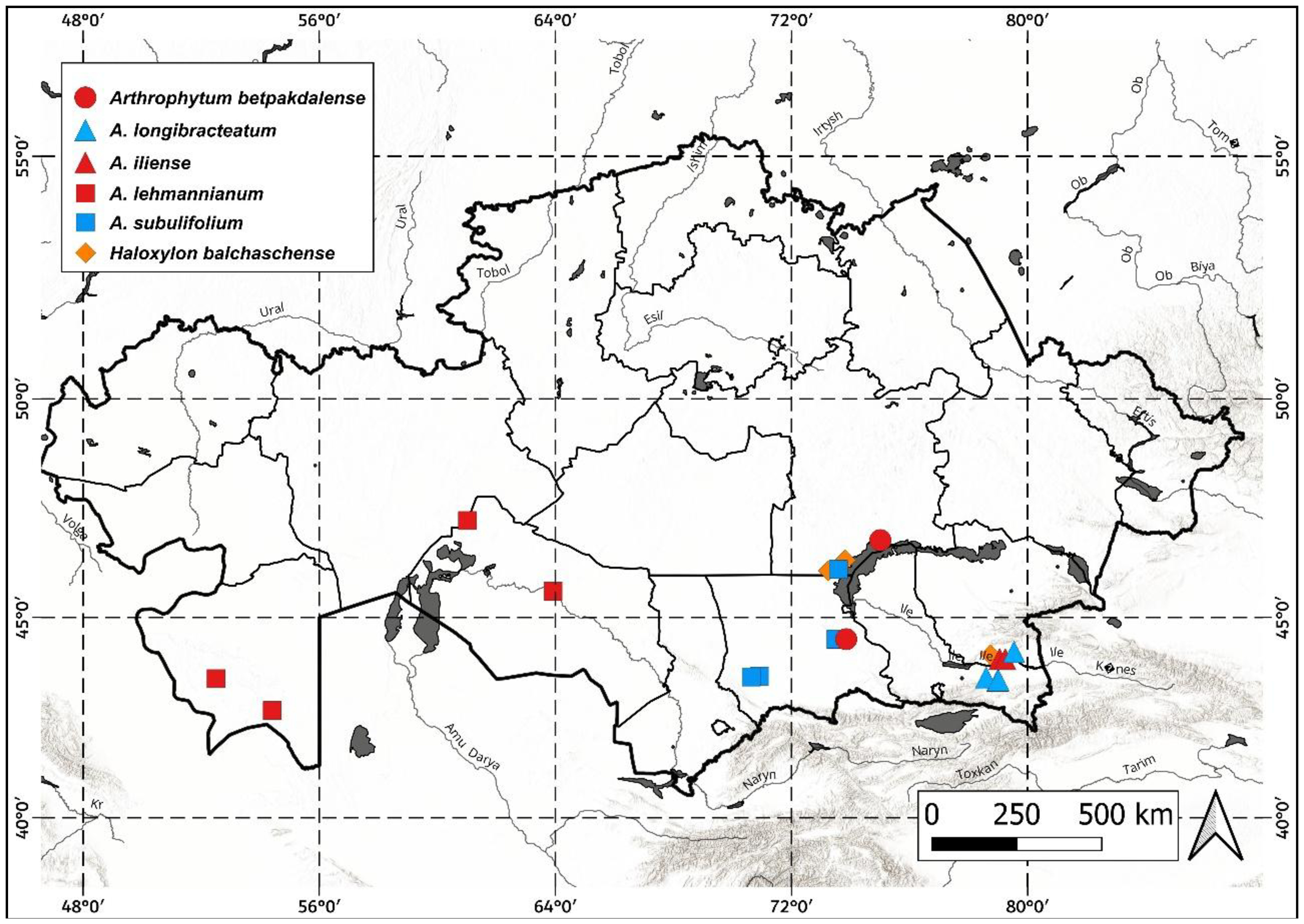
During the study period, 8 expedition trips were carried out, during which 16 populations of 5 species of the genus Arthrophytum were described. Most species of this genus are rare narrow-local endemics, which we discovered only in the second year of thorough research. Therefore, for some species we managed to study only 2 populations each, for example, for Arthrophytum betpakdalense (Table 1, Figure 1).
The distribution of each of the studied species has its own peculiarities. West-North Turanian species A.lehmannianum has the most extensive range, growing mainly in the western part of Kazakhstan, and quite distant from other species. Central-North Turanian species A. betpakdalense and A. subulifolium occur in the Betpakdala and Moyinkum deserts. Near-North-Turanian representatives of the genus A. iliense and A. longibracteatum are concentrated in foothill deserts in the south-east of Kazakhstan (Figure 1) (Stadnicka-Futoma and Nobis, 2024; Song et al., 2022; Jalilzadeh et al., 2022; Brignone and Denham, 2021).
For molecular genetic analyses, 16 specimens of this genus and 1 specimen from a closely related genus (Haloxylon balchaschense) were selected from the described 16 populations of 5 species for comparison of results.
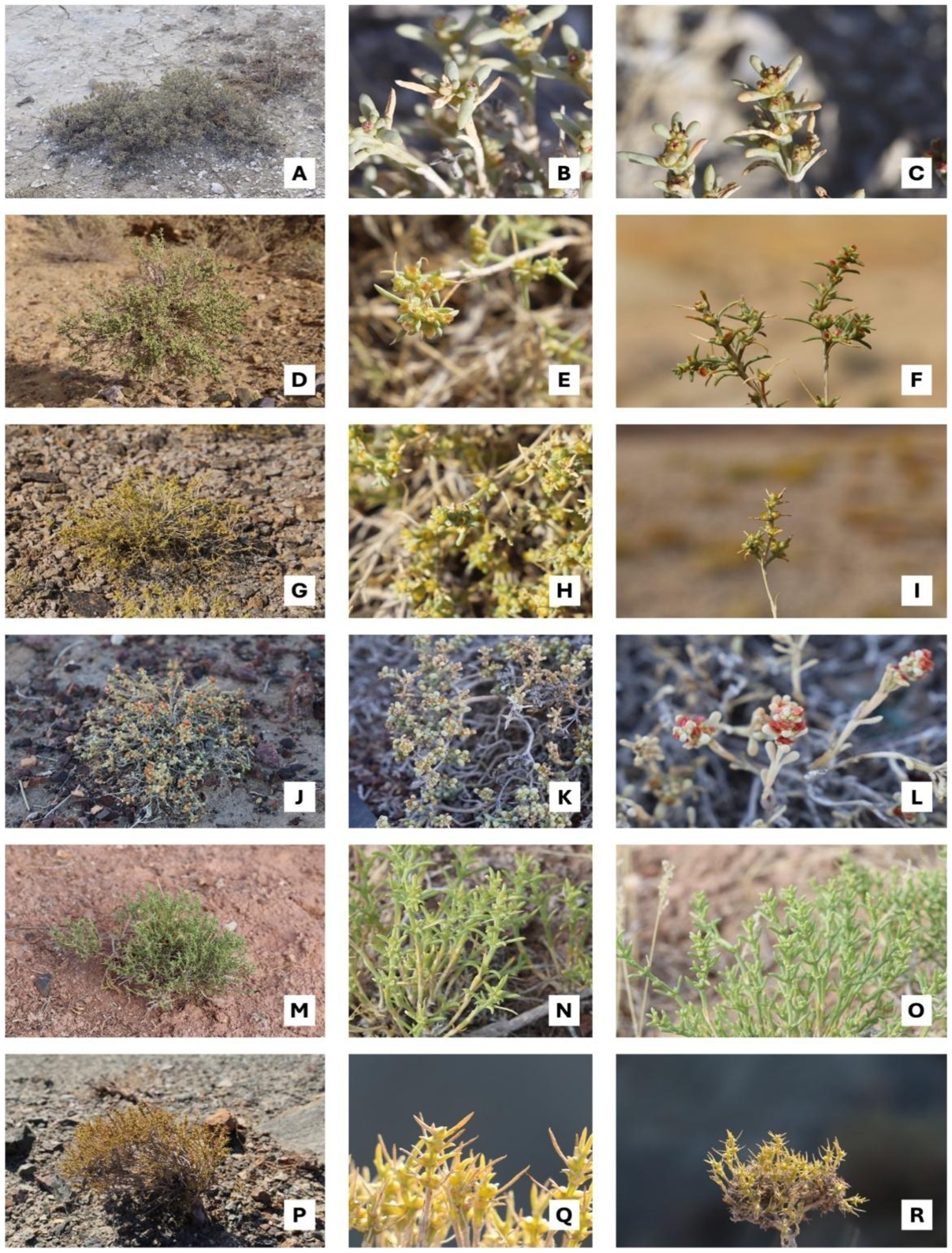
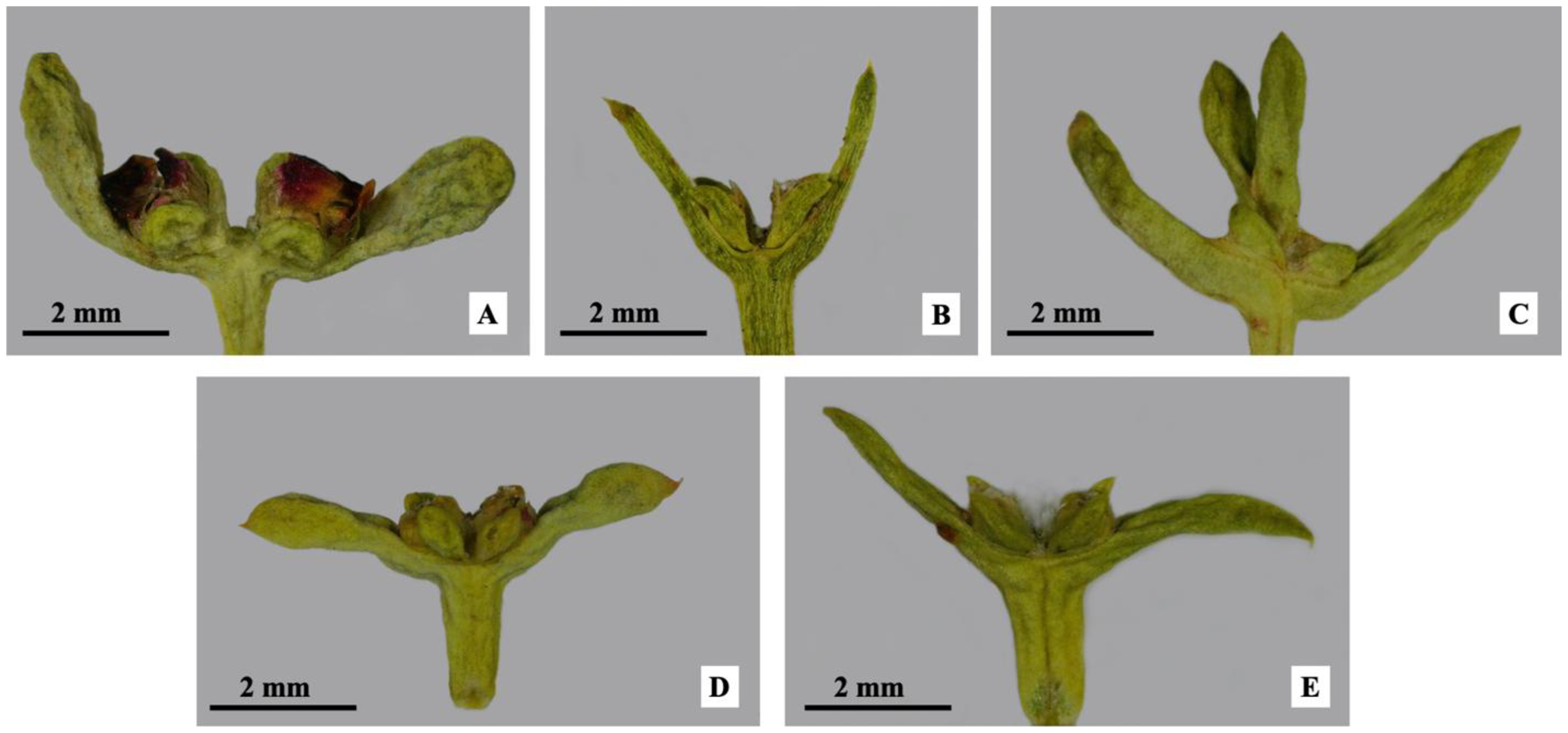
According to morphological characters, species of the genus Arthrophytum differ well from each other. A. lehmannianum has oblong, fleshy leaves and spherical, short bracts (Figures 2 and 3). A. iliense and A. longibracteatum have elongated, thin leaves and oblong bracts. A. iliense and A. longibracteatum have been described separately as two distinct taxa. There are indeed minor differences between these species, consisting of different leaf lengths. However, in this case, this trait is more quantitative than qualitative, so we believe that such a trait as leaf size cannot be considered as a key (priority) trait for species delimitation. Moreover, in different ecological conditions, as a rule, their parameters change. Therefore, we propose to unite A. iliense and A. longibracteatum with preservation of the priority name A. iliense. (Tantawy et al., 2023; Su et al., 2023; Shynder et al., 2024; Sánchez-Gavilán et al., 2021).
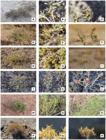
Objects of the study (A-C) A. lehmannianum; (D-F) A. iliense; (G-I) A. longibracteatum; (J-L) А. betpakdalense; (M-R) A. subulifolium.
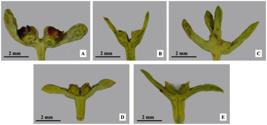
Morphological characters (herbarium specimens) (A) А. betpakdalense; (B) A. iliense; (C) A. longibracteatum; (D) A. lehmannianum; (E) A. subulifolium.
Molecular genetic studies were carried out to test the hypothesis put forward and the results are discussed below.
At the same time, we note that A. betpakdalense differs greatly from the species discussed above in its leaf morphology and can be used to distinguish a separate section, Globosum (sect. nova). It has club-shaped, short leaves and small spherical bracts.
3.2. Cytometry analysis
The DNA content was determined by flow cytometry with propidium iodide (PI) staining. Leaves dried on silica gel were used as samples. Pisum sativum ‘Ctirad’, 2C = 9.09 pg (Doležel et al., 1998) and Petroselinum crispum ‘Moss Curled2’ (Skaptsov et al., 2024) were used as internal standards.
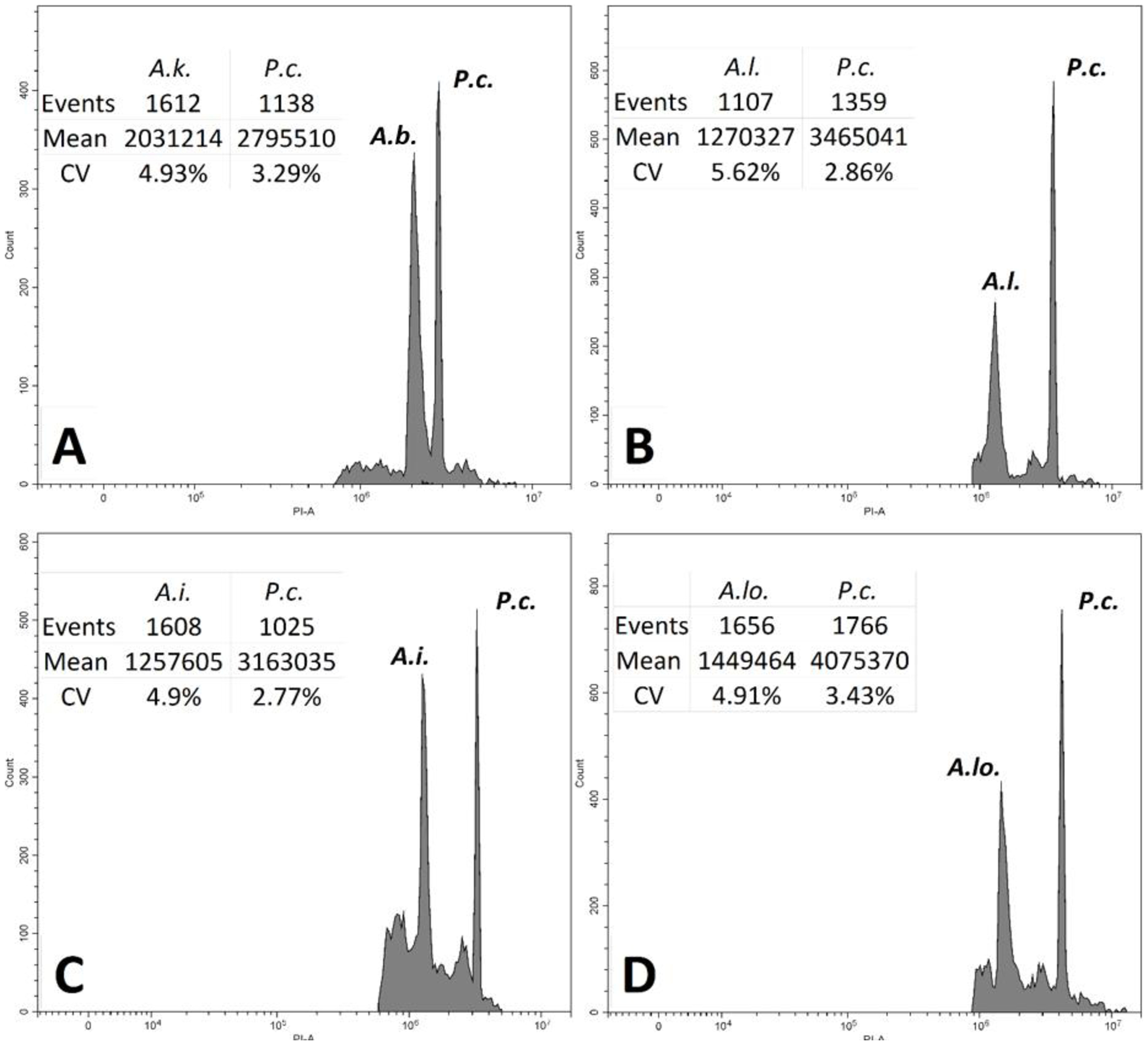
Genome size (DNA content in nuclei) was determined in 5 species of the genus Arthrophytum (A. betpakdalense; A. lehmanianum; A. iliense; A. longibracteatum, A. subulifolium and Haloxylon balchaschense) from 15 populations. The results presented in Tables 1 and Figure 4 were checked against the Chromosome Counts Database (CCDB).

Examples of flow cytometric histograms of the Arthrophytum samples (log scale). (A) Arthrophytum betpakdalense; (B) Arthrophytum lehmanianum; (C) Arthrophytum iliense; (D) Arthrophytum longibracteatum. P.c. – Petroselinum crispum internal standard.
The results obtained by flow cytometry showed the presence of different degrees of ploidy (di and tetraploid) species (Table 2) in the following 15 populations: S1, S3, S4, S7, S8, S11, S12, S13, S14, S15, S15, S16, S17, S19, S20, S21. Specimens (from different populations) unsuitable for analyses were not counted. Some species collected from different populations showed different ploidy. Thus, if samples of A. lehmannianum from population S17 were diploid, the same species from populations S1, S11 and S19 had a tetraploid set of chromosomes. A similar result was observed in A. iliense - diploid specimens were recorded in populations S3, S12 and tetraploid specimens in populations S15, S16. Examples of ungraded histograms of the studied Arthrophytum specimens are shown in Figure 4.
3.3. Molecular genetic analysis
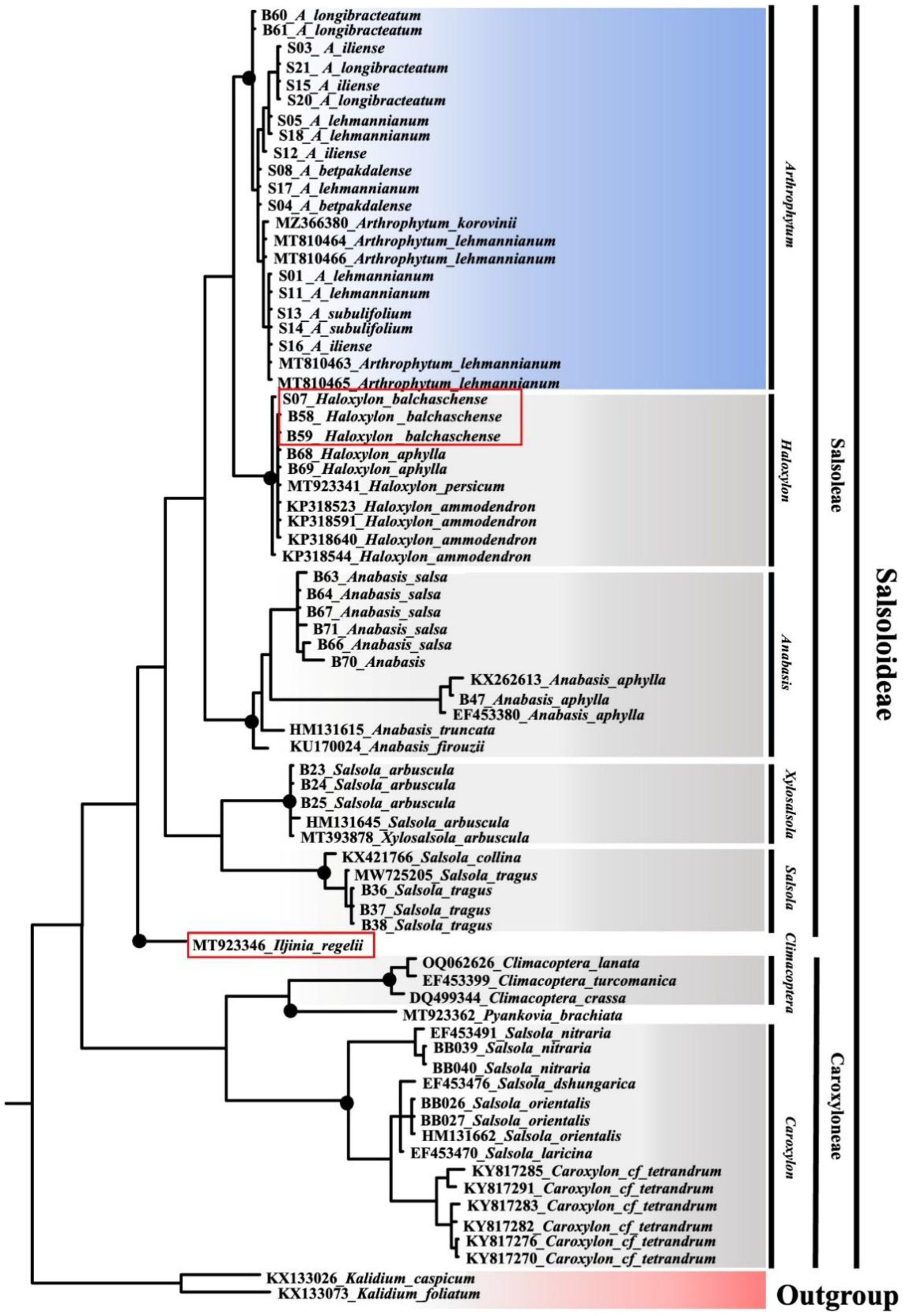
To clarify the position of the genus Arthrophytum in the tribe Salsolea, it was decided to form a phylogenetic tree of close genera belonging to the subfamily Salsoloideae. The original sequencing data of specimens of Arthrophytum species collected and processed by us were used for its compilation. For other genera of the subfamily Salsoloideae, data from the NCBI public database were used. Figure 5 shows the results of the phylogenetic tree obtained: the main genus of the study - Arthrophytum - is marked in blue; the other genera are marked in grey (to improve visualisation). For reliability of the obtained results, genera from the close tribe Caroxyloneae (Climocoptera, Caroxylon), (Almerekova et al., 2024) and as an outgroup from another subfamily - Salicornidea (Kalidium foliatum (Pall.) Moq. and K. caspicum (L.) Ung.-Sternb.) (Osmonali et al., 2023) were also included in the analysis. The red frame indicates species that were previously classified as the genus Arthrophytum: Haloxylon balchaschense (Iljin) Osmonali, Veselova & Kudab. and Iljinia regelii (Bunge) Korovin.
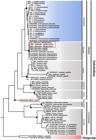
ITS tree of some close genera of the tribe Salsolea. The black dot marks the joint presence of Bayesian probability (more than 0.98) and bootstrap support (more than 95%). The studied group Arthrophytum is marked in blue and other genera in grey.
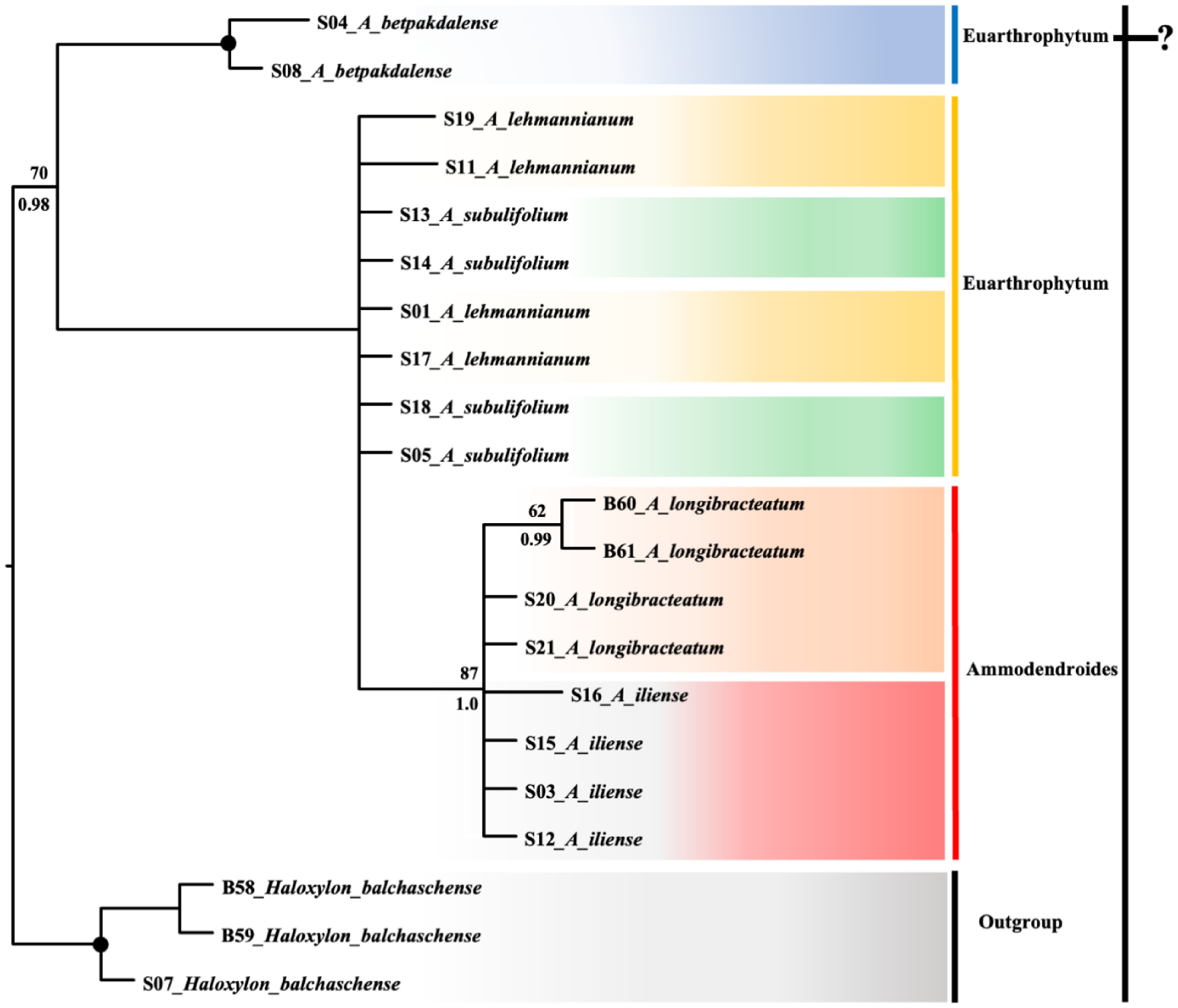
Internal transcribed spacers (ITS) and chloroplast fragments (rps16) were sequenced for 16 populations of 5 species: Arthrophytum iliense, A. longibracteatum, A. lehmannianum, A. subulifolium, and A. betpakdalense, as shown in Figures 6 and 7. When selecting the most suitable primers, we relied on the works devoted to the study of close genera of this subfamily by other authors (Osmonali et al., 2023, 2025; Sciuto et al., 2023; Sukhorukov et al., 2022; Chatrenoor and Akhani, 2021; Xu et al., 2024; Wei et al., 2024).
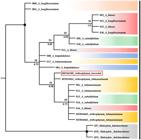
ITS tree of the genus Arthrophytum. The joint presence of Bayesian probability greater than 0.98 and bootstrap support greater than 95% is indicated by a black dot.
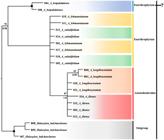
Figure 6 shows a phylogenetic tree based on the results of nuclear DNA studies of the genus Arthrophytum (Figure S1, Table S1 in Supplementary Material). For better clarity and efficiency of information transfer about species distribution on the tree, each species is highlighted by a certain color. The red frame indicates the species - Arthrophytum korovinii, taken from the NCBI database, which, in our opinion, was determined incorrectly (unfortunately, it is not possible to confirm this yet due to the lack of reference to published material). According to the phylogenetic tree we compiled by ITS, we can conclude that this primer is unsuitable for molecular studies of the genus Arthrophytum.
The following research result, representing the phylogenetic tree of chloroplast DNA of the genus Arthrophytum, is displayed in Figure 7, in which each group of species is highlighted in a particular color and their sectional affiliation is indicated in the side of the table.
Compared to the previous analysis, the results obtained when using the rps16 fragment to determine chloroplast DNA were the most suitable for discussion. Thus, according to the results of this analysis, the species were divided into three groups, with bootstrap support of more than 87% between them. Thus, the first group included A. iliense and A. longibranchiatum, belonging to the Ammodendroides section; the second group included A. lehmannianum and A. subulifolium, belonging to the Euarthrophytum section; and the third group included only A. betpakdalense, previously also belonging to the Euarthrophytum section. Consequently, A. betpakdalense differs from A. lehmannianum and A. subulifolium in gene sequence. Therefore, we faced the task to clarify the systematic affiliation of this species on the basis of other parameters, for example, morphological characteristics, and to justify the allocation of a new section.
4. Discussion
4.1. Flow cytometry
The genome size (DNA content in nuclei) was determined for A. longibracteatum, A. subulifolium and A. betpakdalense from 2 populations, for A. iliense and A. lehmannianum from 4, and for H. balchaschense from 1 population.
In populations S20, S21 of A. longibracteatum diploid specimens (2n = 2x = 18; 2C = 1.584 pg) were recorded; diploid (18; 2C = 1.635 pg) for the species A. iliense in populations S15 and S16 and tetraploid (2n = 4x = 36; 2C = 3.255 pg) in populations S3, S12.
Of the four populations of the A. lehmannianum species, diploids (18; 2C = 1.638 pg) were established in population S17, and tetraploids (2n = 4x = 36; 2C = 3.177 pg) were established in the other three populations, S1, S11 and S19. A tetraploid set of chromosomes was established for A. subulifolium specimens from populations S13, S14 (2n = 4x = 36; 2C = 3.181 pg) and A. betpakdalense specimens from populations S4, S8 (2C = 3.569 pg). The H. balchaschense sample from population S7, selected as an outgroup, was found to be diploid (18; 2C = 1.810 pg).
Thus, the studied specimens of the genus Arthrophytum with DNA content from 1.584 ± 0.032 to 1.638 ± 0.014 pg are diploid; from 3.177 ± 0.085 to 3.569 ± 0.0691 pg are tetraploid. No other cytotype groups were detected. The minimum average genome size (2C = 1.584 pg) was found in leaves of the diploid species A. longibranchiatum from the south-eastern part of Kazakhstan, and the maximum average size (2C = 3.569 pg) was found in the tetraploid specimen A. betpakdalense from the Betpakdala desert.
To clarify the reliability of the data obtained, let us analyse the results given in previously published works of other authors on genera close to Arthrophytum. For example, the Plant DNA C-values Database provides results for two species: Salsola kali L., which has 2C= 1.22 pg (18) (Morgan and Westoby, 2005) and S. soda L. (Soda inermis Fourr.) - 2C= 2.62 ± 0.04 pg (18), Salicornia europaea L. - 2C= 2.75 ± 0.03 pg (18) (Koce et al., 2008). More recent articles whose results were not included in this information base report the following data: Salsola tragus L. - 2C= 4.48-4.57 pg (36), Krascheninnikovia ceratoides (L.) Gueldenst. - 2C= 2.26-2.71 pg (18) (Ankova and Yu, 2020); Kalidium foliatum (Pall.) Moq. - 2C= 2.259±0.023 pg (18), K. caspicum (L.) Ung.-Sternb. - has two different ploidy forms, 2C= 2.981 ± 0.149 pg (18) and 2C= 5.993 ± 0.139 pg (36) (Osmonali et al., 2023); Bassia prostrata s. l. also has diploid and tetraploid forms, 2C= 2. 66 ± 0.12 pg (18) and 2C= 5.01 ± 0.04 pg (36) (Pankova et al., 2024), Krascheninnikovia ceratoides s. l. - 2C= 2.94 ± 0.15 pg (18) and 2C= 5.83 ± 0.07 pg (36) (Lomonosova et al., 2024). Based on these data, it follows that for the studied populations of species of the investigated genus Arthrophytum, cytotypes with sizes ranging from 1.584 ± 0.032 to 1.638 ± 0.014 pg are diploid, and those with sizes ranging from 3.177 ± 0.085 to 3.569 ± 0.0691 pg are tetraploid.
4.2. Molecular genetic analysis
Recall that to clarify the position of the genus Arthrophytum in the tribe Salsolea, a phylogenetic tree of close genera belonging to the subfamily Salsoloideae was compiled. As a result, it was found that the studied genus is quite clearly separated from other genera of subfamilies, where bootstrap support shows more than 95%. The closest systematic groups to Arthrophytum are the genera Haloxylon and Anabasis L.
In spite of the fact that for many genera for formation of correct systematic composition of the tribe ITS primers were used for analysis of the genus Arthrophytum, their application for analysis of the genus Arthrophytum turned out to be unsuitable. In the phylogenetic analysis of Salsoleae using sequences of internal transcribed spacer (ITS) (Pyankov et al., 2001) showed that Salsola is probably a polyphyletic species. Similar results were obtained using rbcL sequences (Kadereit et al., 2003). However, according to some authors, the limited sampling of Salsoleae in both these studies leaves unanswered many questions concerning the phylogenetic relationships and genera of this tribe.
Meanwhile, for species of the genus Climocoptera Botsch., Haloxylon (Akhani et al., 2007; Assadi et al., 2001; Ghobadnejhad et al., 2004; Sheng et al., 2005) and Anabasis L. (Lauterbach et al., 2019), the use of internal transcribed spacers (ITS) has yielded good results. This fact necessitates the continuation of experimental studies in the direction of finding suitable primers for the detection of nuclear DNA sequences of the genus Arthrophytum.
The phylogenetic tree of the genus Arthrophytum obtained because of RPS analysis will be discussed for the first time. In this connection, although, unfortunately, it is not possible to compare our data with the results of other authors, therefore, for comparison with our results, data on close genera of the subfamily will be given.
According to the RPS tree, A. iliense is closely related to A. longibranchiatum. Moreover, some specimens we identified as A. longibranchiatum did not differ in any way from A. iliense at the molecular level. According to the identification key, the distinction between A. longibranchiatum and A. iliense is based mainly on quantitative indices, namely, in the former ‘Bracts are more than twice as large as flowers’, and in the latter ‘Bracts are equal to or slightly larger than flowers and leaf length of A. longibranchiatum is “10-12 mm”, while A. iliense is “3-7 mm” (Polyakov and Goloskokov, 1960).
The results of flow cytometry showed that A. iliense can have both diploid and tetraploid set of chromosomes. Therefore, it is quite logical to assume that given the general similarity of morphological characters of the compared species, tetraploid specimens (having, as a rule, larger sizes) of this species were described as a new taxon of the species level - A. longibranchiatum.
The complexity of systematic differentiation of taxa of the family Amaranthaceae, consisting in their habitual peculiarities at different stages of ontogenesis, is the reason for description of much more species. This can be exemplified by a similar situation in other genera. Thus, given the low support (58%) for genetic divergence and morphological similarity of Halimocnemis purpureum Moq., Halotis pedunculata Assadi with species of the genus Halanthium K.Koch, they were once included in the genus Halanthium (Akhani et al., 2007).
In our case, A. longibranchiatum and A. iliense are similar not only in morphological parameters but also do not differ from each other at the molecular level. Therefore, we consider it necessary to unite these species into one species-level taxon, leaving the name A. iliense as the priority name.
We will continue to discuss the results of the second group of the genus, which was identified based on molecular studies, combining A. lehmannianum and A. subulifolium. According to the phylogenetic tree (rps), primer rps 16 did not give specific results concerning genetic differences of these species. Meanwhile, the morphological characters of the species under discussion are quite well defined. A. lehmannianum has a fleshier, oblong, sometimes with a bulbous tip leaf plate, ending in a tendril. And A. subulifolium has thin, tapering to the apex leaves, forming a sharp tip (but not a tendril!). The described features are repeated in the structure of their bracts (Figure 7). The task of determining their molecular genetic features can be solved by selecting a working primer and increasing the number of samples tested.
A. betpakdalense, previously classified together with A. lehmannianum and A. subulifolium to the section Euarthrophytum, was separated into a third - separate group. Since its isolation based on the analyses carried out requires explanation (Figure 7), we decided to analyse also the peculiarities of morphology and geography of A. betpakdalense. Firstly, the range of A. lehmannianum and A. subulifolium is much wider than that of A. betpakdalense, which is an endemic of the Betpakdala desert. Secondly, A. betpakdalense has differences in morphological characters concerning the shape and consistency of leaves and bracts. Summarising the above, we propose to distinguish in the genus Arthrophytum a new section Globosum UssenS & Osmonali (with the type species A. betpakdalense).
Section Globosum UssenS & Osmonali – bases of fleshy leaves are narrow, sharply passing to spherical apex. The lobes of the subpetiolar disc are round, thinning along the margin, even.
5. Conclusion
In conclusion, comparative analysis of Arthrophytum longibracteatum, A. subulifolium, A. betpakdalense, A. iliense and A. lehmannianum by flow cytometry revealed that: 1) species of the genus Arthrophytum with DNA content between 1.584 ± 0.032 and 1.638 ± 0.014 pg are diploid; and with DNA content between 3.177 ± 0.085 and 3.569 ± 0.0691 pg are tetraploid. No other groups of cytotypes were found; the minimum average genome size (2C = 1.584 pg) was found in leaves of the diploid species A. longibranchiatum from the south-eastern part of Kazakhstan, and the maximum average size (2C = 3.569 pg) was found in the tetraploid specimen A. betpakdalense from the Betpakdala desert. The analysis of the obtained phylogenetic tree (rps 16) of species of the genus Arthrophytum showed; 2) species of the genus Arthrophytum are divided into three groups (the first group - A. iliense and A. longibranchiatum, belonging to the section Ammodendroides; the second group - A. lehmannianum and A. subulifolium, belonging to the section Euarthrophytum; the third group represented only by A. betpakdalense, which as a result of the study was assigned to the newly isolated section Globosum UssenS & Osmonali; 3) the validity of combining A. iliense and A. longibranchiatum into one species (keeping the priority for A. iliense).
Supplementary Material
Supplementary material accompanies this paper.
Figure S1
Table S1
This material is available as part of the online article from https://doi.org/10.1590/1519-6984.302609
Acknowledgements
This research was funded by the Ministry of Ecology and Natural Resources of the Republic of Kazakhstan (No. BR23591088 “Creating the Ulytau Plant Cadastre as Kazakhstan Law tasks implementation “On Plant World” for sustainable use of region botanical resources” (2024-2026)).
-
Data Availability Statement
All the data that support the findings of this study are available in the main text.
References
-
ABDILDANOV, D.S., VESSELOVA, P.V., KUDABAYEVA, G.M., OSMONALI, B.B., SKAPTSOV, M.V. and FRIESEN, N., 2025. Endemic of Kazakhstan Allium lehmannianum Merckl. Ex Bunge and its position within the genus Allium. Plants, vol. 14, no. 7, pp. 1113. https://doi.org/10.3390/plants14071113 PMid:40219181.
» https://doi.org/10.3390/plants14071113 -
AKHANI, H., EDWARDS, G. and ROALSON, E.H., 2007. Diversification of the old world Salsoleae sl (Chenopodiaceae): molecular phylogenetic analysis of nuclear and chloroplast data sets and a revised classification. International Journal of Plant Sciences, vol. 168, no. 6, pp. 931-956. https://doi.org/10.1086/518263
» https://doi.org/10.1086/518263 -
ALMEREKOVA, S., YERMAGAMBETOVA, M., OSMONALI, B., VESSELOVA, P., ABUGALIEVA, S. and TURUSPEKOV, Y., 2024. Characterization of the plastid genomes of four Caroxylon Thunb. species from Kazakhstan. Plants, vol. 13, no. 10, pp. 1332. https://doi.org/10.3390/plants13101332 PMid:38794403.
» https://doi.org/10.3390/plants13101332 -
AMINI, E., SATTARIAN, A., NASROLLAHI, F., DANESHVAR, A., ESMAEILI, M.M., HAMIDZADEH SANI, L. and HAGHIGHI, S., 2024. Morphological and molecular studies of some species of Salsola (Amaranthaceae) in Iran. Acta Botanica Hungarica, vol. 66, no. 3-4, pp. 135-153. https://doi.org/10.1556/034.66.2024.3-4.1
» https://doi.org/10.1556/034.66.2024.3-4.1 -
ANKOVA, T.V. and YU, Z.E., 2020. Chromosome numbers in some alien plant species of Novosibirsk Region (Novosibirsk city): post I. Turczaninowia, vol. 23, no. 3, pp. 5-11. https://doi.org/10.14258/turczaninowia.23.3.1
» https://doi.org/10.14258/turczaninowia.23.3.1 -
ASSADI, M., KHATAMSAZ, M. and MAASSOUMI, A., 2001. Chenopodiaceae. In: M. ASSADI, A.A. MASSOUMI, M. KHATAMSAZ and V. MOZAFFARIAN, eds. Flora of Iran 1988-2008. Tehran: Research Institute of Forest Publication, vol. 38, pp. 27-65. https://doi.org/10.22092/IRN.2019.119036
» https://doi.org/10.22092/IRN.2019.119036 -
BRIGNONE, N.F. and DENHAM, S.S., 2021. Toward an updated taxonomy of the South American Chenopodiaceae I: Subfamilies Betoideae, Camphorosmoideae, and Salsoloideae. Annals of the Missouri Botanical Garden, vol. 106, no. 1, pp. 10-30. https://doi.org/10.3417/2020615
» https://doi.org/10.3417/2020615 -
CHATRENOOR, T. and AKHANI, H., 2021. An integrated morpho‐molecular study of Salicornia (Amaranthaceae‐Chenopodiaceae) in Iran proves Irano‐Turanian region the major center of diversity of annual glasswort species. Taxon, vol. 70, no. 5, pp. 989-1019. https://doi.org/10.1002/tax.12538
» https://doi.org/10.1002/tax.12538 -
DOLEŽEL, J., GREILHUBER, J., LUCRETTI, S., MEISTER, A., LYSÁK, M., NARDI, L. and OBERMAYER, R., 1998. Plant genome size estimation by flow cytometry: inter-laboratory comparison. Annals of Botany, vol. 82, suppl. 1, pp. 17-26. https://doi.org/10.1093/oxfordjournals.aob.a010312
» https://doi.org/10.1093/oxfordjournals.aob.a010312 -
DOLEŽEL, J., SGORBATI, S. and LUCRETTI, S., 1992. Comparison of three DNA fluorochromes for flow cytometric estimation of nuclear DNA content in plants. Physiologia Plantarum, vol. 85, no. 4, pp. 625-631. https://doi.org/10.1111/j.1399-3054.1992.tb04764.x
» https://doi.org/10.1111/j.1399-3054.1992.tb04764.x - GHOBADNEJHAD, M., JOHARCHI, M. and AKHANI, H., 2004. Notes on the flora of Iran. 5. Halimocnemis longifolia (Chenopodiaceae), a new record from Iran. Linzer Biologische Beiträge, vol. 36, pp. 1309-1316.
- GOLOSKOKOV, V.P., 1972. Illustrated key book of Kazakhstan plants Alma-Ata: Nauka, 572 p.
- GOVAERTS, R., 1995. World Checklist of Seed Plants 1 (1, 2). Anversa: MIM.
-
INTERNATIONAL PLANT NAMES INDEX – IPNI [online], 2025 [viewed 7 November 2025]. Available from: https://www.ipni.org/
» https://www.ipni.org/ -
JALILZADEH, A., HAMDI, S., ASRI, Y., ASSADI, M. and IRANBAKHSH, A., 2022. Palynological analysis some species of Chenopodiaceae and its systematic implications using scanning electron microscopy. Genetika., vol. 54, no. 2, pp. 539-552. https://doi.org/10.2298/GENSR2202539J
» https://doi.org/10.2298/GENSR2202539J -
KADEREIT, G., BORSCH, T., WEISING, K. and FREITAG, H., 2003. Phylogeny of Amaranthaceae and Chenopodiaceae and the evolution of C4 photosynthesis. International Journal of Plant Sciences, vol. 164, no. 6, pp. 959-986. https://doi.org/10.1086/378649
» https://doi.org/10.1086/378649 -
KOCE, J., ŠKONDRIĆ, S., BAČIČ, T. and DERMASTIA, M., 2008. Amounts of nuclear DNA in marine halophytes. Aquatic Botany, vol. 89, no. 4, pp. 385-389. https://doi.org/10.1016/j.aquabot.2008.04.009
» https://doi.org/10.1016/j.aquabot.2008.04.009 -
KUBENTAYEV, S.A., ALIBEKOV, D.T., PEREZHOGIN, Y.V., LAZKOV, G.A., KUPRIYANOV, A.N., EBEL, A.L., IZBASTINA, K.S., BORODULINA, O.V. and KUBENTAYEVA, B.B., 2024. Revised checklist of endemic vascular plants of Kazakhstan. PhytoKeys, vol. 238, pp. 241-279. https://doi.org/10.3897/phytokeys.238.114475 PMid:38456166.
» https://doi.org/10.3897/phytokeys.238.114475 - KUTSEV, M.G., UVAROVA, O.V. and SINITSYNA, T.A., 2014. Set of synthetic oligonucleotides for amplification and sequencing of ITS1-5.8S-ITS2 of vascular plants. Russian. Patent No. RU 258063 C1. Bulletin, no. 25. In Russian.
-
LAUTERBACH, M., VERANSO-LIBALAH, M.C., SUKHORUKOV, A.P. and KADEREIT, G., 2019. Biogeography of the xerophytic genus Anabasis L. (Chenopodiaceae). Ecology and Evolution, vol. 9, no. 6, pp. 3539-3552. https://doi.org/10.1002/ece3.4987 PMid:30962909.
» https://doi.org/10.1002/ece3.4987 -
LOMONOSOVA, M.N., PANKOVA, T.V., KOROLYUK, E.A., SHAULO, N., OSMONALI, B. and NIKOLIN, E.G., 2024. Nuclear genome size analysis in Krascheninnikovia ceratoides sl (Amaranthaceae). Botanica Pacifica: Journal of Plant Science and Conservation, vol. 13, no. 1, pp. 183-187. https://doi.org/10.17581/bp.2024.13112
» https://doi.org/10.17581/bp.2024.13112 -
MORGAN, H.D. and WESTOBY, M., 2005. The relationship between nuclear DNA content and leaf strategy in seed plants. Annals of Botany, vol. 96, no. 7, pp. 1321-1330. https://doi.org/10.1093/aob/mci284 PMid:16230323.
» https://doi.org/10.1093/aob/mci284 -
OSMONALI, B.B., VESSELOVA, P.V., KUDABAYEVA, G.M., USSEN, S., ABDILDANOV, D.S. and FRIESEN, N., 2025. Contributions to the flora of Kazakhstan, genera Arthrophytum and Haloxylon. Plant Systematics and Evolution, vol. 311, no. 2, pp. 6. https://doi.org/10.1007/s00606-024-01926-x
» https://doi.org/10.1007/s00606-024-01926-x -
OSMONALI, B.B., VESSELOVA, P.V., KUDABAYEVA, G.M., SKAPTSOV, M.V., SHMAKOV, A.I. and FRIESEN, N., 2023. Phylogeny and Flow Cytometry of the Genus Kalidium Moq.(Amaranthaceae sl) in Kazakhstan. Plants, vol. 12, no. 14, pp. 2619. https://doi.org/10.3390/plants12142619 PMid:37514234.
» https://doi.org/10.3390/plants12142619 - OXELMAN, B., LIDÉN, M. and BERGLUND, D., 1997. Chloroplast rps 16 intron phylogeny of the tribe Sileneae (Caryophyllaceae). Plant Systematics and Evolution, vol. 206, no. 1, pp. 393-410.
-
PANKOVA, T.V., LOMONOSOVA, M.N., VAULIN, O.V., KOROLYUK, A.Y., KOROLYUK, E.A., SHAULO, D.N. and OSMONALI, B., 2024. Cytogeography of the polyploid complex Bassia prostrata s.l. (Chenopodiaceae) based on genome size analysis and PCR-RFLP cpDNA. Russian Journal of Genetics, vol. 60, no. 3, pp. 274-287. https://doi.org/10.1134/S1022795424030116
» https://doi.org/10.1134/S1022795424030116 - POLYAKOV, P.P. and GOLOSKOKOV, V.P., 1960. Family Chenopodiaceae. In: P.P. PAVLOV, ed. The flora of Kazakhstan. 3rd ed. Alma-Ata: Academy of Sciences of the Kazakh SSR, pp. 179-320. In Russian.
- PRATOV, U., BONDARENKO, O.N. and NABIEV, M.M., 1972. Family Chenopodiaceae. In: O.N. BONDARENKO and M.M. NABIEV, eds. The plant identifier of plants of Central Asia, III. Tashkent, USSR: FAN Publishing House, pp. 29-137. In Russian.
-
PYANKOV, V.I., IVANOV, L.A. and LAMBERS, H., 2001. Chemical composition of the leaves of plants with different ecological strategies from the boreal zone. Russian Journal of Ecology, vol. 32, no. 4, pp. 221-229. https://doi.org/10.1023/A:1011354019319
» https://doi.org/10.1023/A:1011354019319 -
QGIS [online], 2025 [viewed 5 January 2025]. Available from: https://qgis.org
» https://qgis.org - ROYAL BOTANIC GARDENS, 2023. Plants of the World Online (POWO). Kew: Royal Botanic Gardens.
-
SÁNCHEZ-GAVILÁN, I., RUFO, L., RODRÍGUEZ, N. and DE LA FUENTE, V., 2021. On the elemental composition of the Mediterranean euhalophyte Salicornia patula Duval-Jouve (Chenopodiaceae) from saline habitats in Spain (Huelva, Toledo and Zamora). Environmental Science and Pollution Research International, vol. 28, no. 3, pp. 2719-2727. https://doi.org/10.1007/s11356-020-10663-w PMid:32889657.
» https://doi.org/10.1007/s11356-020-10663-w -
SCIUTO, K., WOLF, M., SFRISO, A., BRANCALEONI, L., IBERITE, M. and IAMONICO, D., 2023. Molecular and morphometric update on Italian Salicornia (Chenopodiaceae), with a focus on the species S. procumbens sl. Plants, vol. 12, no. 2, pp. 375. https://doi.org/10.3390/plants12020375 PMid:36679088.
» https://doi.org/10.3390/plants12020375 -
SHENG, Y., ZHENG, W., PEI, K. and MA, K., 2005. Genetic variation within and among populations of a dominant desert tree Haloxylon ammodendron (Amaranthaceae) in China. Annals of Botany, vol. 96, no. 2, pp. 245-252. https://doi.org/10.1093/aob/mci171 PMid:15919669.
» https://doi.org/10.1093/aob/mci171 -
SHYNDER, O.I., PASHKEVYCH, N.A., KHARYTONOVA, I.P., HOLOVKO, O.V., MANDÁK, B. and MOSYAKIN, S.L., 2024. The enigmatic diploid Chenopodium ucrainicum (Chenopodiaceae/Amaranthaceae sl): geographical, ecological, and phytosociological patterns as clues to its origin. Ukrains’kyi Botanichnyi Zhurnal. Ukrains’ke Botanichne Tovarystvo, vol. 81, no. 6, pp. 389-407. https://doi.org/10.15407/ukrbotj81.06.389
» https://doi.org/10.15407/ukrbotj81.06.389 -
SKAPTSOV, M.V., KUTSEV, M.G., SMIRNOV, S.V., VAGANOV, A.V., UVAROVA, O.V. and SHMAKOV, A.I., 2024. Standards in plant flow cytometry: an overview, polymorphism and linearity issues. Turczaninowia, vol. 27, no. 2, pp. 86-104. https://doi.org/10.14258/turczaninowia.27.2.10
» https://doi.org/10.14258/turczaninowia.27.2.10 -
SONG, X., SU, Y., ZHENG, J., ZHANG, Z., LIANG, Z. and TANG, Z., 2022. Study on the effects of salt tolerance type, soil salinity and soil characteristics on the element composition of Chenopodiaceae halophytes. Plants, vol. 11, no. 10, pp. 1288. https://doi.org/10.3390/plants11101288 PMid:35631714.
» https://doi.org/10.3390/plants11101288 -
STADNICKA-FUTOMA, A. and NOBIS, M., 2024. Geographical-historical analysis of the herbarium specimens representing the economically important Family Amaranthaceae (Chenopodiaceae-Amaranthaceae Clade) collected in 1821-2022 and preserved in the Herbarium of the Jagiellonian University in Krakow. Biology, vol. 13, no. 6, pp. 435. https://doi.org/10.3390/biology13060435 PMid:38927315.
» https://doi.org/10.3390/biology13060435 -
SU, Y., SONG, X., ZHENG, J., ZHANG, Z. and TANG, Z., 2023. Comparison of stoichiometric characteristics of main nutrients in different organs of four Chenopodiaceae species. Shengtaixue Zazhi, vol. 42, no. 3, pp. 626. https://doi.org/10.13292/j.1000-4890.202303.012
» https://doi.org/10.13292/j.1000-4890.202303.012 -
SUKHORUKOV, A.P., FEDOROVA, A.V., KUSHUNINA, M. and MAVRODIEV, E.V., 2022. Akhania, a new genus for Salsola daghestanica, Caroxylon canescens and C. carpathum (Salsoloideae, Chenopodiaceae, Amaranthaceae). PhytoKeys, vol. 211, pp. 45-61. https://doi.org/10.3897/phytokeys.211.89408 PMid:36760728.
» https://doi.org/10.3897/phytokeys.211.89408 -
SUKHORUKOV, A.P., KUSHUNINA, M.A., STEPANOVA, N.Y., KALMYKOVA, O.G., GOLOVANOV, Y.M. and SENNIKOV, A.N., 2024. Taxonomic inventory and distributions of Chenopodiaceae (Amaranthaceae sl) in Orenburg Region, Russia. Biodiversity Data Journal, vol. 12, e121541. https://doi.org/10.3897/BDJ.12.e121541 PMid:38912112.
» https://doi.org/10.3897/BDJ.12.e121541 -
SUKHORUKOV, A.P., WEN, Z., KRINITSINA, A.A., FEDOROVA, A.V., VERLOOVE, F., KUSHUNINA, M., LÉGER, J.F., CHAMBOULEYRON, M., TANJI, A. and SENNIKOV, A.N., 2025. A revised taxonomy of the Bassia scoparia complex (Camphorosmoideae, Amaranthaceae sl) with an updated distribution of B. indica in the Mediterranean Region. Plants, vol. 14, no. 3, pp. 398. https://doi.org/10.3390/plants14030398 PMid:39942960.
» https://doi.org/10.3390/plants14030398 -
TANTAWY, M.E., SALIM, M.A., BAYOUMY, A.T. and MOHAMED, A.H., 2023. Taxonomic significance of stem, lamina and epidermal micro-characters in understanding Chenopodiaceae and Amaranthaceae alliance. Pakistan Journal of Botany, vol. 55, no. 1, pp. 277-289. https://doi.org/10.30848/PJB2023-1(42)
» https://doi.org/10.30848/PJB2023-1(42) -
USSEN, S., VESSELOVA, P.V., KUDABAYEVA, G.M., SERGAZINA, M.M. and ALIMZHANOVA, M.B., 2025. Comparative phytochemical analysis of five species of the Genus Arthrophytum Schrenk (Amaranthaceae) from the flora of Kazakhstan. Metabolites, vol. 15, no. 12, pp. 800. https://doi.org/10.3390/metabo15120800 PMid:41441041.
» https://doi.org/10.3390/metabo15120800 -
VESSELOVA, P.V., KUDABAYEVA, G.M., ABDILDANOV, D.S., OSMONALI, B.B., USSEN, S., SKAPTSOV, M.V. and FRIESEN, N., 2025. Integral assessment of species of the Genus Allium L. (Amaryllidaceae) in the Western Part of the Kyrgyz Alatau. Plants, vol. 14, no. 18, pp. 2890. https://doi.org/10.3390/plants14182890 PMid:41012042.
» https://doi.org/10.3390/plants14182890 -
WEI, P., LI, Y., KE, M., HOU, Y., AIKEBAIER, A. and WU, Z., 2024. Complete chloroplast genome of Krascheninnikovia ewersmanniana: comparative and phylogenetic analysis. Genes, vol. 15, no. 5, pp. 546. https://doi.org/10.3390/genes15050546 PMid:38790176.
» https://doi.org/10.3390/genes15050546 -
XU, H., GUO, Y., XIA, M., YU, J., CHI, X., HAN, Y., LI, X. and ZHANG, F., 2024. An updated phylogeny and adaptive evolution within Amaranthaceae sl. inferred from multiple phylogenomic datasets. Ecology and Evolution, vol. 14, no. 7, pp. e70013. https://doi.org/10.1002/ece3.70013 PMid:39011133.
» https://doi.org/10.1002/ece3.70013
Edited by
-
Editor:
Takako Matsumura Tundisi
All the data that support the findings of this study are available in the main text.