 Stimuli to the soil seed bank reduce the prevalence of exotic grasses in Amazonian pastures
ABSTRACT
The restoration of riparian forests degraded by pasture is essential for maintaining ecosystem services such as water regulation and biodiversity preservation. However, the dominance of exotic grasses in Amazonian pasture regions hinders the natural regeneration of native species. This study aimed to evaluate the effects of soil seed bank stimuli on the initial restoration of a riparian forest dominated by exotic grass pasture. Two treatments were tested: control (CT) and seed bank stimulation (SBS). In both treatments, the region was isolated to prevent cattle entry. SBS was subjected to glyphosate herbicide application and soil disturbance with a disc harrow. Vegetation surveys to assess natural regeneration were conducted at time intervals of 5, 11, 18, and 22 months after the starting point of the experiment. SBS favored the density and richness of regenerating herb, shrub, and tree species and reduced soil coverage under exotic grasses up to the 18th month (34%) in relation to CT (80%). In the 22nd month, the dominance of exotic grasses increased in SBS, although it remained lower than that observed in the control throughout the evaluated period. The results showed that stimulating the seed bank through soil harrowing could effectively promote the regeneration of native species in the Amazon, although continuous management is necessary to reduce exotic grass dominance and ensure the long-term restoration of riparian forests.
Index terms:
Secondary succession; natural regeneration; pioneer species
RESUMO
A restauração de florestas ripárias degradadas por pastagens é essencial para manter os serviços ecossistêmicos, como regulação hídrica e preservação da biodiversidade, porém a dominância de gramíneas exóticas em áreas de pastagem na Amazônia dificulta a regeneração natural de espécies nativas. O objetivo deste estudo foi avaliar os efeitos de estímulos de banco de sementes do solo na restauração inicial de uma floresta ripária dominada por pastagem de gramíneas exóticas. Testou-se dois tratamentos: Controle (CT) e estimulação de banco de sementes (SBS), onde em ambos os tratamentos a área foi isolada contra a entrada de gado. O SBS recebeu aplicação de herbicida Glifosato e revolvimento do solo com grade de discos. A regeneração natural foi avaliada em intervalos de 5, 11, 18 e 22 meses após o início do experimento. O SBS favoreceu a densidade e a riqueza de espécies herbáceas, arbustivas e arbóreas em regeneração e reduziu a cobertura do solo por gramíneas exóticas até o 18º mês (34%) em relação ao CT (80%), que obteve cobertura maior que 60% em todo o período avaliado. No 22º mês, a dominância de gramíneas exóticas aumentou no SBS, mas foi menor do que no controle ao longo de todo o período avaliado. Observou-se que estimular o banco de sementes por meio de gradeamento do solo pode ser eficaz para promover a regeneração de espécies nativas na Amazônia, embora o manejo contínuo seja necessário para reduzir a dominância de gramíneas exóticas e garantir a restauração das florestas ripárias a longo prazo.
Termos para indexação:
Sucessão secundária; regeneração natural; espécies pioneiras
Introduction
Forest conversion for various kinds of land use has resulted in remarkable losses in the global forest cover, and this has intensified the need for forest restoration. It is reported that by 2009, half of the world’s tropical forests were lost (Asner et al., 2009), and in Brazil alone, the Amazon forest was reduced by 11,000 km2 by 2020 (Programa de Monitoramento do Desmatamento da Amazônia por Satélite - PRODES, 2024). Riparian forests are among the most impacted ecosystems. These forests are located on watercourse banks, and these ecosystems have been specifically prioritized for restoration (Gardon & Santos, 2024) owing to their indispensable roles in maintaining water quality, controlling erosion, and maintaining biodiversity (Dib et al., 2023).
In Brazil, riparian forests are protected by law and are designated as Permanent Preservation Areas (APP) because of their ecological importance (Brasil, 2012). However, despite regulations, these areas remain vulnerable to degradation, especially the areas in the Amazon River basin, where deforestation of crops and pastures is the main cause of APP degradation (Cruz et al., 2022; Silveira et al., 2022; Vale, Costa, & Miranda, 2014). Consequently, fishing resource scarcity, the disappearance of flora and fauna species, and the silting of rivers are noted in the region (Colares et al., 2022; Junk et al., 2024), highlighting the need to restore these degraded riparian forests.
Vegetation recovery occurs in degraded lands when soil conditions are suitable for plant establishment and the return of entomofauna, which allows for ecosystem restoration (Eaton et al., 2024). Another relevant factor is the availability of propagules, as natural regeneration relies on the presence of viable seeds or vegetative material capable of initiating plant growth and recolonizing the region (Anju, Warrier & Kunikannan, 2022). However, forestlands converted to pastures, which have a history of land use and the dominance of exotic grass, experience hindered natural regeneration of shrub and tree vegetation (Silva et al., 2023). Thus, strategies to initiate or increase forest succession, such as stimulating the soil seed bank, become indispensable for ecological restoration in these regions. This approach accelerates native species regeneration when the germination of stress-tolerant pioneer species is triggered, thereby promoting rapid soil cover, which also accelerates ecological succession (Fabšičová et al., 2024).
In order to restore forests after pasture abandonment, human intervention must be deliberate and directed, aiming at changes in both physical and biotic aspects of the environment to accelerate both secondary succession and ecosystem recovery (Chazdon, 2012; Lyons et al., 2023). In this regard, the use of a disc harrow is a viable alternative to deep plowing or subsoiling because of its low cost (Martins, 2014) and the simultaneous reduction of soil compaction caused by cattle trampling and the predominance of invasive grasses due to soil disturbance (Török et al., 2024). Glyphosate application also reduces the cover of exotic grasses and facilitates the exposure of the soil seed bank. Glyphosate-based herbicides are now commonly used for land management as glyphosate does not persist at toxic concentrations in water and soil (Sesin et al., 2022).
At the study site evaluated in this study, glyphosate was initially applied to suppress exotic grasses, following which light soil harrowing was used to reduce compaction and increase the opportunities for natural regeneration. This study aimed to evaluate whether the combination of herbicide application and soil harrowing could enhance early vegetation recovery in a riparian forest region dominated by exotic grass pasture. It was hypothesized that these treatments would create more favorable microsite conditions for the recruitment of native species, whether from the soil seed bank, vegetative propagules, or the seeds dispersed from the adjacent remnant vegetation.
Material and Methods
Study site
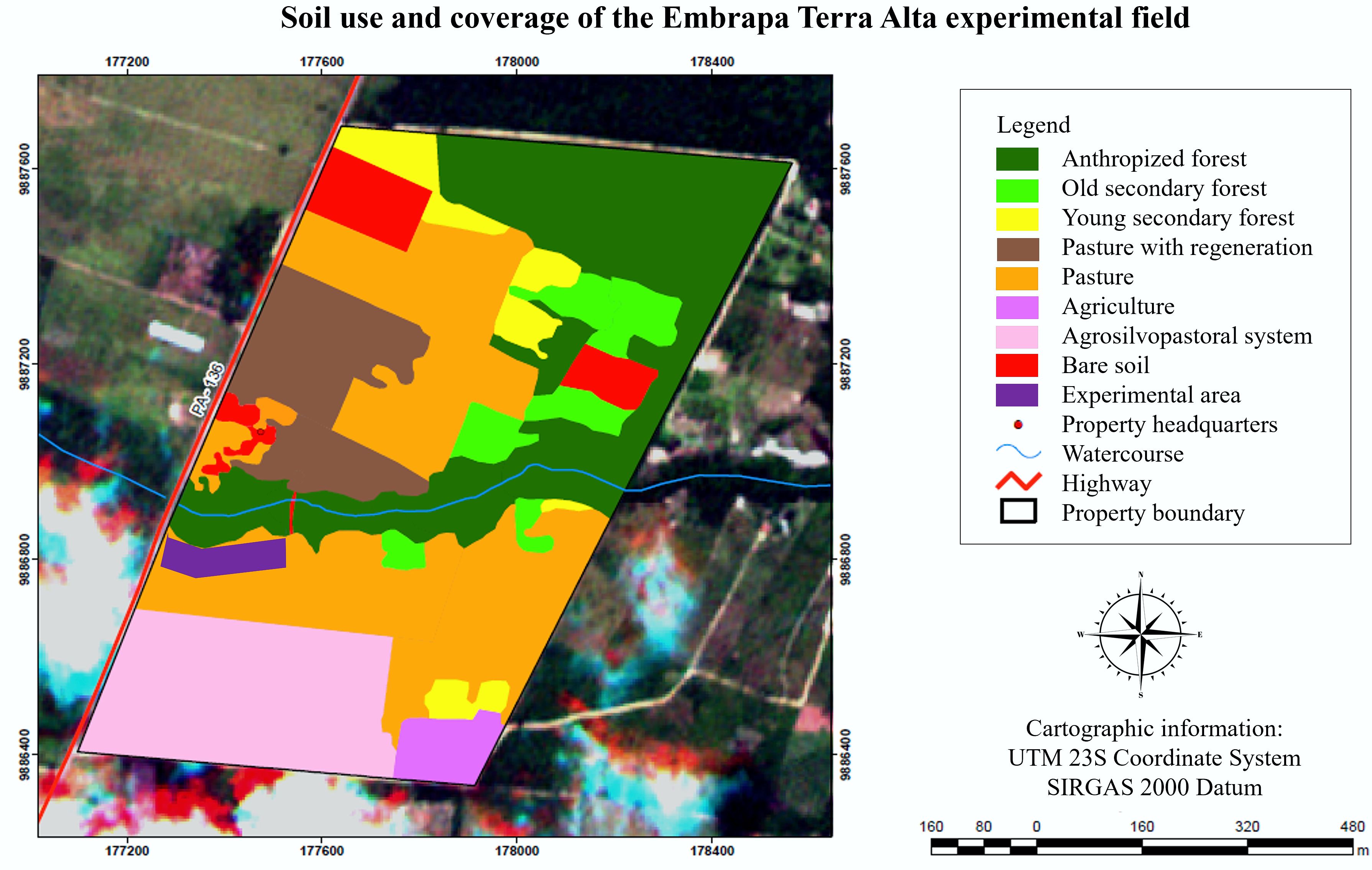
The study was conducted in a pasture area in the experimental field of the Brazilian Agricultural Research Corporation (Embrapa) in the municipality of Terra Alta (1°02’28.8” S 47°89’99.0” W), northeastern Pará state, Brazilian Amazon (Figure 1). The climate at the study region is classified as tropical monsoon (Am) according to the Köppen classification system (Alvares et al., 2013), with a mean annual temperature of 26.6 °C and mean annual precipitation reaching 2,538 mm. The rainy season extends from January to May, with an average monthly precipitation of 375.8 mm, whereas the driest months, from August to November, record an average of 51.2 mm of precipitation (Instituto Nacional de Meteorologia - INMET, 2025). The average altitude of the study site is 10 m, where the yellow Latosol soil type has a medium texture. The original vegetation was dense ombrophilous forest, whereas secondary forests in different stages of growth and ages, resulting from the abandonment of pastures and agricultural cultivation areas, are currently predominant (Cordeiro et al., 2017; Vale, Costa, & Miranda, 2014).
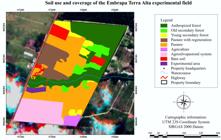
Land use and land cover of the Embrapa experimental field in the municipality of Terra Alta, Eastern Amazon, Brazil; location of the experimental site. Source: Adaptedfrom Embrapa Eastern Amazon Remote Sensing Laboratory by the authors.
The pasture evaluated in this study was established in the 1990s within a section of the riparian forest of a 5-m-wide watercourse that is part of the Capim River basin. For pasture implementation, deforestation and soil preparation were performed to introduce the forage species Urochloa humidicola (Rendle) Morrone and Zuloaga and other species of the genus Urochloa P. Beauv, and for 25 years, the pasture was used for raising buffalo and cattle.
Experimental design
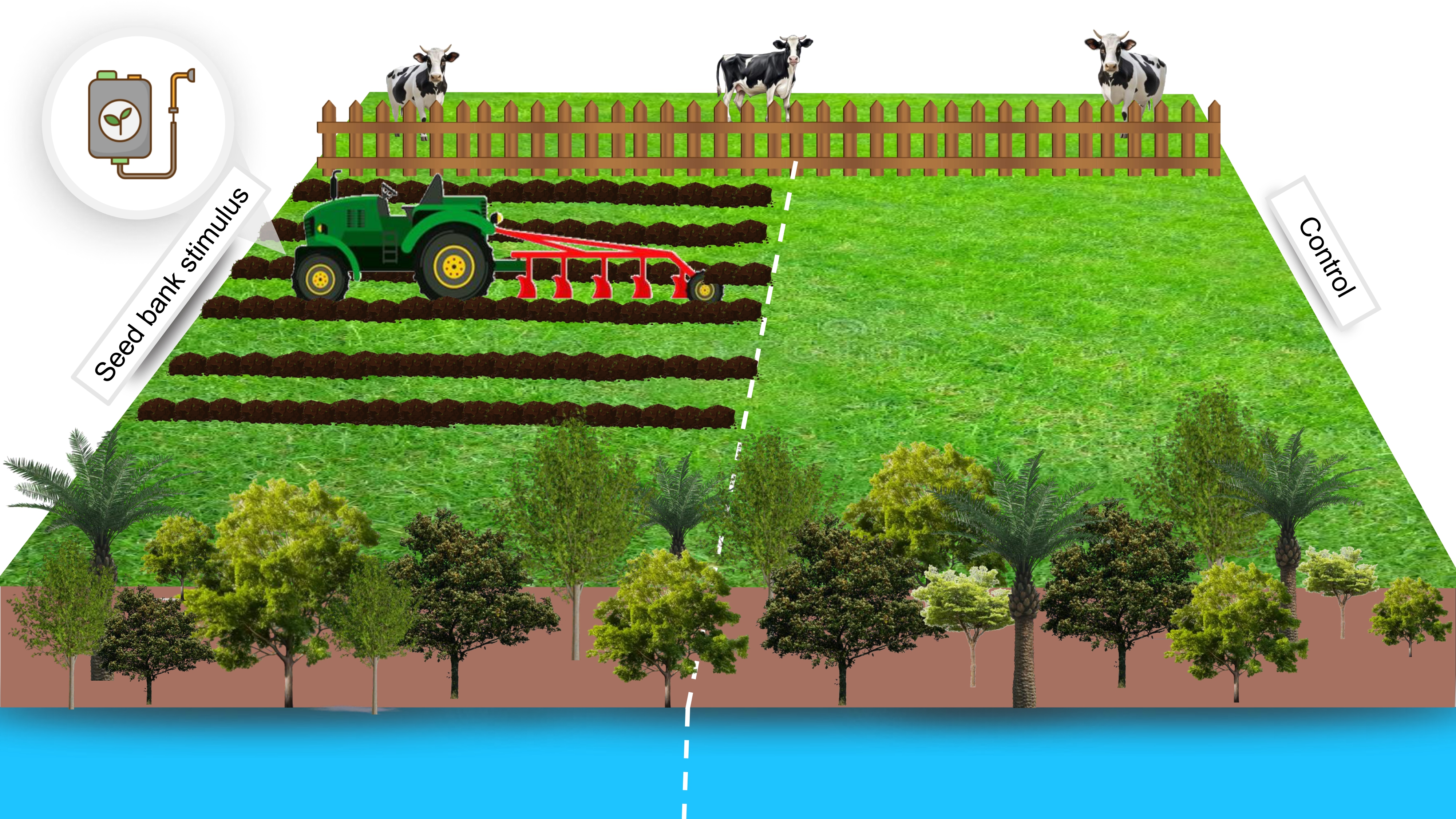
Two treatments were tested: control (CT) and seed bank stimulation (SBS). In both treatments, the area was fenced off to prevent animal entry, and this was the only intervention performed on the CT. In the SBS, initial grass control was achieved through a single application of glyphosate herbicide (dilution 1.25 L/100 L of water), which was followed by soil surface disturbance with a 24-disc harrow performed once. For each treatment, three 135 m2 (9 m × 15 m) plots were established using a completely randomized design. The plots were arranged side by side and aligned parallel to the riparian forest remnant (Figure 2).
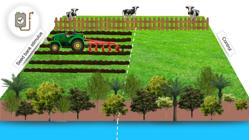
Representation of a plot of the control (CT) and seed bank stimulation (SBS) treatments in a pasture-dominated riparian forest in the municipality of Terra Alta, Eastern Amazon, Brazil.
Vegetation survey
Within each experimental plot, seven temporary subplots of size 1 m2 (1 m × 1 m) were established, and in these subplots, all individuals of natural regeneration with heights < 1 m were identified and counted. These subplots were included to improve sampling precision and account for the within-plot variability. However, for statistical analysis, the data were aggregated at the plot level, and each plot was considered one experimental unit (n = 3 per treatment), thus ensuring analytical independence and avoiding pseudo-replication.
The assessment of the grass cover percentage was performed at 5, 11, 18, and 22 months after the beginning of the experiment. The number of subplots was defined by the sample sufficiency from the species accumulation curve. All identified species within the subplots were grouped according to their botanical families and life forms. Botanical identification was based on the Angiosperm Phylogeny Group IV system (APG IV, 2016), and the classification of the life forms followed the Technical Manual of Brazilian Vegetation (Instituto Brasileiro de Geografia e Estatística - IBGE, 2012), grouping the species into herbs (including grasses), lianas, shrubs, or trees. Standardized species names based on the Flora and Funga of Brazil database (2025) were used. The effects of the soil seed bank stimuli on grass dominance and natural regeneration were evaluated based on grass dominance (%), density of individuals (ind. m-2), and species (spp. m-2).
Data analysis
The assumptions of the parametric tests (normality and homoscedasticity) were tested for normality using the Shapiro-Wilk test (p > 0.05). Homoscedasticity of variance was tested using the Bartlett test (p > 0.05). Once these assumptions were met, the means between evaluations of the same treatment were compared using Tukey’s test (p < 0.05) after an analysis of significant variance at 5% error probability. The main effect evaluated in the ANOVA was the evaluation period (time), which was treated as a fixed factor. Treatments were analyzed separately to compare the differences over time within each treatment. The comparisons among the treatments of the same period were subsequently performed using Student’s t-test (p < 0.05). All statistical analyses were performed and graphs were plotted using R software v.4.2.2 (R Development Core Team, 2023).
Results and Discussion
A total of 93 species were identified in this study, of which the highest proportion (54%) was that of herbs, followed by lianas (20%), shrubs (15%), and trees (9%). None of the herb species in CT persisted throughout the 22-month monitoring period in this study. In contrast, in the SBS treatment, Microstachys corniculata, Mimosa sensitiva, Stylosanthes gracilis, and Phyllanthus niruri were recorded in at least one plot during all the sampling periods. Concerning lianas, six species were exclusive to CT, and five were exclusive to SBS (Supplementary Table 1). In regard to trees, both treatments presented three exclusive species. In the SBS treatment, Acacia mangium and Cecropia palmata were persistent throughout the 22-month study period. Vismia guianensis was detected in all the surveys in both treatment groups (Table 1).
Number of individuals from the natural regeneration in the treatments Control (CT) and Soil Seed Bank Stimulation (SBS), in riparian forest dominated by pasture in the municipality of Terra Alta, Eastern Amazon, Brazil.
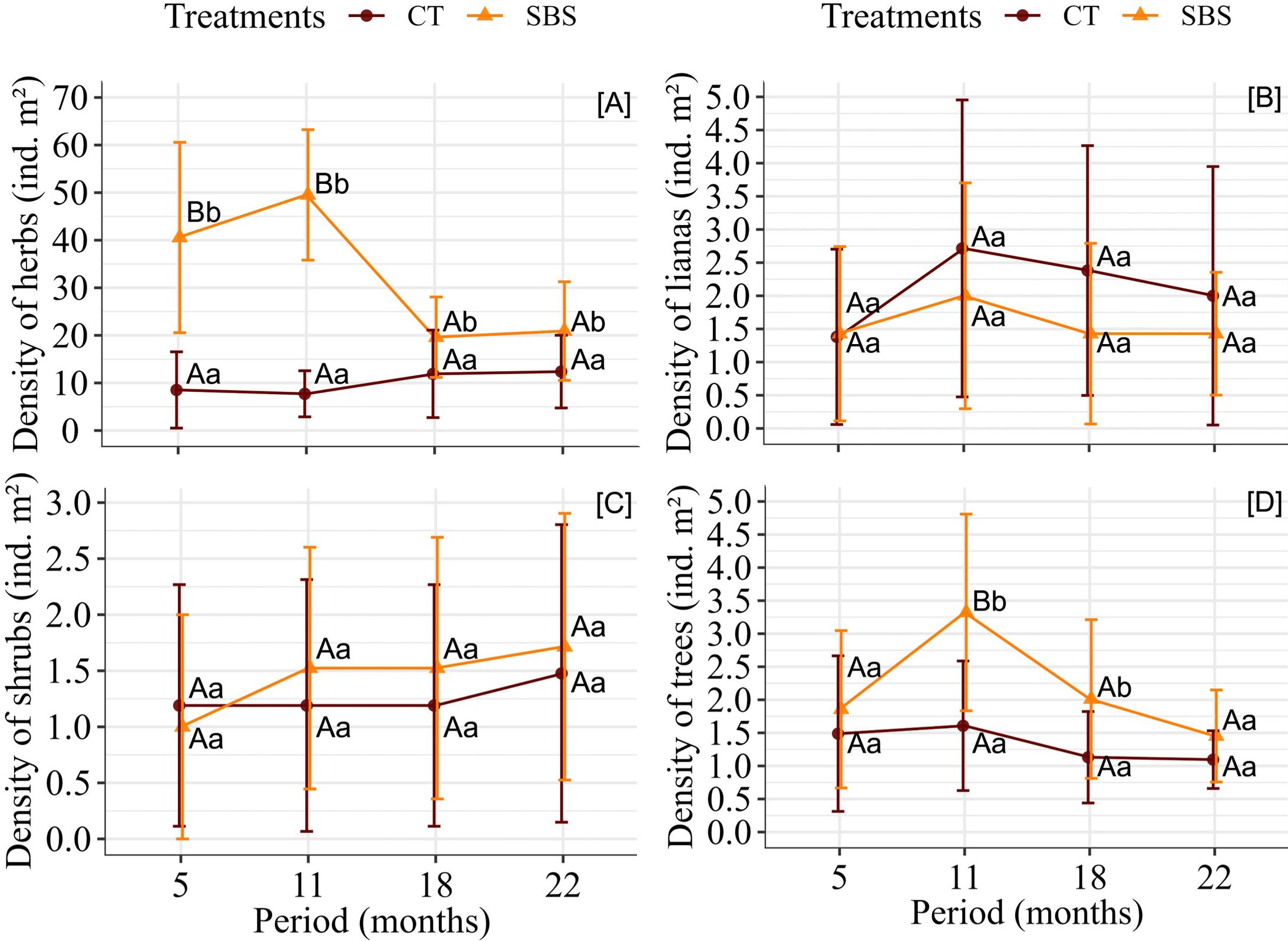
The density of lianas was greater in CT, whereas herbs and trees had more individuals in SBS. Shrubs, on the other hand, were initially favored by SBS, and after 18 months, their populations decreased (Figure 3). Although the SBS treatment particularly stimulated herb species, their density peaked at 11 months and then decreased by over 50% in the following period (Figure 3).
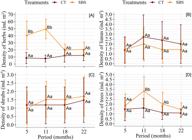
Mean ±standard deviation of the density of individuals present during natural regeneration (height < 1 m), including the life-form herbs (A), lianas (B), shrubs (C), and trees (D), in the Control (CT) and Soil Seed Bank Stimulation (SBS) treatments in the riparian forest dominated by pasture in the municipality of Terra Alta, Eastern Amazon, Brazil. Lowercase letters indicate significant differences (p < 0.05) in ANOVA, followed by Tukey’s post hoc test between the treatments and time. The uppercase letters indicate differences in the same treatment over time.
The density of herbs decreased from the 11th month in the SBS group but did not vary over time in the CT group (Figure 3A). Furthermore, in all the evaluated periods, the average herb density in the SBS treatment was greater than that in the CT treatment (Figure 3A). In the case of both lianas and shrubs, the density of individuals was similar between treatments in all evaluated periods (Figure 3B and 3C). In the case of trees, the density of regenerating individuals in the SBS was greater than that in the CT in the 11th and 18th months (Figure 3D).
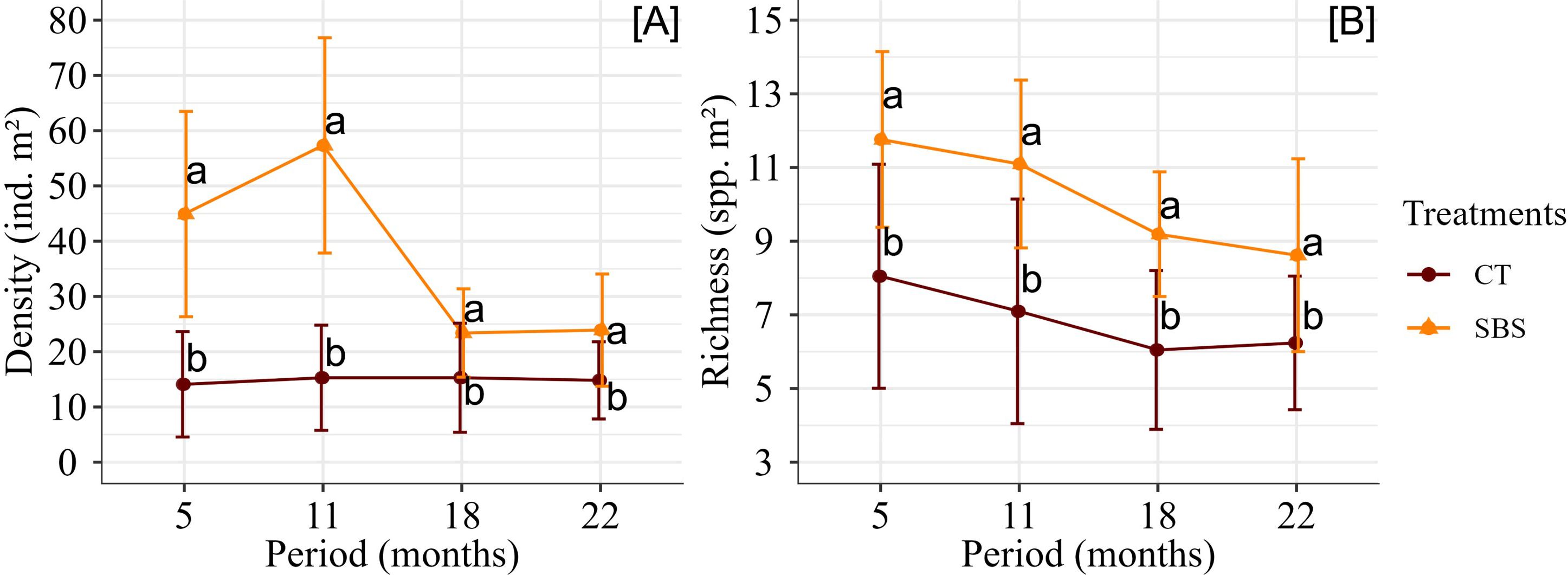
The ANOVA results indicated that, compared to CT, SBS had significantly greater individual density (F3;160 = 19.02; p < 0.05; Figure 4A) and species richness (F3;160 = 10.116; p < 0.05; Figure 4B) across all the sampling periods. However, in the SBS, the number of regenerating individuals decreased in the 18th month compared to the 11th month (Figure 4A).
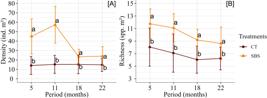
Median ±standard deviation of the density of individuals (A) and species richness (B) associated with natural regeneration (height < 1 m) in the Control (CT) and Seed Bank Stimulation (SBS) treatments in the riparian forest dominated by pasture in the municipality of Terra Alta, Eastern Amazon, Brazil. Letters indicate significant differences (p < 0.05) in ANOVA, followed by Tukey’s post hoc test between the treatments in each period.
The exotic grass species used in the pasture since the year 1990 (U. humidicola and U. brizantha) were detected in the seed banks of both treatments. In the SBS group, the lowest soil coverage under these grasses remained relatively low during the initial period, reaching its lowest value in the 18th month (33.57%). However, a marked increase was observed by the 22nd month (50.76%; Figure 5), indicating a late-stage expansion of these species. Nonetheless, the soil coverage under grasses did not exceed 51% in SBS, whereas in CT, it was greater than 60% throughout the evaluated period, reaching 88.14% in the 5th month (Figure 5).
Median ±standard deviation of the exotic grass species spoil coverage in the control (CT) and soil seed bank stimulation (SBS) treatments in the riparian forests dominated by pasture in the municipality of Terra Alta, Eastern Amazon, Brazil. Letters indicate significant differences (p < 0.05) in ANOVA, followed by Tukey’s post hoc test between the treatments in each period.
The continuous detection of U. humidicola and U. brizantha in the seed bank suggested either a persistent soil seed bank or repeated seed input from adjacent areas, in which these species remain dominant. Seed rain from surrounding pastures cannot be ruled out, given the open landscape and the lack of physical barriers, ruling out the possibility that the two species were present solely due to seed bank persistence.
The introduction of exotic grasses, such as U. humidicola, into the Amazonian pastures has been widely used as an effective strategy since the 1970s because of the resistance of these grasses to grassland spittlebugs (Resende et al., 2024) and their tolerance to acidic soils (Gonçalves et al., 2023). In Brazil, species from the Urochloa genus are cultivated in more than 50 million hectares of pasture (Ferreira et al., 2021), which makes ecosystem restoration a significant challenge, especially in permanent preservation areas (APPs), where grass control is essential for maintaining crucial ecosystem services, such as water regulation and biodiversity conservation.
Germination of other species was observed after the temporary removal of exotic grass through herbicide application and soil disturbance in SBS, which likely contributed to reducing the dominance of exotic grasses. The soil disturbances caused by harrowing influence the germination of the soil seed bank in pastures, as they cause vertical movement of the seeds, and the seeds are, therefore, exposed to environmental conditions that are more favorable for breaking dormancy (Piaia et al., 2020; Válio & Scarpa, 2001). Soil seed bank stimuli can promote, through changes in light exposure and temperature, an increase in natural regeneration (Lyons et al., 2023).
A reduction in exotic grass dominance occurs when regeneration in treatments predominantly comprises tall perennial shrub-tree species, which compete with forage plants for light, water, and space, rendering pasture recovery more difficult (Mascarenhas et al., 1999; Perini, Souza, & Lemos Filho, 2023). However, the increase in grass dominance observed after 11 months in SBS may be explained by the low density of shrub-tree species in the seed bank and the aggressiveness of U. humidicola. This species has characteristics that favor its persistence in the soil seed bank, high seed production, and rapid vegetative growth, rendering it a strong competitor (Bao, Assis & Pott, 2021). Additionally, the stoloniferous habit of these grasses contributes to their efficient soil occupation, thereby hindering the regeneration of other shrub and tree species.
The persistence of native herbaceous species with high density during the initial succession, as observed in this study, reflects a common pattern in abandoned pastures, with these species replaced gradually by trees (Correia & Martins, 2015; Rocha, Vieira, & Simon, 2016; Toledo-Aceves, Trujillo-Miranda, & López-Barrera, 2021). This pattern is also reported in other studies conducted in the pastures of the Amazon. These studies have also revealed the difficulty in overcoming the dominance of herbaceous species and invasive grasses even after decades of abandonment (Cheung et al., 2009; Vieira & Pessoa, 2001). Exotic grasses can outcompete native herbs because many herb species are not highly persistent, thereby freeing space for grass colonization. Another factor is that perennial herbs do not exceed the covering height of Urochloa, which can reach one meter in height (Mascarenhas et al., 1999; Bao, Assis & Pott, 2021).
The soil seed bank contributes to the conservation and supply of propagules to the ecosystem. Even though the EBS treatment favored an increase in the density and richness of native species, the species identified in the seed banks may not necessarily represent the established vegetation (Anju, Warrier & Kunikannan, 2022). The presence of shrubs and trees from the initial stages of succession suggested the long-term potential for grass control provided by stimulating the seed bank. Among the observed individuals, Vismia guianensis and Cecropia sp. stood out as pioneer species with high density in both treatments, indicating their potential to colonize areas with poor soil and dominated by invasive grasses (Flores et al., 2024; Nogueira, Ferreira, & Martins, 2015). Both species often colonize sites that have somewhat different disturbance regimes or recovery trajectories (Wieland et al., 2011; Mesquita et al., 2001), and the presence and abundance of these species, therefore, provide valuable insights into the legacy effects of past land use and the ongoing succession dynamics in the Amazonian pastures. The consistent presence of these species throughout the 22 months reinforces the importance of pioneer species in the early recovery of degraded regions, creating a proper environment for the entry of other larger species.
Conclusions
Seed bank stimulation (SBS) in degraded pastures is an effective strategy to control exotic grasses and accelerate native regeneration. Implemented with phosphate application and soil plowing, SBS increased density and diversity of regenerating species compared to the control, favoring shrubs and trees. However, after the 11th month, exotic grasses regained dominance, highlighting the need for continuous management. Thus, while SBS shows potential to stimulate riparian forest restoration, the persistence of invasive grasses may limit long-term success.
Acknowledgements
Gustavo Schwartz and Julia Isabella de Matos Rodrigues are grateful to the National Council for Scientific and Technological Development (CNPq) for a productivity grant (305460/2023-4) and a doctoral scholarship (140573/2024-0), respectively.
Data Availability Statement
Data available upon request to authors.
References
- Alvares, C. A. et al. (2013). Köppen’s climate classification map for Brazil. Meteorologische Zeitschrift, 22(6):711-728.
- Anju, M. V., Warrier, R. R., & Kunhikannan, C. (2022). Significance of soil seed bank in forest vegetation-A review. Seeds, 1(3):181-197.
- APG IV et al. (2016). An update of the angiosperm phylogeny group classification for the orders and families of flowering plants: APG IV. Botanical Journal of the Linnean Society, 181(1):1-20.
- Asner, G. P. et al. (2009). A contemporary assessment of change in humid tropical forests. Conservation Biology, 23(6):1386-1395.
- Bao, F., Assis, M. A., & Pott, A. (2021). Maintenance of wetland plant communities: The role of the seed bank in regeneration of native plants. Acta Botanica Brasilica, 35(1):70-78.
- Brasil. (2012). Dispõe sobre a proteção da vegetação nativa; altera as Leis nºs 6.938, de 31 de agosto de 1981, 9.393, de 19 de dezembro de 1996, e 11.428, de 22 de dezembro de 2006; revoga as Leis nºs 4.771, de 15 de setembro de 1965, e 7.754, de 14 de abril de 1989, e a Medida Provisória nº 2.166-67, de 24 de agosto de 2001; e dá outras providências. Diário Oficial da União: seção 1, Brasília, DF, ano CXLIX, n. 102, p. 1, 28 Maio de 2012.
- Chazdon, R. (2012). Regeneração de florestas tropicais. Boletim do Museu Paraense Emílio Goeldi - Ciências Naturais, 7(3):195-218.
- Cheung, K. C., Marques, M. C. M., & Liebsch, D. (2009). Relação entre a presença de vegetação herbácea e a regeneração natural de espécies lenhosas em pastagens abandonadas na Floresta Ombrófila Densa do Sul do Brasil. Acta Botanica Basilica, 23(4):1048-1056.
- Colares, L. F. et al. (2022). Extinction of rare fish predicts an abrupt loss of ecological function in the future of Amazonian streams. Freshwater Biology, 67(2):263-274.
- Cordeiro, I. M. C. C. et al. (2017). Nordeste paraense: Panorama eral e uso sustentável das florestas secundárias Belém PA: EDUFRA, 323p.
- Correia, G. G. S., & Martins, S. V. (2015). Banco de sementes do solo de floresta restaurada, reserva natural Vale, ES. Floresta e Ambiente, 22(1):79-87.
- Cruz, D. C. et al. (2022). Priority areas for restoration in permanent preservation areas of rural properties in the Brazilian Amazon. Land Use Policy, 115:106030.
- Dib, V. et al. (2023). Shedding light on the complex relationship between forest restoration and water services. Restoration Ecology, 31(5):e13890.
- Eaton, W. D. et al. (2024). Natural regeneration or tree planting in a tropical forest-to-pasture damaged area: Which is more efficacious for soil ecosystem recovery? Restoration Ecology, 32(4):e14127.
- Fabšičová, M. et al. (2024). The importance of soil seed banks for biodiversity restoration in degraded grasslands. Folia Geobotanica, 59:17-37.
- Ferreira, R. C. U. et al. (2021). An overview of the genetics and genomics of the urochloa species most commonly used in pastures. Frontiers in Plant Science, 12:770461.
-
Flora e Funga do Brasil. (2025). Jardim Botânico do Rio de Janeiro Available in: <http://floradobrasil.jbrj.gov.br/>.
» http://floradobrasil.jbrj.gov.br/ - Flores, B. M. et al. (2024). Critical transitions in the Amazon forest system. Nature, 626:555-564.
- Gardon, F. R., & Santos, R. F. (2024). Brazilian forest restoration: Success or better than nothing? Land Use Policy, 137:107022.
- Gonçalves, M. S. et al. (2023). Tropical grasses adaptability as a sustainable tool for recovering degraded pastures and restricting soil loss: Use diagnosis and future scenarios. Environmental Development, 47:100887.
- Instituto Brasileiro de Geografia e Estatística - IBGE. (2012). Manual técnico da vegetação brasileira 2ed. Rio de Janeiro. 271p.
-
Instituto Nacional de Meteorologia - INMET. (2025). Tabela de dados das estações Available in: <https://tempo.inmet.gov.br/TabelaEstacoes>.
» https://tempo.inmet.gov.br/TabelaEstacoes - Junk, W. J. et al. (2024). Riparian wetlands of low-order streams in Brazil: Extent, hydrology, vegetation cover, interactions with streams and uplands, and threats. Hydrobiologia, 851:1657-1678.
- Lyons, K. G. et al. (2023). Challenges and opportunities for grassland restoration: A global perspective of best practices in the era of climate change. Global Ecology and Conservation, 46:e02612.
- Martins, S. V. (2014). Recuperação de matas ciliares 3 ed. Viçosa, MG: Aprenda Fácil, 219p.
- Mascarenhas, R. E. B. et al. (1999). Plantas daninhas de uma pastagem cultivada de baixa produtividade no Nordeste Paraense. Planta Daninha, 17(3):399-418.
- Mesquita, R. C. G. et al. (2001). Alternative successional pathways in the Amazon Basin. Journal of Ecology, 89(4):528-537.
- Nogueira, W. L. P., Ferreira, M. J., & Martins, N. O. A. (2015). Estabelecimento inicial de espécies florestais em plantio para a recuperação de área alterada no Amazonas. Revista Brasileira de Ciências Agrárias, 58(4):365-371.
- Perini, M., Souza, M. L., & Lemos Filho, J. P. (2023). Forest restoration in old pasture areas dominated by Urochloa brizantha Ciência Florestal,33(1):e65858.
- Piaia, B. B. et al. (2020). Natural regeneration as an indicator of ecological restoration by applied nucleation and passive restoration. Ecological Engineering, 157:105991.
-
Programa de Monitoramento do Desmatamento da Amazônia por Satélite - PRODES. (2024). Monitoramento do desmatamento da floresta amazônica brasileira por satélite Available in: <http://www.obt.inpe.br/OBT/assuntos/programas/amazonia/prodes>.
» http://www.obt.inpe.br/OBT/assuntos/programas/amazonia/prodes -
R Development Core Team, 2023. R: A language and environment for statistical computing R Foundation for Statistical Computing. Available in: <https://www.r-project.org/>
» https://www.r-project.org/ - Resende, T. T. et al. (2024). Sixteen years of recurrent selection of ruzi grass for resistance to spittlebugs (Hemiptera: Cercopidae). Agronomy, 14(7):1516.
- Rocha, G. P. E., Vieira, D. L. M., & Simon, M. F. (2016). Fast natural regeneration in abandoned pastures in southern Amazonia. Forest Ecology and Management, 370:93-101.
- Sesin, V. et al. (2022) Legacies of invasive plant management: effects of leaching from glyphosate-treated and untreated plants on germination and early growth of native macrophytes. Biological Invasions, 24:2561-2580.
- Silva, T. R. et al. (2023). Factors affecting savanna and forest regeneration in pastures across the cerrado. Journal of Environmental Management, 330:117185.
- Silveira, J. G. et al. (2022). Land use, land cover change and sustainable intensification of agriculture and livestock in the Amazon and the Atlantic Forest in Brazil. Sustainability, 14(5):2563.
- Toledo-Aceves, T., Trujillo-Miranda, A. L., & López-Barrera, F. (2021). Tree regeneration in active and passive cloud forest restoration: Functional groups and timber species. Forest Ecology and Management, 489:119050.
- Török, P. et al. (2024). Grazing effects on vegetation: Biodiversity, management, and restoration. Applied Vegetation Science, 27(3):e12794.
- Vale, I., Costa, L. G. S., & Miranda, I. S. (2014). Espécies indicadas para a recomposição da floresta ciliar da sub-bacia do rio peixe-boi, Pará. Ciência Florestal, 24(3):573-582.
- Válio, I. F. M., & Scarpa, F. M. (2001). Germination of seeds of tropical pioneer species under controlled and natural conditions. Brazilian Journal of Botany, 24(1):79-84.
- Vieira, C. M., & Pessoa, S. V. A. (2001). Estrutura e composição florística do estrato herbáceo subarbustivo de um pasto abandonado na reserva biológica de poço das antas, Município de Silva Jardim, RJ. Rodriguésia, 52(80):17-30.
- Wieland, L. M. et al. (2011). Seed rain and advance regeneration in secondary succession in the Brazilian Amazon. Tropical Conservation Science, 4(3):300-316.
-
Editor de seção:
Renato Paiva