 SCS127 CL: Rice cultivar resistant to herbicides of imidazolinone chemical group
Abstract
SCS127 CL is a Clearfield® rice cultivar that is resistant to herbicides from the imidazolinone group, such as Kifix®. This cultivar features a modern plant type, resistance to lodging, a late maturity cycle, moderate resistance to leaf and panicle blast, high yield potential, long grains, and good cooking quality.
Keywords:
Oryza sativa; Clearfield; Imidazolinone chemical group
INTRODUCTION
Rice is a staple food for Brazilians, making both the quality and quantity of its production critical for food security. One of the major challenges in irrigated rice cultivation is the infestation of weedy rice (O. sativa L.), commonly known as red rice. Due to its close genetic relationship with commercial rice, red rice can heavily infest rice fields, compromising yields. Developing herbicide-resistant rice cultivars offers an effective solution for controlling weeds, particularly weedy rice, thereby reducing the costs and labor associated with manual removal and other management practices. Herbicide-resistant rice cultivars, such as Clearfield® (CL), provide an efficient method for controlling red rice, especially in direct-seeded rice systems. These cultivars are resistant to herbicides that inhibit the acetohydroxyacid synthase (AHAS) enzyme, offering a highly effective tool for managing red rice infestations (Schiocchet et al. 2015).
SCS127 CL was developed by Epagri and is resistant to herbicides from the imidazolinones chemical group. The rice cultivar is recommended for all rice-producing regions of the state of Santa Catarina. The laboratorial analysis demonstrated that the grains are suitable for parboiled and white rice.
PEDIGREE AND BREEDING METHOD
SCS127 CL was developed from a single cross in 2001 using PCW16 line and Epagri 108 cultivar as the recurrent parent. PCW16 carries genes for resistance to herbicides from the imidazolinone chemical group. In 2002, backcrossing was performed with the SCH01-1156 line, using Epagri 108 cultivar. This F1 generation was named SCH02-1156. In 2003, another backcross between SCH01-1024 and Epagri 108 was conducted, resulting in SCH02-1156. The seeds obtained from this backcross formed the F2 population, which showed genetic variability. Selection began in the F2RC2 generation for resistance to herbicides, height, yield, grain type and number and panicle type. The selected plants produced seeds that formed the F3RC2 generation, followed by the F4RC2 generation. Agronomic evaluations for yield potential and confirmation of herbicide resistance were carried out at this stage. The best-performing plants were advanced to the F5 generation for further preliminary assessment. In the F6 generation (2011/2012), the selected line was named SC 1119, and it was evaluated for agronomic traits (Marschalek et al. 2023). SC 1119 exhibited, good yield performance and high milling yield, making it suitable for both white and parboiled rice. The line also demonstrated moderate resistance to blast and lodging resistance. Based on its performance in Value for Cultivation and Use (VCU) trials, conducted across two seasons (2021/22 and 2022/23) in Itajaí, Massaranduba, Pouso Redondo, and Turvo, SC 1119 was released as SCS127 CL in 2024.
PERFORMANCE
SCS127 CL is a rice cultivar resistant to Kifix®, an herbicide that inhibits the enzyme acetohydroxyacid synthase (AHAS). This technology allows effective control of most weeds in rice fields with a single herbicide application, reducing the overall use of agrochemicals. The agronomic characteristics of SCS127 CL are listed in Table 1. The average plant height is 86 cm, with a late maturity cycle (145 days), high tillering capacity, and hairy leaves. The cultivar is resistant to lodging, a critical trait for the water-seeded rice systems used in Santa Catarina and Rio Grande do Sul. It also exhibits intermediate grain abscission, moderate resistance to iron toxicity, and moderate resistance to leaf and panicle blast diseases. In VCU trials conducted in Itajaí, Massaranduba, Pouso Redondo, and Turvo, SCS127 CL demonstrated an average yield of 10,872.38 kg ha-1, outperforming the control groups (Table 2). The cultivar also showed strong industrial performance and processing quality. Due to its herbicide resistance and excellent agronomic, industrial, and sensory traits, SCS127 CL is recommended to rice farmers in the Santa Catarina and Rio Grande do Sul region.
Morphological and agronomic traits of cultivar in VCU trials (Itajaí, Massaranduba, Pouso Redondo and Turvo, in 2023/2024)
OTHER CHARACTERISTICS
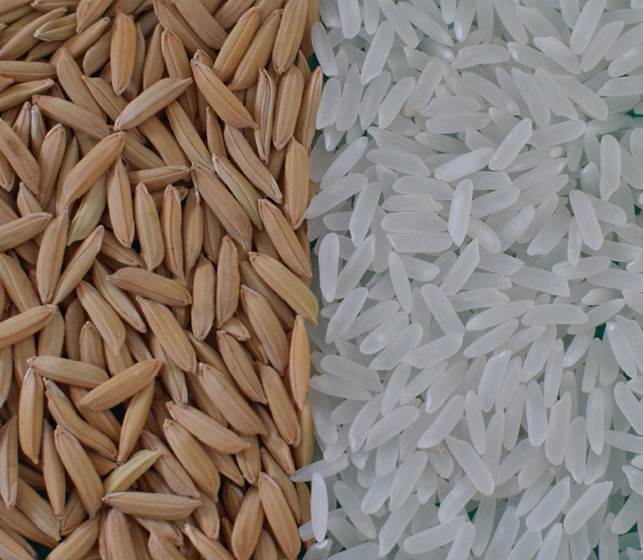
SCS127 CL produces long, translucent grains (Figure 1) with good milling quality and favorable cooking characteristics. The milling yield is 74.40% (Table 3). Industrial grain evaluations confirm that the cultivar is well-suited for parboiling, with both milled and parboiled grains showing a glassy appearance. Cooking tests indicated excellent quality, with grains remaining loose, having a soft texture, good aroma, and normal taste. Sensory evaluations showed strong consumer acceptance for both parboiled and milled rice.
SEED MAINTENANCE AND DISTRIBUTION
SCS127 CL is registered at the Ministry of Agriculture, Livestock, and Supply under registration number 55334. The genetic seed stock is maintained by Epagri at the Itajaí Experiment Station (Rodovia Antônio Heil, n. 6800, Itaipava, P.O. Box 277, CEP 88301-970, Itajaí, SC, Brazil). The cultivar is licensed to BASF and produced by Santa Catarina Irrigated Rice Seed Producers (Acapsa)
ACKNOWLEDGEMENTS
This technology was financially supported by the Conselho Nacional de Desenvolvimento Científico e Tecnológico (CNPq) and the Fundação de Amparo à Pesquisa e Inovação do Estado de Santa Catarina (Fapesc). The authors extend their gratitude to the technicians who contributed to the development of this cultivar, with special thanks to Douglas George de Oliveira, Geovani Porto and Samuel Batista dos Santos. Additional thanks to Acapsa, Sindicato das Indústrias de Arroz de Santa Catarina (Sindarroz-SC), and Embrapa Arroz e Feijão (CNPAF) for the chemical analysis of the grains.
Data Availability
The datasets generated and/or analyzed during the current research are available from the corresponding author upon reasonable request.
REFERENCES
- Marschalek R, Souza NM, Terres LR, Sangoi L, Oliveira DG, Stürmer FW, Colombari-Filho JM, Scheuermann KK, Vale MLC, Andrade A, Pereira A, Wickert E, Silva DL, Rebelo AM, Facchinello PHK, Magalhães-Junior AM, Verdi R, Hickel ER, Noldin JA, Trabaquini K, Rozzetto DS2023 SCSBRS126 Dueto: irrigated rice variety resilient to cold and heat at reproductive stage. Crop Breeding and Applied Biotechnology 23:e45492335
- Schiocchet MA, Noldin JA, Marschalek R, Wickert E, Martins GN, Eberhardt DS, Hickel E, Knoblauch R, Scheuermann KK, Raimondi JV, Andrade A2015 SCS121 CL: Rice cultivar resistant to herbicides of imidazolinone chemical group. Crop Breeding and Applied Biotechnology 15:282-284