The impact of a multicomponent telemedicine-based intervention on quality of life in adults with respiratory failure requiring mechanical ventilation: protocol for a cluster stepped-wedge randomized clinical trial (Tele-Rehab MV Trial)
ABSTRACT
Objective: To assess the impact of a multicomponent intervention on the health-related quality of life of patients with hypoxemic respiratory failure requiring invasive mechanical ventilation.
Methods: A cluster stepped-wedge randomized clinical trial will be conducted in intensive care units across Brazil. Intensive care units with ≥ 8 beds and the capacity to admit patients with acute hypoxemic respiratory failure will be included. Within each intensive care unit, adult patients with acute hypoxemic respiratory failure requiring invasive mechanical ventilation, in whom SARS-CoV-2 infection is part of the differential diagnosis, will be enrolled. The intervention consists of a telemedicine-based quality improvement program focused on disability prevention and rehabilitation strategies, implemented during the patient's intensive care unit stay, continued through ward admission, and extending up to 2 months post-hospital discharge. The primary outcome is health-related quality of life assessed using the EuroQol 5-Dimension 3-Level scale 90 days after discharge from the hospital. Secondary outcomes include rehospitalization within 30 days from hospital discharge, as well as all-cause mortality, anxiety, depression, cognitive impairment, new disabilities for instrumental activities of daily living, and return to work or studies 90 days after discharge from the hospital.
Results: The study protocol has been approved by the research ethics committees of all participant institutions. It was registered at ClinicalTrials.gov (NCT06343545) before the first participant was included. We aim to disseminate the findings through conferences and peer-reviewed journals.
Conclusion: The "Tele-Rehab MV trial" may provide further information on the role of early multicomponent interventions aimed at disability prevention and rehabilitation for critically ill patients with acute hypoxemic respiratory failure.
Keywords:
Respiration, artificial; Critically illness; Patient discharge; Patient readmission; Respiratory insufficiency; Rehabilitation; Quality of life; Telemedicine; Quality improvement; Interview
INTRODUCTION
Acute respiratory failure requiring invasive mechanical ventilation (MV) is associated with significant mortality rates.(1,2) Furthermore, survivors often develop new physical, mental, and cognitive disabilities, as well as worsening clinical conditions, which can significantly impair their health-related quality of life.(3–5) Coronavirus disease 2019 (COVID-19) remains a notable cause of acute respiratory failure and long-term disabilities,(6) with the added potential to cause persistent symptoms regardless of the infection's initial severity.(7,8) Although the incidence of severe acute respiratory syndrome coronavirus 2 (SARS-CoV-2)-related respiratory failure has declined with the widespread adoption of vaccination, it persists as an endemic cause of pneumonia, particularly among patients with significant comorbidities,(9) and is often part of the differential diagnosis in severe cases of acute hypoxemic respiratory failure.(10) While bundles of interventions, including analgesia optimization, sedation minimization, early mobilization, and delirium prevention, as well as screening for individuals at risk of new disabilities for early rehabilitation, have been recommended to prevent disabilities in critical care patients,(4,11,12) no large randomized clinical trial has yet demonstrated a significant impact on long-term health-related quality of life.(3,12) Additionally, the burden of disability following critical illness is often associated with patients’ inability to attend clinic-based follow-up, and telemedicine may serve as a tool to reduce healthcare inequalities.(13) Accordingly, the primary objective of this study is to assess the impact of a multicomponent intervention on the health-related quality of life of patients with hypoxemic respiratory failure requiring invasive MV. We hypothesize that compared to the standard of care, the intervention will improve the quality of life of patients with acute hypoxemic respiratory failure requiring invasive MV.
METHODS
Study design
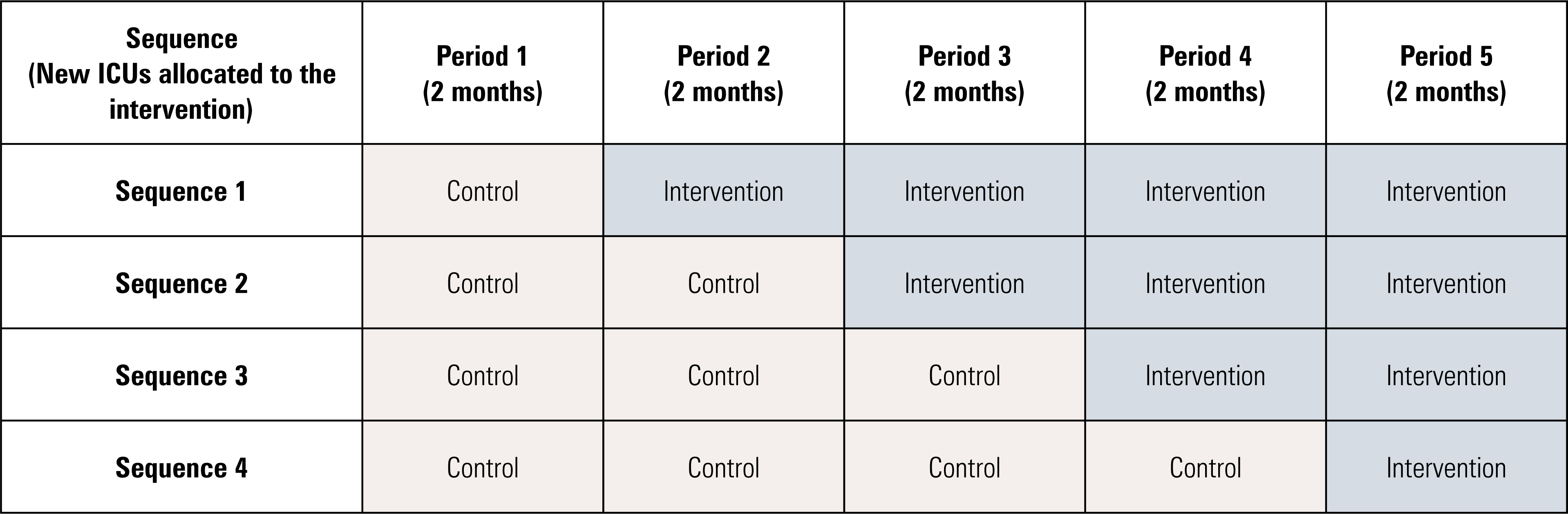
This study is a cluster stepped-wedge randomized clinical trial, with the intensive care unit (ICU) as the unit of randomization. The study begins with an initial control period during which none of the ICUs are exposed to the intervention. Subsequently, at regular 2-month intervals (the "steps"), a randomly selected group of ICUs transitions from the control to the intervention. This sequential process continues until all ICUs have crossed over and are fully exposed to the intervention (Figure 1). This design was chosen because the intervention targets organizational-level components and is intended to be implemented across the entire ICU rather than in selected patients. The cluster stepped-wedge design helps mitigate the risk of contamination between groups and accommodates the logistical challenges of a sequential roll-out across participating centers.
Randomization will be stratified based on the number of ICU beds (≤ or > median) to minimize numerical imbalance between study arms due to clusters with differing care capacities. A statistician not involved in study implementation or recruitment will generate the randomization list, thereby ensuring allocation concealment and minimizing potential bias. The list will be stored as a digital file in a secure, password-protected electronic system accessible only to the statistician. Intensive care unit allocation will remain concealed from all study investigators. It will be disclosed by the coordination center to the local research team 60 days prior to implementation to allow adequate time for staff training. Local research teams will be instructed to maintain usual care practices until the official start date of the intervention period. Due to the nature of the interventions and study design, blinding participants or ICU staff is not feasible. However, outcome evaluators will remain blinded.
The present study protocol follows the Standard Protocol Items: Recommendations for Interventional Trials statement recommendations (SPIRIT).(14) This study protocol was registered at Clinicaltrials.gov (NCT06343545).
Participants
Cluster eligibility criteria
Brazilian adult ICUs of public hospitals with at least eight beds, capable of admitting cases of respiratory failure with suspected COVID-19, capable of doing remote care (internet link available in the hospital), and able to provide institutional agreement to participate in the study will be enrolled. All units will be considered part of the same cluster in hospitals with multiple ICUs. Participating centers will be selected based on the number of reported cases of severe acute respiratory infection during the year preceding the study, as provided by the Secretariat for Health and Environmental Surveillance of the Brazilian Ministry of Health. In each Brazilian state, the public hospital with the most notifications will be invited via email. Invitations will be sent consecutively until the required number of clusters is reached.
Patient eligibility criteria
Consecutive patients aged 18 years admitted to the ICU with hypoxemic acute respiratory failure requiring invasive MV, in whom SARS-CoV-2 infection is part of the differential, will be enrolled. This does not imply that COVID-19 is the primary suspected cause, but rather that it is considered at least a possible (though not necessarily probable) diagnosis at the time of ICU admission. The exclusion criteria are as follows: severe underlying disease with a life expectancy of ≤ 3 months, as judged by the local treating physician; absence of a responsible family member in cases where patients have communication barriers (e.g., aphasia, severe cognitive impairment, or non-native Portuguese speakers); lack of telephone contact; and unavailability for telephone follow-ups. Participants will be enrolled only once and will not re-enter the study.
Importantly, a confirmatory test for SARS-CoV-2 infection will not be required for inclusion. Even if an alternative diagnosis (e.g., bacterial pneumonia, pulmonary embolism, or pulmonary edema) is confirmed during follow-up, the patient will remain in the study, given that the intervention may benefit all patients with acute hypoxemic respiratory failure, regardless of the underlying etiology.(5)
Interventions
The study intervention is an evidence-based,(4,15–18) multicomponent program designed to prevent disability and promote rehabilitation through telemedicine. It was developed through a consensus process involving a multidisciplinary board of critical care clinicians and rehabilitation specialists (physiatrists, respiratory and motor therapists, psychologists, and speech-language therapists) explicitly assembled for this study. The program is structured into three principal telemedicine-based bundles: the ICU tele-bundle, the ward tele-bundle, and the post-discharge tele-bundle (Table 1). The ICU tele-bundle is implemented by local clinical staff following training and is reviewed remotely by a study critical care clinician through three 1-hour telemedicine sessions per week. For each patient, the bundle is discussed during daily multidisciplinary rounds and includes strategies to optimize analgesia, minimize sedation exposure, conduct spontaneous breathing trials systematically, implement delirium prevention measures, promote early mobilization, and remove unnecessary invasive devices. The ward tele-bundle, delivered either by local clinical staff or centralized tele-rehabilitation specialists from the coordination center, aims to identify patients at high risk for post-ICU complications, including those with nutritional impairment, oropharyngeal dysphagia, low physical capacity, and anxiety or depression symptoms using validated screening tools.(19–22) It also involves developing a personalized tele-rehabilitation plan to be initiated during ward hospitalization (e.g., nutritional guidance, physical and respiratory therapy, swallowing rehabilitation, and psychological follow-up) and continued after hospital discharge. Lastly, the post-discharge tele-bundle comprises a 2-month centralized tele-rehabilitation program, delivered via smartphone videoconferencing, and coordinated by the central study team. This program includes nutritional guidance, swallowing rehabilitation, physical therapy, respiratory therapy, and psychological support, building upon the individualized rehabilitation plan developed during the ward phase. To ensure continuity of care, dedicated nurse navigators will engage in multidisciplinary discussions via telemedicine with ICU staff, ward staff, and tele-rehabilitation specialists, addressing challenges and providing ongoing guidance throughout the intervention phases.
During the control phase, participating ICUs will be advised to maintain their standard care practices per local protocols.
Implementation process
The following strategies will be employed to optimize adherence to the intervention:
-
–
Formation of local implementation action teams: multidisciplinary teams composed of healthcare professionals will be established at each participating hospital to oversee and support the implementation process.
-
–
Provision of educational materials: comprehensive educational materials, including written protocols and remote-based learning videos detailing the components of the study intervention, will be made available to all participating ICUs at the time of implementation.
-
–
On-site training: the coordination center team will conduct on-site meetings with local staff (ICU and ward professionals) within 15 days before the intervention begins for training and once during the intervention phase (15 - 21 days after the intervention) for troubleshooting and re-training.
-
–
Consultations with critical care specialists: local implementation teams will consult via telemedicine weekly with critical care specialists. These sessions will utilize evaluative and iterative approaches, such as Plan-Do-Study-Act (PDSA) cycles, to address challenges, refine processes, and ensure consistent adherence to the intervention. Additionally, critical care specialists will be available daily to provide support and answer any queries from the local teams.
-
–
Virtual benchmarking meetings: virtual benchmarking meetings will be held 30 days (± 3 days) after the intervention begins. These meetings will involve hospitals randomized in the same sequence (to avoid contamination), offering a platform to address implementation challenges, foster peer learning, and encourage collaborative problem-solving.
-
–
Patients eligible for tele-rehabilitation who do not have access to a smartphone will be provided with one to enable video conferencing.
Fidelity of the program processes
Weekly remote monitoring visits will be conducted at all participating clusters to assess the fidelity of the proposed intervention. Researchers from the coordinating center will perform semi-structured interviews with ICU and ward staff to evaluate adherence to the recommended processes (see the interview template in the Supplementary Material). Additionally, patient participation rates will be measured as an indicator of adherence to the tele-rehabilitation component. Each cluster will be assessed during the intervention period using semi-structured evaluations, which will be scored from zero to 100%, with higher scores indicating greater adherence to the intervention. Adherence will be evaluated across three domains: ICU tele-bundle, including frequency of multidisciplinary rounds, analgesia optimization, sedation minimization, spontaneous breathing trials, delirium prevention, early mobilization, and removal of unnecessary invasive devices; ward tele-bundle, involving the screening of patients at high risk for post-ICU complications and the development of tailored rehabilitation plans during ward hospitalization; and post-discharge tele-bundle, assessed by the patient's attendance rate at teleconsultations. The overall adherence score will be calculated as the mean of the scores across all three domains.
Outcomes
Primary outcome
The primary outcome is the health-related quality of life utility score measured 3 months after hospital discharge using the EuroQol five-dimension three-level (EQ-5D-3L) questionnaire.(23) The EQ-5D-3L includes a descriptive system with five dimensions of health-related quality of life: mobility, self-care, usual activities, pain/discomfort, and anxiety/depression. Each dimension has three levels (no problems, some problems, and extreme problems). The utility score derived from the descriptive system for the Brazilian population ranges from −0.17 (where zero represents a health state equivalent to death; negative values are considered worse than death) to 1 (best health state). The estimated minimal clinically important difference for the EQ-5D-3L ranges from 0.03 to 0.52,(24) with the mean value for the Brazilian population being 0.82.(25) Deceased patients will be assigned a score of zero during follow-up, as mortality is a competing risk for quality of life assessment.
Secondary outcomes
Secondary outcomes include rehospitalization within 30 days after hospital discharge; all-cause mortality and clinical status according to a modified version of the World Health Organization Ordinal Scale for Clinical Improvement within 90 days(26) (Table 1S - Supplementary Material); and the following outcomes measured at 90 days: days alive and free of hospital, symptoms of anxiety and depression assessed by the Hospital Anxiety and Depression Scale (with scores > 7 and > 10 indicating possible and probable cases of anxiety or depression, respectively),(22) cognitive impairment assessed by the modified Telephone Interview for Cognitive Status (with scores < 32 indicating cognitive impairment),(27) new disabilities in instrumental activities of daily living assessed by the Lawton and Brody instrumental activities of daily living scale(28) (any impairment, moving from independent to partially dependent or from partially dependent to totally dependent, in at least one of the following domains: telephone use, transportation, shopping, responsibility for own medications, and ability to handle finances) relative to 1 month before hospitalisation, physical dependence assessed by the modified Barthel Index (with scores < 21, 21 - 60, and 61 - 90, indicating total, severe, and moderate dependence, respectively),(29) EQ-5D-3L utility scores among survivors, and return to work or studies for patients who were employed or enrolled in education at the time of hospital admission.
Follow-up
Trained site researchers will monitor participants daily during hospitalization, with remote supervision from coordinating center data managers and monitors. After discharge, centralized telephone interviews will be conducted by researchers blinded to the allocation group at 15, 30, 60, and 90 days for outcome assessment. The scheduled dates for these interviews will be relative to the day of hospital discharge (D0), with a ± 5-day window for the first follow-up (at 15 days) and a ± 15-day window for the subsequent follow-ups (at 30, 60, and 90 days).
Procedures to ensure quality
Trained research personnel will prospectively collect data on printed case report forms, which will then be entered into an electronic data capture system (REDCap, Vanderbilt University, Tennessee, USA). To ensure adherence to the study protocol and data quality, the following procedures will be employed:
-
–
All local principal investigators and subinvestigators will attend an on-site training session before the study's initiation to standardize procedures, including data collection methods, confidentiality procedures, and participant retention.
-
–
Investigators will have access to the coordinating center for assistance in resolving any issues or concerns that may arise during the study.
-
–
The coordinating center will review detailed weekly reports on screening, inclusion, follow-up, and data consistency and completeness. Immediate action will be taken to address any identified issues. Discrepancies - defined as improbable values potentially resulting from typos or data entry errors (e.g., an age of 110 years) - and missing data, will be identified through ongoing monitoring by the data management team. Participating centers will be promptly notified and asked to review and verify the accuracy of the flagged entries.
Sample size
A minimum of 18 ICUs, each recruiting 100 patients (totaling 1,800 patients), will be required to detect a difference of 0.09 in EQ-5D-3L utilities (within the minimum clinically relevant difference)24 between the two study arms. This calculation assumes a power of 95%, a standard deviation of 0.28 for EQ-5D-3L utilities (estimated based on a previous publication),(30) a cluster stepped-wedge design with four randomization sequences and five periods, an intra-cluster correlation coefficient of 0.05, and a two-sided alpha level of 0.05. To compensate for potential ICU and patient losses, the present study plans to recruit 20 ICUs.
Statistical analysis
A detailed statistical analysis plan will be finalized, published, or made available online before locking the trial database and starting comparative data analysis. Missing values for the EQ-5D-3L and variables used for covariate adjustment will be imputed using multiple imputation by chained equations if the missing rate exceeds 5%. If the proportion of missing data is 5%, analyses will be conducted using complete cases only. Comparisons will be conducted at the participant level, accounting for cluster and period effects, with outcomes analyzed according to randomization group. Outcome comparisons between study arms will be performed using a mixed-effects generalized linear model, adjusted for age, gender, comorbidities, and baseline Simplified Acute Physiology Score III (SAPS III). Covariate adjustment is justified by the study design, as relevant baseline differences may persist despite a large sample size - especially given the potential for seasonal variations in case mix. Pre-planned sensitivity analyses for the primary outcome will assess the effects of the intervention based on quartiles of the overall cluster adherence score and adherence within each domain. There will be five a priori defined subgroup analyses for the primary outcome: age (< 65 years versus ≥ 65 years), sex, SAPS III score (< versus median), pre-admission Barthel index (< 90 versus ≥ 90), and COVID-19 versus other etiologies of acute respiratory failure. The consistency of intervention effects across the above-mentioned subgroups will be assessed through tests for interaction. A significance level of 0.05 will be applied to all statistical comparisons. Data analysis will be conducted using R (R Development Core Team).(31)
Ethics and dissemination
Ethics approval and consent to participate
This study will be conducted according to resolution no. 466/12 of the Brazilian National Health Council(32) and the Guidelines for Good Clinical Practice E6(R1).(33) The institutional review board of the coordination center (CAAE: 70877623.8.1001.0071; approval number: 6.280.961) and all participating centers approved the study. A mixed consent process will be implemented. At the cluster level, written consent for the study protocol will be obtained from the ICU and ward head (cluster representative). At the participant level, the requirement for written informed consent was waived for hospital data, as the interventions focus on organizational aspects of care and do not involve untested clinical procedures. However, written consent will be required for post-ICU data collection and will be obtained from patients or their proxies at hospital discharge. If a patient or proxy refuses consent at hospital discharge, they will be asked whether the refusal applies to all data collection or only to the post-discharge period; the participant will be excluded accordingly.
Dissemination
We plan to make the study findings widely available and plan to disseminate our results in international conferences and peer-reviewed journals. Authorship will be determined according to the criteria of the International Committee of Medical Journal Editors.(34) We plan to share data upon reasonable request.
Discussion and trial status
Multicomponent interventions aimed at disability prevention and rehabilitation in patients with respiratory failure are complex, involving multiple interacting components.(35)Figure 2 presents the logic model underlying the intervention evaluated in this study. While several outcomes are expected to have a positive impact, we selected health-related quality of life as the primary outcome due to its strong potential for a causal and direct association and its significant clinical relevance. Reduced quality of life is a highly prevalent ICU complication, associated with increased burden for patients and their families, as well as higher healthcare costs.(36–38) Therefore, identifying interventions that can mitigate the risk and burden of reduced quality of life in ICU patients is crucial for improving healthcare quality.
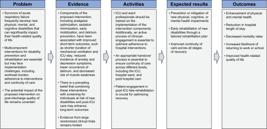
Logic model for multicomponent telemedicine-based intervention* on health-related quality of life of patients with respiratory failure requiring invasive mechanical ventilation.
Other important outcomes - such as all-cause mortality, rehospitalization, symptoms of anxiety and depression, cognitive impairment, and new disabilities affecting instrumental activities of daily living - may have both direct and indirect relationships with the proposed intervention.(13,39–44) As such, they serve as key markers of its effectiveness and safety.
To the best of our knowledge, this will be the first large-scale, multicenter randomized trial evaluating the effects of a multicomponent telemedicine-based intervention on long-term health-related quality of life among survivors of acute respiratory failure. The study's strengths include an appropriate design for assessing quality improvement implementation, a large sample size, and using strategies recommended by complex intervention frameworks.(35,45,46) These strategies include implementation optimization through the formation of local implementation action teams, provision of educational materials, consultations with critical care specialists, virtual benchmarking meetings, and an assessment of program fidelity. The results of this study will provide healthcare professionals, researchers, and policymakers with valuable insights into the efficacy and safety of bundled interventions for acute respiratory failure patients, particularly given the high scalability potential of telemedicine-based approaches.
Our study also has limitations. First, while the cluster stepped-wedge design ensures that all ICUs eventually receive the intervention, it is susceptible to biases such as time-dependent confounding (e.g., improvements in ICU care over time independent of the intervention and seasonality). Second, ensuring consistent adherence to protocol implementation across all clusters is challenging, given the multiple components, remote nature of the intervention, and diverse care settings the intervention targets (ICU, ward, and post-discharge). Variability in adherence and execution across sites could affect the intervention's consistency and effectiveness. Third, despite randomization, differences in patient severity, staffing levels, adherence to protocols, and institutional rehabilitation practices might influence outcomes. While the study likely adjusts for some variables, residual confounding remains a concern. Fourth, the EQ-5D-3L questionnaire is a widely used instrument for assessing health-related quality of life, but it may not fully capture all aspects of post-ICU disability. Assigning a utility score of zero to deceased patients is a reasonable approach to integrating mortality, but it may oversimplify the broader consequences of survival with severe disability. Fifth, follow-up assessments (e.g., 90-day EQ-5D-3L evaluations) may be challenging due to loss to follow-up, particularly in a critically ill population. Patients discharged to long-term care or those with severe disabilities may have higher attrition rates, introducing potential bias. Finally, the study is limited to ICUs in Brazil, which may impact the external validity of the findings. Differences in healthcare infrastructure, staffing ratios, and rehabilitation resources across regions and countries may limit the generalizability of the results.
The study design and protocol were finalized in September 2023, and all site investigators were trained. Currently, this study is recruiting subjects in 20 ICUs representative of the Brazilian geopolitical territory. We expect to complete follow-up by October 2025.
-
Publisher's note
-
ClinicalTrials.gov registry:
NCT06343545
-
FUNDING
The Brazilian Ministry of Health funds this study through the Programa de Apoio ao Desenvolvimento Institucional do Sistema Único de Saúde (PROADI-SUS). The sponsor will have no role in the design and conduct of the study, collection, management, analysis, and interpretation of the data, preparation, review, or approval of the manuscript, or decision to submit the manuscript for publication.
-
COORDINATION CENTERS
Hospital Israelita Albert Einstein and Hospital Moinhos de Vento.
-
STEERING COMMITTEE COMPONENTS
Adriano José Pereira, Rafael Barberena Moraes, Geraldine Trott, Maura Cristina dos Santos, Fernando Godinho Zampieri, and Regis Goulart Rosa.Protocol version: Version 3 (August 21, 2023).
ACKNOWLEDGMENTS
The authors thank the data collection teams at each participating intensive care unit, Hospital Israelita Albert Einstein, Hospital Moinhos de Vento, the Brazilian Ministry of Health, and the Brazilian Research in Intensive Care Network (BRICNet) for their support in conducting the study.
AVAILABILITY OF DATA AND MATERIALS
After publication the data will be available on demand to authors.
REFERENCES
- 1 Parcha V, Kalra R, Bhatt SP, Berra L, Arora G, Arora P. Trends and Geographic Variation in Acute Respiratory Failure and ARDS Mortality in the United States. Chest. 2021;159(4):1460-72.
- 2 Santa Cruz R, Matesa A, Gómez A, Nadur J, Pagano F, Prieto D, et al. Mortality Due to Acute Respiratory Distress Syndrome in Latin America. Crit Care Med. 2024;52(8):1275-84.
- 3 Ippolito M, Galvano AN, Cortegiani A. Long-term outcomes in critically ill patients with acute respiratory failure. Curr Opin Crit Care. 2024;30(5):510-22.
- 4 Rosa RG, Teixeira C, Piva S, Morandi A. Anticipating ICU discharge and long-term follow-up. Curr Opin Crit Care. 2024;30(2):157-64.
- 5 Oliveira RP, Teixeira C, Rosa RG. Acute respiratory distress syndrome: how do patients fare after the intensive care unit? Rev Bras Ter Intensiva. 2019;31(4):555-60.
- 6 Rosa RG, Cavalcanti AB, Azevedo LC, Veiga VC, de Souza D, Dos Santos RD, et al. Association between acute disease severity and one-year quality of life among post-hospitalisation COVID-19 patients: coalition VII prospective cohort study. Intensive Care Med. 2023;49(2):166-77.
- 7 Walker TA, Truong AD, Summers A, Dixit AN, Goldstein FC, Hajjar I, et al. Mild antecedent COVID-19 associated with symptom-specific post-acute sequelae. PLoS One. 2023;18(7):e0288391.
- 8 Rover MM, Scolari FL, Trott G, da Silva MM, de Souza D, da Rosa Minho sos Santos R, et al. Association between vaccination and persistent COVID-19-related symptoms among patients with mild Omicron infection: a prospective cohort study. Vaccine X. 2024;21:100579.
- 9 Mirouse A, Friol A, Moreau AS, Jung B, Jullien E, Bureau C, et al. Severe SARS-Cov2 pneumonia in vaccinated patients: a multicenter cohort study. Sci Rep. 2023;13(1):1902.
- 10 Fistera D, Härtl A, Pabst D, Manegold R, Holzner C, Taube C, et al. What about the others: differential diagnosis of COVID-19 in a German emergency department. BMC Infect Dis. 2021;21(1):969.
- 11 Ely EW. The ABCDEF Bundle: science and philosophy of how ICU liberation serves patients and families. Crit Care Med. 2017;45(2):321-30.
- 12 Teixeira C, Rosa RG. Unmasking the hidden aftermath: postintensive care unit sequelae, discharge preparedness, and long-term follow-up. Crit Care Sci. 2024;36:e20240265en.
- 13 Rosa RG, Kochhann R, Berto P, Biason L, Maccari JG, De Leon P, et al. More than the tip of the iceberg: association between disabilities and inability to attend a clinic-based post-ICU follow-up and how it may impact on health inequalities. Intensive Care Med. 2018;44(8):1352-4.
- 14 Chan AW, Boutron I, Hopewell S, Moher D, Schulz KF, Collins GS, et al. SPIRIT 2025 Statement: Updated Guideline for Protocols of Randomized Trials. JAMA. 2025;334(5):435-43.
- 15 Devlin JW, Skrobik Y, Gélinas C, Needham DM, Slooter AJ, Pandharipande PP, et al. Clinical Practice Guidelines for the Prevention and Management of Pain, Agitation/Sedation, Delirium, Immobility, and Sleep Disruption in Adult Patients in the ICU. Crit Care Med. 2018;46(9):e825-73.
- 16 Marra A, Ely EW, Pandharipande PP, Patel MB. The ABCDEF bundle in critical care. Crit Care Clin. 2017;33(2):225-43.
- 17 Evans L, Rhodes A, Alhazzani W, Antonelli M, Coopersmith CM, French C, et al. Surviving sepsis campaign: international guidelines for management of sepsis and septic shock 2021. Intensive Care Med. 2021;47(11):1181-247.
- 18 Pronovost P, Needham D, Berenholtz S, Sinopoli D, Chu H, Cosgrove S, et al. An intervention to decrease catheter-related bloodstream infections in the ICU. N Engl J Med. 2006;355(26):2725-32.
- 19 Maciel LR, Franzosi OS, Nunes DS, Loss SH, Dos Reis AM, Rubin BA, et al. Nutritional risk screening 2002 cut-off to identify high-risk is a good predictor of ICU mortality in critically ill patients. Nutr Clin Pract. 2019;34(1):137-41.
- 20 Zhang PP, Yuan Y, Lu DZ, Li TT, Zhang H, Wang HY, et al. Diagnostic Accuracy of the Eating Assessment Tool-10 (EAT-10) in screening dysphagia: a systematic review and meta-analysis. Dysphagia. 2023;38(1):145-58.
- 21 Liu F, Tsang RC, Zhou J, Zhou M, Zha F, Long J, et al. Relationship of Barthel Index and its Short Form with the Modified Rankin Scale in acute stroke patients. J Stroke Cerebrovasc Dis. 2020;29(9):105033.
- 22 Zigmond AS, Snaith RP. The hospital anxiety and depression scale. Acta Psychiatr Scand. 1983;67(6):361-70.
- 23 Santos M, Cintra MA, Monteiro AL, Santos B, Gusmão-Filho F, Andrade MV, et al. Brazilian valuation of EQ-5D-3L Health states: results from a saturation study. Med Decis Making. 2016;36(2):253-63.
- 24 Coretti S, Ruggeri M, McNamee P. The minimum clinically important difference for EQ-5D index: a critical review. Expert Rev Pharmacoecon Outcomes Res. 2014;14(2):221-33.
- 25 Santos M, Monteiro AL, Santos B. EQ-5D Brazilian population norms. Health Qual Life Outcomes. 2021;19(1):162.
- 26 Working WH; WHO Working Group on the Clinical Characterisation and Management of COVID-19 infection. A minimal common outcome measure set for COVID-19 clinical research. Lancet Infect Dis. 2020;20(8):e192-7.
- 27 Baccaro A, Segre A, Wang YP, Brunoni AR, Santos IS, Lotufo PA, et al. Validation of the Brazilian-Portuguese version of the Modified Telephone Interview for cognitive status among stroke patients. Geriatr Gerontol Int. 2015;15(9):1118-26.
- 28 Dos Santos RL, Virtuoso Júnior JS. Reliability of the Brazilian version of the Scale of Instrumental Activities of Daily Living. Rev Bras Promoc Saude. 2008;21:290-6.
- 29 Shah S, Vanclay F, Cooper B. Improving the sensitivity of the Barthel Index for stroke rehabilitation. J Clin Epidemiol. 1989;42(8):703-9.
- 30 Cuthbertson BH, Roughton S, Jenkinson D, Maclennan G, Vale L. Quality of life in the five years after intensive care: a cohort study. Crit Care. 2010;14(1):R6.
-
31 R: A Language and Environment for Statistical Computing. R Foundation for Statistical Computing, Vienna, Austria. https://www.R-project.org/
» https://www.R-project.org/ -
32 Brasil. Ministério da Saúde. Conselho Nacional de Saúde. Resolução no 466, de 12 de dezembro de 2012. Brasília (DF); 2012. [2020 Mai 22]. Available from: https://bvsms.saude.gov.br/bvs/saudelegis/cns/2013/res0466_12_12_2012.html
» https://bvsms.saude.gov.br/bvs/saudelegis/cns/2013/res0466_12_12_2012.html -
33 Good Clinical Practice Network. ICH Harmonised Guideline Integrated Addendum to ICH E6(R1): Guideline for Good Clinical Practice ICH E6(R2) ICH Consensus Guideline International Conference on Harmonisation of technical requirements for registration of pharmaceuticals for human use. Guideline for good clinical practice. E6(R1) 2016. [2021 Feb 5]. Available from: https://ichgcp.net/
» https://ichgcp.net/ -
34 International Committee of Medical Journal Editors (ICMJE). Recommendations. Defining the Role of Authors and Contributors. Available at: http://www.icmje.org/recommendations/browse/roles-and-responsibilities/defining-the-role-of-authors-and-contributors.html
» http://www.icmje.org/recommendations/browse/roles-and-responsibilities/defining-the-role-of-authors-and-contributors.html - 35 Craig P, Dieppe P, Macintyre S, Michie S, Nazareth I, Petticrew M; Medical Research Council Guidance. Developing and evaluating complex interventions: the new Medical Research Council guidance. BMJ. 2008;337:a1655.
- 36 Desai SV, Law TJ, Needham DM. Long-term complications of critical care. Crit Care Med. 2011;39(2):371-9.
- 37 Griffiths J, Hatch RA, Bishop J, Morgan K, Jenkinson C, Cuthbertson BH, et al. An exploration of social and economic outcome and associated health-related quality of life after critical illness in general intensive care unit survivors: a 12-month follow-up study. Crit Care. 2013;17(3):R100.
- 38 Beumeler LF, van Wieren A, Buter H, van Zutphen T, Navis GJ, Boerma EC. Long-term health-related quality of life, healthcare utilisation and back-to-work activities in intensive care unit survivors: prospective confirmatory study from the Frisian aftercare cohort. PLoS One. 2022;17(9):e0273348.
- 39 McPeake J, Bateson M, Christie F, Robinson C, Cannon P, Mikkelsen M, et al. Hospital re-admission after critical care survival: a systematic review and meta-analysis. Anaesthesia. 2022;77(4):475-85.
- 40 Teixeira C, Rosa RG, Sganzerla D, Sanchez EC, Robinson CC, Dietrich C, et al. The burden of mental illness among survivors of critical care-risk factors and impact on quality of life: a multicenter prospective cohort study. Chest. 2021;160(1):157-64.
- 41 de Souza JM, Miozzo AP, da Rosa Minho Dos Santos R, Mocellin D, Rech GS, Trott G, et al. Long-term effects of flexible visitation in the intensive care unit on family members’ mental health: 12-month results from a randomized clinical trial. Intensive Care Med. 2024;50(10):1614-21.
- 42 Jesus Pereira I, Santos M, Sganzerla D, Robinson CC, de Souza D, Kochhann R, et al. Long term cognitive dysfunction among critical care survivors: associated factors and quality of life-a multicenter cohort study. Ann Intensive Care. 2024;14(1):116.
- 43 Rosa RG, Ferreira GE, Viola TW, Robinson CC, Kochhann R, Berto PP, et al. Effects of post-ICU follow-up on subject outcomes: A systematic review and meta-analysis. J Crit Care. 2019;52:115-25.
- 44 Teixeira C, Rosa RG. Post-intensive care outpatient clinic: is it feasible and effective? A literature review. Rev Bras Ter Intensiva. 2018;30(1):98-111.
- 45 Moore GF, Audrey S, Barker M, Bond L, Bonell C, Hardeman W, et al. Process evaluation of complex interventions: Medical Research Council guidance. BMJ. 2015;350:h1258.
- 46 Skivington K, Matthews L, Simpson SA, Craig P, Baird J, Blazeby JM, et al. A new framework for developing and evaluating complex interventions: update of Medical Research Council guidance. BMJ. 2021;374(2061):n2061.
Edited by
-
Responsible editor:
Bruno Adler Maccagnan Pinheiro Besen https://orcid.org/0000-0002-3516-9696