 Auracast and hearing devices: a scoping review on connectivity and accessibility for individuals with hearing loss in public environments
ABSTRACT
Purpose To map and synthesize the available evidence on the use of Auracast technology in hearing aids (HA), in the context of auditory accessibility in public environments.
Research strategies This scoping review followed the Joanna Briggs Institute (JBI) and PRISMA-ScR guidelines. The PCC framework was adopted (Population: individuals with hearing loss using HA; Concept: Auracast technology; Context: public environments). The search strategy was based solely on the keyword “Auracast” and applied to a defined time window from June 2022 (the official launch of Auracast) to April 2025. Information sources included scientific databases (PubMed, Scopus, IEEE Xplore, Dimensions Analytics) and gray literature sources (Google Scholar, websites of HA manufacturers, professional associations, and institutional repositories such as OSF and OpenGrey).
Selection criteria Study selection and data extraction were conducted independently and blindly by two reviewers, with disagreements resolved by consensus.
Data analysis A total of 348 records were identified. After removing duplicates and applying eligibility criteria, 17 studies were included in the final synthesis.
Results The available evidence suggests that Auracast could improve accessibility and autonomy in public settings, particularly when integrated with HA. However, most studies were technical or descriptive, lacking robust clinical evaluations.
Conclusion Auracast is an emerging innovation in auditory accessibility. Nevertheless, further empirical studies are needed to assess its effectiveness in educational, healthcare, and transportation settings. Large-scale adoption will depend on technical, financial, and social factors, especially in low-infrastructure contexts.
Keywords:
Assistive Technology; Hearing Aids; Accessibility; Inclusive Education; Bluetooth Communication
RESUMO
Objetivo Mapear e sintetizar as evidências disponíveis sobre o uso da tecnologia Auracast em dispositivos eletrônicos de amplificação sonora (DEAS), no contexto da acessibilidade auditiva em ambientes públicos.
Estratégia de pesquisa A revisão seguiu as diretrizes do Joanna Briggs Institute (JBI) e do PRISMA-ScR. Foi utilizada a estrutura PCC (População: indivíduos com perda auditiva usuários de DEAS; Conceito: tecnologia Auracast; Contexto: ambientes públicos). A busca foi realizada em abril de 2025 e abrangeu o período de junho de 2022 a abril de 2025, utilizando o termo “Auracast” como palavra-chave. As fontes de informação incluíram bases de dados científicas (PubMed, Scopus, IEEE Xplore, Dimensions Analytics) e fontes de literatura cinzenta (Google Acadêmico, sites de fabricantes de DEAS, associações profissionais e repositórios institucionais, como o OSF e o OpenGrey).
Critérios de seleção A seleção e extração dos dados foram realizadas por dois revisores independentes e cegados, com resolução de conflitos por consenso.
Análise dos dados Foram identificados 348 registros. Após a remoção de duplicatas e a aplicação dos critérios de elegibilidade, 17 publicações foram incluídas na síntese final.
Resultados As evidências disponíveis apontam para o potencial do Auracast em promover maior acessibilidade e autonomia em espaços coletivos, especialmente quando integrado a DEAS. Entretanto, as publicações encontradas são predominantemente técnicas ou descritivas, com escassez de avaliações clínicas robustas.
Conclusão O Auracast representa uma inovação emergente no campo da acessibilidade auditiva, mas ainda são necessários estudos empíricos que avaliem sua eficácia em ambientes educacionais, de saúde e de transporte. A adoção em larga escala dependerá de fatores técnicos, financeiros e sociais, especialmente em contextos com infraestrutura limitada.
Descritores:
Tecnologia Assistiva; Aparelhos Auditivos; Acessibilidade para Pessoas com Deficiência; Educação Inclusiva; Comunicação Bluetooth
INTRODUCTION
Since its introduction in electronic hearing aids (EHAs), hereinafter referred to as hearing aids, in 2005, Bluetooth technology has played a fundamental role in the connectivity of individuals with hearing loss, enabling the direct transmission of audio to devices such as cell phones, tablets, and computers(1). Recently, an innovation has emerged in this field: Bluetooth Low Energy (LE) Audio with Auracast, an advancement designed to integrate wireless audio technologies and enhance hearing accessibility. Similar to how Wi-Fi networks work, this technology allows users with compatible devices to connect to audio streaming systems in Auracast-equipped environments(2).
Auracast technology represents a significant advancement in audio connectivity in public spaces. Compatible devices, such as TVs, mobile phones, laptops, and microphones, can transmit audio directly to receiving devices, including hearing aids, headphones, and smartwatches(3). This feature is particularly relevant for individuals with hearing loss, as it enables a clearer and more intelligible sound experience, reducing auditory effort and fatigue associated with communication in noisy or reverberant environments. Furthermore, the technology enables large-scale audio transmission, allowing its application in classrooms, conference centers, stadiums, churches, and other locations that require enhanced hearing accessibility(4).
The development of assistive technologies has been essential to promoting inclusion and improving communication for people with hearing impairments. The Auracast network, by offering wireless audio transmission without restrictions on the number of connected devices, presents a relevant technological alternative for democratizing access to sound information. Its implementation can transform auditory accessibility in public and private spaces, representing a substantial advance in wireless connectivity for this population(5).
Given this scenario, this study aims to map and synthesize the available scientific evidence on Auracast technology, based on Bluetooth Low Energy, applied to hearing aids, focusing on its contribution to hearing accessibility in public environments. Considering the recent launch and rapid dissemination of Auracast, the hypothesis is that there are already technical and scientific records demonstrating its potential application in hearing aids to promote hearing accessibility in public environments, even though clinical studies are scarce.
With this approach, it is expected to contribute significantly to the evolution of wireless connectivity in hearing devices, providing theoretical and practical support to academia, hearing healthcare professionals, and public policy makers(6).
METHOD
This Scoping Review was developed based on the methodology of the Joanna Briggs Institute (JBI) Reviewers’ Manual and follows the PRISMA-ScR (Preferred Reporting Items for Systematic Reviews and Meta-Analyses Extension for Scoping Reviews) guidelines, ensuring transparency and reproducibility(7,8). The study protocol was submitted for evaluation and registration on the Open Science Framework (OSF) platform(9).
Eligibility criteria
The eligibility criteria were defined based on the PCC (Population, Concept, and Context) model, being Population - individuals with hearing loss who use hearing aids; Concept - Auracast technology applied to hearing aids; Context - hearing accessibility in public environments.
Inclusion and exclusion criteria
The inclusion criteria were defined based on the PCC model, considering publications that addressed individuals with hearing loss who use hearing aids, and that explicitly discussed Auracast technology in the context of hearing accessibility in public environments, such as schools, cultural centers, churches, transportation stations, and other collective spaces. Documents published between June 2022 (the official launch date of Auracast) and April 2025, available in full text, freely accessible, and written in Portuguese, English, or Spanish were included. The review encompassed different types of publications, such as scientific articles, dissertations, theses, technical reports, institutional publications, and proceedings of academic events.
Publications that did not mention the term “Auracast” or addressed it superficially, without a direct relationship to the application of the technology in hearing aids, were excluded. Documents that focused exclusively on other Bluetooth-based assistive technologies without reference to Auracast, duplicate publications, documents unavailable in full, or written in languages not covered were also excluded.
Research sources and search strategy
To identify relevant sources, the term “Auracast” was used exclusively as a keyword in all information sources. Although controlled descriptors (such as MeSH or DeCS) and free terms associated with the broader concept of assistive technologies were not used, this choice is justified by the specific and delimited focus of the review on Auracast technology, a distinctive and recent name with a well-defined occurrence in publications.
The searches were conducted in the following databases: PubMed, BVS, SciELO, IEEE Xplore, ACM Digital Library, Cochrane Library, and Scopus. Since the number of results in these databases was limited, the search was expanded to the Dimensions Analytics platform, which aggregates various sources of scientific, technical, and institutional output, and to Google Scholar, considered a broad source of information, although not formally classified as a database.
Additionally, a manual search was conducted to locate both white and grey literature. Institutional repositories (such as OSF and OpenGrey), websites of hearing aid manufacturers (such as GN Hearing and Sonova), and relevant industry associations (such as the Bluetooth Special Interest Group – SIG and the Hearing Loss Association of America) were consulted. This search was performed using structured navigation and specific terms in internal search engines or general search engines.
The Web of Science database was not included in the search strategy, as the methodological design prioritized databases with greater simultaneous relevance to the areas of health, engineering, and applied technology, such as Scopus, IEEE Xplore, ACM Digital Library, and Dimensions Analytics. These platforms offer broad multidisciplinary coverage and strong indexing of technical and technological innovation publications, considered particularly relevant to the Auracast theme. Therefore, the strategy adopted sought to maximize sensitivity in identifying technical, scientific, and institutional records related to the technology, while maintaining consistency with the emerging and interdisciplinary nature of the investigated object.
Technical documents, guides, reports, institutional communications, scientific articles, dissertations, theses, and events proceedings were considered eligible. Two independent reviewers screened the materials based on the established criteria, prioritizing publications that addressed the application of Auracast in hearing aids, with a focus on hearing accessibility.
This approach sought to circumvent the scarcity of peer-reviewed evidence expected given the recent official introduction of Auracast by the Bluetooth SIG in June 2022. Thus, the incorporation of technical and institutional literature was essential to ensure the comprehensiveness and timeliness of the review.
Data extraction and storage
An automated bibliographic reference manager was not used in this study. The organization and control of sources were carried out manually using electronic spreadsheets, which allowed systematic screening, categorization and exclusion of duplicates. The elimination of duplicate references was carried out through direct comparison of titles, authors, years and access links, with cross-review between reviewers. Although tools such as Zotero or Mendeley can facilitate this process, direct and personalized control was used due to the manageable volume of records and the specificity of the term “Auracast”, which allowed precise management of publications, without compromising the transparency and reproducibility of the review.
The screening process was performed in three phases: reading titles, reading abstracts, and complete reading of the selected texts.
All phases of the selection and extraction process were carried out independently by two reviewers. To ensure blinding, the records were organized in spreadsheets without identifying authors, institutions or journals. Access to full texts was structured by code, and screening sheets were shared separately with each reviewer. Blinding was also maintained in the data extraction step, which followed a pre-defined protocol with standardized fields.
In case of disagreement between the reviewers - both in the screening phase (step 1: reading titles and abstracts; step 2: complete reading) and in the extraction phase - the conflicts were discussed in a joint meeting. When there was no consensus, the decision was submitted to a third reviewer with experience in the topic, who evaluated the inclusion criteria in light of the previously defined protocol.
The extracted data were analyzed by two authors, being categorized into: Authors (year), Country, Classification of Publication, and Observations Related to Auracast.
Analysis and presentation of results
Data were analyzed descriptively and presented through figures and tables, as recommended by PRISMA-ScR(8).
RESULTS
Review and selection of results
The initial search identified a total of 348 records, distributed in the following sources: Google Scholar (296), Dimensions Analytics (44), IEEE Xplore (2), PubMed (2), Scopus (4), SciELO (0), VHL (0), ACM Digital Library (0), Cochrane Library (0). The Dimensions database was used as an alternative to expand the coverage of relevant technical and scientific literature on Auracast, given the reduced number of results in conventional databases. Google Scholar was included as a source of information to cover materials not indexed in traditional databases, as recommended for reviews involving gray literature.
After manually removing seven duplicate records, 341 publications were submitted to the screening phase. At this phase, titles and abstracts were evaluated based on the PCC criteria: 322 records were excluded because they did not address Auracast technology in the context of hearing accessibility, because they were different technologies or because they referred to technical areas unrelated to the target population (individuals with hearing loss using hearing aids) or to the context of public environments.
Two of the 19 publications selected for complete reading were excluded due to the unavailability of free access to the full text. Although an attempt was made to contact the authors, there was no response within the deadline set for the extraction. Therefore, 17 documents met all eligibility criteria and were included in the final synthesis. The complete flowchart of the selection process of the studies is shown in Figure 1, according to the PRISMA-ScR model guidelines.
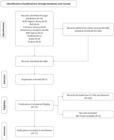
Flowchart of the selection process for publications included in the review, according to the identification, screening, eligibility, and inclusion phases, based on the PRISMA-ScR model
Study characteristics
The 17 studies selected for this review were published between 2023 and 2025, in different formats - such as scientific articles, theses, technical documents, manufacturer announcements, and online dissemination content - and mostly in English, with one exception in French (also translated into Spanish) (Table 1). The diversity of sources highlights the growing interest in emerging technologies applied to hearing accessibility.
Most publications portray Auracast as a technological innovation with high potential impact on the hearing experience of people with hearing loss. Analyses highlight advantages such as high sound quality, low latency, compatibility with multiple devices, simultaneous transmission to different receivers, and integration into public spaces. However, the documents also emphasize important challenges, such as the need for international standardization, adequate infrastructure, usability barriers, and ensuring security and interoperability.
The records included address the applicability of Auracast in various contexts. In educational settings, for example, Millett(5) highlights the potential of the technology to support students from early childhood education to higher education in situations involving noise, reverberation, and distance. In the field of culture and entertainment, Bailey(11) describes the pioneering implementation of Auracast at the Sydney Opera House, demonstrating its value in live performances. Furthermore, technical documents, such as Sterkens(22), explore the coexistence of Auracast with systems like telecoil and FM, promoting a more inclusive and accessible ecosystem.
Regarding the implementation forecast (Table 2), it is observed that most publications do not present defined deadlines. However, Sterkens(21,22) and Sterkens & Whyman(20) show that large-scale adoption will depend on the publication of the IEC 60118-17 standard, scheduled for December 2027. Puseman(19) estimates that Auracast will be widely present in public spaces by 2030. Sources such as GN Hearing(17) and CNET(10) indicate that the technology is already being incorporated into hearing aids and Android smartphones, although full use still depends on compatibility between devices. Further information on the characteristics of the publications included in the review are shown in Table 1.
The combined analysis of the sources included show that, although Auracast is already being tested and adopted in some specific contexts, its full and effective adoption as an assistive listening system is still underway, depending on technical regulations, infrastructure development, and acceptance by the market and end users.
DISCUSSION
This scoping review identified an emerging and diverse body of publications that point to the transformative potential of Auracast as an assistive technology. The publications reviewed highlight its ability to promote a more accessible, personalized, and immersive hearing experience, especially in public settings such as schools, theaters, museums, conference centers, and transportation systems( 5,11,13).
Although practical initiatives already exist, such as the pioneering implementation at the Sydney Opera House(11), the full adoption of Auracast still depends on structural and regulatory factors. Among the main challenges are the need for both the public environment and the user to have devices compatible with the technology - which requires financial investments in modern transmitters and DEAs(17,21). Furthermore, the lack of a definitive international standardization (such as the IEC 60118-17 standard, expected only in December 2027) limits the full integration of the technology(20,22). Despite this, pilot experiences such as the deployment of the Auri™ system at Bristol Temple Meads station in the United Kingdom confirm the interest in evaluating the scalability of Auracast in public transport environments, with a view to future expansion throughout the British rail network(25).
Energy efficiency and sound quality are also frequently highlighted points. According to technical interviews(24), Auracast stands out for consuming less energy and offering high-fidelity, low-latency stereo audio - essential characteristics for end-user comfort and acceptance.
Concerns about the security of data transmission have led to the proposal of solutions such as the BACON protocol, aimed at authenticating devices on Auracast networks to mitigate vulnerabilities(16). Although still experimental, this proposal reinforces the need to ensure the integrity and reliability of connections in public environments.
In the educational context, studies such as those by Millett(5) and Humes et al.(18) highlight the potential of Auracast to expand the auditory accessibility of students from early childhood education to higher education. However, its effective implementation requires educators and caregivers to master the technology's configurations, and institutions to have compatible infrastructure. It should also be noted that, to date, Auracast-enabled hearing aids are not available in pediatric lines, limiting their application in younger populations. Despite these challenges, recent uses at events such as HLAA 2024, where conference rooms were equipped with Auracast transmitters to accommodate a wide variety of users with different hearing aids, indicate progress in the technical feasibility and visibility of the technology in learning environments(26).
In general, publications are still recent and heterogeneous in their approach, but they converge in pointing out that Auracast represents a significant advance in the field of hearing accessibility. Its consolidation as an assistive listening system will depend on public policies, industry actions, and greater dissemination of technical knowledge among users and hearing health professionals.
Limitations
During the course of this review, a significant scarcity of consolidated scientific publications directly addressing the application of Auracast in clinical, educational, or community settings was observed. Many of the available sources still focus on preliminary technical aspects or originate from conferences, manufacturers, and outreach content. This limitation hindered the construction of a more robust analysis based on clinical evidence.
Recommendations
Further studies are recommended to explore the application of Auracast in educational and healthcare settings, its interactions with other assistive technologies (such as digital remote microphone systems and telephone coils), and its effectiveness across different population profiles. Based on the results of these initial investigations, it will be possible to more thoroughly assess the conditions necessary for the future large-scale adoption of the technology - considering technical, financial, and social aspects, especially in contexts with limited infrastructure.
CONCLUSION
This scoping review made it possible to identify and systematize existing publications that address Auracast technology in its interface with hearing aids, highlighting its potential to promote hearing accessibility in public environments. The sources analyzed reinforce that Auracast represents an emerging technological solution among assistive technologies, bringing together features such as efficient connectivity, low energy consumption, high-quality audio transmission, and compatibility with multiple devices - aspects that position it as a relevant solution for the future of hearing accessibility.
The adoption of this technology in spaces such as schools, museums, transportation stations, and cultural centers can significantly expand access to communication in public environments for people with hearing loss. However, large-scale implementation still depends on regulatory factors, infrastructure investments, and the renewal of compatible hearing aids - currently unavailable in pediatric lines, for example. Furthermore, a large portion of the reviewed publications are technical, descriptive, or opinion-based, predominantly institutional documents, guides, and conference presentations. There is a significant gap in clinical or experimental studies with strong scientific evidence evaluating the effectiveness of Auracast in improving hearing, reducing auditory effort, or increasing adherence to the use of hearing aids in real-world contexts.
In addition to the recent introduction of the technology, the fact that technical standards are still under development - with publication expected only in 2027 - limits the maturity of the field and highlights its emerging nature. This scenario points to the urgency of applied, controlled, and long-term studies that rigorously evaluate the benefits and challenges of adopting Auracast as an assistive listening system.
Assistive technologies remain essential to ensuring autonomy, equity, and inclusion for people with hearing loss, and the development of solutions like Auracast represents a significant step forward in this direction, even though it is still undergoing scientific validation and practical consolidation.
-
Study conducted at Department of Speech-Language Pathology and Audiology, Bauru School of Dentistry – FOB, Universidade de São Paulo – USP, Bauru (SP), Brazil.
-
Financial support:
Institutional Program for Scientific Initiation Scholarships (PIBIC) (3407/2024), FAPESP (2024/05187-6).
-
Data Availability:
The research data are available upon justified request to the corresponding author (RTSJ).
-
Use of artificial intelligence-assisted technology
The authors declare that artificial intelligence tools were used in the preparation of this manuscript. Specifically, ChatGPT (OpenAI) and Grammarly were used exclusively for language editing, grammar correction, and improvement of clarity and readability. No artificial intelligence tools were used for data analysis, interpretation of results, or generation of scientific conclusions. The authors critically reviewed and approved all AI-assisted revisions and assume full responsibility for the content of this article.
References
-
1 Kent C. Timeline: the evolution of hearing aids [Internet]. Medical Device Network; 2020 [citado em 2025 Mar 16]. Disponível em: https://www.medicaldevice-network.com/features/digital-hearing-aid-history/?cf-view
» https://www.medicaldevice-network.com/features/digital-hearing-aid-history/?cf-view -
2 Kaufmann TB, Foroogozar M, Liss J, Berisha V. Requirements for mass adoption of assistive listening technology by the general public. arXiv [Internet]. 2023 [citado em 2025 Mar 16]. Disponível em: https://arxiv.org/abs/2303.02523
» https://arxiv.org/abs/2303.02523 -
3 Zignani A. Auracast™ broadcast audio retrofit solutions and opportunities [Internet]. ABI Research; 2024 [citado em 2025 Mar 16]. Disponível em: https://go.abiresearch.com/hubfs/Marketing/Whitepapers/Auracast%20Broadcast%20Audio%20Retrofit%20Solutions%20and%20Opportunities/ABI_Research%20Auracast%20Broadcast%20Audio%20Retrofit%20Solutions%20and%20Opportunities.pdf
» https://go.abiresearch.com/hubfs/Marketing/Whitepapers/Auracast%20Broadcast%20Audio%20Retrofit%20Solutions%20and%20Opportunities/ABI_Research%20Auracast%20Broadcast%20Audio%20Retrofit%20Solutions%20and%20Opportunities.pdf -
4 Corner S. Bluetooth Auracast is set to revolutionise audio in public places [Internet]. Connected Magazine; 2024 [citado em 2025 Mar 16]. Disponível em: https://connectedmag.com.au/bluetooth-auracast-is-set-to-revolutionise-audio-in-public-places/
» https://connectedmag.com.au/bluetooth-auracast-is-set-to-revolutionise-audio-in-public-places/ -
5 Millett P. The connected life: using access technology at home, at school and in the community. Educ Sci. 2023;13(8):761. https://doi.org/10.3390/educsci13080761
» https://doi.org/10.3390/educsci13080761 -
6 Ferraz L, Pereira RPG, Pereira AMRC. Tradução do conhecimento e os desafios contemporâneos na área da saúde: uma revisão de escopo. Saude Debate. 2019;43(spe2):200-16. https://doi.org/10.1590/0103-11042019s215
» https://doi.org/10.1590/0103-11042019s215 -
7 Joanna Briggs Institute. JBI manual for evidence synthesis: data extraction [Internet]. Adelaide: JBI; 2020 [citado em 2025 Mar 16]. Disponível em: https://jbi-global-wiki.refined.site/space/MANUAL/355862769/10.2.7+Data+extraction
» https://jbi-global-wiki.refined.site/space/MANUAL/355862769/10.2.7+Data+extraction -
8 Tricco AC, Lillie E, Zarin W, O’Brien KK, Colquhoun H, Kastner M, et al. A scoping review on the conduct and reporting of scoping reviews. BMC Med Res Methodol. 2016;16(1):15. https://doi.org/10.1186/s12874-016-0116-4 PMid:26857112.
» https://doi.org/10.1186/s12874-016-0116-4 -
9 OSF: Open Science Framework (OSF). Auracast® and hearing devices: scoping review protocol on connectivity and auditory accessibility [Internet]. 2024 [citado em 2025 Maio 11]. Disponível em: https://osf.io/y3ema/overview
» https://osf.io/y3ema/overview -
10 Al-Heeti A. Android adds Auracast support, so hearing aids can connect directly to venue audio [Internet]. CNET; 2025 [citado em 2025 Maio 11]. Disponível em: https://www.cnet.com/tech/mobile/android-gets-auracast-support-to-let-hearing-aids-connect-directly-to-audio/
» https://www.cnet.com/tech/mobile/android-gets-auracast-support-to-let-hearing-aids-connect-directly-to-audio/ -
11 Bailey A. BYO headphones: tuning into the next-gen Bluetooth broadcast at the Sydney Opera House [Internet]. Hearing Tracker; 2025 [citado em 2025 Maio 11]. Disponível em: https://www.hearingtracker.com/news/next-gen-bluetooth-broadcast-at-the-sydney-opera-house
» https://www.hearingtracker.com/news/next-gen-bluetooth-broadcast-at-the-sydney-opera-house -
12 Bruce N, Armstrong S, Bosnyak DJ, Tawfik H. Opportunities and challenges for Bluetooth LE audio assistive listening systems. In: ICASSP 2025 - 2025 IEEE International Conference on Acoustics, Speech and Signal Processing (ICASSP); 2025 Apr 6; Hyderabad, India. Proceedings. New York: IEEE; 2025. p. 1-5. https://doi.org/10.1109/ICASSP49660.2025.10889430
» https://doi.org/10.1109/ICASSP49660.2025.10889430 -
13 Ceccato JC, Bourien J, Venail F, Puel JL. Adaptación audioprotésica convencional. EMC - Otorrinolaringol. 2025;54(1):1-17. https://doi.org/10.1016/S1632-3475(24)49909-8
» https://doi.org/10.1016/S1632-3475(24)49909-8 -
14 Edwards N, Faulkner S, Beckwith R, Chierichetti R. Accessibility as apparatus: how the friction-filled experience of using hearing aids with a PC led a corporation to design for accessibility. Conf Proc Ethnogr Prax Ind Conf. 2023;2023(1):385-405. https://doi.org/10.1111/epic.12176
» https://doi.org/10.1111/epic.12176 -
15 Fabry D. Future forward: more connectivity enhances hearing aid technology [Internet]. ASHA Leader; 2025 [citado em 2025 Maio 11]. Disponível em: https://leader.pubs.asha.org/do/10.1044/leader.AEA.30032025.Wifi-based-hearing-aid-tech.10/full/
» https://leader.pubs.asha.org/do/10.1044/leader.AEA.30032025.Wifi-based-hearing-aid-tech.10/full/ -
16 Gasteiger T, Perazzo P, Schuß M, Boano CA, Basic F, Dini G, et al. BACON: improving broadcast audio authentication. In: MILCOM 2024 - 2024 IEEE Military Communications Conference (MILCOM); 2024; Washington, D.C. Proceedings. New York: IEEE; 2024. p. 523-9. https://doi.org/10.1109/MILCOM61039.2024.10774045
» https://doi.org/10.1109/MILCOM61039.2024.10774045 -
17 Manufacturers News. GN Hearing launches ReSound Nexia. Hear J. 2024;77(1):24. https://doi.org/10.1097/01.HJ.0000998272.83474.48
» https://doi.org/10.1097/01.HJ.0000998272.83474.48 -
18 Humes LE, Dhar S, Manchaiah V, Sharma A, Chisolm TH, Arnold ML, et al. A perspective on auditory wellness: what it is, why it is important, and how it can be managed. Trends Hear. 2024;28:23312165241273342. https://doi.org/10.1177/23312165241273342 PMid:39150412.
» https://doi.org/10.1177/23312165241273342 -
19 Puseman LJ. Optimization of Bluetooth Auracast broadcast audio transmissions via signal modeling [thesis]. Ohio: Department of Electrical and Computer Engineering, Air University; 2024 [citado em 2025 Maio 11]. Disponível em: https://scholar.afit.edu/etd/7687
» https://scholar.afit.edu/etd/7687 -
20 Sterkens J, Whyman W. Helping people hear anywhere with telecoils and Auracast. Can Audiol. [Internet]. 2025 [citado em 2025 Maio 11];12(1). Disponível em: https://canadianaudiologist.ca/helping-people-hear-anywhere-with-telecoils-and-auracast/
» https://canadianaudiologist.ca/helping-people-hear-anywhere-with-telecoils-and-auracast/ -
21 Sterkens J. Assistive listening systems quick guide [Internet]. Center for Hearing Access; 2025 [citado em 2025 Maio 11]. Disponível em: https://www.centerforhearingaccess.org/wp-content/uploads/Assistive-Listening-Systems-Quick-Guide.pdf
» https://www.centerforhearingaccess.org/wp-content/uploads/Assistive-Listening-Systems-Quick-Guide.pdf -
22 Sterkens J. What is needed for Auracast™ streamed assistive listening systems to be available [Internet]. Center for Hearing Access; 2025 [citado em 2025 Maio 11]. Disponível em: https://centerforhearingaccess.org/wp-content/uploads/What-is-needed-for-Auracast-streamed-ALS-to-be-available-and-usable.pdf
» https://centerforhearingaccess.org/wp-content/uploads/What-is-needed-for-Auracast-streamed-ALS-to-be-available-and-usable.pdf -
23 Stucki J, Zahnd V. LE Audio test infrastructure [Internet]. 2024 [citado em 2025 Maio 11]. Disponível em: https://eprints.ost.ch/id/eprint/1223/1/FS%202024-BA-EP-Stucki-Zahnd-Bluetooth%20LE%20Audio%20Test%20Infrastructure.pdf
» https://eprints.ost.ch/id/eprint/1223/1/FS%202024-BA-EP-Stucki-Zahnd-Bluetooth%20LE%20Audio%20Test%20Infrastructure.pdf -
24 Sygrove C. Auracast in hearing aids and hearables: Bluetooth LE and the new revolution in connectivity [Internet]. HearingTracker; 2024 [citado em 2025 Maio 11]. Disponível em: https://www.hearingtracker.com/auracast
» https://www.hearingtracker.com/auracast -
25 Ampetronic. Auri™: pioneering Auracast™ for public transport [Internet]. 2025 [citado em 2025 Maio 11]. Disponível em: https://www.ampetronic.com/auri-pioneering-auracast-for-public-transport/
» https://www.ampetronic.com/auri-pioneering-auracast-for-public-transport/ -
26 Bluetooth. Auracast™ broadcast audio is heard loud and clear at HLAA 2024 [Internet]. Bluetooth® Technology Website; 2024 [citado em 2025 Maio 11]. Disponível em: https://www.bluetooth.com/blog/auracast-broadcast-audio-is-heard-loud-and-clear-at-hlaa-2024/
» https://www.bluetooth.com/blog/auracast-broadcast-audio-is-heard-loud-and-clear-at-hlaa-2024/
Edited by
-
Editor:
Aline Mansueto Mourão.
The research data are available upon justified request to the corresponding author (RTSJ).