|
16 |
|
|
Limitations to the instrument development process itself, as it is in the initial phase of the overall validation process. Evidence of content validity is essential, but not sufficient. |
The continuation of psychometric analyses through the use of new accuracy measures |
| Lima et al. (2021a) |
(RF 1, RF 2, RF 3, RF 4, RF 7, RF 8, RF 10, RF 11, RF 12, RF 13, RF 14, RF 15, RF 19, RF 20, RF 21, RF 22) |
NSA |
IRGD |
|
|
|
|
| Lima et al. (2021b) |
16 |
4 |
|
The reduced sample size was due to the short data collection period attributed to the global health crisis, and there was no "gold standard" assessment in the field for diagnosing children in the at-risk group |
(1) increasing the sample size; (2) comparing at-risk children with clinical diagnosis; (3) applying the instrument by more professionals in order to obtain other psychometric validation analyses; (4) comparing the application in digital format. |
| (RF 1, RF 2, RF 3, RF 4, RF 7, RF 8, RF 10, RF 11, RF 12, RF 13, RF 14, RF 15, RF 19, RF 20, RF 21, RF 22) |
(RF 8, RF 10, RF 12, RF 14) |
IRGD |
|
17 |
3 |
|
|
|
| Pinto et al. (2021) |
(RF 1, RF 3, RF 4, RF 7, RF 8, RF 9, RF 10, RF 11, RF 12, RF 13, RF 14, RF 15, RF 16, RF 17, RF 18, RF 23, RF 24) |
(RF 2, RF 5, RF 10) |
PRGD |
It doesn't mention |
It doesn't mention |
|
|
|
|
|
|
| Walsh et al. (2021) |
|
|
|
|
|
|
|
|
|
|
| 6 |
3 |
Observational methods; |
(1) Include a larger sample of children with stuttering at different ages and incorporate additional risk measures |
(1) Create an online calculator in which physicians can enter the child's age, relevant epidemiological factors, and other scores collected during an assessment to determine the collective risk of persistent stuttering in each child |
| (RF 1, RF 2, RF 3, RF 5, RF 6, RF 9) |
(RF 1, RF 2, RF 9) |
|
|
|
|
|
Complementary methods: Speech/language assessment |
|
|
| Ávila et al. (2022) |
|
|
|
(2) Effect of sample size (non-homogeneous groups regarding the number of participants); absence of randomization; control only of the variable % of stuttered syllables, without evaluating other changes related to stuttering (seasonal variability, speech outside the clinic, interactive skills, emotional and environmental profile, among others); (4) It did not contemplate long-term follow-up of children, preventing the analysis of permanent outcome of the clinical picture. |
|
|
|
|
|
| 19 |
NA |
PRGD |
It doesn't mention |
| (RF 1, RF 2, RF 3, RF 4, RF 5, RF 6, RF 7, RF 8, RF 9, RF 11, RF 12, RF 13, RF 14, RF 15, RF 16, RF 17, RF 18, RF 23, RF 24) |
|
Observational methods; |
|
|
|
|
|
|
|
Complementary methods: SSI-3 |
|
|
7 |
4 |
Self-report methods; |
(1) Children without stuttering behaviors (NCSC) did not have a family history of stuttering. Perhaps for this reason the study did not identify the variable "family history" as a predictor for stuttering; |
Authors suggest including different age ranges in order to analyze the risk factor for late onset of stuttering behaviors. |
| Costa et al. (2022) |
(RF 1, RF 3, RF 4, RF 5, RF 6, RF 7, RF 8) |
(RF 3, RF 7, RF 8, RF 10) |
|
(2) Most of the children in this study were younger (the average age was 6.5 years in both groups). Perhaps for this reason it was not possible to verify whether the risk factors "complaint of stuttering for more than 12 months" and "complaint of stuttering before the age of 5" would be predictors for stuttering; |
|
|
|
Observation methods; |
(3) The results of this study were derived from a single institution; |
|
|
|
|
(4) The speech analysis was based exclusively on the first 200 fluent syllables and did not use other speech samples, such as oral reading, naming of isolated words, and longer speech samples. |
| Singer et al. (2022) |
|
|
|
|
(1) Include data on the child's temperament and reaction to stuttering to explore the negative consequences related to stuttering (beyond persistence) more comprehensively; |
|
|
Self-report based methods; |
(1) Data availability; it did not include the temperament/emotion domain; |
(2) Include weighted DTGs; |
| 10 |
5 |
|
|
(3) Include performance on a pseudoword repetition task; |
| (RF 1, RF 2, RF 3, RF 5, RF 6, RF 9, RF 16, RF 18, RF 25) |
(RF 3, RF 5, RF 9, RF 16, RF 25) |
Observational methods; |
(2) The measures used were not identical in all cases. |
(4) Include the child's self-report of whether or not they are still stuttering; |
|
|
|
|
|
|
|
Complementary methods: TOCS, SSI-3 |
|
|
| Tonnis and Ormondt (2022) |
9 |
4 |
NSA |
It doesn't mention |
It doesn't mention |
| (RF 1, RF 3, RF 4, RF 5, RF 6, RF 9, RF 16, RF 17, RF 26) |
(RF 1, RF 3, RF 5, RF 6). |
|
|
|
|
(1) Analysis of the participants' family history; |
|
|
|
|
|
(2) Differences in the percentages and profiles of breakups in groups of boys and girls; |
|
| Costa et al. (2023) |
2 |
2 |
Self-report based methods; |
3) Time of onset of symptoms and considerations about family attitudes. |
It mentions that the limitations will be addressed in future studies |
|
(RF 2, RF 10) |
(RF 2, RF 10) |
|
|
|
|
|
|
Observation methods. |
|
|
|
|
|
|
|
|
| Franken et al. |
5 |
NA |
NA |
(1) The model is based on theoretical synthesis and narrative literature review, therefore it has no direct empirical validation. |
Empirical validation of the model and improvement of the severity and impact scales for stuttering |
| -2024 |
(RF 1, RF 4, RF 8, RF 9, RF 27) |
(2) It depends on the integration of multiple risk factors (genetic, neurological, linguistic, emotional, social), but the causal relationship between these factors is not yet fully proven; |
|
|
(3) The model is more useful as a clinical and communication tool with families and patients than as high-level scientific evidence. |
|
|
|
Self-report methods; |
(1) Overestimation of incidence and prevalence |
It doesn't mention |
| Sakai et al. (2025) |
7 |
3 |
Observation methods; |
(2) Reduction of estimated incidence and prevalence due to some parents' avoidance of confirming their children's stuttering because of the strong social stigma associated with the questionnaire |
|
(RF 1, RF 2, RF 5, RF 6, RF 7, RF 10, RF 17) |
(RF 1, RF 10, RF 17) |
|
(3) Based on parental reports, without direct clinical confirmation |
|
|
|
|
(4) Possibility of recall bias in parents' responses |
|
|
|
|
(5) As children over four years old are not included in the sample of this research, it is not possible to capture all cases of early-onset stuttering in childhood. |

 Risk factors and assessment methods for screening childhood-onset fluency disorders: a scoping review
 Thumbnail
 Thumbnail
 Thumbnail
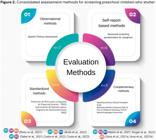
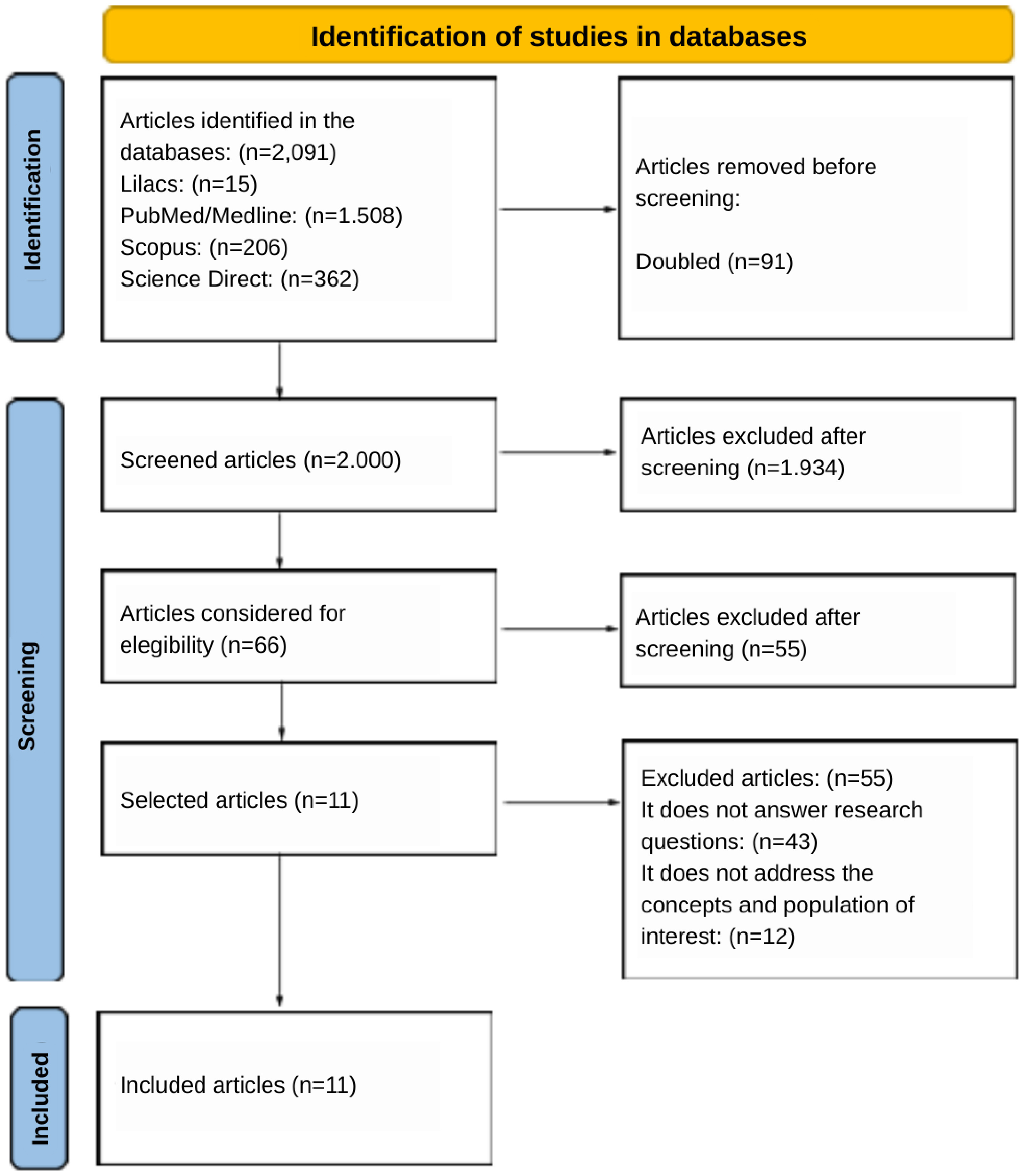 Source: Prepared by the authors, 2025.
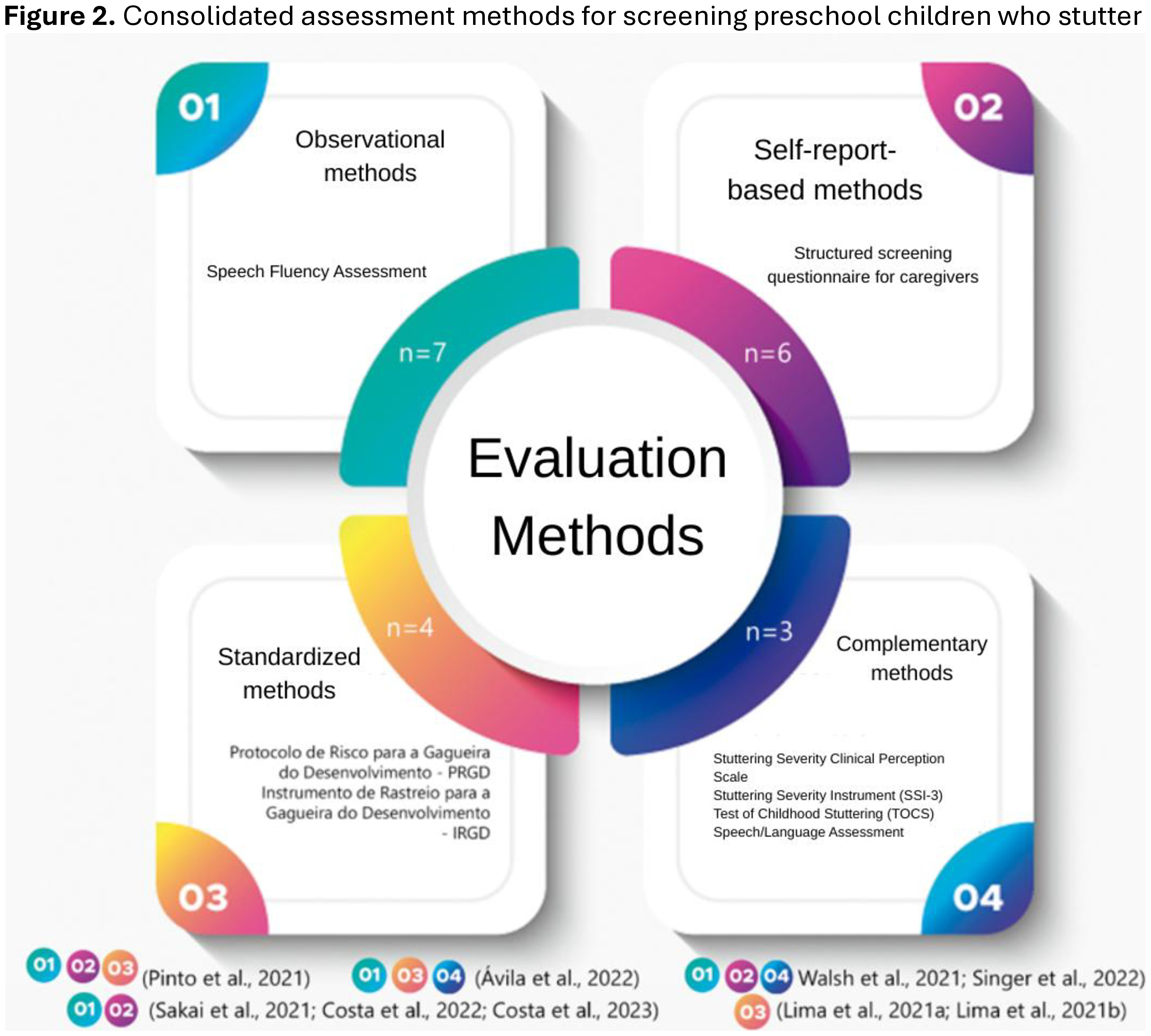 Source: Prepared by the authors, 2025
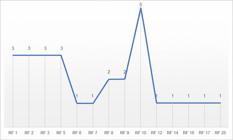
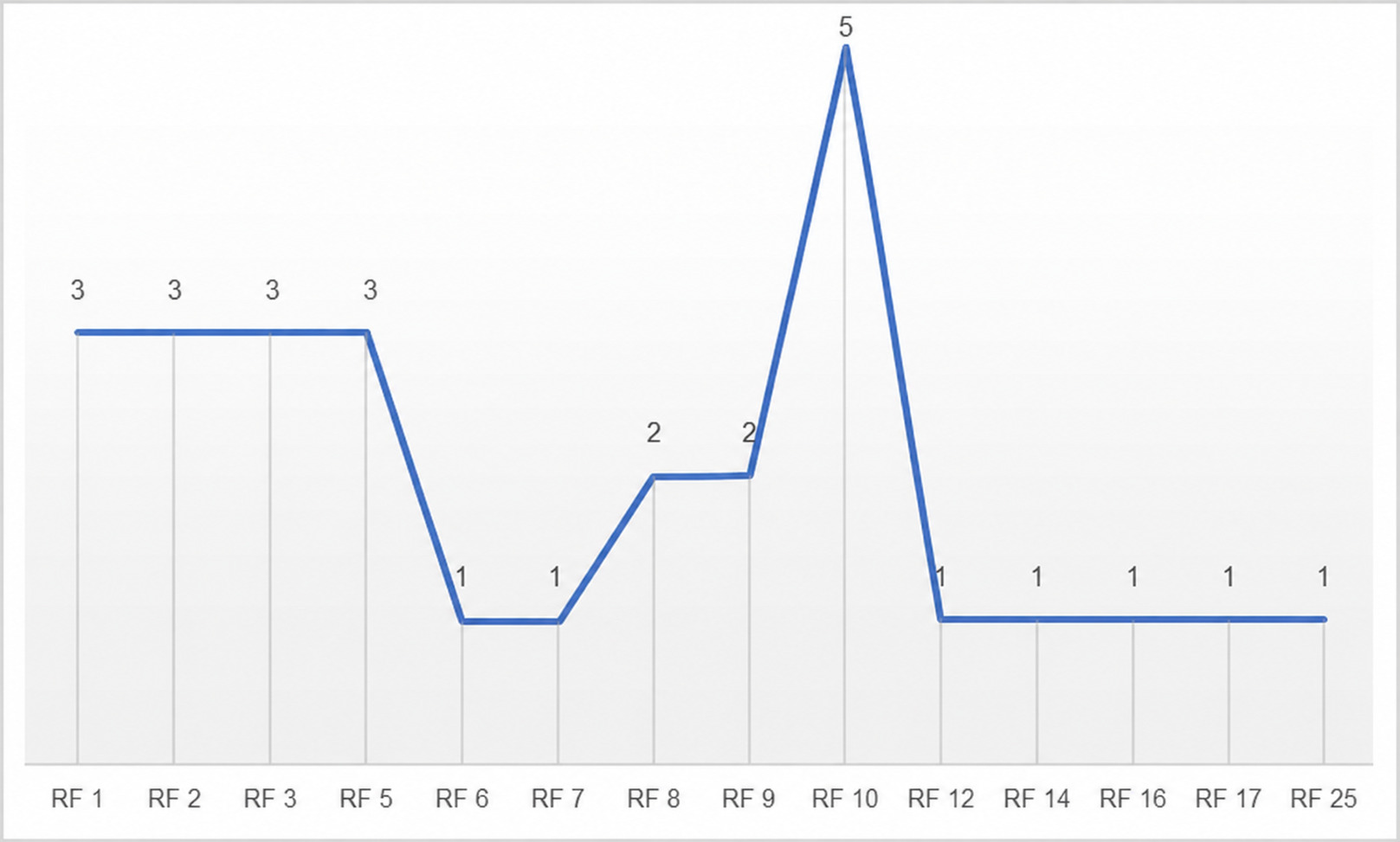 Caption: RF 1 = Positive family history of stuttering (with or without recovery); RF 2 = High frequency of disfluencies typical of stuttering; RF 3 = Duration of stuttering; RF 5 = Child's age at the onset of stuttering; FR 6 – Male sex; RF 7 = Speech tension (effort to speak); RF 8 = Negative social reaction to the child's speech (extended family, school, and others); RF 9 = Worse performance on standardized articulatory/phonological assessment; RF 10 = Complaint of stuttering; RF 12 = Impairment in speech intelligibility; RF 14 = Presence of physical concomitants (body and/or facial movements); RF 16 = Below-average language development; RF 17 = Presence of comorbidities; RF 25 = Severity of stuttering. Source: Prepared by the authors, 2025