
 Neurobiological activity of the auditory pathway and memory: a comparative study in individuals infected with SARS-Cov-2
Purpose To analyze the influence of SARS-CoV-2 on memory and on the components of the Long Latency Auditory Evoked Potential.
Methods Quantitative descriptive study, approved by the Research Ethics Committee under the number 56038322100005346. For the sample composition, 32 participants were invited, aged between 18 and 35 years, without hearing loss, middle ear integrity and contralateral acoustic reflexes present bilaterally, were invited to compose the sample. In addition, they were free from neurological or psychiatric alterations, with or without a diagnosis of SARS-CoV-2. Thirty-two individuals participated in the study, 24 (75%) females and eight (25%) males, distributed in two groups. The Study Group (EG) consisted of 15 subjects (53%) diagnosed with SARS-CoV-2 and the Control Group (CG) consisted of 17 subjects (47%) without such diagnosis. All participants underwent anamnesis, meatoscopy, basic audiological evaluation, Long Latency Auditory Evoked Potential (LLAEP) and the Brief Neuropsychological Assessment Instrument-NEUPSILIN, using the total score for each memory subtype. Finally, for statistical analysis of the data, the Student's T-test was used, adopting a p-value <0.05.
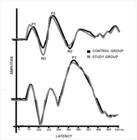
Results It was possible to observe significant differences with lower performance for the study group in Episodic-Semantic Visual Memory (p-value = 0.014) and for Short-Term Visual Memory (p-value = 0.042). In the LLAEP there was a significant difference only for the P1 component, with lower latency in the EG.
Conclusion SARS-CoV-2 infection negatively influenced the memory of young adults, mainly in episodic-semantic verbal memory and short-term visual memory. Furthermore, the LLAEP contributed to the diagnosis of these participants by demonstrating the deleterious effects of the infection.
Keywords:
SARS-Cov-2; Cognition; Adults; Electrophysiology; Memory
 Thumbnail
 Source: Image from the researcher's personal collection