 Digital engine: the impact of digital village construction on county entrepreneurial activity in China
ABSTRACT:
County entrepreneurial activities play a vital role in fostering rural industrial prosperity, advancing digital village development, and improving residents’ welfare. This study empirically investigated the impact and mechanisms through which digital village construction influences county entrepreneurial activity, utilizing the Digital Village Index (2020) from the Institute for New Rural Development at Peking University, along with economic data from 2267 counties. The findings are as follows: (1) Digital village construction significantly enhances county entrepreneurial activity, with results robustly validated through endogeneity tests and robustness checks. (2) Key components of digital village construction, including rural digital infrastructure, rural economic digitization, rural governance digitization, and rural life digitization, all positively influence entrepreneurial activity, with rural economic digitization exerting the most substantial effect. (3) The primary channels through which digital village construction fosters entrepreneurial activity include the promotion of e-commerce, facilitation of non-farm employment, and encouragement of technological innovation. (4) The entrepreneurial benefits of digital village construction are more pronounced in counties located in the central and eastern regions, particularly those within the Yangtze River Economic Belt, as compared to counties in the western region and non-Yangtze River Economic Belt. (5) The impact of digital village construction on entrepreneurial activity is conditional, with stronger effects observed in counties with higher baseline entrepreneurial activity.
Key words:
digital village construction; county entrepreneurial activity; e-commerce development; non-farm employment; technological innovation
RESUMO:
As atividades empreendedoras do município desempenham um papel vital no fomento da prosperidade industrial rural, no avanço do desenvolvimento de vilas digitais e na melhoria do bem-estar dos residentes. Este estudo investiga empiricamente o impacto e os mecanismos pelos quais a construção de vilas digitais influencia a atividade empreendedora do município, utilizando o Digital Village Index (2020) do Institute for New Rural Development da Universidade de Pequim, juntamente com dados econômicos de 2.267 condados. As descobertas são as seguintes: (1) A construção de vilas digitais aprimora significativamente a atividade empreendedora do município, com resultados robustamente validados por meio de testes de endogeneidade e verificações de robustez. (2) Os principais componentes da construção de vilas digitais, incluindo infraestrutura digital rural, digitalização econômica rural, digitalização de governança rural e digitalização da vida rural, todos influenciam positivamente a atividade empreendedora, com a digitalização econômica rural exercendo o efeito mais substancial. (3) Os principais canais pelos quais a construção de vilas digitais promove a atividade empreendedora incluem a promoção do comércio eletrônico, facilitação de empregos não agrícolas e incentivo à inovação tecnológica. (4) Os benefícios empresariais da construção de vilas digitais são mais pronunciados em municípios localizados nas regiões central e oriental, particularmente aqueles dentro do cinturão econômico do Rio Yangtze, em comparação com condados na região ocidental e fora do Cinturão Econômico do Rio Yangtze. (5) O impacto da construção de vilas digitais na atividade empresarial é condicional, com efeitos mais fortes observados em municípios com maior atividade empresarial de base.
Palavras-chave:
construção de vilas digitais; atividade empresarial do município; desenvolvimento do comércio eletrônico; emprego não agrícola; inovação tecnológica
INTRODUCTION
The digital economy, centered on “Internet+”, is rapidly growing, and its deep integration with rural development is gradually transforming the economic model in China (PENG & DAN, 2023). In alignment with the goals of Digital China and Digital Agriculture, the Chinese government has consistently introduced policies to accelerate the digital transformation of rural areas (LIANG & LI, 2023). The “digital village strategy” was first outlined in the 2018 “No. 1 Central Document,” marking the initiation of digital village construction as part of agricultural and rural modernization. The release of the “Digital Agriculture and Rural Development Plan (2023-2025)” and the announcement of the first batch of Digital Village Pilot Projects in 2020 marked the transition to the development planning phase of digital village construction. In 2021, the “No. 1 Central Document” further emphasized the “implementation of digital village construction and development projects,” signaling the shift to exploration and implementation. Since then, the “Digital Rural Construction Guide 1.0” and the “Digital Rural Development Action Plan (2022-2025)” have provided strategic support for digital village development. Existing studies suggested that digital village construction helps farmers achieve stable production and income growth (DENG et al., 2022), promotes the high-quality development of rural industries (MA & ZHU, 2022), and plays a crucial role in improving resident welfare and advancing the digital transformation of villages.
Digital village development, which emphasizes networking, informatization, and digital transformation, has the potential to become a key driver of entrepreneurship (WANG & SHAO, 2023). Historically, inefficiencies in information use, inadequate transportation infrastructure, and limited digital literacy in rural areas have hindered entrepreneurial activities, resulting in a regional entrepreneurial divide (SCHWEITZER et al., 2023). This divide contributes to gaps in county economic development, leading to uneven regional growth. To address this, there is a pressing need for new sources of motivation for rural entrepreneurship. Digital village construction leverages digitalization as a strategic foundation to promote the digital transformation of agriculture and rural areas, with the ultimate goal of modernizing these sectors comprehensively. Most studies suggested that the digital economy, digital inclusive finance, and digital village development can stimulate entrepreneurial activity among both urban and rural residents (LIU et al., 2021; WANG et al., 2024). Since counties are key administrative units in China’s political, economic, cultural, and social structures, they play a crucial role in urban-rural integration and the orderly modernization of agriculture and rural areas. Therefore, it is essential to explore how digital village construction impacts entrepreneurial activity in these areas and understand the underlying mechanisms.
Three key strands of literature are closely related to this study. The first strand focuses on the theoretical framework and measurement of digital village construction. This body of research examines the theoretical foundations, measurement methodologies, and regional characteristics of digital village development (CUI et al., 2024; HU et al., 2023). It also explores the various applications of digital technologies in agriculture (CHEN et al., 2024). Scholars have primarily interpreted the concept of digital village construction through the lenses of policy support, institutional guarantees, technological infrastructure, and service applications (BAI et al., 2024; HE et al., 2025). Overall, the level of digital village construction in China shows significant regional heterogeneity, with a “high in the east and low in the west” pattern (ZHOU et al., 2023). The second strand investigates the impact of digital village construction on innovation and entrepreneurship. Research in this area includes both macro-level analyses at the provincial and urban scales and micro-level studies focusing on individual households (ZHANG & PANG, 2025; WEI et al., 2025; WU et al., 2024). Scholars generally agree that digital village construction promotes entrepreneurial activity by alleviating credit constraints, stimulating consumption, enhancing information accessibility, and facilitating financial services (DING et al., 2024; XIONG et al., 2024). The third strand addresses optimization strategies and practical pathways for advancing digital village construction. Some studies highlight the importance of strengthening digital infrastructure, fostering new rural industries, and developing smart agriculture as key approaches to digital village initiatives (CHEN et al., 2024; LI et al., 2024). Additionally, research has shown that improving residents’ digital literacy and promoting digital governance in rural areas can significantly enhance the quality and efficiency of digital village construction (DENG et al., 2024; QING & CHEN, 2024).
Existing studies offer valuable insights for this research; however, there are areas for improvement regarding research scale, indicator precision, and the exploration of mechanisms. First, previous research largely examines the entrepreneurial effects of digital technologies or digital villages at either macro levels (e.g., provincial and urban scales) or at the micro level of individual farmers. This focus may overlook the importance of meso-scale analyses, which could provide a more balanced perspective. Second, many studies measure entrepreneurship using binary indicators, such as the decision to start a business or the choice of entrepreneurial type. While these metrics are useful, they tend to underrepresent the overall level of entrepreneurial activity, limiting a comprehensive understanding of entrepreneurship at the county level. Finally, the mechanisms through which digital village construction stimulates entrepreneurship have mainly been explored from the perspectives of e-commerce, consumption, and credit. There is a noticeable gap in examining other potential pathways, such as non-farm employment and technological innovation. This oversight restricts the identification of multiple avenues for boosting entrepreneurial activity in counties.
Compared to previous studies, this research makes the following marginal contributions. First, in terms of research scale, counties serve as the primary focus of digital village construction. Exploring the entrepreneurial impact of digital village construction from a county-level meso perspective provides a more nuanced understanding of the relationship between digital transformation and entrepreneurship. Second, in terms of indicator measurement, this study uses the number of newly registered enterprises at the county level to gauge entrepreneurial activity, offering richer data for a more comprehensive assessment of the county’s entrepreneurial landscape. Third, in terms of the role mechanism, this study extends the exploration beyond the impact of e-commerce development by also examining how non-farm employment and technological innovation influence entrepreneurial activity. This broadens the potential pathways for enhancing entrepreneurship in counties and supports the development of local economies.
This study combines county-level economic data to analyze the impact of digital village construction on county entrepreneurial activity in China. It further explores the mechanisms through which this impact occurs, focusing on the effects of e-commerce, non-farm employment, and technological innovation. The findings aim to provide a scientific basis for policymakers to better support county-level economic development and social progress.
THEORETICAL ANALYSIS AND RESEARCH HYPOTHESES
Direct effect of digital village construction on county entrepreneurial activity
Digital village construction involves integrating digital technologies into agriculture and rural areas, enabling grassroots communities to benefit from digital advancements. Rural digital infrastructure forms the foundation of this initiative, providing essential digital applications for rural development (BI, 2024; WANG et al., 2023). Rural economic digitization is central to this effort, driving high-quality economic development and inclusive growth (ZHANG et al., 2024). Rural governance digitization plays a key role in enhancing national governance capacity and modernizing governance methods. Meanwhile, rural life digitization is crucial for equalizing basic public services between urban and rural areas and improving residents’ welfare. In summary, digital village construction consists of four interconnected components: rural digital infrastructure, rural economic digitization, rural governance digitization, and rural life digitization. Each of these components plays a vital role in the process. Driven by market forces and government support, digital village construction is flourishing. It leverages benefits such as cost reduction, technology integration, and resource optimization to enhance county infrastructure, improve the business environment, and create extensive opportunities for entrepreneurial activities through various digital platforms.
The impact of digital village construction on county entrepreneurial activities can be summarized in three key areas. First, the cost-saving effect: Digital technologies such as big data and cloud computing improve information matching between supply and demand in entrepreneurial services, reducing issues like adverse selection and moral hazard caused by information asymmetry. Additionally, the inclusive nature of diverse digital platforms lowers information search costs, thereby increasing grassroots enthusiasm for entrepreneurship. Second, the resource integration effect (GAO & HE, 2024): Technologies like big data, cloud computing, and artificial intelligence facilitate new rural development models, integrate digital technology with traditional industries, and support the transformation of the county’s industrial structure. These technologies also provide essential entrepreneurial resources, including capital and talent. Moreover, diverse digital platforms overcome spatial and temporal barriers, promoting collaboration and improving resource utilization. Third, the financial support effect (BUNJE et al., 2022; XIE & GUO, 2024): Digital inclusive finance, a key component of digital village construction, offers broad, low-cost financial services that address traditional market failures. This expansion of financial services meets the diverse investment and financing needs of grassroots entrepreneurs, thereby stimulating and enhancing entrepreneurial activities. Based on these observations, this study proposes the following hypotheses:
Hypothesis 1: Digital village construction has a significant positive impact on county entrepreneurial activity.
Indirect effect of digital village construction on county entrepreneurial activity
The indirect effect of digital village construction on county entrepreneurial activity can be explained in three main ways.
First, digital village construction improves the entrepreneurial environment by fostering the growth of e-commerce. On one hand, it supports the implementation of comprehensive e-commerce demonstration policies in rural areas. The rise of e-commerce lowers capital entry barriers and reduces the reliance on social networks in the entrepreneurial market, thereby boosting local residents’ innovation and entrepreneurial enthusiasm (YANG et al., 2021; ZHAO et al., 2023). On the other hand, e-commerce encourages household entrepreneurship by increasing access to business information, promoting risk-taking, and alleviating credit constraints (JIANG & QIN, 2024). Additionally, the expansion of consumer demand creates new entrepreneurial opportunities. Overall, digital village construction significantly enhances e-commerce services for entrepreneurs, thereby increasing both the likelihood and scale of entrepreneurship at the county level (YANG et al., 2024).
Second, entrepreneurial opportunities are enhanced through the promotion of non-farm employment. Digital village construction has transformed traditional lifestyles, upgraded consumption patterns, and improved quality of life, thereby stimulating the growth of the county’s service industry (MA et al., 2023). Additionally, the shift from traditional to new economic drivers under digital village development creates more opportunities for entrepreneurship and employment. This shift has led to the rise of sectors such as the live-streaming economy, various platform-based economies, and freelance work, along with the emergence of new rural digital industries like digital healthcare and digital tourism. These developments help absorb surplus rural labor, expanding both employment and entrepreneurial opportunities for local residents.
Third, entrepreneurial opportunities have been stimulated by advancements in technological innovation. On one hand, the development of emerging digital technologies such as the Internet of Things, cloud computing, and big data has fostered innovation, leading to new business models, products, and services. This improves the county’s entrepreneurial environment and creates ample opportunities for entrepreneurial activities. On the other hand, the rapid advancement of digital technology has contributed to the inclusive growth of the county’s economy, indirectly supporting residents’ innovation and entrepreneurship (WANG et al., 2023). The accelerated economic growth driven by digital technology further boosts employment and entrepreneurship, generating new opportunities and gradually enhancing entrepreneurial activity in the county. Based on these observations, the study proposes the following hypotheses:
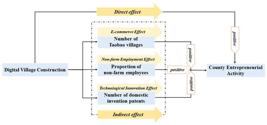
Hypothesis 2: Digital village construction positively influences county entrepreneurial activity by promoting e-commerce development, fostering non-farm employment, and driving technological innovation.
The theoretical analysis framework diagram of this study is shown in figure 1.
RESEARCH DESIGN
Regression model settings
Baseline model
This study first investigated the impact of digital village construction on county entrepreneurial activity and develops a baseline regression model, as shown in equation 1:
Entrei,j = α1 +α2 Dig i,j + θZi,j + γj + ɛi,j (1)
In equation 1, i and j denote county and city. Entre i,j denotes county entrepreneurial activity variable, reflecting the level of county entrepreneurial activity in county i. Dig i,j denotes the digital village construction variable, reflecting the level of digital village construction in county i. Zi,j is a series of control variables to control the influence of other factors on county entrepreneurial activity. α2 and θ denote the estimated coefficients of the corresponding variables. α1, γj and ɛi,j denote the intercept term, the city fixed effect, and the random error term. City fixed effects are included to account for the influence of time-invariant factors at the city level that could bias the model estimation for the corresponding county.
Mechanism testing model
This study further examined the mechanisms through which digital village construction influences county entrepreneurial activity. The theoretical analysis in the previous section suggests that digital village construction impacts county entrepreneurship by promoting e-commerce, facilitating non-farm employment, and enhancing technological innovation. To test the validity of this hypothesis, a mechanism testing model is constructed as shown in equation 2:
Mi,j = δ1 + δ2 Dig i,j + ϑZi,j + γj + ɛi,j (2)
In equation 2, Mi,j denotes the mechanism variable. The number of Taobao villages in the county, the ratio of rural non-farm employees to total rural employees, and the number of domestic invention patents authorized in the county are used to represent the level of e-commerce development, non-farm employment, and technological innovation. The remaining indicators are interpreted in the same manner as in the baseline model.
Quantile regression model
To test the conditional effects of digital village construction on county entrepreneurial activity, a quantile regression model is used for parameter estimation. The specific model is defined in equation 3:
Qω (Entre i,j ) = β1+β2ω Dig i,j +Σn s=1 θs,ω X s,i,j + γj + ɛi,j (3)
In equation 3, Qω (Entre i,j ) denotes the ω-quantile of county entrepreneurial activity. β2ω denotes the estimated coefficient of the ω-quantile of digital village construction. θs,ω denotes the estimated coefficient of the ω-quantile of a series of control variables. The quartile ω ∈ (0.10, 0.25, 0.50, 0.75, 0.90), and the rest of the indexes are interpreted in the same way as the baseline model.
Variable selection
Explained variable: county entrepreneurial activity
Entrepreneurial activity is a key focus in economic research, with various indicators available for its measurement. This study; however, focuses on the county level and specifically examines startup registrations, which effectively reflect the emergence of new enterprises and regional entrepreneurial activity (ZHANG et al., 2022). Following HU et al. (2024), data on newly registered enterprises in each county for 2020 was obtained from the General Administration of Market Supervision (GAMS), including details such as enterprise name, address, registration date, registered capital, industry, and legal representative. Using the China County Statistical Yearbook, two indicators of county entrepreneurial activity were constructed: County Entrepreneurial Activity 1 = ln (1 + number of newly registered enterprises in the current year) and County Entrepreneurial Activity 2 = ln (1 + number of newly registered enterprises in the current year / total household population). County Entrepreneurial Activity 1 serves as the primary explained variable, while County Entrepreneurial Activity 2 is used for robustness test.
Explanatory variable: digital village construction
This study examined digital village construction using the digital village index and its four sub-indices: the rural digital infrastructure Index, rural economic digitalization index, rural governance digitalization index, and rural life digitalization index. Data is sourced from the “County Digital Rural Index (2020)” report, published by the Digital Rural Project Team at the Institute for New Rural Development, Peking University, in collaboration with the Ali Research Institute. This report expands upon the 2018 study, increasing the sample size from 1880 counties (including county-level cities) to 2481. It provided a comprehensive measure of digital village development at the county level, based on a framework of four primary indicators and twelve secondary indicators. A higher digital village index value reflects a more advanced level of digital village construction in the county.
Control variables
Based on the studies by WANG & LIU (2024), seven control variables are selected: county-level economic development (Lngdp), industrial structure (Stru), fiscal support (Lnfisc), financial development (Lnfina), residents’ savings (Lndep), human capital (Hc), and social consumption environment (Lncons). Economic development is measured by the county’s gross regional product (in 10000 yuan). Industrial structure is represented by the ratio of the county’s tertiary industry value-added to GDP. Fiscal support is gauged by the county’s general budget expenditures (in 10000 yuan). Financial development is indicated by the balance of loans from financial institutions at year-end (in 10000 yuan). Residents’ savings are measured by the balance of urban and rural savings deposits (in 10000 yuan). Human capital is assessed by the ratio of students enrolled in general secondary schools to the total county population. The social consumption environment is characterized by the total retail sales of consumer goods in the county (in 10000 yuan).
Mechanism variables
Building on the theoretical analysis in the previous section, this study examined how digital village construction impacts county entrepreneurial activity through three dimensions: e-commerce development, non-farm employment, and technological innovation. E-commerce development is measured by the number of Taobao villages in counties in 2020, with data sourced from the Ali Research Institute and the Nanjing University Spatial Planning Research Centre. The growth of Taobao villages has created new sales channels for agricultural products, thereby enhancing farmers’ entrepreneurship, income, and rural industrial prosperity. Non-farm employment is assessed using data from the China County Statistical Yearbook, which calculates the ratio of non-farm employees to the total rural employees. Technological innovation is evaluated by the number of domestic invention patents granted in the county, as reported by the State Intellectual Property Office.
Data sources and description
This empirical research is conducted at the county level, utilizing the following data sources: (1) County statistics from the China County Statistical Yearbook, along with provincial, municipal, and autonomous region statistical yearbooks, and the EPS database. (2) The industrial and commercial information dataset of newly registered enterprises in counties, provided by the General Administration of Market Supervision. (3) The County Digital Village Index and its four sub-indices, released jointly by the Institute for New Rural Development at Peking University and the Ali Research Institute, which offer a comprehensive measure of digital village development in Chinese counties. (4) The number of Taobao villages, as listed by the Ali Research Institute and the Spatial Planning Research Centre at Nanjing University. (5) Data on county-level invention patent authorizations from the State Intellectual Property Office. (6) The average elevation parameter dataset for county-level administrative regions in China, derived from the ASTER Global Digital Elevation Model V003, which provides detailed elevation data.
In this study, the research period was set to 2020, resulting in a final sample of 2267 counties based on data availability. Missing data were filled using linear interpolation, and natural logarithms were applied to certain variables to address potential issues of heteroskedasticity. Prior to the empirical analysis, a variance inflation factor (VIF) test was conducted. The results showed that both the VIF and 1/VIF values for all variables were well below 10, indicating no significant multicollinearity. Descriptive statistics for the main variables are presented in table 1.
RESULTS AND DISCUSSION
Baseline regression results
Table 2 presents the results of the baseline regression. Column (1), which does not include control variables or fixed effects, indicates that the digital village index significantly boosts county entrepreneurial activity, with a 1% increase in the digital village index corresponding to a 0.0495% increase in entrepreneurial activity. Column (2), which includes control variables for economic development, industrial structure, fiscal support, financial development, residents’ savings, human capital, and social consumption environment, still shows a positive effect of the digital village index on county entrepreneurial activity at the 1% significance level, although the coefficient is smaller. Columns (3) and (4), which account for province and city fixed effects, also show significantly positive coefficients for the digital village index at the 1% level, though the effect is attenuated. On average, a 1% increase in the digital village index results in a 0.0129% increase in county entrepreneurial activity. Overall, the baseline regression supports the conclusion that digital village construction significantly enhances county entrepreneurial activity, thereby validating Hypothesis 1.
For the control variables, the signs of most coefficients are consistent with expectations. The coefficients for county economic development, industrial structure, fiscal support, financial development, and residents’ savings are all significantly positive at the 1% level. This indicated that improving county economic resilience, optimizing industrial structure, strengthening financial and fiscal support for entrepreneurship, and increasing residents’ income through various means all play a crucial role in stimulating entrepreneurial activity and expanding the scale of entrepreneurship within counties.
Different dimensions of digital village construction
The concept of a digital village is multifaceted, encompassing several dimensions. To explore how different aspects of digital village construction influence county entrepreneurial activity and to test the robustness of the baseline regression results, we substituted the core explanatory variables with these four sub-indices in separate regressions and combined them into a unified model. The results are presented in table 3.
Columns (1) through (4) indicated that each dimension of the digital village index positively influences county entrepreneurial activity at the 1% significance level. Among these, the rural economic digitalization index has the most substantial positive effect, followed by the rural digital infrastructure index and the rural governance digitalization index. The rural life digitalization index has a relatively smaller impact on county entrepreneurial activity. This difference may stem from the fact that economic digitization-encompassing digital finance, marketing, and distribution-is central to digital village development and can significantly boost agricultural productivity through digital business, thereby driving entrepreneurial activity. In contrast; although, rural life digitalization enhances convenience and quality of life, its economic impact is less pronounced. Column (5) further supports these findings, showing that the coefficient for the rural economic digitalization index is 0.0057, the highest among the sub-indices, while the coefficient for the rural life digitalization index is positive but not statistically significant.
Endogeneity problems and instrumental variables regression
In addition to the potential unidirectional causality, where digital village construction influences county entrepreneurial activity, there may also be reverse causality. In this case, increased county entrepreneurial activity could boost economic development, thereby facilitating the implementation of digital village initiatives. To address this potential endogeneity, this study employed an instrumental variable approach, following ZHANG et al. (2024). The average elevation of county-level administrative regions (including county-level cities) is used as the instrumental variable for the digital village index. Average elevation negatively correlated with the digital village index, satisfying the correlation assumption, and does not directly influence entrepreneurial activity, thereby meeting the exogeneity assumption. Consequently, this variable served as a suitable instrument.
Table 4 reports the results of the two-stage least squares (IV-2SLS) estimation. Columns (1) and (2) present the first and second-stage regression results. The findings show that county average elevation parameter significantly and negatively affects the digital village index. In column (2), the results confirmed that the digital village index has a significant positive effect on county entrepreneurial activity. Specifically, a 1% increase in the digital village index leads to a 0.0511% increase in county entrepreneurial activity. This effect is substantially larger than the 0.0129% observed in the baseline regression. It suggests that, after addressing endogeneity, digital village construction plays a more significant role in promoting county entrepreneurial activity. Furthermore, the p-value of the LM statistic for the under-identification test is 0, strongly rejecting the presence of under-identification in the instrumental variables. The F-statistic for the weak instrument test is 31.652, well above the critical value of 16.38 at the 10% significance level. This indicated that the instrumental variables are strongly correlated with the endogenous regressor and do not suffer from weak identification issues. Overall, the estimation results in table 4 confirm the validity and robustness of the baseline regression findings.
Robustness test
To ensure the reliability and validity of the baseline regression results, three robustness tests are conducted. First, to address potential measurement errors in the variables affecting model estimation, the core explanatory variable is replaced, switching from county entrepreneurial activity 1 to county entrepreneurial activity 2. Second, a constrained sample dataset is used. The regressions are re-estimated while controlling for city fixed effects, trimming the top and bottom 1% and 5% of all variables in the study sample. Finally, robust standard errors are replaced with bootstrap standard errors, resampled 500 and 2000 times. Table 5 presents the estimation results from these robustness tests. The findings indicated that, regardless of the method applied, the digital village index remains significantly positive at the least 5% level. This confirmed that, all else being equal, digital village construction significantly enhances county entrepreneurial activity, reinforcing the baseline regression results.
Mechanism analysis
Table 6 reports the results of the mechanism test on the impact of digital village construction on county entrepreneurial activity. The regression coefficients for the number of Taobao villages and domestic invention patents are significantly positive at the 1% level. Additionally, the coefficients for the ratio of non-farm employees to the total rural employees are significantly positive at the 10% level. These results indicate a strong positive correlation between the digital village index and the mechanism variables. Specifically, digital village construction promotes county entrepreneurial activity by driving e-commerce development, facilitating non-farm employment, and enhancing technological innovation. These findings confirm Hypothesis 2: digital village infrastructure fosters the expansion of e-commerce platforms, digital marketing, and live streaming, which, in turn, create more non-farm job opportunities. Moreover, advancements in digital production, supply chains, and consumption stimulate patent creation and innovation, further motivating entrepreneurship. Thus, e-commerce development, non-farm employment, and technological innovation are key channels through which digital village construction enhances county entrepreneurial activity.
Heterogeneity analysis
Can the entrepreneurial benefits of digital village development be evenly distributed across regions? Does digital village construction serve as a “digital dividend” for all counties, or does it exacerbate the “digital divide”? Addressing these questions is crucial for designing targeted policies and promoting balanced development within China’s digital village initiatives. Therefore, this study explored the heterogeneous effects of digital village construction on county entrepreneurial activity, taking into account factors such as geographical location and economic zone distribution.
First, the sample counties are classified into three regions based on the regional divisions outlined in China’s Seventh Five-Year Plan: the eastern region (686 counties), the central region (784 counties), and the western region (797 counties). This classification allowed for an analysis of the geographic variation in the impact of digital village construction. The estimation results, presented in columns (1) to (3) of table 7. It shows that the digital village index remains significantly positive at the 1% level across all regions, confirming the effectiveness of digital village construction in promoting entrepreneurship. However, the impact is more pronounced in the central and eastern regions. This can be attributed to their faster development pace, a higher concentration of top-ranked counties in the digital village index, and greater access to entrepreneurial opportunities and capital. In contrast, the western region has fewer top-performing counties, accounting for only 5.7% of the top 100 in the digital village index in 2020.
Second, the study divided the counties into two sub-samples based on economic zone distribution: the Yangtze River Economic Belt and non-Yangtze River Economic Belt. The results, presented in columns (4) and (5) of table 7. It indicates that the digital village index has a significant positive impact on entrepreneurial activity in both regions, confirming the entrepreneurial benefits of digital village construction. However, the effect is stronger in the Yangtze River Economic Belt than in the non-Yangtze River Economic Belt. This suggested a potential Matthew effect, where digital village construction may widen regional gaps in the digital village index. As a result, economically developed areas benefit more, leading to uneven entrepreneurial growth across counties.
The ‘conditional’ character of digital village construction
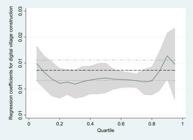
To examine whether the impact of digital village construction varies across counties with different levels of entrepreneurial activity, this study employs a quantile regression model to assess its conditional effects. The results, presented in table 8, show that digital village construction has a significant positive association with county entrepreneurial activity across the 0.10, 0.25, 0.50, 0.75, and 0.90 quantiles. This indicated that digital village construction effectively promotes entrepreneurship, with its impact becoming more pronounced as entrepreneurial activity increases. Notably, the estimated coefficient for digital village construction is relatively large at the 0.10 quantile. This can be attributed to the lower initial levels of digital infrastructure and rural digitization in these counties. As digital village construction advances rapidly over a short period, it provides a substantial boost to entrepreneurial activity, particularly in counties starting from a weaker digital foundation.
Figure 2 illustrates how the discrepancy between quantile regression estimates and OLS regression results varies with county entrepreneurial activity. Specifically, this difference is relatively small in the lower quartiles of entrepreneurial activity but becomes larger before gradually decreasing in the higher quartiles. This pattern suggests that the conditional effect of digital village construction is more pronounced in counties with higher levels of entrepreneurial activity. The digital village strategy has progressively strengthened rural digital infrastructure, enhanced digitalization across various sectors-including the rural economy, governance, and daily life-and driven the rapid expansion of e-commerce platforms. Additionally, it has integrated digital technologies into economic development processes, creating a favorable environment for entrepreneurship. As a result, counties with stronger entrepreneurial aspirations experience a more significant boost from digital village construction.
DISCUSSION
This study empirically examined the impact of digital village construction on entrepreneurial activity in Chinese counties by integrating county-level economic data. The findings suggest that the rapid advancement of digital village construction significantly enhances county entrepreneurial activity, aligning with the conclusions of previous studies (ZHOU et al., 2023; QING & CHEN, 2024). Through cost reduction, financial support, and resource integration, digital transformation not only improves the physical infrastructure necessary for innovation and entrepreneurship but also fosters entrepreneurial enthusiasm (CHEN et al., 2024). What drives the digital engine? E-commerce development plays a crucial role. By lowering entry barriers and expanding market access, e-commerce has significantly boosted entrepreneurial activity in counties (XIONG et al., 2024). Unlike previous studies, this research identifies two additional key channels through which digital village construction facilitates entrepreneurship: the promotion of non-farm employment and technological innovation. First, initiatives such as the E-commerce in Rural Areas Demonstration Project have contributed to the growth of non-farm employment among rural households. The expansion of non-farm employment reduces reliance on traditional agriculture and fosters innovation and entrepreneurship (DING et al., 2024). Second, technological advancements have lowered both the financial and technical barriers to entrepreneurship, enabling broader participation in technology-driven business ventures (CUI et al., 2024). These findings highlighted the multifaceted role of digital village construction in driving entrepreneurship beyond e-commerce, emphasizing its broader economic and technological implications.
It is important to acknowledge certain limitations of this study. First, the analysis is based on cross-sectional data from 2020. Future research could utilize panel data, if available, to examine the dynamic impact of digital village construction on county entrepreneurial activity over time. Second, this study primarily explores regional and economic zone heterogeneity, while variations in entrepreneurial environments and county infrastructure remain areas for further investigation. Additionally, this study assessed the conditional impact of digital village construction based on the degree of entrepreneurship. However, a more in-depth analysis is needed to explore the nonlinear effects of rural digital transformation on entrepreneurship under different levels of digital village construction. Addressing these limitations in future research could provide a more comprehensive understanding of the long-term and structural effects of digital village initiatives.
CONCLUSION AND POLICY IMPLICATIONS
Conclusion
Using data from the digital village index of the Institute for New Rural Development at Peking University and economic statistics from 2267 counties in 2020, this study empirically examines the impact of digital village construction on county entrepreneurial activity, along with its underlying mechanisms and conditional characteristics. The key findings are as follows: (1) Digital village construction significantly promotes county entrepreneurial activity. After addressing endogeneity concerns, a 1% increase in the digital village index is found to result in a 0.0511% increase in county entrepreneurial activity. (2) Rural digital infrastructure, rural economic digitalization, rural governance digitalization, and rural life digitalization all contribute to entrepreneurial growth. Among these, rural economic digitalization yields the most substantial entrepreneurial dividend. (3) The positive impact of digital village construction on county entrepreneurship operates primarily through e-commerce development, non-farm employment, and technological innovation. (4) The entrepreneurial incentive effect of digital village construction varies across regions. The effect is more pronounced in counties located in the central and eastern regions and the Yangtze River Economic Belt compared to those in the western region and non-Yangtze River Economic Belt. (5) The impact of digital village construction on county entrepreneurship is conditional. The estimated coefficients across different quantiles of the digital village index generally exhibit an increasing trend, suggesting that digital village construction more effectively stimulates entrepreneurial activity in counties with higher initial levels of entrepreneurship.
Policy implications
Based on the above findings, the following policy implications can be derived.
(1) Accelerate digital village construction across multiple dimensions and leverage rural economic digitization to drive county entrepreneurial activity. Strengthen county-level information infrastructure, developed digital business hubs, and enhanced foundational data resource systems. Expedite the digital transformation of the rural economy, with a focus on smart agriculture and digital agriculture. Additionally, reinforced rural governance through e-government initiatives and promote digital transformation in rural life by advancing digital tourism and digital consumption. While fostering the digital development of the rural economy, it is equally essential to prioritize the digitization of rural governance and daily life, creating a more supportive environment for entrepreneurship.
(2) Strengthen the design of a differentiated and dynamic policy framework for digital village development. Implement a more inclusive and balanced regional development strategy by enhancing policy support for digital village initiatives in underdeveloped areas. Encourage diverse digital economic and cultural exchanges between advanced and less-developed regions, fostering cooperation through the flow of resources, technology, and talent. To bridge the regional digital divide, expand social assistance programs for digital village construction in lagging areas, ensuring broader access to the entrepreneurial opportunities created by digital development.
(3) Continue to expand e-commerce development, foster non-farm employment opportunities, and enhance scientific and technological innovation at the county level. Strengthen e-commerce policies, build skilled talent teams, and promote inclusive digital finance to generate additional non-farm employment opportunities. At the same time, leverage digital village construction to drive technological innovation through research initiatives and talent cultivation. By doing so, bridge the urban-rural divide and eliminate barriers to entrepreneurship, creating a more dynamic and inclusive rural economy.
ACKNOWLEDGMENTS
The authors are grateful to the financial support by the Industrial Economic Research on National Fleece Sheep Industry Technology System (CARS-39-22) and Basic Research Funds for Central Universities and Graduate Independent Innovation Research Fund of China Agricultural University (202412).
REFERENCES
-
BAI, C. et al. Digital village construction and the quality of life of rural residents. International Review of Economics & Finance, v.96, p.103729, 2024. Available from: <Available from: https://doi.org/10.1016/j.iref.2024.103729 >. Accessed: Nov. 26, 2024. doi: 10.1016/j.iref.2024.103729.
» https://doi.org/10.1016/j.iref.2024.103729.» https://doi.org/10.1016/j.iref.2024.103729 -
BI, J. Can rural areas in China be revitalized by digitization? A dual perspective on digital infrastructure and digital finance. Finance Research Letters, v.67, p.105753, 2024. Available from: <Available from: https://doi.org/10.1016/j.frl.2024.105753 >. Accessed: Jul. 15, 2024. doi: 10.1016/j.frl.2024.105753.
» https://doi.org/10.1016/j.frl.2024.105753.» https://doi.org/10.1016/j.frl.2024.105753 -
BUNJE, M. Y. et al. The multidimensional effect of financial development on trade in Africa: The role of the digital economy. Telecommunications Policy, v.46, n.10, p.102444, 2022. Available from: <Available from: https://doi.org/10.1016/j.telpol.2022.102444 >. Accessed: Aug. 17, 2024. doi: 10.1016/j.telpol.2022.102444.
» https://doi.org/10.1016/j.telpol.2022.102444.» https://doi.org/10.1016/j.telpol.2022.102444 -
CHEN, F. et al. Internet usage and non-farm employment of rural labor: Micro-survey data from rural China. Social Indicators Research, p.1-22, 2024. Available from: <Available from: https://doi.org/10.1007/s11205-024-03363-2 >. Accessed: Jun. 27, 2024. doi: 10.1007/s11205-024-03363-2.
» https://doi.org/10.1007/s11205-024-03363-2.» https://doi.org/10.1007/s11205-024-03363-2 -
CHEN, J. et al. Digital Environment, Digital Literacy, and Farmers’ Entrepreneurial Behavior: A Discussion on Bridging the Digital Divide. Sustainability, v.16, n.23, p.10220, 2024. Available from: <Available from: https://doi.org/10.3390/su162310220 >. Accessed: Dec. 08, 2024. doi: 10.3390/su162310220.
» https://doi.org/10.3390/su162310220.» https://doi.org/10.3390/su162310220 -
CUI, X. et al. Exploring the spatiotemporal evolution mechanism of rural e-commerce: insights from the experience of Taobao towns in China. Humanities and Social Sciences Communications, v.11, n.1, p.1-13, 2024. Available from: <Available from: https://doi.org/10.1057/s41599-024-03306-9 >. Accessed: Sept. 20, 2024. doi: 10.1057/s41599-024-03306-9.
» https://doi.org/10.1057/s41599-024-03306-9.» https://doi.org/10.1057/s41599-024-03306-9 -
DENG, H. et al. Digital economy and its spatial effect on green productivity gains in manufacturing: Evidence from China. Journal of Cleaner Production, v.378, p.134539, 2022. Available from: <Available from: https://doi.org/10.1016/j.jclepro.2022.134539 >. Accessed: Oct. 10, 2024. doi: 10.1016/j.jclepro.2022.134539.
» https://doi.org/10.1016/j.jclepro.2022.134539.» https://doi.org/10.1016/j.jclepro.2022.134539 -
DENG, J. et al. The Impact of Digital Rural Construction on Rural Revitalization-Empirical Evidence from Chinese County Panel Data. Agriculture, v.14, n.11, p.1903, 2024. Available from: <Available from: https://doi.org/10.3390/agriculture14111903 >. Accessed: Nov. 05, 2024. doi: 10.3390/agriculture14111903.
» https://doi.org/10.3390/agriculture14111903.» https://doi.org/10.3390/agriculture14111903 -
DING, W. et al. Digital infrastructure construction and improvement of non-farm employment quality of rural labor force-from the perspective of informal employment. Sustainability, v.16, n.13, p.5345, 2024. Available from: <Available from: https://doi.org/10.3390/su16135345 >. Accessed: Sept. 15, 2024. doi: 10.3390/su16135345.
» https://doi.org/10.3390/su16135345.» https://doi.org/10.3390/su16135345 -
GAO, F.; HE, Z. Digital economy, land resource misallocation and urban carbon emissions in Chinese resource-based cities. Resources Policy, v.91, p.104914, 2024. Available from: <Available from: https://doi.org/10.1016/j.resourpol.2024.104914 >. Accessed: May, 28, 2024. doi: 10.1016/j.resourpol.2024.104914.
» https://doi.org/10.1016/j.resourpol.2024.104914.» https://doi.org/10.1016/j.resourpol.2024.104914 -
HE, Z. et al. How digital village construction affects to the effectiveness of rural governance?-Research on the NCA and QCA methods. Cities, v.156, p.105514, 2025. Available from: <Available from: https://doi.org/10.1016/j.cities.2024.105514 >. Accessed: May, 28, 2025. doi: 10.1016/j.cities.2024.105514.
» https://doi.org/10.1016/j.cities.2024.105514.» https://doi.org/10.1016/j.cities.2024.105514 -
HU, D. et al. Digital finance, entrepreneurship and the household income gap: evidence from China. Information Processing & Management, v.60, n.5, p.103478, 2023. Available from: <Available from: https://doi.org/10.1016/j.ipm.2023.103478 >. Accessed: Feb. 19, 2024. doi: 10.1016/j.ipm.2023.103478.
» https://doi.org/10.1016/j.ipm.2023.103478.» https://doi.org/10.1016/j.ipm.2023.103478 -
HU, G. et al. The impact of urban digital platforms on entrepreneurial activity: Evidence from China. Journal of Innovation & Knowledge, v.9, n.1, p.100468, 2024. Available from: <Available from: https://doi.org/10.1016/j.jik.2024.100468 >. Accessed: May, 26, 2024. doi: 10.1016/j.jik.2024.100468.
» https://doi.org/10.1016/j.jik.2024.100468.» https://doi.org/10.1016/j.jik.2024.100468 -
JIANG, P.; QIN, S. E-commerce empowers urban entrepreneurial activity-Empirical evidence from the construction of national e-commerce demonstration cities. Cities, v.150, p.105092, 2024. Available from: <Available from: https://doi.org/10.1016/j.cities.2024.105092 >. Accessed: Jul. 07, 2024. doi: 10.1016/j.cities.2024.105092.
» https://doi.org/10.1016/j.cities.2024.105092.» https://doi.org/10.1016/j.cities.2024.105092 -
LI, D. et al. The impact of digital ability on employment adequacy in rural China. Applied Economics, v.56, n.54, p.7139-7154, 2024. Available from: <Available from: https://doi.org/10.1080/00036846.2023.2277700 >. Accessed: Apr. 09, 2024. doi: 10.1080/00036846.2023.2277700.
» https://doi.org/10.1080/00036846.2023.2277700.» https://doi.org/10.1080/00036846.2023.2277700 -
LIANG, L.; LI, Y. How does government support promote digital economy development in China? The mediating role of regional innovation ecosystem resilience. Technological Forecasting and Social Change, v.188, p.122328, 2023. Available from: <Available from: https://doi.org/10.1016/j.techfore.2023.122328 >. Accessed: Jan. 14, 2024. doi: 10.1016/j.techfore.2023.122328.
» https://doi.org/10.1016/j.techfore.2023.122328.» https://doi.org/10.1016/j.techfore.2023.122328 -
LIU, Z. et al. Digital inclusive finance, multidimensional education, and farmers’ entrepreneurial behavior. Mathematical Problems in Engineering, v.1, p.6541437, 2021. Available from: <Available from: https://doi.org/10.1155/2021/6541437 >. Accessed: Oct. 05, 2024. doi: 10.1155/2021/6541437.
» https://doi.org/10.1155/2021/6541437.» https://doi.org/10.1155/2021/6541437 -
MA, D.; ZHU, Q. Innovation in emerging economies: Research on the digital economy driving high-quality green development. Journal of Business Research, v.145, p.801-813, 2022. Available from: <Available from: https://doi.org/10.1016/j.jbusres.2022.03.041 >. Accessed: Apr. 15, 2024. doi: 10.1016/j.jbusres.2022.03.041.
» https://doi.org/10.1016/j.jbusres.2022.03.041.» https://doi.org/10.1016/j.jbusres.2022.03.041 -
MA, Y. et al. Digital infrastructure and quality of life: a quasi-natural experimental study based on the ‘Broadband China’pilot policy. Technology Analysis & Strategic Management, p.1-14, 2023. Available from: <Available from: https://doi.org/10.1080/09537325.2023.2298847 >. Accessed: Jun. 24, 2024. doi: 10.1080/09537325.2023.2298847.
» https://doi.org/10.1080/09537325.2023.2298847.» https://doi.org/10.1080/09537325.2023.2298847 -
MOSTAGHEL, R. et al. Rugged individualism, economic growth, and inter-county variation in entrepreneurial activity. Applied Economics, v.55, n.11, p.1247-1272, 2023. Available from: <Available from: https://doi.org/10.1080/00036846.2022.2096871 >. Accessed: Sept. 04, 2024. doi: 10.1080/00036846.2022.2096871.
» https://doi.org/10.1080/00036846.2022.2096871.» https://doi.org/10.1080/00036846.2022.2096871 -
PATEL, P. C.; WOLFE, M. T. Friends for richer or poorer: Economic connectedness, regional social capital, and county entrepreneurial activity. Journal of Small Business Management, p.1-40, 2023. Available from: <Available from: https://doi.org/10.1080/00472778.2023.2220013 >. Accessed: Dec. 17, 2024. doi: 10.1080/00472778.2023.2220013.
» https://doi.org/10.1080/00472778.2023.2220013.» https://doi.org/10.1080/00472778.2023.2220013 -
PENG, Z.; DAN, T. Digital dividend or digital divide? Digital economy and urban-rural income inequality in China. Telecommunications Policy, v.47, n.9, p.102616, 2023. Available from: <Available from: https://doi.org/10.1016/j.telpol.2023.102616 >. Accessed: Nov. 19, 2024. doi: 10.1016/j.telpol.2023.102616.
» https://doi.org/10.1016/j.telpol.2023.102616.» https://doi.org/10.1016/j.telpol.2023.102616 -
QING, J.; CHEN, J. Digital village construction and its mechanistic on farmer entrepreneurship. Finance Research Letters, v.70, p.106258, 2024. Available from: <Available from: https://doi.org/10.1016/j.frl.2024.106258 >. Accessed: Dec. 06, 2024. doi: 10.1016/j.frl.2024.106258.
» https://doi.org/10.1016/j.frl.2024.106258.» https://doi.org/10.1016/j.frl.2024.106258 -
SCHWEITZER, V. M. et al. (Don’t) mind the gap? Information gaps compound curiosity yet also feed frustration at work. Organizational Behavior and Human Decision Processes, v.178, p.104276, 2023. Available from: <Available from: https://doi.org/10.1016/j.obhdp.2023.104276 >. Accessed: Oct. 08, 2024. doi: 10.1016/j.obhdp.2023.104276.
» https://doi.org/10.1016/j.obhdp.2023.104276.» https://doi.org/10.1016/j.obhdp.2023.104276 -
WANG, B. et al. Digital Economy and Urban Entrepreneurial Activity. Finance Research Letters, v.66, p.105649, 2024. Available from: <Available from: https://doi.org/10.1016/j.frl.2024.105649 >. Accessed: Jul. 22, 2024. doi: 10.1016/j.frl.2024.105649.
» https://doi.org/10.1016/j.frl.2024.105649.» https://doi.org/10.1016/j.frl.2024.105649 -
WANG, L.; SHAO, J. Digital economy, entrepreneurship and energy efficiency. Energy, v.269, p.126801, 2023. Available from: <Available from: https://doi.org/10.1016/j.energy.2023.126801 >. Accessed: Feb. 02, 2024. doi: 10.1016/j.energy.2023.126801.
» https://doi.org/10.1016/j.energy.2023.126801.» https://doi.org/10.1016/j.energy.2023.126801 -
WANG, P. et al. The impact of digital village construction on county-level economic growth and its driving mechanisms: evidence from China. Agriculture, v.13, n.10, p.1917, 2023. Available from: <Available from: https://doi.org/10.3390/agriculture13101917 >. Accessed: Dec. 07, 2024. doi: 10.3390/agriculture13101917.
» https://doi.org/10.3390/agriculture13101917.» https://doi.org/10.3390/agriculture13101917 -
WANG, Q. et al. Rural digital infrastructure and labor market: Evidence from universal telecommunication service. Asian Economic Journal, v.37, n.3, p.293-325, 2023. Available from: <Available from: https://doi.org/10.1111/asej.12306 >. Accessed: May, 28, 2024. doi: 10.1111/asej.12306.
» https://doi.org/10.1111/asej.12306.» https://doi.org/10.1111/asej.12306 -
WANG, S.; LIU, J. The Relationship between Industrial Parks and County Economic Growth in Underdeveloped Areas: Evidence from Gansu Province of China. Applied Spatial Analysis and Policy, v.17, n.4, p.1497-1520, 2024. Available from: <Available from: https://doi.org/10.1007/s12061-024-09593-8 >. Accessed: Oct. 09, 2024. doi: 10.1007/s12061-024-09593-8.
» https://doi.org/10.1007/s12061-024-09593-8.» https://doi.org/10.1007/s12061-024-09593-8 -
WEI, B. et al. The entrepreneurial effect of digital infrastructure development: micro evidence from China. Information Technology for Development, v.31, n.3, p.604-634, 2025. Available from: <Available from: https://doi.org/10.1080/02681102.2024.2403143 >. Accessed: May, 04, 2025. doi: 10.1080/02681102.2024.2403143.
» https://doi.org/10.1080/02681102.2024.2403143.» https://doi.org/10.1080/02681102.2024.2403143 -
WU, K. et al. The impact of digital technology on entrepreneurship--Evidence from China General Social Survey. PloS one, v.19, n.9, p.e0310188, 2024. Available from: <Available from: https://doi.org/10.1371/journal.pone.0310188 >. Accessed: Nov. 09, 2024. doi: 10.1371/journal.pone.0310188.
» https://doi.org/10.1371/journal.pone.0310188.» https://doi.org/10.1371/journal.pone.0310188 -
XIE, X.; GUO, K. Does financial industry agglomeration affect the upgrading of manufacturing servitization in the digital economy era? Applied Economics Letters, v.31, n.8, p.689-695, 2024. Available from: <Available from: https://doi.org/10.1080/13504851.2022.2142503 >. Accessed: Jun. 29, 2024. doi: 10.1080/13504851.2022.2142503.
» https://doi.org/10.1080/13504851.2022.2142503.» https://doi.org/10.1080/13504851.2022.2142503 -
XIONG, W. et al. Digital economy, risk attitudes, and entrepreneurial decision-making in urban and rural households in China. International Review of Financial Analysis, v.96, p.103654, 2024. Available from: <Available from: https://doi.org/10.1016/j.irfa.2024.103654 >. Accessed: Dec. 15, 2024. doi: 10.1016/j.irfa.2024.103654.
» https://doi.org/10.1016/j.irfa.2024.103654.» https://doi.org/10.1016/j.irfa.2024.103654 -
YAN, W. et al. Digital technology and enterprise knowledge management: literature review and theoretical framework construction. Asia Pacific Business Review, v.29, n.4, p.931-949, 2023. Available from: <Available from: https://doi.org/10.1080/13602381.2023.2197394 >. Accessed: Apr. 25, 2024. doi: 10.1080/13602381.2023.2197394.
» https://doi.org/10.1080/13602381.2023.2197394.» https://doi.org/10.1080/13602381.2023.2197394 -
YANG, J. et al. Research on the influence of digital penetration on the entrepreneurial behavior tendency of rural residents in tourism. Environment, Development and Sustainability, v.26, n.10, p. 25549-25567, 2024. Available from: <Available from: https://doi.org/10.1007/s10668-023-03695-y >. Accessed: Aug. 05, 2024. doi: 10.1007/s10668-023-03695-y.
» https://doi.org/10.1007/s10668-023-03695-y.» https://doi.org/10.1007/s10668-023-03695-y -
YANG, S. et al. The nexus between formal credit and e-commerce utilization of entrepreneurial farmers in rural China: a mediation analysis. Journal of Theoretical and Applied Electronic Commerce Research, v.16, n.4, p.900-921, 2021. Available from: <Available from: https://doi.org/10.3390/jtaer16040051 >. Accessed: Mar. 06, 2024. doi: 10.3390/jtaer16040051.
» https://doi.org/10.3390/jtaer16040051.» https://doi.org/10.3390/jtaer16040051 -
ZHANG, H. et al. Spatiotemporal Evolution of Entrepreneurial Activities and Its Driving Factors in the Yangtze River Delta, China. Land, v.11, n.2, p.216, 2022. Available from: <Available from: https://doi.org/10.3390/land11020216 >. Accessed: Sept. 26, 2024. doi: 10.3390/land11020216.
» https://doi.org/10.3390/land11020216.» https://doi.org/10.3390/land11020216 -
ZHANG, K.; PANG, J. Does digital finance promote entrepreneurship? Evidence from city-level and household-level data in China. Applied Economics Letters, v.32, n.5, p.637-643, 2025. Available from: <Available from: https://doi.org/10.1080/13504851.2023.2278596 >. Accessed: Oct. 05, 2024. doi: 10.1080/13504851.2023.2278596.
» https://doi.org/10.1080/13504851.2023.2278596.» https://doi.org/10.1080/13504851.2023.2278596 -
ZHANG, Z. et al. Digital financial inclusion, rural consumption and economic growth in China. American Journal of Economics and Sociology, v.83, n.4, p. 809-829, 2024. Available from: <Available from: https://doi.org/10.1111/ajes.12587 >. Accessed: Oct. 23, 2024. doi: 10.1111/ajes.12587.
» https://doi.org/10.1111/ajes.12587.» https://doi.org/10.1111/ajes.12587 -
ZHAO, X. et al. The impact of institutional environment on entrepreneurial performance in micro E-commerce for Women: The mediating role of entrepreneurial network. Journal of Business Research, v.154, p.113313, 2023. Available from: <Available from: https://doi.org/10.1016/j.jbusres.2022.113313 >. Accessed: Jul. 14, 2024. doi: 10.1016/j.jbusres.2022.113313.
» https://doi.org/10.1016/j.jbusres.2022.113313.» https://doi.org/10.1016/j.jbusres.2022.113313 -
ZHOU, Y. et al. Digital rural construction and rural household entrepreneurship: evidence from China. Sustainability, v.15, n.19, p.14219, 2023. Available from: <Available from: https://doi.org/10.3390/su151914219 >. Accessed: Sept. 16, 2024. doi: 10.3390/su151914219.
» https://doi.org/10.3390/su151914219.» https://doi.org/10.3390/su151914219
Edited by
-
ASSOCIATE EDITOR:
Alessandro Dal’Col Lúcio (0000-0003-0761-4200)
-
SCIENTIFIC EDITOR:
Daniel Arruda Coronel (0000-0003-0264-6502)
Not applicable.