 Drying temperature and storage duration on the physiological quality of sunflower achenes
ABSTRACT:
This study evaluated the effects of drying temperatures (40, 50, 60, 70, and 80 °C) on the physiological quality of sunflower achenes during storage. Parameters assessed included moisture content (MC), electrical conductivity (EC), germination percentage (%G), normal seedlings (PN), germination speed index (GSI), emergence percentage (%E), and emergence speed index (ESI) over an eight-month storage period. The experiment followed a randomized design with five drying temperatures and five evaluation intervals (0, 2, 4, 6, and 8 months). Results showed that prolonged storage did not reduce achene vigor. However, higher drying temperatures, particularly 70 °C and 80 °C, had detrimental effects on quality and are not recommended for preservation. Drying at temperatures up to 50 °C better maintains physiological integrity, contributing to greater post-harvest efficiency. These findings highlighted the value of regular physiological testing for a more comprehensive evaluation of sunflower achene vigor.
Key words:
vigor; post-harvest; Helianthus annuus L.
RESUMO:
Neste trabalho objetivou-se avaliar o impacto de diferentes temperaturas de secagem (40, 50, 60, 70 e 80 °C) ao longo do armazenamento na qualidade fisiológica dos aquênios de girassol. Foram analisados parâmetros como teor de água (TA), condutividade elétrica (CE), porcentagem de germinação (%G), plântulas normais (PN), índice de velocidade de germinação (IVG), emergência (%E) e índice de velocidade de emergência (IVE) ao longo de um período de armazenamento de oito meses. O delineamento experimental foi casualizado, com cinco temperaturas de secagem e cinco períodos de avaliação (0, 2, 4, 6 e 8 meses). Os resultados indicaram que o armazenamento prolongado não afetou os níveis de vigor dos aquênios. No entanto, temperaturas de secagem mais elevadas, especialmente a 70 e 80 °C, resultaram em impactos negativos na qualidade dos aquênios, não sendo recomendáveis para a preservação. Temperaturas de até 50 °C mostraram-se mais adequadas para proteção da integridade fisiológica dos aquênios, garantindo assim maior eficiência no processo de pós-colheita. Este estudo reforça a importância da condução de testes fisiológicos regulares para avaliação mais completa do vigor dos aquênios de girassol.
Palavras-chave:
vigor; pós-colheita; Helianthusannuus L
INTRODUCTION
The sunflower (Helianthus annuus L.) is an oilseed crop valued for its tolerance to drought, low temperatures, and pests, traits contribute to its adaptability to Brazil’s diverse soil and climate conditions, allowing cultivation in all regions (NUNES et al., 2016).Seed quality, which reflects the combined genetic, physical, physiological, and health attributes that determine the capacity to produce high-yielding plants (MARCOS FILHO, 2015). Drying-defined as the reduction of moisture content in agricultural products-is a critical step for preserving quality, as it reduces biological activity and mitigates chemical and physical changes during storage (ARAUJO et al., 2014). However, inadequate drying can compromise germination and seed vigor and alter centesimal composition (ALENCAR et al., 2009; BARROZO et al., 2014).The purpose of seed storage is to maintain these attributes, ensuring the integrity and viability of plant structures for extended periods (JOSÉ et al., 2010; MARCOS FILHO, 2015). Therefore, evaluating the effects of drying temperature and storage duration on the physiological quality of sunflower achenes is crucial to ensure high performance in subsequent production cycles.
MATERIALS AND METHODS
The experiment was conducted at the Federal Institute of Education, Science, and Technology Goiano - Rio Verde Campus. Sunflower (Helianthus annuus L.) achenes of the Altis 99 cultivar were manually harvested at an average moisture content of 14.37% (wet basis) from a rural property in Montividiu, Goiás, and subsequently transported to the Plant Products Post-Harvest Laboratory, where they were manually cleaned.
Cleaned achenes were placed on non-perforated stainless-steel trays and dried in a forced-air circulation oven at 40, 50, 60, 70, and 80 °C for 2.17, 1.17, 1.00, 0.67, and 0.67 hours, respectively. After drying, the achenes were packed in kraft paper bags (420 g per bag) and stored under laboratory conditions for 8 months.
Moisture content reduction during drying was monitored gravimetrically, based on weight loss from the known initial moisture content, until reaching 8.5% ± 1.0 (wet basis). Weight measurements were taken using an analytical balance with 0.01 g resolution.Analyses were conducted every 2 months, totaling five evaluation periods (0, 2, 4, 6, and 8 months). Ambient temperature and relative humidity were recorded with a Log Box RHT-LCD digital data logger. The experimental design was completely randomized in a factorial arrangement, with drying temperature (five levels) as plots and evaluation time (five intervals) as subplots. Mean data were subjected to analysis of variance and regression analysis using Sisvar® software (FERREIRA, 2019), and models were adjusted based on the coefficient of determination (R²) and significance levels.
Physiological quality during storage was assessed by measuring Moisture content (MC), electrical conductivity (EC), germination percentage (%G), normal seedlings (NS), germination speed index (GSI), emergence percentage (E%), and emergence speed index (ESI). Moisture content (MC) was determined by the gravimetric oven method at 105 ± 3 °C for 24 hours, with three replicates, according to BRASIL (2009). Electrical conductivity (EC) was measured following VIEIRA & KRZYZANOWSKI (1999), with four replicates per treatment. Each subsample (50 achenes) was weighed on a 0.01 g precision balance, placed in plastic cups with 75 mL deionized water, and incubated in a BOD (Biochemical Oxygen Demand) chamber at 25 °C for 24 hours. The solutions were gently stirred to homogenize leachates before readings were taken with a CD-850 portable conductivity meter (0-200 mS range), andresults were normalized to sample mass and expressed as μS cm-¹ g-¹.
Germination percentage (%G) was determined with eight replicates of 50 achenes each, using Germitest® paper towel rolls moistened with distilled water at 2.5 times the dry substrate mass. Rolls were kept in a B.O.D. chamber at 25 °C under a 12-h light/12-h dark photoperiod, following BRASIL (2009). On the fifth day after sowing, achenes with radicles ≥ 0.5 cm were counted as germinated, whilenormal seedlings test (%NS) were evaluated concurrently, considering those with all essential structures (root system and shoot) well-developed, complete, and healthy, according to BRASIL (2009). The germination speed index (GSI) was calculated from daily counts taken from day 1 to day 8 after sowing, following MAGUIRE (1962).
The seedling emergence test (E%) was conducted in a greenhouse using sand as the substrate. The soil bed was kept moist with an automatic sprinkler operating every three hours. For each treatment, eight replicates of 25 achenes were sown in furrows 1.5 cm deep and spaced 2 cm apart. Emergence was recorded daily by counting seedlings whose shoots had reached 1 cm above the substrate surface. Evaluations continued every 24 hours until the final count on the 15th day, which was established when emergence remained constant for three consecutive days, following a methodology adapted from MAGUIRE (1962). The emergence speed index (ESI) was also calculated according to this adapted methodology.
RESULTS AND DISCUSSION
Table 1 presents the analysis of variance (ANOVA) for sunflower achene quality as a function of storage time, drying temperature, and their interaction (MC × TS). The variables evaluated were moisture content (MC), electrical conductivity (EC), germination (G), normal seedlings (NS), germination speed index (GSI), emergence (E), and emergence speed index (ESI). Results showed that both storage time and drying temperature significantly influenced several quality parameters, including EC, G%, and E%, while the interaction between these factors significantly affected some variables, such as ESI.
Summary of analysis of variance (ANOVA) with mean square values for moisture content (MC), electrical conductivity (EC), germination percentage (%G), normal seedlings (NS), germination speed index (GSI), seedling emergence (%E), and emergence speed index (ESI) of sunflower achenes dried and stored.
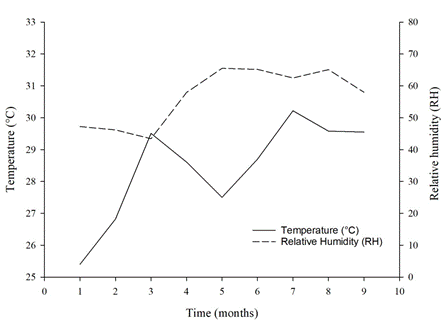
Throughout the storage period, the mean ambient temperature and relative humidity were 29.72 ± 2.28 °C and 60.2 ± 10%, respectively (Figure 1), values within the ideal range for sunflower achene storage. As described by SILVA (2008), higher temperatures increase seed respiration rates, accelerating deterioration, which underscores the importance of strict environmental control to minimize deleterious effects on seed or achene quality.
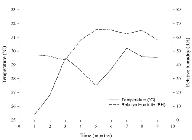
Temperature and relative humidity recorded during storage of sunflower achenes, July to March.
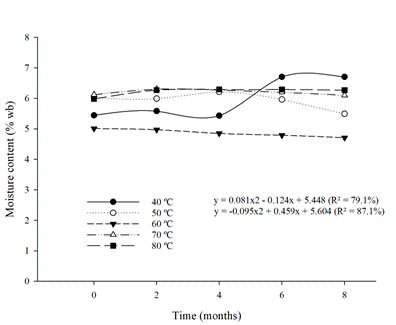
Figure 2 illustrates significant variation in MC across storage periods and drying temperatures, although values remained within the recommended range for safe storage, with 9.0% considered ideal. A relationship between drying temperature and storage time was observed:at time 0, drying at 70 and 80 °C resulted in higher MC compared with the other temperatures;at time 2, the highest MC values occurred at 40 and 60 °C, while no significant differences were found at times 4, 6, and 8, but Over time, 40 and 60 °C stood out at times 2, 6, and 8, but showed lower MC at times 0 and 4, whereas at 50 °C, higher MC occurred at times 6 and 8. Drying at 70 and 80 °C showed similar trends, differing only at time 8. Regarding storage (Figure 3A), MC was higher at 4 months compared with other periods.
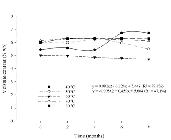
Effect of the interaction between drying temperature and storage time on moisture content of sunflower achenes.
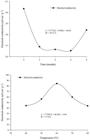
Effects of storage time (A) and drying temperature (B) on electrical conductivity in sunflower achenes.
For EC (Figure 3B), the highest value was observed at 40 °C compared to the others treatments. Higher drying temperatures were expected to increase EC due to the accelerated water removal rate during drying. COSTA et al. (2017) reported similar findings for Crambe seeds, where EC averaged 0.61 µS cm-1g-1 at 45 °C, differing from 0.51 µS cm-1 g-1 and 0.54 µS cm-1 g-1 at 75 and 90 °C, respectively. According to the authors, such behavior may result from solute release at high temperatures, thereby reducing EC values. In this study, no significant differences in EC were detected for the interaction between drying temperature and storage time. Although high solute leaching is generally considered an early indication of reduced vigor, this reduction was not confirmed in the present results. PEREA-FLORES et al. (2012) also observed that high drying and storage temperatures may influence ion leaching from grains, although such an effect was not support here.
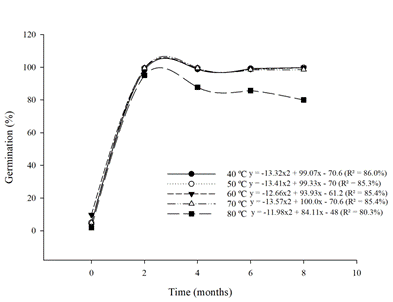
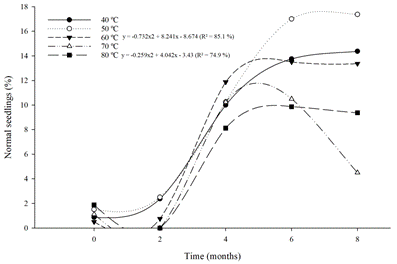
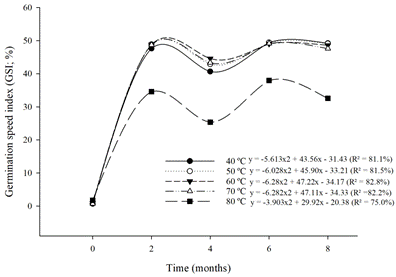
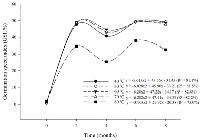
For germination percentage (Figure 4), values at time 0 were extremely low across all drying temperatures, as expected due to the natural dormancy of achenes after harvest. Throughout storage, however, germination potential increased, reaching values close to 100% at later evaluation periods, even under the highest drying temperatures. According to BRASIL (2009), sunflower achenes must meet a minimum germination, achene standard of 75%, which was achieved in most treatments Despite the overall increase in germination, achene vigor was partially compromised, as drying at 80 °C resulted in the lowest germination percentages at 2, 4, and 8 months. This reduction can be attributed to rapid water removal at high temperatures, which may damage cellular structures, particularly when initial moisture is high (HUANG et al., 2020). The high proportion of non-germinated achenes at time 0 may thus be associated with dormancy, physiological maturity, drying temperature, and analytical conditions such as substrate type, oxygen availability, and incubation temperature. The percentage of normal seedlings (Figure 5) also increased during storage, indicating that the storage period itself did not negatively affect quality. However, drying at 70 and 80 °C consistently produced lower percentages of normal seedlings, suggesting a detrimental effect of high drying temperature on seed vigor (HUANG et al., 2021).It is important to note that increased germination over time does not necessarily indicate high vigor, since germination tests are performed under optimal conditions that may not reflect field performance. Deterioration of stored achenes is a gradual process, and fluctuations in temperature and relative humidity can accelerate vigor loss, increasing susceptibility to stress during germination and reducing the ability to produce normal seedlings (SILVA et al., 2014). The germination speed index (GSI; Figure 6) showed no significant variation throughout storage, although drying at 80 °C reduced GSI values. Except for a slight decline at 4 months, storage duration had little influence on vigor reduction. At 40 °C, GSI values were lower at time 0 and higher thereafter, while at 50, 60, and 70 °C, differences were observed only at time 0. At 80 °C, GSI values were lower initially improved at subsequent evaluation, suggesting possible dormancy break during storage.
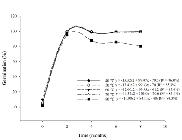
Effect of the interaction between drying temperature and storage time on germination of sunflower achenes.
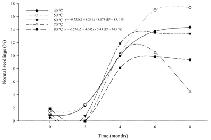
Effect of the interaction between drying temperature and storage time on normal seedling development of sunflower achenes.
Effect of the interaction between drying temperature and storage time on germination speed index of sunflower achenes.
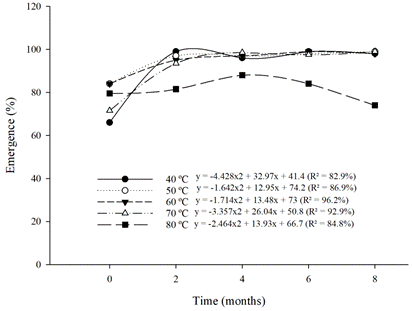
In the emergence test (Figure 7), time 0 presented the lowest emergence values, with slightly over 60% of seedlings emerging from the sand bed. Similarly, when comparing germination on moist substrate to that on Germitest® paper, initial values were low, likely due to both methodological factors and post-harvest dormancy. After 2, 4, and 6 months of storage, emergence percentages approached 100% for most treatments, except for achenes dried at 80 °C. A decreasing trend was observed with increasing drying temperature, indicating that excessively high temperatures hinder the expression of germination potential. In the interaction between drying temperature and storage time, differences at 40, 50, 60, and 70 °C occurred only at time 0, while at 80 °C the lowest emergence was observed at time 8 and the highest at time 4.
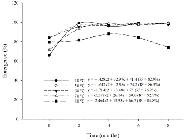
Effect of the interaction between drying temperature and storage time on emergence of sunflower achenes.
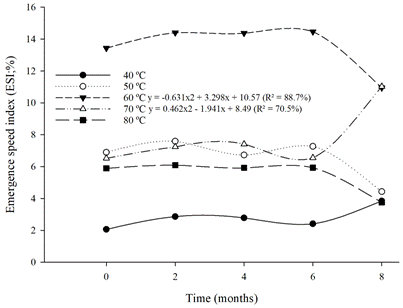
Analysis of emergence speed (Figure 8) showed that both storage period and drying at 80 °C yielded the lowest ESI values, indicating slower emergence under these conditions. However, the data suggest that neither storage duration nor high drying temperature markedly compromised emergence speed. Contrasting results were reported by ULLMANN et al. (2015) for sweet sorghum and by JUNQUEIRA et al. (2018) for BRS Style beans dried at different temperatures. According to ALVES et al. (2015), gradual water removal at lower temperatures exerts less stress on seed physiology, preserving germination and vigor-a conclusion also supported by CARDOSO et al. (2015). Nonetheless, this trend was not observed for sunflower achenes in the present ESI evaluation.
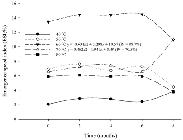
Effect of the interaction between drying temperature and storage time on emergence speed index of sunflower achenes.
CONCLUSION
This study demonstrated that storage duration did not affect sunflower achene vigor; however, drying temperature had a direct impact on its physiological quality, with the most detrimental effects occurring at 70 and 80 °C. Although prolonged storage preserved vigor, drying above 60 °C significantly compromised essential attributes, including germination and normal seedling development. These results highlight the need for strict monitoring and control of drying conditions to maintain sunflower achene vigor, particularly when long-term storage is planned. Drying at temperatures up to 50 °C proved most effective in preserving achene physiological integrity, thereby enhancing postharvest efficiency.
ACKNOWLEDGMENTS
The authors thank the Instituto Federal Goiano (IF Goiano), Fundação de Amparo à Pesquisa do Estado de Goiás (FAPEG), Financiadora de Estudos e Projetos (FINEP), and Conselho Nacional de Desenvolvimento Científico e Tecnológico (CNPq) for their support in conducting this study. The authors also acknowledge the Coordenação de Aperfeiçoamento de Pessoal de Nível Superior (CAPES), Brazil, for providing access to scientific databases through the CAPES Journal Portal, in accordance with the 2018 CAPES Resolution.
REFERENCES
-
ALENCAR, E. R. et al. Quality of soybean grains stored under different conditions. Revista Brasileira de Engenharia Agrícola e Ambiental, v.13 n.5, p.606-613, 2009. Available from: <Available from: https://doi.org/10.1590/S1415-43662009000500014 >. Accessed: Nov. 20, 2023. doi: 10.1590/S1415-43662009000500014.
» https://doi.org/10.1590/S1415-43662009000500014.» https://doi.org/10.1590/S1415-43662009000500014 -
ALVES, M. M. et al. Potential physiological seed Clitoria fairchildiana Howard in time function and drying temperature. Bioscience Journal, v.31, n.6, p.1600-1608, 2015. Available from: <Available from: https://doi.org/10.14393/BJ-v31n6a2015-29641 >. Accessed: Nov. 08, 2023. doi: 10.14393/BJ-v31n6a2015-29641.
» https://doi.org/10.14393/BJ-v31n6a2015-29641.» https://doi.org/10.14393/BJ-v31n6a2015-29641 -
ARAUJO, W. D. et al. Physical properties of peanut kernels duringdrying. Revista Brasileira de Engenharia Agrícola e Ambiental, v.18, p.279-286, 2014. Available from: <Available from: https://doi.org/10.1590/S1415-43662014000300006 >. Accessed: Nov. 05, 2023. doi: 10.1590/S1415-43662014000300006.
» https://doi.org/10.1590/S1415-43662014000300006.» https://doi.org/10.1590/S1415-43662014000300006 -
BARROZO, M. A. S. et al. Air-Drying of Seeds: A Review. Drying Technology: An International Journal, v.32, n.10, p.1127-1141, 2014. Available from: <Available from: http://dx.doi.org/10.1080/07373937.2014.915220 >. Accessed: Nov. 25, 2023. doi: 10.1080/07373937.2014.91522.
» https://doi.org/10.1080/07373937.2014.91522.» http://dx.doi.org/10.1080/07373937.2014.915220 -
BRASIL. Ministério da Agricultura, Pecuária e Abastecimento. Regras para análise de sementes. 297 Ministério da Agricultura, Pecuária e Abastecimento. Secretaria de Defesa Agropecuária. Brasília: MAPA/ACS, 2009. 399p. Available from: <Available from: https://www.gov.br/agricultura/pt-br/assuntos/lfda/arquivos-publicacoes-laboratorio/regras-para-analise-de-sementes.pdf/view >. Accessed: Nov. 1, 2023.
» https://www.gov.br/agricultura/pt-br/assuntos/lfda/arquivos-publicacoes-laboratorio/regras-para-analise-de-sementes.pdf/view -
CARDOSO, E. A. et al. Talisia esculenta seed quality in functionofdryingtemperaturesand times. Semina: Ciências Agrárias, v.36, n.1, p.7-16, 2015. Available from: <Available from: https://doi.org/10.5433/1679-0359.2015v36n1p7 >. Accessed: Nov 20, 2023. doi:10.5433/1679-0359.2015v36n1p7.
» https://doi.org/10.5433/1679-0359.2015v36n1p7» https://doi.org/10.5433/1679-0359.2015v36n1p7 -
COSTA, L. M. et al. Physiological quality of crambe seeds submitted to different drying conditions. Revista de Ciências Agrárias - Amazonian Journal of Agricultural and Environmental Sciences, v.60, n.3, p.235-240, 2017. Available from: <Available from: http://dx.doi.org/10.4322/rca.2446 >. Accessed: Dec. 10, 2023. doi:10.4322/rca.2446.
» https://doi.org/10.4322/rca.2446» http://dx.doi.org/10.4322/rca.2446 -
FERREIRA, D. F. SISVAR: A computer analysis system to fixed effects split plot type designs. Revista Brasileira de Biometria, v.37, n.4, p.529-535, 2019. Available from: <Available from: https://doi.org/10.28951/rbb.v37i4.450 >. Accessed: Nov. 01, 2023. doi: 10.28951/rbb.v37i4.450.
» https://doi.org/10.28951/rbb.v37i4.450.» https://doi.org/10.28951/rbb.v37i4.450 -
HUANG, Y. et al. Drying temperature affects rice seed vigor via gibberellin, abscisic acid, and antioxidant enzyme metabolism. Biomed & Biotechnol, v,21, p.796-810, 2020. Available from: <Available from: https://doi.org/10.1631/jzus.B2000297 >. Accessed: Dec. 15, 2023. doi: 10.1631/jzus.B2000297.
» https://doi.org/10.1631/jzus.B2000297.» https://doi.org/10.1631/jzus.B2000297 -
HUANG, Y. et al. High drying temperature accelerates sunflower seed deterioration by regulating the fatty acid metabolism, glycometabolism, and abscisic acid/gibberellin balance. Frontiers in Plant Science, v.12, 2021. Available from: <Available from: https://doi.org/10.3389/fpls.2021.628251 >. Accessed: May, 09, 2025. doi: 10.3389/fpls.2021.628251.
» https://doi.org/10.3389/fpls.2021.628251.» https://doi.org/10.3389/fpls.2021.628251 -
JOSÉ, S. C. B. R. et al. Storage of sunflower seeds in sub-zero temperatures: physiological and biochemical aspects. Revista Brasileira de Sementes, v.32, n.4, p.029-038, 2010. Available from: <Available from: https://doi.org/10.1590/S0101-31222010000400004 >. Accessed: Jan. 05, 2024. doi: 10.1590/S0101-31222010000400004.
» https://doi.org/10.1590/S0101-31222010000400004.» https://doi.org/10.1590/S0101-31222010000400004 -
JUNQUEIRA, M. H. et al. Desempenho de plântulas de sementes de Feijão BRS Estilo submetidas à diferentes temperaturas de secagem. Global Science and Technology, v.11, n.2, p.304-314, 2018. Available from: <Available from: https://repositorio.ufmg.br/items/4531173a-ebad-48e5-a1f8-a4dc3ed9e231 >. Accessed: Jan. 05, 2024.
» https://repositorio.ufmg.br/items/4531173a-ebad-48e5-a1f8-a4dc3ed9e231 -
MAGUIRE, J. D. Speed of germination and selection and evaluation for seedling emergence and vigor. Crop Science, v.2, n.2, p.176-77, 1962. Available from: <Available from: https://www.scirp.org/reference/ReferencesPapers?ReferenceID=1017323 >. Accessed: Jan. 05, 2024. doi: 10.2135/cropsci1962.0011183X000200020033x.
» https://doi.org/10.2135/cropsci1962.0011183X000200020033x.» https://www.scirp.org/reference/ReferencesPapers?ReferenceID=1017323 - MARCOS FILHO, J. Fisiologia de sementes de plantas cultivadas. 2ª edição. Londrina: ABRATES, 2015. 659p.
-
NUNES, R. T. C. et al. Qualidade fisiológica de aquênios de girassol classificadas pelo tamanho. Agropecuária Científica no Semiárido, v.12, n.2, p.153-161, 2016. Available from: <Available from: https://doi.org/10.30969/acsa.v12i2.728 >. Accessed: Dec. 05, 2023. doi:10.30969/acsa.v12i2.728.
» https://doi.org/10.30969/acsa.v12i2.728» https://doi.org/10.30969/acsa.v12i2.728 -
PEREA-FLORES, M. J. et al. Mathematical modelling of castor oil seeds (Ricinus communis) drying kinetics in fluidized bed at high temperatures. Industrial Crops Products, v.38, p.64-71, 2012. Available from: <Available from: https://doi.org/10.1016/j.indcrop.2012.01.008 >. Accessed: Jan 5, 2024. doi: 10.1016/j.indcrop.2012.01.008.
» https://doi.org/10.1016/j.indcrop.2012.01.008.» https://doi.org/10.1016/j.indcrop.2012.01.008 - SILVA, J. S. Secagem e armazenagem de produtos agrícolas. Viçosa: Aprenda Fácil. p.560, 2008.
-
SILVA, M. et al. Qualidade fisiológica e armazenamento de sementes de feijão-comum produzidas no norte de Minas Gerais. Revista Agro Ambiente, v.8, p.97-103, 2014. Available from: <Available from: https://doi.org/10.18227/1982-8470ragro.v8i1.1346 >. Accessed: Nov. 15, 2023. doi: 10.18227/1982-8470ragro.v8i1.1346.
» https://doi.org/10.18227/1982-8470ragro.v8i1.1346.» https://doi.org/10.18227/1982-8470ragro.v8i1.1346 -
ULLMANN, R. et al. Qualidade fisiológica das sementes de sorgo sacarino submetidas à secagem em diferentes condições de ar. Revista Brasileira de Engenharia Agrícola e Ambiental, v.19, n.1, 2015. Available from: <Available from: https://doi.org/10.1590/1807-1929/agriambi.v19n1p64-69 >. Accessed: Dec. 10, 2023. doi: 10.1590/1807-1929/agriambi.v19n1p64-69.
» https://doi.org/10.1590/1807-1929/agriambi.v19n1p64-69.» https://doi.org/10.1590/1807-1929/agriambi.v19n1p64-69 - VIEIRA, R. D.; KRZYZANOWSKI, F. C. Teste de condutividade elétrica. In: KRZYZANOWSKI, F. C.; VIEIRA, R. D.; FRANÇA NETO, J. B. (Ed.). Vigor de sementes: conceitos e testes. Londrina: ABRATES , c.4, p.1-26, 1999.
-
CR-2024-0506.R4
-
DATA AVAILABILITY STATEMENT
The raw data supporting the findings of this study are available from the corresponding authors upon reasonable request.
-
AUTHORS’ CONTRIBUTIONS
The raw data supporting the findings of this study are available from the corresponding authors upon reasonable request.
-
DECLARATION OF USE OF ARTIFICIAL INTELLIGENCE
Artificial intelligence (AI) tools were not employed to generate or modify the scientific content of this manuscript, including the preparation of the abstract, keywords, hypotheses, results, discussion, or conclusion. AI assistance was used solely for orthographic and grammatical correction, under the careful supervision of the authors, in accordance with the guidelines established by Ciência Rural (item 25b). The use of AI did not influence the interpretation of data, formulation of ideas, or scientific conclusions presented in this study.
Edited by
-
ASSOCIATE EDITOR:
Alessandro Dal’Col Lúcio (0000-0003-0761-4200)
-
SCIENTIFIC EDITOR:
Nelson Barbosa Machado-Neto (0000-0003-0914-0686)
The raw data supporting the findings of this study are available from the corresponding authors upon reasonable request.