
 Teleconsultation in primary care: conceptual model and implementation in favela territories
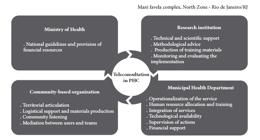
Primary Health Care is central to ensuring access to healthcare and is the preferred gateway to the Unified Health System. The municipality of Rio de Janeiro has made progress in coverage, but still faces challenges, especially in vulnerable areas. An innovative teleconsultation model was proposed in the Maré favelas compound, integrating public authorities (Ministry of Health and Rio de Janeiro Municipal Health Department), academia (Fiocruz), and community-based organizations (Redes da Maré). Therefore, this article presents the pilot implementation stages, emphasizing the territorial context, stakeholders involved, resources, and governance. It proposes a conceptual framework, combined with qualitative and quantitative methods, to describe the experience. A total of 1.017 teleconsultations were conducted (November 2024 to June 2025) with the following profiles: follow-up on recent appointments (58%), chronic conditions and life cycles (33%), acute conditions (5%), and prescription issuance (2%), even during territorial conflicts. However, barriers were encountered, such as difficulty using the tools, data insecurity, and accessibility. The model proved successful in its initial phase, providing support for a national teleconsultation policy for vulnerable territories.
Key words:
Primary Health Care; Social Vulnerability; Remote Consultation
 Thumbnail
 Thumbnail
 Thumbnail
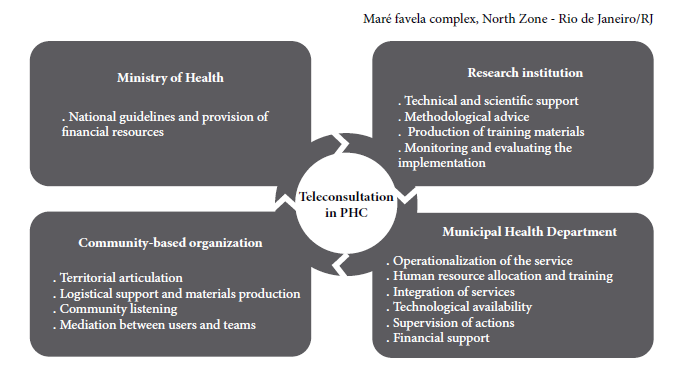 Source: Authors.
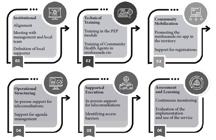
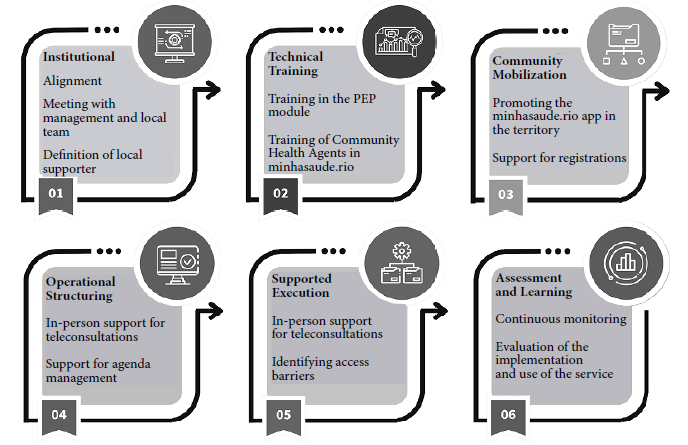 Source: Authors.
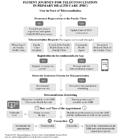
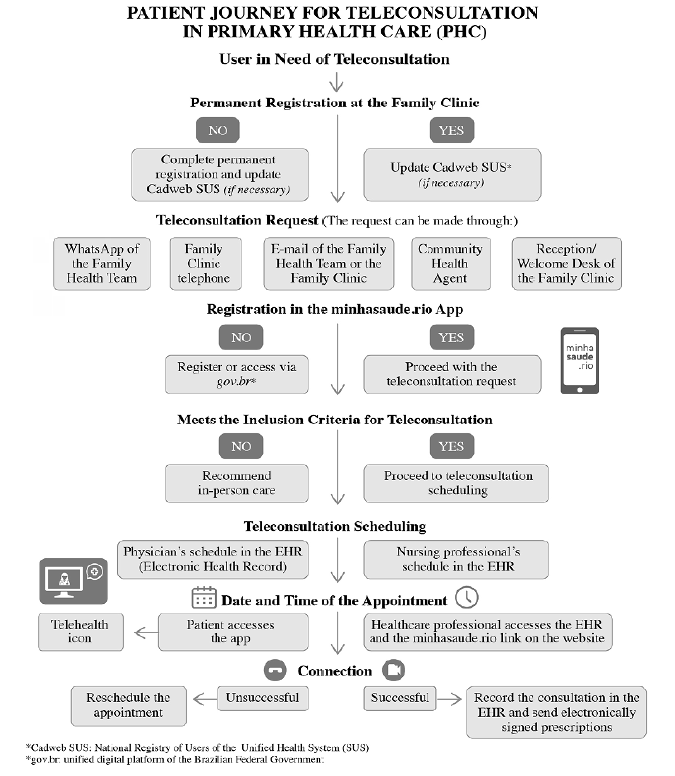 Note: Types of consultations included in the teleconsultation modality in Primary Health Care: Follow-up consultations related to recent appointments; Issuance and/or renewal of prescriptions for continuous use; Video call consultations, in situations of territorial instability, which may initially be scheduled as a Teleconsultation or correspond to a conversion of consultation modality from in-person to telehealth; Monitoring of chronic conditions and life cycles; Simple acute conditions (e.g., acute gastroenterocolitis, upper airway respiratory symptoms, and headache without warning signs). Source: Authors.