
 Determinants and patterns of multimorbidity in Brazilian adults: evidence from a population-based study
Abstract
We aimed to explore the association between lifestyle, sociodemographic variables, and multimorbidity, as well as to identify the patterns of multimorbidity (dyads). Cross-sectional study, based on data from the 2019 National Health Survey, Brazil. Data on 76,492 adult participants between 18 and 70 years old were included. Logistic regression models were used to evaluate the association between sociodemographic and lifestyle variables with multimorbidity and dyads. Multimorbidity was associated with older age, female sex, lower educational level, and overweight. Significantly higher odds of multimorbidity were noted among participants who are insufficient leisure-time physical activity, with irregular consumption of beans and spend more time in front of screens. The most frequently occurring dyads were hypertension-chronic back problem (28.2%) and hypertension-high cholesterol (26.5%). This study contributes to the understanding multimorbidity in the Brazilian context, emphasizing its public health significance, identifying risk factors, and uncovering associative patterns. Recognizing sociodemographic elements as crucial determinants, this study sheds light on the intricate relationship between lifestyle, demographics, and the prevalence of multimorbidity.
Key words:
Multimorbidity; Chronic diseases; Lifestyle; National Health Survey; Health surveys
Resumo
Nosso objetivo foi explorar a associação entre estilo de vida, variáveis sociodemográficas e multimorbidade, bem como identificar os padrões de multimorbidade (díades). Estudo transversal, baseado em dados da Pesquisa Nacional de Saúde de 2019, Brasil. Foram incluídos dados de 76.492 participantes adultos entre 18 e 70 anos. Modelos de regressão logística foram usados para avaliar a associação entre variáveis sociodemográficas e de estilo de vida com multimorbidade e díades. A multimorbidade foi associada a idade mais avançada, sexo feminino, nível educacional mais baixo e sobrepeso. Odds significativamente mais altas de multimorbidade foram observadas entre participantes com atividade física insuficiente no tempo livre, com consumo irregular de feijão e que passam mais tempo diante de telas. As díades mais frequentes foram hipertensão-problema crônico nas costas (28,2%) e hipertensão-colesterol alto (26,5%). Este estudo contribui para a compreensão da multimorbidade no contexto brasileiro, enfatizando sua importância para a saúde pública, identificando fatores de risco e revelando padrões associativos. Reconhecendo elementos sociodemográficos como determinantes cruciais, o estudo lança luz sobre a relação intrincada entre estilo de vida, demografia e a prevalência de multimorbidade.
Palavras-chave:
Multimorbidade; Doenças crônicas; Estilo de vida; Pesquisa Nacional de Saúde; Inquérito de saúde
Resumen
Nuestro objetivo fue explorar la asociación entre el estilo de vida, las variables sociodemográficas y la multimorbilidad, así como identificar patrones de multimorbilidad (díadas). Estudio transversal basado en datos de la Encuesta Nacional de Salud de 2019, Brasil. Se incluyeron datos de 76,492 participantes adultos de 18 a 70 años. Se utilizaron modelos de regresión logística para evaluar la asociación entre las variables sociodemográficas y de estilo de vida con la multimorbilidad y las díadas. La multimorbilidad se asoció con la edad avanzada, el sexo femenino, el menor nivel educativo y el sobrepeso. Se observaron probabilidades significativamente mayores de multimorbilidad entre los participantes con actividad física insuficiente en su tiempo libre, con consumo irregular de frijoles y que pasaban más tiempo frente a pantallas. Las díadas más frecuentes fueron hipertensión-problemas crónicos de espalda (28,2 %) e hipertensión-colesterol alto (26,5 %). Este estudio contribuye a la comprensión de la multimorbilidad en el contexto brasileño, destacando su importancia para la salud pública, identificando factores de riesgo y revelando patrones asociativos. Al reconocer los elementos sociodemográficos como determinantes cruciales, este estudio arroja luz sobre la intrincada relación entre el estilo de vida, la demografía y la prevalencia de la multimorbilidad.
Palabras clave:
Multimorbilidad; Enfermedades crónicas; Estilo de vida; Encuesta Nacional de Salud; Encuesta de salud
Introduction
Multimorbidity, defined as the coexistence of two or more chronic conditions in the same individual, has emerged as an important challenge in the field of public health and medical care as the population ages and health standards evolve. Multimorbidity increases the risk of premature death, hospitalization, loss of physical functioning, depression, polypharmacy, and worsening quality of life, translating into a substantial economic burden for the health systems1,2.
Multimorbidity affects approximately 40% of the general population in high-income countries and 30% in low- and middle-income countries, and it is estimated that almost 50 million people present this outcome3 only in Brazil. This means that there is a potential increase in the problems associated with multimorbidity, which may affect patient safety.
Well-established determinants of multimorbidity include age, sex, and lower socioeconomic status4. Multimorbidity tends to be more prevalent among older individuals5,6, women3,7, and those with the lowest socioeconomic status8,9. In addition, modifiable risk factors such as smoking, sedentary lifestyle, alcohol abuse, and unhealthy diet have been associated with several chronic diseases, increase the risk of death, and are responsible for more than 41 million deaths annually worldwide10,11.
Conventional disease research has primarily concentrated on individual medical conditions, neglecting the intricate reality in which individuals frequently confront multiple health issues simultaneously. Consequently, multimorbidity is gaining significance, as it challenges the conventional one-dimensional healthcare paradigm.
Certain patterns of multimorbidity can have different impacts on the health of affected individuals, both in terms of quality of life and mortality, in addition to influencing the use of health services differently and, consequently, the resulting costs12.
Exploring multimorbidity, its patterns, and determinants is a recent focus, especially in low-income and middle-income countries. Understanding the nationwide occurrence and patterns of multimorbidity is crucial for managing the challenges in the Brazilian Unified Health System due to rapid demographic and epidemiological transitions. Identifying contextual and individual differences in multimorbidity occurrence assists policymakers in prioritizing and promoting health actions and interventions related to multimorbidity management. This study aimed to discern the relationships between lifestyle, sociodemographic variables, and multimorbidity patterns.
Methods
Data source and participants
This cross-sectional study was conducted using data from the National Health Survey (PNS) conducted in Brazil in 2019, which collected data from representative samples of the population living throughout the country. The sample was selected by three stages, including the random sampling of census tract in the first stage and the random selection of private households in the second. In the third stage, a 15-year-old or older resident was selected by a random draw from each of the households. Details of the sampling process, design, and contents of the 2019 survey can be found elsewhere13. After excluding pregnant women (n = 773) and individuals with missing data (n = 118), this study analyzed data from 76,492 individuals aged from 18 to 70y.
Outcome variables
The outcome variables were defined as the presence of multimorbidity (yes/no), defined as the coexistence of two or more chronic diseases within an individual and the most prevalent dyads (a combination of two health conditions). The chronic diseases for which the interviewees self-reported a medical diagnosis and which were considered to identify the condition of multimorbidity were: (i) hypertension; (ii) diabetes; (iii) high cholesterol; (iv) heart diseases, such as heart attack, angina, heart failure or others; (v) asthma or asthmatic bronchitis; (vi) stroke; (vii) arthritis or rheumatism; (viii) chronic back problem; (ix) depression; (x) respiratory diseases, such as pulmonary emphysema, chronic bronchitis or COPD; (xi) cancer, (xii) work-related musculoskeletal diseases; and (xiii) chronic renal failure.
Exposure variables
Lifestyle variables
Among the lifestyle variables, we included information on the four domains considered to be the main modifiable risk factors for chronic diseases14, namely: smoking, alcohol consumption, markers of unhealthy eating, and physical activity, all of which are dichotomous indicators: (i) current smoking; (ii) abusive consumption of alcoholic beverages (≥ 5 doses on a single occasion)15; (iii) frequent consumption of alcoholic beverages (≥ 6 times/week); (iv) physically inactive (< 150 minutes of light or moderate activity/week)16; (v) excessive screen time (> 3 hours/day); (vi) insufficient intake of fruits/natural juices and vegetables (< 25 serving/week)17; (vii) regular consumption of sweets (≥ 5 days/week); (viii) regular consumption of soft drinks/artificial juices (≥ 5 times/week)18; (ix) regular consumption of beans (≥ 5 times/week); and (x) replace lunch with a quick snack (≥ 5 times/week).
Sociodemographic variables
Sociodemographic variables were as follows: sex (male/female), age in years, race/color (white, black, parda, and others), schooling (illiterate and incomplete elementary school level, complete elementary and incomplete high school level, complete high school and incomplete higher education level, complete higher education level), and socioeconomic classification (high: A and B1; middle: B2 and C1; and low: C2, D, and E)19. The nutritional status was defined by the body mass index (BMI) and was classified according to criteria from the World Health Organization (WHO): BMI < 18.5 kg/m² = low weight; BMI between 18.5 and 24.9 kg/m² = eutrophy; BMI between 25.0 and 29.9 kg/m² = overweight; BMI ≥ 30.0 kg/m² = obesity.
Statistical analyses
Descriptive analysis computed the relative frequencies with corresponding 95% confidence intervals (95%CI). Logistic regression was used to assess the association between exposure variables (lifestyle and sociodemographic variables) and outcomes, with multimorbidity status (yes/no) and multimorbidity dyads as focal points. The dyads of interest were those with a prevalence of 20% or more, common to both sexes (hypertension-high cholesterol and hypertension-chronic back problem). Variables with a p-value below 0.20 in the bivariate analysis were included in the multivariate analysis. All analyses considered the sampling design and were conducted using SAS Studio 3.81, with a significance level of 5%.
The Brazilian National Ethics Research Committee (CONEP) approved the PNS 2019 in August 2019 (n. 3.529.376). All the participants signed an informed consent form.
Results
The population studied was composed of mostly women (52.3%), middle-aged adults (aged between 30 and 39 years old, 23.8%), skin color/race pardos (44.3%), with complete secondary education and incomplete higher education (36.3%), followed by those without formal education or incomplete primary education (32.1%), and more than half (53.1%) were from a low socioeconomic class. The prevalence of multimorbidity was 26%, and individuals who presented with this condition were, on average, 11.7 years older than those without multimorbidity, 32.3% were women, 28.2% were white, had no education, or had incomplete primary education (35.4%), and were classified as obese (37.0%) (Tables S1 and S2).
Among people with multimorbidity, 28.1% did not report alcohol abuse but consumed alcohol six or more times a week (31.7%), 28.2% were not sufficiently active during leisure time, and 27.6% spent 3 hours or less per day in front of the screen. Regarding dietary aspects, 33.3% reported consuming the recommended amount of fruit and vegetables weekly, 26.7% did not consume sweets regularly, 27.9% did not consume beans regularly, and 28.3% consumed soda or artificial juice less than 5 times/week (Table S3).
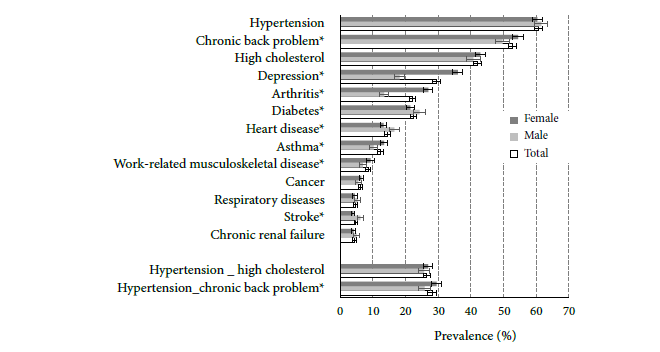
Hypertension (60.8%), chronic back problems (52.8%), high cholesterol (42.1%), depression (29.6%), diabetes (22.5%), and arthritis (22.1%) were the most prevalent chronic conditions in the population with multimorbidity. It was observed that, among the individuals with multimorbidity, the most common combination was hypertension-chronic back problem (28.2%) and hypertension-high cholesterol (26.5%) (Table S4).
An analysis of the most prevalent chronic conditions based on sex revealed that hypertension, chronic back problems, and high cholesterol levels were predominant in both men and women. Regarding dyads, hypertension-chronic back problem and hypertension-high cholesterol were the most prevalent combinations in both sexes (Figure 1).
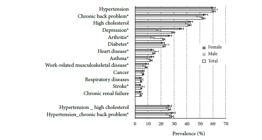
Chronic conditions and dyads of the most prevalent chronic conditions according to gender. NHS, Brazil, 2019.
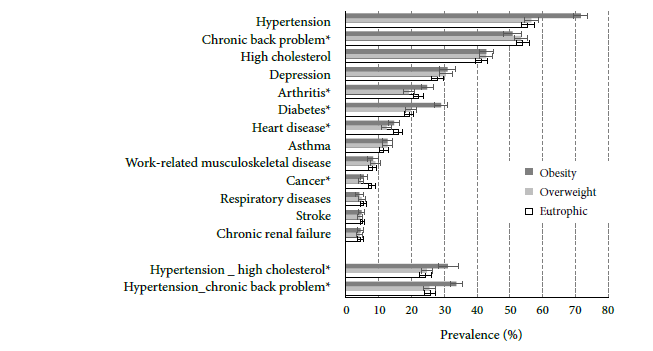
According to nutritional status, eutrophic individuals commonly experience hypertension, chronic back problems, and high cholesterol levels. These same chronic conditions are more prevalent among individuals classified as overweight (overweight and obesity). For dyads, regardless of nutritional status, hypertension-chronic back problems, and hypertension-high cholesterol emerged as the most common combination (Figure 2).
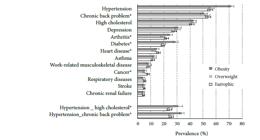
Chronic conditions and dyads of the most prevalent chronic conditions according to nutritional status. NHS, Brazil, 2019.
An analysis of the multivariate data for the three outcomes of interest is presented in Table 1. Multimorbidity (OR = 1.09, CI95% 1.01-1.17) and the hypertension-chronic back problem dyad (OR = 1.15, CI95% 1.00-1.33) were more likely to occur in individuals who were insufficiently active during leisure time. A higher risk of multimorbidity was associated with individuals who spent more than three hours in front of a television or screen (OR = 1.14, CI95% 1.07-1.22) and eating beans less than five times a week (OR = 1.10, CI95% 1.03-1.17) per week. Consuming less than 25 servings of fruits and vegetables per week was associated with a lower risk of multimorbidity (OR = 0.85, CI95% 0.78-0.94) and hypertension-chronic back problems (OR = 0.82, CI95% 0.71-0.96). The replacement of meals with snacks (OR = 0.66, CI95% 0.45-0.97) was also associated with a lower occurrence of hypertension-chronic back problem dyad (Table 1).
According to the multivariate analysis, being a smoker (OR = 0.84, CI95% 0.71-0.99) decreased the risk of the occurrence of the hypertension-high cholesterol dyad. There was no significant association between the other lifestyle variables analyzed and the outcomes.
In terms of sociodemographic characteristics, advanced age, female sex, and lower levels of education were associated with all outcomes analyzed. Overweight individuals were also more likely to develop multimorbidity, hypertension-high cholesterol, and hypertension-chronic back problem dyads than those of normal weight.
Discussion
Main finding of this study
Multimorbidity is emerging as a critical public health challenge, especially in developing countries, such as Brazil. The findings from this study showed a higher prevalence of multimorbidity among adults; one in every four Brazilian adults had two or more chronic conditions. These results bring important challenges for the health system, which will need to be more comprehensive to deal with the complexity of multimorbidities. It is noteworthy that 82.3% of the sample were under 60 years of age, indicating that this is not a problem for the elderly. The most frequently occurring dyad was hypertension-chronic back problem (28.2%) and hypertension-high cholesterol (26.5%), highlighting the importance of metabolic and musculoskeletal disorders. Our results suggest higher odds of multimorbidity among insufficiently active individuals, who spend more time in front of screens and consume beans less than five times a week. Likewise, being female, being older, having a lower level of education and being overweight also have higher odds for multimorbidity. In contrast to chronic diseases that are present in isolation, the simultaneous presence of these illnesses is still poorly described in the literature.
What is already known on this topic
Insufficiently active individuals are more prone to multiple chronic diseases, a finding consistent with that of a study revealing low adherence to leisure-time physical activity among those with multimorbidity21. The authors recommend additional longitudinal research to clarify the causal relationship between these factors and determine whether multimorbidity leads to physical inactivity or oppositely.
Concerning the hypertension-chronic back problem dyad, insufficient physical activity was associated to a higher odd of experiencing this combination of chronic conditions. The Brazilian Guidelines for Arterial Hypertension underscore the proven benefits of aerobic exercise in lowering blood pressure22. Regular exercise is advised to reduce cardiovascular morbidity and mortality in hypertensive individuals. This recommendation is based on exercise-induced vascular adaptations that predominantly lead to increased vasodilation23.
A sedentary lifestyle, particularly prevalent in those engaged in prolonged inactive activities, is linked to pain and musculoskeletal issues, particularly in the back. Individuals in such scenarios often assume improper postures and are more prone to weight gain, which significantly contributes to back pain and problems24. Exercise not only enhances muscle strength and posture but also elicits beneficial neurochemical responses, contributing to pain relief 25.
Regular bean consumption has a protective effect against multimorbidity, affirming its significant role in health maintenance. A Brazilian survey indicated a lower prevalence of dyslipidemia among those consuming beans at least five times a week26, along with a protective factor against total mortality27. The Food Guide for the Brazilian Population recognizes bean consumption as a marker of a healthy eating pattern, attributing benefits not only to disease prevention, but also to a higher dietary nutritional contribution, given its rich fiber and micronutrient content. Additionally, regular bean consumption aligns with a more complete meal pattern, often accompanied by staples such as rice, forming the foundation of main meals28.
The seemingly contradictory link between smoking, fruit and vegetable consumption, snack-to-meal replacements, and outcomes warrants a thorough analysis, acknowledging the nuanced nature of the topic. Contradictions arise from various factors, emphasizing the intricate interplay between lifestyle and multimorbidity.
Statistical and scientific analyses employ reverse causality, revealing that the relationship between variables may be misinterpreted, with one influencing the other without a clear temporal sequence. Lifestyle behaviors may result from health conditions rather than direct effects. Consequently, multimorbidity can lead to adaptive changes in lifestyle. Additionally, “healthy selection” is noteworthy, wherein adopting a healthy lifestyle may encourage the maintenance of overall well-being.
We identified inequalities in the prevalence of multimorbidity and the patterns of multimorbidity (dyads) of interest. Women had a higher prevalence of multiple chronic diseases and both dyads. A higher occurrence of multimorbidity in women has been reported by other researchers29,30. The explanation for their higher occurrence in women may be related to greater health care for women and gender inequalities31,32. Women, in general, adopt preventive behaviors and access health services more often, thus being able to have more knowledge about their health problems. According to data from PNS 2019, 82.3% of Brazilian women consulted a doctor 12 months prior to the interview, with 69.4% of men33. Additionally, compared with women, men are more likely to die prematurely from non-communicable diseases, which can lead to a higher prevalence among women34.
Individuals with lower educational levels had a higher odd of presenting all the outcomes analyzed. According to the National Research Council and Institute of Medicine, education is one of the most important social determinants of health35, with direct effects on health-related factors36. Low education is directly related to greater overall social status, for example, lower income, neighborhood characteristics, and housing living conditions, which may increase the risk of chronic diseases37.
The association of multimorbidity with increased age is a common finding in studies, according to a systemic review and metanalysis3, which is similar to the results found herein. Some multimorbidity prevalence studies have focused on the elderly population, especially because this is an important prognostic factor during hospitalization and post-hospitalization survival.
Being overweight correlates with multimorbidity, with individuals with a higher BMI being more prone to this outcome. A study on Brazilian elderly individuals revealed a 37% higher risk of multimorbidity among those overweight compared to those with normal weight38. Similar findings were observed in a survey across 17 European countries, emphasizing a stronger link between overweight/obesity BMI and multimorbidity39. A U.S. study highlighted a significant relationship between BMI, particularly obesity, and multimorbidity40. A recent systematic review and meta-analysis further confirmed the elevated risk associated with being overweight and obesity41.
What this study adds
This study shows empirical evidence on prevalence and patterns (dyads) of multimorbidity, obtained using a recent, large, nationally representative sample of the Brazilian population. It explores less-studied common combinations of chronic diseases and provides valuable insights. Information on only prevalence by simple count may not be sufficient enough to guide primary health services design; it is additionally important to examine the patterns for appropriate clinical management and adequate understanding of the disease effect by researchers and policymakers. This approach is crucial, as different multimorbidity patterns can impact individuals’ health and healthcare utilization differently. Future studies should consider lifestyle variables with directly measured information, moving beyond self-perception, to enhance our understanding of multimorbidity risk factors. There is ample room for improvement in preventive health behaviors in specific high-risk groups.
Limitations of this study
This study has some limitations, including reliance on self-reported information for noncommunicable diseases and lifestyle variables, leading to potential misclassification. While gold standards and objective measures are more accurate, they are less feasible and costly for extensive population studies. The cross-sectional design offers only a snapshot of the association between current lifestyle behaviors and other characteristics in individuals with multimorbidity. Lifestyle extends beyond the behaviors examined here, and factors like sleep hours, drug use, and variations in types of physical activity were not considered.
Conclusions
The results showed a high prevalence of people with two or more chronic diseases, indicating that multimorbidity is not an issue restricted to developed countries, also affecting countries undergoing epidemiological transitions, such as Brazil. Our results may contribute to the inclusion of recommendations in Brazilian clinical guidelines about the relationship with chronic conditions, as well as to designing interventions/public policies considering the presence of multiple diseases in the same individual. Sociodemographic aspects must be considered when planning health services and developing strategies for prevention and treatment of chronic diseases and, consequently, for multimorbidity. Policies oriented towards the reduction of inequities could favor the control of multimorbidity.
References
- 1 Smith SM, Soubhi H, Fortin M, Hudon C, O'Dowd T. Managing patients with multimorbidity: systematic review of interventions in primary care and community settings. BMJ 2012; 345:e5205.
- 2 World Health Organization (WHO). Multimorbidity: Technical Series on Safer Primary Care. Geneva: WHO; 2016.
- 3 Nguyen H, Manolova G, Daskalopoulou C, Vitoratou S, Prince M, Prina AM. Prevalence of multimorbidity in community settings: a systematic review and meta-analysis of observational studies. J Comorb 2019; 9:2235042X19870934.
- 4 Violan C, Foguet-Boreu Q, Flores-Mateo G, Salisbury C, Blom J, Freitag M, Glynn L, Muth C, Valderas JM. Prevalence, determinants and patterns of multimorbidity in primary care: a systematic review of observational studies. PLoS One 2014; 9(7):e102149.
- 5 Prados-Torres A, Poblador-Plou B, Calderon-Larranaga A, Gimeno-Feliu LA, Gonzalez-Rubio F, Poncel-Falco A, Sicras-Mainar A, Alcala-Nalvaiz JT. Multimorbidity patterns in primary care: interactions among chronic diseases using factor analysis. PLoS One 2012; 7(2):e32190.
- 6 Salisbury C, Johnson L, Purdy S, Valderas JM, Montgomery AA. Epidemiology and impact of multimorbidity in primary care: a retrospective cohort study. Br J Gen Pract 2011; 61(582):e12-e21.
- 7 Carvalho JN, Roncalli AG, Cancela MC, Souza DL. Prevalence of multimorbidity in the Brazilian adult population according to socioeconomic and demographic characteristics. PLoS One 2017; 12(4):e0174322.
- 8 Pathirana TI, Jackson CA. Socioeconomic status and multimorbidity: a systematic review and meta-analysis. Aust N Z J Public Health 2018;4 2(2):186-194.
- 9 Katikireddi SV, Skivington K, Leyland AH, Hunt K, Mercer SW. A contribuição dos fatores de risco para as desigualdades socioeconômicas na multimorbilidade ao longo da vida: uma análise longitudinal da coorte Twenty-07. BMC Med 2017; 15:152.
- 10 GBD 2015 Risk Factors Collaborators. Global, regional, and national comparative risk assessment of 79 behavioural, environmental and occupational, and metabolic risks or clusters of risks, 1990-2015: a systematic analysis for the Global Burden of Disease Study 2015. Lancet 2016; 388(10053):1659-1724.
- 11 World Health Organization (WHO). Noncommunicable Diseases Country Profiles 2018. Geneva: WHO; 2018.
- 12 Picco L, Achilla E, Abdin E, Chong SA, Vaingankar JA, McCrone P, Chua HC, Heng D, Magadi H, Ng LL, Prince M, Subramaniam M. Economic burden of multimorbidity among older adults: impact on healthcare and societal costs. BMC Health Serv Res 2016; 16:173.
- 13 Stopa SR, Szwarcwald CL, Oliveira MM, Gouvea ECDP, Vieira MLF, Freitas MPS, Sardinha LMV, Macário EM. Pesquisa Nacional de Saúde 2019: histórico, métodos e perspectivas. Epidemiol Serv Saude 2020; 29(5):e2020315.
- 14 World Health Organization (WHO). Global status report on noncommunicable diseases 2014. Geneva: WHO; 2014.
- 15 World Health Organization (WHO). Decade of Healthy Ageing: plan of action. Geneva: WHO; 2020.
- 16 World Health Organization (WHO). Global status report on noncommunicable diseases 2010. Geneva: WHO; 2011.
-
17 World Health Organization (WHO). Healthy diet. Fact Sheet N° 394 [Internet]. 2018 [cited 2024 jun 11]. Available from: https://cdn.who.int/media/docs/default-source/healthy-diet/healthy-diet-fact-sheet-394.pdf
» https://cdn.who.int/media/docs/default-source/healthy-diet/healthy-diet-fact-sheet-394.pdf - 18 Brasil. Ministério da Saúde (MS). Vigitel Brasil 2019: vigilância de fatores de risco e proteção para doenças crônicas por inquérito telefônico. Brasília: MS; 2020.
- 19 Associação Brasileira de Empresas de Pesquisa (ABEP). Critério Brasil de Classificação Econômica. São Paulo: ABEP; 2020.
- 20 World Health Organization (WHO). Obesity: preventing and managing the global epidemic. Geneva: WHO; 2000.
- 21 Vancampfort D, Stubbs B, Koyanagi A. Physical chronic conditions, multimorbidity and sedentary behavior amongst middle-aged and older adults in six low- and middle-income countries. Int J Behav Nutr Phys Act 2017; 14:147.
- 22 Barroso WKS, Rodrigues CIS, Bortolotto LA, Mion D, Neves MFT, Brandão AA, Feitosa ADM, Santos MTR, Barbosa ECD, Gomes MAM, Nobre F, Kohlmann O, Paola AAV, Guimarães ACB, Oigman W, Póvoa R, Fuchs FD, Fuchs SC, Alessi A, Moreira SM, Jardim PCBV, Malachias MVB. Diretrizes Brasileiras de Hipertensão Arterial - 2020. Arq Bras Cardiol 2021; 116(3):516-658.
- 23 Oliveira GF, Marin TC, Forjaz CLM, Brito LC. Exercise training and endothelial function in hypertension: effects of aerobic and resistance training. Arq Bras Cardiol 2021; 116(5):948-949.
- 24 Jerônimo JS, Lopes SV, Siqueira FCV, Silva MC. Counseling to change the lifestyle of sedentary workers on musculoskeletal pain: systematic review. BrJP 2022; 5(3):272-284.
- 25 Rice D, Nijs J, Kosek E, Wideman T, Hasenbring MI, Koltyn K, Graven-Nielsen T. Exercise-induced hypoalgesia in pain-free and chronic pain populations: state of the art and future directions. J Pain 2019; 20(11):1249-1266.
- 26 Pereira LP, Sichieri R, Segri NJ, Silva RMVG, Ferreira MG. Dislipidemia autorreferida na região Centro-Oeste do Brasil: prevalência e fatores associados. Cien Saude Colet 2015; 20(6):1815-1824.
- 27 Crepaldi BVC, Okada LM, Rauber F, Levy RB, Azeredo CM. Social inequality in food consumption between 2008 and 2019 in Brazil. Public Health Nutr 2022; 25(2):214-224.
- 28 Jaime PC, Stopa SR, Oliveira TP, Vieira ML, Szwarcwald CL, Malta DC. Prevalência e distribuição sociodemográfica de marcadores de alimentação saudável, Pesquisa Nacional de Saúde, Brasil 2013. Epidemiol Serv Saude 2015; 24(2):267-276.
- 29 Pache B, Vollenweider P, Waeber G, Marques-Vidal P. Prevalence of measured and reported multimorbidity in a representative sample of the Swiss population. BMC Public Health 2015; 15:164.
- 30 Machado VSS, Valadares ALR, Costa-Paiva L, Morais SS, Pinto-Neto AM. Morbidades e fatores associados em mulheres climatéricas: estudo de base populacional em mulheres com 11 anos ou mais de escolaridade. Rev Bras Ginecol Obstet 2012; 34(5):215-220.
- 31 Brito AMM, Camargo BV. Representações sociais, crenças e comportamentos de saúde: um estudo comparativo entre homens e mulheres. Temas Psicol 2011; 19(1):283-303.
- 32 Baratas RB. Como e por que as desigualdades sociais fazem mal à saúde. Rio de Janeiro: Editora Fiocruz; 2009.
- 33 Cobo B, Cruz C, Dick PC. Desigualdades de gênero e raciais no acesso e uso dos serviços de atenção primária à saúde no Brasil. Cien Saude Colet 2021; 26(9):4021-4032.
- 34 World Health Organization (WHO). Noncommunicable Diseases (NCD) Country Profiles, Brazil. Geneva: WHO; 2014.
- 35 National Research Council; Institute of Medicine. U.S. Health in International Perspective: Shorter Lives, Poorer Health. Woolf SH, Aron L, editors. Washington (DC): National Academies Press; 2013.
- 36 Cockerham WC, Hamby BW, Oates GR. The social determinants of chronic disease. Am J Prev Med 2017; 52(Suppl. 1):S5-S12.
- 37 Ross CE, Wu CL. The links between education and health. Am Sociol Rev 1995; 60(5):719-745.
- 38 Leite BC, Oliveira-Figueiredo DST, Rocha FL, Nogueira MF. Multimorbidity due to chronic noncommunicable diseases in older adults: a population-based study. Rev Bras Geriatr Gerontol 2019; 22(6):e190253.
- 39 Souza DL, Oliveras-Fabregas A, Espelt A, Bosque-Prous M, Teixidó-Compañó E, Giralt C, Borrell C. Multimorbidity and its associated factors among adults aged 50 and over: a cross-sectional study in 17 European countries. PLoS One 2021; 16(2):e0246623.
- 40 Botoseneanu A, Markwardt S, Nagel CL, Allore HG, Newsom JT, Dorr DA, Quinones AR. Multimorbidity accumulation among middle-aged Americans: differences by race/ethnicity and body mass index. J Gerontol A Biol Sci Med Sci 2022; 77(2):e89-e97.
- 41 Delpino FM, Figueiredo LM, Flores TR, Rodrigues LP, Santos LP, Gandra YR, Souza JB. Intake of ultra-processed foods and sleep-related outcomes: a systematic review and meta-analysis. Nutrition 2023; 106:111908.
-
Funding
Coordenação de Aperfeiçoamento de Pessoal de Nível Superior.
-
Data availability statement
The data sources adopted in the research are indicated in the article’s body. Supplementary material available at: https://doi.org/10.48331/SCIELODATA.V69CQ1.
The data sources adopted in the research are indicated in the article’s body. Supplementary material available at: https://doi.org/10.48331/SCIELODATA.V69CQ1.

 * p < 0.05. Source: Authors.
 * p < 0.05. Source: Authors.