 Association between intimate partner violence and suicide of women residents of Campinas-Brazil: case-control study
Abstract
The study aimed to verify the association between intimate partner violence (IPV) and suicide among women living in Campinas, São Paulo, Brazil in 2019. This is a population-based case-control study that used information from the Death Certificate and the semi-structured verbal autopsy questionnaire. Adjusted multiple logistic regression was performed to verify the differences. Of the 19 cases, the majority were white/yellow women (57,89%), with an average age of 38,69 years, without a partner (57,89%), not working (68,42%), with a higher prevalence of IPV (68,42%), recreational alcohol use (42,10%) and living in regions with a lower Municipal Human Development Index (MHDI = 0,7704). Risk factors for female suicide were having suffered IPV; recreational use and problematic use of alcohol; prescribed use and problematic use of antidepressants. On the other hand, having a job, being older and having a higher MHDI were protective factors. This study sheds light on the association between IPV and female suicides, highlighting the importance of health services joining forces to reduce both phenomena.
Key words:
Suicide; Risk factor; Violence against women; Women’s health
Resumo
O estudo objetivou verificar a associação entre violência por parceiro íntimo (VPI) e suicídio de mulheres moradoras de Campinas, São Paulo, Brasil, em 2019. Trata-se de um estudo caso-controle de base populacional que utilizou informações presentes na Declaração de Óbito e o questionário semiestruturado de autópsia verbal. Realizou-se regressão logística múltipla ajustada para verificar as diferenças. Dos 19 casos, a maioria era mulher branca/amarela (57,89%), com idade média de 38,69 anos, sem companheiro (57,89%), sem trabalho (68,42%), com maior prevalência de VPI (68,42%), uso recreativo de álcool (42,10%) e morando em regiões com menor Índice de Desenvolvimento Humano Municipal (IDHM = 0,7704). Foram fatores de risco para o suicídio feminino ter sofrido VPI; uso recreativo e uso problemático de álcool; uso prescrito e uso problemático de antidepressivos. Em contrapartida, ter trabalho, mais idade e maior IDHM foram fatores de proteção. Este estudo joga luz sobre a associação entre VPI e os suicídios femininos, evidenciando a importância de os serviços de saúde somarem forças para a redução de ambos os fenômenos.
Palavras-chave:
Suicídio; Fator de risco; Violência contra a mulher; Saúde da mulher
Resumen
Este estudio tuvo como objetivo verificar la asociación entre la violencia de pareja (VP) y el suicidio en mujeres residentes en Campinas, São Paulo, Brasil, en 2019. Se trató de un estudio poblacional de casos y controles que utilizó información de certificados de defunción y el cuestionario semiestructurado de autopsia verbal. Se realizó una regresión logística múltiple ajustada para evaluar las diferencias. De los 19 casos, la mayoría eran mujeres blancas/asiáticas (57,89%), con una edad media de 38,69 años, sin pareja (57,89%), desempleadas (68,42%), con una mayor prevalencia de VP (68,42%), consumo recreativo de alcohol (42,10%) y residentes en regiones con un Índice de Desarrollo Humano Municipal (IDH) más bajo (IDMH = 0,7704). Los factores de riesgo para el suicidio femenino incluyeron haber sufrido VP; uso recreativo y consumo problemático de alcohol; uso con receta y consumo problemático de antidepresivos. Por el contrario, estar empleado, la edad avanzada y un mayor índice de mortalidad femenina fueron factores protectores. Este estudio arroja luz sobre la asociación entre la violencia de pareja y el suicidio femenino, destacando la importancia de que los servicios de salud aúnen esfuerzos para reducir ambos fenómenos.
Palabras clave:
Suicidio; Factor de riesgo; Violencia contra la mujer; Salud de la mujer
Introduction
The World Health Organization (WHO) defines suicidal behavior as a series of actions that include ideation, planning, attempts, and suicide. Ideation consists of the desire to end one’s life, but without action; planning, with plans that can be executed in attempts, when unsuccessful; and suicide, characterized by death resulting from self-inflicted violence1.
It is estimated that more than 700,000 deaths by suicide occur worldwide each year. Additionally, for every suicide, there are approximately 20 other attempts, culminating in a total of 14 million attempts per year2. Regarding gender, men commit suicide more often than women. In Brazil, a cross-sectional study conducted between 2010 and 2019 reported 112,230 deaths by suicide, with an estimated male mortality rate of 10 suicides per 100,000 inhabitants, while for women, this rate corresponded to 2/100,000. Despite this lower incidence, the number of suicides among women tends to rise depending on certain health determinants, such as in cases of intimate partner violence (IPV)3.
IPV is defined by the WHO as relationship behaviors that lead to physical, sexual, and/or psychological harm, including acts of physical aggression, sexual coercion, psychological abuse, and control, affecting both current and former spouses and partners4. It is multifaceted, resulting from an interaction between personal, situational, and sociocultural factors5. Like suicide, IPV is seen as a public health problem and the most frequent violation of women’s human rights6.
There is no global consensus on the prevalence of IPV. However, studies indicate that between 25% and 40% of women are exposed to some form of IPV in their lifetime, with it being more frequent among women of reproductive age5-8. Approximately 38% of female murders occur as a result of IPV. In Brazil, despite advances in public policies and educational campaigns, estimates are high. In 2019, the prevalence of IPV among Brazilian women was 7.6% of the female population, representing over four million women. Among the numerous consequences, special attention should be paid to the psychological factors, reported by two in every three women who are victims of IPV9.
Concerning the psychological consequences, there are reports of depression, anxiety, post-traumatic stress disorder, changes in sleep patterns, body image issues, substance abuse, and suicidal ideation5,7,9. It is important to note that these mental health problems are recognized in the literature as risk factors for suicide, and experiencing them can increase suicide deaths among women10. It is estimated that the proportion of suicides among female victims of IPV ranges from 25% to 45%, and that 20% of these victims made multiple suicide attempts before committing the act8,11.
The aforementioned estimates may be underestimates, as they depend on the reporting of the events6,7,12. However, the simultaneous occurrence of two serious events is evident: one invisible phenomenon (female suicide)13 and the other trivialized as a “social norm” (IPV). The WHO and the United Nations recognize this context and include as a global imperative, in the Sustainable Development Goals (SDGs), the reduction of suicide mortality and the promotion of mental health (SDG 3: Well-being), as well as the elimination of all forms of violence against women (SDG 5: Gender Equality)14. In this context, information is an essential tool for the visibility of the issue, as studies in this area are still in their initial stages.
In a systematic literature review of 201 studies on violence against women, only 12 studies were conducted in Brazil, and none indicated an association with suicide. Of the studies that linked suicidal behavior and IPV, the primary focus was on suicidal ideation or attempts, with limited data on the actual act.
Given the above, the objective of this study is to investigate the association between IPV and suicide among women living in Campinas, São Paulo, Brazil, in 2019.
Method
This is a population-based case-control study, in which the cases are all residents of Campinas, São Paulo, who died by suicide in 2019, and the controls are women living in the city during the same year.
Case selection
The Campinas Municipal Health Department (Secretaria Municipal de Saúde de Campinas - SMS) routinely receives all death certificates (DCs) of deceased residents of the municipality from multiple sources. These are reviewed and supplemented as needed, and then classified according to the underlying causes of death according to the 10th revision of the International Classification of Diseases and Related Health Problems (ICD-10). Through a partnership with the SMS, part of the content of all DCs of Campinas residents who died anywhere in the country between January 1, 2019, and December 31, 2019, with the underlying cause of death, after review, classified as suicide (ICD-10 codes X60.0 to X84.9), was forwarded to the team that conducted the study. Using the information contained in the Deceased’s Habitual Residence field in Part II of the DO, the deceased resident’s family was located and one of its members was included in the study as a proxy respondent for a case, after understanding the research objectives and formally consenting to participate.
Selection of controls
Through a cooperation agreement established with the Campinas Water Supply and Sanitation Company (which claims to have an updated registry of 99.8% of the municipality’s residential households), a simple random sample of 800 residential households in Campinas was obtained. Trained interviewers accessed the sampled households in person. Upon initial contact, with an adult resident present, they presented the study objectives and listed all the household residents. A random selection process was used to select a resident over 15 years of age. Females who consented to participate were included as controls. It should be noted that the age range of 15 years or older for controls was determined considering that suicide deaths (cases) that occurred after age 15. No matching of cases and controls was performed in the sampling process.
Data collection
Trained interviewers administered a semi-structured verbal autopsy questionnaire to surrogate respondents for cases and controls to elucidate the circumstances of death. The questionnaire included sociodemographic, behavioral, and socioenvironmental variables, using a reference of the last 30 days of life for cases and the 30 days prior to the interview for controls. The questionnaire contained questions regarding:
Sociodemographic variables: race/color (white, black, yellow, mixed race, Indigenous); marital status (single, married, widow, divorced); paid work (yes, no); age (years); years of education (years); and time living in Campinas (years).
Behavioral and life-event variables: experience of IPV in the last 30 days (yes, no); use of psychoactive substances (yes, no); use of alcohol, tobacco, or marijuana (no, recreational use, problematic use); use of cocaine (no, problematic use); use of antidepressants (no, prescribed, problematic use); victim of some type of threat to physical or mental integrity (yes, no); presence of physical, visual, hearing, or intellectual disabilities (yes or no); and fear of violence at the hands of criminals or police officers (yes, no). For IPV, an intimate partner was defined as the partner or former partner with whom the woman lives or has lived, regardless of a formal union, so long as they have had sexual intercourse. For psychoactive substances, problematic use included difficult-to-control cravings or compulsions, intense quantity and/or frequency, associated prior hospitalizations, and impact on social relationships. Recreational use was defined as occasional use without repercussions on personal or social life.
Socio-environmental variable: the Municipal Human Development Index (MHDI) was obtained from the Human Development Units (HDU) where the residences of cases and controls were located.
This study used the MHDI of the HDUs as a social marker. HDUs are relatively homogeneous, contiguous socioenvironmental microregions containing at least 400 households, whose identity is recognized by the population residing in the area. These were established in all metropolitan regions of the country by experts from the Institute of Applied Economic Research (IPEA) in 2013 as a strategy to better understand intra-urban sociodemographic differences. The MHDI is a real number, ranging from zero to one, that summarizes variables linked to the income, education, and longevity of the region’s residents. The closer to one, the supposedly higher the region’s human development. In Campinas, 187 HDUs were defined in 2013. The MHDI of these regions ranges from 0.636 to 0.95416.
Analysis
Initially, univariate logistic regression models were adjusted, using each of the aforementioned variables as the predictor variable and the individual’s status (case or control) as the response variable. Subsequently, a multiple logistic regression model was adjusted using the backward method. A p-value ≤ 0.25 was adopted as the criterion for predictor inclusion in the model in the univariate analysis. A p-value ≤ 0.05 was adopted for inclusion in the multiple model. Collinearity between model predictors was not analyzed. The goodness of fit was verified by calculating the C-Index statistic using the pROC library of the R software, version 4.0.0.
This study was regulated by the Research Ethics Committee of the School of Medical Sciences of the State University of Campinas (Opinion 3,175,939, CAAE: 04005118.9.0000.5404). All participants signed an informed consent form, and confidentiality and non-disclosure of information were guaranteed. The items from the Strengthening the Reporting of Observational Studies in Epidemiology (STROBE) checklist17 were used to guide the study’s development.
Results
In Campinas, 83 residents were victims of suicide in 2019, 19 of whom were women. Close family members of each of these female victims were contacted and consented to participate in the study as proxy respondents. Of the 800 residential addresses in Campinas, 29 (3.62%) were discarded without replacement due to refusals to participate in the study. For the remaining 771 households, one resident was randomly selected, of which 399 were women over 15 years of age who consented to participate in the study and were included in the analysis as controls.
Table 1 shows the distribution of sociodemographic, behavioral, and socioenvironmental variables collected during the interviews for cases and controls. In relation to the control group, it can be observed that suicide victims had a lower prevalence of white/yellow women (57.89%/70.43%), a lower average age (38.69 years/50.35 years), a lower prevalence of paid work (21.05%/44.36%), a higher prevalence of IPV (68.42%/52.38%), a higher prevalence of recreational alcohol use (42.10%/30.07%), and lived in regions with a lower average (MHDI) (0.7704/0.8180).
Table 2 shows statistics obtained from adjusted univariate logistic regressions. A positive association was found with IPV, psychoactive substance use, alcohol, and antidepressants, as well as with problematic tobacco, marijuana, and cocaine use. An inverse association was found with paid work, age, education, time in Campinas, and the MHDI.
Table 3 summarizes the multiple adjustment, which preserved the assumptions of the logistic regression analysis. It was observed, to varying degrees, that having experienced IPV in the last 30 days and using alcohol and antidepressants were risk factors for female suicide. By contrast, having a paid job, together with increasing both age and the MHDI of the place of residence were identified as protective factors. No significant interactions were identified between the variables selected by the model.
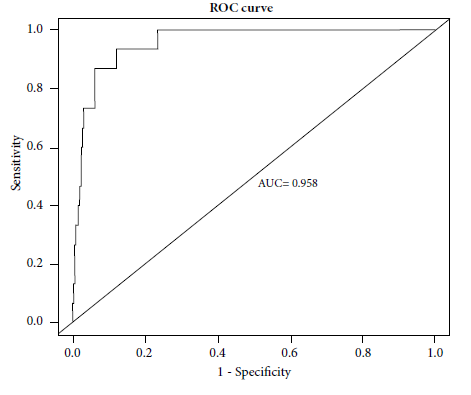
The adjusted multiple logistic model specified above presented a C-Index statistic equal to 0.958, an excellent discrimination, suggesting that the set of variables selected in the adjustment are strong predictors of suicide, as illustrated in Figure 1.
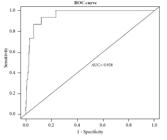
ROC curve of the multiple logistic model adjusted for the prediction of suicide among women, including the variables of intimate partner violence (IPV), age, employment status, alcohol, and antidepressant use, and Municipal Human Development Index (MHDI) of the place of residence.
Discussion
In a systematic review of 37 studies on IPV and suicidal behavior, nine studies with case-control designs were found; however, these studies focused on the United States8, making this investigation the first of its kind in Brazil. The present study identified an association between IPV and suicide among women, with those who were victims of violence 30 days before their suicide having a more than five-fold increased risk of death when compared to women who did not report violence. This finding is alarming, and health services must join forces to reduce the occurrence of both phenomena.
However, the number of women seeking health services due to IPV and/or suicidal behavior is low. In Brazil, a cross-sectional study using data from the 2019 National Health Survey showed that of 34,334 women victims of IPV, 69.1% reported psychological consequences of the act, but only 13.9% sought health services, and of these, 11.2% received no treatment9. This low level of service seeking may be associated with stigma, discrimination, fear of abandonment by their support network and society, or of their partner finding out and leading to more violent actions; and feelings of guilt7,18,19. The same is seen in cases of suicidal behavior20. This context needs to be redefined, so that the psychosocial care network can become a source of support and care for these women, thus reducing the risk of death by suicide or femicide21.
For women victims of IPV, post-prevention care is necessary to minimize the risk of suicide. In a qualitative study of African women victims of IPV, survivors reported that the memory of the act of violence caused emotional and social impacts. This included numerous emotional reactions, such as shame and guilt, as well as social reactions, such as distancing from extended family and interactions. This context must be considered in the care process, as the aforementioned impacts are recognized as risk factors for suicide.
Moreover, in seeking to reduce IPV and suicide, it is necessary to address the context and minimize violence as a “social norm.” There are historical and cultural remnants of patriarchy in society, where behaviors are determined by gender roles. It is accepted that men are aggressive, justified by impulsive behavior, and women are expected to accept it submissively19,22,23. This power relationship and gender inequality causes society to hold women responsible for experiencing violence, reducing their chances of seeking health services and, consequently, influencing their view that death is the only chance to end the exposure to violence18,24. Therefore, it is worth reflecting: how can we minimize the occurrence of IPV and suicide in a social context permeated by victimization of the aggressor and blaming of the actual victims?
The literature indicates that exposure to IPV doubles the chance of experiencing depressive symptoms, post-traumatic stress disorder, and suicidal thoughts25. In Iran, a case-control study of female victims of IPV showed that women who suffered attempted murder by their partners were 44 times more likely to attempt suicide, as were those who experienced threats of physical assault (37 times more likely), possessive jealousy from their partners (23 times more likely), and failed divorce attempts (16 times more likely)19. These studies show that exposure to various manifestations of violence suffered by women in an intimate relationship can cause illness and trigger suicidal behavior. In this context, an analogy can be drawn to a ticking time bomb, where factors will compound and lead to a scenario where suicide, in the victim’s view, becomes the only possibility to end a life of violence26. In the present study, women who used alcohol recreationally showed a four-fold increased risk of suicide, while those with problematic alcohol use had a 49.10-fold increased risk when compared to others. The literature recognizes the association between IPV and the use of psychoactive substances, especially alcohol5,7,18. This substance has been associated in studies with a higher risk of suicidal behavior5,25,27, which corroborates this study. Alcohol use can be seen as a marker of suffering, used as a compensatory mechanism, accentuating moments of pleasure or disconnection from reality, which may be permeated by violence and suicidal thoughts.
This study also found an association between suicide and the use of antidepressants, with women taking prescribed antidepressants, showing an 80.81-fold increased risk, while those with problematic use showed a 161.76-fold increased risk, when compared to those who did not. It is important to note that the use of psychotherapeutic medications, whether prescribed or not, is not the cause of suicide, as the term “risk factor” suggests. Rather, it is, above all, a marker of vulnerability and high-level suffering, like depression. This finding highlights the mental suffering associated with illness or lack of medical care. Therefore, it is necessary for these women to be integrated into a care network with other interventions to promote mental health19,26.
Another key point is that different cultures, ethnicities, religious beliefs, values, and norms influence the representation of IPV and suicide, and their statistics. Although men have higher suicide rates, in African, Asian, and Eastern countries the rate is reversed, with women accounting for the largest number of suicides19,28. This may be related to patriarchal societies, where early and forced marriage and motherhood occur, as well as the exclusion and social representation of women solely as caregivers5,21,29,30,31. There is a direct connection between IPV and the social context (education, housing, and personal and financial security)6; therefore, this aspect must be considered and reflected upon when addressing this phenomenon. In Brazil, there has been progress both in this context and in public policies9.
Paid work reduced the risk of suicide among women by 79.0%, a positive development, considering that women victims of IPV often exclude themselves from the labor market to reduce their partner’s jealousy18.
IPV and suicide are more common in low- and middle-income countries9. In this study, a 0.01 increase in the HDI was associated with a 6.5% reduction in the risk of suicide, corroborating this reality and highlighting the emerging need for political investment in the social landscape as a protective factor against these phenomena.
Another factor associated with IPV and suicide is age. In Brazil, a cross-sectional study found that younger women (between 18 and 24 years old) were more likely to experience IPV than women over 409. In this age group, suicide, as a baseline, represents the fourth leading cause of death. These two factors may combine to exacerbate suicidal behavior, corroborating this study, which found that increasing age reduced the risk of suicide. Exposure to IPV may be associated with younger age, considering the initial immersion in relationships, with a greater likelihood of domestic abuse22, and the experience of social, family, and academic pressures10,21.
This study was conducted in 2019, immediately prior to the COVID-19 pandemic. It is important to reflect on how the pandemic context influenced IPV and suicide rates. A cross-sectional study conducted with 751 African women during the pre- and intra-pandemic periods found that IPV increased from 4.4% to 14.8% during social isolation. Furthermore, symptoms of anxiety, depression, and stress were experienced by 85% of the women, significantly associated with exposure to violence29. These data corroborate findings from a Brazilian study that found associations between IPV and higher rates of depression and suicidal ideation in women living in Brazil during the pandemic32. Therefore, considering the increase in IPV during this period, suicide among women may have increased, a hypothesis that should be evaluated in future studies.
Aiming to reduce suicide rates, the WHO released the Live-Life guideline, one of whose pillars is the analysis of the epidemiological situation to provide a historical and current profile of suicide, guiding prevention strategies. In this context, this study is interconnected with this pillar, considering the analysis of the profile of women who commit suicide and demonstrating its association with IPV, making it necessary to reflect on strategies to change this context.
For IPV prevention, a systematic review identified individual support, economic autonomy, community mobilization, active outreach, and timely referral to women’s health services as strategies. Furthermore, they indicate that these strategies should also target potential perpetrators of violence, with the inclusion of men in prevention actions. The 5th SDG highlights the need to improve information and communication technologies and strengthen current policies and legislation. These strategies need to be integrated and interconnected with women’s individuality and their context, considering the aforementioned aspects of this discussion. This aims to strengthen female citizenship and elevate previously silenced voices. These strategies are complemented by measures for early identification of suicidal behavior and suicide prevention, with multisectoral and territorial actions, with social participation, and integrated into the psychosocial care network1,12,22.
The study’s limitations include the possibility that case and control data underestimated the actual experience of IPV, since experiencing violence can be an uncomfortable issue to discuss, requiring intimacy and complicity between the interviewer and the interviewee. Given the study’s budget and scheduling constraints, ad hoc interviews did not favor the creation of a bond. Another point is the possibility that the family may be unaware of the experience of IPV by the woman who committed suicide, since case data collection was conducted with surrogate family respondents. Another limitation of the study is the number of cases analyzed. Although all female suicides that occurred in one year among women living in a city with 1.2 million inhabitants were counted, the number of cases observed, from a strictly statistical standpoint, is not significant. This resulted in some wide (although arguably significant) confidence intervals in both the univariate and multiple analyses. One possible way to overcome this limitation would be to include one or more years of observation, or to include other cities in the study, both beyond the operational capacity of the team conducting the study.
The study’s strengths include its population-based case-control design with a simple random sample of controls and the analysis of all female suicide cases that occurred in Campinas, São Paulo, in 2019, as well as any female suicides misclassified as other violent deaths that were identified and included in this study. Furthermore, this study was conducted in Campinas, a large municipality with a population of over 1.2 million inhabitants, facing challenges typical of large urban agglomerations, such as inequality, high rates of violence, and health inequities. A city like Campinas has characteristics consistent with many urban centers in the country; therefore, the data presented in this study are highly relevant and should also be interpreted, critiqued, and compared with other territorial cross-sections.
Conclusion
This study highlights the relationship between IPV and a significant increase in suicide risk, indicating that women who were victims of violence in the 30 days prior to the act had a five-fold increased risk of death by suicide when compared to those who did not report violence. The goodness-of-fit obtained suggests that the model is robust in identifying this association. Furthermore, alcohol use and antidepressant use were also identified as risk factors for female suicide. Conversely, having a well-paid job and increasing both age and the MHDI of the place of residence were protective factors.
The fact that IPV occurs mostly in the private sphere, coupled with the patriarchal culture that naturalizes violence, contributes to the scarcity of information on female suicides related to a history of IPV. Thus, the study hopes to contribute, within the context of Public Health, to raising awareness of female suicides and IPV as an important risk factor that affects women’s mental and physical health, causing illness and leading to death.
IPV, in addition to manifesting itself in its most extreme form in femicide, is revealed here as a significant factor in another violent female death: suicide. The data reinforce the complex and multifactorial nature of suicide, while also exposing the diverse violations women face throughout their lives. They also highlight the urgent need to strengthen existing public health policies in Brazil and the need for multisectoral and territorial prevention, care, and health promotion strategies.
References
- 1 World Health Organization (WHO). Live-Life: an implementation guide for suicide prevention in countries. Geneva: WHO; 2021.
- 2 World Health Organization. Suicide worldwide in 2019: global health estimates. Geneva: WHO; 2021.
- 3 Brasil. Ministério da Saúde (MS). Mortalidade por suicídio e notificações de lesões autoprovocadas no Brasil. Bol Epidemiol 2021; 52(1):1-23.
- 4 Alsina E, Birlouez A, Altman D, Lafaye G, Dardier V, Plantier M, Gautier S, Aouizerate B, Thomas P, Jehel L, Carton S, Walter M. Interventions to prevent intimate partner violence: a systematic review and meta-analysis. Violence Against Women 2024; 30(3-4):953-980.
- 5 Shubina O, Kapiga S, Baisley K, Weiss HA, Haisma H, Mshana G, Lees S. The association between alcohol consumption and intimate partner violence in young male perpetrators in Mwanza, Tanzania: a cross-sectional study. Glob Health Action 2023; 16(1):2185967.
-
6 World Health Organization (WHO). Violence against women: Intimate partner and sexual violence against women [Internet]. 2016 [cited 2023 out 13]. Available from: https://www.who.int/news-room/fact-sheets/detail/violence-against-women
» https://www.who.int/news-room/fact-sheets/detail/violence-against-women - 7 White SJ, Sin J, Sweeney A, Salisbury T, Wahlich C, Montesinos Guevara CM, Gillard S, Brett E, Allwright L, Iqbal N, Khan A, Perot C, Marks J, Mantovani N. Global prevalence and mental health outcomes of intimate partner violence among women: a systematic review and meta-analysis. Trauma Violence Abuse 2024; 25(1):494-511.
- 8 McLaughlin J, O'Carroll RE, O'Connor RC. Intimate partner abuse and suicidality: a systematic review. Clin Psychol Rev 2012; 32(8):677-689.
- 9 Signorelli MC, de Souza FG, Pinheiro Junior RVB, Valente J, Andreoni S, Rezende LFM, Sanchez ZVM. Panorama of intimate partner violence against women in Brazil and its association with self-perception of health: findings from a national representative survey. J Interpers Violence 2023; 38(13-14):8453-8475.
- 10 Van Bergen D, Van Eijck-Bergeijk O, Montesinos AH. Attempted suicide and suicide of young Turkish women in Europe and Turkey: a systematic literature review of characteristics and precipitating factors. PLoS One 2021; 16(8):e0253274.
- 11 Lee J, Pomeroy EC, Bohman TM. Intimate partner violence and psychological health in a sample of Asian and Caucasian women: the roles of social support and coping. J Fam Violence 2007; 22(8):709-720.
- 12 Carvalho EFM, Laguardia J, Deslandes SF. Information systems on violence against women: an integrative review. Cien Saude Colet 2022; 27(4):1273-1287.
- 13 Dantas ESO, Meira KC, Bredemeier J, Amorim KPC. Suicídio de mulheres no Brasil: necessária discussão sob a perspectiva de gênero. Cienc Saude Colet 2023; 28(5):1469-1477.
-
14 United Nations (UN). Transforming our world: The 2030 agenda for sustainable development [Internet]. 2015 [cited 2023 out 13]. Available from: https://sdgs.un.org/2030agenda
» https://sdgs.un.org/2030agenda - 15 Cordeiro R, organizador. Morte matada. Curitiba: Editora Appris; 2022.
-
16 United Nations (UN). United Nations Development Programme [Internet]. 2020 [cited 2023 out 13]. Available from: https://www.undp.org/
» https://www.undp.org - 17 Braillon A, Naudet F. STROBE and pre-registration of observational studies. BMJ 2023; 380:90.
- 18 Apatinga GA, Tenkorang EY, Issahaku P. Silent and lethal: consequences of sexual violence against married women in Ghana. J Interpers Violence 2021; 36(23-24):13206-13228.
- 19 Rahmani F, Salmasi S, Rahmani F, Bird J, Asghari E, Robai N, Asghari Jafarabadi M, Gholizadeh L. Domestic violence and suicide attempts among married women: a case-control study. J Clin Nurs 2019; 28(17-18):3252-3261.
- 20 Shand FL, Batterham PJ, Chan JKY, Pirkis J, Spittal MJ, Woodward A, Christensen H. Experience of health care services after a suicide attempt: results from an online survey. Suicide Life Threat Behav 2018; 48(6):779-787.
- 21 Yousafzai AW, Khan SA, Bano S, Khan MM. Exploring the phenomenon of suicidal behaviour (SB): an explanatory, mixed-method study in rural Pakistan. Int J Soc Psychiatry 2022; 68(8):1629-1635.
- 22 Leite FM, Santos DF, Ribeiro LA, Tavares FL, Correa ES, Ribeiro LE, Oliveira MAF. Analysis of cases of interpersonal violence against women. Acta Paul Enferm 2023; 36:eAPE00181.
- 23 Teixeira JMS, Paiva SP. Violence against women and mental illness: perceptions and practices of health professionals in a Psychosocial Care Center. Physis 2021; 31(2):e310214.
- 24 Kavak F, Akturk U, Ozdemir A, Gultekin A. The relationship between domestic violence against women and suicide risk. Arch Psychiatr Nurs 2018; 32(4):547-579.
- 25 Machisa MT, Christofides N, Jewkes R. Suicidal thoughts, depression, post-traumatic stress, and harmful alcohol use associated with intimate partner violence and rape exposures among female students in South Africa. Int J Environ Res Public Health 2022; 19(13):7913.
- 26 Purbarrar F, Khani S, Zeydi AE, Cherati JY. A review of the challenges of screening for domestic violence against women from the perspective of health professionals. J Educ Health Promot 2023; 12:183.
- 27 Dufort M, Stenbacka M, Gumpert CH. Physical domestic violence exposure is highly associated with suicidal attempts in both women and men. Results from the national public health survey in Sweden. Eur J Public Health 2015; 25(3):413-418.
- 28 Weiss SJ, Simeonova DI, Koleva H, Muzik M, Clark KD, Ozerdem A, Cooper B, Ammerman RT. Potential paths to suicidal ideation and suicide attempts among high-risk women. J Psychiatr Res 2022; 155:493-500.
- 29 Sediri S, Zgueb Y, Ouanes S, Ouali U, Bourgou S, Jomli R, Nacef F. Women's mental health: acute impact of COVID-19 pandemic on domestic violence. Arch Womens Ment Health 2020; 23(6):749-756.
- 30 Zhao Q, Huang Y, Sun M, Li Y, Lommel LL. Risk factors associated with intimate partner violence against Chinese women: a systematic review. Int J Environ Res Public Health 2022; 19(23):16258.
- 31 Cao J, Lee CY, Liu X, Guarda RMG. Risk and protective factors associated with intimate partner violence against Chinese women: a systematic review. Trauma Violence Abuse 2023; 24(2):407-419.
- 32 Baumont AC, Oliveira GS, Figueiredo JB, Santos JF, Genro BP, Habigzang LF, Manfro GG. Intimate partner violence and women's mental health during the COVID-19 pandemic in Brazil. Trends Psychiatry Psychother 2023; 46:e20220594.
The data sources used in the research are indicated in the body of the article.

 Source: Authors.