 Influence of the food environment and regulatory measures on the consumption of ultra-processed foods by adolescents: a multilevel analysis of Brazilian state capitals based on the National Survey of School Health, 2019
Abstract
Regulatory measures on the sale of food at schools can influence consumption by students. The aims of the present cross-sectional study were to determine whether attending schools with norms that regulate the sale of food is associated with the consumption of ultra-processed foods by students in Brazilian state capitals and investigate the association between the availability and consumption of ultra-processed foods in school cafeterias. A systematic survey was performed of Brazilian norms in force up to 2019 that regulate the sale of food and beverages in school cafeterias. In terms of regulatory coverage, schools were categorized as covered/not covered. The availability and consumption of ultra-processed foods were assessed using data from the 2019 Brazilian National Survey of School Health. Multilevel linear regression analyses were adjusted by sociodemographic variables and school characteristics to test the association between regulatory coverage and the consumption of ultra-processed foods by students (n = 81,362). A second analysis restricted to students at schools with cafeterias (n = 53,137) investigated the association between the availability and consumption of these foods. Attending schools with regulatory coverage on the sale of food and beverages was associated with a reduction of -0.10 points (95%CI: -0.16; -0.03) in the consumption score of ultra-processed foods by students in Brazilian capital cities, whereas the availability of ultra-processed foods in school cafeterias was associated with an increase of 0.02 points (95%CI: 0.00; 0.03) in the consumption score in the adjusted analyses. These findings can assist in the establishment of a national Law on the offer of ultra-processed foods at schools.
Keywords:
Ultra-processed Foods; Food Social Space; Regulations
Resumo
Medidas regulatórias sobre a venda de alimentos nas escolas podem influenciar o consumo alimentar dos estudantes. Este estudo transversal teve como objetivos: investigar se frequentar escolas cobertas por normas que regulamentam a venda de alimentos está associado ao consumo de ultraprocessados por estudantes de capitais brasileiras; e verificar se há associação entre a disponibilidade de ultraprocessados em cantinas escolares e seu consumo. Foi realizado um levantamento sistemático de normas brasileiras vigentes até 2019 que regulamentam a venda de alimentos e bebidas em cantinas escolares. A cobertura normativa das escolas foi avaliada por uma variável dicotômica (cobertas/não cobertas). A disponibilidade e o consumo de ultraprocessados foram avaliados por meio de escores com dados da Pesquisa Nacional de Saúde do Escolar de 2019. Foram realizadas análises de regressão linear multinível, ajustadas por variáveis sociodemográficas e características das escolas, para avaliar associação entre a cobertura normativa das escolas e o consumo de ultraprocessados pelos estudantes (n = 81.362). Uma segunda análise, restrita a alunos de escolas com cantinas (n = 53.137), avaliou a associação entre a disponibilidade desses alimentos e seu consumo. Frequentar escolas com cobertura normativa sobre a venda de alimentos e bebidas esteve associado a uma redução de -0,10 (IC95%: -0,16; -0,03) pontos no escore de consumo de ultraprocessados por estudantes de capitais brasileiras, enquanto a disponibilidade de ultraprocessados nas cantinas escolares foi associada ao aumento de 0,02 (IC95%: 0,00; 0,03) pontos no escore de consumo, nas análises ajustadas. Os achados podem fundamentar uma lei nacional sobre a oferta de ultraprocessados nas escolas.
Palavras-chave:
Alimentos Ultraprocessados; Ambiente Alimentar; Regulamentação
Resumen
Las medidas reguladoras sobre la venta de alimentos en las escuelas pueden influir en el consumo alimentario de los estudiantes. Este estudio transversal tenía como objetivos: investigar si la asistencia a escuelas sujetas a normas que regulan la venta de alimentos está asociada al consumo de alimentos ultraprocesados por parte de los estudiantes de las capitales brasileñas; y verificar si existe una asociación entre la disponibilidad de alimentos ultraprocesados en los comedores escolares y su consumo. Se realizó un estudio sistemático de las normas brasileñas vigentes hasta 2019 que regulan la venta de alimentos y bebidas en los comedores escolares. La cobertura normativa de las escuelas se evaluó mediante una variable dicotómica (cubiertas/no cubiertas). La disponibilidad y el consumo de alimentos ultraprocesados se evaluaron mediante puntuaciones con datos de la Encuesta Nacional de Salud del Escolar de 2019. Se realizaron análisis de regresión lineal multinivel, ajustados por variables sociodemográficas y características de las escuelas, para evaluar la asociación entre la cobertura normativa de las escuelas y el consumo de alimentos ultraprocesados por parte de los estudiantes (n = 81.362). Un segundo análisis, restringido a los alumnos de escuelas con comedores (n = 53.137), evaluó la asociación entre la disponibilidad de estos alimentos y su consumo. Asistir a escuelas con normativa sobre la venta de alimentos y bebidas se asoció con una reducción de -0,10 (IC95%: -0,16; -0,03) puntos en el índice de consumo de alimentos ultraprocesados por parte de los estudiantes de las capitales brasileñas, mientras que la disponibilidad de alimentos ultraprocesados en los comedores escolares se asoció con un aumento de 0,02 (IC95%: 0,00; 0,03) puntos en el índice de consumo, en los análisis ajustados. Los hallazgos pueden servir de base para una ley nacional sobre la oferta de alimentos ultraprocesados en las escuelas.
Palabras-clave:
Alimentos Ultraprocesados; Espacio Social y Comida; Regulamentación
Introduction
The school environment plays an important role in shaping eating habits. It is where adolescents spend a large part of the day and obtain a significant portion of their daily food intake 1,2,3. At Brazilian public schools, the Brazilian National School Meal Program (PNAE, acronym in Portuguese) ensures at least two healthy meals a day 2, prioritizing the offer of whole and minimally processed foods as well as meals made from these foods 4,5. Private schools, on the other hand, are not covered by the PNAE, which exerts a direct influence on the food environment 6. In 2019, only 28.7% of private schools offered school meals to students (compared to 99.4% of public schools). The presence of a cafeteria is significantly higher in private schools (88.3% as opposed to 31.4% in public schools), constituting an important source of food acquisition in the school environment.
School cafeterias in both public and private institutions exert a direct impact on the diet of students. Approximately one-third of students aged 13 to 17 buy food in school cafeterias at least once a week 5. The presence of cafeterias and the wide offer of ultra-processed foods in these environments are associated with a greater consumption of these foods by adolescents 7,8,9.
National data indicate that adolescents are the age group with the greatest consumption of ultra-processed foods, corresponding to 26.7% of their total calorie intake 10. These findings are worrisome, as the excessive consumption of ultra-processed foods has been associated with chronic noncommunicable diseases, such as type 2 diabetes, obesity, cardiovascular diseases, and cancer 11.
Regulations on the availability of food in the school environment can contribute to making this space more favorable to health and the adoption of healthy eating habits 12,13,14,15,16. Different conceptual models of the food environment have Laws, Regulations, and policies as distal determinants of food consumption. These factors influence the social, economic, and physical contexts that constitute food environments, indirectly affecting individual behaviors 17,18. Several states and municipalities in Brazil have adopted rules that prohibit the installation of cafeterias or the sale of unhealthy food and beverages at schools 19,20. One study identified current regulation of the school environment in 67% of Brazilian states - 100% of states in the South, Southeast, and Central-West regions, 56% in the Northeast, and 43% in the North 20. However, there is no national Law that regulates the sale of food in public or private school cafeterias.
Positive associations have been found between the existence of policies restricting the sale of unhealthy foods at school and the reduction in the availability of these foods in school cafeterias as well as a lower likelihood of obesity among adolescents 12,21. However, no studies have been conducted in Brazil investigating the direct effect of the regulation of the sale of food in school cafeterias on food consumption by students, which could assist administrators on different levels in the expansion of such regulations. The investigation of the relationship between regulatory coverage on the sale of food in schools and food consumption by adolescents is possible using data from the Brazilian National Survey of School Health (PeNSE, acronym in Portuguese), which is a population-based study with a representative sample of students from public and private schools that has Brazilian state capitals as one of its domains.
The present study has two main objectives: (i) to investigate whether attending schools covered by norms that regulate the sale of food and beverages is associated with the consumption of ultra-processed foods by students in Brazilian capital cities; and (ii) determine the association between the availability of ultra-processed foods in school cafeterias and the consumption of these foods by students in schools that have cafeterias.
Methods
Data sources
This study uses data from a systematic survey of official documents on Brazilian norms regarding the regulation of food and beverage sales in school cafeterias as well as data from the 2019 PeNSE.
Documents that regulate the sale of foods and beverages in school cafeterias
To determine the existence of legislation in Brazilian state capitals on the regulation of food sales in the school environment, a systematic survey was carried out of Brazilian norms published up to December 31, 2018 - the year before the 2019 PeNSE - using a four-step search protocol.
In the first step, combinations of keywords were used in the Google (https://www.google.com/) search engine: “school” OR “school cafeteria” AND “food” OR “snack” OR “food” AND “sale” OR “commerce” OR “commercialization” OR “offer” AND “law” OR “ordinance” OR “regulation” OR “decree” OR “resolution” OR “norm”, in addition to terms referring to location, such as the name of the city or Federative Unit (UF, acronym in Portuguese) for each of the capital cities. In the second step, the same search was conducted on official websites of all city councils and legislative assemblies. The third step consisted of telephone and e-mail contact with state and municipal administrative agencies when questions arose regarding the validity of the legal instruments identified in the previous steps. In the fourth step, norms included in previous studies were surveyed. Norms that did not regulate the sale of food and beverages, such as those about the PNAE or that specifically regulated food advertising, were not considered.
A total of 51 norms (36 Laws, 10 Ordinances, 3 Decrees, and 2 Resolutions) were identified in Brazilian capital cities and UF that regulated the sale of food and beverages in the school environment.
For inclusion in the study, the norms needed to be in force during the period of the 2019 PeNSE and have binding effectiveness, that is, impose legal obligations. When more than one norm was found in force in the same capital city, the most recent was considered, incorporating modifications made by complementary norms (for instance, a 2018 Decree that regulates a 2017 Law). Thus, each state capital was linked to a single norm, totaling 21 norms (Supplementary Material - Box S1; https://cadernos.ensp.fiocruz.br/static//arquivo/supl-e00085225_3090.pdf). Both municipal and state norms were considered.
Schools were classified dichotomously based on regulatory coverage (covered/not covered). This variable considers both the scope of the norm (whether applicable to public or private schools or both) and the type of school (public or private). Thus, students who studied at private schools located in capital cities whose norm applied only to the public system were classified as “not covered”.
Brazilian National Survey of School Health
Data from the 2019 PeNSE were used to collect information on the presence of cafeterias and the availability of food and beverages sold at public and private schools in Brazilian state capitals as well as the consumption of ultra-processed foods by students enrolled in these institutions. The PeNSE is a population-based survey with representative data from students at public and private schools in the country. The most recent edition was published in 2019 and is representative of students between 13 and 17 years of age, corresponding to classes from the 7th year of primary school to the 3rd year of high school.
Registration for the selection of the 2019 PeNSE sample was based on the 2017 School Census carried out by the Anísio Teixeira National Institute of Educational Studies and Research (Inep, acronym in Portuguese). Schools that reported having classes of students from the 7th year of primary school to the 3rd year of high school and at least 20 students enrolled were included in the register. Stratification of the schools considered type of school (public or private) and geographical location. Students were selected using two-stage cluster sampling - schools were selected in the first stage and classes of students were selected in the second. Further details on sampling of the PeNSE are available in the report of the survey 5.
All students in the selected classes were invited to participate in the survey (n = 165,838). Those who declined to participate were excluded, totaling 159,245 students.
To address the first objective of this study, students enrolled in schools in Brazilian state capitals (n = 81,906 students) were considered eligible. This choice is justified because capital cities constitute one of the sample domains of the PeNSE and it is possible to identify students in these strata. Those who did not provide information on sex or age (n = 512) or who did not answer any questions about food in the food consumption module (n = 31) were excluded. Moreover, any school for which only one student with valid answers remained after these exclusions was removed from the sample, as multilevel analysis requires at least two participants per context. The final sample consisted of 81,362 adolescents distributed among 1,804 schools.
To address the second objective, in addition to the criteria described above, only students at schools with cafeterias were considered (53,137 students distributed among 1,155 schools) (Supplementary Material - Figure S1; https://cadernos.ensp.fiocruz.br/static//arquivo/supl-e00085225_3090.pdf). The PeNSE received approval from the Brazilian National Research Ethics Committee (CONEP, acronym in Portuguese; certificate n. 3,529,376) and all participants signed a statement of informed consent.
Data collection and treatment
Data collection involved the use of two questionnaires administered during the 2019 school year. The first addressed the school environment and was answered by principals or those in charge of the schools that participated in the 2019 PeNSE. This questionnaire consisted of six sections: general information, physical activity, food, basic sanitation, safety, and health policies. The general information section included questions on the administration of the school and monthly tuition fee. The section on food in the school environment addressed the presence of a cafeteria. If present, additional questions addressed the availability of the food and beverages sold, such as “Is soda sold in the cafeteria?”, in addition to similar questions for sugar-sweetened beverages (artificial juice, boxed juice, iced tea, sports drinks, flavored waters, energy drinks); flavored dairy beverages; fried snacks; baked snacks; ultra-processed snacks; ultra-processed cookies; candies, chocolates, and other sweets; hot dogs and hamburgers.
The availability of ultra-processed foods in school cafeterias was assessed by a score ranging from 0 to 9. For each “yes” answer to questions on the sale of food in the cafeteria, one point was added to the score, with higher scores indicating poorer quality of the school food environment.
The second questionnaire was self-administered by the students using smartphones and contained questions on sociodemographic characteristics, eating habits, physical activity, family context, etc. In the food consumption module, the consumption of ultra-processed foods was addressed through the question: “Did you drink soda yesterday?” and similar questions about boxed fruit juice; powdered soft drinks; chocolate milk; flavored yogurt; packaged snacks; cookies with and without filling, packaged cakes; chocolate; ice cream; gelatin, flan or other industrialized dessert; hot dog, sausage, bologna, ham; sandwich bread; hot dog or hamburger bun; margarine; mayonnaise, ketchup, other industrialized condiments; instant noodles, and ready-to-eat dish bought frozen.
The consumption of ultra-processed foods by the students was scored from 0 to 13, with one point attributed for every “yes” answer to the questions in the food consumption module. This score achieved substantial agreement with quintiles of the caloric participation of ultra-processed foods in a previous study 22.
Sociodemographic and school-related data from the PeNSE were used to describe the sample and as potential confounders in the association models. The variables of interest were age (< 13 years, 13-15 years, 16-17 years, ≥ 18 years), sex (female, male), race/skin color (white, black/brown, yellow, Indigenous), mother’s schooling (incomplete primary school, complete primary school, complete high school, complete higher education), macroregion of residence (North, Northeast, Central-West, Southeast, South), goods and services score (categorized into thirds according to the sample distribution), type of school (public, private), monthly tuition fee (none; up to BRL 499; > BRL 499 to BRL 998; > BRL 998 to BRL 1,996; > BRL 1,996), presence of a cafeteria (no, yes), and presence of food vendors at the door or around the school (no, yes), which was used as a proxy of exposure to the food environment around schools.
The goods and services score was created as a proxy of income based on questions addressing the presence of a computer, car, internet access, and hired housekeeper in the student’s home. Each item received a weight equivalent to the inverse of the prevalence of the item or service in the sample. The score was composed of the weighted sum of the items or services and categorized into thirds according to the sample distribution 23.
Multiple imputations were performed by chained equations for covariates with missing data: race (2.5%), mother’s schooling (16.9%), and items of the goods and services score (< 0.1% for each item), using sex and age as predictors. For items of the availability of ultra-processed foods in the cafeteria score with missing data (< 0.4% for each item), imputation was performed with the predictor variables: macroregion of residence, UF, and type of school (public or private). In the case of missing data in the ultra-processed food consumption score (< 0.11% for each item), multiple imputation was performed with the following predictors: sex, age, race, mother’s schooling, region, UF, and type of school. The imputations exhibited good statistical reproducibility according to the Monte Carlo analysis.
Statistical analyses
A map was created with the regional distribution of Brazilian state capitals according to the scope of the norms.
Descriptive analyses of the proportion of students according to sociodemographic and school characteristics were also performed and stratified by regulatory coverage.
A multilevel linear regression model was developed to investigate the relationship between the presence of norms applicable to schools and the consumption of ultra-processed foods by students. Exposure was defined as the regulatory coverage of schools and the outcome was the consumption of ultra-processed foods based on the consumption score. Students were the first level of the analysis and schools were the second. The analysis was adjusted by sex, age, race/color, goods and services score, mother’s schooling, region of residence, type of school, monthly tuition, and the presence of food vendors in the vicinity of the school.
Another multilevel linear regression model was developed to investigate the association between the availability of ultra-processed foods in school cafeterias (based on the availability score) and the consumption of these foods by adolescents (based on the consumption score). Students were considered the first level and schools were the second. This analysis was restricted to schools that had a cafeteria and was adjusted by the same variables described in the previous model.
Multilevel analysis is justified by the hierarchical structure of the data, in which students are grouped into schools. This grouping implies that students from the same school share common characteristics either in the environment to which they are exposed or in their consumption behavior. The adequacy of the levels applied in the models was tested by multilevel linear regression with only the outcome variable (null model). The ultra-processed food consumption score had 7.2% (intraclass correlation coefficient - ICC = 0.072) and 6.7% (ICC = 0.067) variability on the school level in the total sample and sample restricted to schools with cafeterias, respectively, indicating that multilevel analysis is adequate in both cases 24.
All analyses considered weights and the sampling design, with a significance level of 5%, and were performed using the Stata software, version 16.1 (https://www.stata.com). The sampling weights of the students were used to ensure national representativeness. These weights incorporate the different levels of selection, including that of the school, and are therefore appropriate for analyses that consider the complex structure of the sample. Nonetheless, sensitivity analyses were conducted without the use of weights.
Results
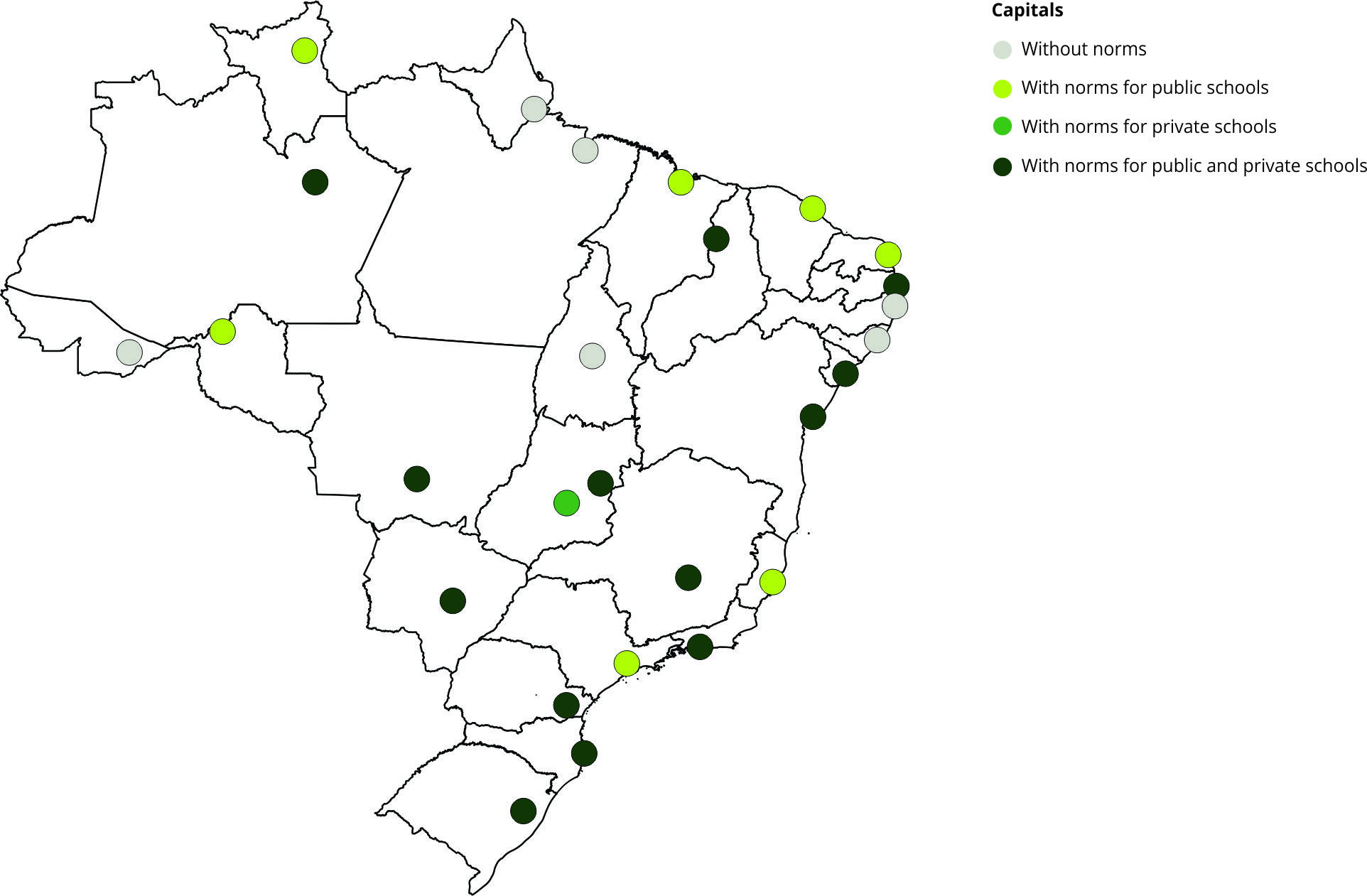
The map in Figure 1 shows the regional distribution of Brazilian state capitals according to the scope of the norms. Most capital cities had regulations that covered both public and private schools. Only six capital cities did not have any regulations on the sale of food and beverages at schools. Table 1 displays the sociodemographic characteristics of the adolescents and distribution according to school characteristics stratified by regulatory coverage.
Regional distribution of Brazilian state capitals according to scope of norms that regulate sales of food and beverages in school cafeterias.
Most students attended schools with regulatory coverage (78.5%). These schools had a higher proportion of white students (35.1%), a lower proportion of students in the third tertile of the goods and services score (9.7%), higher proportions of mothers with a higher education (29.4%), residents of the Southeast Region (46%), and students who attended public schools (81.7%), as well as a lower presence of cafeterias (52.3%) compared to students who attended schools not covered by norms. Among the schools without coverage, there were no students who resided in the South Region.
The characteristics of the students who attended schools with cafeterias are displayed in Table 2.
In the adjusted model of the association between the regulatory environment and the consumption of ultra-processed foods by adolescents, attending a school with regulatory coverage was associated with a reduction of -0.10 points (95% confidence interval - 95%CI: -0.16; -0.03) in the consumption score (Table 2). In the model of the association between the food environment and the consumption of ultra-processed foods, an increase of one point in the “availability in the school cafeteria” score was associated with an increase of 0.02 points (95%CI: 0.01; 0.03) in the consumption score (Table 3). The findings were similar in the analyses performed without the use of sampling weights (Table 4).
Discussion
The results of this study show that regulatory coverage on the sale of food at schools in Brazilian state capitals can serve as a protective factor in terms of the consumption of ultra-processed foods by students. In contrast, the greater availability of these foods in school cafeterias is associated with greater consumption among adolescents.
This is the first study to investigate the direct association between the regulation of food sales at schools and food consumption by Brazilian students. A previous study reported that the presence of regulations restricting the sale of ultra-processed foods at Brazilian schools was associated with an 11% lower likelihood of obesity among students and recommended similar studies addressing other outcomes, such as food consumption 25.
Although the present study did not investigate the effectiveness of the norms - whether the foods sold in cafeterias were in accordance with the established prohibitions and obligations -, the results revealed a substantial reduction in the ultra-processed food consumption score among students who attended schools with regulatory coverage. This association suggests that the existence of norms may influence the behavior of individuals.
Public school students may be better protected from exposure to ultra-processed foods in the school environment, firstly, because the PNAE restricts the offer of these products in public schools 26. Secondly, most of the norms cover public schools and the proportion of public school students that attend institutions with regulatory coverage is higher. Moreover, 64.6% of public school students study at institutions without cafeterias (data not shown), which shows that norms can also regulate the very permission to operate these structures. This possible protection is relevant in view of the impact that the presence of cafeterias can have on food consumption. Cafeterias tend to promote the substitution of whole and minimally processed foods and meals prepared using these ingredients with ultra-processed foods 27, especially among students who do not consume the meals offered through the PNAE 28. However, the interaction between regulatory coverage and type of school was not statistically significant (data not shown), indicating that the effect of regulatory coverage on the outcome is similar at public and private schools.
In the light of our findings, we offer two hypotheses to explain how the existence of norms can influence the behavior of individuals: the first would be the reduction in the availability of ultra-processed foods at schools; the second would be the influence on the perception of what is healthy among students who attend schools with regulatory coverage.
The first hypothesis is supported by the association between the availability of ultra-processed foods at schools and the greater consumption of these products by students found in this study. Previous studies on the school food environment identified an ample offer of ultra-processed foods both within schools and in the surrounding area, which was associated with the consumption of these foods 7,29,30,31.
Azeredo et al. 7 revealed that the availability of sugar-sweetened beverages, fried snack foods, and baked goods in school cafeterias was associated with the frequent consumption of these foods by students at both public and private schools, whereas no significant association was found with the offer of fruits and sweets. A study involving data from the PeNSE 31 found a lower likelihood of the high consumption of ultra-processed foods at schools with better food availability scores. In other studies, the presence of cafeterias and regular consumption in these establishments - irrespective of the items sold - were associated with lower consumption of healthy foods, such as fruits, milk, and vegetables 32, and greater consumption of ultra-processed foods 8,33. In Australia, positive associations were also found between the availability and purchase of different types of food at schools 34.
Although it was not possible to test the second hypothesis based on the available data, it should not be discarded. The school is responsible for the education of students not only through curricular disciplines and the development of skills, but also in the construction of values, constituting a reference for students 35. Thus, policies that regulate the sale of food can create an environment conducive to the development of other food and nutrition education actions, with a positive effect on consumption at both school and home. Moreover, the lower availability of ultra-processed foods due to regulation can influence the perception of students on what is healthy and lead to lower consumption not only at school, but also on other occasions. More than influencing the perception of healthiness, reducing exposure to these products may make them less desirable by impacting the perception of flavor 36 and contributing to the modification of eating habits, influencing consumption even in environments where ultra-processed foods are more present. This relationship is suggested considering that, in this study, food consumption was measured based on the day before the interview, including food consumed outside school. Although lower consumption may have occurred while the adolescents were at school, the relevance of food consumption at school to the overall reduction in the consumption of ultra-processed foods is evident. It is possible that the magnitude of the observed effect was smaller than if only consumption during the school period had been analyzed. This hypothesis should be tested in future studies.
The findings of this study show the importance of norms that regulate the sale of ultra-processed foods in school cafeterias, but the drafting of such regulations in each capital city independently is insufficient to promote a healthy school food environment on the national level. Legislation may differ in the scope, criteria, and types of food covered, resulting in heterogeneous patterns of regulations. Moreover, considering the large number of municipalities in Brazil, the expectation that each develop its own regulations can generate inequalities in terms of implementation and hinder the consolidation of effective policies. A national Law that standardizes the restriction of the sale of ultra-processed foods in school cafeterias could expand the reach and strengthen the impact of this measure on the food consumption of children and adolescents. The cities of Rio de Janeiro and Niterói have Decrees that regulate the sale of food at schools, with a specific focus on the restriction of ultra-processed foods and, together with the bill for the promotion of a healthy school food environment proposed by the Consumer Protection Institute in partnership with other civil society organizations, can serve as reference for the drafting of national legislation 37,38,39. It is also essential to coordinate states so that national legislation is implemented consistently. The Federal Government may create minimum parameters and establish objective criteria to define what may or may not be sold in the school environment, with support from the Brazilian National Council of Education, which could assess the application of legislation among the different levels and modalities of education 40. States and municipalities must implement the legislation and may issue complementary rules that consider the regional context. Other legal venues and councils with the participation of civil society, such as state and municipal education councils, could support the monitoring of compliance with the Law.
In December 2023, a Federal Decree 41 was published that recommends that states, the Federal District, and municipalities develop strategic measures directed at food and nutrition education, donations, sales, and the marketing communication of food and beverages. The Decree 41 also establishes that actions for the promotion of adequate, healthy eating in the school environment with regards to the sale of food must prioritize fresh and minimally processed foods and protect from exposure to ultra-processed foods. However, this Decree does not impose legal obligations. The results of this study underscore the importance of a national mandatory regulation on the sale of food and beverages at schools in line with the guidelines of the Food Guide for the Brazilian Population42. It is also essential to monitor compliance with this norm. Mandatory regulations of this nature have been implemented in countries such as Mexico, Chile, and Costa Rica 43. In Mexico, a positive association was found between schools that sold food in accordance with mandatory nutritional standards and the purchase of healthy snacks by students 44. In Chile, the profile of food sold at schools has improved after the issuing of a national Law that prohibits the sale of food and beverages that compete with the national school meal program 45. In Costa Rica, on the other hand, most of the food offered in school cafeterias did not meet the established nutritional criteria 46, indicating that it is essential not only to have a national Law, but also to enforce its implementation.
The presence of street vendors was used as a proxy for the quality of the food environment around schools, since this constitutes one of the most common points of food sales in these places 47. No significant differences were found in the proportion of students attending schools with the presence of street vendors according to regulatory coverage. However, studies 47,48 indicate that the food environment in the vicinity of schools encourages the consumption of unhealthy foods and influences the occurrence of negative health outcomes. Thus, regulations that include the environment surrounding schools are relevant and can contribute to the promotion of a healthier food environment.
One point that merits attention is that the South was the only region in which no students attended schools without regulatory coverage, whereas most students in schools without coverage resided in the Northeast Region (37.5%). These findings reveal regional inequality in the regulation of the sale of food and beverages in school cafeterias. A similar result was found by Azeredo et al. 21, who identified greater coverage of restrictive Laws on the sale of sugar-sweetened beverages in the most developed regions of the country, associated with a reduction in the consumption of such beverages. The lower regulatory coverage concentrated in historically more vulnerable regions, such as the North and Northeast 49, can increase inequities in access to adequate, healthy food by schoolchildren. Thus, students from regions with less regulatory capacity are more exposed to unhealthy food environments, with a direct impact on food consumption and, consequently, health.
This study has some limitations that should be considered. The first regards the self-reported nature of information provided by school administrators on the availability of items in cafeterias, which is subject to recall bias and social-desirability bias. However, self-reporting makes population-based surveys feasible and possible measurement errors tend to attenuate the observed associations, so the results may represent a conservative estimate. Although the food availability score has not been formally validated, its construction is based on the same categories used in ultra-processed food consumption scoring systems developed from representative data on the diet of the Brazilian population. Thus, the score can be considered a good indicator of the offer of ultra-processed foods in the school environment based on previous applications in scientific investigations 50.
The second limitation is that the survey included only schools located in Brazilian state capitals and adolescents enrolled in schools. Although this limits generalization to other Brazilian cities, the results remain valid and reveal significant associations between the variables investigated. Moreover, 99.7% of individuals six to 14 years of age and 89.2% of adolescents 15 to 17 years of age were enrolled in schools 51 and students in capital cities accounted for 53.4% of the total PeNSE sample. These numbers highlight the importance of investigating the school environment attended by a significant portion of the adolescent population.
The third limitation regards the lack of an assessment of the quality and specificity of the norms analyzed - e.g., whether they provide for inspection mechanisms and sanctions in case of non-compliance or whether they are drafted in a clear, objective manner. To minimize these aspects, only rules with binding effectiveness were included, that is, those that impose legal obligations, which increases the probability of implementation. Nonetheless, a more in-depth assessment of these and other norms could reveal an even more significant impact on consumption. Such an assessment was not conducted due to the need to construct a standard indicator that enables the assessment of the applicability of the norms established by different branches (Executive and Legislative) and boards (municipal councils and legislative assemblies), thus enabling valid comparisons. Moreover, the occurrence of several components in the same norm could compromise the degrees of freedom of the analysis, as the different possible combinations would require a greater number of contexts (cities) to ensure sufficient variability. In the worst scenario, the assessment of schools with regulatory coverage may constitute a non-differential classification error, which would tend to attenuate the associations. Therefore, the actual effect could be greater than estimated. Future studies should conduct legislative content analyses to address these differences.
The fourth limitation regards the measurement of the consumption of ultra-processed foods using a simplified questionnaire, which may not capture consumption with complete precision. However, the questionnaire exhibited satisfactory validity compared to the 24-hour recall, which is considered the gold standard for assessing food intake. Moreover, the consumption score achieved good agreement with quintiles of the caloric participation of ultra-processed foods 22 and was used in a previous study 52, lending greater robustness to the indicator. Lastly, despite the cross-sectional nature of the study, which does not enable the inference of causality, the inclusion of only regulations in force before data collection for the 2019 PeNSE contributes to mitigating this limitation by ensuring that exposure preceded the outcome.
This study also has important strengths. First, the pioneering nature of the study is the investigation of the association between schools with regulatory coverage on the sale of food and beverages and the consumption of ultra-processed foods by adolescents. A detailed search was carried out on norms that regulate the sale of food in Brazilian school cafeterias. The analysis was conducted with a representative sample of students enrolled in public and private schools in state capitals using data from the most recent edition of the PeNSE. This edition expanded the scope of the sample, including students from the 7th year of primary school to the 3rd year of high school, which enables the analysis of adolescents 13 to 17 years of age with greater statistical robustness. Thus, it was possible to gain a broader understanding of food consumption in this age group as well as the impact of the food and regulatory environment on this consumption. Lastly, the results were controlled for potential individual and contextual confounders, including the presence of street vendors around the school, which could influence the outcome.
Conclusion
Attending schools with regulatory coverage on the sale of food and beverages and the lower availability of ultra-processed foods in school cafeterias are associated with lower consumption of these products by students at public and private schools in Brazilian state capitals. Longitudinal studies are needed to confirm the findings. These results can strengthen efforts to regulate the offer of ultra-processed foods at schools and support the proposition of bills on the national level aimed at improving the quality of food sold in school cafeterias, thus impacting the food consumption of adolescents.
Acknowledgments
We thank the Brazilian National Research Council (CNPq; processes n. 442999/2019-4; n. 313491/2021-6; n. 313618/2021-6).
References
- 1 O'Toole TP, Anderson S, Miller C, Guthrie J. Nutrition services and foods and beverages available at school: results from the School Health Policies and Programs Study 2006. J Sch Health 2007; 77:500-21.
- 2 Ministério da Educação. Resolução/CD/FNDE nº 26, de 17 de junho de 2013. Dispõe sobre o atendimento da alimentação escolar aos alunos da educação básica no âmbito do Programa Nacional de Alimentação Escolar - PNAE. Diário Oficial da União 2013; 18 jun.
- 3 Yaktine AL, Stallings VA. Nutrition standards for foods in schools: leading the way toward healthier youth. Washington DC: National Academies Press; 2007.
- 4 Boklis-Berer M, Rauber F, Azeredo CM, Levy RB, Louzada MLC. School meals consumption is associated with a better diet quality of Brazilian adolescents: results from the PeNSE 2015 survey. Public Health Nutr 2021; 24:6512-20.
- 5 Instituto Brasileiro de Geografia e Estatística. Pesquisa Nacional de Saúde do Escolar: 2019. Rio de Janeiro: Instituto Brasileiro de Geografia e Estatística; 2021.
- 6 Gabriel CG, Santos MV, Vasconcelos FAG, Milanez GHG, Hulse SB. Cantinas escolares de Florianópolis: existência e produtos comercializados após a instituição da lei de regulamentação. Rev Nutr 2010; 23:191-9.
- 7 Azeredo CM, Rezende LFM, Canella DS, Claro RM, Peres MFT, Luiz OC, et al. Food environments in schools and in the immediate vicinity are associated with unhealthy food consumption among Brazilian adolescents. Prev Med 2016; 88:73-9.
- 8 Leite MA, Azeredo CM, Peres MFT, Escuder MML, Levy RB. Availability and consumption of ultra-processed foods in schools in the municipality of São Paulo, Brazil: results of the SP-Proso. Cad Saúde Pública 2021; 37 Suppl 1:e00162920.
- 9 Noll PRS, Noll M, Abreu LC, Baracat EC, Silveira EA, Sorpreso ICE. Ultra-processed food consumption by Brazilian adolescents in cafeterias and school meals. Sci Rep 2019; 9:7162.
- 10 Louzada MLC, Cruz GL, Silva KAAN, Grassi AGF, Andrade GC, Rauber F, et al. Consumo de alimentos ultraprocessados no Brasil: distribuição e evolução temporal 2008-2018. Rev Saúde Pública 2023; 57:12.
- 11 Lane MM, Gamage E, Du S, Ashtree DN, McGuinness AJ, Gauci S, et al. Ultra-processed food exposure and adverse health outcomes: umbrella review of epidemiological meta-analyses. BMJ 2024; 384:e077310.
- 12 Choi SK, Frongillo EA, Blake CE, Thrasher JF. Food availability in school stores in Seoul, South Korea after implementation of food - and nutrient-based policies. J Sch Health 2017; 87:498-505.
- 13 Gabriel CG, Ricardo GD, Vasconcelos FAG, Corso ACT, Assis MAA, Di Pietro PF. Alimentos comercializados nas escolas e estratégias de intervenção para promover a alimentação escolar saudável: revisão sistemática. Rev Inst Adolfo Lutz 2011; 70:572-83.
- 14 Hirschman J, Chriqui JF. School food and nutrition policy, monitoring and evaluation in the USA. Public Health Nutr 2013; 16:982-8.
- 15 Mendoza JA, Watson K, Cullen KW. Change in dietary energy density after implementation of the Texas Public School Nutrition Policy. J Am Diet Assoc 2010; 110:434-40.
- 16 World Health Organization. Global strategy on diet, physical activity and health. Geneva: World Health Organization; 2004.
- 17 Egger G, Swinburn B. An "ecological" approach to the obesity pandemic. BMJ 1997; 315:477-80.
- 18 Story M, Kaphingst KM, Robinson-O'Brien R, Glanz K. Creating healthy food and eating environments: policy and environmental approaches. Annu Rev Public Health 2008; 29:253-72.
- 19 Rocha LL, Cordeiro NG, Jardim MZ, Kurihayashi AY, Gentil PC, Russo GC, et al. Do Brazilian regulatory measures promote sustainable and healthy eating in the school food environment? BMC Public Health 2023; 23:2166.
- 20 Kurihayashi AY, Palombo CNT, Duarte LS, Fujimori E. Food commercialization in schools: analysis of the regulatory process in Brazil. Rev Nutr 2022; 35:e210094.
- 21 Azeredo CM, Leite MA, Rauber F, Ricardo CZ, Levy RB. Are laws restricting soft drinks sales in Brazilian schools able to lower their availability? Rev Saúde Pública 2020; 54:42.
- 22 Sattamini IF. Instrumentos de avaliação da qualidade de dietas: desenvolvimento, adaptação e validação no Brasil [Doctoral Dissertation]. São Paulo: Universidade de São Paulo; 2019.
- 23 Levy RB, Castro IRR, Cardoso LO, Tavares LF, Sardinha LMV, Gomes FSS, et al. Consumo e comportamento alimentar entre adolescentes brasileiros: Pesquisa Nacional de Saúde do Escolar (PeNSE), 2009. Ciênc Saúde Colet 2010; 15:3085-97.
- 24 Leyland AH, Groenewegen PP. What is multilevel modelling? In: Leyland AH, Groenewegen PP, editors. Multilevel modelling for public health and health services research: health in context. Cham: Springer International Publishing; 2020. p. 29-48.
- 25 Assis MM, Pessoa MC, Gratão LHA, Carmo AS, Jardim MZ, Cunha CF, et al. Are the laws restricting the sale of food and beverages in school cafeterias associated with obesity in adolescents in Brazilian state capitals? Food Policy 2023; 114:102402.
- 26 Canella DS, Bandeira L, Oliveira ML, Castro S, Pereira AS, Bandoni DH, et al. Update of the acquisition parameters of the Brazilian National School Feeding Program based on the Dietary Guidelines for the Brazilian Population. Cad Saúde Pública 2021; 37 Suppl 1:e00151420.
- 27 Honório OS, Rocha LL, Fortes MICM, Carmo AS, Cunha CF, Oliveira TRPR, et al. Consumption of school meals provided by PNAE among Brazilian public school adolescents. Rev Chil Nutr 2020; 47:765-71.
- 28 Rocha LL, Gratão LHA, Carmo AS, Costa ABP, Cunha CF, Oliveira TRPR, et al. School type, eating habits, and screen time are associated with ultra-processed food consumption among Brazilian adolescents. J Acad Nutr Diet 2021; 121:1136-42.
- 29 Andretti B, Cardoso LO, Honório OS, Castro Junior PCP, Tavares LF, Silva ICG, et al. Ecological study of the association between socioeconomic inequality and food deserts and swamps around schools in Rio de Janeiro, Brazil. BMC Public Health 2023; 23:120.
- 30 Leite FHM, De Oliveira MA, Cremm EDC, Abreu DSC, Maron LR, Martins PA. Availability of processed foods in the perimeter of public schools in urban areas. J Pediatr (Rio J.) 2012; 88:328-34.
- 31 Cunha RO, do Carmo AS, Silva UM, Canella DS. Association between the food environment of Brazilian public and private schools and the consumption of ultra-processed foods: analysis of the National Student Health Survey (PeNSE) 2019. Food Policy 2025; 134:102871.
- 32 Cullen KW, Zakeri I. Fruits, vegetables, milk, and sweetened beverages consumption and access to à la carte/snack bar meals at school. Am J Public Health 2004; 94:463-7.
- 33 Chortatos A, Terragni L, Henjum S, Gjertsen M, Torheim LE, Gebremariam MK. Consumption habits of school canteen and non-canteen users among Norwegian young adolescents: a mixed method analysis. BMC Pediatr 2018; 18:328.
- 34 Clinton-McHarg T, Janssen L, Delaney T, Reilly K, Regan T, Nathan N, et al. Availability of food and beverage items on school canteen menus and association with items purchased by children of primary-school age. Public Health Nutr 2018; 21:2907-14.
- 35 Berson Y, Oreg S. The role of school principals in shaping children's values. Psychol Sci 2016; 27:1539-49.
- 36 Torrico DD, Fuentes S, Gonzalez Viejo C, Ashman H, Dunshea FR. Cross-cultural effects of food product familiarity on sensory acceptability and non-invasive physiological responses of consumers. Food Res Int 2019; 115:439-450.
- 37 Rio de Janeiro. Decreto nº 52.842, de 11 de julho de 2023. Regulamenta a Lei Municipal nº 7.987, de 11 de julho de 2023, que institui ações de combate à obesidade infantil, e dá outras providências. Diário Oficial da Prefeitura do Rio de Janeiro 2023; 12 jul.
- 38 Niterói. Decreto nº 15.457, de 6 de junho de 2024. Regulamenta a Lei nº 2.659/2009 que proíbe a comercialização, a aquisição, a confecção, a distribuição e a publicidade de produtos que contribuem para a obesidade infantil e dá outras providências. Diário Oficial da Prefeitura de Niterói 2024; 7 jun.
-
39 Instituto de Defesa de Consumidores. PL modelo para escolas: em defesa de um ambiente alimentar escolar que promova a alimentação saudável. https://idec.org.br/projeto-de-lei-para-escolas (accessed on 08/Jul/2025).
» https://idec.org.br/projeto-de-lei-para-escolas - 40 Brasil. Lei nº 9.131, de 24 de novembro de 1995. Altera dispositivos da Lei nº 4.024, de 20 de dezembro de 1961, e dá outras providências. Diário Oficial da União 1995; 25 nov.
- 41 Brasil. Decreto nº 11.821, de 12 de dezembro de 2023. Dispõe sobre os princípios, os objetivos, os eixos estratégicos e as diretrizes que orientam as ações de promoção da alimentação adequada e saudável no ambiente escolar. Diário Oficial da União 2023; 12 dec.
- 42 Ministério da Saúde. Guia alimentar para a população brasileira. 2nd Ed. Brasília: Ministério da Sáude; 2014.
-
43 World Cancer Research Fund International. Restrict food advertising and other forms of commercial promotion. https://policydatabase.wcrf.org/level_one?page=nourishing-level-one#step2=3 (accessed on 08/Jul/2025).
» https://policydatabase.wcrf.org/level_one?page=nourishing-level-one#step2=3 - 44 Pérez-Ferrer C, Barrientos-Gutierrez T, Rivera-Dommarco JA, Prado-Galbarro FJ, Jiménez-Aguilar A, Morales-Ruán C, et al. Compliance with nutrition standards in Mexican schools and their effectiveness: a repeated cross-sectional study. BMC Public Health 2018; 18:1411.
- 45 Massri C, Sutherland S, Källestål C, Peña S. Impact of the food-labeling and advertising law banning competitive food and beverages in Chilean public schools, 2014-2016. Am J Public Health 2019; 109:1249-54.
- 46 Jensen ML, Gonzalez W, Bolaños-Palmieri C, Monge-Rojas R, Frongillo EA. Implementation of a regulatory food policy to reduce availability of energy-dense foods in Costa Rican high schools. Public Health Nutr 2021; 24:6499-511.
- 47 Leite MA, Barata MF, Levy RB. Food environment near schools in the largest Brazilian metropolis: analyses and contributions based on census data. Cad Saúde Pública 2023; 39:e00030223.
- 48 Peres CMC, Gardone DS, Costa BVL, Duarte CK, Pessoa MC, Mendes LL. Retail food environment around schools and overweight: a systematic review. Nutr Rev 2020; 78:841-56.
-
49 Silveira JI, editor. Cadastro Único e o fortalecimento da gestão socioterritorial. (Observatório do Cadastro Único. Caderno Temático, 3). https://ead.mds.gov.br/system/file/get/1836smeuuy5ml3fyh3db/caderno_tematico_03_20241217.PDF (accessed on 08/Jul/2025).
» https://ead.mds.gov.br/system/file/get/1836smeuuy5ml3fyh3db/caderno_tematico_03_20241217.PDF - 50 Souza LBO, Azevedo ABC, Bandoni DH, Canella DS. Characteristics of Brazilian school food and physical activity environments: PeNSE 2015. Rev Saúde Pública 2022; 55:115.
- 51 Instituto Brasileiro de Geografia e Estatística. Pesquisa Nacional por Amostra de Domicílios Contínua (PNAD) 2019. Rio de Janeiro: Instituto Brasileiro de Geografia e Estatística; 2020.
- 52 Costa CS, Sattamini IF, Steele EM, Louzada MLC, Claro RM, Monteiro CA. Consumo de alimentos ultraprocessados e associação com fatores sociodemográficos na população adulta das 27 capitais brasileiras (2019). Rev Saúde Pública 2021; 55:47.
The sources of information used in the study are indicated in the body of the article.