
 Factors associated with the lethality of human leptospirosis in Brazil
Abstract
Human infection by Leptospira results from direct exposure or indirect contact with soil or water contaminated by the urine of carrier mammals. Despite the current knowledge about the modes of infection, there are still gaps in understanding the factors that contribute to the disease lethality. Aiming to identify factors associated with death from leptospirosis in Brazil, a retrospective exploratory cross-sectional study was conducted using data from the Brazilian Information System for Notificable Diseases of the Brazilian Ministry of Health, from 2007 to 2019. From an initial total of 50,640 confirmed cases, 38,206 (75.45%) cases were selected for analysis, of which 10.39% (3,968) represented deaths. Among the sociodemographic factors associated with death from leptospirosis, notable ones included contact with trash/rubble, work-related infection, male gender, non-white skin color, and increased risk with age. Among the clinical factors, notable ones included the presence of respiratory alterations, clinical-epidemiological confirmation criteria, pulmonary hemorrhage, kidney failure, jaundice, cardiac alterations, and vomiting. Regarding geographical distribution, residing in the Southeast increased the chance of death by 83% compared to individuals residing in the North, which had the lowest proportion of deaths (5.68%). The results found in this study provide an overview of the lethality of leptospirosis in humans in Brazil. Regional differences should be better investigated to guide health policies.
Keywords:
Leptospirosis; Mortality; Sociodemographic Factors
Resumo
A infecção humana por Leptospira resulta da exposição direta ou contato indireto com solo ou água contaminada pela urina de mamíferos portadores. Apesar do conhecimento atual sobre os modos de infecção, ainda existem lacunas na compreensão dos fatores que contribuem para a letalidade da doença. Para identificar os fatores associados ao óbito por leptospirose no Brasil, foi realizado um estudo transversal exploratório retrospectivo utilizando dados do Sistema de Informação de Agravos de Notificação do Ministério da Saúde, no período de 2007 a 2019. De um total inicial de 50.640 casos confirmados, foram selecionados para análise 38.206 (75,45%) casos, dos quais 10,39% (3.968) representaram óbitos. Dentre os fatores sociodemográficos associados ao óbito por leptospirose, destacam-se o contato com lixo/entulho, infecção relacionada ao trabalho, sexo masculino, raça/cor não branca e aumento do risco com a idade. Dentre os fatores clínicos, destacaram-se a presença de alterações respiratórias, critérios de confirmação clínico-epidemiológica, hemorragia pulmonar, insuficiência renal, icterícia, alterações cardíacas e vômitos. Em relação à distribuição geográfica, residir na Região Sudeste aumentou a chance de óbito em 83% em relação aos indivíduos residentes na Região Norte, que apresentaram a menor proporção de óbitos (5,68%). Os resultados encontrados neste estudo fornecem uma visão geral da letalidade da leptospirose em humanos no Brasil. As diferenças regionais devem ser melhor investigadas para orientar as políticas de saúde.
Palavras-chave:
Leptospirose; Mortalidade; Fatores Sociodemográficos
Resumen
La infección humana por Leptospira se contrae por la exposición directa o el contacto indirecto con el suelo o el agua contaminados por la orina de mamíferos portadores. A pesar del conocimiento actual sobre los modos de transmisión, todavía existen lagunas en la comprensión de los factores que contribuyen a la letalidad por esta enfermedad. Para identificar los factores asociados con la muerte por leptospirosis en Brasil, se realizó un estudio transversal exploratorio retrospectivo a partir de los datos del Sistema de Información de Agravios de Notificación del Ministerio de Salud de Brasil, en el período de 2007 a 2019. De un total inicial de 50.640 casos confirmados, se seleccionaron 38.206 (75,45%) casos para el análisis, de los cuales el 10,39% (3.968) progresaron a muertes. Entre los factores sociodemográficos asociados a la muerte por leptospirosis, destaca el contacto con basura/residuos, infección laboral, sexo masculino, raza/color no blanco y mayor riesgo con la edad. Entre los factores clínicos se destacó la presencia de alteraciones respiratorias, criterios de confirmación clínica y epidemiológica, hemorragia pulmonar, insuficiencia renal, ictericia, alteraciones cardíacas y vómitos. En cuanto a la distribución geográfica, vivir en la Región Sureste aumentó la probabilidad de muerte en un 83% en comparación con las personas que viven en la Región Norte y que tuvieron la menor proporción de muertes (5,68%). Los resultados encontrados en este estudio proporcionan una visión general de la letalidad de la leptospirosis en humanos en Brasil. Las diferencias regionales necesitan investigarse más a fondo para guiar las políticas de salud.
Palabras-clave:
Leptospirosis; Mortalidad; Factores Sociodemográficos
Introduction
Leptospirosis is a neglected waterborne zoonosis, primarily transmitted via exposure to environments contaminated with rat urine, as these animals serve as reservoirs for the bacteria Leptospira spp. 1. This disease incidence is higher in tropical countries in which contact with rodents in urban and rural areas significantly increases the risk of infection. The risk of infection also increases with proximity to residential environments near vacant lots, trash accumulation, septic tanks, grease traps, and sewage systems 2. Additionally, there is an increased risk for various occupations, such as veterinarians, slaughterhouse workers, urban cleaners, sewage treatment plant operators, and those involved in agricultural activities 2.
After initial exposure to the bacteria, individuals may have a range of symptoms, influenced by the specific serovar of the infecting Leptospira, the individual’s immune status, the bacterial load, and access to reference health facilities. Symptoms can range from mild - with characteristics similar to the flu - to severe conditions including pulmonary, kidney and liver failure, culminating in the classic Weil’s disease, which can be fatal 3. Factors such as age, patient’s immune health, and the intensity and frequency of exposure determine risk severity 3,4. Additionally, symptoms such as fever, myalgia, headache, calf pain, vomiting, diarrhea, jaundice, and respiratory and cardiac alterations have been associated with increased disease lethality in various geographic contexts, including India 5, Australia 6, Malaysia 1, and Brazil 7.
The similarity of these symptoms with other tropical diseases, such as dengue and chikungunya fever, often hinders accurate diagnosis, contributing to the underreporting of cases and inadequate treatment 2,8. Symptoms like calf pain, conjunctival congestion, and pulmonary hemorrhage may assist health professional discriminate leptospirosis from other febrile tropical diseases 1,9. Despite the World Health Organization (WHO) not including it on its list, the Public Library of Science (PLOS) considers leptospirosis a neglected tropical disease 10.
A systematic review 8 analyzing 80 studies conducted in 34 countries estimated that there are 1.03 million cases of leptospirosis and 58,900 associated deaths annually. In Brazil, leptospirosis was reported in nearly half of the municipalities, with 2,600 of the 5,570 municipalities reporting confirmed cases between 2007 and 2017, covering all regions of Brazil. This resulted in an average of 3,846 cases per year and an incidence of approximately 1.9 per 100,000 inhabitants 11. The global burden of leptospirosis, measured in disability-adjusted life years (DALYs), is estimated at 2.90 million DALYs lost annually. These figures highlight the high lethality and significant impact of the disease regarding morbidity and mortality 8,12.
The current landscape of studies on leptospirosis reveals a significant gap in knowledge regarding access to healthcare services, early diagnosis, and the consequent prognosis of the disease. Notably, few studies focused on the factors associated with prolonged hospitalization and lethality due to leptospirosis. In a study conducted in the French West Indies, the mean interval between hospitalization and death of patients with leptospirosis was estimated to be 8 days ± 7 days 5, potentially extending up to 50 days, while the period before hospital admission can last up to 30 days 1.
This study aims to identify significant factors associated with death in patients diagnosed with leptospirosis using the Brazilian Information System for Notificable Diseases (SINAN, acronym in Portuguese) in Brazil from 2007 to 2019. By elucidating these determinants, it is hoped that this study can contribute to the optimization of strategies that may reduce the lethality associated with leptospirosis in Brazil.
Material and methods
Data source and study design
This is a cross-sectional study analysis based on secondary data, targeting confirmed cases of leptospirosis in Brazil. The data were sourced from the SINAN of the Brazilian Health Informatics Department (DATASUS, acronym in Portuguese) 13 for the period between 2007 and 2019. The variable of interest was the evolution of cases, specifically whether the patient survived or died within 90 days of the diagnosis. By considering this time frame, 98.96% of all deaths were accounted for. It was suggested that deaths occurring beyond this period may be related to other causes.
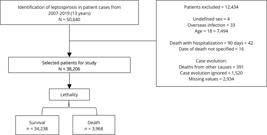
Of the total 50,640 notified cases, exclusions were made based on the following criteria: patients with undefined sex (n = 4), infection abroad (n = 33), under 18 years old (n = 7,494), deaths with hospitalization exceeding 90 days (n = 42), and unspecified date of death (n = 16). Cases with different disease outcomes (n = 391), those ignored (n = 1,520), and records with missing values (n = 2,934) were also excluded. After applying the exclusion criteria, the final study population comprised 38,206 patients. From this population, the lethality of the disease was evaluated, identifying 34,238 survival cases and 3,968 deaths (Figure 1).
Study variables
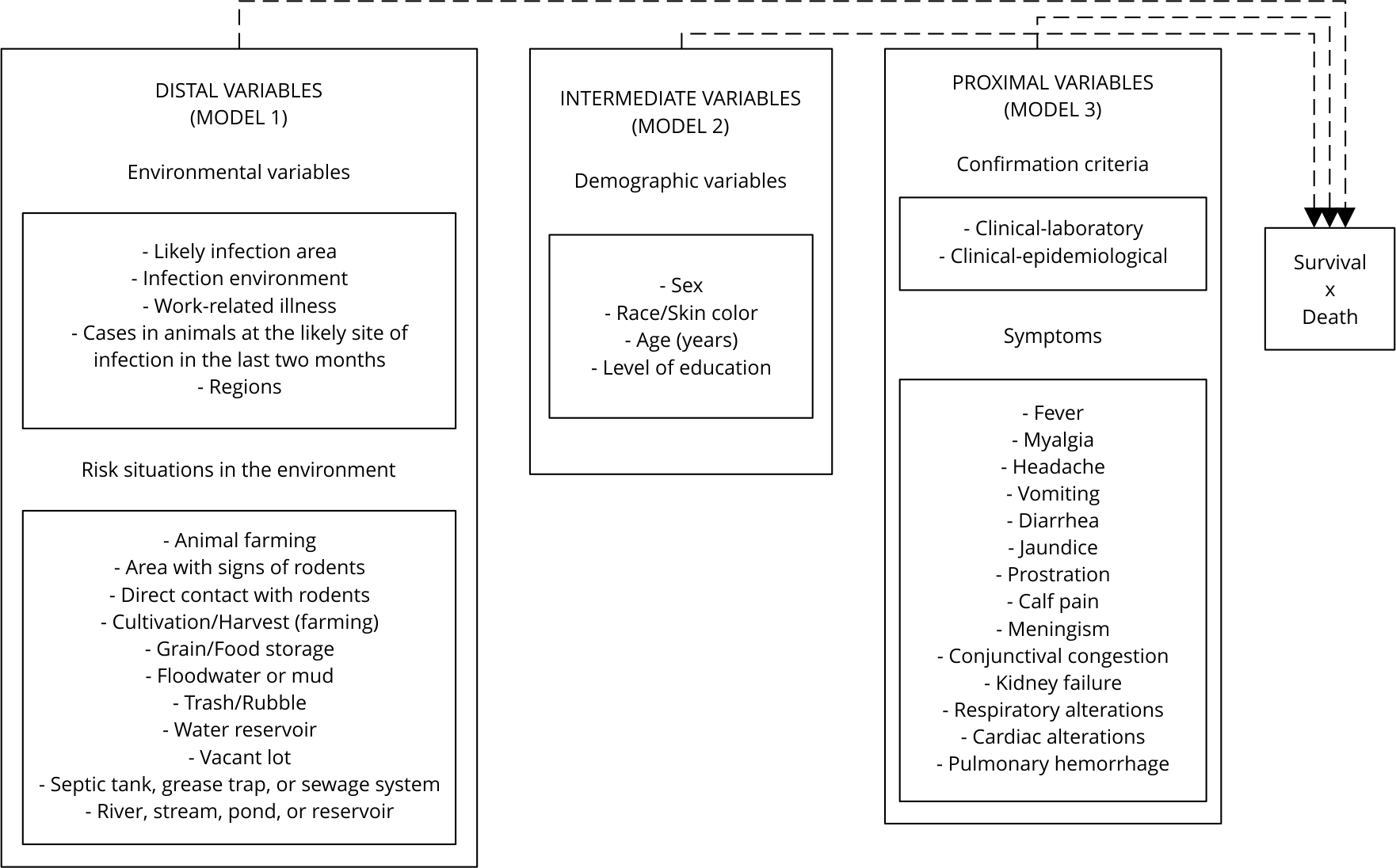
Initially, 35 variables from the notification form 13 were selected and classified into three hierarchical levels as shown in Figure 2. Hierarchical analysis has been used in epidemiological studies to elucidate risk factors associated with health-related conditions 14,15. This type of analysis incorporates different hierarchical levels of determination concerning an outcome 15. The advantage of this approach lies in its ability to control for confounding effects among variables, enabling a clearer interpretation of the relationships at each level. It starts with distal variables, typically related to socioeconomic and environmental contexts, and progresses to proximal variables, such as behavioral and biological factors, reflecting a more precise understanding of the mechanisms linking social determinants to health outcomes 16.
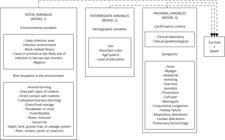
In this study, the distal variables were related to the environment and included the probable area of infection, differentiating urban and rural settings, the context of the infection (home, work, leisure), the association with occupational activities, the presence of animal cases at the probable infection site in the past two months, and risk exposure in the 30 days preceding the onset of symptoms (variables in the notification form that consider the incubation period of the disease). These risk situations include activities such as animal husbandry, contact with areas infested with rodents, direct contact with rodents, staying in vacant lots, crops/harvesting areas, interaction with grain/food storage, exposure to floodwater or mud, handling of trash/rubble, access to water tanks, septic tanks, grease traps, or sewage systems, and contact with bodies of water such as rivers, streams, ponds, or reservoirs. The state to which the patients belonged were categorized and grouped according to the macroregions of Brazil. The intermediate variables were demographic and included patients’ sex, skin color, age, and education level. The proximal variables pertained to clinical aspects and included the criteria for disease confirmation, whether clinical-laboratory or clinical-epidemiological, as well as the signs and symptoms patients presented, namely: fever, myalgia, meningism, headaches, conjunctival congestion, calf pain, vomiting, diarrhea, jaundice, kidney failure, respiratory alterations, prostration, cardiac alterations, and pulmonary hemorrhage.
Statistical analysis
Incidence and lethality rates, categorized according to the distribution of their respective quartiles, were calculated by states and presented in thematic maps. Incidence was estimated per 100,000 inhabitants, using the annual population estimates for each state from 2007 to 2019 13 as the denominator. Lethality was estimated by multiplying the ratio of the number of deaths to the total number of confirmed cases by 100 17.
Due to the presence of significant missing values in the database, data imputation was performed. This process aims to replace missing values with plausible estimates, enabling a complete analysis of the dataset. Data imputation is crucial for maintaining the integrity and utility of the dataset, preventing bias that may arise from excluding cases with missing data 18,19. Among the existing methods, multivariate imputation by chained equations (MICE) stand out for its flexibility and ability to handle the complexity of the data. This method performs multiple imputations, considering the joint distribution of the variables 20,21.
The proportions of deaths associated with each variable were calculated, and the association with death was compared using the chi-square test to determine the statistical significance of the observed differences. Logistic regression models were used to estimate the odds ratio (OR) for death resulting from the disease.
For variable selection within each level, we adopted the stepwise backward selection criterion, in which all potentially important variables are initially included in the model, and those less significant are sequentially removed based on a p-value < 0.15 for retention in the model. Therefore, in the final variable selection process within each level, a stepwise selection approach was used, considering the imputation of variables with the miceafter package (https://cran.r-project.org/web/packages/miceafter/index.html). All statistical analyses were performed using the R programming language (http://www.r-project.org), while map generation was carried out using QGIS version 3.34.1 (https://qgis.org/en/site/).
Results
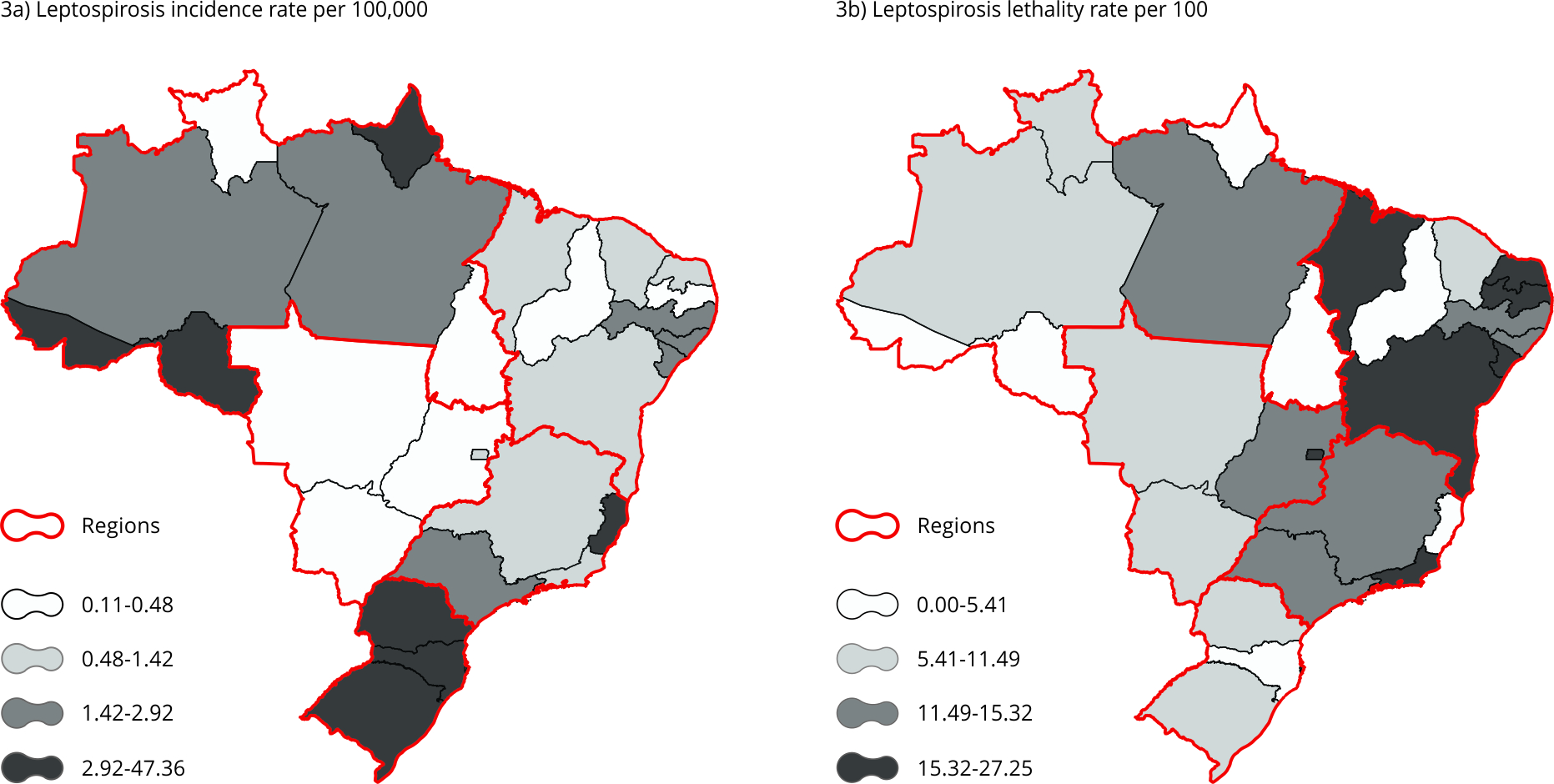
Out of the 38,206 cases selected for analysis, 89.61% (34,238) progressed to healing, and 10.39% (3,968) resulted in death within a 90-day interval with leptospirosis as the primary cause. The overall incidence rate found was 2.72 per 100,000 inhabitants, and the lethality rate was 10.39%. The analysis of leptospirosis incidence and lethality by state revealed a distinct regional pattern (Figure 3). Generally, the states in the South and North had higher incidence rates and comparatively lower lethality, while states in the Southeast and Northeast showed lower incidence rates and higher lethality. The state of Acre recorded the highest incidence, with 47.36 cases per 100,000 inhabitants, contrasted with Santa Catarina, which had an incidence of 7.61 per 100,000. The lethality in these states was 1.11% and 3.45%, respectively. In the South, Paraná and Rio Grande do Sul had incidences of 3.33 and 4.73 per 100,000 inhabitants, with lethality rates of 11.47% and 6.02%, respectively. Meanwhile, Rondônia, Amapá, and Espírito Santo, with incidences of 3.32, 7.55, and 4.55 per 100,000 inhabitants, presented lethality rates of 4.7%, 4.92%, and 4.94%, respectively.
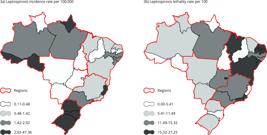
Choropleth maps of the incidence and lethality rates of human leptospirosis in Brazil from 2007 to 2019.
Deaths were more associated with urban environments (11%) than rural ones (4.8%) and were more frequent at home settings (9.8%) compared to workplaces (7.5%) or leisure locations (5.2%) (Table 1). Environmental factors, such as the presence of trash/rubble (10%) and water reservoirs (6.2%), showed a strong association with deaths. Additionally, activities like cleaning septic tanks or grease traps (9.6%) and direct contact with rodents (9.6%) also had a significant relationship with deaths. Geographically, the Southeast (14%) and Northeast (16%) had the highest proportions of deaths, while the North recorded the lowest proportion of deaths (5.7%) relative to the total number of cases.
Despite the number of confirmed cases among men being four times higher than among women, the proportion of deaths among men was only slightly higher (9.8% and 11%, respectively). The proportion of deaths increased with age and decreased with higher levels of education. Although more individuals of white skin color contracted leptospirosis (18,556 cases) compared to non-whites (15,673), non-whites had a higher proportion of death (11%) compared to whites (8.2%). A total of 26% (1,190) of the cases confirmed by clinical-epidemiological criteria resulted in death, whereas the cases confirmed by clinical-laboratory criteria were 8.2% (2,738). The variable for confirmation criteria was well-documented, with only 0.9% (350) of the data missing from the total (37,856).
Out of the total deaths (3,968), the most common symptoms present in the individuals were: fever (3,303), myalgia (3,079), jaundice (2,889), prostration (2,378), respiratory alterations (2,331), headache (2,146), vomiting (2,067), kidney failure (2,039), and calf pain (2,053). Additionally, approximately 11% of the individuals who presented with both prostration and vomiting died, along with 16% of those with jaundice, 24% of those with kidney failure and respiratory changes, 25% of those with cardiac alterations, and 27% of those with pulmonary hemorrhage.
The final model (Table 2) maintained 27 of the initial 35 variables. According to the adjustment of the final logistic regression model, the distal-level variables related to environmental characteristics that were most important for lethality included residing in an urban area (adjusted OR = 1.54; 95% confidence interval - 95%CI: 1.46-1.62) compared to rural areas, contact with trash/rubble (adjusted OR = 1.14; 95%CI: 1.10-1.18), being work-related (adjusted OR = 1.11; 95%CI: 1.05-1.19), and residing in the Southeast (adjusted OR = 1.83; 95%CI: 1.72-1.96). The least significant variable (p-value = 0.034) was direct contact with rodents when controlled for by other variables. Initially, this variable was significant (p-value = 0.001), with an 18% increase in the odds of death. This result may reflect a more immediate search for medical care by these individuals.
At the intermediate level, related to individual characteristics, age emerged as a significant risk factor. Individuals between 50 and 59 years old had a higher risk of death (adjusted OR = 2.16; 95%CI: 2.03-2.31) compared to the 18 to 24. Being male (adjusted OR = 1.10; 95%CI: 1.05-1.15) and of non-white skin color (adjusted OR = 1.07; 95%CI: 1.03-1.12) were also associated with an increased risk of death, while a higher level of education proved to be a protective factor.
At the proximal level, related to clinical variables, jaundice (adjusted OR = 1.95; 95%CI: 1.87-2.04), kidney failure (adjusted OR = 2.12; 95%CI: 2.04-2.20), respiratory alterations (adjusted OR = 4.28; 95%CI: 4.12-4.45), cardiac alterations (adjusted OR = 1.63; 95%CI: 1.55-1.71), and pulmonary hemorrhage (adjusted OR = 2.19; 95%CI: 2.10-2.29) were identified as significant risk factors. Additionally, having the diagnosis confirmed by clinical-epidemiological criteria increased the chance of death by 4.17 times (adjusted OR = 4.17; 95%CI: 4.00-4.35) compared to those with clinical-laboratory confirmation. On the other hand, symptoms such as fever, myalgia, meningism, headache, conjunctival congestion, calf pain and diarrhea were inversely associated with lethality.
Discussion
Our study selected 38,206 patients distributed across 2,625 Brazilian municipalities between 2007 and 2019 and revealed that approximately one in 10 patients with leptospirosis die within a 90-day interval from the onset of symptoms. Factors associated with increased lethality included age over 25 years, male, non-white skin color, lower education level, and various clinical conditions such as jaundice, kidney failure, respiratory and cardiac alterations, and pulmonary hemorrhage. Environmental factors, such as residing in urban areas and exposure to trash/rubble, were also significant.
Little has been addressed in recent literature regarding mortality/lethality analyses of leptospirosis, and even less about the association of death with clinical and demographic variables 1,5,6,7,22. Articles that include environmental and animal exposure as variables mostly discuss their associations with disease incidence 23,24,25. This retrospective study is the first to evaluate factors associated with death in individuals with confirmed leptospirosis on a national scale, considering not only the demographic and clinical variables of the disease but also environmental exposure factors. Most research on deaths is limited to a regional scale (based on hospital data) analyzing severe cases 22, prolonged hospitalization due to leptospirosis 1, differences between pediatric and adult patients of different age groups 26, among other discussions.
The identification of risk factors for lethality from leptospirosis varies in the literature. Previous studies have reported pulmonary complications, such as acute respiratory distress syndrome and pulmonary hemorrhage, as well as cardiac failure, meningism, disorientation, and multiple organ dysfunction 1. Our results showed that fever and myalgia occurred in almost all patients, while headache, prostration, calf pain, and vomiting were reported in more than half of the patients (Table 1). In a systematic review on leptospirosis mortality conducted by Taylor et al. 27, these symptoms were also identified in most cases.
Additionally, the adjusted odds of death increased nearly fourfold in older people compared to younger individuals, and the odds increased by only 7% for non-white individuals. This relationship was also highlighted in previous studies, which demonstrated that older patients have a higher likelihood of death compared to younger patients 1,7,22,28. The proportion of deaths increased with age and decreased with higher levels of education.
Although we did not directly correlate demographic and socioeconomic factors to environmental variables, it is known that occupation, education, sex, and age are significant risk factors for leptospirosis 29. Moreover, according to Cataldo et al. 30, gender considerations continue to be neglected within the framework of One Health. Unfavorable environmental, sanitary, and socioeconomic conditions associated with leptospirosis exacerbate the cycles of poverty in disadvantaged communities. These conditions include contact with sewage water, accumulation of trash, and reduced rates of government sanitation interventions, such as failures in controlling rodent populations, maintaining waste collection and sewage systems, and providing universal access to clean drinking water 31. As highlighted by Bradley & Lockaby 31, these disadvantaged communities often do not receive equitable public health assistance and have been shown to face disproportionate impacts from hydrometeorological natural disasters.
Al Hariri et al. 1 found jaundice to be the strongest predictor for prolonged hospitalization. In the literature, jaundice and male sex have been widely associated with death from leptospirosis 22,26. This study also identified jaundice and male sex as predictors of death. Although the number of cases among men was four times higher than among women in this study (Table 1), the proportion of deaths between the sexes was similar (10.54% for men and 9.75% for women), and the adjusted odds of death for males increased by 10% compared to females (Table 2). Additionally, men tend to seek healthcare services less frequently or later 32.
The adjusted odds of death were more than four times higher in individuals with clinical-epidemiological confirmation compared to those with laboratory confirmation. The current clinical-laboratory criterion is the microscopic agglutination test (MAT), which requires the presence of antibodies after the first week of symptoms, many days after the infection. Therefore, a serological diagnosis of samples collected immediately after the onset of symptoms often leads to false-negative results 4. Additionally, this method is costly and time-consuming, as it is performed in reference laboratories, and often severe cases die before the results are available.
In Brazil, in endemic communities, many people do not seek medical attention, which means that many mild cases go undiagnosed and untreated. Furthermore, especially in remote areas, the population lacks access to healthcare, and diagnostic resources are limited 27. According to Al Hariri et al. 1, patients from rural areas experienced longer hospitalization periods compared to those from urban areas. The delay in seeking care, according to him, may be caused by logistical issues or a lack of awareness about the disease. This, in turn, increases the likelihood of complications and requires longer hospitalization periods.
Although our study did not analyze hospitalization duration, and our results showed that the odds of death increased by 54% in individuals residing in urban areas, the considerations raised are still relevant to our analysis. Besides logistical challenges, the lack of awareness about the disease is a significant issue in our society. Therefore, the identification and confirmation of leptospirosis are crucial tools for surveillance, public health interventions, and alerting healthcare providers 33.
The adjusted odds of death were more than four times higher for patients with respiratory alterations and more than twice as high for those suffering from kidney failure and pulmonary hemorrhage. Patients with cardiac alterations, jaundice, and vomiting increased their odds of death by 63%, 95%, and 7%, respectively. Although calf pain is a typical symptom that distinguishes leptospirosis from other tropical diseases, this variable was not a risk factor for death in this study. Consistent with previous research, our results align with findings from other studies. A study conducted in São Paulo from 2007 to 2016 found an incidence rate of 1.9 per 100,000 inhabitants and a lethality rate of 15.1% 34. Similarly, in Ceará State, a lethality rate of 12.7% was reported from 2000 to 2013 35.
In Malaysia, the lethality rate found by Al Hariri et al. 1 was 6.48% (n = 34/525 individuals), with about one third of deaths occurring after prolonged hospitalization for more than seven days. Additionally, most deaths occurred within 24 hours of hospital admission. Factors associated with leptospirosis lethality included being male, over 40 years old, symptoms such as tachypnea, kidney diseases, multiple organ dysfunctions, respiratory failure, pneumonia, sepsis, dyspnea, pulmonary rales, pulmonary hemorrhage, rhabdomyolysis, and biochemical abnormalities 1. Other frequently identified symptoms were fever, myalgia, sore throat, nausea and vomiting, lethargy, abdominal pain, cough, dehydration, and jaundice 1.
It is estimated that the highest morbidity and mortality from leptospirosis occur in adult men aged between 20 and 49 years in resource-limited countries, as observed in South and Southeast Asia, Oceania, Caribbean, Andean, Central and Tropical Latin America, and Eastern Sub-Saharan Africa 8,12. Clinical studies investigating leptospirosis-related deaths have shown the presence of severe complications such as chronic pulmonary disease, diabetes mellitus, concurrent infections, hemorrhage, arrhythmia, shock, jaundice, pulmonary involvement, the need for dialysis, mechanical ventilation, and prior use of steroids 22. Pulmonary hemorrhage is increasingly recognized as a significant, often lethal manifestation of leptospirosis, with its pathogenesis remaining unclear 9. Our study identified a lethality rate of 26.63% among patients who presented pulmonary hemorrhage (903/3,391) (Table 1).
The most severe form of leptospirosis is Weil’s disease, characterized by jaundice, kidney failure, and hemorrhage, with a high lethality rate ranging from 5% to 15% 9. A retrospective study analyzed data collected from the emergency department of a hospital between 1989 and 1993 and identified 68 patients with positive leptospirosis serology, with a lethality rate of 18% 5. In Taiwan, a study with 57 confirmed cases of leptospirosis found a lethality rate of 19% 22. In Australia, a study found a lethality rate of 4% 6. In Brazil, the lethality rate found in our study was 10.38% (3,968/38,206). All regions were significantly associated with death (Table 2). The odds of death increased by 17% in the South, 40% in the Northeast, 50% in the Central-West, and 83% in the Southeast. The lowest proportion of deaths was in the North (328/5,774). Comparing these results with Figure 3b, the Northeast shows the highest number of states with high lethality. However, when examining the data by state, it is observed that the highest lethality is in the state of Rio de Janeiro, which is in the Southeast.
Despite the economic and social differences between North and South, both experience frequent flooding, which may explain the higher incidences of leptospirosis in the country. A study compiled publications that related flooding and leptospirosis in Brazil by region, finding totals of Southeast (14), Northeast (7), South (7), North (3), and Central-West (1) 36. Silva & Almeida 37 highlight the lack of research on the disease in the state of Amapá. The authors 37 concluded that leptospirosis is a public health problem in the state, finding an incidence of 6.6 cases per 100,000 inhabitants over 10 years (2013 to 2022), which is related to the history of low socioeconomic development in the region. Additionally, in 2019, a scarcity of supplies for leptospirosis detection by staff was reported at the Central Laboratory of Public Health (LACEN, acronym in Portuguese), responsible for the disease analysis and diagnosis in the state 38. In the same year, staff reported confirmed cases of leptospirosis due to a rodent infestation at the facility 38.
The Tocantins State (southeast of the North Region) and the Roraima State (northwest of the North Region) had extremely low incidence rates (< 0.48), as well as the Piauí State (Northeast Region), the Paraíba State (far east of the Northeast Region), and the Central-West Region. The Tocantins State was the only Brazilian state with no reported deaths from leptospirosis between 2007 and 2019. The Piauí State reported only one death. The low incidence in the Central-West may reflect a real reduction in cases due to lower population density, delays in information reporting, underreporting, or possibly due to the clinical picture resembling other diseases, leading to underdiagnosis. Additionally, the hydrometeorological conditions in the Central-West may be favorable to the non-dissemination of leptospirosis 11.
Five out of the nine states in the Northeast had a lethality rate greater than 15.32%, with Sergipe State having the highest at 27.25%. The hospital lethality rate in Salvador (Bahia State) found by Lopes et al. 26 between 1993 and 1997 was 14.4%. During the study period (2007 to 2019), the Bahia State had a lethality rate of 17.09%. The regional differences in incidence and lethality rates for leptospirosis in Brazil from 2007 to 2019 (Figure 3) may be related to social health inequalities. According to Barata 32, economic, social, and political relationships affect how people live and ultimately shape the patterns of disease distribution. Thus, as important as it is to identify similarities in leptospirosis incidence from North to South, it is also crucial to consider the environmental, economic, social, and political disparities between these regions.
This finding may reflect conditions in other Brazilian states, given that the clinical forms of leptospirosis are often nonspecific or asymptomatic, contributing to its underreporting 27,29,33,39. Therefore, there is still a need for improved public education programs to prevent Leptospira infection and better disease surveillance to reduce the number of undetected cases 40.
In the scale we analyzed, it was not possible to extract additional variables to determine, for example, whether individuals who died had the severe form of leptospirosis, how many experienced complications, and whether those complications were resolved. This limitation arises because the notification forms are not always fully completed, and each region of the country prioritizes different aspects of data entry. The lack of data completeness in notification forms has been widely documented in studies that utilized secondary data sources 1,7,26,34,41.
Our study identified that deaths were more associated with urban environments than rural ones. Our hypothesis is that the serovar circulating in urban environments, L. interrogans serovar Copenhageni, transmitted by Rattus norvegicus, is highly pathogenic and associated with high lethality 42,43. Some serovars are more aggressive than others 44,45.
Furthermore, the higher number of deaths in urban environments is attributed to inadequate care for severe cases in the public healthcare system. This is due to a lack of available beds, challenges in accessing services caused by overcrowding, and missed diagnoses, as leptospirosis is often not suspected in cases without jaundice that progress to acute respiratory failure due to acute respiratory distress syndrome and pulmonary hemorrhage 46. Severe leptospirosis resembles bacterial sepsis in terms of clinical progression; it is well known that sepsis has a high mortality rate within the Brazilian public healthcare system 47 and, as demonstrated by Spichler et al. 28 the main risk factor for mortality in severe leptospirosis was pulmonary involvement.
Our results showed that individuals of non-white individuals had a higher proportion of death compared to white individuals. Differences in health outcomes related to skin-color have been widely described in the literature. Non-white skin color has been associated with higher mortality in other diseases, such as tuberculosis, and is linked to health inequities that reduce access to and quality of hospital treatment 42,43.
Regarding skin color, there is no explicit causal relationship with mortality, and studies are insufficient to assert that any racial factor could pose a risk of death. Some studies highlight a connection with socioeconomic issues, and only one study has found an association with non-white skin color 39. Therefore, there is no clear explanation for this finding, and further studies are needed to clarify this issue.
In the context of Public Health, it is essential to consider both the interpretation, and the magnitude of the association measures used. In this study, which analyzed factors associated with the lethality of leptospirosis, logistic regression models were employed to estimate OR, a valid measure for the analysis of this outcome. However, it is recognized that in cross-sectional studies, odds ratios can overestimate prevalence ratios, particularly when the outcome is not rare, as observed with lethality in this study. While logistic regression remains appropriate for this analysis, alternatives such as Poisson regression with robust variance have been highlighted in the literature for directly estimating prevalence ratios, offering interpretations that may be more intuitive in certain contexts 48,49.
Since leptospirosis occurs worldwide, the global incidence and mortality of the disease in humans are still not well understood. Many individuals remain undiagnosed and untreated due to its nonspecific symptoms, which can be indistinguishable from other acute febrile illnesses such as dengue 27,29,33.
Acknowledgments
This study was carried out with the support of the Brazilian Coordination for the Improvement of Higher Education Personnel (CAPES; Funding Code 001).
References
- 1 Al Hariri YK, Sulaiman SAS, Khan AH, Adnan AS, Al-Ebrahem SQ. Determinants of prolonged hospitalization and mortality among leptospirosis patients attending tertiary care hospitals in northeastern state in peninsular Malaysia: a cross sectional retrospective analysis. Front Med (Lausanne) 2022; 9:887292.
- 2 Haake DA, Levett PN. Leptospirosis in humans. Curr Top Microbiol Immunol 2015; 387:65-97.
- 3 Adler B, Moctezuma AP. Leptospira and leptospirosis. Vet Microbiol 2015; 140:287-96.
- 4 Neris RLS, Silva MC, Batista MS, Silva KCFA, Balassiano IT, Avelar KES. Effect of demographics and time to sample processing on the qPCR detection of pathogenic Leptospira spp. from human samples in the National Reference Laboratory for Leptospirosis, Brazil. Trop Med Infect Dis 2023; 8:151.
- 5 Dupont H, Dupont-Perdrizet D, Perie JL, Zehner-Hansen S, Jarrige B, Daijardin JB. Leptospirosis: prognostic factors associated with mortality. Clin Infect Dis 1997; 25:720-4.
- 6 Smith S, Liu YH, Carter A, Kennedy BJ, Dermedgoglou A, Poulgrain SS, et al. Severe leptospirosis in tropical Australia: optimising intensive care unit management to reduce mortality. PLoS Negl Trop Dis 2019; 13:e0007929.
- 7 Galdino GS, Sandes-Freitas TV, Andrade LGM, Adamian AMC, Meneses GC, Silva Junior GB, et al. Development and validation of a simple machine learning tool to predict mortality in leptospirosis. Sci Rep 2023; 13:4506.
- 8 Costa F, Hagan JE, Calcagno J, Kane M, Torgerson P, Martinez-Silveira MS, et al. Global morbidity and mortality of leptospirosis: a systematic review. PLoS Negl Trop Dis 2015; 9:e0003898.
- 9 Bharti AR, Nally JE, Ricaldi JN, Matthias MA, Diaz MM, Lovett MA, et al. Leptospirosis: a zoonotic disease of global importance. Lancet Infect Dis 2003; 3:757-71.
- 10 Hotez PJ, Aksoy S, Brindley PJ, Kamhawi S. What constitutes a neglected tropical disease? PLoS Negl Trop Dis 2020; 14:e0008001.
- 11 Marteli AN, Genro LV, Diament D, Guasselli LA. Análise espacial da leptospirose no Brasil. Saúde Debate 2020; 44:805-17.
- 12 Torgerson PR, Hagan JE, Costa F, Calcagno J, Kane M, Martinez-Silveira MS, et al. Global burden of leptospirosis: estimated in terms of disability adjusted life years. PLoS Negl Trop Dis 2015; 9:e0004122.
-
13 Departamento de Informática do SUS. Transferência de arquivos. Leptospirose: 2007-2022. https://datasus.saude.gov.br/transferencia-de-arquivos/# (accessed on 16/Oct/2023).
» https://datasus.saude.gov.br/transferencia-de-arquivos/# - 14 Boccolini CS, Carvalho ML, Oliveira MIC, Vasconcellos AGG. Fatores associados à amamentação na primeira hora de vida. Rev Saúde Pública 2011; 45:69-78.
- 15 Belfort GP, Santos MMAS, Pessoa LS, Dias JR, Heidelmann SP, Saunders C. Determinantes do baixo peso ao nascer em filhos de adolescentes: uma análise hierarquizada. Ciênc Saúde Colet 2018; 23:2609-20.
- 16 Victora CG, Huttly SR, Fuchs SC, Olinto MT. The role of conceptual frameworks in epidemiological analysis: a hierarchical approach. Int J Epidemiol 1997; 26:224-7.
-
17 Departamento de Informática do SUS. População residente por ano e Unidade da Federação. Estudo de estimativas populacionais por município, sexo e idade - 2000-2021. http://tabnet.datasus.gov.br/cgi/deftohtm.exe?ibge/cnv/popsvsbr.def (accessed on 05/Nov/2023).
» http://tabnet.datasus.gov.br/cgi/deftohtm.exe?ibge/cnv/popsvsbr.def - 18 Marshall A, Altman DG, Holder RL, Royston P. Combining estimates of interest in prognostic modelling studies after multiple imputation: current practice and guidelines. BMC Med Res Methodol 2009; 9:57.
- 19 Meng XL, Rubin DB. Performing likelihood ratio tests with multiply-imputed data sets. Biometrika 1992; 79:103.
- 20 van Buuren S. Flexible imputation of missing data. 2nd Ed. Boca Raton: CRC Press/Chapman and Hall; 2018.
- 21 Haile SR. Multiple imputation using R. Zurich: University of Zurich; 2019.
- 22 Wang HK, Lee MH, Chen YC, Hsueh PR, Chang SC. Factors associated with severity and mortality in patients with confirmed leptospirosis at a regional hospital in northern Taiwan. J Microbiol Immunol Infect 2020; 53:307-14.
- 23 Silva JA, Scialfa EA, Tringler M, Rodríguez MG, Tisnés A, Linares S, et al. Seroprevalence of human leptospirosis in a rural community from Tandil, Argentina. Assessment of risk factors and spatial analysis. Rev Argent Microbiol 2023; 55:49-59.
- 24 Santos IOC, Landi MFA, Cruz LM, Bofill MIR, Santos DE, Lima EMM, et al. Human leptospirosis in the Federal District, Brazil, 2011-2015: eco-epidemiological characterization. Rev Soc Bras Med Trop 2017; 50:777-82.
- 25 Mutalip MHA, Mahmud MAF, Lodz NA, Yoep N, Muhammad EN, Ahmad A, et al. Environmental risk factors of leptospirosis in urban settings: a systematic review protocol. BMJ Open 2019; 9:e023359.
- 26 Lopes AA, Costa E, Costa YA, Sacramento E, Oliveira Junior ARR, Lopes MB, et al. Comparative study of the in-hospital case-fatality rate of leptospirosis between pediatric and adult patients of different age groups. Rev Inst Med Trop Sao Paulo 2004; 46:19-24.
- 27 Taylor AJ, Paris DH, Newton PN. A systematic review of the mortality from untreated leptospirosis. PLoS Negl Trop Dis 2015; 9:e0003866.
- 28 Spichler AS, Vilaça PJ, Athanazio DA, Albuquerque JOM, Buzzar M, Castro B, et al. Predictors of lethality in severe leptospirosis in urban Brazil. Am J Trop Med Hyg 2008; 79:911-4.
- 29 Udechukwu CC, Kudi CA, Abdu PA, Mamman PH, Pilau NN, Jolayemi KO, et al. Risk practices and awareness of leptospirosis amongst residents of Zaria, Nigeria. Sci Rep 2024; 14:15229.
- 30 Cataldo C, Bellenghi M, Masella R, Busani L. One Health and sex and gender-related perspective in the ecosystem: interactions among drivers involved in the risk of leptospirosis in Europe. A scoping review. One Health 2024; 19:100841.
- 31 Bradley EA, Lockaby G. Leptospirosis and the environment: a review and future directions. Pathogens 2023; 12:1167.
- 32 Barata RB. Como e por que as desigualdades sociais fazem mal à saúde. Rio de Janeiro: Editora Fiocruz; 2009. (Coleção Temas em Saúde).
- 33 Spichler A, Athanazio D, Buzzar M, Castro B, Chapolla E, Seguro A, et al. Using death certificate reports to find severe leptospirosis cases, Brazil. Emerg Infect Dis 2007; 13:1560-1.
- 34 Diz FA, Conceição GMS. Human leptospirosis in the municipality of São Paulo, SP, Brazil: distribution and trend according to sociodemographic factors, 2007-2016. Rev Bras Epidemiol 2021; 24:e210034.
- 35 Daher EDF, Soares DS, Fernandes ATBM, Girão MMV, Sidrim PR, Pereira EDB, et al. Risk factors for intensive care unit admission in patients with severe leptospirosis: a comparative study according to patients' severity. BMC Infect Dis 2016: 16:40.
- 36 Portela FC, Kobiyama M, Goerl RF. Panorama brasileiro da relação entre leptospirose e inundações. Revista GEOSUL 2020; 35:711-34.
- 37 Silva JJL, Almeida RSS. Perfil epidemiológico da leptospirose no Estado do Amapá. UNICIÊNCIAS 2023; 27:52-7.
-
38 Pacheco J. No AP, casos de leptospirose são apurados e servidores reclamam de infestação de ratos no Lacen. G1 2019; 26 mar. https://g1.globo.com/ap/amapa/noticia/2019/03/26/no-ap-casos-de-leptospirose-sao-apurados-e-servidores-reclamam-de-infestacao-de-ratos-no-lacen.ghtml
» https://g1.globo.com/ap/amapa/noticia/2019/03/26/no-ap-casos-de-leptospirose-sao-apurados-e-servidores-reclamam-de-infestacao-de-ratos-no-lacen.ghtml - 39 Teles AJ, Bohm BC, Silva SCM, Bruhn NCP, Bruhn FRP. Spatial and temporal dynamics of leptospirosis in South Brazil: a forecasting and nonlinear regression analysis. PLoS Negl Trop Dis 2023; 17:e0011239.
- 40 Hartskeerl RA, Collares-Pereira M, Ellis WA. Emergence, control and re-emerging leptospirosis: dynamics of infection in the changing world. Clin Microbiol Infect 2011; 17:494-501.
- 41 Sandhu RS, Ismail HB, Ja'afar MHB, Rampal S. The predictive factors for severe leptospirosis cases in Kedah. Trop Med Infect Dis 2020; 5:79.
- 42 Faine S. Leptospira and leptospirosis. Boca Raton: CRC Press; 1994.
- 43 Segura ER, Ganoza CA, Campos K, Ricaldi JN, Torres S, Silva H, et al. Clinical spectrum of pulmonary involvement in leptospirosis in a region of endemicity, with quantification of leptospiral burden. Clin Infect Dis 2005; 40:343-51.
- 44 Rajaonarivelo JA, Desmoulin A, Maillard O, Collet L, Baudino F, Jaffar-Bandjee M-C, et al. Clinical manifestations of human leptospirosis: bacteria matter. Front Cell Infect Microbiol 2023; 13:1259599.
- 45 Senavirathna I, Jayasundara D, Warnasekara J, Kappagoda C, Agampodi S. Levels of cytokines in leptospirosis patients with different serovars and rfb locus. J Interferon Cytokine Res 2024; 44:80-93.
- 46 Diament D, Colombari F, Cypriano AS, Lisboa LF, Santos BFC, Cendoroglo Neto M, et al. Georeferencing of deaths from sepsis in the city of São Paulo. Braz J Infect Dis 2016; 20:149-54.
- 47 Machado FR, Cavalcanti AB, Bozza FA, Ferreira EM, Carrara FSA, Sousa JL, et al. The epidemiology of sepsis in Brazilian intensive care units (the Sepsis PREvalence Assessment Database, SPREAD): an observational study. Lancet Infect Dis 2017; 17:1180-9.
- 48 Barros AJD, Hirakata VN. Alternatives for logistic regression in cross-sectional studies: an empirical comparison of models that directly estimate the prevalence ratio. BMC Med Res Methodol 2003; 3:21.
- 49 Schiaffino A, Rodriguez M, Pasarin MI, Regidor E, Borrell C, Fernandez E. ¿Odds ratio o razón de proporciones? Su utilización en estudios transversales. Gac Sanit 2003; 17:70-4.
-
50 Instituto Brasileiro de Geografia e Estatística. Malha municipal digital: divisão político-administrativa (DPA) do Brasil 2022. https://www.ibge.gov.br/geociencias/organizacao-do-territorio/malhasterritoriais/15774-malhas.html (accessed on 26/May/2024).
» https://www.ibge.gov.br/geociencias/organizacao-do-territorio/malhasterritoriais/15774-malhas.html

 Note: classification by quartile. Source: Brazilian Health Informatics Department