 Nick and Ibrahim’s Prisoner’s Dilemma in Split or Steal: Relevance and Goal Conciliation in Golden Balls
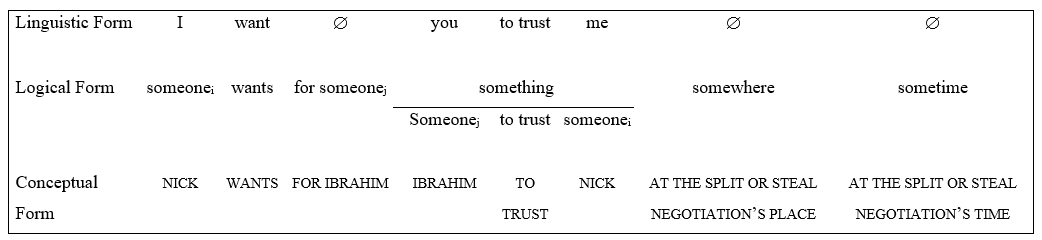
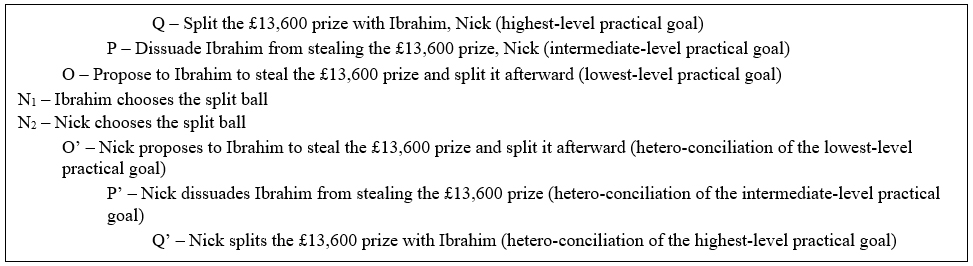
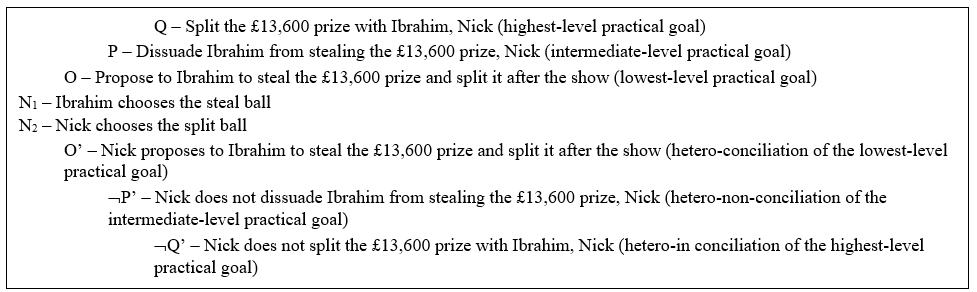
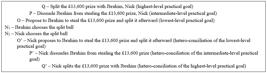
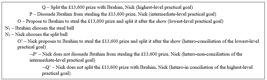
We examine in this article the final round of an episode of the British game show Golden Balls, in which Nick and Ibrahim negotiate the £13,600 jackpot. In Split or Steal, both players lose the prize if they both choose to steal, and they split the prize if they both choose to split. However, if one player chooses to steal while the other chooses to split, the former takes the entire prize. In the episode, Nick proposes stealing the prize to split it later, and despite Ibrahim’s initial skepticism due to the proposal not being sanctioned by the game’s rules, he eventually agrees. Surprisingly, Nick also opts to split, indicating a strategic move to prevent Ibrahim from claiming the entire prize. Using Relevance and Goal Conciliation Theories, we examine how the negotiation context influences practical-epistemic vigilance strategies, suggesting advantages for proponents in stressful decision-making situations. We argue that the game conditions, akin to the Prisoner’s Dilemma in Game Theory, restrain the detection of bluffs and cheats and the consideration of countermoves.
Keywords:
Relevance Theory
;
Goal Conciliation Theory
;
Practical-Epistemic Vigilance
;
Prisoner’s Dilemma
; Golden Balls
 Thumbnail
 Thumbnail
 Thumbnail
 Thumbnail
 Thumbnail
 Thumbnail
 Thumbnail