Kinematic characteristics of perforation and droplet dynamics in oil-based emulsion pesticide sprays
Abstract
Improving the efficiency and precision of pesticide application remains a major challenge in modern agriculture, particularly for oil-based emulsions with complex atomization behaviors. This study investigates the perforation fragmentation phenomenon that occurs in the liquid sheet during emulsion atomization, which differs from that observed in water sprays. A correlation between emulsion-induced properties and perforation morphology was observed. The formation, growth, and instability of perforations under flat-fan nozzles (Lechler 110-01) were characterized, and their effects on droplet kinematics and liquid sheet evolution were analyzed. Additionally, the spray pressure and spatial position were examined to evaluate their effects on perforation dynamics and initial droplet velocity. The results show that oil-based emulsions exhibited a shorter instability evolution process, with the perforation movement reflecting a velocity trend similar to that of the liquid sheet. As the spray pressure increased from 0.1 to 0.5 MPa, the liquid sheet velocity increased from 20 to 40 m/s, whereas the perforation center velocity increased from 13.5 to 28 m/s. A consistent relationship was observed between the perforation and liquid-sheet velocities, thus suggesting that sheet momentum critically governs perforation dynamics. Moreover, the average droplet velocity of emulsion atomization (20 m/s) was significantly higher than that of water sprays (15 m/s). These findings provide insights into the kinematic behavior of perforation-driven breakup in emulsion sprays and enhance understanding of atomization mechanisms in oil-based pesticide formulations.
Keywords:
agriculture spray; pesticide atomization; droplet velocity; perforation breakup; kinematic characteristics
Introduction
Spray atomization technology has been widely applied in agriculture, manufacturing, and aerospace engineering. Its core function is to atomize liquid streams into fine and uniformly distributed droplets, thereby enabling precise liquid transport and distribution (Qin et al., 2017a; Yue et al., 2017; Liao et al., 2019; Qin et al., 2017b, Ji et al., 2021). Investigating the dynamics of the atomization process is essential for optimizing the design of spraying equipment, improving liquid utilization efficiency, and minimizing environmental pollution. In agricultural pesticide applications, the formulation of pesticides critically governs the determination of atomization characteristics and pesticide-use efficiency (Cryer & Altieri, 2017). The presence of oil-based emulsions alters the physicochemical properties of the spray liquid and induces perforation phenomena within the liquid sheet, thereby affecting the atomization dynamics (Appah et al., 2020; Shrestha et al., 2020). In practical agricultural applications, the occurrence of perforations during emulsion atomization can effectively reduce spray drift by suppressing the formation of fine, drift-prone droplets (Hilz et al., 2012; Qin et al., 2016; Zhang et al., 2019).
Numerous studies have investigated atomization process dynamics under various operational and fluidic conditions. Li et al. (Li et al., 2022) reported that adjuvants significantly affect droplet size and velocity distributions, while in a different study Li et al. (Li et al., 2021) established predictive models under low-pressure conditions based on PDPA measurements. High-speed imaging and particle image velocimetry revealed intricate internal flow structures during droplet interactions (Volkov et al., 2024), while ultrasonic atomization studies demonstrated transient velocity–size correlations governed by vibration amplitude (Zhang et al., 2023). Other studies, such as those by Zeng et al. (Zeng et al., 2024), highlighted that smaller droplets achieve higher velocities and broader ejection angles under successive jet impingement. Additionally, modeling approaches, including QMOM (Jasim, 2023) and maximum entropy principles (Peng & Zhang, 2024), have advanced the ability to jointly characterize droplet size–velocity distributions. The integration of experimental observations with numerical simulations, such as SPH (Subramani et al., 2022) and polygonal iterative models (Heydarpoor & Famili, 2024), has enabled the accurate prediction of droplet deformation and breakup. Collectively, these studies offer a comprehensive basis for analyzing and optimizing droplet behavior in complex flow regimes.
The inherent physical laws governing liquid breakup and atomization processes pose persistent challenges in fluid mechanics and multiphase flow. Current investigations focus on the visualization and quantitative analysis of the liquid-film breakup process using experimental and numerical simulation methods (Chen et al., 2021; Hua et al., 2021; Tang et al., 2017; Hu et al., 2021). Despite significant advancements in liquid atomization and spray systems, numerous problems pertaining to atomization persist. Owing to the complexity of the emulsion atomization process, several challenges remain to be addressed, particularly the accurate description of hole generation and its effect on the kinematic behavior of droplets.
Hence, this study investigated the kinematic characteristics of holes during emulsion atomization using high-speed camera technology and image-processing methods. By analyzing the time evolution and spatial distribution of droplet velocity at the bottom and edges of a liquid sheet, differences in the inherent motion patterns and kinematic behavior are revealed. Quantitative characterization of the dynamic relationship between perforation evolution and droplet kinematics is carried out based on high-speed imaging observations. The findings of this study provide novel insights into the atomization dynamics of emulsifiable concentrate formulations and offer theoretical guidance for nozzle optimization and drift control in pesticide spraying applications.
Material and methods
Material and equipment
In the current experiment, single-phase spray liquid (water) and multiphase spray liquid (an emulsifiable pesticide, butachlor) were selected as test liquids. The commercial butachlor formulation was diluted with water to prepare the emulsion spray for experiments. The dilution conditions were fixed throughout the tests to ensure comparability. The commercial butachlor emulsifiable concentrate was diluted with tap water at a fixed ratio of 0.02% to prepare the emulsion spray liquid used in all experiments. Tap water (pH ~7) from the laboratory was used as the continuous phase. The selected liquids represent typical spray conditions used in agricultural applications, thus allowing a comparative analysis of the breakup behavior between water and emulsion systems. The representative physical properties of the test liquids are summarized in Table 1.
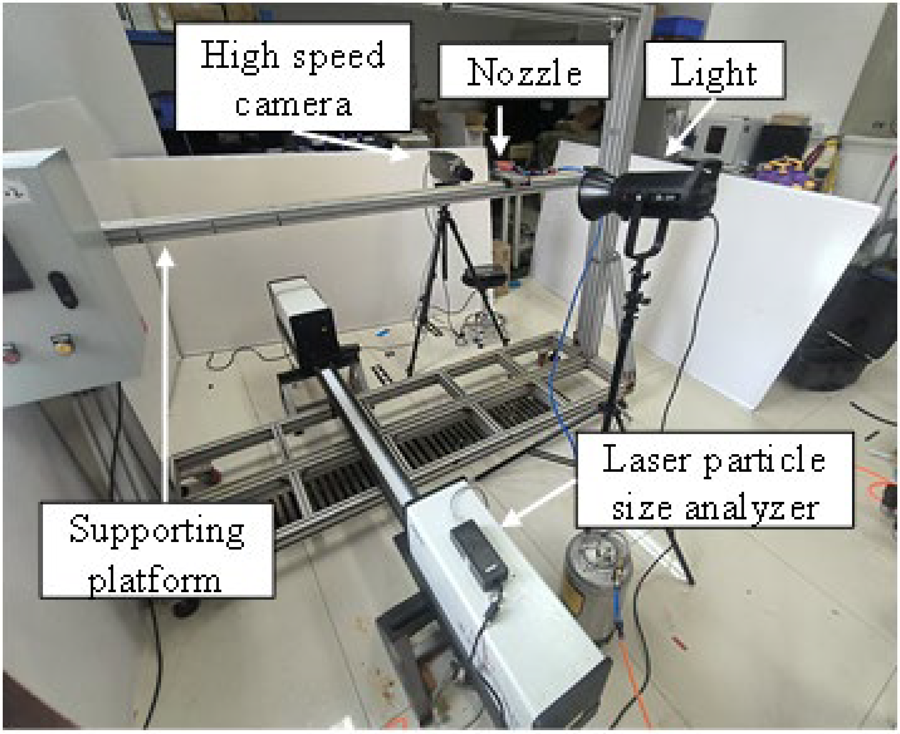
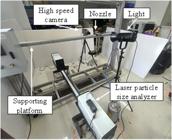
The custom-built spray-visualization experimental system is shown in Fig. 1. The high-speed visualization system primarily comprised a high-speed camera, halogen lamp, and diffusion plate. An Olympus I-Speed 3 high-speed camera was positioned normal to the propagation direction of the fan-shaped liquid sheet to capture the development and breakup of unstable structures on the spray’s frontal surface. The camera was equipped with a Tokina 100 mm f/2.8 macro lens to obtain high-resolution backlit images. A halogen lamp was used as a supplementary light source for illumination. Additionally, a high-transmittance PMMA frosted diffusion plate was installed between the light source and liquid sheet to ensure uniform illumination and enhance the clarity of the liquid-sheet boundary detection. The distance between the camera and nozzle was fixed to ensure a stable observation region encompassing the key breakup area of the liquid sheet.
The high-speed camera was operated at a frame rate of 10,000 frames/s. The exposure time was adjusted based on the experimental requirements (corresponding to a shutter setting of 46) to minimize motion blur while maintaining sufficient temporal resolution for capturing the liquid-sheet breakup process. The spatial resolution and image quality of the high-speed imaging system were sufficient to ensure the reliable extraction of liquid-sheet and droplet kinematic features in the present study. A full-frame image resolution was used, and the observation region included the primary breakup zone of the liquid sheet (Gong et al., 2022).
A spatial calibration procedure was performed based on the known nozzle outlet dimensions to establish the conversion between pixel displacement and physical length. Subsequently, the spatial resolution of the imaging system was determined based on this calibration. The main sources of measurement uncertainty included the spatial calibration error, edge detection accuracy, and image-based feature extraction. Repeated analyses were conducted and measurements were averaged to improve reliability.
The experiment was performed in a laboratory under quiescent ambient conditions, and the indoor temperature was 23 °C. The Lechler 110-01 nozzle was selected as the spray nozzle. The spray pressures selected for testing were 0.1, 0.2, 0.3, 0.4, and 0.5 MPa. The detailed parameters of the test instrument are listed in Table 2.
Image processing
To quantitatively determine the structural characteristics of the spray, numerous high-speed images captured under different operating conditions were processed using the Image-Pro Plus software (Meyer Instruments, Silver Spring, MD, USA). The software was used to measure the pixel length of various spray structures captured in the images.
No additional image preprocessing was performed. The analysis was conducted directly on the original images captured by the high-speed camera, as backlit imaging provided sufficient contrast between the liquid sheet and background for feature identification.
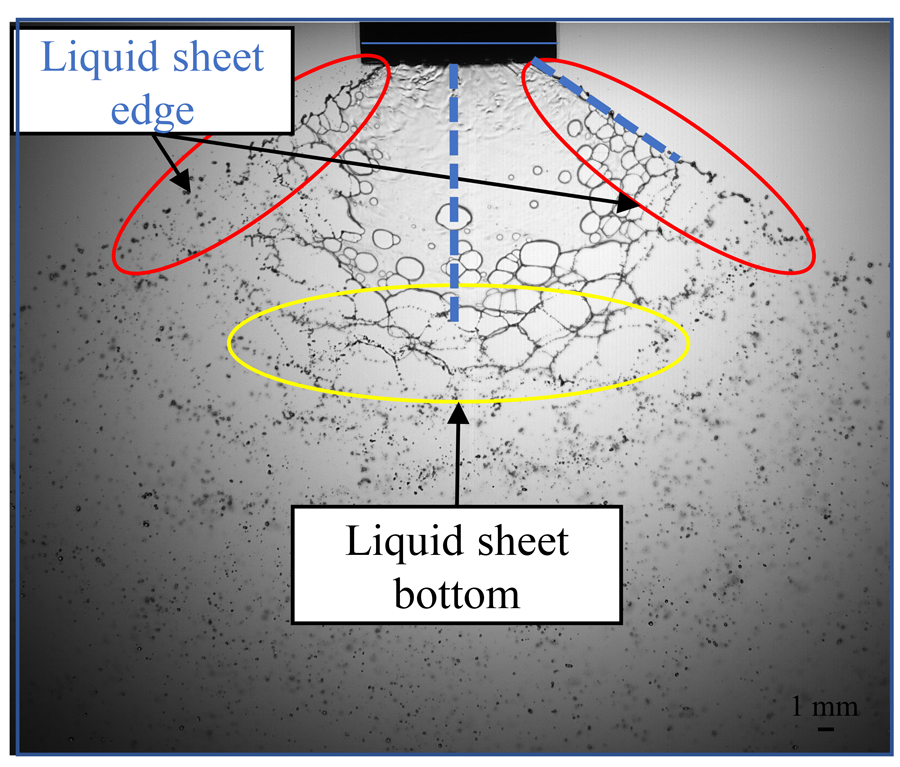
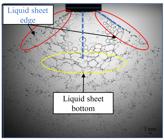
Owing to the structural complexity of distinct regions within the liquid sheet, to better define the key unstable structural characteristics in the atomization evolution process of the liquid sheet, the flat fan-shaped liquid sheet region was classified into the upstream edge of the liquid sheet (the edge of the liquid sheet) and the bottom of the liquid sheet. The red and yellow circles in Fig. 2 indicate these demarcations, respectively.
Trajectory monitoring of atomized droplets
A visualization-based method was employed to monitor and measure the spatial motion of droplet groups. The high-speed camera enabled the accurate and detailed capture of individual droplet movements. The droplet velocity trajectories were analyzed frame by frame using the Tracker software, which is based on the open-source physics Java framework. The software converted video frames into editable two-dimensional motion maps, in which selected droplets were denoted by specific symbols to indicate their positions over time. Based on these images, the initial kinematic characteristics of droplets formed at the bottom and edges of the spray field were measured. Additionally, the evolution of unstable structures on the liquid sheet and the detailed breakup process were analyzed to assess their effects on the initial droplet velocity. For each combination of spray pressure and spray liquid type under a fixed nozzle condition (Lechler 110-01), the droplet trajectory characteristics were determined based on sequential image frames obtained from high-speed imaging.
Owing to the transient and high-speed nature of the spray process, the evolution of liquid-sheet instability and droplet formation occurred almost instantaneously. Additionally, to ensure sufficient image clarity for capturing fine morphological features during breakup, the field of view of the high-speed imaging system was constrained. The present study focused on the initial stage of droplet formation, and the velocity analysis was restricted to the early-time evolution immediately following breakup.
In addition to droplet trajectory monitoring, the motion of perforation centers was extracted from hundreds of sequential images. The displacement–time data were fitted using a second-order polynomial function, and the corresponding acceleration was obtained from the fitted curve. Compared with direct numerical differentiation, this approach reduces the effect of image noise.
Results and discussion
Instability and kinematic behavior of atomizing liquid sheet
Evolution of surface disturbance and sheet fragmentation
Under the action of spray pressure, a planar fan-shaped liquid sheet evolves into liquid ligaments or perforations, which subsequently disintegrate into droplets, thereby completing the primary atomization process (Vankeswaram & Deivandren, 2022). In water atomization, the dominant structural feature of the liquid sheet is a continuously disturbed surface wave pattern. This is primarily due to the velocity difference between the liquid phase and surrounding air, which induces surface instabilities. As these surface waves develop, the liquid sheet fragments into droplets. By contrast, oil-based emulsion pesticides exhibit entirely different atomization structures and breakup mechanics. The main instability observed in liquid sheets in previous reports is the formation of perforations (Siddharth, 2021; Goual et al., 2021). Therefore, elucidating spray evolution in emulsion atomization fundamentally relies on investigating the kinematic behavior of perforation structures.
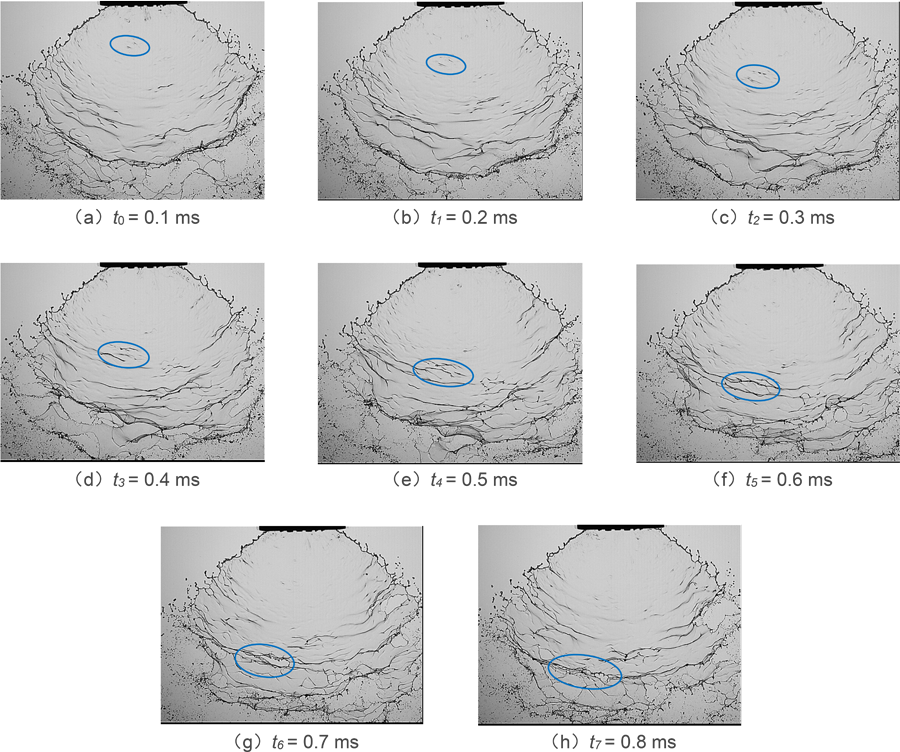
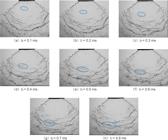
The temporal evolution of instability wave structures during water atomization is shown in Fig. 3. An atomization cycle in water sprays is defined as the process from the initial formation of an instability wave on the liquid sheet to its complete disintegration and breakup. These instability waves typically appear as curved or sinusoidal structures that develop into ligaments and eventually fragment into droplets (Post & Hewitt, 2018). By contrast, the instability–breakup process in oil-based emulsion sprays occurs over a shorter time scale than that in water, as observed from high-speed imaging sequences. In other words, perforation-induced breakup causes the liquid sheet to fragment earlier. This behavior is associated with the presence of the oil phase in the emulsion, which affects the development of surface instabilities on the liquid sheet. Consequently, sheet instability and breakup occur earlier. Because perforation fragmentation alters the timing of instability initiation, it affects the resulting droplet characteristics.
Dynamic behavior of holes in emulsion liquid sheets
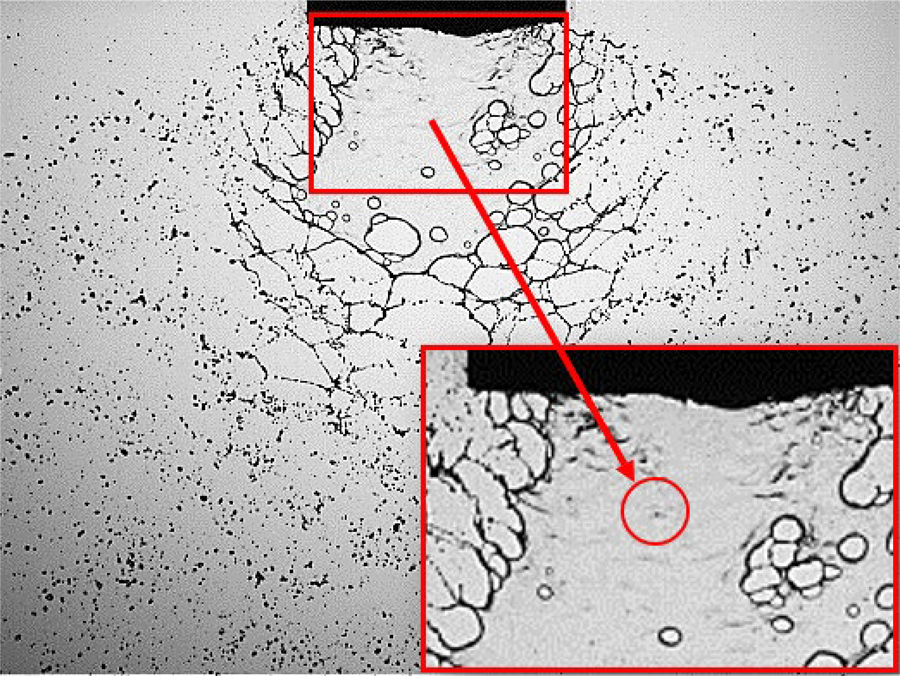
The presence of hydrophobic phases in oil-based formulations significantly increases the complexity of the atomization and breakup process. This results in significant changes to the instability structures during liquid-sheet disintegration, thereby inducing the formation of perforations. A detailed analysis of the early-stage instability of these perforations can reveal the underlying dynamic behavior of the breakup process. In Fig. 4, the initial perforations formed during emulsion atomization are indicated by a rectangle outlined in red. Within this rectangle, faint spot-like shadows indicate the presence of pre-perforation
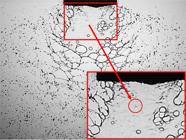
structures, where perforations have not yet fully developed. When the oil phase possesses sufficient size and hydrophobicity, it induces weak points on the liquid sheet, thus triggering the formation of pre-perforations. As sheet instability intensifies, these pre-perforations evolve into fully developed perforations. The presence of perforations significantly affects the instability evolution of the liquid sheet and the mechanism of droplet formation. Once perforations emerge, droplets are generated from the breakup of mesh-like ligaments formed through perforation coalescence. Therefore, oil-based emulsions atomize through fundamentally different fluid breakup mechanics than water.
To accurately describe the more complex kinematic model of perforations, a visual analysis of perforation motion was conducted. The midpoint of the nozzle outlet was defined as the origin of the coordinate system, with the horizontal and vertical positions of the perforation center denoted as the x- and y-coordinates, respectively (Gong et al., 2021).
Where:
xm and ym represent the horizontal and vertical coordinates of the perforation center, respectively;
xL and xR denote the horizontal coordinates of the left and right edge points of the perforation, respectively, and
yU and yD denote the vertical coordinates of the upper and lower edge points of the perforation, respectively.
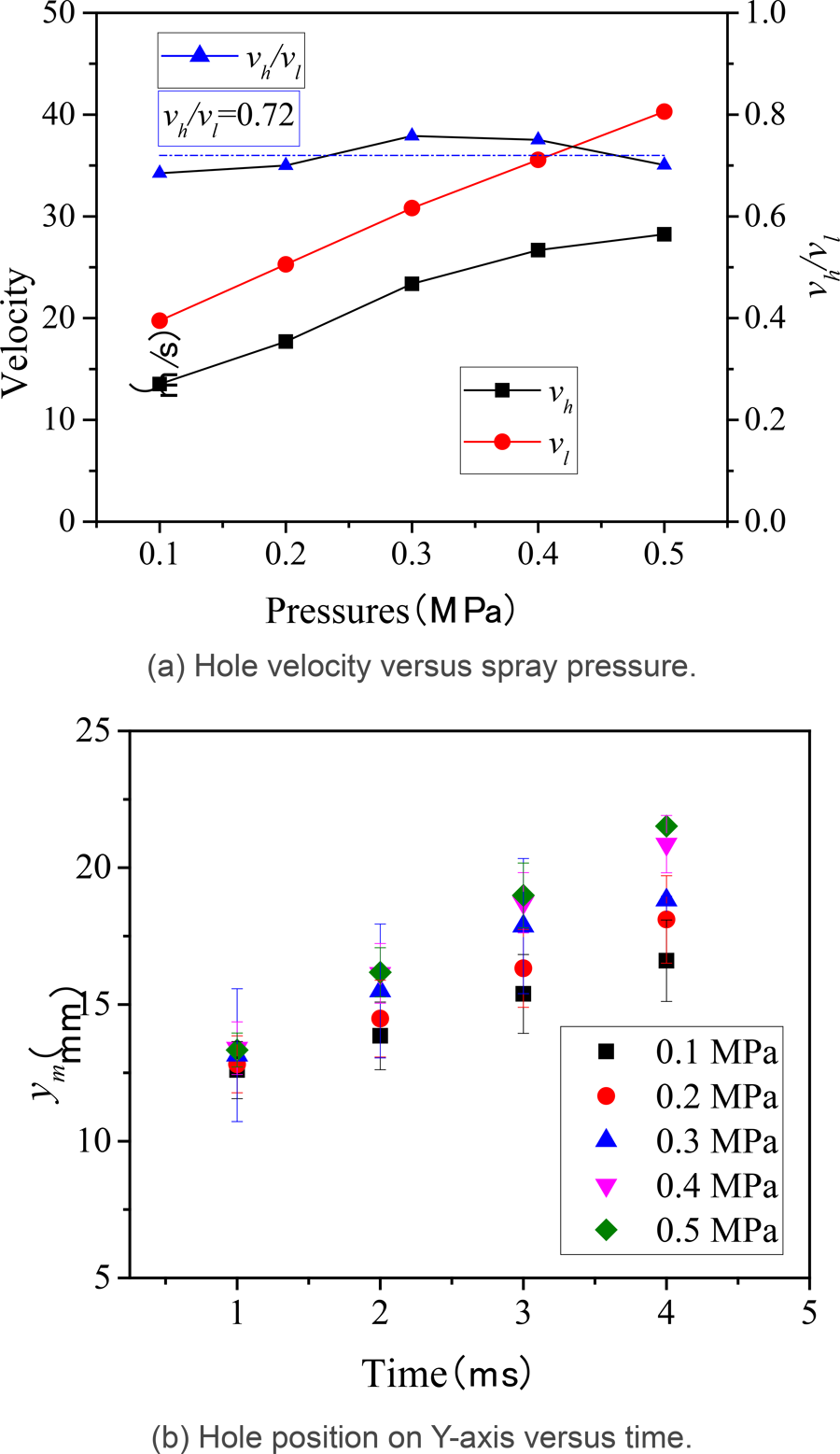
The variation in the non-uniform expansion velocity of the perforations is shown in Fig. 5 indicating that during the downstream evolution of the perforations, the perforation velocity across different positions and times exhibited a trend similar to that of the liquid-sheet flow. Specifically, under a constant spray pressure, the downward acceleration of the perforations remained relatively constant at 4.26 m/s2. When the spray pressure increased from 0.1 to 0.5 MPa, the liquid-sheet velocity increased from 20 to 40 m/s, which represents a 50% increase, whereas the velocity at the perforation center increased from 13.5 to 28 m/s, which corresponds to a 52% increase. These results indicate a strong consistency and correlation between the perforation and liquid-sheet velocities. As the spray pressure changed, the ratio of the perforation velocity to the sheet velocity remained at approximately 0.72.
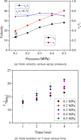
Velocity of hole motion. Error bars represent standard deviation from repeated measurements (N = 5).
Where:
vh is the velocity (in m/s) of the perforation center, and
vi is the liquid-sheet velocity.
Equation (3) indicates that the liquid-sheet momentum dominates the evolution of perforation velocity and is inextricably related to the sheet velocity. However, owing to the complex effects of the Marangoni effect and the self-organized diffusion of droplets on the liquid-sheet surface, the perforation velocity did not strictly align with the liquid-sheet velocity.
Kinematics of droplets formed during primary atomization
Droplets velocity at bottom of liquid sheet
Oil-based emulsion spraying enhances droplet velocity. A detailed analysis of droplet velocity in the liquid-sheet breakup region can provide deeper insights into the atomization mechanisms and elucidate the kinematic behavior of droplets, which critically governs the optimization of spray performance for field applications (Jia et al., 2008). However, both experimental and numerical characterizations of droplets generated from the primary atomization of complex multiphase liquid sheets remain as significant challenges (Merola et al., 2012). The intricate fluid dynamics involved in liquid-sheet rupture results in regions dominated by ligaments, dense droplet clusters, and nonspherical droplets, which hinder the experimental measurement of droplet properties in the breakup zone. In this study, visualization techniques are employed to measure the kinematic characteristics of droplets within mm-scale proximity to the actual rupture site to investigate their behavior under different breakup mechanisms.
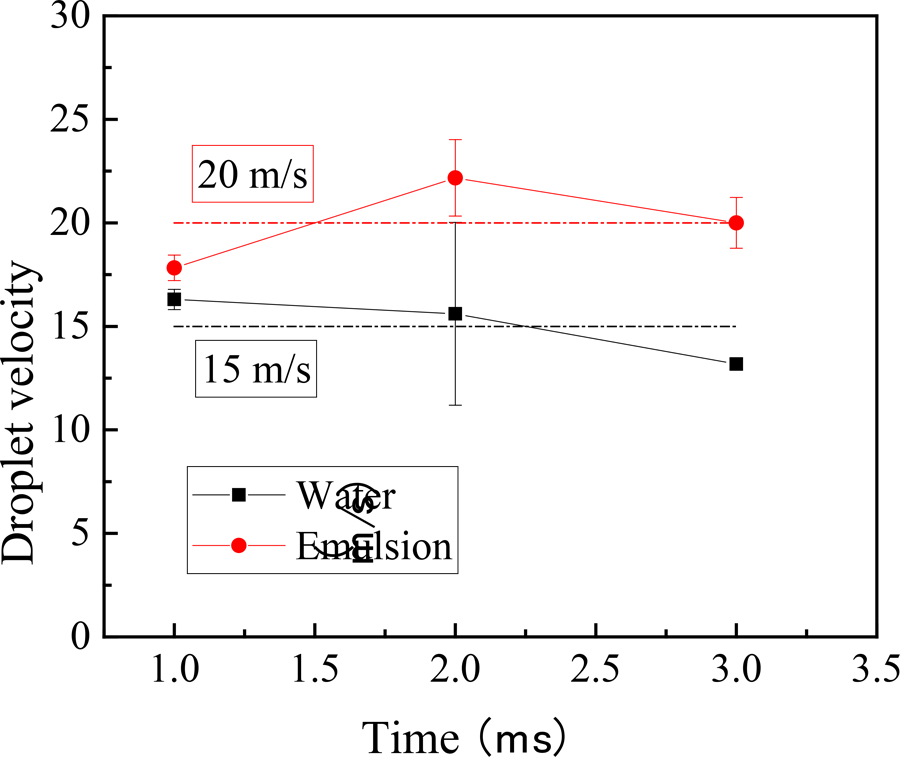
The initial velocities of droplets formed during breakup at the bottom of the liquid sheet for both water- and oil-based emulsion sprays are shown in Fig. 6. Owing to the high-speed and transient nature of the spray process, only short-duration variations can be captured. Therefore, the average initial droplet velocities were calculated to analyze the initial droplet motion. As shown in Fig. 6, the droplet velocity decreased as the droplets propagated further, regardless of whether the spray liquid was water- or oil-based emulsion. The average initial velocity of droplets formed by emulsion breakup was approximately 20 m/s, whereas that of water atomization was approximately 15 m/s, thereby indicating that oil-based emulsions significantly increased the droplet velocity.

Droplet velocity during downstream atomization versus time. Error bars represent standard deviation from repeated measurements (N = 5).
During oil-based emulsion atomization, the resulting droplet sizes are generally larger than those generated during water atomization (Yang et al., 2022). These larger droplets have greater inertial force, which directly contributes to the observed increase in droplet velocity. The enhanced velocity significantly improves the penetration capability of the droplets, thereby allowing emulsion-based sprays to effectively reach target surfaces and increasing pesticide utilization efficiency. This characteristic is significant in agricultural pesticide applications, as it enhances the effectiveness of pesticide delivery and reduces chemical waste and environmental pollution.
Droplets velocity at liquid-sheet rim
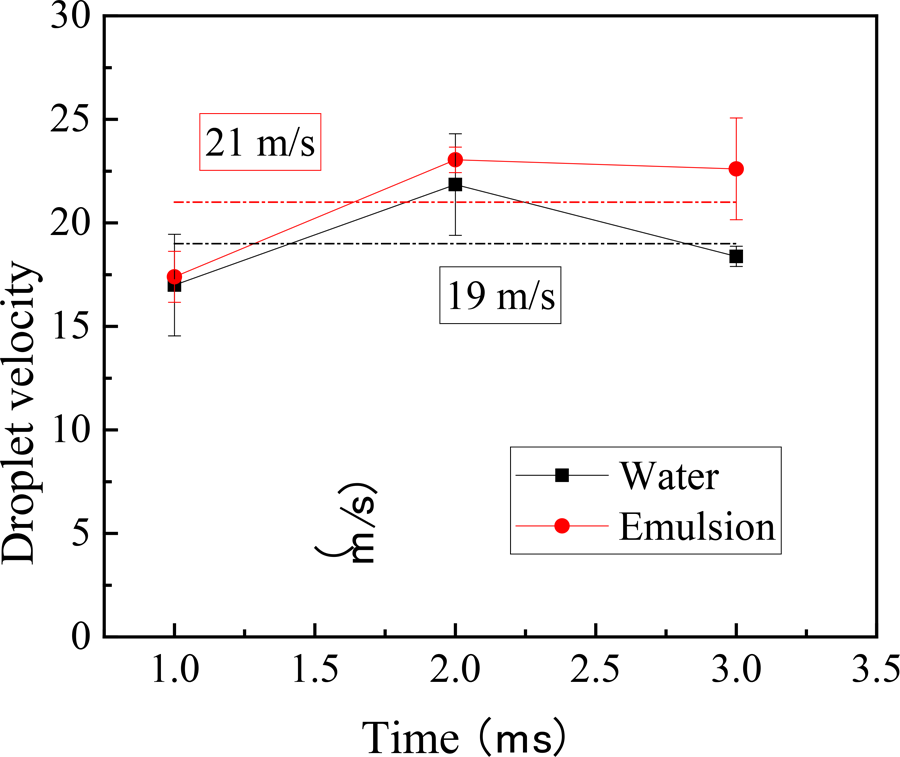
Because the breakup mechanism at the liquid-sheet rim differs from that at the bottom and the resulting droplet sizes vary significantly, the droplet motion at the upstream rim of the sheet was monitored, in addition to analyzing droplets formed downstream. As shown in Fig. 7, no significant difference in velocity were observed between the droplets formed at the rim
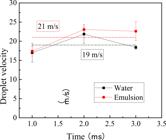
Droplet velocity during liquid-sheet rim atomization versus time. Error bars represent standard deviation from repeated measurements (N = 5).
and bottom of the liquid sheet, although the rim-generated droplets were generally larger. This is attributable to the higher horizontal velocity of droplets formed at the upstream rim as compared with that formed downstream, which reduced their downward velocity. Contrastingly, droplets originating from the bottom of the sheet exhibited negligible horizontal displacement.
Similar to the velocity trend observed for droplets at the bottom of the liquid sheet, the velocities of droplets formed from both oil-based emulsion and water atomization at the sheet rim slightly decreased over time. Additionally, during rim atomization, the velocity of droplets formed from the emulsion was approximately 15% higher than that of droplets formed from water. This result further confirms that droplets generated from oil-based emulsion atomization maintain significantly higher velocities than their water counterparts, thus highlighting the velocity advantage of emulsion-based sprays in the atomization process.
Conclusions
This study systematically analyzed the kinematic characteristics of water- and oil-based emulsion sprays during atomization, which revealed significant differences in liquid-sheet instability, perforation expansion, and droplet formation. Significant differences were observed between the kinematic behaviors of oil-based emulsions and water during atomization, particularly in the mechanisms of liquid-sheet breakup and droplet formation. The formation and expansion of perforations in emulsion atomization promoted earlier fragmentation of the liquid sheet and governed the resulting droplet motion.
In emulsion atomization, the rapid formation and expansion of perforations reduced the liquid-sheet breakup time by approximately 33% compared with water atomization, thereby resulting in significantly increased droplet velocities. The average velocity of droplets formed from oil-based emulsions reached 20 m/s, compared with 15 m/s for water, thus highlighting the atomization advantage of emulsion sprays. Spray pressure directly affected the motion of both the liquid sheet and perforations. As the spray pressure increased from 0.1 to 0.5 MPa, the liquid-sheet and perforation-center velocities increased by 50% and 52%, respectively, thereby underscoring the critical role of sheet momentum in the evolution of perforation dynamics. Additionally, the droplets formed in emulsion sprays exhibited greater inertial force and penetration capability, thereby highlighting their potential significance for droplet transport and canopy interaction processes in agricultural pesticide applications.
Acknowledgments
The author thanks the Faculty of Mechatronic Engineering at Taizhou University for the use of its facilities and for its support.
References
-
Appah, S., Jia, W., Ou, M., Wang, P., & Asante, E. A. (2020). Analysis of potential impaction and phytotoxicity of surfactant-plant surface interaction in pesticide application. Crop Protection, 127, 104961. https://doi.org/10.1016/j.cropro.2019.104961
» https://doi.org/10.1016/j.cropro.2019.104961 -
Chen, R., Li, H., & Wang, J. (2021). Analysis of droplet characteristics and kinetic energy distribution for fixed spray plate sprinkler at low working pressure. Transactions of the ASABE, 64 (2), 345-354. https://doi.org/10.13031/trans.14139
» https://doi.org/10.13031/trans.14139 -
Cryer, S. A., & Altieri, A. L. (2017). Role of large inhomogeneities in initiating liquid sheet breakup in agricultural atomisation. Biosystems Engineering, 163, 103-115. https://doi.org/10.1016/j.biosystemseng.2017.08.020
» https://doi.org/10.1016/j.biosystemseng.2017.08.020 -
Gong, C., Li, D., Kang, C., & Wang, Y. (2021). Visualisation of the evolution of perforations in oil-based emulsion sheets formed by flat-fan spray nozzles. Biosystems Engineering, 207, 68- 80. https://doi.org/10.1016/j.biosystemseng.2021.04.005
» https://doi.org/10.1016/j.biosystemseng.2021.04.005 -
Gong, C., Li, D., & Kang, C. (2022). Effect of oil-based emulsion on air bubbles in the spray sheet produced through the air-induction nozzle. Pest Management Science, 78 (12), 5347- 5357. https://doi.org/10.1002/ps.7175
» https://doi.org/10.1002/ps.7175 -
Goual, L., Zhang, B., & Rahham, Y. (2021). Nanoscale characterization of thin films at oil/water interfaces and implications to emulsion stability. Energy & Fuels, 35 (1), 444-455. https://doi.org/10.1021/acs.energyfuels.0c03466
» https://doi.org/10.1021/acs.energyfuels.0c03466 -
Heydarpoor, S., & Famili, N. M. (2024). Polygon model for solution of non-linear velocity gradient of interface and asymmetric break-up of droplet. Physics of Fluids, 36 (1), 16. https://doi.org/10.1063/5.0178445
» https://doi.org/10.1063/5.0178445 -
Hilz, E., Vermeer, A. W. P., & Cohen Stuart, M. A. (2012). Mechanism of perforation based on spreading properties of emulsified oils. Atomization and Sprays, 22 (12), 1053-1075. https://doi.org/10.1615/AtomizSpr.2013006728
» https://doi.org/10.1615/AtomizSpr.2013006728 -
Hua, L., Li, H., Jiang, Y. (2021). Axis-switching behavior of liquid jets issued from non-circular nozzles under low-intermediate pressure. Applied Engineering in Agriculture,37 (2). https://doi.org/10.13031/aea.14245
» https://doi.org/10.13031/aea.14245 -
Hu, Y., Chen, Y., Wei, W., Hu, Z., & Li, P. (2021). Optimization design of spray cooling fan based on CFD simulation and field experiment for horticultural crops. Agriculture, 11 (6), 566. https://doi.org/10.3390/agriculture11060566
» https://doi.org/10.3390/agriculture11060566 -
Jasim, N. M. (2023). Probabilistic derivation of droplet velocity using quadrature method of moments. Open Engineering, 13 (1), 367-380. https://doi.org/10.1515/eng-2022-0407
» https://doi.org/10.1515/eng-2022-0407 -
Jia, W., Li, P., Qiu, B., Fu, X., & Xu, X. (2008). Experimental investigation of droplet diameter and velocity distributions in agricultural electrostatic sprays. Transactions of the Chinese Society of Agricultural Engineering, 24 (2). https://www.researchgate.net/publication/296942564
» https://www.researchgate.net/publication/296942564 -
Ji, X., Wang, A., & Wei, X. (2021). Precision control of spraying quantity based on linear active disturbance rejection control method. Agriculture, 11 (8), 761. https://doi.org/10.3390/agriculture11080761
» https://doi.org/10.3390/agriculture11080761 -
Liao, J., Hewitt, A. J., Wang, P., Luo, X., & O'Donnell, C. (2019). Development of droplet characteristics prediction models for air induction nozzles based on wind tunnel tests. International Journal of Agricultural and Biological Engineering, 12 (6), 1 - 6. https://doi.org/10.25165/j.ijabe.20191205.5014
» https://doi.org/10.25165/j.ijabe.20191205.5014 -
Li, S., Chen, C., Wang, Y., Kang, F., & Li, W. (2021). Study on the atomization characteristics of flat fan nozzles for pesticide application at low pressures. Agriculture, 11 (4), 309. https://doi.org/10.3390/agriculture11040309
» https://doi.org/10.3390/agriculture11040309 -
Merola, S. S., Tornatore, C., Marchitto, L., Valentino, G., & Corcione, F. E. (2012). Experimental investigations of butanol-gasoline blends effects on the combustion process in a SI engine. International Journal of Energy and Environmental Engineering, 3 (1), 6. https://doi.org/10.1186/2251-6832-3-6
» https://doi.org/10.1186/2251-6832-3-6 -
Peng, Y., & Zhang, H. (2024). A predictive model for the initial droplet size and velocity distribution of flood discharge atomization. Journal of Hydraulic Engineering, 150 (3), 04024015. https://doi.org/10.1061/JHEND8.HYENG-13695
» https://doi.org/10.1061/JHEND8.HYENG-13695 -
Post, S. L., & Hewitt, A. J. (2018). Flat-fan spray atomization model. Transactions of the ASABE, 61 (4), 1249-1256. https://doi.org/10.13031/trans.12572
» https://doi.org/10.13031/trans.12572 -
Qin, L. Z., Yi, R., & Yang, L. J. (2017a). Theoretical breakup model in the planar liquid sheets exposed to high-speed gas and droplet size prediction. International Journal of Multiphase Flow, 97, 15- 26. https://doi.org/10.1016/j.ijmultiphaseflow.2017.09.010
» https://doi.org/10.1016/j.ijmultiphaseflow.2017.09.010 -
Qin, W. C., Qiu, B. J., Xue, X. Y., Chen, C., Xu, Z. F., & Zhou, Q. Q. (2016). Droplet deposition and control effect of insecticides sprayed with an unmanned aerial vehicle against plant hoppers. Crop Protection, 85, 79-88. https://doi.org/10.1016/j.cropro.2016.03.018
» https://doi.org/10.1016/j.cropro.2016.03.018 -
Qin, W. C., Xue, X. Y., Cui, L. F., Zhou, Q. Q., & Chang, F. L. (2017b). Optimization and test for spraying parameters of cotton defoliant sprayer. Journal of Chinese Agricultural Mechanization, 38 (4), 50-57. https://doi.org/10.3965/j.ijabe.20160904.2125
» https://doi.org/10.3965/j.ijabe.20160904.2125 -
Shrestha, K., Van Strien, J., Singh, N., & Inthavong, K. (2020). Primary break-up and atomization characteristics of a nasal spray. PLoS ONE, 15 (8), e0236063. https://doi.org/10.1371/journal.pone.0236063
» https://doi.org/10.1371/journal.pone.0236063 -
Siddharth, K. S. (2021). Dynamics of annular liquid sheets using feature correlation velocimetry (FCV). In S. Singh (Ed.), Advances in engineering design: Select Proceedings of FLAME (pp. 211-219). Springer Singapore. https://doi.org/10.1007/978-981-33-4684-0_22
» https://doi.org/10.1007/978-981-33-4684-0_22 -
Subramani, N., Sangeetha, M., Kengaiah, V., & Prakash, S. (2022). Numerical modeling on dynamics of droplet in aircraft wing structure at different velocities. Aircraft Engineering and Aerospace Technology, 94 (4), 812-823. https://doi.org/10.1108/AEAT-04-2021-0115
» https://doi.org/10.1108/AEAT-04-2021-0115 -
Tang, P., Li, H., Issaka, Z., & Chen, C. (2017). Impact forces on the drive spoon of a large cannon irrigation sprinkler: Simple theory, CFD numerical simulation and validation. Biosystems Engineering, 159, 1-9. https://doi.org/10.1016/j.biosystemseng.2017.04.005
» https://doi.org/10.1016/j.biosystemseng.2017.04.005 -
Vankeswaram, S. K., & Deivandren, S. (2022). Size and velocity characteristics of spray droplets in the near region of liquid film break-up in a swirl atomizer. Experimental Thermal and Fluid Science, 130, 110505. https://doi.org/10.1016/j.expthermflusci.2021.110505
» https://doi.org/10.1016/j.expthermflusci.2021.110505 -
Volkov, R., Tkachenko, P., Podgornaya, E., & Strizhak, P. (2024). Convection velocities in droplets before and after their collisions. Physics of Fluids, 36 (1), 22. https://doi.org/10.1063/5.0175753
» https://doi.org/10.1063/5.0175753 -
Li, X., Chen, L., Tang, Q., Li, L., Cheng, W., Hu, P., & Zhang, R. (2022). Characteristics of the spatial distribution of droplet size and velocity with different adjuvants in nozzle spraying. Agronomy, 12 (8), 1960. https://doi.org/10.3390/agronomy12081960
» https://doi.org/10.3390/agronomy12081960 -
Yang, W., Jia, W., Ou, M., Zhong, W., Jiang, L., & Wang, X. (2022). Effect of physical properties of an emulsion pesticide on the atomisation process and the spatial distribution of droplet size. Agriculture, 12 (7), 949. https://doi.org/10.3390/agriculture12070949
» https://doi.org/10.3390/agriculture12070949 -
Yue, S., Zhang, H., Li, H., Chen, Y., & Ozelkan, E. (2017). Development of a laser-guided, embedded-computer-controlled, air-assisted precision sprayer. Transactions of the ASABE, 60 (6), 1827-1838. https://doi.org/10.13031/trans.12455
» https://doi.org/10.13031/trans.12455 -
Zeng, Q., Zhu, D. Z., Qian, S., Xu, H., Feng, J., & Ye, H. (2024). Size and velocity correlation for splashing droplets generated by jet impingement. Experiments in Fluids, 65 (4), 16. https://doi.org/10.1007/s00348-024-03795-z
» https://doi.org/10.1007/s00348-024-03795-z -
Zhang, C., Long, Y. H., Wang, Q. P., Li, J. H., An, H. M., & Wu, X. M. (2019). The effect of preharvest 28.6% chitosan composite film sprays for controlling soft rot on kiwifruit and its defence responses. Horticultural Science, 46 (4), 158-166. https://doi.org/10.17221/84/2018-HORTSCI
» https://doi.org/10.17221/84/2018-HORTSCI -
Zhang, Y., Yuan, S., & Gao, Y. (2023). Spatial distribution and transient evolution of sub-droplet velocity and size in ultrasonic atomization. Experimental Thermal and Fluid Science, 142, 110761. https://doi.org/10.1016/j.expthermflusci.2022.110761
» https://doi.org/10.1016/j.expthermflusci.2022.110761
-
Informed Consent Statement:
Informed consent was obtained from all participants involved in the study.
-
Data Availability Statement:
The data presented in this study are available in the article.
-
Funding:
This study was funded by the Research Startup Fund of Taizhou University (grant no. TZXYQD2024A025) and the Taizhou Science and Technology Support Plan Project (grant no. TS202503).
Edited by
-
Area Editor:
João Paulo Arantes Rodrigues da Cunha
The data presented in this study are available in the article.