 LEADING DIGITALISATION IN K-12 EDUCATION: A PRACTICE-ORIENTED APPROACH TO EXPANDING ACCESS AND USE OF DIGITAL TECHNOLOGIES
ABSTRACT:
This study explores how school organisers and school leaders collaboratively work to expand access to and the use of digital technologies in K-12 education, viewed through a leadership and practice-oriented lens. Using the theory of practice architecture, the study analyses how these practices unfold in three Swedish municipalities. The data materials were collected through document analysis, participant observations, interviews, and surveys. Key findings reveal the importance of ensuring that digital technologies are both accessible and suited to the purpose. While school leaders reported successful recent collaboration with school organisers and IT departments, they also highlighted challenges, such as reduced staff capacity affecting dialogue and digital progress. Misapplications of technology, such as non-user-friendly software, were shown to increase workload and decrease motivation among teachers. School organisers emphasised the need for leaders to understand the full scope of digitalisation, although they also acknowledged that school leaders may struggle to prioritise digital leadership training. This study offers valuable insights for educational leaders aiming to enhance digitalisation in schools through collaborative and strategic leadership.
Keywords:
Collaboration; Digital technology; K-12 education; Leadership; Practice
RESUMO:
Este estudo explora como os gestores educacionais e os líderes escolares trabalham colaborativamente para ampliar o acesso e o uso de tecnologias digitais na educação básica, sob uma perspectiva de liderança e orientada para a prática. Utilizando a teoria da arquitetura da prática como ferramenta analítica, o estudo analisa como essas práticas se desenvolvem em três municípios suecos. Os dados foram coletados por meio de análise documental, observações participantes, entrevistas e questionários. As principais conclusões revelam a importância de garantir que as tecnologias digitais sejam tanto acessíveis quanto adequadas aos seus propósitos. Embora os líderes escolares tenham relatado uma colaboração bem-sucedida com os gestores educacionais e os departamentos de TI nos últimos anos, também destacaram desafios, como digitalização. O uso inadequado da tecnologia, como softwares pouco amigáveis, mostrou-se responsável por aumentar a carga de trabalho e reduzir a motivação dos professores para utilizar tecnologias digitais no ensino. Os gestores educacionais enfatizaram a necessidade de que os líderes compreendam plenamente o que a digitalização envolve, embora reconheçam que os líderes escolares possam ter dificuldades em priorizar a formação em liderança digital. O estudo oferece insights valiosos para líderes educacionais que buscam fortalecer a digitalização nas escolas por meio de uma liderança colaborativa e estratégica.
Palavras chave:
Colaboração; Tecnologia digital; Educação básica; Liderança; Prática
RESÚMEN:
Un estudio explora cómo los organizadores educativos y los líderes escolares colaboran para ampliar el acceso y el uso de tecnologías digitales en la educación básica, desde una perspectiva de liderazgo y orientada a la práctica. Utilizando la teoría de la arquitectura de la práctica como herramienta analítica, el estudio analiza cómo se desarrollan estas prácticas en tres municipios suecos. Los datos fueron recopilados mediante análisis de documentos, observaciones participantes, entrevistas y encuestas. Los principales hallazgos revelan la importancia de asegurar que las tecnologías digitales sean tanto accesibles como adecuadas para su propósito. Aunque los líderes escolares informaron sobre una colaboración exitosa con los organizadores educativos y los departamentos de TI en los últimos años, también destacaron desafíos, como la reducción del personal que afecta el diálogo y el progreso digital. El uso inadecuado de la tecnología, como el software poco intuitivo, mostró un aumento en la carga de trabajo y una disminución en la motivación de los docentes para utilizar herramientas digitales en la enseñanza. Los organizadores educativos enfatizaron la necesidad de que los líderes comprendan plenamente el alcance de la digitalización, aunque reconocieron que los líderes escolares pueden tener dificultades para priorizar la formación en liderazgo digital. El estudio ofrece valiosos aportes para los líderes educativos que buscan fortalecer la digitalización en las escuelas mediante un liderazgo estratégico y colaborativo.
Palabras clave:
Colaboración; Tecnología digital; Educación básica; Liderazgo; Práctica
INTRODUCTION
As in society, access to digital technologies in K-12 education (i.e., preschool, compulsory school, and upper-secondary school in Sweden) continues to increase rapidly. This new reality creates a need to understand how and why digital technologies can be used in the K-12 classroom as well as how these technologies should be applied in teaching and learning (Agélii Genlott, 2020).
The rapid digital transformation of education over recent decades has created a growing need for digital competence-understood as the confident and critical use of digital technologies for learning, work, and participation in society (Ferrari, 2013)-in both schools and workplaces, where such competence is now essential (Ferrari, 2013; Vuorikari et al., 2022). This is seen in policy documents, which strongly stress the need for students to acquire digital competence and digital skills in school in order for them to be prepared for continued studies and future work.
Digitalisation is reshaping society by integrating digital technologies into daily life and professional activities (Nunes & Malagri, 2024). As defined by the Organisation for Economic Co-operation and Development OECD (2019), digitalisation involves the transformation of existing practices and the creation of new practices, calling for individuals to develop new digital competencies. In education, digitalisation is both a necessity and a challenge. Schools are expected not only to integrate technology effectively but also to foster students’ digital competence to prepare them for future demands in society and the labour market. As the Swedish Government (SOU, 2017:35) highlights, investing in education and digital skills is fundamental for a successful transition to a digital society.
Education prepares individuals to make sense of the world and to act within it purposefully (Kemmis et al., 2014; Biesta, 2015). From this perspective, digital technologies are not merely tools for instruction but part of a broader pedagogical and societal transformation. Their use requires clear intent, pedagogical leadership, and systemic planning. While each school has its own context, municipalities and schools often share enough common ground to enable the dissemination of effective practices.
This paper therefore explores and analyses digitalisation in K-12 education not as an isolated school-level issue, but as an institutional process that involves coordination, leadership, and shared strategies at multiple levels. Leadership plays a central role in enabling access to and application of digital technologies in education, framing vision, building capacity, and creating equitable conditions for technology use. By investigating these leadership practices, this study offers insight into how digitalisation efforts can be supported and sustained across school systems.
This paper aims to explore and analyse leading practices in the collaborative efforts of school organisers and school leaders to enhance access to and the use of digital technologies for students in K-12 education in the Swedish context. The research questions are:
-
What occurs in leading practice during the collaborative efforts of school organisers and school leaders to expand access to and the application of digital technologies in K-12 education?
-
What elements enable and constrain leading practice in these collaborative efforts to broaden access to and the use of digital technologies in K-12 education?
BACKGROUND
Digital technologies have become drivers of global change, impacting both society and individuals in various ways (Libâneo, 2004). However, the use of digital technologies, particularly in connection with education, is not a new concept. This expansion has been seen globally. In Europe, over 40 national and local initiatives exist to enhance the learning process as digital technologies expand across these countries. Further, these initiatives span three generations of digitalisation efforts, each with a different focus, for example, access to infrastructure, pedagogical integration, and classroom implementation (Conrads et al., 2017; Timotheou et al., 2023).
In initial efforts, the first phase of digital technology expansion, to integrate digital technologies into education, before 2002, the focus was on infrastructure development, with access being measured by the number of computers per student. The introduction of the Lisbon policy in 2000 and the eLearning Action plan in 2002 shifted the focus from operational plans to strategic objectives. From 2002 to 2010, the second phase of digital technology expansion emphasised the digital competence of both teachers and students. While there has been significant progress in terms of improving the computer-to-student ratio and access to broadband in recent years, teachers still lack the digital competence and support necessary to teach effectively with digital technologies (Iacobaeus et al., 2019). Teachers’ professional digital competence, their access to and use of digital technologies, and the support from school leaders all play a crucial role in influencing students’ learning and development (Reis-Andersson, 2023, 2024). However, strategic objectives and policy intentions have often failed to translate into effective operational strategies, and the support provided to teachers has not always met their actual needs (Conrads et al., 2017; Haleem et al., 2022; 2024; Timotheou et al., 2023).
In the third phase of expanding digital technologies in education, which began after 2010, the main focus was to support and enhance teachers’ ability to integrate digital technologies with the focus of supporting teaching and learning for students (Conrads et al., 2017; Haleem et al., 2022). These researchers highlight evidence showing positive outcomes for students when digital technologies are employed in teaching, emphasising that teachers’ attitudes and pedagogical competencies are essential for the effective use of digital technologies in education (Conrads et al., 2017; Haleem et al., 2022; Timotheou et al., 2023). Further, the importance of the role of the school leader has also been in focus to support the use and advancement of digital technologies. In the same way that the school leader's perspective has been in focus, the school organiser has been seen as important for supporting digital technologies in schools.
Thus, to drive the expansion of access to and use of digital technologies in K-12 education, school organisers and school leaders must both oversee digitalisation practices while collaborating and supporting one another. Additionally, leadership has been shown to directly affect how well teachers are able to integrate digital technologies into their teaching. A’mar and Eleyan (2022) found that a school leader’s digital leadership can positively influence teachers’ motivation and actual use of technology in the classroom. When school leaders are actively involved in digital practices, they foster a climate that encourages innovation among teachers.
Digital innovation in schools also depends on how well leaders support and share successful practices. Agélii Genlott, Grönlund, Viberg, and Andersson (2023) demonstrated that when school leaders lead dissemination efforts thoughtfully, it can accelerate the adoption of effective digital methods and enhance the impact across the organisation. This highlights the need for leadership that goes beyond implementation and focuses on meaningful collaboration and scaling of innovation.
Furthermore, the role of technology coordinators in schools is crucial. Avidov-Ungar and Shamir-Inbal (2017) point out that these coordinators often act as agents of change by supporting teachers through both technical guidance and pedagogical leadership. Their specific knowledge in integrating technology into teaching, based on the TPACK framework (Koehler & Mishra, 2009; Petko et al., 2025), is essential for long-term success in digitalisation.
At the policy level, local interpretations can heavily affect national goals. Bergstrand (2022) emphasises that values embedded in education policies are often reinterpreted at the municipal or school level, which influences how digital strategies are carried out in practice. This variation across contexts underlines the importance of strong communication and shared vision between all levels of the school system.
In response to unexpected disruptions in K-12 education, school organisers and school leaders have been compelled to adopt new strategies to ensure digital readiness. The shift to remote learning brought unique challenges for teachers, parents, and students alike. Ewing and Cooper (2021) explored disruptions in the Australian context and found that leadership support was crucial in facilitating a smooth transition to technology-enabled education.
Strong leadership networks can also help address these challenges by promoting knowledge exchange and mutual support. Harris, Azorín, and Jones (2021) argue that network leadership is becoming an essential model in K-12 education, especially when dealing with complex issues like digitalisation.
Finally, while positive attitudes and leadership are essential, digitalisation efforts also face risks. Scherer, Siddiq, and Tondeur (2019) found that teachers’ use of digital technology varies, and that attitudes toward new media, and the level of support from school organisers and school leaders influence this use. Wang and Zhao (2023) highlight similar concerns, pointing to “technostress” as a barrier that discourages teachers from using digital technologies unless clear support and leadership are present. These findings show the need for leaders to reduce stressors and promote healthy, supportive environments for digital growth.
School leaders, therefore, must engage not only in vision-setting and management but also in listening to teachers, shaping professional learning, and guiding change through inclusive, research-informed leadership (Woodcock & Hardy, 2022).
THEORY OF PRACTICE ARCHITECTURE
A practice-oriented approach (Engeström, 1999; Engeström & Sannino, 2010; Kemmis et al., 2014; Schatzki, 2002) has been used in this study. The theory of practice architecture is built on Schatzki et al. (2001) theory of practices and was further developed by Kemmis et al. (2014). This developed theory makes it possible to focus more specifically on the practice and not on the individuals in the practice (Kemmis et al., 2014). This approach makes it possible to ask: What is going on in this practice? And why does it happen? Kemmis et al. (2014) use the concept of arrangements to refer to cultural-discursive, material-economic, and social-political conditions that both enable and constrain practices, shaping them while also being shaped by them. The theory of practice architecture is illustrated in Figure 1.
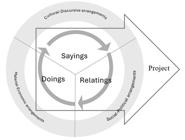
The language, activities, and relationships within practices are influenced or limited by the arrangements that shape the practice. These arrangements can be broad or specific. For instance, agreements and policies represent general arrangements, while specific arrangements may include concepts related to the digitalisation of education and digital competence. The digitalisation practices are both enabled and constrained by cultural-discursive, material-economic, and social-political arrangements. By identifying, describing, and analysing the elements that enable or constrain digitalisation practices in municipalities, valuable insights can be gained into how expressions, actions, and relationships are intertwined with leaders’ experiences, resources, and group solidarity.
The choice of using the theory of practice architecture (Kemmis et al., 2014) makes it possible to consider both internal and external conditions for expanding the access to and application of digital technologies in K-12 education. A practice is constituted by sayings, doings, and relatings shaped by cultural-discursive, material-economic, and social-political arrangements that enable and constrain the practice (Kemmis et al., 2014).
Leading practice
Leading practice emphasises the importance of what leaders express, how leadership is carried out, and the distinct forms of interaction that occur during leadership moments (Edwards-Groves et al., 2020). The scholars argue that people’s actions are not only described by what they do but also by what they say and how they interact with others and their environment. Leadership, however, is not limited to formal leadership roles. Rather, it is shaped through a practice that involves multiple participants in K-12 education (Kemmis et al., 2014). For instance, students can also engage in leading practice.
To understand the impact of leaders expanding access to and the use of digital technologies in their schools, as well as the elements that enable and constrain digitalisation in K-12 education, two digitalisation practices have been analysed. In this study, the analysis is conducted in two phases. The first phase involves identifying and describing the digitalisation practices. The second phase examines how cultural-discursive, material-economic, and social-political arrangements, both shaped by and shaping these practices, affect the enabling and constraining elements within digitalisation practices. This, in turn, influences the conditions and opportunities for expanding access to and application of digital technologies in K-12 education.
Thus, the theory is useful for providing insight into changes in education, for example, digitalisation processes that take place from a bottom-up perspective. By examining the arrangements that both influence and are influenced by practice, a clearer understanding of what facilitates and limits digitalisation in K-12 education can be developed.
METHOD
This chapter outlines the methodological foundation of the study, contextualised by the Digitalisation of the education system in the municipalities (DUVKOM) network and the participating municipalities, as well as the methodological choices that guided the study. The DUVKOM network was established as a collaborative initiative aimed at supporting the digital transformation of K-12 education across three Swedish municipalities. The project spanned approximately five years, during which municipal school organisers convened regularly, typically meeting one to three times per year to share insights on digitalisation efforts within schools. The network functioned as a forum for mutual learning. The participating municipalities―referred to as A, B, and C―varied in population size, school structure, and context, offering diverse perspectives on digitalisation efforts. Municipality A, the largest, has around 100,000 inhabitants and includes 77 preschools, 25 compulsory schools, and two upper secondary schools. Municipality B has approximately 25,000 inhabitants, with 17 preschools, 13 compulsory schools, and one upper secondary school. Municipality C, the smallest, has about 18,000 inhabitants and operates 13 preschools, nine compulsory schools, and one upper secondary school.
Building on this context, to explore leadership practices related to expanding access to and applying digital technologies in K-12 education, the study employed five data collection methods: participant observation, individual and group interviews, document analysis, and a survey. These methods were chosen to provide a comprehensive view of digitalisation processes across three municipalities, aligning with a practice-oriented theoretical framework (Kemmis et al., 2014). This study focused on qualitative data to explore the situated and evolving nature of leadership practices within the schools (Cohen et al., 2011, 2017). The survey included both Likert-scale statements and open-ended questions; however, only the qualitative, open-ended responses were analysed. This methodological approach is grounded in the theory of practice architecture (Kemmis et al., 2014), which emphasises the significance of time- and space-bound contexts in shaping social practices. As Schatzki (2020) notes, objective time and space exist independently of human understanding, yet they form the conditions within which practices unfold, highlighting the importance of context in this design of the study.
Documents were used to support the overall research by offering context that might not be observable directly (Patton, 2015). These included local and notional digital strategies, municipal school policies, and implementation plans. Such documents helped draw connections between broader governmental objectives and local efforts in digital education. This analysis was instrumental in shaping the survey content for school leaders. As Brooks and Normore (2018) note, analysing documents in educational research requires careful attention to how formal and informal language conveys meaning. (Cf Bardin, 1977; Franco, 2020)
Semi-structured interviews (Bryman, 2006) were conducted with IT strategists during the years 2-4 of the project. These individuals served as key links between school organisers and school leaders, offering critical insights into how digital initiatives were unfolding in schools. These conversations, lasting 30-60 minutes, contributed valuable contextual knowledge (Patton, 2015). Examples of questions include: What digitalisation initiatives have you implemented so far, and why? How do you perceive the progress and functioning of the digitalisation efforts so far? What specific challenges have you encountered in the digitalisation work? What new opportunities do you see that digitalisation can bring to teaching and learning? What are your plans for continued digital development within your schools?
For the group interviews, four school leaders from each of the three municipalities were invited, ensuring representation across preschool, compulsory schools, and upper-secondary school levels. Examples of questions include: How do you perceive your collaboration with the education department regarding the digitalisation process? In what ways does the education department take your school’s needs and conditions into account when planning for digitalisation? Please provide examples. In what ways do you feel that your school “owns” the digitalisation work? Feel free to share examples. What happens when you and the department collaborate on digitalising the school? Can you provide examples of activities?
Observation is a common tool in education research. In this study, the researcher adopted the participant-as-observer role (Cohen et al., 2011), being an active member of the meetings while documenting events. This approach enabled a first-hand understanding of how digital transformation efforts were discussed and implemented among school organisers. By attending network meetings in three municipalities, the researcher observed discussions on strategies, experiences, and challenges related to digitalisation. As Player-Koro et al. (2018) suggest, such educational transformations are increasingly influenced by global narratives rather than strictly local or national polities.
A survey targeting school leaders was developed using insights from earlier meetings and document analyses. It aimed to capture their thoughts and actions regarding digitalisation in their schools. The questionnaire, tested and revised before distribution, included 15 questions: six demographic, five open-ended, and four Likert-scale-based items containing 29 statements. The survey, distributed via email, was accessible on multiple devices. Data collection took place over one month. Of the 157 leaders contacted, 96 responded.
Ethical considerations included the timing of the distribution of the questionnaire, the possible influence of school organisers on participants, and the balance between pre-existing relationships with interviewees and the objectivity of the study. Credibility and authenticity were crucial components of the research process and addressed aspects such as confirmability and transferability. During analysis, data from different sources were interpreted in relation to the sayings, doings, and relatings of school organisers and school leaders, meaning that the themes in the Results section reflect these practices rather than the individual data collection methods.
RESULTS
This chapter provides three examples of practices in three Swedish municipalities for digitalisation processes. Each example highlights a municipality where school organisers and school leaders collaborate, sharing responsibilities for increasing access to and implementing digital technologies in their schools. A narrative approach to gain a deeper understanding of how digital technologies are expanding in K-12 education and to explore the dynamics within each practice has been chosen. The method enables the presentation of statements, activities, and contextual relationships as they naturally occur. To clarify the terminology, “school organiser” and “school leader” are defined in this context. When referring to the digitalisation practices in municipalities, the terms “Practice A”, “Practice B”, and “Practice C” are used.
Practice A
In practice A, the school organisers described the importance of working with a checklist method to make clear what “every teacher should know” (School organisers). They explained that integrating digital technologies in the activities of municipal schools influences the infrastructure and requires digital competence. For example, digital technologies made it easier for teachers and students to work simultaneously on the same document. This was described by several participants and appeared consistently in the empirical material. The school organisers explained that increasing digital competence in schools should be concretised with a checklist, so teachers know what the school leaders expect concerning applying digital technologies in teaching. A checklist clarifies a teacher’s lowest level of digital competence and shows what “every teacher should know” (School organisers).
The school organisers described that they created a network for teachers, offering opportunities for teachers to share their knowledge and experiences to increase their teaching-related digital competencies, increasing opportunities for students to become producers of digital technologies. The school organiser highlighted that “students watch a lot of YouTube and play different games; they actually consume what digital technologies give them” (School organisers). They suggested that students should be able to use digital technologies to produce pictures, videos, and sounds. School organisers explained that, unfortunately, “in preschools, digital technologies have sometimes been used as a tool for childcare, for example, when colleagues were ill” (School organisers). As an initiative to enhance opportunities that empower students to transition from being consumers to becoming producers, the school organisers have established a teacher network. In this initiative, “everyone was forced to test the digital technologies: it sounds awful, but then you have to try the tool. You could not only lean against your colleague” (School organisers).
The school organisers also expressed that digital competence is key in the digitalisation of K-12 education, which should permeate the entire school’s chain of command. They pointed out that digital competence is an enabler or constraint of opportunities that digital technologies might bring in teaching, impacting equality within and among schools. One example, according to them, is when decisions need to be made. They stressed that acquiring knowledge becomes challenging when one is unaware of the specific gaps in their knowledge, which leads to “decision-makers sometimes saying no to something they do not know what they say no to” (School organisers). This challenge was mentioned by multiple participants, indicating its relevance across organisational levels.
In this case, networks for school organisers may be a way to increase digital competence. However, the school organisers also emphasised that collaboration in the educational system concerning digitalisation issues is lacking. They explained that “there is no structure made for how we should collaborate on digital technologies with other municipalities. Generally speaking, Swedish schools have more exchanges with other schools in Europe than IT exchanges within Sweden” (School organisers). They further elaborate on the idea that this lack might be attributed to Sweden’s considerable resources. Nevertheless, the entire educational system stands to benefit considerably through enhanced collaboration. At the same time, the school organisers expressed that “we need to get closer in our cooperation because one may sit on resources that we do not have” (School organisers).
The school leaders expressed that the school organiser’s digital competence plays a crucial role in the process of digitalising the schools because it may influence the school organiser’s support to schools, and “it can be a problem” (School leaders). Additionally, the school leaders emphasised that school organisers’ digital competence can substantially impact promoting equality within and among schools in the municipality.
Both school organisers and school leaders have concurred that teachers’ digital competence is crucial for selecting and applying digital technologies in teaching. The school organisers conducted a survey that revealed a deficit in the digital competence of teachers. Participants frequently returned to this issue, underlining the centrality of this finding in the data. This deficiency in digital competence could also become evident when students use tablets as a way to pass the time, and the parents asked why the application of digital technologies in schools is necessary. Based on the survey conducted by the school organisers, two decisions were reached. The initial decision, made in collaboration with school leaders and teachers, was to acquire digital technology for teachers to apply in their teaching. The selected digital technology was procured centrally. The decision was influenced by teachers’ feedback that
at big conferences, we have attended many fantastic workshops and learned how some software functions. However, when we were back in our schools, we received so much input that it became difficult to sort through it all, and as a result, there was nothing left (School organisers).
The necessity for digital competence prompted the second decision. Two workshops that teachers must attend have been established. In the first workshop, all teachers were encouraged to apply the purchased digital tool. School organisers pointed out that “everyone was forced - sounds awful - but you had to try the technology. You can not only not lean against a colleague and watch. Everyone was going to make try-outs” (School organisers). Following the initial workshop, teachers experimented with the technology in their teaching. The school organisers explained that, through both workshop trials and integration into teaching, “we got rid of a little bit of this fear that many teachers had; it is a kind of step over this wall that they had built” (School organisers). In the second workshop, teachers discussed their experiences with implementing the technology in their teaching. School organisers also emphasised the importance of sharing ideas, experiences, and best practices among themselves and school leaders. They pointed out that such collaborative efforts can take shape through networks involving schools and municipalities.
The school organisers explained that teachers need time to enhance their digital competence and effectively integrate digital technologies into teaching practice, thereby increasing the opportunity to enhance the quality of teaching, which has been described as a vital prerequisite. School organisers underlined that “digital technologies add quality in teaching if they are used correctly” (School organisers). Moreover, teachers might need to make adjustments in their teaching methods, underscoring the significance of allocating time for this purpose. Failing to allocate adequate time could result in decreased educational quality rather than its intended enhancement.
School organisers recognised and acknowledged that the expansion of digital technologies in schools necessitates digital competence, and that is why “we have a competence strategy that is revised every year, and it addresses some focus areas” (School organisers). They explained that digital competence may allow leaders and teachers to choose the right technologies to propose, apply them, and change their methods. It also clarifies for leaders and teachers their own knowledge of what is needed. However, school leaders experienced that “there is nobody responsible for increasing digital competence in schools, nobody on the school organiser level” (School leaders).
The school organisers stressed the significance of enhancing teachers’ digital competence, expanding opportunities for teachers to exchange their knowledge and experiences, and fostering a sharing culture. They explained that opportunities to participate in collegial learning, courses, workshops, and seminars are important as “it is about sharing everything you know” (School organisers). At the same time, the school organisers underlined that opportunities for school leaders and teachers to share effective teaching examples supported by digital technologies might be constrained by attitudes and regulations. For example, “it is a bit tricky in connection with GDPR [General Data Protection Regulation] because then you have to think about what I can and cannot share” (School organisers).
School organisers’ and school leaders’ digital competence appears to influence how they oversee both material and human resources in their roles and activities. This relationship was highlighted across several participants’ accounts, confirming its empirical grounding. For example, enthusiasts of digital technologies are school leaders and teachers who have an interest in digital technologies in education. The school organisers described these enthusiasts as “digital ambassadors” (School organisers).
Regarding the procurement of digital technologies, school organisers underlined the importance of schools gaining access to digital technologies that are not only accessible but also well-suited for their intended purposes. For example, software interfaces are important for determining whether the software is useful or not. School organisers explained that purchasing different systems requires comparing to increase the possibility of choosing a useful system for a specific school or all schools, “by weighing the user-friendliness against the user” (School organisers). School leaders clarified that the misapplication of digital technologies in education may generate negative effects. For example, unfriendly user interfaces in software may increase users’ workloads and reduce teachers’ motivation to use digital technologies in teaching due to their self-perceived lack of digital competence. They also explained that the school “is strangely ancient in terms of technology” (School organisers).
The school organisers stated that hardware, software, a stable internet connection, support to schools, and digital competence are expensive, but “even time is money” (School organisers). They explained that “there has not been money set aside for the digitalisation process in the budget” (School organisers). Furthermore, there are specific challenges to applying digital technologies in teaching that municipal schools struggle with. For example, Chromebooks do not suit some courses, such as technology courses. Printing does not work, calendars are not used, adapted programs for children with special needs are needed, and saving recorded videos and taking photos is a problem due to laws and regulations.
According to the school leaders, the school organisers were often responsible for funding significant investments in the expansion of digital technologies in demand, such as software. They also explained that the schools “need to buy more specific digital technologies adapted for children’s needs” (School leaders), which may increase the school’s costs and influence equality within and among schools. Even digital competence initiatives often incur expenses, such as hiring substitute teachers during staff training, which can be challenging for schools with limited budgets.
As an initiative, the school organisers have hired IT strategists who have a central position yet work directly with schools. The school organisers explained the importance of giving schools support based on each school’s needs and conditions. IT strategists serve as a bridge connecting not only the strategic and operational tiers within the school’s chain of command but also facilitating communication between the education department and the IT department. The school organisers emphasised that “the digital technologies solutions for computers and infrastructure are connected to the municipality’s IT department and schools’ interest should be in the centre” (School organisers). The support provided by school organisers appears to be crucial for the expansion of digital technologies in K-12 education. Simultaneously, the support that school leaders provide to teachers plays a pivotal role in expanding digital technologies in K-12 education. Teachers’ apprehensions about not knowing whether digital technology works and whether they will get the support they need at the right time often led them to incorporate analog backups in their lesson planning due to a sense of insecurity. At the same time, school leaders need support in this endeavor. A lack of support may constrain the digitalisation efforts within schools. School organisers play a vital role in ensuring the success of school leaders in fostering teachers’ interest in applying digital technologies in their teaching practices. However, school leaders have expressed that “unfortunately, support for the schools is minimal” (School leaders). School leaders explained that a functional infrastructure for the digitalisation of K-12 education “must be run by the school organisers” (School leaders) with clear guidelines and a clear plan, focusing on the local level.
In education organisations like schools and their administrations, expected and unforeseen changes can lead to school organisers, school leaders, and teachers relocating to different positions or workplaces. Changes in responsibilities caused the expansion of access to and application of digital technologies to slow down. As an illustration, if a driving school leader who actively promotes digitalisation efforts relocates to another school, it could potentially result in a slowdown of digitalisation efforts at the school they have departed from. In addition, the school organisers pointed out that “it is a lot about attitudes” (School organisers). This perspective appeared repeatedly across the empirical material, underscoring its importance.
Practice B
In practice B, the school leaders emphasised the importance of accessing and applying digital technologies in schools to enhance and advance their work and interactions with students (School leaders). They clarified that digital technologies provide opportunities for enhanced communication channels, streamlined and improved working methods, opportunities for customisation, and the potential to enhance equality both within and among schools. At the same time, school organisers underlined the importance of teachers’ digital competence for continued digitalisation as well as changing teachers’ methods for working with digital technologies. They explained that increasing digital technologies in schools does not automatically lead to improved teaching. For example, teachers may write using computers instead of using paper and pen, conduct laboratories at school with software, and dissect frogs without the frogs needing to die, but “teachers’ working methods have not changed yet through digitalisation” (School organisers). This theme was raised by several participants, indicating a recurring concern about pedagogical change. The school organisers stressed that teachers require digital competence in the present, and leaders in K-12 education must anticipate how these competencies will evolve in schools over the next 5 or 10 years.
The school leaders described that “we have some internal training for software that we have bought for the schools” (School leaders) as activities for increasing digital competence in our schools. These leaders explained that teachers should collaborate on fostering source criticism within their schools, ensuring that students see both opportunities and challenges presented by digital technologies. For example, transforming students into creators, rather than mere consumers, of digital technologies. This includes empowering students to generate content such as texts, videos, audio, and images. School leaders highlighted that “everyone in the work team participated in the same training contributes to an increasing degree of agreement” (School leaders). The school leaders also expressed that digital technologies serve as a means to amplify opportunities for teachers to work together via collaborative platforms and shared planning documents. Additionally, they facilitate access to continuing education regardless of their geographical location. According to the school leaders, another approach to collaborative work involving the sharing of knowledge and experiences is through collegial learning. School organisers highlighted two reasons why schools should work with collegial learning. The first reason is that “you actually create the knowledge in your school based on what happens there and then; that is what has proven to be the most effective” (School organisers). The second reason is that it “is also the cheapest solution” (School organisers).
Collaboration seems vital to successful leadership, and achieving broader access to and application of digital technologies in school necessitates strong leadership. The school organisers emphasised that
a leadership that may not really have all the understanding of the parts that digitalisation brings with it can mean that the equality is neither improved nor achieved (School organisers).
The school organisers underlined the importance lies in the necessity for schools within the municipality, both individually and collectively, to exchange ideas, experiences, and instances of effective teaching enhanced by digital technologies. The school organisers also pointed out the value of placing digital technology knowledge in the appropriate context. They highlighted the need for aligning the staff’s expertise with the organisation’s requirements, such as positioning staff where their knowledge can be most effectively utilised. The school organisers clarified that digital competence creates opportunities to accurately evaluate their staff’s competencies and ensure they are placed in positions where they can effectively apply their competence within the schools because “it felt absurd to put that competence in the wrong place” (School organisers).
The school leaders highlighted that their collaboration with the school organiser and IT department has been successful in recent years. At the same time, they pointed out that the reduced number of staff at both the strategic and operational levels has created challenges in maintaining a productive dialogue with school organisers, consequently impacting digitalisation within schools. The school leaders also stressed that time is required for the proper “training and introduction of the digital technologies in a qualitative way” (School leaders). They explained that the expansion of digital technologies into daily practices raises the probability of facing technical challenges, emphasising the need to enhance digital competence in K-12 education.
School organisers highlighted that leadership for expanding digital technologies in K-12 education should include a complete understanding of what digitalisation entails, which is vital for expanding access to and application of digital technologies in schools and enhancing teaching quality. At the same time, they pointed out that school leaders need to prioritise their time, and digitalisation leadership training might not be the highest priority in K-12 education. The school organisers explained that “there is competition for school leaders’ time” (School organisers). Simultaneously, School leaders emphasised that digital technologies in K-12 education are a way to supply “future competence needs for the labour market and society” (School leaders) and enhance work efficiency, thus impacting students’ potential for achieving higher goals. In K-12 education, it appears that digital technologies allow school leaders to shape future citizens to meet the requirements of the upcoming job market.
The school organisers also pointed out that the IT strategists interact with school leaders and teachers by “talking to the schools, working with them, writing feedback to them and analysing” (School organisers). The school organisers stressed that constraints related to time and energy could restrict the adoption of new digital methods because “you do not have time or the energy to go to do anything more than the work you have to do” (School organisers). Such limitations were emphasised by multiple participants, strengthening the reliability of this finding. At the same time, school leaders pointed out that digital technologies saved time by making their work smoother and more straightforward, facilitating communication with the school organisers. They explained that digital technologies create opportunities for tailoring educational support and fostering creativity. Digital technologies also enable the enhancement of equality when the conditions for implementing digital technologies are uniform across schools.
According to the school organisers, effective communication with schools is crucial, as unclear communication has led to a lack of understanding regarding the role of digital technologies in students’ outcomes. This could impact the expansion of digital technologies into schools. Communication concerning digitalisation in K-12 education needs to be clear, credible, and trustworthy. When school leaders did not give priority to expanding access to and application of digital technologies in their schools, digitalisation became a lottery for students. Depending on teachers’ interest in digital technologies, “some students were lucky to have teachers who were enthusiastic about digital technologies” (School organisers). This description was consistent with other accounts in the data, reinforcing the finding. The school organisers explained that these enthusiasts are important because “they stimulate the internal transfer of ideas, skills, and stimuli, without using too many financial resources” (School organisers).
School leaders pointed out that school organisers have purchased Chromebooks for schools. At the same time, they explained that “there are too few financial resources, which means that we cannot use digital technologies to the extent we want” (School leaders). An example is access to digital teaching materials, such as digital learning books, tablets, and computers. School leaders stressed the presence of financial constraints and the challenges associated with acquiring both digital and physical literature. They clarified that they are compelled to lease costly hardware, which diminishes the financial capacity allocated for teaching materials and teachers. Simultaneously, school leaders possess specific requirements without dedicated funds allocated for development or experimentation with new approaches. To address this issue, they emphasised their reliance on applying for government grants whenever feasible.
The school organisers pointed out that the process of digitalisation is facilitated by a widespread understanding of how digital technologies integrate into people’s lives. They explained that digital competence for decision-makers might be a condition to make decisions that benefit K-12 education. For example, when digital technology procurement occurs, “public procurement is not easy” (School organisers). According to school leaders, communication between systems is also important. Digital technologies need to be functioning, and systems should be able to communicate with one another. School leaders explained that it is “too many different systems to be used and which do not always ‘talk with’ each other; there is a superstition that digital technologies are the only way to school success” (School leaders). They emphasised that digital technologies should contribute to enhancing teaching, but in the worst-case scenario, they can have the opposite outcome. This underscores the necessity for decision-makers to possess digital competence.
The school leaders expressed that digital technologies provide conditions for enhancing the equality of teaching through more flexible teaching. For example, by adopting a more flexible teaching approach, instructional materials are handled digitally, providing students the opportunity to access these materials at any time. They underlined that giving students opportunities to access instructional materials at any time is an important initiative in achieving equality. They explained that access to digital technologies is “important in achieving equality because not all students have access to digital technologies at home” (School leaders). Utilising digital technologies, schools can expand their reach to a broader student population and offer instruction in a more accessible manner. Furthermore, digitalisation has the potential to provide higher goal fulfilment for students in the long run.
School leaders pointed out that digital technologies are important for students with special needs, “several programs offer the student the opportunity to train in the same content but in different ways, which is important for this group of students” (School leaders). Digital technologies offer access to adaptations and specialised support for students, particularly those who require additional assistance. School leaders stressed that, additionally, it is a way to work with the Student Health team’s process. At the same time, the school leaders highlighted the absence of adequate support and knowledge concerning specialised software and hardware utilised in educational settings. Another limit arises from the restricted availability of software licences designed for students with special needs, resulting in heightened expenses for schools due to the limited software covered by, for instance, a municipality licence. The school leaders contended that it would be highly beneficial if the IT department possessed expertise in addressing the specific requirements of schools supporting students with special needs. They highlighted instances where they encountered technological challenges and found themselves in a situation where they reached out to the manufacturer for assistance. The manufacturer was not always able to provide the necessary support due to the presence of a firewall,
several times, we have been stuck in technological challenges, and we may contact the manufacturer, but they may not always be able to help because a firewall has been set up (School leaders)
School leaders emphasised that digital technologies could significantly enhance communication and engagement for students with special needs, including those who rely on digital technology for communication.
Meeting the requirements for a sustainable and efficient infrastructure can pose significant challenges. There is a lack of equality among schools, particularly in terms of varying access to digital technologies. The school leaders explained that “access to digital technologies varies greatly among schools” (School leaders). Following the implementation of digital technologies, schools have struggled with issues such as the incompatibility of Chromebooks with certain software, a shortage of software designed for students with special needs, and restrictions on recording videos, taking photos, and saving multimedia files. School leaders explained that an efficient infrastructure is a prerequisite for expanding access to and applying digital technologies in schools. Digital technologies can streamline communication through features such as digital meetings, chat functions, service planning, scheduling, documentation, and a system for quality work. Delivering identical information to all employees may become a more straightforward task.
The school leaders stated that digital technologies in education have the potential to expand opportunities to improve teaching quality and promote equality within and among schools. However, they also present challenges, such as increased administrative tasks that necessitate additional support. The school leaders pointed out that “everything has to be maintained, and there is not always competence for it in every school” (School leaders). In such instances, clarity regarding where to seek support in the current situation can enable or constrain digital technologies’ expansion.
According to school leaders, the expansion of digital technologies in education entails the transformation of education methods, and “it requires new ways to work in teaching” (School leaders). Applying digital technologies in education also involves discovering innovative instructional approaches for students, employing diverse materials, and creating opportunities to engage students at their individual levels. The school organisers explained that an evaluation of digital technologies and digital competence in municipality schools indicated that teachers employ consistent methods, and there has been no alteration in teachers’ approach to applying digital technologies; they continue to adhere to the same working methods.
Practice C
In practice C, the school organisers described the need to map the infrastructure for digital technologies in schools as a first step for the expansion of digital technologies in education. This action of mapping the municipality schools’ needs for digital technologies and digital competence involved various forms of analysis, including needs assessments, situation evaluations, and surveys, encompassing both preschool and upper secondary school levels. The initiative aimed to gain insights into the quantity of digital technologies available in schools, the existing level of digital competence, and the state of digital technology infrastructure. This served as the initial step toward broadening access to and application of digital technologies within schools in the municipality. School organisers explained that “We started with looking at what resources we had in schools” (School organisers). Based on the results of the analysis, school organisers decided to make a strategy. In accordance with the local digitalisation strategy, decisions were rendered regarding the acquisition of items such as Chromebooks, tablets, systems, digital books, and digital competence. When making decisions, the information pertaining to the existing infrastructure in schools, their capabilities for accessing and applying digital technologies, and the individual needs and conditions of each school were taken into account.
Even gaining insight into the digitalisation processes of other municipalities has been described as valuable for understanding how these municipalities are progressing and extracting valuable lessons from their experiences. These insights have been provided by the IT strategists. These IT strategists operated in a centralised capacity, providing support to school organisers, school leaders, and teachers. School organisers explained that the IT strategists “have both technological and pedagogical competence” (School organisers), linking the strategic and operational levels in the school’s chain of command. Hiring IT strategists was also an initiative that the school organises deemed essential to provide support to schools in expanding access to and application of digital technologies. This observation was mentioned across several interviews, reinforcing its significance in the data.
Furthermore, these IT strategists supplied policymakers with insights into digitalisation within K-12 education. At the same time, school leaders pointed out that “more support is needed, and the need for support looks different” (School leaders). However, they also underlined that “it has been successful in having someone who has been the spider in the web, bringing the technological and pedagogical issues together” (School leaders), because IT strategists have knowledge of and experience with both pedagogy and technology. Nonetheless, school organisers demonstrated their awareness of this when they conveyed that “to get access to support should be easy and fast” (School organisers). At the same time, they explained that the pedagogical perspective should permeate the IT department’s support for schools, which is why “it is important to build a relationship with the IT department and give them the pedagogic perspective” (School organisers). School organisers emphasised that conflicts between the interests of the IT department and the needs of the schools’ posed challenges and pointed out that “obvious, it should be a pedagogy that determines the school’s need to technology and not what the IT department tells the school to use” (School organisers). They explained that a strong relationship with the IT department might make it possible for school leaders and teachers to apply digital technologies in their daily practice to work closely with them.
According to school organisers, the expansion of digital technologies in K-12 education requires investments, such as Chromebooks, iPads, computers, and digital competence. School organisers explained that “it is a pretty big investment” (School organisers). They concur that having access to digital technologies, digital systems, infrastructure, and digital competence should underpin and facilitate the daily practices of teachers and school leaders. They also pointed out that the users’ [teachers’ and students’] perspectives and the suppliers’ perspectives are important when software is built or implemented, because
if the usability of a computer program or system is bad and the user-friendliness is low, then it does not matter how good an intuition you have, and how good the system’s functions are (School organisers).
School leaders clarified that specific solutions (such as distance education) compelled by the pandemic’s circumstances may have given some teachers the impression that their teaching had been adequately digitised. Consequently, this led to their reluctance to further the expansion of digital technologies in education. This underscores the importance of reflecting on digital teaching and its current state.
School leaders expressed those digital technologies, such as software, have been “purchased, and teachers have started using software to varying degrees” (School leaders). They also pointed out that “all students have been given access to a Chromebook” (School leaders). At the same time, school leaders pointed out that decisions (e.g., purchasing hardware and software) should be correct when the conditions are known. They explained that “the decision is wrong when you know what prerequisites you have, yet the decision cannot meet the prerequisites” (School leaders). Another point that school leaders also brought up was that when hardware and software are purchased, it is important to have clear instructions on how a specific digital technology should be used and maintained, for example, before handling it for summer storage. In another way, there is a risk that it will not work in the teaching situation, for example, when a whole lesson requires access to a computer or Chromebook. Then, using digital technologies may be a challenge instead of an opportunity. Challenges that arise during the expansion of digital technologies must be addressed because they affect teaching, but “sometimes it is difficult to reach [to achieve a solution]” (School leaders). These practical challenges were described by several participants, confirming the empirical grounding of this finding.
The expansion of access to and application of digital technologies must be evaluated and analysed because “digitalisation is costly in schools,” requiring “a long-term plan”, according to school leaders. School organisers expressed the importance of understanding that “digitalisation takes time” (School organisers), especially when systems are to be procured, then “we need to be careful and acquire good order skills” (School organisers). School organisers also explained that the expansion of digital technologies in K-12 education “is not a side project; the technologies should be integrated with the pedagogical work” (School organisers). School leaders emphasised that “by using adequate digital technologies, creating opportunities and making visible students’ learning process” (School leaders), opportunities for improving the quality of teaching might be increased. School organisers underlined the importance of comprehending the distinctive requirements and conditions of each school. However, they also highlighted that changes in workplaces or responsibilities could pose challenges to ongoing digitalisation efforts.
School organisers emphasised the importance of increasing teachers’ digital competence. At the same time, they highlighted that dealing with digital technologies can be challenging and time-consuming, leading to a lot of the work being conducted in analog format. This circumstance affects the potential to improve teaching quality and promote equality within and among schools. As in practice A, the school organiser [Municipality] underscored the significance of implementing a checklist approach that is grounded in the lowest level of digital competence to elevate teachers’ digital competence. School organisers explained that checklists made clear what “every teacher should be able to do” (School organisers), but they also pointed out that “it is important to have the lowest level of digital competence, but you also need to raise it” (School organisers). School leaders stressed that enhancing teachers’ digital competence is a way to impact teachers’ attitudes toward working with digital technologies. They explained that “digital competence in schools needs to be increased for the teachers to be confident in applying digital technologies in their teaching” (School leaders). School organisers reinforced the rationale of school leaders by expressing that a lack of digital competence constrains teachers’ use of digital technologies, which impacts teachers’ work methods because “a big challenge for teachers is to do things differently” (School organisers). School leaders explained that there is a need to enhance teachers’ digital competence because “digital competence is low, and a lot of training is needed; there is also fear, uncertainty, and resistance to working with digital technologies” (School leaders). This concern about teachers’ low competence was echoed across multiple interviews, demonstrating its centrality in the empirical material.
Similar to practice B, the school leaders stressed that they have worked with teachers’ collegial learning for the last few years. They described teachers’ collegial learning as a way to increase their digital competence and establish a shared culture. School leaders explained that “we have created a digitalisation group and worked with the teachers’ lesson tips, and education efforts” (School leaders).
The absence of digital competence should not impede the expansion of digital technologies in schools. Nevertheless, digital competence appears to be a crucial element in shaping perceptions of digitalisation in education, and certain expectations are associated with it. A school leader explained,
I wish I could be a better example of digitalisation, and there is an expectation that we should have comprehensive knowledge; however, without continuous self-education and refining our working methods, it becomes difficult to meet those expectations (School leaders).
The lack of digital competence should not be a hindrance to the expansion of digital technologies in schools. However, digital competence seems to be a vital key for the perceptions of digitalisation in K-12 education.
In summary, the integration of digital technologies in schools revealed shared goals but varied strategies across the three practices examined. A central finding was that digital competence is essential, not just access to tools. All practices emphasised that technology must serve pedagogical goals and be supported by clear strategies, leadership, and collaboration.
In practice A, schools used a checklist to set a minimum standard for teachers’ digital skills and fostered teacher networks to promote knowledge, sharing, and confidence. Mandatory workshops and follow-up sessions helped shift teaching from passive use of technology to more creative applications. However, barriers such as limited time, funding, and infrastructure, along with uneven digital competence, hindered progress. Digital ambassadors and IT strategists played key roles, though sustainability was threatened by organisational fragmentation.
Practice B reinforced that digital technologies alone do not improve education; effective use depends on pedagogical change and staff development. A shared training culture and collegial learning proved valuable, but persistent issues, such as inadequate funding, infrastructure gaps, and inequities in student access, limited their impact. Weak communication between school organisers and school leaders also led to inconsistent implementation.
Practice C adopted a structured, long-term approach by first mapping digital needs and hiring IT strategists to ensure alignment between pedagogy and technology. Though this practice prioritised teaching needs over technical solutions, challenges remained, including low teacher competence and mismatched procurement decisions. Peer collaboration was seen as effective in building confidence and fostering a digital culture.
Across all practices, digitalisation success depended on strong leadership, strategic planning, sufficient resources, and a focus on equality and support for all participants in the educational process. Digital technologies showed great potential, but their impact relies on meaningful pedagogical integration and sustained support. Taken together, the three practices also reveal clear points of comparison in terms of strategies, challenges, and outcomes, which may support readers in contrasting the most important findings across the cases.
DISCUSSION
This paper aimed to explore and analyse leading practices in the collaborative efforts of school organisers and school leaders to enhance access to and the use of digital technologies for students in K-12 education in the Swedish context. The research questions were:
-
What occurs in leading practice during the collaborative efforts of school organisers and school leaders to expand access to and the application of digital technologies in K-12 education?
-
What elements enable and constrain leading practice in these collaborative efforts to broaden access to and the use of digital technologies in K-12 education?
Thus, the discussion chapter explores how digital technologies are reshaping K-12 education and highlights the pivotal role of leadership in guiding this transformation. As digitalisation accelerates across society, schools are not only pushed to modernise their infrastructure but also to evolve their pedagogical practices (Corlatean, 2020; Nunes & Malagri, 2024). Within this process, leadership emerges as a critical enabler. School organisers and school leaders are jointly responsible for advancing digital integration, and their collaborative efforts are central to ensuring that technology enhances both the quality and the equity of teaching. This collaboration involves more than simply providing access to digital tools. It requires strategic decision-making, a shared vision, and an understanding of how digital technologies intersect with educational goals. School organisers often focus on broader strategic investments and system-level planning, while school leaders contribute context-sensitive insights from everyday pedagogical settings. Together, they create the conditions necessary for meaningful and sustainable digital transformation
Furthermore, leadership is not just about operational decisions. Leadership plays a shaping role in fostering digital competence among staff, supporting professional development, and embedding digital technologies into the everyday practices of schools. When leadership practices are aligned, digitalisation becomes more than a technical shift; it evolves into a pedagogical and organisational change process rooted in local needs and capacities. In the context, leadership acts as a bridging force between policy intentions, technological possibilities, and classroom realities (Pettersson, 2018; Susskind & Susskind, 2022).
The findings of this study reveal a range of coordinated actions, including the central procurement of hardware and software, the mapping of schools’ digital competence, and the alignment of investments with actual teaching needs. School organisers often assume responsibility for strategic investments, while school leaders contribute insights from everyday pedagogical contexts. The employment of IT strategists emerges as a key organisational solution, bridging technical and educational domains and ensuring that schools receive the necessary support (Avidov-Ungar & Shamir-Inbal, 2017; Susskind & Susskind, 2022). Teachers are actively involved in the selection and implementation of technologies, recognising their pedagogical expertise as vital to the success of digitalisation initiatives (Agélii Genlott et al., 2023). They are vital agents in implementing digital technologies in classrooms.
In parallel, professional development is prioritised through workshops, collegial learning, and leadership training programs such as the Lead Digitalisation initiative by the Swedish National Agency for Education. These efforts reflect an understanding of digital competence as a continuous and collective learning process (Jaldemark, 2021; Pettersson, 2018). Furthermore, inter-municipal networks like DUVKOM facilitate dialogue and knowledge exchange among school organisers, enabling shared strategies and reflections across different local contexts (Harris et al., 2021; Håkansson Lindqvist & Pettersson, 2019).
Several enablers are identified, including leaders’ positive attitudes towards digitalisation, access to time and financial resources, and well-functioning support structures. Mutual trust and shared visions among school organisers and school leaders contribute to coherent strategies and sustained engagement (Mingaine, 2013; Wang & Zhao, 2023). However, the study also highlights numerous constraints. Limited budgets, inadequate time for training, and varying levels of digital competence among staff hinder progress (Bergstrand, 2022; A’mar & Eleyan, 2022). Leadership turnover and fragmented communication between education and IT departments further complicate implementation. In some cases, national policies, such as Sweden’s 2017 digitalisation strategy, are perceived as vague or misaligned with local needs, adding ambiguity to the responsibilities of school organisers and school leaders (Woodcock & Hardy, 2022; Gu & Lindberg, 2021).
The findings suggest that leadership perceptions play a critical role in shaping digitalisation practices. While there is general agreement on the importance of teacher digital competence and the value of collegial learning environments (Ewing & Cooper, 2021), differing views on system complexity, technological adequacy, and resource allocation can influence implementation outcomes. Leaders must not only support teachers but also reflect critically on their own roles and understand how digital technologies impact leadership itself (Agélii Genlott et al., 2023).
Overall, the discussion underscores that successful digitalisation in K-12 education depends on strategy, collaborative leadership, informed decision-making, and continuous competence development. It calls for clearer local interpretations of national policies, more integrated planning across municipal departments, and stronger support structures for teachers and leaders alike. These findings contribute to the broader research fields of education, leadership, and digitalisation by offering insights into how practice-based leadership strategies can effectively advance the integration of digital technologies in schools.
Beyond these practical implications, the study's theoretical implications support the theory of practice architecture (Kemmis et al., 2014) and its fruitful analysis of how actions and conversations in practice create, sustain, or constrain digitalisation. Social practices such as meetings, discussions, and planning processes are shown to be pivotal in shaping the conditions for technological integration (Schatzki, 2002; Olofsson et al., 2020). Importantly, digital technologies are not seen as parallel systems but as tools deeply embedded in pedagogical objectives.
CONCLUSION
This study offers a comprehensive analysis of the digitalisation of K-12 education from a leadership perspective, employing practice architecture theory to illuminate the actions and structural conditions influencing school organisers and school leaders. Two central research questions guide the study. The first examines the practices enabling digital access and integration, identifying key strategies such as centralised procurement, deployment of IT strategists, mapping digital infrastructure and digital competence, and addressing constraints like financing and time. The study highlights the critical role of leadership and digital competence in fostering or hindering equitable access and teaching quality.
The second question explores the enabling and constraining arrangements, emphasising the importance of organisational change, attitudes, financial resources, time, and knowledge-sharing practices. Notably, collective efforts, such as dialogue, collaboration, and shared understanding, emerge as vital for enhancing digital competence across stakeholders. Economic disparities significantly impact schools’ digital capacity, making funding a determinant of both local and systemic digital equity. Furthermore, while schools assess hardware and software needs, the study recommends a parallel focus on digital competence evaluation. Overall organisational dynamics and leadership practices are shown to be pivotal in shaping the digital transformation of K-12 education and warrant further studies.
References
- A’mar, F., & Eleyvan, D. (2022). Effect of principal’s technology leadership on teacher’s technology integration. International Journal of Instruction, 15(1), 781-798.
-
Agélii Genlott, A. (2020). Designing for Transformational Change in School : Digitalizing the Digitized [Örebro university]. http://urn.kb.se/resolve?urn=urn:nbn:se:oru:diva-86712
» http://urn.kb.se/resolve?urn=urn:nbn:se:oru:diva-86712 - Agélii Genlott, A., Grönlund, Å., Viberg, O., & Andersson, A. (2023). Leading dissemination of digital, science-based innovation in school-a case study. Interactive Learning Environments, 31(7), 4171-4181.
- Avidov-Ungar, O., & Shamir-Inbal, T. (2017). ICT coordinators' TPACK-Based leadership knowledge in their roles as agents of change. Journal of Information Technology Education: Research, 16, 169-188.
- Bardin, L. (1977). Análise de conteúdo [Content Analysis]. Lisboa: edições, 70, 225.
- Bergstrand, U. (2022). Styrning och re-kontextualisering av värden i utbildningspolicy på nationell och lokal nivå [Governance and re-contextualization of values in education policy at national and local level] [Doctoral thesis, Mid Sweden University]. Sundsvall, Sweden.
- Biesta, G. (2015). What is education for? On good education, teacher judgement, and educational professionalism. European Journal of Education, 50(1), 75-87.
-
Conrads, J., Rasmussen, M., Wonters, N., Geniet, A., & Langer, L. (2017). Digital education policies in Europe and beyond: Key design principles for more effective policies European Commission, Joint Research Centre. https://doi.org/10.2760/462941
» https://doi.org/10.2760/462941 - Corlatean, T. (2020). Risks, discrimination and opportunities for education during the times of COVID-19 pandemic. Research Association for Interdisciplinary Studies, 501(3), 37-46.
- Edwards-Groves, C., Wilkinson, J., & Mahon, K. (2020). Leading as shared transformative educational practice. In Pedagogy, education, and praxis in critical times (pp. 117-140). Springer.
- Engeström, Y. (1999). Activity theory and individual and social transformation. Perspectives on activity theory, 19(38), 19-30.
- Engeström, Y., & Sannino, A. (2010). Studies of expansive learning: Foundations, findings and future challenges. Educational Research Review, 5(1), 1-24.
- Ewing, L.-A., & Cooper, H. B. (2021). Technology-enabled remote learning during COVID-19: Perspectives of Australian teachers, students and parents. Technology, Pedagogy and Education, 30(1), 41-57.
- Ferrari, A. (2013). DIGCOMP: A framework for developing and understanding digital competence in Europe. In: Publications Office of the European Union Luxembourg.
- Franco, M. L. P. B. (2020). Análise de conteúdo [Content analysis] (Vol. 6). Autores Associados.
-
Gu, L., & Lindberg, O. J. (2021). Understanding Swedish educational policy developments in the field of digital education. In J. B. Krejsler & L. Moos (Eds.), What Works in Nordic School Policies?: Mapping Approaches to Evidence, Social Technologies and Transnational Influences (Vol. 15, pp. 213-235). Springer. https://doi.org/10.1007/978-3-030-66629-3_11
» https://doi.org/10.1007/978-3-030-66629-3_11 -
Harris, A., Azorín, C., & Jones, M. (2021). Network leadership: A new educational imperative? International Journal of Leadership in Education, 1-17. https://doi.org/10.1080/13603124.2021.1919320
» https://doi.org/10.1080/13603124.2021.1919320 - Håkansson Lindqvist, M., & Pettersson, F. (2019). Digitalization and School Leadership: On the Complexity of Leading for Digitalization in School. International Journal of Information and Learning Technology, 36(3), 218-230.
-
Iacobaeus, H., Francisco, M., Nordqvist, C., Sefyrin, J., Skill, K., & Wihlborg, E. (2019). Digitalt utanförskap: en forskningsöversikt [Digital Exclusion: A Research Review] https://www.diva-portal.org/smash/get/diva2:1374480/FULLTEXT01.pdf
» https://www.diva-portal.org/smash/get/diva2:1374480/FULLTEXT01.pdf - Jaldemark, J. (2021). Formal and informal paths of lifelong learning: Hybrid distance educational settings for the digital era. In An introduction to distance education (pp. 25-42). Routledge.
- Kemmis, S., Wilkinson, J., Edwards-Groves, C., Hardy, I., Grootenboer, P., & Bristol, L. (2014). Changing practices, changing education Springer.
- Koehler, M., & Mishra, P. (2009). What is technological pedagogical content knowledge (TPACK)? Contemporary Issues in Technology and Teacher Education, 9(1), 60-70.
- Libâneo, J. C. (2004). Organização e gestão da escola: teoria e prática. [Organization and Management of the School: Theory and Practice]. 5.ed. Revista e ampliada. Goiânia: Alternativa.
-
Mingaine, L. (2013). Leadership challenges in the implementation of ICT in public secondary schools, Kenya. Journal of Education and Learning, 2(1), 32-43. https://doi.org/10.5539/jel.v2n1p32.
» https://doi.org/10.5539/jel.v2n1p32 - Nunes, M. P., & Malagri, C. A. N. (2024). A transformação digital na educação híbrida-O que estamos fazendo na América Latina? [Digital Transformation in Hybrid Education - What are we doing in Latin America?]. Educação em Revista, 40, e48376.
- OECD. (2019). Going Digital: Shaping Policies, Improving Lives OECD Publishing.
- Oliveira, I. C., & Vasques-Menezes, I. (2018). Revisão de literatura: o conceito de gestão escolar [Literature Review: The Concept of School Management]. Cadernos de pesquisa, 48(169), 876-900.
- Olofsson, A. D., Fransson, G., & Lindberg, J. O. (2020). A study of the use of digital technology and its conditions with a view to understanding what ‘adequate digital competence’ may mean in a national policy initiative. Educational Studies, 46(6), 727-743.
- Petko, D., Mishra, P., & Koehler, M. J. (2025). TPACK in context: an updated model. Computers and Education Open, 100244.
-
Pettersson, F. (2018). On the issues of digital competence in educational contexts - a review of literature. Education and Information Technologies, 23(3), 1005-1021. https://doi.org/10.1007/s10639-017-9649-3
» https://doi.org/10.1007/s10639-017-9649-3 -
Reis-Andersson, J. (2023). School organisers’ expression on the expansion of the access and application of digital technologies in educational systems. The International Journal of Information and Learning Technology, 40(1), 73-83. https://doi.org/10.1108/IJILT-03-2022-0070
» https://doi.org/10.1108/IJILT-03-2022-0070 -
Reis-Andersson, J. (2024). Leading the digitalisation process in K-12 schools-The school leaders’ perspective. Education and Information Technologies, 29(3), 2585-2603. https://link.springer.com/article/10.1007/s10639-023-11935-x
» https://link.springer.com/article/10.1007/s10639-023-11935-x - Schatzki, T. R. (2002). The site of the social: A philosophical account of the constitution of social life and change Penn State University Press.
- Schatzki, T. R., Knorr-Cetina, K., & Von Savigny, E. (2001). The practice turn in contemporary theory (Vol. 44). Routledge London.
- Scherer, R., Siddiq, F., & Tondeur, J. (2019). The technology acceptance model (TAM): A meta-analytic structural equation modeling approach to explaining teachers’ adoption of digital technology in education. Computers & education, 128, 13-35.
- SOU 2017:35. (2017). Samling för skolan: nationell strategi för kunskap och likvärdighet SOU 2017:35 [Collection for the school. National strategy for knowledge and equality. SOU 2017:35] Statens Offentliga Utredningar.
- Susskind, R., & Susskind, D. (2022). The future of the professions - how technology will transform the work of human experts Oxford University Press.
- Timotheou, S., Miliou, O., Dimitriadis, Y., V Sobrino, S. V., Giannoutsou, N., Cachia, R., Mones, A. M., & Ioannou, A. (2023). Impacts of digital technologies on education and factors influencing schools' digital capacity and transformation: A literature review. Education and Information Technologies, 28(6), 6695-6726.
-
Vuorikari, R., Kluzer, S., & Punie, Y. (2022). DigComp 2.2: The digital competence framework for citizens. With new examples of knowledge, skills and attitudes. Publications Office of the European Union. https://doi.org/10.2760/490274
» https://doi.org/10.2760/490274 -
Wang, Q., & Zhao, G. (2023). Exploring the influence of technostress creators on in‐service teachers' attitudes toward ICT and ICT adoption intentions. British Journal of Educational Technology, 54, 1771-1789. https://doi.org/https://doi.org/10.1111/bjet.13315
» https://doi.org/10.1111/bjet.13315 - Woodcock, S., & Hardy, I. (2022). ‘You’re probably going to catch me out here’: Principals’ understandings of inclusion policy in complex times. International Journal of Inclusive Education, 26, 211-226.
The data that support the results of this study will be available, after publication, upon request from the corresponding author. This approach to data sharing was chosen to allow better monitoring and organisation of the data’s use.
History
-
Received
23 Aug 2025 -
Preprint posted on
22 Aug 2025
10.1590/SciELOPreprints.12976 -
Accepted
03 Dec 2025