 Representations of science and scientists in animated series: proposing a theoretical and methodological framework for analysis based on the nature of science.
ABSTRACT:
While representations of science and scientists in animated series can significantly impact the formation, consolidation, and reproduction of students’ ideas and views about the nature of science (NOS), the literature lacks a consolidated theoretical and methodological framework that systematically accounts for the unique characteristics of these audiovisual materials in analysis from a NOS-oriented perspective. This article responds to this gap with a theoretical-methodological framework grounded in Nieto’s (2014) methodology and informed by current and comprehensive NOS approaches. Our aim is to contribute to the development of a detailed, specific, well-grounded, and analytically robust framework for examining images of science and scientists portrayed in cartoons and anime, integrating insights from communication studies (which are essential for analysis of audiovisual materials and characters) with the perspective of science education.
Keywords:
Representation of scientists; Image of science; Nature of science
RESUMO:
As representações de ciências e de cientistas veiculas em séries animadas podem exercer um forte impacto na formação, consolidação e reprodução das ideias prévias dos estudantes a respeito da Natureza das Ciências (NdC). Apesar disso, ainda não há na literatura um referencial teórico e metodológico consolidado para análise dessas representações alinhado à perspectiva da NdC e que considere as especificidades do material audiovisual seriado. Nesse sentido, este artigo propõe um arcabouço teórico-metodológico construído a partir da metodologia de Nieto (2014) e de referenciais teóricos atuais e abrangentes da NdC. Visamos assim contribuir para a construção de um referencial teórico-metodológico detalhado, específico, fundamentado e robusto para a análise das imagens de ciências e cientistas retratadas em séries de desenho animado e animes, articulando contribuições dos estudos em Comunicação - essenciais à análise de materiais e personagens audiovisuais - à perspectiva do Ensino de Ciências
Palavras-chave:
de cientista; Imagem da ciência; Natureza da Ciência
RESUMEN:
Las representaciones de las ciencias y de los científicos en series animadas pueden tener un impacto significativo en la formación, consolidación y reproducción de las ideas previas de los estudiantes sobre la Naturaleza de las Ciencias (NdC). No obstante, la literatura aún carece de un marco teórico y metodológico consolidado para el análisis de estas representaciones alineado con la perspectiva de la NdC y atento a las especificidades del material audiovisual seriado. En este contexto, el presente artículo propone un marco teórico-metodológico construido a partir de la metodología de Nieto (2014) y de referentes teóricos actuales y amplios sobre la NdC. Se busca así contribuir al desarrollo de un marco teórico-metodológico detallado, específico, sólidamente fundamentado y robusto para el análisis de las imágenes de las ciencias y de los científicos en series de dibujos animados y animes, articulando aportes provenientes de los estudios en Comunicación - esenciales para el examen de materiales y personajes audiovisuales - con la perspectiva de la Enseñanza de la Ciencia.
Palabras-clave:
Imagen del científico; Imagen de la ciencia; Naturaleza de la Ciencia
INTRODUCTION
There is near-universal consensus among science educators regarding the importance of teaching the nature of science (NOS) (McComas & Clough, 2020; McComas, 2020); it is considered an essential component of the curriculum, particularly when the goal of education is to promote scientific literacy that enables citizens to engage critically with socio-scientific issues (Gandolfi, 2024; Praia et al., 2007; Gil-Pérez et al., 2001). Moreover, in the current context of post-truth and widespread circulation of (mis)information via digital media, teaching the social dimensions of science through NOS has become indispensable for shaping citizens who are capable of critically and thoughtfully evaluating the credibility and reliability of everyday scientific claims, and distinguishing these statements from others dressed in the garb of legitimate science for the purposes of self-promotion (Höttecke & Allchin, 2020; Pereira & Figueirôa, 2024).
Briefly,3 when we refer to NOS we are referring to the essential characteristics of science and scientific practice, including how scientific knowledge is produced, communicated, and how scientists carry out their work (McComas & Clough, 2020; Moura, 2014). In a previous publication (Nakamura & Figueirôa, 2026), we argued that because NOS is considered a central component of science education, to teach NOS one must understand and address students’ pre-existing ideas on the topic. To properly understand these pre-existing ideas, their sources must be investigated. For this reason, representations4 of science and scientists in animated series are an important avenue of analysis; of all the mass media audiovisual resources available, they are most frequently cited by young people when discussing stereotypical representations of scientists (Carvalho et al., 2020). We maintain that these representations extend beyond mere entertainment: they convey concepts, ideas, and messages and contribute to shaping ways of thinking, ideologies, and habits (Siqueira, 2006). They consequently contribute to the formation, consolidation, and reproduction of students’ pre-existing ideas of what science is, the scientist’s profession, and scientific work — in other words, their previous ideas about the nature of science.
The question that then emerges to guide this study is: How can representations of science and scientists in animated series be analyzed in order to understand how the nature of science is portrayed in these contexts?
By specifically selecting animated series (also known as cartoons or animated television series) as our object of study, we focus on a type of audiovisual product with specific characteristics that must be carefully considered in the methodological design. In a previous work (Nakamura & Figueirôa, 2026), we conducted a systematic survey of the academic literature indexed up to November 2024 in major Brazilian databases (searching in Portuguese) as well as studies in international databases (searching in English)5 which analyzed images of science and/or scientists in animated series (including both Western cartoons and Asian anime). This yielded a total of 29 studies, with over 83% published in academically acclaimed peer review settings, including work by Mesquita & Soares (2008), Tomazi et al. (2009), Coelho (2019), Monteiro (2019), Rodrigues (2022), Mota & Nobre (2020), Nakamura et al. (2020), Penna (2021), Carvalho (2023), and Soucy-Humphreys et al. (2023).
Nearly all of these 29 publications analyze scientist characters and the plot contexts in which they appear to examine the most prominent portrayals of scientist, science, and scientific work. Bardin’s content analysis was most frequently utilized (in 38% of the studies), followed by Pêcheutian or Foucauldian discourse analysis (in 14%). Both methodologies traditionally focus on textual analysis but allow images to be “read” as forms of text. Although versions of content and discourse analysis have been developed specifically to address audiovisual materials, the studies we analyzed mostly adopt the classic lines of these approaches, which require careful methodological considerations when applied to this type of object. Like films, animated series communicate their messages through multiple codes (visual, audio, filmic, and audiovisual) which must be considered together (Vanoye & Goliot-Lété, 2002). Yet only a few of the studies we analyzed explicitly incorporated these different codes in a systematic manner by including principles of film analysis, semiotics, or other specific frameworks from the audiovisual arena. Moreover, 24% of the studies did not explicitly state their methodologies for data collection and analysis, while another 24% used a wide variety of methodologies that were not recurrent, despite being for the most part technically grounded and methodologically coherent. These findings indicate the inherent difficulty in analyzing representations of science and/or scientists in animated series due to the unique characteristics of serialized audiovisual material and lack of consensus in the literature on the ideal methodology to be used as a framework for this type of analysis.
Our literature review indicated a pattern in terms of the theoretical framework to support analysis of how science and scientists are portrayed in animated series. Studies in the field of communication tend to adopt frameworks related to stereotypes of scientists in fictional media, especially in Western literature and films, based on author such as Flicker (2003) and Haynes (1994, 2003); they also tend to illustrate contrasts between the representations we observed in the animations and the literature on the public perception of science and reception studies. Meanwhile, studies in the field of science education tend to adopt frameworks related to NOS or the epistemology of science, although they are for the most part limited to texts already considered classics in the field. Very few studies are based on recent and updated NOS authors such as Peduzzi & Raicik (2020) or McComas (2020), for example, and no studies adopted frameworks related to the nature of science-in-society (NOSIS), a more recent approach by authors such as Höttecke & Allchin (2020) that discusses relevant aspects of communication and credibility within scientific activity. We see these approaches to communication and science education as mutually complementary, and believe that when used together they have the potential to provide a more comprehensive reading of images of science and scientists. Ultimately, even though our main interest (from a science education perspective) is to understand how such images dialogue with the characteristics of science and scientific activity described by NOS, we maintain they must be recognized as part of a consolidated tradition of media representations of science and scientists which are strongly informed by audience expectations and the narrative conventions of audiovisual fiction.
In our search of the literature, however, we found no theoretical-methodological framework for analyzing representations of science and scientists in animated series that explicitly coordinated and integrated these two theoretical approaches. Even when the scope was expanded to include studies on representations of science and scientists in animated films, we found analytical models that were based exclusively on only one of these research traditions (although they were consistent and potentially adaptable). This was the case in studies by Tomazi et al. (2009), Nieto (2014), Reznik et al. (2017, 2019), Monteiro (2019), Rodrigues (2019, 2022), and Silva (2022), for example. Other authors constructed their analytical categories a posteriori, predominantly deriving them from empirical content observed in the audiovisual objects under analysis, as exemplified by Carvalho (2023). Only one analysis, by Santos & Kurokawa (2024), used an analytical model that integrated approaches from communication and science education, and only in a preliminary form. However, its adaptability to other research contexts is limited by another restriction that also recurs in the literature: when NOS-based analytical categories are adopted, the models for analyzing representations of science and scientists in animations tend not to provide an explicit and systematic description of how they consider the specific characteristics of this audiovisual material in their data collection and analysis processes. Other examples of this limitation are the analytical models used by Mesquita & Soares (2008) and Raposo (2020).
With this in mind, we identified the need for an analytical proposal that integrates theoretical frameworks from both research fields while simultaneously clarifying how the unique characteristics of serial audiovisual objects are incorporated into the methodological procedures. Our objective in this text is therefore to develop a detailed, specific, well-grounded, and robust theoretical-methodological framework for analyzing images of science and scientists portrayed in animated series that integrates insights from communication studies (which are essential for analysis of audiovisual materials and characters) with a science education perspective. The framework we developed is founded upon the methodology by Nieto (2014) and current and comprehensive theoretical frameworks of NOS, which also include those related to the nature of science-in-society.
We opted to build upon Nieto (2014) because we consider this work one of the most consistent and comprehensive proposals in the literature for analyzing representations of science and scientists in serial audiovisual products, due to its high degree of detail, rigor, underpinnings, and coherence. Based on the film analysis of Lothar Mikos (2008) and the “character clock” analytical model by Jens Eder (2008), this methodology considers multiple codes present in the audiovisual product, the plot, and the need to carefully select segments of material over multiple episodes. This work is Nieto’s doctoral dissertation, defended at the University of Bielefeld and supervised by the German sociologist of science Peter Weingart (1941-), an important reference in typifying scientist stereotypes in fiction films (Weingart et al., 2003; Hüppauf & Weingart, 2008). But despite the solid research, Google Scholar indicates only a single citation of the dissertation up to the time of this writing, in a text by Nieto herself and her advisor (Nieto & Weingart, 2021). In fact, none of the studies identified in our systematic review (Nakamura & Figueirôa, 2026) cited the dissertation.
We consequently dedicate the first portion of this paper to presenting and discussing the theoretical-methodological frameworks developed by Nieto (2014) for analyzing representations of science and scientists in animated series, since we believe her methodology is the best and most complete option for research on this topic and, unfortunately, still relatively unknown. However, the theoretical frameworks Nieto uses only dialogue with traditional standards in the field of communication, grounded in studies of public perception of science and in works that typify stereotypes of scientists in fictional media, such as Haynes (2003), Pansegrau (2009), and Flicker (2003, 2008). For this reason, in the second part of the text, we complement Nieto’s approach by mobilizing comprehensive and current theoretical frameworks from science education, more specifically from NOS, such as McComas (1996, 2020), Gil-Pérez et al. (2001), Peduzzi & Raicik (2020), Höttecke & Allchin (2020), and Gandolfi (2024). And considering the close relation between science, engineering, and technology in animated series (Nakamura & Figueirôa, 2026), we also incorporate some frameworks that discuss the nature of these areas, such as Rau & Antink-Meyer (2020), Mangiante & Gabriele-Black (2020), and Waight et al. (2022). Finally, in the third part of the text we propose a theoretical-methodological framework that is built on Nieto’s methodology but also expands and reconfigures it theoretically by incorporating NOS as a central analytical framework. In this way, we offer a science education research framework for exploring how representations of science and scientists in animated series dialogue with both consensual notions of NOS and students’ pre-existing ideas about NOS, without neglecting foundational theoretical and methodological frameworks from audiovisual communication for analyzing fictional and serialized narratives of this type.
PART 1: THE METHODOLOGY DEVELOPED BY NIETO (2014)
The mobilized theoretical framework
In defining the characteristics of scientists and scientific work for analyzing images of science and scientists in animated series, Nieto (2014) is primarily founded on two research traditions: a) studies that typify stereotypes of scientists in fictional media; and b) studies in the area of public perception of science which use the DAST (Draw-A-Scientist Test) methodology to examine how children perceive science and scientists. In this text we chose to focus exclusively on the former tradition, since Nieto utilizes it more frequently in her analysis and because it is less widespread in the Brazilian academic context. However, we maintain that researchers who propose applying Nieto’s methodology should also be familiar with the latter research tradition. There are sufficiently solid records of notable similarity between representations of scientists in the media and popular images of scientists: Haynes (1994) notes this similarity, as do Ricon (2005), Monteiro (2011), Mendes (2020), and Penna (2021) specifically with regard to images of science and scientists conveyed in animated series in the national context. As classic authors who address children’s perceptions of science and scientists, we recommend Mead & Métraux (1957), Chambers (1983), Newton & Newton (1992), and Steinke et al. (2007). In the Brazilian context, several national studies use DAST and can be considered in conjunction with these classic international references. As for perceptions among young people, we suggest the results of a survey entitled “What do Brazilian youth think about science and technology?” (Instituto Nacional de Ciência e Tecnologia em Comunicação Pública da Ciência e Tecnologia [National Institute of Science and Technology in Public Communication of Science and Technology, INCT-CPCT], 2021, 2024).
Stereotypes of scientists in fictional media
Studies on representations of scientists in fictional media show that while scientists are common characters in fictional content, their representations are not as diverse as could be imagined (Nieto, 2014). In science fiction films produced throughout the twentieth century, the overwhelming majority of scientist characters are white men, generally American and middle-aged (age 35-49). They are often single or indifferent to relationships, eccentric, and their behavior can be considered out of touch with reality. The narratives tend to emphasize scientific findings, and scientific processes and methods are usually depicted only when associated with problematic or even criminal aspects (Weingart et al., 2003). Authors like Haynes (1994, 2003), Pansegrau (2008, 2009), and Flicker (2003, 2008) have used empirical research to demonstrate the existence of well-defined archetypes generally employed for scientist characters in fictional media. In other words, scientists are stereotypically depicted in fiction, generally via simplified caricatures that tend to vary according to genre (comedy, horror, adventure, etc.), the scientists’ role in the fictional plot (main character, secondary character, villain, etc.), and the era in which the work was produced (Kirby, 2014, 2017).
In Western literature, the most recurrent stereotype is the mad scientist: insane, malevolent, and dangerous (Haynes, 1994, 2003). Classic characters of this type profoundly influenced the evolution of scientist stereotypes in Western culture to varying degrees: Dr. Faustus, Dr. Frankenstein, Dr. Moreau, Dr. Jekyll, Dr. Caligari and Dr. Strangelove, for example. The same pattern can be seen in twentieth-century science fiction films where scientists are predominantly associated with fear (Weingart et al., 2003). Haynes (1994, 2003) explains the deep roots of this stereotype, dating back to the figure of the evil alchemist and ancient myths about the possession of forbidden knowledge and subsequent punishment involving Eden, Prometheus, Daedalus, Icarus, and Pandora’s box. This author states that while the stereotype appears simple, it represents complex ideas and suppressed societal fears. It is no coincidence that the second most frequent image of scientists in Western literature is the foolish scientist. Haynes (2016) explains that, alongside the evil scientist, these two figures respectively represent caricature and defamation as forms of subversion used by the counterculture to react to fears of the power associated with science. Both deconstruct the image of the noble scientist typically present in the type of science historiography that only praises the great discoveries of scientific geniuses (a historiographical approach that today is heavily critiqued).
However, in recent decades, amid the popularization of science driven by mass media, more scientist characters have been portrayed in fictional media in more complex and less negative ways. An extensive literature review by Kirby (2017) indicated that these characters are increasingly shown as mostly benevolent, with notable growth of the hero scientist. Although scientists are still often described as eccentric or social misfits, even the mad scientist has incorporated greater moral complexity, driven by good intentions. Kirby notes that classic stereotypes mainly persist in children’s media, where the simplicity of narratives demands quick understanding of a character’s occupation and role, in turn favoring one-dimensional representations.
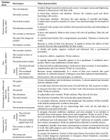
Stereotypes indeed serve as convenient simplifications for both writers and the audience, and are widely used to facilitate immediate recognition that a given character is a scientist (Haynes, 2003; Kirby, 2017). Nieto (2014) considers this aspect in building her methodology; based on the film analysis principles of Mikos (2008), Nieto understands all media to be constructed within a historical and cultural context, carrying references to other previous media. In this way, scientist stereotypes conveyed in fictional media in general (such as literature, cinema, and TV) are also expected to be present in animated series. To support her analysis, Nieto (2014) organized a table compiling the main scientist stereotypes in fictional literature and cinema, which also incorporated the stereotypes found by Gorp et al. (2014), one of the rare studies that typify scientist stereotypes present in media consumed by children and teenagers (including children’s television programs and other sources beyond films and fiction literature). Nieto’s systematization is presented in Chart 1, along with the results of this author’s own research, which to our knowledge is the only work that typifies stereotypes of scientists specifically in animated series.
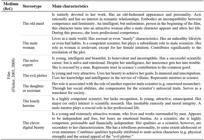
The analyses by Flicker (2003, 2008) also recognized that stereotypes of fictitious female scientists substantially differ from stereotypes associated with male scientists. The classic archetype of the mad, evil scientist rarely applies to female characters: they are not portrayed as isolated in secret laboratories, nor do they contribute to the construction of a negative image of science. Instead, professional stereotypes overlap with gender stereotypes in constructing these characters, imbuing them with qualities not often attributed to male scientists which contribute to less rigid and objective representations of science such as intuition, emotional elements, romantic involvement, and expressed feelings. Nieto (2014) also presents these stereotypes in a specific table, reproduced here in Chart 2.
The descriptions in the tables are only a summary of the most notable characteristics of each profile; for a deeper understanding, the original sources should be consulted. Additionally, note that these images are not rigid: characters rarely fit perfectly into a single stereotype. Certain profiles tend to predominate, but may overlap with traits belonging to other stereotypes.
The research methodology developed and used by Nieto
As mentioned, Nieto (2014) develops her methodology based on the film and television analysis of Lothar Mikos (2008) and the “character clock” model by Jens Eder (2008). The approach is qualitative, organized into well-defined stages that encompass not only the analytical process but also the phases that precede it. Although these stages are systematic, they should not be considered rigid, since they can be revisited whenever necessary to review, complement, or refine the work. Below we present the stages proposed by Nieto (2014), followed by our comments, suggestions, and discussions. We begin with the selection, description, segmentation, and preparation of the material to be analyzed in order to then proceed to design and application of the analysis.
Selecting the animated series and scientist characters for analysis
The series selected for analysis may vary in aspects including genre, target audience, animation techniques, number of episodes and seasons, and episode duration. As long as the choice is in line with the research objectives, the researcher should define the selection criteria and the number of series selected. From a science education perspective, we recommend at minimum that the chosen series be popular6 among the student audience targeted in the study. For clarity we present the methodology for selection and in-depth analysis of a single series, although multiple productions may be selected for analysis in the same study.
To implement this methodology, it is essential that: a) the researcher have full access to the audiovisual material in the series selected for analysis, covering all episodes from all seasons; and b) the animated series feature at least one scientist/researcher character in a role relevant to the plot (main, secondary, or recurring character). The importance of the first criterion will be discussed later, in the material segmentation stage. The second criterion is justified by the fact that scientific content must be present to analyze how science and scientists are portrayed. Nieto (2014) considers the existence of scientist characters as the main indicator of this presence, while Kirby (2017) notes that scientists are the most prominent and recognizable signs of scientific practice in fictional media, since they represent the public face of science. Nieto (2014) consequently organizes her analysis around these characters, investigating the portrayal of scientists and the images of science built by the surrounding context. For this reason, the characters must be presented in the narrative with a certain degree of depth, making it impossible to analyze animated series where scientist characters appear only as recurring guests.
Identifying scientist characters in an animated series may also be challenging. Characters like physicians or nerdy high school students are not necessarily scientists, even if they recurrently use scientific knowledge; likewise, detectives and explorers may conduct investigations and seek answers without necessarily being scientists. At the same time, cartoons feature numerous characters who call themselves scientists but in practice are inventors, mechanics, or even children playing at being scientists. For us, regardless of whether they actually are scientists, when characters are presented in this way they come to be associated with the profession by the viewer and consequently enter our field of interest. Here the criteria defined by Nieto (2014) for a character to be considered a scientist are relevant; the character must:
-
Self-identify as a scientist or researcher (in general or in a specific field)
-
Be identified by other characters as a scientist or researcher (in general or in a specific field)
-
Be depicted conducting research in natural or social science
-
Hold an academic title such as professor or doctor (not including physicians, lawyers, or primary and secondary school teachers, for example).
According to these rules, physicians are not considered scientists but characters that conduct medical research are, while characters who do not call themselves scientists but are seen conducting scientific work (in general or in a specific field) are considered scientists, such as botanists, oceanographers, or anthropologists, for example. These criteria also make it possible to recognize scientists in the social sciences, helping to demystify positivist notions that science is restricted to the natural sciences.
Pre-analysis: initial exploration, segmentation, and description of the analyzed corpus
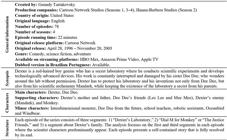
Once the animated series has been defined and its scientist characters initially identified (others may be identified during the material exploration stage), the next step is to compile a profile containing general information about the series in order to understand its production context and basic structure. Using sources that included encyclopedias, TV channel websites, and online catalogs, we identified authors, producers, country of origin, year of production, number of seasons, number of episodes, and broadcast platforms, for instance. Next we explored the material, watching the first episodes. During this process we determined a synopsis of the series, main and secondary characters, the presence or absence of other scientist characters, and the general episode structure. All this information is added to the profile to comprise an initial description of the material, as shown in Chart 3.
Regarding series and episode structure, in some animated series the plot structure repeats from episode to episode, always presenting a story with a beginning, middle, and end with no continuous development in character portrayals over time. An example is the classic cartoon “Woody Woodpecker” (1940-present): each episode presents a different adventure of the character, and one episode does not influence the storyline of the next. Other series depict one single adventure that unfolds over a sequence of episodes, sometimes for an entire season or even the complete series. In these cases, the passage of time and past experiences influence how the characters are presented. Examples include the anime “Dragon Ball” (1986-1997, 2009-present) and “Naruto” (2002-2023), whose characters mature over time. Other series blend the two formats, with each episode presenting individual and complete adventures but together comprising a larger and more complex story. Examples include “Adventure Time” (2010-2018, 2020) and “Rick and Morty” (2013-present), where the apparently caricatured representations of scientists develop and reveal multiple facets throughout the episodes.
Nieto (2014) notes that it is important to determine which format is being utilized. In series where the characters do not develop during the course of the program, watching a limited selection of episodes may suffice for analysis, but in the other two formats it is essential to watch the complete series during this initial exploratory stage (hence the need for access to all episodes, as mentioned above). Fundamental to this process is careful observation of how the scientist characters develop throughout the narrative, identifying which episodes and segments contain the main aspects related to representations of science and scientists. This information should be noted in order to later guide segmentation of the material.
Determining how many and which episodes to select will depend on the number of scientist characters and the complexity of their development in the narrative (determined during the exploratory stage). Initially, Nieto (2014) recommends selecting at least four complete episodes per character: the episode where the scientist is first introduced, plus three more where science and/or scientist characters are prominent and relevant to the narrative. The introductory episode is selected to capture the primary characteristics of the character, building a preliminary model of how the scientist is portrayed. The other three episodes will make it possible to distinguish between constant and temporary characteristics in portrayal of the scientist and also complement the model built for the character. Animated series that incorporate the passage of time into the plot (with sequential episodes and character development) require selection of episodes that encompass the introduction, climax, and conclusion phases of the narrative related to the character and the series as a whole. If necessary, more than four episodes can be chosen per character, but it is important to avoid analyzing fewer episodes in order to reduce the risk of limited interpretations resulting from a restricted selection.
In addition, a number (N) of supplemental episodes should be selected to analyze the context of each scientist character, as they will provide insights into how scientific work, scientific communication, and the nature of scientific knowledge are portrayed. The number of these episodes is at the researcher’s discretion, and varies according to need and relevance for analysis. Sometimes this set may include the entire series; in the case of very extensive series with many sequential episodes, we consider it reasonable to select only the most relevant scenes and sequences identified during the exploratory process.
This set of episodes and scenes will constitute the corpus for analysis, which should be organized into a table systematizing the relevant topics initially identified for each selected element. Next, for each of these episodes and scenes, what Nieto (2014) calls a sequence protocol should be prepared; here we have renamed this protocol a sequence description, illustrated in Chart 4. This chart contains a detailed description of each segment comprising the episode or scene in question, including relevant visual, sound, narrative, and film elements. This group of sequence descriptions will be analyzed in the process described below.

Analysis: design and conduct
Nieto (2014) organizes the analysis into three levels: a) analysis of the plot, in the episodes and the series as a whole; b) analysis of the scientist character; and c) analysis of the context surrounding this character. The second level investigates representations of scientists in the animated series, while the first and third examine representations of science. Below we present and discuss the organization of each of these analysis steps, and conclude with guidelines for practical implementation.
Analyzing the plot of episodes and the animated series
Based on the sequence descriptions described in the previous step, the aim is to understand the dramatic structure of the selected episodes and the animated series as a whole — in this case, also considering the supplementary episodes and scenes selected. To do so, Nieto (2014) resorts to Syd Field’s three-act structure model, which is recognized in the field of screenwriting. According to this model (as detailed in Figure 1), the narrative is organized into three acts: 1) setup, which presents the initial situation, the theme, and introduces the characters; 2) confrontation, which develops the situation through conflicts, problems, or obstacles; and 3) resolution, where the conflict is resolved and the story comes to an end. Preceding the transition between phases are the plot points, events that alter the course of the narrative and influence the development of the story. In the middle of the second phase (confrontation) there is the midpoint, which marks the climax of the conflict.

Certainly, while not every narrative follows this model it should be understood as a guide, providing central concepts that can be used in a flexible manner to identify the structure of the story being told. In practice, Nieto (2014) organizes the events of each selected episode into diagrams like the one in Figure 1. The same procedure can be adopted on a larger scale for a story arc or even the complete series. These diagrams make it possible to identify the role of science in plot development, along with the position of the scientist characters in the activities that comprise the story.
Analyzing the scientist character
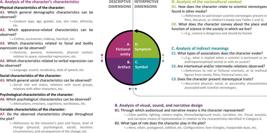
To investigate representations of scientists in the series, Nieto (2014) draws on the “character clock” model proposed by Jens Eder (2008), which proposes a comprehensive and exhaustive examination of the character based on four dimensions: two descriptive and two interpretive. Nieto adapts this framework to focus on specific aspects of the representations of scientists, describing the dimensions as follows:
Descriptive dimensions
5. The character as a fictional entity: examine the character’s physical, personal, and social characteristics, as well as their personality, considering which characteristics are permanent/stable and which are transient.
6. The character as an audiovisual artifact: examine how the character is constructed through narrative resources (naming, narrator, role within the plot, etc.), visual resources (framing, camera perspective and movement, lighting, etc.), and acoustic resources (sound effects, theme music, etc.).
Interpretive dimensions
7. The character as a symbol: attempt to understand the indirect meanings associated with the character, assessing the presence of stereotypical characteristics, relationships to other texts/media, or connections to symbols of popular culture (alchemists, Frankenstein, etc.).
8. The character as a symptom of the society in which he or she emerges: attempt to understand the character in relation to the social conditions where he or she was produced and circulates, linking his or her image to recurring stereotypes of scientists in fictional works.
The four dimensions are linked together in a complementary manner, and one single aspect of a character can be analyzed from different perspectives. As the analysis progresses, new interpretive hypotheses are gradually developed and the researcher revisits previously explored dimensions in order to test these hypotheses, in a dynamic and circular process (Figure 2) which progressively refines the understanding of images of scientists portrayed in the series through the character. For each dimension, Nieto (2014) proposes a set of guiding questions that indicate which aspects of the character to focus on. These questions are formulated according to the theoretical frameworks presented earlier, and address the main characteristics attributed to scientists according to studies on public perceptions of science and above all the frameworks that typify stereotypes of scientists in fictional media (see Charts 1 and 2). These questions constitute the core of Nieto’s analytical model and are presented in Figure 2.
Analyzing the scientist character’s context
To investigate representations of science, Nieto (2014) adapts the previous model to now focus on the scientific activity depicted in the series (as presented in Figure 3). Again, a set of guiding questions are proposed to guide the aspects to be analyzed across the four dimensions (the character as a fictional entity, as an audiovisual artifact, as a symbol, and as a symptom). But at this stage the character is considered to be embedded within the broader context, functioning as a point of departure rather than the boundary of the investigation.

Model for analyzing the context surrounding the scientist character, according to Nieto (2014).
Within this context, references to scientific work and scientific disciplines are sought, for example. At this stage, the previous analysis of the plot (at the episode level as well as across the series) supports understanding of the role that scientists and scientific products play in the fictional society. However, despite the robust methodology here we identify a limitation: the guiding questions that comprise the model in Figure 3 are founded on the same theoretical frameworks as the previous model, which discuss the images of scientists in depth but do not address the images of science with equal rigor. Later in this paper we propose incorporating NOS frameworks into the model to address this limitation.
Analytical procedure
Throughout the pre-analysis and analysis, the episodes and segments selected to compose the corpus are watched multiple times: a) during the exploratory phase; b) after the material has been segmented, to prepare the sequence descriptions; c) during analysis of the plot in the episodes as well as the series as a whole; d) during analysis of the scientist character; e) during analysis of the scientist character’s context. In this process, some episodes and scenes concentrate a large amount of information and require special attention, such as the first episode where the character is introduced and scenes that depict work settings. For such cases, Nieto (2014) makes detailed transcriptions based on expanding the sequence descriptions prepared in the pre-analysis, including the (verbal) text and annotations on visual resources, sound resources, and other audiovisual characterization resources (framing, camera angle, etc.). However, it is our opinion that whenever possible, this detailed transcription should be undertaken for all episodes and scenes that comprise the corpus.
In analysis of the scientist character, the focus falls on the four (or more) main selected episodes. Based on the detailed transcription of these episodes, together with simultaneous playback of the audiovisual material, codes are used to identify any and all aspects relevant to the analysis, as guided by the questions in the model presented in Figure 2. Specific codes should be created to record particular characteristics of the character in relation to each question. For example, a line that exposes the character’s rational personality can be assigned the code “A6.rat” in reference to question A6, which addresses their psychological characteristics. Each code should be carefully defined by the researcher to ensure accurate, coherent, and systematic coding of all material. Note that each segment can be assigned multiple codes, since a single characteristic can be observed from the perspectives of multiple dimensions of analysis. For example, a lab coat is a garment (corresponding to question A2), but also functions as a symbol and a stereotypical characteristic (corresponding to question C3).
After coding7 all the material, the different segments assigned the same code are grouped and organized to start the process of synthesis and interpretation. This is followed by drafting a narrative text8 that individually answers the questions that comprise the model in Figure 2, mobilizing and organizing all the codes corresponding to each question. As mentioned earlier, during this process interpretive hypotheses are continuously developed, tested, and refined, returning to previously analyzed dimensions whenever necessary, in a dynamic and circular movement where insights into one dimension may cast light on others. We also maintain that information about the creators, producers, and others responsible for the series (which are identified in Chart 3) can provide clues to better understand the choices of scientist images used in the work. After all, the people who create and develop characters and write scripts inevitably leave signs of their worldview during this process. Once all these steps are complete, the resulting narrative text contains the refined model of the analyzed scientist character. When more than one scientist character appears in a series, the entire procedure is repeated for each, with construction of refined individual models that depict all representations of scientists in the series.
This procedure is repeated again to analyze the context where the scientist character(s) appear. But this time, in addition to the four (or more) main episodes, supplementary episodes and scenes are also included: in other words, the entire corpus is considered. All material is re-coded, now based on the questions that comprise the model presented in Figure 3. When preparing the narrative text that organizes, synthesizes, and interprets the coded segments that individually answer each questions, the results for plot analysis of the episodes and the series are also incorporated, providing insights into the role that science plays in the narrative. Again, information about the creators, producers, and others responsible for the series can be used to provide interpretive clues. Finally, the process yields a refined model of how science is represented in the series, which is synthesized along with the model of scientist representations in the final report presenting the research results.
PART 2: ADAPTING THE METHODOLOGY OF NIETO (2014) TO A SCIENCE EDUCATION PERSPECTIVE
Although the methodology developed and applied by Nieto (2014) may be the most complete, robust, and detailed tool in the literature for analyzing representations of science and scientists in animated series, it does contain some limitations in how representations of science are approached. As mentioned earlier, this author’s work is founded on theoretical frameworks that explore images of scientists in depth but do not address the images of science to the same extent. Since her research is conducted in the field of philosophy, which dialogues with mass media studies, Nieto aims to understand how images of science portrayed in fiction reflect society’s uncertainties, expectations, and desires regarding scientific knowledge, and this is reflected in the model she proposes. But from a science education perspective, more is required: since our goal is to understand how scientist characters in animated series can contribute to the shaping, consolidation, and reproduction of students’ pre-existing ideas about NOS, we must also understand how aspects of the nature, production, and communication of scientific knowledge are portrayed. We therefore propose complementing the theoretical frameworks mobilized by Nieto with current comprehensive studies on NOS, as well as discussions arising from the nature of engineering and the nature of technologies. Some of these frameworks are presented below to support the analysis we propose in Part 3.
The nature of science
Literature on NOS has a long tradition of examining discussions by experts in fields including the history, philosophy, and sociology of science in order to identify and didactically transpose the aspects of science considered essential for inclusion in the science curriculum (McComas & Clough, 2020). These aspects provide a solid framework to guide our analysis of the characteristics of scientific work portrayed in animated series. To this end, we draw on the following authors: a) McComas (1996, 2020), Gil-Pérez et al. (2001), and Peduzzi & Raicik (2020), who discuss the main epistemological aspects of science according to the consensus view of NOS; b) Höttecke & Allchin (2020), who highlight key aspects related to internal and public communication of science; and c) Gandolfi (2024), who introduces important aspects of the role of science in society from a critical and decolonial perspective.
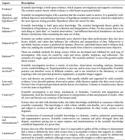
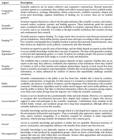
The main aspects of NOS according to these frameworks are summarized in Charts 5 and 6.9 Chart 5 addresses the epistemic dimension of science, which encompasses cognitive or rational aspects related to scientific knowledge, its processes, and methods; while Chart 6 presents the non-epistemic dimension, comprising contextual, social, and psychological aspects related to science and scientists. Drawing on Gandolfi (2019) and Aragón-Méndez et al. (2019), and informed by science and technology studies (STS), this distinction lacks well-defined boundaries and may be considered debatable, but it is employed here solely for didactic purposes in order to highlight social characteristics of science which are essential for understanding scientific endeavors as a human practice with social and environmental impacts
On the distinction between science, engineering, and technologies
We consider it important to complement the theoretical framework with elements from the nature of engineering (NOE) and nature of technology (NOT), given the close and often overlapping relationship between science, engineering, and technology in animated series (Nakamura & Figueirôa, 2026). Literature on NOE and NOT remains scarce, however, and the conceptual distinction between these three domains is neither clear nor uniform (Rau & Antink-Meyer, 2020). Here, we draw on the theorizations proposed by Rau & Antink-Meyer (2020), Mangiante & Gabriele-Black (2020), and Waight et al. (2022).
Science and engineering are distinct disciplines, each with its own epistemologies. According to Rau & Antink-Meyer (2020), science involves the formulation of questions and construction of explanations, employing a systematic approach to develop models, conduct investigations, analyze and interpret data, and argue from evidence with the aim of understanding the natural world. Engineering, in turn, focuses on defining problems and searching for solutions, using a systematic and often iterative approach to design products, processes, and systems that meet human needs and desires. In other words, while science is concerned with understanding and explaining phenomena, engineering is centered on design — the act of designing. To this end, Mangiante & Gabriele-Black (2020) emphasize that engineers mobilize both scientific knowledge that grounds their proposals (“knowing what”) and procedural knowledge about how to achieve solutions (“knowing how”). Their practice involves forms of knowledge specific to engineering, such as envisioning multiple solutions, considering the properties of materials, and constructing and learning from prototypes.
As a result, when a fictional character labeled as a scientist acts as an inventor, this work is more in line with that of an engineer. But if their work is limited to fixing things, the character more closely resembles technical professionals like mechanics or electricians. Mangiante & Gabriele-Black (2020) highlight that associating engineering solely with the construction and object repair, rather than designing and refining models, is a very common and persistent alternative conception across various social contexts.
Meanwhile, technology is defined by Rau & Antink-Meyer (2020) as any modifications of the natural world made to meet human needs or desires, and encompass products, processes, and systems created by humans. In this way, computers, electronic devices, medical practices, atomic bombs and the like are technologies, as are language, planting techniques, or even just a hammer. Waight et al. (2022) caution that understanding technology as merely applied science constitutes a gross oversimplification, since many technologies are not directly informed by scientific knowledge; nevertheless, given the relationship between science, engineering, and technology, the latter is commonly understood to consist of products derived from the former two. At the same time, the relationship also operates in the opposite direction: technological innovations that extend our senses and capabilities (like the microscope) have played a fundamental role in expanding the horizons of science and engineering.
For in-depth insights into aspects of NOT, we recommend Waight et al. (2022) and Waight & Abd-El-Khalick (2012). In this paper, we have limited ourselves to three aspects we consider particularly relevant to our understanding of technologies in terms of how they relate to society and the environment, in line with the scope of this study:
-
Non-neutrality: like science, technologies are neither objective nor neutral. They are cultural artifacts imbued with values that both impact and are impacted by their developers, users, and the environment. Technological changes, whether large or small, often lead to a restructuring of power relations, redistribution of wealth and income, and transformations in human relationships.
-
Notion of progress: technological development is not necessarily synonymous with human and/or environmental progress. Improvements in one dimension are often accompanied by less desirable developments in others. Although technologies solve problems, they also create new problems which may be even more difficult to address, such as the intensification of social inequality or climate change.
-
Inequality: with technologies it is necessary to consider who benefits and who suffers, which opportunities increase and which decrease. Access to technology is unequal in our society, and conscious and unconscious biases are found in their conception, design, implementation, and use.
PART 3: A NEW PROPOSAL FOR ANALYSIS
Reformulation of the analytical models
The theoretical-methodological framework we propose is based on a reformulation of the analytical models developed by Nieto (2014), expanding them to include the aspects of NOS presented in Charts 5 and 6, in addition to the considerations on engineering and technologies discussed in Part 2. They were also theoretically reoriented to incorporate NOS as a central component. The reformulated models are presented in Figures 4 and 5. In the model for analysis of the scientist character (Figure 4), we maintained the original structure proposed by Nieto but added questions related to the credibility of scientists and who is considered fit for this profession in our society. We also emphasized the psychological and subjective characteristics of the character, observing whether they vary according to scientist’s activities (in activities related to scientific work versus rest and leisure activities, for example).
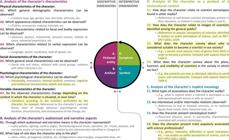
In the model for analyzing science based on the context surrounding the scientist character (Figure 5), we proceed with support from the previous plot analysis for the episodes and the series, while also considering the character as a starting point for understanding the images of science portrayed but not as the limit of the investigation. But in order to make the model more intuitive and provide greater analytical focus on representations of science, we now consider not the character but science itself as a fictional entity, since these representations entail a portrayal of science and scientific activity constructed for fiction. In this case, the four dimensions of analysis are understood as:
Descriptive dimensions
-
5. Science as a fictional entity: examine the characteristics of science in that fictional universe.
-
6. Science as an audiovisual artifact: examine how audiovisual and narrative elements are used to construct the fictional science portrayed.
Interpretive dimensions
-
7. Science as a symbol: attempt to understand what associations the portrayed science evokes beyond what is explicit.
-
8. Science portrayed as a symptom of the society in which it emerges: attempt to understand fictional science in relation to the social and cultural conditions in which it was produced and circulates.
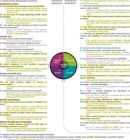
- Revised model for analyzing portrayed science, based on the context surrounding the scientist character.
We add to the descriptive dimensions questions focused on the institutional and collective organization of science, the elements that comprise scientific research, the provisional nature of science, scientific communication, and the relation between science and other types of knowledge. In the interpretive dimensions, questions are included about the implicit messages conveyed by the series regarding the validity of scientific knowledge, credibility of scientists, limits of science, and overlaps with engineering. We also attempt to support comparisons between the fictional science represented in the work, images of science present in the popular imagination, and those described by NOS.
The practical analytical procedure based on this new methodology follows the same guidelines presented in Part 1 of this text; the only difference is that the material encoding and narrative text development processes are based on the issues present in the new analytical models, presented in this section.
Analytical gains, limitations, and possibility of adaptation
As mentioned previously, the analytical models originally proposed by Nieto (2014) were not conceived in response to demands from the field of science education. Above all, their frameworks prioritize discussion of stereotypes of scientists in fictional media, emphasizing images of scientists and their professional practices. They consequently dedicate little consideration to the nature of scientific knowledge itself, communication of this knowledge, and the social dimensions involved in its production and circulation — aspects which are dear to science education and NOS. By complementing Nieto’s frameworks and expanding her analytical models, we attempt to incorporate explicit guidelines for investigating how these elements are portrayed, promoting a more comprehensive reading of the representations of science and scientists present in animated series.
Additionally, the interpretive dimensions in the original models directed the analysis toward interrelations with only frameworks on representations of science and scientists in mass media. We introduced in the reformulated models explicit interrelations with NOS and studies that address student images/perceptions of the issues under study, directing analysis toward the dialogue between these different analytical perspectives. Questions D4 and H4 were adapted from the original model and theoretically reoriented to permit comparison of results with aspects of the nature of science which are systematized in Charts 5 and 6. These modifications align the models with a science education perspective that is interested in understanding how representations in animated series dialogue with the essential characteristics of science and scientists described by NOS.
The theoretical-methodological framework proposed here consequently integrates two characteristics that have not appeared together in the literature on representations of science and scientists in animated series, as mentioned in the introduction to this article and in Nakamura & Figueirôa (2026). First, it considers the specific characteristics of serialized audiovisual content, including multiple codes, organization into episodes, and narrative development, in turn allowing analysis of complex, dynamic, and sometimes ambiguous characters built through audiovisual means. Second, it combines frameworks from NOS, from studies on stereotypes of scientists in fictional media, and from public perceptions of science, integrating approaches commonly used in the areas of science education and communication for studies of this type. This enables in-depth analyses of both images of science and images of scientists, without neglecting the purposes of this research from the perspective of science education.
This analytical framework is also accessible, with didactically described steps and without excessively complex concepts but no loss of theoretical foundation or analytical robustness. This configuration encourages use by early-career researchers who, according to an empirical survey we conducted (Nakamura & Figueirôa, 2026), are the group most likely to conduct research on representations of science and scientists in animated series within the scope of science education. It simultaneously contributes to the production of results that can be understood by lay audiences, fostering dissemination of the knowledge produced and effective appropriation in the school context.
We do recognize a limitation of our analytical models, inherited from the methodological design originally proposed by Nieto (2014) as this author notes: a wide-ranging study on the representations of science and scientists should not be restricted to just the images conveyed and their possible academic interpretations. Ideally, the way these representations are received and appropriated by the audience should also be considered, since viewers may construct their own (occasionally unforeseen) interpretations. Incorporating frameworks related to public perceptions of science and scientists into the analytical models partially offsets this limitation, but does not eliminate it. Furthermore, although we consider information about authors, producers, and others responsible for the animated series in the formulation of interpretive hypotheses, our model does not delve into the conditions under which they were produced. A more systematic study of these processes, considering sociocultural and historical contexts, could provide additional insights into the representations analyzed, broadening the interpretive scope of the findings and providing new possibilities for research.
Unfortunately, we were not able to include a practical example showing application of our proposed methodology in this text. However, an analysis based on the theoretical-methodological framework that illustrates its empirical application is in progress and will be published soon.
Finally, it is important to note the potential for expanding and adapting our theoretical-methodological framework. While it was constructed specifically to analyze science and scientist characters in animated series consumed by school-aged children and young people, considering methodological processes and theoretical frameworks suitable this media format and consumer audience, we believe that only small adjustments are necessary for potential adaptations to analyze science and scientists in films (animated or otherwise) or even digital games, as long as the content is fictional (since the frameworks involving stereotypes of scientists only cover fictional representations). Of course, considering a different consumer audience would also require changes to the frameworks that explain how the target audience perceives science and scientists. But with these small modifications, the framework we propose can not only obtain robust and well-grounded insights into how animated series affect students’ pre-existing ideas about NOS, but also show how fictional media in general does the same for broader audiences.
FINAL CONSIDERATIONS
We consider it fundamental to understand representations of science and scientists in animated series, given the impact of these audiovisual productions on the formation and perpetuation of students’ pre-existing ideas related to the nature of science (NOS). Yet the literature shows inherent difficulties in analyzing these representations due to the lack of a well-established theoretical framework and methodology that considers the specific characteristics of serialized audiovisual material as well as a NOS perspective, as noted elsewhere (Nakamura & Figueirôa, 2026). While the dissertation by Nieto (2014) is an important contribution in this direction and notable for its rigor, detail, and methodological quality, it is not widely cited in the academic literature and its focus is more on typifying scientist stereotypes rather than establishing interrelations with NOS.
For this reason, in response to our research question (How can representations of science and scientists in animated series be analyzed in order to understand how the nature of science is portrayed in these contexts?) we constructed an analytical proposal that adapted and expanded Nieto’s research methodology, theoretically reconfiguring it by incorporating current and comprehensive NOS frameworks into the analysis along with considerations about distinctions between science, engineering, and technology, dimensions that often overlap in audiovisual representations. With this reformulation, we seek to contribute to the construction of a detailed, specific, well-grounded, and robust theoretical-methodological framework for analyzing representations of science and scientists in animated series within the scope of science education.
Finally, it is important to reinforce the purpose this type of analysis. Because fiction is based on imagination and fantasy, we neither expect nor demand that animated series contain “realistic” images of science or scientists; they will naturally deviate from reality with stylized or exaggerated views of the scientific world consistent with the narrative universes where they appear (Nieto, 2014). From a science education perspective, the essential point is to explore the extent to which these images deviate from or are consistent with the descriptions established by the history, philosophy, and sociology of science so they can be explicitly addressed in the classroom teaching and learning processes focused on NOS (since these animated series are already known to and consumed by students). In this way, considering the socio-scientific issues involved in everyday life, we hope that students will be able to construct viewpoints and make decisions that are based on the characteristics of science as described by NOS, identifying elements in fiction that are consisted with or deviate from these descriptions.
Acknowledgments
This study was financed in part by the Coordenação de Aperfeiçoamento de Pessoal de Nível Superior - Brasil (CAPES). The authors also wish to thank Espaço da Escrita - Pró-Reitoria de Pesquisa - UNICAMP for language services provided.
References
-
Aragón-Méndez, M. del M., Acevedo-Díaz, J. A., & García-Carmona, A. (2019). Prospective biology teachers’ understanding of the nature of science through an analysis of the historical case of Semmelweis and childbed fever. Cultural Studies of Science Education, 14(3), 525-555. https://doi.org/10.1007/s11422-018-9868-y
» https://doi.org/10.1007/s11422-018-9868-y -
Carvalho, J. V. S. L. L. de. (2023). O caminho da ciência: A representação do cientista e da ciência no anime Dr. Stone [Dissertação de mestrado, Casa de Oswaldo Cruz, Fundação Oswaldo Cruz]. https://www.arca.fiocruz.br/handle/icict/69985
» https://www.arca.fiocruz.br/handle/icict/69985 -
Carvalho, V. B. de, Massarani, L., Ramalho, M., Amorim, L., Castelfranchi, Y., Correa, L. M., Corrieri, A. C., Malcher, M. A., Marques, J. A., Lopes, S. C., & Raiol, W. (2020). Ciência na TV: Percepções de adolescentes de três cidades brasileiras. História, Ciências, Saúde-Manguinhos, 27(4), 1187-1206. https://doi.org/10.1590/S0104-59702020000500009
» https://doi.org/10.1590/S0104-59702020000500009 -
Chambers, D. W. (1983). Stereotypic images of the scientist: The draw-a-scientist test. Science Education, 67(2), 255-265. https://doi.org/10.1002/sce.3730670213
» https://doi.org/10.1002/sce.3730670213 -
Coelho, S. de O. (2019). As representações dos cientistas nos desenhos animados televisivos à luz das teorias do imaginário [Dissertação de mestrado, Universidade Federal do Estado do Rio de Janeiro]. https://www.unirio.br/cla/ppgedu/1f4c2dissertacoes/1f4c2repositorio-de-dissertacoes/1f4c22019/dissertacao-ppgedu-simone-de-oliveira-coelho/view
» https://www.unirio.br/cla/ppgedu/1f4c2dissertacoes/1f4c2repositorio-de-dissertacoes/1f4c22019/dissertacao-ppgedu-simone-de-oliveira-coelho/view - Eder, J. (2008). Die figur im film Schüren.
-
Flicker, E. (2003). Between Brains and Breasts—Women scientists in fiction film: On the marginalization and sexualization of scientific Ccompetence. Public Understanding of Science, 12(3), 307-318. https://doi.org/10.1177/0963662503123009
» https://doi.org/10.1177/0963662503123009 -
Flicker, E. (2008). Women scientists in mainstream film: Social role models—a contribution to the Public Understanding of Science from the perspective of Film Sociology. Em P. Weingart & B. Huppauf (Ed.), Science Images and Popular Images of the Sciences (p. 241-256). Routledge. https://doi.org/10.4324/9780203939154
» https://doi.org/10.4324/9780203939154 -
Gandolfi, H. E. (2019). In defence of non-epistemic aspects of nature of science: Insights from an intercultural approach to history of science. Cultural Studies of Science Education, 14(3), 557-567. https://doi.org/10.1007/s11422-018-9879-8
» https://doi.org/10.1007/s11422-018-9879-8 -
Gandolfi, H. E. (2024). (Re)considering Nature of Science Education in the face of socio-scientific challenges and injustices. Science & Education https://doi.org/10.1007/s11191-024-00536-w
» https://doi.org/10.1007/s11191-024-00536-w -
Gil-Pérez, D. G., Montoro, I. F., Alís, J. C., Cachapuz, A., & Praia, J. (2001). Para uma imagem não deformada do trabalho científico. Ciência & Educação, 7(2), 125-153. https://doi.org/10.1590/S1516-73132001000200001
» https://doi.org/10.1590/S1516-73132001000200001 -
Gorp, B., Rommes, E., & Emons, P. (2014). From the wizard to the doubter: Prototypes of scientists and engineers in fiction and non-fiction media aimed at Dutch children and teenagers. Public Understanding of Science, 23(6), 646-659. https://doi.org/10.1177/0963662512468566
» https://doi.org/10.1177/0963662512468566 - Haynes, R. (1994). From Faust to Strangelove: Representations of the scientist in Western Literature Johns Hopkins University.
-
Haynes, R. (2003). From alchemy to artificial intelligence: Stereotypes of the scientist in Western Literature. Public Understanding of Science, 12(3), 243-253. https://doi.org/10.1177/0963662503123003
» https://doi.org/10.1177/0963662503123003 -
Haynes, R. D. (2016). Whatever happened to the ‘mad, bad’ scientist? Overturning the stereotype. Public Understanding of Science, 25(1), 31-44. https://doi.org/10.1177/0963662514535689
» https://doi.org/10.1177/0963662514535689 -
Höttecke, D., & Allchin, D. (2020). Reconceptualizing nature-of-science education in the age of social media. Science Education, 104(4), 641-666. https://doi.org/10.1002/sce.21575
» https://doi.org/10.1002/sce.21575 -
Hüppauf, B., & Weingart, P. (2008). Science images and popular images of the sciences Routledge. https://doi.org/10.4324/9780203939154
» https://doi.org/10.4324/9780203939154 -
Instituto Nacional de Ciência e Tecnologia em Comunicação Pública da Ciência e Tecnologia (INCT-CPCT). (2021). O que os jovens brasileiros pensam da ciência e da tecnologia? Fiocruz/COC. https://www.inct-cpct.ufpa.br/wp-content/uploads/2021/02/LIVRO_final_web_2pag.pdf
» https://www.inct-cpct.ufpa.br/wp-content/uploads/2021/02/LIVRO_final_web_2pag.pdf -
Instituto Nacional de Ciência e Tecnologia em Comunicação Pública da Ciência e Tecnologia (INCT-CPCT). (2024). O que os jovens brasileiros pensam da ciência e da tecnologia? Fiocruz/COC. https://inct-cpct.fiocruz.br/wp-content/uploads/2024/05/FINAL_ebook_O-QUE-OS-JOVENS-BRASILEIROS-PENSAM.pdf
» https://inct-cpct.fiocruz.br/wp-content/uploads/2024/05/FINAL_ebook_O-QUE-OS-JOVENS-BRASILEIROS-PENSAM.pdf - Kirby, D. A. (2014). Science and Technology in film: Themes and representations. Em M. Bucchi & B. Trench (Ed.), Handbook of Public Communication of Science and Technology (2o ed., p. 97-112). Routledge.
-
Kirby, D. A. (2017). The changing popular images of Science. Em K. H. Jamieson, D. M. Kahan, & D. A. Scheufele (Ed.), The Oxford Handbook of the Science of Science Communication (p. 290-300). Oxford University Press. https://doi.org/10.1093/oxfordhb/9780190497620.001.0001
» https://doi.org/10.1093/oxfordhb/9780190497620.001.0001 -
Mangiante, E. S., & Gabriele-Black, K. A. (2020). Supporting Elementary Teachers’ Collective Inquiry into the “E” in STEM. Science & Education, 29(4), 1007-1034. https://doi.org/10.1007/s11191-020-00123-9
» https://doi.org/10.1007/s11191-020-00123-9 -
McComas, W. F. (1996). Ten myths of Science: Reexamining what we think we know about the nature of science. School Science and Mathematics, 96(1), 10-16. https://doi.org/10.1111/j.1949-8594.1996.tb10205.x
» https://doi.org/10.1111/j.1949-8594.1996.tb10205.x -
McComas, W. F. (2020). Principal elements of Nature of Science: Informing science teaching while dispelling the myths. Em W. F. McComas (Ed.), Nature of Science in Science Instruction: Rationales and strategies (p. 35-65). Springer. https://doi.org/10.1007/978-3-030-57239-6_3
» https://doi.org/10.1007/978-3-030-57239-6_3 -
McComas, W. F., & Clough, M. P. (2020). Nature of Science in Science Instruction: Meaning, advocacy, rationales, and recommendations. Em W. F. McComas (Ed.), Nature of Science in Science Instruction: Rationales and strategies (p. 3-22). Springer. https://doi.org/10.1007/978-3-030-57239-6_1
» https://doi.org/10.1007/978-3-030-57239-6_1 -
Mead, M., & Métraux, R. (1957). Image of the Scientist among High-School Students. Science, 126(3270), 384-390. https://doi.org/10.1126/science.126.3270.384
» https://doi.org/10.1126/science.126.3270.384 -
Mendes, D. A. da S. (2020). O olhar de professoras dos anos iniciais do ensino fundamental sobre ciência e cientistas e as possíveis influências das mídias [Dissertação de mestrado, Universidade Estadual de Maringá]. http://repositorio.uem.br:8080/jspui/handle/1/6018
» http://repositorio.uem.br:8080/jspui/handle/1/6018 -
Mesquita, N. A. da S., & Soares, M. H. F. B. (2008). Visões de ciência em desenhos animados: Uma alternativa para o debate sobre a construção do conhecimento científico em sala de aula. Ciência & Educação, 14(3), 417-429. https://doi.org/10.1590/S1516-73132008000300004
» https://doi.org/10.1590/S1516-73132008000300004 - Mikos, L. (2008). Film- und Fernsehanalyse (2o ed.). UVK.
-
Monteiro, P. C. (2011). O que pensam alunos de 9a série do ensino fundamental sobre ciência e cientista nos desenhos do Jimmy Neutron [Dissertação de mestrado, Universidade Estadual de Maringá]. http://repositorio.uem.br:8080/jspui/handle/1/4481
» http://repositorio.uem.br:8080/jspui/handle/1/4481 -
Monteiro, P. V. (2019). Representação da ciência em Rick e Morty: O que a série de animação nos ensina? [Trabalho de conclusão de curso, Instituto Federal de Santa Catarina]. https://repositorio.ifsc.edu.br/handle/123456789/1274
» https://repositorio.ifsc.edu.br/handle/123456789/1274 -
Mota, I. de O., & Nobre, Y. de O. M. (2020). Representações sobre ciência e cientista em Pokemon e Lilo & Stitch. Línguas e Instrumentos Linguísticos, 23(46), 180-199. https://periodicos.sbu.unicamp.br/ojs/index.php/lil/article/view/8661634
» https://periodicos.sbu.unicamp.br/ojs/index.php/lil/article/view/8661634 -
Moura, B. A. (2014). O que é natureza da Ciência e qual sua relação com a História e Filosofia da Ciência? Revista Brasileira de História da Ciência, 7(1), 32-46. https://doi.org/10.53727/rbhc.v7i1.237
» https://doi.org/10.53727/rbhc.v7i1.237 -
Nakamura, T. M., Figueirôa, S. F. de M. (2026). Natureza das Ciências em Séries Animadas: quais são as representações de Ciências e Cientistas? Investigações Em Ensino De Ciências, 31(1), 104-138. https://doi.org/10.22600/1518-8795.ienci/2026v31n1p104
» https://doi.org/10.22600/1518-8795.ienci/2026v31n1p104 -
Nakamura, T. M., M Neto, A. L. M., & Silva, F. V. da. (2020). Representações da ciência e da mulher cientista na série animada “Hora de Aventura”. Palimpsesto, 19(32), 142-158. https://doi.org/10.12957/palimpsesto.2020.48912
» https://doi.org/10.12957/palimpsesto.2020.48912 -
Newton, D. P., & Newton, L. D. (1992). Young children’s perceptions of science and the scientist. International Journal of Science Education, 14(3), 331-348. https://doi.org/10.1080/0950069920140309
» https://doi.org/10.1080/0950069920140309 -
H Nieto, L. M. H. (2014). What do cartoons tell children about science? A qualitative study of the representation of science and scientists in animated television series [Tese de doutorado, Universität Bielefeld]. https://pub.uni-bielefeld.de/record/2904323
» https://pub.uni-bielefeld.de/record/2904323 - H Nieto, L. M. H., & Weingart, P. (2021). Between mad and mundane: Mixed stereotypical and realistic portrayals of science in contemporary fiction media. Em S. Farzin, S. M. Gaines, & R. D. Haynes (Ed.), Under the literary microscope: Science and society in the contemporary novel (p. 54-74). Penn State University Press.
-
Pansegrau, P. (2008). Stereotypes and images of scientists in fiction films. Em P. Weingart & B. Huppauf (Ed.), Science Images and Popular Images of the Sciences (p. 257-266). Routledge. https://doi.org/10.4324/9780203939154
» https://doi.org/10.4324/9780203939154 -
Pansegrau, P. (2009). Zwischen fakt und fiktion: Stereotypen von wissenschaftlern in spielfilmen. Em B. Hüppauf & P. Weingart (Ed.), Frosch und Frankenstein: Bilder als medium der popularisierung von wissenschaft (p. 373-386). Transcript. https://doi.org/10.14361/9783839408926-015
» https://doi.org/10.14361/9783839408926-015 -
Peduzzi, L. O. Q., & Raicik, A. C. (2020). Sobre a Natureza da Ciência: Asserções comentadas para uma articulação com a História da Ciência. Investigações em Ensino de Ciências, 25(2), 19-55. https://doi.org/10.22600/1518-8795.ienci2020v25n2p19
» https://doi.org/10.22600/1518-8795.ienci2020v25n2p19 -
Penna, J. C. B. de O. (2021). Profe, posso desenhar uma menina? Percepções infantis versus desenhos animados: A representação de cientistas [Dissertação de mestrado, Universidade de São Paulo]. https://doi.org/10.11606/D.48.2021.tde-30112021-112018
» https://doi.org/10.11606/D.48.2021.tde-30112021-112018 -
Pereira, A. A. G., & Figueirôa, S. F. de M. (2024). Epistemologia Social e desinformação científica: Perspectivas para a Educação em Ciências. Ensaio Pesquisa em Educação em Ciências, 26, e52480. https://doi.org/10.1590/1983-21172022240199
» https://doi.org/10.1590/1983-21172022240199 -
Praia, J., Gil-Pérez, D., & Vilches, A. (2007). O papel da natureza da ciência na educação para a cidadania. Ciência & Educação, 13(02), 141-156. http://educa.fcc.org.br/scielo.php?pid=S1516-73132007000200001&script=sci_abstract
» http://educa.fcc.org.br/scielo.php?pid=S1516-73132007000200001&script=sci_abstract -
Raposo, A. S. da S. (2020). Investigação científica em desenhos animados e em aulas de ciências do primeiro ano do Ensino Fundamental [Dissertação de mestrado, Universidade de São Paulo]. https://doi.org/10.11606/D.81.2020.tde-27102020-190403
» https://doi.org/10.11606/D.81.2020.tde-27102020-190403 -
Rau, G., & Antink-Meyer, A. (2020). Distinguishing science, engineering, and technology. Em W. F. McComas (Ed.), Nature of Science in Science Instruction: Rationales and strategies (p. 159-176). Springer. https://doi.org/10.1007/978-3-030-57239-6_8
» https://doi.org/10.1007/978-3-030-57239-6_8 -
Reznik, G. (2017). Imagem da ciência e de cientistas em curtas de animação [Dissertação de mestrado, Universidade Federal do Rio de Janeiro]. https://www.hcte.ufrj.br/docs/dissertacoes/2017/gabriela_reznik.pdf
» https://www.hcte.ufrj.br/docs/dissertacoes/2017/gabriela_reznik.pdf -
Reznik, G., Massarani, L., & Moreira, I. de C. (2019). Como a imagem de cientista aparece em curtas de animação? História, Ciências, Saúde-Manguinhos, 26(3), 753-777. https://doi.org/10.1590/S0104-59702019000300003
» https://doi.org/10.1590/S0104-59702019000300003 - Ricon, L. E. (2005). Cientista ou Criança? - As representações sociais do cientista nos desenhos animados infantis. Atas do III Seminário Internacional: as Redes de Conhecimento e a Tecnologia
-
Rodrigues, R. N. M. (2019). Desenhos animados de ciência e a (des)construção do estereótipo de cientista: Em direção a uma nova narrativa [Trabalho de conclusão de curso, Casa de Oswaldo Cruz, Fundação Oswaldo Cruz]. https://www.arca.fiocruz.br/handle/icict/42987
» https://www.arca.fiocruz.br/handle/icict/42987 -
Rodrigues, R. N. M. (2022). A representação de cientista e da ciência em desenhos animados: Uma análise de Lego Friends, Detetives da Natureza e The Deep [Dissertação de mestrado, Casa de Oswaldo Cruz, Fundação Oswaldo Cruz]. https://www.arca.fiocruz.br/handle/icict/59375
» https://www.arca.fiocruz.br/handle/icict/59375 -
Santos, M. E. dos, & Kurokawa, S. S. S. (2024). A influência das animações sobre o que é e quem faz ciência. ACTIO: Docência Em Ciências, 9(2), 1-23. https://doi.org/10.3895/actio.v9n2.18507
» https://doi.org/10.3895/actio.v9n2.18507 -
Silva, Y. J. A. da. (2022). Representações de mulheres cientistas e relações de gênero no desenho animado “Johnny Test”. Em P. R. Siebert, T. H. R. Siebert, L. H. S. de Sousa, R. da S. Sales, & V. P. S. Maduro (Org.), Educação e Ensino de Ciências e Matemática: Pesquisa, aplicação e novas tendências (p. 98-111). Científica Digital. https://doi.org/10.37885/220307970
» https://doi.org/10.37885/220307970 -
Siqueira, D. da C. O. (2006). O cientista na animação televisiva: Discurso, poder e representações sociais. Em Questão, 12(1), 131-148. https://seer.ufrgs.br/EmQuestao/article/view/14
» https://seer.ufrgs.br/EmQuestao/article/view/14 -
Soucy-Humphreys, J., Judd, K., & Jürgens, A.-S. (2023). Challenging the stereotype through humor? Comic female scientists in animated TV series for young audiences. Frontiers in Communication, 7, 1-22. https://doi.org/10.3389/fcomm.2022.1024602
» https://doi.org/10.3389/fcomm.2022.1024602 -
Steinke, J., Lapinski, M. K., Crocker, N., Zietsman-Thomas, A., Williams, Y., Evergreen, S. H., & Kuchibhotla, S. (2007). Assessing media influences on middle school-aged children’s perceptions of women in science using the draw-a-scientist test (DAST). Science Communication, 29(1), 35-64. https://doi.org/10.1177/10.75547007306508
» https://doi.org/10.1177/10.75547007306508 -
Tomazi, A. L., Pereira, A. J., Schüler, C. M., Piske, K., & Tomio, D. (2009). O que é e quem faz ciência? Imagens sobre a atividade científica divulgadas em filmes de animação infantil. Ensaio Pesquisa em Educação em Ciências, 11(2), 292-306. https://doi.org/10.1590/1983-21172009110209
» https://doi.org/10.1590/1983-21172009110209 - Vanoye, F., & Goliot-Lété, A. (2002). Ensaio sobre a análise fílmica (2o ed.). Papirus.
-
Waight, N., & Abd-El-Khalick, F. (2012). Nature of Technology: Implications for design, development, and enactment of technological tools in school science classrooms. International Journal of Science Education, 34(18), 2875-2905. https://doi.org/10.1080/09500693.2012.698763
» https://doi.org/10.1080/09500693.2012.698763 -
Waight, N., Kayumova, S., Tripp, J., & Achilova, F. (2022). Towards equitable, social justice criticality: Re-constructing the “black” box and making it transparent for the future of science and technology in Science Education. Science & Education, 31(6), 1493-1515. https://doi.org/10.1007/s11191-022-00328-0
» https://doi.org/10.1007/s11191-022-00328-0 -
Weingart, P. (2008). The ambivalence towards new knowledge: Science in fiction film. Em P. Weingart & B. Huppauf (Ed.), Science Images and Popular Images of the Sciences (p. 267-282). Routledge. https://doi.org/10.4324/9780203939154
» https://doi.org/10.4324/9780203939154 -
Weingart, P., Muhl, C., & Pansegrau, P. (2003). Of power maniacs and unethical geniuses: Science and scientists in fiction film. Public Understanding of Science, 12(3), 279-287. https://doi.org/10.1177/0963662503123006
» https://doi.org/10.1177/0963662503123006
-
3
For a comprehensive overview of NOS, its relationship with science education, and its connections to the history and philosophy of science, we recommend the works of Moura (2014) and Peduzzi and Raicik (2020), as well as those cited throughout this article.
-
4
In this paper, we adopt the expression representations of science and scientists as synonymous with images of science and scientists portrayed in fictional audiovisual products, in line with recognized authors in this research tradition such as Flicker (2003, 2008), Weingart et al. (2003, 2008), Pansegrau (2008), and Kirby (2014, 2017). The methodological framework by Nieto (2014) adopted in this study also uses this expression. We do not draw on social representations theory (SRT), developed primarily by Serge Moscovici (1925-2014) within social psychology, although our approach does not run counter to this theory.
-
5
The search was conducted in the CAPES Theses and Dissertations Catalog, Brazilian Digital Library of Theses and Dissertations (BDTD), CAPES Periodicals Portal, Scientific Electronic Library Online (SciELO Brazil), Scopus, Web of Science, and JSTOR databases. Google Scholar was also used on a supplemental basis, but an exhaustive search of this platform was not conducted.
-
6
Defining which animated series are popular among different student audiences is no trivial task. Official audience and audience profile data are rarely released, since this information is strategic in the audiovisual industry; Netflix is currently the only streaming platform in Brazil that officially releases the continuous history of its most-watched content. Moreover, series that are popular among certain groups of students may not be as well liked among others, even within the same age group, due to different sociocultural contexts and the on-demand consumption model. Within this context, researchers should identify series that may be popular among the target audience, while only teachers in direct contact with the classroom can assess whether these series are in fact part of the cultural repertoire of a specific group of students and whether they are relevant for discussing the images of science and scientists they convey.
-
7
Nieto (2014) uses Atlas.ti software to assist in the processes of organizing, coding, and interpreting the material.
-
8
For an example of narrative text elaboration, we recommend consulting Annex E of Nieto (2014).
-
9
Here our goal was to address all characteristics of NOS discussed in the frameworks (albeit sometimes indirectly), and we only excluded two which we considered overly specific and unlikely to appear in animated series: the search for global coherence (Gil-Pérez et al., 2001) and thought experiments (Peduzzi & Raicik, 2020).
-
Funding
This study was financed in part by the Coordenação de Aperfeiçoamento de Pessoal de Nível Superior - Brasil (CAPES).
-
Data Availability Statement
Not applicable
-
CECIMIG acknowledges financial support provided by CNPq (National Council for Scientific Development) and FAPEMIG (Minas Gerais State Research Support Foundation) for the editing of this article.
Not applicable

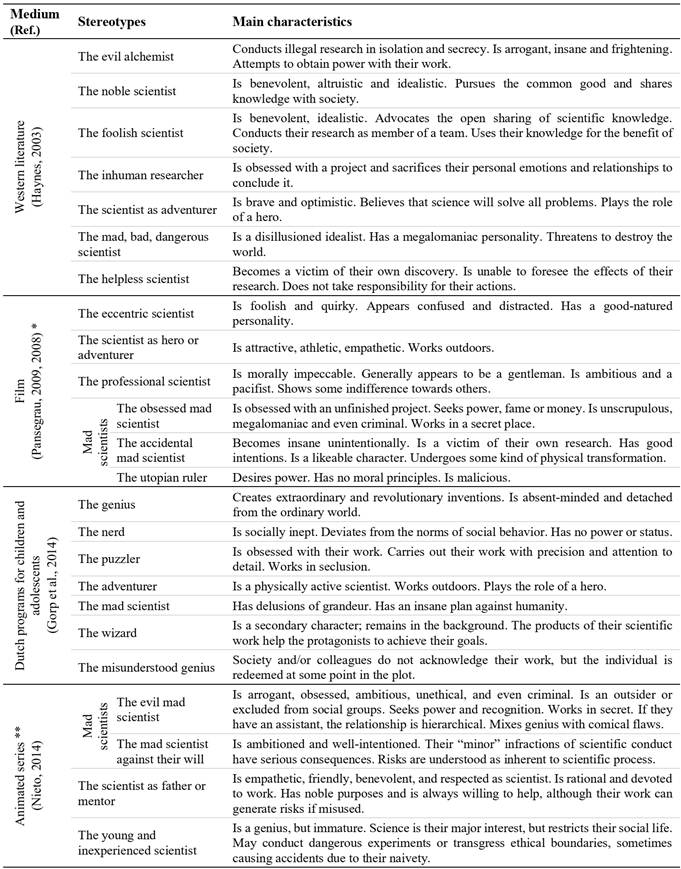 Note. Adapted from Nieto (2014, p. 82). *We include a reference to the text by
 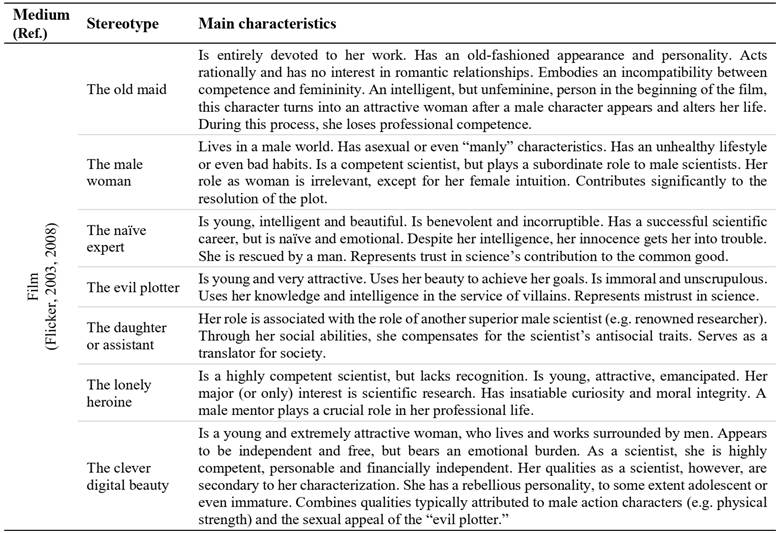 Note. Adapted from Nieto (2014, p. 84).
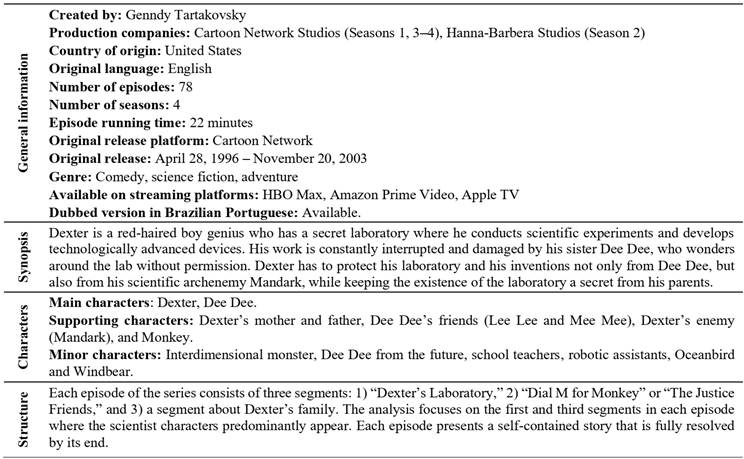 Note. Adapted from Nieto (2014, p. 96).
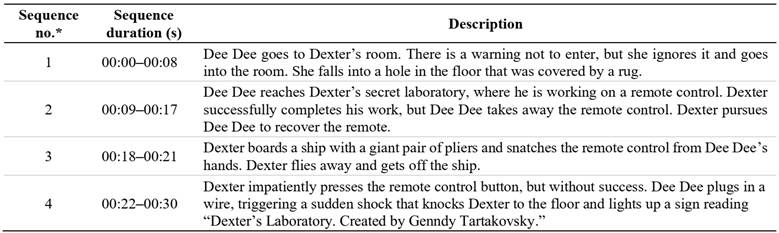
 Note. Adapted from Nieto (2014, p. 100).
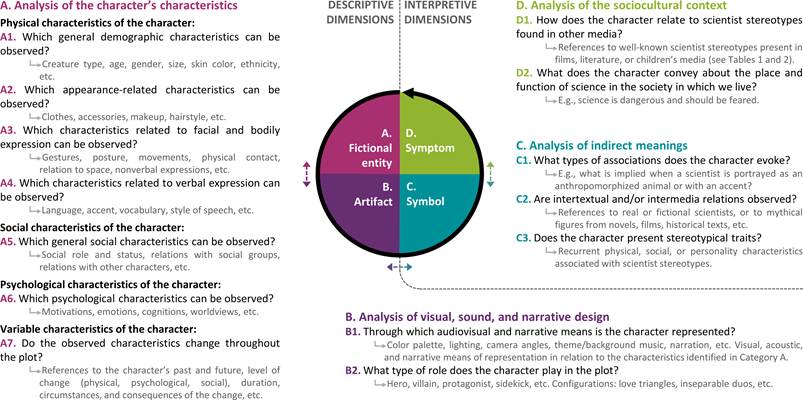 Note. Adaptedfrom Nieto (2014, p. 102).
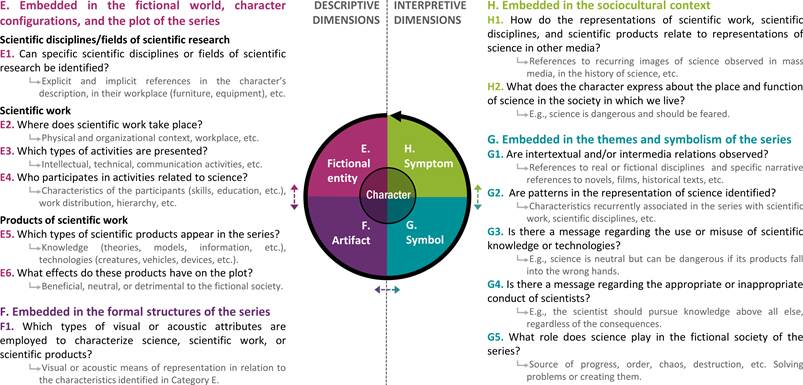 Note. Adapted from Nieto (2014, p. 106).
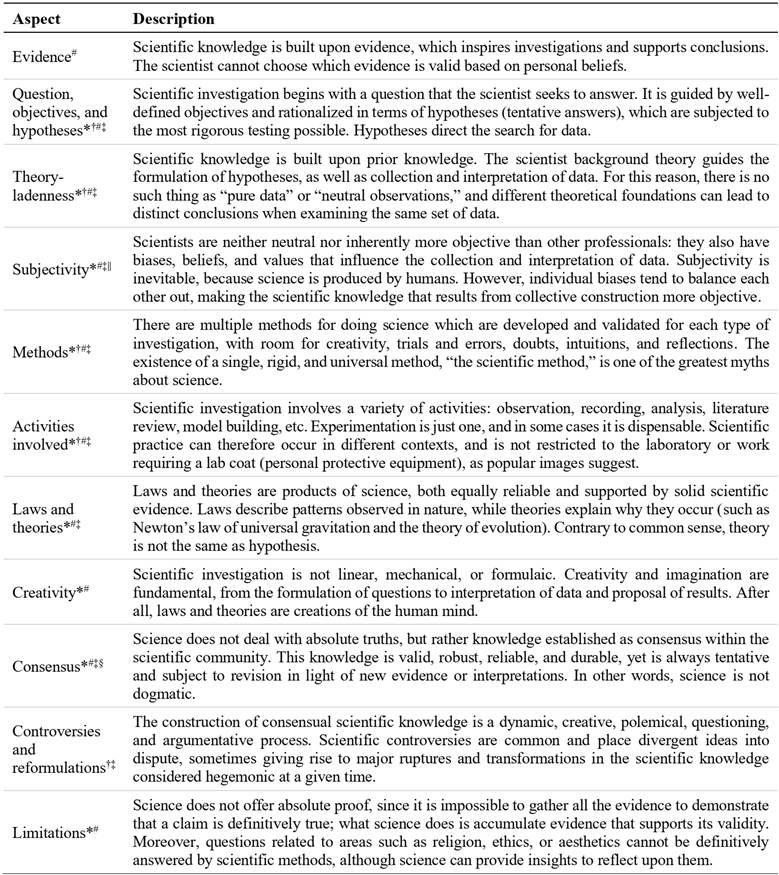 Note. Prepared by the authors based on *
 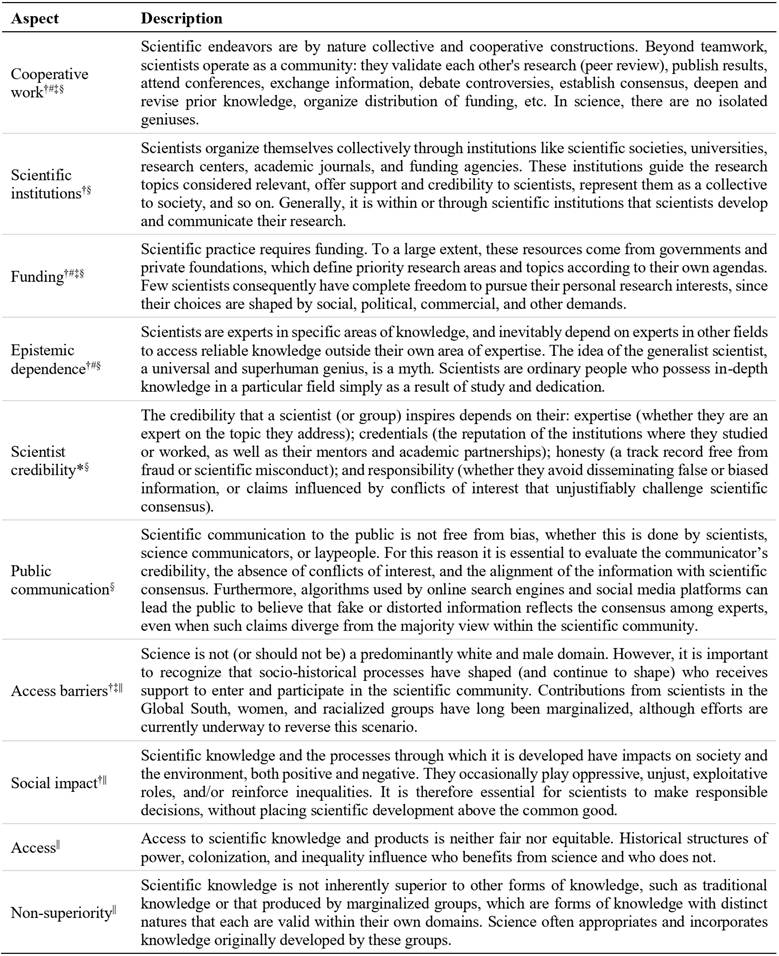 Note. Prepared by the authors based on *
 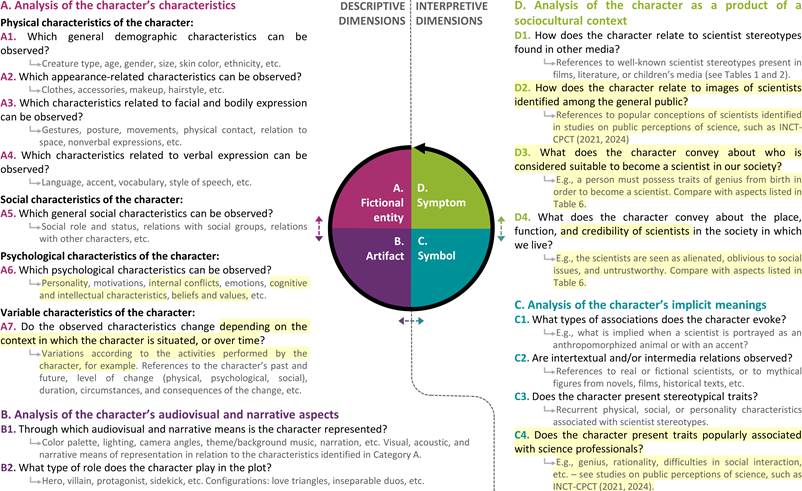 Note. Prepared by the authors based on Nieto (2014), with our additions highlighted in yellow.
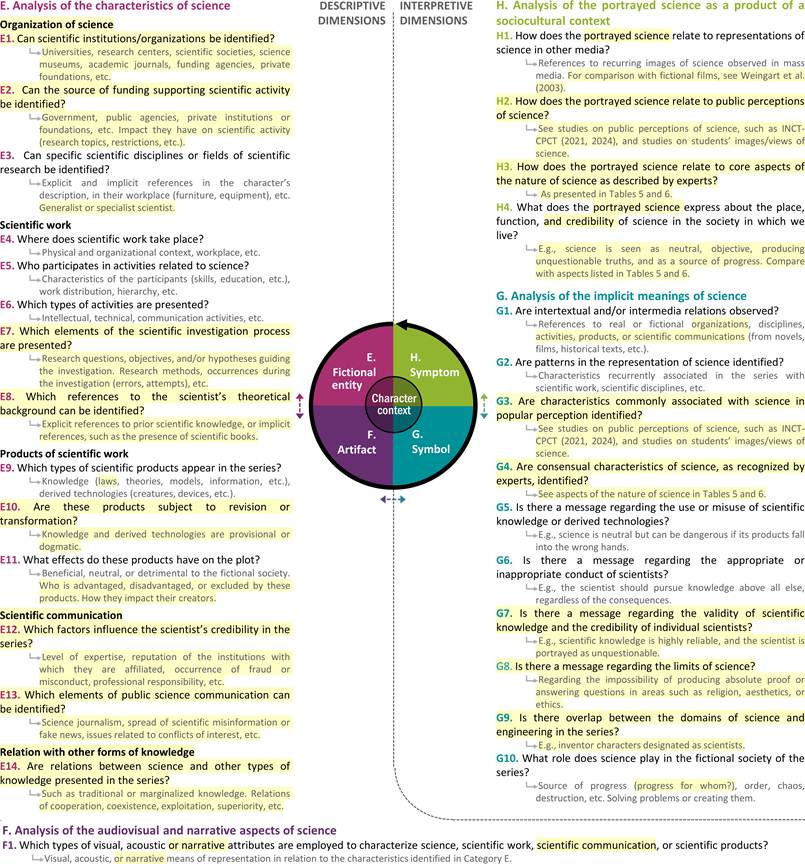 Note. Prepared by the authors based on Nieto (2014), with our additions highlighted in yellow.