
 Contributions of Educational Robotics to Environmental Sustainability: perception of teachers and apprentices from Public Schools
ABSTRACT
In this study, Educational Robotics was understood as a strategy to promote interdisciplinary teaching, in a playful way, with the aim of promoting learning of curricular concepts, developing relevant skills, in addition to stimulating the creativity and autonomy of users. The objective was to evaluate the perception of teachers and students from Public Schools about the contribution of Educational Robotics to develop notions of environmental sustainability, through the application of a questionnaire sent to them via the Google Forms platform. The results indicated that the expressive majority of participants highlighted: (i) the advantage of using technological and industrial residues in activities, due to the low acquisition cost and the ease of obtaining them; (ii) the potential to address themes that are transversal to the school curriculum, such as environmental sustainability and the recycling of technological and industrial waste; (iii) the relevance of teaching Educational Robotics to sharpen students' view of the importance of recycling processes for technological waste; (iv) the increase in student interest in the school, causing positive impacts on learning.
Keywords:
Elementary School; Educational Robotics; Environmental Sustainability; Educational Assessment
RESUMO
Neste estudo compreendeu-se a Robótica Educacional como estratégia para fomentar o ensino interdisciplinar, de forma lúdica, com o fito de promover aprendizagens de conceitos curriculares, desenvolver competências relevantes, além de estimular a criatividade e a autonomia dos usuários. Objetivou-se analisar as percepções de docentes e discentes de Escolas Públicas acerca da contribuição da Robótica Educacional para desenvolver noções de sustentabilidade ambiental, através da aplicação de um questionário enviado via plataforma Google Forms. Os resultados revelaram que a maioria dos participantes expressou: (i) a vantagem em se empregar resíduos tecnológicos e industriais nas atividades, devido ao baixo custo de aquisição e à facilidade de obtenção; (ii) a potencialidade de se abordar temas transversais ao currículo escolar, tais como a sustentabilidade ambiental e a reciclagem de resíduos tecnológicos e industriais; (iii) a relevância da Robótica Educacional para aguçar a visão do alunado acerca da utilidade dos processos de reciclagem de resíduos tecnológicos; (iv) o incremento no interesse do alunado pela escola, ocasionando impactos positivos sobre o aprendizado formal.
Keywords:
Ensino Fundamental; Robótica Educacional; Sustentabilidade Ambiental; Avaliação Educacional
RESUMEN
En este estudio se entendió la Robótica Educativa como una estrategia para promover la enseñanza interdisciplinaria, de forma lúdica, con el objetivo de promover el aprendizaje de conceptos curriculares, desarrollar habilidades relevantes, además de estimular la creatividad y autonomía de los usuarios. El objetivo fue analizar las percepciones de docentes y alumnos de Escuelas Públicas sobre la contribución de la Robótica Educativa para desarrollar nociones de sustentabilidad ambiental, a través de la aplicación de un cuestionario enviado a través de la plataforma Google Forms. Los resultados revelaron que la mayoría de los participantes expresaron: (i) la ventaja de utilizar residuos tecnológicos e industriales en las actividades, debido al bajo costo de adquisición y la facilidad de obtención; (ii) el potencial para abordar temas transversales al currículo escolar, como la sostenibilidad ambiental y el reciclaje de residuos tecnológicos e industriales; (iii) la relevancia de la Robótica Educativa para agudizar la visión de los estudiantes sobre la utilidad de los procesos de reciclaje de residuos tecnológicos; (iv) el aumento del interés de los estudiantes por la escuela, provocando impactos positivos en el aprendizaje formal.
Palavras-chave:
Escuela Primaria; Robótica Educativa; Sostenibilidad Ambiental; Evaluación Educativa
Proto History of Robotics: the origin of the first Robots
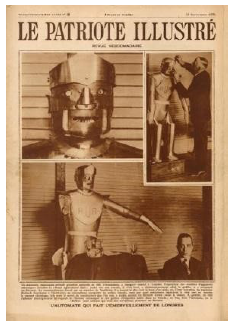
When approaching the topic of Robotics1, we are driven to imagine machines, automatons, robots and computerized systems in action. However, before any discussion on this subject, it is essential to highlight the origin of the word Robot, coming from the Czech term Robotnik, which means servant, working slave (Murphy, 2019). The mentioned term was pioneered by the Czech writer Karel Čapek, in 1920, in the play of his own, entitled Rossumovi Univerzální Roboti (Rossum's Universal Robots), according to Figure 1.

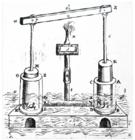
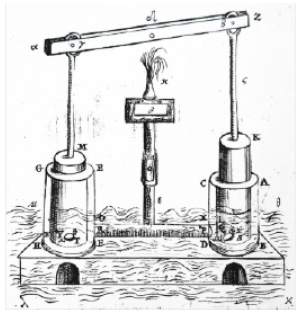
It is worth noting, however, that historical facts illustrate the use of mechanized devices since ancient times. For example, in 230 BC the Greek inventor and mathematician Ctesibius, considered the first Head of the Museum of Alexandria (Egypt) and the “Father of Pneumatics”, created several devices based on the movement of water, such as a hydraulic organ that was a precursor to the water clock (clepsydra), whose functioning was so regular and precise that only in the 17th century, with the emergence of pendulum clocks, the pioneering invention was overshadowed (Figure 2).
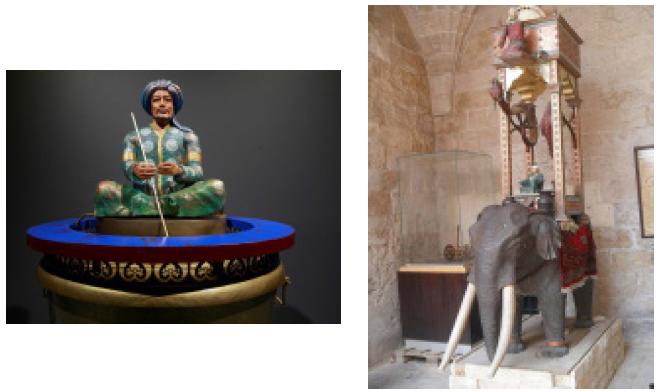
In 1206 AD the Turkish astronomer, mathematician and engineer, Ibn Al-Razzaz Al-Jazari, considered by many to be the “Father of Robotics”, created and published the work “The Book of Knowledge of Ingenious Mechanical Devices”, which contains schematic information and drawings of various mechanized devices, including prototypes of automatons (Hill, 1974). In Türkiye, the Istanbul Cezere Museum exposes some of the most ingenious devices proposed by Al-Jazari, such as the two illustrated below (Figure 3).
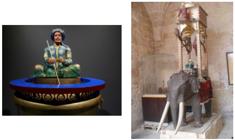
In the image on the left, a glass clock powered by the force of water is presented, which was used by the Turkmen Artuqid dynasty during the military campaigns, whose central figure is a man with a turban holding a stick (pointer). In the image on the right, a reproduction of the Elephant Clock is presented, considered by many to be the most famous and complex work of the genius Al-Jazari, which is on display at the Kasimiye Madrasa, in Türkiye.
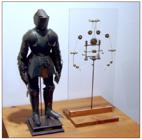
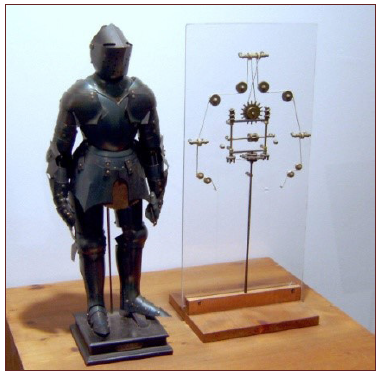
In 1495 AD the Italian scientist Leonardo Da Vinci designed and built a prototype automaton. It was about a humanoid in the shape of a knight with a full armor and helmet, who carried a sword and imitated some human movements. (Valero et al., 2011). A model of an automaton made from drawings developed by Da Vinci is illustrated in Figure 4.
In the period of 1768 to 1774 AD the Swiss inventors Pierre and Henri Louis Jacquet-Droz (father and son) created several automatons, among them a boy who wrote a message of up to 40 characters (The Writer, formed by 6000 mechanical parts); a pianist girl (The Musician, formed by 2500 mechanical parts); an artist boy who could draw up to four pictures (The Draftsmen, formed by 2000 mechanical parts).
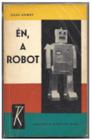
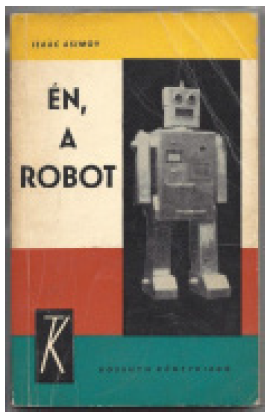
Notwithstanding these ancient historical facts, the term Robotics was only used in a systematic way in 1942, by the Russian scientist Isaac Asimov. At the time, in his work I, Robot, illustrated in Figure 5, Asimov announced the three Basic Laws of Robotics2. Later, during the rapid industrialization that occurred at the end of World War II, due to the demand for increased industrial efficiency and for the quality of processed products improvement, the construction and use of robots in corporations began, with the aim of guaranteeing a single quality standard for processes and goods, increasing efficiency and productivity.
Therefore, the modern conception of Robotics is associated with the needs of large corporations, industries, organizations and companies in order to meet new social demands. (Ghezzi; Corleta, 2016). Nowadays, Robotics is present in much more sophisticated systems, with national security and space navigation functions, together with Artificial Intelligence, because they are scientific areas of high strategic importance for scientific progress and the technological independence of nations (Perez et al., 2018). To conclude this topic, it is convenient to highlight the definition of Robot adopted in this study: programmable machine to perform a particular set of simple or complex tasks, with or without human assistance (Ginoya; Maddahi; Zareinia, 2021).
Origins of Educational Robotics
Robotics began to be used in the educational field with the work of William Ross Ashby, an English doctor and psychiatrist, who, in the early 1950s, developed several studies in Cybernetics, becoming a pioneer (Valero et al., 2011). Between 1948 and 1949, the North-American William Gray Walter, a renowned neurophysiologist, studied and analyzed how a small number of connections could give rise to very complex behaviors, using, for that, two autonomous robots called Elmer and Elsie.
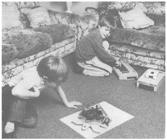
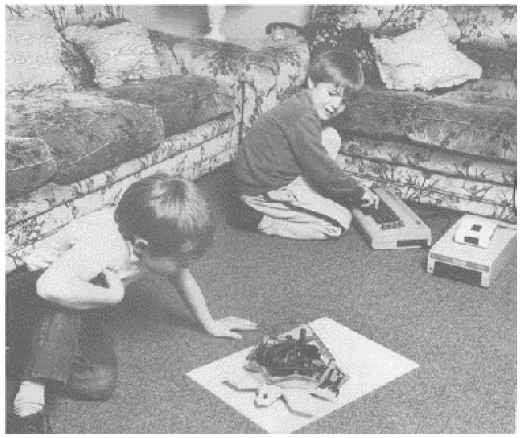
However, it was the South African mathematician Seymour Papert who promoted Robotics into a prominent area in Education by creating, in 1964, the term constructionism to designate the constructivist pedagogical approach, in which the apprentice is responsible for developing his own knowledge, resorting to the systematic use of some technological device, as shown in the illustration below (Massa; Oliveira; Campos, 2022). From this pedagogical perspective, technological tools can help increase knowledge, as they are artifacts that facilitate the adaptation of teaching strategies to the principles of constructivism proposed by the Swiss Jean William Fritz Piaget, enhancing the use of technologies in educational contexts in favor of students' learning and development.
Characterization of Educational Robotics
The Interactive Dictionary of Brazilian Education (2020) defines the Educational Robotics or Pedagogical Robotics as a pedagogical activity carried out in environments focused on learning, with the use of scrap materials or kits composed of diverse parts, such as motors and sensors, which can be manipulated by computer and softwares, that enable the functioning of models created from an established didactic-pedagogical plan a priori (Andriola, 2024). Therefore, Educational Robotics is an interdisciplinary and playful teaching strategy, focused on learning curricular concepts (Campos, 2017; Menezes; Santos, 2015; Alves; Sampaio; Elia, 2014; Zanetti et al., 2013). From this perspective, the use of educational robotics has numerous objectives and methodologies for its execution, however, in general, it requires the learner to follow specific instructions, to create and experiment with the specific inputs intended for the task, thus characterizing dynamic and interactive action to consolidate learning (Azevêdo; Francisco; Nunes, 2017).
Actions resulting from the use of Educational Robotics are linked to the teaching of very specific pedagogical contents in natural sciences, mathematics, design, cybernetics, artificial intelligence and visual arts, among others (Flannery; Kazakoff; Bontá, 2013). Furthermore, the production of automated systems allows students to reflect on the impacts that research projects can generate in the educational, social, cultural and environmental spheres (Gordiano; Andriola, 2022). Nowadays, there are companies that manufacture robotics kits, with projects and guidelines for the use of these materials in teaching, allowing the creation of systems controlled by commands originating from programming languages, according to Cunha and Nascimento (2018). However, many of these systems are built using recyclable materials, as illustrated in Figure 7.

Below are described the potentialities of Educational Robotics to address curricular themes that are very relevant to social life in the 21st century, including environmental sustainability supported by the reuse of electronic waste (e-waste), further providing the development of problem-solving skills and creativity (Andriola, 2022a).
Potentialities of Educational Robotics for the School Curriculum
One of the potentialities of Educational Robotics, especially when it uses technological and industrial waste suitable for recycling, focuses on the possibility of addressing environmental sustainability, as well as the advantages of reusing technological waste (e-waste)3. According to the United Nations Organization (ONU), in 2012 the annual Brazilian production per capita was half a kilo of electronic waste, resulting in the volume of almost 100,000 tons of e-waste produced in the year in question (Baldé et al., 2017), based on data from the latest demographic census, carried out by the Brazilian Institute of Geography and Statistics (IBGE).
It can, therefore, be seen that this amount of e-waste is related to two factors: (a) the technological evolution and (b) the unbridled consumerism of technological products. On the other hand, consumerism for increasingly modern materials, with increasingly advanced technologies and functionalities (phenomenon of the "planned obsolescence") results in a rapid increase in the volume of discarded material, often inappropriately, causing severe environmental and social problems. Therefore, it is important to address issues associated with environmental sustainability through the teaching of Educational Robotics.
In this sense, there will be cited some studies that attest to the feasibility and relevance of research actions on environmental sustainability, in addition to illustrating the capacity of Educational Robotics to develop new skills in young citizens of the 21st century and, therefore, contribute to this curricular theme of the greatest social importance. For example, in Celinski's et al. (2012) study, the action resulting from university extension was exemplified, which addressed the conscious disposal of electronic waste and discussed the feasibility of reusing these materials in low-cost educational robotics actions aimed at students in public schools.
Paiva et al. (2016) carried out a study with students of Bachelor's Degree in Computing, with the aim of introducing them to actions focusing on the reuse of e-waste, in order to produce games and didactic-pedagogical materials aimed at use in teaching. In conclusion, the authors highlighted the potential of this type of action to: (i) the reduction of environmental impact resulting from the reuse of electronic waste; (ii) the creation of teaching materials to be used in the teaching process, combining environmental awareness and student engagement. Other potentialities are highlighted next.
Contributions of Educational Robotics to the development of student skills
According to the opinions of Andriola (2024), Pereira, Araújo and Bittencourt (2019), there are several skills that can be developed, exercised and improved through the introduction of Educational Robotics in the teaching of the initial series of Basic Education. In this vein, the occurrence of the following contributions is theorized:
-
a) Stimulus to logical reasoning: When acquiring knowledge about algorithms and programming, learners are induced to think in a logical and structured way, as they will program hierarchical actions, through specific codes created by numerical and/or semantic sequences. In this way, learners develop the left side of the brain, responsible for logical reasoning, analysis and critical thinking skills (Andriola; Cavalcante, 1999).
-
b) Aid to cognitive organization: Learning programming leads to the organization of thoughts and reflection on the actions that must be implemented to solve the challenges involved in creating automatons, games or applications. Such activity will have an impact on the ability to organize, plan activities, structure cognition and organize studies (Andriola, 2021b).
-
c) Stimulus to creativity: students acquire the ability for logical and structured thinking; they develop creative capacity to analyze, plan and execute an action; they are encouraged to work as a team, in a cooperative manner (Barros; Lins, 2017; Lima; Andriola, 2013; Andriola, 2022a).
-
d) Stimulus to the acquisition of skills to resolve unforeseen events: programming will allow learners to develop skills to solve adverse and unforeseen problems, providing experiences to adequately deal with failures and frustrations (Andrade; Massabni, 2011; Taha et al., 2016).
-
e) Support for learning mathematics, physics and English: Robotics users become very effectively familiar with numbers and new concepts, they learn to reason more precisely and in a hierarchical manner, based on hypotheses that must be applied in practice. There are reports of visible progress made by these learners, with repercussions on their academic performance, especially in areas that require logical reasoning, such as mathematics, physics and languages, according to Oliveira, Silva and Sousa Júnior (2019).
-
f) Support for improving writing: Robotics teaching can help and improve writing, as the student acquires the ability to better organize their ideas, positively impacting the ability to structure written texts (Andriola, 2021b).
-
g) Increased motivation and educational involvement: Learning to program encourages students to discover new potential, leading them to be more engaged and enthusiastic in the search for solutions to school challenges. Because they have different skills, they will probably stand out academically and professionally (Andriola, 2021a; 2022a).
Potential of Educational Robotics to Boost Teaching
The pedagogical bases of teaching practices have evolved towards concepts that place “the student at the center of the process”, inverting the starting point of reflection: We must understand how students learn, so that we know how the teacher should teach (Altet, 2004). From this perspective, the most appropriate proposal for the use of Educational Robotics in teaching is based on production of work projects, because this enables learners to acquire new scientific knowledge (Barros; Lins, 2017; Silva; Lima; Andriola, 2016). This strategy subverts teaching and learning practices based on memorizing formulas and calculations, in which students did not identify their applicability. From this new pedagogical perspective, the creation of problem situations generates demands for knowledge that will be developed from an interdisciplinary perspective, distinct from the traditional curricular vision and organization (Papert, 1994; Lemos et al., 2025).
Thus, the act of teaching based on the production of work projects is an innovative pedagogical act in terms of the understanding of teaching-learning, in which knowledge is produced in close harmony with the contexts of application, becoming a dynamic process (Araújo; Andriola; Coelho, 2018). In this vein, the work project focuses on promoting the progressive involvement of learners in the various activities undertaken voluntarily by them, under the mediation of teachers (Santos; Araújo; Bittencourt, 2018; Andriola, 2021c; 2022b). Consonant Silva, Martines and Amaral (2016), the work project provides learning situations that favor autonomy and discipline, mediated by situations created in the classroom, focused on reflection, discussion, criticism and decision-making around the work being carried out. However, this pedagogical activity will involve the use of multidisciplinary pedagogical elements, with the support of Information and Communication Technologies, as highlighted by Hernández and Ventura (2016), Andriola and Gomes (2017), Paniago et al. (2020), Gordiano and Andriola (2022).
As a result of the theoretical positions and the results of the various studies explained, qualitative research was planned with teachers and students from Public Educational Institutions with the objectives of:
-
(i) Identify the types of materials used in the construction of Educational Robotics kits and their advantages;
-
(ii) To assess the development of skills aimed at understanding the relevance of the notion of environmental sustainability;
-
(iii) Describe the impacts on pedagogical aspects associated with learning, such as interest in school, motivation to study and to improve academic performance.
Methodology and Locus Research
It was a study ex post-facto, of a descriptive nature, carried out in four Public Basic Education Institutions in the city of Fortaleza (CE), in which a Scale was used to assess the perception of students and teachers about Educational Robotics.
Instrument and Procedure
The Scale to Assess Perception of Educational Robotics was developed by Andriola (2021a) and consists of 15 items with a four-point Likert-type response scale: 1. Totally Disagree; 2. Disagree; 3. Agree; 4. Totally Agree. The application of the aforementioned instrument took place in February and March of 2020, a period prior to the Covid-19 Pandemic, when face-to-face classes took place in person. Data collection was carried out through the use of the Google Docs Platform, in which the aforementioned scale was available to the participants.
Sample of Participants
The student sample consisted of six male respondents, aged between 16 and 19 years old (average = 17.8 years old; mode = 18 years old) and attending High School. Regarding teachers, the sample consisted of four teachers, composed of three men and one woman, aged between 27 and 55 years old (average = 43 years old). Teaching experience ranged from 4 to 30 years (average = 16.7 years), while the time as a teacher of Educational Robotics ranged from 1 to 10 years (average = 4 years).
Presentation and Discussion of Results
When asked about the nature of the material used in training sessions using Robotics, teachers and students unanimously reported that they used technological and industrial waste, generally recycled. Regarding the benefits of using this type of material, teachers and students highlighted the aspects presented in Table 1.
According to the information, it was found that Teachers and Students emphasized the low acquisition cost and ease of obtaining materials, as the most advantageous factors for using technological and industrial waste in Educational Robotics activities. Furthermore, they highlighted the potential of addressing themes that are transversal to the school curriculum, such as environmental sustainability and the recycling of technological and industrial waste, extremely relevant aspects in this second decade of the 21st century, corroborating the results obtained by Galvão et al. (2020), Albuquerque et al. (2019), Barros and Lins (2017), Baldow et al. (2018), Bogarim, Larrea and Ghinozzi (2015) and Celinski (2012).
To get an idea of the magnitude of the problem resulting from technological and industrial waste, the Association of Furniture Industry Companies (GSMA) reported that in 2014 Brazil produced 36% of Latin America's e-waste, the equivalent to 1.4 million tons. This frightening scenario highlights the importance of nations adopting actions aimed at recycling and reusing this material. In this context, Educational Robotics can fulfill an important social function by introducing pedagogical practices that reuse and employ e-waste with the aim of developing technological artifacts that can be used in school spaces (Albuquerque et al., 2019).
Given the aforementioned scenario, Table 2 provides us with information on the contributions of teaching Educational Robotics to awaken students' vision regarding the importance of recycling electronic and industrial waste (e-waste).
The results reveal that all teachers agreed with the contribution of teaching Educational Robotics to sharpen students' vision about the importance of technological waste recycling processes. Among the students, the significant majority (83.3% or n = 5) also agreed with the contribution of teaching Educational Robotics to assess knowledge about the relevance of recycling and reusing e-waste. Baldow et al. (2018) highlighted that pedagogical practices through Educational Robotics can provide learning about the importance of reusing e-waste and the adequacy of disposal. Oliveira, Sobral and Oliveira (2020) emphasized the diversity of pollutants and contaminants originating from e-waste, with lead being one of the most dangerous and harmful to the environment. This element is considered highly toxic, as it is a heavy metal that can accumulate in the animal or plant organism. Once lead is present in e-waste and is disposed of inappropriately in the environment, it may cause the release of this metal and directly impact soil quality, contaminating surface and/or underground aquifers, potentially affecting entire populations of consumers (Domingues; Biajone, 2019).
Therefore, by using e-waste in the activities that are part of Educational Robotics, it is possible to raise students' awareness about the correct disposal of electronic equipment, in addition to increasing the knowledge involved in this type of activity, to the point of encouraging students to learn content focused on Biology, Ecology, Geography and other Natural Sciences, informing them how this knowledge can solve the serious problems of today's societies. Therefore, Educational Robotics can enable the proposal of pedagogical strategies in several disciplines, not restricted to Physics and Mathematics, but also to Biology and Chemistry, favoring interdisciplinary work (Albuquerque et al., 2019).
As a result of the possibilities described so far, it is also anticipated that teaching strategies supported by Educational Robotics will deepen and strengthen students' interest in school, thus reducing cases of failure, absenteeism and dropout. In this vein, Table 3 contains information on the contribution of Educational Robotics to increasing students' interest in school.
All teachers highlighted that Educational Robotics contributes to increasing students' interest in school, and the same occurs among apprentices. Therefore, there is a huge possibility of using Educational Robotics to deepen and increase students' interest in school activities in the various areas of human knowledge, highlighting usability in industrial and technological processes, thus awakening the interest of learners in these areas.
In this direction, Pereira Júnior, Sardinha and Santos Jesus (2020) highlighted the challenge of almost 5,600 Brazilian municipalities adopting Public Policies for the management of waste from electrical and electronic equipment, which, in 2015, reached the volume of one million tons. Furthermore, since most Brazilian municipalities do not have sanitary landfills, these wastes are disposed of in landfills not monitored by the government, or thrown into open-air dumps. Robazzi (2018) asserted that in Brazil, the use of robots in the health field has been increasing, including less invasive and painful procedures. The aforementioned author also highlighted that employment in Nursing is still restricted to the training and qualification of nurses to assist in surgical procedures. Robots can be designed to perform some assistance activities, reducing working time, facilitating actions that require minimal error, assisting professionals in providing qualified medical care.
Finally, the positive impacts of Educational Robotics on student learning were investigated, as shown in Table 4.
All teachers highlighted that Educational Robotics has a positive impact on students' academic learning, reinforcing a similar view expressed by the majority of students. Therefore, according to the positions of Saavedra and Opfer (2012), Peralta and Guimarães (2018) and Andriola (2024), In schools where there are Educational Robotics activities, the community shows great enthusiasm, resulting in rapid adherence to the various pedagogical activities with prominent results on student learning. Furthermore, Robotics practices favored the development of an interdisciplinary culture, with discussions being observed between teachers from different areas, about how to carry out teaching activities based on the use of robots built by the students themselves with e-waste. Furthermore, greater intensity was observed in communication between teachers.
Final Considerations
Researchers in the field of Educational Robotics assert, in a majority, that this is a relevant and innovative pedagogical strategy, whose adequate use can contribute to improving the quality of teaching and student learning, since it enhances the practice of new teaching methodologies. In this particular study, which highlighted the possibility of introducing Educational Robotics as a teaching strategy, based on the use of e-waste as raw material for the manufacture of automatons, it was found that the overwhelming majority of participants indicated:
-
a) Advantages in the use of technological and industrial waste, resulting from low cost and ease of obtaining;
-
b) Potentialities for addressing cross-curricular themes such as environmental sustainability and recycling of technological and industrial waste;
-
c) Relevance of teaching Educational Robotics to sharpen students' vision about the importance of correct disposal of e-waste;
-
d) Increased student interest in school, resulting in positive impacts on the educational environment, with a reduction in student dropout rates and an increase in formal learning;
-
e) Inducing students to creative thinking, implying an effective educational contribution to innovation;
-
f) Induction to interdisciplinary teaching through pedagogical situations that will require dialogue between teachers from multiple areas of human knowledge.
This peculiar educational strategy, based on the use of e-waste as raw material for the production of lower-cost robotics kits, more easily accessible to the communities served by public schools, comes close to the principle contained in a luminous phrase uttered by the eminent Prof. Peter Ferdinand Drucker, an Austrian living in the United States, considered the father of the modern field of Administration: Effective innovations are surprisingly simple. In fact, the greatest compliment an innovation can receive is to have someone say, “Wow, that’s obvious! Why didn’t I think of that before?”.
References
-
AGÊNCIA DE NOTÍCIAS DA INDÚSTRIA. Como construir um robô de baixo custo? Confira o tutorial! 2023-07-14. https://noticias.portaldaindustria.com.br/noticias/educacao/como-construir-um-robo-de-baixo-custo-confira-o-tutorial/
» https://noticias.portaldaindustria.com.br/noticias/educacao/como-construir-um-robo-de-baixo-custo-confira-o-tutorial - ALBUQUERQUE, Edson; BALDOW, Rodrigo; LEITE, Bruno; LEÃO, Marcelo. Robótica Sustentável e o Ensino de Química: uma Prática Pedagógica Utilizando Lixo Eletrônico. XII Encontro Nacional de Pesquisa em Educação em Ciências (XII ENPEC), Natal, UFRN, 2019.
- ALTET, Marguerite. L’analyse des pratiques en formation initiale des enseignants: développer une pratique réflexive sur et pour l’action. Éducation Permanente, n. 159, p. 101-111, 2004.
- ALVES, Rafael; SAMPAIO, Fábio; ELIA, Marcos. Duino Blocks: Desenho e Implementação de um Ambiente de Programação Visual para Robótica Educacional. Revista Brasileira de Informática na Educação, v. 22, n. 3, p. 216-240, 2014.
-
ANDRADE, Marcelo Leandro; MASSABNI, Vânia. O desenvolvimento de atividades práticas na escola: um desafio para os professores de ciências. Ciência e Educação, v.17, n.4, p. 835-854, 2011. https://doi.org/10.1590/S1516-73132011000400005
» https://doi.org/10.1590/S1516-73132011000400005 -
ANDRIOLA, Wagner Bandeira. Aprendizes com altas habilidades. Revista Docentes, v. 7, p. 29-37, 2022a. https://revistadocentes.seduc.ce.gov.br/revistadocentes/article/view/329
» https://revistadocentes.seduc.ce.gov.br/revistadocentes/article/view/329 -
ANDRIOLA, Wagner Bandeira. Escala para avaliar a qualidade da mediação docente em ambiente universitário: adaptação cultural e evidências de validade. Perspectiva, v. 40, p. 1-19, 2022b. https://doi.org/10.5007/2175-795X.2022.e67993
» https://doi.org/10.5007/2175-795X.2022.e67993 -
ANDRIOLA, Wagner Bandeira. Evaluation of the quality of teaching mediation in a university environment. Revista Diálogo Educacional, v. 21, n. 68, p. 75-100, 2021c. https://doi.org/10.7213/1981-416X.21.068.DS04
» https://doi.org/10.7213/1981-416X.21.068.DS04 - ANDRIOLA, Wagner Bandeira. Familiaridade de Alunos do Ensino Fundamental com a Robótica Educacional. Revista Educação e Linguagem, v. 8, n. 1, p. 34-54, 2021b.
-
ANDRIOLA, Wagner Bandeira. Impactos da Robótica no Ensino Básico: estudo comparativo entre Escolas Públicas e Privadas. Ciência e Educação, v. 27, e21050, 2021a. https://doi.org/10.1590/1516-731320210050
» https://doi.org/10.1590/1516-731320210050 -
ANDRIOLA, Wagner Bandeira. Robótica Educacional em Escolas Públicas do Ceará: avaliação dos impactos sobre o desenvolvimento de competências discentes e a qualidade do ensino. Revista Docentes, v. 9, n. 25, p. 60-72, 2024. https://periodicos.seduc.ce.gov.br/revistadocentes/article/view/737
» https://periodicos.seduc.ce.gov.br/revistadocentes/article/view/737 -
ANDRIOLA, Wagner Bandeira; CAVALCANTE, Luanna Rodrigues. Avaliação do raciocínio abstrato em estudantes do ensino médio. Estudos de Psicologia, v. 4, n. 1, p. 23-37, 1999. https://doi.org/10.1590/S1413-294X1999000100003
» https://doi.org/10.1590/S1413-294X1999000100003 -
ANDRIOLA, Wagner Bandeira; GOMES, Carlos Adriano. Programa Um Computador Por Aluno (PROUCA): uma análise bibliométrica. Educar em Revista, n. 63, p. 267-288, 2017. https://doi.org/10.1590/0104-4060.48230
» https://doi.org/10.1590/0104-4060.48230 -
ARAÚJO, Adriana Castro; ANDRIOLA, Wagner Bandeira; COELHO, Afrânio Araújo. Programa Institucional de bolsa de Iniciação à Docência (PIBID): desempenho de bolsistas versus não bolsistas. Educação em Revista, n.34, e172839, 2018. https://doi.org/10.1590/0102-4698172839
» https://doi.org/10.1590/0102-4698172839 -
AZEVÊDO, Edjane; FRANCISCO, Deise; NUNES, Albino. O Avanço das publicações sobre a robótica educacional como possível potencializadora no processo de ensino aprendizagem: uma revisão sistemática da literatura. Revista Educacional Interdisciplinar, v. 6, n. 1, 2017. https://seer.faccat.br/index.php/redin/article/view/623
» https://seer.faccat.br/index.php/redin/article/view/623 - BALDÉ, Cornelis; FORTI Vanessa; GRAY, Vanessa; KUEHR, Ruediger; STEGMANN, Paul. The Global E-waste Monitor - 2017. United Nations University (UNU), International Telecommunication Union (ITU) & International Solid Waste Association (ISWA), Bonn/Geneva/Vienna, 2017.
-
BALDOW, Rodrigo; FARIAS FILHO, Everaldo; LEITE, Bruno; FARIAS, Carmen; LEÃO, Marcelo. Ensino de física e educação ambiental: percepções de sustentabilidade dos estudantes em uma atividade de robótica sustentável. Experiências em Ensino de Ciências, v. 13, n. 5, p.152-167, 2018. https://fisica.ufmt.br/eenciojs/index.php/eenci/article/view/95
» https://fisica.ufmt.br/eenciojs/index.php/eenci/article/view/95 - BARROS, Evérton; LINS, Walquíria. O Ensino da Robótica Educacional por Meio do E-Waste: uma Proposta de Baixo Custo e Reuso de Materiais Eletrônicos. In: CONGRESSO SOBRE TECNOLOGIAS NA EDUCAÇÃO (CTRL+E 2017), 2, 2017, João Pessoa. Anais... Universidade Federal da Paraíba - Campus IV - Brasil 18, 2017-05-19 and 20.
- BOGARIM, Cíntia; LARREA, Andreia; GHINOZZI, Glauder. Larpp Sustentável e seu Auxílio na Educação Ambiental nas Escolas e Comunidade de Ponta Porã. In: CONGRESSO NACIONAL DE EDUCAÇÃO, 2, 2015, Campina Grande. Anais...Campina Grande, p. 1-5, 2015.
-
CAMPOS, Flávio. Robótica educacional no Brasil: questões em aberto, desafios e perspectivas futuras. Revista Ibero-Americana de Estudos em Educação, v. 12, n. 4, p. 2108-2121, 2017. https://doi.org/10.21723/riaee.v12.n4.out./dez.2017.8778
» https://doi.org/10.21723/riaee.v12.n4.out./dez.2017.8778 - CELINSKI, Tatiana Montes; CERUTTI, Diolete Marcante Lati; CELINSKI, Victor George; CERUTTI, Idomar Augusto; IELO, Frederico Guilherme de Pádua Ferreira. Robótica Educativa: uma Proposta para o Reuso do Lixo Eletrônico em uma Atividade de Extensão Universitária. In: CONGRESSO INTERNACIONAL DE EDUCAÇÃO, PESQUISA E GESTÃO, 4, Curitiba, 2012. Anais... Curitiba, 2012.
- CUNHA, Felipe; NASCIMENTO, Cristiane. Uma Abordagem Baseada em Robótica e Computação Desplugada para Desenvolver o Pensamento Computacional na Educação Básica. SIMPÓSIO BRASILEIRO DE INFORMÁTICA NA EDUCAÇÃO (SBIE), 29, Fortaleza, 2018. Anais... Fortaleza, Ceará, 2018. p. 1845-1849
-
DICIONÁRIO INTERATIVO DA EDUCAÇÃO BRASILEIRA. Agência Educa Brasil. 2020. www.educabrasil.com.br/eb/dic/dicionario.asp?id=49
» www.educabrasil.com.br/eb/dic/dicionario.asp?id=49 -
DOMINGUES, Marcelo Arruda; BIAJONE, Jefferson. O impacto do lixo eletrônico no mundo globalizado. Perspectiva em Educação, Gestão & Tecnologia, v. 8, n. 16, p. 1-10, 2019. https://sif.fatecitapetininga.edu.br/perspectiva/pdf/16/e16artigo%20(8).pdf
» https://sif.fatecitapetininga.edu.br/perspectiva/pdf/16/e16artigo%20(8).pdf - FLANNERY, Louise; KAZAKOFF, Elizabeth; BONTÁ, Paula. Designing ScratchJr: Support for early childhood learning through computer programming. In: PROCEEDINGS OF THE INTERNATIONAL CONFERENCE ON INTERACTION DESIGN AND CHILDREN, 12, New York, USA, 2013.
- GALVÃO, Angel Pena; REINOSO, Luiz Fernando; SOUZA JÚNIOR, João Lucio; SOUZA JÚNIOR; Edinelson Luis. Robótica sustentável: uma visão de sustentabilidade dos estudantes do Ensino Fundamental da Amazônia em atividades da Robótica Educacional. In: FERREIRA, Gustavo Henrique Cepolini. As ciências humanas como protagonistas no mundo atual (Org.) Ponta Grossa: Atena, 2020. p. 154-162.
-
GHEZZI, Tiago; CORLETA, Oly. 30 Years of Robotic Surgery. World Journal Surgery, v. 40, p. 2550-2557, 2016. https://doi.org/10.1007/s00268-016-3543-9
» https://doi.org/10.1007/s00268-016-3543-9 -
GINOYA, Tirth; MADDAHI, Yaser; ZAREINIA, Kourosh. A Historical Review of Medical Robotic Platforms, Journal of Robotics, n. 13, p. 1-13, 2021. https://doi.org/10.1155/2021/6640031
» https://doi.org/10.1155/2021/6640031 -
GORDIANO, Carlos Adriano Santos Gomes; ANDRIOLA, Wagner Bandeira. Percurso histórico do uso de tecnologias digitais na Escola Pública brasileira: do EDUCOM ao PROUCA. Revista Educação e Linguagem, v. 9, p. 40-57, 2022. https://www.fvj.br/revista/wp-content/uploads/2023/02/4_REdLi._2022.3.pdf
» https://www.fvj.br/revista/wp-content/uploads/2023/02/4_REdLi._2022.3.pdf - HERNÁNDEZ, Fernando; VENTURA, Montserrat. A organização do currículo por projeto de trabalho: o conhecimento é um caleidoscópio. Porto Alegre: Artmed, 2016.
- HILL, Donald Routledge. The Book of Knowledge of Ingenious Mechanical Devices: (Kitab fi ma 'rifat al-hiyal al-handasiyya) by Ibn al-Razzaz al-Jazari. D. Reidel Publishing Company, Boston, USA, 1974.
-
LEMOS, Ana Beatriz da Silva; XAVIER, Antônio Roberto; AMORIM, Aiala Vieira; ANDRIOLA, Wagner Bandeira; MARTINS, Elcimar Simão; TAVARAES, Rosalina Semedo de Andrade. Políticas Públicas de sustentabilidade e de educação ambiental inclusiva para estudantes surdos(as) de um município cearense. Revista Políticas Públicas & Cidades, v. 14, p. 1-15, 2025. https://doi.org/10.23900/2359-1552v14n2-19-2025
» https://doi.org/10.23900/2359-1552v14n2-19-2025 -
LIMA, Alberto Sampaio; ANDRIOLA, Wagner Bandeira. Avaliação de práticas pedagógicas inovadoras em curso de graduação em sistemas de informação. Revista Iberoamericana sobre Calidad, Eficacia y Cambio en Educación, v. 11, n. 2, p. 104-121, 2013. https://doi.org/10.15366/reice2013.11.1.007
» https://doi.org/10.15366/reice2013.11.1.007 - MASSA, Nayara Poliana; OLIVEIRA, Guilherme Saramago; CAMPOS, Josely Alves. O construccionismo de Seymour Papert e os computadores na Educação. Cadernos da Fucamp, v. 21, n. 52, p. 110-122, 2022.
-
MEE/RABIA ICLAL TURAN. Medieval robots: How al-Jazari's mechanical marvels have been resurrected in Istanbul. 2019-03-01. https://www.middleeasteye.net/discover/medieval-robots-turkey-how-science-genius-al-jazari-brought-mechanical-marvels-istanbul
» https://www.middleeasteye.net/discover/medieval-robots-turkey-how-science-genius-al-jazari-brought-mechanical-marvels-istanbul - MENEZES, Ebenezer; SANTOS, Thais. Verbete robótica educacional. Dicionário Interativo da Educação Brasileira - Educabrasil. São Paulo: Midiamix, 2015.
-
MIT BLACK HISTORY. Seymour Papert and The Turtle, ca. 1968. https://www.blackhistory.mit.edu/archive/seymour-papert-and-turtle-ca-1968
» https://www.blackhistory.mit.edu/archive/seymour-papert-and-turtle-ca-1968 - MURPHY, Robin. Introduction to A. I. Robotics. Cambridge: The Massachusetts Institute of Technology (MIT) Press, 2019.
-
NAVARRO, Fran. El robot que inventó Leonardo da Vinci hace más de 500 años. 2023-08-29. https://www.muyinteresante.com/historia/61295.html
» https://www.muyinteresante.com/historia/61295.html - OLIVEIRA, Andriele; SOBRAL, Luis Gonzaga; OLIVEIRA, Débora. Bio-extração de metais de base a partir de sucatas eletroeletrônicas: uma abordagem teórica. Rio de Janeiro: CETEM/MCT, 2020.
- OLIVEIRA, Janaina; SILVA, Hutson; SOUSA JÚNIOR, Arlindo. A Robótica Educacional como proposta de ensino de conceitos da Geometria. In: Encontro Baiano de Educação Matemática, 18, Ilhéus, 2019. Anais..., Ilhéus, Bahia. XVIII EBEM, 2019. p. 1-7.
- PAIVA, Daniel; GONZAGA, Gláucia; OLIVEIRA, Francisco; JASBICK, Daniel. Utilização de lixo eletrônico para a produção de jogos e materiais didático-pedagógicos. Educação Ambiental em Ação, n. 58, Ano XV, p. 1-14, 2016.
- PANIAGO, Rosenilde; NUNES, Patrícia; CUNHA, Fátima; SALES, Paulo Alberto; SOUZA, Calixto. Quando as Práticas da Formação Inicial se Aproximam na e pela Pesquisa do Contexto de Trabalho dos Futuros Professores. Ciência & Educação, v. 26, e20047, 2020.
- PAPERT, Seymour. A máquina das crianças: repensando a escola na era da informática. Porto Alegre: Artes Médicas, 1994.
- PERALTA, Deise; GUIMARÃES, Eduardo. A robótica na escola como postura interdisciplinar: o futuro chegou para a Educação Básica? Revista Brasileira de Informática na Educação, v. 26, n. 1, p. 30-50, 2018.
-
PEREIRA JÚNIOR, Antonio; SARDINHA, Aline; SANTOS JESUS, Edmir. Evolução e aplicação da tecnologia da informação e comunicação, os impactos ambientais e a sustentabilidade. Brazilian Journal of Development, v. 6, n. 1, p. 3628-3666, 2020. https://doi.org/10.34117/bjdv6n1-260
» https://doi.org/10.34117/bjdv6n1-260 - PEREIRA, Franscisco; ARAÚJO, Luis Gustavo; BITTENCOURT, Roberto. A. Intervenções de Pensamento Computacional na Educação Básica através de Computação Desplugada. In: SIMPÓSIO BRASILEIRO DE INFORMÁTICA NA EDUCAÇÃO (SBIE 2019), 29, Brasília, 2019. Anais..., Brasília, DF, 2018. p. 315-324.
- PEREZ, Javier; DELIGIANNI, Fani; RAVI, Daniele; YANG, Guang-Zhong. Artificial Intelligence and Robotics. Londres: UK-RAS Network, 2018.
-
ROBAZZI, Maria Lúcia do Carmo. The use of robots in nursing. Revista Latino-Americana de Enfermagem, v. 26, e3064, 2018. https://doi.org/10.1590/1518-8345.0000.3064
» https://doi.org/10.1590/1518-8345.0000.3064 -
ROSSUM'S UNIVERSAL ROBOTS. Album. Art & History. [s.d.] https://www.album-online.com/en/search?iSF=3&sT=ROSSUM%27S+UNIVERSAL+ROBOTS&iSp=269&sGs=mosaic&iPP=2
» https://www.album-online.com/en/search?iSF=3&sT=ROSSUM%27S+UNIVERSAL+ROBOTS&iSp=269&sGs=mosaic&iPP=2 - SAAVEDRA, Anna; OPFER, Darleen. Learning 21st-century skills requires 21st century teaching. Phi Delta Kappan, v. 94, n. 2, p. 8-13, 2012.
- SANTOS, Priscila, ARAÚJO, Luis Gustavo; BITTENCOURT, Roberto. A Mapping Study of Computational Thinking and Programming in Brazilian K-12 Education. IEEE Frontiers in Education Conference, 2018. p. 2-8
- SILVA, Francisco César; LIMA, Alberto Sampaio; ANDRIOLA, Wagner Bandeira. Avaliação do suporte de TDIC na formação do pedagogo: Um estudo em Universidade Brasileira. Revista Iberoamericana sobre Calidad, Eficacia y Cambio en Educación, v. 14, n. 3, p. 77-93, 2016.
- SILVA, Minelly; MARTINES, Elizabeth; AMARAL, William. Experimentação no ensino de Ciências e a formação inicial de professores. Revista Didática Sistêmica, v. 18, n. 1, p. 3-28, 2016.
- TAHA, Marli Spat; LOPES, Cátia Silene; SOARES, Emerson de Lima; FOLMER, Vanderlei. Experimentação como ferramenta pedagógica para o ensino de ciências. Experiências em Ensino de Ciências, v. 11, n. 1, p. 138-154, 2016.
- VALERO, Rosendo; KO, Youngwhii; CHAUHANA, Sanket; SCHATLOFF, Oscar; SIVARAMANA, Ananthakrishnan; COELHO, Rafael Ferreira; ORTEGA; Francisco; PALMER, Kenneth; SANCHEZ-SALAS, Rodolfo; DAVILA, Hugo; CATHELINEAUF, Xavier; PATEL, Vipul. Cirugía robótica: Historia e impacto en la enseñanza. Actas Urológicas Españolas, v. 35, n. 9, 540-545, 2011.
-
WORLD HISTORY ARCHIVE. Double piston suction and pressure fire pump, origin sometimes attributed to Ctesibius, 2018. https://www.alamy.com/double-piston-suction-and-pressure-fire-pump-origin-sometimes-attributed-to-ctesibius-image481927970.html?imageid=A74474A0-3A85-4800-A372-8BDF052621FE&p=75935&pn=1&searchId=720f98e6947ed3a0f2db4f0ea50eea78&searchtype=0
» https://www.alamy.com/double-piston-suction-and-pressure-fire-pump-origin-sometimes-attributed-to-ctesibius-image481927970.html?imageid=A74474A0-3A85-4800-A372-8BDF052621FE&p=75935&pn=1&searchId=720f98e6947ed3a0f2db4f0ea50eea78&searchtype=0 - ZANETTI, Humberto; SOUZA, Ana; D’ABREU, João; BORGES, Marcos. Uso de robótica e jogos digitais como sistema de apoio ao aprendizado. JORNADA DE ATUALIZAÇÃO EM INFORMÁTICA NA EDUCAÇÃO (JAIE), 1, Campinas, 2013. Anais..., Campinas, 2013. p. 142-161.
-
Support or funding:
National Council for Scientific and Technological Development (CNPq) - MCTIC/CNPq Call for Proposals No. 05/2019 - Science in Schools Program - Line 2: Intervention actions in basic education schools with a focus on science teaching (Process No. 440.471/2019-2).
-
Availability of research data:
The entire data set supporting the results of this study is available upon request to the author Wagner Bandeira Andriola, as personal information of the research participants is used.
-
1
tudy funded by the National Council for Scientific and Technological Development (CNPq) - Notice MCTIC/CNPq No. 05/2019 - Science at School Program - Line 2: Intervention actions in basic education schools focusing on science teaching (Process # 440.471/2019).
-
2
The three Laws of Robotics proposed by Isaac Asimov are: 1st Law: A robot may not injure a human being or, through inaction, allow a human being to come to harm; 2nd Law: A robot must obey orders given to it by human beings, except in cases where such orders would conflict with the First Law; 3rd Law: A robot must protect its own existence, as long as such protection does not conflict with the First or Second Laws. Later, Isaac Asimov added the “Zero Law”, above the three antecedents: A robot may not cause harm to humanity or, through omission, allow humanity to come to any harm.
-
3
E-waste is a term used to describe electronic waste and trash that is at the end of its useful life or, from a layman's perspective, completely useless. This electronic scrap, such as computers, VCRs, stereos, among others, is found in residential trash cans and is often disposed of improperly.
-
4
The observed frequency of responses originates from the fact that respondents could choose more than one category, which is why the total is greater than the size of the respective samples of teachers and students.
-
How to cite this article:
ANDRIOLA, Wagner Bandeira. Contributions of Educational Robotics to Environmental Sustainability: perception of teachers and learners from Public Schools. Educar em Revista, Curitiba, v. 41, e87782, 2025. https://doi.org/10.1590/1984-0411.87782-T
The entire data set supporting the results of this study is available upon request to the author Wagner Bandeira Andriola, as personal information of the research participants is used.

 Source: Rossum's [s.d.].
 Source: World History Archive (2018).
 Source: MEE/Rabia Iclal Turan, 2019.
 Source:
  Source:
  Source: Mit Black History (1968).
 Source: Agência de Notícias da Indústria (2023).