
 The context of normative production in the implementation of indigenous health policy
Abstract
The article analyzes the implementation of indigenous health policy through an exploratory qualitative study, focusing on ministerial ordinances issued by the Ministry of Health between 2011 and 2022. The analysis followed the non-linear and interconnected policy cycle approach, exploring the interaction between ministerial ordinances, Brazilian National Health System (SUS) management, and political processes in indigenous health. The results indicated a prioritization of internal organization over guiding norms for providing assistance to indigenous peoples, which favored the political practice of resources distribution for coalition parties. It is concluded that the original doctrine of indigenous health policy has been overshadowed by the unrestricted adoption of managerial logic and resource disputes, preventing the Indigenous Health Care Subsystem from acting as a unique type of Primary Health Care in the country.
Keywords
Health public policies; Health of native population; Government policies and organization
Resumo
O artigo analisa a implementação da política de saúde indígena por meio de um estudo exploratório de base qualitativa, focado nas portarias emitidas pelo Ministério da Saúde entre 2011 e 2022. A análise seguiu a abordagem não linear e inter-relacionada de ciclo de políticas explorando a interação entre portarias ministeriais, gestão do Sistema Único de Saúde (SUS) e processos políticos na saúde indígena. Os resultados indicaram uma priorização da organização interna que favoreceu práticas da política distributiva de coalizão em detrimento de normas orientadoras da assistência aos povos indígenas. Conclui-se que a doutrina original da política de saúde indígena foi obscurecida pela adoção irrestrita da lógica gerencial e pela disputa por recursos, não permitindo que o Subsistema de Atenção à Saúde Indígena atue como um tipo singular de Atenção Primária à Saúde no país.
Palavras-chave
Políticas públicas de saúde; Saúde das populações indígenas; Organização governamental e políticas
Resumen
El artículo analiza la implementación de la política de salud indígena por medio de un estudio exploratorio de base cuantitativa, enfocado en los decretos administrativos emitidos por el Ministerio de la Salud entre 2011 y 2022. El análisis siguió el abordaje no-lineal e interrelacionado de ciclo de políticas, explorando la interacción entre decretos administrativos ministeriales, gestión del Sistema Brasileño de Salud (SUS) y procesos políticos en la salud indígena. Los resultados indicaron una priorización de la organización interna que favoreció prácticas de la política distributiva de coalición, en perjuicio de normas orientadoras de la asistencia a los pueblos indígenas. Se concluye que la doctrina original de la política de salud indígena fue obscurecida por la adopción sin restricciones de la lógica gerencial y por la disputa por recursos, no permitiendo que el Subsistema de Atención a la Salud Indígena actúe como un tipo singular de Atención Primaria de la Salud enel país.
Palabras clave
Políticas públicas de salud; Salud de las poblaciones indígenas; Organización gubernamental y políticas
Introduction
The National Policy for the Health Care of Indigenous Peoples (PNASPI) enacted in 20021 is directed to set guidelines for the organization of indigenous health care within the scope of the Indigenous Health Care Subsystem (SASISUS), established in 19992. Originally, the PNASPI was shaped by a constellation of political forces that brought together health professionals and parliamentarians committed to Health Reform and indigenous associations and leaders fighting for their rights3. Between 1991 and 2010, SASISUS actions were the responsibility of the National Health Foundation (FUNASA)4,5. The institutionalization of the Special Secretariat for Indigenous Health (SESAI) raised new expectations regarding the improvement of indigenous health management and care6.
SASISUS encompasses a network of Primary Health Care (PHC) services, run by the Special Indigenous Health Districts (DSEI). From its inception until the time of this study, the cost of the actions was provided by a system of transferring resources through agreements signed with private entities4 qualified by public law as social organizations. This alternative management model was implemented precariously by FUNASA5 and maintained in the years following the implementation of PNASPI.
More than a decade later, this paper seeks to understand the political and bureaucratic context in which indigenous health has been implemented and whether this has favored the establishment of SASISUS as a field of PHC in the country6.
Methodology
This is an exploratory, qualitative study based on Stephen Ball’s approach7,8, proposing an interrelated and non-linear analysis of three contexts: (1) influence - political action by interest groups, evidenced by institutional discourses and movement in the field of public policy; (2) text production - legal documents, political texts and formal and informal comments that represent the policy itself and use language of wider public interest; and (3) practice - interpretation and translation of official texts into reality, observed through events and phenomena practiced by their implementers. This article focuses on the contexts of influence and textual production. The ethnographic theory of institutions also guided the procedures for interpreting documents, understood as mediators of the organization of institutional routines for implementing public policies9.
Analyzing the context of the policy’s textual production required examining the set of normative ordinances on indigenous health issued by the Ministry of Health between 2011 and 2022. The data was obtained from the Health Legislation System by searching for “ordinances” published in Section 1 of the Federal Official Gazette, using the term “indigenous”. The search returned 278 acts.
The inclusion of ordinances prioritized those relating to the regulation of the Subsystem’s management and the standardization of health care, excluding those dealing with the institution’s day-to-day internal affairs, such as ordinances delegating or excluding powers; establishing commissions, committees and working groups; ordinances enabling services and those relating to social control.
The ordinances were categorized according to the topic regulated and their purpose, resulting in two thematic nuclei:
-
Management and Organization of SASISUS, aimed at providing conditions for the existence and operation of the Subsystem and fulfilling fiscal responsibilities;
-
Orientation of health care for indigenous peoples, aimed at establishing guidelines, plans and procedural norms for the execution of the services provided.
The procedure was repeated for each nucleus, reclassifying the ordinances into 10 thematic sub-nuclei, according to the objective of the standard.
The Office of the Comptroller General (CGU), which is also responsible for the institutional evaluation of the PNASPI, issues reports on the subject. A search was made for “Evaluation Report” on the CGU’s “Reports Search” platform,using the keyword “Special Secretariat for Indigenous Health” and selecting the “Evaluation” service. After excluding reports dealing with internal audits at the DSEIs, the search resulted in the Management Evaluation Report for the 2019 Financial Year10. Indigenous health evaluation reports were also searched for in the Public Policy Monitoring and Evaluation Council (CMAP in the Portuguese acronym), coordinated by the CGU. The search resulted in the record “Relatório de avaliação do Subsistema de Atenção à Saúde Indígena (SASISUS) – Ciclo 202211”.
In order to analyze the context of influence, we searched the Google Scholar platform for articles that recorded political processes and party movements in SASISUS and SUS between 2011 and 2022. Baptista12 and Morosini et al.13, who investigated the interaction between ministerial ordinances, the dynamics of SUS management and political processes underlying the political-institutional context, also guided the documentary analysis. They analyzed striking aspects of the interface between politics, bureaucracy and central authorities, defined here as the occupants of the positions of Health Ministers and SESAI Secretaries. In addition, we sought to understand the multi-party influence on the implementation of indigenous health policy.
The research was approved by the Ethics Committee (CAAE 64583822.5.0000.5016).
Results and discussion
Context of production of SASISUS regulatory texts
Description of ordinances and evaluation of SESAI management
The ordinances selected for the period 2011 to 2022 totaled 30 documents. Of these, 26 normative acts were classified as part of the Management and Organization of SASISUS and the other 4 as part of the Orientation of Health Care for Indigenous Peoples.
The SESAI Management Assessment Report carried out by CGU10 assessed the execution of SESAI’s actions in 2019, based on the cost-benefit ratio of the resources spent by the Secretariat. The following is a summary of the audit opinion:
-
There is no technical basis for parameterizing the number of professionals hired in the various DSEIs;
-
In the process of appointing DSEI coordinators, the auditors pointed to their links with local economic sectors;
-
There is an absence of preliminary studies aimed at solving problems, which would serve as a basis for setting targets;
-
No monitoring, evaluation or assessment of the physical and financial execution of agreements signed with outsourced service providers were identified;
-
SESAI’s management reports show discontinued indicators that are incapable of measuring the health situation of the population served;
-
They found no evidence of the use of indicators to guide decision-making and measure the results of the interventions carried out; and
-
They did not verify the reliability of the data sources used to calculate the indicators presented.
Three years later, the CMAP report11 pointed out that despite progress in reducing infant mortality and expanding health services, significant inequalities persisted in indigenous health indicators compared to the general population. The document identified limitations in the functioning and use of information systems and weaknesses in the indicators used, which proved to be inadequate for monitoring actions. It emphasized the need to improve the governance of PNASPI and that the rules in force did not clearly define the competencies of the parties involved in the policy, compromising both the planning and monitoring of actions and the effectiveness of the objectives of SASISUS.
Normative priorities
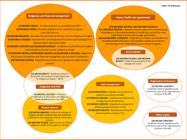
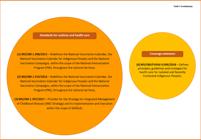
The normative acts on the Management and Organization of SASISUS (Figure 1) account for 86.7% of the total number of ordinances in the period studied and only 13.3% of them focused on Guiding Health Care for Indigenous Peoples (Figure 2). The majority of ordinances published relate to Budgetary and Financial Management (9), followed by ordinances on Management of Inputs (5), Accountability (5) and Health Care Agreements (4). Fewer are the ordinances classified as Physical Network (3),Standards for Routines and Health Care (3), Integration with SUS (2), Organization of Structure (1) and Extension of Coverage (1).
The analysis identified the priority given to organizing administrative processes, to the detriment of creating norms and procedures to organize indigenous health care routines. In contrast, between 2001 and 201414, the Ministry of Health issued 224 regulations aimed at primary care for the non-indigenous population. Of these, 163 (72.7%) guided the development of actions, programs and strategies to improve health care practices and routines. Although these are different time periods, given that SESAI was only created in 2010, the counterpoint highlights the difference between management priorities in SASISUS and the rest of the SUS.
Garnelo5, who analyzed ministerial ordinances on the management of SUS and SASISUS from 1999 to 2011, also notes the predominance of ordinances related to the management and administration of SASISUS. In that period FUNASA issued 19 regulations on the subject, but only 7 dealt with the organization of indigenous health care. The tendency to prioritize regulation in the middle area of the subsystem remained evident even after the integration of indigenous health policy into the MS structure with the creation of SESAI. These indications point to the persistence of limitations in institutional arrangements, to the detriment of adapting care practices to the specific ethnic-cultural realities of the peoples served by SASISUS.
SASISUS and the non-indigenous SUS
The ordinances of the sub-nuclei Inputs, Health Care Agreements and Financial and Budgetary Management, especially those published between 2011 and 2016, regulate the expenditure of necessary material resources, the hiring of professionals and the procurement and distribution of inputs for the DSEIs. The content of these ordinances expresses positions that are at odds with the process of implementing the SUS. As a result of the decentralization process15, the federal level was limited to managing, transferring resources, regulating, monitoring and no longer carrying out actions, especially PHC actions delegated to the municipalities.
The establishment of SASISUS creates an exception: part of the Ministry of Health - SESAI - starts acting as the executor of services for which it had no installed capacity at the time of its implementation4. This justifies the emphasis given to the standardization of budgetary and financial management and supplies in the early years of the Secretariat, as well as the emphasis given to management rules for controlling outsourced health service contracts in the DSEIs. In contrast to the PNASPI and SUS guidelines, this model strongly prioritizes the provision of individual consultations on spontaneous demand.
In addition, the pattern of federal transfers in indigenous health to contracted entities resembles inter-federative agreements that have been superseded in the SUS16, such as the payments for procedures in the 1991 Basic Operational Guideline, called NOB-91, in which the federal manager prioritized transfers related to procedures and consultations, without considering epidemiological, territorial and demographic factors.
From 1993 onwards, the SUS regulatory framework demonstrated a greater commitment to universal access and the valorization of actions to reduce morbidity and mortality profiles17. From NOB-93 onwards, priority was given to the transfer of resources based on population criteria, not just the production of services. From 2006 onwards, the Pact for Health formalized inter-federative commitments based on indicators of improvements in the population’s health conditions, indicating advances in public health management that were partially lost with the Previne Brasil Program13. These advances did not have an equivalent impact on SASISUS.
Influence and challenges of Managerial Administration in SASISUS
The ordinances classified as Health Care Agreements and Accountability deal above all with the definition of control, follow-up and monitoring mechanisms for actions carried out by social organizations contracted through agreements and provide for the Management Report. Ministry of Health/SESAI Ordinances No. 69/2018 and No. 15/2014 (Figure 1), for example, make it mandatory for DSEIs to send reports containing performance evaluations of health professionals, among other supervisory measures, which are more committed to recording quantifiable production — of consultations or procedures — than evaluating the effectiveness and resolutiveness of the Subsystem.
The management model adopted by SESAI is an expression of the unfinished administrative reform of the 1990s under Fernando Henrique Cardoso18. Although its implementation was partial, the ideas inspired by the corporate governance model of financial institutions spread throughout the federal bureaucracy and had repercussions on the implementation of public health policies19 . Among them was the encouragement of management by results, measured by productivity and not by improving the health conditions of the population served.
The management reform resulted in provisions such as the Law on Social Organizations (Law 9.637/1998) and the Fiscal Responsibility Law (Complementary Law 101/2000), which demanded strict control over the performance of organizations. This movement strengthened the state’s regulatory functions and demanded new practices in the public service, such as the adoption of performance indicators that emphasized the individual responsibility of professionals for organizational performance20. This “contractualization of results” was progressively incorporated into the vocabulary of public policies in the country19. Although unfinished, unable to achieve its objectives and unable to stand up to the clientelism prevalent in the public machine, the administrative reform and the terminology of financial corporatism persisted as the ideology of a governance model in the forms of accountability, evaluation mechanisms and other internal control strategies, such as those demanded by CGU auditors10,11.
This scenario influenced PNASPI’s regulatory model. However, as the CGU10 and CMAP11 evaluation reports point out, the implementation of SASISUS failed to control the actions and operations carried out by the contracted entities and failed to evaluate the Subsystem’s performance. The reports point to the insufficiency of planning and monitoring actions, which are associated with the absence of goals aimed at solving health problems, reliable data and adequate indicators. In this sense, it can be seen that although the adoption of managerial logic in the production of regulations has been prioritized, these are proving to be ineffective in assessing the achievement of results and compliance with the PNASPI’s objectives.
Fragmented regulation and integration challenges
In the set of regulations aimed at the Management and Organization of SASISUS (Figure 1), two acts (6.5% of the total selected) provide for rules, service strategies, differentiated flows and negotiation mechanisms with municipalities and states. Ordinance MS/GM 2.663/2017 regulated financial incentives aimed at improving access to specialized services for the indigenous population and Ordinance MS/SAS 1.317/2017 adapted the nomenclature of indigenous health establishments to the National Registry of Health Establishments.
However, there is a scarcity of provisions regulating inter-federative relations, in line with other studies that indicate challenges in integrating SASISUS with the rest of the SUS21. Although districtization is a strategic pillar of the PNASPI1, no guidelines were found for health care practices in the DSEI base centers and their subsequent articulation and sharing with health services in the municipalities and states, on which the DSEIs depend for access to medium and high complexity. It is clear that the specific attributes of the care model and an appropriate definition of the levels of resolution of the care units in the DSEIs have not been properly explained.
SASISUS infrastructure and sanitation
Ordinances MS/GM 1.801/2015 and MS/SESAI 72/2015, referring to the Physical Network, regulate architectural projects in SASISUS. Although they include adaptations, such as areas for vehicles, accommodation and individualized rooms for care, the rules follow the usual urban pattern, prioritizing rooms and offices for individual care, without taking into account the needs of indigenous communities, local and regional specificities and collective activities.
Ordinance MS/GM 3.958/2022 creates mechanisms for planning, monitoring and evaluating the provision of drinking water supply services in indigenous communities served by SASISUS (Figure 1). It proposes a program for access to drinking water and monitoring the construction of artesian wells and water quality in indigenous villages. With a focus on administrative management, the document does not include practical guidelines for the development of sanitation actions appropriate to the indigenous environment, nor guidelines for environmental health education. Furthermore, this was the only document published on the subject over the 12 years that PNASPI has been implemented by SESAI. Given the predominance of infectious and parasitic diseases in Brazil’s indigenous morbidity and mortality profile, these gaps jeopardize the reduction of high indigenous infant mortality.
Challenges in guiding Indigenous Health Care
Ordinances from the nucleus Orientations for Health Care for Indigenous Peoples present inexpressive proposals for adapting routines and programs guided by the integrality of care22. Of the four ordinances identified (Figure 2), three are related to programmatic actions in PHC. They deal with the implementation of the Integrated Management of Childhood Illness Startegy (IMCI) in the context of SASISUS (Ordinance MS/GM 1,397/2017), the revision of the National Vaccination Calendar for indigenous peoples and the National Vaccination Campaigns under the National Immunization Program (PNI) (Ordinances MS/GM 1,498/2013 and 1,533/2016).
The IMCI Strategy aimed to extend the protocol already used in SUS basic health units to the DSEI, in order to address the high infant morbidity and mortality from respiratory diseases and other conditions common in early childhood. However, ordinance 1397 did not adapt to indigenous realities. The immunization ordinances, on the other hand, stipulated a vaccination schedule for the indigenous population whose differentiation for SASISUS was limited to the inclusion of a booster dose of the Pneumococcal 23v vaccine for indigenous children at the age of 5 and to classifying the indigenous population as “specific target groups”, eligible to receive doses of the vaccine in the Annual Influenza Vaccination Campaign. There is a notable lack of guidance on maintaining the cold chain, transportation and storage of vaccines adapted to the difficult conditions of access to indigenous lands.
Joint Ordinance MS/GM and FUNAI 4.094/2018, aimed at health care for isolated and recently contacted indigenous peoples, includes this population segment in SESAI’s daily actions and defines differentiated guidelines and strategies for health care for these groups, emphasizing the need for plans aimed at contact situations and outbreaks and epidemics. Although it aims to be an organizing tool for health care routines, its content does not allow for practical use in care actions.
The PNASPI1 highlights the importance of training health professionals to respect and value traditional indigenous health practices and to understand the cultural and socio-economic specificities of indigenous communities. However, no regulations have been identified to guide the training of health professionals to work in an intercultural context and the training processes for Indigenous Health Agents remain undefined.
Authors such as Reis et al.23 point out the importance of a health information system and warn of the limited use of the Indigenous Health Care Information System (SIASI), problems with data reliability and the lack of communication with other SUS information systems. The lack of regulation and underutilization of this resource hinders planning and monitoring at central and local level, preventing the identification of PNASPI’s progress and limits, as noted in the CMAP report10.
The regulations found do not reflect institutional adequacy to deal with intercultural contexts within PHC. Various authors24-26 have pointed to the need to adapt a health model to the cultural specificities of the population it serves, given that ethnic identity is the crucial element that makes indigenous peoples beneficiaries of a health subsystem. Despite this, the topic was not highlighted in the ordinances identified in the research.
The small number of ordinances that put the PNASPI guidelines into practice — emphasizing differentiated, comprehensive and integrated health care1 — is suggestive of an incipient institutional effort in this area of action, even less than the results obtained by FUNASA in the previous decade4. It should be emphasized that providing care to indigenous peoples would require, by the very nature of the work, a great effort to adapt PHC actions to the singularities of the territories and populations assigned to the DSEI, which has not happened.
Context influencing the implementation of SASISUS
At the time of the change in the political management of indigenous health to SESAI, FUNASA was headed by the then Brazilian Democratic Movement Party, which aligned itself with the then Workers’ Party government by negotiating cabinet positions in exchange for legislative support27. The party began to expand its influence on the government’s agenda and its discretionary resources, which were used in local investments to gain electoral support from mayors who, in return, mobilized votes in the general elections. While the Brazilian Democratic Movement Party extracted distributive benefits to fuel its petty politics28, compensatory social policies with universal reach, such as the Bolsa Família Program, were prioritized by the Lula government (Workers’ Party), which was in charge of the executive branch at the time.
The Minister of Health during the period (2007-2011) that preceded the creation of SESAI, José Gomes Temporão, claimed in na interview29 that among the positions related to health, the only position he was unable to appoint was the head of FUNASA due “[…] to the profile of the National Congress and the specificities of coalition presidentialism” (p. 2063). The Minister also pointed out that he was unable to induce commitment from FUNASA managers to the National Health Plan. At the same time4, an analysis of the institution’s performance also pointed to a lack of technical capacity and commitment to indigenous issues in FUNASA’s action plans. In addition, FUNASA’s management faced a series of operational difficulties which led comptrollers and justice bodies to recommend that the Subsystem should be restructured6. In this context, responsibility for indigenous health actions was transferred to the Ministry of Health and SESAI was created in 2010.
From 2011 to 2015, in the first Dilma Rousseff’s government, the Workers’Party took over the leadership of the Health Ministry30, appointing party cadres to key positions, including the Secretary of SESAI. During this period, the management of indigenous health policy remained under the influence of the ruling party. In October 2015, a political crisis led to a reorganization of support in Congress and the Workers’ Party lost control of the Ministry of Health to the Brazilian Democratic Movement Party. This coalition proved unsustainable, leading to the impeachment of President Dilma Rousseff in 2016. As a result, the Progressive Party took over the Ministry and SESAI was relocated to the Brazilian Democratic Movement Party’s area of influence. Ordinance MS/GM 1.419/2017 (Figure 1) promoted a new reorganization of the Ministry of Health, reducing SESAI’s attributions, but maintaining unchanged the policy of contracting via agreement and the free appointment of the 34 political apointees’ positions for DSEI coordinators.
Strictly speaking, the model of hiring staff via agreements already practiced by FUNASA4 was not changed. However, if before the outsourced hiring of health professionals was precarious, defined by the local DSEI managers, without continuity or clear controls5, after the creation of SESAI the model was consolidated, expanded and centralized. In addition to complementing health actions, outsourcing care became the fundamental pillar for the operationalization of indigenous health policy and, as we have seen, one of the main objects of regulation in SASISUS.
The Fiscal Responsibility Law classifies outsourcing contracts as “Other Personnel Expenses” and these amounts are not included in the sum of personnel expenses, whose limit is controlled by this law. Costa and Lamarca31 point out that this legislation strongly encouraged the outsourcing of services and employment relationships by governments and managers during FHC’s terms in office, a trend that continued in Lula’s government even with the increase in hiring via public tenders. The predominance of outsourced contracts in the federal administration shows, according to the authors, that both presidential regimes adopted a hybrid workforce composition, making it possible to meet the demands of political coalitions, not only for commissioned positions, but also for control of contracts with social organizations.
It is important to note that expenses related to outsourcing contracts are considered discretionary expenses. This implies that their allocation and execution are subject to the decision of the public manager as to their use. In a study that seeks to demonstrate how political parties influence the discretionary resources of ministries in Brazil, Meirelles27 suggests that once they take control of a ministry, the parties begin to exert influence over the investments it manages. This motivates their local coreligionists to seek and receive more resources from these portfolios, strengthening local powers and the party’s electoral capacity. The author demonstrates that the distributive returns are more significant in localities aligned with the portfolio representative.
SASISUS, whose actions are linked to the discretionary budget32 under the outsourcing model, was a permanent object of dispute between the parties that formed the base and coalitions with the federal executive. However, from 2016 onwards, under the Temer government, the legislature began to change the budget legislation in order to guarantee itself ever-greater control of federal resources, expanding their ability to allocate funds from parliamentary amendments to sectors with strong electoral appeal, such as health33. At the same time, they created restrictive mechanisms for financing the SUS, such as the freeze on spending on public health actions and services determined by Constitutional Amendment 95/2016.
The Bolsonaro government, then represented by the Social Liberal Party (PSL), intensified the process by allowing amendments by Committee Rapporteurs. By ceding control of the budget to the legislature, parliamentarians expanded the use of executive branch resources to strengthen their influence in local politics. At the same time, this helped maintain the ruling base34 whose political agenda was the opposite of the principles that guided the PNASPI35.
Despite these changes, Abranches34 suggests that the fundamental aspect of coalition presidentialism has not changed significantly, but has become more complex, less functional and costly. The Bolsonaro government was then able to keep supporters in executive positions without changing its political and ideological agenda. This political arrangement allowed SESAI to be led by secretaries aligned with the government’s base during the Bolsonaro years. During this period, only two Subsystem management ordinances were published (Figure 1), but none aimed at organizing indigenous health care. The policy continued to be implemented through agreements with private entities10, following the same rules as in previous governments.
Political and Institutional Developments in Indigenous Health
In the period analyzed, the normative priorities focused on regulating the management of SASISUS. As a result, the following political-institutional developments stood out: (a) maintenance of SASISUS as an object for the distribution of power and resources to parties allied with or supporting the government; (b) institutional efforts to discipline and maintain outsourced hiring of health professionals; (c) demonstration of commitment to the managerialist paradigm, albeit ineffectively in terms of achieving the PNASPI objectives.
The classic model of studying public administration has as its central characteristic the division of the field of politics into two distinct objects: on the one hand, the concept of politics related to phenomena and events involved in the struggle for power, encompassing processes and activities carried out by different actors, and on the other, policies whose specific object is the study of government programs and their possible impacts on society36. Like Souza Lima and Macedo37, we believe that there is a need for a theoretical clash capable of locating, criticizing, interpreting and repositioning these categories of analysis towards an interrelated model.
Ball’s model7,8 allowed us to understand the relationship between bureaucracy (policy) and politics. Its application to the analysis of PNASPI exemplifies interactions between a context of influence, made up of both the political achievements in favor of indigenous rights and the managerial reforms and contingencies of coalition presidentialism. While the first influences shaped the formulation of the policy, the later ones influenced the production of the SASISUS bureaucracy over the following decades, keeping untouched the practices that favoured party organizations that competed in the electoral arena. Consequently, the instrumentalization of indigenous health policy was restricted to producing the means for its existence as a contracting body for outsourced services, to the detriment of the political agenda and praxis that guided the original formulation of the PNASPI.
Conclusion
The implementation of a public policy involves a series of decision-making processes and a network of actors, forming a dynamic known as the decision-making continuum38. In this context, the distinction between the formulation and implementation phases is neither clear nor linear. On the contrary, the interaction between decision-makers, the issues discussed and the specific contexts influence the actions of bureaucrats and the instruments of state action they develop and use. This interaction is not always aligned with the objectives originally planned. In this sense, the ordinances analyzed appear as essential instruments for understanding this dynamic, as they express decisions made and omitted.
Norms and procedures are essential for the operationalization of actions in public institutions, providing the necessary organizational structure to guide social and institutional interactions38. Although sometimes poorly conducted and often misinterpreted, bureaucracy allows for the improvement of previous practices and facilitates the work of professionals by establishing transparent, technically based, consistent and essential procedures for the implementation of a policy such as health. However, the regulations for indigenous health care remain highly generalized, lacking concepts, technical protocols, care models and reference documents capable of supporting actions that are appropriate to indigenous ways of life.
The ordinances analyzed do not establish adequate conditions for SASISUS to act as a unique type of PHC in the country. The disproportionate regulatory effort in favour of managerial administration suggests that the integration of the body that executes indigenous health policy into the structure of the Ministry of Health has not resulted in action that aligns PHC guidelines with the principles contained in the formulation of the PNASPI. Furthermore, the regulatory effort to control contracts with social organizations has not prevented dysfunctional practices in the management of resources, nor has it contributed to achieving the objectives of the governance model desired by the Public Administration control bodies10,11.
There is an urgent need to review the management and care framework of SASISUS, seeking to get closer to the original ideas and premises of PNASPI, incorporate the advances made in PHC in the non-indigenous SUS and improve cultural competence in care actions, increasing sensitivity to indigenous needs and demands.
As it focuses on ordinances and regulatory aspects, the article’s limitations are the lack of depth in the practical implementation of indigenous health policies and the execution of care. This theme will be the subject of a future publication, prioritizing the investigation of management and care measures practiced at SASISUS.
Acknowledgments
To the National Council for Scientific and Technological Development (CNPq), the Amazonas State Research Support Foundation (Fapeam), the Commission for the Improvement of Higher Education Personnel (CAPES) and the Ministry of Health (MS) for supporting the research.
-
Cerri RA, Garnelo L. The context of normative production in the implementation of indigenous health policy. Interface (Botucatu). 2025; 29: e240576 https://doi.org/10.1590/interface.240576
References
- 1 Brasil. Ministério da Saúde. Portaria n° 254, de 31 de Janeiro de 2022. Aprova a Política Nacional de Atenção à Saúde dos Povos Indígenas. Diário Oficial da União. 31 Jan 2022.
- 2 Brasil. Casa Civil. Lei nº 9.836, de 23 de Setembro de 1999. Acrescenta dispositivos à Lei nº 8.080, de 19 de Setembro de 1990, que dispõe sobre o Subsistema de Atenção à Saúde Indígena. Diário Oficial da União. 24 Set 1999.
- 3 Pontes ALM. Debates e embates entre reforma sanitária e indigenismo na criação do subsistema de saúde indígena e do modelo de distritalização. In: Pontes ALM, Machado FRS, Santos RV, editores. Políticas antes da política de saúde indígena. Rio de Janeiro: Fiocruz; 2021. p. 205-29.
- 4 Garnelo L. O SUS e a saúde indígena: matrizes políticas e institucionais do Subsistema de Saúde Indígena. In: Garnelo L, Teixeira CC, editores. Saúde indígena em perspectiva: explorando suas matrizes históricas e ideológicas. Rio de Janeiro: Fiocruz; 2014. p. 107-44.
- 5 Garnelo L. Análise situacional da Política de Saúde dos Povos Indígenas no período de 1990 a 2004: implicações no Brasil e na Amazônia. In: Scherer E, Oliveira JA, organizadores. Amazônia: políticas públicas e diversidade cultural. Rio de Janeiro: Garamond; 2006. p. 133-62.
- 6 Ferreira LB, Portillo JAC, Nascimento WF. A criação da Secretaria Especial de Saúde Indígena. Tempus Actas Saude Colet. 2013; 7(4):83-95.
- 7 Ball SJ, Bowe R, Gold A. Reforming education and changing schools: case studies in policy sociology. London: Routledge; 1992.
- 8 Ball SJ. Education reform: a critical and post-structural approach. Milton Keynes: Open University Press; 1994.
- 9 Teixeira CC, Castilho S. IPEA - Etnografia de uma instituição: entre pessoas e documentos. Rio de Janeiro: ABA Publicações; 2020.
-
10 Brasil. Controladoria-Geral da União. Secretaria Federal de Controle Interno. Relatório de Avaliação. Secretaria Especial de Saúde Indígena. Exercício 2019 [Internet]. Brasília: Ministério da Saúde; 2020 [citado 15 Mar 2024]. Disponível em: https://eaud.cgu.gov.br/relatorios/download/892985
» https://eaud.cgu.gov.br/relatorios/download/892985 -
11 Conselho de Monitoramento e Avaliação de Políticas Públicas. Ciclo 2022. Relatório de Avaliação do Subsistema de Atenção à Saúde Indígena [Internet]. Brasília: CMAP; 2022 [citado 15 Mar 2024]. Disponível em: https://www.gov.br/planejamento/pt-br/acesso-a-informacao/participacao-social/conselhos-e-orgaos-colegiados/cmap/politicas/2022/avaliacoes-conduzidas-pelo-cmag/sasisus_relatorio-de-avaliacao.pdf
» https://www.gov.br/planejamento/pt-br/acesso-a-informacao/participacao-social/conselhos-e-orgaos-colegiados/cmap/politicas/2022/avaliacoes-conduzidas-pelo-cmag/sasisus_relatorio-de-avaliacao.pdf - 12 Baptista TWF. Análise das portarias ministeriais da saúde e reflexões sobre a condução nacional da política de saúde. Cad Saude Publica. 2007; 23(3):615-26.
- 13 Morosini MVGC, Fonseca AF, Baptista TWF. Previne Brasil, Agência de Desenvolvimento da Atenção Primária e Carteira de Serviços: radicalização da política de privatização da atenção básica? Cad Saude Publica. 2020; 36(9):e00040220.
- 14 Domingos CM, Nunes EFPA, Carvalho BG, Mendonça FF. A legislação da atenção básica do Sistema Único de Saúde: uma análise documental. Cad Saude Publica. 2016; 32(3):e00181.
- 15 Ouverney AM, Fleury S. Polarização federativa do SUS nos anos 1990: uma interpretação histórico-institucionalista. Rev Adm Publica. 2017; 51(6):1085-103.
- 16 Noronha JC, Lima LD, Machado CV. O Sistema Único de Saúde - SUS. In: Giovanella L, Escorel S, Lobato LVC, Noronha JC, Carvalho AI, organizadores. Políticas e sistema de saúde no Brasil. Rio de Janeiro: Editora Fiocruz; 2012. p. 365-94.
- 17 Carvalho G. A inconstitucional administração pós-constitucional do SUS através de normas operacionais. Cienc Saude Colet. 2001; 6(2):435-44.
- 18 Pereira LCB. A reforma do Estado dos anos 90: lógica e mecanismos de controle. Lua Nova Rev Cult Polit. 1998; 45:49-95.
- 19 Carnut L, Narvai PC. Avaliação de desempenho de sistemas de saúde e gerencialismo na gestão pública brasileira. Saude Soc. 2016; 25(2):290-305.
- 20 Behn RD. O novo paradigma da gestão pública e a busca pela accountability democrática. Rev Serv Publico. 1998; 49(4):5-45.
- 21 Taveira ZZ, Scalco N, Ferreira LB. O subsistema de atenção à saúde indígena e a integralidade da atenção à saúde: a articulação federativa como um caminho a percorrer. In: Santos AO, Lopes LT, organizadoras. Coletânea Direito à Saúde: boas práticas e diálogos institucionais. Brasília: CONASS; 2018. p. 154-67. Vol. 3.
- 22 Pinheiro R, Mattos RA, organizadores. Os sentidos da integralidade na atenção e no cuidado à saúde. 6a ed. Rio de Janeiro: UERJ, IMS, Abrasco; 2006.
- 23 Reis AC, Casanova AO, Cruz MM, Cunha MLS, Gomes MF, Suárez-Mutis MC, et al. Estudo de avaliabilidade do Sistema de Informação da Atenção à Saúde Indígena: potencialidades e desafios para apoiar a gestão em saúde no nível local. Cad Saude Publica. 2022; 38(5):PT021921.
- 24 Pedrana L, Trad LAB, Pereira MLG, Garnelo L, Torrenté MON, Mota SEC. Análise crítica da interculturalidade na Política Nacional de Atenção às Populações Indígenas no Brasil. Rev Pan Saude Publica. 2018; 42:e178.
- 25 Pontes ALM, Rego S, Garnelo L. O modelo de atenção diferenciada nos Distritos Sanitários Especiais Indígenas: reflexões a partir do Alto Rio Negro/AM, Brasil. Cienc Saude Colet. 2015; 20(10):3199-210.
- 26 Mota SEC, Nunes M. Por uma atenção diferenciada e menos desigual: o caso do Distrito Sanitário Especial Indígena da Bahia. Saude Soc. 2018; 27(1):11-25.
- 27 Meirelles F. Política distributiva em coalizão. Dados. 2023; 67(1):e20210135.
- 28 Nobre M. Imobilismo em movimento: da abertura democrática ao governo Dilma. São Paulo: Companhia das Letras; 2013.
- 29 Temporão JG. Entrevista com o ex-ministro da Saúde José Gomes Temporão. Cienc Saude Colet. 2018; 23(6):2061-6.
- 30 Machado CV, Lima LD, Baptista TWF. Políticas de saúde no Brasil em tempos contraditórios: caminhos e tropeços na construção de um sistema universal. Cad Saude Publica. 2017; 33 Supl 2:e00129616.
- 31 Costa NR, Lamarca I. Os Governos FHC e Lula e a política para a força de trabalho civil do Governo Central Brasileiro. Cienc Saude Colet. 2013; 18(6):1601-11.
- 32 Pinto DF, Ribeiro AM. Alocação orçamentária e o desempenho: análise dos critérios de distribuição orçamentária das unidades da SESAI/MS. Rev Gestao Secr. 2023; 14(7):11268-93.
- 33 Paiva AB, Gonzalez RHS, Benevides RPS. Instrumentos financeiros de coordenação no SUS. In: Jaccoud L, organizador. Coordenação e relações intergovernamentais nas políticas sociais brasileiras. Brasília: IPEA; 2020. p. 149-82.
- 34 Abranches S. Presidencialismo de coalizão em transe e crise democrática no Brasil. RELASP. 2021; 2(3):67-79.
- 35 Sauer S, Leite AZ, Tubino NLG. Agenda política da terra no governo Bolsonaro. Rev ANPEGE. 2020; 16(29):285-318.
- 36 Pastor Albaladejo G, editor. Teoría y práctica de las políticas públicas. Valência: Tirant lo Blanch; 2014. Elementos conceptuales y analíticos de las políticas públicas; p. 17-47.
- 37 Lima ACS, Macedo JP. Notas para uma abordagem antropológica da(s) política(s) pública(s). Rev Anthropol. 2015; 26(2):17-54.
- 38 Lotta G, organizador. Teorias e análises sobre implementação de políticas públicas no Brasil. Brasília: Enap; 2019. A política pública como ela é: contribuições dos estudos sobre implementação para a análise de políticas públicas; p. 11-38.
Edited by
-
Editor
Denise Martin Coviello
-
Associated editor
Willian Fernandes Luna
-
TranslatorFélix Héctor Rígoli Cáceres

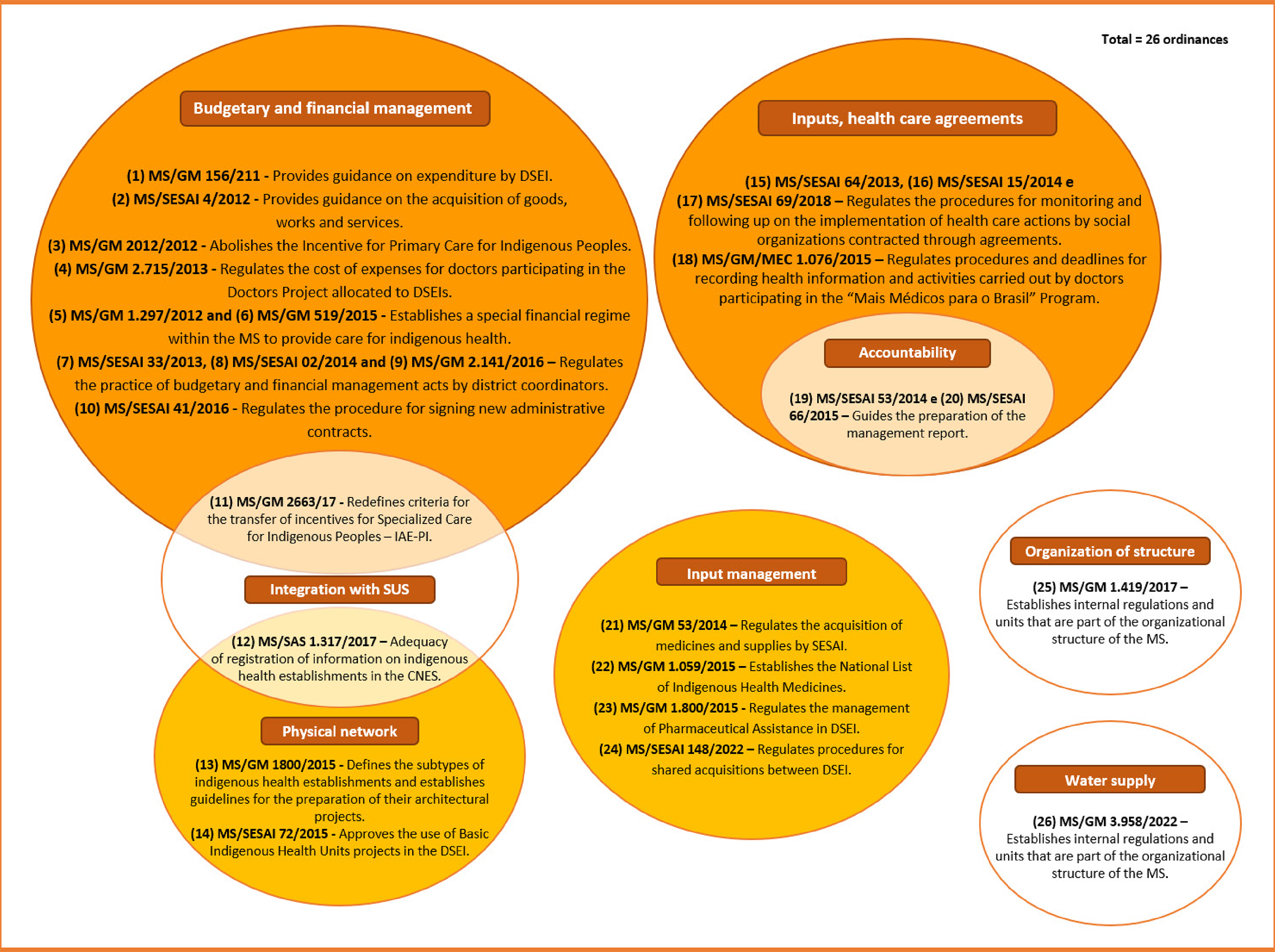 Source: Health Legislation System, 2023.
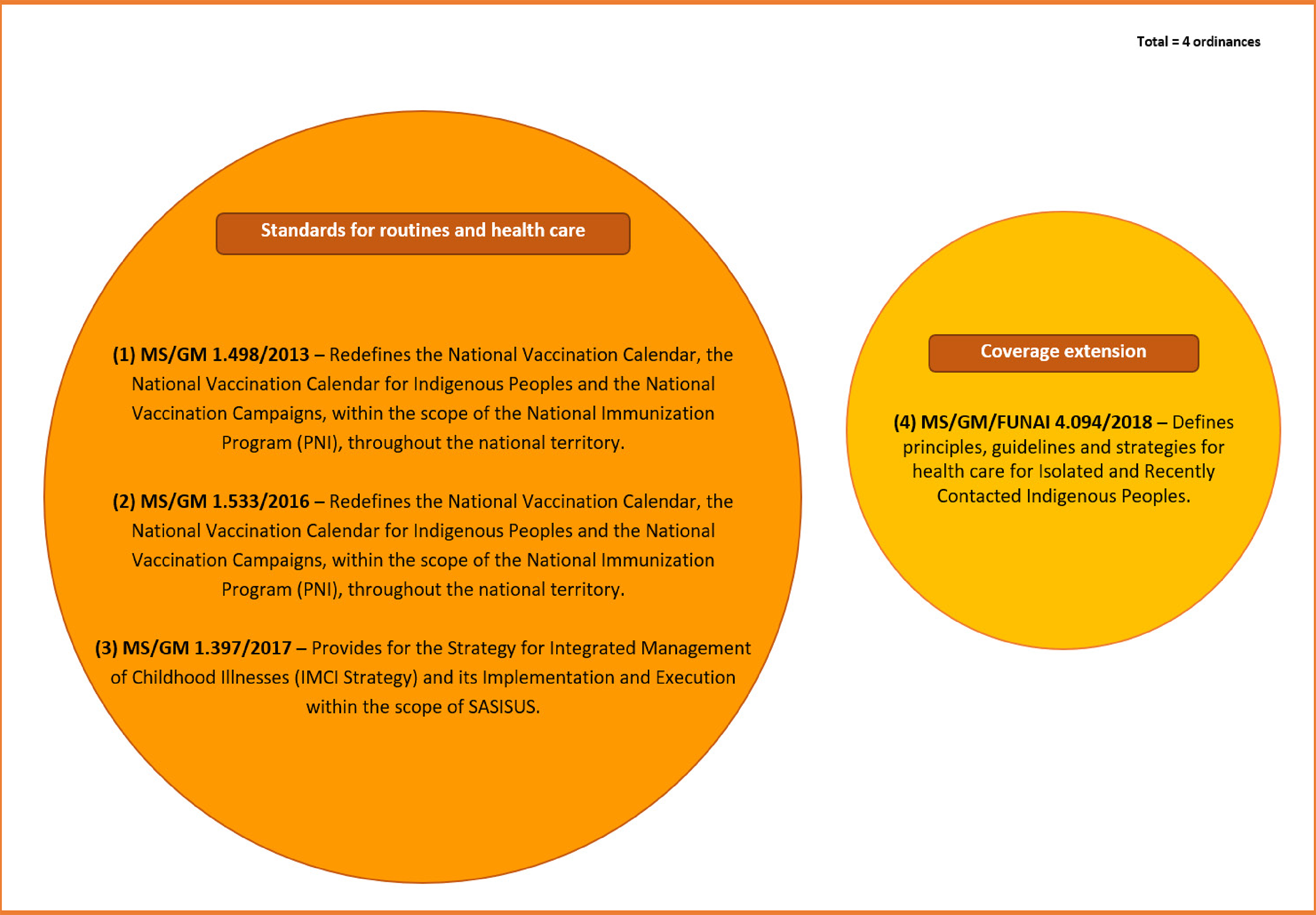 Source: Health Legislation System, 2023.