| 3-5 g/kg/day |
Low intensity exercises |
Adequate recovery of muscle glycogen over time, respecting the volume and intensity of physical exercise. Consider demands related to changes in body composition and health status. Finally, respect sociocultural aspects to choose the best carbohydrate food source for each individual55,124,132. |
| 5-7 g/kg/day |
Moderate intensity exercise (~ 1 h/day) |
| 6-10 g/kg/day |
Endurance Exercises (~ 1 - 3h per day) - moderate to high intensity |
| 8-12 g/kg/day |
High training duration > 4-5 h per day - moderate to high intensity |
| Moments close to physical exercise |
| Carbohydrate loading |
8-12 g/kg/day 24 - 48 before the competition |
Consider gastrointestinal tolerance when increasing carbohydrate intake (e.g., the day before a race) because it may be an unusual amount for the athlete. |
| Consider the relevance of this recommendation, which will probably be higher in long-duration exercise (> 90 min). |
| Clinical studies evaluating this type of strategy are scarce; its use is based on the concept that increasing glycogen stores before a competition is essential for physical exercise that may be limited by muscle glycogen. |
| Before physical exercise |
1 - 4 g/kg of body mass, 1 - 4 h before starting physical exercise |
Endurance physical exercise |
| Evaluate practical aspects and potential gastrointestinal issues |
ES: 0.2; 95% CI: 0 - 0.30 |
| |
Short-term physical exercise (< 60 min) |
| |
ES: 0.0; 95% CI: -0.3 - 0.2 |
| |
Long-term physical exercise (≥ 60 min) |
| |
ES: 0.3; 95% CI: 0.1 - 0.5 |
| |
Strength physical exercise |
| |
Mean ES: 0.61; 95% CI: 0.11 - 1.11 |
| |
Subgroup analysis |
| |
> 45 min ES: 1.02; 95% CI: 0.07 - 1.97 |
| |
< 45 min ES: 0.23; 95% CI: -0.21 - 0.67 |
| |
Fasting > 8 h ES: 0.39; 95% CI: 0.06 - 0.72 |
| |
Fasting < 8 h ES: 0.76; 95% CI: -0.19 - 1.71 |
| Effect of carbohydrate type before physical exercise |
Slow glycemic response vs. fast glycemic response |
Time trial exercises |
| ES: -0.18; 95% CI: -0.58 - 0.22 (no effect) |
| Submaximal exercises + time trial tests |
| ES: -0.17; 95% CI: -0.55 - 0.22 (no effect) |
| Exercises until voluntary exhaustion |
| ES: -0.36; 95% CI: -0.93 - 0.22 (no effect) |
| During physical exercise |
| Mouthwash |
|
Mean power: ES: 0.25; 95% CI: 0.04-0.46 |
| Physical exercise time: ES: -0.13; 95% CI: -0.36-0.10 |
| Maltodextrin: ES: 0.15; 95% CI: 0.04-0.27 |
| 10 s rinsing: ES: 0.22; 95% CI: 0.05-0.39 |
| Consumption during physical exercise |
Considering all volumes (time) of physical exercise. |
Mean ES 0.43; 95% CI: 0.35-0.51152 |
| ES cycling: 0.47; 95% CI: 0.38 - 0.57 |
| ES running: 0.35; 95% CI: 0.17 - 0.52 |
| The effect of carbohydrate intake during physical exercise is positive and may vary between different types of sports and by level of physical fitness; however, it remains stable regardless of age or biological sex. |
| During physical exercise (varying volumes of physical exercise) |
< 1 h |
ES: 0,19; 95% IC: -0,16 - 0,55 |
| Non-significant effect for short workouts, regardless of intensity. |
| 1 - 2h |
ES: 0.41; 95% CI: 0.27 - 0.55 |
| 2 - 4 h |
ES: 0.51; 95% CI: 0.40 - 0.62 |
| High amounts of carbohydrates during physical exercise |
80 - 100 g/h |
ES: 0.82; 95% CI: 0.31 - 1.34 |
| > 100 g/h |
ES: 0.17; 95% CI: -0.23 - 0.57 |
| After physical exercise |
Time to next exercise session < 8h |
Carbohydrate consumption should occur immediately after the end of physical exercise to optimize the recovery of glycogen stores. |
| 1.0 -1.2 g/kg/h (23.5 mmol/kg/h; 95% CI: 19 - 27.9 mmol/kg/h) |
| More frequent consumption can optimize glycogen recovery. |
| Between 0 - 4 h |
Carbohydrate amounts between 1 and 1.2 g/kg/h, ingested in a fractional manner, contribute to the rapid recovery of muscle glycogen. Working with beverages that offer glucose polymers with a rapid glycemic response and meals that are easy to empty can facilitate the total intake of carbohydrates and, consequently, glycogen recovery. |
| For muscle glycogen recovery in 24h |
To recover muscle glycogen in 24 h, the energy demand imposed by physical exercise must be considered, as well as the intensity that regulates glycogen depletion and glucose oxidation. |
| Moderate-intensity exercise: 5 to 7 g/kg/24h |
| High-intensity exercise: 6 to 10 g/kg/24h |
| Extreme-intensity exercise: 8 to 12 g/kg/24h |
| During longer recovery periods (> 6 h), when the athlete is able to ingest energy and carbohydrates adequately, the food organization must be conducted in partnership with the athlete, with the aim of facilitating carbohydrate ingestion. Furthermore, in these circumstances, there is no relevance in the fractionation or the form of presentation (liquid or solid) as long as the total amount is reached. |
| Combine proteins and carbohydrates after physical exercise to recover muscle glycogen. |
Adding protein to a carbohydrate-containing drink/meal does not optimize muscle glycogenesis (ES: 0.4; 95% CI: -2.7-3.4), unless carbohydrate intake is below the recommendation (<0.8 or between 0.8 and 0.9 g/kg); in this case, adding protein (0.3 to 0.4 g/kg) may promote positive effects on glycogenesis. |
| It is a common practice (culturally) to ingest different macronutrients throughout meals, especially after physical exercise. However, attention should be paid when the athlete mistakenly gives preference to protein over carbohydrates, which may result in inadequate recovery of muscle glycogen. |

 DIRETRIZES DE PRÁTICA CLÍNICA PARA NUTRIÇÃO ESPORTIVA: ASSOCIAÇÃO BRASILEIRA DE NUTRIÇÃO ESPORTIVA
 Thumbnail
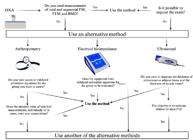 Thumbnail
 Source: Adapted from Murad et al.
 Legend: DXA: dual-energy X-ray absorptiometry; FM: fat mass; FFM: fat-free mass; BMD: bone mineral density.Source: The authors.