
 The Soybean Frontier in Rio de Janeiro: New Agribusiness Strategies
Abstract
This paper analyzes the recent introduction of soybean cultivation in the state of Rio de Janeiro, Brazil, seeking to understand the expansion of the soybean production frontier into a region formerly occupied by the sugar/ethanol sector, and highlighting the factors of attraction and any potential contradictions. This article is divided into four parts. In the first, we seek to understand the role of the state, through EMBRAPA, in inducing the recent territorialization of grains in the north of Rio de Janeiro. In the second, we analyze the dispersive nature of soybean production in Brazil and the quest for new areas of expansion, introducing the debate on the centrifugal forces of this grain. In the third, we question the feasibility of soybean production in Rio de Janeiro, taking into account the constraints affecting such production. Finally, we warn of how this new agricultural production could impinge on existing land reform settlements in the region, drawing on the theory of accumulation by dispossession.
Keywords:
Accumulation by dispossession; land control; EMBRAPA; modern agricultural frontier; north of Rio de Janeiro state
Resumo
Este trabalho objetiva analisar o recente processo de implementação do cultivo da soja no estado do Rio de Janeiro, buscando compreender a expansão dessa fronteira agrícola em uma antiga região do setor sucroenergético, destacando os fatores de atração e as contradições porventura existentes. O presente artigo divide-se em quatro partes: na primeira, buscamos compreender o papel do Estado, através da EMBRAPA, como indutor da recente territorialização dos grãos na região Norte Fluminense; na segunda, analisamos o caráter dispersor da soja no Brasil, procurando novas áreas para expandir a produção, trazendo o debate teórico das forças centrífugas desse grão; na terceira, levantamos o questionamento sobre as possibilidades da implementação da soja no Rio de Janeiro, levando em consideração os limites existentes para a produção dessa commodity ; por fim, trazemos o alerta da possível interferência da expansão dos grãos nos assentamentos da reforma agrária já implementados na região, articulando com a teoria de acumulação por despossessão.
Palavras-chave:
Acumulação por espoliação; controle de terras; EMBRAPA; fronteira agrícola moderna; Norte Fluminense.
Resumen
Este artículo tiene como objetivo analizar el reciente proceso de implantación del cultivo de soja en el estado de Río de Janeiro, buscando comprender la expansión de esta frontera agrícola en una antigua región del sector azucarero-energético, destacando los factores que la atraen y las contradicciones que pueden existir. Este artículo se divide en cuatro partes: en la primera, buscamos comprender el papel del Estado, a través de la EMBRAPA, como inductor de la reciente territorialización de los granos en la región del Norte Fluminense; en la segunda, analizamos el carácter dispersivo de la soja en Brasil, buscando nuevas áreas para expandir la producción, trayendo el debate las fuerzas centrífugas de este grano; en el tercero, planteamos la cuestión de las posibilidades de implantación de la soja en Río de Janeiro, teniendo en cuenta los límites existentes para la producción de este commodity; finalmente, alertamos sobre la posible interferencia de la expansión de los granos en los asentamientos de reforma agraria ya implantados en la región, articulándonos con la teoría de la acumulación por desposesión.
Palabras-clave:
Acumulación por expoliación; acaparamiento de tierras; EMBRAPA; frontera agrícola moderna; Norte de Rio de Janeiro.
Introduction
In recent times, global agribusiness has undergone major transformations as a consequence of its strategy to expand into new areas of Brazil, allied with technological and regulatory restructuring processes, all of which has resulted in new territorialities. This expansion - supported by the state and promoted and controlled by national and transnational corporations and global financial institutions - is part of a broader drive to boost competitiveness, bringing an increasingly profound territorial division of labor (Santos, 2022; Bernardes and Castillo, 2019).
In the recent expansion of the agricultural frontier, spearheaded by soybean production, the focus has not been limited to areas of the Cerrado and the Amazon. The new areas of the country being exploited include the north of Rio de Janeiro state, where soybeans are being grown in a traditional sugarcane-producing region.
The creation of new production spaces like this is not only the outcome of economic rationality, resulting from past and present actions, but is also a consequence of changes in technology, which in turn demand changes to the financial structuring of the business model in line with the increasing concentration and centralization of capital. As Santos (1996) reminds us, technology is what enables the “progressive objectification of rational activity in relation to an end” (p. 237).
The logic that drives the expansion of agribusiness allows hegemonic agents to acquire greater power, in a context of increased accumulation, through the search for new areas, capitalizing on the modernization of production processes, circulation, and trade.
The north of Rio de Janeiro state (Map 1) serves as an example of the transition from outdated sugarcane cultivation practices to modern soybean production processes. It should be clarified that the state of Brazil’s sugar/ethanol industry has deteriorated since the 1970s and is likely to decline further in view of the continued use of outdated agricultural practices. Essentially, it is a sector that owes its continuation in part to the strong convergence of regional public and private interests (Bernardes et al. 2019).
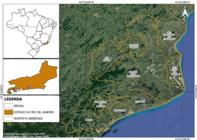
In this context, this study aims to analyze the recent introduction of soybean production to the north of the state of Rio de Janeiro, Brazil, seeking to understand the expansion of the soybean frontier to a region formerly devoted to sugar/ethanol production, highlighting the factors of attraction involved and any contradictions that may exist. The process of capital development in this part of Brazil exhibits what Harvey (2016) calls “spatial adjustment,” insofar as surplus capital and the skilled labor force, which may be necessary, can be absorbed by the new activity.
In view of this, our main theoretical framework draws on the discussion of capital development set forth by Harvey (2004, 2011, 2016, 2024), particularly what he refers to as “combinatorial evolution,” “spatial adjustments,” “creative destruction,” and “accumulation by dispossession.” We also adopt Santos’s (1996, 2000) concept of the “technical-scientific-informational environment” and Frederico’s (2015) concept of the “centrifugal and centripetal forces of agribusiness”; and we engage with works published by the Núcleo de Estudos Geoambientais (Center for Geo-Environmental Studies), based at the Federal University of Rio de Janeiro, to appropriate discussions on agribusiness in northern Rio de Janeiro and the concept of “frontier” (Bernardes and Castillo, 2019; Bernardes et al., 2019; Bernardes and Monteiro, 2025; Lima, Pereira, and Almeida, 2021; Lourenço, 2020; Monteiro, 2019, 2024; Monteiro and Bernardes, 2024).
To conduct the research, we used data from the 2017 Agricultural Census produced by Instituto Brasileiro de Geografia e Estatística (the Brazilian Institute of Geography and Statistics, IBGE) and Sistema IBGE de Recuperação Automática (IBGE Automatic Recovery System), as well as information from a technical report by Empresa Brasileira de Pesquisa Agropecuária (Brazilian Agricultural Research Corporation, EMBRAPA) and findings of fieldwork in the region.
This article is divided into four parts. In the first, we seek to understand the role of the state, through EMBRAPA, in inducing the recent territorialization of grains in the north of Rio de Janeiro. In the second, we analyze the dispersive nature of soybean production in Brazil and the quest for new areas of expansion, introducing the debate on the centrifugal forces of this grain based on Frederico (2025) and Santos (1996). In the third, we question the feasibility of large-scale soybean production in Rio de Janeiro, taking into account the constraints affecting such production. Finally, we warn of how this new agricultural production could impinge on existing land reform settlements in the region, using Harvey’s (2024) theory of accumulation by dispossession.
The role of the Brazilian state: the influence of EMBRAPA
The Brazilian state has always supported the expansion of soybean production into new areas, exercising crucial powers to bolster the country’s agriculture sector, such as conducting agronomy research, training the workforce, providing credit for investments, investing in the construction and expansion of logistics systems (railways, highways, waterways, ports), as well as overseeing the market, granting tax and economic incentives, promoting exports, and others (Santos, 2022; Frederico, 2010; Delgado, 2012). In this sense, as Delgado (2021, p. 109) points out,
the public-private development of land policies and of private strategies for capital accumulation in the expanded space of the traditional agricultural sector and agro-industrial interests, pursuing profit and income from the land, constitutes what I call the new pact of the political economy of agribusiness.
This pact has fostered the fluidity of spatial circuits of agricultural commodity production (Santos, 2022). As the profile of this prominent economic sector changes, new agents equipped with cutting-edge technologies are gaining ground, thanks not only to the positive economic horizon but also to attractive institutional and territorial circumstances. These agents are forging new relationships and producing contemporary forms of regionalization, which are having impacts on rural and urban spaces alike.
In this context, EMBRAPA is one of the main agents tasked with providing the right conditions for the introduction of soybean production to the state of Rio de Janeiro. This state-owned company has become a direct actor in the development of agribusiness in Brazil, conducting research on a range of topics, including the genetic modification of species adapted to Brazil’s tropical climate. It is involved in regional planning and offers subsidies to support the expansion and establishment of agribusiness throughout Brazil.
The agricultural commodities produced in Brazil reveal a very evident reorganization of the territory. Each space is highly specialized in what it produces, which is determined according to competitive advantages and a degree of standardized behavior, articulated with guidelines derived from the international sphere, all of which is an outcome of the interconnections inherent to an increasingly globalized world system. In this context, Elias (2013) notes that the production areas of agribusiness reveal a set of socioeconomic and territorial processes inherent to various spheres, including the restructuring of agriculture production, with the “continued role of the state (at different levels) in promoting the organization of agro-industrial networks” (2013, p. 208).
Recently, EMBRAPA has been involved in two new areas of soybean production in Brazil: AMACRO (acronym for the northern states of Amazonas, Acre, and Rondônia) and SEALBA (acronym for the northeastern states of Sergipe, Alagoas, and Bahia), producing reports that replicate the model first used to attract investments in the meat/grain sector in MATOPIBA (acronym for Maranhão, Tocantins, Piauí, and Bahia). This just confirms how central a player EMBRAPA is in defining where soybeans are to be produced and thus in shaping the territorial organization of Brazil.
In its report “A produção da soja e do milho como um caminho para o desenvolvimento do agronegócio da Região Norte Fluminense” ("Soybean and corn production as a path to agribusiness development in the north of Rio de Janeiro state"), EMBRAPA (2021) highlights the limited contribution made by the state to Brazilian agriculture and the potential of currently underexploited lands for agribusiness. The document was designed to serve as a basis for the public and private sectors to jointly plan a new agribusiness production chain in the region. Its content reveals two key aspects of EMBRAPA’s work: land zoning for credit purposes and ideological support for legitimacy purposes.
The preliminary findings presented in the EMBRAPA document served as a basis for discussions between the Ministry of Agriculture and Livestock and the Rio de Janeiro state departments of economic development, industry, commerce and services, and agriculture, livestock, fisheries, and food supply. At this event, it was revealed that the potential area for soybean cultivation in the state was 320,000 hectares. As a result, the Ministry of Agriculture and Livestock approved agricultural climate risk zoning for Rio de Janeiro, giving producers access to funding from the government’s Safra (“Harvest”) Plan, which offers credit and incentivizes the creation of agricultural policies for soybean and corn production in the state.
EMBRAPA’s agricultural zoning initiative is designed to legitimize certain regions as potential soybean production areas. The zoning document sets forth criteria that are defined according to risks associated with agricultural productivity, providing guidance for future investments with a view to dynamizing agribusiness in the targeted agricultural zones.
Furthermore, EMBRAPA has also encouraged the emergence of a soybean “psychosphere” (Santos, 1996) in the region. This state-owned company is one of the main strategic agents in Brazilian agribusiness, always legitimizing agriculture in spaces that are not fully adjusted to the competitionand production-oriented mindset required under today’s global market parameters. In other words, EMBRAPA is instrumental in designing and sponsoring the expansionist practices of agribusiness: the soybean frontier shifts according to this company’s guidance so that spaces can be transformed in a way that allows soy agribusiness players to exert power and make profits. In this process, local dynamics and modes of organization are altered, almost always incurring some level of violence.
It is worth noting that the expansion of agribusiness also occurs through actions that stimulate and strengthen its ideological foundations, intertwining them with the policies needed for the expansion of the sector and taking actions designed to change the mindset of the local population. As Santos (1996) points out, for a technosphere to take root, a psychosphere must be created in parallel. The documents produced by EMBRAPA provide the underpinning needed to convince people to embrace the new model. According to Monteiro (2024), agribusiness acts ideologically at the interface between politics and culture. Therefore, it is necessary to highlight both the discursive construction of soybean agribusiness in the state of Rio de Janeiro, however incipient it may be, and the institutional backing EMBRAPA provides by promoting policies for the spread of grain production.
Centrifugal forces of Brazilian soybean production and the annihilation of space by time in the north of Rio de Janeiro state
It is important to highlight that Brazilian agribusiness is keen to expand its frontiers to areas of the country with the potential for capital accumulation. According to Harvey, “surplus capital from one place can find employment somewhere else where profitable opportunities have not yet been exhausted” (2004, p. 83). This applies to the expansion of soybean production to areas previously devoted to sugar and ethanol production, as is the case of the SEALBA project1, in the state of Alagoas, certain areas of the Zona da Mata and Agreste regions, and northern Rio de Janeiro.
Agribusiness operates in the Brazilian territory through forces of dispersion and concentration. Frederico (2015), based on Santos (1996), points to centrifugal forces in the expansion of modern agricultural frontiers and centripetal forces in the control of the sector from São Paulo city. In this study, we are interested in understanding the centrifugal forces, namely, how the frontiers of agribusiness are expanded and/or renewed, depending on the potential for capital accumulation in each territory.
Parallel to the agricultural frontiers expanding into the Cerrado and the Amazon, which involve a continuous process of accumulation by dispossession, there is a different movement whereby areas previously dispossessed by agricultural and livestock farming are restructured. In terms of dispersion, soybean is the driving force behind the acceleration of landscape transformations in Brazil: both the destruction of native Brazilian biomes and the introduction of this new crop into regions where the productivity of existing agribusiness enterprises is low.
A case in point is the expansion of agribusiness into low-productivity areas in recent years, specifically the introduction of grain farming to traditional sugarcane-producing areas. In some parts of Brazil, the area of land planted with sugarcane has shrunk and been usurped by soybeans, making such areas - especially ones previously producing sugar and ethanol - the new frontier for grain production. In this process, new agents are entering the areas formerly devoted to sugarcane, together with different types of capital reversion and state-of-the-art technologies, introducing new production scales that are more suited to current forms of accumulation.
Unlike the expansion of grain production into the Cerrado and the Amazon, where the reproduction of agribusiness is directly intertwined with the availability of cheap land, in the recent process, grains are being introduced to higher-value areas of consolidated agriculture or declining production. Traditional sugarcane-growing regions developed during the historical processes of Brazilian territorial formation - like the north of Rio de Janeiro and the Zona da Mata in northeastern Brazil - have begun to receive investments associated with the expansion of soybeans.
Recent data from the Municipal Agriculture Survey produced by IBGE reveal that soybean is now produced in three municipalities in Rio de Janeiro (Table 1): in Macaé since 2021, in Campos dos Goytacazes since 2022, and in Quissamã since 2023. All three municipalities have traditional sugarcane areas that have fallen into decline. Indeed, the area of land devoted to sugarcane and its yields have declined overall in northern Rio de Janeiro state, with some mills going bankrupt and the sugar/ethanol sector as a whole shrinking in size. In this region, actors from the public and private sectors are engaged in attempts to turn these former sugarcane production areas into grain production areas, restructuring agricultural and agribusiness production spatially.
There are several factors that make establishing a meat/grain sector in northern Rio de Janeiro state economically attractive: proximity to one of the country’s largest domestic markets (Greater Rio de Janeiro) and proximity to the Açu port complex in the municipality of São João da Barra, facilitating access to the international market.
However, one fundamental vector for the introduction of grain production in the region is the proximity and fluidity of the transportation sector, which is vital in this part of the state. An example of what Marx called “the annihilation of space through time,” in a globalized economy, transportation - logistics - is a fundamental precondition. It is essential for the “entire production process, and is a key consideration for representatives of the production sector and the State” (Lima, 2015, cited in Lima, Pereira and Almeida, 2021).
To some extent, Açu Port is already integrated into the dynamics of agribusiness in the country. It “has been importing fertilizers since 2020. The project also has an agreement for a new plant to produce hydrogen (which serves as an input for fertilizers)” (Costa et al., 2024, p. 798), and more recently plans have come to light for a nitrogenated fertilizer factory, with state government support and tax incentives. Interestingly, in 2024 two new silos were built at the multi-cargo terminal of the port to store soybeans and corn produced in the country prior to export.
The logistics infrastructure that services Açu Port would suggest that, as in northern Brazil, the existence of such infrastructure, facilitating exports, is central to decisions about where to introduce soybean and other agribusiness production in the country. Both the grain exports and the imports of agricultural inputs are of prime interest to national agribusiness and foreign companies. Once again, this brings into focus the market-oriented nature of the territory. The national space is now organized in such a way as to fulfill international demands, stimulated by the interests of specific groups inside the country. Thus, the national bourgeoisie adheres to “perverse globalization” (Santos, 2000), supporting the foreign model that takes possession of the country’s natural resources, revealing a greater willingness to bow to foreign interests than to strengthen the nation’s sovereignty (Bernardes and Monteiro, 2024).
The new fixed elements and flows are controlled in concert by public and private agents, with the state playing the deciding role. As Brandão (2010) points out,
states are dominated by the major interests of financial power and the strength of large corporate structures; commercial, land, and real estate properties and fortunes, which are increasingly financialized, continue to play a key role in the functioning of the capitalist system, both globally and nationally (p. 42).
The influence of the state on agribusiness, with its new public policies for rural credit and the financialization of research and infrastructure development, has become the main driver behind the centrifugal forces propelling the new soybean frontiers. Key players behind the introduction of soybean production to northern Rio de Janeiro state, alongside EMBRAPA, include the Federal Rural University of Rio de Janeiro, Empresa de Pesquisa Agropecuária do Estado do Rio de Janeiro (Rio de Janeiro State Agricultural Research Company), and Companhia Nacional de Abastecimento (National Food Supply Company).
However, the introduction of soybean production to Rio de Janeiro is not only the result of state strategies: it also depends on the interests of some private agents, especially former landowners. In the north of Rio de Janeiro, the predominance of poor-grade pastureland and sugarcane plantations and the dearth of technological upgrades reveal how little effort has gone into developing the value of the agricultural land.
Land speculation comes in different forms, with the most notable cases being linked to transforming the lands of the now bankrupt sugar and ethanol mills into urban areas: a typical strategy of the former sugarcane elites (Bernardes et al., 2019). According to Conti, Faria, and Timóteo (2014), the lands once occupied by the São João, São José, Santo Antônio, Queimado, Cambaíba, and Sapucaia sugar mills have been incorporated into the urban perimeter of Campos. So it is that “with the bankruptcy of their businesses, the landowning elite in Campos grew interested in the income that their land could provide” (Bernardes et al., 2019, p. 231).
More recently, however, these large landowners realized that the arrival of soybean production could enhance the value of their assets (Figures 1 and 2). We can therefore analyze the movement of this new soybean frontier from the perspective not only of the income derived from the grains themselves, but also of the appreciation of land value, especially land further away from towns and cities, which can once again provide income; as, indeed, land has always done in Brazil, according to Delgado (2012), who sees it as one of the “main drivers of capital accumulation in the Brazilian economic system” (p. 10).
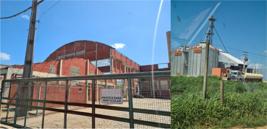
Shell of the old Santa Cruz mill and grain storage silo on the land of the former mill.
What distinguishes this new soybean frontier from others expanding northward in Brazil is that some of the infrastructure needed to export the produce is already in place. Thanks to historical investments, the technological networks of the central and southern regions of Brazil are already in place, lending the flows of agribusiness the agility and speed required of them. What is new is the need to understand the territorial rearrangements underway in the state of Rio de Janeiro to meet the demands of agribusiness in the meat/grain sector.
More in-depth discussions are still needed to investigate further how the new soybean frontier is changing the territory, specifically, the building of new infrastructure, urban modifications to meet the demands of the new sector, the ability to provide an adequate workforce, the reorganization of the land structure, and the support required to ensure competitive capacity.
Constraints and potentialities of soybean production in the state of Rio de Janeiro: a process of creative destruction
A priori, the advantages of the spatial location, with the existing logistics infrastructure and proximity to the domestic market, meet the requirements for agribusiness expansion. However, soybean cultivation requires certain features for its expansion and consolidation. In this respect, the north of Rio de Janeiro state has some limitations: the size of the properties, the quality of the soil, the rainfall and water supply, and the slope of the land.
When it comes to property size, it is essential to consider the technological requirements of this activity and its high cost. In general, properties dedicated to soybean production pushing into the Cerrado and the Amazon measure over 1,000 hectares. Some cover 10,000 hectares or even more. In northern Paraná, the reality is different, with a predominance of small properties of around 500 hectares. However, the reddish-looking purple latosol, commonly known as “terra roxa” (purple soil), produces very high yields2. Nonetheless, smaller properties make access to the latest technology harder, especially the high-cost seed drills and harvesters, access to which is facilitated by large cooperatives.
As shown in Table 2, in northern Rio de Janeiro state practically all (99.07%) of the farms have fewer than 500 hectares: only 91 have between 500 and 1,000 hectares and only 60 have more than 1,000 hectares.
In northern Rio de Janeiro, most properties are well under 500 hectares in size, and the soil is poorer than it is in northern Paraná, which will compromise yields. As for rainfall, this varies according to area, with rainfall in Macaé differing significantly from rainfall in Campos dos Goytacazes. However, in much of the region, rainfall levels are not sufficiently high and the land in areas potentially earmarked for soybean production is somewhat sloped. Nevertheless, capitalists always find ways to topple what barriers they can. In this region, a cooperative could be set up to share the technology costs; the quality of the less fertile soils could be improved by applying chemical fertilizers; pivot irrigation could be used when needed; and the slope of the land is not so great as to prevent soy production.
It is worth noting that technology, as the “human appropriation of natural things and processes to facilitate production” (Harvey, 2016, p. 230), is a good way for us to understand the production of space through the technical, scientific, and informational introduction of agribusiness, from the genetic production of new varieties suitable for different soil and climatic conditions to the real-time monitoring of everything going on in the fields through precision agriculture.
In other words, even if a given environment is not naturally propitious for soybean production, its drawbacks can be transformed by capital into potential for accumulation. Harvey (2016) points out how “combinatorial evolution” means that new environmental technologies create their own environmental problems, which are then addressed with other new technologies.
So it is that the employment of new technologies to overcome what are sometimes very unfavorable conditions has the potential to drive movements of goods, people, money, and so forth. Capital and agribusiness itself transform the environmental issue into big business. It is a dialectic whereby the worse it is for its reproduction, the better it is for driving the demands of productivity, efficiency, and market competitiveness.
As we have seen, the history of capitalism in the northern part of Rio de Janeiro state is also a history of creative destruction in the context of capitalist accumulation, given the bankruptcy of the sugar/ethanol sector and the possible incursion of the meat/grain sector. As Harvey explains, “capital must be capable of withstanding the shock of the destruction of the old and be willing to build a new geographical landscape out of the ashes” (2016, p. 143), developing what he calls “temporal adjustments.” The creation of spaces for soy production in Rio de Janeiro could trigger a
dramatic reorganisation of the geographical landscape of production, exchange and consumption with changing space relations [which] is not only a dramatic illustration of capitalism’s penchant for the annihilation of space through time but it also entails fierce bouts of creative destruction (Harvey, 2011, p. 155).
Accumulation by dispossession: the arrival of soybean production and possible interference in settlements
Any research of the incursion of soybean production into former sugar production areas of northern Rio de Janeiro must analyze how the land appropriation is likely to occur if the grain sector does indeed move in. The land that is most propitious for soybean production consists of areas currently occupied by extensive cattle ranching and sugarcane plantations that have kept going since the sugar/ethanol sector in the state collapsed. However, the land formerly occupied by sugar mills, which has been transformed into settlements, as well as other land occupied by settlements, runs the risk of being coveted for soybean production.
Key among the many capital accumulation practices pursued in contemporary times are the ones that involve dispossession. Harvey (2024, p. 137) relates them “to the way that already accumulated wealth is being appropriated or stolen away by certain sectors of capital.” He goes on to explain that big capital appropriates small capital in a movement of capital centralization, which configures the practice of accumulation by dispossession. In the case of the settlements in northern Rio de Janeiro, it is possible that these settlers could be dispossessed to make way for grain production.
In the agricultural frontiers of the Cerrado and the Amazon, among the various conflicts sparked by the destruction caused by the incursions of agribusiness, one element worth highlighting is the coexistence of conflicting agricultural models, including those of agribusiness and of settlers. In her analysis of the arrival of soybeans in the Araguaia-Xingu Valley in Mato Grosso, Lourenço (2020) points out that in this one space there is conflict between different actors for resources in a dispute that has symbolic, cultural, and ideological facets.
In this sense, the arrival of soybean production in Rio de Janeiro should be seen as a warning sign for the settlements there. In the north of the state, here are 25 settlements registered with INCRA: ten in Campos dos Goytacazes, five in Macaé, three in Cardoso Moreira, three in Conceição de Macabu, two in Carapebus, one in São Fidélis, and one in São Francisco do Itabapoana (Table 3). The potential arrival of soybean agribusiness should sound alarm bells in the region, especially for settlers whose land may be targeted.
Currently, some settlements in Campos dos Goytacazes grow sugarcane that supplies the sugar/ethanol mills still in operation in the region. The relationship between the settlers and sugar produces creates a co-dependency with the mills (COAGRO, Canabrava, and Paraíso)3. It is a relationship that still bears some deeply rooted exploitative elements:
middlemen act as intermediaries between sugarcane growers and the mill, since the latter does not accept sugarcane directly from producers. (...) settlers receive a receipt for the sugarcane sold to the mill; however, this receipt does not specify the amount sold, the amount paid for the total recoverable sugar, or the amount per ton. The producer, left with little choice, ends up accepting as true what is written on that receipt (Bernardes et al., 2019, p. 224).
Despite their dependence on sugarcane, the settlers also grow other crops for their own consumption and/or to sell. They have a degree of autonomy, even if it is not entirely in their favor. With the arrival of grain production, they risk losing this autonomy, given that the forces that move the soybean industry are more aggressive in their land occupation practices.
As soybeans are so highly capitalized, requiring the use of high-tech equipment and high-cost inputs, it is natural that soybean producers will become agents of capital centralization. Therefore, soybean production may jeopardize the settlers’ territorial control over their land. It is worth noting that as it is so costly to expand soybean production, every available space will be exploited.
In the aforementioned document “Soybean and corn production as a path to agribusiness development in the north of Rio de Janeiro state” (EMBRAPA, 2021), the settlements are not indicated as obstacles to grain production, from which it may be deduced that all the agricultural areas indicated are potential, and that there are settlements on some of the land listed. There is therefore the potential risk that soybean agribusiness could take over the whole area under study, threatening the settlers’ organization.
Although settlement farmers are not allowed to lease their land, it ends up being common practice in areas surrounded by soybean plantations. The agribusiness psychosphere in frontier area employs a range of different forms of ideological persuasion to get other actors to join the commodity trend. This means that whole communities can lose their way of life, as well as losing autonomy over the land they own.
Lourenço’s (2020) study in eastern Mato Grosso could potentially foreshadow events in the north of Rio de Janeiro. Her investigation points to two outcomes when settlers’ land is converted to soybean production: vulnerability to the pesticides used on the agribusiness grain crops and the loss of knowledge shared by the settlers, because the exchange of knowledge is disrupted, usually due to the exodus of the leasing family to a town or city. Therefore, pesticide usage and land leasing have great disruptive power, the main outcome of which is the emptying of the land of settler families.
In the current phase of technology development marked increasingly by artificiality, the discourse surrounding objects and actions corresponds to a strategic demand for what is hegemonic. The use of pesticides serves as a fine example of the hegemony of a mode of production that is said to be efficient and competitive. The speed required in cultivation and external competitive demands impose on producers the requirement to be more efficient (Monteiro and Bernardes, 2024, p. 12).
As noted in the analysis of AMACRO (Monteiro and Bernardes, 2024), the soybean frontier in the state of Rio de Janeiro is also a chemically toxic frontier. Obviously, the use of poisons currently coexists with sugarcane, pineapple, and other crops, even within settlements. However, with the arrival of grains, the intensification of chemical pesticide use should serve as a warning, both environmental and social. It is worth noting the common practice of deterritorialization employed by agribusiness, in which poisons are weaponized in land conflicts to push out populations that are not part of the same production system. As Bombardi (2011, p. 1) states, pesticides are a “silent weapon against human rights.”
As for the actions implicated in accumulation by dispossession, we would highlight the ones related to the process of primitive accumulation, which “forces people off the land, encloses the commons, and leads to the creation of a wage labor force” (Harvey, 2024, p. 137). Unlike the process described above, it should be noted that agribusiness, in the current phase of capitalism, requires very little labor for its agricultural activities, and the only way this sector can function is through the use of high-tech machinery, restricting the exploitation of living labor to the operator of a vehicle equipped with GPS devices, the pilot of a plane used to spray the crops with pesticides, and the pivot operator who controls the irrigation system.
In the current phase of production technologization, the workforce is therefore massively reduced as “new technologies and knowledge become embedded in the machine; they’re no longer in the laborer’s brain and the laborer is pushed to one side” (Harvey 2024, p. 209). In other words, with just a few workers to operate machines, the contemporary agribusiness system can produce an enormous quantity of goods in a very short time.
It is important to highlight the persuasion strategies employed by agribusiness, which create a psychosphere that is more well-disposed to its interests by talking of new job opportunities. This is a fallacy. In fact, it is smallholders who tend to create more jobs, as they do not employ the practices of monoculture.
Concluding remarks
The recent expansion of the soybean production frontier to the state of Rio de Janeiro highlights how modern Brazilian agribusiness strategies are overlaying far older structures. This is pointed out by Porto-Gonçalves and Alentejano (2009), who note that Brazil’s history is marked by a geography of large estates, monoculture, and slavery, as opposed to a geography of freedom and diversified production.
In addition to reflecting on the conditions behind the expansion of the soybean frontier into land formerly given over to sugar and ethanol production, this study also sought to highlight the changes that may occur in the region, especially the areas with a geography of diversified production.
As this topic is new, we list below the issues related to the introduction of soybean production to Rio de Janeiro that are yet to be investigated:
a) Analysis of land tenure regulations, especially with regard to lands with settlements;
b) Observation of any expansion of the logistics infrastructure, such as plans for new railway lines or highways;
c) Observation of connections between the infrastructure associated with Açu Port and the way agribusiness has expanded in other states, mainly Espírito Santo, Minas Gerais, and Goiás;
d) Monitoring of any signs of land speculation;
e) Analysis of the introduction of the meat/grain sector, should it happen, as well as its spatial circuits of production and circuits of cooperation;
f) Making sense of political movements, especially ones involving the rural lobby in the state of Rio de Janeiro.
-
1
This agricultural region was defined on the basis of analyses carried out by the Territorial Intelligence Center of Embrapa Tabuleiros Costeiros. According to EMBRAPA, it has great grain-producing potential. The region comprises 171 municipalities and covers 5,148,941 hectares.
-
2
The soils are predominantly clay and have greater productive potential than the others, with good water and nutrient retention, ensuring good productivity for longer (Monteiro, 2019).
-
3
It is worth noting that currently only two mills are in operation: Sapucaia (leased by COAGRO) and Canabrava. Paraíso has been leased by COAGRO, but it is undergoing renovations before it can resume operations.
-
How to cite this article
MONTEIRO, Daniel Macedo Lopes Vasques; BERNARDES, Júlia Adão. Fronteira da soja no Rio de Janeiro: novas estratégias do agronegócio. Revista NERA, v. 28, n. 4, e10922, out.-dez., 2025. https://doi.org/10.1590/1806-675520252810922en.
Acknowledgements
This study received funding from FAPERJ - Fundação Carlos Chagas Filho de Amparo à Pesquisa do Estado do Rio de Janeiro, Processes SEI E-26/200.983/2022, E-26/204.667/2024, and E-26/200.023/2025.
Research data availability statement
Regarding the availability of the research data, the authors of the manuscript “The Soybean Frontier in Rio de Janeiro: New Agribusiness Strategies” state that:
The dataset supporting the study findings is not available to the public.
References
- BERNARDES, Júlia Adão; CASTILLO, Ricardo. Espaço geográfico e competitividade Rio de Janeiro: Lamparina, 2019.
- BERNARDES, Júlia Adão, MONTEIRO, Daniel Macedo Lopes Vasques; BICALHO, Bruna de Castro Dias; PACHECO, Gleice Kelly de Souza. In: BERNARDES, Júlia Adão; CASTILLO, Ricardo (Orgs.). Espaço geográfico e competitividade Rio de Janeiro: Lamparina, 2019, p. 213-234.
- BERNARDES, Júlia Adão, MONTEIRO, Daniel Macedo Lopes Vasques. Estrangeirização para além da terra: atores transnacionais nos circuitos produtivos e nos círculos de cooperação do agronegócio brasileiro. In: PRELO. Rio de Janeiro, 2025.
- BRANDÃO, Carlos. Acumulação primitiva permanente e desenvolvimento capitalista no Brasil contemporâneo. In: ALMEIDA, Alfredo Wagner Berno de. et al. Capitalismo globalizado e recursos territoriais: fronteiras da acumulação no Brasil contemporâneo. Rio de Janeiro: Lamparina, 2010, p. 39-69.
- COSTA, Ana Maria; MONTEIRO, Daniel; GRABOIS, Gabriel; VITTI, Gustavo; WANDERLEY, Luiz; ALENTEJANO, Paulo; LEÃO, Pedro; CORDEIRO, Tássia; SILVA,Thiago; SILVA, Vinícius da. Grandes projetos de desenvolvimento no estado do Rio de Janeiro - O que há de “novo”?. Terra Livre, São Paulo, ano 38, v. 2, n. 61, p. 776-832, 2023.
- CONTI, Eliane França; FARIA, Teresa de Jesus Peixoto; TIMÓTEO, Geraldo Márcio. Os vazios urbanos versus a função social da propriedade: o papel do plano diretor da cidade de Campos dos Goytacazes. Boletim Geográfico, Maringá, v. 32, n. 3, p. 151-169, 2014.
- DELGADO, Guilherme da Costa. Do capital financeiro na agricultura à economia do agronegócio Porto Alegre: Editora da UFRGS, 2012.
- ELIAS, Denise. Regiões produtivas do agronegócio: notas teóricas e metodológicas. In: BERNARDES, Júlia Adão; SILVA, Catia Antonia; ARRUZZO, Roberta Carvalho (Orgs.). Espaço e energia: mudanças no paradigma sucroenergético. Rio de Janeiro: Lamparina, 2013, p. 201-220.
- EMBRAPA, Empresa Brasileira de Pesquisa Agropecuária. A produção da soja e do milho como um caminho para o desenvolvimento do agronegócio da região Norte Fluminense ZILLI, Jerri Édson; et al. (editores técnicos). Rio de Janeiro: Embrapa Solos, 2021.
- FREDERICO, Samuel. O Novo Tempo do Cerrado: expansão dos fronts agrícolas e controle do sistema de armazenamento de grãos. São Paulo: Annablume; FAPESP, 2010.
- FREDERICO, Samuel. Economia política do território e as forças de dispersão e concentração no agronegócio brasileiro. GEOgraphia, Ano 17, n. 35, p. 68-94, 2015.
- HARVEY, David. O novo imperialismo São Paulo: Loyola, 2013.
- HARVEY, David. O enigma do capital e as crises do capitalismo São Paulo: Boitempo, 2011.
- HARVEY, David. 17 contradições e o fim do capitalismo São Paulo: Boitempo, 2016.
- HARVEY, David. Crônicas anticapitalistas: um guia para luta de classes no século XXI. São Paulo: Boitempo, 2024.
- LIMA, Ronei Coelho de; PEREIRA, Tiago Campos; ALMEIDA, Edmílson dos Santos. Reestruturação produtiva em Mato Grosso: fluxos da cadeia carne-grãos e a logística da BR-364. In: BERNARDES, Júlia Adão; MONTEIRO, Daniel Macedo Lopes Vasques; PEIXINHO, Dimas Moraes; MONTEIRO, Jorge Luiz Gomes; ARACRI, Luís Angelo dos Santos; ARRUZZO, Roberta Carvalho. O setor carne-grãos no Centro-Oeste: circuitos produtivos, dinâmicas territoriais e contradições. Rio de Janeiro: Lamparina, 2021, p 115-132.
- LOURENÇO, Taiana Ciscotto Martins. De desterritorializados sem terra a desterritorializados com terra? Uma análise dos assentamentos rurais no nordeste matogrossense , 2020. 293f. Tese (Doutorado). Departamento de Geografia Programa de Pós- Graduação em Geografia. Universidade Federal do Rio de Janeiro, Rio de Janeiro, 2020.
- MONTEIRO, Daniel Macedo Lopes Vasques. O processo de regionalização do setor sucroenergético no Norte Central e Noroeste do Paraná: especificidades e contradições. In: BERNARDES, Júlia Adão; CASTILLO, Ricardo (Orgs.). Espaço geográfico e competitividade Rio de Janeiro, Lamparina, 2019, p. 135-158.
- MONTEIRO, Daniel Macedo Lopes Vasques. Geografias dos Discursos Hegemônicos: estratégias do agronegócio brasileiro na educação. Rio de Janeiro, 2024. Tese (Doutorado em Geografia) - Instituto de Geociências, Universidade Federal do Rio de Janeiro, Rio de Janeiro, 2024.
-
MONTEIRO, Daniel Macedo Lopes Vasques; BERNARDES, Júlia Adão. Avanço do agronegócio na Amazônia: antecipação espacial, processos de espoliação na tentativa de criação da AMACRO e expansão da fronteira agrícola. Revista NERA, v. 27, n. 2, e10122, abr.-jun., 2024. https://doi.org/10.47946/rnera.v27i2.10122
» https://doi.org/10.47946/rnera.v27i2.10122 - PORTO-GONÇALVES, Carlos Walter; ALENTEJANO, Paulo Roberto Raposo. A violência do latifúndio moderno-colonial e do agronegócio nos últimos 25 anos Goiânia: Relatório da CPT, 2009.
- SANTOS, Milton. A Natureza do espaço: Técnica e Tempo, Razão e Emoção. São Paulo: Editora Hucitec, 1996.
- SANTOS, Milton. Por uma outra globalização: do pensamento único à consciência universal. Rio de Janeiro: Editora Record, 2000.
-
SANTOS, Henrique Faria dos. Neoliberalismo e expansão do agronegócio globalizado no Brasil. Revista Tamoios, São Gonçalo, v. 18, n. 1, p. 21-46, 2022. https://doi.org/10.12957/tamoios.2022.63310
» https://doi.org/10.12957/tamoios.2022.63310
-
This article was edited by Lorena Izá Pereira and Camila Ferracini Origuela.

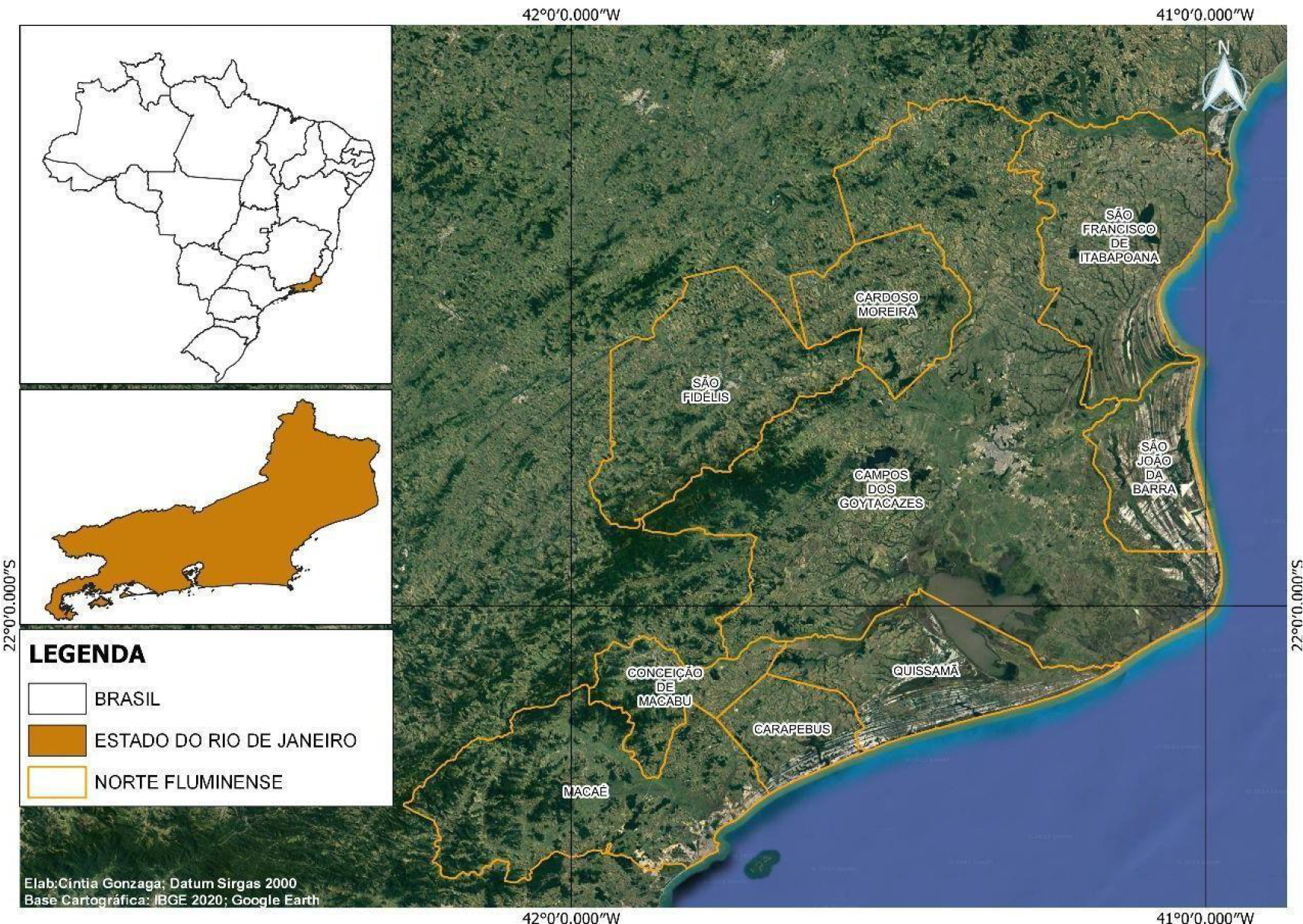 Organized by Cintia Gonzaga.
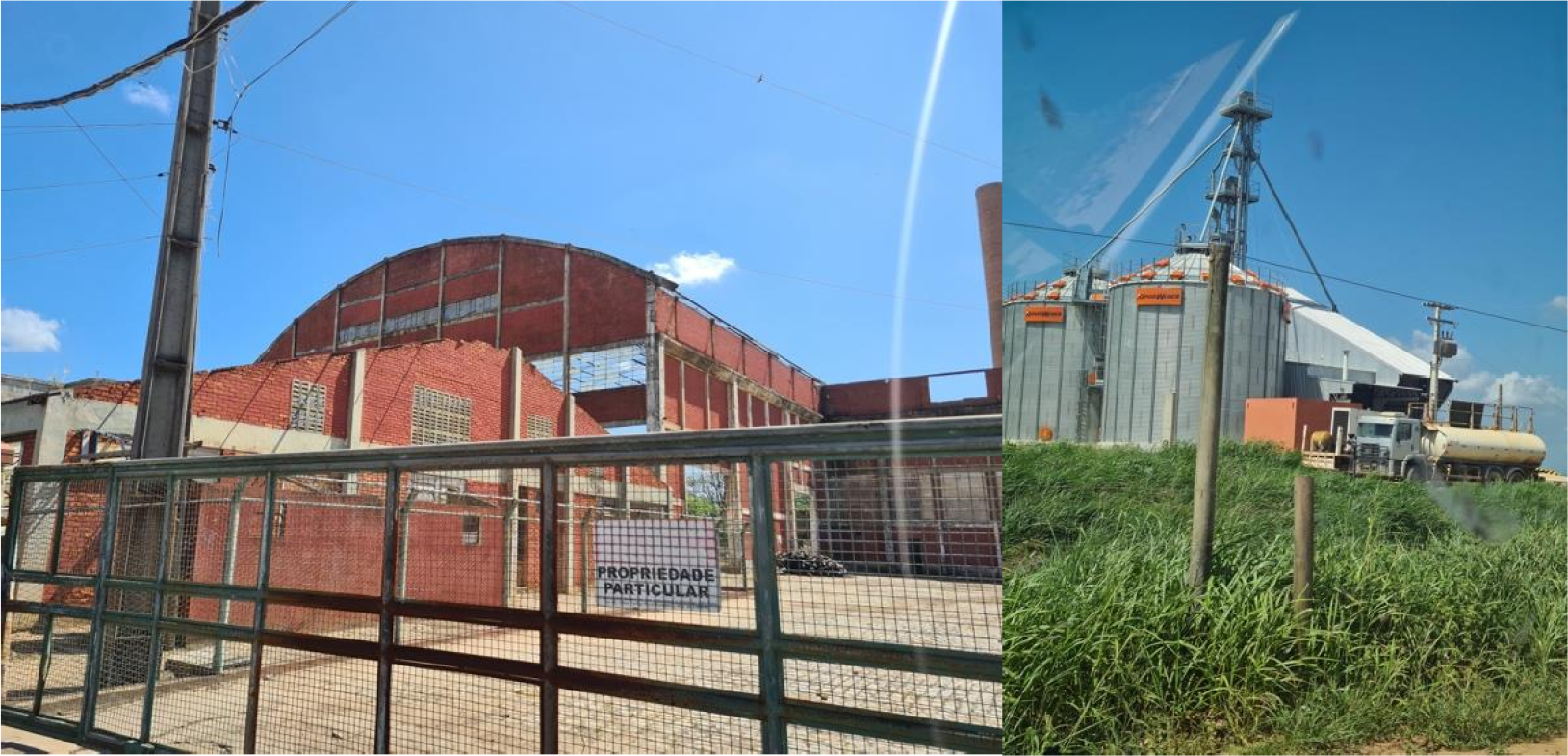 Source: Hugo Alexandre da Silva Rodrigues (2023).