Assessment of marine litter barrier initiatives and their potential as a prevention strategy in Brazil
Abstract
Considering that most solid waste reaching the ocean originates from activities on land and flows and flushes through rivers and estuaries to the sea, downstream strategies to intercept marine litter input, such as traps, booms, and boats, have grown in popularity over the past years. However, with the growing interest from the public and private sectors to expand and finance the interception of marine litter, it is essential to assess the existing initiatives, their operational capacity, and challenges. Thus, the present study sought to take an initial step toward this goal by identifying and mapping current marine litter interception initiatives in Brazil, often referred to as ecobarriers and ecoboats, characterizing them according to their level of maturity, type of ecosystem in which they operate, the structures used, how long the operation has been in place, which partnerships enable the operation, the indicators to measure effectiveness, general financial cost, and current demands for the operation to continue/to be implemented, comparing their occurrences with hotspots of marine litter input reported in the literature. A two-phase online survey contacted over 200 stakeholders who could provide information on the issue. A total of 19 boom and boat initiatives were identified, of which 11 could be accurately mapped, most concentrated in the Brazilian Southeast and at an initial phase of their operation (e.g., planned/being planned or raising funds but not fully implemented). All initiatives reported a demand for resources to implement/continue their operations. A mismatch was observed between the location of the initiatives mapped and the occurrence of marine litter hotspots, although these gaps should be interpreted with caution, considering plastic leakage estimates and sub-representation of initiatives. Finally, we highlight several aspects that should be considered before designing and implementing litter booms and other interception strategies.
Keywords:
Floating debris; Litter booms; Ecobarrier; Ecoboat; Plastic pollution
INTRODUCTION
Over the past years, the subject of marine litter has gained momentum in the international environmental agenda. A landmark for the prevention and management of marine litter, the Honolulu Strategy was one of the first global frameworks developed to act as a planning and monitoring tool, providing a common reference to which stakeholders (e.g., national governments, municipalities, industry, international organizations) can address the issue (UNEP, 2012). Other highly relevant international agreements and programs that highlight solutions to marine litter as a prime objective to be developed include the United Nations Decade of Ocean Science for Sustainable Development (i.e., Decade outcome No. 1 “a clean ocean where sources of pollution are identified and reduced or removed”) (IOC, 2019), the 2030 Agenda’s Sustainable Development Goals (SDG) (i.e., SDG target 14.1 “by 2025, prevent and significantly reduce marine pollution of all kinds, particularly from land-based activities, including marine debris and nutrient pollution”) (UN, 2015), the Global Partnership On Plastic Pollution and Marine Litter, and the resolutions of the United Nations Environment Assembly, particularly resolution 5/14 entitled “End plastic pollution: Towards an international legally binding instrument” which has initiated multilateral negotiations towards a global treaty (UNEA, 2022).
As marine litter is considered a “wicked problem” (McIntyre, 2020), multiple complementary strategies should be adopted throughout the source-to-sea continuum (Granit et al., 2017). This includes looking at processes that generate marine litter (e.g., improving waste management and wastewater treatment systems), impacts from the exposure to marine litter in various coastal and ocean compartments (e.g., removing litter accumulated in the environment), and addressing the effects of this pollution, such as mortality and losses to social and economic sectors (e.g., protecting the biota from ingestion and entanglement and human populations from physiological effects and loss of livelihood) (GESAMP, 2019; PEMALM, 2021). Therefore, a key aspect that must be considered is that solutions to this problem require multifaceted efforts made in collaboration among key stakeholders to identify and implement corresponding interventions and instruments addressing litter pollution both upstream and downstream (Scrich et al., 2024).
Regarding the collection and prevention of marine plastic pollution, Schmaltz et al. (2020) carried out a systematic review of emerging technologies to address these aspects. Of the 52 technologies surveyed, targeting macro and microplastics, 44.2% focused on removing floating debris by means of barriers, traps, booms, and boats, intending to intercept them before reaching the sea. Similarly, but with a focus on developing countries, Winterstetter et al. (2021) found that 42% of the marine plastic litter collection systems surveyed regarded the capture of litter from rivers and streams and 35% from the ocean. According to UNEP (2016), these types of initiatives are considered one of the best available techniques/technologies to capture and remove litter from fluvial and port areas as long as they are installed near the source of the floating debris. The density of different types of plastic waste is the main factor when determining plastic settlement, though size also influences the final location of accumulation and can determine if a particle either floats or sinks (Stuparu et al, 2015), which could then alter its potential to be intercepted by a floating barrier. Thus, there is a growing interest in implementing technologies to remove litter from water bodies as a strategy to mitigate marine litter. However, it is important to emphasize that focus on upstream solutions should be strengthened in a circular economy framework, seeking a more holistic approach to pollution (Walker, 2023).
Tackling litter inputs from riverine systems is a way of moving upstream to deal with the issue more widely and effectively (Granit et al., 2017). The estimates are that every year 1.15 to 2.41 million tons of plastic waste enter the ocean from rivers, and developing nations in the Global South play a critical role in this scenario (Lebreton et al., 2017). Riverine pollution is higher in such countries because of socioeconomic inequality and its influence on different waste generation and final disposal situations, also considering a high number of people living in informal settlements (also known as “subnormal agglomerates”, see IBGE, 2020 for further clarification on the term), which often contribute to litter disposal on land and in rivers (Schueler et al., 2018). Brazil is an example of this situation, hosting large hydrographic basins that drain its territory and that have been indicated as major contributors of litter to the ocean (Lebreton and Andrady, 2019; Blue Keepers, 2022; Alencar et al., 2023). Brazil was also ranked among the top 16 leading countries that contribute to plastic leakage into the ocean (Jambeck et al., 2015; Meijer et al., 2021). Recent estimates based on adapted methodological approaches reveal that Brazil has as much as 3.44 million tons of plastic waste leaking to the environment that is at risk of then reaching the ocean every year (Blue Keepers, 2022; Alencar et al., 2023).
In Brazil, interventions aiming at intercepting floating litter called “ecobarriers” and those called “ecoboats,” which collect floating marine litter, are becoming increasingly popular. The term ecobarrier encompasses different forms of barriers, traps, and booms that are installed transversally to the flow of a river to retain floating solid waste that would otherwise reach the ocean. In turn, ecoboats are active removal systems that use vessels with collection wheels and/or conveyor belts, for example, to remove litter from the surface of the water. Although few studies have reported on the efficiency of these systems over time in the country, Fries et al. (2019) described the operation of 17 ecobarriers and 10 ecoboats installed in the Guanabara Bay as part of the strategy to decrease pollution in the area in preparation for the 2016 Olympic Games. The authors emphasized that while both strategies did intercept a significant amount of litter, the issue of marine litter could not be entirely solved.
Many countries, including Brazil, have scarce data regarding marine litter monitoring programs (PEMALM, 2021; Alencar et al., 2022) and little information about the suitability to deploy marine litter removal systems (Winterstetter et al., 2021). It is important to emphasize that these systems demand local governance arrangements to address issues such as the final disposal location for the litter intercepted, maintenance of structures and personnel, and stakeholder buy-in. This scenario could lead to misinformed decisions and investment of resources that fail to reach the desired outcomes.
With the growing interest from the public and private sectors to finance boom and boat initiatives as emergency solutions for marine litter, it is essential to evaluate the characteristics, challenges, and potential effectiveness of these technologies. Thus, the present study sought to take an initial step toward this goal by identifying and mapping current ecobarrier and ecoboat initiatives in Brazil, considering the importance of a holistic evaluation over the implementation of such strategies and ultimate outcome of no longer needing to intercept litter that has leaked into water bodies. To do so, we characterized the initiatives found according to various relevant aspects to their operation and compared their occurrences with hotspots of marine litter input reported in the literature. Here we present the practical challenges faced and the logic behind these marine litter prevention strategies, understanding that these initiatives are relevant elements to sanitation, waste management, and marine litter combat discussions, when appropriately deployed and located.
METHODS
Ecobarrier and ecoboat survey
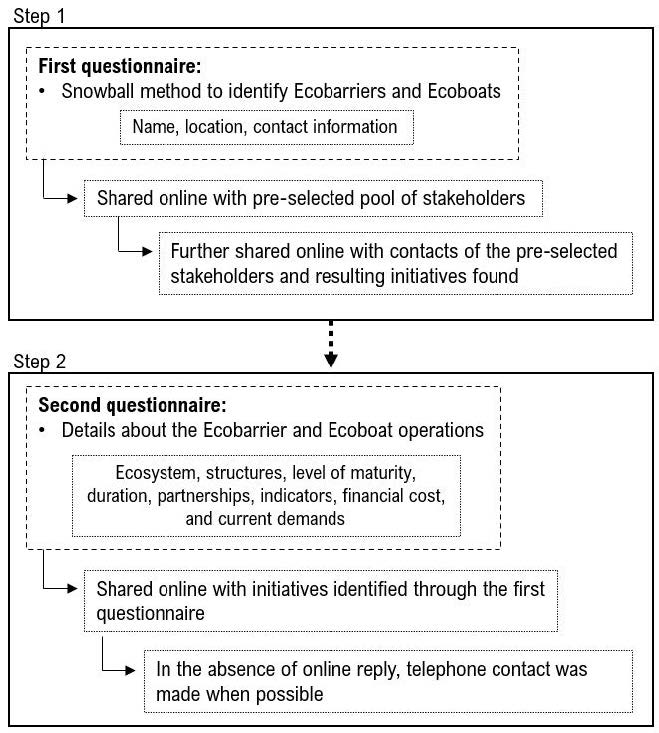
Current ecobarrier and ecoboat initiatives in Brazil were accessed through two online questionnaires between August and November 2021 (Figure 1). The first one applied a snowball technique to identify the name, location, and contact information of these initiatives. Stakeholders contacted through this bottom-up approach could recommend multiple ecobarriers and ecoboats in a single response and were invited to share this online questionnaire among their own professional networks. The initiatives indicated were then contacted primarily by email to respond to the second questionnaire that regarded aspects about their operation (full questionnaire available as Supplementary Material). This included the type of ecosystem in which they operate, structures used, level of maturity (divided into i. initial phase: planned/being planned; ii. initial phase: raising funds for implementation; iii. advanced phase: implemented/in follow-up; and iv. advanced phase: raising funds for maintenance), how long the operation has been in place, partnerships that enable the operation, indicators used to measure effectiveness, general financial cost, and current demands for the operation to continue/to be implemented. If a response by email was not obtained regarding the second questionnaire, the initiatives were contacted via telephone when this type of contact information was available.
The initial pool of stakeholders contacted to respond the first questionnaire comprised those in Brazil involved in marine litter research, monitoring and combat, or management [e.g., the Brazilian Marine Litter Science Patch network (Alencar et al., 2021), the multisectoral stakeholder network of the São Paulo Strategic Plan for Monitoring and Assessment of Marine Litter (PEMALM, 2021; Scrich et al., 2024), and other groups)], a list provided by the UNEP Clean Seas program and public sector proponents of the Call for Expression of Interest for Projects to Install and Operate Ecobarriers in Coastal Municipalities, promoted by the Brazilian Biodiversity Fund (FUNBIO), in partnership with the Brazilian Ministry of the Environment, through the Protected Marine and Coastal Areas Project – GEF Mar (FUNBIO, 2019).
The FUNBIO call was open to the coastal municipalities of Brazil listed in Ordinance No. 461 of December 13, 2018 that showed either municipal integrated solid waste management plans or intermunicipal solid waste management plans to express their interest to install and operate ecobarriers. The municipalities interested were expected to present a pilot project to operate for at least 60 months and with a maximum budget to be received from this call of R$250,000 (US$64,963, using conversion rates of December 2018), considering that the full value that would be made available for all proponents totaled R$1,500,000 (US$395,777, using conversion rates of December 2018). However, it is important to note that the selection process, which closed proposal submissions in July 2019, was suspended with no expected return date due to budgetary constraints at the Brazilian Ministry of Environment at the time. Thus, the list of proponents was taken as a list of municipalities with evidence of political will to install booms, understanding that the proposals have not necessarily moved forward since being submitted to the call given the scenario imposed.
Thus, the initial pool of stakeholders that were invited to respond to the snowball questionnaire and share the survey among their own networks included representatives of the public, private, academic, and third sectors, distributed widely across the country.
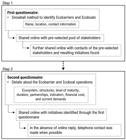
Responses from both rounds of questionnaires were systematized in spreadsheets. Initiatives indicated in the first survey were first evaluated to guarantee they represented ecobarrier/ecoboat operations. This was done by accessing further information about the initiative on their websites or social media, when provided by respondents. If no additional means of information was provided to either confirm or deny the inclusion criteria, the initiative received the second questionnaire, which would allow later exclusion if necessary. As a second sorting step, initiatives identified in their first questionnaire that did not respond to the second survey were not included in the maps of this study since it was not possible to ascertain the accuracy of the information provided, which could be by a third party and not necessarily by a representative of the initiative itself.
Comparing ecobarriers and ecoboats to marine litter hotspots
The initiatives surveyed were plotted in a GIS environment to better visualize their location across the country. The maps also included estimates of plastic litter inputs from rivers to the ocean in Brazil based on the global study by Lebreton et al. (2017). The full study on plastic pollution hotspots and risk of leakage to the ocean in Brazil that fueled the Blue Keepers (2022) diagnosis has only recently been published (Alencar et al., 2023) and represents the first national estimate on the topic, with finer resolution and higher precision.
It is important to highlight that, as in all studies, there are limitations to the methodology used by Lebreton et al. (2017) in estimating litter leakage and hotspots. As discussed by Alencar et al. (2023) this includes not considering informal settlements and population fluctuations, and that a global estimate will naturally overlook subnational conditions. Therefore, considering the timing of when the present analyses were conducted, the overlapping layer based on Lebreton et al. (2017) enabled a preliminary comparison of the location of ecobarriers and ecoboats with places where, theoretically, there is a higher leakage of plastic pollution to the ocean.
RESULTS
Ecobarriers and ecoboats identified
The total number of stakeholders that were initially contacted (i.e., stakeholders involved in marine litter research, monitoring and combat, or management, the UNEP Clean Seas list, and proponents in the call for expression of interest) surpassed 200 individuals. It was not possible to estimate a precise number due to the dynamic nature of the snowball methodology and networks contacted, with members joining and leaving their respective mailing lists without our control.
The first questionnaire received 27 responses, which provided a list of 21 individual ecobarrier or ecoboat initiatives indicated. After an initial sorting, two initiatives indicated were discarded because they did not fit into the definition of ecobarrier or ecoboat (i.e., one promoted environmental education aboard a sailboat and the other was focused on beach clean-up activities). Therefore, 19 initiatives were contacted to respond to the second questionnaire and provide further information about their operation.
In total, 11 initiatives (57.8%) responded after being contacted by email and/or telephone (Table 1). Most of those that did not respond could not be contacted by telephone, while in one case, the representative of the ecobarrier did not wish to participate in the study. As previously mentioned, those that did not respond to the second questionnaire were not included in the study’s maps given the possible inaccuracy of the information provided (e.g., in the case of some initiatives only the state was provided as location, rather than the municipality).
Ecobarriers and ecoboats were reported to operate in estuary, river, stream, bay, and embayment ecosystems. Regarding location across the country, most initiatives operate in the Southeast region of Brazil (90.9%), with only two located in the Northeast and South regions. Only one initiative reported operations in multiple states (Pernambuco, Rio de Janeiro, and São Paulo). Over half (54.6%) of the initiatives are concentrated in the state of São Paulo, followed by Rio de Janeiro (36.4%), and then Pernambuco, Espírito Santo, and Rio Grande do Sul, each with one initiative (9.1%).
Information on state, ecosystems, time of operation, and level of maturity collected from the ecobarriers and ecoboats surveyed in Brazil.
The initiative that has been in operation the longest began in 2003, while most were implemented roughly over the past decade (after 2010). All phases of maturity, from initial to advanced, were reported by the respondents. Approximately two thirds of initiatives (63.6%) are either at the “planned/being planned” or the “raising funds for implementation” initial phases of their operations, while the remaining third (36.4%) stated to be either at an “implemented/follow-up” or “raising funds for maintenance” advanced phase.
The scale of the operations varied considerably regarding infrastructure and, consequently, costs (Table 2). Regarding the financial aspect of the operation, some initiatives informed the cost of implementing the structure and the cost of operating the ecobarrier/ecoboat (sometimes including materials, personnel, and awareness campaigns). In turn, others only informed the personnel involved and hours spent on each removal operation, called “action.” It is also important to highlight that some initiatives are maintained by volunteers and sporadic donations are used to cover the costs for materials, while others are part of municipal waste management programs.
Partners included industries, schools, local enterprises, press, universities, public sector agencies, civil society associations, and recycling cooperatives. Despite the heterogeneity of responses, which does not allow a clear scenario on infrastructure vs costs, all initiatives reported a demand for resources to implement/continue their operations. This includes human resources and partnerships, but mainly financial resources.
Finally, regarding effectiveness indicators, all initiatives mentioned the amount of waste collected (weight and/or volume). Almost half of the initiatives (Eco01, Eco02, Eco04, Eco07, and Eco09) indicated sorting the waste collected according to types of materials as an indicator for effectiveness, highlighting that this information can be used to identify sources, plan awareness activities, and allow the reuse of materials for environmental education. However, it is important to note that most of these initiatives are still at an initial stage of maturity. Eco01, which is at an advanced stage of maturity, indicated that material sorting was only carried out once during their operation, which could demonstrate that this additional step in measuring effectiveness can be resource demanding. Moreover, environmental variables, such as rainfall, water quality (color and transparency), and wind and tidal regimes, were also mentioned when considering indicators used to measure effectiveness.
Overlap with marine litter hotspots
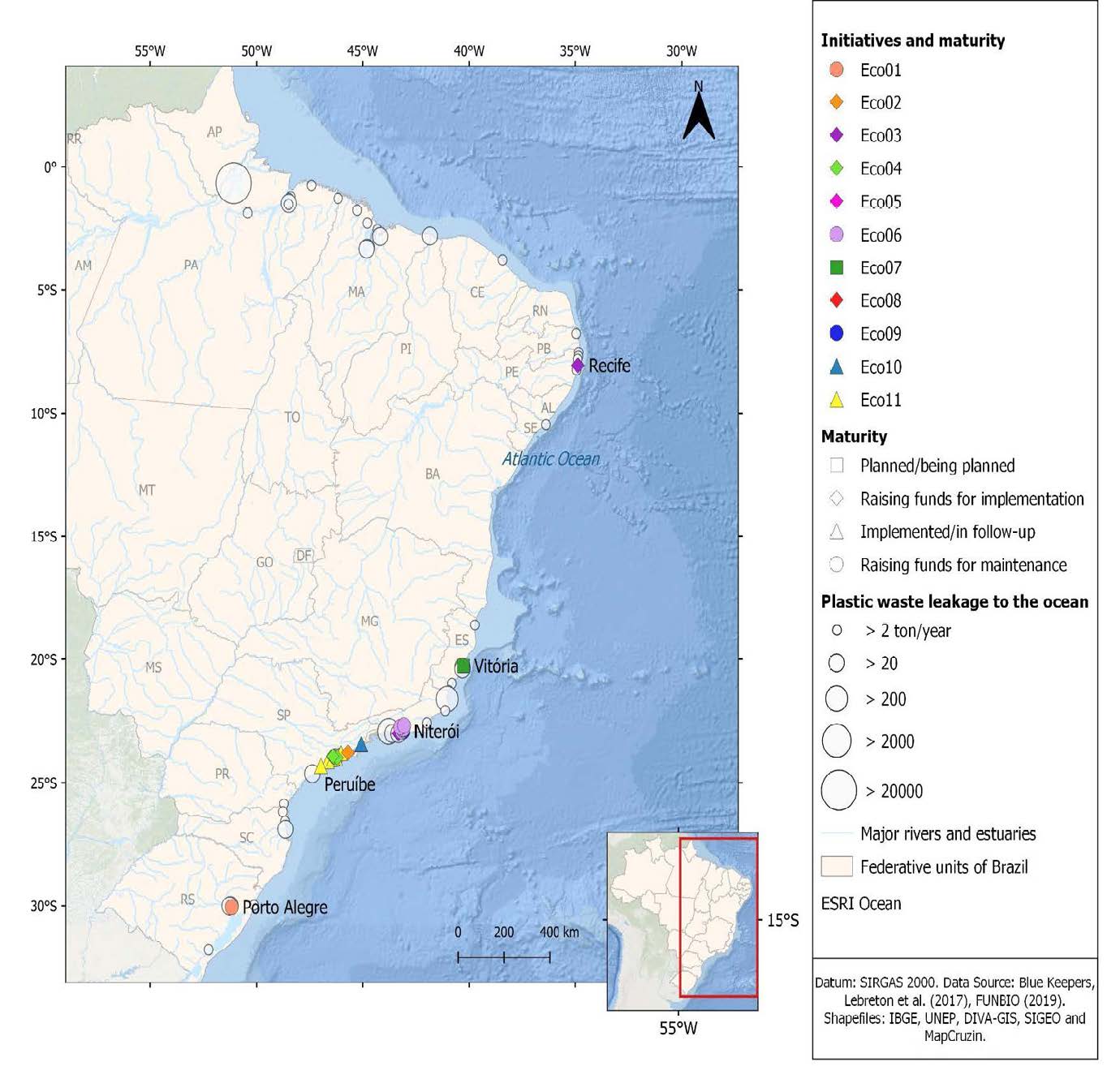
The 11 initiatives that responded to both questionnaires were mapped out and their location was compared to the results obtained by Lebreton et al. (2017), as shown in Figure 2, which estimates a total of 1.15 to 2.41 million tons of plastic waste entering the ocean annually from rivers. The largest hotspot identified by Lebreton et al. (2017) in Brazilian territory is at the mouth of the Amazon River (> 2,000 tons of plastic waste/year), which discharges into the ocean in the North region of Brazil. However, no ecobarrier or ecoboat initiatives surveyed covered that entire region.
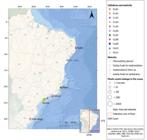
Location of the ecobarrier and ecoboats initiatives mapped in Brazil in comparison to hotspots for plastic waste leakage estimated by Lebreton et al. (2017). States are identified using their two-letter official abbreviations, while key municipalities are identified by their full name.
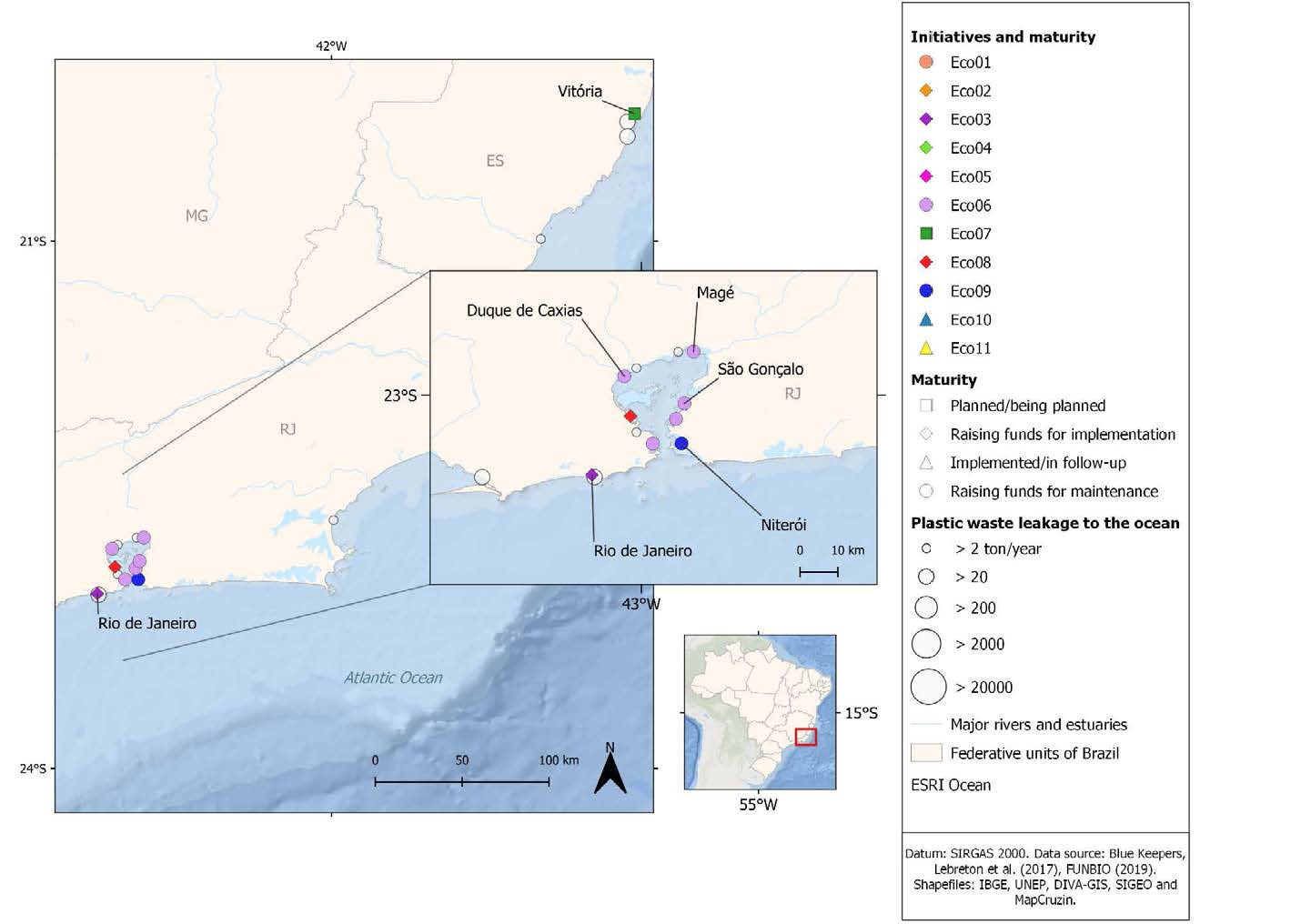
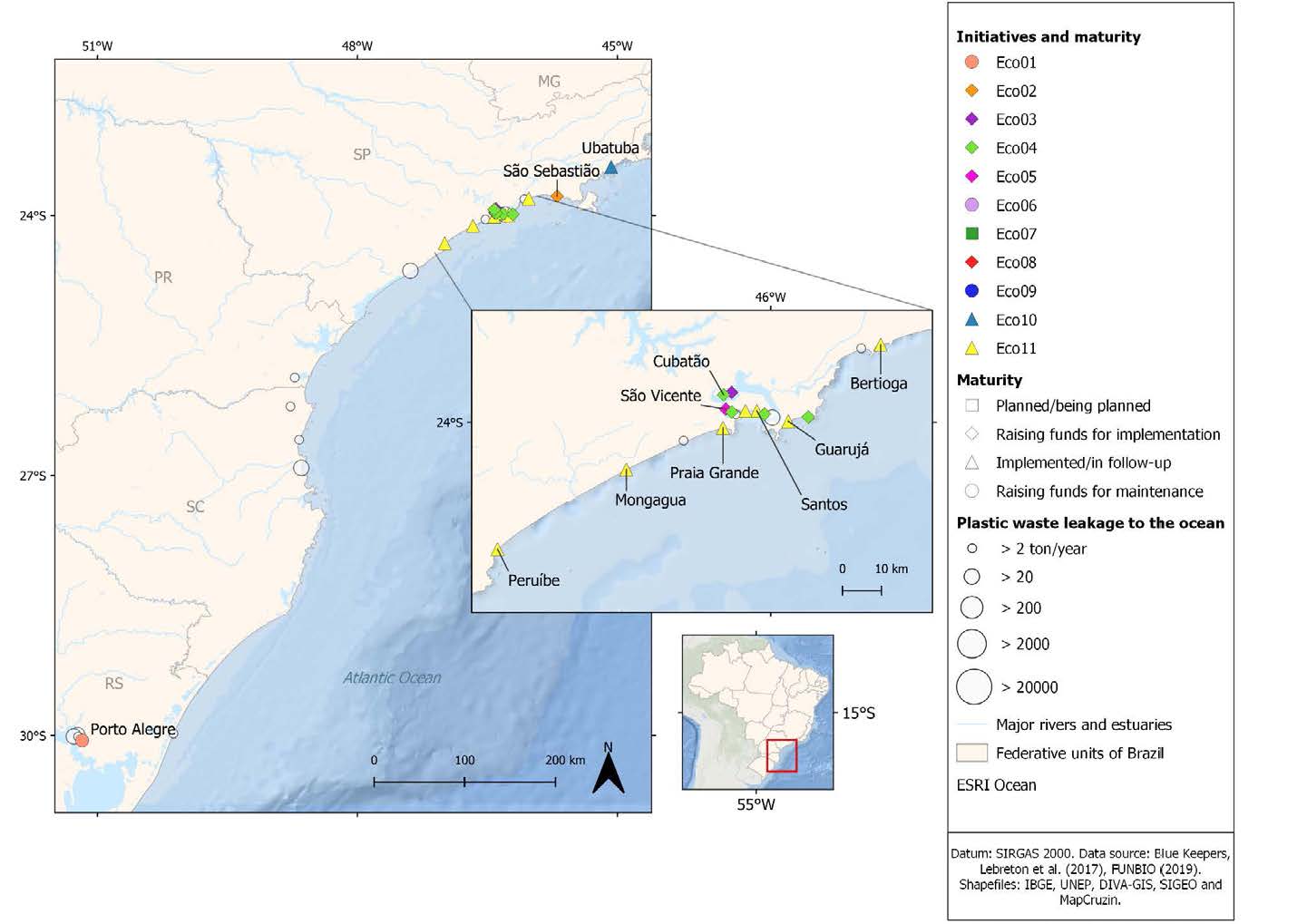
As previously mentioned, most initiatives are concentrated in the Southeast region of Brazil (Figures 3 and 4). The hotspots with the greatest input of plastic waste to the ocean in this region are located in the northern coast of the state of Rio de Janeiro and in the Guanabara Bay (both estimated at > 200 tons of plastic waste/year). Initiatives Eco03, Eco06, Eco08, and Eco09 reported having operations in the Guanabara Bay but none reported activities in the northern sector of the state. Other concerning hotspots in the Southeast region (> 20 tons/year) are located in the southern area of the state of Espírito Santo, where Eco07 operates; in the central coast of the state of São Paulo, where Eco02, Eco03, Eco04, Eco05, Eco10, and Eco11 reported activities; and in the southern coast of the state of São Paulo, where there are no initiatives present. Despite the numerous initiatives, it is important to note that most (66.6%) are at an initial phase of their operation, which is likely to mean they currently operate below their full capacity.
Further down the coast, in the South region of Brazil, there are also hotspots identified by Lebreton et al. (2017) representing inputs of > 20 tons/year (Figure 4). These were located specifically in the northern coast of the state of Santa Catarina, where there are no initiatives mapped; and in the Guaíba river in the northern sector of the state of Rio Grande do Sul, where initiative Eco01 currently operates at an advanced phase. The Guaíba river is an important upstream water body to the Patos Lagoon, which discharges in the southernmost region of the country, near its border with Uruguay.
Finally, the Northeast region of the country has several smaller hotspots (> 2 tons/year) and only one initiative (Eco03) mapped along this sector, which is the most extensive stretch of coastline in Brazil (Figure 2).
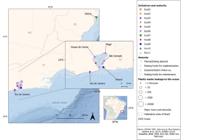
Location of ecobarrier and ecoboats initiatives mapped in the states of Rio de Janeiro and Espírito Santo, Southeast region of Brazil, in comparison to hotspots for plastic waste leakage estimated by Lebreton et al. (2017). States are identified using their two-letter official abbreviations, while key municipalities are identified by their full name.

Location of ecobarrier and ecoboats initiatives mapped in the state of São Paulo, Southeast region, and in the state of Rio Grande do Sul, South region of Brazil, in comparison to hotspots for plastic waste leakage estimated by Lebreton et al. (2017). States are identified using their two-letter official abbreviations, while key municipalities are identified by their full name.
DISCUSSION
The ecobarrier and ecoboat technologies applied in Brazil to prevent litter leakage to the ocean and remove marine litter were found to be incipient, few, and unevenly distributed along the country’s coastline considering the marine litter challenges faced. Only five of the 17 coastal states in Brazil were represented in this survey. However, this low representativity is not unexpected considering the still infrequent internalization of the matter of marine litter in public policies, such as coastal management plans and solid waste management. It is important to highlight that absence of representation in the mapping effort could also be the result of a low response rate. Online surveys allow access to larger samples at lower costs, but typically have a lower response rate, which can be curbed by adopting strategies such as e-mail invitation, reminders, and using a simple questionnaire design that takes a short time to complete (Sammut et al., 2021). These strategies were employed in the present study, but the methodology still has limitations (e.g., subrepresentation of initiatives due to lack of or incomplete responses).
The state of São Paulo, where most ecobarriers and ecoboats mapped have operations, has recently launched a state-wide monitoring and assessment plan for marine litter that is encompassed within the state’s solid waste management plan (SIMA, 2020; PEMALM, 2021). Another similar effort toward an action plan to combat marine litter has been undertaken by the state of Pernambuco, where one initiative was mapped (PACOLMAR-PE, 2022). In 2019, a nationwide bill (PL 2293/2019) was proposed for the mandatory implementation of ecobarriers along waterways, the location of which would be determined by either municipalities or state authorities, though with few other details about how the systems should operate (Brasil, 2019). It is likely and presumable that the development of public policies within a collaborative approach, aiming to stimulate the formation of networks between actors who tackle marine litter, such as the two mentioned state plans, can promote the development and emphasis of such initiatives that were achieved by mapping.
Moreover, most initiatives were concentrated in states with the highest gross domestic product in the country (IBGE, 2019). This may be indicative of a higher capacity of these areas to invest toward solutions for environmental impacts. It is important to note that innovative solutions are required to improve current financing mechanisms for conservation, most of which originate from public institutions and are thus subject to the short-term time horizons of political agendas (IPBES, 2019). Within the context of the UN’s plastic pollution treaty, a robust financing and governance system is considered a crucial topic for the success of the agreement (Silva-Filho and Velis, 2022). This means that infrastructure and management gaps must be addressed, generating a stable scenario for waste management operations. As shown in the present study, many initiatives suffer from instability of resources (particularly financial) and are not incorporated into public management policies, which is far from ideal.
As discussed by Andrés et al. (2021), aspects regarding the installation and feasibility of barrier structures used in rivers to prevent the generation of marine litter are still being evaluated worldwide (e.g., Mr Trash Wheel, the Ocean Cleanup’s Interceptor, and the river boom of the EU-funded project Claim). Andrés et al. (2021) also evaluated the cost-efficiency of a riverine barrier in the Bay of Biscay, Northeast Atlantic Ocean, and found that this technology was unsuitable for the area, presenting a higher cost than the willingness-to-pay of local managers and lower efficiency than sea-cleaning vessels. As presented in this study, the financial costs for implementation and operation of the booms and boats mapped were very heterogeneous and did not allow an in-depth evaluation on this aspect.
Only two initiatives identified did not indicate in their level of maturity that they were raising funds for either implementation or maintenance. Although human resources were mentioned when asked about current demands to guarantee the operation. Winterstetter et al. (2021) highlight that these marine litter prevention solutions involving river cleanup technologies do not require an extensive and highly skilled workforce. They exemplify these strategies with the StormXTM passive capturing system for stormwater runoff and the Trash Wheel, an active stationary system that targets floating debris.
Some considerations must be made regarding the mismatch between the location of the ecobarrier and ecoboat operations mapped in Brazil and the major hotspots of plastic waste leakage into the ocean identified by Lebreton et al. (2017). According to Lebretron et al., (2017), the largest hotspot in Brazil is at the mouth of the Amazon River, with an estimated input of plastic waste to the ocean of over 20,000 tons per year. However, no initiatives were mapped for the entire North region of the country. In turn, smaller hotspots (>2, > 20 and > 200 tons/year) are spread unevenly along the coastline. As per our results, the Southeast region has initiatives covering hotspots in the states of Espírito Santo, Rio de Janeiro, and São Paulo, while the South region was represented by one initiative in the state of Rio Grande do Sul. From a decision-making perspective, this panorama would stimulate higher investments in northern Brazil to combat marine litter. However, it is important to consider many more aspects. For example, as Lebreton et al. (2017) discuss, the global estimates provided could be further refined with more data and with the integration of information on river morphology, local hydrodynamics, and natural and artificial features across the landscape, such as wastewater treatment plants. This being said, some gaps in the estimates for Brazil, such as in the North region and along the Northeast coast (and particularly near the metropolis of Salvador, state of Bahia), should be interpreted with caution. Local and regional efforts should be investigated to validate this information and support evidence-based policies for marine litter combat. As evidenced in the diagnosis by Blue Keepers (2022) and Alencar et al. (2023), major hotspots for risk of plastic pollution leakage to the ocean include the Amazon River, Tocantins River, São Francisco River, Todos os Santos Bay, Paraíba do Sul River, Guanabara and Sepetiba bays, and the Patos Lagoon. Validation of these hotspots at a subnational level would require efforts to collect litter from rivers and other environments to provide empirical data for comparison with modeled data (Lebreton et al., 2017; Meijer et al., 2021; Alencar et al., 2023).
Solutions such as those presented do not tackle the marine litter problem alone but are rather seen as promising and urgent complements that can work together with other policy efforts (Worm et al., 2017). While governments and environmental organizations have an important role to play by implementing innovation efforts and incorporating technological solutions to complement existing policy efforts, these efforts are more effective when coupled with private industry action and support, especially given the complex nature of the problem and the extent of stakeholders involved (Schmaltz, 2020). As reported by some of the respondents in this study, there are challenges and costs associated with technology implementation and deployment location for solutions of collection and removal. Therefore, it is expected that the public sector may partner with private entities to implement, maintain, and improve plastic pollution leakage prevention or collection technologies in hotspots of marine plastic pollution.
Based on the results and discussions of the present study, we highlight that several aspects that should be considered before designing and installing an ecobarrier or beginning operations with ecoboats. These include: i. understanding local riverine or oceanographic conditions; ii. evaluating if the structure to be installed will represent a navigational hazard; iii. assessing potential negative interactions with the biota, such as the accidental capture of organisms or generating a barrier for their movement; iv. identifying local sources of floating litter; and v. integration with local or regional solid waste management systems.
Finally, the successful implementation of litter traps and barriers is complex as it demands adequate local arrangements and governance systems. We believe it is helpful to consider these strategies as a type of insurance to prevent marine litter, with further action needed upstream. Countries of the Global South are disproportionately affected by plastic pollution, and for the global treaty on plastic pollution to be effective, data, policies, and stakeholders will need to be addressed (Walker, 2023). Although the removal of litter from the environment cannot be the only strategy used to combat marine litter — and local, regional, and national context are key in this discussion —, they are needed to “keep the patient alive,” so to speak, considering the dire levels of legacy plastic pollution already in the ocean.
Data availability statement
Data are available within the article or its supplementary materials. Additional data are available upon request from the authors or corresponding author.
Supplementary material
Supplementary material can be accessed at https://zenodo.org/records/14990792.
Funding
This study was financed in part by the Coordenação de Aperfeiçoamento de Pessoal de Nível Superior - Brasil (CAPES) - Finance Code 001. M.V.A received a M.Sc scholarship from the São Paulo Research Foundation (FAPESP) (grant number 2019/14093-7) and A.T. received a research productivity grant from the Conselho Nacional de Desenvolvimento Científico e Tecnológico (CNPQ) (Proc. 310553/2019-9; 316837/2023-7). Moreover, this study resulted from consultancy work carried out by the authors within the Blue Keepers Program of the UN Global Compact of Brazil.
Acknowledgments
We are grateful to the Brazilian Biodiversity Fund (FUNBIO) for generously sharing information about the Call for Expression of Interest for Projects to Install and Operate Ecobarriers in Coastal Municipalities, promoted in partnership with the Brazilian Ministry of the Environment by the Protected Marine and Coastal Areas Project – GEF Mar.
REFERENCES
-
Alencar, M. V., Gimenez, B. G., Sasahara, C., Elliff, C. I., Rodrigues, L. S., Conti, L. A., Gonçalves-Dias, S. L. F., Cetrulo, T. B., Scrich, V. M. & Turra, A. 2022. How far are we from robust estimates of plastic litter leakage to the environment? Journal of Environmental Management, 323, 116195. DOI: https://doi.org/10.1016/j.jenvman.2022.116195
» https://doi.org/10.1016/j.jenvman.2022.116195 -
Alencar, M. V., Gimenez, B. G., Sasahara, C., Elliff, C. I., Velis, C. A., Rodrigues, L. S., Conti, L. A., Gonçalves-Dias, S. L. F., Cetrulo, T. B., Scrich, V. M. & Turra, A. 2023. Advancing plastic pollution hotspotting at the subnational level: Brazil as a case study in the Global South. Marine Pollution Bulletin, 194, 115382. DOI: https://doi.org/10.1016/j.marpolbul.2023.115382
» https://doi.org/10.1016/j.marpolbul.2023.115382 -
Alencar, M. V., Krelling, A. P., Elliff, C. I., Fernandino, G., Rabelo, E. F., Costa, M. F., Christofoletti, R. & Turra, A. 2021. Rede nacional de pesquisadores para discutir e propor ações para o combate ao lixo no mar. In: Anais do XIV ENCOGERCO - Encontro Nacional de Gerenciamento Costeiro. Available from: https://encogerco.org.br/rede-nacional-de-pesquisadores-para-discutir-e-propor-acoes-para-o-combate-ao-lixo-no-mar/ Access date: 2024-Oct-09
» https://encogerco.org.br/rede-nacional-de-pesquisadores-para-discutir-e-propor-acoes-para-o-combate-ao-lixo-no-mar/ -
Andrés, M., Delpey, M., Ruiz, I., Declerck, A., Sarrade, C., Bergeron, P. & Basurko, O. C. 2021. Measuring and comparing solutions for floating marine litter removal: Lessons learned in the south-east coast of the Bay of Biscay from an economic perspective. Marine Policy, 127, 104450. DOI: https://doi.org/10.1016/j.marpol.2021.104450
» https://doi.org/10.1016/j.marpol.2021.104450 -
Blue Keepers. 2022. Executive Summary 2021-2022: Diagnosis of plastic pollution hotspots in Brazil. [S. l.]: Pacto Global Rede Brasil. Available from: https://go.pactoglobal.org.br/SumarioBlueKeepers20212022 . Access date: 2024-Oct-09
» https://go.pactoglobal.org.br/SumarioBlueKeepers20212022 -
Brasil. 2019. PL 2293/2019. Brasília, DF, Câmara dos Deputados. Available from: https://www.camara.leg.br/proposicoesWeb/fichadetramitacao?idProposicao=2198161 Access date: 2024-Oct-09
» https://www.camara.leg.br/proposicoesWeb/fichadetramitacao?idProposicao=2198161 -
Fries, A. S., Coimbra, J. P., Nemazie, D. A., Summers, R. M., Azevedo, J. P. S., Filoso, S., Newton, M., Gelli, G., Oliveira, R. C. N., Pessoa, M. A. R. & Dennison, W. C. 2019. Guanabara Bay ecosystem health report card: Science, management, and governance implications. Regional Studies in Marine Science, 25, 100474. DOI: https://doi.org/10.1016/j.rsma.2018.100474
» https://doi.org/10.1016/j.rsma.2018.100474 - FUNBIO (Fundo Brasileiro para a Biodiversidade). 2019. Listagem da Chamada de Manifestação de Interesse para Projetos de Instalação e Operação de Ecobarreiras em Municípios Costeiros. Rio de Janeiro, FUNBIO.
-
GESAMP (Joint Group of Experts on the Scientific Aspects of Marine Environmental Protection). 2019. Guidelines for the monitoring and assessment of plastic litter and microplastics in the ocean (n. 99). London, GESAMP. Available from: http://www.gesamp.org/publications/guidelines-for-the-monitoring-and-assessment-of-plastic-litter-in-the-ocean Access date: 2024-Oct-09
» http://www.gesamp.org/publications/guidelines-for-the-monitoring-and-assessment-of-plastic-litter-in-the-ocean -
Granit, J., Liss Lymer, B., Olsen, S., Tengberg, A., Nõmmann, S. & Clausen, T. J. 2017. A conceptual framework for governing and managing key flows in a source-to-sea continuum. Water Policy, 19(4), 673-691. DOI: https://doi.org/10.2166/wp.2017.126
» https://doi.org/10.2166/wp.2017.126 -
IBGE (Instituto Brasileiro de Geografia e Estatística). 2019. Produto interno bruto dos municípios. 2019. Rio de Janeiro, IBGE. Available from: https://www.ibge.gov.br/estatisticas/economicas/contas-nacionais/9088-produto-interno-bruto-dos-municipios.html?=&t=destaques Access date: 2024-Oct-09
» https://www.ibge.gov.br/estatisticas/economicas/contas-nacionais/9088-produto-interno-bruto-dos-municipios.html?=&t=destaques -
IBGE (Instituto Brasileiro de Geografia e Estatística). 2020. Subnormal Agglomerates. Rio de Janeiro, IBGE. Available from: ( https://www.ibge.gov.br/en/geosciences/territorial-organization/territorial-typologies/17553-subnormal-agglomerates.html?=&t=o-que-e ) Access date: 2024-Oct-09
» https://www.ibge.gov.br/en/geosciences/territorial-organization/territorial-typologies/17553-subnormal-agglomerates.html?=&t=o-que-e -
IOC (Intergovernmental Oceanographic Commission). 2019. The science we need for the ocean we want: the United Nations decade of ocean science for sustainable development (2021–2030). Paris, UNESCO. Available from: https://unesdoc.unesco.org/ark:/48223/pf0000265198 Access date: 2024-Oct-09
» https://unesdoc.unesco.org/ark:/48223/pf0000265198 -
IPBES (Intergovernmental Science-Policy Platform on Biodiversity and Ecosystem Services). 2019. Global assessment report on biodiversity and ecosystem services of the Intergovernmental Science-Policy Platform on Biodiversity and Ecosystem Services. Bonn, IPBES secretariat. DOI: https://doi.org/10.5281/zenodo.3831673
» https://doi.org/10.5281/zenodo.3831673 -
Jambeck, J. R., Geyer, R., Wilcox, C., Siegler, T. R., Perryman, M., Andrady, A., Narayan, R. & Law, K. L. 2015. Plastic waste inputs from land into the ocean. Science, 347(6223), 768-771. DOI: https://doi.org/10.1126/science.1260352 .
» https://doi.org/10.1126/science.1260352. -
Lebreton, L. & Andrady, A. 2019. Future scenarios of global plastic waste generation and disposal. Palgrave Communications, 5(1), 1-11. DOI: https://doi.org/10.1057/s41599-018-0212-7
» https://doi.org/10.1057/s41599-018-0212-7 -
Lebreton, L. C., Van Der Zwet, J., Damsteeg, J. W., Slat, B., Andrady, A. & Reisser, J. 2017. River plastic emissions to the world’s oceans. Nature communications, 8, 15611. DOI: https://doi.org/10.1038/ncomms15611
» https://doi.org/10.1038/ncomms15611 - Mcintyre, O. 2020. Addressing Marine Plastic Pollution as a ‘Wicked’ Problem of Transnational Environmental Governance. Environmental Liability: Law, Policy and Practice, 25(6), 282-295.
-
Meijer, L. J., Van Emmerik, T., Van Der Ent, R., Schmidt, C. & Lebreton, L. 2021. More than 1000 rivers account for 80% of global riverine plastic emissions into the ocean. Science Advances, 7(18), eaaz5803. DOI: https://doi.org/10.1126/sciadv.aaz5803 .
» https://doi.org/10.1126/sciadv.aaz5803. -
PACOLMAR-PE. 2022. Plano de Ação de Combate ao Lixo no Mar. Recife, PACOLMAR. Available from: https://semas.pe.gov.br/pacolmar/ Access date: 2024-Oct-09
» https://semas.pe.gov.br/pacolmar/ - PEMALM (Plano Estratégico de Monitoramento e Avaliação do Lixo no Mar do Estado de São Paulo). 2021. São Paulo Strategic Plan for Monitoring and Assessment of Marine Litter. São Paulo, CETESB – Biblioteca.
-
Sammut, R., Griscti, O. & Norman, I. J. 2021. Strategies to improve response rates to web surveys: A literature review. International Journal of Nursing Studies, 123, 104058. DOI: https://doi.org/10.1016/j.ijnurstu.2021.104058
» https://doi.org/10.1016/j.ijnurstu.2021.104058 -
Schmaltz, E., Melvin, E. C., Diana, Z., Gunady, E. F., Rittschofa, D., Somarelli, J. A., Virdin, J. & Dunphy-Dalya, M. M. 2020. Plastic pollution solutions: emerging technologies to prevent and collect marine plastic pollution. Environment International, 144, 106067. DOI: https://doi.org/10.1016/j.envint.2020.106067
» https://doi.org/10.1016/j.envint.2020.106067 -
Schueler, A. S., Kzure, H. & Racca, G. B. 2018. Como estão os resíduos urbanos nas favelas cariocas? Revista Brasileira de Gestão Urbana, 10, 213-230. Available from: https://periodicos.pucpr.br/index.php/Urbe/article/view/20787/22564 . Access date: 2024-Oct-09
» https://periodicos.pucpr.br/index.php/Urbe/article/view/20787/22564 -
Scrich, V. M., Elliff, C., Andrade, M. M., Grilli, N. M. & Turra, A. 2024. Stakeholder Analysis as a strategic tool in framing collaborative governance arenas for marine litter monitoring. Marine Pollution Bulletin, 198, 115799. DOI: https://doi.org/10.1016/j.marpolbul.2023.115799
» https://doi.org/10.1016/j.marpolbul.2023.115799 -
Silva-Filho, C. R. V. & Velis, C. A. 2022. United Nations’ plastic pollution treaty pathway puts waste and resources management sector at the centre of massive change. Waste Management & Research, 40(5), 487-489. DOI: https://doi.org/10.1177/0734242X221094634
» https://doi.org/10.1177/0734242X221094634 - SIMA (Secretaria de Infraestrutura e Meio Ambiente). 2020. Plano de resíduos sólidos do estado de São Paulo. São Paulo, CETESB – Biblioteca.
- Stuparu, D., Van Der Meulen, M., Kleissen, F., Vethaak, D. & Serafy, G. E. 2015. Developing a transport model for plastic distribution in the North Sea. In: E‐proceedings of the 36th IAHR World Congress.
-
UN (United Nations). 2015. United Nations General Assembly resolution A/RES/70/1. New York, UN. Available from: https://www.un.org/en/development/desa/population/migration/generalassembly/docs/globalcompact/A_RES_70_1_E.pdf Access date: 2024-Oct-09
» https://www.un.org/en/development/desa/population/migration/generalassembly/docs/globalcompact/A_RES_70_1_E.pdf - UNEA (United Nations Environment Assembly). 2022. Resolution adopted by the United Nations Environment Assembly on 2 March 2022. End plastic pollution: Towards an international legally binding instrument. UNEP/EA.5/L.23/Rev.1. Nairobi, UNEP.
-
UNEP (United Nations Environment Programme). 2012. The Honolulu Strategy: A Global Framework for Prevention and Management of Marine Debris. Nairobi, UNEP. Available from: https://wedocs.unep.org/20.500.11822/10670 Access date: 2024-Oct-09
» https://wedocs.unep.org/20.500.11822/10670 - UNEP (United Nations Environment Programme). 2016. Marine plastic debris and microplastics – Global lessons and research to inspire action and guide policy change. Nairobi, UNEP.
-
Walker, T. R. 2023. The tropics should not become the world’s plastic pollution problem. Journal of Tropical Futures, 1(1). DOI: https://doi.org/10.1177/27538931231165273 .
» https://doi.org/10.1177/27538931231165273. -
Winterstetter, A., Grodent, M., Kini, V., Ragaert, K. & Vrancken, K. C. 2021. A review of technological solutions to prevent or reduce marine plastic litter in developing countries. Sustainability, 13, 4894. DOI: https://doi.org/10.3390/su13094894
» https://doi.org/10.3390/su13094894 -
Worm, B., Lotze, H. K., Jubinville, I., Wilcox, C. & Jambeck, J. 2017. Plastic as a persistent marine pollutant. Annual Review of Environment and Resources, 42(1), 1–26. DOI: https://doi.org/10.1146/annurev-environ-102016-060700
» https://doi.org/10.1146/annurev-environ-102016-060700
-
Funding
This study was financed in part by the Coordenação de Aperfeiçoamento de Pessoal de Nível Superior - Brasil (CAPES) - Finance Code 001. M.V.A received a M.Sc scholarship from the São Paulo Research Foundation (FAPESP) (grant number 2019/14093-7) and A.T. received a research productivity grant from the Conselho Nacional de Desenvolvimento Científico e Tecnológico (CNPQ) (Proc. 310553/2019-9; 316837/2023-7). Moreover, this study resulted from consultancy work carried out by the authors within the Blue Keepers Program of the UN Global Compact of Brazil.
Edited by
-
Editor:
Rubens Lopes