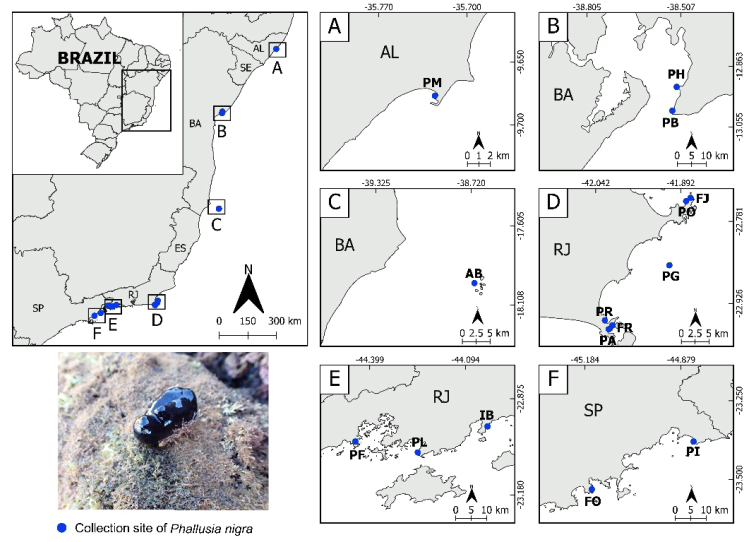
Baseline survey of microplastics in Phallusia nigra (Ascidiacea) in different sites along the Brazilian Coast, Central, and Southwest Atlantic
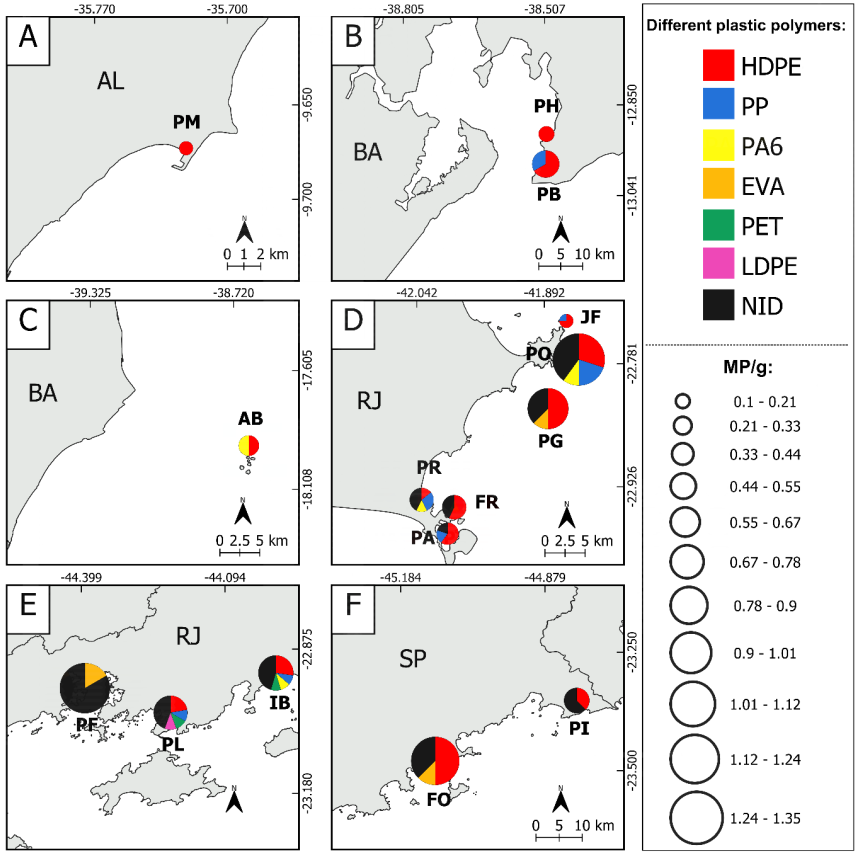
Microplastics (MPs) pose a growing threat to marine ecosystems, yet their accumulation in tropical ascidians remains understudied. This study investigated MPs in the digestive tract of Phallusia nigra from 15 sites along the Brazilian coast (75 individuals). Tissues were digested by alkaline solution, and MPs were quantified, measured, and characterized via microscopy and ATR-FTIR spectroscopy. MPs were detected in 64% of individuals (mean: 1.21 particles/individual), predominantly as fragments (63%) and fibers (37%), with an average of 0.77±0.81 MP/g. The most abundant polymers were polyethylene (PE), polypropylene (PP), and nylon (PA), consistent with global coastal pollution trends. The prevalence of PE, PP, and PA, polymers widely linked to fishing gear, packaging, and sewage, underscores the role of anthropogenic sources in tropical marine pollution. Besides these findings, this study emphasizes the need for standardized methodologies to assess MPs impacts on understudied filter-feeders and the urgency of extending monitoring efforts to tropical ecosystems.
Keywords:
Marine pollution; Filter-feeders; Polymer composition; Tropical ecosystems
 Thumbnail
 Thumbnail