 Growth behavior and chemical contents of amaryllis hybrid seedlings as affected by phosphorus nano-fertilizer and mycorrhizae
Abstract
Specific treatments can improve and hasten the growth of amaryllis seedlings. In the present study, hybrid seedlings of amaryllis were sprayed with 0.5 and 1 g of nano-phosphorus (Nano-P) and inoculated with 20 and 40 g of arbuscular mycorrhizal fungi (AMF) alone or in combination. Nano-P alone significantly affected root number, with the maximum value at 0.5 g, but 1 g improved chlorophyll a and b contents. Most chemical contents in roots, bulbs, and leaves were enhanced by Nano-P, whereas reductions were found in root flavonoids and leaf soluble sugars. AMF applications significantly influenced growth traits, with 20 g yielding the maximum root number, bulb weight and size, and leaf dimensions. Generally, AMF declined root chemicals while improving bulb and leaf chemicals, especially at 20 g, but 40 g rose chlorophyll b and carbohydrates. Moreover, more pronounced and variable effects were observed owing to the interaction between Nano-P and AMF than individual applications. The highest root number, root total proteins, root total carbohydrates, root soluble sugar, bulb soluble sugar, leaf soluble sugar, and root total phenols were recorded due to Nano-P at 0.5 g combined with 0 g AMF. The combination of 20 g AMF resulted in the maximum leaf length, bulb weight, and bulb size. Additionally, the highest leaf width, bulb total protein, and root total indoles were obtained at the combination of 0.5 g phosphorus and 20 g of mycorrhizae. Overall, moderate levels of Nano-P and AMF, particularly their combination at 0.5 g and 20 g, respectively, produced optimal growth and metabolic performance.
Keywords:
Bulb; Hippeastrum vittatum; leaf; phytochemicals; root
Resumo
Tratamentos específicos podem favorecer e acelerar o crescimento de mudas de amarílis. No presente estudo, mudas híbridas de amarílis foram pulverizadas com 0,5 e 1 g de nanofósforo (Nano-P) e inoculadas com 20 e 40 g de fungos micorrízicos arbusculares (FMA), isoladamente ou em combinação. O Nano-P aplicado isoladamente, afetou significativamente o número de raízes, com o valor observado na dose de 0,5 g, enquanto 1 g promoveu maiores teores de clorofila a e b. A maioria dos constituíntes químicos das raízes, dos bulbos e das folhas foi aumentada pelo Nano-P, enquanto reduções foram observadas nos flavonoides radiculares e nos açúcares solúveis das folhas. As aplicações de FMA influenciaram significativamente as características de crescimento, e 20 g proporcionaram os maiores valores para número de raízes, peso e tamanho dos bulbos, além das dimensões foliares. De modo geral, os FMA reduziram os constituíntes químicos das raízes, ao mesmo tempo que melhoraram os contituíntes químicos dos bulbos e das folhas, especialmente na dose de 20 g, entretanto, 40 g aumentaram a clorofila b e os carboidratos. Além disso, observou-se que a interação entre Nano-P e FMA produziu efeitos mais pronunciados e variáveis do que as aplicações isoladas. O maior número de raízes, proteínas totais, carboidratos totais, açúcares solúveis e fenóis totais nas raízes, bem como açúcares solúveis nos bulbos e nas folhas, foi registrado na combinação de 0,5 g de Nano-P com 0 g de FMA. A combinação com 20 g de FMA resultou no maior comprimento foliar, peso e tamanho do bulbo. Além disso, a maior largura foliar, proteína total do bulbo e indóis totais das raízes foram obtidos com a combinação de 0,5 g de fósforo com 20 g de micorrizas. De modo geral, níveis moderados de Nano-P e FMA, especialemente a combinação de 0,5 g e 20 g, respectivamente, proporcionaram o melhor desempenho de crescimento e metabólico.
Palavras-chave:
Bulbo; fitoquímicos; folha; Hippeastrum vittatum; raiz
Introduction
The genus Hippeastrum from the Amaryllidaceae family includes nearly 90 species, which are commonly called “amaryllis” in English (Shao et al., 2025). In the past two centuries, over 1000 cultivars of Hippeastrum have been produced worldwide (Meerow, 2014). Hippeastrum vittatum is the top species that is widely cultivated for its attractive colorful flowers (Khan and Srivastava, 2024). It is a robust and captivating bulb flower that provides both ornamental value and possible medicinal advantages. Moreover, this species belongs to tropical and subtropical regions of South America and is naturally found in Peru and Bolivia (Datta, 2022). Well-drained loamy soil that is rich in organic matter with a pH range of 6-7 is ideal for amaryllis growing, whereas it can adapt to various types of soil (Thakur et al., 2023). Regarding light requirements, bright and indirect sunlight is favorable for this bulbous flower to thrive, but direct sunlight will cause leaf and flower scorch. Despite this, specific treatments will improve and hasten the growth of the amaryllis seedlings. In the last decade, plant growth and quality parameters have been heightened via application of nano-fertilizer with greater efficiency and lower costs (Meena et al., 2017).
Phosphorus (P) is the least available nutrient among the macronutrients, and the majority farmlands suffer from P deficiency (Basavegowda and Baek, 2021). As a solution, P has been applied as a nano-encapsulated form, and consequently significant high growth traits, better phytochemical contents, and high photosynthetic activity were recorded (Miranda-Villagómez et al., 2019). P is a prerequisite for many biological pathways and structural components of plants, such as energy metabolism, phosphorylation and dephosphorylation processes, and synthesis of DNA and RNA along with membrane structures (Raghothama, 2005). The studies shed light on the effects of NPK on the growth and flowering of amaryllis rather than the single effects of nutrient elements, particularly P. In spite of fertilizer treatments, inoculating ornamental plants with arbuscular mycorrhizae fungi (AMF) will upgrade plant growth and development as a result of a variety of impacts including soil structure improvement, mobilization of minerals, elevating nutrient element absorption, increasing resistance to biotic and abiotic stresses, and protection plants from pathogens (Ali et al., 2015). Whereas research investigating the combined effects of AMF and nano-phosphorus (nano-P) on the growth and development of amaryllis (Hippeastrum) is currently lacking. Additionally, Crişan et al. (2017) suggested the certainty of taking advantage of the interested plant from the applied inoculum as a fundamental point during using AMF. P as orthophosphate P (Pi), more specifically as H2PO4 -, is obtained from the soil by root and mycorrhizal fungi (Preuss et al., 2011). Pi that is beyond the root depletion zone in the soil solution can be accessed by mycorrhizal and ectomycorrhizal plants (Lambers, 2022). AMF allow the plants to uptake P when the P level is low in the soil, and it might help internal redistribution of the P that is taken up owing to nano P spray (Etesami et al., 2021). However, when high P is available to the plants (lots of foliar P or soil P), plants do not take advantage of mycorrhizae, and the growth of the mycorrhizae plants is similar or diminished compared to non-mycorrhizae plants (Steidinger, 2025). High P availability can inhibit mycorrhizal symbiosis because plants favorably depend on direct phosphate uptake, decreasing carbon allocation to fungal associates. The prevention of AMF root colonization was observed in an experiment at high P levels by changing host signals and declining fungal attachment (Balzergue et al., 2013). The present study aims to investigate the influence of spraying phosphorus nano fertilizer and mycorrhizae inoculation on growth and phytochemical contents of 1-year-old hybrid seedlings of amaryllis.
Materials and methods
This indoor study was performed at the College of Agricultural Engineering Sciences, University of Sulaimani, Kurdistan region, Iraq to indicate the effects of phosphorus nano fertilizer and mycorrhizae treatments on growth and phytochemical composition of 1-year-old hybrid seedlings of amaryllis.
Production of the hybrid seeds
Amaryllis flowers are protandrous; thus, hybrid seeds were produced by crossing the White cream variety as the female with the Minerva variety as the male. The flowers of both varieties start to open April 18. Once the White cream flowers opened, they were soon emasculated. After three days, precisely on April 21, the stigmas generated evident exudates, suggesting they were mature and ready for pollination. At this stage, the pollen grains from the Minerva variety were used to complete the cross. The hybrid seeds developed normally and reached maturity in late May, as the capsules naturally dehisced and released the seeds.
Seed germination and the seedling treatments
At the outset, the hybrid seeds were geminated in water on August 24, 2023, and the germinated seeds at radicle emerging stage were transplanted to seeds trays filled with peat moss medium on October 9, 2023 inside a partially controlled glasshouse. Once again, the seedlings were transplanted to peat moss medium in small pots with 10 cm width and 8 cm depth on October 24, 2023 in the same glasshouse. For treatment the seedlings with arbuscular mycorrhizae fungi (Glomus mosseae), the seedlings were cleaned form the peat moss medium, and pots (850 mL) filled with a mixed medium (1:1:1 soil+sand+sheep manure) with a weight of 845.23 g, then the media surface was holed in such a way that allow to accommodate all the roots, put 20 g or 40 g mycorrhizae in the holes, and finally the amaryllis seedlings were planted on December 27, 2024 in the same greenhouse. The spore density of the AMF was ranging from 48 to 49 spores per gram. The phosphorus nano fertilizer (chelate phosphorus P2O5, particle size 20-40 nm, purity 98%-99%) was sprayed with 20 days interval at two concentrations (0.5 and 1 g L-1), started on January 21, 2025 and repeated until August 17, 2025. The average night and day temperatures inside the glasshouse were 18.7-37.6 ºC during the study. Also, the light intensity inside the greenhouse was between 15 and 60 klx; the greenhouse was whitewashed for June, July, August, September, and October. The experiment was laid out in a randomized complete block design (RCBD) with three replicates and 3 seedlings per replicate. The seedlings were maintained until August 17, 2025, and on this date the seedlings were checked to record the measurements.
Phytochemical quantifications
To determine the phytochemicals, the samples of leaf, bulb, and roots were collected and ground in liquid nitrogen, then the samples were stored at -20 ºC until the time of the quantifications.
Chlorophylls
The ground leaf samples were weighed at 0.4 g and extracted in 1.4 mL of 90% acetone and allowed to stand overnight, and 800 µL of the supernatant was once again mixed with 4 mL of 90% acetone. The quantification was continued according to Mohammed et al. (2020a).
Total Protein
The total protein was determined using Bradford reagent as described by He (2011).
Total carbohydrates
Total carbohydrates were quantified via the phenol-sulfuric acid method as detailed by Albalasmeh et al. (2013).
Total soluble sugars
For quantification of soluble sugars, anthrone-sulfuric acid reagent was used (Mohammed and Noori, 2025).
Starch
The starch content of the plant organs was measured using iodine reagent by practicing the method elaborated by Jarvis and Walker (1993).
Total phenols and flavonoids
The two phytochemicals were tested in the plant organ samples according to Lateef et al. (2021).
Total indoles
For total indole determination, Salkowski reagent was applied (Glickmann and Dessaux, 1995; Mohammed et al., 2020b).
Statistical analysis
The seedlings were checked on August 17, 2025, to measure the parameters. The parameters were root number, root length, bulb weight, bulb size (found via measuring the raised water in a cylinder) leaf number, leaf length, and leaf width (in the middle of the leaf). Also, samples of leaf, bulb, and root were collected and frozen at -20 ºC until the time of phytochemical analysis. The collected data were analyzed in two-way ANOVA using the XLSTAT computer program, and the means were compared according to Duncan’s multiple range test (p ≤ 0.05).
Results
The impact of phosphorous nano-fertilizer (Nano-P) was only significant on root number (Table 1), with the highest (15.92) at 0.5 g in comparison to the control (14.37) and 1 g (13.55). Chlorophyll quantity was enhanced, with the maximum chlorophyll a (220.97 µg g-1) and b (112 µg g-1) at 1 g Nano-P. The majority of root, bulb, and leaf chemicals were significantly affected. The peak values of root total carbohydrates (137.95 µg g-1), starch (0.37 mg g-1), soluble sugars (148.73 µg g-1), and total indoles (13.31 µg g-1) were recorded at 1 g Nano-P. Root total proteins (0.52 mg g-1) and total phenols (1.24 mg g-1) were the highest at 0.5 g Nano-P. In bulbs, 0.5 g Nano-P showed the maximum starch (1.16 mg g-1), soluble sugars (186.12 µg g-1), total phenols (2.16 mg g-1), total flavonoids (18.31 µg g-1), and total indoles (39.42 µg g-1). Nano-P at 1 g was the best level for leaf total proteins (0.81 mg g-1) and total indoles (22.75 µg g-1), but Nano-P at 0.5 g increased leaf total carbohydrates (93.78 µg g-1) and total phenols (1.52 mg g-1). Nano-P levels decreased root total flavonoids, root total proteins, and leaf soluble sugars and had no significant effect on the rest of the other morphological and chemical traits of the root, bulb, and leaf.
Arbuscular mycorrhizae fungi (AMF) doses significantly impacted morphological traits (Table 1), with the maximum root number (15.12), bulb weight (2.44 g), bulb size (2.53 cm3), and leaf width (1.47 mm) at 20 g. AMF doses decreased chlorophyll a but increased chlorophyll b at 40 g (90.67 µg g-1). Generally, AMF lowered root chemicals, except total indoles, which were the highest (15.86 µg g-1) at 20 g. The highest bulb total proteins (1.13 mg g-1), total phenols (2.01 mg g-1), total flavonoids (17.81 µg g-1), and total indoles (36.34 µg g-1) were found at 20 g AMF, While AMF at 40 g improved bulb total carbohydrates (158.75 µg g-1) and total phenols (2.02 mg g-1). A reduction in bulb starch and soluble sugars was observed due to AMF doses. Leaf total proteins (0.77 mg g-1), soluble sugars (116.30 µg g-1), and total indoles (21.34 µg g-1) at 20 g AMF and leaf total carbohydrates (98.33 µg g-1) at 40 g were increased. Leaf total phenols declined at AMF doses, and some other parameters remained unaffected.
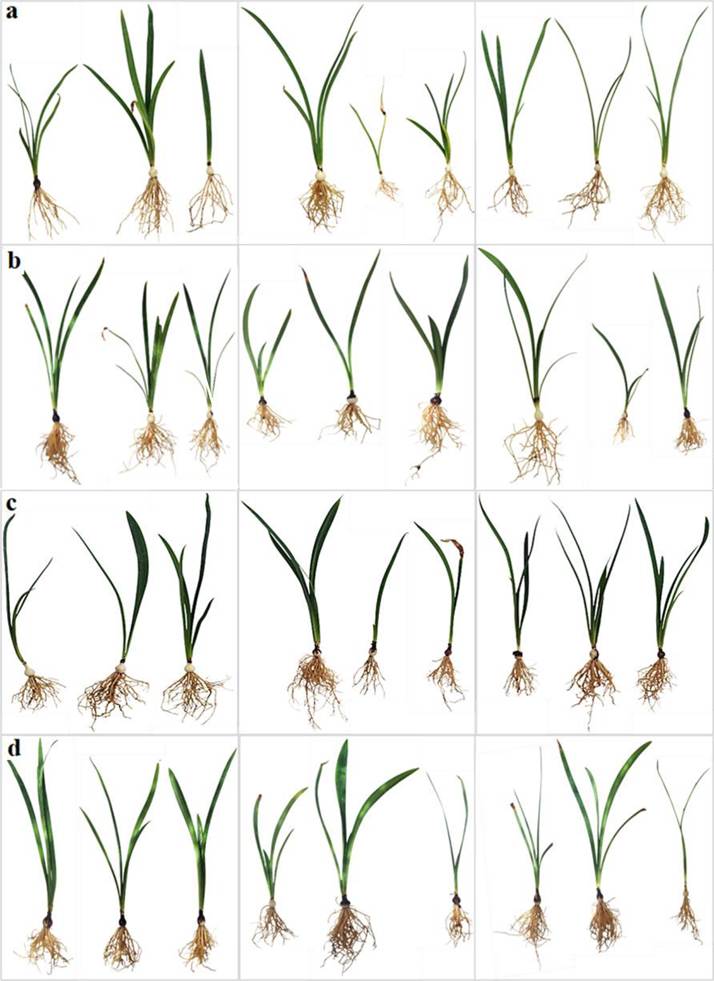
The analysis of data in Table 2 illustrates that different levels of phosphorus nano fertilizer and mycorrhizae resulted in significant differences in root number, bulb weight and size, leaf length, and leaf width of the amaryllis seedlings compared to control seedlings. More specifically, spraying of nano-phosphorus at 0.5 (Nano-P 0.5 g) and its combination with mycorrhizae at 20 g (Nano-P 0.5 g + AMF 20 g) improved root numbers (17.21 and 16.99, respectively) in comparison to the control seedlings (Fig. 1). Whereas, the other treatments were not significantly different from the control seedlings; the control seedlings had 13.88 roots, and the combination of 1 g of nano-phosphorus with 40 g of mycorrhizae (Nano-P 1 g + AMF 40 g) showed the lowest root number (12.88). Furthermore, single dose of mycorrhizae at 20 g (AMF 20 g) and Nano-P 0.5 g + AMF 20 g resulted in the highest bulb weights (2.81 and 2.70 g) and bulb sizes (2.90 and 2.68 cm3), respectively. Bulb weight (1.52 g) and size (1.26 cm3) were the lowest in the control seedlings. Regarding the longest leaf (33.88 cm), AMF 20 g was the best treatment, but the combination of nano-phosphorus at 0.5 g and mycorrhizae at 40 g (Nano-P 0.5 g + AMF 40 g) exhibited the shortest leaf (25.25 cm), and leaf length in control seedlings was also short (26.61 cm) similar to the shortest leaves. Moreover, two peak values of leaf width (1.48 and 1.49 cm) were recorded at AMF 20 g and Nano-P 0.5 g + AMF 20 g, respectively. The control seedlings had the narrowest leaves (1.11 cm). Besides, the treatments did not produce significant differences in root length and leaf number of the seedlings.
The hybrid seedlings of amaryllis that were under a) control, b) nano-phosphorus at 0.5 g, c) mycorrhizae at 20 g, and d) the combination of nano-phosphorus at 0.5 g and mycorrhizae at 20 g treatments.
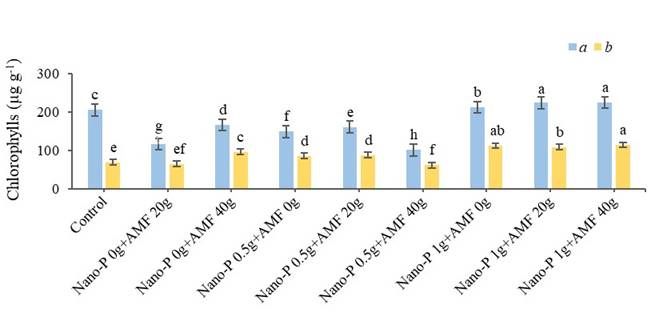
Figure 2 explains that the combinations of 1 g of nano-phosphorus with 40 g and 20 g of mycorrhizae (Nano-P 1 g + AMF 40 g and Nano-P 1 g + AMF 20 g) significantly increased chlorophyll a (225.18 and 224.90 µg g-1) and b (114.30 and 109.17 µg g-1), respectively, compared to the control seedlings and the rest seedlings under the other treatments. While Nano-P 0.5 g + AMF 40 g diminished chlorophyll a (101.35 µg g-1) and b (61.42 µg g-1), even more than the control seedlings.
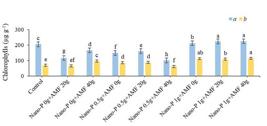
The impact of combined levels of nano-phosphorus and mycorrhizae on chlorophylls of hybrid seedling of amaryllis. Bars indicate means ± standard error. NanoP: nano-phosphorus and AMF: arbuscular mycorrhizae fungi. Bars of the same chlorophyll with the same letter under different treatments explain no significant difference based on Duncan’s multiple range test (p ≤ 0.05).
The results in Table 3 revealed significant variations in the chemical contents of the roots of amaryllis hybrid seedlings as a result of the interaction between nano-phosphorus and mycorrhizae at certain levels compared to the control. On the other hand, certain treatments decreased the chemicals in the roots lower than in the control seedlings. Accordingly, Nano-P 0.5 g + AMF 0 g) increased total proteins (0.67 mg g-1), total carbohydrates (146.27 µg g-1), soluble sugar (158.46 µg g-1), and total phenols (1.31 mg g-1) to the highest values. Nano-P 1 g + AMF 0 g was similar to Nano-P 0.5 g +AMF 0 g in total carbohydrates, and it showed the highest starch (0.40 mg g-1) as well. The control seedlings had the highest total flavonoids (21.74 μg g-1) in their roots. Nano-P 1 g + AMF 40 g and Nano-P 0.5 g + AMF 20 g similarly showed the maximum total indoles (17.87 and 17.64 µg g-1), respectively. Conversely, treatment with Nano-P 0 g + AMF 40 g and Nano-P 0.5 g + AMF 20 g comparably diminished total carbohydrates (116.77 and 117.05 µg g-1), starch (0.32 and 0.32 mg g-1), and soluble sugar (125.84 and 126.55 µg g-1), respectively. The lowest total proteins (0.19 mg g-1), total phenols (1.00 mg g-1), total flavonoids (14.61 µg g-1), and total indoles (7.22 µg g-1) were recorded in the roots of amaryllis seedlings owing to Nano-P 1 g + AMF 20 g, Nano-P 1 g + AMF 40 g, Nano-P 0.5 g + AMF 40 g, and Nano-P 1 g + AMF 0 g treatments, respectively.
As indicated in Table 4, the chemical contents in the bulbs of amaryllis hybrid seedlings were significantly variable, and the interacted treatments at specific levels enhanced them in comparison to the control seedlings. Nano-P 0.5 g + AMF 20 g for total proteins (1.36 mg g-1) and Nano-P 1 g + AMF 40 g for total carbohydrates (173.22 µg g-1) were the best treatments. Both starch (1.34 mg g-1) and soluble sugar (231.63 µg g-1) were the highest at Nano-P 1 g +AMF 0 g and Nano-P 0.5 g + AMF 0 g treatments, respectively. The maximum total phenols (2.70 mg g-1), flavonoids (19.14 µg g-1), and indoles (44.49 µg g-1) were found in the bulbs of the seedlings under Nano-P 0.5 g + AMF 40 g treatment. In contrast, the minimum total proteins (0.50 mg g-1) were found because of the Nano-P 0.5 g + AMF 40 g treatment. The bulbs of the control seedlings contained the least total carbohydrates (93.79 µg g-1), starch (0.78 mg g-1), and soluble sugar (131.75 µg g-1). The treatments of Nano-P 1 g + AMF 0 g for total phenols (1.49 mg g-1) and Nano-P 0 g + AMF 40 g for total flavonoids (10.91 µg g-1) and indoles (21.19 µg g-1) were the worst treatments.
Table 5 exhibits that certain interacted treatments created significant positive differences in chemical contents of the leaves compared to the control. However, specific treatments reduced the leaf chemicals more than in the control seedlings. Nano-P 1 g + AMF 40 g raised total proteins (1.37 mg g-1) but declined total phenols (0.91 mg g-1). Total carbohydrates were the top value (104.00 µg g-1) due to the Nano-P 0.5 g + AMF 40 g application, whereas total proteins under the same treatment were the lowest (0.36 mg g-1). Two peak values of soluble sugar (139.08 and 140.97 µg g-1) were observed as a result of Nano-P 0.5 g +AMF 0 g and Nano-P 0 g + AMF 20 g treatments, respectively. Nano-P 1 g + AMF 0 g caused the highest total phenols (1.78 mg g-1). The greatest value of total indoles (31.91 µg g-1) and the least value of soluble sugar (95.34 µg g-1) were obtained at the Nano-P 1 g + AMF 20 g treatment. In the control seedlings, total indoles were the minimum (12.62 µg g-1). The minimum values of total carbohydrates (80.17 µg g-1) and total phenols (0.91 mg g-1) were quantified at Nano-P 0.5 g + AMF 0 g and Nano-P 1 g + AMF 40 g treatments, respectively. Besides, the effects of the applied treatments were insignificant on starch and total flavonoids in the leaves of amaryllis hybrid seedlings.
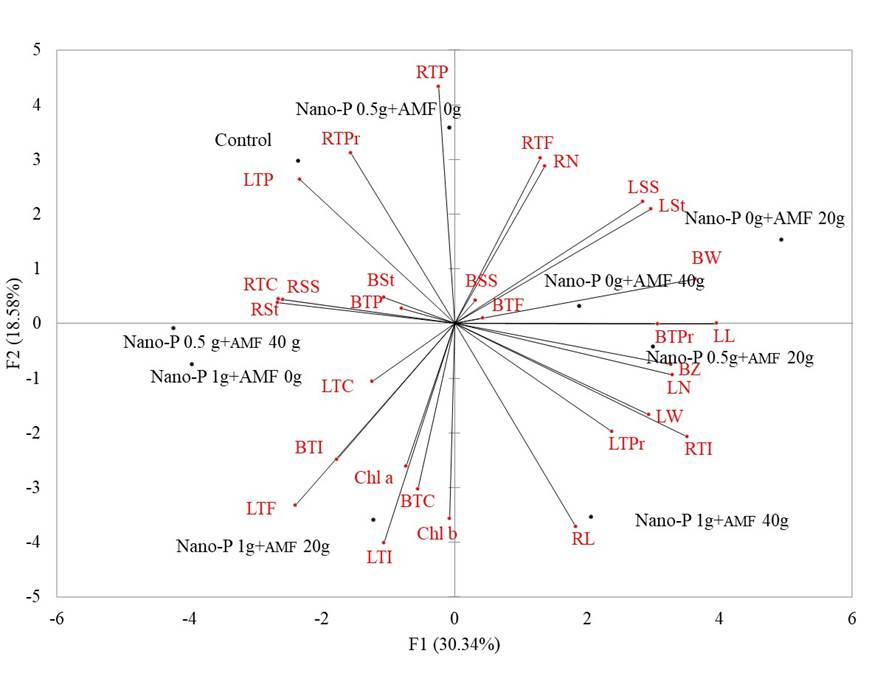
Figure 3 shows how different treatment groups cluster according to their measured parameters and their position related to PCA1 and PCA2. PCA1 loaded 30.34% of the variance and PCA2 18.58%. At the positive sides of both PCAs, AMF 20 g with leaf soluble sugar (LSS), leaf starch (LSt), bulb weight (BW), leaf length (LL), and bulb total proteins (BTPr) positively associated but negatively with leaf total carbohydrate (LTC), bulb total indoles (BTI), leaf total flavonoids (LTF), bulb total carbohydrates (BTC), leaf total indoles (LTI), and chlorophyll a (Chl a) and b (Chl b). Nano-P 0.5 g + AMF 20 g at positive side of PCA1 and negative side of PCA2 favorably assembled with LL, BTPr, bulb size (BZ), leaf number (LN), leaf width (LW), root total indoles (RTI), and leaf total proteins (LTPr). The latter two treatments were at negative connection with root total phenols (RTP), root total proteins (RTPr), leaf total phenols (LTP), root total carbohydrates (RTC), root starch (RSt), root soluble sugar (RSS), bulb starch (BSt), and bulb total phenols (BTP). At negative sides of both PCAs, Nano-P 1 g + AMF 40 g and Nano-P 1 g had a positive association with BTP, LTC, RSS, RTC, and BSt; at the same position, Nano-P 1 g + AMF 20 g positively liked with BTI, LTF, Chl a, LTI, BTC, and Chl b.
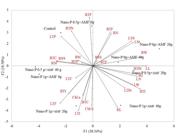
Principal component analysis (PCA) biplot. Nano-P: nano-phosphorus, AMF: arbuscular mycorrhizae fungi, root length, RN: root number, BW: bulb weight, BS: bulb size, LN: leaf number, LL: leaflength, LW: leaf width, Chl a: chlorophyll a, Chl b: chlorophyll b, RTPr: root total proteins, BTPr: bulb total proteins, LTPr: leaf total proteins, RTC: root total carbohydrates, BTC: bulb total carbohydrates, LTC: leaf total carbohydrates, RSt: root starch, BSt: bulb starch, LSt: leaf starch, RSS: root soluble sugar, BSS: bulb soluble sugar, LSS: leaf soluble sugar, RTP: root total phenols, BTP: bulb total phenols, LTP: leaf total phenols, RTF: root total flavonoids, BTF: bulb total flavonoids, LTF: leaf total flavonoids, RTI: root total indoles, BTI: bulb total indoles, and LTI: leaf total flavonoids.
Discussion
In the current study, the results in Table 1 indicated that Nano-P demonstrated a dose-dependent physiological impact, where the intermediate level (0.5 g) improved root number, phenol, and protein metabolisms. Besides, higher Nano-P (1 g) induced chlorophyll and carbohydrate accumulation. These results concurred with the findings that exhibited Nano-P fertilizers upgraded photosynthesis, metabolic activity, and nutrient-use efficiency through enhanced nutrient uptake and controlled nutrient release (Subramani and Balakrishnan, 2026). Similarly, inoculation with moderate AMF (20 g) heightened root morphological and biochemical traits, which were consistent with the results of Wu et al. (2024), who observed an increased plant biomass (47%) and phosphorus uptake (105%) by upgrading root-soil interaction and nutrient acquisition. The interaction of Nano-P 0.5 g + AMF 0 g, Nano-P 0 g + AMF 20 g, and Nano-P 0.5 g + AMF 20 g increased root, bulb, and leaf traits; the results of the three plant part traits were not significantly different from each other under the effect of those treatments (Table 2). Whereas at Nano-P 1 g + AMF 0 g, Nano-P 0 g + AMF 40 g, and Nano-P 1 g + AMF 40 g, a reduction of the three plant organ traits was observed. The benefits of nano-phosphorus are coupled with its tiny particle size, which enlarges surface area and mobility, facilitating absorption efficiency through foliar spray or root uptake, encouraging root development, nutrient assimilation, and enhanced sink strength (Wang et al., 2025). Studies showed that AMF improves acquisition of phosphorus (providing about 80% - 90% of plant P), which lessens P deficiency and directly helps carbon assimilation and photosynthetic enzyme activity (Khan et al., 2025). This enhanced P condition boosts root-fungus demand, where the AMF symbiosis functions as a carbon sink that induces photosynthesis via feedback regulation between leaves (source) and roots-fungi (sink) (Bunn et al., 2024). At the same time, AMF regulates phytohormones (IAA, ABA, and brassinosteroids) and antioxidants, managing growth, stress responses, and nutrient transport, hence connecting phosphorus dynamics with hormonal balance and overall plant physiology performance (Zhang et al., 2024).
Besides, studies supported that the effects of Nano-P and AMF were concentration-dependent, and Severo et al. (2025) reported that Nano-P was potent for improving plant growth, but an excessively high ratio may decrease the advantages of AMF colonization and cause diminishing growth or even negative influences on root and shoot parameters. In the iris geophytic plant, Ali and Mashkoor (2023) found that the combination of Azotobacter chroococcum and 2 mg L-1 of Nano-P improved plant height, leaf number, bulb number, bulb diameter, and dry weights of shoot and root. Furthermore, AMF help plants to access soil resources, more specifically phosphorus, nitrogen, and other nutrients, because the fungal hyphae extend far beyond the root zone (Mohammed et al., 2025; Halshoy, 2025). Moreover, AMF raise auxin and cytokinin levels and reduce abscisic acid in the roots of colonized plants and upgrade nutrient uptake (Wang et al., 2021). Whereas the literature emphasized that the ratio of applied AMF had a crucial role in its effect. In a study, different doses of AMF were applied to mung beans, and significant differences were observed in plant height, biomass, pod number, seed weight, etc., depending on dosage (Djauhari et al., 2021). Additionally, certain factors interact with the impact of AMF on plants. For example, Sheikh-Assadi et al. (2023) found that AMF could enhance growth at low to moderate soil phosphorus (P), but at high P, the favorable role of AMF disappeared and equalized with the control. Also, Prettl et al. (2024) stated that we will not always see a good yield due to AMF inoculation because AMF effects strongly depend on soil type and fertilization regime.
On the other hand, enhancements in the majority of phytochemicals quantified in the three plant organs in the current study were observed due to the application of Nano-P 0.5 g + AMF 0 g, Nano-P 0 g + AMF 20 g, and Nano-P 0.5 g + AMF 20 g (Table 3-5). These enhancements in the phytochemicals may be other reasons behind the increase in morphological traits of the three plant organs. Effects of AMF and Nano-P fertilizer on chemicals and bioactive compounds of plants have been well documented by the studies. Both pot and field experiments revealed in coneflower, bitter melon, and pea that phosphorus fertilizer and AMF maximized chlorophylls and bioactive compounds, including phenols, proteins, and carbohydrate content. These are because they elevate nutrient uptake and strengthen plants against stresses (Shinde and Thakur 2015; Khara et al., 2023; Dolatmand-Shahri et al., 2025). The reason for the decrease in some secondary metabolites under certain high-dose treatments may be related to that high Nano-P shifts plant metabolism toward nutrient assimilation and plant growth, reducing carbon allocation to secondary metabolite pathways. Moreover, AMF-plant symbiosis normally induces secondary metabolite biosynthesis, but high Nano-P can inhibit AMF colonization and decrease secondary metabolites. Besides, high doses of AMF itself reduce distinct compounds through disrupting metabolic balance and stimulating physiological or oxidative stress reactions (Rashidi et al., 2024).
Apart from these, a simultaneous increase in growth and reduction of various chemicals in the same organ may be explained as a sign of physiological trade-offs, where plants reallocate resources under altered nutrient states among competing metabolic pathways. Available nutrients in plants frequently shift between secondary metabolism, defense, and growth strategies, which are well documented under such trade-offs (Li et al., 2024). Studies on phosphorous showed that plants modify internal acquisition and allocation pathways using supply, reinforcing that conflicting metabolite outputs are organized rather than random (Ma et al., 2023). Sometimes, the outperformance of Nano-P + AMF 0 g treatments over Nano-P + AMF treatments in the current study may be due to interaction effects that caused interference with appropriate nutrient release synchronization or absorption efficiency (Subramani and Balakrishnan, 2026). Sometimes declining physiological efficiency can be introduced as a result of integrated fertilization because of the antagonistic effect of the fertilizer (Subramani and Balakrishnan, 2026). Thus, structuring these outcomes as metabolic trade-offs and treatment interaction effects would interpret the reason why several treatments simultaneously increased certain phytochemicals while decreasing others within the same plant organ and also why single Nano-P + AMF 0 g treatments sometimes outperformed Nano-P + AMF treatments.
Conclusions
This study evaluated the influence of nano-phosphorus (Nano-P) fertilizer and arbuscular mycorrhizae fungi (AMF) on hybrid seedlings of amaryllis, measuring growth and chemical traits of different organs. The results indicated that Nano-P essentially improved metabolic processes, raising chlorophyll and chemical contents. Whereas AMF mainly improved morphological characteristics, like root growth, bulb size, and leaf dimensions. The apparent important treatment was the interaction of Nano-P 0.5 g + AMF 20 g, which boosted both growth and quality parameters, making it agreeable for commercial production. Higher Nano-P (1 g), more specifically interacting with AMF, elevated several chemicals in the different organs but was less steady for growth performance. The partially synergistic consequences of the interaction between Nano-P and AMF were observed to be strongly dependent on the applied dose. Moderate dose interactions demonstrated higher root number, bulb yield, chlorophyll contents, and secondary metabolites. In contrast, excessive doses sometimes led to antagonistic impacts and diminished performance. In certain cases, single applications acted even better than combined treatments. Generally, optimal synergy occurred at certain treatment rates, confirming partially supported hypotheses at specific interactions. Using the combination of Nano-P 0.5 g + AMF 20 g will be practically useful in the growing of amaryllis. Future studies should investigate physiological effects and molecular mechanisms of nano-biofertilization consequences on amaryllis.
References
-
ALBALASMEH, A.A.; BERHE, A.A.; GHEZZEHEI, T.A. A new method for rapid determination of carbohydrate and total carbon concentrations using UV spectrophotometry. Carbohydrate Polymers, v.97, n.2, p.253-261, 2013. http://dx.doi.org/10.1016/j.carbpol.2013.04.072
» https://doi.org/http://dx.doi.org/10.1016/j.carbpol.2013.04.072 -
ALI, M. N.; MASHKOOR, S.A. Efficiency of bacterial biofertilizers and spraying with nano-phosphates on vegetative and root growth indicators of Iris flowers. IOP Conference Series: Earth and Environmental Science, v.1262, n.4, p.042060, 2023. https://doi.org/10.1088/1755-1315/1262/4/042060
» https://doi.org/https://doi.org/10.1088/1755-1315/1262/4/042060 -
ALI, M.; ADNAN, M.; AZAM, M. Periodic existence of mycorrhizal fungi in roots and non-root dissident portions of some bulbous plants. Journal of Plant Pathology & Microbiology, v.6, n.1, p.248, 2015. http://dx.doi.org/10.4172/2157-7471.1000248
» https://doi.org/http://dx.doi.org/10.4172/2157-7471.1000248 -
BALZERGUE, C.; CHABAUD, M.; BARKER, D.G.; BÉCARD, G.; ROCHANGE, S.F. High phosphate reduces host ability to develop arbuscular mycorrhizal symbiosis without affecting root calcium spiking responses to the fungus. Frontiers in Plant Science, v.4, n.426, 2013. https://doi.org/10.3389/fpls.2013.00426
» https://doi.org/https://doi.org/10.3389/fpls.2013.00426 -
BASAVEGOWDA, N.; BAEK, K.H. Current and future perspectives on the use of nanofertilizers for sustainable agriculture: the case of phosphorus nanofertilizer. 3 Biotech, v.11, n.7, p.357, 2021. https://doi.org/10.1007/s13205-021-02907-4
» https://doi.org/https://doi.org/10.1007/s13205-021-02907-4 -
BUNN, R.A.; CORRÊA, A.; JOSHI, J.; KAISER, C.; LEKBERG, Y.; PRESCOTT, C.E.; SALA, A.; KARST, J. What determines transfer of carbon from plants to mycorrhizal fungi? New Phytologist, v.244, n.4, p.1199-1215, 2024. https://doi.org/10.1111/nph.20145
» https://doi.org/https://doi.org/10.1111/nph.20145 - CRIŞAN, I.; VIDICAN, R.; STOIAN, V. Utilization of arbuscular mycorrhizae in the cultivation of ornamental plants. Research Journal of Agricultural Science, v.49, n.4, p.392-397, 2017.
-
DATTA, S.K. Amaryllis/Hippeastrum. In: DATTA, S.K.; GUPTA, Y.C. (org.). Floriculture and ornamental plants Singapore: Springer, 2022. (Handbooks of Crop Diversity: Conservation and Use of Plant Genetic Resources). https://doi.org/10.1007/978-981-15-3518-5_23
» https://doi.org/https://doi.org/10.1007/978-981-15-3518-5_23 -
DJAUHARI, S.; ELRIYONO, J.A.D.; RAHARDJO, B.T. The effect of inoculum type and mycorrhiza dosage on growth and production of mung bean (Vigna radiata L.). Journal of Tropical Plant Protection, v.2, n.1, p.19-25, 2021. https://doi.org/10.21776/ub.jtpp.2021.002.1.4
» https://doi.org/https://doi.org/10.21776/ub.jtpp.2021.002.1.4 -
DOLATMAND-SHAHRI, N.; MODARRES-SANAVY, S.A.M.; MIRJALILI, M.H.; MOKHTASSI-BIDGOLI, A. Phosphorus fertilizer and arbuscular mycorrhizal fungi application improves bitter melon fruit yield and some phytochemical compounds under irrigation deficit stress. Current Plant Biology, v.42, p.100446, 2025. https://doi.org/10.1016/j.cpb.2025.100446
» https://doi.org/https://doi.org/10.1016/j.cpb.2025.100446 -
ETESAMI, H.; JEONG, B.R.; GLICK, B.R. Contribution of arbuscular mycorrhizal fungi, phosphate-solubilizing bacteria, and silicon to P uptake by plant. Frontiers in Plant Science , v.12, p.699618, 2021. https://doi.org/10.3389/fpls.2021.699618
» https://doi.org/https://doi.org/10.3389/fpls.2021.699618 -
GLICKMANN, E.; DESSAUX, Y. A critical examination of the specificity of the Salkowski reagent for indolic compounds produced by phytopathogenic bacteria. Applied and Environmental Microbiology, v.61, n.2, p.793-796, 1995. https://doi.org/10.1128/aem.61.2.793-796.1995
» https://doi.org/https://doi.org/10.1128/aem.61.2.793-796.1995 -
HALSHOY, H. S. Growth, yield, and biochemical traits of tomato plants under mycorrhizal inoculation and licorice root extract applications. Soil Science and Plant Nutrition, v.71, n.2, p.135-144, 2025. https://doi.org/10.1080/00380768.2024.2434832
» https://doi.org/https://doi.org/10.1080/00380768.2024.2434832 -
HE, F. Bradford protein assay. Bio-Protocol, v.1, n.6, e45, 2011. https://doi.org/10.21769/bioprotoc.45
» https://doi.org/https://doi.org/10.21769/bioprotoc.45 -
JARVIS, C.E.; WALKER, J.R. Simultaneous, rapid, spectrophotometric determination of total starch, amylose and amylopectin. Journal of the Science of Food and Agriculture, v.63, n.1, p.53-57, 1993. https://doi.org/10.1002/jsfa.2740630109
» https://doi.org/https://doi.org/10.1002/jsfa.2740630109 -
KHAN, I.; SRIVASTAVA, S.P. Comprehensive review on the chemical constituents and pharmacological properties of Hippeastrum vittatum: unraveling nature’s pharmacopeia. World Journal of Pharmaceutical Research, v.13, n.19, p.52-67, 2024. https://doi.org/10.20959/wjpr202419-33673
» https://doi.org/https://doi.org/10.20959/wjpr202419-33673 -
KHAN, Y.; SHAH, S.; LI, D.; YANG, F. Arbuscular mycorrhizal fungi-mediated abiotic stress tolerance: emerging roles in nutrient exchange, antioxidant defence, and hormonal crosstalk. Plant Stress, p.101068, 2025. https://doi.org/10.1016/j.stress.2025.101068
» https://doi.org/https://doi.org/10.1016/j.stress.2025.101068 - KHARA, Z.; MOVAHHEDI DEHNAVI, M.; SALEHI, A.; ALAHDADI, H. Application of mycorrhiza and phosphorus improve the phosphorus uptake, physiological characteristics and growth of coneflower (Echinacea purpurea (L.) Monch) under drought stress. Journal of Organic Farming of Medicinal Plants, v.2, n.1, p.24-35, 2023.
-
LAMBERS, H. Phosphorus acquisition and utilization in plants. Annual Review of Plant Biology, v.73, n.1, p.17-42, 2022. https://doi.org/10.1146/annurev-arplant-102720-125738
» https://doi.org/https://doi.org/10.1146/annurev-arplant-102720-125738 -
LATEEF, D.; MUSTAFA, K.; TAHIR, N. Screening of Iraqi barley accessions under PEG-induced drought conditions. All Life, v.14, n.1, p.308-332, 2021. https://doi.org/10.1080/26895293.2021.1917456
» https://doi.org/https://doi.org/10.1080/26895293.2021.1917456 -
LI, Z.X.; TAN, J.F.; YAO, N.; XIE, R.H. From trade-off to synergy: how nutrient status modulates plant resistance to herbivorous insects? Advanced Biotechnology, v.2, n.4, p.37, 2024. https://doi.org/10.1007/s44307-024-00045-5
» https://doi.org/https://doi.org/10.1007/s44307-024-00045-5 -
MA, N.; KOU, L.; LI, S.; DAI, X.; MENG, S.; JIANG, L.; XUE, Y.; ZHENG, J.; FU, X.; WANG, H. Plant-soil feedback regulates the trade-off between phosphorus acquisition pathways in Pinus elliottii Tree Physiology, v.43, n.7, p.1092-1103, 2023. https://doi.org/10.1093/treephys/tpad044
» https://doi.org/https://doi.org/10.1093/treephys/tpad044 -
MEENA, D.S.; GAUTAM, C.; PATIDAR, O.P.; MEENA, H.M.; PRAKASHA, G.; VISHWAJITH, V. Nano-fertilizers is a new way to increase nutrients use efficiency in crop production. International Journal of Agriculture Sciences, v.9, n.7, p.0975-3710, 2017. Available online at http://www.bioinfopublication.org/jouarchive.php?opt=&jouid=BPJ0000217
» http://www.bioinfopublication.org/jouarchive.php?opt=&jouid=BPJ0000217 -
MEEROW, A.W. The Florida series of hybrid amaryllis: five new Hippeastrum cultivars. HortScience, v.49, n.8, p.1102-1107, 2014. https://doi.org/10.21273/HORTSCI.49.8.1102
» https://doi.org/https://doi.org/10.21273/HORTSCI.49.8.1102 -
MIRANDA-VILLAGÓMEZ, E.; TREJO-TÉLLEZ, L.I.; GÓMEZ-MERINO, F.C.; SANDOVAL-VILLA, M.; SÁNCHEZ-GARCÍA, P.; AGUILAR-MÉNDEZ, M.Á. Nanophosphorus fertilizer stimulates growth and photosynthetic activity and improves P status in rice. Journal of Nanomaterials, v.2019, p.5368027, 2019. https://doi.org/10.1155/2019/5368027
» https://doi.org/https://doi.org/10.1155/2019/5368027 - MOHAMMED, A.A.; AHMAD, T.A.; NOORI, I.M.; AZIZ, R.R.; AHMAD, K. Application of baking yeast to induce rooting in hardwood cuttings of olive (Olea europaea L.) cv. Sorani. Euphrates Journal of Agriculture Science, v.12, n.2, p.274-280, 2020b.
-
MOHAMMED, A.A.; MAHMOOD, A.K.; MUSTAFA, H.A.; AHMED, T.A.; OMAR, D.A.; ARKWAZEE, H.A.; MAJEED, H.O.; TAHIR, N.A. Impact of some treatments on seed germination and seedling vigour of Kangar (Gundelia sp. L.). Applied Ecology & Environmental Research, v.18, n.6, 2020a. http://dx.doi.org/10.15666/aeer/1806_81598170
» https://doi.org/http://dx.doi.org/10.15666/aeer/1806_81598170 -
MOHAMMED, A.A.; NOORI, I.M. Germination capacity of pistachio (Pistacia vera L.) seeds related to genotypic variation and phytochemical contents. Fruit Crops Science Journal, v.1, e-572, 2025. https://doi.org/10.1590/3085-89092025572
» https://doi.org/https://doi.org/10.1590/3085-89092025572 -
MOHAMMED, N.T.; HALSHOY, H.S.; SAED, N.F.; AHMED, S.M.; AMEN, H.R.H.; ALI, H. W.R.; IBRAHIM, A.S. Mycorrhizal fungi and chicken manure: a sustainable strategy for cucumber plant productivity and quality. Vegetos, p.1-16, 2025. https://doi.org/10.1007/s42535-025-01173-6
» https://doi.org/https://doi.org/10.1007/s42535-025-01173-6 -
PRETTL, N.; BIRÓ, B.; NUGROHO, P.A.; KOTROCZÓ, Z.; KABALAN, S.; KOVÁCS, F.; PAPDI, E.; JUHOS, K. Limited effect of mycorrhizal inoculation depending on soil type and fertilization level in a Central European field trial. Plant Growth Regulation, v.104, n.3, p.1669-1681, 2024. https://doi.org/10.1007/s10725-024-01251-w
» https://doi.org/https://doi.org/10.1007/s10725-024-01251-w -
PREUSS, C.P.; HUANG, C.Y.; TYERMAN, S.D. Proton-coupled high-affinity phosphate transport revealed from heterologous characterization in Xenopus of barley-root plasma membrane transporter HvPHT1;1. Plant, Cell & Environment, v.34, n.4, p.681-689, 2011. https://doi.org/10.1111/j.1365-3040.2010.02272.x
» https://doi.org/https://doi.org/10.1111/j.1365-3040.2010.02272.x -
RAGHOTHAMA, K.G. Phosphorus and plant nutrition: an overview. In: Phosphorus: agriculture and the environment Madison: ASA-CSSA-SSSA, 2005. p. 353-378. https://doi.org/10.2134/agronmonogr46.c11
» https://doi.org/https://doi.org/10.2134/agronmonogr46.c11 -
RASHIDI, S.; YOUSEFI, A.R.; MASTINU, A. Mycorrhizal symbiosis can change the composition of secondary metabolites in fruits of Solanum nigrum L. Chemistry & Biodiversity, v.21, n.7, p.e202400208, 2024. https://doi.org/10.1002/cbdv.202400208
» https://doi.org/https://doi.org/10.1002/cbdv.202400208 -
SEVERO, H.C.A.R.; ARAUCO, A.M.S.; NUNES, R.W.F.; MONTEIRO, G.N.; DUARTE, M.H.F.; SILVA, A.P.M.; FERREIRA, A.C.; LUZ, M.R.; MIRANDA, R.S.; ARAÚJO, A.S.F.; COSTA, E.M. Co-inoculation of arbuscular mycorrhizal fungi and Bacillus subtilis enhances morphological traits, growth, and nutrient uptake in maize under limited phosphorus availability. Scientific Reports, v.15, n.1, p.25448, 2025. https://doi.org/10.1038/s41598-025-10038-6
» https://doi.org/https://doi.org/10.1038/s41598-025-10038-6 -
SHAO, L.; YANG, L.; LI, X.; ZHOU, L.; ZHU, J.; ZHANG, Y. From bulb development to postharvest treatments: advances in Hippeastrum spp. research and industry applications. Ornamental Plant Research, v.5, e026, 2025. https://doi.org/10.48130/opr-0025-0030
» https://doi.org/https://doi.org/10.48130/opr-0025-0030 -
SHEIKH-ASSADI, M.; KHANDAN-MIRKOHI, A.; TAHERI, M.R.; BABALAR, M.; SHEIKHI, H.; NICOLA, S. Arbuscular mycorrhizae contribute to growth, nutrient uptake, and ornamental characteristics of statice (Limonium sinuatum [L.] Mill.) subject to appropriate inoculum and optimal phosphorus. Horticulturae, v.9, n.5, p.564, 2023. https://doi.org/10.3390/horticulturae9050564
» https://doi.org/https://doi.org/10.3390/horticulturae9050564 - SHINDE, B.P.; THAKUR, J. Influence of arbuscular mycorrhizal fungi on chlorophyll, proteins, proline and total carbohydrates content of the pea plant under water stress condition. International Journal of Current Microbiology and Applied Sciences, v.4, n.1, p.809-821, 2015.
-
STEIDINGER, B.S. Complementary effects of beneficial and non-beneficial mycorrhizal fungi on root phosphatase activity: a mycorrhizal “White Album” effect. Functional Ecology, v.39, n.1, p.333-345, 2025. https://doi.org/10.1111/1365-2435.14712
» https://doi.org/https://doi.org/10.1111/1365-2435.14712 -
SUBRAMANI, M.; BALAKRISHNAN, P. Nano-enabled phosphorus fertilizers: mechanisms, applications, and environmental implications-a critical review. Soil and Tillage Research, v.257, p.106959, 2026. https://doi.org/10.1016/j.still.2025.106959
» https://doi.org/https://doi.org/10.1016/j.still.2025.106959 - THAKUR, R.; KANWAR, B.; CHANDERMOHAN, C.N.; SHARMA, S. An overview of flowering pot plants for tropical and subtropical climate. International Journal of Science and Research, v.12, p.1274-1280, 2023.
-
WANG, P.; DAS, P.; WANG, L.; ZHOU, J.; DENG, C.; VERA-REYES, I.; DIMKPA, C.O.; WHITE, J.C.; WANG, Y. Prospects of nano phosphorus fertilizers (NPFs) in plant-based agriculture: effects and mechanisms. Journal of Nanoparticle Research, v.27, n.3, p.60, 2025. https://doi.org/10.1007/s11051-025-06261-x
» https://doi.org/https://doi.org/10.1007/s11051-025-06261-x -
WANG, Y.; ZHANG, W.; LIU, W.; AHAMMED, G.J.; WEN, W.; GUO, S.; SHU, S.; SUN, J. Auxin is involved in arbuscular mycorrhizal fungi-promoted tomato growth and NADP-malic enzymes expression in continuous cropping substrates. BMC Plant Biology, v.21, n.1, p.48, 2021. https://doi.org/10.1186/s12870-020-02817-2
» https://doi.org/https://doi.org/10.1186/s12870-020-02817-2 -
WU, Y.; CHEN, C.; WANG, G. Inoculation with arbuscular mycorrhizal fungi improves plant biomass and nitrogen and phosphorus nutrients: a meta-analysis. BMC Plant Biology , v.24, n.1, p.960, 2024. https://doi.org/10.1186/s12870-024-05638-9
» https://doi.org/https://doi.org/10.1186/s12870-024-05638-9 -
ZHANG, D.J.; TONG, C.L.; WANG, Q.S.; BIE, S. Mycorrhizas affect physiological performance, antioxidant system, photosynthesis, endogenous hormones, and water content in cotton under salt stress. Plants, v.13, n.6, p.805, 2024. https://doi.org/10.3390/plants13060805
» https://doi.org/https://doi.org/10.3390/plants13060805
-
Data availability Statement
Data will be made available upon request to the authors.
-
Declaration of generative AI and AI-assisted technologies in the writing process
During the preparation of this work the authors used QuillBot and ChatGPT to grammar check, translation, and reference arrangement. After using this tool, the authors reviewed and edited the content as needed and take full responsibility for the content of the publication.
Data will be made available upon request to the authors.