 Pulsing with 6-benzylaminopurine and sucrose extends the vase life of ‘Nova Scotia’ lily inflorescences
Abstract
Lily (Lilium spp.) is widely appreciated for its beauty and color diversity, making it an important cut flower. However, its postharvest quality is limited, requiring specific treatments that need to be investigated, such as the combined application of sucrose and 6-benzylaminopurine (BAP). In this study, our aim was to explore the efficacy of pulsing solutions containing various concentrations of BAP combined with sucrose in preserving the post-harvest quality of ‘Nova Scotia’ lilies. The experimental design employed was a completely randomized factorial scheme, with five treatments (25 mg L-1 BAP + 100 g L-1 sucrose; 50 mg L-1 BAP + 100 g L-1 sucrose; 75 mg L-1 BAP + 100 g L-1 sucrose, Chrysal® commercial formula, and control with deionized water) and four evaluation dates. Alongside visual assessments, including tepal and leaf coloration, we quantified total carbohydrate content, fresh mass variation, solution uptake, and floral longevity. Our findings underscore the significant role of BAP and sucrose application in maintaining the post-harvest quality of ‘Nova Scotia’ lily flowers. Notably, even at lower concentrations, these substances have demonstrated a considerable enhancement in fresh mass and prolonged flower longevity.
Keywords:
BAP; Lilium spp.; longevity; quality
Resumo
O lírio (Lilium spp.) é amplamente apreciado por sua beleza e diversidade de cores, sendo uma importante flor de corte. No entanto, sua qualidade pós-colheita é limitada, exigindo tratamentos específicos e que necessitam ser investigados como a aplicação conjunta de sacarose e 6-benzilaminopurina (BAP). Nesse contexto, este estudo se propôs investigar o uso de soluções de pulsing contendo diferentes concentrações de BAP acrescido de sacarose na conservação pós-colheita de lírio ‘Nova Scotia’. O delineamento experimental foi inteiramente casualizado em um esquema fatorial, com cinco tratamentos (25 mg L-1 BAP + 100 g L-1 de sacarose; 50 mg L-1 BAP + 100 g L-1 de sacarose; 75 mg L-1 BAP + 100 g L-1 de sacarose, fórmula comercial Chrysal® e controle com água deionizada) e quatro datas de avaliação. Foram avaliados aspectos visuais como a coloração das tépalas e das folhas, e quantificados o teor de carboidratos totais, a variação de massa fresca, a absorção de solução e a longevidade floral. Os resultados demonstraram que a aplicação de BAP e sacarose desempenhou um papel significativo na manutenção da qualidade pós-colheita das flores de lírio ‘Nova Scotia’. Mesmo em doses mais baixas, essas substâncias demonstraram promover um ganho significativo de massa fresca e prolongar a longevidade das flores.
Palavras-chave:
Lilium spp.; longevidade; qualidade
Introduction
The lily (Lilium spp.) is one of the main cut flowers traded worldwide, highly appreciated for its elegance, ornamental petals, and pleasant fragrance. However, like other cut flowers species, its flowers have limited longevity, diminishing in quality once harvested, mainly due to wilting caused by water loss and fading of leaves and tepals (Chen and Miller, 2022).
Although flower senescence is a natural process, the longevity of postharvest flowers can be significantly impacted by both exogenous and endogenous factors. Notable among these factors are: depletion of reserves (Nguyen and Ha, 2024), water stress (Wan et al., 2023), fungal and bacterial attacks (Bika et al., 2021), mechanical damage (Stuenkel et al., 2025) and exposure to inappropriate temperatures (Kalinowski and Dole, 2024). As a result, ensuring adequate postharvest treatments aimed at preserving quality and extending the vase life of cut flowers becomes the primary focus and challenge of postharvest care (Costa et al., 2021).
In the treatment of floral stems, the use of preservatives and the supply of sugars via pulsing are widely practiced and recommended for various species, including lily (Brahma et al., 2023), dahlia (Chauhan et al., 2024), alstroemeria (Ponce et al., 2025) and lisianthus (Skutnik et al., 2021). In this method, stems are submerged in a solution containing sugars and other substances, aiming to increase the osmotic concentration of leaves and flowers. Consequently, water absorption is enhanced, ensuring that the flowers can develop and maintain adequate longevity (Wan et al., 2023).
The composition of pulsing solutions commonly integrates carbohydrates and growth regulators, the latter being essential modulators of plant development. Cytokinins significantly influence various physiological processes, including responses to biotic and abiotic stresses, cell division, organ differentiation, and flower and leaf senescence. Their synthetic form, 6-benzylaminopurine (BAP), has been reported to inhibit senescence of flowers, proving effective in maintaining quality and extending the longevity of various ornamental species, such as Calendula (Lone et al., 2023), Curcuma alismatifolia (Zhou et al., 2023) and Gladiolus (Singh and Tiwari, 2021). In Lilium, Al-Ajlouni et al. (2023) observed that exogenous cytokinin spraying was effective in enhancing the vase life of the inflorescences.
Despite several studies investigating treatments with pulsing solutions added with BAP for other floral species, research specifically addressing pulsing with added sugar and cytokinin for lilies remains scarce. For this reason, the present study aimed to investigate how the postharvest conservation of ‘Nova Scotia’ lily inflorescences would be affected by the application of BAP and sucrose in pulsing solutions.
Material and Methods
Plant Material
Inflorescences of LA ‘Nova Scotia’ hybrid lily from a commercial production facility (Lírios Boersen) in municipality Andradas, Minas Gerais State, Brazil (22°04’05”S and 46°34’04”W, altitude 913 m). The inflorescences were harvested at a commercial stage, characterized by at least one mature flower bud (Elgar et al., 1999), and subsequently transported dry in a refrigerated vehicle to the Post-Harvest Physiology and Biochemistry Laboratory, ESALQ/USP, in Piracicaba, Brazil, with transit lasting approximately three hours.
Pulsing treatment
The inflorescences were standardized by removing the leaves from the basal 20 cm of the stem and adjusting the stem length to 50 cm. The cuts were performed under deionized water to prevent embolism, and the stems were immediately placed in containers with the respective pulsing solution, in which they remained for 24 hours. Both pulsing and subsequent storage were conducted under controlled conditions of 20 ± 2 °C and 80% ± 5% relative humidity. After pulsing, the stems were transferred to a maintenance solution consisting of deionized water and Startclor® germicide, which is based on sodium dichloroisocyanurate (0.1%).
The same inflorescences were evaluated throughout the experiment for non-destructive measurements, while for destructive carbohydrate analyses tepals from the first three open flowers of each of the three inflorescences per replication were collected and frozen at each sampling date. The pulsing treatments applied for 24 hours were as follows: Control (deionized water); Chrysal® (Chrysal Professional 2 T-Bags); 25 mg L-1 BAP + 100 g L-1 sucrose; 50 mg L-1 BAP + 100 g L-1 sucrose; 75 mg L-1 BAP + 100 g L-1 sucrose.
Data collection
The levels of soluble carbohydrates were determined using the phenol-sulfuric acid method (Dubois et al., 1956). Readings were taken at 490 nm on a spectrophotometer (Biochrom Libra S22 UV-Vis, Cambridge, UK), and the results were expressed in mg of glucose per gram of dry mass.
The variation in fresh mass of the inflorescences (MI) was quantified following the methodology of Wan et al. (2023). Inflorescences were weighted every two days, and the mass variation was expressed as a percentage of the initial mass, according to the equation:
The solution absorption was determined by weighing the maintenance solution. To control evaporation, a separate container containing only the maintenance solution was kept in the same environment as the inflorescences. Weighings were performed after the pulsing treatment and every two days thereafter. The results were expressed in mL per stem (Wan et al. 2023).
The coloration of the tepals and leaves was assessed using a colorimeter (Minolta model CR-400), with nine tepals and twelve leaves per replication. Two readings were taken on the adaxial surface of each tepal and leaf, where the results were calculated based on the parameters L, a*, b*, and expressed in Luminosity (range between light and dark), Hue angle (color angle), and Chromaticity (color intensity). From the obtained data, the means of Luminosity, Chromaticity, and Hue angle were calculated.
The visual evaluation of the inflorescences was conducted daily by assigning scores until the end of the decorative life, i.e., when the inflorescences were no longer suitable for commercialization. This criterion was established when 50% of the flowers in the inflorescences exhibited visible signs of senescence, characterized by tepals first becoming wrinkled, then turning translucent, and ultimately abscising. The number of days to the opening of the first flower and the longevity were determined based on the development of floral stages (Elgar et al., 1999). Longevity was defined as the number of days between harvesting and the end of the decorative life.
Statistical analysis
The experiment followed a completely randomized design in a factorial scheme consisting of five treatments (Control, Chrysal®, 25 mg L-1 BAP + 100 g L-1 sucrose, 50 mg L-1 BAP + 100 g L-1 sucrose, and 75 mg L-1 BAP + 100 g L-1 sucrose) and four evaluation dates (Days 0, 4, 8, and 12). Each treatment was replicated three times, with three inflorescences per replicate. Statistical analyses were performed using R Studio software (version 3.6.3). Mean comparisons were conducted using Tukey’s test (p ≤ 0.05).
Analysis of variance (ANOVA) was used because it enables the comparison of three or more groups at once, reducing the likelihood of committing a Type I error (false positive). To ensure that all ANOVA assumptions were met, the following conditions were verified: (i) all samples were independent (even in non-destructive analysis, as samples change during the storage, so the day of analysis was treated as a factor) and (ii) data normality and homogeneity, assessed using the Shapiro-Wilk and Bartlett tests, respectively.
Results and Discussion
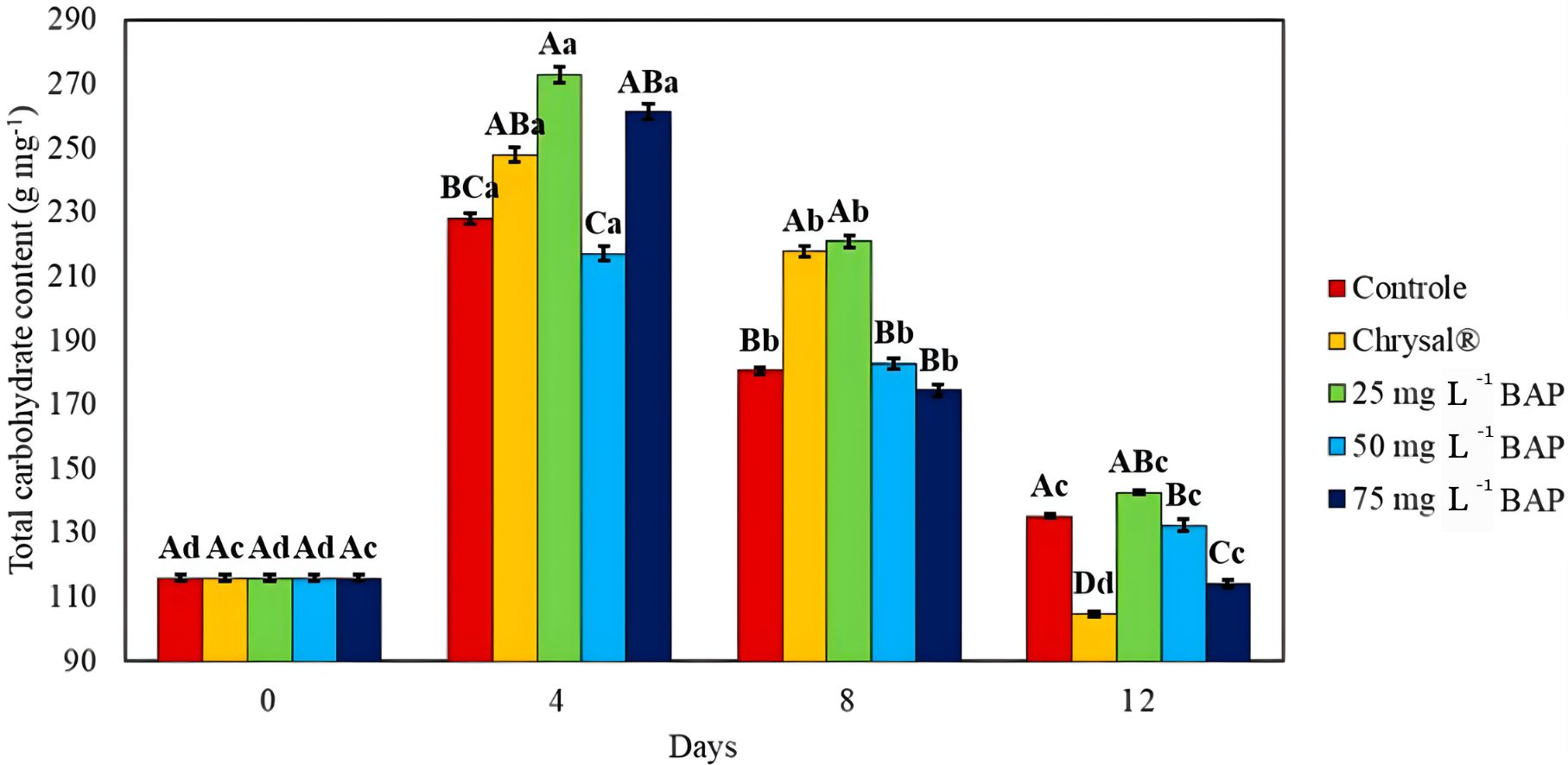
Figure 1 shows an increase in the concentrations of total carbohydrates in the inflorescences during the first four days. Treatments of 25 and 75 mg BAP combined with sucrose and Chrysal® showed sign higher total carbohydrates compared to controls (p < 0.05). Contrastingly, treatment with 50 mg of BAP resulted in the lowest concentration observed during this period. After the fourth day, there was a gradual reduction in carbohydrate levels in all treatments, with the lowest values recorded for the treatment with 75 mg of BAP and the commercial formula Chrysal® on the last day of evaluation.
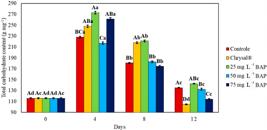
Total carbohydrate content (mg g-1) in tepal of lily ‘Nova Scotia’ submitted to different pulsing solutions throughout the storage period. Means followed by the same uppercase letter on the same evaluation day and lowercase letter within the same treatment do not differ significantly according to Tukey’s test (p ≤ 0.05) (n = 3).
These results reflect the crucial role of carbohydrates in flower opening and senescence, providing the energy needed for cell and tissue growth, and regulating floral development by influencing the expression of genes related to flower opening and maintenance. In addition, carbohydrates also play an important role in osmotic regulation and in maintaining cell turgidity, which are essential for the expansion and support of floral tissues during the opening process (Sun et al., 2021).
The accumulation of total carbohydrates observed on the fourth day of evaluation coincided with the highest rate of flower opening, at which point all the treatments, excluding 75 mg of BAP, reached 50% of completely open flowers (date not shown). The subsequent reduction in total carbohydrate levels from the eighth day onwards indicates that these compounds were consumed during the process, highlighting their importance in lily flower opening. Similar results were reported by Zhang et al. (2021), who also identified an increase in carbohydrate levels in the tepals of Lilium oriental hybrid ‘Siberia’ during flower opening.
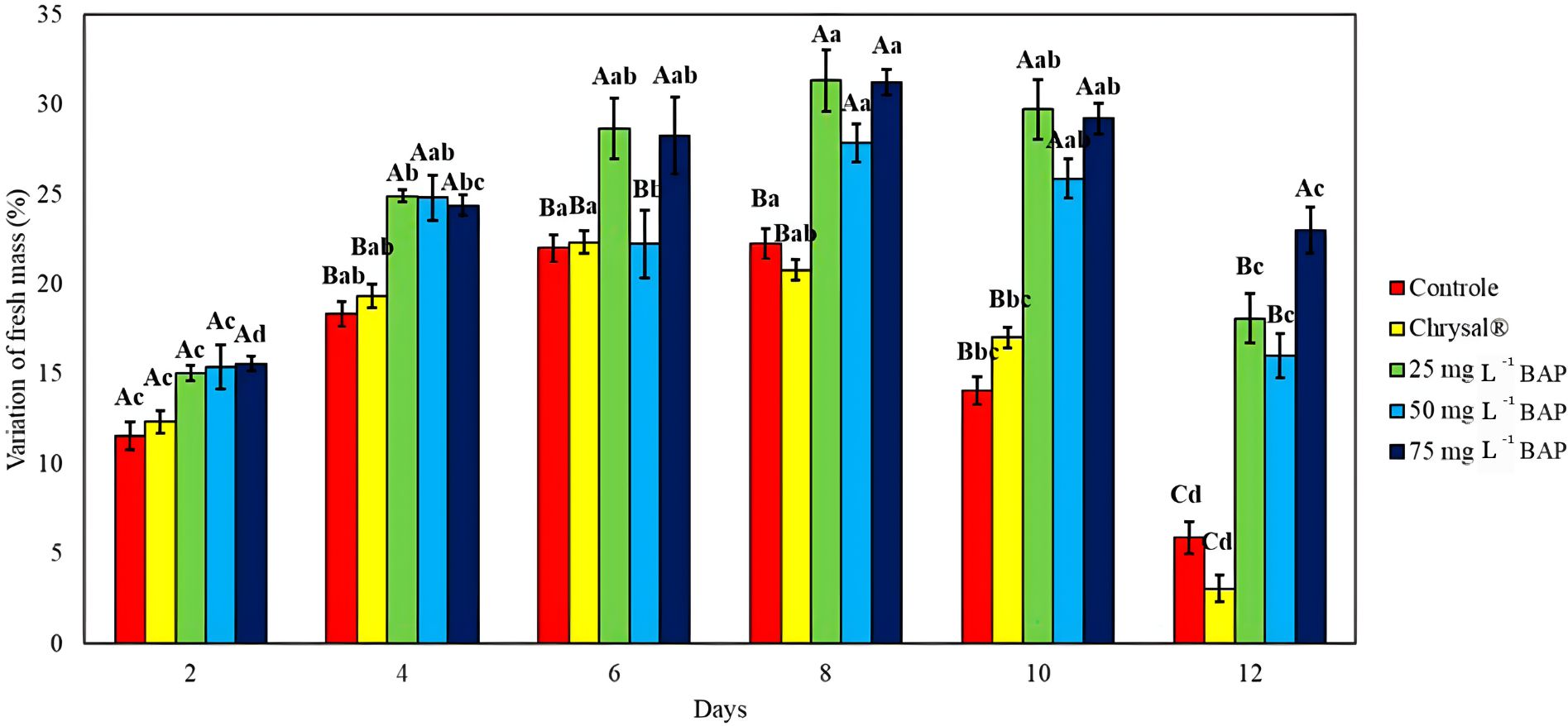
Likewise, the pulsing solutions containing BAP provided the highest accumulated fresh mass values over the study period. The treatments of 25 and 75 mg of BAP stood out, showing the most accumulation of fresh mass and differed statistically from the other treatments (p < 0.05). In both cases, the gains in fresh mass were constant until the tenth day of evaluation, resulting in accumulative increases of 29.74% and 29.23% in relation to the initial mass, respectively. The treatment with 50 mg of BAP also promoted a significant gain in fresh mass of the inflorescences in relation to the initial mass, especially on the eighth and tenth day of evaluation, differing significantly from the control and the pulsing containing Chrysal® (Fig. 2).
In contrast, the accumulation of fresh mass was not constant in the control and Chrysal® treatments. After stabilizing between the fourth and eighth day of evaluation, there was a significant reduction from the tenth day onwards. These results contrast with the treatments containing BAP, which obtained 14.6% higher averages on the last day of evaluation (day 12) (Fig. 2).
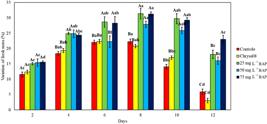
Variation of fresh mass (%) of lily ‘Nova Scotia’ inflorescences submitted to different pulsing solutions throughout storage period. Means followed by the same uppercase letter on the same evaluation day and lowercase letter within the same treatment do not differ significantly according to Tukey’s test (p ≤ 0.05) (n = 3).
Previous studies on gardenias and carnations by Celikel et al. (2020) and Costa et al. (2021), respectively, showed that treatment with cytokinins resulted in greater longevity of cut flowers. These studies highlight that cytokinins play a fundamental role in maintaining the water balance of flowers, a crucial factor for their vitality and post-harvest longevity. By promoting the opening of stomata and improving the efficiency with which flowers absorb water, these hormones help prevent dehydration and early wilting. In addition, cytokinins can stimulate the synthesis of carbohydrates and proteins, providing the energy and nutrients needed to sustain the metabolism and structural integrity of flowers during storage (Kurepa and Smalle, 2022).
The fresh mass gain observed in the inflorescences treated with Chrysal® was similar to the control (Fig. 2), and also, it was lower than that obtained in the treatments with BAP, which also provided an increase in the fresh mass of the inflorescences over a longer period. Celikel et al. (2020), when studying the post-harvest of Gardenia jasminoides, also noted that treatments containing cytokinin resulted in greater gains in fresh mass when compared to Chrysal®.
These findings can be explained by the water relations of cut flowers, given that the symptoms of water stress in many cut flowers are the result of the gradual loss of water through the stomata, due to an imbalance between water uptake and losses caused by transpiration. The reduction in the uptake of vase solution generates a water deficit, causing wilting, petal senescence and a reduction in vase life (Celikel et al., 2020; Costa et al., 2021).
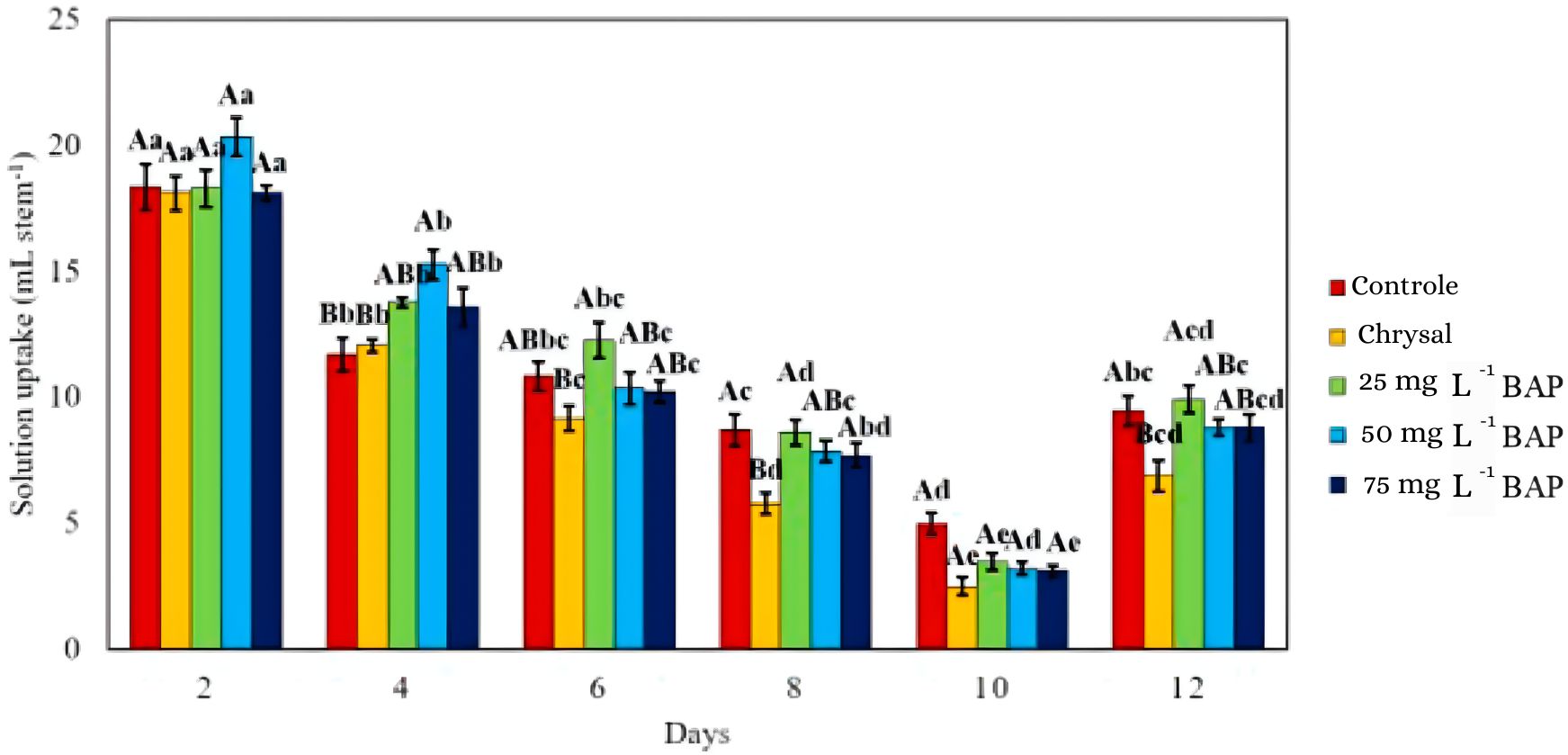
The highest absorptions of solution (Fig. 3) were observed in the inflorescences treated with BAP, and the same occurred in G. jasminoides flowers (Celikel et al., 2020). A plausible explanation for this behavior lies in the antagonistic interaction between cytokinin and abscisic acid (ABA). Cytokinin has been reported to counteract ABA-induced stomatal closure, thereby maintaining stomata open and increasing hydrostatic pressure, which consequently enhances water uptake. Moreover, cytokinin can promote higher stomatal density, further contributing to this effect (Kurepa and Smalle, 2022). Over the course of storage, the volume absorbed decreased, regardless of the treatment, a behavior also observed in the postharvest of G. jasminoides (Celikel et al., 2020).
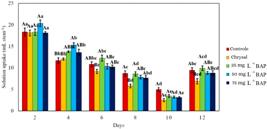
Solution uptake (mL stem-1) of lily ‘Nova Scotia’ inflorescences submitted to different pulsing solutions throughout storage period. Means followed by the same uppercase letter on the same evaluation day and lowercase letter within the same treatment do not differ significantly according to Tukey’s test (p ≤ 0.05) (n = 3).
The pulsing solutions affected the brightness of the leaves of ‘Nova Scotia’ lily inflorescences from the eighth day of storage, when the leaves treated only with deionized water showed greater brightness (Table 1).
Just as observed with the luminosity parameter, the pulsing solutions only affected the chromaticity of the leaves of ‘Nova Scotia’ lily inflorescences from the eighth day of analysis onwards. At this point, the inflorescences treated with the control had the highest color saturation (Table 1). However, on the last day of analysis, this treatment revealed the lowest chromaticity, while the highest value was recorded in the leaves treated with 25 mg of BAP.
These shifts in chromaticity are indictive of the onset of leaf senescence, a process that modifies pigment composition and contributes to reduced vase life. Leaf senescence is an endogenous process that occurs in the final stages of the organ’s life and involves the remobilization of nutrients to other parts of the plant (Al-Ajlouni et al., 2023). This process becomes visible when chlorophyll degradation takes place, turning the leaves yellow, which can reduce the vase life of lily inflorescences in certain cultivars, as reported by several authors (Krstulović et al., 2018; Al-Ajlouni et al., 2023).
Throughout the storage period, there was a gradual decrease in the brightness of the tepals of ‘Nova Scotia’ lily inforescences, regardless of the pulsing treatment applied (Table 1). Although the brightness of the tepals in the Control treatment showed an increase between the fourth and eighth day, by the end of the storage period it had decreased, following the same trend as the other treatments. Notably, the Control treatment showed the lowest luminosity value on the last day of analysis.
The different pulsing solutions only had an impact on the saturation of the tepals of ‘Nova Scotia’ lily inflorescences on the eighth day of analysis, when the Control and Chrysal® treatments showed the highest values (Table 1).
The process of flower senescence is strongly regulated, involving the wilting of petals (or tepals) accompanied by the remobilization of nutrients to the developing ovary, culminating in cell death; in many species, including lily, the process ends with the abscission of the floral organs (Rogers, 2013). Cubría-Radío et al. (2017), when studying the hormonal sensitivity of Lilium longiflorum flowers, concluded that during floral senescence of this species, the endogenous concentration of cytokinins decreases, at the same time as the concentrations of abscisic acid increase, with the total loss of sensitivity to the application of exogenous hormones occurring on the fourth day after anthesis.
The treatments that received BAP in the pulsing solution, at concentrations of 50 and 75 mg, showed the highest longevity, reaching up to 10.33 days of vase life. In contrast, the Control treatment showed the lowest longevity, with 8.44 days, a statistically significant difference compared to the treatments with BAP at all the concentrations used (Table 2). The application of the commercial product Chrysal®, widely used by cut flowers producers, provided 9.56 days of longevity to the lily inflorescences, a value that did not differ significantly from the other treatments.
The treatment with cytokinin promoted the greatest longevity of lily inflorescences (Table 2), even at the lowest concentration (25 mg L-1 BAP). Although the commercial preservative Chrysal® did not differ statistically from cytokinin treatments, it also did not differ from the control, suggesting that its effect on vase life was less pronounced and less consistent than that of cytokinin. This result is consistent with the other parameters evaluated, as cytokinin-treated inflorescences showed the highest percentage gain in fresh mass and maintained this gain for a longer period, indicating delayed water loss and preserved cellular integrity. This effect was further evidenced by greater uptake of preservative solution and the maintenance of leaf gloss until the last day of storage, reflecting better overall tissue hydration and turgor maintenance. Considering all parameters evaluated, cytokinin proved to be the most effective treatment in preserving the visual and physiological quality of the inflorescences throughout the evaluation period.
Similar results have been reported for other ornamental species, confirming the consistent effect of cytokinins in delaying senescence. In Anthurium andraeanum, BAP spraying (37.5 mg L-1) delayed senescence symptoms and extended vase life (Favero et al., 2020). The application of benzyladenine also extended the decorative life of dahlias (Dahlia Cav.) (Bergmann et al., 2019) and of the oriental hybrid lily ‘Alma Ata’ (Krstulović et al., 2018). This behavior can be attributed to the role of cytokinins as shoot-promoting hormones, capable of sustaining metabolic activity in aerial tissues and counteracting senescence signals, thereby delaying programmed cell death (Kurepa and Smalle, 2022). Nevertheless, because this study was based on non-destructive analyses, the understanding of the cytokinin mode of action is limited to these observable physiological responses, and further biochemical or molecular assessments would be required to confirm the underlying mechanisms.
Conclusions
Therefore, although vase life did not differ statistically between BAP and Chrysal® treatments, pulsing solutions containing 6-benzylaminopurine and sucrose proved more effective in preserving postharvest quality, as evidenced by a higher and more sustained fresh mass gain in ‘Nova Scotia’ lily inflorescences. In addition, inflorescences treated with BAP had a greater fresh mass accumulation during storage, delayed flower opening and extended longevity, particularly at the lowest dosage (25 mg L-1).
Acknowledgments
The authors acknowledge the financial support of CNPq through a graduate scholarship (process no. 134407/2018-0) , which was later replaced during the final two months by a CAPES scholarship under the PROEX program (process no. 88887.508232/2020-00), and Lírios Boersen for the donation of plant material.
Data availability statement
Data will be made available upon request to the authors.
References
-
AL-AJLOUNI, M.; OTHMAN, Y.A.; A’SAF, T.S., AYAD, J.Y. Lilium morphology, physiology, anatomy and postharvest flower quality in response to plant growth regulators. South African Journal of Botany, v.156, p.43-53, 2023. https://doi.org/10.1016/j.sajb.2023.03.004
» https://doi.org/10.1016/j.sajb.2023.03.004 -
BERGMANN, B.A.; AHMAD, I.; DOLE, J.M. Benzyladenine and gibberellic acid pulses improve flower quality and extend vase life of cut dahlias. Canadian Journal of Plant Science, v.99, n.1, p.97-101, 2019. https://doi.org/10.1139/cjps-2018-0126
» https://doi.org/10.1139/cjps-2018-0126 -
BIKA, R.; BAYSAL-GUREL, F.; JENNINGS, C. Botrytis cinerea management in ornamental production: a continuous battle. Canadian Journal of Plant Pathology, v.43, n.3, p.345-365, 2021. https://doi.org/10.1080/07060661.2020.1807409
» https://doi.org/10.1080/07060661.2020.1807409 -
BRAHMA, B.J.; ANTIL, R.S.; YADAV, S.K.; KAUSHIK, N. A study on the effect of silver nitrate and 8-hydroxyquinoline citrate pulsing solutions on Lilium cut flowers. Journal of Applied and Natural Science, v.15, n.2, p.811-817, 2023. https://doi.org/10.31018/jans.v15i2.4608
» https://doi.org/10.31018/jans.v15i2.4608 -
CELIKEL, F.G.; REID, M.S.; JIANG, C.Z. Postharvest physiology of cut Gardenia jasminoides flowers. Scientia Horticulturae, v.261, 2020. https://doi.org/10.1016/j.scienta.2019.108983
» https://doi.org/10.1016/j.scienta.2019.108983 -
CHAUHAN, C.; KUMAR, M.; RANI, V.; SINGH, R. Efficacy of postharvest treatments with sodium nitroprusside and gibberellic acid on physio-biochemical modifications and vase life of dahlia cut flower. South African Journal of Botany, v.174, p.580-592, 2024. https://doi.org/ 10.1016/j.sajb.2024.09.039
» https://doi.org/ 10.1016/j.sajb.2024.09.039 -
CHEN, Y.H.; MILLER, W.B. Nonrefrigerated dry storage can have negative effects on postharvest quality of cut Lilium Hortscience, v.57, n.11, p.1475-1479, 2022. https://doi.org/10.21273/HORTSCI16766-22
» https://doi.org/10.21273/HORTSCI16766-22 -
COSTA, L.C. DA; ARAUJO, F.F. DE; RIBEIRO, W.S.; SANTOS, M.N. DE S.; FINGE, F.L. Postharvest physiology of cut flowers. Ornamental Horticulture, v.27, n.3, p.374-385, 2021. https://doi.org/10.1590/2447-536X.v27i3.2372
» https://doi.org/10.1590/2447-536X.v27i3.2372 -
CUBRÍA-RADÍO, M.; ARROM, L.; PUIG, S.; MUNNE-BOSCH, S. Hormonal sensitivity decreases during the progression of flower senescence in Lilium longifloruma Journal of Plant Growth Regulation, v.36, n.2, p.402-412, 2017. https://doi.org/10.1007/s00344-016-9648-4
» https://doi.org/10.1007/s00344-016-9648-4 -
DUBOIS, M.; GILLES, K.A.; HAMILTON, J.K.; REBERS, P.A.; SMITH, F. Colorimetric method for determination of sugars and related substances. Analytical Chemistry, v.28, n.3, p.350-356, 1956. https://doi.org/10.1021/ac60111a017
» https://doi.org/10.1021/ac60111a017 -
ELGAR, H.J.; WOOLF, A.B.; BIELESKI, R.L. Ethylene production by three lily species and their response to ethylene exposure. Postharvest Biology and Technology, v.16, n.3, p.257-267, 1999. https://doi.org/10.1016/S0925-5214(99)00021-6
» https://doi.org/10.1016/S0925-5214(99)00021-6 -
FAVERO, B.T.; LÜTKEN, H.; DOLE, J.M.; LIMA, G.P.P. Anthurium andraeanum senescence in response to 6-benzylaminopurine: Vase life and biochemical aspects. Postharvest Biology and Technology, v.161, n.111084, p.1-7, 2020. https://doi.org/10.1016/j.postharvbio.2019.111084
» https://doi.org/10.1016/j.postharvbio.2019.111084 -
KALINOWSKI, J.; DOLE, J.M. Extended storage of cut flowers using sub-zero temperature. HortTechnology, v.34, n.1, p.101-115, 2024. https://doi.org/10.21273/HORTTECH05315-23
» https://doi.org/10.21273/HORTTECH05315-23 -
KRSTULOVIĆ, A.; PREBERG, T.; GENERALIĆ MEKINIĆ, I.; HAN DOVEDAN, I.; GUNJAČA4ET, J. GA(4+7) plus benzyladenine in combination with sucrose improves postharvest leaf and inflorescence quality in Lilium ‘Alma Ata’. Acta Scientiarum Polonorum-Hortorum Cultus, v.17, n.3, p.29-40, 2018. https://doi.org/10.24326/asphc.2018.3.3
» https://doi.org/10.24326/asphc.2018.3.3 -
KUREPA, J.; SMALLE, J. Auxin/Cytokinin antagonistic control of the shoot/root growth ratio and its relevance for adaptation to drought and nutrient deficiency stresses. International Journal of Molecular Sciences, v.23, n.4, 2022. https://doi.org/10.3390/ijms23041933
» https://doi.org/10.3390/ijms23041933 -
LONE, M.L.; FAROOQ, S.; UL HAQ, A.; PARVEEN, S.; TAHIR, I. 6-Benzylamino purine outperforms Kinetin and Thidiazuron in ameliorating flower longevity in Calendula officinalis L. by orchestrating physiological and biochemical responses. Ornamental Horticulture, v.27, n.2, p.183-195, 2021. https://doi.org/10.1590/2447-536X.v27i2.2260
» https://doi.org/10.1590/2447-536X.v27i2.2260 -
NGUYEN, T.; HA, S. The potential postharvest treatments to delay flower senescence and improve Botrytis resistance in cut peony flowers. Horticulturae, v.10, n.12, p.1352, 2024. https://doi.org/10.3390/horticulturae10121352
» https://doi.org/10.3390/horticulturae10121352 -
PONCE, M.M.; SILVA, C.M.; PAIVA, P.D.O.; SILVA, D.P.C. Leaf yellowing control and physiological responses of alstroemeria under postharvest solutions with growth regulators and silver thiosulfate. Journal of Plant Growth Regulation, v.44, n.6, p.3126-3138, 2025. https://doi.org/10.1007/s00344-024-11603-5
» https://doi.org/10.1007/s00344-024-11603-5 -
ROGERS, H. From models to ornamentals: how is flower senescence regulated? Plant Molecular Biology, v.82, n.6, p.563-574, 2013. https://doi.org/10.1007/s11103-012-9968-0
» https://doi.org/10.1007/s11103-012-9968-0 -
SINGH, M.; TIWARI, N. Thidiazuron outpaces 6-benzylamino purine and kinetin in delaying flower senescence in Gladiolus grandiflora by alleviating physiological and biochemical responses. Journal of Applied Biology & Biotechnology, v.9, n.4, p.56-62, 2021. https://doi.org/10.7324/JABB.2021.9407
» https://doi.org/10.7324/JABB.2021.9407 -
SKUTNIK, E; LUKASZEWSKA, A; RABIZA-SWIDER, J. Effects of postharvest treatments with nanosilver on senescence of cut lisianthus (Eustoma grandiflorum (Raf.) Shinn.) flowers. Agronomy, v.11, n.2, 2021. https://doi.org/10.3390/agronomy11020215
» https://doi.org/10.3390/agronomy11020215 -
STUENKEL, J.; ANDERSON, N.; GOODMAN, E. The effect of OasisVR floral foam on the postharvest of perennial flax cut flowers. Horttechnology, v.35, n.2, p.223-232, 2025. https://doi.org/10.21273/HORTTECH05598-25
» https://doi.org/10.21273/HORTTECH05598-25 -
SUN, X.; QIN, M.; YU, Q.; HUANG, Z.; XIAO, Y.; LI, Y.; MA, N.; GAO, J. Molecular understanding of postharvest flower opening and senescence. Mol Horticulture, v.1, n.7, 2021. https://doi.org/10.1186/s43897-021-00015-8
» https://doi.org/10.1186/s43897-021-00015-8 -
WAN, Y.; WEN, C.; GONG, L.; ZENG, H.; WANG, C. Neoagaro-oligosaccharides improve the postharvest flower quality and vase life of cut rose ‘Gaoyuanhong’. Hortscience, v.58, n.4, p.404-409, 2023. https://doi.org/10.21273/HORTSCI16988-22
» https://doi.org/10.21273/HORTSCI16988-22 -
ZHANG, Y.; ZHONG, D.; LIU, Z.; GAO, J. Study on the physiological, cellular, and morphological aspects of the postharvest development of cut lily flowers. Horticultural Plant Journal, v.7, n.2, p.149-158, 2021. https://doi.org/10.1016/j.hpj.2021.02.005
» https://doi.org/10.1016/j.hpj.2021.02.005 -
ZHOU, Y.; LIU, J.; XU, Y.; TAN, J.; ZHU, G.; YE, Y. 6-Benzylaminopurine as a potential fresh-keeping agent for Curcuma alismatifolia cut flowers: Physiological and transcriptome analysis. Postharvest Biology and Technology, v.205, 2023. https://doi.org/10.1016/j.postharvbio.2023.112540
» https://doi.org/10.1016/j.postharvbio.2023.112540
Edited by
-
Editor:
Leosane Cristina Bosco (Universidade Federal de Santa Catarina, Brasil)

 Thumbnail
 Thumbnail
 Thumbnail
 Thumbnail
 Thumbnail