
 A new species of Haplocochlias (Gastropoda, Skeneidae) from the Abrolhos Archipelago, Brazil
Abstract
A new species of Haplocochlias Carpenter, 1864 (Gastropoda: Skeneidae), Haplocochlias pitico sp. nov., is described from the Abrolhos Archipelago, off the coast of Bahia State, Brazil. The species is characterized by its minute, turbiniform shell (1.3-1.4 mm in diameter), markedly rounded whorls, very short spire, smooth protoconch, and body whorl bearing 17 smooth spiral cords separated by interspaces with sinuous prosocline axial striae. The aperture is prosocline and rounded, with a thick, smooth peristome and a narrow but deep umbilicus encircled by two prominent cords. Haplocochlias pitico sp. nov. differs from all its congeners by the distinctive undulations on the upper part of the last whorl, particularly near the aperture. Comparisons with morphologically similar Atlantic species are provided. The present discovery, based on material collected more than four decades ago, demonstrates both the persistence of significant taxonomic gaps in reef-associated gastropod faunas and the enduring scientific value of museum collections for refining biogeographic patterns in the Southwestern Atlantic.
Keywords:
Museum Collections; Oceanic Islands; Trochoidea; Vetigastropoda; Western Atlantic.
INTRODUCTION
The family Skeneidae Clark, 1851 comprises minute marine gastropods within the superfamily Trochoidea, traditionally characterized by minute, turbiniform to globose, non-nacreous shells, a multispiral operculum, and a rhipidoglossate radula (Hickman & McLean, 1990; Haszprunar et al., 2016). However, because many deep-water groups that later proved to be unrelated share these general features, the family was regarded as polyphyletic by several authors (Hickman, 2013; Haszprunar et al., 2016). Nevertheless, both molecular analyses and comparative morphological data have more recently supported Skeneidae as a monophyletic lineage closely related to Turbinidae within the Trochoidea (Williams, 2012; Nye et al., 2013). More than 100 genera have been historically assigned to the Skeneidae (Hickman, 2013). Still, only a small subset represents true skeneids as currently defined, and the familial limits continue to be refined through ongoing integrative anatomical and molecular research (Haszprunar et al., 2016).
Within the family, Haplocochlias Carpenter, 1864 is a genus of small turbiniform species distributed in the eastern Pacific and western Atlantic Oceans, typically inhabiting interstitial, infralittoral to circalittoral environments. Species are commonly found under rocks, in coarse sand, or coralline substrates where calcareous algae are abundant (Hickman & McLean, 1990; Rubio et al., 2013). The genus is characterized by its thickened, continuous peristome, narrow umbilicus, fine spiral sculpture, and corneous multispiral operculum. Since its establishment with Haplocochlias cyclophoreus Carpenter, 1864 from the Pacific coast of Mexico, numerous species have been described from both sides of the American continent (Espinosa et al., 2005; Espinosa & Ortea, 2013; Rubio et al., 2013). The most comprehensive revision of the genus recognized 29 taxa, including 11 new species, and reassigned several others previously placed in Parviturbo, Fossarus (Gottoina), and Liotia, clarifying long-standing taxonomic inconsistencies. Morphological affinities among Haplocochlias species are primarily expressed in the sculpture of the teleoconch, the thickness and internal crenulation of the outer lip, and the degree of umbilical closure (Rubio et al., 2013).
In the western Atlantic, species of Haplocochlias are known from the Caribbean to southern Brazil, occurring from shallow infralittoral zones to depths exceeding 70 m (Barros et al., 2002; Rubio et al., 2013; Rubio & Rolán, 2015). Despite this broad distribution, the genus remains poorly documented along several parts of the Brazilian coast. Only two species have been recorded in Brazilian waters to date, both of which were described in the early 2000s (Barros et al., 2002; Pimenta, 2025). The present study describes a new species of Haplocochlias from the Abrolhos Archipelago (Fig. 1), an area of remarkable marine biodiversity and extensive coralline reefs off the state of Bahia, northeastern Brazil (Tâmega & Figueiredo, 2007). Shell morphology is described based on a detailed examination of the specimens using high-resolution computed tomography (CT). Comparisons with Atlantic congeners from the Caribbean and Brazil are provided, contributing to a better understanding of the morphological variation and distribution of the genus in tropical western Atlantic waters.
MATERIAL AND METHODS
The specimens examined in this study are deposited in the collections of the following Brazilian institutions: ANSP = Academy of Natural Sciences of Drexel University (Philadelphia, USA), MZSP = Museu de Zoologia da Universidade de São Paulo (São Paulo, SP), and MORG = Museu Oceanográfico Prof. Eliézer de Carvalho Rios (Rio
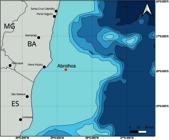
Location of the Abrolhos Archipelago (approximate center coordinates), off southeastern Bahia state, Brazil. BA = Bahia state; MG = Minas Gerais state; ES = Espírito Santo state.
Grande, RS). Specimens were photographed with a Leica M205C stereomicroscope coupled to a Leica MC170 HD digital camera at the Centro para Documentação da Biodiversidade (CDB, FFCLRP-USP, Brazil). Autofocus imaging and measurements were performed digitally and processed using Leica Application Suite X 4.12 software. Photographs were subsequently edited in Adobe Photoshop CS3. Whorl counting follows the method described by Rubio et al. (2013).
Computed tomography (CT) scans were carried out at the CDB using a Phoenix v|tome|x S240 CT & X-Ray System (General Electric, USA), equipped with a DXR250RT high-contrast digital detector and a 180 kV nanofocus source. Scanning parameters included a source voltage of 60 kV, current of 240 μA, 1,500 projections, 1×1 binning, frame averaging of 3 with 1 frame skipped, and an exposure time of 333 ms; default offset and gain corrections were applied, and no filter was used. Three-dimensional reconstructions were generated using GE Phoenix Datos X2 software, while visualization and editing of 3D models were performed with VGStudio Max 3.0 (Volume Graphics, Germany).
RESULTS
Systematics
Family Skeneidae Clark, 1851 Genus Haplocochlias Carpenter, 1864
Type species: Haplocochlias cyclophoreus Carpenter, 1864, by monotypy; Recent, Pacific.
Haplocochlias pitico new species ( Fig. 2 )
Zoobank: TBD.
Type material: Holotype MZSP 170996. Paratypes: MORG 21302, 2 sh, same data as the holotype.
Type locality: Brazil, southern Bahia state, 66 km off Caravelas municipality, Abrolhos Archipelago, 17°25′-18°09′S, 38°33′-39°05′W, 10-15 m (MORG team col., I/1980).
Diagnosis: Shell turbiniform, 1.3-1.4 mm wide, slightly wider than high, with markedly rounded whorls; spire very short (ca.⅑ of shell height), broad and rounded; protoconch diameter 215-240 μm, smooth, – whorl. Teleoconch with 2½ inflated, rounded whorls; first whorl with four smooth spiral cords and subsutural cord forming shallow channel; body whorl with 17 smooth spiral cords of variable width, interspaces progressively sculptured by sinuous prosocline axial striae. Body whorl upper surface near suture with conspicuous, broad undulations, more evident near aperture; Aperture prosocline (~30°), tapering toward umbilicus and lip attachment; inner lip slightly reflected; outer lip thick, internally smooth. Umbilicus narrow (ca.16% of shell diameter), deep, periumbilical cord and two adjacent cords more prominent, with deep interspaces and stronger axial sculpture; internal umbilical sculpture of thin axial striae.
Description: Shell turbiniform, diameter 1.4 mm, slightly wider than high (width/height ratio 1.05-1.10), up to 3¼ convex, rounded whorls; suture well-marked, shallowly channelled (Fig. 2F, H); color ivory-white to cream (Fig. 2A-C). Spire (Fig. 2A, D) very short (ca.⅑ shell height), broad, rounded, angle ca.100°. Protoconch (Fig. 2H) smooth (width 215-240 μm), – whorl; transition to teleoconch marked by faint lip.
Teleoconch with 2½ inflated, rounded whorls (Fig. 2D-F). First whorl with four prominent, smooth spiral cords (Fig. 2F-H); interspace between subsutural cord and suture bearing regularly spaced, sinuous, prosocline axial striae (Fig. 2F); subsutural cord set apart from suture, forming shallow channel (Fig. 2F-H); two lowermost cords most prominent, forming subtle keel (Fig. 2D, I). Body whorl with 17 rounded, smooth spiral cords of variable width (Fig. 2K); interspaces increasingly sculptured by spaced prosocline axial striae from second teleoconch whorl onward, fully sculptured near aperture (Fig. 2E-F); upper whorl surface near suture with conspicuous, broad undulations (Fig. 2F), more intense near aperture (Fig. 2E, J).
Peristome prosocline ~30° (Fig. 2E, J), thick, rounded, laterally dislocated, tapering both toward umbilicus and outer lip attachment (Fig. 2D), height ~½ shell height; inner lip narrow, slightly reflected toward umbilicus; outer lip thick, internally smooth. Umbilicus narrow (~16% shell diameter), deep (Fig. 2D, K); periumbilical cord and two adjacent cords more prominent than remaining basal cords (Fig. 2D, I), with deeper, more conspicuously sculptured interspaces than remaining basal cords. Internal umbilical sculpture of faint axial striae between peri- and intraumbilical cord (17 and 18 in Fig. 2K), smooth beyond. Operculum unknown.
Distribution: Known only from the type locality.
Habitat: Shallow waters, 10-15 m.
Etymology: The specific epithet is derived from the Brazilian Portuguese colloquial term pitico, meaning “tiny” or “cute, small one”. It alludes to the exceptionally minute shell size of this species (1.3-1.4 mm), one of the smallest known among congeners. The word is treated here as a noun in apposition.
Material examined: Types. Additional material: Haplocochlias risoneideneryae: BRAZIL; Maranhão: R/V Amorim do Valle sta. 107, 01°15.866′S, 43°39.509′W, 46-48 m, MZSP 96109, 3 sh (PIATAM, 21/xi/2008); R/V Amorim do Valle sta. 108, 01°30.554′S, 43°20.466′W, 59 m, MZSP 94457, 1 sh (PIATAM, 21/xi/2008); Ceará: 190 km off Fortaleza, Canopus Bank, 200 m, MZSP 93497, 5 sh (viii/2005); 240-260 m, MZSP 170760, 23 sh (viii/2005). Haplocochlias swifti: Syntype ANSP 10292, US Virgin Islands, St. Thomas, 18°22′N, 65°57′W (04/ii/1913).
Measurements (in mm): Holotype MZSP 170996, 3¼ whorls, H = 1.22, D = 1.44; Paratypes MORG 21302, specimen #1, 3¼ whorls, H = 1.32, D = 1.41; specimen #2, 3¼ whorls, H = 1.32, D = 1.40.
DISCUSSION
The minute shell of Haplocochlias pitico sp. nov. readily distinguishes it from most Western Atlantic congeners. The examined shells of the new species are clearly adults with 3-4 whorls, and bearing a thickened peristome indicating a final growth stop. Even so, within the 1-1.4 mm range, H. pitico sp. nov. stands among the smallest representatives of the genus, readily distinguishing it from the much larger (three to four times) Haplocochlias risoneideneryaeBarros, Santos, Santos, Cabral & Acioli, 2002, from north-northeastern Brazil (see Rubio et al., 2013, table 1). From another local congener of similar size, Haplocochlias williami Barros, Santos, Santos, Cabral & Acioli, 2002, from Fernando de Noronha,
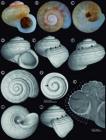
Haplocochlias piticosp. nov. (A-C) Paratype MORG 21302, #1; (A) apertural view (H = 1.32 mm, D = 1.41 mm); (B) apical view; (C) umbilical view. (D-I) Reconstruction of the shell of Holotype MZSP 170996 through CT (voxel size = 1.59 μm); (D) apertural view (H = 1.22 mm, D = 1.44 mm); (E) left lateral view (arrows indicating undulations); (F) abapertural view (arrows indicating undulations); (G) apical view; (H) protoconch (arrow indicates transition); (I) umbilical view; (J-K) 3D reconstruction of shell of Paratype MORG 21302, #2 (voxel size = 1.44 μm); (J) left lateral view (H = 1.32, D = 1.40; arrows indicating undulations); (K) ap ertural view, cross-section showing extent of umbilicus and number of spiral cords.
Brazil (see Rubio et al., 2013), it can be told apart by its markedly distinct shell outline, with much more convex, rounded whorls and lower and rounder spire; smaller, more laterally displaced aperture; stronger, fewer, and more spaced axial sculpture in the cord interspaces; and a wider umbilicus. Unique among all its congeners are the undulations present on the upper, sutural and subsutural part of the last whorl (arrows in Figs. 2E, 2F, 2J), especially evident near the aperture, observed in all three specimens examined herein.
Among Atlantic species of comparable size and whorl count (under 2 mm at three to four whorls), H. pitico sp. nov. differs from Haplocochlias bieleriRubio, Fernández-Garcés & Rolán, 2013, from Florida, by its outline with more convex whorls, more laterally displaced aperture, wider shell with a much flatter spire, and distinct height-to-diameter ratio (1.05-1.10 vs 1.20); smooth protoconch; more numerous spiral cords on the first whorl (4 vs 2) but fewer on the body whorl (17 vs 25); generally larger, stronger, and more widely spaced axial sculpture (where present); absence of denticles or crenulations on the aperture; and a much wider, perforate umbilicus.
From Haplocochlias calidimaris (Pilsbry & McGinty, 1945), also from Florida, it differs by its approximately 20% smaller shell, with a rounded whorl profile, flatter and rounder spire, and distinct height-to-diameter ratio (1.05-1.10 vs 0.88); smooth protoconch; much less pronounced spiral cords, more numerous on both the first teleoconch whorl (4 vs 3) and the body whorl (17 vs 10); axial sculpture absent from the earliest whorls; thicker peristome; and distinct basal and especially periumbilical sculpture with more prominent axial elements.
Moreover, it differs from Haplocochlias compactus (Dall, 1889), from Cuba, by its approximately 20% smaller size; outline with much more convex whorls; more laterally displaced aperture; distinct height-to-diameter ratio (1.05-1.10 vs 0.96); rounder spire with a larger protoconch (240 μm vs 220 μm); more prominent and fewer spiral cords on the body whorl (17 vs 22); much stronger and more widely spaced axial sculpture in the interspaces between cords; and a markedly wider, perforate umbilicus.
It can be told apart from Haplocochlias loperiRubio, Rolán & Lee, 2013, from Turks and Caicos, by its slightly larger and wider shell, flatter spire, and distinct height-to-diameter ratio (1.05-1.10 vs 1.02); smooth and smaller protoconch (250 μm vs 260 μm); more numerous spiral cords on the first teleoconch whorl (4 vs 3) and on the body whorl (17 vs 11); weaker axial sculpture absent from the earliest teleoconch whorls; lack of outer-lip denticles; and wider, fully perforate umbilicus.
From Haplocochlias minusdentatusRubio, Rolán & Redfern, 2013, from the Bahamas, H. pitico sp. nov. differs by its slightly larger but proportionally wider and shorter shell, much flatter spire, and distinct height-to-diameter ratio (1.05-1.10 vs 1.19); more numerous spiral cords on the body whorl (17 vs 12); axial sculpture not developed since the earliest teleoconch whorls; lack of crenulations on the outer lip; and wider umbilicus.
It can also be distinguished from Haplocochlias onaneyiEspinosa, Ortea & Fernández-Garcés, 2005, from Cuba, by its distinctly more convex and rounded whorls; lower and rounder spire; smaller, more laterally displaced aperture; different height-to-diameter ratio (1.05-1.10 vs 1.01 in H. onaneyi); smooth protoconch; fewer spiral cords on the body whorl (17 vs 18-20); stronger, fewer, and more spaced axial sculpture in the cord interspaces; and a wider umbilicus.
Finally, it can be differentiated from Haplocochlias pauciliratusRubio, Rolán & Lee, 2013, from Bermuda, by its slightly smaller shell, rounded whorl profile, flatter and rounder spire, and distinct height-to-diameter ratio (1.05-1.10 vs 0.98); more numerous spiral cords on the body whorl (17 vs 12); finer and less closely spaced axial sculpture; thicker peristome; and distinct basal and especially periumbilical sculpture with more prominent axial and spiral elements and deeper interspaces.
The description of Haplocochlias pitico sp. nov. further corroborates that the marine gastropod fauna of the Abrolhos Archipelago remains incompletely documented, despite the region being among the most studied reef systems in the South Atlantic. Recent inventories and taxon-focused studies have repeatedly shown that molluscan diversity in Abrolhos, particularly among micromollusks, has been historically underestimated, largely due to sampling biases favoring larger and more conspicuous taxa (Absalão, 2005a,b; Costa & Pires-Vanin, 2021; Costa et al., 2021). As a result, small-sized, cryptic, and sediment-associated gastropods may still be underrepresented in regional checklists and biodiversity syntheses.
This scenario is especially evident for Haplocochlias, a genus entirely absent from the most comprehensive catalogues of Brazilian marine mollusks, including those of Rios (1994, 2009), as well as from major biodiversity databases (GBIF, iNaturalist) and the Catálogo Taxonômico da Fauna do Brasil (CTFB) with respect to Abrolhos. The description of H. pitico sp. nov. therefore represents not only the first confirmed record of the genus for the archipelago, but also an indication of how perceived distributional gaps may reflect historical undersampling rather than genuine biogeographic absences.
The discovery of a new micromollusk species in Abrolhos based on material collected decades ago highlights the enduring scientific value of museum collections and reinforces the importance of their continued curation, revision, and integration with modern taxonomic practice (Allmon, 1994; Salvador & Cavallari, 2014). In this sense, H. pitico sp. nov. exemplifies how the re-examination of historical material can substantially refine our understanding of biodiversity patterns, even in regions largely regarded as biologically important (Costa & Pires-Vanin, 2021). The findings presented herein demonstrate that significant components of the gastropod fauna, particularly among micromollusks, remain to be discovered in Abrolhos. Continued taxonomic work, combined with targeted sampling and the critical reassessment of collections, is therefore essential for achieving a more complete picture of the marine biodiversity in the Southwestern Atlantic.
ACKNOWLEDGMENTS:
The author is grateful to Paula Spotorno Oliveira for the support regarding the MORG specimens and to Luiz R.L. Simone (MZSP) for drawing my attention to this material.
Data Availability:
All datasets generated during and/or analyzed during the current study are contained within the article and its supplementarymaterials.
REFERENCES
- Absalão, R.S. 2005a. Mollusca recorded during the Abrolhos RAP survey. In: Dutra, G.F.; Allen, G.R.; Werner, T. & McKenna, S.A. (Eds.). A Rapid Marine Biodiversity Assessment of the Abrolhos Bank, Bahia, Brazil RAP Bulletin of Biological Assessment, 38: 126-133.
- Absalão, R.S. 2005b. Soft-Bottom molluscs of the Abrolhos Bank. In: Dutra, G.F.; Allen, G.R.; Werner, T. & McKenna, S.A. (Eds.). A Rapid Marine Biodiversity Assessment of the Abrolhos Bank, Bahia, Brazil RAP Bulletin of Biological Assessment, 38: 82-86.
- Allmon, W.D. 1994. The value of natural history collections. Curator, 37(2): 83-89.
- Barros, J.C.N.; Santos, F.N.; Santos, M.C.F.; Cabral, E. & Acioli, F.D. 2002. Sobre duas espécies novas de Haplocochlias Carpenter, 1864 (Prosobranchia, Archaeogastropoda) da costa do Brasil. Boletim Técnico Científico do CEPENE, 10(3): 39-53.
-
Costa, F.M.P. & Pires-Vanin, A.M.S. 2021. An illustrated checklist of macrofaunal molluscs from soft-sediments of the Abrolhos Parcel (northeastern, Brazil) with 15 new records. Journal of Oceanology and Limnology, 39: 671-682. https://doi.org/10.1007/s00343-019-9161-2.
» https://doi.org/10.1007/s00343-019-9161-2 -
Costa, F.M.P.; Pires-Vanin, A.M.S. & Lima, S.F.B. 2021. Caecidae (Gastropoda: Truncatelloidea) associated with unconsolidated carbonate substrates of the Abrolhos coral bank (Bahia State, Brazil). American Malacological Bulletin, 38(2): 83-88. https://doi.org/10.4003/006.038.0202.
» https://doi.org/10.4003/006.038.0202 - Espinosa, J. & Ortea, J. 2013. Nuevas especies de moluscos prosobranquios marinos de áreas caribeñas protegidas. Revista de la Academia Canaria de Ciencias, 25: 105-110.
- Espinosa, J.; Ortea, J. & Fernández-Garcés, R. 2005. Descripción de tres nuevas especies del género Haplocochlias Carpenter, 1864 (Mollusca: Gastropoda). Avicennia, 17: 71-76.
- Haszprunar, G.; Kunze, T.; Brückner, M. & Heß, M. 2016. Towards a sound definition of Skeneidae (Mollusca, Vetigastropoda): 3D interactive anatomy of the type species, Skenea serpuloides (Montagu, 1808) and comments on related taxa. Organisms Diversity & Evolution, 16(3): 577-595.
- Hickman, C.S. 2013. Crosseolidae, a new family of skeneiform microgastropods and progress toward definition of monophyletic Skeneidae. American Malacological Bulletin, 31: 1-16.
- Hickman, C.S. & McLean, J.H. 1990. Systematic revision and suprageneric classification of trochacean gastropods. Natural History Museum Los Angeles County Science Series, 35: 1-169.
- Nye, V.; Copley, J.; Linse, K.; & Plouviez, S. 2013. Iheyaspira bathycodon new species (Vetigastropoda: Trochoidea: Turbinidae: Skeneinae) from the Von Damm Vent Field, Mid-Cayman Spreading Centre, Caribbean. Journal of the Marine Biological Association of the United Kingdom, 93(4): 1017-1024.
-
Pimenta, A.D. 2025. Skeneidae Catálogo Taxonômico da Fauna do Brasil Available: Available: https://fauna.jbrj.gov.br/fauna/faunadobrasil/106000 Access: 16/10/2025.
» https://fauna.jbrj.gov.br/fauna/faunadobrasil/106000 - Rios, E.C. 1994. Seashells of Brazil Rio Grande, Universidade do Rio Grande.
- Rios, E.C. 2009. Compendium of Brazilian Sea Shells Rio Grande, Evangraf.
- Rubio, F. & Rolán, E. 2015. The species of Haplocochlias (Gastropoda, Skeneidae) from Guadeloupe Island (Caribbean Sea) collected in the Karubenthos Expedition. Novapex, 15(1): 1-12.
- Rubio, F.; Fernández-Garcés, R. & Rolán, E. 2013. The genus Haplocochlias (Gastropoda, Skeneidae). Iberus, 31(2): 41-126.
- Salvador, R.B. & Cavallari, D.C. 2014. A new species of Leiostracus (Gastropoda, Pulmonata, Orthalicoidea) from Espírito Santo, Brazil. Iheringia Série Zoologia, 104(3): 364-366.
- Tâmega, F.T.S. & Figueiredo, M.A.O. 2007. Distribution of crustose coralline algae (Corallinales, Rhodophyta) in the Abrolhos reefs, Bahia, Brazil. Rodriguesia, 58(4): 941-947.
- Williams, S.T. 2012. Advances in molecular systematics of the vetigastropod superfamily Trochoidea. Zoologica Scripta, 41(6): 571-595.
-
Ethical Statement:
All laws, regulations and permits necessary for the research were followed and obtained.
-
Use of AI:
This project did not use any AI tool.
-
Funding:
This project did not use any external financial support.
- 7
-
Published with the financial support of the “Programa de Apoio às Publicações Científicas Periódicas da Universidade de São Paulo”.
Edited by
-
Edited by:
Marcelo Veronesi Fukuda


