
 Does Your Personality Contribute? Relationships Between Personality Traits and Collaborative Consumption
ABSTRACT
Objective: this study aims to investigate the relationship between hierarchical personality traits and the intention to engage in collaborative consumption.
Theoretical approach: to achieve this objective, the metatheoretical model of motivation and personality (3M model) was employed, offering a framework for segmenting personality traits hierarchically.
Methods: the research is descriptive in nature, with data collected through a survey using scales adapted to the coworking context. Data analysis involved univariate and multivariate statistics, with structural equation modeling (SEM) used to test the hypothesized relationships.
Results: the findings indicate that individuals exhibiting traits such as cost-saving, belief in the common good, social identity, and trust are more likely to express higher intentions to engage in collaborative consumption, particularly in coworking environments.
Conclusions: understanding the personality traits of collaborative consumers can enhance segmentation strategies, benefiting communication and positioning efforts of companies targeting this market. Additionally, these findings contribute to the advancement of the state of the art on collaborative consumption behavior.
Keywords:
Personality; Behaviour; Consumers; Marketing; Collaborative Consumption
RESUMO
Objetivo: este estudo visa investigar a relação entre traços hierárquicos de personalidade e a intenção de praticar o consumo colaborativo.
Marco teórico: para alcançar esse objetivo, foi utilizado o modelo metateórico de motivação e personalidade (modelo 3M), que oferece uma estrutura para segmentar os traços de personalidade de forma hierárquica.
Métodos: a pesquisa é de caráter descritivo, com coleta de dados realizada por meio de survey, utilizando escalas adaptadas ao contexto dos coworkings. A análise de dados envolveu estatísticas univariadas e multivariadas, com modelagem de equações estruturais (SEM) para testar as relações hipotéticas.
Resultados: os resultados indicam que indivíduos que exibem manifestações dos traços de economia de custos, crença no bem comum e confiança expressam maior intenção de praticar o consumo colaborativo, especialmente em ambientes de coworking.
Conclusões: a compreensão dos traços de personalidade dos consumidores colaborativos pode aprimorar a segmentação desse público, beneficiando estratégias de comunicação e posicionamento de empresas voltadas para esse mercado. Além disso, os achados contribuem para o avanço do estado da arte sobre o comportamento de consumo colaborativo.
Palavras-chave:
personalidade; comportamento; consumidores; marketing; consumo colaborativo
INTRODUCTION
In recent years, the number of individuals willing to adopt collaborative consumption practices has increased significantly (Lucintel, 2025; Sun et al., 2024). Social, cultural, economic, and historical factors, including digital transformation, have drawn both academic and business attention to a deeper understanding of this form of consumption (Ianole-Călin et al., 2020; Kansal & Bhalla, 2023; Sun et al., 2024).
Research on collaborative consumption has explored psychological factors such as motivations, values, attitudes, and emotions (Bhalla & Kansal, 2025; Bulin et al., 2024; Chen et al., 2024; N. L. Kim & Jin, 2019; E. Kim & Yoon, 2021; Mishra et al., 2023), yet there remains room for investigations into more nuanced aspects of users’ psychology, such as personality (Bhatt et al., 2024; Campos et al., 2023; Ruslan et al., 2020).
Personality emerges as an important element for understanding the antecedents of collaborative consumption intention, serving as a key construct for psychographic segmentation, especially when analyzed through traits (O’Leary et al., 2024; Schönherr & Thaler, 2024; Tunçel & Özkan Tektaş, 2020; Vu et al., 2022). Research on personality traits in collaborative consumption includes sociability, openness, cosmopolitanism, and other Big Five traits applied to collaborative services (Ayob & Makhbul, 2020; Campos et al., 2023). However, the literature presents three limitations: (1) the absence of a widely accepted theoretical approach (Bhatt et al., 2024; Mowen, 2000; Najm, 2019); (2) the lack of a consolidated measurement tool (Bhatt et al., 2024; Mowen, 2000; Najm, 2019); and (3) the neglect of different motivational dimensions in the intention to engage in collaborative consumption (Kansal & Bhalla, 2023; Pizzol et al., 2017). These aspects indicate that the phenomenon has not yet been fully explored, reinforcing the need for more in-depth studies.
Therefore, this study aims to expand the understanding of the motivational antecedents of collaborative consumption intention by examining the relationship between hierarchical personality traits through the Metatheoretical Model of Motivation and Personality (3M Model), proposed by Mowen (2000). Accordingly, this study seeks to answer the following research question: What is the relationship between the hierarchical personality traits of the 3M Model and the intention to engage in collaborative consumption?
To address this question, this study adopts a quantitative approach to data collection, using scales to measure personality traits and the different motivational dimensions of collaborative consumption intention. The research was conducted in the coworking context, with workspaces that, through sharing and collaboration, offer a model distinct from traditional ones (Demir & Lukes, 2025; Sánchez-Vergara et al., 2024) and are considered authentic representations of collaborative consumption (Demir & Lukes, 2025; Medina & Krawulski, 2015).
Personality traits, which Mowen (2000) argues can predict purchasing behaviors, have both theoretical and managerial implications (Amarnath & Jaidev, 2023; Barrera-Verdugo & Ponce, 2020; Blair et al., 2022; Şahin & Gelmez, 2020; Yu et al., 2023). Theoretically, they help explain the relationship between personality and collaborative consumption intention, considering motivators such as cost savings, socio-environmental awareness, and trust (Kansal & Bhalla, 2023; Pizzol et al., 2017). From a managerial perspective, this analysis can support consumer segmentation, enabling more precise positioning of offerings related to collaborative consumption.
3M MODEL AND THE INTENTION TO ENGAGE IN COLLABORATIVE CONSUMPTION
To consolidate and disseminate a systematic approach to personality in consumer behavior, Mowen (2000) proposed the Metatheoretical Model of Motivation and Personality (3M), which presents a hierarchical segmentation of traits. In this model, personality is defined as “a hierarchically related set of intrapsychic constructs that exhibit consistency over time and that, in interaction with the context, influence individuals’ feelings, thoughts, and behaviors” (Mowen, 2000, p. 2).
Across four hierarchical levels, elemental, compound, situational, and surface traits respectively form a structure in which not every lower-level trait combines with all higher-level traits; only those that are conceptually compatible are related (Mowen, 2000). More recent studies continue to employ this structure to predict consumption behaviors, adapting it to digital, collaborative, or sustainable contexts (Bhatt et al., 2024; O’Leary et al., 2024; Schönherr & Thaler, 2024; Vu et al., 2022).
At the first hierarchical level, elemental traits are defined as unidimensional characteristics that reflect relatively stable individual predispositions, yet are subject to variation as a function of the environment (Buss, 1991; Mowen, 2000). These traits result from both genetic inheritance and early learning history and serve as fundamental bases for the formation of abstract values, broadly influencing individuals’ feelings, thoughts, and behaviors (Mowen, 2000). In the original formulation of the 3M Model, Mowen (2000) identifies eight central elemental traits: (1) agreeableness, the need to express sympathy, solidarity, and kindness toward others; (2) openness to experience, the need to generate original ideas and find new solutions; (3) conscientiousness, the need for organization and efficiency; (4) emotional instability, a tendency toward emotionality and moodiness; (5) introversion, a tendency toward shyness and distrust; (6) need for arousal, the need for stimulation; (7) need for physical resources, the need to maintain and develop the body; and (8) need for material resources, the need to acquire and enjoy material goods. This study chose to exclude the variable need for physical resources, originally associated with the motivation to maintain and develop the body (Mowen, 2000). This exclusion is due to its low relevance to the study context of coworking, which is fundamentally supported by intangible resources such as collaboration, trust, and knowledge exchange (Demir & Lukes, 2025; Sánchez-Vergara et al., 2024).
At the second level of the hierarchy are compound traits, which result from the combination of elemental traits, cultural influences, learning processes, and personal life history (Mowen, 2000). Among the compound traits most relevant to this study, two stand out: (1) value perception and (2) altruism. Both play a central role in the intention to engage in collaborative consumption, as they reconcile the pursuit of individual interests with the well-being of the community and the environment through practices such as renting, exchanging, and lending enabled by digital platforms (Botsman & Rogers, 2011; L. Zhang et al., 2024; Say et al., 2021). Value perception is understood as a variable associated with the intention to achieve a better cost-benefit ratio in consumption contexts (Basso & Espartel, 2015; L. Zhang et al., 2024; Mowen, 2000). Altruism, in turn, reflects a pro-social and pro-environmental orientation, contrasting with individualistic and competitive tendencies (Ribeiro et al., 2016; Say et al., 2021).
The third level of the 3M Model consists of situational traits, which emerge from specific contexts and express predispositions toward behaviors in concrete situations (Mowen, 2000). In this study, these traits are applied to identify motivational factors directly related to the intention to engage in collaborative consumption, organized into four dimensions: (1) cost savings, associated with the pursuit of access to goods and services at lower costs; (2) socio-environmental awareness, linked to the reduction of hyperconsumption and waste; (3) belief in the common good, related to mitigating the negative effects of traditional consumption; and (4) trust, associated both with the operational model of platforms and with the credibility attributed to users (Kansal & Bhalla, 2023; Pizzol et al., 2017).
The association between these four motivational dimensions and situational traits is consistent with three key characteristics of these traits: they correspond to predispositions directly related to general behavior; they are unidimensional and context-specific; and their measurement is applied to a specific situation (Buss, 1991; Mowen, 2000). The motivational dimensions proposed by Pizzol et al. (2017) and applied in recent studies (Kansal & Bhalla, 2023) align with these characteristics, given their nature as unidimensional predispositions manifested within the context of collaborative consumption. The dimensions of convenience and social identity were also excluded from the analysis, as research in the field indicates that such factors do not yield significant effects in the collaborative consumption of services (Lutz & Newlands, 2018; N. L. Kim & Jin, 2019).
At the final level, the intention to engage in collaborative consumption corresponds to a surface trait, as it refers to the individual’s actual behavior. These traits are considered predictive because they result from the combination of antecedent traits and personal goals, enabling the anticipation of behaviors (Mowen, 2000; Pizzol et al., 2017). By integrating elemental, compound, and situational traits with surface traits, the 3M Model offers a comprehensive and consistent approach, particularly useful for psychographic segmentation and for positioning products and brands grounded in consumers’ self-concept (Bhatt et al., 2024; O’Leary et al., 2024; Mowen, 2000; Schönherr & Thaler, 2024; Vu et al., 2022). In light of this model and considering the relationships between personality traits and behavior, the research hypotheses are presented next.
Study hypotheses
Value perception is a central construct in consumer behavior and can be defined as the individual’s cognitive-affective evaluation of what is received versus what is given in a transaction (L. Zhang et al., 2024; Zeithaml, 1988). The 3M Model has shown that value perception is negatively associated with the need for material resources and positively associated with conscientiousness, as well as having a significant relationship with agreeableness and the need for arousal (Harris & Mowen, 2001; Mowen, 2000). In the context of collaborative consumption, this perception goes beyond economic benefits and also encompasses social, functional, environmental, and even symbolic dimensions (L. Zhang et al., 2024; Hamari et al., 2016).
Agreeableness, one of the elemental traits of the 3M Model, refers to the tendency to be cooperative, trustworthy, empathetic, and concerned with others. Individuals high in agreeableness value positive relationships and tend to engage more in prosocial behaviors (Basso & Espartel, 2015; Mowen, 2000; Vu et al., 2022). In the context of collaborative consumption, where interpersonal relationships, mutual trust, and collaborative exchanges are central (Chameroy et al., 2024; Hamari et al., 2016), agreeableness may enhance value perception through an appreciation for social experiences and a sense of community. Thus, the following hypothesis is proposed:
H1: Agreeableness (elemental trait) is positively associated with value perception (compound trait).
Conscientiousness is associated with self-discipline, responsibility, planning, and the pursuit of organization and efficiency. Conscientious individuals tend to value rational and structured practices, such as the efficient use of resources and system predictability (Basso & Espartel, 2015; Mowen, 2000; Vu et al., 2022). In the context of collaborative consumption, these consumers may perceive value in aspects such as financial savings, sustainability, and the reliability provided by collaborative platforms (Chameroy et al., 2024; Möhlmann, 2015). Thus, the following hypothesis is proposed:
H2: Conscientiousness (elemental trait) is positively associated with value perception (compound trait).
The need for arousal, also referred to as novelty seeking or stimulation, reflects a predisposition toward new, engaging, and non-routine experiences (Basso & Espartel, 2015; Mowen, 2000; Vu et al., 2022). Consumers with this trait tend to adopt innovations more quickly and to perceive greater value in alternative consumption models, such as collaborative consumption (Belk, 2014; Choi, 2020). Collaborative consumption may be perceived as an innovative, dynamic, and socially stimulating practice, especially in peer-to-peer interactions (Sun et al., 2024), thereby increasing these consumers’ perception of value. Therefore, the following hypothesis is proposed:
H3: The need for arousal (elemental trait) is positively associated with value perception (compound trait).
The need for material resources, often associated with materialism, is characterized by the valuation of possessions as symbols of status, success, and happiness (Mowen, 2000; Pérez-Jara et al., 2021; Richins & Dawson, 1992). Materialistic individuals tend to prefer traditional ownership models and may show resistance to access-based consumption, such as collaborative consumption, as it does not fully satisfy their identity-related and symbolic motivations (Graul & Theotokis, 2024; Tussyadiah & Pesonen, 2016). Thus, it is expected that the higher the level of materialism, the lower the perceived value of collaborative practices. Based on this reasoning, the following hypothesis is proposed:
H4: The need for material resources (elemental trait) is negatively associated with value perception (compound trait).
Altruism has been highlighted as a personality trait associated with benevolent and prosocial behaviors (Gouveia et al., 2021; Ribeiro et al., 2016; Say et al., 2021). C. Zhang et al. (2017) suggest that altruism involves the pursuit of mutual benefits through supporting others, transcending purely self-interested motives. Previous studies indicate that altruistic individuals often exhibit high sociability and that this characteristic can predict prosocial behaviors (Krebs, 1970; Say et al., 2021). In the context of collaborative consumption, C. Zhang et al. (2017) and Say et al. (2021) further emphasize the importance of sociability as a relevant antecedent.
Individuals high in agreeableness are also described as more willing to cooperate and help others, which aligns directly with altruistic behavior. Several empirical studies confirm a positive association between agreeableness and prosocial behavior (Basso & Espartel, 2015; Mowen, 2000; Vu et al., 2022), including helping attitudes in collaborative and community contexts (Carlo et al., 2005; Say et al., 2021). In this sense, the following hypothesis is proposed:
H5: Agreeableness (elemental trait) is positively associated with altruism (compound trait).
Openness to experience is a personality trait that encompasses intellectual curiosity, imagination, tolerance for ambiguity, and receptiveness to new ideas, values, and experiences (Basso & Espartel, 2015; Mowen, 2000; Vu et al., 2022). Individuals high in openness tend to exhibit greater cognitive flexibility and a willingness to explore diverse perspectives, making them more inclined to question egocentric norms in favor of collective and collaborative practices (McCrae, 1996; Mowen, 2000). In the context of collaborative consumption, this trait may foster altruistic attitudes by promoting a greater appreciation for cooperation, socio-environmental awareness, and ideals such as distributive justice and the common good (Say et al., 2021). Empirical evidence also indicates that openness to experience is a relevant predictor of the adoption and valuation of sharing-based services (Tunçel & Özkan Tektaş, 2020). Based on this, the following hypothesis is proposed:
H6: Openness to experience (elemental trait) is positively associated with altruism (compound trait).
Conversely, emotional instability and introversion are associated with behaviors of isolation and distrust (Leong et al., 2017; Schmidt, 2022). Emotional instability is characterized by anxiety, irritability, impulsivity, and difficulty coping with stress (Basso & Espartel, 2015; Mowen, 2000; Vu et al., 2022). Research indicates that high levels of emotional instability are negatively associated with prosocial behaviors, as such individuals tend to focus more on their own negative emotions and perceived threats than on the needs of others. In the context of collaborative consumption, this tendency may translate into a lower willingness to cooperate and help others, thereby undermining altruistic behaviors (Caprara et al., 2010; Say et al., 2021). Accordingly, the following hypothesis is proposed:
H7: Emotional instability (elemental trait) is negatively associated with altruism (compound trait).
While extraversion is associated with communicative, assertive, and socially engaged behaviors, factors that often facilitate altruism, more introverted individuals tend to avoid social interactions and engage less in networks of support and cooperation. In the context of collaborative consumption, where altruism may be stimulated by interpersonal interactions, a negative relationship with introversion is expected (Carlo et al., 2005; Say et al., 2021). Consequently, the following hypothesis is proposed:
H8: Introversion (elemental trait) is negatively associated with altruism (compound trait).
The investigation of the relationships between elemental and compound traits, specifically value perception and altruism, can significantly contribute to understanding cost savings and collaborative practices. In this context, value perception is expected to be positively associated with cost savings, as the latter represents one of the central motivations for adopting collaborative practices. Previous studies indicate that consumers engaged in sharing-based models often evaluate their experience positively when they perceive financial advantages, such as reduced expenses and more efficient use of resources (Ianole-Călin et al., 2020; Li & Wen, 2019; Sun et al., 2024). Such evidence suggests that value perception, as a subjective evaluation of the benefits obtained from interacting with the platform or company, tends to incorporate cost savings as one of its key components. Based on this theoretical framework, the following hypothesis is proposed:
H9: Value perception (compound trait) is positively associated with cost savings (situational trait).
In the context of collaborative consumption, value perception, understood as the subjective evaluation of the benefits obtained relative to perceived costs, is strongly associated with trust, especially in technology-mediated environments based on peer-to-peer interactions. Studies indicate that when users perceive significant value in collaborative exchanges, whether through cost savings, convenience, or social benefits, they tend to develop greater trust in the company and other users (Bove & Mitzifiris, 2007; L. Zhang et al., 2024). Thus, the following hypothesis is proposed:
H10: Value perception (compound trait) is positively associated with trust (situational trait).
Research suggests that consumers with a strong altruistic orientation tend to engage more in environmentally responsible consumption practices, such as resource sharing and the use of platforms or companies aimed at reducing waste and promoting sustainability (Ribeiro et al., 2016; Say et al., 2021). Socio-environmental awareness, therefore, reflects a genuine concern for environmental preservation and social justice and is often associated with altruistic behavior, which prioritizes collective well-being over individual interests (Pizzol et al., 2017; Ribeiro et al., 2016; Say et al., 2021). In light of the above, the following hypothesis is proposed:
H11: Altruism (compound trait) is positively associated with socio-environmental awareness (situational trait).
Belief in the common good involves the expectation that collaboration among individuals can generate fairer and more equitable outcomes for all involved (Belk, 2010; Pizzol et al., 2017). In collaborative consumption, this principle is reflected in practices that aim to redistribute resources in ways that benefit everyone, with a focus on justice and equity (Gomez‐Alvarez & Morales‐Sánchez, 2023; Pizzol et al., 2017). Individuals with a strong propensity for altruism typically believe that their actions can contribute to a greater good, reinforcing their engagement with platforms and practices that promote collaboration and collective well-being (Gomez‐Alvarez & Morales‐Sánchez, 2023; Többen & Choi, 2021). Therefore, the following hypothesis is proposed:
H12: Altruism (compound trait) is positively associated with belief in the common good (situational trait).
Trust is an essential factor for the success of collaborative consumption, as interactions between individuals typically occur in contexts of uncertainty and rely on the goodwill of all participants (Belk, 2010; Chameroy et al., 2024; Marimon et al., 2019). Altruism, in turn, can be seen as an important precursor to the development of mutual trust, as altruistic individuals tend to act cooperatively and with genuine intentions to benefit others (Say et al., 2021). This, in turn, creates a safer and more reliable environment for both the platform/company and its participants, resulting in a greater willingness to collaborate (Chameroy et al., 2024; Marimon et al., 2019). Therefore, the following hypothesis is proposed:
H13: Altruism (compound trait) is positively associated with trust (situational trait).
Cost savings are frequently cited as one of the primary motivations for participating in collaborative consumption ventures. By enabling access to goods and services without the need for full ownership, collaborative consumption provides direct economic advantages, such as reduced expenses, more efficient use of resources, and improved utilization of underused assets (N. L. Kim & Jin, 2019; Pizzol et al., 2017; Sun et al., 2024). This perception of financial benefit reinforces users’ behavioral intention to adopt such practices, as consumption decisions are strongly influenced by cost-benefit evaluations (Li & Wen, 2019; Marimon et al., 2019; Sun et al., 2024). Therefore, the following hypothesis is proposed:
H14: Cost savings (situational trait) is positively associated with the intention to engage in collaborative consumption (surface trait).
Socio-environmental awareness, understood as concern about the social and environmental impacts of individual choices, has been shown to be a relevant factor in the adoption of sustainable practices such as collaborative consumption. Individuals with this trait tend to seek consumption alternatives that reduce ecological impacts, minimize waste, and promote collective well-being (Ianole-Călin et al., 2020; Vu et al., 2022). In this context, collaborative consumption emerges as a practice aligned with sustainability principles, as it encourages sharing and the efficient use of resources. Thus, socio-environmental awareness positively influences the intention to engage in collaborative consumption, since individuals perceive these practices as a coherent way to express their ecological and social values (Li & Wen, 2019; Pizzol et al., 2017; Vu et al., 2022). Accordingly, the following hypothesis is proposed:
H15: Socio-environmental awareness (situational trait) is positively associated with the intention to engage in collaborative consumption (surface trait).
Belief in the common good involves the conviction that collective action can generate broad benefits for society. This belief underpins the logic of collaborative consumption, which assumes mutual trust, reciprocity, and a community-oriented perspective focused on sharing (Belk, 2010; Gomez‐Alvarez & Morales‐Sánchez, 2023). Individuals who believe in the common good tend to value forms of consumption that promote equity, solidarity, and the responsible use of resources, characteristics inherent to collaborative enterprises (Ianole-Călin et al., 2020; Gomez‐Alvarez & Morales‐Sánchez, 2023). Thus, the stronger this belief, the greater the intention to engage in collaborative consumption, as there is alignment between personal values and the practices proposed by this consumption model (Gomez‐Alvarez & Morales‐Sánchez, 2023; Pizzol et al., 2017). Based on this reasoning, the following hypothesis is proposed:
H16: Belief in the common good (situational trait) is positively associated with the intention to engage in collaborative consumption (surface trait).
Finally, trust is a fundamental element for the effective functioning of collaborative consumption (Chameroy et al., 2024; Marimon et al., 2019; Ruslan et al., 2020). Trust reduces perceived risk, facilitates exchanges, and strengthens the willingness to cooperate (Belk, 2010; Chameroy et al., 2024; Li & Wen, 2019). When individuals perceive that they can trust both the platform/company and other users, they feel more secure in trying and continuing to use these practices (Chameroy et al., 2024; Pizzol et al., 2017). Thus, the following hypothesis is proposed:
H17: Trust (situational trait) is positively associated with the intention to engage in collaborative consumption (surface trait).
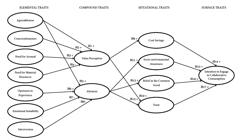
The proposed hypotheses (Figure 1) aim to expand the understanding of the antecedents of collaborative consumption and contribute to the ongoing debate on the practice of this type of consumption.
METHOD
This study adopted a quantitative approach, with a cross-sectional design conducted through a survey, following the recommendations of Malhotra (2006). Access to the questionnaire was provided via the Qualtrics platform, which was selected for offering appropriate functionalities for the design and management of structured questionnaires, as well as enabling more sophisticated data collection and management without requiring advanced programming knowledge from researchers (Barnhoorn et al., 2015).
Data collection
Data collection was carried out using non-probabilistic convenience sampling, combined with the snowball sampling technique, and structured across three complementary streams. The first stream consisted of distributing the questionnaire in groups composed exclusively of freelancers, self-employed professionals, independent professionals, entrepreneurs, and business owners on social media, including sixteen groups on Facebook and one group on LinkedIn. The second stream of data collection was conducted using the snowball technique within the community associated with the Serviço Brasileiro de Apoio às Micro e Pequenas Empresas (SEBRAE). The third stream was based on telephone contacts followed by email outreach to 164 coworking spaces located in different regions of Brazil.
In the final data collection stage, a total of 396 questionnaires were obtained. However, after data screening, 35 questionnaires were removed due to incomplete responses, resulting in a final sample of 361 valid questionnaires. Both the pre-test and the final data collection were incentivized through the promotion of raffles for shopping vouchers worth R$350.00, a strategy widely recognized in the methodological literature as effective for increasing response rates, enhancing participant engagement, and consequently improving the quality of the collected data (Edwards et al., 2002; Linsky, 1975).
Research instrument
The data collection instrument consisted of a structured questionnaire comprising 59 items, measured using a five-point Likert scale. To assess personality traits associated with the intention to engage in collaborative consumption, previously validated scales from the literature were employed and adapted to the coworking context (Mowen, 2000; Pizzol et al., 2017). The questionnaire was organized into four sets of constructs, distributed across four sections: (1) elemental traits (30 items); (2) compound traits (10 items); (3) situational traits (13 items); and (4) surface trait (6 items). Prior to the final data collection, two pre-tests were conducted and disseminated via Facebook and Instagram. These procedures allowed for minor adjustments to the instrument, aiming to improve question clarity and ensure its suitability for the target audience.
Data analysis procedures
The analysis of results included the assessment of statistical assumptions, such as data normality (evaluated through skewness and kurtosis) and multicollinearity (VIF < 5). Next, the measurement model was evaluated using factor loadings (λ > 0.70), convergent validity (AVE > 0.50), and discriminant validity (Fornell-Larcker criterion and HTMT), as well as internal reliability, with Cronbach’s alpha (α) and composite reliability (CR) exceeding 0.70 (Hair et al., 2010). The structural model analysis followed the main criteria recommended in the literature, considering explanatory power (R²) and the significance of path coefficients (β), with estimates obtained through bootstrapping with 5,000 subsamples. This procedure enabled the testing of the proposed hypotheses (Hair et al., 2010).
The data were analyzed using partial least squares structural equation modeling (PLS-SEM), with the SmartPLS software (version 4.1.1). This technique was chosen due to its suitability for complex models, non-normal data distributions, and moderate sample sizes, and it is widely recommended in studies on consumer behavior and the sharing economy (Hair et al., 2019).
RESULTS
Sample characterization
The sample of this study consisted of 361 participants (Table 1). Regarding age, 25.5% of participants were between 18 and 24 years old, 33.0% between 25 and 30 years old, 9.7% between 31 and 35 years old, and 10.8% between 36 and 40 years old, while 21% were over 40 years old. Most participants resided in capital cities (46.5%), followed by those living in inland cities (30.7%) and metropolitan regions (22.7%). In terms of gender, there was a predominance of female respondents (63.4%), while males represented 36.6% of the sample. The distribution of personal income showed a concentration in the range of above 1 to 2 minimum wages (21.9%), followed by above 2 to 4 minimum wages (21.1%), above 4 to 6 minimum wages (15.8%), and above 10 minimum wages (14.1%). Smaller percentages were observed among participants earning above 6 to 8 minimum wages (7.8%) and above 8 to 10 minimum wages (9.7%). Additionally, 5.0% reported having no personal income, and 4.7% indicated earnings below one minimum wage. Regarding education, the sample exhibited a relatively high level of qualification: 47.6% of participants had some form of postgraduate education (completed or in progress), 30.5% held a completed undergraduate degree, and 14.7% were currently pursuing higher education. Only 5.8% reported high school completion as their highest level of education, and 1.4% indicated lower levels of education. Finally, the majority of respondents reported that they currently use or have previously used a coworking space (54.8%).
Normality and multicollinearity
Data normality was assessed using skewness and excess kurtosis coefficients, considering all indicators of the model. The results indicated skewness values ranging from −1.32 to 0.62 and kurtosis values from −1.28 to 1.70, remaining within the recommended thresholds for multivariate analyses (Hair et al., 2019), as shown in Table 2. Additionally, although the Cramér-von Mises test indicated deviations from univariate normality (p < 0.001), this result was expected in larger samples and does not compromise the use of PLS-SEM, a technique known for its robustness to violations of the normality assumption (Hair et al., 2019). Multicollinearity was assessed using the variance inflation factor (VIF). The observed values ranged from 1.00 to 2.54, with a maximum VIF below 5, indicating the absence of problematic collinearity among the constructs in the structural model (Hair et al., 2019) (see Table 2).
Measurement model
The validation of the measurement model was conducted to assess internal reliability, convergent validity (Tables 2 and 3), and discriminant validity of the theoretical constructs. The analysis began with the evaluation of the indicators’ factor loadings (outer loadings), where most values exceeded 0.70, in accordance with the criteria recommended by Hair et al. (2010). Additionally, several constructs exhibited high loadings (above 0.80), reinforcing the adequacy of the measurement model. For the few items with loadings slightly below 0.70 (CO_1, AE_4, PV_6, and AL_1), the decision was made to retain them in the model due to their theoretical relevance and their marginal impact on composite reliability, in line with methodological recommendations (Bagozzi & Yi, 1988; Hair et al., 2014).
The reliability of the constructs was assessed using Cronbach’s alpha (α) and composite reliability (CR), adopting a minimum threshold of 0.70 for both metrics (Hair et al., 2010). As shown in Table 2, all constructs met this criterion, with α values ranging from 0.76 to 0.93 and CR values from 0.77 to 0.94, indicating adequate internal consistency and homogeneity of the indicators.
Convergent validity was examined using the average variance extracted (AVE), following the classical criterion of Fornell and Larcker (1981). TAll constructs presented AVE values above 0.50, indicating adequate convergence of the indicators, with particular emphasis on the trust construct, which showed the highest AVE value (0.86) (see Table 3). Discriminant validity was assessed using the heterotrait-monotrait ratio (HTMT), as recommended by Henseler et al. (2015). The use of HTMT is justified by its greater robustness and sensitivity in detecting discriminant validity issues among conceptually similar constructs, overcoming the empirical limitations of traditional criteria such as the Fornell-Larcker criterion and cross-loadings analysis. As shown in Table 3, all HTMT values remained below the threshold of 0.90, indicating adequate empirical distinction among the constructs in the model.
Structural model analysis and hypothesis testing
To test the proposed theoretical model, the multivariate statistical technique of structural equation modeling was employed. The analysis was conducted using the partial least squares approach, which is appropriate for models with complex relationships among latent variables (Hair et al., 2019). To assess the statistical significance of the hypotheses, the bootstrapping procedure with 5,000 resamples was applied.
The predictive quality of the model was examined based on the coefficients of determination (R²) and R² following the criteria established by Hair et al. (2019). According to Hair et al. (2019), R² values of approximately 0.25 are considered weak, 0.50 moderate, and 0.75 substantial in structural equation models. Adjusted R² corrects the original R² by accounting for the number of predictors in the model, making it more conservative in models with multiple variables. The extraction of the coefficients of determination (R²) for the compound, situational, and surface traits (Table 2 and Figure 2) indicates that the model is able to explain a relevant portion of the variance of the endogenous constructs, particularly in the case of the intention to engage in collaborative consumption, which is the central variable of this study.
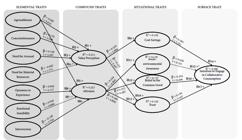
This study tested 17 hypotheses based on the 3M Model proposed by Mowen (2000), examining how personality traits influence the intention to engage in collaborative consumption. The results of the structural model, obtained via PLS-SEM, present the estimated paths (β), means (M), standard deviations (SD), t-values, and significance levels (p-values) for each hypothesized relationship and reveal significant relationships among elemental, compound, situational, and surface traits, corroborating and extending the existing literature.
Based on the results presented in Table 4 and Figure 2, agreeableness showed a positive and significant relationship with value perception (H1; β = 0.29; t = 4.91; p < 0.001). This finding reinforces the literature that identifies this trait as one of the main predictors of cooperative behaviors, suggesting that consumers with higher levels of empathy and a greater disposition toward interpersonal relationships tend to perceive more value in collaborative experiences, which involve exchange, interaction, and mutual support (Basso & Espartel, 2015; Hamari et al., 2016; Mowen, 2000; Vu et al., 2022). Conscientiousness also demonstrated a positive relationship with value perception (H2; β = 0.18; t = 3.55; p < 0.001), indicating that consumers who are organized, disciplined, and efficiency-oriented are more likely to value consumption models that offer predictability and optimize resource use (Chameroy et al., 2024; Möhlmann, 2015). The acceptance of this hypothesis confirms the applicability of the 3M Model in the context of collaborative consumption, particularly among consumers guided by structure and planning.
The need for arousal (H3; β = 0.15; t = 3.57; p < 0.001) was also positively associated with value perception, reflecting these consumers’ interest in new, engaging experiences and alternatives to traditional consumption models (Belk, 2014; Sun et al., 2024). Participation in collaborative models may thus be perceived as a way to satisfy the desire for novelty and experimentation. However, the relationship between the need for material resources and value perception (H4; β = -0,09; t = 1.77; p = 0.077) was not significant (see Table 4). Although previous studies suggest that materialism reduces the propensity for access-based consumption (Graul & Theotokis, 2024; Pérez-Jara et al., 2021; Richins & Dawson, 1992), the results indicate that this effect may be weakened in the investigated context. This may be due to a shift in the symbolic meanings of ownership in collaborative environments, where value is increasingly attributed to access and shared use rather than to ownership itself (Davidson et al., 2018; Demir & Lukes, 2025).
Agreeableness was once again confirmed as an important predictor, this time of altruism (H5; β = 0.52; t = 8.65; p < 0.001), demonstrating that the willingness to help others is strongly related to traits such as empathy, warmth, and cooperation (Carlo et al., 2005; Say et al., 2021). Openness to experience also proved to be a relevant factor for altruism (H6; β = 0.10; t = 2.12; p = 0.034), supporting the idea that open-minded individuals are more receptive to collective causes, alternative consumption models, and community-oriented values (Tunçel & Özkan Tektaş, 2020). The relationship between emotional instability and altruism was not significant (H7; β = 0.04; t = 0.87; p = 0.387), contradicting the initial hypothesis and previous studies (Caprara et al., 2010; Say et al., 2021). Thus, it is possible that emotional instability does not directly affect the willingness to help and may instead be influenced by variables such as emotional self-regulation in work environments (see Table 4). Introversion showed a significant negative relationship with altruism (H8; β = -0.14; t = 2.75; p = 0.006), confirming that less sociable individuals tend to engage less in cooperative practices (Carlo et al., 2005; Say et al., 2021).
The hypotheses exploring compound traits were largely supported. Value perception positively influences cost savings (H9; β = 0.32; t = 5.68; p < 0.001), highlighting that consumers perceive financial advantage as a key component of value (Li & Wen, 2019; Sun et al., 2024). Furthermore, value perception also affects trust (H10; β = 0.15; t = 2.45; p = 0.014), indicating that perceived benefits in collaborative exchanges increase the willingness to trust both the platform/company and other users (Bove & Mitzifiris, 2007; L. Zhang et al., 2024).
Altruism, in turn, showed a strong positive relationship with socio-environmental awareness (H11; β = 0.36; t = 6.80; p < 0.001), highlighting the alignment between prosocial values and sustainable behaviors (Ribeiro et al., 2016; Say et al., 2021). The positive association with belief in the common good (H12; β = 0.37; t = 6.10; p < 0.001) confirms that altruistic individuals tend to believe in the benefits of collective action (Gomez‐Alvarez & Morales‐Sánchez, 2023; Többen & Choi, 2021). Altruism also contributes significantly to the development of trust (H13; β = 0.29; t = 4.90; p < 0,001), indicating that benevolent predispositions strengthen social ties within collaborative business models (Chameroy et al., 2024; Marimon et al., 2019).
Cost savings emerged as one of the strongest predictors of the intention to engage in collaborative consumption (H14; β = 0.39; t = 7.70; p < 0.001), reinforcing its central role as a motivation for adopting this model and highlighting its relevance, particularly in contexts of economic constraint or efficiency-seeking behavior (N. L. Kim & Jin, 2019; Sun et al., 2024). Although theoretically consistent, socio-environmental awareness was not statistically significant (H15; β = 0.04; t = 0.79; p = 0.429) (see Table 4). This finding suggests that environmental concerns, while important, may not be sufficient on their own to drive collaborative consumption behavior in coworking environments (Hamari et al., 2016; Ianole-Călin et al., 2020; Vu et al., 2022). In contrast, belief in the common good positively influenced the intention to engage in collaborative consumption (H16; β = 0.25; t = 4.40; p < 0,001), supporting the notion that collective values foster engagement in sharing practices (Gomez‐Alvarez & Morales‐Sánchez, 2023; Pizzol et al., 2017). Finally, trust also had a positive impact on the intention to engage in collaborative consumption (H17; β = 0.19; t = 3.51; p < 0.001), confirming that perceptions of security and goodwill are essential for the adoption of collaborative models (Belk, 2010; Chameroy et al., 2024; Li & Wen, 2019).
CONCLUSIONS AND IMPLICATIONS
This study demonstrated that the intention to engage in collaborative consumption is driven by a hierarchical and non-linear interaction of psychological traits, which can be consistently understood in light of the 3M Model of personality. By applying it to the coworking context, chosen for representing in a particularly authentic way the logic of access-based, sharing-oriented, and interaction-driven consumption, the results show that personality acts as a structuring predisposition that shapes how individuals perceive value, develop motivations, and ultimately form their behavioral intentions. In this sense, the findings advance the 3M Model conceptually by demonstrating how different hierarchical levels of traits articulate into distinct yet convergent motivational pathways in collaborative consumption. Taken together, the results reveal two central motivational routes that operate as complementary conceptual blocks within the model: an economic-functional route and a social-relational route.
Within the economic-functional route, the situational trait of cost savings emerges as the strongest direct predictor of the intention to engage in collaborative consumption (H14), confirming the central role of financial benefits in collaborative models (N. L. Kim & Jin, 2019; Sun et al., 2024). However, this motivation does not operate in isolation. It is preceded by value perception (H9), which acts as a mediating link between elemental traits and the final decision. Specifically, more conscientious individuals tend to perceive greater value by associating coworking with efficiency, predictability, and rational resource use (H2), while individuals with a higher need for arousal value the innovative and experiential nature of this model (H3). These findings suggest that, in the coworking context, economic gain represents the final expression of a deeper psychological process, in which efficiency and innovation are internalized as perceived value before being translated into behavioral intention.
The social-relational route, in turn, highlights that collaborative consumption is not sustained solely by utilitarian calculations. Belief in the common good (H16) and trust (H17) emerge as the intangible pillars that provide legitimacy and continuity to the collaborative model. These situational traits are fueled by prosocial psychological dispositions: altruism plays a central role by strengthening both belief in the common good (H12) and trust (H13), while agreeableness stands out as a key elemental trait by simultaneously enhancing value perception (H1) and altruism (H5). Openness to experience also contributes positively to altruism (H6), reinforcing the idea that cognitively flexible and socially oriented individuals are more likely to value collaborative practices. Taken together, these findings demonstrate that coworking operates as a relational environment in which trust, cooperation, and a sense of belonging are as relevant as economic benefits.
Beyond confirming expected relationships, the study also refines the understanding of which traits effectively predict the intention to engage in collaborative consumption in structured contexts. The absence of an effect for the need for material resources (H4) suggests that, in coworking environments, value is not associated with the ownership of tangible goods, but rather with access to experiences, networks, and interactions, indicating a symbolic shift from ownership to shared use. Similarly, emotional instability was not found to be significant (H7), suggesting that social norms, institutional rules, and self-regulation mechanisms present in these environments may reduce the impact of neurotic traits on the final decision. Although socio-environmental awareness stems from altruism (H11), it does not act as a primary driver of intention (H15), reinforcing that sustainability values alone are not sufficient to motivate behavior. In contrast, introversion emerged as a significant barrier (H8), indicating that collaborative consumption in coworking settings tends to be more attractive to individuals who are sociable and comfortable with interpersonal interactions.
These findings address important gaps in the literature by demonstrating that not all traits traditionally associated with collaborative consumption retain explanatory power in structured and institutionalized contexts such as coworking, thereby contributing to a more precise and context-sensitive application of the 3M Model. The intention to engage in collaborative consumption represents the point of convergence between economic and social motivations, whose predominance varies according to the individual’s personality trait configuration. Understanding this intersection enables companies in the sector to develop more effective strategies by aligning functional benefits with relational values - precisely where consumers most likely to adopt and remain engaged in collaborative consumption are concentrated.
Theoretical contributions
This study advances the state of the art and offers relevant theoretical contributions to the fields of consumer behavior and collaborative consumption, particularly through the application, validation, and extension of the Metatheoretical Model of Motivation and Personality (3M) proposed by Mowen (2000) in a contemporary context of access-based, sharing-oriented, and socially interactive consumption.
The first theoretical contribution lies in the empirical demonstration of the adequacy of the hierarchical structure of the 3M Model within an institutionalized collaborative ecosystem - coworking spaces. By empirically showing how elemental traits (e.g., agreeableness, conscientiousness, and openness to experience) influence compound traits (value perception and altruism), which in turn affect situational traits (such as cost savings, belief in the common good, and trust), ultimately culminating in the surface trait (intention to engage in collaborative consumption), the study confirms the explanatory and predictive power of the 3M Model for complex, contextual, and socially mediated behaviors. This evidence extends the model’s validity beyond traditional individual purchasing contexts and reinforces its usefulness for understanding consumption practices based on sharing (Basso & Espartel, 2015; Bhatt et al., 2024; Mowen, 2000; O’Leary et al., 2024; Schönherr & Thaler, 2024; Vu et al., 2022).
Second, the study contributes by empirically operationalizing an interactionist perspective of consumer behavior, articulating relatively stable dispositional predispositions (elemental traits) with situational variables specific to the collaborative context. This integration makes it possible to explain not only whether consumers are inclined to adopt collaborative consumption, but also how different combinations of traits activate distinct motivational pathways that lead to the same behavioral intention. In doing so, the research advances beyond more static and decontextualized approaches, such as those based solely on the Big Five, offering a more dynamic, hierarchical, and predictive understanding of personality applied to marketing (Ayob & Makhbul, 2020; Bhatt et al., 2024; Campos et al., 2023; Mowen, 2000; Najm, 2019).
A third theoretical contribution lies in reconciling economic and social motivations in collaborative consumption. The findings demonstrate that these motivations are not mutually exclusive but interdependent, being organized and mediated by the individual’s personality trait configuration. The 3M Model, by enabling the identification of multiple motivational pathways (economic-functional and social-relational), offers a more nuanced explanation for the heterogeneity observed among collaborative consumers. This contributes to overcoming recurring dichotomies in the literature between economic rationality and prosocial values (Say et al., 2021; L. Zhang et al., 2024).
Finally, the study offers an additional theoretical-methodological contribution by testing and confirming the applicability of the collaborative consumption scale proposed by Pizzol et al. (2017) in a new empirical context - coworking environments. This replication provides further evidence of external and nomological validity, while also delineating the theoretical boundaries of the construct within a collaborative ecosystem distinct from the one originally investigated. In doing so, the research consolidates a robust measurement foundation and reinforces the multidimensional, contextual, and situational nature of collaborative consumption, offering consistent support for future studies (Kansal & Bhalla, 2023; Pizzol et al., 2017).
Managerial contributions
The results of this study provide relevant managerial implications by demonstrating that the 3M Model of personality proposed by Mowen (2000) constitutes a robust tool not only for understanding but also for predicting and guiding strategic decisions in collaborative consumption contexts. The high explanatory power of the surface trait, intention to engage in collaborative consumption (R² = 0.59), reinforces the model’s applicability to the analysis of contemporary markets, in which psychological factors play a decisive role in decisions related to adoption, use, and continued engagement with collaborative services.
From a managerial perspective, the findings indicate that personality traits can be operationalized as effective criteria for psychographic segmentation, complementing or even surpassing traditional approaches based solely on demographic or behavioral variables. In line with the strategic marketing literature, which defines segmentation as the division of the market into homogeneous and actionable groups (Lesser & Barthol, 2024; Samara & Morsch, 2005), the application of the 3M Model enables the identification of relatively stable psychological predispositions, thereby enhancing the predictability of collaborative consumption behavior.
In practical terms, companies operating in the sharing economy, especially coworking operators, can use this framework to guide targeted actions in communication, positioning, and service design. The results show, for example, that agreeableness (elemental trait), altruism (compound trait), and cost savings (situational trait) are key predictors of the intention to engage in collaborative consumption. Thus, consumers who are empathetic, cooperative, and oriented toward economic efficiency represent priority segments for attraction and retention strategies.
These segments can be approached in differentiated ways. Campaigns targeting individuals with higher levels of agreeableness and altruism tend to be more effective when they emphasize messages of belonging, trust, collaboration, and collective impact, such as community building, networking events, and narratives associated with the common good. In contrast, consumers who are strongly oriented toward cost savings respond better to communications that highlight plan flexibility, resource optimization, pay-per-use models, and the reduction of fixed expenses, thereby reinforcing the functional value of the collaborative model.
Moreover, the hierarchical structure of traits proposed by the 3M Model provides a useful predictive framework for integrated marketing planning. Consumers with high openness to experience, for example, tend to respond positively to strategies that emphasize innovation, experimentation, and purpose, such as new space usage formats, complementary services, and pilot initiatives. In contrast, the evidence that introversion acts as a barrier highlights the importance of designing environments and services that reduce perceived social friction, such as more private areas, hybrid usage formats, and gradual onboarding processes
Overall, the findings indicate that there is no single strategy that is effective for all collaborative consumers. The adoption of the 3M Model enables managers to identify multiple psychological profiles and adjust their strategies according to the predominant motivational pathways - whether economic or social. By aligning functional benefits (cost, efficiency, and flexibility) with relational elements (trust, community, and the common good), firms in the sector can enhance the effectiveness of their actions, strengthen user engagement, and build more sustainable competitive advantages grounded in a deeper understanding of consumers’ psychological motivations.
Limitations and suggestions for future research
This study presents some limitations that open avenues for future research. Future studies may deepen the understanding of the formation and effects of compound traits, as well as conduct cluster analyses to identify homogeneous groups of collaborative consumers. Additionally, the research suggests refinements to the 3M Model proposed by Mowen (2000), particularly regarding model fit indices and the development of longitudinal investigations that allow for the assessment of the stability of situational and surface traits over time. The generalization of the findings should be approached with caution, and further analyses are recommended across other collaborative and innovative consumption contexts - such as circular consumption - as well as the inclusion of traits that may not have been fully explored in this study.
Finally, to advance the understanding of compound traits, future research should adopt more focused designs with a reduced number of variables, employ controlled experiments capable of isolating external factors, and explore additional psychological traits that may be relevant to collaborative behavior. Such approaches can provide more direct and less exploratory analyses of the relationships between personality and collaborative consumption, thereby strengthening the theoretical and empirical precision of the 3M Model proposed by Mowen (2000) in this domain. These recommendations aim not only to enhance the theoretical and empirical accuracy of the 3M Model but also to foster cumulative advances in the literature, consolidating the role of personality traits as key determinants of the intention to engage in collaborative consumption.
REFERENCES
-
Amarnath, D. D., & Jaidev, U. P. (2023). Personality and psychological predictors of Instagram personalized ad avoidance. International Journal of E-Business Research, 19(1), 1-22. https://doi.org/10.4018/IJEBR.323197
» https://doi.org/10.4018/IJEBR.323197 -
Ayob, A. H., & Makhbul, Z. K. M. (2020). The effect of personality traits on collaborative consumption participation. Malaysian Journal of Society and Space, 16(2), 1-11. https://doi.org/10.17576/geo-2020-1602-16
» https://doi.org/10.17576/geo-2020-1602-16 -
Bagozzi, R. P., & Yi, Y. (1988). On the evaluation of structural equation models. Journal of the Academy of Marketing Science, 16, 74-94. https://doi.org/10.1007/BF02723327
» https://doi.org/10.1007/BF02723327 -
Barnhoorn, J. S., Haasnoot, E., Bocanegra, B. R., & van Steenbergen, H. (2015). QRTEngine: An easy solution for running online reaction time experiments using Qualtrics. Behavior Research Methods, 47(4), 918-929. https://doi.org/10.3758/s13428-014-0530-7
» https://doi.org/10.3758/s13428-014-0530-7 -
Barrera-Verdugo, G., & Ponce, H. R. (2020). Personality traits influencing young adults’ conspicuous consumption. International Journal of Consumer Studies, 45(3), 335-349. https://doi.org/10.1111/ijcs.12623
» https://doi.org/10.1111/ijcs.12623 -
Basso, K., & Espartel, L. B. (2015). O uso de traços de personalidade para a diferenciação de consumidores em níveis de lealdade distintos. Contextus: Revista Contemporânea de Economia e Gestão, 13(1), 7-33. https://doi.org/10.19094/contextus.v13i1.401
» https://doi.org/10.19094/contextus.v13i1.401 -
Belk, R. (2010). Sharing. Journal of Consumer Research, 36(5), 715-734. https://doi.org/10.1086/612649
» https://doi.org/10.1086/612649 -
Belk, R. (2014). Sharing versus pseudo-sharing in web 2.0. Anthropologist, 18(1), 7-23. https://doi.org/10.1080/09720073.2014.11891518
» https://doi.org/10.1080/09720073.2014.11891518 -
Bhalla, S., & Kansal, P. (2025). Do we need harsh punishment? The effect of coercive power in collaborative consumption services. Journal of Services Marketing, 39(2), 112-137. https://doi.org/10.1108/JSM-02-2024-0093
» https://doi.org/10.1108/JSM-02-2024-0093 -
Bhatt, K., Halvadia, N., Shah, P., Sharma, A., & Deshmukh, S. (2024). Study of adoption of ride-hailing services: Moderating role of consumer frugality and status consumption in collaborative consumption. Research in Transportation Business & Management, 54, 101113. https://doi.org/10.1016/j.rtbm.2024.101113
» https://doi.org/10.1016/j.rtbm.2024.101113 -
Blair, J. R., Gala, P., & Lunde, M. (2022). Dark triad-consumer behavior relationship: The mediating role of consumer self-confidence and aggressive interpersonal orientation. Journal of Consumer Marketing, 39(2), 145-165. https://doi.org/10.1108/JCM-07-2020-3981
» https://doi.org/10.1108/JCM-07-2020-3981 - Botsman, R., & Rogers, R. (2011). O que é meu é seu: Como o consumo colaborativo vai mudar o mundo Bookman.
-
Bove, L., & Mitzifiris, B. (2007). Personality traits and the process of store loyalty in a transactional prone context. Journal of Services Marketing, 21(7), 507-519. https://doi.org/10.1108/08876040710824861
» https://doi.org/10.1108/08876040710824861 -
Bulin, D., Gheorghe, G., Kanovici, A. L., Curteanu, A. B., Curteanu, O.-D., & Dobre, R.-I. (2024). Youth perspectives on collaborative consumption: A study on the attitudes and behaviors of the Romanian Generation Z. Sustainability, 16(7), 3028. https://doi.org/10.3390/su16073028?urlappend=%3Futm_source%3Dresearchgate.net%26utm_medium%3Darticle
» https://doi.org/10.3390/su16073028?urlappend=%3Futm_source%3Dresearchgate.net%26utm_medium%3Darticle -
Buss, D. M. (1991). Evolutionary personality psychology. Annual Review of Psychology, 42, 459-491. https://doi.org/10.1146/annurev.ps.42.020191.002331
» https://doi.org/10.1146/annurev.ps.42.020191.002331 -
Campos, P. O., Costa, M. F., & Costa, M. F. (2023). Relationship between personality traits and consumer rationality regarding the intention to purchase collaborative fashion. Journal of Fashion Marketing and Management, 27(1), 42-59. https://doi.org/10.1108/JFMM-02-2021-0049
» https://doi.org/10.1108/JFMM-02-2021-0049 -
Caprara, G. V., Alessandri, G., Di Giunta, L., Panerai, L., & Eisenberg, N. (2010). The contribution of agreeableness and self-efficacy beliefs to prosociality. European Journal of Personality, 24(1), 36-55. https://doi.org/10.1002/per.739
» https://doi.org/10.1002/per.739 -
Carlo, G., Okun, M. A., Knight, G. P., & de Guzman, M. R. T. (2005). The interplay of traits and motives on volunteering: Agreeableness, extraversion and prosocial value motivation. Personality and Individual Differences, 38(6), 1293-1305. https://doi.org/10.1016/j.paid.2004.08.012
» https://doi.org/10.1016/j.paid.2004.08.012 -
Chameroy, F., Salgado, S., de Barnier, V., & Chaney, D. (2024). In platform we trust: How interchangeability affects trust decisions in collaborative consumption. Technological Forecasting and Social Change, 198, 122997. https://doi.org/10.1016/j.techfore.2023.122997
» https://doi.org/10.1016/j.techfore.2023.122997 -
Chen, F., Zhang, L., Tsai, F., & Wang, B. (2024). A networking view of collaborative consumption on social media: Integrating value-in-exchange and value-in-use into value co-creation. Management Decision https://doi.org/10.1108/MD-04-2023-0614
» https://doi.org/10.1108/MD-04-2023-0614 -
Choi, C.-W. (2020). The impacts of consumer personality traits on online video ads sharing intention. Journal of Promotion Management, 26(7), 1073-1092. https://doi.org/10.1080/10496491.2020.1746468
» https://doi.org/10.1080/10496491.2020.1746468 -
Davidson, A., Habibi, M. R., & Laroche, M. (2018). Materialism and the sharing economy: A cross-cultural study of American and Indian consumers. Journal of Business Research, 82, 364-372. https://doi.org/10.1016/j.jbusres.2015.07.045
» https://doi.org/10.1016/j.jbusres.2015.07.045 -
Demir, F., & Lukes, M. (2025). Collaboration of corporates with coworking spaces: Different pathways to develop innovation capabilities. R&D Management, 55(1), 282-299. https://doi.org/10.1111/radm.12697
» https://doi.org/10.1111/radm.12697 -
Edwards, P., Roberts, I., Clarke, M., DiGuiseppi, C., Pratap, S., Wentz, R., & Kwan, I. (2002). Increasing response rates to postal questionnaires: Systematic Review BMJ, 324(7347), 1183. https://doi.org/10.1136/bmj.324.7347.1183
» https://doi.org/10.1136/bmj.324.7347.1183 -
Fornell, C., & Larcker, D. F. (1981). Evaluating structural equation models with unobservable variables and measurement error. Journal of Marketing Research, 18(1), 39-50. https://doi.org/10.1177/002224378101800104
» https://doi.org/10.1177/002224378101800104 -
Gomez‐Alvarez, R., & Morales‐Sánchez, R. (2023). How does collaborative economy contribute to common good? Business Ethics, the Environment & Responsibility, 32(S2), 68-83. https://doi.org/10.1111/beer.12348
» https://doi.org/10.1111/beer.12348 -
Gouveia, V. V., Oliveira, I. C. V., Grangeiro, A. S. M., Monteiro, R. P., & Coelho, G. L. H. (2021). The bright side of the human personality: Evidence of a measure of prosocial traits. Journal of Happiness Studies, 22, 1459-1480. https://doi.org/10.1007/s10902-020-00280-2
» https://doi.org/10.1007/s10902-020-00280-2 -
Graul, A. R., & Theotokis, A. (2024). The effect of materialism on participation in collaborative consumption. In P. A. Albinsson, B. Y. Perera, & S. J. Lawson (Eds.), Understanding Collaborative Consumption (pp. 43-53). Edward Elgar Publishing. https://doi.org/10.4337/9781035307531.00011
» https://doi.org/10.4337/9781035307531.00011 - Hair, J. F. Jr., Black, C. W., Babin, B. J., Anderson, R. E., & Tathan, R. L. (2010). Análise multivariada de dados (6ª ed.). Bookman.
-
Hair, J. F. Jr., Sarstedt, M., Hopkins, L., & Kuppelwieser, V. G. (2014). Partial least squares structural equation modeling (PLS-SEM): An emerging tool in business research. European Business Review, 26(2), 106-121. https://doi.org/10.1108/EBR-10-2013-0128
» https://doi.org/10.1108/EBR-10-2013-0128 -
Hair, J. F. Jr., Risher, J., Sarstedt, M., & Ringle, C. (2019). When to use and how to report the results of PLS-SEM. European Business Review, 31(1), 2-24. https://doi.org/10.1108/EBR-11-2018-0203
» https://doi.org/10.1108/EBR-11-2018-0203 -
Hamari, J., Sjöklint, M., & Ukkonen, A. (2016). The sharing economy: Why people participate in collaborative consumption. Journal of the Association for Information Science and Technology, 67(9), 2047-2059. https://doi.org/10.1002/asi.23552
» https://doi.org/10.1002/asi.23552 -
Harris, E. G., & Mowen, J. C. (2001). The influence of cardinal-, central-, and surface-level personality traits on consumers’ bargaining and complaint intentions. Psychology and Marketing, 18(11), 1155-1185. https://doi.org/10.1002/mar.1048
» https://doi.org/10.1002/mar.1048 -
Henseler, J., Ringle, C. M., & Sarstedt, M. (2015). A new criterion for assessing discriminant validity in variance-based structural equation modeling. Journal of the Academy of Marketing Science, 43(1), 115-135. https://doi.org/10.1007/s11747-014-0403-8
» https://doi.org/10.1007/s11747-014-0403-8 -
Ianole-Călin, R., Francioni, B., Masili, G., Druică, E., & Goschin, Z. (2020). A cross-cultural analysis of how individualism and collectivism impact collaborative consumption. Resources, Conservation and Recycling, 157, 104762. https://doi.org/10.1016/j.resconrec.2020.104762
» https://doi.org/10.1016/j.resconrec.2020.104762 -
Kansal, P., & Bhalla, S. (2023). 10 years of consumer behavior in collaborative consumption: A systematic literature review of open access articles. The Journal of Marketing Theory and Practice, 32(4), 555-578. https://doi.org/10.1080/10696679.2023.2245548
» https://doi.org/10.1080/10696679.2023.2245548 -
Kim, E., & Yoon, S. (2021). Social capital, user motivation, and collaborative consumption of online platform services. Journal of Retailing and Consumer Services, 62, 102651. https://doi.org/10.1016/j.jretconser.2021.102651
» https://doi.org/10.1016/j.jretconser.2021.102651 -
Kim, N. L., & Jin, B. E. (2019). Why buy new when one can share? Exploring collaborative consumption motivations for consumer goods. International Journal of Consumer Studies, 44(2), 122-130. https://doi.org/10.1111/ijcs.12551
» https://doi.org/10.1111/ijcs.12551 -
Krebs, D. L. (1970). Altruism: An examination of the concept and a review of the literature. Psychological Bulletin, 73(4), 258-302. https://doi.org/10.1037/h0028987
» https://doi.org/10.1037/h0028987 -
Leong, L.-Y., Jaafar, N. I., & Sulaiman, A. (2017). Understanding impulse purchase in Facebook commerce: Does big five matter? Internet Research, 27(4), 786-818. https://doi.org/10.1108/IntR-04-2016-0107
» https://doi.org/10.1108/IntR-04-2016-0107 -
Lesser, J. A., & Barthol, S. M. (2024). Advancing theory in psychographic segmentation research. Journal of Applied Marketing Theory, 11(2), 1-24. https://doi.org/10.20429/jamt.2024.110202
» https://doi.org/10.20429/jamt.2024.110202 -
Li, H., & Wen, H. (2019). How is motivation generated in collaborative consumption: Mediation effect in extrinsic and intrinsic motivation. Sustainability, 11(3). https://doi.org/10.3390/su11030640
» https://doi.org/10.3390/su11030640 -
Linsky, A. S. (1975). Stimulating responses to mailed questionnaires: A review. Public Opinion Quarterly, 39(1), 82-101. https://doi.org/10.1086/268201
» https://doi.org/10.1086/268201 -
Lucintel. (2025). Sharing economy market report: Trends, forecast and competitive analysis to 2031 (Relatório n.º 6097554). Research and Markets. https://www.researchandmarkets.com/reports/6097554/sharing-economy-market-report-trends-forecast
» https://www.researchandmarkets.com/reports/6097554/sharing-economy-market-report-trends-forecast -
Lutz, C., & Newlands, G. (2018). Consumer segmentation within the sharing economy: The case of Airbnb. Journal of Business Research, 88, 187-196. https://doi.org/10.1016/j.jbusres.2018.03.019
» https://doi.org/10.1016/j.jbusres.2018.03.019 - Malhotra, N. (2006). Pesquisa de marketing: Uma orientação aplicada (3rd ed.). Bookman.
-
Marimon, F., Llach, J., Alonso-Almeida, M., & Mas-Machuca, M. (2019). CC-Qual: A holistic scale to assess customer perceptions of service quality of collaborative consumption services. International Journal of Information Management, 49, 130-141. https://www.sciencedirect.com/science/article/abs/pii/S0268401218307928
» https://www.sciencedirect.com/science/article/abs/pii/S0268401218307928 -
McCrae, R. R. (1996). Social consequences of experiential openness. Psychological Bulletin, 120(3), 323-337. https://doi.org/10.1037/0033-2909.120.3.323
» https://doi.org/10.1037/0033-2909.120.3.323 -
Medina, P. F., & Krawulski, E. (2015). Coworking como modalidade e espaço de trabalho: Uma análise bibliométrica. Cadernos de Psicologia Social do Trabalho, 18(2), 181. https://doi.org/10.11606/issn.1981-0490.v18i2p181-190
» https://doi.org/10.11606/issn.1981-0490.v18i2p181-190 -
Mishra, S., Moharana, T. R., & Chatterjee, R. (2023). Exploring the role of self-conscious emotions between consumer minimalism and rental behavior. Marketing Intelligence & Planning, 42(2), 262-283. https://doi.org/10.1108/MIP-07-2023-0322
» https://doi.org/10.1108/MIP-07-2023-0322 -
Möhlmann, M. (2015). Collaborative consumption: Determinants of satisfaction and the likelihood of using a sharing economy option again. Journal of Consumer Behaviour, 14(3), 193-207. https://doi.org/10.1002/cb.1512
» https://doi.org/10.1002/cb.1512 - Mowen, J. C. (2000). The 3M model of motivation and personality: Theory and empirical applications to consumer behavior Kluwer Academic Publishers.
-
Najm, N. A. (2019). Big Five traits: A critical review. Gadjah Mada International Journal of Business, 21(2). https://doi.org/10.22146/gamaijb.34931
» https://doi.org/10.22146/gamaijb.34931 -
O’Leary, B., Fergurson, R., & Ben Mrad, S. (2024). Mindful marketing: A study of the effect of impulse buying on mindfulness and the mediating effect of trait antecedents. Journal of Marketing Analytics, 13(2), 483-498. https://doi.org/10.1057/s41270-024-00304-3
» https://doi.org/10.1057/s41270-024-00304-3 -
Pérez-Jara, J., Romero, G. E., & Camprubí, L. (2021). What is materialism? History and concepts. In Contemporary materialism: Its ontology and epistemology (pp. 1-77). Springer International Publishing. https://doi.org/10.1007/978-3-030-89488-7_1
» https://doi.org/10.1007/978-3-030-89488-7_1 -
Pizzol, H. D., Almeida, S. O., & Soares, M. C. (2017). Collaborative consumption: A proposed scale for measuring the construct applied to a carsharing setting. Sustainability, 9(5). https://doi.org/10.3390/su9050703
» https://doi.org/10.3390/su9050703 -
Ribeiro, J. A., Veiga, R. T., & Higuchi, A. K. (2016). Personality traits and sustainable consumption. Revista Brasileira de Marketing, 15(3), 297-313. https://www.redalyc.org/pdf/4717/471755313006.pdf
» https://www.redalyc.org/pdf/4717/471755313006.pdf -
Richins, M. L., & Dawson, S. (1992). A consumer values orientation for materialism and its measurement: Scale development and validation. Journal of Consumer Research, 19(3), 303-316. https://doi.org/10.1086/209304
» https://doi.org/10.1086/209304 -
Ruslan, N. Z. F. B., Mohamed, A., & Janom, N. (2020). Collaborative consumption motives: A review. In Proceedings of the 3rd International Conference on Networking, Information Systems & Security https://doi.org/10.1145/3386723.3387852
» https://doi.org/10.1145/3386723.3387852 - Samara, B. S., & Morsch, M. A. (2005). Comportamento do consumidor: Conceitos e casos Pearson Prentice Hall.
-
Sánchez-Vergara, J. I., Orel, M., Ferreira, V., & Rus, A. (2024). Bracing community in rural coworking: Emerging trends and categories. Journal of Place Management and Development, 17(3), 345-368. https://doi.org/10.1108/JPMD-06-2023-0065
» https://doi.org/10.1108/JPMD-06-2023-0065 -
Say, A. L., Guo, R. S. A., & Chen, C. (2021). Altruism and social utility in consumer sharing behavior. Journal of Consumer Behaviour, 20(6), 1562-1574. https://doi.org/10.1002/cb.1967
» https://doi.org/10.1002/cb.1967 -
Schmidt, P. (2022). Affective instability and emotion dysregulation as a social impairment. Frontiers in Psychology, 13, 666016. https://doi.org/10.3389/fpsyg.2022.666016
» https://doi.org/10.3389/fpsyg.2022.666016 -
Schönherr, L., & Thaler, J. (2024). Personality traits and public service motivation as psychological antecedents of managerial networking. Public Management Review, 26(10), 2701-2727. https://doi.org/10.1080/14719037.2023.2192218
» https://doi.org/10.1080/14719037.2023.2192218 -
Schultz, P. W. (2000). Empathizing with nature: The effects of perspective taking on concern for environmental issues. Journal of Social Issues, 56(3), 391-406. https://doi.org/10.1111/0022-4537.00174
» https://doi.org/10.1111/0022-4537.00174 -
Şahin, E., & Gelmez, E. (2020). The effect of consumer innovativeness, perceived risk and personality traits on purchase behavior. Business & Management Studies: An International Journal, 8(2), 2289-2311. https://doi.org/10.15295/bmij.v8i2.1506
» https://doi.org/10.15295/bmij.v8i2.1506 -
Sun, K., Mu, H., Liu, Y., & Zhang, H. (2024). Understanding collaborative consumption in the technology-driven context: A cost-benefit approach. PLOS ONE, 19(4). https://doi.org/10.1371/journal.pone.0309024
» https://doi.org/10.1371/journal.pone.0309024 -
Többen, J., & Choi, S. (2021). An exploratory study of the participation in the sharing economy: What are the influencing variables? In Proceedings of the 54th Hawaii International Conference on System Sciences (pp. 794-803). https://doi.org/10.24251/HICSS.2021.098
» https://doi.org/10.24251/HICSS.2021.098 -
Tunçel, N., & Özkan Tektaş, O. (2020). Intrinsic motivators of collaborative consumption: A study of accommodation rental services. International Journal of Consumer Studies, 44(2), 101-113. https://doi.org/10.1111/ijcs.12598
» https://doi.org/10.1111/ijcs.12598 -
Tussyadiah, I. P., & Pesonen, J. (2016). Impacts of peer-to-peer accommodation use on travel patterns. Journal of Travel Research, 55(8), 1022-1040. https://doi.org/10.1177/0047287515608505
» https://doi.org/10.1177/0047287515608505 -
Vu, Q. M., Liao, Y. K., Do, Y. T., Truong, G. N. T., Nguyen, P. M. B., & Wu, W.-Y. (2022). The influence of personality traits on intention to purchase green products. International Journal of Service Science, Management, Engineering and Technology, 13(1), 1-17. https://doi.org/10.4018/IJSSMET.298675
» https://doi.org/10.4018/IJSSMET.298675 -
Yu, S., Zheng, Q., Chen, T., Zhang, H., & Chen, X. (2023). Consumer personality traits vs. their preferences for the characteristics of wood furniture products. BioResources, 18(4), 7443-7459. https://doi.org/10.15376/biores.18.4.7443-7459
» https://doi.org/10.15376/biores.18.4.7443-7459 -
Zeithaml, V. A. (1988). Consumer perceptions of price, quality, and value: A means-end model and synthesis of evidence. Journal of Marketing, 52(3), 2-22. https://doi.org/10.1177/002224298805200302
» https://doi.org/10.1177/002224298805200302 -
Zhang, C., Zhu, Y., Chen, Z., & Zhang, J. (2017). Punishment in the form of shared cost promotes altruism in the cooperative dilemma games. Journal of Theoretical Biology, 420, 128-134. https://doi.org/10.1016/j.jtbi.2017.03.006
» https://doi.org/10.1016/j.jtbi.2017.03.006 -
Zhang, L., Mahmood, R., Yasin, I. M., & Ma, Y. (2024). User perceptions and continuance intentions: An in-depth analysis of perceived values in amateur-hosted sharing accommodations. Journal of Retailing and Consumer Services, 77, 103675. https://doi.org/10.1016/j.jretconser.2023.103675
» https://doi.org/10.1016/j.jretconser.2023.103675
-
Funding
The authors stated that there was no funding for the research in this article.
-
Plagiarism Check
RAC maintains the practice of submitting all documents approved for publication to the plagiarism check, using specific tools, e.g.: iThenticate.
-
Peer Review Method
This content was evaluated using the double-blind peer review process. The disclosure of the reviewers’ information on the first page, as well as the Peer Review Report, is made only after concluding the evaluation process, and with the voluntary consent of the respective reviewers and authors.
-
Data Availability
The authors claim that all data used in the research have been made publicly available, and can be accessed via the Harvard Dataverse platform:Costa, Nicole; Mette, Frederike; Balestrin Espartel, Lélis; Falcão Araujo, Clécio, 2026, "Replication Data for: Does Your Personality Contribute? Relationships Between Personality Traits and Collaborative Consumption published by Revista de Administração Contemporânea", Harvard Dataverse, V1.", Harvard Dataverse, V1.RAC encourages data sharing but, in compliance with ethical principles, it does not demand the disclosure of any means of identifying research subjects, preserving the privacy of research subjects. The practice of open data is to enable the reproducibility of results, and to ensure the unrestricted transparency of the results of the published research, without requiring the identity of research subjects.
-
Cite as:
Costa, N. V., Mette, F. M. B., Espartel, L. B., & Araújo, C. F. (2026). Does your personality contribute? Relationships between personality traits and collaborative consumption. Revista de Administração Contemporânea, 30(3), e250150. https://doi.org/10.1590/1982-7849rac2026250150.en
-
JEL Code:
M3.
-
Peer Review Report:
The disclosure of the Peer Review Report was not authorized by its reviewers.

Edited by
-
Editor-in-chief:
Paula Chimenti (Universidade Federal do Rio de Janeiro, COPPEAD, Brazil) https://orcid.org/0000-0002-6492-4072
-
Associate Editor:
Jorge Brantes Ferreira (Pontifícia Universidade Católica do Rio de Janeiro, Brazil) https://orcid.org/0000-0002-9579-4477
The authors claim that all data used in the research have been made publicly available, and can be accessed via the Harvard Dataverse platform:
Costa, Nicole; Mette, Frederike; Balestrin Espartel, Lélis; Falcão Araujo, Clécio, 2026, "Replication Data for: Does Your Personality Contribute? Relationships Between Personality Traits and Collaborative Consumption published by Revista de Administração Contemporânea", Harvard Dataverse, V1.", Harvard Dataverse, V1.
https://doi.org/10.7910/DVN/GE9SKV
RAC encourages data sharing but, in compliance with ethical principles, it does not demand the disclosure of any means of identifying research subjects, preserving the privacy of research subjects. The practice of open data is to enable the reproducibility of results, and to ensure the unrestricted transparency of the results of the published research, without requiring the identity of research subjects.

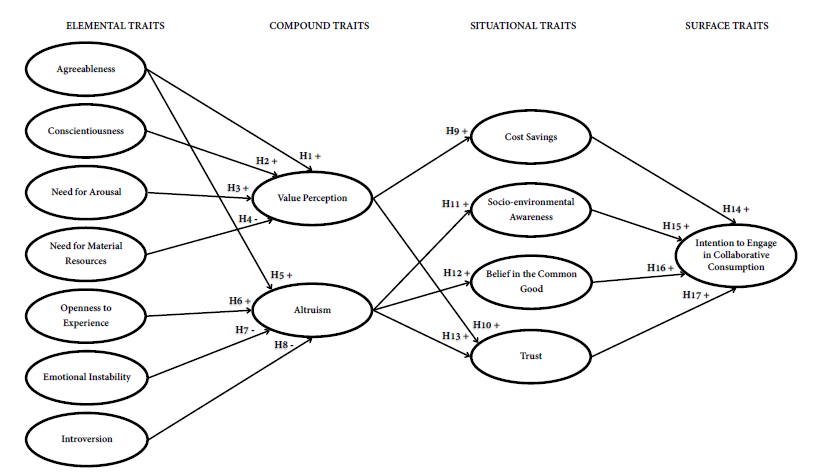 Source: Elaborated by the authors.
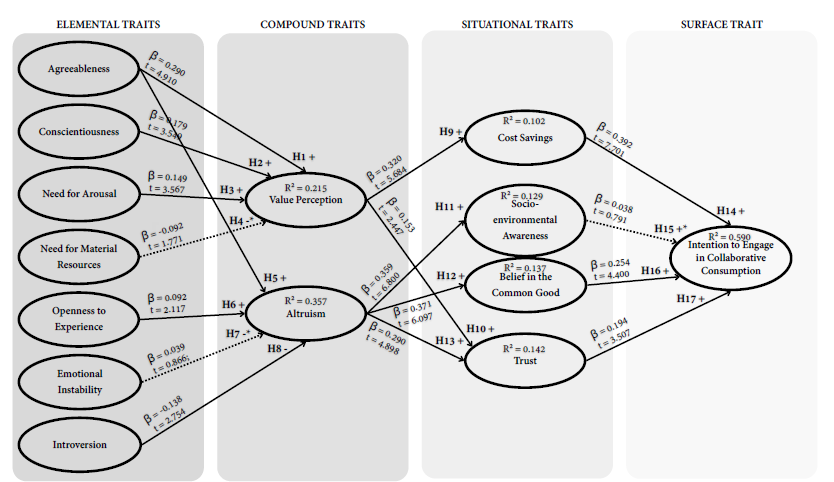 Source: Prepared by the authors. * Rejected hypotheses.