 Innovation in university hospital services: The potential of telehealth for co-creation of value
Abstract
Objective: Telehealth enables consumers to overcome conventional geo-graphical and conceptual limitations by easily accessing online health-care services from global providers. Therefore, this research aims to analyze telehealth services in the co-creation of value to enhance inno-vation in university hospitals. These hospitals serve as reference spaces for building scientific knowledge and for demonstrating a growing rele-vance in practices that can extend across the health system.
Originality/value: We present a theoretical analysis that can serve as a research tool for health managers, facilitating dialogue between theory and practice. Considering that telehealth is an ad hoc innovation, it can create ruptures and trigger strategic responses to co-create value while managing organizational barriers that can affect the process’s outcomes.
Design/methodology/approach: We searched five databases: Biblioteca Virtual em Saúde, PubMed, EBSCO, Scopus, and Web of Science. The search terms were related to two dimensions of descriptors with their respective variations: telehealth and university hospital. For data analysis, we articulated the Service-Dominant Logic theory and the Integrative Approach of the theory of innovation in services.
Findings: The search returned 1,447 articles, of which 78 were suitable for analysis. Results show that telehealth is a key part of the digital transformation of university hospitals, contributing to improved health service provision. The use of information technologies enables more efficient service delivery, as users can gain greater control over their well-being and interact more quickly and effectively in data sharing.
Keywords:
telehealth; innovation in services; university hospital; co-creation of value
Keywords:
telessaúde; inovação em serviços; hospital universitário; cocriação de valor
Resumo
Objetivo: A telessaúde permite ir além de seus limites convencionais, tanto geográficos quanto conceituais, pois permite que os consumidores obtenham facilmente serviços de saúde online de provedores globais. Portanto, esta pesquisa tem como objetivo analisar os serviços de teles-saúde na cocriação de valor, visando potencializar a inovação em hospitais universitários. Esses hospitais são espaços de referência na construção do conhecimento científico e na crescente relevância de práticas capazes de se estender a todo o sistema de saúde.
Originalidade/valor: Apresentamos uma análise teórica que pode servir de ferramenta de pesquisa para gestores de saúde e contribuir para o diálogo entre teoria e prática. Considerando que a telessaúde é uma inovação ad hoc, foi possível constatar que ela é capaz de gerar ruptura e desencadear respostas estratégicas para cocriar valor ao gerenciar barreiras organizacionais que podem afetar os resultados do processo.
Design/metodologia/abordagem: Pesquisamos cinco bases de dados: Biblioteca Virtual em Saúde, PubMed, EBSCO, Scopus e Web of Science. Os termos de busca foram relacionados a duas dimensões dos descritores com suas respectivas variações: telessaúde e hospital universitário. Para a análise dos dados, articulamos a teoria Service-Dominant (S-D) com a Abordagem Integradora da teoria da inovação em serviços.
Resultados: A busca retornou 1.447 artigos, dos quais 78 foram selecionados para análise. Os resultados mostram que a telessaúde é parte fundamental da transformação digital dos hospitais universitários, pois contribui para a melhoria da prestação de serviços de saúde. A utilização de tecnologias da informação permite a prestação de serviços mais eficientes. Os usuários podem obter mais controle sobre seu bem-estar e interagir de forma mais rápida e eficaz no compartilhamento de dados.
INTRODUCTION
Customer demands change, and it becomes increasingly complex for a company to remain inert in introducing innovations (Liu et al., 2023). In the contemporary social context of globalization and access to information, customers are no longer merely passive recipients of products and services; they are now essential contributors to this relationship. It is no different with patients, who increasingly assume a role in decision-making in health services (Cohen et al., 2018), signaling that the optimization and provision of qualified and effective health services are fundamental principles for health organizations (Alhussein & Liu, 2022).
Digital technologies have been closely linked to service innovation (Toivonen & Tuominen, 2009), and, in response to societal demands, have enabled value co-creation (Lusch & Nambisan, 2015). In this sense, service innovation through digital technologies adds a customer dimension to the technical dimension. Today, innovation research is not limited to the change/novelty categories (Raddats et al., 2022).
Collaboration with customers and suppliers drives the novelty and meaning aspects of service innovation, which increases novelty at higher levels of exploratory learning and cross-functional collaboration. It is important to remember that external collaboration promotes learning, as the feedback and information received from external partners help explore opportunities for innovation. Additionally, there is the benefit of the understanding companies gain about what customers appreciate most (Heirati & Siahtiri, 2019).
From a Schumpeterian perspective, for instance, customer needs are a given or unproblematic basis for innovation in services (Schumpeter, 1934). However, the service-dominant (S-D) logic highlights an increasingly important dynamic, given that only the customer can assess the value of an offer (Snyder et al., 2016). In value co-creation, suppliers and customers work together to create value, introducing new challenges to the innovation process. These interactions occur through meetings and the application of the resources of the actors involved in the services. This point is central to understanding the innovation potential in service relationships, as the co-creation of value involves collaborative activities among actors in the exchange of services, which are linked to the capabilities and resources available to them. From the supplier side, it could be the technology made available, such as telemedicine; from the consumer side, it would be formal knowledge and prior experiences (Osei-Frimpong et al., 2015;). We high-light that some publications in the area, especially older ones, use the concept of co-production as a synonym for co-creation, given the involvement, engagement, and participation perceived in service delivery (Oertzen et al., 2018).
It was possible to find contributions in research that identified some aspect of customer value as a critical part of service innovation (Raddats et al. 2022; Markovic et al., 2020; Chen et al., 2020; Sjödin et al., 2019; Schaar-schmidt et al., 2017; Eggert et al., 2015; Gremyr et al., 2014; Ettlie & Rosenthal, 2012), but customer value as part of service innovation has been little addressed in the literature. Additional research on digital collaboration capability is needed, as in previous studies on service innovation, the way companies create value propositions has received little attention (Raddats et al., 2022; Li et al., 2022; Li et al., 2022; Snyder et al., 2016; Skålén et al., 2015).
Service innovation drives society’s renewal and plays a decisive role in the sector’s economic growth. Most research focuses on service innovation from a company-only perspective, compromising customer value. Therefore, service innovations need to be understood from the standpoint of how they affect the customer and the company (Snyder et al., 2016). In this case, innovation occurs by developing or adapting existing practices and/or resources to create new value propositions. Thus, innovation in services involves developing existing practices or creating actions that operant and operand resources integrate (Skålén et al., 2015).
Innovation in health services is fundamental due to the complexity, urgency, technological advances, and the immediate need for a healthier life. Healthcare organizations must have the flexibility and ability to address heterogeneous customer requirements, particularly in the aftermath of the COVID-19 pandemic, which required rapid responses to uncertainties such as disease complexity, diagnostic requirements, and changing clinical conditions. Therefore, healthcare organizations need to develop dynamic capabilities, as the post-COVID-19 paradigm shift will create new opportunities for technologies (Kumar et al., 2023; Snyder et al., 2016; Skålén et al., 2015). At the height of the pandemic, telehealth was an alternative that enabled remote communication among patients, health professionals, and caregivers to mitigate the spread of the virus to vulnerable and high-risk populations (Alhussein & Liu, 2022). Therefore, telehealth is an important phenomenon to be studied from the perspective of service innovation, with the S-D logic and the co-creation of value in the provision of health services.
Therefore, this research seeks to answer the following question: how can telehealth contribute to the co-creation of value in university hospital services? To this end, a systematic literature review was carried out to analyze Telehealth services in the co-creation of value in university hospitals. Hence, this research is exploratory, using a survey across five databases to identify scientific articles that discuss and help answer the problem addressed in this study. University Hospitals (UHs) were chosen because they serve as reference hospitals in the construction of scientific knowledge and demonstrate increasing relevance to practices that can be extended to the health system (Strauss & Leta, 2009). In this case, the health context established in this research aligns with the teaching hospitals identified in the systematic literature review. We made no distinction between public and private hospitals to avoid further limiting the number of articles in the analysis.
To identify aspects of co-creation of value in the articles of the systematic review, we used the Service-Dominant Logic (SDL) and the Integrative Approach to the theory of innovation in services to discuss and analyze the results. In this study, enhancing co-creation is linked to users gaining more control over their well-being, sharing data more quickly and effectively, searching for information, interacting with other users and medical care providers, and exploring interoperability when the technological tool is used effectively.
Thus, we propose a framework to show the contribution of the theoretical perspective used in analyzing the phenomenon. This research sought to contribute to the gaps in the literature and to verify that it is possible to perceive the fundamental role of the value created in the services provided through telehealth in university hospitals, since the participants and resources interact collaboratively and exchange configurations mutually, so that the creation of value is at the heart of the service. In addition to cost reduction, as observed in a study conducted in Portugal, the results show that tele-health is a key part of the digital transformation of university hospitals, as it contributes to and enhances service innovation. The analysis of the data highlighted that, through telehealth, services are provided more efficiently, precisely, agilely, and equitably, as it allows the inclusion of patients who are geographically distant and have health limitations. For university hospitals, telehealth is a technological tool that will enable advances in clinical practice and service delivery, as well as in patient relationships, helping meet patients’ needs through innovation.
This article dialogues with the literature and presents health managers with the fundamental role of viewing service innovation through the lens of co-creating value via telehealth, a decisive tool during the COVID-19 Pandemic. The integrative approach of the service innovation theory was identified in this study as an ad hoc innovation, common in services with a high volume of knowledge, allowing us to understand that telehealth is a fundamental phenomenon that helps shed light on the gaps in the literature of the area.
THEORETICAL FOUNDATION
The theoretical base of our research is a combination of service innovation and service-dominant logic applied to the context of telehealth. The result is an approach that understands the co-creation of value in telemedicine as a process of digital transformation in healthcare, grounded in an integrative service innovation framework. These points are presented below.
Innovation in services
Service innovation has contributed significantly to understanding how customers create new experiences and improve service provision (Li et al., 2022). The performance of technologies has eliminated the need for physical encounters between consumers and providers, as evidenced by the rapid growth of startups that rely on digital platforms to offer remote services across various activities (Meirelles et al., 2022).
Schumpeter (1934) defines innovation as the possibility of creating new combinations and serves as a reference for researchers developing a vision of innovation in services. Toivonen and Tuominen (2009) understand that a Schumpeterian vision of innovation in services sees innovation as something put into practice, providing benefits to the developer, and as reproducible. In this dynamic, those responsible first initiate the change and then guide users toward the offer and its benefits. Thus, for the authors, service innovation is a new service or any change that generates novelty in the delivery, resulting in benefits for the company through the added value the customer perceives as improving the service (Snyder et al., 2016).
Innovation in services involves reformulating resources and leveraging a network of actors to create value and meet customer expectations. There is a movement around the scope of innovation that is no longer just technological application, production, and design, but instead focuses on value creation. This change in the logic of service innovation involves optimizing resources and developing skills (Kumar et al., 2023; Lusch & Nambisan, 2015).
The integrative approach of service innovation seeks to unite goods and services by developing a common conceptual framework capable of accounting for an expanded vision of innovation applicable to any tangible or intangible product (Gallouj and Savona, 2008). According to the integrative approach, the analysis of innovation in services should assume a comprehensive concept of innovation in which innovation can be identified in situations such as introducing a new service, or a new quality of service, or introducing a new service provision method, such as a new form of service delivery (Vargas and Zawislak, 2006). These examples of innovation activities can be understood as components of a problem-solving process. “These processes, in turn, are contextualized under a certain technical, cultural, social, and economic structure, in short, under a certain institutional environment” (Vargas & Zawislak, 2006, p. 144). As Zawislak (1996) clarified, “The problem-solving process and, consequently, the innovation process are characteristics that will prove to be different from one firm to another and will generate different individual behaviors and histories” (p. 329–330).
According to Sundbo and Gallouj (1998b), external and internal forces can drive this process. External forces involve institutional, technological, managerial, social, and professional trajectories that influence services. Relationships established with competitors, suppliers, the public sector, and customers are also linked. As for internal forces, they are determined by the presence or absence of formal structures dedicated to innovation, by workers’ involvement in the change process, and by integrating the innovation process into the organization’s strategic planning. Combining the different ways these forces interact in each situation will guide the innovation pattern. It is not without reason that, according to Vargas and Zawislak (2006), innovation in services can lead to endogenous decision-making within the organizations that make up the sector, reflecting the specific components inherent to services. Sundbo and Gallouj (1998b) present some types of service innovation, of which only Process Innovations will be discussed, as they help shed light on the research question raised here. Process innovations involve modifying prescribed procedures for the elaboration/production of a service (back office) or for user/customer service and service delivery procedures (front office) (Vargas & Zawislak, 2006).
From this perspective, the user (or customer) must be considered an important source of skill formation. Service innovation should be regarded as “a process of generalization of capabilities obtained in specific customer relationships” (Hauknes, 1998, p. 30). Sundbo and Gallouj (1998a) pointed in the same direction, stating that the service innovation process is essentially an interactive process in which the service provider maintains internal and external links that lead to innovation. It is on this path that a new type of innovation stands out: ad hoc (or “adocratic”) innovation, which results from a process of solving user problems through the co-production of the service. In this sense, ad hoc innovation is understood as “the interactive (social) construction of a solution (strategic, organizational, social, legal) to a particular problem posed by the customer. This type of innovation is co-produced by the customer and the service provider” (Sundbo and Gallouj, 1998b, p. 5). This leads us to understand that “in every service provision activity there will be room for this type of innovation to a greater or lesser extent, depending on the intensity of the user-producer relationship and the specificity of the problem to be solved” (Vargas and Zawislak, 2006, p. 146).
Service-Dominant Logic (S-D)
The Service-Dominant logic shows the use value and role of knowledge and skills as essential resources in interactions between providers and users. S-D calls attention to the integration of resources and points out that value is co-created. And value is co-created when companies, employees, customers, the government, and other related entities work together. Thus, it is crucial to consider the fundamental role of value created through collaboratively interactive, mutually exchange configurations when discussing the service perspective. Participants and resources interact to create value in service systems, making value and value creation central to the service (Vargo et al., 2008). However, these experiences are not always easy, as they are influenced by the social context in which they occur. There may be distortions in the use of exchange motivated by their beliefs and perceptions that lead to emotional appeal and the level of trust and guarantees that impact the co-creation process, which can compromise the co-creation of value and generate possibilities of co-destruction of value (c, 2010; Echeverri and Skalen, 2011).
Plé and Caceres (2010) critically analyzed value co-creation in S-D by considering the implications of value co-destruction. Value can be co-destroyed through stakeholder interactions, leading to misuse and value destruction. It can happen that a service system, accidentally or intentionally, co-destroys a service’s value. Value co-destruction results from resource misuse during interactions between different service systems, in which resources from one service system are misused, leading to value co-destruction for at least one of the two service systems. Plé and Caceres (2010) identified accidental misuse when there are discrepancies in how resources should be integrated and applied by service systems during their interactions. This occurs when users are unable to use their or the company’s resources as expected due to limitations, leading to the misuse of available resources without intending to do so. Intentional misuse can also occur when a system seeks to increase its own well-being and fails to consider the others involved.
The S-D perspective relates innovation in services to the creation and development of value propositions (Skålén et al., 2015). The exchange relationship with customers transforms their performance when they stop being users and become active participants. In addition, it facilitates knowledge sharing and transforms service innovation into a joint problem-solving process (Heirati & Siahtiri, 2019).
For this reason, S-D provides a theoretical basis for studying how and why value is created collectively through interactions among a variety of market-facing actors who, in this case, are not related to markets that can act on and restrict their actions. S-D uses the service concept to capture a fundamental shift in understanding the underlying logic of the exchange. The emphasis on the use of value leads to the understanding that companies contribute to creating value mainly through a value proposition, that is, the co-created understanding of value, since actors experience the value in different contexts. This allows us to understand that the co-creation of value is coordinated through institutions and institutional arrangements generated by actors. In this case, institutions are understood from a sociological perspective as part of broader sets of interrelated institutions known as institutional arrangements (Akaka et al., 2021; 2022).
Telehealth
Digital Transformation (DT) refers to “a process that aims to improve an entity, triggering significant changes in its properties through combinations of information, computing, communication, and connectivity technologies” (Vial, 2019, p. 118). When applied to the healthcare sector, DT can improve the delivery of healthcare services, enabling new ways to interact with patients and providing additional resources for healthcare professionals. In this research, we will adopt a telehealth perspective as an instrument for digital transformation in health services. Telemedicine is “the provision of health services, where distance is a critical factor, by all health professionals who use information and communication technologies to exchange valid information for the diagnosis, treatment and prevention of diseases and injuries” (World Health Organization, 2010, p. 9). This study treated tele-health and telemedicine as synonymous.
Telehealth offers several benefits, such as reducing hospital stays and rehospitalization rates, avoiding unnecessary patient or health professional displacement, and creating opportunities for collaborative learning among health professionals. Faster and better-oriented services improve access to care in rural areas and enhance medical follow-up (Lockamy & Smith, 2009; Mold et al., 2019; Oliveira et al., 2015; Speyer et al., 2018). Telemedicine offers many possibilities and is a rapidly expanding global market that should continue to grow rapidly in the coming years (Zenteno et al., 2016). Telemedicine services are expanding access to health care and offering more service options. Portugal was one of the first countries to adopt telemedicine to overcome geographical barriers and the shortage of healthcare pro-fessionals (Maia et al., 2019). During the coronavirus pandemic, telehealth opened new horizons by enabling safe care without the physical presence of patients or caregivers, particularly for chronic conditions or early COVID-19 diagnosis (Khodadad-Saryazdi, 2021).
Telehealth enables consumers to go beyond its conventional limits, both geographically and conceptually, by allowing them to access online health-care services from global providers easily. Examples from Portugal and the United States clearly show this perspective. In Portugal, telemedicine services offer an opportunity to connect Portuguese-speaking countries and improve health services. The increase in telemedicine appointments underscores the central role of this innovation in expanding access for populations in distant regions (Maia et al., 2019). In a study conducted in the US, we have another important example of telehealth: a real-time teleultrasound appointment between a doctor and a patient with pericarditis in Antarctica and a team of cardiology consultants in Texas. This experience demonstrated that real-time teleultrasound can serve as a critical diagnostic resource for healthcare in isolated populations in remote environments (Otto et al., 2012).
Despite its many benefits, telehealth faces technical, economic, and social challenges. Obstacles patients face during telehealth appointments include medical problems, language barriers, insufficient instructions, waiting time, and technical issues (connectivity, video and audio instability, and usability). Factors identified as posing significant challenges include cost, data privacy, the digital divide, and the need for training programs to adopt and use telehealth services (Alhussein & Liu, 2022).
Improving telehealth access will require solutions that address broad-band access and devices, as well as internet skills and attitudes. It is also necessary to consider issues involving digital inequality. Investments in qualifications and digital training must accompany policies and programs to expand Internet access. Individuals with limitations in digital literacy will continue to face barriers when navigating telehealth systems, further widening disparities in healthcare access and outcomes (Le et al., 2023).
METHODOLOGY
We searched five databases in April 2024: Virtual Health Library (BVS), EBSCO, PubMed, Scopus, and Web of Science. The choice of these digital databases is based on their relevance and importance in health and administration/management. The BVS, for example, is a fundamental resource for accessing research conducted in Latin America and the Caribbean. The search terms were related to two dimensions of descriptors with their respective variations: telehealth and university hospital. Inclusion and exclusion criteria were defined by the format in which the data were published (peer-reviewed articles and gray literature) and adherence to the research problem. This cut-off was established to select the most relevant articles for this study. Thus, the eligibility criteria included empirical academic articles written in English, Portuguese, and Spanish that verified the value of tele-health in teaching hospitals. Exclusion criteria were articles that were not peer-reviewed, articles from conferences, systematic reviews, articles that did not have empirical data analyzed, letters to the reader, book chapters, that is, gray literature, and research that did not show telehealth as a process that could show changes and improvement in the delivery of health services. Therefore, articles that did not mention telehealth in their research and that aimed to analyze issues related to the treatment and study of diseases were excluded from the analysis.
For data analysis, we articulated the Service-Dominant Logic (S-D) theory and the Integrative Approach of the theory of innovation in services. According to the Integrative Approach, telehealth is an innovation in services, and, occasionally, a process of innovation that introduces a new method for providing services, as it presents a new form of delivery (Gallouj & Savona, 2008). S-D presents an important perspective on the relationships established in service provision, enabling the integration of resources and the application of the skills of those involved, thereby allowing the co-creation of value (Vargo et al., 2008). Thus, integrating these two theories into the analysis can shed light on telehealth’s contributions in a context that emphasizes the co-creation of value through service innovation in the healthcare environment.
The review was carried out in five phases: problem identification, literature selection, data evaluation, analysis of studies, and review presentation. The strategy to retrieve the information needed to search the databases involved using Medical Subject Headings (MeSH) related to vocabulary synonyms used to index articles for PubMed (BVS, 2020), which presented the synonyms related to telehealth (telemedicine, telemonitoring, telepractice, and telecare) linked to a university hospital (academic hospitals and teaching hospitals).
Once the descriptors were identified, the PICo strategy (P = problem, I = phenomenon of interest, and Co = context) was used to systematize the non-clinical research question (HUCFF, 2020). With this, groups of words were established that could translate the problem question and return searches that would contribute to answering it. The descriptors were established in sets of synonymous terms limited by parentheses. Inside the parentheses, the Boolean operator “or” was used so that synonymous terms were added to the search. Outside the parentheses and between sets of descriptors, the Boolean operator “and” was used, considering the need for inter-section between each set of descriptors.
Thus, the data were divided into three sets, with the terms and their respective variations linked to telehealth and university hospitals. The search fields in each set involved the title (TI) and abstract (AB). Quotation marks were used in specific descriptors to indicate compound terms in the search. The idea was to rescue studies that demonstrate the use of telehealth in university hospitals and its contribution to co-creating value in service delivery, so that the experiences could be analyzed in light of the Service-Dominant logic and the Integrative Approach of the theory of innovation in services.
The strategy used in combining descriptors in the search was as follows: TITLE-ABS (telehealth OR telemedicine OR telemonitoring OR telepractice OR telecare) AND TITLE-ABS (“university hospital” OR “teaching hospital” OR “academic hospital”). After selecting articles based on the inclusion and exclusion criteria, the studies were analyzed according to the theoretical discussion outlined above.
It is important to highlight that the proposal to work on the phenome-non through the SDL and the theory of innovation in services is motivated by the possibilities they offer from a sociological perspective, as well as by the integration and application of other systems. Studying innovations in health is not trivial, given the complexity of the field and the multidisciplinary network of actors within health institutions.
Furthermore, the SD logical value co-creation framework is metatheoretical in nature, meaning that it is developed at a relatively high level of abstraction and applies to all levels of aggregation (from customer-company to communities, industries, and societies). Thus, insights from SD logic are generalizable to various market contexts and accommodate a wide range of diverse market phenomena (Akaka et al., 2021, p. 389).
In this context, this research is exploratory, with data collected from electronic databases to examine the contributions of telehealth to the co-creation of value in health services. A framework was proposed to unite metatheory with empirical exploration. In fact, this research did not include primary field data but instead focused on the phenomenon based on empirical research presented in the context of university hospitals. Hence, the importance of allowing different levels of theoretical abstraction to understand and verify dynamic social phenomena by recognizing that the phenomena of interest are nested. “We draw attention to the importance of middle-range theory to explore and explain phenomena situated between metatheoretical lenses (such as value creation) and contextually specific settings (such as a particular meeting service)” (Akaka et al., 2021, p. 389). Thus, the objective of the framework was to identify and explain an appropriate theory or set of theories that could guide the study (Lim et al., 2022).
RESULT AND DATA ANALYSIS
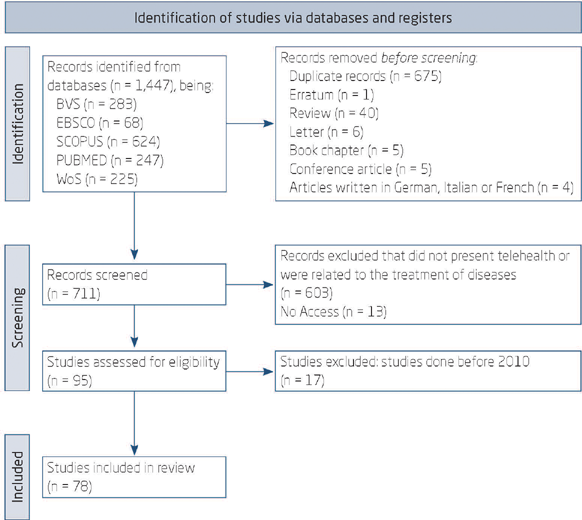
The search returned 247 articles in PubMed, 68 in EBSCO, 624 in SCOPUS, 225 in Web of Science (WoS), and 283 in BVS, for a total of 1,447 articles. Of these 1,447 articles, 675 were duplicates, 1 was an errata, 40 were reviews that did not constitute empirical articles, 6 were letters to the reader, 5 were book chapters, 5 were studies resulting from presentations at conferences, and 4 were articles written in German, Italian, or French, leaving 711 articles, but 603 did not present telehealth or were related to the treatment of diseases that did not explore the co-creation of value in the provision of services, so were also disregarded. In contrast, 13 studies were not accessible. Of these, 95 articles were evaluated for eligibility, but 17 were studies conducted before 2010 and were excluded from the analysis, as their contributions have already been surpassed, given the elapsed time and the pace of technological advancement. Thus, 78 articles met the inclusion and exclusion criteria for analysis, as shown in the PRISMA selection and evaluation diagram in Figure 1. The information from the 78 studies selected in this review was extracted into a Microsoft Excel spreadsheet and analyzed based on the theoretical references, Service-Dominant logic, and the Integrative Approach to the theory of innovation in services.

Table 1 below presents the points selected from the two theories analyzed. In this table, contributions were inserted based on the theoretical points assigned, the reference for each analyzed article (author and year), and the number of articles in which the theoretical contribution was observed, in a universe of 78 articles.
Telehealth was observed in settings such as teleappointments, teleconferences, telemonitoring, and video surgeries, in which the actions of the various actors involved could be observed. In relation to the barriers observed in the provision of services in which telehealth was implemented, it was possible to perceive the following: resistance to change, existing work processes, lack of training in skills, policies & protocols, reimbursement mechanisms that guarantee compliance with regulatory standards, patients without access to technology, language barriers, poor infrastructure, financial and personal barriers, issues with billing and reimbursement, lack of communication between provider and patient, insufficient quality of testing data available in the health record, and a general preference for face-to-face visits.
Each experience analyzed allowed us to examine the different possibilities telehealth can bring to health services and the complexity of the challenges and barriers revealed. Jallal et al. (2023) pointed out that the main obstacles to using telehealth were problems with internet access (98.6%), poor audio quality (96.2%), poor video quality (94.3%), and difficulties encountered by patients to express themselves and communicate with their doctor (79.7%), allowing us to verify that the infrastructure is fundamental to the quality of services provided via telemedicine. Incompatibility within medical facilities, such as antiquated medical records systems and low tele-medicine reimbursement rates, was also noted (Sasaki et al., 2023).
Maia et al. (2019) showed that Portugal was one of the first to adopt telemedicine to overcome geological barriers and the shortage of healthcare professionals. The critical factors in implementing these telemedicine services helped us understand how barriers were overcome, including political forces. Willingness, perseverance, teamwork, and partnerships with the main stakeholders were the basis for engaging professionals and developing service networks. Its positive results, new regulations, and growing support from hospital administration created a window of opportunity to establish a sustainable telemedicine service. Escobar et al. (2021) noted that, according to personnel responsible for providing the telehealth service, the barriers to growth were the limitations of technically trained personnel and resistance to change. Telemedicine requires significant changes to existing workflows and time invested in training new techniques to improve the efficiency and effectiveness of care.
Alboraie et al. (2021), in a study conducted in Egypt, found that some barriers encountered must be taken into consideration for the successful adoption of telemedicine, especially for older adults with low levels of education and living in remote areas. They mentioned that according to socio-demographic characteristics, unemployed participants with less education had less knowledge and a less favorable attitude towards telemedicine than other professional categories and participants with higher education. Like-wise, participants who worked more than 10 hours a day would have less knowledge and a less favorable attitude toward using telemedicine than those who worked less than 10 hours a day. Aquino et al. (2021) noted the financial and personal barriers that would also pose challenges to telemedicine management. Another barrier mentioned was the lack of medical training in telemedicine. Habib et al. (2023), in a survey conducted in Saudi Arabia, found that 64.4% of doctors agreed that there was a lack of training in tele-medicine. Patients also needed guidance to avoid unnecessary confusion, according to Verghese et al. (2024).
Telemedicine also has advantages. A survey conducted in Japan found that the majority of patients reported that telemedicine appointments were more useful than in-person appointments and that this facilitated more efficient communication with a doctor. It has been noted that increasing the likelihood of communicating with a doctor can reduce anxiety, and communicating with doctors in a relaxed environment can facilitate efficient communication (Ogawa et al., 2022). The increased opportunities for appointment and the greater number of specialists available enabled the continued implementation of the virtual care model. Telemedicine appointments show that technology can positively impact patients, patient education, symptom relief, and support during illness, through the efforts of the medical team. Telehealth can be a valuable tool for providing healthcare and reducing barriers to accessing healthcare providers, standard in developing countries (Libreros-Peña et al., 2023).
Francke et al. (2022) pointed out that the reach of telehealth could be even greater by considering specific barriers to access related to individual demographic groups (including technological, linguistic, and educational barriers), organizing in-person tutorials/seminars on telehealth for patients, inviting the family to join, partnering with insurance companies to over-come patient coverage limitations, and having trusted healthcare providers explain the importance of telehealth to patients in this evolving healthcare environment. The uses of telemedicine include, but are not limited to, scheduling remote visits with treating physicians, remotely diagnosing many illnesses based on patients’ descriptions of signs and symptoms, remotely monitoring patients with chronic diseases, remotely reviewing laboratory and imaging findings, and telehealth.
Telemedicine can provide high satisfaction for patients and their care-givers by reducing the burden and cost of travel, while also serving as an efficient alternative to in-person appointments. However, it excludes exams and procedures that require physical contact. Health systems can improve their telehealth infrastructure by integrating patient portal enrollment into in-person workflows and providing education on the importance of tele-health. The hospital should focus on implementing education, improving work processes, and ensuring the presence of telehealth advocates (Francke et al., 2022; Verghese et al., 2024).
Bruce et al. (2024) found that telemedicine can effectively address nursing shortages in acute care settings and positively impact patient and provider satisfaction, as well as admission and discharge times. This tele-nursing program highlighted its usefulness, as it allowed nurses to save time (88.7%), focus on more urgent clinical needs (84.9%), and focus on activities they felt were most in line with their skill level (51.9%). It allowed patients to receive undivided attention in their discharge education (49.1%).
Regarding the co-creation of value through collaboration among actors and the role of digital cooperation in how companies create value propositions, we can cite Ploux et al. (2023) on remote monitoring in France. They concluded that adopting such a strategy for patients with chronic heart failure could reduce disease-related hospitalizations, with expected benefits for patients, care providers, and healthcare systems. The reduction in hospitalizations for chronic heart failure is expected to primarily benefit patients, as the number of hospitalizations for this disease is a strong predictor of mortality after adjusting for age, sex, and main comorbidities. Hwang & Bae (2023) in South Korea also addressed remote monitoring and reported greater patient satisfaction, cost-benefit, and the facilitation of health management without interrupting daily life. They noted that more than 90% of participants surveyed had no discomfort with remote monitoring, were willing to continue using it, and would recommend it to other patients.
Regarding how telehealth affects customers and companies, we identified 64 articles that presented examples from this perspective. In a study conducted in Brazil, Koch et al. (2022) examined teleservices and highlighted their importance for ophthalmology patients. According to the authors, the majority of patients who sought telehealth had non-urgent complaints and were advised, while others were referred for in-person care as soon as possible. Given the social confinement during the COVID-19 pandemic, the availability of medical care, even if distant, could reassure patients about their health status and help maintain continuity of care. Koch et al. (2022) noted that telehealth is not widely practiced in the Brazilian health system. However, it can be applied due to the country’s large geographic area, the presence of isolated communities, and the unequal distribution of medical resources. Remote units with telepresence systems have been successfully used for ophthalmological appointments in distant cities in the south of the country.
According to Muschol et al. (2023), research conducted in Germany indicates that the economic impact of telemedicine can differ across clinics, both as providers of medical services and as employers. As providers of medical services, clinics benefit from productivity gains from reduced appointment times, which could lower staff costs and ease the burden on the healthcare system. It could also increase a clinic’s capacity and improve patient care by reducing waiting times. Furthermore, implementing telemedicine could give clinics a competitive advantage by simplifying communication with patients. As telemedicine also offers cost and time savings for patients, offering video appointments could help recruit new patients and enable doctors to work from home. The resulting benefit to the practice as an employer can be a competitive advantage in staff recruitment and an increase in permanent staff satisfaction. Alternative work arrangements are especially attractive to all physicians who care for families.
As for whether there is development or creation of new practices and/or existing resources (52 articles), introduction of a new service or a new quality of service (6 articles), and the introduction of a new method of service pro-vision as well as a new form of service provision (13 articles), most articles brought these perspectives. In fact, telehealth can enable a range of possibilities for providing health services, as discussed in this discussion. Virtual appointments and services, remote monitoring, and video surgeries can transform how services are delivered and significantly improve the lives of all parties involved. An example is the study by Paul et al. (2023) in India, which found that video clinics/remote clinics could be an alternative to regular monitoring to ensure continuity of care for patients with psychiatric disorders. These clinics also saved patients significant time, distance, and travel costs for in-person appointments. According to the authors, the general objective of tele/video/remote clinics is to design and implement an alternative model to the existing traditional, face-to-face model of continuity of care for follow-up and detailed assessment, respectively, using digital technology for adult patients registered in the outpatients or inpatients in the Department of Psychiatry.
Concerning the external and internal forces that drive the process pointed out by Sundbo and Gallouj (1998b), 38 articles for each perspective showed institutional, technological, managerial, social, and professional trajectories that influence services, in addition to the relationships established with competitors, suppliers, the public sector, and above all, the people who receive the health services. The involvement of workers in the change pro-cess and the integration of the innovation process into the organization’s strategic planning were also observed in the analyzed articles.
Regarding solving user problems through service co-creation (7 articles) and the value created when companies, employees, customers, government, and other related entities collaborate (4 articles), these were less frequently used in the review articles. Smits et al. (2023) conducted a review of research on telehealth spaces in the Netherlands. Due to the COVID-19 pandemic, which accelerated the shift to hybrid care models combining in-person and online care, a hospital in the Netherlands decided to redesign an existing space to facilitate video appointments. The design process involved input from end users to ensure the physical space met their needs. The end-user needs identified were divided into three main categories: appointment room configuration, optimal use of technology, and practical issues related to room availability. In conjunction with the hospital’s appearance, the final design requirements were developed. In the end, an area was set up with 18 telehealth rooms, four shared workspaces, a relaxation area with a kitchen, and meeting rooms. Specific attention was paid to ergonomics, technology, and privacy in the rooms to facilitate optimal video conversations between patients and healthcare professionals.
The point regarding the co-destruction of value was observed in only one article. The other articles in the systematic review did not address situations in which actors sabotaged or engaged in other bad behavior related to telemedicine. The study in France also presented the perspective of co-destruction, as observed in the S-D theory, highlighting the challenges of implementing telemedicine. The author noted that health is generally considered a complex system due to the interdependencies among its components, arising from political, regulatory, and financial interactions. Thus, introducing a particular innovation will affect several aspects of the system. Telemedicine is not exempt from this reality, and its interactions with the system’s different stakeholders will entail unequal costs, risks, and benefits. There is also the cultural change to consider, which is part of adapting the implementation context to promote responsiveness to innovation. The organizational culture is decisive in adapting to process innovation. If the change runs counter to the current organizational culture, members may lose interest and move away from the suggested strategy. Culture change management includes all activities that facilitate the introduction of new processes and target members involved or affected by the change (Khodadad-Saryazdi, 2021). Here, we can also verify the perspective of the integrative approach when observing telemedicine as an innovation activity, understood as an activity incorporated into a problem-solving process, and these processes are contextualized within a specific technical, cultural, social, and economic structure.
DISCUSSION
The articles analyzed in this study presented the context and the critical role of telehealth in UHs. From the perspective of the S-D theory, use value and the role of knowledge and skills are perceived as essential resources in interactions between suppliers and users. The integration of resources so that there is co-creation of value was clearly perceived in many examples pointed out in Table 1, such as the research carried out in Portugal, which verifies that motivation, teamwork, and perseverance were fundamental for the Pediatric Telecardiology Service to overcome the window of opportunity that created conditions for sustainability. In addition to the perceived co-creation, the telemedicine service brought significant savings in resources: around 1.1 million euros for the health system in administrative and logistical costs, and around 419 euros per patient, based on an average of 1,777 patients per year (Maia et al., 2019).
Research conducted in France and Brazil also showed the role of tele-health in enabling the progressive development of collaborative networks with active participation and interaction among professionals from various institutions and services (De-Carlo et al., 2018). In France, implementing telemedicine requires aligning processes with the organizational strategy to ensure this medical practice remains beneficial to all interested parties. If telemedicine does not add economic or health value, not only will it not attract the interest of medical and administrative staff, but it will also generate director dissatisfaction (in a bottom-up initiative) and health personnel reluctance (in a top-down shift) (Khodadad-Saryazdi, 2021).
Based on the articles analyzed in this systematic review, telemedicine can be considered not only a process innovation, but it can also be understood as an ad hoc (or “adocratic”) innovation, as it presents the interactive character in the process of innovation in services that is vital to the effective use of innovation (Sundbo and Gallouj, 1998b). Furthermore, in the context of telehealth, there is a need for a process to solve user problems through the co-creation of the service. In all articles, the authors drew attention to the collaborative process in relation to telehealth and the co-creation of value in UHs to enable effective innovation.
The study conducted in Denmark shows that patient cooperation is essential to the process (Andersen et al., 2011), a finding also noted in a study conducted in France, where the author notes that a poor understanding of user needs can lead to difficulties in accepting telemedicine (Khodadad-Saryazdi, 2021).
Regarding innovation being identified with introducing a new service or a new form of service delivery, all the studies analyzed highlighted the importance of innovation for improving processes and enabling problem-solving. As seen in theory, these processes are determined by contexts linked to the institutional environment, that is, the technical, cultural, social, and economic structures. This was highlighted in research carried out in France, which showed that telemedicine, as a process innovation, represents a new form of medical work that requires technical, cultural, and strategic changes. The process actors and their beliefs, technologies & information systems, promoting activities, as well as restrictive limits and rules, can play a decisive role in these changes. Technical adaptation is not independent of cultural adaptation (Khodadad-Saryazdi, 2021).
It was possible to see the importance of co-creation of value in all articles raised in the systematic review, even when it was not directly addressed in the text, but when they spoke of the co-created value in the combined efforts of the institution, staff, and patients, or the absence of these attitudes of collaborative support. For example, in a study conducted in France, the author noted that the alignment of technical telemedicine tools with users’ needs promoted their adoption. He further pointed out that telemedicine is not a simple tool or technology already developed and ready to install that can be imposed on medical personnel. On the contrary, interest is needed from health professionals, the institution, and agents to create a network of actors interested in identifying the organization’s strategic needs in tele-medicine. This is critical to creating an organizational culture that relies on teamwork and individual responsibility to facilitate process change. This also highlights that the early involvement of various actors in developing the process can contribute to its implementation (Khodadad-Saryazdi, 2021).
The study conducted in Portugal also followed this path, showing that the Pediatric Telecardiology service connects the Hospital Center of the University of Coimbra to 13 other Portuguese national hospitals every day and regularly to Portuguese-speaking African countries via a telehealth platform. The Pediatric Telecardiology Service enables real-time communication and the sharing of clinical information, overcoming many barriers, from geographic constraints to the shortage of health professionals, thereby improving access to specialized care both in Portugal and in Africa (Maia et al., 2019).
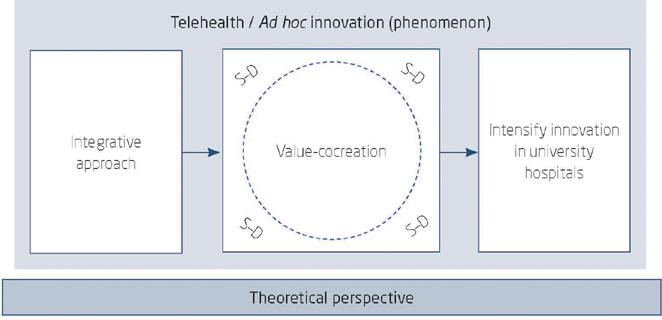
After analyzing systematic review articles from a theoretical perspective, we present a framework that illustrates the dialogue among the phenome-non under study (telehealth), the theoretical framework based on S-D logic, and the theory of innovation in services, as shown in Figure 2.
The innovation in services in Figure 2 is represented by the integrative approach of the theory of service innovation, which involves reformulating resources through a network of actors to create value by meeting customers’ desires. Since the phenomenon was influenced by the co-creation of present value from the S-D theory perspective, there may be potential for innovation. So, we have all the dynamics presented in the framework occurring in the context of the phenomenon that, in this research, is represented by tele-health, as an ad hoc innovation based on the theoretical perspective that sustains all the discussion and analysis.
There is a movement around the scope of innovation that no longer focuses on production and design, but value creation. This change in the logic of service innovation involves optimizing resources and developing capabilities (Kumar et al., 2023; Lusch & Nambisan, 2015), which will be decisive for advancing innovation in teaching hospitals. It is important to emphasize that the S-D logic focuses on developing value propositions to create value for users (Skålén et al., 2015).
CONCLUSIONS
This study sought to analyze telehealth services in the co-creation of value to enhance innovation in university hospitals. This objective originated from gaps in the literature regarding the theory of innovation in services. It offered originality in its theoretical analysis, which can serve as a research tool for health managers and contribute to the dialogue between theory and practice. Considering that telehealth is an ad hoc innovation, it was possible to verify that it can generate disruption and trigger strategic responses to co-create value by managing organizational barriers that can affect the process’s outcomes.
Our study proposed a framework that integrates the phenomenon with the theoretical perspective, thereby meeting the stipulated objective. In this way, it was possible to observe the co-creation of value when the patient used his knowledge and skills to provide telehealth services. A study conducted in Denmark showed that patient collaboration cannot be neglected, and when telehealth attends to this aspect, it can contribute to value co-creation. All analyzed articles showed that telehealth enables interaction among the actors involved, leading to more efficient, precise, agile, and/or equitable service provision. However, many studies have highlighted the importance of monitoring, training, and attending to the needs of the actors involved to prevent co-destruction of value in the process. We can see many examples in which creating an advantage for an individual in the context of telehealth can result in disadvantages for others involved, underscoring the importance of considering the context in which telehealth is being used.
As telehealth is an ad hoc innovation, it is possible to see that it can create ruptures and trigger strategic responses to co-create value while managing organizational barriers that can affect the process’s outcomes. It is possible to know that telehealth enabled cooperation among actors in the co-creation of value and introduced a new form of service delivery, configuring, in many cases, a new quality of service.
Reflection and discussion on the possibilities of telehealth are essential for providing health services, especially in a pandemic/post-pandemic context, given the limitations and implications of COVID-19 in delivering services and in shaping how we relate to and think about health.
Finally, despite the theoretical contributions and the proposal of an analytical framework that articulates the Service-Dominant (S-D) logic with the Integrative Approach to Service Innovation, this research has several limitations that should be considered. Because it is a systematic literature review, no primary field data was collected, which restricts the analysis to previously published evidence and limits the direct observation of institutional practices and concrete experiences in university hospitals. Furthermore, although the careful selection of databases and eligibility criteria lent rigor to the study, the timeframe was limited to April 2024, and the lack of distinction between public and private hospitals may have limited the capture of relevant contextual particularities. Therefore, it is suggested as future research to verify the potential of telehealth in other health institutions to broaden the understanding of the contributions of this innovation, as well as ascertain the co-creation of value in using ad hoc innovations to gather more information about the dynamics present in the context of innovations in services, along with their benefits and challenges.
-
RAM does not have information about open data regarding this manuscript.
-
RAM does not have permission from the authors or evaluators to publish this article’s review.
REFERENCES
-
Akaka, M. A., Koskela-Huotari, K., & Vargo, S. L. (2021). Formalizing service-dominant logic as a general theory of markets: Taking stock and moving forward. AMS Review, 11(0). https://doi.org/10.1007/s13162-021-00214-y
» https://doi.org/10.1007/s13162-021-00214-y -
Akaka, M. A., Schau, H. J., & Vargo, S. L. (2022). Practice Diffusion. Journal of Consumer Research, 48(6). https://doi.org/10.1093/jcr/ucab045
» https://doi.org/10.1093/jcr/ucab045 -
Alboraie, M., Allam, M. A., Youssef, N., Abdalgaber, M., El-Raey, F., Abdeen, N., Mahdy, R. E., Elshaarawy, O., Elgebaly, A., Haydara, T., Abd-Elsalam, S., Nassar, Y. A., Shabana, H., & Zaky, S. (2021). Knowledge, applicability, and barriers of telemedicine in Egypt: A national survey. International Journal of Telemedicine and Applications, 2021, 5565652. https://doi.org/10.1155/2021/5565652
» https://doi.org/10.1155/2021/5565652 -
Alhussein, M. S., & Liu, X. (2022). Factors impacting patient perspectives on telehealth and remote healthcare during COVID-19: A mixed methods study. Telematics and Informatics Reports, 8(0), 100033. https://doi.org/10.1016/j.teler.2022.100033
» https://doi.org/10.1016/j.teler.2022.100033 -
Andersen, T., Bjørn, P., Kensing, F., & Moll, J. (2011). Designing for collaborative interpretation in telemonitoring: Re-introducing patients as diagnostic agents. International Journal of Medical Informatics, 80(8), e112-e126. https://doi.org/10.1016/j.ijmedinf.2010.09.010
» https://doi.org/10.1016/j.ijmedinf.2010.09.010 -
Aquino, M., Griffith, J., Vattaparambil, T., Munce, S., Hladunewich, M., & Seto, E. (2021). Patients’ and providers’ perspectives on and needs of telemonitoring to support clinical management and self-care of people at high risk for preeclampsia: Qualitative study [Preprint]. JMIR Preprints https://preprints.jmir.org/preprint/32545
» https://preprints.jmir.org/preprint/32545 -
Bruce, C. R., Klahn, S., Randle, L., Li, X., Sayali, K., Johnson, B., Gomez, M., Howard, M., Schwartz, R., & Sasangohar, F. (2024). Impacts of an acute care telenursing program on discharge, patient experience, and nursing experience: Retrospective cohort comparison study. Journal of Medical Internet Research, 26, e54330. https://doi.org/10.2196/54330
» https://doi.org/10.2196/54330 -
Chen, M., Chen, Y., Liu, H., & Xu, H. (2020). Influence of information technology capability on service innovation in manufacturing firms. Industrial Management & Data Systems, ahead-of-print. https://doi.org/10.1108/imds-04-2020-0218
» https://doi.org/10.1108/imds-04-2020-0218 -
Cohen, M. M., Leocádio, C., & Jorge, M. J. (2018). Cocriação em saúde: Um levantamento sistemático da literatura. Revista Pensamento Contemporâneo em Administração, 12(3), 79–91. https://doi.org/10.12712/rpca.v12i3.13186
» https://doi.org/10.12712/rpca.v12i3.13186 -
De-Carlo, M., Figueiredo-Frizzo, H., Kudo, A., & Muñoz-Palm, R. (2018). Videoconferencing in occupational therapy in hospital contexts and palliative care. Revista de la Facultad de Medicina, 66(4), 575–580. https://doi.org/10.15446/revfacmed.v66n4.64046
» https://doi.org/10.15446/revfacmed.v66n4.64046 - Echeverri, P., & Skålén, P. (2011). Co-creation and co-destruction: A practice-theory based study of interactive value formation. Marketing Theory, 11(3), 351–373
-
Eggert, A., Thiesbrummel, C., & Deutscher, C. (2015). Heading for new shores: Do service and hybrid innovations outperform product innovations in industrial companies? Industrial Marketing Management, 45(0), 173–183. https://doi.org/10.1016/j.indmarman.2015.02.013
» https://doi.org/10.1016/j.indmarman.2015.02.013 -
Escobar, M. F., Henao, J. F., Prieto, D., Echavarria, M. P., Gallego, J. C., Nasner, D., Martínez-Ruíz, D. M., Velasco, J. E., & Alarcón, J. (2021). Teleconsultation for outpatient care of patients during the COVID-19 pandemic at a University Hospital in Colombia. International Journal of Medical Informatics, 156, 104589. https://doi.org/10.1016/j.ijmedinf.2021.104589
» https://doi.org/10.1016/j.ijmedinf.2021.104589 -
Ettlie, J. E., & Rosenthal, S. R. (2012). Service innovation in manufacturing. Journal of Service Management, 23(3), 440–454. https://doi.org/10.1108/09564231211248499
» https://doi.org/10.1108/09564231211248499 -
Francke, J. A., Groden, P., Ferrer, C., Bienstock, D., Tepper, D. L., Chen, T. P., Sanky, C., Grogan, T. R., & Weissman, M. A. (2022). Remote enrollment into a telehealth-delivering patient portal: Barriers faced in an urban population during the COVID-19 pandemic. Health Technology (Berlin), 12(1), 227–238. https://doi.org/10.1007/s12553-021-00614-x
» https://doi.org/10.1007/s12553-021-00614-x -
Gallouj, F., & Savona, M. (2008). Innovation in services: A review of the debate and a research agenda. Journal of Evolutionary Economics, 19(2), 149–172. https://doi.org/10.1007/s00191-008-0126-4
» https://doi.org/10.1007/s00191-008-0126-4 -
Gremyr, I., Witell, L., Löfberg, N., Edvardsson, B., & Fundin, A. (2014). Understanding new service development and service innovation through innovation modes. Journal of Business & Industrial Marketing, 29(2), 123–131. https://doi.org/10.1108/jbim-04-2012-0074
» https://doi.org/10.1108/jbim-04-2012-0074 -
Habib, S., Alsulaim, K. B., Mobeirek, O. A., Alsaeed, A. M., Albawardi, F. A., Alqahtani, Y. K., & Alsuhaibany, A. A. (2023). Barriers and facilitators of telemedicine among physicians at a University Hospital. Cureus, 15(9), e45078. https://doi.org/10.7759/cureus.45078
» https://doi.org/10.7759/cureus.45078 -
Hauknes, J. (1998). Services in innovation — Innovation in services (Step report, n. 13). Oslo, Norway. https://econpapers.repec.org/paper/stpstepre/1998r13.htm
» https://econpapers.repec.org/paper/stpstepre/1998r13.htm -
Heirati, N., & Siahtiri, V. (2019). Driving service innovativeness via collaboration with customers and suppliers: Evidence from business-to-business services. Industrial Marketing Management, 78(0), 6–16. https://doi.org/10.1016/j.indmarman.2017.09.008
» https://doi.org/10.1016/j.indmarman.2017.09.008 -
Hwang, Y., & Bae, H. (2023). Patient outcomes associated with the first remote monitoring experience of cardiac implantable electronic devices in South Korea. Clinical Interventions in Aging, 18, 1587–1595. https://doi.org/10.2147/CIA.S422626
» https://doi.org/10.2147/CIA.S422626 -
Jallal, M., Berrada, K., Bouaddi, O., El Badisy, I., Charaka, H., Serhier, Z., Bennani Othmani, M., Nejjari, C., & Khalis, M. (2023). How physicians in a Moroccan tertiary care center perceive teleconsultation during COVID-19 pandemic? Telemedicine and e-Health, 29(2), 284–292. https://doi.org/10.1089/tmj.2022.0094
» https://doi.org/10.1089/tmj.2022.0094 -
Khodadad-Saryazdi, A. (2021). Exploring the telemedicine implementation challenges through the process innovation approach: A case study research in the French healthcare sector. Technovation, 107, 102273. https://doi.org/10.1016/j.technovation.2021.102273
» https://doi.org/10.1016/j.technovation.2021.102273 -
Koch, C. R., Veiga, C. C. A., Fahl, R., Halla, S. M., Kara-Junior, N., & Alves, M. R. (2022). Teleconsultation at a public ophthalmic teaching hospital during the COVID-19 pandemic. Arquivos Brasileiros de Oftalmologia https://doi.org/10.5935/0004-2749.2021-0490
» https://doi.org/10.5935/0004-2749.2021-0490 -
Kumar, P., Sharma, S. K., & Dutot, V. (2023). Artificial intelligence (AI)-enabled CRM capability in healthcare: The impact on service innovation. International Journal of Information Management, 69(0), 102598. https://doi.org/10.1016/j.ijinfomgt.2022.102598
» https://doi.org/10.1016/j.ijinfomgt.2022.102598 -
Le, T. V., Galperin, H., & Traube, D. (2023). The impact of digital competence on telehealth utilization. Health Policy and Technology, 12(1), 100724. https://doi.org/10.1016/j.hlpt.2023.100724
» https://doi.org/10.1016/j.hlpt.2023.100724 -
Li, L., Zhu, W., Wei, L., & Yang, S. (2022). How can digital collaboration capability boost service innovation? Evidence from the information technology industry. Technological Forecasting and Social Change, 182(0), 121830. https://doi.org/10.1016/j.techfore.2022.121830
» https://doi.org/10.1016/j.techfore.2022.121830 -
Libreros-Peña, L., Quintero, J. A., Gelves, A., Alarcón, J., Morales, S., Escobar, M. F., Valencia, A. M., Guzmán, S., & Diez-Sepulveda, J. (2023). Telemedicine consultation for emergency patients’ attention: A clinical experience from a high complex university hospital from Latin America. BMC Health Services Research, 23, 559. https://doi.org/10.1186/s12913-023-09520-6
» https://doi.org/10.1186/s12913-023-09520-6 -
Lim, W. M., Kumar, S., & Ali, F. (2022). Advancing knowledge through literature reviews: “what,” “why,” and “how to contribute.” The Service Industries Journal, 42(7/8), 1–33. https://doi.org/10.1080/02642069.2022.2047941
» https://doi.org/10.1080/02642069.2022.2047941 -
Liu, G., Aroean, L., & Ko, W. W. (2023). Service innovation in business ecosystem: The roles of shared goals, coopetition, and interfirm power. International Journal of Production Economics, 255(0), 108709. https://doi.org/10.1016/j.ijpe.2022.108709
» https://doi.org/10.1016/j.ijpe.2022.108709 -
Lockamy, A., & Smith, D. (2009). Telemedicine: A process enabler for enhanced healthcare delivery systems. Business Process Management Journal, 15(1), 5–19. https://doi.org/10.1108/14637150910931433
» https://doi.org/10.1108/14637150910931433 -
Lusch, R. F., & Nambisan, S. (2015). Service innovation: A service-dominant logic perspective. MIS Quarterly, 39(1), 155–175. https://doi.org/10.25300/misq/2015/39.1.07
» https://doi.org/10.25300/misq/2015/39.1.07 -
Maia, M. R., Castela, E., Pires, A., & Lapão, L. V. (2019). How to develop a sustainable telemedicine service? A Pediatric Telecardiology Service 20 years on – an exploratory study. BMC Health Services Research, 19, 681. https://doi.org/10.1186/s12913-019-4511-5
» https://doi.org/10.1186/s12913-019-4511-5 -
Markovic, S., Jovanovic, M., Bagherzadeh, M., Sancha, C., Sarafinovska, M., & Qiu, Y. (2020). Priorities when selecting business partners for service innovation: The contingency role of product innovation. Industrial Marketing Management, 88(0), 378–388. https://doi.org/10.1016/j.indmarman.2020.06.001
» https://doi.org/10.1016/j.indmarman.2020.06.001 -
Meirelles, D. S. e, Gallouj, F., Vargas, E. R., Oliva, F. L., & Zawislak, P. A. (2022). Innovation in services: An introduction. Revista de Administração Mackenzie, 23(6). https://doi.org/10.1590/1678-6971/eramd220400.en
» https://doi.org/10.1590/1678-6971/eramd220400.en -
Mold, F., Hendy, J., Lai, Y., & de Lusignan, S. (2019). Electronic appointment in primary care between providers and patients: Systematic review. JMIR Medical Informatics, 7(4), e13042. https://doi.org/10.2196/13042
» https://doi.org/10.2196/13042 -
Muschol, J., Heinrich, M., Heiss, C., Hernandez, A. M., Knapp, G., Repp, H., Schneider, H., Thormann, U., Uhlar, J., Unzeitig, K., & Gissel, C. (2023). Digitization of follow-up care in orthopedic and trauma surgery with video consultations: Health economic evaluation study from a health provider’s perspective. Journal of Medical Internet Research, 25, e46714. https://doi.org/10.2196/46714
» https://doi.org/10.2196/46714 -
Oertzen, A. S., Odekerken-Schröder, G., Brax, S. A., & Mager, B. (2018). Co-creating services-conceptual: Clarification, forms, and outcomes. Journal of Service Management, 29(4), 641–679. https://doi.org/10.1108/JOSM-03-2017-0067
» https://doi.org/10.1108/JOSM-03-2017-0067 -
Ogawa, M., Oyama, G., Sekimoto, S., Hatano, T., & Hattori, N. (2022). Current status of telemedicine for Parkinson’s disease in Japan: A single-center cross-sectional questionnaire survey. Journal of Movement Disorders, 15(1), 58–61. https://doi.org/10.14802/jmd.21096
» https://doi.org/10.14802/jmd.21096 -
Oliveira, T., Barlow, J., & Bayer, S. (2015). The association between general practitioner participation in joint teleconsultations and rates of referral: A discrete choice experiment. BMC Family Practice, 16(1). https://doi.org/10.1186/s12875-015-0261-6
» https://doi.org/10.1186/s12875-015-0261-6 -
Osei-Frimpong, K., Wilson, A., & Owusu-Frimpong, N. (2015). Service experiences and dyadic value co-creation in healthcare service delivery: A CIT approach. Journal of Service Theory and Practice, 25(4), 443–462. https://doi.org/10.1108/JSTP-03-2014-0062
» https://doi.org/10.1108/JSTP-03-2014-0062 -
Otto, C., Shemenski, R., & Drudi, L. (2012). Real-time tele-echocardiography: Diagnosis and management of a pericardial effusion secondary to pericarditis at an Antarctic research station. Telemedicine and E-Health, 18(7), 521–524. https://doi.org/10.1089/tmj.2011.0266
» https://doi.org/10.1089/tmj.2011.0266 -
Paul, J., Govindan, R., Vijayalakshmi, P., Kathyayani, B. V., Gandhi, S., Madegowda, R. K., Basavarajappa, C., Manjunatha, N., Kumar, C. N., & Math, S. B. (2023). An audit of initial six years of 5885 telepsychiatric direct video consultations: Findings from “benefits of savings” analysis and the effect of COVID-19 pandemic. Indian Journal of Psychiatry, 65(6), 611–616. https://doi.org/10.4103/indianjpsychiatry.indianjpsychiatry_131_23
» https://doi.org/10.4103/indianjpsychiatry.indianjpsychiatry_131_23 - Plé, L., & Chumpitaz Cáceres, R. (2010). Not always co-creation: Introducing interactional co-destruction of value in service-dominant logic. Journal of Services Marketing, 24(6), 430–437.
-
Ploux, S., Strik, M., Ramirez, F. D., Buliard, S., Chauvel, R., Dos Santos, P., Haïssaguerre, M., Jobbé-Duval, A., Picard, F., Riocreux, C., Eschalier, R., & Bordachar, P. (2023). Remote management of worsening heart failure to avoid hospitalization in a real-world setting. ESC Heart Failure, 10(6), 3637–3645. https://doi.org/10.1002/ehf2.14553
» https://doi.org/10.1002/ehf2.14553 -
Raddats, C., Naik, P., & Ziaee Bigdeli, A. (2022). Creating value in servitization through digital service innovations. Industrial Marketing Management, 104, 1–13. https://doi.org/10.1016/j.indmarman.2022.03.014
» https://doi.org/10.1016/j.indmarman.2022.03.014 -
Sasaki, R., Yunoki, T., Nakano, Y., Fukui, Y., Takemoto, M., Morihara, R., Abe, K., & Yamashita, T. (2023). Actual telemedicine needs of Japanese patients with neurological disorders in the COVID-19 pandemic. Internal Medicine, 62(3), 365–371. https://doi.org/10.2169/internalmedicine.9702-22
» https://doi.org/10.2169/internalmedicine.9702-22 -
Schaarschmidt, M., Walsh, G., & Evanschitzky, H. (2017). Customer interaction and innovation in hybrid offerings. Journal of Service Research, 21(1), 119–134. https://doi.org/10.1177/1094670517711586
» https://doi.org/10.1177/1094670517711586 - Schumpeter, J. A. (1934). The theory of economic development: An inquiry into profits, capital, credit, interest, and the business cycle (vol. 55). Transaction Publishers.
-
Sjödin, D., Parida, V., & Kohtamäki, M. (2019). Relational governance strategies for advanced service provision: Multiple paths to superior financial performance in servitization. Journal of Business Research, 101(0), 906–915. https://doi.org/10.1016/j.jbusres.2019.02.042
» https://doi.org/10.1016/j.jbusres.2019.02.042 -
Skålén, P., Gummerus, J., von Koskull, C., & Magnusson, P. R. (2014). Exploring value propositions and service innovation: A service-dominant logic study. Journal of the Academy of Marketing Science, 43(2), 137–158. https://doi.org/10.1007/s11747-013-0365-2
» https://doi.org/10.1007/s11747-013-0365-2 -
Smits, M., van Dalen, D., Popping, D., Bleeker, R., Stommel, M. W. J., & van Goor, H. (2023). Designing a video consultation area for hybrid care delivery: The Garden Room with a view, 5, 1198565. https://doi.org/10.3389/fdgth.2023.1198565
» https://doi.org/10.3389/fdgth.2023.1198565 -
Snyder, H., Witell, L., Gustafsson, A., Fombelle, P., & Kristensson, P. (2016). Identifying categories of service innovation: A review and synthesis of the literature. Journal of Business Research, 69(7), 2401–2408. https://doi.org/10.1016/j.jbusres.2016.01.009
» https://doi.org/10.1016/j.jbusres.2016.01.009 -
Speyer, R., Denman, D., Wilkes-Gillan, S., Chen, Y., Bogaardt, H., Kim, J., Heckathorn, D-E., & Cordier, R. (2018). Effects of telehealth by allied health professionals and nurses in rural and remote areas: A systematic review and meta-analysis. Journal of Rehabilitation Medicine, 50(3), 225–235. https://doi.org/10.2340/16501977-2297
» https://doi.org/10.2340/16501977-2297 -
Sundbo, J., & Gallouj, F. (1998a). Innovation as a loosely coupled system in services (SI4S Topical Paper, n. 4). Oslo, Norway. https://halshs.archives-ouvertes.fr/halshs-01114123/document
» https://halshs.archives-ouvertes.fr/halshs-01114123/document -
Sundbo, J., & Gallouj, F. (1998b). Innovation in services (SI4S Synthesis Paper, n. 2). Oslo, Norway. https://www.researchgate.net/publication/278630108_Innovation_in_services_in_seven_European_countries_the_results_of_work_packages_3-4_of_the_SI4S_project
» https://www.researchgate.net/publication/278630108_Innovation_in_services_in_seven_European_countries_the_results_of_work_packages_3-4_of_the_SI4S_project - Strauss, F., & Leta, J. (2009). Entre o ensino, a pesquisa e a assistência médica: Um estudo de caso. História, Ciências, Saúde – Manguinhos, 16(4), 1027–1043.
-
Toivonen, M., & Tuominen, T. (2009). Emergence of innovations in services. The Service Industries Journal, 29(7), 887–902. https://doi.org/10.1080/02642060902749492
» https://doi.org/10.1080/02642060902749492 -
Vargas, E., & Zawislak, P. (2006). Inovação em serviços no paradigma da economia do aprendizado: A pertinência de uma dimensão espacial na abordagem dos sistemas de inovação. Revista de Administração Contemporânea, 10(1), 139–159. https://doi.org/10.1590/s1415-65552006000100008
» https://doi.org/10.1590/s1415-65552006000100008 -
Vargo, S., Maglio, P., & Akaka, M. (2008). On value and value co-creation: A service systems and service logic perspective. European Management Journal, 26(3), 145–152. https://doi.org/10.1016/j.emj.2008.04.003
» https://doi.org/10.1016/j.emj.2008.04.003 -
Verghese, B. G., Mohamed, M. S., Hashem, A., Khalouf, A., & Phatak, P. (2024). Should primary care physicians consult on their admitted patients? A single-center survey study. Proceedings (Baylor University Medical Center), 37(2), 269–272. https://doi.org/10.1080/08998280.2023.2299887
» https://doi.org/10.1080/08998280.2023.2299887 -
Vial, G. (2019). Understanding digital transformation: A review and a research agenda. The Journal of Strategic Information Systems, 28(2), 118–144. https://doi.org/10.1016/j.jsis.2019.01.003
» https://doi.org/10.1016/j.jsis.2019.01.003 - World Health Organization (2010). Telemedicine World Health Organization.
- Zawislak, P. (1996). Uma abordagem evolucionária para a análise de casos de atividade de inovação no Brasil. Ensaios FEE,17(1), 323–354.
-
Zenteno, A. T., Fernández, F., Palomino-García, A., Moniche, F., Escudero, I., & Jiménez-Hernández, M. et al. (2016). Mobile platform for treatment of stroke: A case study of tele-assistance. Health Informatics Journal, 22(3), 676–690. https://doi.org/10.1177/1460458215572925
» https://doi.org/10.1177/1460458215572925
Edited by
-
EDITORIAL BOARD
Editor-in-chiefAlmir Martins Vieira
-
Associated editor
Jacqueline Barrancos
-
Technical support
Vitória Batista Santos Silva
-
EDITORIAL PRODUCTION
Publishing coordinationAndreia Ferreira Cominetti
-
Editorial intern
Bruna Silva de Angelis
-
Language editor
Bardo Editorial
-
Layout designer
EmapGraphic designerEmap
RAM does not have information about open data regarding this manuscript.