 Subnational governments, populism, and public health policy: The role of Brazilian states during the COVID-19 pandemic
Abstract
This study examines the influence of political alignment between state governors and President Jair Bolsonaro on public health spending regulations during the COVID-19 pandemic in Brazil. Using an original dataset of executive orders issued by state governments from February 2020 to October 2021, we analyze spending-related health regulations and their variation according to governors’ political affiliations. The results indicate that governors aligned with the federal government issued significantly fewer spending regulations, particularly in 2021, compared to their non-aligned counterparts. This pattern suggests that normative inaction was not a consequence of institutional constraints but a deliberate political strategy to avoid contradicting the federal government’s denialist stance. Negative binomial regression and mixed-effects models confirm that political incentives rather than health-related needs shaped regulation production. These findings support the theory of “policy non-design” and the broader literature on democratic backsliding, demonstrating how populist leaders and their allies use inaction as a strategic tool to evade accountability. The study contributes to the understanding of competitive federalism under populist governments and its implications for policymaking in times of crisis.
Keywords:
COVID-19; subnational governments; federalism; populist; health policies.
Resumo
Este estudo investiga a influência do alinhamento político entre governadores estaduais e o presidente Jair Bolsonaro na regulação dos gastos públicos em saúde durante a pandemia de COVID-19 no Brasil. Utilizando um banco de dados original que compila normas executivas estaduais entre fevereiro de 2020 e outubro de 2021, analisamos a produção normativa relacionada a gastos com saúde e sua variação de acordo com a afiliação política dos governadores. Os resultados demonstram que governadores alinhados ao governo federal emitiram significativamente menos normas de gastos, especialmente em 2021, em comparação com seus pares não alinhados. Esse padrão sugere que a inação normativa não foi um resultado de limitações institucionais, mas sim uma estratégia política deliberada para evitar contradições com a retórica negacionista do governo federal. Modelos de regressão binomial negativa e de efeitos mistos confirmam que a produção de normas foi moldada por incentivos políticos, e não apenas por necessidades sanitárias. Estes achados reforçam a teoria do “não-desenho de políticas” e a literatura sobre retrocesso democrático, demonstrando como líderes populistas e seus aliados podem utilizar a inação como ferramenta estratégica para evitar responsabilidades. O estudo contribui para a compreensão do federalismo competitivo sob governos populistas e suas consequências para a formulação de políticas públicas em tempos de crise.
Palavras-chave:
COVID-19; governos subnacionais; federalismo; populismo; políticas de saúde.
Resumen
Este estudio examina la influencia de la alineación política entre los gobernadores estatales y el presidente Jair Bolsonaro en la regulación del gasto en salud pública durante la pandemia de COVID-19 en Brasil. Utilizando una base de datos original que recopila las normativas ejecutivas emitidas por los gobiernos de los estados desde febrero de 2020 hasta octubre de 2021, analizamos las regulaciones sanitarias relacionadas con el gasto y su variación según la afiliación política de los gobernadores. Los resultados indican que los gobernadores alineados con el gobierno federal emitieron significativamente menos regulaciones de gasto, particularmente en 2021, en comparación con sus homólogos no alineados. Este patrón sugiere que la inacción normativa no fue consecuencia de limitaciones institucionales, sino una estrategia política deliberada para evitar contradecir la postura negacionista del gobierno federal. La regresión binomial negativa y los modelos de efectos mixtos confirman que la producción normativa estuvo determinada por incentivos políticos más que por necesidades puramente sanitarias. Estos resultados apoyan la teoría del “no diseño de políticas” y la literatura más amplia sobre el retroceso democrático, demostrando cómo los líderes populistas y sus aliados utilizan la inacción como herramienta estratégica para eludir la rendición de cuentas. El estudio contribuye a la comprensión del federalismo competitivo bajo gobiernos populistas y sus implicaciones para la formulación de políticas en tiempos de crisis.
Palabras clave:
COVID-19; gobiernos subnacionales; federalismo; populismo; políticas de salud.
1. INTRODUCTION
This paper examines the regulation of public spending in health policies at the subnational level during the COVID-19 pandemic in Brazil, focusing on the role of political alignment between state governors and the President. While previous studies have analyzed general state-level pandemic responses (Capano et al., 2020; Fernandez & Pinto, 2020; Fleury & Fava, 2022; Gomes et al., 2023), this research offers a targeted analysis of spending-related regulations. To what extent was this regulatory activity shaped by political alignment? Specifically, did governors aligned with the federal government’s denialist stance engage in strategic inaction by issuing fewer regulations, while their non-aligned counterparts adopted a more proactive regulatory approach to compensate for federal inaction?
As the COVID-19 pandemic spread worldwide, governmental responses varied considerably, despite clear recommendations from international organizations and health experts. Some studies emphasize state capacity, governance structures, and national political dynamics as key determinants of response variation (Allin et al., 2020; Mazzucato & Kattel, 2020). Others highlight economic and social constraints, suggesting that fiscal capacity and socioeconomic conditions shaped governments’ ability to mitigate the crisis (Atkeson, 2020; Baker et al., 2020). Another stream of research, however, has focused on the role of political leadership and populism, particularly how populist leaders handled the pandemic (Borges & Rennó, 2021; Medeiros et al., 2021). Meyer (2020) argues that a group of populist leaders actively downplayed the severity of COVID-19, obstructed containment measures, and engaged in rhetoric that undermined coordinated pandemic response efforts.
Brazil stands out as a critical case in this debate. The international scientific community widely recognizes that the country exhibited one of the most ineffective responses to the pandemic (Ferigato et al., 2020). President Jair Bolsonaro systematically opposed World Health Organization (WHO) recommendations, rejecting standard measures such as large-scale testing, contact tracing, social distancing, and temporary lockdowns. He also publicly discredited state-level containment measures, often directing political attacks against governors who enforced restrictions (Ajzenman et al., 2023). This adversarial stance contributed to an environment in which subnational governments became the primary actors in Brazil’s pandemic response.
This study explores how subnational governments navigated the COVID-19 crisis under such contentious federal leadership. Using an original dataset of over 4,000 subnational regulations, we focus on the subset of spending-related norms, which cover resource allocation, infrastructure investment, staff hiring, and medical supply acquisitions. Our findings suggest that governors aligned with Bolsonaro engaged in deliberate inaction, issuing fewer spending regulations, while non-aligned governors enacted broader spending measures to strengthen their pandemic response.
At the theoretical level, this paper builds on the framework proposed by Gomide et al. (2023), which examines the policy process under conditions of democratic backsliding. It emphasizes how, in such contexts, political decision-making is often shaped by short-term strategic calculations that take precedence over technical recommendations. In polarized environments with challenged intergovernmental coordination, such as Brazil during the pandemic, political alignment and reconfiguration of cooperative federalism become key determinants of health policy responses.
The insights of Coban (2024) on policy non-design in democratic backsliding contexts also offer an important perspective for interpreting the normative inaction of aligned governors during the COVID-19 pandemic in Brazil. The concept of “non-design” implies that inaction is not merely an outcome of institutional incapacity, but a deliberate strategy employed by populist leaders to avoid accountability while maintaining political support. Applying this perspective, we argue that governors’ regulatory choices were not solely shaped by institutional constraints but were also deliberate political strategies designed to navigate a highly conflictual federal landscape.
Our findings demonstrate that political alignment significantly shaped the regulatory responses of Brazilian states during the COVID-19 pandemic. Governors aligned with the Bolsonaro administration engaged in strategic inaction in 2021, mirroring the federal government’s minimization strategy, while non-aligned governors counterbalanced this void by implementing more proactive spending regulations. This pattern suggests that regulatory inaction was not a consequence of institutional constraints but a deliberate political strategy. These results contribute to the literature on federalism under populist leadership and policy non-design, illustrating how populist leaders and their allies manipulate governance structures to prioritize political loyalty over crisis management.
It is important to note that during the COVID-19 pandemic, the Brazilian National Congress emerged as a critical actor in establishing an emergency fiscal framework to enhance subnational governments’ short-term budgetary flexibility. Following the official declaration of a state of public calamity through Decreto Legislativo nº 6, de 2020, legislators introduced temporary fiscal relief measures, including the suspension of debt repayments to the federal government and the relaxation of primary balance requirements as outlined in the Fiscal Responsibility Law (Fleury & Ouverney, 2022). Two interventions proved particularly significant: Constitutional Amendment No. 106/2020, which created an exceptional “war budget,” and Complementary Law No. 173/2020, which launched the Federative Program for Confronting COVID-19. These policies facilitated direct federal fiscal transfers while stipulating conditionalities tied to statutory oversight and earmarked expenditures (Fleury & Ouverney, 2022). As a result, even governors politically aligned with the federal executive were able to enact formal regulations to govern the allocation of emergency expenditures at the subnational level.
The article is structured as follows. The next section examines Brazilian federalism and the role of subnational governments in health policymaking, analyzing how intergovernmental coordination was reconfigured during the pandemic. It also explores how political alignment shaped governance dynamics in Brazil’s federal system under populist leadership. The methodology section outlines the data and analytical approach, explaining the classification and examination of state-level health regulations. The empirical analysis examines the production of spending regulations across different political alignments, testing whether aligned governors engaged in strategic inaction. The final section discusses the implications of our findings for the study of populism, democratic backsliding, and multilevel governance, emphasizing the long-term risks of executive fragmentation in crisis management.
2. POPULIST LEADERSHIP AND FEDERAL CONFLICT UNDER COVID-19 IN BRAZIL
Theoretically, federalism allows for a multi-tiered governance system in which different levels of government share authority and responsibility over public policies (Watts, 1999). While Brazil’s 1988 Constitution decentralized responsibilities for implementing public policies, including health regulations, making states critical actors (Arretche, 2010), this design coexists with a high degree of fiscal centralization, which structurally ties subnational policy capacity to the federal government’s resource allocation (Shah, 2006). This tension between decentralized policymaking and dependence on federal resources has historically shaped the nature of intergovernmental relations in Brazil (Abrucio, 2005).
In theory, Brazil operates under a cooperative federalism model, in which coordination mechanisms - such as the Tripartite and Bipartite Intermanagerial Commissions (CIT and CIB) - facilitate collaboration among federal, state, and municipal governments (Maio & Lima, 2009). The Unified Health System (SUS) embodies this cooperative structure, ensuring that different levels of government share responsibility for healthcare provision (Fleury & Fava, 2022).
In Brazil, this trend began in the 1990s with a wide-ranging transformation of social policies, particularly in the area of health, with structural reforms in the role of the state. In this process, the Ministry of Health pursued a strategy of normative centralization of national health policy, combined with political-administrative decentralization, seeking to strengthen the autonomy of states and municipalities in the management of the sector. The proposal aimed to establish a national health authority capable of coordinating, in an integrated manner, the formulation and standardization of public policies, while at the same time strengthening the autonomy of the other federal entities (Viana & Machado, 2009).
The SUS was conceived as a network based on decentralization and cooperation between federal entities, especially between states and municipalities. Thus, the Basic Operational Standards (NOBs) were drawn up by the Ministry of Health for this purpose, aiming to induce the municipalization of health, especially the 1991 and 1992 standards, which established criteria for municipalities to join the system. Thus, when these entities took over the provision of services, they began to receive federal transfers (Ribeiro et al., 2018; Silva, 2020).
The 1993 NOB represented an important milestone in formally delegating the role of public health policy managers to states and municipalities. Decentralized federative governance was then institutionalized, with sub-national entities assuming responsibilities for organizing and executing health actions and services. In this way, the Union maintained its normative role, but regulation became shared, especially through the tripartite (CIT) and bipartite (CIB) inter-management committees, which enabled coordination between the levels of governance (Ribeiro et al., 2018).
With the strengthening of agreement bodies, such as the CIT and CIB, permanent spaces for inter-federative negotiation were established. These deliberative forums have become fundamental for establishing plans, priorities and means of implementing public health policies (Ribeiro et al., 2018). As of 2005, the new NOB redefined the scope of action of these commissions, institutionalizing the agreement of performance indicators, the harmonization of information systems, the establishment of national guidelines and the operationalization of continuous evaluation instruments (Jaccoud et al., 2020). In this way, the governance of the SUS as an articulated coordination structure was consolidated, seeking to mitigate federative asymmetries through institutional instruments.
In addition to the commissions, the federative model of the SUS gradually incorporated other institutional bodies, such as the National Health Council (CNS), the National Council of Health Secretaries (CONASS) and the National Council of Municipal Health Secretaries (CONASEMS). These entities became part of the system’s decision-making process, reinforcing the principles of decentralization, regionalization and municipalization. Thus, the SUS was structured as a federative system based on the coordinated action of the entities, with the municipalities acting as the gateway for users, but with shared responsibilities with the states and the Union (Fleury & Fava, 2022; Silva, 2020).
The COVID-19 pandemic has exposed the limits and potential of SUS cooperative federalism. The national response to the crisis was marked by institutional conflicts, especially by the denialist stance of the federal government, which minimized the seriousness of the pandemic and discredited international health guidelines, such as the indication of the drug chloroquine for preventive treatment of COVID-19, without proof of medical-scientific efficacy (Ferigato et al., 2020).
As a result, several state governments, such as São Paulo, Goiás, Bahia, among others, adopted independent measures to contain the spread of the virus, relying on their constitutional autonomy to formulate public policies. However, this policymaking autonomy was constrained by the country’s strong fiscal centralization, which shapes the capacity for sub-national action based on the allocation of federal resources (Abrucio, 2005; Shah, 2006). However, during the COVID-19 pandemic, this coordination broke down, as political polarization between the federal government and subnational governments led to fragmented and conflicting policy responses (Arretche, 2012; Viana & Machado, 2009).
In this context, CONASS emerged as an alternative arena for political and technical coordination, articulating efforts among state secretaries and contributing to the maintenance of the system’s functioning, even in the absence of effective federal leadership. During the health crisis, on June 6, 2020, the Ministry of Health ceased to disclose consolidated data on the country’s epidemiological situation, including the total number of deaths from COVID-19. Facing this gap, CONASS assumed the responsibility of compiling and daily providing information from all Brazilian states through the “CONASS - COVID-19 Panel” (Abrucio et al., 2021).
One of the most critical areas affected by this breakdown was public spending regulation (Couto & Rech, 2023). The federal government, under Bolsonaro’s leadership, actively sought to limit state-level spending on pandemic containment, portraying it as economically harmful and unnecessary (Boschi & Pinho, 2023). This federative conflict mirrors patterns observed in other populist-led governments, where populist executives instrumentalize crises to weaken institutional constraints and consolidate power (Weyland, 2024). Similar strategies were observed in Hungary, where Viktor Orbán used the pandemic to limit local government authority (Ádám & Csaba, 2022), and in Austria, where far-right populists exploited the crisis to discredit regional governments (Heinisch & Hofmann, 2023).
The COVID-19 pandemic presented an ideal crisis environment for populist leaders to exploit political polarization and redefine intergovernmental dynamics. Jair Bolsonaro built his candidacy on an anti-establishment platform, positioning himself as a leader who rejected traditional political structures while mobilizing conservative identity-based issues (Mudde & Rovira Kaltwasser, 2012). A core component of his strategy was delegitimizing formal institutions and maintaining a direct, unmediated connection with his electorate by mythologizing the divide between “elites” and “the people” (Medeiros et al., 2021).
Bolsonaro’s approach led to constant confrontation with political opponents, including subnational leaders, reinforcing what Moffitt (2015) calls “crisis performance”, which is, the deliberate manufacturing of conflict to sustain political mobilization. Even after taking office, he prioritized campaigning over governing, maintaining his support base through conspiratorial rhetoric and opposition to traditional institutions (Pappas, 2019). His reliance on permanent polarization created systemic challenges for cooperative federalism in Brazil.
A key dilemma for populists in power is that once they become the governing elite, they can no longer shift blame for policy failures onto others. Instead, populists must construct alternative sources of opposition, particularly in moments of crisis. The COVID-19 pandemic provided a crucial opportunity for Bolsonaro to redirect blame toward state governors, framing them as the true obstacles to economic recovery (Bertholini, 2022). Rather than confronting the pandemic as a public health emergency, Bolsonaro weaponized federal-state conflicts, portraying governors who imposed lockdowns and spending measures as enemies of economic stability.
This strategy, which involved the use of populist tactics in intergovernmental relations, was instrumental in Bolsonaro’s effort to discredit subnational governments and justify federal inaction. Rather than viewing the virus as the main adversary, Bolsonaro positioned state governors as political opponents, reinforcing partisan loyalty and ideological division among his supporters (Casarões & Magalhães, 2021). This rhetorical and political movement culminated in the declaration of a “war” on mayors and governors, as reported at the time (Colleta et al., 2020).
In addition, the former president maintained an anti-establishment rhetoric, framing as adversaries all those who differed from his approach to the pandemic, in accordance with the dichotomous logic between “us” and “the other”, a characteristic adopted by populist leaders. At the same time, it sought to centralize decisions within the federal executive branch, as evidenced by the issuing of Provisional Measure No. 926, which resulted in processes of federative discoordination in the health sector. This disarticulation was intensified by actions such as the refusal to offer vaccines and the rejection of scientific evidence, with the promotion of pseudo-scientific solutions (Fernandez & Machado, 2021; Fleury & Fava, 2022; Macedo et al., 2021.
Applying this lens is essential for understanding the impact of populist leadership in federalist regimes, whose effectiveness depends on cooperation between federal entities (Watts, 1999). It is also crucial to carry out studies such as this one, which allow us to examine the dynamics of conflict, competition and mismatch between the different levels of government, especially under the leadership of a populist figure, assessing the impacts that this federal administration can have on a democratic state.
This political-administrative arrangement of Brazilian federalism during the pandemic was conceptualized by Abrucio et al. (2020) as “Bolsonaro federalism”, while Censon and Barcelos (2020) call it “Bolsonaro hyperpresidentialism”, both highlighting that in this scenario the application of decision-making centralization, the challenges to federative coordination and the continuous tension between the federated entities as structuring elements of this model.
Brazil was not the only country where populist leaders exploited the pandemic to undermine intergovernmental cooperation. Similar patterns were observed in Hungary, where Viktor Orbán instrumentalized the health crisis to curtail local government autonomy, particularly in opposition-led municipalities (Ádám & Csaba, 2022). In Austria, the far-right Freedom Party (FPÖ) strategically attacked regional governments controlled by social democrats, using accusations of corruption and mismanagement to erode their legitimacy (Heinisch & Marent, 2023).
A common feature in these cases is the deliberate fragmentation of governance structures, where populists mobilize crises to centralize power while reducing institutional constraints (Weyland, 2024). In Brazil, this played out through a systematic effort to block state-level pandemic responses, both rhetorically and through fiscal constraints imposed on non-aligned governors (Coletta, 2020; Fagundes, 2021). One of the most tangible manifestations of this populist strategy during the pandemic was the stark divergence in health-related spending regulations across Brazilian states. While non-aligned governors expanded spending on health infrastructure, personnel, and emergency procurement, Bolsonaro-aligned governors deliberately minimized their regulatory output, effectively echoing the federal government’s stance that containment measures were unnecessary (Fernandez et al., 2025).
This deliberate inaction aligns with the concept of policy non-design, as discussed by Coban (2024). Coban argues that normative inaction is not simply a failure of governance but a strategic choice by populist leaders to avoid political accountability. By not producing spending regulations, Bolsonaro-aligned governors reinforced the federal government’s minimization of the pandemic, ensuring that responsibility for any negative outcomes was diffused or redirected. By examining spending regulations as a key variable, we can empirically test the extent to which political alignment, rather than structural constraints, dictated subnational pandemic responses.
The confrontation between Bolsonaro and state governors led to an unprecedented crisis in Brazil’s federative coordination mechanisms. In response to federal inaction, state governors organized independently, forming the National Forum of State Governors, which sought to coordinate responses at the state level (Abrucio et al., 2020). The Forum issued two joint letters of protest (on February 17 and April 19, 2020), directly challenging the federal government’s refusal to implement containment measures. These letters marked a rare moment of unity across governors from different ideological backgrounds, highlighting the severity of Bolsonaro’s obstructionism (Hale et al., 2020).
The “Oxford COVID-19 Government Response Tracker” dataset further underscores the critical role of subnational governments in mitigating the pandemic’s impact (Bertholini, 2022). The data reveal that state-level measures were responsible for the vast majority of containment efforts, compensating for the federal government’s deliberate inaction. The COVID-19 pandemic illustrated how populist strategies can be operationalized to obstruct policy responses while centralizing executive power. In Brazil, Bolsonaro’s deliberate undermining of state-level governance structures resulted in highly fragmented pandemic responses, with spending regulations emerging as a key site of political contention. This dynamic reflects broader global patterns of democratic backsliding, in a context where populist leaders exploit crises to weaken institutional constraints, reshape intergovernmental relations, and consolidate political power.
3. METHODOLOGY
This study investigates how political alignment between the President and State Governors influenced health spending regulations during the COVID-19 pandemic in Brazil. Specifically, it examines whether subnational responses varied according to political alignment and whether aligned governors engaged in normative inaction as a strategic choice, as suggested by Coban (2024). By focusing on spending-related health policies, the study evaluates whether governors expanded or restricted regulatory frameworks in response to the crisis. Given that public health regulations require both legal and financial backing, spending measures provide a concrete indicator of state-level commitment to pandemic response.
The empirical basis for this analysis relies on an original dataset that compiles health regulations issued by the 27 Brazilian states between February 2020 and October 2021. The dataset was developed as part of a broader research initiative on subnational regulatory responses to the pandemic and has been previously validated and published. The data collection involved a systematic search of state-level executive decrees, official orders, and legal instruments issued in response to the pandemic. All documents were retrieved from official government websites and state gazettes to ensure that only binding regulations were included in the analysis. The dataset consists of more than 4,000 regulations, categorized into five broad themes based on international public health policy frameworks (WHO, 2020): health service processes, human resources, epidemiological surveillance, infrastructure, and spending. Given the focus of this study, the analysis concentrates on spending regulations, which include budget reallocations, emergency procurement, financial aid for hospitals and municipalities, hiring of healthcare personnel, and infrastructure investments.
The decision to focus on spending regulations is justified by two key factors. First, these regulations were the most prevalent in the dataset, indicating their central role in state-level responses to the pandemic. Second, budgetary measures operate at the core of policy implementation, determining the allocation of resources necessary for public health interventions.
More importantly, the issuance of executive regulations serves as a direct and unambiguous proxy for a governor’s political will. Our theoretical focus is precisely on the discretionary and strategic choices of state executives. While effective spending data are valuable, they are often influenced by factors beyond a governor’s immediate control, such as pre-existing budgetary structures, mandatory transfers, and legislative constraints. By analyzing the act of regulation, we isolate the intentional political decision-making at the heart of our research question.
Regulations related to spending directly shape the capacity of state governments to respond to the crisis, as they enable critical actions such as the procurement of medical supplies, the expansion of hospital infrastructure, and the hiring of healthcare personnel. Given their importance, spending-related regulations provide a concrete measure of state governments’ commitment to addressing the pandemic, offering valuable insights into how political alignment influenced subnational policymaking.
To operationalize our primary independent variable, political alignment, we draw on the classification developed by Gomes et al. (2023). Their framework initially groups governors into three categories: Aligned (those consistently supporting Bolsonaro’s policies), Opposition (those explicitly opposing the federal government), and Neutral (those maintaining an ambiguous stance). For the purposes of our analysis, we dichotomize this classification by consolidating the Opposition and Neutral governors into a single “Non-aligned” category. This group is contrasted with the “Aligned” category, which includes only those governors who actively supported the federal government. This methodological choice is theoretically grounded in the asymmetric nature of federal-state relations during this period, where full alignment with the President often required strategic inaction, while any degree of non-alignment carried significant political and economic risks.
The analysis focuses specifically on spending regulations, which include a range of fiscal measures such as the acquisition of medical supplies and equipment, budget reallocations for public health, emergency hiring of health personnel, and infrastructure investments in healthcare facilities. The study seeks to determine whether aligned governors actively avoided issuing spending regulations as part of a broader strategic inaction, in contrast to non-aligned governors who may have responded to the pandemic with greater regulatory activity. The variation in spending regulation across states raises critical questions regarding whether the disparity in regulatory production was driven by political considerations rather than fiscal capacity constraints.
To test the effects of political alignment on spending regulations, we employed a Negative Binomial Regression model (NB), given that the dependent variable (the number of spending-related health regulations per state per epidemiological week) is a count measure with overdispersion. The model specification includes political alignment as the primary independent variable, alongside controls for governor’s ideology (left vs. right), epidemiological week, and a categorical variable for the year (2020 vs. 2021). An interaction term between alignment and year was incorporated to assess whether the effects of alignment changed over time.
DISTRIBUTION OF STATES AND POLITICAL PARTIES ACCORDING TO POLITICAL IDEOLOGY AND GOVERNOR’S POLITICAL AFFINITIES
To further assess whether the impact of alignment varied between 2020 and 2021, separate Negative Binomial models were estimated for each year. Additionally, a Multilevel Poisson Model with state-level random effects was implemented to account for unobserved heterogeneity across states. This model includes a random intercept for each state, allowing for variation in baseline regulatory activity while maintaining a structured comparison across political alignments. This approach reflects the asymmetric nature of federal-state relations in Brazil, where opposing the federal government carried political and economic risks, while full alignment required adopting a position of inaction or minimal intervention.
This classification enables a direct comparison of spending regulation production across aligned and non-aligned states. Based on the theoretical framework, we test the following hypotheses:
-
H1: non-aligned governors issued significantly more spending regulations than aligned governors.
-
H2: aligned governors engaged in strategic inaction, consistent with the concept of policy non-design.
This methodological approach ensures that we systematically assess the interaction between political alignment and spending regulation, contributing to the broader debate on policy non-design in democratic backsliding contexts.
4. THE ROLE OF BRAZILIAN STATES IN THE COVID-19 PANDEMIC
The findings of this study reveal clear patterns in the production of health spending regulations at the subnational level in Brazil, shaped by the political alignment of state governors with the federal government. Our analysis identifies significant differences in regulatory output across 2020 and 2021, highlighting how alignment with President Bolsonaro influenced subnational governments’ responses to the COVID-19 pandemic.
Taken together, the congressional response and the institutionalization of ad hoc fiscal instruments appear to have mitigated the most acute health and economic impacts during the early stages of the crisis. In addition, these measures may have contributed to strengthening subnational fiscal autonomy and promoting more coordinated intergovernmental responses to the public health emergency (Abrucio et al., 2020; Fleury & Ouverney, 2022).
4.1 Strategic inaction and policy non-design
Data suggest three distinct regulatory styles: right-aligned states exhibit lower production of spending regulations compared to their non-aligned counterparts. Right non-aligned states initially produced the highest number of regulations, suggesting a compensatory mechanism in response to federal inaction. Left-wing states exhibited a different regulatory strategy, maintaining more consistent regulatory output, particularly in spending policies.
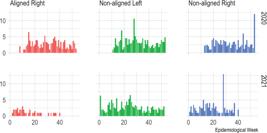
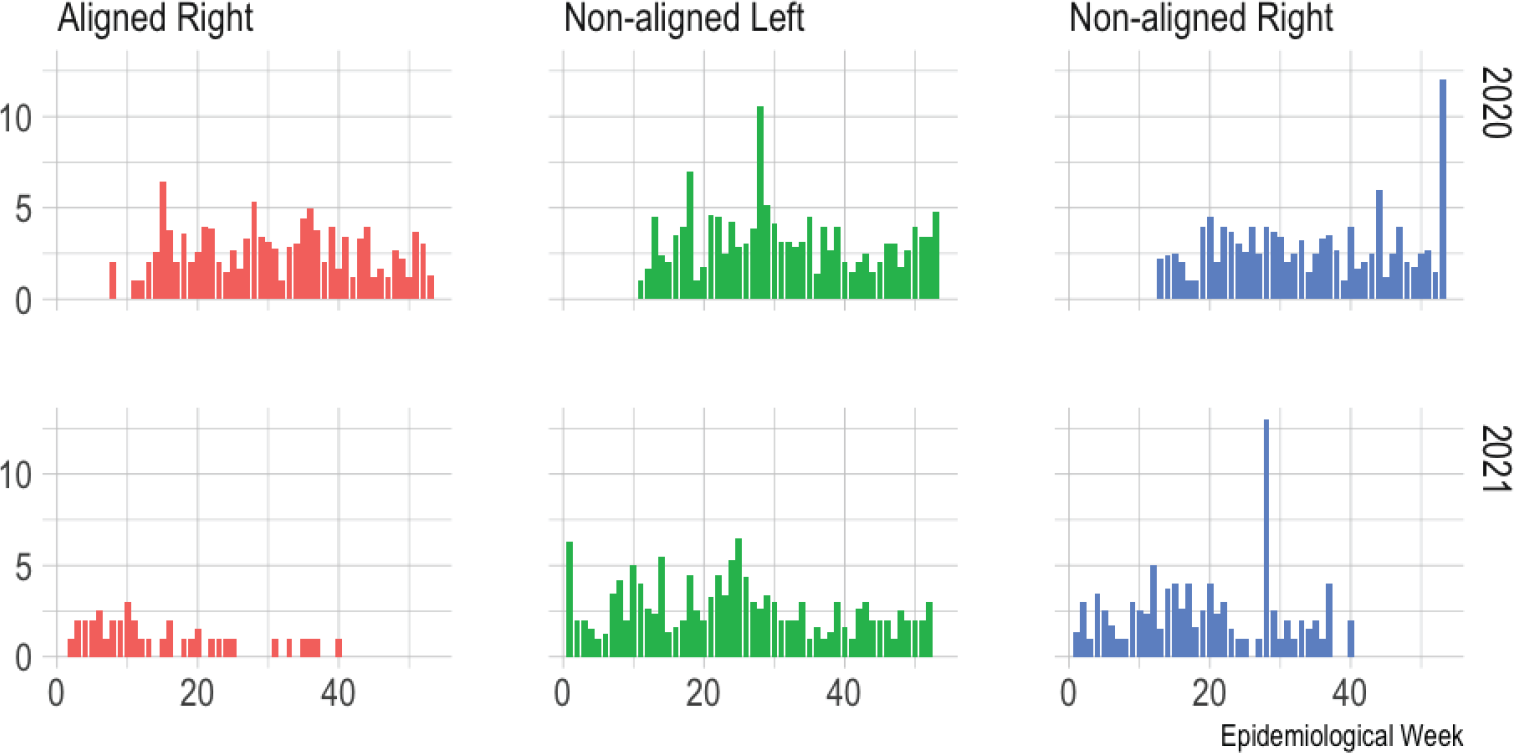
Figure 1 illustrates the weekly distribution of spending-related regulations issued by Brazilian states during the COVID-19 pandemic, categorized by political alignment and year. The y-axis represents the average number of regulations by epidemiological week.
COMPARING THE AMOUNT OF SPENDING REGULATIONS BY POLITICAL ALIGNMENT AND YEAR, BRAZIL, 2020-2021
Aligned right-wing governors consistently issued fewer regulations in both 2020 and 2021, reinforcing the hypothesis that strategic inaction was a political choice rather than a fiscal constraint. In contrast, non-aligned left-wing governors exhibited the highest and most stable levels of regulation issuance, particularly in early 2020, suggesting a proactive response to the crisis.
Non-aligned right-wing governors initially issued fewer regulations but increased their output over time, displaying greater volatility and adaptation to the evolving pandemic. By 2021, regulation issuance declined across all groups, reflecting either a reduced need for new interventions or increasing constraints on policymaking.
These findings align with the argument that policy responses under democratic backsliding are shaped by political calculations rather than institutional constraints (Gomide et al., 2023). The findings also support the idea that inaction by aligned governors was a political choice rather than an institutional limitation. The theoretical framework of policy non-design (Coban, 2024) helps explain why certain governors deliberately avoided implementing regulations as a strategic decision to align with the federal government’s denialist approach. This mirrors other cases populist-led federal conflict, where national leaders promote conflict with subnational entities to consolidate power (Ádám & Csaba, 2022; Heinisch & Marent, 2023).
At the federal level, Bolsonaro’s government actively obstructed coordinated pandemic responses, framing state-level regulations as economic threats while shifting blame for economic downturns onto governors, a well-known mechanism employed by populists (Hameleers et al., 2017). The lack of federal leadership, coupled with an explicit antagonistic stance towards governors who adopted stricter measures, created an unprecedented scenario where subnational entities assumed primary responsibility for the pandemic response (Abrucio et al., 2020).
4.2 The reconfiguration of subnational responses
Brazil’s decentralized health system is built on the coexistence of federal, state, and municipal governance, yet the pandemic exposed severe weaknesses in cooperative federalism. Instead of leveraging SUS (Sistema Único de Saúde) institutional frameworks, the federal government failed to coordinate efforts and actively undermined state and municipal initiatives. This breakdown in intergovernmental coordination forced governors into a reactive role, amplifying disparities in regional responses.
In this sense, the COVID-19 pandemic reconfigured the federative arrangement in Brazil. It shifted the locus of coordination away from a centralized federal model and toward a system where subnational actors and their representative bodies, like Conass, took the lead, albeit with significant regional disparities, and where policy was often dictated by the degree of alignment with the federal executive. This confirms previous research on how populist leaders strategically weaponize federative conflict to consolidate power (Weyland, 2024). The Brazilian case provides an important empirical contribution to the study of populism’s subnational effects, demonstrating how federal inaction and obstructionism shaped governance at lower levels. Bolsonaro’s persistent anti-establishment rhetoric, combined with a deliberate dismantling of institutional governance mechanisms, resulted in a chaotic policy environment where governors were left to navigate the pandemic with minimal federal support.
We employ four different statistical models to examine the relationship between political alignment and the production of spending-related health regulations during the COVID-19 pandemic in Brazil. Model 1 is a negative binomial regression, which is appropriate for count data with overdispersion, capturing the overall relationship between political alignment and regulatory production while controlling for key covariates. Model 2 is a year-specific negative binomial regression for 2020, isolating the effects of alignment in the initial phase of the pandemic. Model 3 applies the same specification to 2021, allowing for a direct comparison of regulatory behavior in the later phase of the crisis. Finally, Model 4 is a generalized linear mixed-effects model with state-level random effects, accounting for unobserved heterogeneity across states. This hierarchical approach controls for potential state-specific factors that may influence regulatory production. While all four models provide consistent results, the main analysis focuses on Models 1 and 4, as they best capture the overall trends and allow for state-level variation, respectively. The year-specific models (2 and 3) are available in the supplementary materials.
Regression table (Table 1) presents the results of different statistical models assessing the relationship between political alignment and the production of spending-related health regulations during the COVID-19 pandemic in Brazil. The dependent variable in all models is the number of spending-related regulations issued by state governments. Among the independent variables, the non-aligned governor variable is binary and indicates whether the governor was not aligned with the Bolsonaro administration, with a positive coefficient suggesting that non-aligned governors issued more spending regulations than their aligned counterparts. The year 2021 variable is also binary, distinguishing observations from 2020 and 2021, where a negative coefficient indicates a general decline in regulations in 2021. Right-wing ideology is another binary variable, capturing whether the governor belongs to a right-wing party, with a negative coefficient implying that right-wing governors issued fewer regulations. Additionally, epidemiological week is a continuous variable representing the passage of time throughout the pandemic, where a negative coefficient suggests that the number of regulations decreased over time. Finally, the non-aligned x 2021 interaction term captures whether the effect of non-alignment on regulation production changed in 2021, with a positive coefficient indicating that non-aligned governors produced even more regulations in 2021 compared to 2020.
Results show that aligned governors issued significantly fewer spending regulations over time. In contrast, non-aligned governors increased their regulatory output, particularly in 2021. The interaction term in the negative binomial regression (β = 0.598, p < 0.01) confirms that the gap between aligned and non-aligned governors widened in 2021, reinforcing the hypothesis that political alignment with the Bolsonaro administration influenced pandemic response strategies. This suggests that non-aligned governors, likely under greater public and institutional pressure, maintained regulatory engagement, whereas aligned governors disengaged from the pandemic response.
Regression models confirm that spending-related regulations declined over time, with a statistically significant negative coefficient for epidemiological week (β = -0.006, p < 0.05) across models. This trend suggests that early 2020 saw the highest levels of regulatory action, but as the pandemic progressed, regulatory fatigue set in. The sharp decline in 2021 among aligned governors highlights the role of political incentives in shaping governance choices, as aligned governors may have reduced regulatory activity to conform to Bolsonaro’s rhetoric and policies. Governors from right-wing parties were less likely to issue spending regulations, even after controlling for alignment with the federal government. The negative coefficient for right-wing ideology (β = -0.134, p < 0.1) suggests that conservative fiscal preferences may have contributed to more restrained public spending, particularly in health policy.
Our findings align with Coban’s (2024) theory of policy non-design, which argues that populist-aligned leaders deliberately avoid enacting regulations to minimize accountability. In this case, the observed regulatory inaction among aligned governors appears not to be a function of fiscal constraints but rather a political strategy to avoid contradicting Bolsonaro’s pandemic response. Similarly, Gomide et al. (2023) highlight how political actors in democratic backsliding contexts prioritize loyalty over institutional responsiveness, leading to fragmented and inconsistent governance.
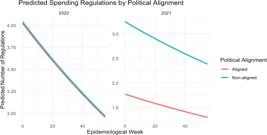
Figure 2 presents the predicted number of spending regulations issued per epidemiological week in 2020 and 2021, disaggregated by political alignment. The temporal patterns illustrate how aligned and non-aligned governors adjusted their behavior in response to the evolving crisis and shifting political incentives. In 2020, there were no substantial differences between aligned and non-aligned governors, but by 2021, a clear divergence emerged: non-aligned governors maintained high levels of regulatory activity, while aligned governors dramatically reduced regulation issuance. This pattern further supports the hypothesis that aligned governors intentionally withdrew from pandemic policymaking to maintain political cohesion with the Bolsonaro administration.
This study reinforces the idea that populist rhetoric not only shapes national-level policies but actively disrupts multi-level governance. Unlike traditional authoritarian regimes that centralize control, populist governments often fragment decision-making structures, creating governance voids that enhance their political leverage. In Brazil, this void led to a crisis of authority, where subnational actors were simultaneously empowered and undermined.
The long-term implications of this dynamic remain uncertain. However, this research highlights how populist federal conflict weakens institutional resilience, eroding cooperative governance structures that are essential for crisis management. Future studies should investigate whether these governance voids persist beyond the pandemic and how subnational governments might develop alternative coordination mechanisms to counteract federal obstructionism.
Our findings provide empirical support for the framework proposed by Gomide et al. (2023), demonstrating that policy inaction in aligned states was a deliberate political strategy rather than an unintended consequence of institutional constraints. This reinforces the broader argument that, in contexts of democratic backsliding, policy processes are increasingly shaped by political alignments and strategic calculations rather than governance efficiency. Furthermore, our findings align with Coban’s (2024) theory of policy non-design, which conceptualizes inaction as a strategic tool used by populist-aligned leaders to evade accountability while maintaining political support. In Brazil, the systematic underproduction of health regulations in aligned states during the pandemic exemplifies this phenomenon, illustrating how political loyalty can override policy effectiveness, even in times of crisis. This has significant implications for the long-term governance capacity of subnational governments, as it erodes institutional trust and weakens public administration structures.
Our findings underscore the detrimental effects of populist strategies on crisis management (Moffitt, 2015). Instead of fostering cooperation between national and subnational governments, Bolsonaro’s administration weaponized federal-state relations, using them as an arena for political dispute rather than pandemic mitigation. Aligned governors produced fewer regulations over time, leading to weaker pandemic responses and worse public health outcomes, while non-aligned governors had to compensate for federal inaction, resulting in more proactive regulation but increased political friction.
The lack of national coordination resulted in fragmented and unequal health responses (Abrucio et al., 2020; Fernandez & Pinto, 2020; Fernandez et al., 2021). These findings suggest that political conflict, and not just structural capacity, was a key determinant of pandemic outcomes in Brazil. The Brazilian case provides a critical empirical example of how populism disrupts governance at the subnational level. Comparative studies examining other contexts where national populist leaders have engaged in strategic inaction to weaken opposition-led subnational governments could further illuminate these mechanisms.
The strategy of intensifying political conflict, the promotion of pseudo-scientific and anti-scientific solutions such as hydroxychloroquine advocacy, and the high turnover of health ministers, all of which culminated in an interim minister in charge from October to December 2020 (Bertholini, 2022), suggest that Bolsonaro’s primary concern during the pandemic was not public health but political survival. From 2019 onward, the federal government reduced its role in formulating guidelines and allocating resources, resulting in a “fend-for-yourself” dynamic among subnational governments. Thus, the Brazilian case illustrates how political and institutional dynamics can simultaneously decentralize responsibilities while maintaining symbolic control over the direction of public policy. In this way, the weakening of federal coordination during the pandemic should not be understood merely as an administrative failure, but rather as part of a broader process of selective recentralization of power (Segatto et al., 2022).
The challenges to cooperative federalism during the pandemic was an intentional strategy to shift responsibility to state-level actors while maintaining centralized control over public discourse (Béland et al., 2021). In this sense, the withdrawal of federal coordination compelled governors to act with greater autonomy, leading to a patchwork of responses (Abrucio et al., 2021). While this created politicized conflicts, it also spurred new forms of subnational coordination through bodies like Conass and regional consortiums, preventing a complete fragmentation of the system (Fernandez & Pinto, 2020). This confirms the argument that populist leaders can deliberately weaken multi-level governance structures to reinforce their authority while externalizing the consequences of policy failures.
5. CONCLUSIONS
State governments emerged as the primary, if not the only, front line in the fight against COVID-19 in Brazil. Given the federal government’s refusal to take the lead, subnational actors had to develop their own responses under conditions of uncertainty, institutional fragility, and escalating political conflict. By using the issuance of executive regulations as a direct proxy for the discretionary political will of governors, our findings demonstrate that health regulations varied significantly across states, regions, and political alignments. This reinforces the argument that political considerations, rather than technical or fiscal constraints, shaped the response to the pandemic.
In Brazil, this dynamic resulted in a stark division in state-level fiscal responses, with governors adopting different spending strategies. The variation in spending regulations illustrates how federalism in Brazil functioned simultaneously as a mechanism for both resilience and fragmentation during the crisis. While some governors leveraged their autonomy to expand health spending, others aligned with Bolsonaro’s restrictive fiscal stance, resulting in widely divergent financial responses across states.
At the empirical level, our analysis confirms that right-wing governors produced more health regulations overall, but with significant variation based on their alignment with the federal government. While non-aligned right-wing governors were among the most proactive in early 2020, aligned governors systematically reduced their regulatory production over time. This dynamic reflects an emerging pattern in populist-led in federal systems: subnational leaders who align with a populist president tend to prioritize loyalty over policy effectiveness, leading to strategic inaction rather than institutional incapacity.
While this study provides important insights into subnational governance under populist leadership, certain limitations open avenues for further research. First, our analysis focuses primarily on the quantitative variation in spending regulations, without a detailed qualitative examination of the content and enforcement of these measures. Future studies could incorporate textual analysis to assess whether regulations differed not only in frequency but also in scope, effectiveness, and alignment with public health recommendations. Second, while we account for political alignment, other institutional and economic factors may also influence regulatory responses, such as state fiscal capacity, bureaucratic autonomy, and local political competition. Expanding the analysis to include these variables could provide a more comprehensive understanding of the constraints and incentives shaping governors’ decisions. Finally, the broader implications of populist-led federal conflict for democratic governance remain an open question. Comparative studies across different political contexts could help determine whether the patterns observed in Brazil are part of a global trend in democratic backsliding or specific to Bolsonaro’s administration. Future research should also explore how the reconfiguration of cooperative federalism during the pandemic has affected the activation of the state capacity beyond the health sector, potentially shaping governance in other policy domains.
Ultimately, the pandemic revealed the resilience of Brazil’s decentralized health system, even as it exposed the vulnerabilities of its federal model to populist political strategies. The crisis prompted a shift from a coordination arrangement historically led by the Ministry of Health to one driven by states and municipalities. This new dynamic, born of necessity, highlights both the institutional capacity built over three decades of the SUS and the profound challenges that arise when the federal executive deliberately abandons its coordinating role. Future research should explore the long-term consequences of this shift for intergovernmental relations in Brazil.
At the policy level, our findings highlight the urgent need to reinforce institutional mechanisms that prevent executive overreach and ensure cooperative governance in times of crisis. Without robust intergovernmental coordination frameworks, populist leaders can exploit crises to deepen polarization, erode policy capacity, and ultimately undermine democracy itself. The Bolsonaro administration’s handling of the COVID-19 pandemic was not merely characterized by incompetence but by a deliberate strategy of non-coordination and non-action. Populist leaders, as demonstrated in the Brazilian case, often reject expert recommendations, weaken institutions, and manufacture crises to sustain their political narratives. The consequences of such strategies are not only immediate public health failures but also long-term institutional damage, undermining the capacity of the state to respond to future crises. Understanding the dynamics of federal conflict under populist-led is crucial for scholars and policymakers alike, as it sheds light on the broader mechanisms through which populist governments erode democratic governance, not just at the national level but also through strategic disruptions in multi-level governance frameworks.
-
Peer review report:
Reviewers:The reviewers did not authorize the disclosure of their identities.The peer review report is available at this link https://periodicos.fgv.br/rap/article/view/92348/87050
-
[Original version]
ACKNOWLEDGEMENTS
This study was supported by the University of Brasília’s Dean’s Office for Research and Innovation and the Dean’s Office for Graduate Studies (Call DPI/DPG nº 04/2024), with funding granted to Frederico Bertholini Santos Rodrigues. The research was also funded by the Federal District Research Support Foundation (FAPDF) under Call 09/2022 (Process No. 00193.00002279/2022-23; Grant nº 476/2022), coordinated by Frederico Bertholini Santos Rodrigues. We would like to thank Guilherme Ribeiro, Letícia Macário, Letícia Pereira, Rebeca de Carvalho, and Stelle Rocio for their assistance in building the database between 2020 and 2021.
DATA AVAILABILITY
The entire dataset supporting the results of this study can be accessed at https://doi.org/10.7910/DVN/MIBVHB.
References
- Abrucio, F. L. (2005). A coordenação federativa no Brasil: A experiência do período FHC e os desafios do governo Lula. Revista de Sociologia e Política, 24, 41-67.
- Abrucio, F. L., Grin, E. J., Franzese, C., Segatto, C. I., & Couto, C. G. (2020). Combate à COVID-19 sob o federalismo bolsonarista: Um caso de descoordenação intergovernamental. Revista de Administração Pública, 54(4), 663-677.
- Abrucio, F. L., Grin, E., & Segatto, C. I. (2021). Brazilian federalism in the pandemic. In B. G. Peters. E. Grin, & F. L. Abrucio (Eds.), American federal systems and COVID-19 (pp. 63-88). Emerald Publishing Limited.
- Ádám, Z., & Csaba, I. (2022). Populism unrestrained: Policy responses of the Orbán regime to the pandemic in 2020-2021. European Policy Analysis, 8, 277-296.
- Allin, S., Haldane, V., Jamieson, M., Marchildon, G., Morales Vazquez, M., & Roerig, M. (2020). Comparing policy responses to COVID-19 among countries in the Latin American and Caribbean (LAC) region World Bank.
- Arretche, M. (2010). Federalismo e igualdade territorial: Uma contradição em termos? Dados - Revista de Ciências Sociais, 53(3), 587-620.
- Arretche, M. (2012). Democracia, federalismo e centralização no Brasil Editora FGV; Editora Fiocruz.
- Atkeson, A. (2020). What will be the economic impact of COVID-19 in the US? Rough estimates of disease scenarios (NBER Working Paper). National Bureau of Economic Research.
- Baker, S. R., Bloom, N., Davis, S. J., & Terry, S. J. (2020). Covid-induced economic uncertainty (NBER Working Paper). National Bureau of Economic Research.
- Béland, D., Cantillon, B., Hick, R., & Moreira, A. (2021). Social policy in the face of a global pandemic: Policy responses to the COVID19 crisis. Social Policy & Administration, 55(2), 249-260.
- Bertholini, F. (2022). Brazil: We are all going to die one day. In R. N. Ringe & L. Rennó (Eds.), Populists and the pandemic: How populists around the world responded to COVID-19 [e-book].
- Borges, A., & Rennó, L. (2021). Brazilian response to COVID-19: Polarization and conflict. In M. Fernandez & C. Machado (Eds.), The political challenges of COVID-19 in Latin America (pp. 33-52). Springer.
- Boschi, R. R., & Pinho, C. E. S. (2023). Austeridade ou expansão fiscal no governo Bolsonaro? Uma análise do Programa Pró-Brasil no contexto da Covid-19. In F. Fontainha & C. R. S. Milani (Eds.), Coletânea COVID-19 e agendas de pesquisa nas ciências sociais (pp. 237-259). EDUERJ.
- Capano, G., Howlett, M., Jarvis, D. S. L., Ramesh, M., & Goyal, N. (2020). Mobilizing policy (in)capacity to fight COVID19: Understanding variations in state responses. Policy and Society, 39(3), 285-308.
- Casarões, G., & Magalhães, D. (2021). A aliança da hidroxicloroquina: Como líderes de extrema direita e pregadores da ciência alternativa se reuniram para promover uma droga milagrosa. Revista de Administração Pública, 55(1), 197-214.
- Censon, D., & Barcelos, M. (2020). O papel do Estado na gestão da crise ocasionada pela COVID-19: Visões distintas sobre federalismo e as relações entre União e municípios. Revista Brasileira de Gestão e Desenvolvimento Regional, 16(4), 49-63.
- Coban, M. K. (2024). The political economic sources of policy non-design and the decay in policy capacity in Turkey. In M. Morais de Sá e Silva & A. Gomide (Eds.), Public policy in democratic backsliding: How illiberal populists engage with the policy process (pp. 113-137). Springer Nature Switzerland.
-
Coletta, R. D. (2020, março 24). Em pronunciamento, Bolsonaro critica fechamento de escolas, ataca governadores e culpa mídia. Folha de São Paulo https://www1.folha.uol.com.br/poder/2020/03/em-pronunciamento-bolsonaro-critica-fechamento-de-escolas-ataca-governadores-e-culpa-midia.shtml
» https://www1.folha.uol.com.br/poder/2020/03/em-pronunciamento-bolsonaro-critica-fechamento-de-escolas-ataca-governadores-e-culpa-midia.shtml -
Colleta, R. D., Caram, B., & Uribe, G. (2020, maio 14). É guerra, tem que jogar pesado com governadores, diz Bolsonaro a empresários. Folha de São Paulo https://www1.folha.uol.com.br/poder/2020/05/e-guerra-tem-que-jogar-pesado-com-governadores-diz-bolsonaro-a-empresarios.shtml
» https://www1.folha.uol.com.br/poder/2020/05/e-guerra-tem-que-jogar-pesado-com-governadores-diz-bolsonaro-a-empresarios.shtml - Couto, L. F., & Rech, L. T. (2023). Desmonte ativo no governo Bolsonaro: uma aproximação pela perspectiva orçamentária. In A. de Á. Gomide, M. M. de Sá e Silva & M. A. Leopoldi (Eds.), Desmonte e reconfiguração de políticas públicas (2016-2022) IPEA; INCT/PPED.
-
Decreto Legislativo nº 6, de 2020 (2020). Reconhece, para os fins do art. 65 da Lei Complementar nº 101, de 4 de maio de 2000, a ocorrência do estado de calamidade pública, nos termos da solicitação do Presidente da República encaminhada por meio da Mensagem nº 93, de 18 de março de 2020. https://www.planalto.gov.br/ccivil_03/portaria/dlg6-2020.htm
» https://www.planalto.gov.br/ccivil_03/portaria/dlg6-2020.htm -
Fagundes, M. (2021, março 01). Bolsonaro critica medidas adotadas nos estados e diz que lockdown não funciona. Poder 360 https://www.poder360.com.br/governo/bolsonaro-critica-medidas-adotadas-nos-estados-e-diz-que-lockdown-nao-funciona/
» https://www.poder360.com.br/governo/bolsonaro-critica-medidas-adotadas-nos-estados-e-diz-que-lockdown-nao-funciona/ - Ferigato, S., Fernandez, M., Amorim, M., Ambrogi, I., Fernandes, L. M. M., & Pacheco, R. (2020). The Brazilian government’s mistakes in responding to the COVID19 pandemic. The Lancet, 396(10263), 1636.
- Fernandez, M., Bertholini, F., & Maia, B. (2025). Políticas de saúde dos estados brasileiros durante a pandemia de COVID19: um dataset das normativas produzidas. Dados, 68(3), e20230153.
- Fernandez, M., & Machado, C. (Eds.). (2021). COVID19’s political challenges in Latin America Springer International Publishing.
- Fernandez, M., de Souza, S., & Carvalho, R. (2021). As relações intergovernamentais durante a pandemia da COVID19 no Brasil: uma análise da atuação dos estados. Reflexión Política, 23(48), 98-109.
- Fernandez, M., & Pinto, H. (2020). Brazilian states’ intergovernmental strategy of action: The Consórcio Nordeste and health policies in coping with COVID19. Dados - Revista de Ciências Sociais, 63(especial), e20200000.
- Fleury, S., & Fava, V. M. D. (2022). Vacina contra COVID19: arena da disputa federativa brasileira. Saúde em Debate, 46, 248-264.
- Fleury, S., & Ouverney, A. M. (2022). Federalismo de confrontação: Tensões, inovações e limites da estratégia de enfrentamento à pandemia de COVID19 no Brasil. In Anais do 11º Congresso Latino-Americano de Ciência Política, Santiago de Chile, Chile.
- Gomes, S., Santana, L., Bragatte, M., & Silame, T. (2023). Governos estaduais e padrões decisórios no enfrentamento da COVID19. In P. Palotti, E. C. Licio, S. Gomes, C. I. Segatto, & A. L. N. Silva (Eds.), E os estados? Federalismo, relações intergovernamentais e políticas públicas no Brasil contemporâneo (pp. 677-709). IPEA.
- Gomide, A., Morais de Sá e Silva, M., Silva, P., & Torres, F. (2023). The policy process in democratic backsliding: A proposed framework of analysis. In M. Morais de Sá e Silva & A. Gomide (Eds.), Public policy in democratic backsliding: How illiberal populists engage with the policy process (pp. 17-40). Palgrave Macmillan.
- Hameleers, M., Bos, L., & de Vreese, C. H. (2017). “They did it”: The effects of emotionalized blame attribution in populist communication. Communication Research, 44(6), 870-900.
- Jaccoud, L. D. B., Meneses, A., & Stuchi, C. (2020). Coordenação intergovernamental e comissões intergestores no SUAS [Relatório técnico]. Instituto de Pesquisa Econômica Aplicada.
- Macedo, L. R., Struchiner, C. J., & Maciel, E. L. N. (2021). Contexto de elaboração do Plano de Imunização contra COVID19 no Brasil. Ciência & Saúde Coletiva, 26(7), 2859-2862.
- Maio, M. C., & Lima, N. T. (2009). O desafio SUS: 20 anos do Sistema Único de Saúde. Introdução. Cadernos de Saúde Pública, 25, 1611-1613.
- Mazzucato, M., & Kattel, R. (2020). COVID19 and public-sector capacity. Oxford Review of Economic Policy, 36(Suppl. 1), S256-S269.
- Medeiros, A., Bertholini, F., & Pereira, C. (2021). Identity versus fear of death: Political polarization under the COVID19 pandemic in Brazil. In M. Fernandez & C. Machado (Eds.), The political challenges of COVID-19 in Latin America (pp. 67-90). Springer.
- Meyer, B. (2020). Pandemic populism: An analysis of populist leaders’ responses to COVID19 Tony Blair Institute for Global Change.
- Moffitt, B. (2015). How to perform crisis: A model for understanding the key role of crisis in contemporary populism. Government and Opposition, 50(2), 189-217.
- Mudde, C., & Rovira Kaltwasser, C. (2012). Exclusionary vs. inclusionary populism: Comparing contemporary Europe and Latin America. Government and Opposition, 48(2), 147-174.
- Pappas, T. S. (2019). Populists in power. Journal of Democracy, 30(2), 70-84.
- Ribeiro, J. M., Moreira, M. R., Ouverney, A. M., Pinto, L. F., & Silva, C. M. F. P. D. (2018). Federalismo e políticas de saúde no Brasil: Características institucionais e desigualdades regionais. Ciência & Saúde Coletiva, 23(6), 1777-1789.
- Segatto, C. I., Burgos, F., Bichir, R., & Morandi, E. L. (2022). Inequalities and the COVID19 pandemic in Brazil: Analyzing uncoordinated responses in social assistance and education. Policy and Society, 41(2), 306-320.
- Shah, A. (Ed.). (2006). Local governance in developing countries World Bank.
-
Silva, A. L. N. (2020). Os estados importam! Determinantes da cooperação subnacional nas políticas de educação e saúde do Brasil [Tese de doutorado, Fundação Getulio Vargas]. Repositório da Fundação Getulio Vargas. https://hdl.handle.net/10438/29647
» https://hdl.handle.net/10438/29647 - Viana, A. L. D. A., & Machado, C. V. (2009). Descentralização e coordenação federativa: A experiência brasileira na saúde. Ciência & Saúde Coletiva, 14(3), 807-817.
- Watts, R. (1999). Comparing federal systems in the 1990s Queen’s University Press.
-
World Health Organization. (2020). Critical preparedness, readiness and response actions for COVID-19: interim guidance, 22 March 2020 https://iris.who.int/items/d6149d54-87c6-4daa-8f19-8c535e8d3de3
» https://iris.who.int/items/d6149d54-87c6-4daa-8f19-8c535e8d3de3 - Weyland, K. (2024). Democracy’s resilience to populism’s threat: Countering global alarmism Cambridge University Press.
-
Editor-in-chief:
Alketa Peci (Fundação Getulio Vargas, Rio de Janeiro / RJ - Brazil) https://orcid.org/0000-0002-0488-1744
-
Associate editor:
Gabriela Spanghero Lotta (Fundação Getulio Vargas, São Paulo / SP - Brazil) https://orcid.org/0000-0003-2801-1628

 Source: Elaborated by the authors.
 Source: Elaborated by the authors.