 Corruption in public service: factors related to moral disengagement and organizational ethical culture
Abstract
This study aims to investigate intrinsic and extrinsic factors associated with moral disengagement and organizational ethical culture among public servants. Intrinsic motivation, such as cognitive and personal factors, and extrinsic motivation, such as environmental and organizational factors, were considered potential factors associated with corrupt behavior. A quantitative survey was conducted with 529 employees from two public institutions, both benchmarks in the fight against corruption in Brazil. The analysis included multiple linear regression models to explore the interrelationships among the surveyed variables. The study’s originality lies in integrating intrinsic and extrinsic variables to understand the factors associated with corruption in the public sector. The results show that low self-control is the main factor associated with moral disengagement, while ethical leadership, risk perception, and perceptions of salaries and benefits are positively related to organizational ethical culture. These findings have important implications for public management, offering insights into the psychological and organizational mechanisms associated with corrupt behavior in the public sector.
Keywords:
strategy; decision-making; corruption; behavior; public sector.
Resumo
O objetivo deste estudo foi investigar os fatores intrínsecos e extrínsecos associados ao desengajamento moral e à cultura ética organizacional entre servidores públicos. As motivações intrínsecas, tais como fatores cognitivos e pessoais e motivações extrínsecas, como fatores ambientais e organizacionais, foram tratadas como potenciais fatores associados ao comportamento corrupto. Para isso, foi realizada uma pesquisa quantitativa com 529 servidores de duas instituições públicas, ambas referências no combate à corrupção no Brasil. A análise incluiu modelos de regressão linear múltipla para explorar as inter-relações entre as variáveis pesquisadas. A originalidade do estudo reside em integrar, de forma simultânea, variáveis intrínsecas e extrínsecas para compreender os fatores associados ao comportamento corrupto no setor público. Os resultados mostram que o baixo nível de autocontrole é o principal fator associado ao desengajamento moral, enquanto liderança ética, percepção de risco e percepção de salários e benefícios estão positivamente relacionadas à cultura ética organizacional. Essas descobertas têm implicações importantes para a gestão pública, oferecendo insights sobre os mecanismos psicológicos e organizacionais relacionados a comportamentos corruptos no setor público.
Palavras-chave:
estratégia; tomada de decisão; corrupção; comportamento; setor público.
Resumen
Este estudio tiene como objetivo investigar los factores intrínsecos y extrínsecos asociados al desapego moral y a la cultura ética organizacional entre servidores públicos. Las motivaciones intrínsecas, como los factores cognitivos y personales y las motivaciones extrínsecas, como los factores ambientales y organizacionales, fueron tratadas como posibles factores asociados al comportamiento corrupto. Se llevó a cabo una encuesta cuantitativa con 529 empleados de dos instituciones públicas, ambas referentes en la lucha contra la corrupción en Brasil. El análisis incluyó modelos de regresión lineal múltiple para explorar las interrelaciones entre las variables investigadas. La originalidad del estudio radica en integrar simultáneamente variables intrínsecas y extrínsecas para comprender los factores asociados al comportamiento corrupto en el sector público. Los resultados muestran que un bajo nivel de autocontrol es el principal factor asociado con el desapego moral, mientras que el liderazgo ético, la percepción de riesgos y las percepciones de salarios y beneficios están positivamente relacionados con la cultura ética organizacional. Estos hallazgos tienen importantes implicaciones para la gestión pública, ofreciendo ideas sobre los mecanismos psicológicos y organizacionales asociados a comportamientos corruptos en el sector público.
Palabras clave:
estrategia; toma de decisiones; corrupción; comportamiento; sector público.
1. INTRODUCTION
Corruption in the public sector is a longstanding and urgent, yet unresolved issue (Weißmüller & Zuber, 2023). Corruption is described as the misuse of power for personal gain, harming the common good and undermining public trust in institutions (Ceschel et al., 2022; Hakimi & Hamdi, 2017; Jaakson et al., 2019), and constitutes a complex phenomenon with systemic roots (Canales et al., 2023). Numerous studies emphasize the economic and social consequences of corruption (Murillo et al., 2023), ranging from compromising economic development to distorting markets and increasing investor distrust (Dimant & Schulte, 2016).
Furthermore, evidence indicates that corruption research is fragmented, particularly across public and private domains, requiring integrative approaches capable of connecting both perspectives (Coelho & Almeida, 2024). In addition, corruption is rarely an isolated event, but often part of organized interaction structures among multiple actors governed by shared norms and practices (Jackson, 2025). Debates in behavioral public administration suggest that anti-corruption strategies benefit from behavioral mechanisms rather than solely regulatory controls, emphasizing interventions aimed at cognitive, social, and contextual determinants of unethical conduct (Armstrong & Stedman, 2024).
Institutional factors, such as legislation and the cultural environment, have been extensively examined as structural conditions related to variations in corrupt practices (Hossain et al., 2021; Nichols, 2009; Szymanski et al., 2022). The literature increasingly emphasizes the need to address the motivations of individuals involved in these acts (Manara et al., 2020; Marani et al., 2018; Souza et al., 2019).
In this field, researchers have explored factors that motivate corrupt behavior from both individual and organizational perspectives, examining both intrinsic and extrinsic motivations (Baez-Camargo et al., 2020; Köbis et al., 2016). Intrinsic motivations, such as self-control and moral identity, play a central role in an individual’s ability to resist unethical temptations, while extrinsic motivations, such as ethical leadership and the perception of risks and rewards, are associated with the organizational and social environment that can foster or inhibit these practices (Bandura, 1986; Trevino, 1986).
However, gaps still exist in understanding how these motivations interact and relate to moral reasoning and behavior in the public service, making this study relevant. In this context, a comprehensive analysis of the psychological and motivational aspects of public servants’ behavior is still lacking (Weißmüller & Zuber, 2023). Moreover, previous research has analyzed variables in isolation, underestimating the complexity and multifaceted nature of the phenomenon (Zhang et al., 2019). In addition, studies demonstrate that corruption also emerges from relational structures embedded in organizational and interorganizational networks, rather than isolated individual acts (Melo-Silva et al., 2021).
Therefore, this study investigates the intrinsic and extrinsic factors associated with moral disengagement and organizational ethical culture among public servants. For the investigation, a quantitative survey was conducted with 529 public servants from two major Brazilian institutions, both with a strong commitment to combating corruption. Self-administered questionnaires were used to measure intrinsic and extrinsic variables, and their relationships with moral disengagement and ethical culture. Multiple linear regression models were applied to assess the interrelationships among the studied variables and identify the variables most strongly associated with the phenomena examined.
The results of this study offer a contribution to the literature by integrating behavioral and organizational variables, highlighting the importance of self-control and ethical leadership as central factors associated with ethical behavior in the public sector. Additionally, the study advances micro-level understanding and contributes to the development of a conceptual model for future empirical examination.
Concurrently, it responds to the call for more studies using samples of public servants in diverse organizational settings (Weißmüller & Zuber, 2023). In doing so, the study advances the understanding of the pathways required to strengthen ethical management in public organizations, supporting the development of integrity-promotion strategies aligned with institutional recommendations in the field (Pliscoff-Varas & Lagos-Machuca, 2021). Subsequently, the main conceptual and empirical foundations that guide the analysis of moral disengagement and organizational ethical culture are discussed.
2. CORRUPT BEHAVIOR
Corruption impacts the economic and social development and is present in all countries, from the most developed to the poorest. Corrupt behavior results from many interactive factors and may be linked to economic, political, and institutional aspects (Rose-Ackerman, 2019), cultural factors (Treisman, 2020), and psychological factors (Dimant & Tosato, 2018; Haidt, 2018), thus, it is a complex social phenomenon, and the motivations to engage in corrupt behaviors are the result of social interactions at the micro (individuals), meso (group behavior), and macro levels, which refer to the culture and values adopted by the population (Bicchieri & Ganegonda, 2017; Cintra et al., 2018; Dimant & Schulte, 2016; Zhang et al., 2019).
Regarding the circumstances that lead agents to commit acts of corruption, Dong et al. (2012) described that three factors are necessary: motivation, opportunity, and rationalization, the latter acting to reduce the feeling of guilt and disapproval for the illegal act. The decision to commit a corrupt act does not differ, in essence, from other decision-making processes, as it is influenced by the same emotions and perspectives that guide everyday decisions (Albanese & Artello, 2019; Bicchieri & Ganegonda, 2016). What distinguishes corrupt decision-making is the intensity and degree to which these motivational factors operate.
Moral disengagement explains the involvement of individuals in corrupt behaviors without feeling remorse or self-censorship (Bandura, 1986). Individual factors associated with how people observe others, interpret events, and themselves can generate a greater or lesser predisposition to moral disengagement (Detert et al., 2008). Bandura (1999) proposed the social cognitive theory, in which moral agency is governed by a self-regulation system, which includes monitoring conduct and reacting to this conduct, according to the internal moral standards developed by each individual. Individuals who develop mechanisms for moral behavior exercise the role of self-regulation, and decisions can be made in two ways: based on pre-established moral standards or by breaking these standards, lack of self-censorship and guilt (Bandura, 1999; Duffy et al., 2005).
Before Bandura (1986), Ferrell and Gresham (1985) developed a conceptual model of ethical decision-making based on three main antecedents: cognitive factors (values, beliefs, knowledge, attitudes, and intentions) present in each individual; organizational environment, i.e., the structure developed by the organization to support ethical behavior; and opportunities for ethical and unethical decisions, in which each activity has an intrinsic characteristic that can facilitate or hinder certain decisions, large sums of money, decisions about sanctions, fines, prohibitions, or permissions (Pelletier & Bligh, 2006).
Although previous studies have constructed models and analyses on corrupt behavior (Dimant & Tosato, 2018), there is still a need to understand the individual and contextual motivations that act in making corrupt decisions. This is particularly relevant in public institutions, where the organizational environment and personal values interact. In this context, constructs such as moral disengagement and organizational ethical culture emerge as key elements for understanding the mechanisms that influence unethical behavior. The organizational and social context plays a crucial role in shaping perceived opportunities for corruption and the moral justifications that individuals use to rationalize their actions (Mentzer, 2024).
3. RESEARCH HYPOTHESES
The construction of the hypotheses is based on two dimensions: moral disengagement (intrinsic motivations) and organizational ethical culture (extrinsic motivations).
3.1 Intrinsic motivations
Corrupt behavior has been associated with failures in individual decision-making process intrinsic to each person (Tenbrunsel & Messick, 2004). Identifying and understanding its antecedents are essential for a deeper comprehension of the phenomenon. Moral disengagement, defined as the set of cognitive mechanisms that allow individuals to act against internalized moral standards without experiencing self-sanction (Bandura, 1986), represents a central dimension in the analysis of corruption.
Among the individual factors that contribute to moral disengagement, self-control stands out as one of the key mechanisms for regulating ethical behavior. Self-control is used to explain why some people succumb to temptations while others resist (Baumeister et al., 1994). Self-control predicts attitudes of cheating (Gino et al., 2009) and unethical behavior (Shalvi et al., 2012). Low levels of self-control contribute to criminal behaviors (Muraven et al., 2006).
Recognizing and reasoning in the face of moral dilemmas requires high self-control skills. Lack of self-control impairs the recognition of the potential negative consequences of behavior, as the attitude that leads an agent to commit corruption is composed of a complex system of moral dilemmas (Fujiwara & Wantchekon, 2013). Research also shows that environments perceived as permissive tend to weaken internal self-regulation mechanisms, facilitating moral disengagement (Rodrigues, 2025). Taken together, prior evidence suggests that low self-control may be linked to greater susceptibility to moral disengagement.
-
H1: lack of self-control is positively associated with moral disengagement.
Guilt is one of the most common emotions experienced in response to ethical transgressions. It is positively associated with higher standards of ethical conduct, functioning as an internal inhibitor of moral disengagement (Baumeister et al., 1994; Posner & Rasmusen, 1999; Tangney et al., 2007), and is shaped by education, as well as individual, social, and cultural experiences (Haidt & Joseph, 2008). Guilt reduces the likelihood of corrupt behavior at the individual level (Köbis et al., 2016). Individuals with a higher propensity for guilt tend to experience it more frequently, which ultimately discourages corrupt behavior due to the cognitive dissonance they continuously face.
The absence of guilt has been linked to unethical, delinquent, and dishonest behaviors (Stuewig & McCloskey, 2005). In contrast, individuals who are prone to guilt generally place higher value on moral traits (Cohen et al., 2012), which increases their adherence to moral norms (Pinter et al., 2007). Moreover, evidence from corrupt organizational settings shows that moral disengagement tends to intensify over time when individuals are exposed to permissive environments that normalize ethical transgressions, fostering reliance on rationalization mechanisms (Coelho, 2023). In this sense, higher levels of guilt may reflect a stronger internal commitment to moral standards and a reduced propensity to adopt cognitive justifications that disengage self-regulation.
-
H2: guilt is negatively associated with moral disengagement.
Individuals with high moral identity tend to resist making unethical decisions motivated by self-interest (Bendahan et al., 2015; Trevino, 1986). DeCelles et al. (2012), emphasize that individuals with low moral identity are not inherently bad but often struggle to evaluate the consequences of their actions. This difficulty in ethical evaluation may be related to the activation of moral disengagement mechanisms. Moral disengagement is an intraindividual process through which individuals cognitively deactivate self-regulatory mechanisms, allowing them to justify unethical behavior without experiencing guilt or self-sanction (Bandura, 1999; Moore, 2008). This suspension of regulatory processes weakens the ability to judge choices based on internalized moral standards, thereby reducing one’s sense of personal responsibility.
Exposure to ethical normative environments constrains the activation of moral disengagement mechanisms by reinforcing shared expectations of integrity among individuals (Reddick et al., 2024). Individuals prone to moral disengagement tend to rely on cognitive justifications that minimize the dissonance between their actions and values, resulting in less complex moral reasoning (Bandura, 2002). It is important to note that moral disengagement is not a fixed personality trait, but a malleable condition influenced by contextual and social factors (Moore, 2008). Therefore, moral identity emerges in the literature as a central element in differentiating individuals’ ethical reasoning and responses to moral challenges.
-
H3: moral identity is negatively associated with moral disengagement.
Power, in the context of this study, refers to the perceived subjective sense of control and autonomy over people and resources (Keltner et al., 2003). Individuals in positions of power tend to experience a heightened sense of autonomy and reduced concern for the consequences of their actions (Lammers et al., 2010). This can obscure moral judgment, leading individuals to ignore or rationalize the ethical aspects of their decisions (Jordan et al., 2011), thereby contributing to an environment conducive to moral disengagement, particularly when power is exercised with low accountability, characterized by excessive self-confidence and a heightened sense of control (Bendahan et al., 2015; DeCelles et al., 2012).
Individuals who hold power can justify their deviant actions by prioritizing their own interests over collective interests, which is a common characteristic in cases of corruption (Aquino & Reed, 2002; Reynolds & Ceranic, 2007). Power can induce a lack of censorship and self-regulation, allowing individuals to morally disengage and seek to justify unethical behaviors (Keltner et al., 2003). This interpretation aligns with evidence that the opportunity structure surrounding corruption is shaped by perceived authority, discretion and weak accountability mechanisms (Thomann et al., 2025). In this regard, perceived power may operate as an antecedent condition connected to the internal deactivation of moral self-regulation.
-
H4: perceived power is positively associated with moral disengagement.
3.2 Extrinsic motivations
Organizational ethical culture refers to the shared perceptions, norms, and values, both formal and informal, that are associated with ethical behavior within an institution (Kaptein, 2008; Treviño, 1990). It is a multidimensional construct that goes beyond the mere result of individual behavior. It encompasses (a) formal systems, such as codes of ethics and compliance mechanisms, and (b) informal elements, such as leadership example, perceptions of fairness, and the alignment between stated values and actual practices (Kaptein, 2008; Pelletier & Bligh, 2006).
Although individual behaviors may reflect aspects of ethical culture, they are also shaped by it, establishing a dynamic and reciprocal relationship. Importantly, ethical culture functions as a contextual factor: it influences the likelihood of ethical or unethical decisions by providing cues about what is expected, rewarded, or tolerated within the organization (Treviño & Nelson, 2016).
Extrinsic motivations, understood as environmental and organizational factors external to the individual, play a central role in this process. For example, written codes of ethics communicate expected conduct, while informal norms, often reinforced by leaders’ behavior, indicate the actions that are actually practiced and accepted (Hodson et al., 2012; Pelletier & Bligh, 2006). When leaders are perceived as fair, trustworthy, and consistent, they reinforce a culture that encourages ethical behavior and discourages misconduct (Jones & Kavanagh, 1996; Korsgaard et al., 2002).
Ethics-focused interventions reinforce ethical frameworks among public employees and reduce tolerance toward unethical conduct, pointing to the relevance of organizational practices in strengthening ethical culture (Pliscoff-Varas & Lagos-Machuca, 2021). Therefore, in this study, organizational ethical culture is understood as the shared perception of the ethical climate shaped by formal and informal organizational systems. Based on this understanding, ethical culture emerges in the literature as an important collective referent shaping behavioral expectations in organizations.
-
H5: perceived unethical behavior is negatively associated with organizational ethical culture.
In the field of public corruption, civil servants may exploit discretionary power to interpret broad or vague regulations for their own benefit (Rabl & Kuhlmann, 2009). Formal mechanisms such as clear rules, sanctions, and monitoring are essential to inhibit deviant behavior. For example, increasing punishments has been shown to encourage cooperative behavior (Úbeda & Guzmán, 2010), while monitoring reduces theft and unjustified absenteeism (Hertzberg et al., 2010). However, corrupt actions may arise when rules are inconsistent or when control mechanisms fail (Frost & Tischer, 2014).
Beyond formal controls, perceived ethical leadership plays a crucial role in shaping organizational ethical culture. Perceived ethical leadership refers to the extent to which employees believe that their leaders model ethical conduct, promote moral standards, and ensure accountability (Brown et al., 2005). These perceptions include elements such as fairness, integrity, role-modeling, and clear communication of ethical expectations. Ethical leaders create a normative climate that discourages deviant behavior and strengthens shared moral values.
In public organizations, where discretion, regulatory complexity, and institutional opacity are high, ethical leadership serves as a behavioral reference point. When leaders are perceived as ethical, they reinforce the legitimacy of formal norms and promote alignment between declared values and actual practices (Small & Lew, 2019; Treviño & Brown, 2004). Recent studies also demonstrate that ethical leadership reduces moral ambiguity and strengthens collective expectations for integrity in public service (Schuster et al., 2024). In this sense, perceived ethical leadership has been highlighted in the literature as a key dimension of ethical climate formation.
-
H6: perceived ethical leadership is positively associated with organizational ethical culture.
Cognitive dissonance theory argues that individuals with a higher propensity for moral disengagement tend to rationalize unethical decisions in order to reduce internal conflict between moral values and deviant behavior (Festinger, 1957; Harmon-Jones, 2000; Moore, 2008). Corrupt actions are often preceded by such rationalizations, in which personal interests are prioritized over collective well-being (Clinard & Quinney, 1973; Moore, 2008).
Ethical decision-making requires structured moral reasoning, which, according to Rest (1986), involves the ability to recognize a moral dilemma, formulate a moral judgment, establish an ethical intention, and act accordingly. This process demands cognitive effort and mental complexity, especially when dealing with dilemmas involving ethical risks and consequences. As Jones (1991) adds, risk perception is part of the perceived moral intensity of a situation; the greater the perceived risks, such as punishment, social impact, or reputational damage, the stronger the individual’s ethical response tends to be.
In this sense, risk perception, understood as the individual’s subjective evaluation of the likelihood and severity of consequences for being discovered and punished for unethical behavior, functions as a behavioral regulator. Although cognitively processed, it is considered in this study an extrinsic motivation, as it originates from external elements such as institutional rules, sanctions, control mechanisms, and the broader organizational climate (Treviño, 1986; Úbeda & Guzmán, 2010).
Experimental evidence further suggests that perceived oversight and sanction probability influence moral decision-making processes in public agents (Thomann et al., 2025). When this perception is low, the likelihood of rule violations increases. Conversely, higher levels of risk perception help reinforce the internalization of ethical standards, promoting individual alignment with institutional values and encouraging behaviors consistent with an ethical organizational culture. Evidence also indicates that corruption-risk assessments strengthen institutional integrity systems (Gnaldi & Del Sarto, 2024).
-
H7: risk perception is positively associated with organizational ethical culture.
Finally, there is a negative association between high salary payments and corruption (Kwon, 2014; Van Veldhuizen, 2013), suggesting that better salary conditions act as a disincentive to deviant behavior. However, the beneficial effects of remuneration on institutional integrity are enhanced when accompanied by effective control mechanisms capable of detecting and sanctioning illicit acts (Di Tella & Schargrodsky, 2003).
Additionally, satisfaction with remuneration matters more than the absolute salary level in shaping ethical attitudes (Weißmüller & Zuber, 2023). This implies that perceptions of fairness and professional appreciation can directly influence individuals’ willingness to follow ethical norms and promote the collective good. In this sense, public servants need to be socialized with values that prioritize public interest over personal gain (Segal, 2012).
Moreover, the motivation of public agents should go beyond fixed salary incentives. It must be linked to performance and recognition mechanisms to align individual expectations with the organization’s ethical goals (Perry et al., 2010). Institutional incentives influence behavioral expectations in public bureaucracies and affect how civil servants internalize organizational norms and values (Cavalcante, 2023). Taken together, these aspects suggest that positive perceptions of salaries and benefits contribute to shaping the ethical expectations shared within organizations.
-
H8: satisfaction with salaries and benefits is positively associated with organizational ethical culture.
4. METHODS
To verify the relationships proposed in the research hypotheses, we conducted a quantitative survey. Two regression models were estimated, each one aligned with a specific dependent variable. For each model, four independent variables and two control variables were examined.
4.1 Research variables
To verify the relationship between intrinsic motivations and moral disengagement, four hypotheses were proposed related to the independent variables (lack of self-control, guilt, moral identity, and power traits). Regarding the second dependent variable (organizational ethical culture), four hypotheses related to extrinsic motivations were proposed (unethical behavior, ethical leadership, risk perception, and perception of salaries and benefits). Additionally, two dummy control variables were defined: gender (0 for male; 1 for female) and the type of institution (0 for institution A; 1 for institution B).
The inclusion of gender as a control variable is supported by previous studies that have identified differences between men and women regarding ethical judgment and the propensity for deviant behavior. Evidence suggests that women tend to exhibit lower levels of moral disengagement and greater rejection of unethical practices compared to men (Capraro & Sippel, 2017; McDaniel, 1999). Furthermore, women demonstrate greater sensitivity to ethical norms and stronger adherence to organizational ethical culture (Borkowski & Ugras, 1998; Loo, 2003). Based on this evidence, the inclusion of this variable aimed to capture potential variations in levels of moral disengagement and perceptions of organizational ethical culture. Based on the formulated hypotheses, the proposed model was that of Figure 1.
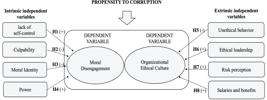
Although the model presented in Figure 1 graphically summarizes the constructs analyzed, it is important to emphasize that it, in practice, comprises two distinct submodels, each with specific explanatory variables for its respective dependent variable, moral disengagement and organizational ethical culture. The proposed framework does not aim to capture all dimensions of corruption propensity, but rather to explore specific mechanisms that influence unethical behavior in organizational settings. Therefore, the model should be interpreted as an analytical framework structured around two complementary explanatory axes, focused on identifying factors associated with these two central aspects of the phenomenon under investigation.
4.2 Research instrument
The instrument used for data collection was an online questionnaire, distributed through a link sent to respondents with instructions for completion and a term of self-consent. A Confirmatory Factor Analysis (CFA) was conducted to verify the adequacy of the instrument and to adjust the scales according to the needs of the research context, resulting in a refined version of the original scales.
The variables investigated in this study were operationalized using scales recognized in both national and international literature. The scales related to subjective variables, such as self-control, guilt, moral identity, power perception, moral disengagement, unethical behavior, ethical leadership, and organizational ethical culture, were adapted from previously validated instruments, with adjustments made to fit the Brazilian context and the study’s target population. Unethical behavior, in particular, was operationalized as a behavioral perception scale and appears as an independent variable in the second regression model. These scales underwent validation through Confirmatory Factor Analysis (CFA), ensuring their suitability for the context of the study.
Additionally, two scales were specifically developed for this research, based on theoretical categories drawn from the literature: The Risk Perception scale was based on the works of Anechiarico and Jacobs (1994) and Sampford et al. (2006); The Salaries and Benefits scale was developed based on Rosen (1986) and Van Veldhuizen (2013). These latter two scales were constructed following psychometric instrument development principles and were also submitted to factor analysis for structural validation. The details and final items of the scales, after the CFA, are presented in Box 1.
The fit indices for the confirmatory factor model showed mixed results, reflecting both strengths and areas that require additional attention. Specifically, the Root Mean Square Error of Approximation (RMSEA) was 0.0524 and the Standardized Root Mean Square Residual (SRMR) was 0.0648, both indicating a good fit of the model to the data, according to conventional criteria that consider values below 0.08 as indicative of a good fit (Hair et al., 2019; MacCallum et al., 1996). These results suggest that the model has an adequate capacity to capture the essential relationships among the observed variables.
However, the Comparative Fit Index (CFI) and Tucker-Lewis Index (TLI) showed values below the desired threshold for a good fit, with a CFI of 0.674 and TLI of 0.660, below the recommended value of 0.90. For Heidenheimer (2002), corruption involves a range of behaviors that are often hidden and illegal, making it difficult to obtain direct and reliable data, not always perfectly capturing the desired construct, and in this case, potentially affecting the fit indices of the model. Nonetheless, the Cronbach’s Alpha values were suitable for all scales used, indicating good internal reliability of the measurement instruments.
4.3 Data collection and analysis
The questionnaires were administered in two major public institutions in Brazil, both of which are references in the fight against corruption. The collection occurred at two distinct times: at Institution A between July 2019 and September 2019, and at Institution B between December 2023 and February 2024. A 5-point scale was chosen, which showed satisfactory internal consistency for validation (Cummins & Gullone, 2000; DeVellis, 2016; Hair et al., 2023). For data collection, an online questionnaire was used, distributed by email, containing clear instructions and the informed consent form to ensure the voluntariness and confidentiality of the responses. The link for responses was sent to the functional emails of the public servants from the two institutions, with respondents not being identified. There were 103 responses from employees of Institution A and 426 responses from Institution B. Thus, the final sample totaled 529 responses that were analyzed in the research.
Although the sample shows an imbalance in the number of respondents between the two institutions, this factor was statistically controlled through the “type of institution” variable, included in the model to capture potential contextual differences. The analyses also incorporated robustness checks, such as assessments of multicollinearity and residuals, ensuring the consistency of the results. The institutions analyzed are federal agencies with nationwide operations and a strategic role in areas sensitive to corruption risks. Institution A performs administrative, regulatory, and oversight functions in the economic and financial domain, involving sensitive decision-making processes related to revenue collection, control, and tax compliance. Institution B is responsible for the investigation of federal crimes, the suppression of transnational illicit activities, and maritime, airport, and border control, as well as coordinating international cooperation in criminal matters.
Despite their distinct institutional focuses, both institutions face significant ethical risks. In Institution A, these risks stem primarily from administrative and decision-making processes, whereas in Institution B they are associated with discretionary decisions in the exercise of police authority and direct interactions with the public. Accordingly, the inclusion of this control variable helps isolate contextual effects and reinforces the validity of the findings.
To test the proposed hypotheses, multiple linear regression models were developed to test the formulated hypotheses (Cohen, 1988; Hair et al., 2019). The data were analyzed with the help of the Jomovi software, version 2.6.2. The choice of multiple linear regression was based on the study’s objective of analyzing the direct effects of specific variables on two distinct dimensions, allowing for a clear interpretation of each predictor’s contribution. In addition, the independent and dependent variables were previously validated, enabling precise estimation of the specific effects of each predictor (Hair et al., 2019).
This is a widely used method in applied research within the social sciences, especially when the focus is on empirically testing specific theoretical hypotheses and controlling for contextual variables (Cohen et al., 2003). Given the structure of the study, with two distinct dependent variables and control variables, regression proved to be appropriate due to its ability to isolate direct effects and provide robust statistical interpretations aligned with the analytical goals of the research.
5. RESULTS
Table 1 presents the means, standard deviations, and Pearson correlations among the variables of intrinsic and extrinsic motivations. The correlations reveal significant relationships between the independent and dependent variables.
The results indicate that moral disengagement shows significant correlations with three variables: lack of self-control (r = 0.391, p < 0.05), moral identity (r = -0.160, p < 0.05), and power (r = 0.119, p < 0.05). Guilt (r = 0.058) did not show a significant correlation with moral disengagement, although it is associated with lack of self-control (r = 0.281, p < 0.05). With respect to organizational ethical culture, the correlations indicate significant positive relationships with ethical leadership (r = 0.663, p < 0.05), risk perception (r = 0.533, p < 0.05), and salaries and benefits (r = 0.447, p < 0.05). Unethical behavior showed a negative correlation with ethical culture (r = -0.186, p < 0.05). These results provide a preliminary view of the relationship between organizational variables and the perception of ethical culture.
In Table 2, six multiple linear regression models are presented for the dependent variable of moral disengagement. Model 1 included only the control variables, while Models 2, 3, 4, and 5 add the independent variables lack of self-control, guilt, moral identity, and power, separately. Model 6 simultaneously includes all variables related to intrinsic motivations, providing a comprehensive analysis of the impact of these variables on moral disengagement and allowing for the testing of hypotheses.
In Model 2, lack of self-control showed a positive and significant relationship with moral disengagement (β = 0.394, p < 0.05), suggesting that individuals with lower self-control tend to morally disengage. The guilt variable in Model 3 did not show statistical significance (coefficient = 0.057), refuting the hypothesis that it would be associated with moral disengagement. While moral identity showed a negative and significant relationship in Model 4 (β = -0.163, p < 0.05), and power demonstrated a positive association in Model 5 (β = 0.123, p < 0.05).
These variables did not maintain significance in the complete model (Model 6), as only lack of self-control remained as the variable significantly associated with moral disengagement (β = 0.388, p < 0.05), confirming the hypothesis that individuals with lower self-control tend to disengage morally. In the case of moral identity and power, the associations observed in the isolated models did not hold in the full model, indicating that their effects were absorbed or attenuated when considered jointly with the other explanatory variables. The final model accounts for 17% of the variance, highlighting lack of self-control as the sole variable independently linked to moral disengagement.
Similar to Table 2, Table 3 presents the analysis of models for the dependent variable organizational ethical culture. Initially, models that include, separately, the independent variables and a complete model, combining all variables related to extrinsic motivations to assess their joint impact, are tested.
In the isolated models, unethical behavior showed a significant negative relationship with organizational ethical culture (β = -0,199, p < 0.05). Ethical leadership demonstrated a positive association with a more ethical organizational culture (β = 0,662, p < 0.05). Risk perception and perception of salaries and benefits also showed significant positive effects (β = 0,540, p < 0.05; and β = 0,453, p < 0.05), respectively.
In the complete model (Model 6), ethical leadership remained the variable most strongly associated with organizational ethical culture (β = 0,459, p < 0.05), reinforcing the hypothesized relationship. Risk perception (β = 0,240, p < 0.05) and the perception of salaries and benefits (β = 0,233, p < 0.05) remained as relevant variables, supporting the original hypotheses. However, unethical behavior lost significance in the complete model, indicating that its association is not sustained when the other variables are considered simultaneously. This suggests that the negative impact of unethical behavior is mitigated or neutralized by the presence of the other variables in the model. Thus, three of the four hypotheses related to the independent variables associated with organizational ethical culture were supported.
6. DISCUSSION
This study tested eight hypotheses structured around two analytical dimensions: moral disengagement, as influenced by intrinsic motivational factors (H1-H4); and organizational ethical culture, shaped by extrinsic motivational factors (H5-H8). The findings offer insights into the psychological and contextual mechanisms that may influence ethical conduct and deviant behavior among public servants.
Hypothesis 1, which predicted that lower levels of self-control would be positively associated with moral disengagement, was confirmed. The results indicate that low levels of self-control is an important predictive variable for morally deviant behaviors. Individuals with low control over their actions tend to focus on the immediate benefits of their actions, neglecting future consequences (Mead et al., 2009). Low levels of self-control directly contribute to impulsive behaviors and moral deviations, where individuals focus on immediate gains, ignoring future consequences (Holt et al., 2012).
Hypothesis 2, which predicted that higher levels of guilt would be negatively associated with moral disengagement, was not confirmed. Although it was expected that individuals with a higher propensity for guilt would feel greater cognitive dissonance when committing immoral acts, thereby intensifying the internal conflict in decision-making (Baumeister et al., 1994; Köbis et al., 2016; Posner & Rasmusen, 1999), the results indicate that guilt, alone, is not sufficient to inhibit moral disengagement. These findings suggest that guilt may not be a strong mechanism to prevent morally deviant behavior. Although guilt may play a role in modulating moral behavior, it alone is not a robust enough mechanism to inhibit moral disengagement, especially when other psychological factors are at play (Chauhan, 2023).
Hypothesis 3, which predicted that higher levels of moral identity would be negatively associated with moral disengagement, found partial support. In the isolated model, the association was significant, indicating that individuals with a strong sense of moral self-concept are more likely to regulate their behavior according to internalized standards (Moore, 2008; Yang et al., 2020). However, this association lost significance in the complete model, suggesting that contextual factors may attenuate the protective effect of moral identity.
Hypothesis 4, which predicted that higher levels of perceived power would be positively associated with moral disengagement, was partially confirmed. In the isolated models, power was significantly associated with moral disengagement, corroborating recent literature that suggests that power can increase the propensity to justify unethical behaviors by creating a sense of invulnerability (Foulk et al., 2021; Keltner et al., 2020). In the complete model, power lost significance, suggesting that its effect is attenuated when other factors are considered.
Regarding the extrinsic motivations, Hypothesis 5, predicting that perceived unethical behavior is negatively associated with organizational ethical culture, was only partially supported. Although the isolated model (Model 2) confirmed the expected association, the effect did not remain significant in the complete model, suggesting that environments where deviant conduct is perceived as frequent may differently affect employees’ ethical expectations (Belle & Cantarelli, 2017).
In this context, ethical leadership plays a central role in mitigating unethical conduct and reinforcing shared expectations of integrity. Ethical leaders promote an environment where ethical deviations are not tolerated, strengthening organizational culture (Al Halbusi et al., 2022; Asencio, 2018; Bashir & Hassan, 2020; Jones & Kavanagh, 1996; Korsgaard et al., 2002; Schwarz, 2001; Small & Lew, 2019). Accordingly, Hypothesis 6, which predicted that perceived ethical leadership is positively associated with organizational ethical culture, was supported. This finding reinforces the idea that ethical leadership reduces ambiguity, aligns behavioral expectations, and restricts the acceptance of unethical practices within organizations (Abraham et al., 2018; Festinger, 1957; Moore, 2008).
Hypothesis 7, which predicted that higher levels of risk perception would be positively associated with organizational ethical culture, was confirmed. The greater the perception of control, the greater the impact on ethical culture, indicating that control and monitoring mechanisms positively affect organizational behavior (Finucane et al., 2000). These results are also consistent with evidence of an inverse relationship between risk perception and intentions to engage in deviant behavior (Julian & Bonavia, 2021).
Finally, Hypothesis 8, which predicted that a more positive perception of salaries and benefits would be positively associated with organizational ethical culture, was confirmed, albeit with a moderate effect. The literature indicates that salary and benefit increases can reduce corruption, provided they are accompanied by rigorous control systems (Bashir & Hassan, 2020; Di Tella & Schargrodsky, 2003; Kwon, 2014; Van Veldhuizen, 2013).
These findings suggest the importance of institutional interventions designed to strengthen ethical standards. Evidence also shows that ethics training programs can enhance ethical reflection among public servants (Pliscoff-Varas & Lagos-Machuca, 2021). In this sense, the presence of ethical leadership and coherent ethical norms can reinforce behavioral expectations across the organization and contribute to reducing tolerance for unethical conduct.
6.1 Limitations, contributions, and directions for future research
The study focused on two major Brazilian public institutions and civil servants. Although it provides valuable insights into the relationship between motivations and corruption in the public sector, the results may not be generalizable to other sectors, such as the private or third sectors, nor to other cultural and geographic contexts. The use of self-administered questionnaires may introduce biases such as social desirability, particularly on a sensitive topic like corruption, where participants might tend to provide socially acceptable responses, potentially distorting the observed relationships. It is believed that respondents tend to exhibit correct and ethical behavior in practice (self-report). It is recognized that corruption is a problem of a hidden and invisible nature of activities, creating difficulties for empirical study (Ceschel et al., 2022).
Although this study used central variables from a theoretical viewpoint, as per the literary review conducted, certain potentially influential dimensions on corrupt behavior, such as the influence of social norms and the impact of political structures, were not explored. This omission may restrict the breadth of our conclusions. Furthermore, the research, conducted at two different times with a cross-sectional approach, does not allow for establishing causal relationships. This limits our ability to provide robust conclusions about the evolution of the propensity for corruption throughout the career stages of public servants.
In developing the method, we also faced significant challenges related to the adequacy of the fit indices of the confirmatory factor model. Models with high complexity of parameters or variables often present a more challenging fit on the TLI and CFI indices. Despite these complexities, absolute fit indices such as the SRMR and RMSEA indicated a good fit, suggesting effective modeling of the correlations and variations within the data. The internal reliability of the scales, evidenced by high Cronbach’s Alpha values, reinforces that the items are consistently measured, supporting the accuracy of the measurement of the proposed constructs. This robustness is crucial, especially when the relative indices present challenges. The validity and applicability of the model are reaffirmed by the ability to replicate the observed covariance matrix with minimal discrepancies, highlighting its effectiveness even with limitations in the relative fit indices.
Future research may seek to refine the model by employing other analytical techniques, such as path analysis and structural equation models that can handle the multidimensionality of the constructs more effectively. The addition of moderating or mediating variables could help capture the nuances of the relationships between motivations and the propensity for corruption, providing a more detailed view of the internal dynamics. Additionally, methodological adjustments with studies that seek to deepen the analysis of the indicators for each theoretical factor could improve the reliability and validity of the constructs, strengthening the results and conclusions of future studies.
New studies could adopt a longitudinal approach, examining how intrinsic and extrinsic motivations evolve over time and how organizational interventions, such as ethics and leadership training, affect the propensity for corruption. Moreover, it would be useful to expand the scope of the research to include different types of organizations (public, private, and third sector). The incorporation of qualitative studies that can capture the depth and nuance of individual and organizational experiences is also crucial.
The use of in-depth interviews, focus groups, and case studies would not only enrich the understanding of the underlying dynamics that influence corruption but also help identify specific contextual and cultural factors that influence the effectiveness of anti-corruption policies. The study ignites opportunities for understanding the mechanisms that drive unethical behavior, as already indicated by Belle and Cantarelli (2017) and the critical role in creating an ethical agenda in organizations (Mitchell et al., 2023).
Additionally, it is important to consider that the findings of this study, although relevant, were obtained from Brazilian public institutions with an organizational culture focused on combating corruption. Therefore, generalizing these results to other organizational and cultural contexts should be done with caution. Future studies may expand the analysis to include organizations with different institutional profiles, countries with diverse regulatory structures, or contexts with less consolidated cultures of integrity, in order to compare and validate the findings across multiple settings.
Another aspect to consider concerns the possible presence of social desirability bias, especially in variables based on self-perception, such as perceived organizational ethical culture and self-assessed ethical behaviors. The mean scores for these variables were slightly above the midpoint of the scale, which may reflect a tendency among participants to present themselves or their institutions in a favorable light. While not conclusive, this pattern is consistent with findings in corruption and ethics research, where subjective self-reports are frequently influenced by social norms. Future research is encouraged to adopt methodological triangulation, incorporating qualitative approaches such as in-depth interviews or implicit measures to minimize the influence of socially desirable responding.
7. CONCLUSION
This study aimed to verify the relationship between intrinsic motivations (cognitive and intrapersonal factors) and extrinsic motivations (non-cognitive and external factors) with the propensity for corrupt actions by public servants, focusing on two dimensions: moral disengagement and organizational ethical culture. Unlike most of the literature, which deals with the isolated association of variables to identify corrupt behaviors, this research contributes by simultaneously examining variables that have already been studied separately, in addition to associating them with the propensity for corruption. This perspective aligns with integrative analytical agendas proposed in the literature on organizational corruption (Coelho & Almeida, 2024).
The results indicated that, among the intrinsic motivations, lack of self-control was the only variable significantly associated with moral disengagement, confirming its relevance in deviant behavior. Variables such as guilt, moral identity, and power, although showing associations in isolated models, did not maintain significance in the complete model. With respect to extrinsic motivations, ethical leadership, risk perception, and salaries and benefits showed positive and significant correlations with organizational ethical culture, suggesting that these variables contribute to the strengthening of ethical culture. Unethical behavior showed a negative correlation with ethical culture, but its influence was neutralized in the complete model, possibly due to the presence of strong ethical leadership, which played a central role in promoting a robust organizational culture.
These findings offer important insights into the factors that influence moral disengagement and organizational ethical culture. Practically, the results suggest that focusing on strengthening self-control and promoting effective ethical leadership can be strategic for reducing the propensity for corrupt behaviors and reinforcing ethical culture in organizations. Based on this evidence, public bodies can deepen the empirical knowledge of these variables, in order to develop cognitive training aimed at strengthening self-control; relocation of employees with a high propensity for deviant behaviors to low-risk sectors; careful selection of managers with a low propensity for corrupt behaviors; focus on leadership development; revision of salary and benefits policy, associated with controls and sanctions; enhancement of control and monitoring mechanisms, with more frequent internal audits; and creation of efficient sanction systems for corrupt acts, as well as incentives for ethical behavior at all hierarchical levels.
-
Peer review report:
Reviewers:Fernando Porfirio Soares Oliveira (Universidade Federal Rural do Semi-Árido, Mossoró / RN - Brazil) https://orcid.org/0000-0001-7103-6340Adalmir de Oliveira Gomes (Universidade de Brasília, Brasília / DF - Brazil) https://orcid.org/0000-0001-9000-3296The peer review report is available at this link https://periodicos.fgv.br/rap/article/view/92348/87050
-
[Original version]
ACKNOWLEDGEMENTS
We thank the anonymous reviewers of RAP for their contributions, which enriched and strengthened this manuscript.
DATA AVAILABILITY
The data are not publicly available due to institutional and ethical restrictions but may be provided by the authors upon formal request.
References
- Abraham, J., Suleeman, J., & Takwin, B. (2018). The psychology of corruption: The role of the counterfeit self, entity self-theory, and outcome-based ethical mindset. Journal of Psychological & Educational Research, 26(2), 7-32.
- Albanese, J. S., & Artello, K. (2019). The behavior of corruption: An empirical typology of public corruption by objective & method. Journal of Criminology, 20(1), 1-12.
-
Al Halbusi, H., Tang, T., Williams, K., & Ramayah, T. (2022). Do ethical leaders enhance employee ethical behaviors? Asian Journal of Business Ethics, 11(1), 105-135. https://doi.org/10.1007/s13520-022-00143-4
» https://doi.org/10.1007/s13520-022-00143-4 -
Anderson, C., John, O. P., & Keltner, D. (2012). The personal sense of power. Journal of Personality, 80(2), 313-344. https://doi.org/10.1111/j.1467-6494.2011.00734.x
» https://doi.org/10.1111/j.1467-6494.2011.00734.x -
Anechiarico, F., & Jacob, J. (1994). Vision of corruption control and the evolution of American public administration. Public Administration Review, 54(5), 463-473. https://doi.org/10.2307/976432
» https://doi.org/10.2307/976432 - Aquino, J. L. B., & Medeiros, M. (2009). Escala de Culpabilidade: Evidências de Validade para Contexto Brasileiro. Psicologia: Reflexão e Crítica, 22(1), 75-84.
-
Aquino, K., & Reed, A. (2002). The self-importance of moral identity. Journal of Personality and Social Psychology, 83(6), 1423-1440. https://doi.org/10.1037/0022-3514.83.6.1423
» https://doi.org/10.1037/0022-3514.83.6.1423 -
Armstrong, A., & Stedman, I. (2024). A “renewed conversation” about ethical management in Canada’s public service: Where should we be headed? Canadian Public Administration, 67(4), 620-631. https://doi.org/10.1111/capa.12591
» https://doi.org/10.1111/capa.12591 -
Asencio, H. (2018). The effect of ethical leadership on bribing and favoritism: a field research study. Public Integrity, 21(3), 263-285. https://doi.org/10.1080/10999922.2018.1468204
» https://doi.org/10.1080/10999922.2018.1468204 -
Baez-Camargo, C., Bukuluki, P., Sambaiga, R., Gatwa, T., Kassa, S., & Stahl, C. (2020). Petty corruption in the public sector: A comparative study of three East African countries through a behavioural lens. African Studies, 79(2), 232-249. https://doi.org/10.1080/00020184.2020.1803729
» https://doi.org/10.1080/00020184.2020.1803729 - Bandura, A. (1986). Social foundations of thought and action Prentice-Hall.
-
Bandura, A. (1999). Moral disengagement in the perpetuation of inhumanities. Personality and Social Psychology Review, 3, 193-209. https://doi.org/10.1207/s15327957pspr0303_3
» https://doi.org/10.1207/s15327957pspr0303_3 -
Bandura, A. (2002). Selective moral disengagement in the exercise of moral agency. Journal of Moral Education, 31, 101-119. https://doi.org/10.1080/0305724022014322
» https://doi.org/10.1080/0305724022014322 -
Bashir, M., & Hassan, S. (2020). The need for ethical leadership in combating corruption. International Review of Administrative Sciences, 86(4), 673-690. https://doi.org/10.1177/0020852318825386
» https://doi.org/10.1177/0020852318825386 - Baumeister, R., Heatherton, T., & Tice, D. (1994). Losing control: How and why people fail at self-regulation Academic Press.
-
Bendahan, S., Zehnder, C., Pralong, F. P., & Antonakis, J. (2015). Leader corruption depends on power and testosterone. The Leadership Quarterly, 26(2),101-122. https://doi.org/10.1016/j.leaqua.2014.07.010
» https://doi.org/10.1016/j.leaqua.2014.07.010 -
Belle, N., & Cantarelli, P. (2017). What causes unethical behavior? A meta-analysis to set an agenda for public administration research. Public Administration Review, 77(3), 327-339. https://doi.org/10.1111/puar.12714
» https://doi.org/10.1111/puar.12714 -
Bicchieri, C., & Ganegonda, D. (2017). Determinants of corruption: A socio-psychological analysis. In P. Nichols & D. Robertson (Eds.), Thinking about bribery, neuroscience, moral cognition and the psychology of bribery (pp. 179-205). Cambridge University Press. https://doi.org/10.1017/9781316450765.008
» https://doi.org/10.1017/9781316450765.008 -
Borkowski, S. C., & Ugras, Y. J. (1998). Business students and ethics: A meta-analysis. Journal of Business Ethics, 17(11), 1117-1127. https://doi.org/10.1023/A:1005748725174
» https://doi.org/10.1023/A:1005748725174 -
Brown, M. E., Trevino, L. K., & Harrison, D. A. (2005). Ethical leadership: a social learning perspective for construct development and testing. Organizational Behavior and Human Decision Processes, 97(2), 117-134. https://doi.org/10.1016/j.obhdp.2005.03.002
» https://doi.org/10.1016/j.obhdp.2005.03.002 -
Canales, O. D. M., Pérez-Chiqués, E., & Martínez-Hernández, A. A. (2023). Framework to understand and address the systemic corruption in local governments. Revista de Administração Pública, 57(4), e2022-0346. https://doi.org/10.1590/0034-761220220346x
» https://doi.org/10.1590/0034-761220220346x -
Capraro, V., & Sippel, J. (2017). Gender differences in moral judgment and the evaluation of gender-stereotypical behavior. Cognitive Processing, 18(4), 399-405. https://doi.org/10.1007/s10339-017-0814-8
» https://doi.org/10.1007/s10339-017-0814-8 -
Cavalcante, P. L. C. (2023). Do politics and administration affect innovation performance? A comparative analysis. Revista de Administração Pública, 57(2), e2022-0204. https://doi.org/10.1590/0034-761220220204x
» https://doi.org/10.1590/0034-761220220204x -
Ceschel, F., Hinna, A., & Homberg, F. (2022). Public sector strategies in curbing corruption: a review of the literature. Public Organization Review, 22, 571-591. https://doi.org/10.1007/s11115-022-00639-4
» https://doi.org/10.1007/s11115-022-00639-4 - Chauhan, S. (2023). Moral disengagement and guilt reactions. International Journal of Indian Psychology, 11(1), 1611-1616.
-
Cintra, R. F., Cassol, A., Ribeiro, I., & Carvalho, A. O. (2018). Corruption and emerging markets: Systematic review of the most cited. Research in International Business and Finance, 45, 607-619. https://doi.org/10.1016/j.ribaf.2017.07.177
» https://doi.org/10.1016/j.ribaf.2017.07.177 - Clinard, M. B., & Quinney, R. (1973). Criminal behavior systems: a typology (2nd ed.). Holt, Rinehart and Winston.
-
Coelho, C. C. (2023). When in Rome, do as the Romans do: A case study of Odebrecht and the continuum of destructiveness. Revista de Administração Pública, 57(3), e2022-0261. https://doi.org/10.1590/0034-761220220261x
» https://doi.org/10.1590/0034-761220220261x -
Coelho, C., & Almeida, S. V. de. (2024). The how, where, and what of organizational corruption: an integrative literature review. Revista de Administração Pública, 58(6), e2024-0154. https://doi.org/10.1590/0034-761220240154
» https://doi.org/10.1590/0034-761220240154 - Cohen, J. (1988). Statistical power analysis for the behavioral sciences Lawrence Erlbaum Associates.
-
Cohen, T. R., Panter, A. T., & Turan, N. (2012). Guilt proneness and moral character. Current Directions in Psychological Science, 21, 355-359. https://doi.org/10.1177/0963721412454874
» https://doi.org/10.1177/0963721412454874 - Cummins, R., & Gullone, E. (2000). Why we should not use 5-point Likert scales: the case for subjective quality of life measurement. Second International Conference on Quality of Life in Cities
-
DeCelles, K. A., DeRue, D. S., Margolis, J. D., & Ceranic, T. L. (2012). Does power corrupt or enable? When and why power facilitates self-interested behavior. Journal of Applied Psychology, 97(3), 681-689. https://doi.org/10.1037/a0026811
» https://doi.org/10.1037/a0026811 -
Detert, J., Treviño, L., & Sweitzer, V. (2008). Moral disengagement in ethical decision making: A study of antecedents and outcomes. Journal of Applied Psychology, 93(2), 374. https://doi.org/10.1037/0021-9010.93.2.374
» https://doi.org/10.1037/0021-9010.93.2.374 - DeVellis, R. F. (2016). Scale development: Theory and applications (4th ed.). Sage Publications.
-
Di Tella, R., & Schargrodsky, E. (2003). The role of wages and auditing during a crackdown on corruption in the City of Buenos Aires. Journal of Law & Economics, 46(1), 269-292. https://doi.org/10.1086/345578
» https://doi.org/10.1086/345578 -
Dimant, E., & Schulte, T. (2016). The nature of corruption: an interdisciplinary perspective. German Law Journal, 17(1), 54-72. https://doi.org/10.1017/s2071832200019684
» https://doi.org/10.1017/s2071832200019684 -
Dimant, E., & Tosato, G. (2018). Causes and effects of corruption: What has past decade’s empirical research taught us? Journal of Economic Surveys, 32(2), 335-356. https://doi.org/10.1111/joes.12247
» https://doi.org/10.1111/joes.12247 -
Dong, B., Dulleck, U., & Torgler, B. (2012). Conditional corruption. Journal of Economic Psychology, 33(3), 609-627. https://doi.org/10.1016/j.joep.2011.12.001
» https://doi.org/10.1016/j.joep.2011.12.001 -
Duffy, M. K., Aquino, K., Tepper, B. J., Reed, A., & O’Leary-Kelly, A. M. (2005). Moral disengagement and interpersonal mistreatment in organizations. Journal of Applied Psychology, 90(5), 946-955. https://doi.org/10.1037/0021-9010.90.5.946
» https://doi.org/10.1037/0021-9010.90.5.946 -
Ferrell, O. C. & L. B., Gresham. (1985). A contingency framework for understanding ethical decision-making in marketing. Journal of Marketing, 49(3), 87-96. https://doi.org/10.1177/002224298504900308
» https://doi.org/10.1177/002224298504900308 - Festinger, L. (1957). A theory of cognitive dissonance Stanford University Press.
-
Foulk, T., Woolum, A., & Erez, A. (2021). It’s lonely at the bottom (too): The effects of psychological powerlessness on social closeness and withdrawal behaviors. Personnel Psychology, 74(1), 75-104. https://doi.org/10.1111/peps.12399
» https://doi.org/10.1111/peps.12399 -
Frost, J., & Tischer, S. (2014). Unmasking collective corruption: the dynamics of corrupt routines. European Management Review, 11(3-4), 191-207. https://doi.org/10.1111/emre.12034
» https://doi.org/10.1111/emre.12034 -
Fujiwara, T., & Wantchekon, L. (2013). Can informed public deliberation overcome clientalism? Experimental evidence from Benin. American Economic Journal: Applied Economics, 5(4), 241-255. https://doi.org/10.1257/app.5.4.241
» https://doi.org/10.1257/app.5.4.241 -
Gino, F., Ayal, S., & Ariely, D. (2009). Contagion and differentiation in unethical behavior: The effect of one bad apple on the barrel. Psychological Science, 20(3), 393-398. https://doi.org/10.1111/j.1467-9280.2009.02306.x
» https://doi.org/10.1111/j.1467-9280.2009.02306.x -
Gnaldi, M., & Del Sarto, S. (2024). Measuring corruption risk in public procurement over emergency periods. Social Indicators Research, 172, 859-877. https://doi.org/10.1007/s11205-024-03331-w
» https://doi.org/10.1007/s11205-024-03331-w - Gouveia, V., Santos, W., Guerra, V., Fonseca, P., & Gouveia, R. (2013). Self-control Scale: Brazilian adaptation and evidence of construct validity. Avaliação Psicológica, 12(3), 379-386.
- Haidt, J. (2018). The righteous mind: why good people are divided by politics and religion Vintage Books.
- Haidt, J., & Joseph, C. (2008). The moral mind: How five sets of innate intuitions guide the development of many culture-specific virtues, and perhaps even modules Oxford University Press.
- Hair, J. F., Jr., Babin, B. J., Anderson, R. E., & Black, W. C. (2019). Multivariate data analysis (8th ed.). Cengage Learning.
-
Hair, J. F. Jr., Page, M., Brunsveld, N., Merkle, A., & Cleton, N. (2023). Essentials of business research methods (5th ed.). Routledge. https://doi.org/10.4324/9781003363569
» https://doi.org/10.4324/9781003363569 -
Hakimi, A., & Hamdi, H. (2017). Does corruption limit FDI and economic growth? Evidence from MENA countries. International Journal of Emerging Markets, 12(3), 550-571. https://doi.org/10.1108/ijoem-06-2015-0118
» https://doi.org/10.1108/ijoem-06-2015-0118 -
Harmon-Jones, E. (2000). An update on cognitive dissonance theory, with a focus on the self. In A. Tesser, R. B. Felson, & J. M. Suls (Eds.), Psychological perspectives on self and identity (pp. 119-144). American Psychological Association. https://doi.org/10.1037/10357-005
» https://doi.org/10.1037/10357-005 -
Heidenheimer, A. J. (2002). Perspectives on the perception of corruption. In M. Johnston (Ed.), Political corruption: concepts and contexts (pp. 141-154). Routledge. https://doi.org/10.4324/9781315126647
» https://doi.org/10.4324/9781315126647 -
Hertzberg, A., Liberti, J., & Paravisini, D. (2010). Information and incentives inside the firm: Evidence from loan officer rotation. The Journal of Finance, 65(3), 795-828. https://doi.org/10.1111/j.1540-6261.2010.01553.x
» https://doi.org/10.1111/j.1540-6261.2010.01553.x -
Hodson, R., Martin, W., Lopez, S. H., & Roscigno, V. J. (2012). Rules don’t apply: Kafka’s insights on bureaucracy. Organization, 20(2), 256-278. https://doi.org/10.1177/1350508412443581
» https://doi.org/10.1177/1350508412443581 -
Holt, T. J., Bossler, A. M., & May, D. C. (2012). Low self-control, deviant peer associations, and juvenile cyberdeviance. American Journal of Criminal Justice, 37, 378-395. https://doi.org/10.1007/s12103-011-9117-3
» https://doi.org/10.1007/s12103-011-9117-3 -
Hossain, A. T., Hossain, T., & Kryzanowski, L. (2021). Political corruption and corporate payouts. Journal of Banking & Finance, 123, 1-25. https://doi.org/10.1016/j.jbankfin.2020.106016
» https://doi.org/10.1016/j.jbankfin.2020.106016 -
Jackson, D. (2025). Systemic corruption as a meso-level phenomenon: Severe abuse and strategic gain. Public Integrity https://doi.org/10.1080/10999922.2025.2520679
» https://doi.org/10.1080/10999922.2025.2520679 -
Jaakson, K., Johannsen, L., Pedersen, K., Vadi, M., Ashyrov, G., Reino, A., & Sööt, M. (2019). The role of costs, benefits, and moral judgments in private-to-private corruption. Law and Social Change, 71(1), 83-106. https://doi.org/10.1007/s10611-018-9790-y
» https://doi.org/10.1007/s10611-018-9790-y -
Jones, G., & Kavanagh, M. (1996). An experimental examination of the effects of individual and situational factors on unethical behavioral intentions in the workplace. Journal of Business Ethics, 15(5), 511-523. https://doi.org/10.1007/bf00381927
» https://doi.org/10.1007/bf00381927 -
Jones, T. M. (1991). Ethical decision making by individuals in organizations: An issue-contingent model. Academy of Management Review, 16(2), 366-395. https://doi.org/10.5465/amr.1991.4278958
» https://doi.org/10.5465/amr.1991.4278958 -
Jordan, J., Mullen, E., & Murnighan, J. K. (2011). Striving for the moral self: The effects of recalling past moral actions on future moral behavior. Personality and Social Psychology Bulletin, 37(5), 701-713. https://doi.org/10.1177/0146167211400208
» https://doi.org/10.1177/0146167211400208 -
Julian, M., & Bonavia, T. (2021). Understanding unethical behaviors at the university level: a multiple regression analysis. Ethics & Behavior, 31(4), 257-269. https://doi.org/10.1080/10508422.2020.1723101
» https://doi.org/10.1080/10508422.2020.1723101 -
Kaptein, M. (2008). Developing and testing a measure for the ethical culture of organizations: The Corporate Ethical Virtues Model. Journal of Organizational Behavior, 29(7), 923-947. https://doi.org/10.1002/job.520
» https://doi.org/10.1002/job.520 -
Keltner, D., Gruenfeld, D. H., & Anderson, C. (2003). Power, approach, and inhibition. Psychological Review, 110(2), 265-284. https://doi.org/10.1037/0033-295X.110.2.265
» https://doi.org/10.1037/0033-295X.110.2.265 -
Keltner, D., Gruenfeld, D. H., & Anderson, C. (2020). Power, approach, and inhibition: Twenty years of research and reflection. Journal of Social Psychology, 146(1), 275-289. https://doi.org/10.1111/jsp.2020.003
» https://doi.org/10.1111/jsp.2020.003 -
Köbis, N., Van Prooijen, J., Righetti, F., & Van Lange, P. (2016). Prospection in individual and interpersonal corruption dilemmas. Review of General Psychology, 20(1), 71-85. https://doi.org/10.1037/gpr0000069
» https://doi.org/10.1037/gpr0000069 -
Korsgaard, M., Brodt, S., & Whitener, E. (2002). Trust in the face of conflict: The role of managerial trustworthy behavior and organizational context. Journal of Applied Psychology, 87(2), 312-319. https://doi.org/10.1037/0021-9010.87.2.312
» https://doi.org/10.1037/0021-9010.87.2.312 -
Kwon, I. (2014). Motivation, discretion, and corruption. Journal of Public Administration Research and Theory, 24(3), 765-794. https://doi.org/10.1093/jopart/mus062
» https://doi.org/10.1093/jopart/mus062 -
Lammers, J., Stapel, D. A., & Galinsky, A. D. (2010). Power increases hypocrisy: Moralizing in reasoning, immorality in behavior. Psychological Science, 21(5), 737-744. https://doi.org/10.1177/0956797610368810
» https://doi.org/10.1177/0956797610368810 -
Loo, R. (2003). Are women more ethical than men? Findings from three independent studies. Women in Management Review, 18(4), 169-181. https://doi.org/10.1108/09649420310479372
» https://doi.org/10.1108/09649420310479372 -
McDaniel, C. (1999). A survey on ethics in the workplace: A comparison of future marketers and managers. Marketing Education Review, 9(1), 1-7. https://doi.org/10.1080/10528008.1999.11488686
» https://doi.org/10.1080/10528008.1999.11488686 -
MacCallum, R. C., Browne, M. W., & Sugawara, H. M. (1996). Power analysis and determination of sample size for covariance structure modeling. Psychological Methods, 1(2), 130-149. https://psycnet.apa.org/doi/10.1037/1082-989X.1.2.130
» https://psycnet.apa.org/doi/10.1037/1082-989X.1.2.130 -
Manara, M., Gils, S., Nübold, A., & Zijlstra, F. (2020). Corruption, fast or slow? Ethical leadership interacts with Machiavellianism to influence intuitive thinking and corruption. Frontiers in Psychology, 11, 1-17. https://doi.org/10.3389/fpsyg.2020.578419
» https://doi.org/10.3389/fpsyg.2020.578419 -
Marani, S., Brito, M., Souza, G., & Brito, V. (2018). Meanings in research on corruption. Revista de Administração Pública, 52(4), 712-730. https://doi.org/10.1590/0034-7612175197
» https://doi.org/10.1590/0034-7612175197 -
Mead, N., Baumeister, R., Gino, F., Schweitzer, M., & Ariely, D. (2009). Too tired to tell the truth: Self-control resource depletion and dishonesty. Journal of Experimental Social Psychology, 45(3), 594-597. https://doi.org/10.1016/j.jesp.2009.02.004
» https://doi.org/10.1016/j.jesp.2009.02.004 -
Melo-Silva, H., Pereira, V., & Saraiva, E. (2021). Public-Private Partnerships: Administrative modernization and economic relationships immersed in conflicts of interest and corruption. Revista de Administração Pública, 55(3), e2021-0892. http://dx.doi.org/10.1590/0034-761220190479
» http://dx.doi.org/10.1590/0034-761220190479 -
Mentzer, M. S. (2024). Political culture and the resource curse: Public sector corruption across the United States. Social Responsibility Journal, 20(10), 2084-2099. https://doi.org/10.1108/srj-09-2023-0508
» https://doi.org/10.1108/srj-09-2023-0508 -
Mitchell, M., Rivera, G., & Treviño, L. (2023). Unethical leadership: A review, analysis, and research agenda. Personnel Psychology, 76(2), 547-583. https://doi.org/10.1111/peps.12574
» https://doi.org/10.1111/peps.12574 -
Moore, C. (2008). Moral disengagement in processes of organizational corruption. Journal of Business Ethics, 80, 129-139. https://doi.org/10.1007/s10551-007-9447-8
» https://doi.org/10.1007/s10551-007-9447-8 -
Muraven, M., Pogarsky, G., & Shmueli, D. (2006). Self-control depletion and the general theory of crime. Journal of Quantitative Criminology, 22, 263-277. https://doi.org/10.1007/s10940-006-9011-1
» https://doi.org/10.1007/s10940-006-9011-1 -
Murillo, D. J. H., Valerio-Ureña, G., Atencio, G. S., Asprón, J., & Alfaro, A. Álvarez. (2023). Information technologies for countering corruption: Analysis of the Costa Rican public procurement system. Revista de Administração Pública, 57(1), e2022-0126. https://doi.org/10.1590/0034-761220220126
» https://doi.org/10.1590/0034-761220220126 -
Nichols, P. M. (2009). Multiple communities and controlling corruption. Journal of Business Ethics, 88, 805-813. http://www.jstor.org/stable/27749750
» http://www.jstor.org/stable/27749750 -
Pelletier, K., & Bligh, M. (2006). Rebounding from corruption: Perceptions of ethics program effectiveness in a public sector organization. Journal of Business Ethics, 67(4), 359-374. https://doi.org/10.1007/s10551-006-9027-3
» https://doi.org/10.1007/s10551-006-9027-3 -
Perry, J. L., Hondeghem, A., & Wise, L. R. (2010). Revisiting the motivational bases of public service: Twenty years of research and an agenda for the future. Public Administration Review, 70(5), 681-690. https://doi.org/10.1111/j.1540-6210.2010.02196.x
» https://doi.org/10.1111/j.1540-6210.2010.02196.x -
Pinter, B., Insko, C. A., Wildschut, T., Kirchner, J. L., Montoya, R. M., & Wolf, S. T. (2007). Reduction of interindividual-intergroup discontinuity: The role of leader accountability and proneness to guilt. Journal of Personality and Social Psychology, 93(2), 250-265. https://doi.org/10.1037/0022-3514.93.2.250
» https://doi.org/10.1037/0022-3514.93.2.250 -
Posner, R., & Rasmusen, E. (1999). Creating and enforcing norms, with special reference to sanctions. International Review of Law and Economics, 19(3), 369-382. https://doi.org/10.1016/s0144-8188(99)00013-7
» https://doi.org/10.1016/s0144-8188(99)00013-7 -
Pliscoff-Varas, C., & Lagos-Machuca, N. (2021). Effect of training on reflection about ethics and corruption. Revista de Administração Pública, 55(4), 950-968. https://doi.org/10.1590/0034-761220200658
» https://doi.org/10.1590/0034-761220200658 -
Reddick, C. G., Chatfield, A., & Puron-Cid, G. (2024). A categorical framework of ethical leadership for public organizations: Testing a multi-dimensional measurement model. Public Administration Review, 57(1), 3-33. https://doi.org/10.1177/00953997241291833
» https://doi.org/10.1177/00953997241291833 -
Reynolds, S. J., & Ceranic, T. L. (2007). The effects of moral judgment and moral identity on moral behavior: An empirical examination of the moral individual. Journal of Applied Psychology, 92(6), 1610-1624. https://doi.org/10.1037/0021-9010.92.6.1610
» https://doi.org/10.1037/0021-9010.92.6.1610 -
Resende, M., & Porto, J. (2017). Moral Identity Scale: Validity evidences in the Brazilian context. Psico-USF, 22(1), 75-85. https://doi.org/10.1590/1413-82712017220107
» https://doi.org/10.1590/1413-82712017220107 -
Rodrigues, C. C. C. (2025). The excuses we make: Defining eight corruption rationalization categories. Regulation & Governance https://doi.org/10.1111/rego.70068
» https://doi.org/10.1111/rego.70068 - Rest, J. R. (1986). Moral development: Advances in research and theory Praeger Publishers.
- Rose-Ackerman, S. (2019). Corruption and government: Causes, consequences, and reform Cambridge University Press.
- Rosen, S. (1986). The theory of equalizing differences. In O. C. Ashenfelter & R. Layard (Eds.), Handbook of labor economics (Vol. 1, pp. 641-692). North-Holland.
-
Sampford, C., Shacklock, A., Connors, C., & Galtung, F. (Eds.). (2006). Measuring corruption Routledge. https://doi.org/10.4324/9781315594385
» https://doi.org/10.4324/9781315594385 - Schwarz, M. (2001). The nature of the relationship between corporate codes of ethics and behavior. Journal of Business Ethics, 32(3), 247-262.
-
Segal, L. (2012). Instilling stewardship to address the integrity/efficiency dilemma. Administration & Society, 44(7), 825-852. https://doi.org/10.1177/0095399711427533
» https://doi.org/10.1177/0095399711427533 -
Shalvi, S., Eldar, O., & Bereby-Meyer, Y. (2012). Honesty requires time (and lack of justifications). Psychological Science, 23(10), 1264-1270. https://doi.org/10.1177/0956797612443835
» https://doi.org/10.1177/0956797612443835 -
Schuster, C., Fuenzalida, J., Mikkelsen, K. S., & Meyer-Sahling, J. H. (2024). Unethical leadership, moral compensation, and ethical followership: Evidence from a survey experiment with Chilean public servants. Public Administration Review, 84(5), 848-869. https://doi.org/10.1111/puar.13815
» https://doi.org/10.1111/puar.13815 -
Small, C., & Lew, C. (2019). Mindfulness, moral reasoning and responsibility: Towards virtue in ethical decision-making. Journal of Business Ethics, 169, 103-117. https://doi.org/10.1007/s10551-019-04272-y
» https://doi.org/10.1007/s10551-019-04272-y -
Souza, F., Silva, S., & Gomes, A. (2019). Public sector corruption: Research agenda and debates from international literature. Administração Pública e Gestão Social, 11(3), 1-18. https://doi.org/10.21118/apgs.v11i3.5640
» https://doi.org/10.21118/apgs.v11i3.5640 -
Stuewig, J., & McCloskey, L. A. (2005). The relation of child maltreatment to shame and guilt among adolescents. Psychological routes to depression and delinquency. Child Maltreatment, 10(4), 324-336. https://doi.org/10.1177/1077559505279308
» https://doi.org/10.1177/1077559505279308 -
Szymanski, M., Valdovinos, I., & Kaltenecker, E. (2022). How far are we from understanding corruption? The effect of cultural distance on corruption perception. Critical Perspectives on International Business, 18(2), 224-242. https://doi.org/10.1108/cpoib-06-2020-0079
» https://doi.org/10.1108/cpoib-06-2020-0079 -
Tangney, J. P., Stuewig, J., & Mashek, D. J. (2007). Moral emotions and moral behavior. Annual Review of Psychology, 58, 345-372. https://doi.org/10.1146/annurev.psych.56.091103.070145
» https://doi.org/10.1146/annurev.psych.56.091103.070145 -
Tenbrunsel, A. E., & Messick, D. M. (2004). Ethical Fading: The Role of Self-Deception in Unethical Behavior. Social Justice Research, 17(2), 223-236. https://doi.org/10.1023/B:SORE.0000027411.35832.53
» https://doi.org/10.1023/B:SORE.0000027411.35832.53 -
Thomann, E., Ioannidis, G., Zgaga, T., & Schwarz, F. (2025). Explaining public sector corruption: The hexagon model. Governance, 38(2), 1-18. https://doi.org/10.1111/gove.70000
» https://doi.org/10.1111/gove.70000 -
Treisman, D. (2020). The causes of corruption: A cross-national study. Journal of Public Economics, 76(3), 399-457. https://doi.org/10.1016/S0047-2727(99)00092-4
» https://doi.org/10.1016/S0047-2727(99)00092-4 -
Trevino, L. K. (1986). Ethical decision making in organizations: A person-situation interactionist model. The Academy of Management Review, 11(3), 601-617. https://doi.org/10.2307/258313
» https://doi.org/10.2307/258313 - Treviño, L. K. (1990). A cultural perspective on changing and developing organizational ethics. Research in Organizational Change and Development, 4, 195-230.
-
Treviño, L. K., & Brown, M. E. (2004). Managing to be ethical: Debunking five business ethics myths. The Leadership Quarterly, 15(3), 153-170. https://doi.org/10.5465/ame.2004.13837400
» https://doi.org/10.5465/ame.2004.13837400 - Treviño, L. K., & Nelson, K. A. (2016). Managing business ethics: Straight talk about how to do it right (6th ed.). Wiley.
-
Úbeda, F., & Guzmán, E. A. D. (2010). Power and corruption. Evolution, 65(4), 1127-1139. https://doi.org/10.1111/j.1558-5646.2010.01194.x
» https://doi.org/10.1111/j.1558-5646.2010.01194.x -
Van Veldhuizen, R. (2013). The influence of wages on public officials’ corruptibility: A laboratory investigation. Journal of Economic Psychology, 39, 341-356. https://doi.org/10.1016/j.joep.2013.09.009
» https://doi.org/10.1016/j.joep.2013.09.009 -
Weißmüller, K., & Zuber, A. (2023). Understanding the micro-foundations of administrative corruption in the public sector: Findings from a systematic literature review. Public Administration Review, 83(6), 1704-1726. https://doi.org/10.1111/puar.13699
» https://doi.org/10.1111/puar.13699 -
Yang, L., Cai, G., Yong, S., & Shi, H. (2020). Moral identity: A mediation model of moral disengagement and altruistic attitude. Social Behavior and Personality: An International Journal, 48(7), 1-13. https://doi.org/10.2224/sbp.8867
» https://doi.org/10.2224/sbp.8867 -
Zhang, Y., Kuo, M., Guo, J., & Wang, C. (2019). How do intrinsic motivations, work-related opportunities, and well-being shape bureaucratic corruptibility? Public Administration Review, 79(4), 552-564. https://doi.org/10.1111/puar.13034
» https://doi.org/10.1111/puar.13034
-
Editor-in-chief:
Alketa Peci (Fundação Getulio Vargas, Rio de Janeiro / RJ - Brazil) https://orcid.org/0000-0002-0488-1744
-
Associate editor:
Gabriela Spanghero Lotta (Fundação Getulio Vargas, São Paulo / SP - Brazil) https://orcid.org/0000-0003-2801-1628

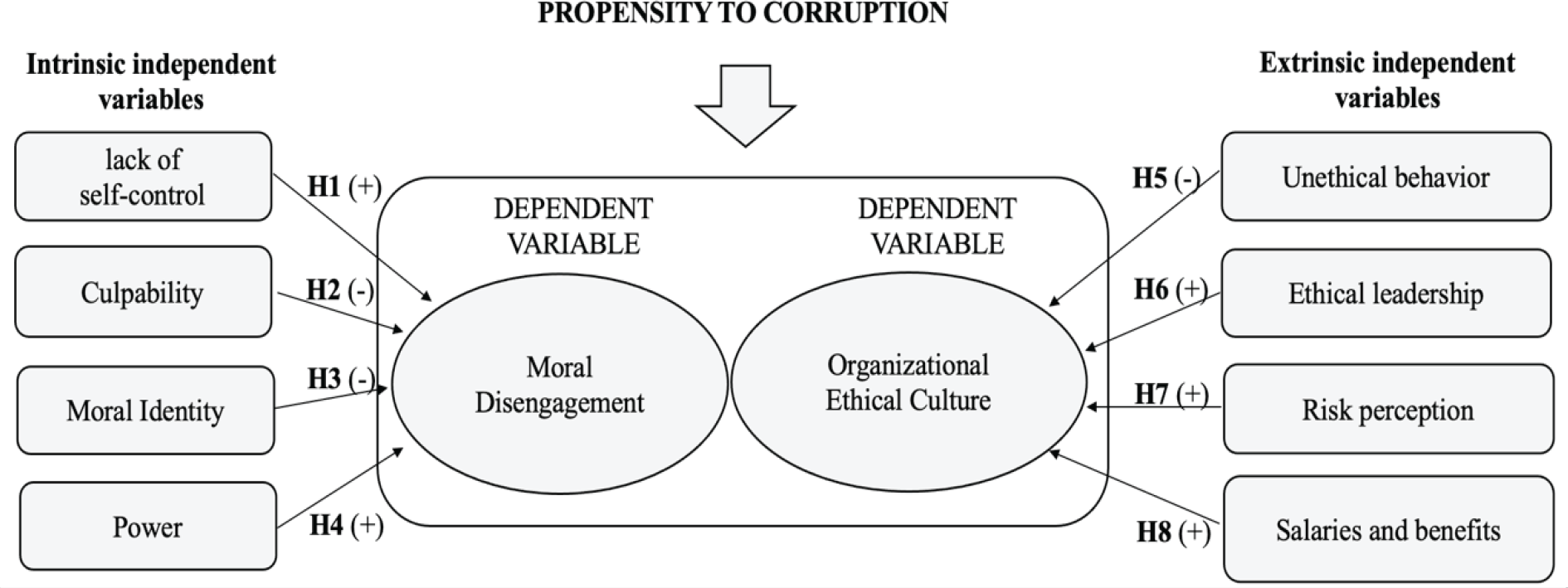 Source: Elaborated by the authors.